
Chapter 9 Fruits and Vegetables Copyright 2011 by
Chapter 9 Fruits and Vegetables © Copyright 2011 by the National Restaurant Association Educational Foundation (NRAEF) and published by Pearson Education, Inc. All rights reserved.
Fruits: Types and Market Forms A fruit is an organ that develops from the ovary of a flowering plant and contains one or more seeds. § The sweetness of fruits comes from fructose, a natural form of sugar. § Fruits and vegetables should be plump and free of bruises, mold, brown or soft spots, and pest damage. § Overall, the color and texture should be appropriate to the particular type of fruit or vegetable. 9. 1 Chapter 9 | Fruits and Vegetables 2
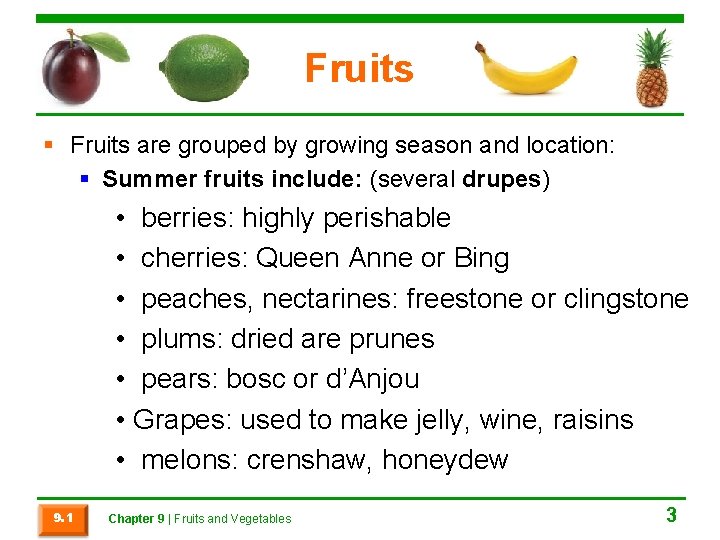
Fruits § Fruits are grouped by growing season and location: § Summer fruits include: (several drupes) • berries: highly perishable • cherries: Queen Anne or Bing • peaches, nectarines: freestone or clingstone • plums: dried are prunes • pears: bosc or d’Anjou • Grapes: used to make jelly, wine, raisins • melons: crenshaw, honeydew 9. 1 Chapter 9 | Fruits and Vegetables 3
Winter fruit § Winter also offers a good selection of fruits that provide plenty of nutrition and great taste. Winter fruits include: § apples: range from very tart (granny smith) to red delicious § citrus fruits: oranges, grapefruits, lemons, limes, and tangerines (all rich in vitamin C)
Tropical fruit § Tropical fruits are named for the climatic conditions under which they are grown. § Tropical fruits include: 1. figs 2. Kiwis 3. mangos 4. bananas 5. papayas 6. pomegranates 7. star fruit 8. passion fruit
Purchasing Fruits § Some fruits are available all year while others have a specific growing season. § During a fruit’s growing season, supply is plentiful, quality is higher, and the price is usually lower. § Quality grades are a rating system for fruit based on quality standards—the better the quality, the higher the quality grade assigned to it. § Quality is based on a combination of size, color, shape, texture, and defects. § Canned products: highest grade is U. S. Grade A Fancy 9. 1 Chapter 9 | Fruits and Vegetables 6

Storing Fruits § Many ripe fruits, except for bananas, can be stored at 41°F or lower. § Certain fruits emit ethylene gas, which causes fruits to ripen (bananas, apples, melons, and avocados) § Most fruits need to be kept dry because excess moisture causes produce to spoil quickly. § Fruits that need to ripen should be stored at room temperatures of 65°F to 70°F. 9. 1 Chapter 9 | Fruits and Vegetables 7
Preparing Fruits § Cleaning is the first step in preparing fruit. § Preparing fruit includes removing skins, removing cores, removing seeds and stones, zesting, and removing stems. § Fresh fruit can be juiced and puréed. 9. 1 Chapter 9 | Fruits and Vegetables 8
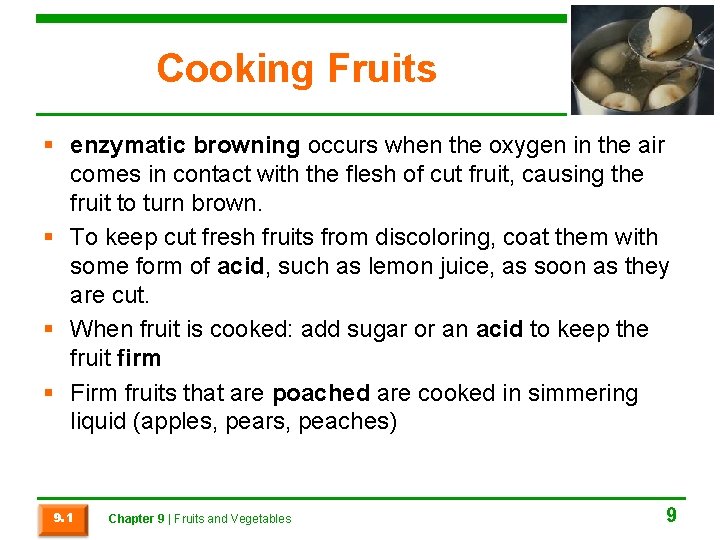
Cooking Fruits § enzymatic browning occurs when the oxygen in the air comes in contact with the flesh of cut fruit, causing the fruit to turn brown. § To keep cut fresh fruits from discoloring, coat them with some form of acid, such as lemon juice, as soon as they are cut. § When fruit is cooked: add sugar or an acid to keep the fruit firm § Firm fruits that are poached are cooked in simmering liquid (apples, pears, peaches) 9. 1 Chapter 9 | Fruits and Vegetables 9
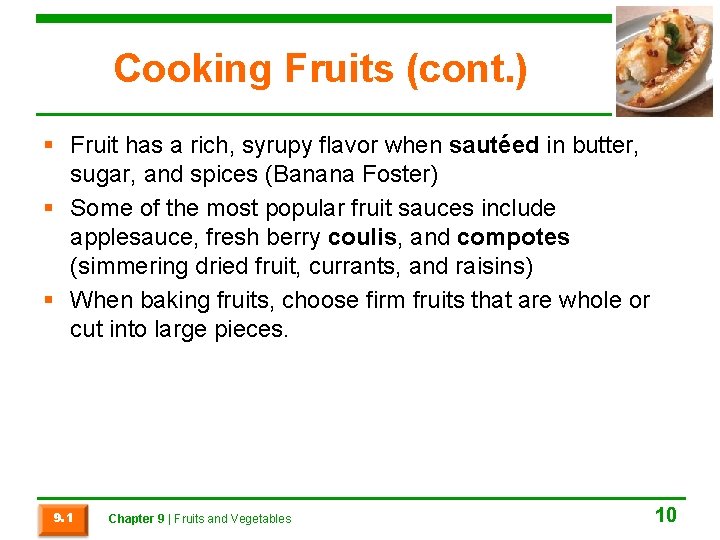
Cooking Fruits (cont. ) § Fruit has a rich, syrupy flavor when sautéed in butter, sugar, and spices (Banana Foster) § Some of the most popular fruit sauces include applesauce, fresh berry coulis, and compotes (simmering dried fruit, currants, and raisins) § When baking fruits, choose firm fruits that are whole or cut into large pieces. 9. 1 Chapter 9 | Fruits and Vegetables 10
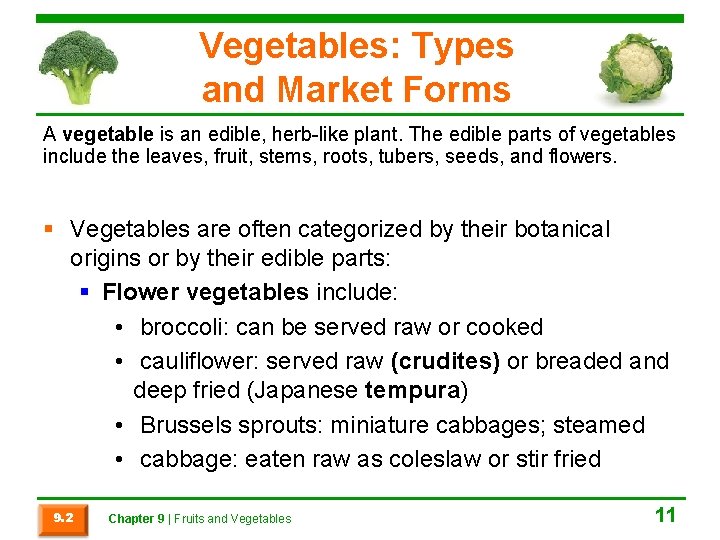
Vegetables: Types and Market Forms A vegetable is an edible, herb-like plant. The edible parts of vegetables include the leaves, fruit, stems, roots, tubers, seeds, and flowers. § Vegetables are often categorized by their botanical origins or by their edible parts: § Flower vegetables include: • broccoli: can be served raw or cooked • cauliflower: served raw (crudites) or breaded and deep fried (Japanese tempura) • Brussels sprouts: miniature cabbages; steamed • cabbage: eaten raw as coleslaw or stir fried 9. 2 Chapter 9 | Fruits and Vegetables 11
Fruit vegetables § Fruit vegetables include: • avocados: use lime to prevent discoloring; guacomole • cucumbers: mild flavor, eaten raw • Eggplants: colors range from black (black beauty) to green; always cooked (babaganoush – an eggplant dip) • Peppers: can be sweet (bellpepper) or hot (habanero, cayenne) • Squash: eaten raw or cooked • tomatoes: a type of berry; best when vine ripened; green ones are good for frying
Green leafy vegetables § § § Green leafy vegetables include: various types of lettuce: iceberg, romaine, bibb mustard greens: has a strong flavor Spinach: can be eaten raw or cooked Swiss chard: flavor similar to spinach
Vegetables: Types and Market Forms (cont. ) § Seed vegetables include: • corn: can be white, yellow or bicolored • Peas: some can be eaten in the pod (sugar snaps) • Beans: green beans, yellow wax beans 9. 2 Chapter 9 | Fruits and Vegetables 14
Root/tuber vegetables § Root vegetables include: • carrots: raw (crudites), garnish, cooked • Beets: originally grown for the tops, not the roots • radishes: used as garnish, peppery flavor • Turnips: peppery flavor; boiled or mashed • Onions: many varieties (Vidalia, pearl, Bermuda) • Shallots and scallions: mild flavor; pulled before they are mature • Leeks: mildest flavor of onion family § Tuber vegetables (can regenerate it’s own plant) include potatoes, sweet potatoes, and yams
Stem vegetables § Stem vegetables include: • asparagus: tender stalks and tips • celery: appetizer either stuffed or served with dip • artichokes: immature flower of a thistle plant • Mushrooms: member of fungi family; eaten raw or cooked § hydroponic farming, vegetables are grown indoors year-round in nutrient-enriched water. § during their growing seasons, vegetables are plentiful, the quality is higher, and the prices are usually lower. § The same USDA fruit quality grades apply to vegetables as well.
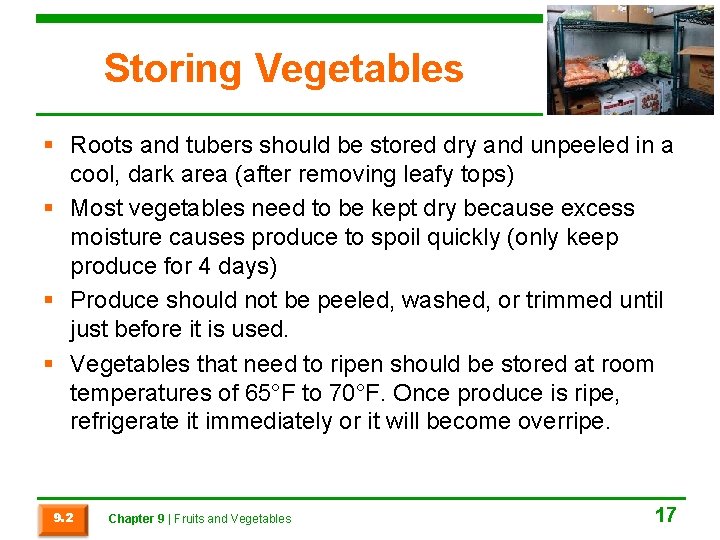
Storing Vegetables § Roots and tubers should be stored dry and unpeeled in a cool, dark area (after removing leafy tops) § Most vegetables need to be kept dry because excess moisture causes produce to spoil quickly (only keep produce for 4 days) § Produce should not be peeled, washed, or trimmed until just before it is used. § Vegetables that need to ripen should be stored at room temperatures of 65°F to 70°F. Once produce is ripe, refrigerate it immediately or it will become overripe. 9. 2 Chapter 9 | Fruits and Vegetables 17
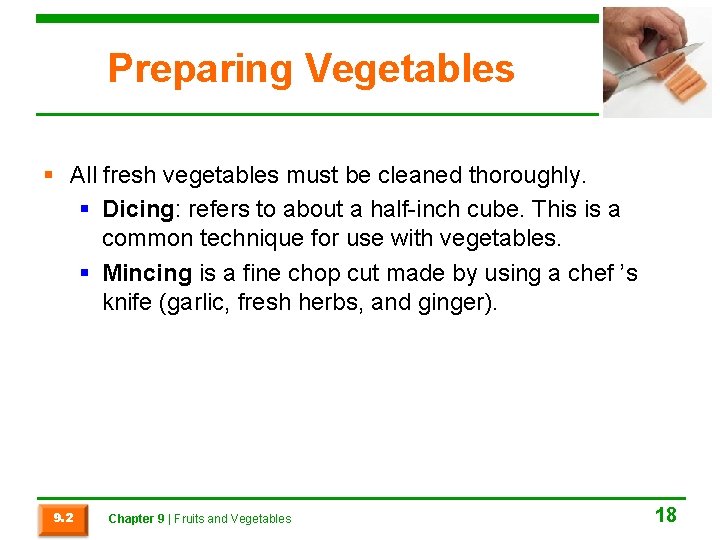
Preparing Vegetables § All fresh vegetables must be cleaned thoroughly. § Dicing: refers to about a half-inch cube. This is a common technique for use with vegetables. § Mincing is a fine chop cut made by using a chef ’s knife (garlic, fresh herbs, and ginger). 9. 2 Chapter 9 | Fruits and Vegetables 18
Cooking Vegetables § Vegetables must be cooked in a way that protects their texture, flavor, color, and nutrients: § Boiling: for hard, starchy vegetables. § Parboiling/blanching: partially cooks vegetables in boiling water. § Steaming: best way to retain vitamins and minerals. § leave vegetables whole, with the skin or peel intact, and steam it with its own moisture to maintain nutrients § Roast or bake vegetables in a hot or moderate oven. This cooking method is best suited to vegetables with thick skins (squash, potatoes, eggplants) 9. 2 Chapter 9 | Fruits and Vegetables 19
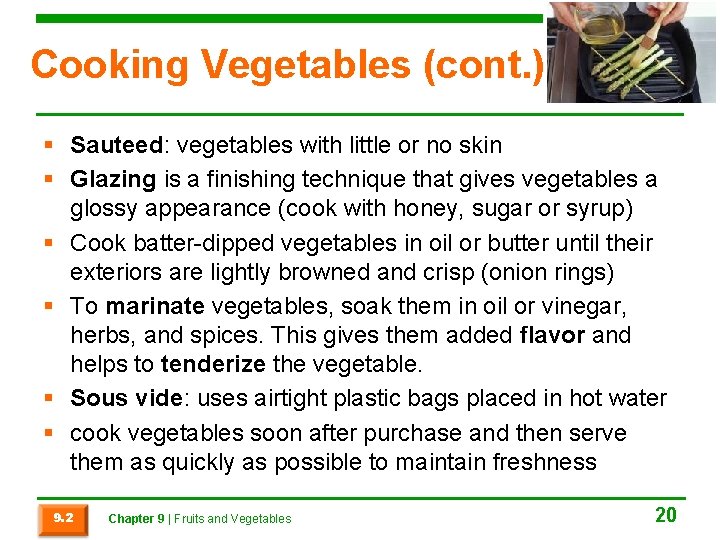
Cooking Vegetables (cont. ) § Sauteed: vegetables with little or no skin § Glazing is a finishing technique that gives vegetables a glossy appearance (cook with honey, sugar or syrup) § Cook batter-dipped vegetables in oil or butter until their exteriors are lightly browned and crisp (onion rings) § To marinate vegetables, soak them in oil or vinegar, herbs, and spices. This gives them added flavor and helps to tenderize the vegetable. § Sous vide: uses airtight plastic bags placed in hot water § cook vegetables soon after purchase and then serve them as quickly as possible to maintain freshness 9. 2 Chapter 9 | Fruits and Vegetables 20
- Slides: 20