The Education System in Spain Educational levels q

- Slides: 31
The Education System in Spain
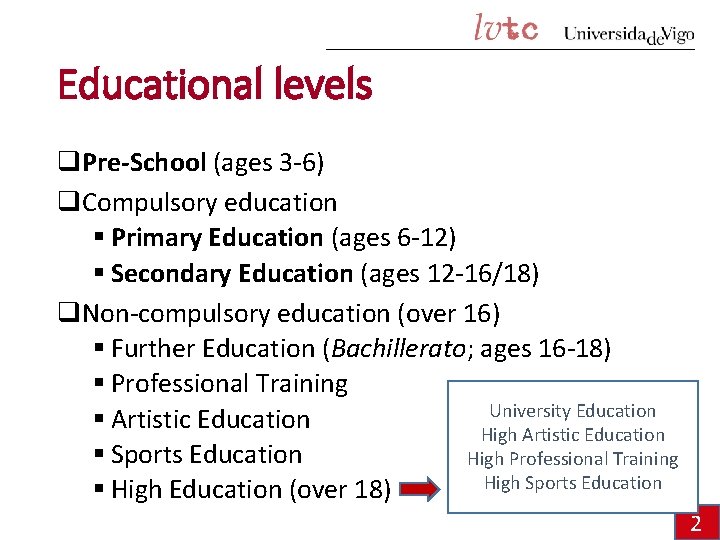
Educational levels q. Pre-School (ages 3 -6) q. Compulsory education § Primary Education (ages 6 -12) § Secondary Education (ages 12 -16/18) q. Non-compulsory education (over 16) § Further Education (Bachillerato; ages 16 -18) § Professional Training University Education § Artistic Education High Artistic Education § Sports Education High Professional Training High Sports Education § High Education (over 18) 2
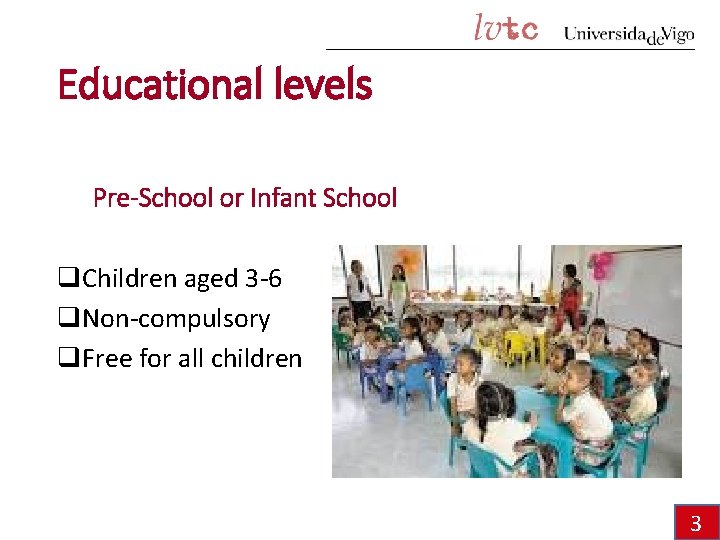
Educational levels Pre-School or Infant School q. Children aged 3 -6 q. Non-compulsory q. Free for all children 3
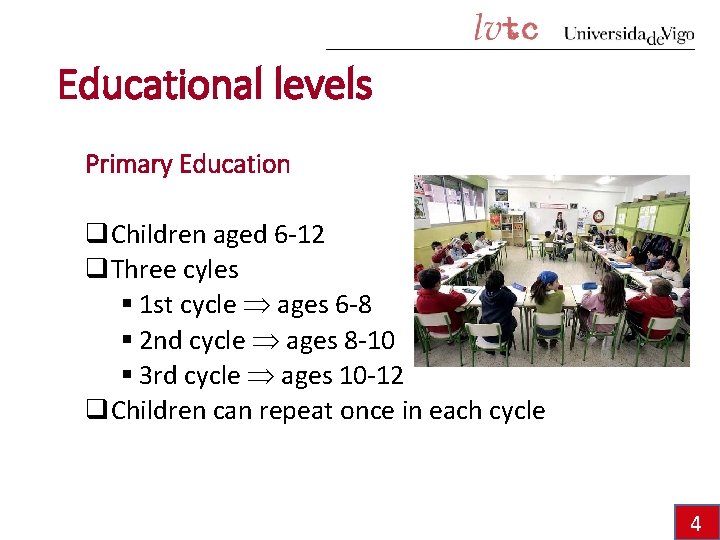
Educational levels Primary Education q. Children aged 6 -12 q. Three cyles § 1 st cycle ages 6 -8 § 2 nd cycle ages 8 -10 § 3 rd cycle ages 10 -12 q. Children can repeat once in each cycle 4
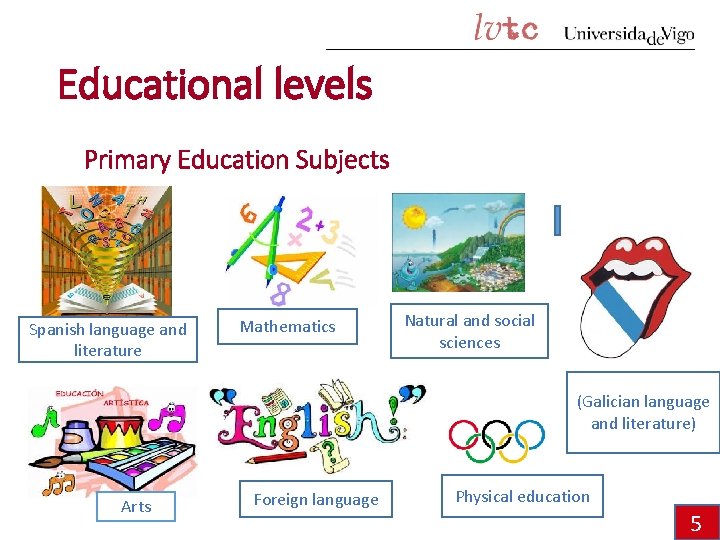
Educational levels Primary Education Subjects Spanish language and literature Mathematics Natural and social sciences (Galician language and literature) Arts Foreign language Physical education 5
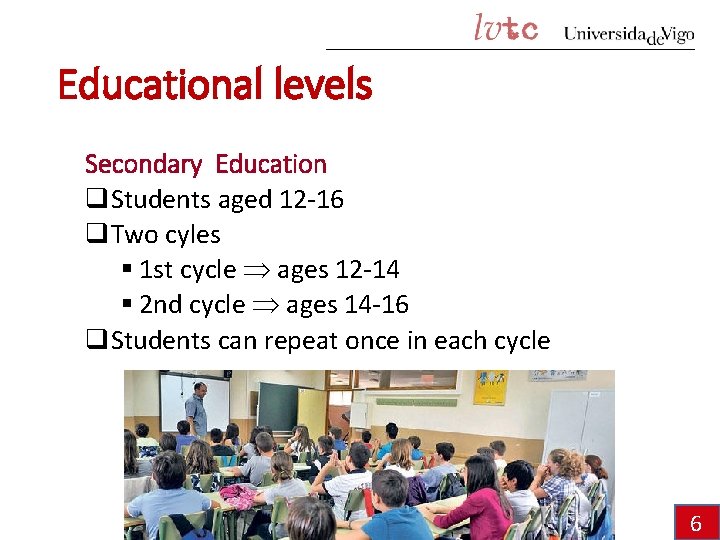
Educational levels Secondary Education q. Students aged 12 -16 q. Two cyles § 1 st cycle ages 12 -14 § 2 nd cycle ages 14 -16 q. Students can repeat once in each cycle 6
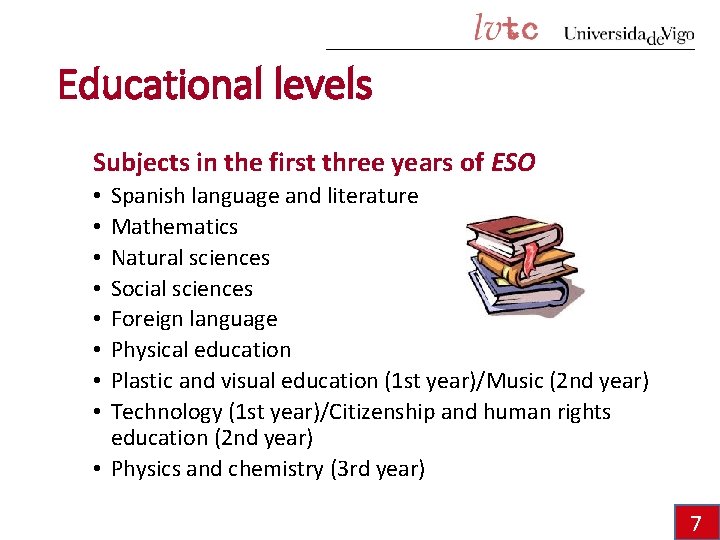
Educational levels Subjects in the first three years of ESO Spanish language and literature Mathematics Natural sciences Social sciences Foreign language Physical education Plastic and visual education (1 st year)/Music (2 nd year) Technology (1 st year)/Citizenship and human rights education (2 nd year) • Physics and chemistry (3 rd year) • • 7
Educational levels Subjects in the first three years of ESO • Second foreign language/ICT/other (optional subjects) • Religious education/Study hall • Tutorials q. Total number of hours per week: 30 q. Students can repeat once in each cycle 8
Educational levels Subjects in the last year of ESO CORE SUBJECTS • Spanish language and literature • Foreign language • Mathematics • Social Sciences • Physical education • Ethic and civic education 9
Educational levels Subjects in the last year of ESO OPTIONAL SUBJECTS (a choice of 3) • Art • Biology and geology • Latin • Music • Physics and chemistry • Second foreign language • Technology 10
Educational levels CURRICULAR DIVERSIFICATION PROGRAMME q. Aimed at 3 rd- and 4 th-year ESO students with special needs who have shown poor results, with standard measures of attention to diversity and motivation for students to continue learning q. Small groups q. Subjects organised into 2 areas § Science and technology: science-related subjects § Socio-linguistic area: arts-related subjects 11
Higher secondary school (Bachillerato) • Students aged 16 -18 • It is not compulsory (16 -year-old students may opt for vocational training instead) • It comprises two years. After the second year students may take the university-entry exam (PAU) • Students who do not wish to pursue university studies can take higher vocational training courses 12
Higher secondary school (Bachillerato) • Students choose the branch of bachillerato that suits best the university degree they want to go for • Technology and natural sciences • Humanities and social sciences • Arts • There, however, are some common subjects • Science for the Contemporary World • Physical Education • Philosophy • Spanish History • Spanish Language and Literature • Co-official language and its Literature • Foreign Language • Religion (or alternative offered by the school) 13
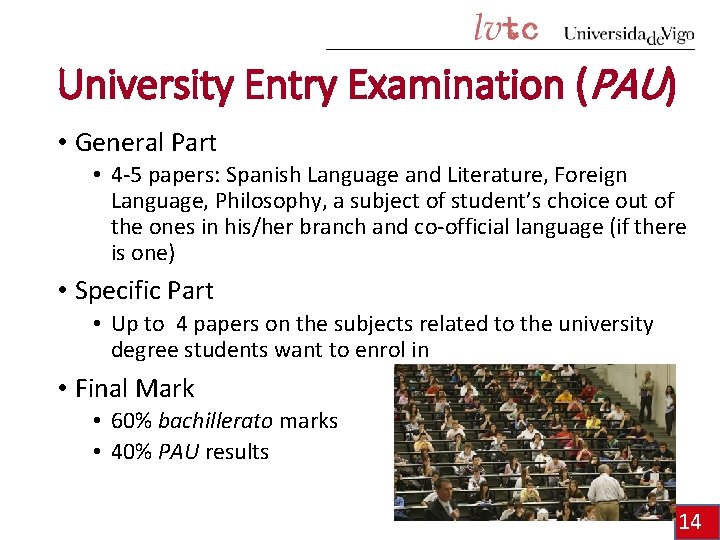
University Entry Examination (PAU) • General Part • 4 -5 papers: Spanish Language and Literature, Foreign Language, Philosophy, a subject of student’s choice out of the ones in his/her branch and co-official language (if there is one) • Specific Part • Up to 4 papers on the subjects related to the university degree students want to enrol in • Final Mark • 60% bachillerato marks • 40% PAU results 14
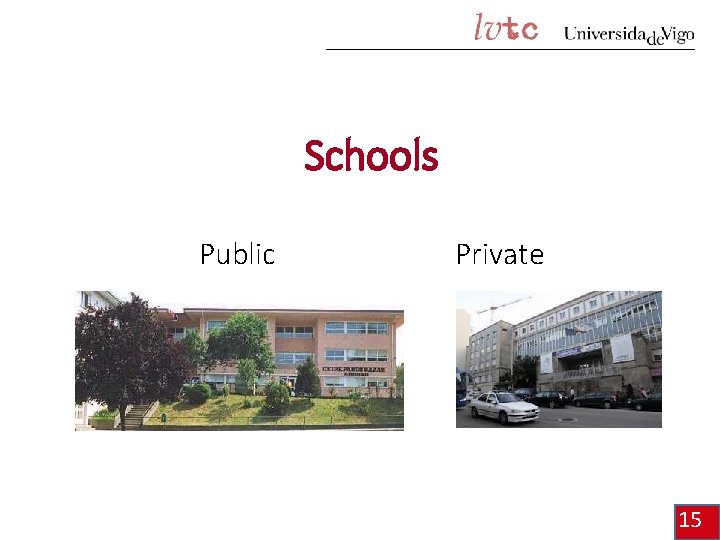
Schools Public Private 15
Types of schools Public schools • Free • Central and regional governments finance and regulate them • Everyone has the right to attend one of these schools. Where you live and the family income usually limit your choice • Primary schools (nursery and primary education) • High schools (secondary and higher education ‘bachillerato’ and professional training ‘vocational schools’) 16
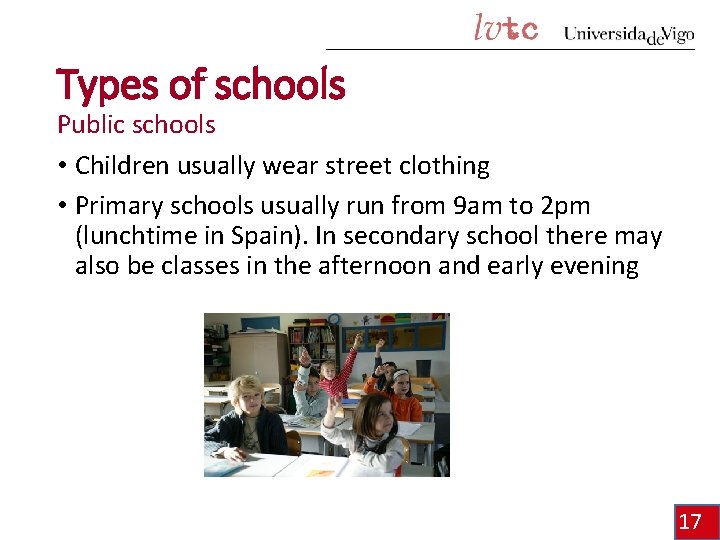
Types of schools Public schools • Children usually wear street clothing • Primary schools usually run from 9 am to 2 pm (lunchtime in Spain). In secondary school there may also be classes in the afternoon and early evening 17
Types of schools Private schools • Subsidised schools: private schools subsidised by the central and regional governments. Their organisation is under the supervision of educational authorities. • Non-subsidised schools: parents finance these schools. They have to adapt to the general laws but are not under the supervision of (local and/or regional) educational authorities. • They can offer just primary education but most offer all the levels form nursery to ‘bachillerato’. 18
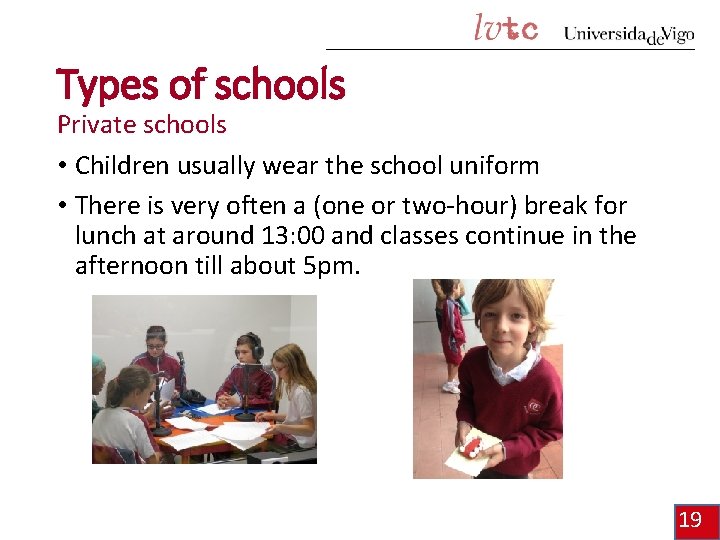
Types of schools Private schools • Children usually wear the school uniform • There is very often a (one or two-hour) break for lunch at around 13: 00 and classes continue in the afternoon till about 5 pm. 19
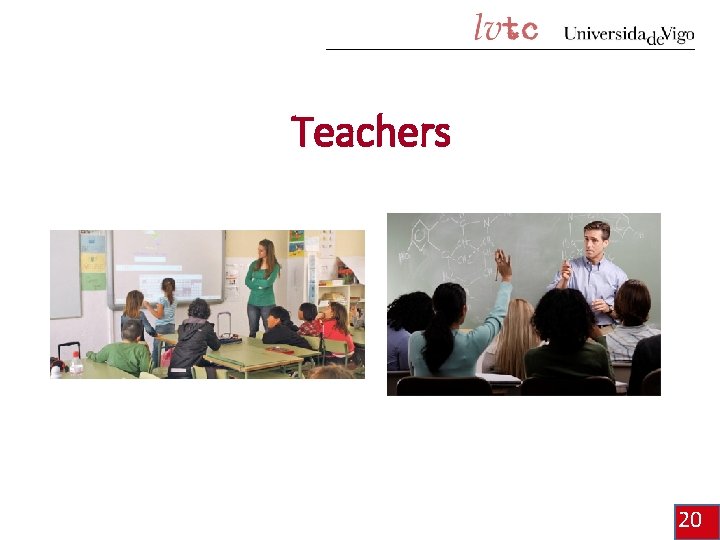
Teachers 20
Teachers Access Public schools Private schools Civil servants (compete in open calls, judged by a board of examiners) Hired by schools on the basis of CV and interview 21
Teachers Academic requirements • Primary School Teachers Degree in Primary School Education • Secondary School & Vocational Training Teachers Degree in the different subject areas + Master’s degree in Teacher Training 22
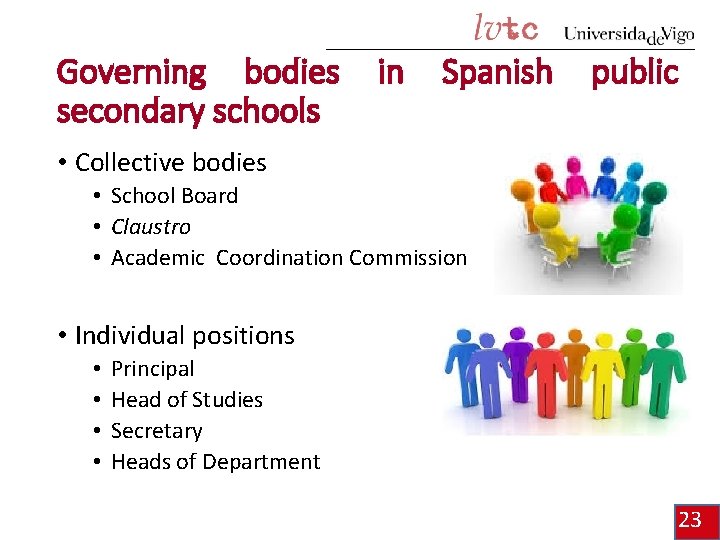
Governing bodies secondary schools in Spanish public • Collective bodies • School Board • Claustro • Academic Coordination Commission • Individual positions • • Principal Head of Studies Secretary Heads of Department 23
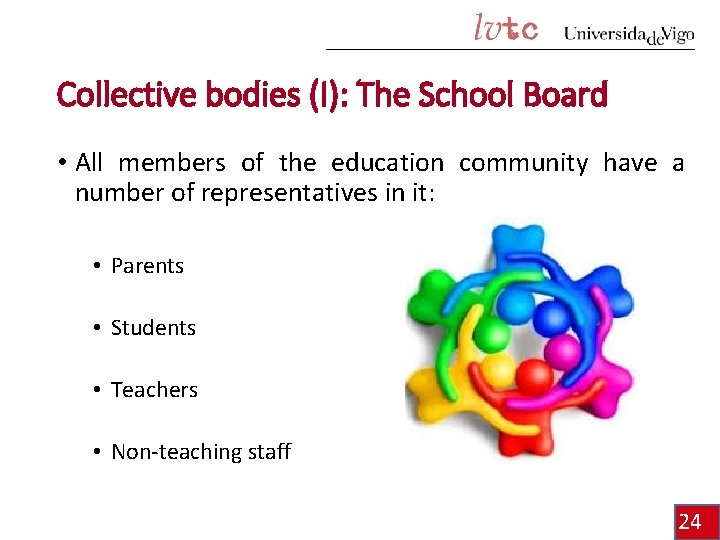
Collective bodies (I): The School Board • All members of the education community have a number of representatives in it: • Parents • Students • Teachers • Non-teaching staff 24
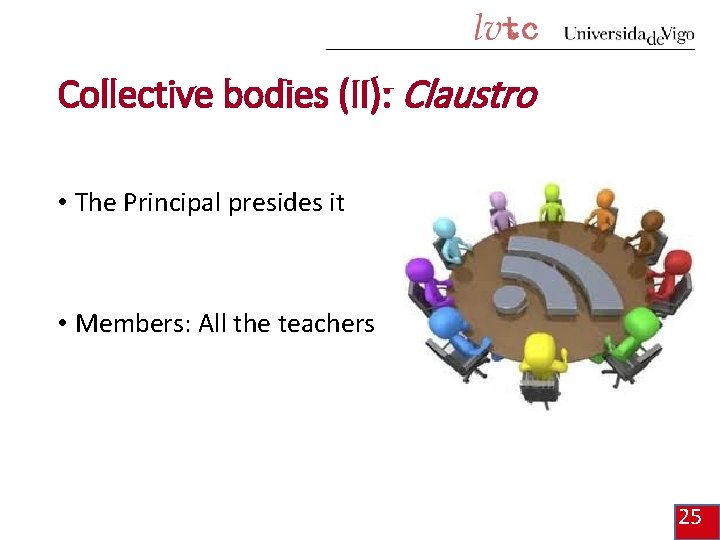
Collective bodies (II): Claustro • The Principal presides it • Members: All the teachers 25
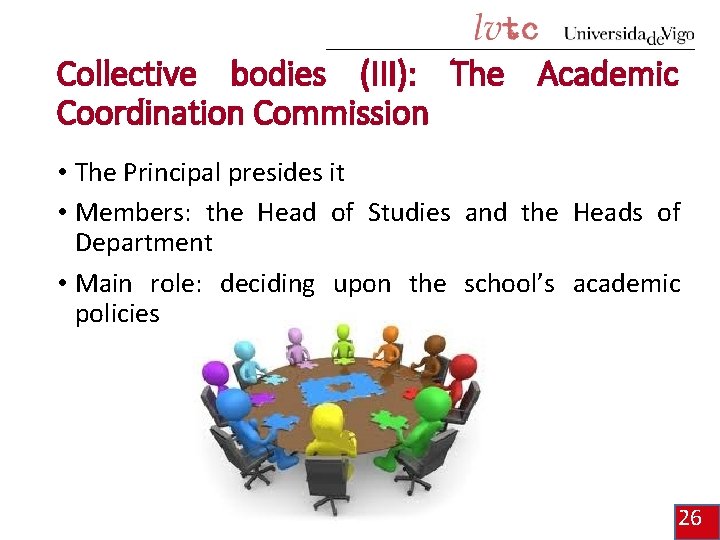
Collective bodies (III): The Academic Coordination Commission • The Principal presides it • Members: the Head of Studies and the Heads of Department • Main role: deciding upon the school’s academic policies 26
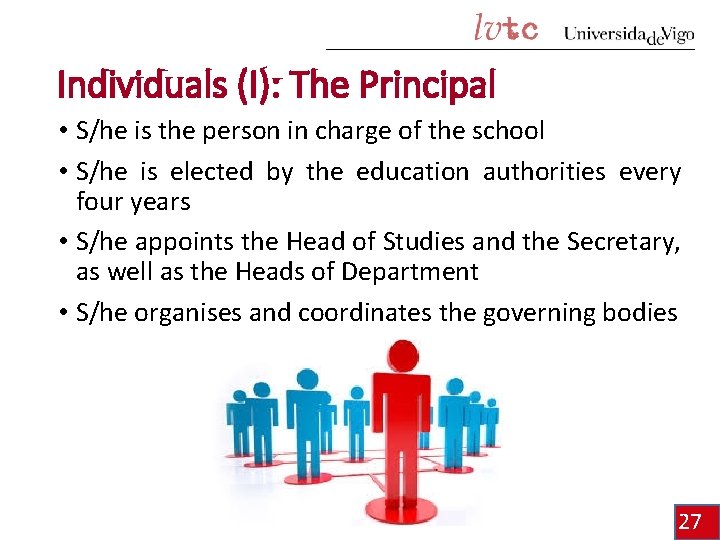
Individuals (I): The Principal • S/he is the person in charge of the school • S/he is elected by the education authorities every four years • S/he appoints the Head of Studies and the Secretary, as well as the Heads of Department • S/he organises and coordinates the governing bodies 27
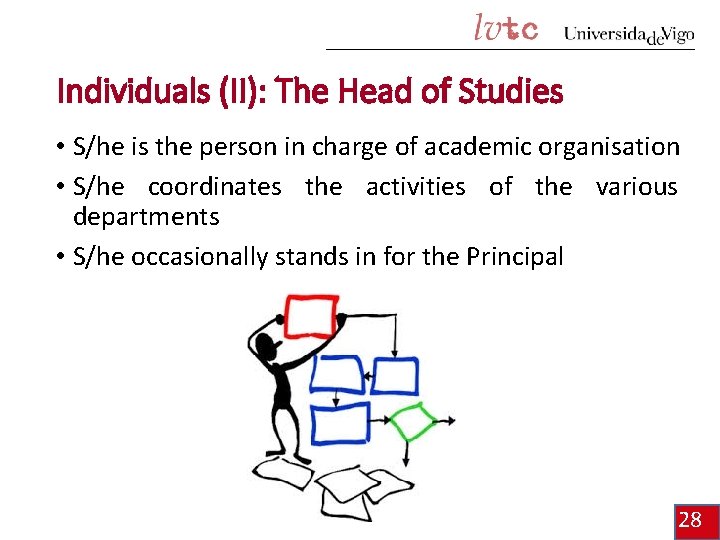
Individuals (II): The Head of Studies • S/he is the person in charge of academic organisation • S/he coordinates the activities of the various departments • S/he occasionally stands in for the Principal 28
Individuals (III): Heads of Department • Every teacher on a specific academic department depending on the subject(s) s/he teaches • Some members of staff belong in a non-didactic type of department with specific roles (e. g. guidance, extra -academics) • The number of departments varies depending on the school 29
Individuals (IV): The Secretary • S/he is the person in charge of administration issues • S/he deals with the school’s legal and financial issues 30
Excursus… or is it? How to solve x-many problems with he help of a phone keypad (i. e. a secretary’s good practice guide): http: //www. youtube. com/watch? v=FZJGRi 80 IBg 31