Patients requiring nutritional support 1 PATIENTS WITH SEVERELY








![24 hr. protein intake –UUN (gm) + 4 gm] 6. 25 +4 to +](https://slidetodoc.com/presentation_image_h/7df0eeaf0e1670591124a3bc16bb708f/image-47.jpg "24 hr. protein intake –UUN (gm) + 4 gm] 6. 25 +4 to +")



- Slides: 96
Patients requiring nutritional support 1) PATIENTS WITH SEVERELY IMPAIRED GASTROINTESTINAL FUNCTION 2) PATIENTS WITH INADEQUATE FOOD INTA 3) PATIENTS UNDERGOING MAJOR SURGER 4) PATIENTS WITH CANCER
This support had 3 main objectives: v preserve lean body mass v maintain immune function v avert metabolic complications
Recently these goals have become more focused on nutrition therapy v attempting to attenuate the metabolic response t stress v prevent oxidative cellular injury v favorably modulate the immune response
Nutritional modulation of the stress response to critical illness includes: v Early enteral nutrition v appropriate macro- and micronutrient d v meticulous glycemic control
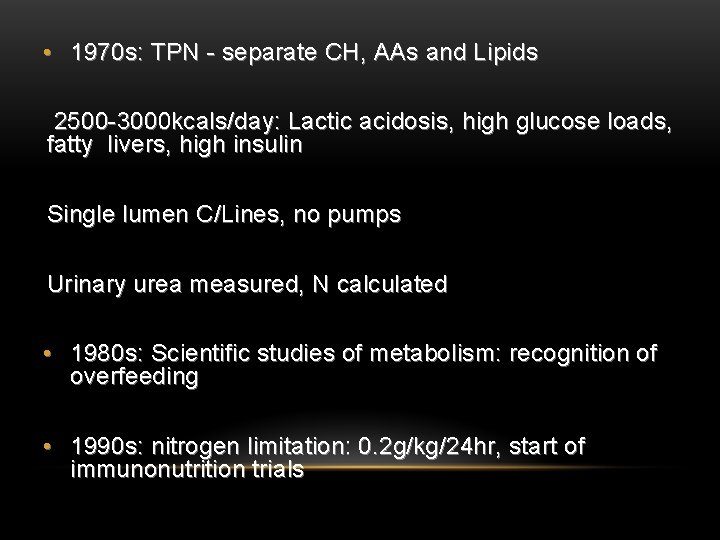
• 1970 s: TPN - separate CH, AAs and Lipids 2500 -3000 kcals/day: Lactic acidosis, high glucose loads, fatty livers, high insulin Single lumen C/Lines, no pumps Urinary urea measured, N calculated • 1980 s: Scientific studies of metabolism: recognition of overfeeding • 1990 s: nitrogen limitation: 0. 2 g/kg/24 hr, start of immunonutrition trials
2000 s: glucose control, specific nutri 2000 s: glucose control, specific nutr 2010: ATTENUATE THE METABOLIC RESPONSE TO STRESS
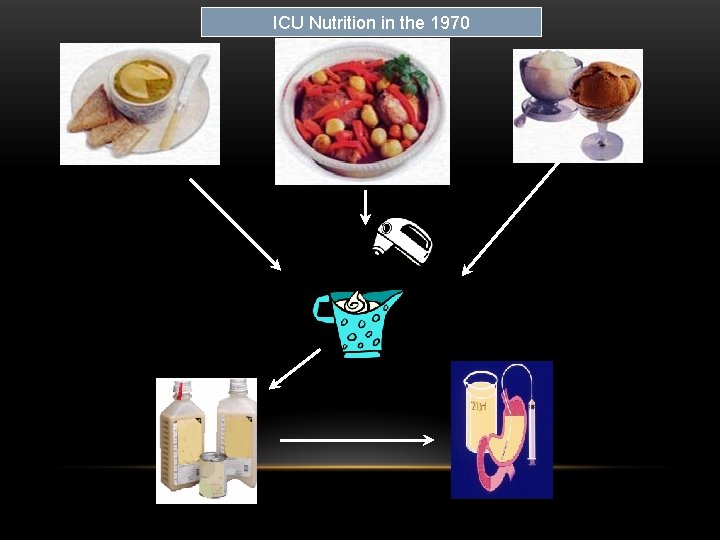
ICU Nutrition in the 1970
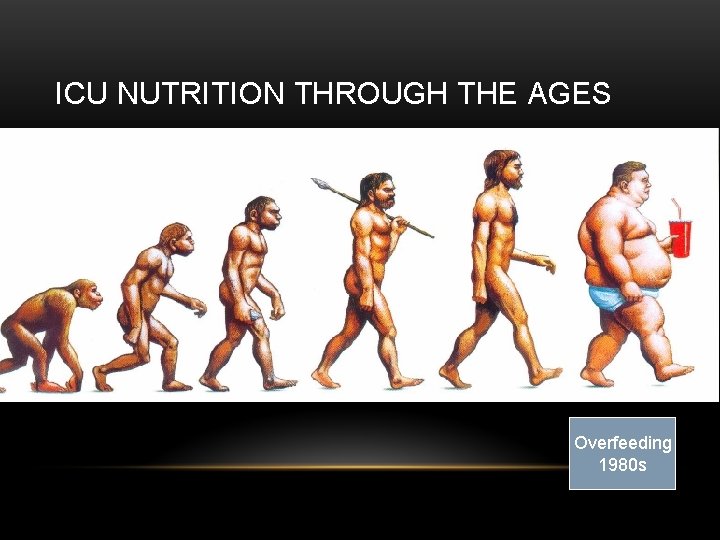
ICU NUTRITION THROUGH THE AGES Overfeeding 1980 s
* CPG : clinical practice guidelines; ASPEN: American Society for Parenteral and Enteral Nutrition ESPEN : The European Society for Clinical Nutrition and Metabolism NICE: National Institute for Health and Clinical Excellence
THE FOUR BASIC COMPONENTS OF NUTRITIONAL ASSESSMENT INCLUDE: 1)Anthropometrics 2)Clinical Information 3)Nutrition Intake History 4) Biochemical Data
I. ANTHROPOMETRICS; The most common anthropometrics used in the hospital setting are : q weight (wt), q height (ht) q weight/height (wt/ht)
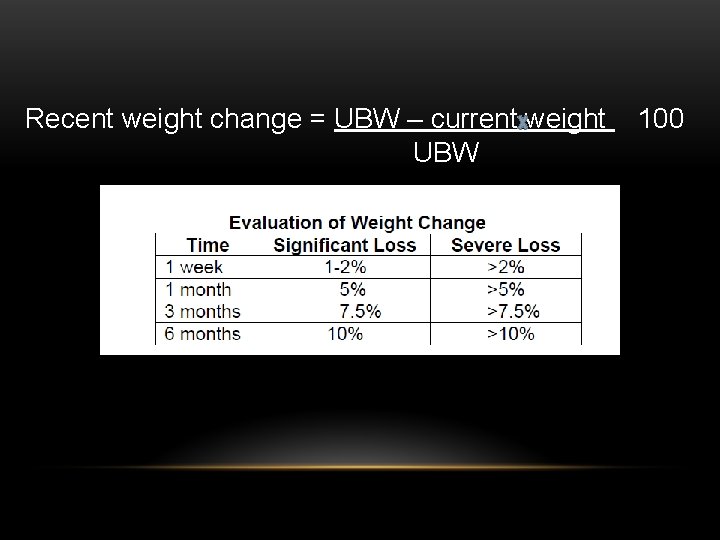
Weight: 1)Weight is used to assess a patient’s degree of malnutrition A. Percentage of UBW B. Recent weight change
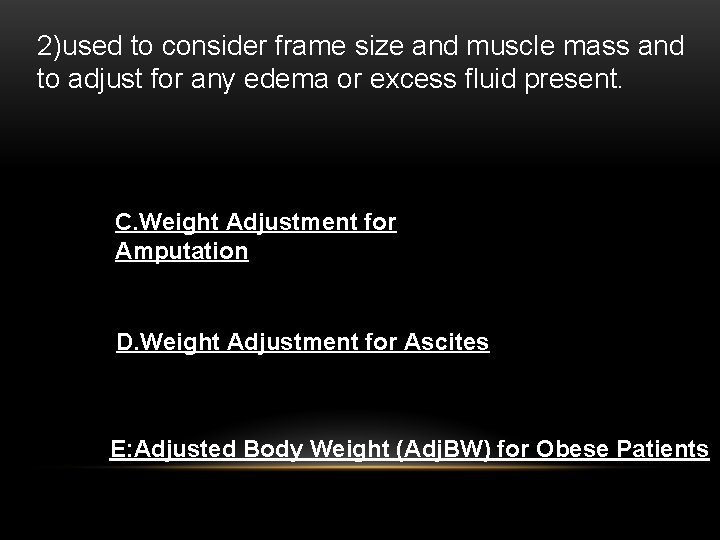
2)used to consider frame size and muscle mass and to adjust for any edema or excess fluid present. C. Weight Adjustment for Amputation D. Weight Adjustment for Ascites E: Adjusted Body Weight (Adj. BW) for Obese Patients
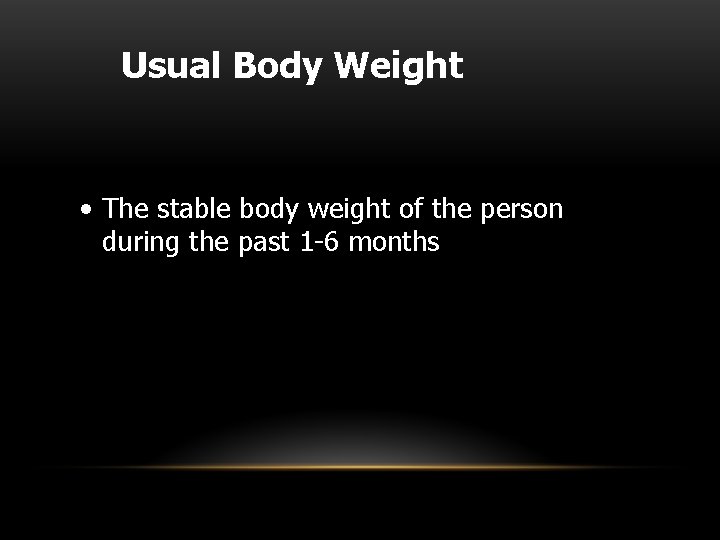
Usual Body Weight • The stable body weight of the person during the past 1 -6 months
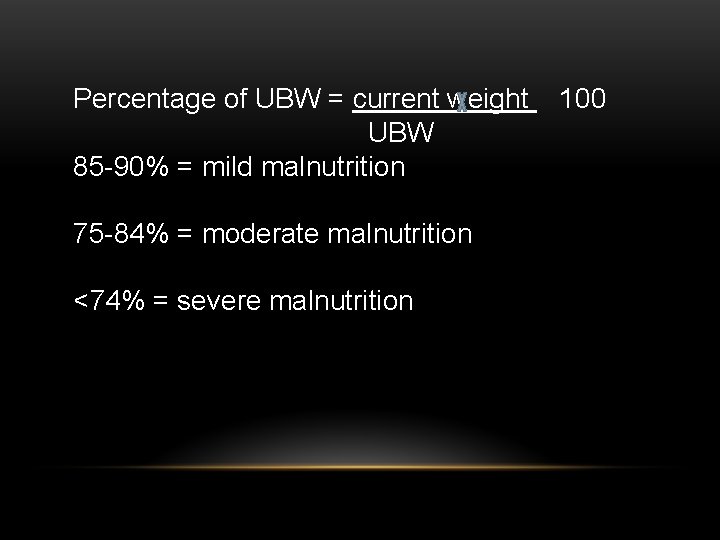
Percentage of UBW = current weight 100 UBW 85 -90% = mild malnutrition 75 -84% = moderate malnutrition <74% = severe malnutrition
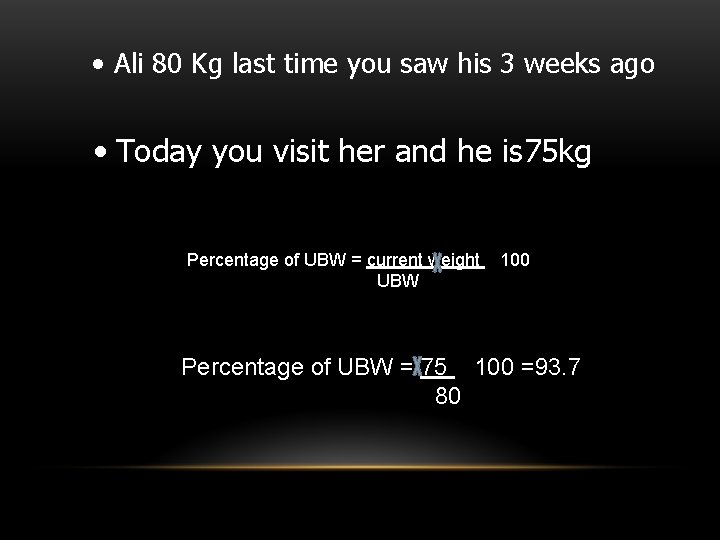
• Ali 80 Kg last time you saw his 3 weeks ago • Today you visit her and he is 75 kg Percentage of UBW = current weight 100 UBW Percentage of UBW = 75 100 =93. 7 80
Recent weight change = UBW – current weight 100 UBW
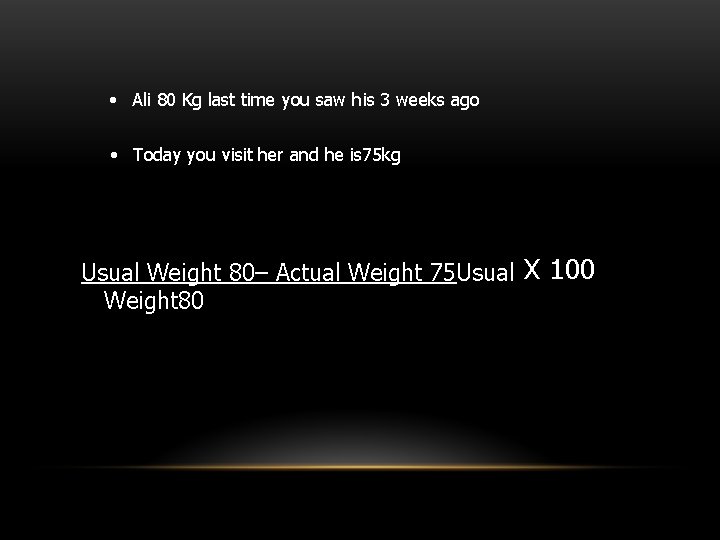
• Ali 80 Kg last time you saw his 3 weeks ago • Today you visit her and he is 75 kg Usual Weight 80– Actual Weight 75 Usual X 100 Weight 80
• Mary Jane was 80 Kg last time you saw her 3 weeks ago • Today you visit her and she is 75 kg Usual Weight 80– Actual Weight 75 Usual X 100 Weight 80
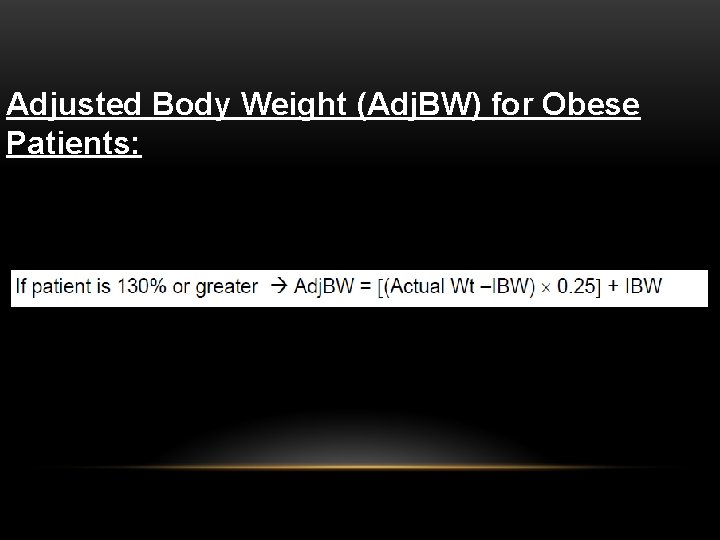
Adjusted Body Weight (Adj. BW) for Obese Patients:
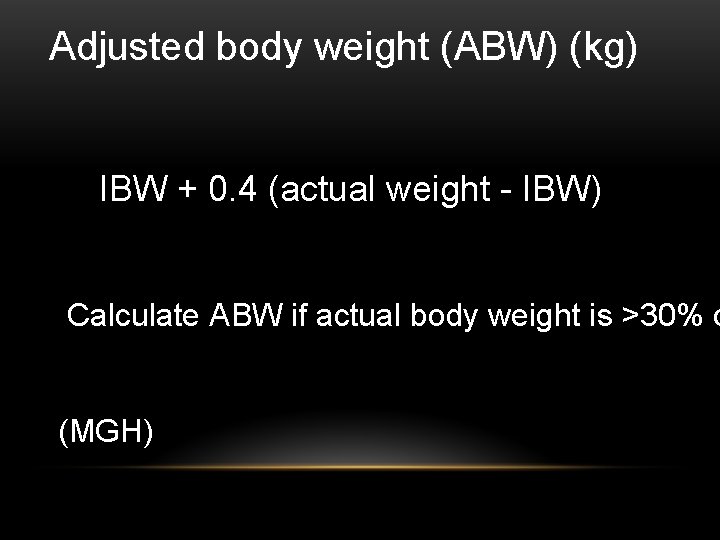
Adjusted body weight (ABW) (kg) IBW + 0. 4 (actual weight - IBW) Calculate ABW if actual body weight is >30% o (MGH)
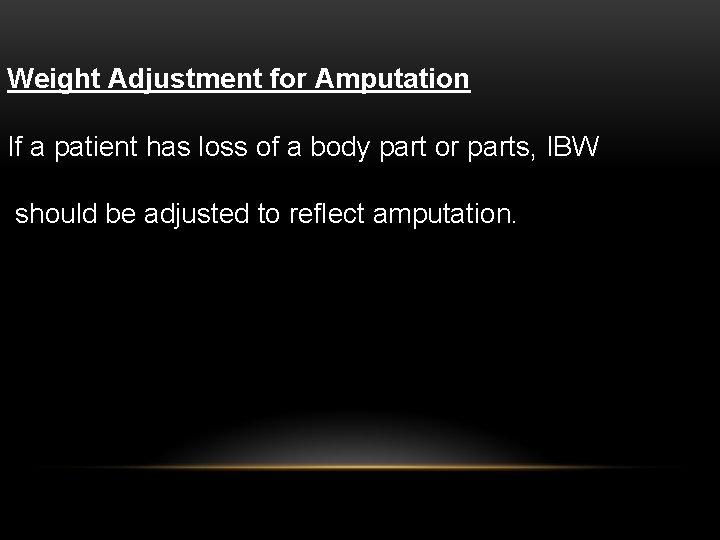
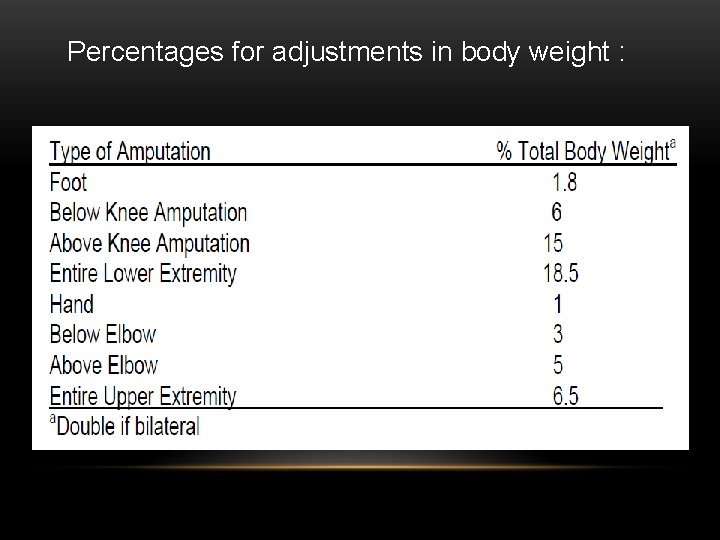
Weight Adjustment for Amputation If a patient has loss of a body part or parts, IBW should be adjusted to reflect amputation.
Percentages for adjustments in body weight :
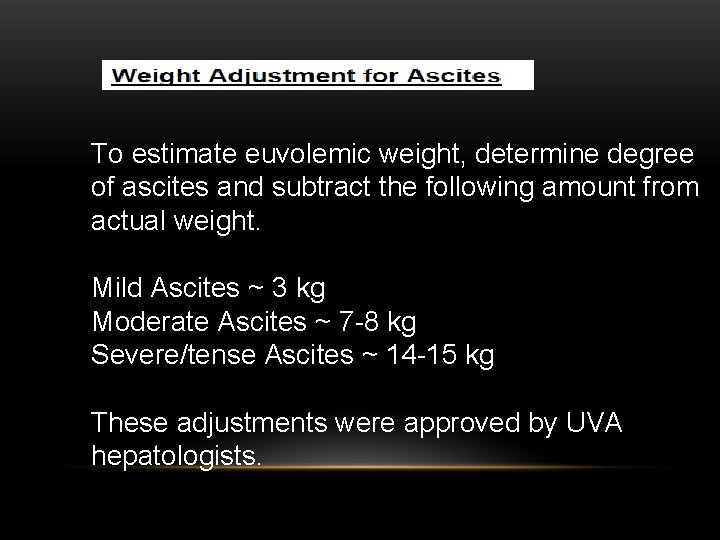
To estimate euvolemic weight, determine degree of ascites and subtract the following amount from actual weight. Mild Ascites ~ 3 kg Moderate Ascites ~ 7 -8 kg Severe/tense Ascites ~ 14 -15 kg These adjustments were approved by UVA hepatologists.
Height/Weight v BMI
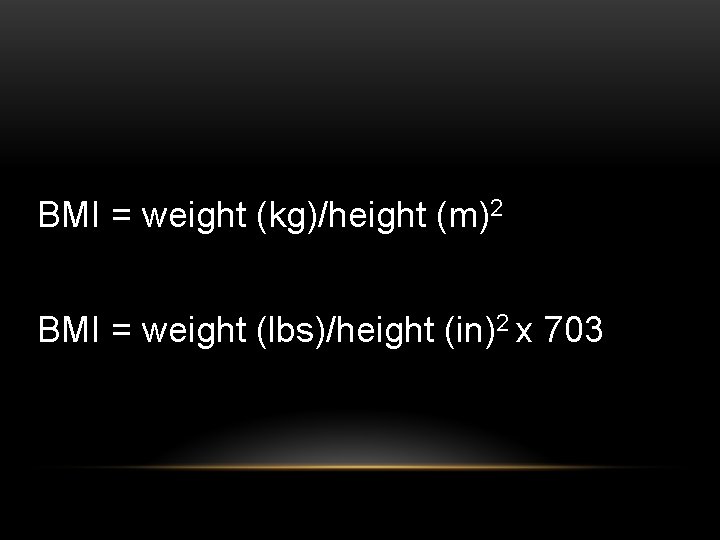
BMI = weight (kg)/height (m)2 BMI = weight (lbs)/height (in)2 x 703
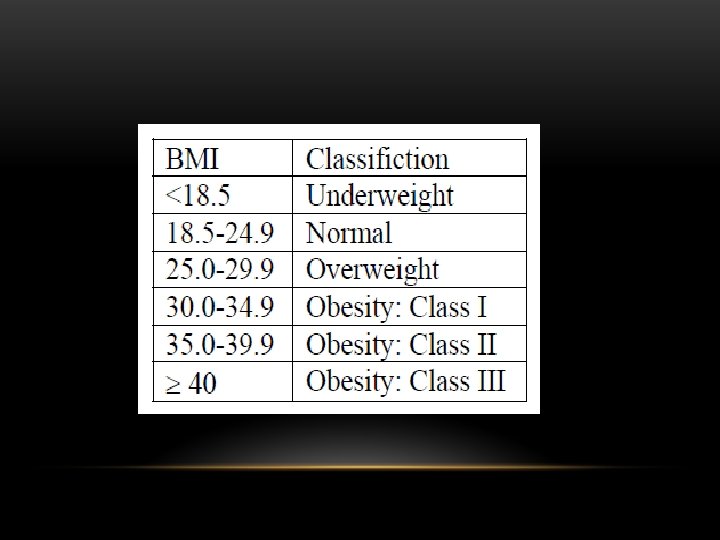
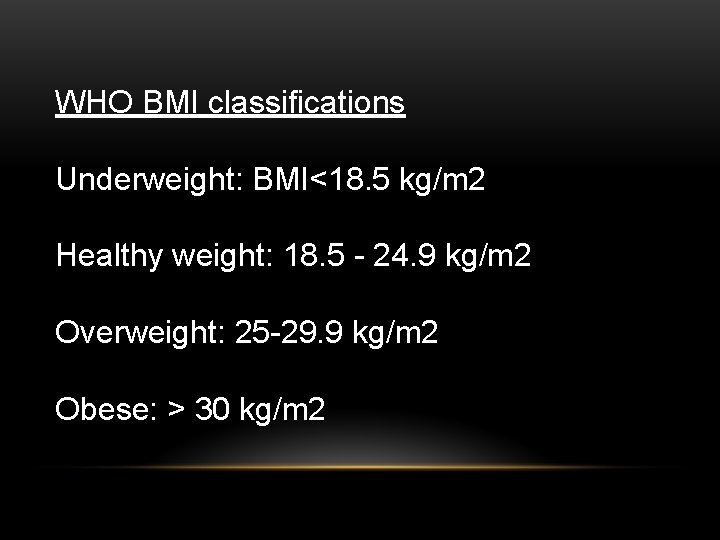
WHO BMI classifications Underweight: BMI<18. 5 kg/m 2 Healthy weight: 18. 5 - 24. 9 kg/m 2 Overweight: 25 -29. 9 kg/m 2 Obese: > 30 kg/m 2
Height-Weight- Age v Harris-Benedict equation v Miflin St. Jeor (MSJ)
Harris-Benedict equation. BMR in men (kcal/d) = 66 + 13. 7 (weight) + 5 (height) - 6. 8 (age) BMR in women (kcal/d) = 665 + 9. 6 (weight) + 1. 8 (height) - 4. 7 (age)
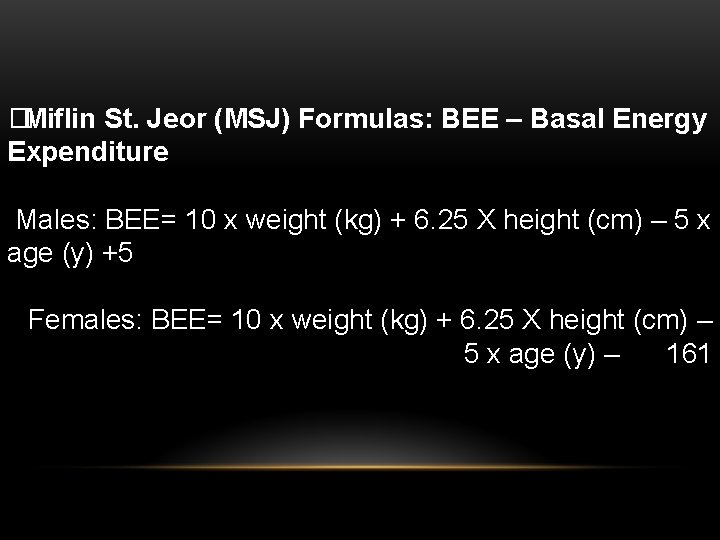
� Miflin St. Jeor (MSJ) Formulas: BEE – Basal Energy Expenditure Males: BEE= 10 x weight (kg) + 6. 25 X height (cm) – 5 x age (y) +5 Females: BEE= 10 x weight (kg) + 6. 25 X height (cm) – 5 x age (y) – 161
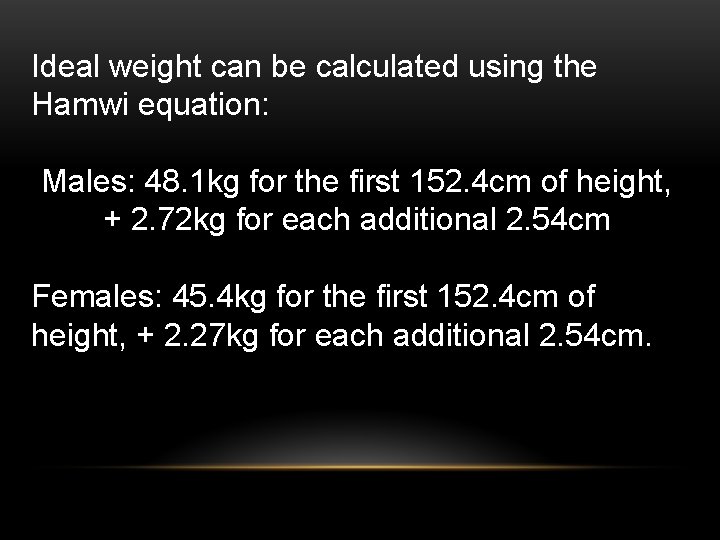
Hamwi Method Ideal body weight
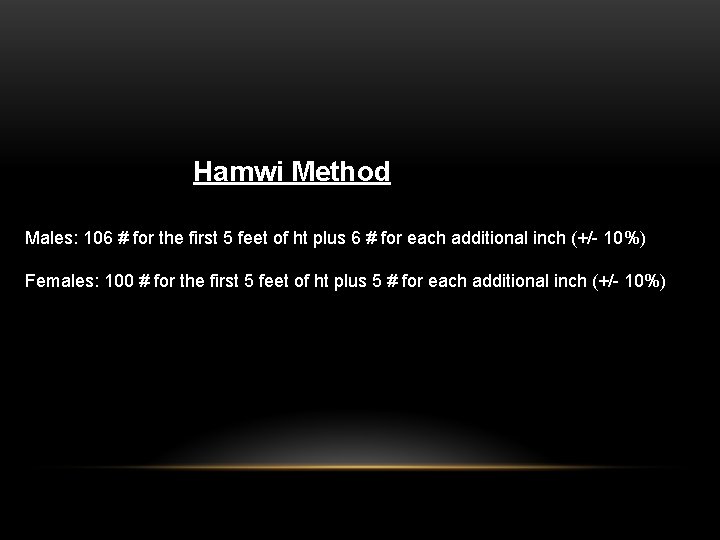
Hamwi Method Males: 106 # for the first 5 feet of ht plus 6 # for each additional inch (+/- 10%) Females: 100 # for the first 5 feet of ht plus 5 # for each additional inch (+/- 10%)
Ideal weight can be calculated using the Hamwi equation: Males: 48. 1 kg for the first 152. 4 cm of height, + 2. 72 kg for each additional 2. 54 cm Females: 45. 4 kg for the first 152. 4 cm of height, + 2. 27 kg for each additional 2. 54 cm.
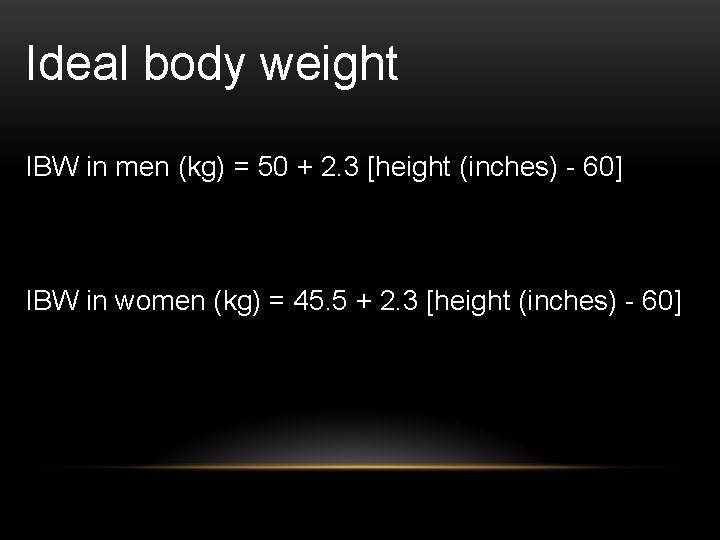
Ideal body weight IBW in men (kg) = 50 + 2. 3 [height (inches) - 60] IBW in women (kg) = 45. 5 + 2. 3 [height (inches) - 60]
II. CLINICAL INFORMATION Medical record Physician and other health care professionals Patient or patient family interviews General observations of the patient’s physical appearance Evaluation of psychosocial background
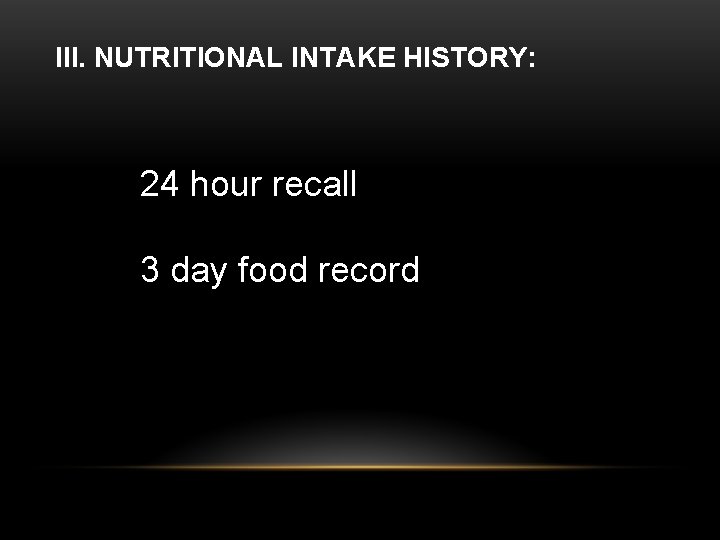
III. NUTRITIONAL INTAKE HISTORY: 24 hour recall 3 day food record
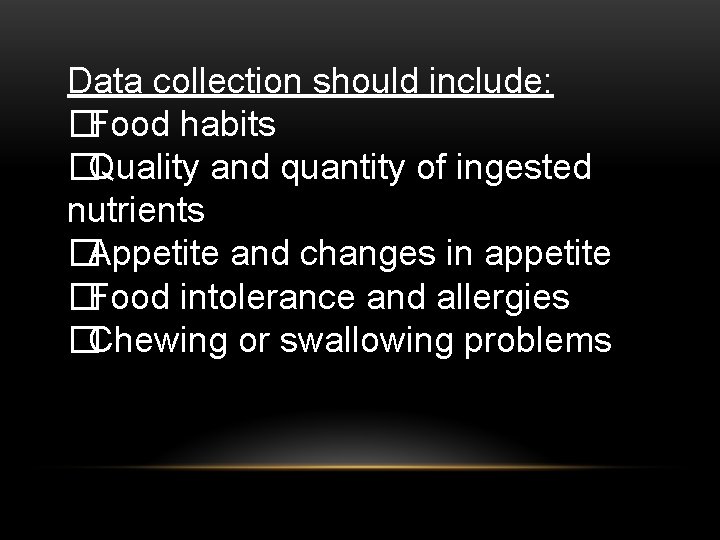
Data collection should include: � Food habits � Quality and quantity of ingested nutrients � Appetite and changes in appetite � Food intolerance and allergies � Chewing or swallowing problems
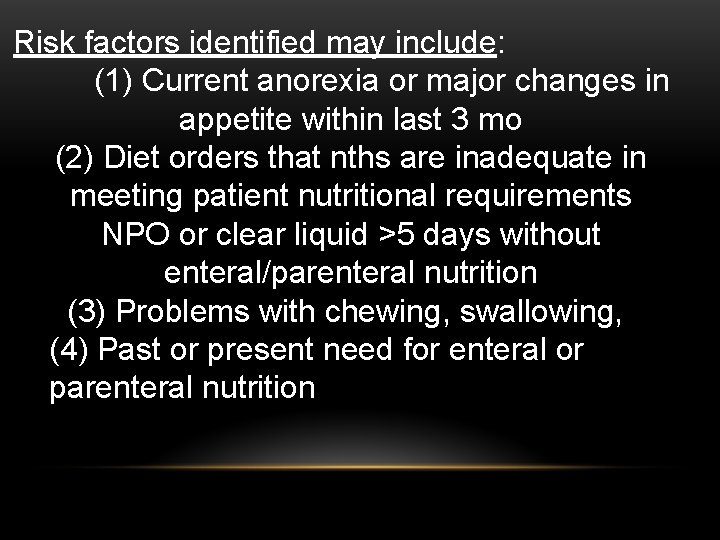
Risk factors identified may include: (1) Current anorexia or major changes in appetite within last 3 mo (2) Diet orders that nths are inadequate in meeting patient nutritional requirements NPO or clear liquid >5 days without enteral/parenteral nutrition (3) Problems with chewing, swallowing, (4) Past or present need for enteral or parenteral nutrition
4)BIOCHEMICAL DATA ASSOCIATED WITH NUTRITIONAL STATUS : Ø Although these lab values are helpful in the assessment of nutritional status, they should be used in combination with other clinical data
Ø TOTAL URINARY NITROGEN ( TUN)* Ø URINARY UREA NITROGEN (UUN)*
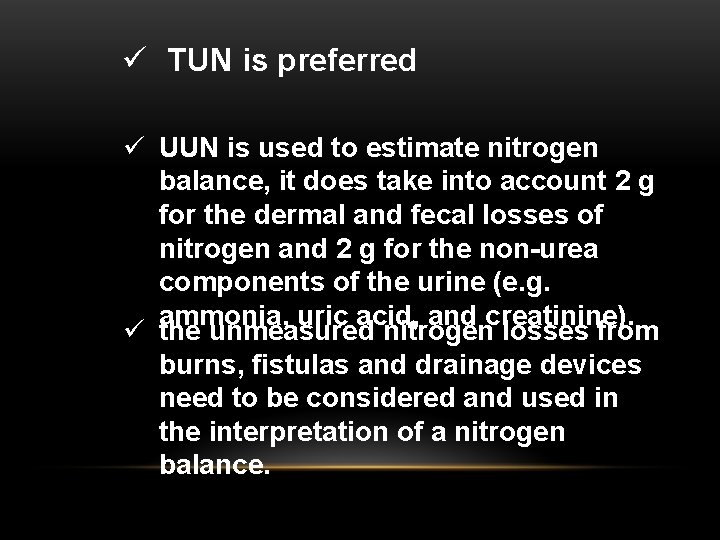
ü TUN is preferred ü UUN is used to estimate nitrogen balance, it does take into account 2 g for the dermal and fecal losses of nitrogen and 2 g for the non-urea components of the urine (e. g. ammonia, uric acid, and creatinine). ü the unmeasured nitrogen losses from burns, fistulas and drainage devices need to be considered and used in the interpretation of a nitrogen balance.
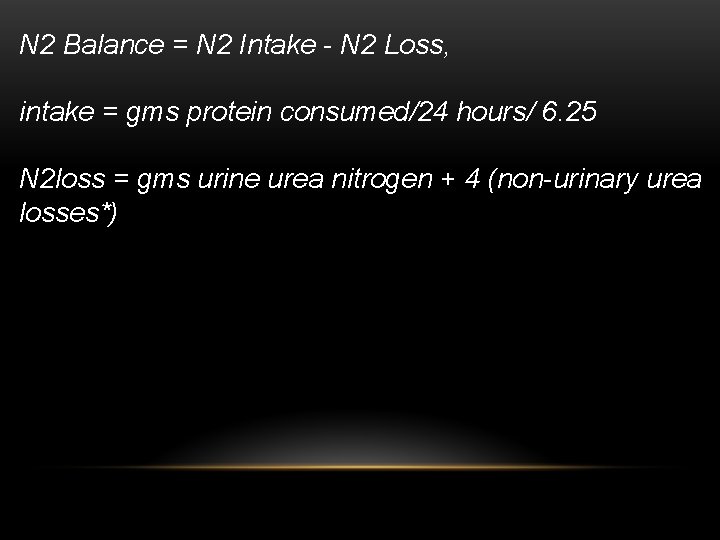
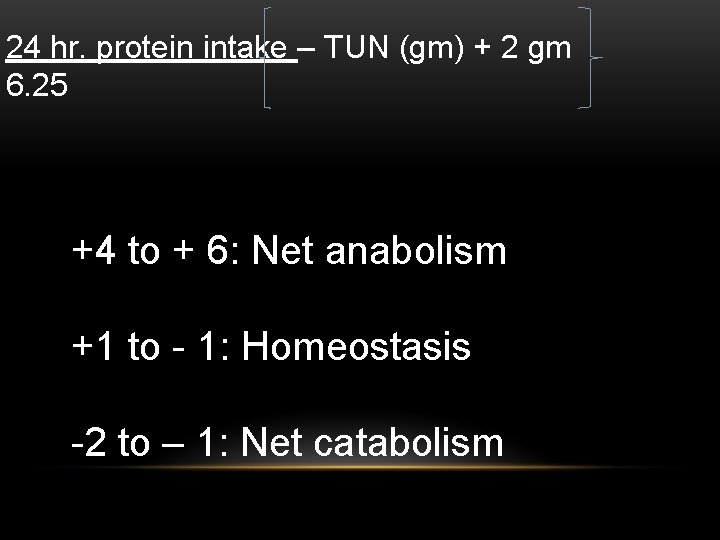
N 2 Balance = N 2 Intake - N 2 Loss, intake = gms protein consumed/24 hours/ 6. 25 N 2 loss = gms urine urea nitrogen + 4 (non-urinary urea losses*)
24 hr. protein intake – TUN (gm) + 2 gm 6. 25 +4 to + 6: Net anabolism +1 to - 1: Homeostasis -2 to – 1: Net catabolism
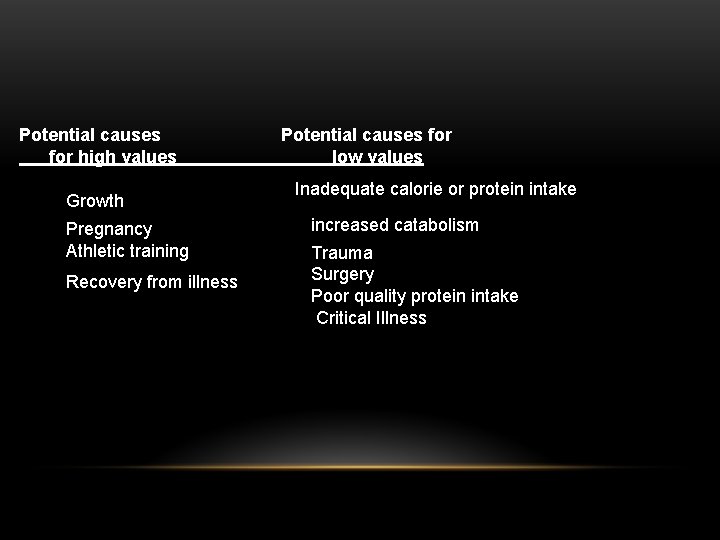
Potential causes for high values Growth Pregnancy Athletic training Recovery from illness Potential causes for low values Inadequate calorie or protein intake increased catabolism Trauma Surgery Poor quality protein intake Critical Illness
24 hr. protein intake –UUN (gm) + 4 gm] 6. 25 +4 to + 6: Net anabolism +1 to - 1: Homeostasis -2 to – 1: Net catabolism
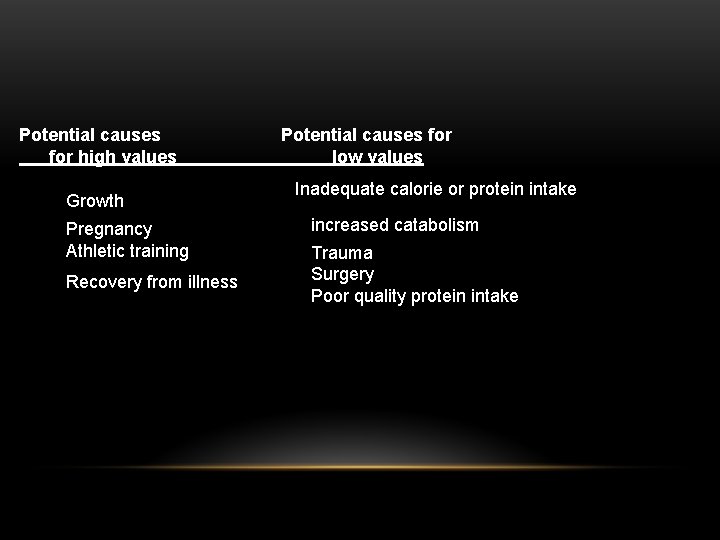
Potential causes for high values Growth Pregnancy Athletic training Recovery from illness Potential causes for low values Inadequate calorie or protein intake increased catabolism Trauma Surgery Poor quality protein intake
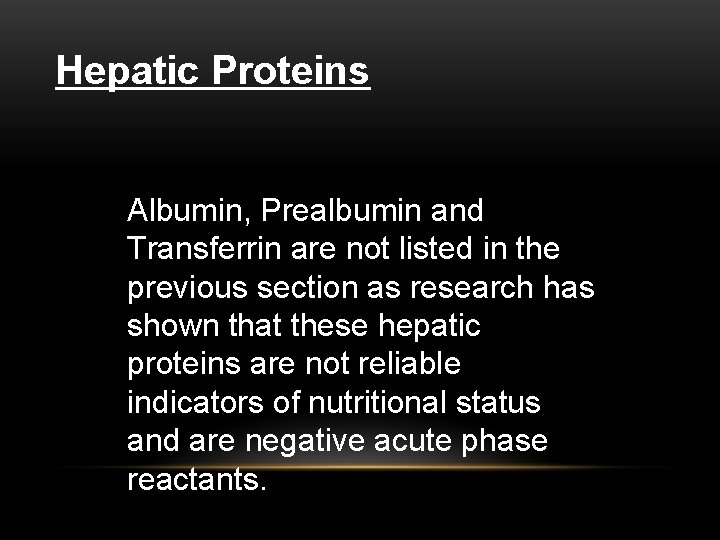
Hepatic Proteins Albumin, Prealbumin and Transferrin are not listed in the previous section as research has shown that these hepatic proteins are not reliable indicators of nutritional status and are negative acute phase reactants.
Albumin, prealbumin, and transferrin should not be used as indicators of nutritional status in hospitalized patients due to the effects of stress and inflammation on these parameters.
REFEEDING SYNDROME Refeeding syndrome is a complication of nutrition repletion that can cause morbidity and mortality in the malnourished patient
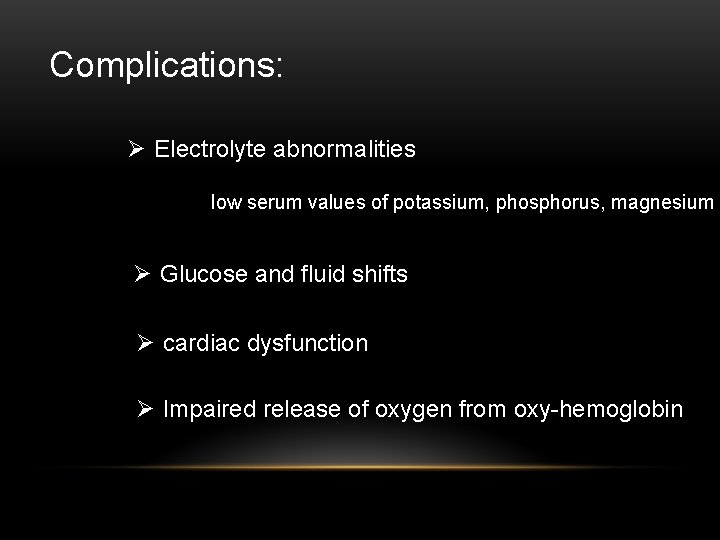
Complications: Ø Electrolyte abnormalities low serum values of potassium, phosphorus, magnesium Ø Glucose and fluid shifts Ø cardiac dysfunction Ø Impaired release of oxygen from oxy-hemoglobin
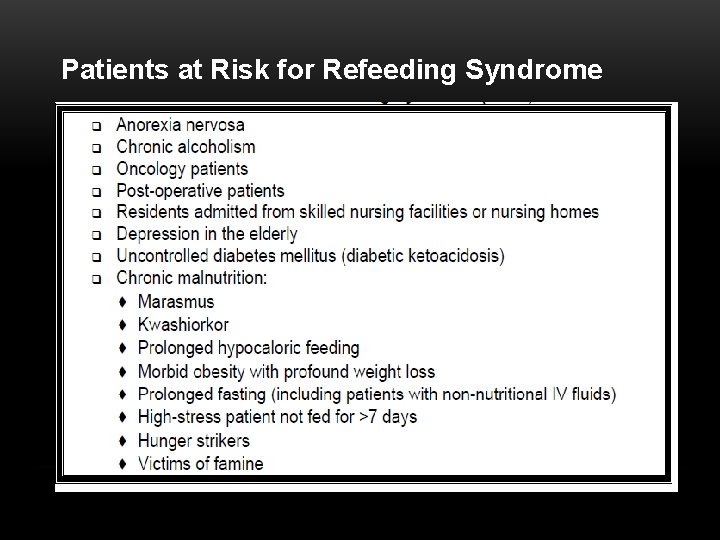
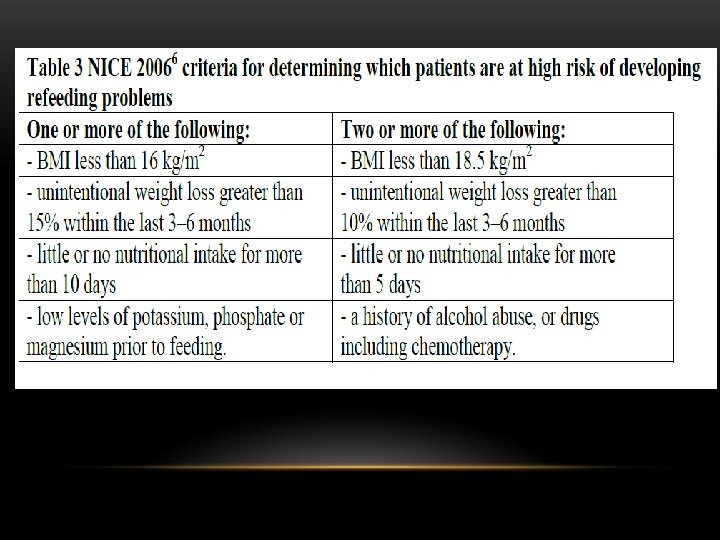
Patients at Risk for Refeeding Syndrome
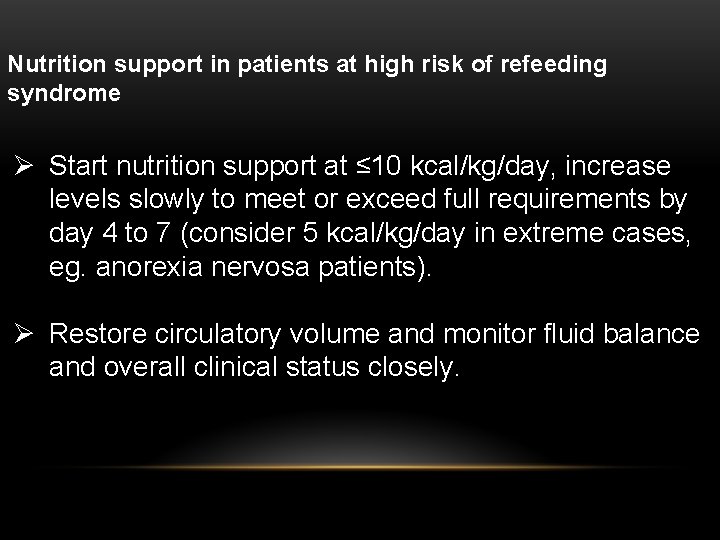
Nutrition support in patients at high risk of refeeding syndrome Ø Start nutrition support at ≤ 10 kcal/kg/day, increase levels slowly to meet or exceed full requirements by day 4 to 7 (consider 5 kcal/kg/day in extreme cases, eg. anorexia nervosa patients). Ø Restore circulatory volume and monitor fluid balance and overall clinical status closely.
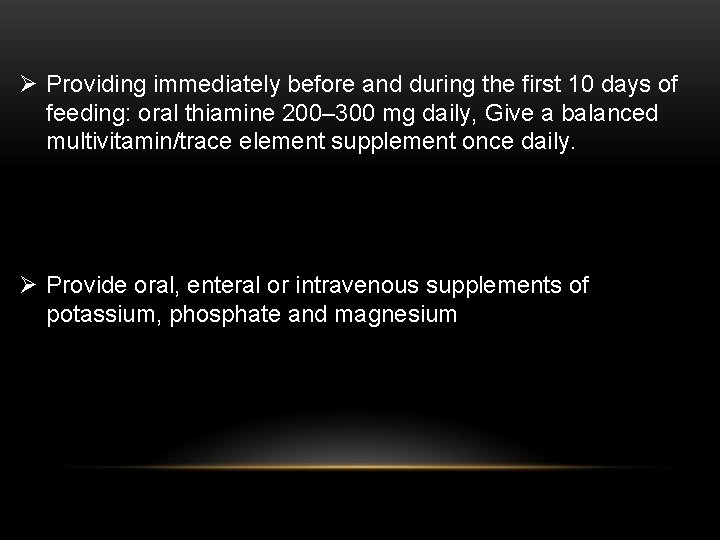
Ø Providing immediately before and during the first 10 days of feeding: oral thiamine 200– 300 mg daily, Give a balanced multivitamin/trace element supplement once daily. Ø Provide oral, enteral or intravenous supplements of potassium, phosphate and magnesium
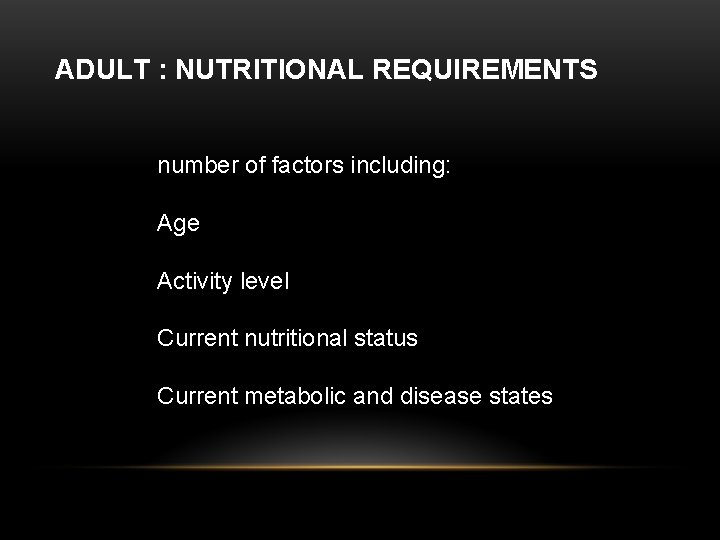
ADULT : NUTRITIONAL REQUIREMENTS number of factors including: Age Activity level Current nutritional status Current metabolic and disease states
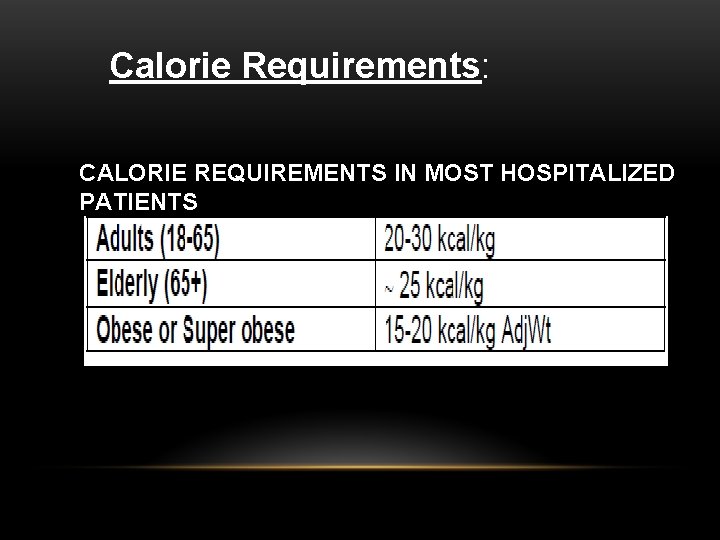
Calorie Requirements: CALORIE REQUIREMENTS IN MOST HOSPITALIZED PATIENTS
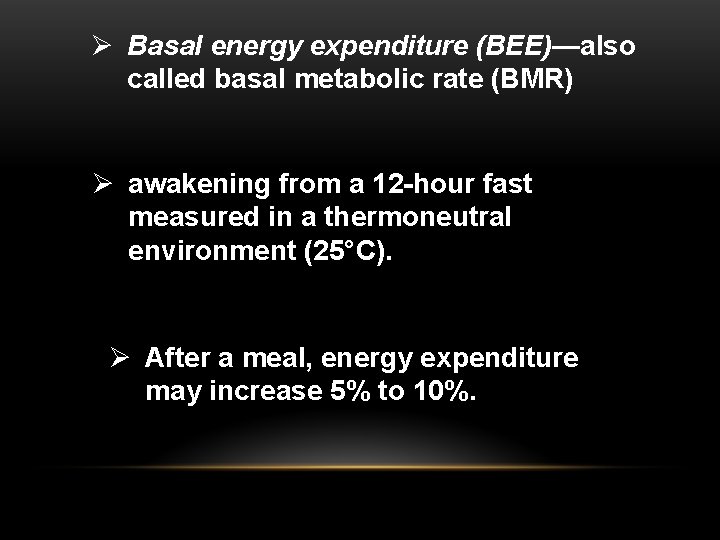
Ø Basal energy expenditure (BEE)—also called basal metabolic rate (BMR) Ø awakening from a 12 -hour fast measured in a thermoneutral environment (25°C). Ø After a meal, energy expenditure may increase 5% to 10%.
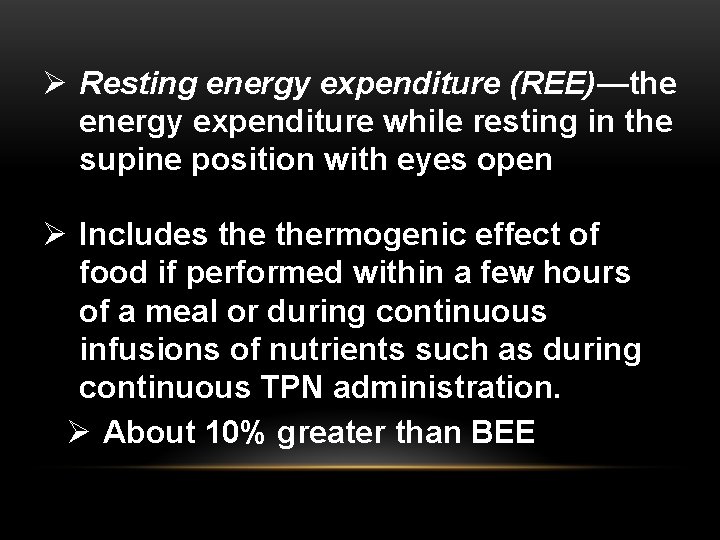
Ø Resting energy expenditure (REE)—the energy expenditure while resting in the supine position with eyes open Ø Includes thermogenic effect of food if performed within a few hours of a meal or during continuous infusions of nutrients such as during continuous TPN administration. Ø About 10% greater than BEE
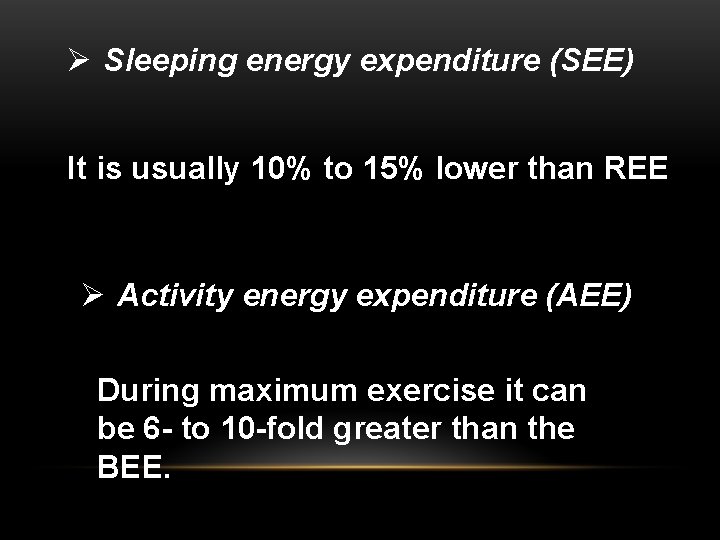
Ø Sleeping energy expenditure (SEE) It is usually 10% to 15% lower than REE Ø Activity energy expenditure (AEE) During maximum exercise it can be 6 - to 10 -fold greater than the BEE.
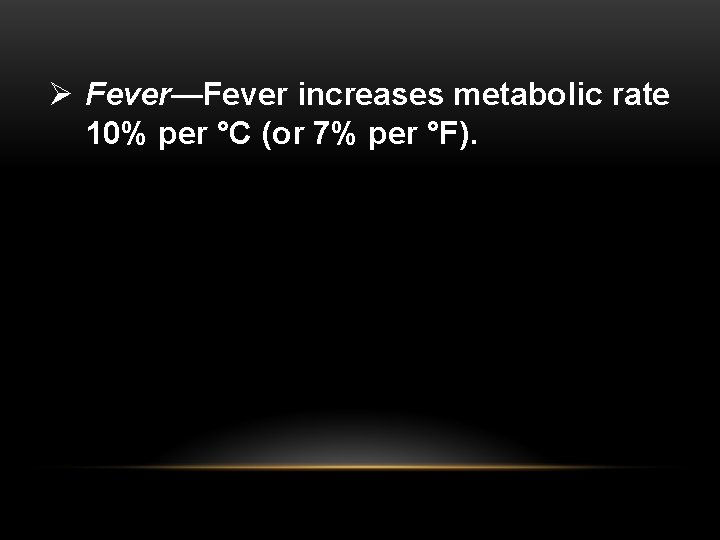
Ø Fever—Fever increases metabolic rate 10% per °C (or 7% per °F).
Ø Total energy expenditure (TEE) the sum of energy expended during periods of sleep, resting, and activity.
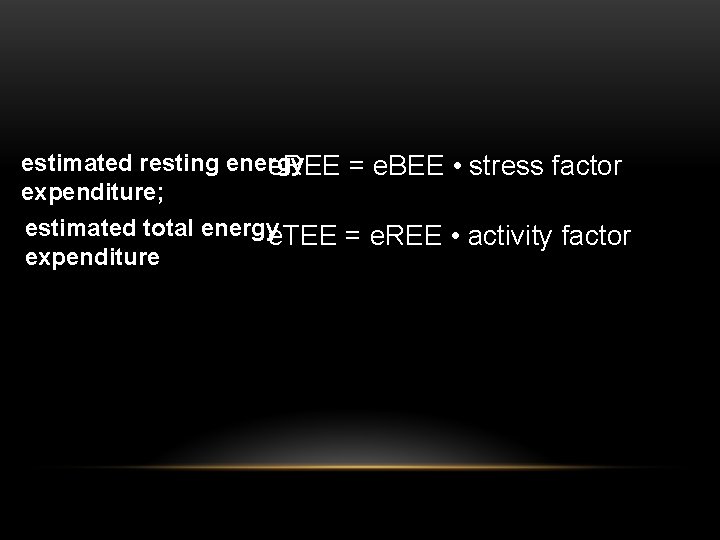
estimated resting energy e. REE = e. BEE • stress factor expenditure; estimated total energye. TEE = e. REE • activity factor expenditure
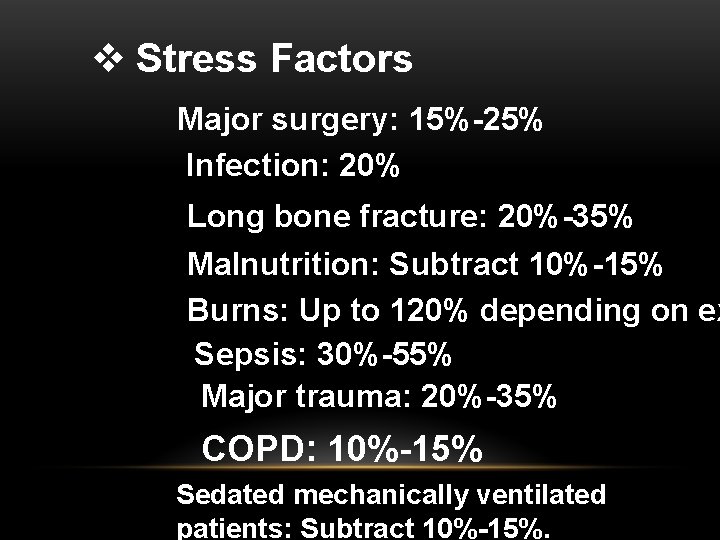
v Stress Factors Major surgery: 15%-25% Infection: 20% Long bone fracture: 20%-35% Malnutrition: Subtract 10%-15% Burns: Up to 120% depending on ex Sepsis: 30%-55% Major trauma: 20%-35% COPD: 10%-15% Sedated mechanically ventilated patients: Subtract 10%-15%.
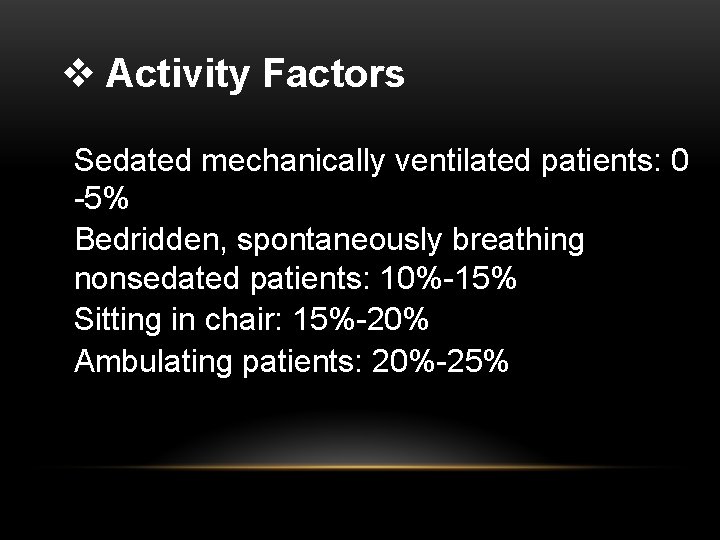
v Activity Factors Sedated mechanically ventilated patients: 0 -5% Bedridden, spontaneously breathing nonsedated patients: 10%-15% Sitting in chair: 15%-20% Ambulating patients: 20%-25%
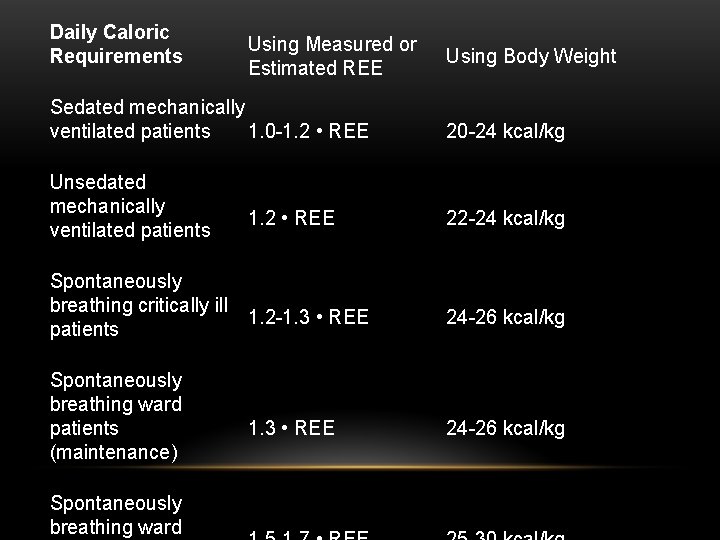
Daily Caloric Requirements Using Measured or Estimated REE Sedated mechanically ventilated patients 1. 0 -1. 2 • REE Unsedated mechanically ventilated patients 1. 2 • REE Spontaneously breathing critically ill 1. 2 -1. 3 • REE patients Spontaneously breathing ward patients (maintenance) Spontaneously breathing ward 1. 3 • REE Using Body Weight 20 -24 kcal/kg 22 -24 kcal/kg 24 -26 kcal/kg
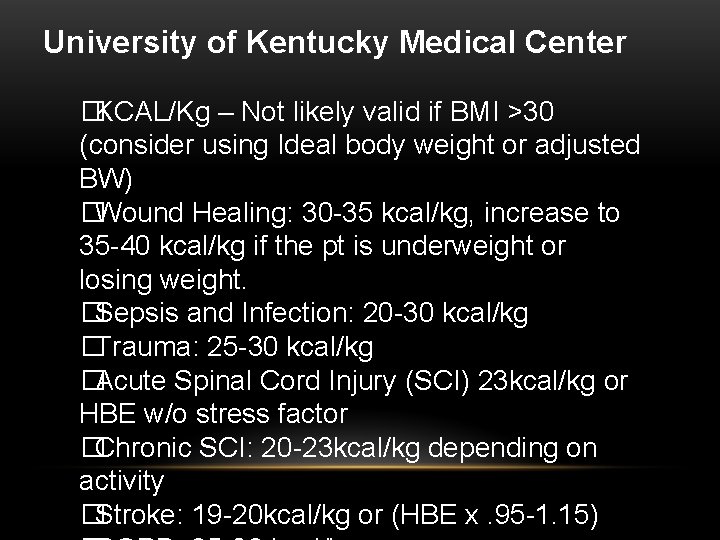
University of Kentucky Medical Center � KCAL/Kg – Not likely valid if BMI >30 (consider using Ideal body weight or adjusted BW) � Wound Healing: 30 -35 kcal/kg, increase to 35 -40 kcal/kg if the pt is underweight or losing weight. � Sepsis and Infection: 20 -30 kcal/kg � Trauma: 25 -30 kcal/kg � Acute Spinal Cord Injury (SCI) 23 kcal/kg or HBE w/o stress factor � Chronic SCI: 20 -23 kcal/kg depending on activity � Stroke: 19 -20 kcal/kg or (HBE x. 95 -1. 15)
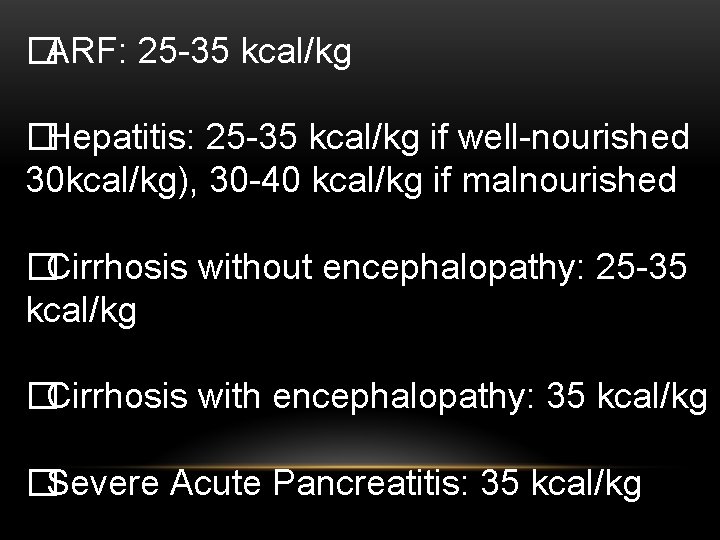
� ARF: 25 -35 kcal/kg � Hepatitis: 25 -35 kcal/kg if well-nourished 30 kcal/kg), 30 -40 kcal/kg if malnourished � Cirrhosis without encephalopathy: 25 -35 kcal/kg � Cirrhosis with encephalopathy: 35 kcal/kg � Severe Acute Pancreatitis: 35 kcal/kg
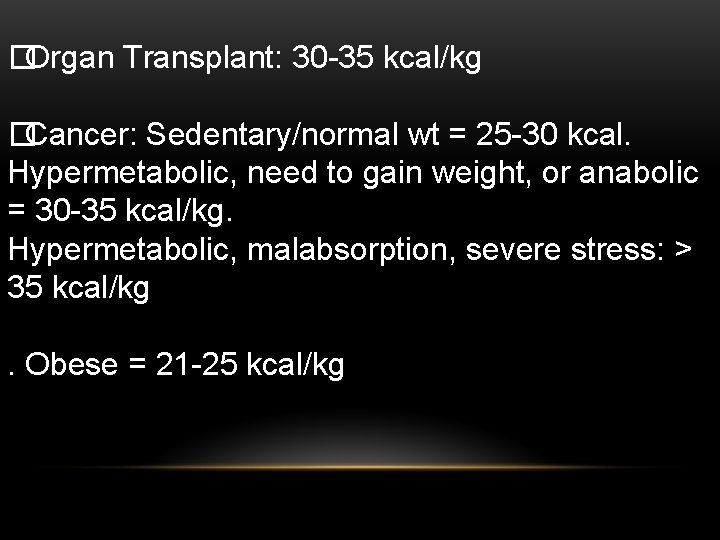
� Organ Transplant: 30 -35 kcal/kg � Cancer: Sedentary/normal wt = 25 -30 kcal. Hypermetabolic, need to gain weight, or anabolic = 30 -35 kcal/kg. Hypermetabolic, malabsorption, severe stress: > 35 kcal/kg. Obese = 21 -25 kcal/kg
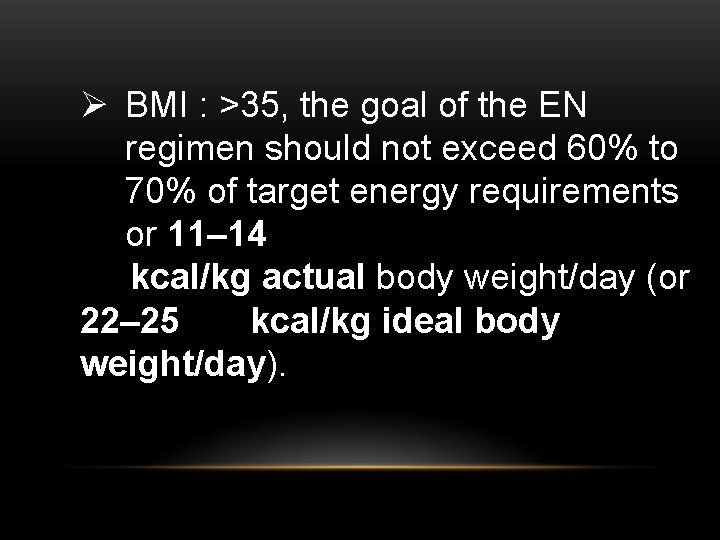
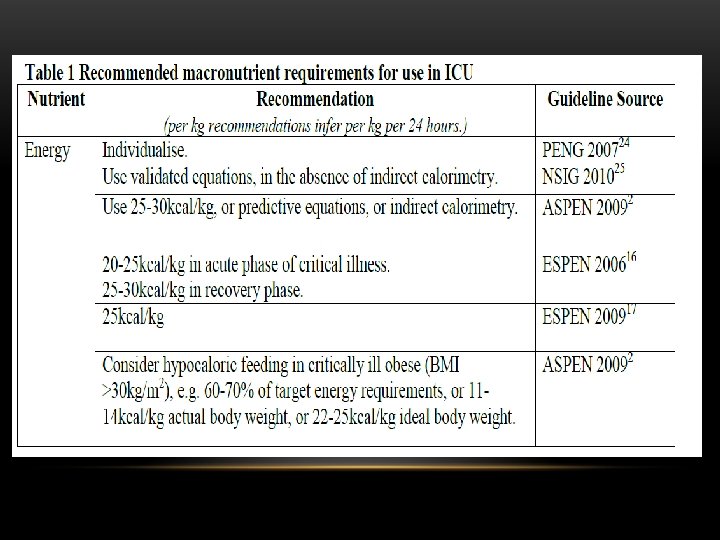
Ø BMI : >35, the goal of the EN regimen should not exceed 60% to 70% of target energy requirements or 11– 14 kcal/kg actual body weight/day (or 22– 25 kcal/kg ideal body weight/day).
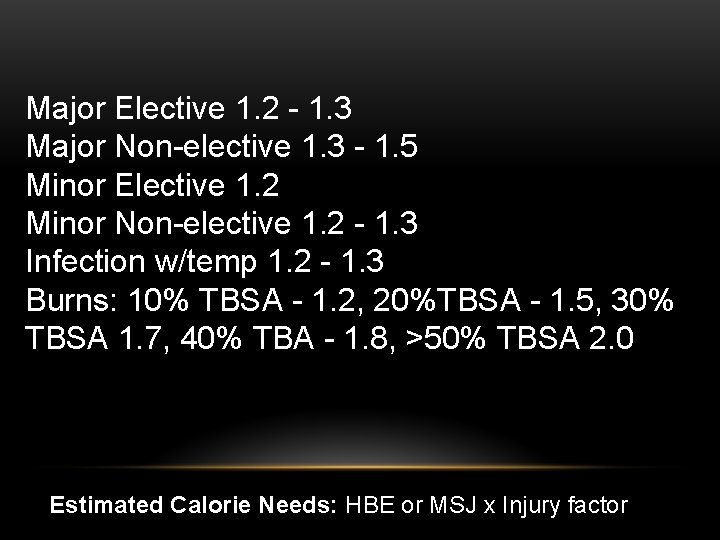
Major Elective 1. 2 - 1. 3 Major Non-elective 1. 3 - 1. 5 Minor Elective 1. 2 Minor Non-elective 1. 2 - 1. 3 Infection w/temp 1. 2 - 1. 3 Burns: 10% TBSA - 1. 2, 20%TBSA - 1. 5, 30% TBSA 1. 7, 40% TBA - 1. 8, >50% TBSA 2. 0 Estimated Calorie Needs: HBE or MSJ x Injury factor
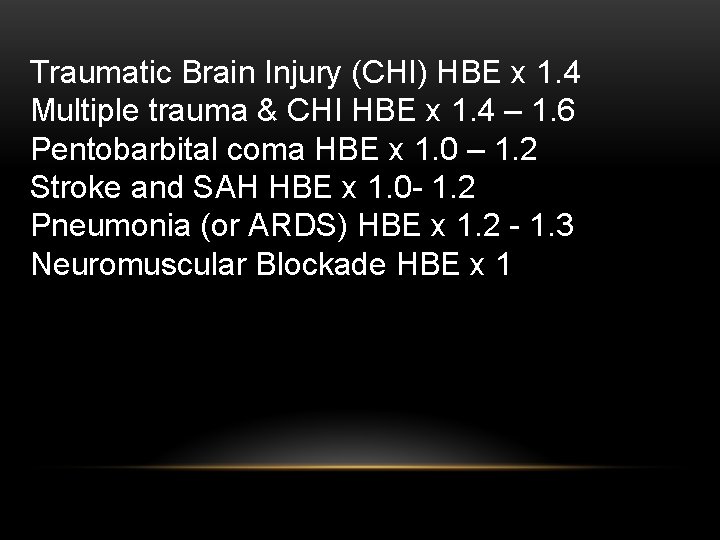
Traumatic Brain Injury (CHI) HBE x 1. 4 Multiple trauma & CHI HBE x 1. 4 – 1. 6 Pentobarbital coma HBE x 1. 0 – 1. 2 Stroke and SAH HBE x 1. 0 - 1. 2 Pneumonia (or ARDS) HBE x 1. 2 - 1. 3 Neuromuscular Blockade HBE x 1
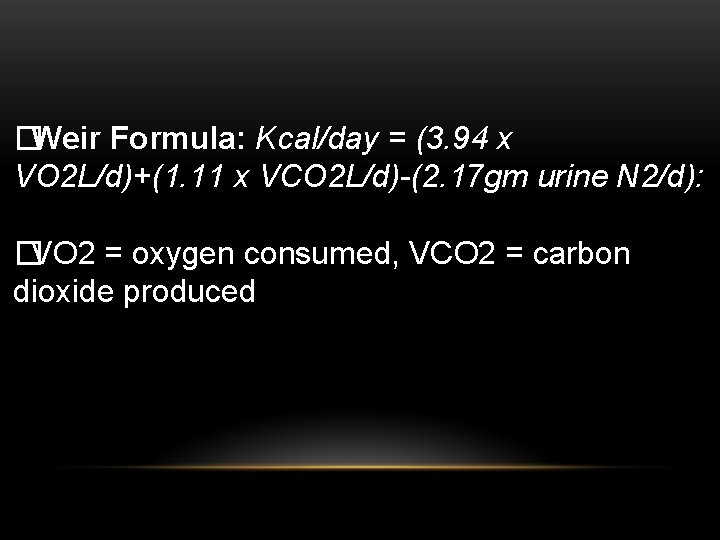
� Weir Formula: Kcal/day = (3. 94 x VO 2 L/d)+(1. 11 x VCO 2 L/d)-(2. 17 gm urine N 2/d): � VO 2 = oxygen consumed, VCO 2 = carbon dioxide produced
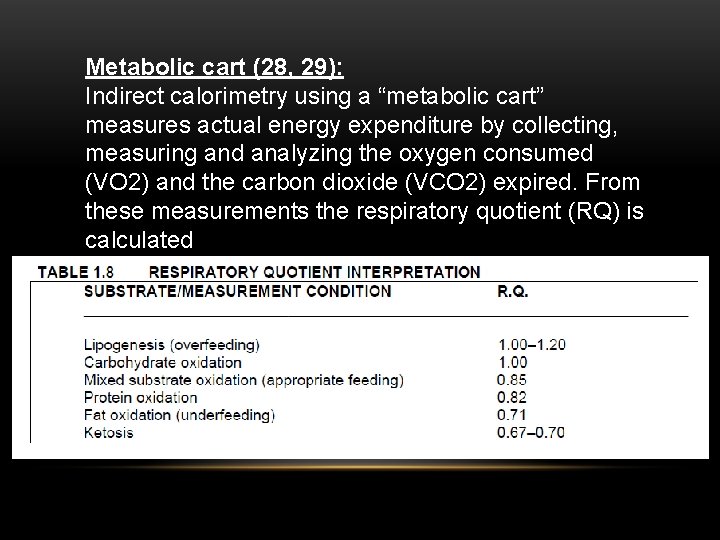
Metabolic cart (28, 29): Indirect calorimetry using a “metabolic cart” measures actual energy expenditure by collecting, measuring and analyzing the oxygen consumed (VO 2) and the carbon dioxide (VCO 2) expired. From these measurements the respiratory quotient (RQ) is calculated
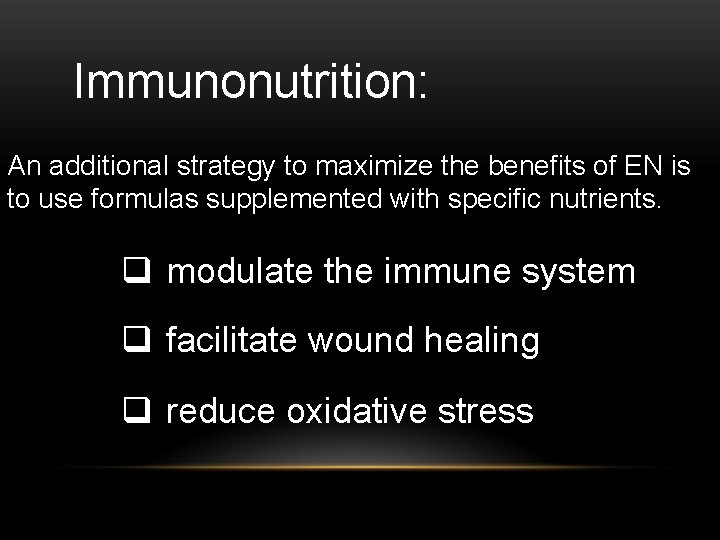
Immunonutrition: An additional strategy to maximize the benefits of EN is to use formulas supplemented with specific nutrients. q modulate the immune system q facilitate wound healing q reduce oxidative stress
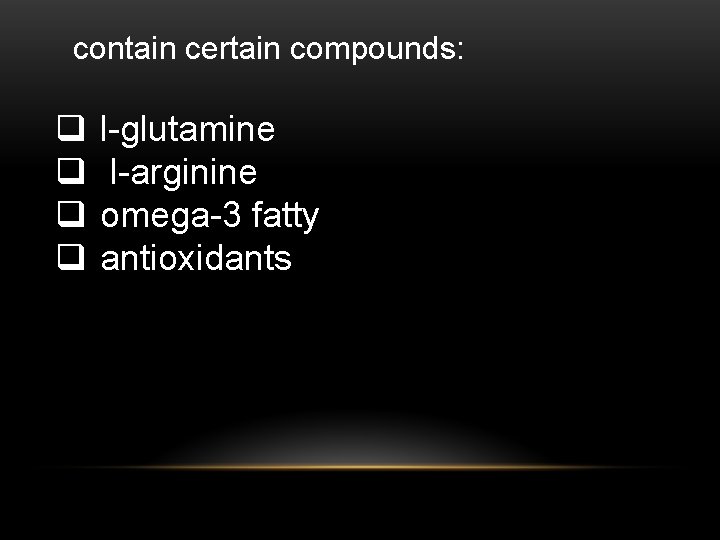
contain certain compounds: q q l-glutamine l-arginine omega-3 fatty antioxidants
L-ARGININE q plays fundamental roles in protein metabolism q polyamine synthesis q critical substrate for nitricoxide (NO) production
stimulates the release ; q growth hormone q insulin growth factor and insulin q all of which may stimulate protein synthesis and promote wound healing. The enzyme, l-arginase, metabolizes l-arginine to l-ornithine, an amino acid implicated in wound healing.
Guidelines for arginine supplementation can be summarized as follows: q. Normal l-arginine intake is 3 to 5 g/d. q. Higher than normal (supraphysiologic) l-arginin supplementation is necessary
q. Dietary supplementation with l-arginine alone should not be used, as only diets q. Immunonutrition incorporating supraphysiologic quantities Of l-arginine ideally should be started preoperatively as an oral dietary supplement and continued in the postoperative
q. A clear benefit of l-arginine-containing immunonutrition has not been observed in medical patients, particularly those with sepsis. q. All elective surgical patient populations, including patients undergoing operations for head and neck cancer and patients undergoing cardiac or GI surgery, appear to benefi from the useof immunonutrition formulas containing -arginine.
OMEGA-3 FATTY ACIDS qincorporated into phospholipids and thereby influence the structure and function of cellular qas substrates for the enzymes membranes. cyclooxygenase, lipoxygenase, and cytochrome P 450 qincreasing the quantity of omega-3 fatty acids oxidase (found in fish oils) in the diet reduces platelet aggregation, slows blood clotting, and limits the production of proinflammatory cytokines.
qadministration of dietary lipids rich in omega-3 fatty acids can modify the lipid profile and favorably affect clinical outcome a mong critically ill patients with ARDS
L-GLUTAMINE: q. The amino acid, l-glutamine, plays a central role in nitrogen transport within the body. qused as a fuel by rapidly dividing cells, particularly lymphocytes and gut epithelial cells. qsubstrate for synthesis of the important endogenous antioxidant qtranslocation of enteric bacteria and endotoxins is reduced and infective complications less
l-Glutamine unfortunately is unstable in aqueous solutions. To overcome this problem, l-glutamine is added to TPN solutions as adipeptide (l-alanyl-l-glutamine). In patients receiving EN, l-glutamine powder can be dissolved into the nutrition formulation.
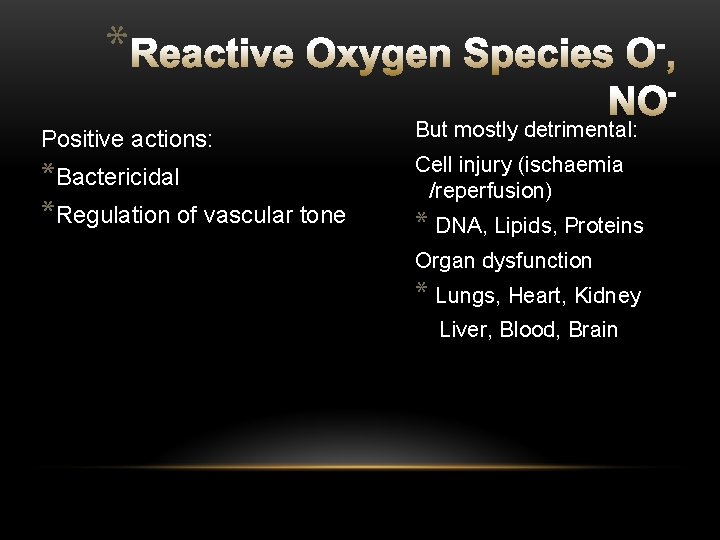
* *Normal state: reduction > oxidation *Acute stress: injury/sepsis causes acute dysregulation *Mitochondria are both sources and targets *Observational studies: anti-oxidant capacity inversely correlated with disease severity due to depletion during oxidative stress
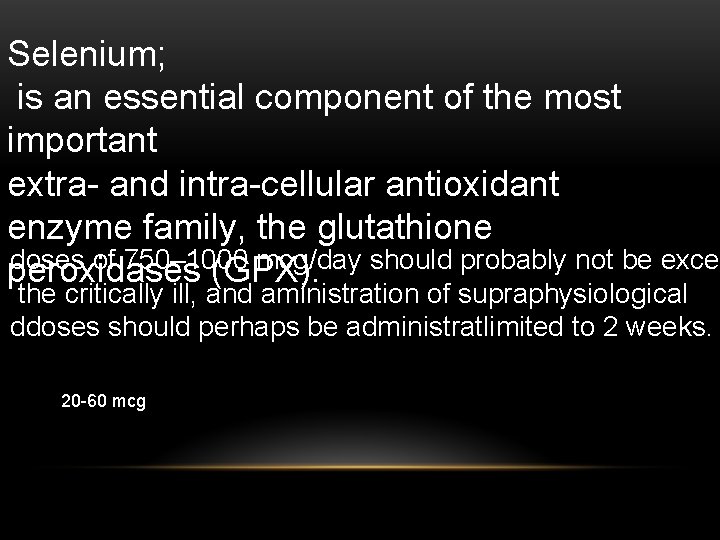
including superoxide dismutase, catalase, glutathione peroxidase, and reductase (with zinc and selenium as co-factors), aswell as sulphydryl donors (glutathione) and vitamins E and C.
* Positive actions: But mostly detrimental: *Bactericidal *Regulation of vascular tone * DNA, Lipids, Proteins Cell injury (ischaemia /reperfusion) Organ dysfunction * Lungs, Heart, Kidney Liver, Blood, Brain
Selenium; is an essential component of the most important extra- and intra-cellular antioxidant enzyme family, the glutathione doses of 750– 1000 mcg/day should probably not be excee peroxidases (GPX). the critically ill, and aministration of supraphysiological ddoses should perhaps be administratlimited to 2 weeks. 20 -60 mcg
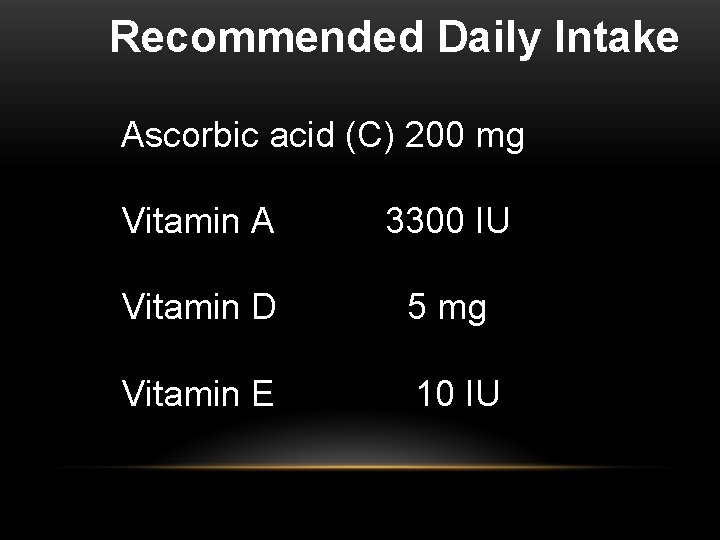
Recommended Daily Intake Ascorbic acid (C) 200 mg Vitamin A 3300 IU Vitamin D 5 mg Vitamin E 10 IU
Use of these products has been called immunonutrition
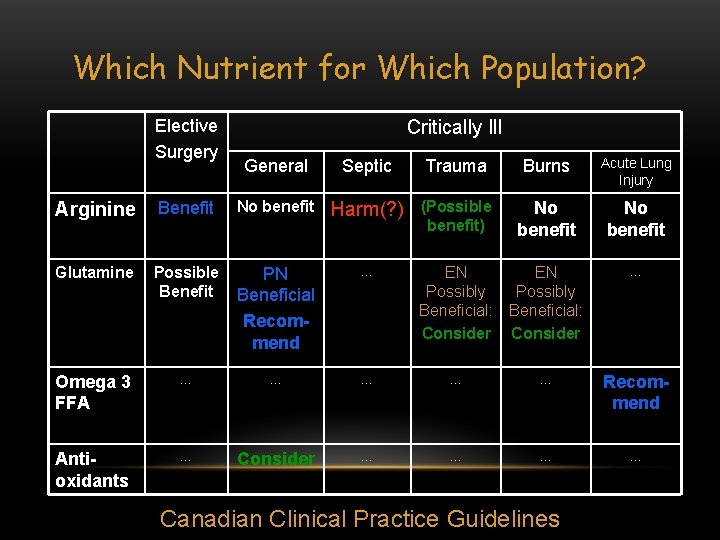
Which Nutrient for Which Population? Elective Surgery Critically Ill General Septic Trauma Burns Acute Lung Injury Arginine Benefit No benefit Harm(? ) (Possible benefit) No benefit Glutamine Possible Benefit PN Beneficial Recommend … EN Possibly Beneficial: Consider … Omega 3 FFA … … … Recommend Antioxidants … Consider … … Canadian Clinical Practice Guidelines