
The Bryophytes NONVASCULAR PLANTS no plumbing TERRESTRIAL Mosses
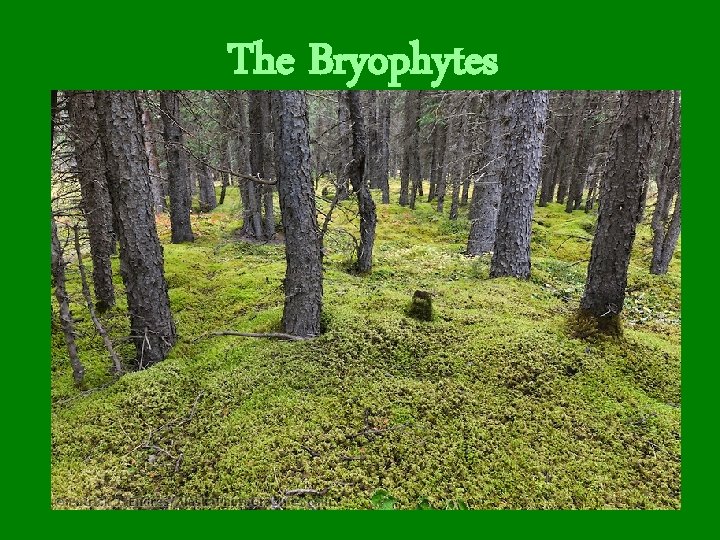
The Bryophytes NON-VASCULAR PLANTS ‘no plumbing’ TERRESTRIAL Mosses AQUATIC Algae The Bryophytes Phylum Chlorophyta Phylum Rhodophyta Phylum Phaeophyta

THE BRYOPHYTES (non-vascular plants) PHYLUM HEPATOPHYTA: the liverworts PHYLUM ANTHOCEROPHYTA: the hornworts PHYLUM BRYOPHYTA: the mosses
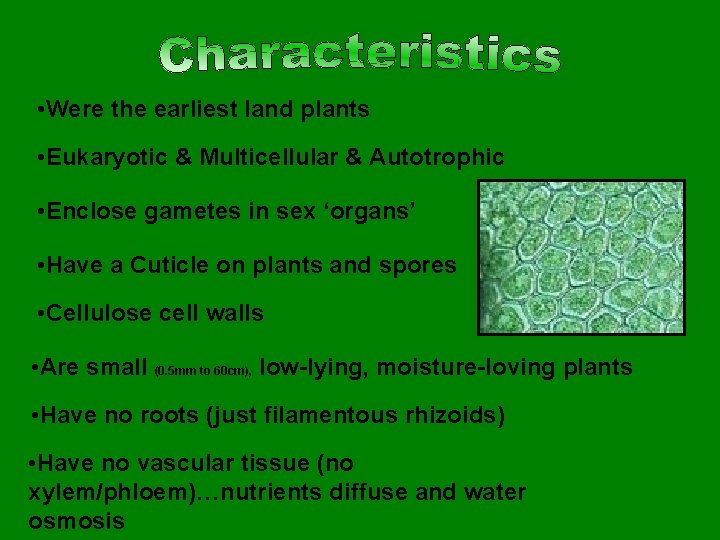
• Were the earliest land plants • Eukaryotic & Multicellular & Autotrophic • Enclose gametes in sex ‘organs’ • Have a Cuticle on plants and spores • Cellulose cell walls • Are small (0. 5 mm to 60 cm), low-lying, moisture-loving plants • Have no roots (just filamentous rhizoids) • Have no vascular tissue (no xylem/phloem)…nutrients diffuse and water osmosis
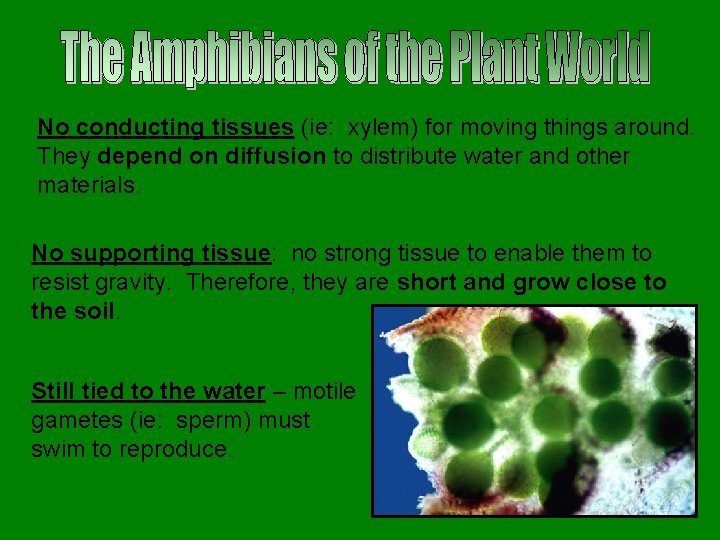
No conducting tissues (ie: xylem) for moving things around. They depend on diffusion to distribute water and other materials. No supporting tissue: no strong tissue to enable them to resist gravity. Therefore, they are short and grow close to the soil. Still tied to the water – motile gametes (ie: sperm) must swim to reproduce.

1. The sporophyte has a stalk with support and conductive tissue. Releases the spores.
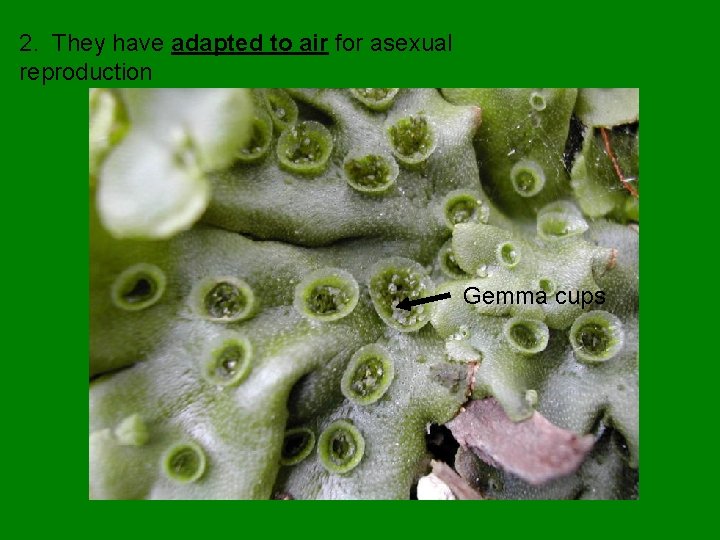
2. They have adapted to air for asexual reproduction Gemma cups

Common name: Liverworts Growth habit: Multicellular: thallus Conductive cells: None Asexual reproduction: Gemmae (multicellular propagules) Sexual reproduction: homosporous Recognized by: Sporophytes, archegoniospores, antheridiospores, gemma cups, thallus.

GAMETOPHYTE: THALLUS

Conocephalum conicum

Archegoniophores (girl parts) Antheridiophores (boy parts)

Sporophyte Releases spores
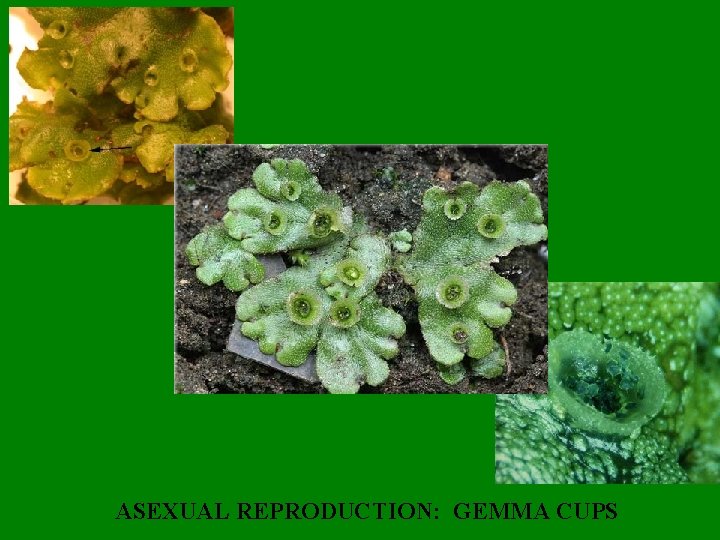
ASEXUAL REPRODUCTION: GEMMA CUPS
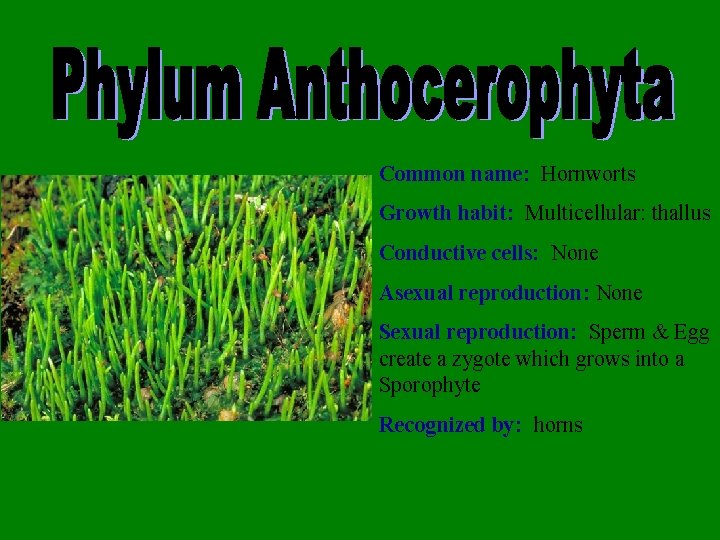
Common name: Hornworts Growth habit: Multicellular: thallus Conductive cells: None Asexual reproduction: None Sexual reproduction: Sperm & Egg create a zygote which grows into a Sporophyte Recognized by: horns

SPOROPHYTES
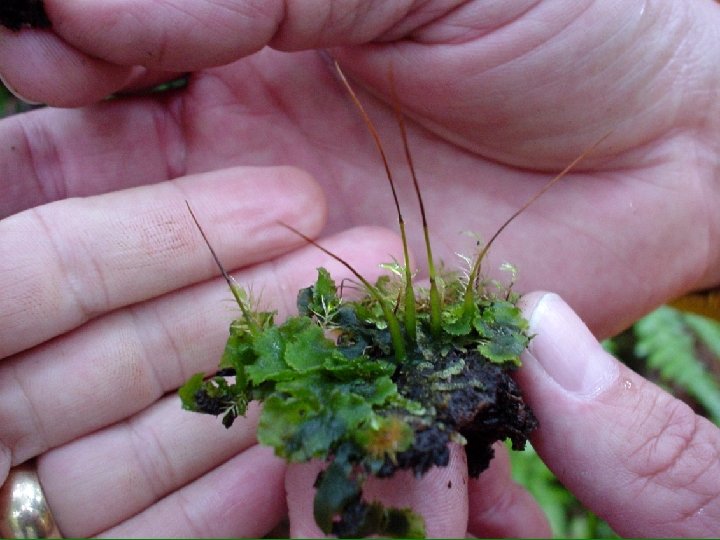

GAMETOPHYTES
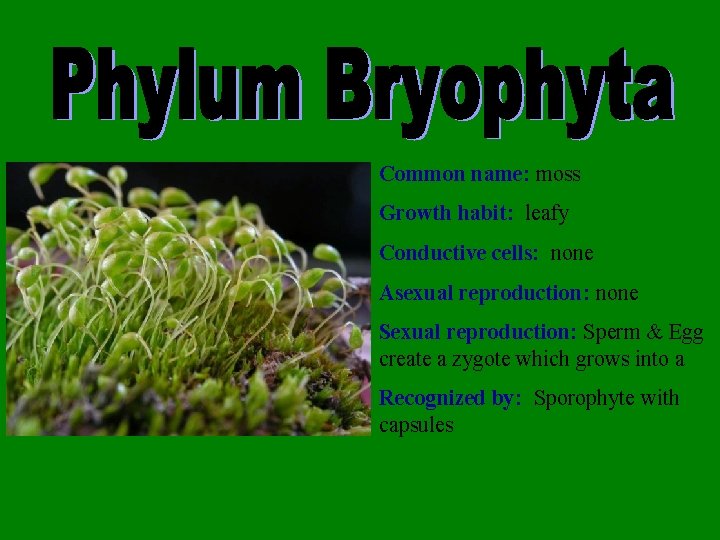
Common name: moss Growth habit: leafy Conductive cells: none Asexual reproduction: none Sexual reproduction: Sperm & Egg create a zygote which grows into a Recognized by: Sporophyte with capsules

GAMETOPHYTES Buckiella undulata Plagiomnium insigne Rhytidiadelphus triquetrus Hylocomium splendens
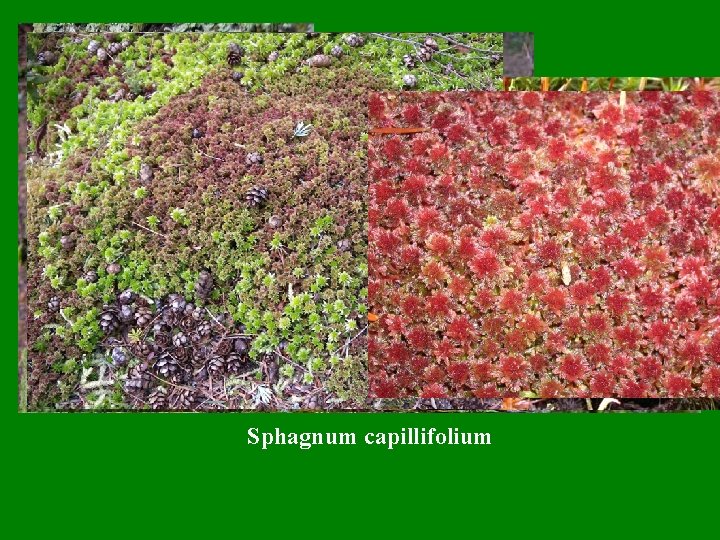
Dicranum scoparium Polytrichastrum Dicranumalpinum tauricum Polytrichum juniperinum Sphagnum capillifolium
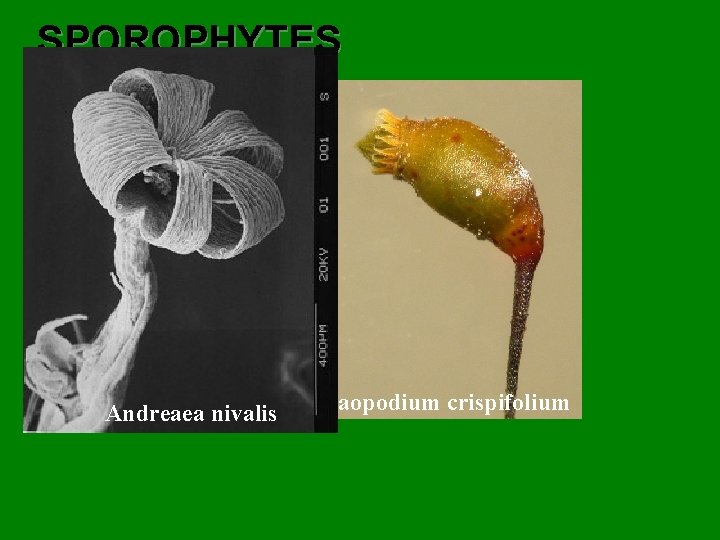
SPOROPHYTES Grimmia pulvinata Buxbaumia Andreaea aphylla nivalis Claopodium crispifolium
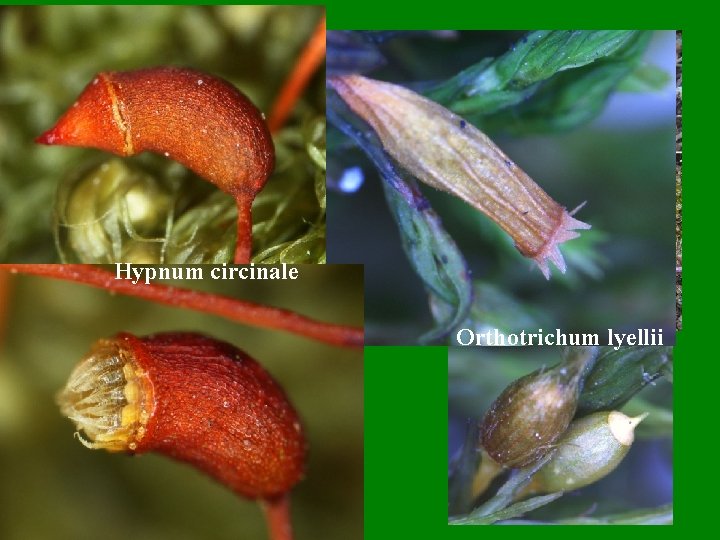
Hypnum circinale Funaria hygrometrica Orthotrichum lyellii Sphagnum sp

Peristome teeth
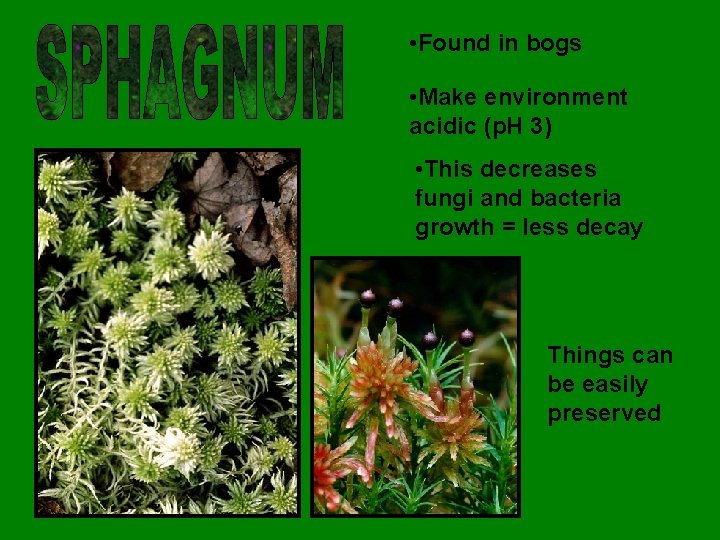
• Found in bogs • Make environment acidic (p. H 3) • This decreases fungi and bacteria growth = less decay Things can be easily preserved
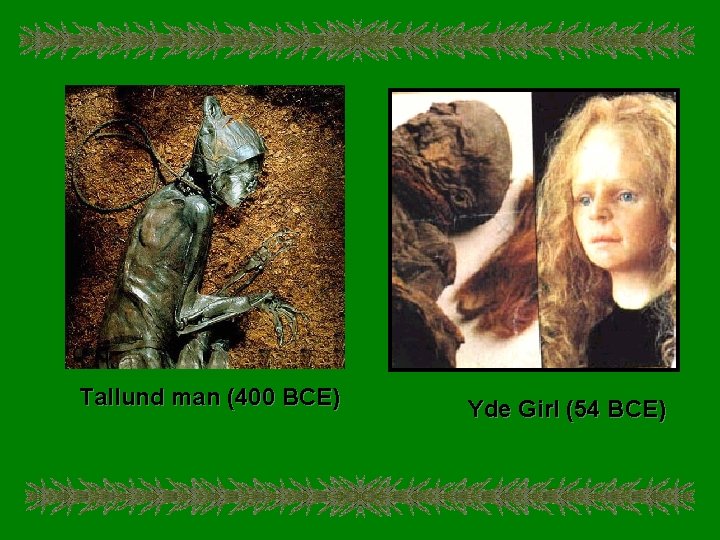
Tallund man (400 BCE) Yde Girl (54 BCE)
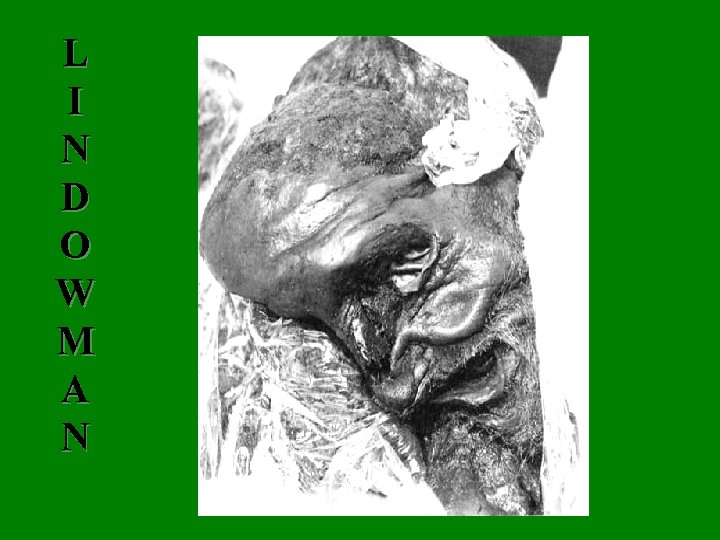
L I N D O W M A N
Used in horticulture As fuel Surgical dressing in WWI Bedding, diapers and sanitary pads (present day) Sphagnol (Swedish extract: used to treat skin disease and insect bites) Chinese extract: used to treat hemorrhaging disease Paleoclimatology: can study what past by looking at spores and eye was growing in the pollen
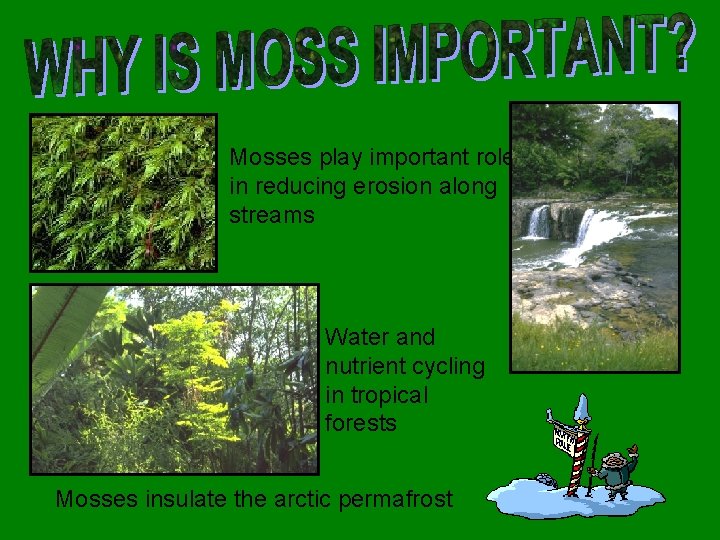
Mosses play important roles in reducing erosion along streams Water and nutrient cycling in tropical forests Mosses insulate the arctic permafrost

- Slides: 28