painting a moving train harold kudler m d






- Slides: 103
painting a moving train… harold kudler, m. d. visn 6 deployment health mental illness research, education and clinical center (mirecc) department of veterans affairs
introduction “When I come to feeling overwhelmed…I want a one-onone talk with a trained psychiatrist who’s either been to war or understands war. ” --Staff Sgt. Gladys Santos, who attempted suicide after three tours in Iraq. Newsweek February 11, 2008 Painting a Moving Train 2
introduction “The most complex and dangerous conflicts, the most harrowing operations, and the most deadly wars, occur in the head. ” (Anthony Swafford, Jarhead from PBS video Operation Homecoming) Painting a Moving Train 3
introduction “For the first time in American history, 90% of wounded (soldiers) survive their injuries” “A greater percentage of men and women are coming home with …TBI and severe Posttraumatic Stress. ” (Alive Day Memories: Home from Iraq HBO documentary Painting a Moving Train 4
introduction How many of you are: • A Military Member or a Veteran? • Spouse of a veteran ? • Other family member of veteran? Painting a Moving Train 5
introduction How many of you are: • Psychiatrists, physicians? • Substance abuse counselors? • Psychologists? • Social workers, counselors (including schools)? • Psychiatric nurses or other nurses? Painting a Moving Train 6
introduction 1. Painting a Moving Train General Magnus’ Analogy 2. Scope of issue – why this training? Painting a Moving Train 7
Scope of the Issue • Length of current combat operations – As of November 27, 2006, war in Iraq has been going on longer than WWII. • An all volunteer force = multiple deployments Painting a Moving Train 8 8
scope of the issue • 1 ½ million service members have served in Iraq and Afghanistan. • “The war in Iraq remains very personal. Over 75% of Soldiers and Marines surveyed reported being in situations where they could be seriously injured or killed ; 62 -66% knew someone seriously injured or killed ; more than on third described an event that caused them intense fear, helplessness or horror. ” Painting a Moving Train --From the Office of Surgeon 9 General Mental Health
scope of the issue • “The challenges are enormous and the consequences of non-performance are significant. Data…indicate that 38% of Soldiers and 31% of Marines report psychological symptoms. Among members of the National Guard, the figure rises to 49%. Further, psychological concerns are significantly higher among those with repeated deployments, a rapidly growing cohort. --Report of the Do. D Task Force on Mental Health, June 2007 Painting a Moving Train 10
scope of the issue • Psychological concerns among family members of deployed and returning OEF/OIF veterans, while yet to be fully quantified, are also an area of concern. Hundreds of thousands of children have experienced the deployment of a parent…” --Report of the Do. D Task Force on Mental Health, June 2007 11
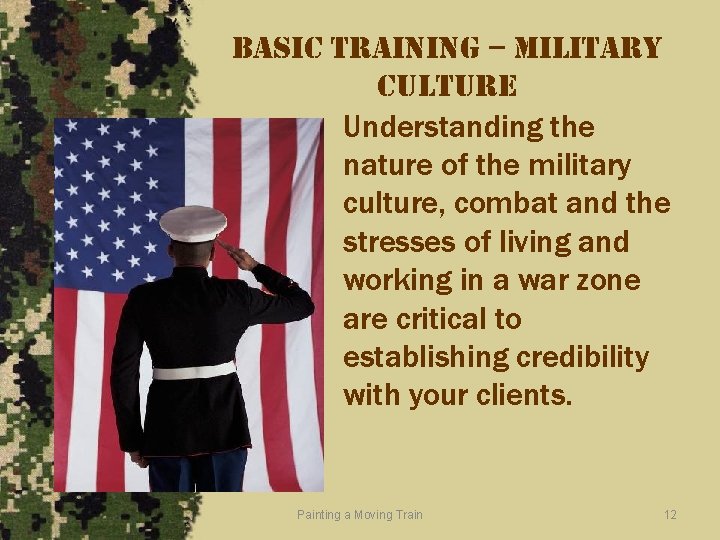
basic training – military culture Understanding the nature of the military culture, combat and the stresses of living and working in a war zone are critical to establishing credibility with your clients. Painting a Moving Train 12
basic training – military culture • Army – Army National Guard • Navy • Marine Corps • Air Force – Air National Guard • Coast Guard* Painting a Moving Train 13
basic training – military culture • High standard of discipline that helps organize and structure the armed forces • Professional ethos of loyalty and selfsacrifice that maintains order during battle • Distinct set of ceremony and etiquette that create shared rituals and common identities • Emphasis on group cohesion & esprit de corps that connect service members to each other. Painting a Moving Train 14
basic training – military culture • A word about lingo… Painting a Moving Train 15
who va serves • Of 23. 4 million veterans currently alive, nearly three-quarters served during a war or an official period of conflict • Women account for 8% of all veterans (roughly 1. 8 million women veterans) • About a quarter of the nation's population is potentially eligible for VA benefits and services because they are veterans or family members • VA currently provides health care to 5. 5 million veterans (roughly 1 in 5 veterans) • Roughly 10% of VA users are women veterans http: //www. va. gov/ 16
care access points • 153 medical centers – at least one in each state, Puerto Rico and the District of Columbia • 909 ambulatory care and community-based outpatient clinics • 47 residential rehabilitation treatment programs • 232 Veterans Centers 17
care access points • 88 comprehensive home-care programs • 4 Do. D/VA Polytrauma Centers • My Healthe. Vet http: //www. myhealth. va. gov/ • 21 Veterans Integrated Service Networks (VISNs) 18
oif/oef veterans and va • As of the 4 th Quarter, FY 2008: – 945, 423 OEF/OIF veterans eligible for VA services – 42% (400, 304) have already sought VA care • Their three most common health issues: – Musculoskeletal – Mental Health – Symptoms, Signs and Ill-Defined Conditions 19
beyond the dod/va continuum • Ideally such problems will be picked up somewhere within the Do. D/VA continuum of care but: – If only 42% of All OEF/OIF Veterans eligible for VA care have come to VA where are the other 58%? • There is a “silent majority” of OEF/OIF veterans not coming to VA 20
comparison to the national vietnam veterans readjustment study • Only 20% of the Vietnam Veterans with PTSD at the time of the study had EVER gone to VA for Mental Health Care yet: • 62% of all Vietnam Veterans with PTSD had sought MH care at some point Kulka et al. 1990, Volume II, Table IX-2
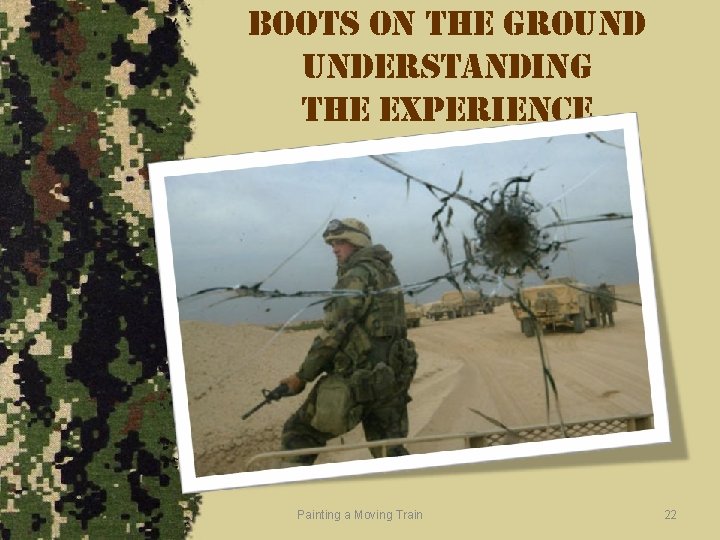
boots on the ground understanding the experience Painting a Moving Train 22
boots on the ground: understanding the experience • There’s nothing normal about war. There’s nothing normal about seeing people losing their limbs, seeing your best friend die. There’s nothing normal about that, and that will never become normal…” • Lt. Col. Paul Pasquina, MD from the movie "Fighting For Life" Painting a Moving Train 23
boots on the ground: understanding the experience In war, there are no unwounded soldiers. --Jose Narosky Painting a Moving Train 24
“I learned early that war forms its own culture. The rush of battle is a potent and often lethal addiction, for war is a drug, one I ingested for many years. . . War exposes the capacity for evil that lurks not far below the surface within all of us. And this is why, for many, war is so hard to discuss once it is over. ” –Chris Hedges, Veteran War Correspondent, War is a Force that Gives Us Meaning Painting a Moving Train 25
Painting a Moving Train 26
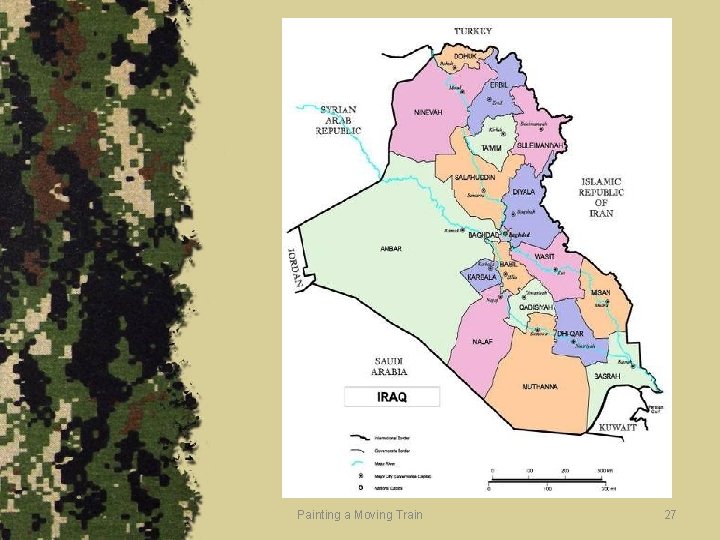
Painting a Moving Train 27
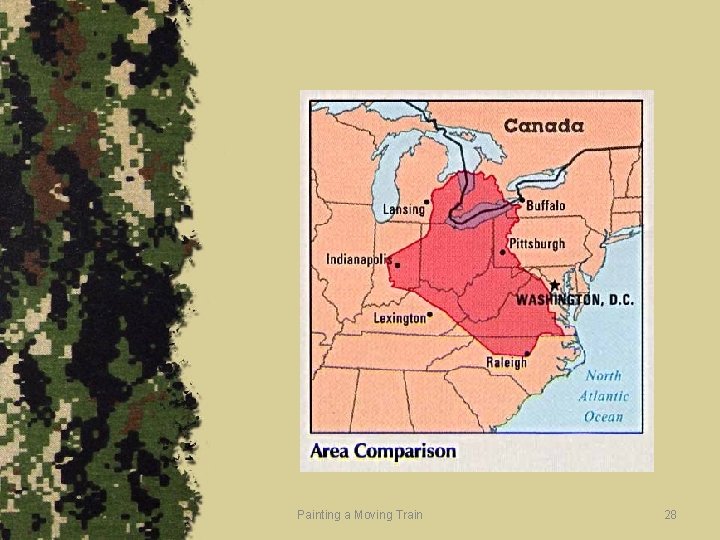
Painting a Moving Train 28
post deployment concerns among active and reserve component soldiers • Study followed 88, 235 US soldiers returning from Iraq who completed both a Post Deployment Health Assessment (PDHA) and, 6 months later, a Post Deployment Health Reassessment (PDHRA) • Screening includes standard measures for – Posttraumatic Stress Disorder (PTSD) – Major Depression – Alcohol Abuse – Traumatic Brain Injury – Other Mental Health problems Milliken, Auchterlonie & Hoge (2007). JAMA 298: 2141 -2148 29
changes among active duty (ad) and reserve component (rc) soldiers at pdhra – Roughly half of those with PTSD sx on PDHA improved by PDHRA yet: – There were twice as many new cases of PTSD at PDHRA – Depression rate doubled in AD (10%) and tripled in RC (13%) at PDHRA – Overall, 20. 3% AD and 42. 4% RC were identified as needing MH tx post deployment 30
changes among active duty (ad) and reserve component (rc) soldiers at pdhra – 4 -fold Increase in concern about interpersonal conflict – Alcohol abuse rate high (12%AD/15%RC) at PDHRA yet few (0. 2%) referred for tx – If this is the progression among Service Members over the first 6 months, what about their family members? 31
why might reserve and guard (rc) members be at greater risk than active duty (ad) soldiers? • AD have ready access to healthcare but RC Do. D health benefits (TRICARE) expire in 6 months • More than half of RC soldiers were beyond standard Do. D benefit window by PDHRA • Special VA benefits end 24 months after separation so, despite the stigma, the need to secure ongoing VA healthcare may push RC to report sx on PDHRA • Other potential factors unique to RC may be the lack of day-to-day support from war comrades and added stress of transition back to civilian employment 32
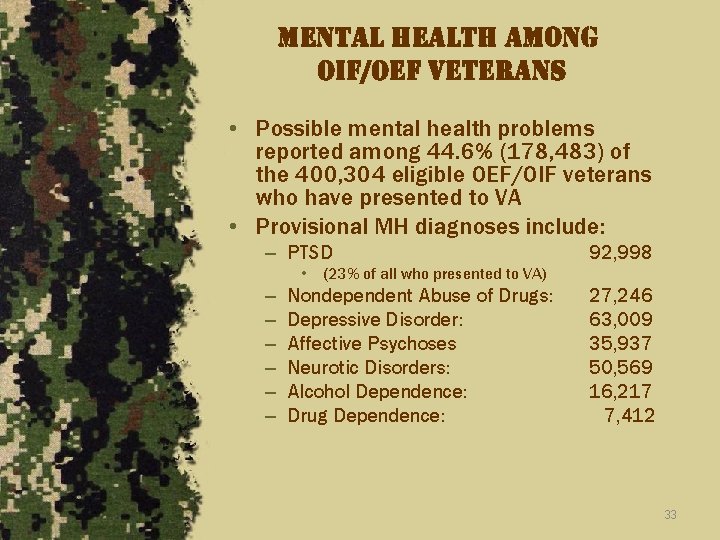
mental health among oif/oef veterans • Possible mental health problems reported among 44. 6% (178, 483) of the 400, 304 eligible OEF/OIF veterans who have presented to VA • Provisional MH diagnoses include: – PTSD 92, 998 • (23% of all who presented to VA) – – – Nondependent Abuse of Drugs: Depressive Disorder: Affective Psychoses Neurotic Disorders: Alcohol Dependence: Drug Dependence: 27, 246 63, 009 35, 937 50, 569 16, 217 7, 412 33
traumatic events in oef/oif a sampler • Multi-casualty incidents (Suicide Bombers, VB/IEDs, ambushes) • Seeing the aftermath of battle • Handling human remains • Friendly fire • Witnessed or committed atrocities Painting a Moving Train 34
traumatic events in oef/oif a sampler • Witnessing death/injury of close friend/favored leader • Death/injury of women & children • Feeling/being helpless to defend or counter-attack • Being unable to protect/save a colleague or leader Painting a Moving Train 35
traumatic events in oef/oif a sampler • Killing at close range • Killing civilians/”avoidable” casualties or deaths Painting a Moving Train 36
barriers to treatment • Treatment beliefs not addressed • Fears of failure and fears of success • Labels and stereotypes • Avoidance • Realistic concerns Painting a Moving Train 37
identifying/treating post deploymental health problems among new combat veterans and their families • OEF/OIF veterans often seek care outside Do. D/VA • Family members are also dealing with deployment-related stress and look for help in the community • Is your practice prepared to identify or treat post deployment problems? 38
if You don’t take the temperature, You Can’t find the fever • Know something about our nation’s milita history and about our present military conflicts • Know something about Do. D and VA • Ask each patient if he/she is a Service Member/veteran or a family member/ significant other of a service member or veteran? • Know something about the different Service Branches and respect the 39 difference!
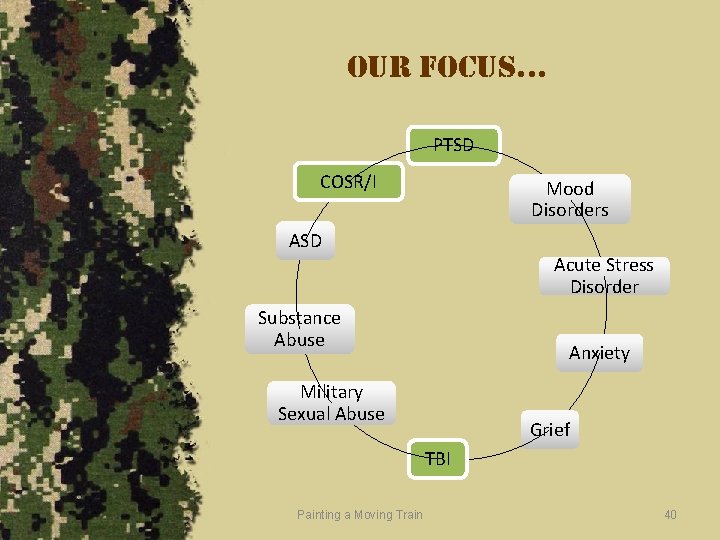
our focus… PTSD COSR/I Mood Disorders ASD Acute Stress Disorder Substance Abuse Anxiety Military Sexual Abuse Grief TBI Painting a Moving Train 40
posttraumatic stress disorder (ptsd) • Characterized by a constellation of symptoms that follow exposure to an extreme traumatic event which involves actual or threatened death or serious injury • The response to the event must include intense fear, helplessness or horror and symptoms that persist more one month, including: – re-experiencing the traumatic event through intrusive recollections, dreams or nightmares – avoidance of trauma-associated stimuli, such as people, situations, or noises; and – persistent symptoms of increased arousal, which may include sleep disturbance, hypervigilance, irritability or an exaggerated startle response 41
posttraumatic stress disorder (ptsd) • PTSD diagnosis must also be accompanied by clinically significant distress or impairment in social, occupational or other important areas of function • Problems must persist at least one month after the event 42
traumatic brain injury (tbi) • Problems with memory, concentration, emotional lability or irritability may also suggest TBI • Screen with the 3 -Question Screening Tool developed by the Defense and Veterans Brain Injury Center (DVBIC) 43
traumatic brain injury (tbi) • Proximity to explosions, thrown from a vehicle, lost consciousness (knocked out or down) and for how long, having symptoms of concussion (dizziness, headache, irritability, etc. ) afterwards the blast • Current symptoms: headaches, dizziness, memory problems, balance problems, ringing in the ears, irritability, sleep problems, change in ability to smell or taste, sensitivity to sound or light, irritability, fatigue, trouble with concentration, attention, thinking. Painting a Moving Train 44
combat/operational stress reactions/injuries Painting a Moving Train 45
a combat stress injury… 1. Happens to a person (not chosen) 2. Involves loss of normal integrity 3. Causes loss of function at least temporarily 4. Provokes predictable selfprotective or healing symptoms 5. Cannot be undone (though it usually heals) --Capt. Bill Nash in Combat Stress Injury Painting a Moving Train 46
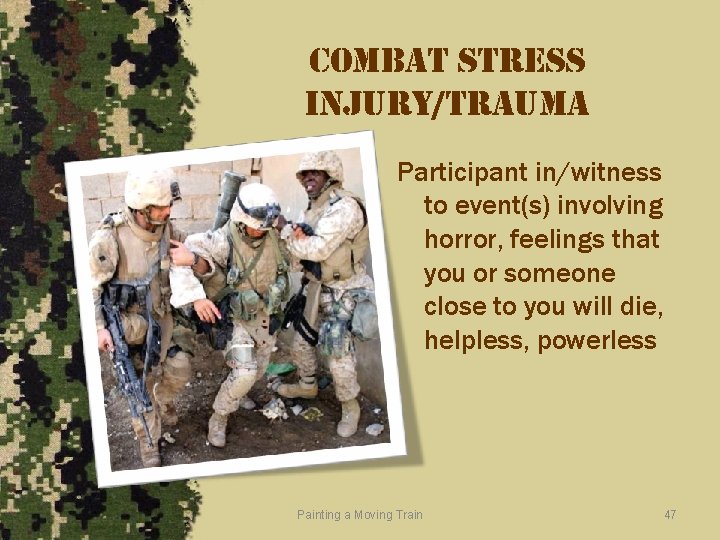
combat stress injury/trauma Participant in/witness to event(s) involving horror, feelings that you or someone close to you will die, helpless, powerless Painting a Moving Train 47
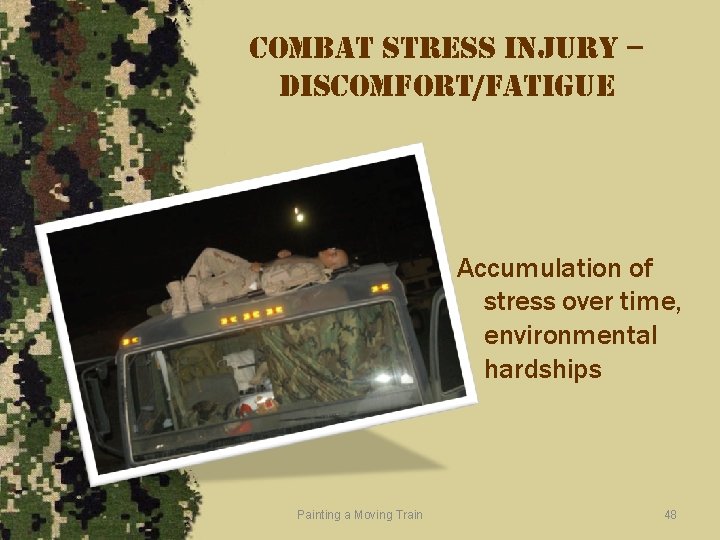
combat stress injury – discomfort/fatigue Accumulation of stress over time, environmental hardships Painting a Moving Train 48
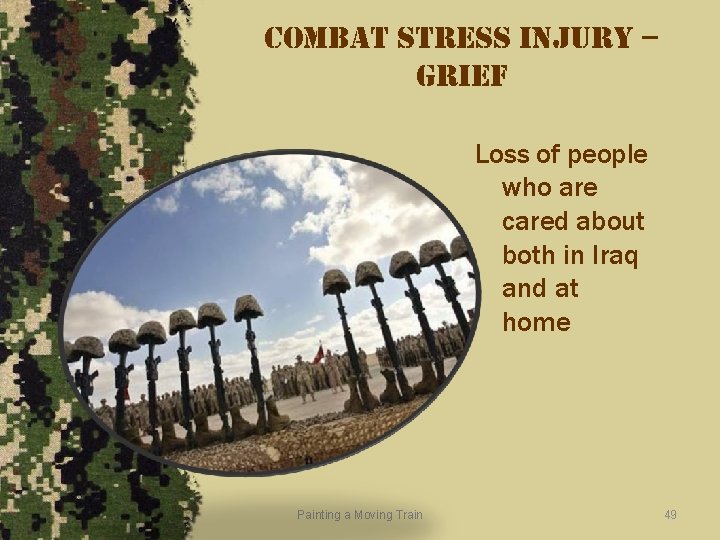
combat stress injury – grief Loss of people who are cared about both in Iraq and at home Painting a Moving Train 49
tricare 50
beyond diagnosis • Many problems faced by returning combat veterans and their families are not so much clinical and they are functional: – Work Stress/Unemployment – Educational/Training Needs – Housing Needs • Is your patient homeless or perhaps functionally homeless? – Financial and/or Legal Problems) – Family Issues • • Lack of Social Support Estrangement Family Breakup Kids in trouble 51
beyond ptsd and tbi • Psychological trauma may: – Surface indirectly as an exacerbation of chronic physical ailments (shortness of breath in an asthmatic, increased pain in a person with war wounds) or; – Be expressed in new somatic symptoms (headaches, abdominal pain) or; – Present as new or exacerbated substance abuse or; – Lie veiled behind vague complaints of poor energy, poor sleep or malaise 52
common themes & presenting problems • Marriage, relationship problems • Medical issues • Financial hardships • Endless questions from family and friends • Guilt, shame, anger • Lack of structure Painting a Moving Train 53
common themes & presenting problems • • • Feelings of isolation Nightmares, sleeplessness Lack of motivation Forgetfulness Anger Feeling irritable, anxious, “on edge” Painting a Moving Train 54
impact of deployments and combat stress on the family Painting a Moving Train 55
emotional stages of deployment • • • Pre-deployment Deployment Sustainment Re-deployment Post-deployment Painting a Moving Train 56
how does combat/operational stress affect family members? • • • Sympathy Depression Grief Fear & Worry Loss of Sleep Painting a Moving Train • • Avoidance Guilt & Shame Anger Drug and Alcohol Abuse • Health Problems 57
what to expect of children when service member comes home • o Preschoolers: Feel guilty for making parent go away, need time to warm-up to returning parent, intense anger, act out to get attention, be demanding. • o School Age: Excitement, joy, talk constantly to bring the returning parent up to date, boast about the returning parent, guilt about not doing enough or being good enough. Painting a Moving Train 58
what to expect of children when service member comes home • o Teenagers: Excitement, guilt about not living up to standards, concern about rules and responsibilities, feel too old or unwilling to change plans to meet or spend extended time with the returning parent. Painting a Moving Train 59
positive aspects of deployments • Foster maturity • Encourage independence • Strengthen family bonds Painting a Moving Train 60
assessment Questions 1. Why did you join the Marine Corps, Army, Navy, etc. ? What did you hope to accomplish? 2. Combat tours – # & when, location, MOS, job in Iraq 3. Satisfaction with training & preparation 4. Satisfaction with leadership and equipment 5. How do family members feel about the military? About the separations? Painting a Moving Train 61
assessment “frames” • Deployment Cycle • Nature of Deployment • Stages of Change 62
assessment deployment cycle • Pre-Deployment • Post-Deployment Painting a Moving Train 63
assessment deployment cycle • Pre-deployment – Deployment orders can change/be revised – Worry about safety of loved ones/themselves – “Activities of Daily Living” – finances, health care, child care, pets – Single Parents – Reservists - jobs, houses, family members – Preparing not to come home Painting a Moving Train 64
assessment deployment cycle • Deployment - stresses from “in theater” and home, e-mails/news coverage/internet Painting a Moving Train 65
assessment deployment cycle • Post Deployment-Garrison life; adjustment to lack of control, family life, pressures of daily living, broader focus, turning in weapons, personal protective gear Painting a Moving Train 66
assessment: nature of deployment • Low intensity — fear of death or injury is less imminent but chronically present. Painting a Moving Train 67
assessment: nature of deployment • High intensity — firing rounds at enemy, combat patrols, long duty hours, lack of sleep, who’s the enemy, altered rules of engagement Painting a Moving Train 68
assessment: nature of deployment • Highest Intensity - Terrorist activities, guerilla warfare tactics: VBIEDs, mortar attacks, chronic strain; anxiety • Friends, comrades killed/injured • Split second decisions may be second guessed. • Friendly fire Painting a Moving Train 69
assessment: stages of change • Pre-contemplation: Problem? What problem? • Contemplation: Do I need to change? • Preparation: Can I change? • Action: How do I change? • Maintenance: How do I keep on doing what I’ve been doing that’s working? Painting a Moving Train 70
assessment measures • Primary Care PTSD Screen (PC-PTSD) • Combat Exposure Scale (CES) • PTSD Checklist – Civilian Version (PCL-C) • Trauma Symptom Checklist - 40 (TSC -40) • 3 Question DVBIC TBI Screening Tool • Other measures as appropriate Painting a Moving Train 71
clinical practice guidelines and treatment 72
post deployment mh problems: now that you found them • The key is to develop a supportive and collaborative therapeutic alliance with the patient and with his/her significant others • Other steps/options include: – Early recognition of PTSD and other post deployment MH problems – PTSD-related education – Pharmacotherapy – Psychotherapy/Supportive counseling – Identifying resources – Regular follow-up and monitoring of symptoms 73
treatment VA/Do. D Clinical Practice Guidelines Painting a Moving Train 74
clinical practice guidelines • Assist clinicians in learning about available treatments, reviewing their evidence base and making practical, patient-specific choices among them • Provide clinical algorithms that walk clinicians through the necessary steps from screening and initial assessment through treatment and re-assessment • Most relevant among these is the VA/Do. D Clinical Practice Guideline for the Management of Posttraumatic Stress 75
va/dod clinical practice guideline for the management of posttraumatic stress • Created by a working group of VA and Do. D clinicians and researchers • Separate algorithms defined for primary care providers and mental health professionals • Evidence tables provided for each recommendation and a substantial literature review included • Available at www. oqp. med. va. gov/cpg/PTSD _Base. htm • In the public domain 76
clinical practice guidelines • The American Psychiatric Association has published a Practice Guideline for Patients with Acute Stress Disorder and Posttraumatic Stress Disorder • The International Society for Traumatic Stress Studies, the world’s largest international multidisciplinary professional organization working in the field of psychological trauma, provided a comprehensive set of treatment guidelines in 2000 with a new edition expected in 2008 • Both guidelines provide a thoughtful introduction to available therapies, significant background information and evidence-based treatment 77 recommendations.
triaging tbi Consider consultation – Rehabilitative Medical Specialist – Neurologist – Speech Pathologist – Audiologist – Vision Assessment 78
a point of caution • Little evidence to support the use of Critical Incident Debriefing in the prevention of PTSD – Debriefing in heterogeneous groups may actually increase the risk of PTSD by re-traumatizing survivors who are not prepared to be re-exposed to horrific memories 79
treatment options cognitive therapy (ct) • Identify and clarify patterns of thinking • Identify distressing traumarelated thoughts • Convert these thought patterns into more accurate thoughts • Address core beliefs about self, others, larger world Painting a Moving Train 80
treatment options exposure therapy (et) • Reduce the fear associated with traumatic experience through repetitive, therapist-guided confrontation of feared places, situations, memories, thoughts, and feelings • Exposure can be “imaginal” or “in vivo” • Reduced intensity of emotional and physiological response is achieved through habituation. Painting a Moving Train 81
treatment options stress inoculation training (sit) • Anxiety management is among the most useful psychotherapeutic treatments for PTSD clients (Expert Consensus Guideline Series) • SIT can be thought of as a set of skills for managing stress and anxiety – Breathing control, Deep Muscle Relaxation, Assertiveness Training, Role Playing, Covert Modeling, Thought Stopping, Positive Thinking, Self Talk Painting a Moving Train 82
treatment options eye movement desensitization and reprocessing (emdr) • Accessing and processing traumatic memories to bring these to resolution. • The client focuses on emotionally disturbing material while at the same time focusing on an external stimulus (usually therapist directed bilateral eye movements, hand tapping, sounds) Painting a Moving Train 83
pharmacotherapy *Specific serotonin reuptake inhibitors (SSRI’s) and venlafaxine have the strongest evidence *While many drugs from a wide range of classes have been studied in PTSD, there is little evidence for their use except as adjunctive tx – Antipsychotics often prescribed in military settings *Available research suggests that prazosin reduces the frequency and intensity of posttraumatic nightmares and may be effective in managing other symptoms of PTSD but it cannot yet be recommended as stand-alone tx *Benzodiazepines are not effective as first line agents in the treatment of PTSD – Because of potential for dependence and abuse, their use as single agents is strongly discouraged 84
battlemind • Developed by Walter Reed Army Institute of Research • A motivational intervention that makes ignoring readjustment issues feel like a mistake • Training, NOT Treatment • Emphasis on adaptive change and the capacity for continued change 85
battlemind defined • Key Message: Combat skills and Battle mindset sustained your survival in the war-zone • Battlemind is “the Soldier’s inner strength to face fear and adversity in combat with courage” • But Battlemind may be “hazardous” to your social and behavioral health on the home front… if it isn’t transitioned • In other words: Battlemind represents a Soldier’s successful adaptation to combat but Don’t try 86 this at home!
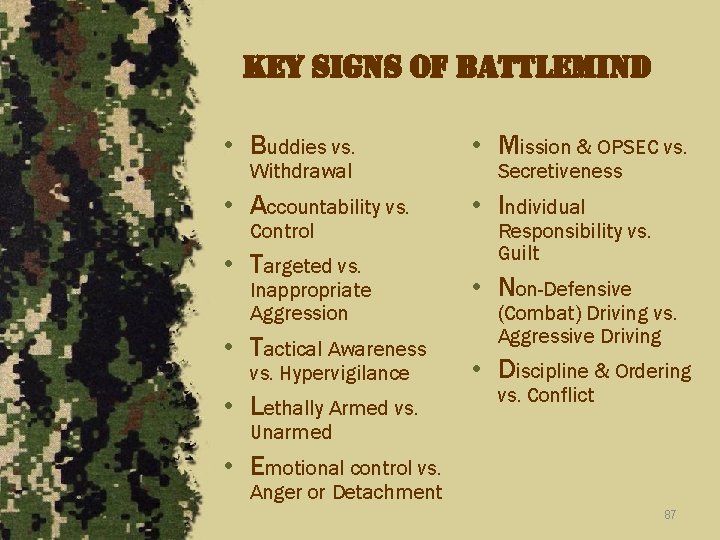
Key signs of battlemind • Buddies vs. • Mission & OPSEC vs. • Accountability vs. • Individual Withdrawal Control • Targeted vs. Inappropriate Aggression • Tactical Awareness vs. Hypervigilance • Lethally Armed vs. Secretiveness Responsibility vs. Guilt • Non-Defensive (Combat) Driving vs. Aggressive Driving • Discipline & Ordering vs. Conflict Unarmed • Emotional control vs. Anger or Detachment 87
a sample of battlemind training 88
the face of the new veteran • Developed as an all employee training for VA and other healthcare personnel • Keyed to a set of Resource Guides – Guide for providers – Guide for Veterans and their Significant Others 89
call to action 90
public health model • Most war fighters/veterans will not develop a mental illness but all war fighters/veterans and their families face important readjustment issues • This population-based approach is less about making diagnoses than about helping individuals and families retain a healthy balance despite the stress of deployment 91
public health model • Incorporates the Recovery Model and other principles of the President’s New Freedom Commission on Mental Health – There is a difference between having a problem and being disabled • The public health approach requires a progressively engaging, phase-appropriate integration of services 92
public health model • This program must: – Be driven by the needs of the Service Member/ veteran and his/her family rather than by Do. D and VA traditions – Meet prospective users where they live rather than wait for them to find their way to the right mix of our services – Increase access and reduce stigma 93
beyond the dod/va continuum: partnering with states and communities Do. D/VA/State and Community Partnerships Are Already Under Way or in planning in: – Upstate New York – Washington State – Ohio – Alabama – Vermont – Rhode Island – New Mexico – – – – Oregon Minnesota Texas Missouri Virginia Maryland Other states? 94
advantages of working at state and community levels • May enhance access for Service Members, veterans and family members concerned about seeking help within the Do. D/VA continuum • May enhance the quality of services veterans and family members receive in the community 95
advantages of working at state and community levels • National Guard programs are organized by state • Each state has its own veterans outreach program • Builds a system of interagency communication and coordination that may serve well at times of disaster 96
the north carolina governor’s summit on returning veterans and their families • On September 27, 2006, key leaders of North Carolina State Government, VA, and Do. D met with representatives of state and community provider and consumer groups • Governor Michael Easley charged Summit participants to develop new ideas that would help veterans succeed in getting back to their families, their jobs and their communities • The Summit was only the start of a process, not its end! 97
summit goals • Exchange information about respective agencies’ assets and goals • Identify strategic partnerships • Articulate an integrated continuum of care that emphasizes access, quality, effectiveness, efficiency, and compassion 98
summit goals • Emphasize principles of resilience, prevention, and recovery • Optimize access to information, support, and, when necessary, clinical services across systems as part of a balanced public health approach 99
next steps • Governor’s Letter to Veterans and Families – A strong and clear “Thank you” – A toll free number from the State Department of Health and Human Services (1 -800 -662 -7030) • Access to health, educational, and vocational services for Service Members/veterans and their family members – A new mission for veterans and their families • “Build stronger careers, families and communities for the good of all the people of North Carolina” 100
goals • • Enhance outreach Increase appropriate referrals Reduce stigma Promote healthy outcomes/Resilience/Recovery – Strengthen families – Decrease military attrition – Decrease disability • Increase consumer and provider satisfaction • Transform the post deployment health system
the bottom line There should be No Wrong Door to which OIF/OEF veterans or their families can come for help
Questions?