
Gateway To Technology Building Mechanisms Mechanisms Change Force

Gateway To Technology Building Mechanisms
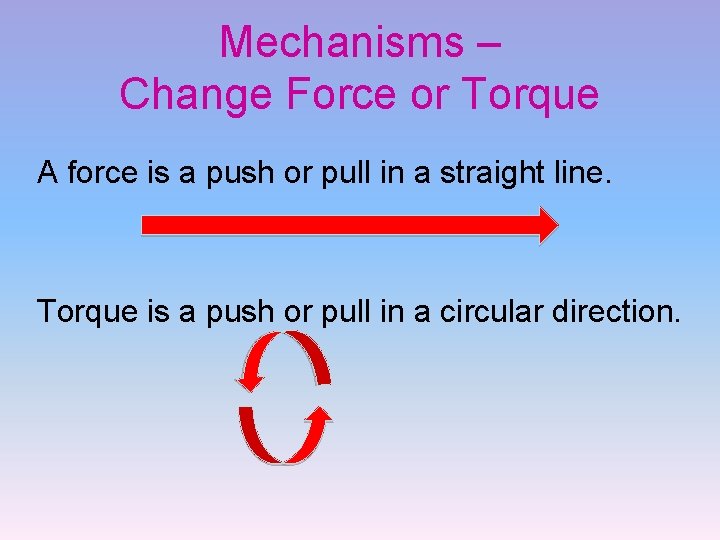
Mechanisms – Change Force or Torque A force is a push or pull in a straight line. Torque is a push or pull in a circular direction.
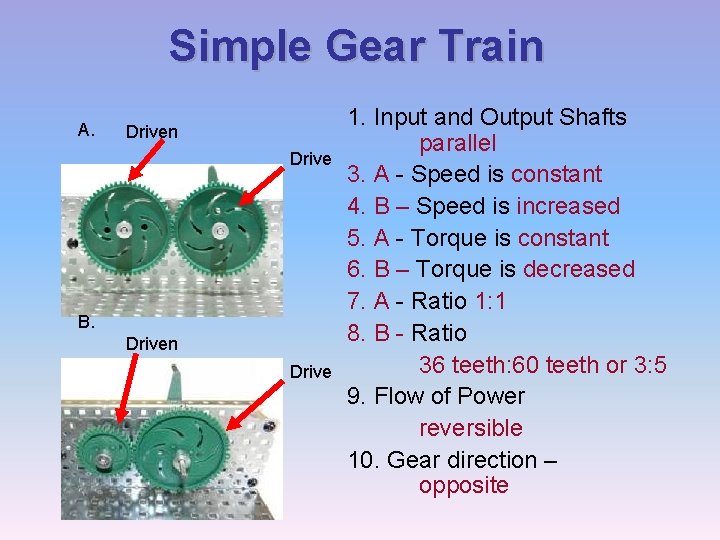
Simple Gear Train A. Driven Drive B. Driven Drive 1. Input and Output Shafts parallel 3. A - Speed is constant 4. B – Speed is increased 5. A - Torque is constant 6. B – Torque is decreased 7. A - Ratio 1: 1 8. B - Ratio 36 teeth: 60 teeth or 3: 5 9. Flow of Power reversible 10. Gear direction – opposite
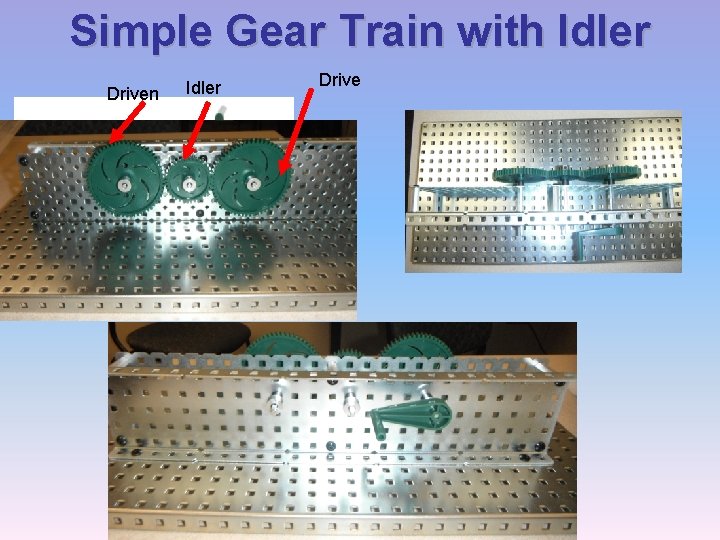
Simple Gear Train with Idler Driven Idler Drive
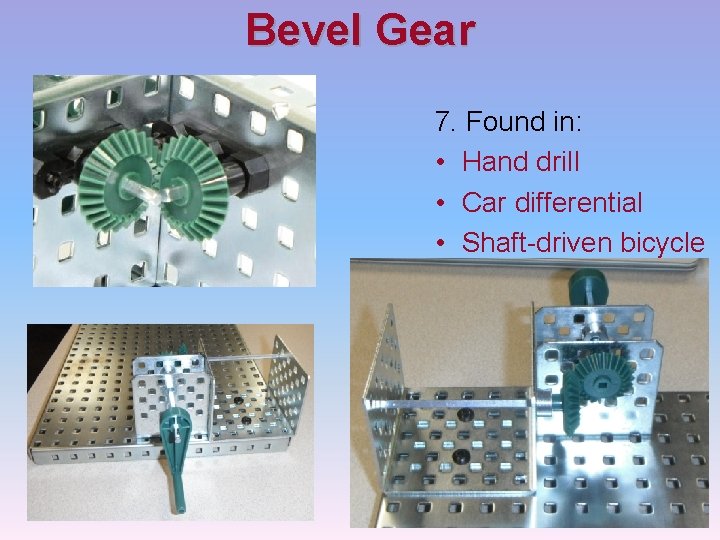
Bevel Gear 7. Found in: • Hand drill • Car differential • Shaft-driven bicycle

Differential Gear 1. 2. 3. 4. Gears used – Bevel Axles turn – Same direction Used in – Vehicles Purpose – Wheels spin at different speeds when turning Howstuffworks. com/differential
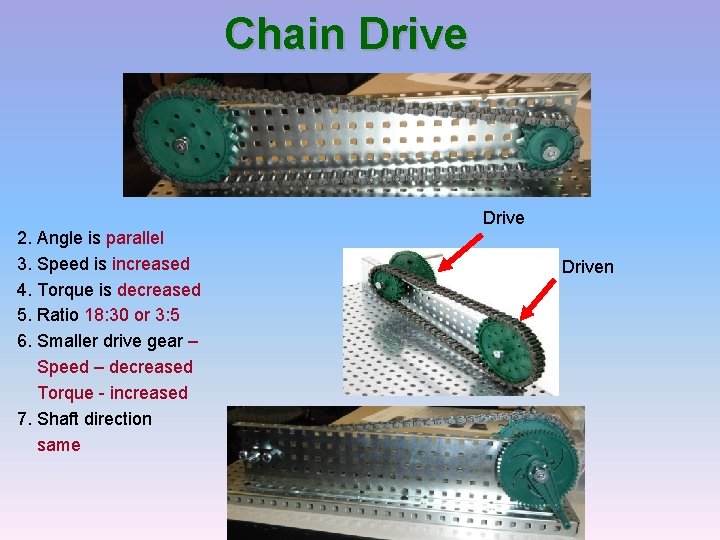
Chain Drive 2. Angle is parallel 3. Speed is increased 4. Torque is decreased 5. Ratio 18: 30 or 3: 5 6. Smaller drive gear – Speed – decreased Torque - increased 7. Shaft direction same Driven
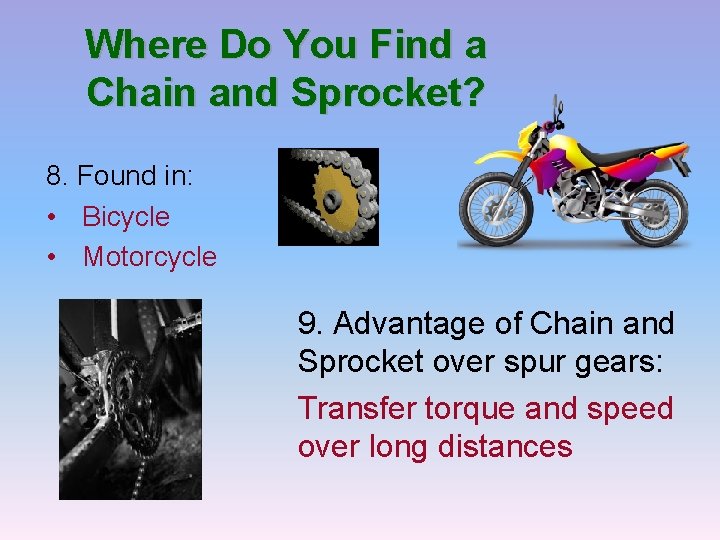
Where Do You Find a Chain and Sprocket? 8. Found in: • Bicycle • Motorcycle 9. Advantage of Chain and Sprocket over spur gears: Transfer torque and speed over long distances

Rack and Pinion Rack
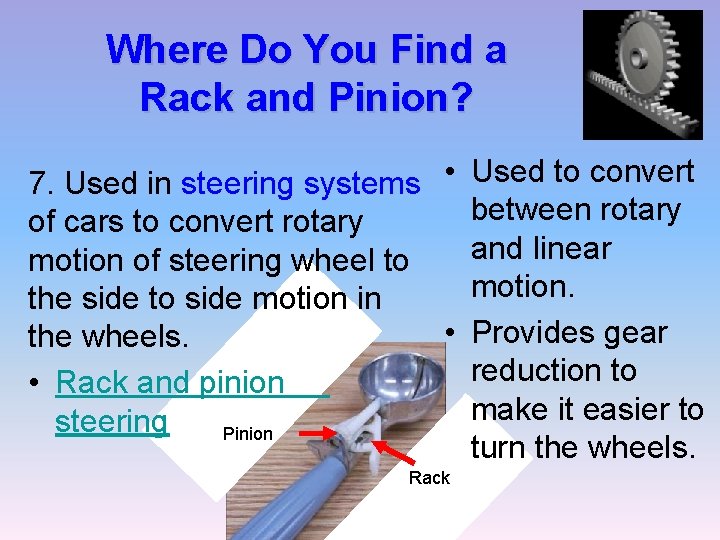
Where Do You Find a Rack and Pinion? 7. Used in steering systems • Used to convert between rotary of cars to convert rotary and linear motion of steering wheel to motion. the side to side motion in • Provides gear the wheels. reduction to • Rack and pinion make it easier to steering Pinion turn the wheels. Rack
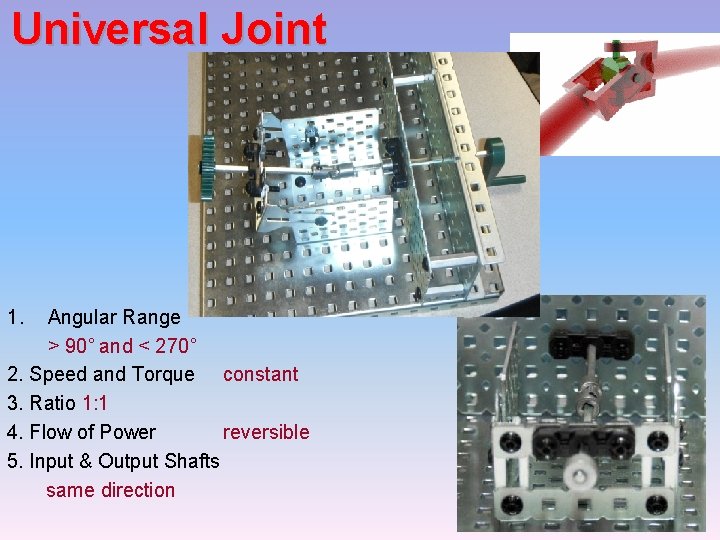
Universal Joint 1. Angular Range > 90˚ and < 270˚ 2. Speed and Torque constant 3. Ratio 1: 1 4. Flow of Power reversible 5. Input & Output Shafts same direction
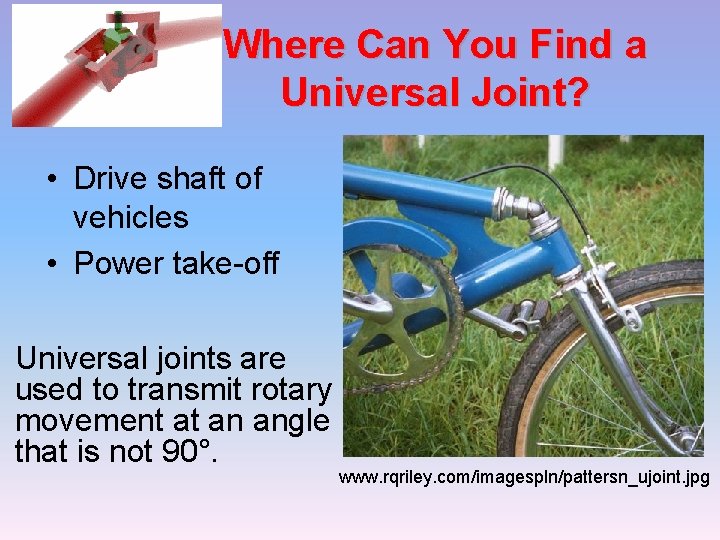
Where Can You Find a Universal Joint? • Drive shaft of vehicles • Power take-off Universal joints are used to transmit rotary movement at an angle that is not 90°. www. rqriley. com/imagespln/pattersn_ujoint. jpg

Worm and Wheel 1. 90˚ Angle 2. Speed is decreased 3. Torque is increased 5. Gear Ratio 24: 1 6. Flow of Power NOT reversible 7. Direction of Travel reversible Worm
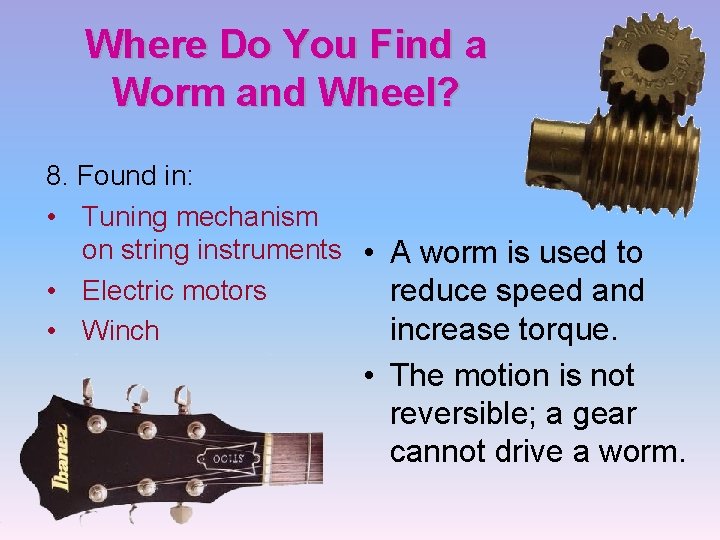
Where Do You Find a Worm and Wheel? 8. Found in: • Tuning mechanism on string instruments • A worm is used to • Electric motors reduce speed and increase torque. • Winch • The motion is not reversible; a gear cannot drive a worm.

Crank and Slider 2. Input Movement rotary 3. Output Movement reciprocating 4. Slider Moves 2 in. (or diameter of crank) 5. Increased Crank increased distance slider moves 6. Flow of Power not reversible Slider Crank
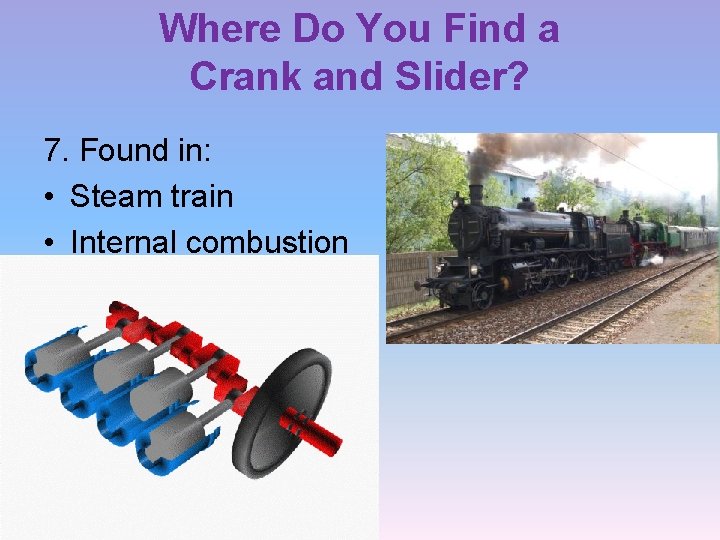
Where Do You Find a Crank and Slider? 7. Found in: • Steam train • Internal combustion engine

Cam and Follower FOLLOWER CAM 2. Input Movement rotary 3. Output Movement reciprocating 4. Follower moves up and down 1 time for every revolution of the crank 5. Flow of Power not reversible 6. Direction of Travel not reversible
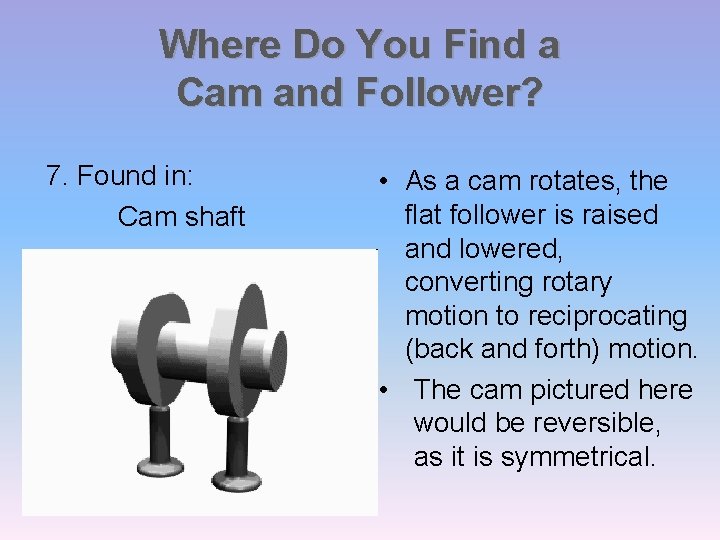
Where Do You Find a Cam and Follower? 7. Found in: Cam shaft • As a cam rotates, the flat follower is raised and lowered, converting rotary motion to reciprocating (back and forth) motion. • The cam pictured here would be reversible, as it is symmetrical.
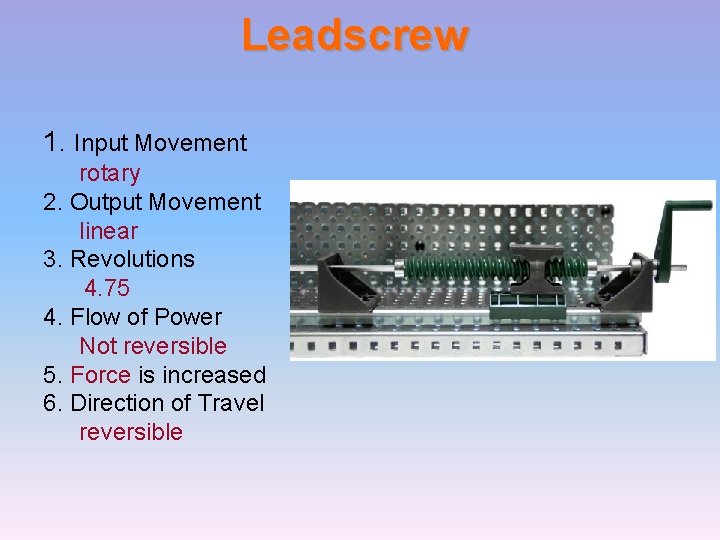
Leadscrew 1. Input Movement rotary 2. Output Movement linear 3. Revolutions 4. 75 4. Flow of Power Not reversible 5. Force is increased 6. Direction of Travel reversible
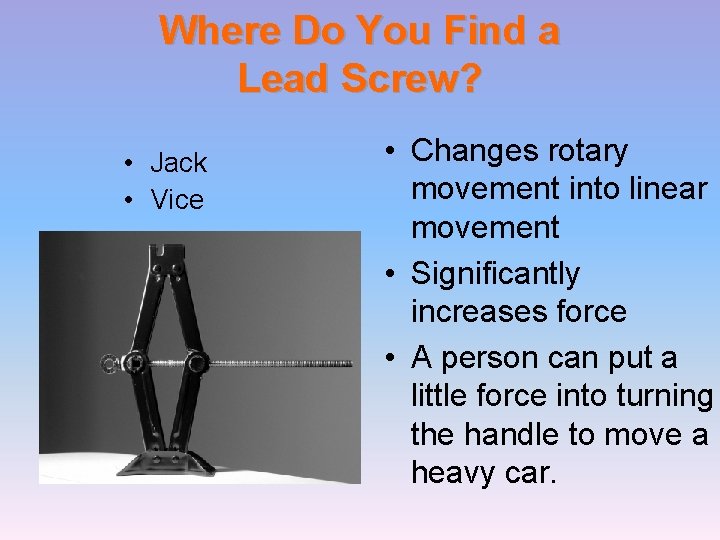
Where Do You Find a Lead Screw? • Jack • Vice • Changes rotary movement into linear movement • Significantly increases force • A person can put a little force into turning the handle to move a heavy car.
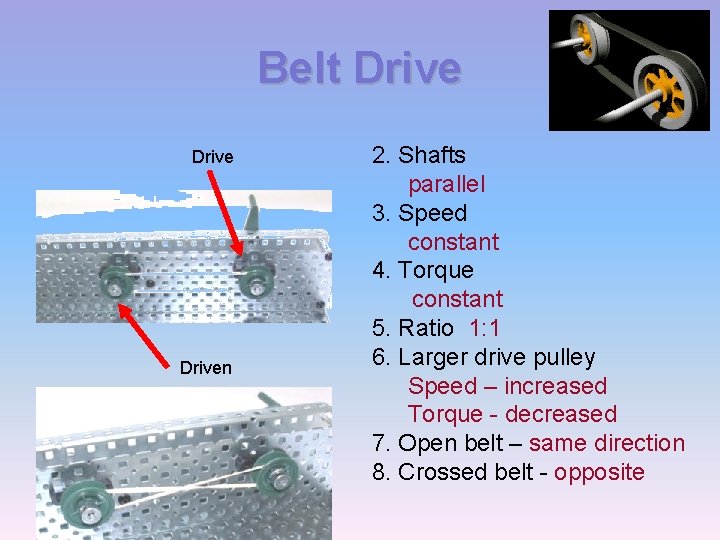
Belt Driven 2. Shafts parallel 3. Speed constant 4. Torque constant 5. Ratio 1: 1 6. Larger drive pulley Speed – increased Torque - decreased 7. Open belt – same direction 8. Crossed belt - opposite
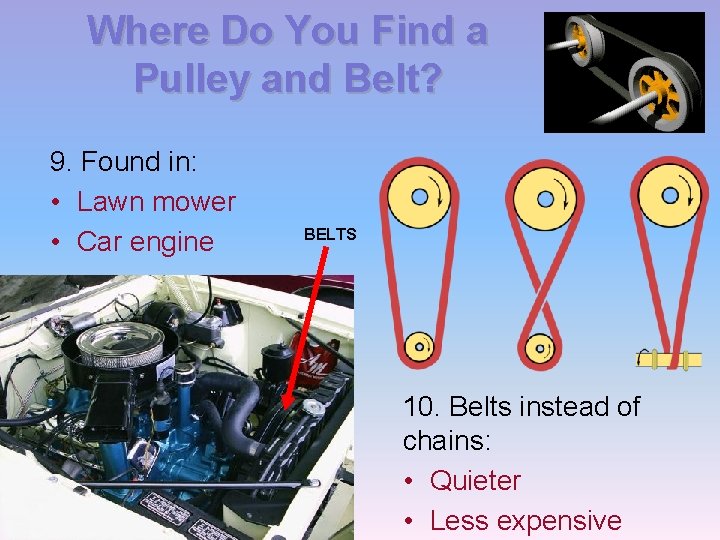
Where Do You Find a Pulley and Belt? 9. Found in: • Lawn mower • Car engine BELTS 10. Belts instead of chains: • Quieter • Less expensive

Image Resources Microsoft, Inc. (2008). Clip Art. Retrieved from http: //office. microsoft. com/en-us/clipart/default. aspx
- Slides: 23