PLTW Mechanical Gears What do a guitar a

- Slides: 49
PLTW Mechanical Gears
What do a guitar, a bicycle, an eggbeater, and a sewing machine have in common? They all use gears to increase, decrease, or redirect power.
Gears can be found in many different sizes. A mechanical wind-up watch has very small gears, while the gears used to lift a bridge to allow ships to pass underneath are huge in comparison.
Different gear configurations are used for different purposes. Notice the ten different gear assemblies in this presentation and think about how they might be used.
Mechanical Gears • Universal Joint • Bevel Gear Assembly • Simple Gear with Idler • Worm and Wheel • Crown and Pinion
Mechanical Gears • Rack and Pinion • Lead Screw • Pulley and Belt • Cam and Follower • Crank and Slider
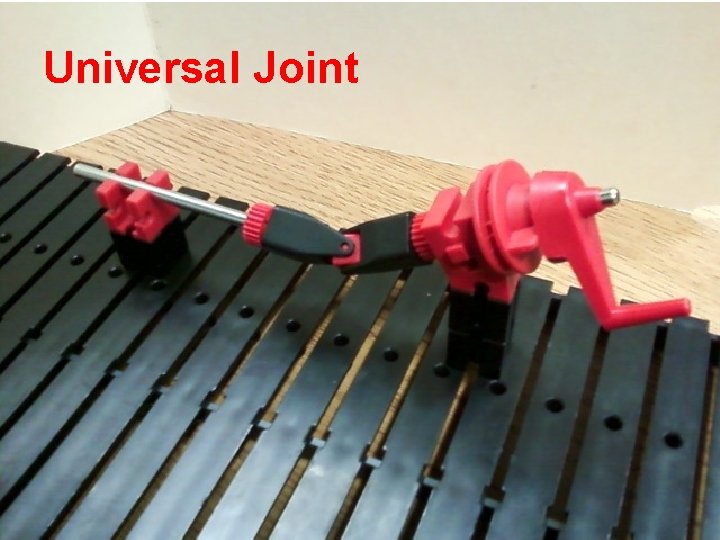
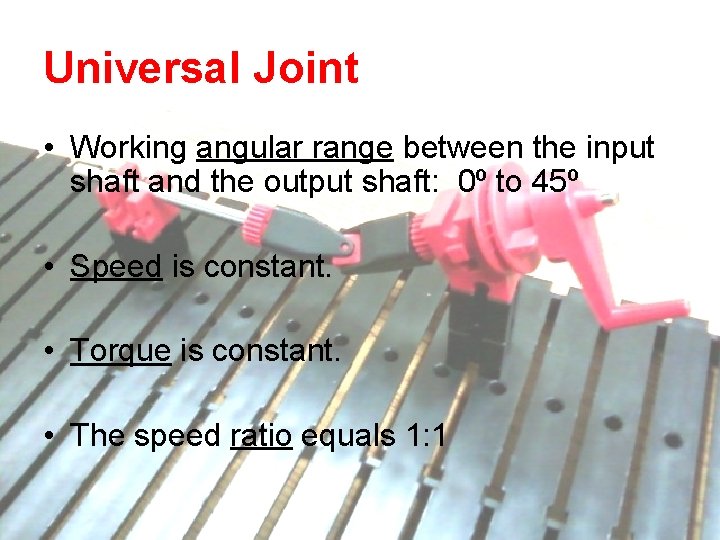
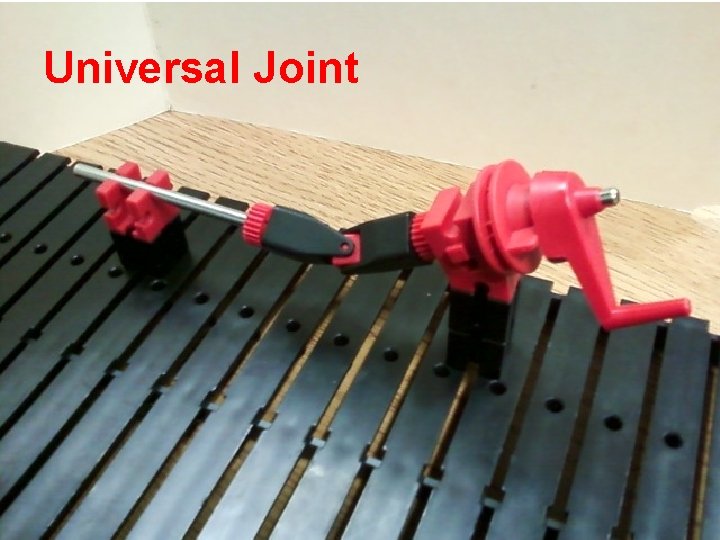
Universal Joint
Universal Joint • Working angular range between the input shaft and the output shaft: 0º to 45º • Speed is constant. • Torque is constant. • The speed ratio equals 1: 1
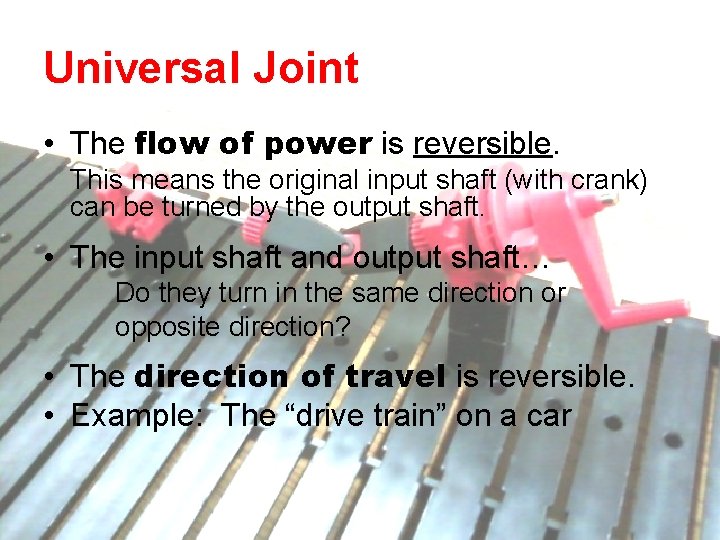
Universal Joint • The flow of power is reversible. This means the original input shaft (with crank) can be turned by the output shaft. • The input shaft and output shaft… Do they turn in the same direction or opposite direction? • The direction of travel is reversible. • Example: The “drive train” on a car
Universal Joint
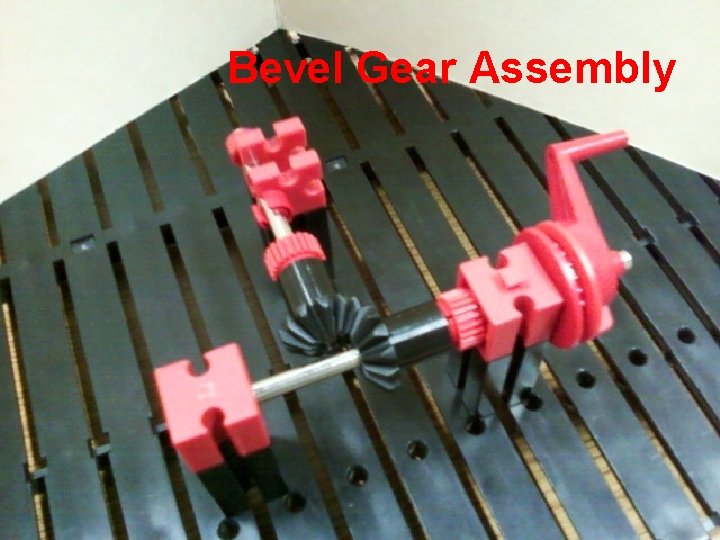
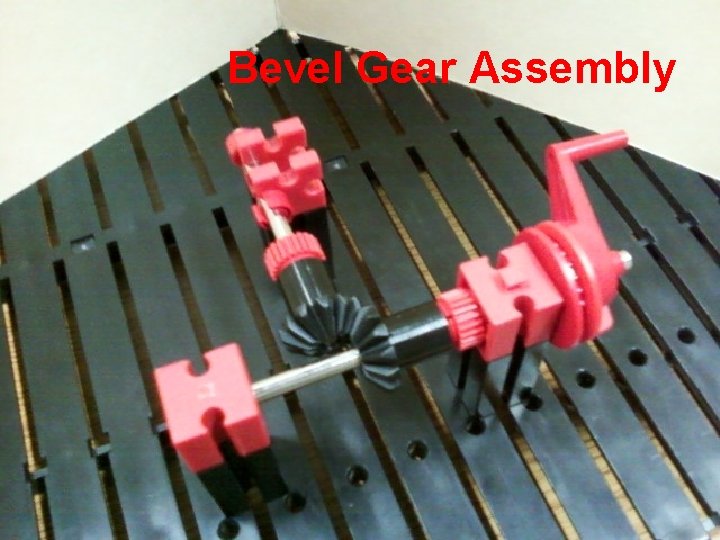
Bevel Gear Assembly
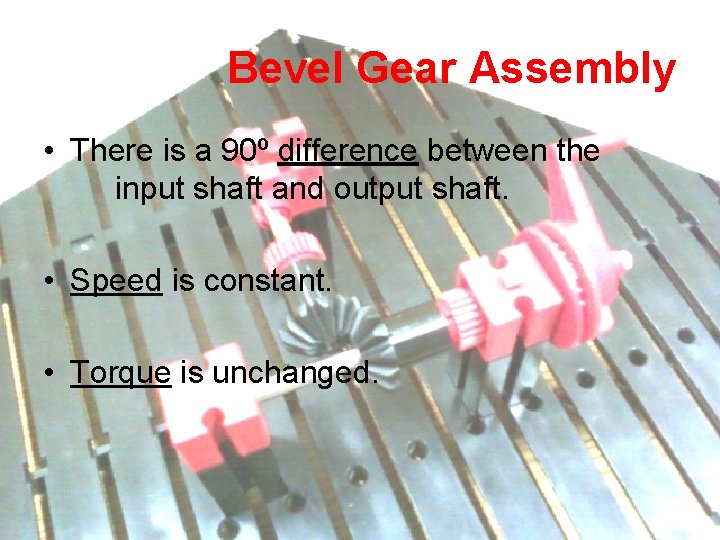
Bevel Gear Assembly • There is a 90º difference between the input shaft and output shaft. • Speed is constant. • Torque is unchanged.
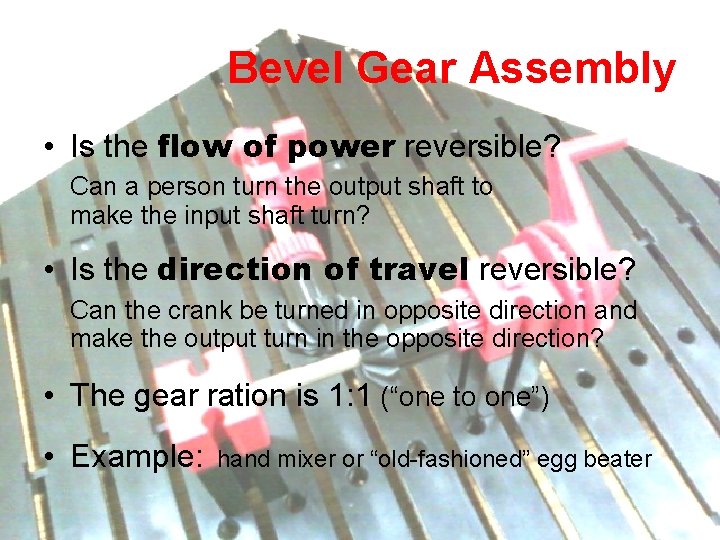
Bevel Gear Assembly • Is the flow of power reversible? Can a person turn the output shaft to make the input shaft turn? • Is the direction of travel reversible? Can the crank be turned in opposite direction and make the output turn in the opposite direction? • The gear ration is 1: 1 (“one to one”) • Example: hand mixer or “old-fashioned” egg beater
Bevel Gear Assembly
Simple Gear with Idler
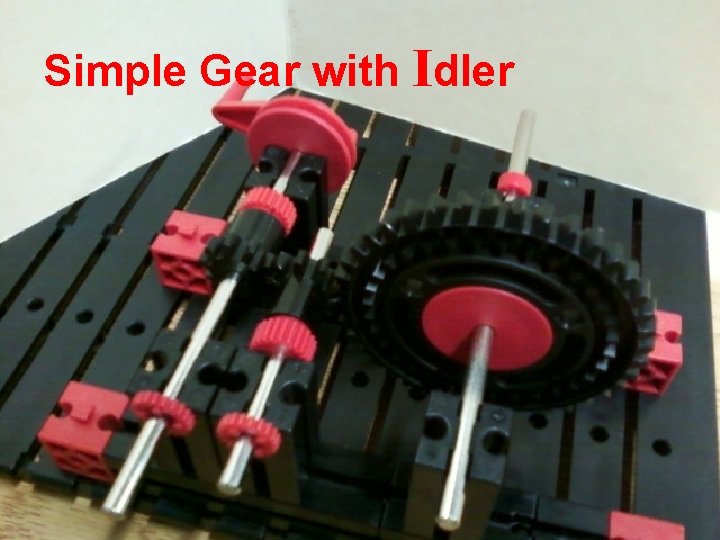
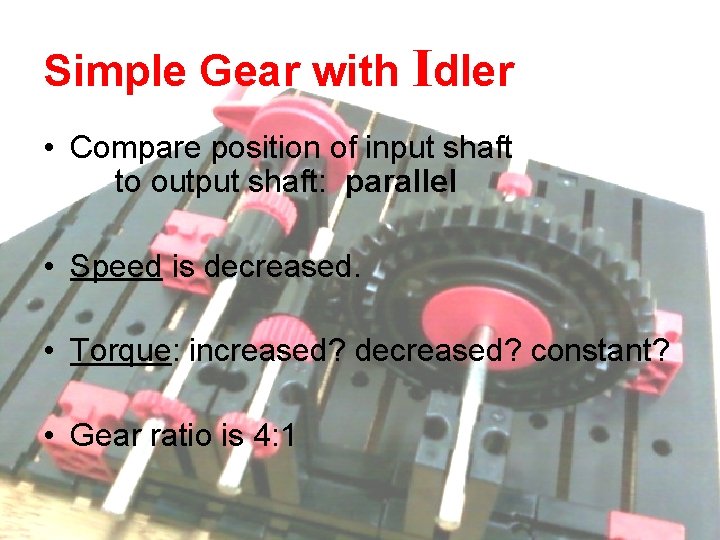
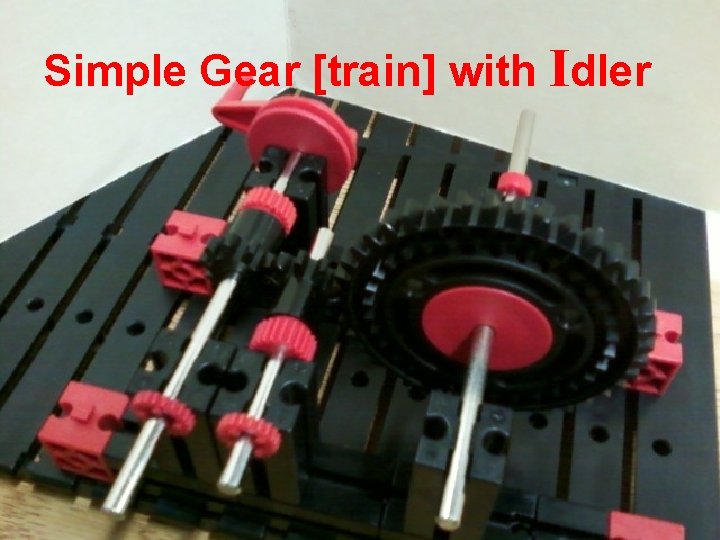
Simple Gear with Idler • Compare position of input shaft to output shaft: parallel • Speed is decreased. • Torque: increased? decreased? constant? • Gear ratio is 4: 1
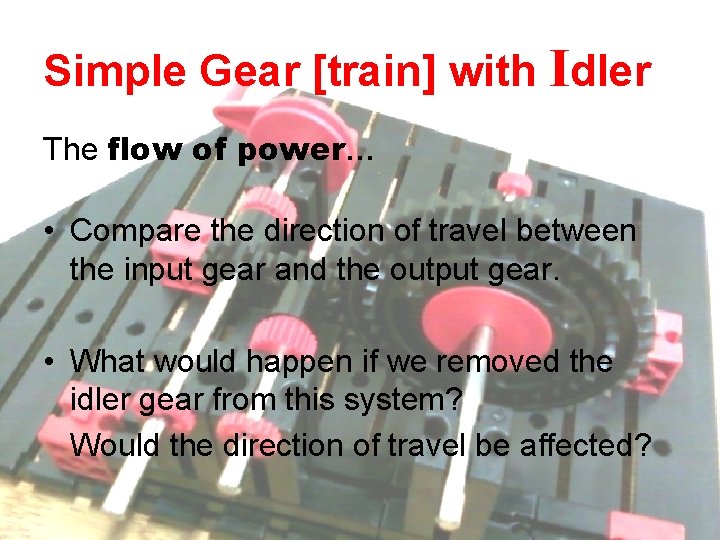
Simple Gear [train] with Idler The flow of power… • Compare the direction of travel between the input gear and the output gear. • What would happen if we removed the idler gear from this system? Would the direction of travel be affected?
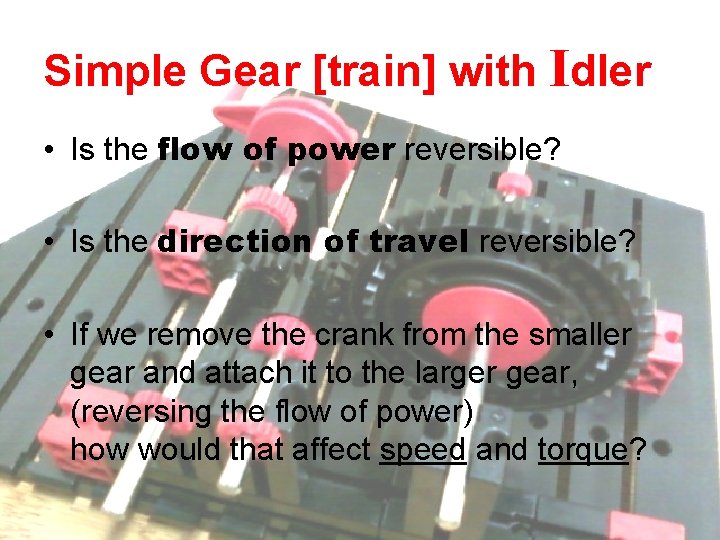
Simple Gear [train] with Idler • Is the flow of power reversible? • Is the direction of travel reversible? • If we remove the crank from the smaller gear and attach it to the larger gear, (reversing the flow of power) how would that affect speed and torque?
Simple Gear [train] with Idler
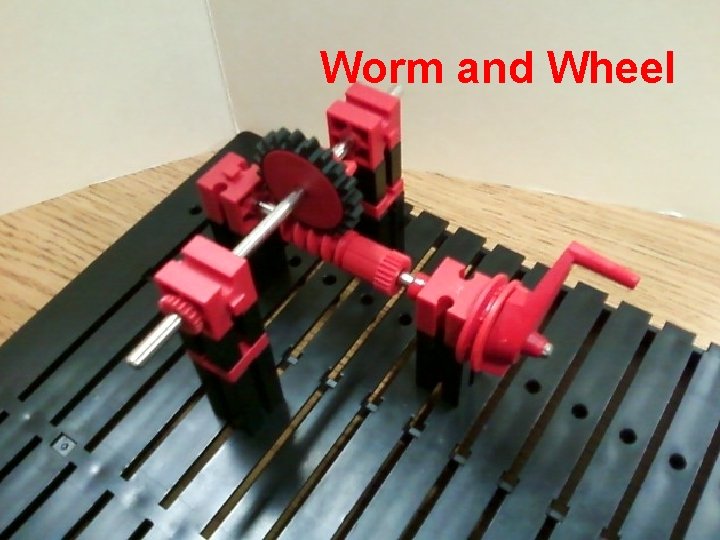
Worm and Wheel
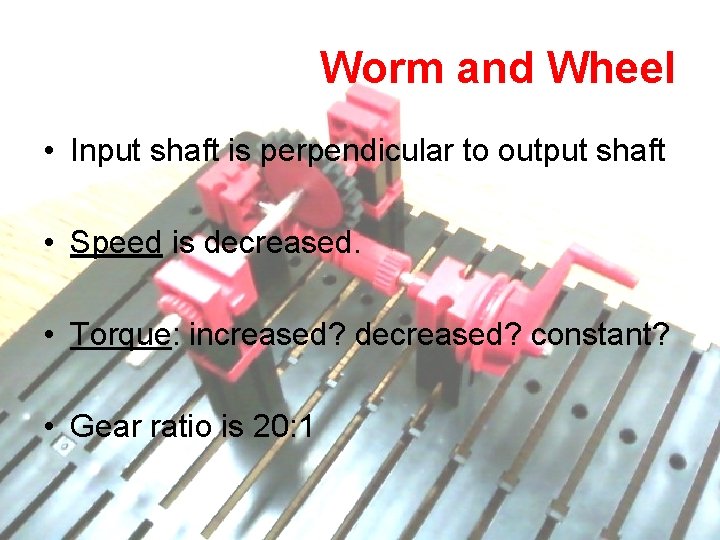
Worm and Wheel • Input shaft is perpendicular to output shaft • Speed is decreased. • Torque: increased? decreased? constant? • Gear ratio is 20: 1
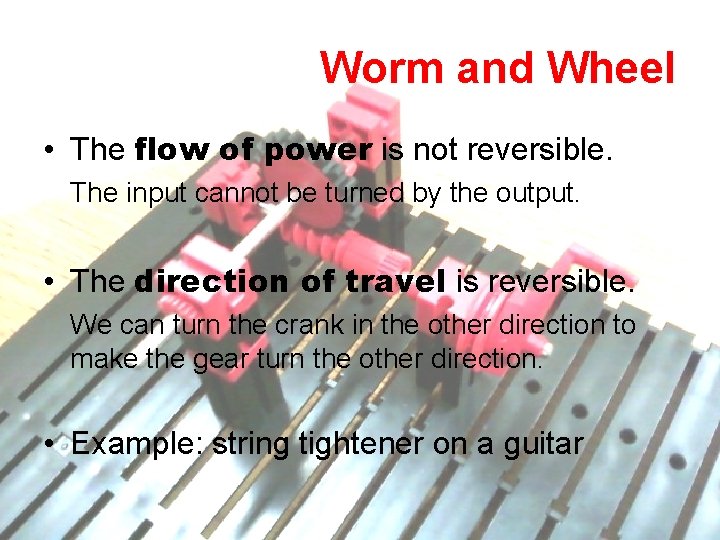
Worm and Wheel • The flow of power is not reversible. The input cannot be turned by the output. • The direction of travel is reversible. We can turn the crank in the other direction to make the gear turn the other direction. • Example: string tightener on a guitar
Worm and Wheel
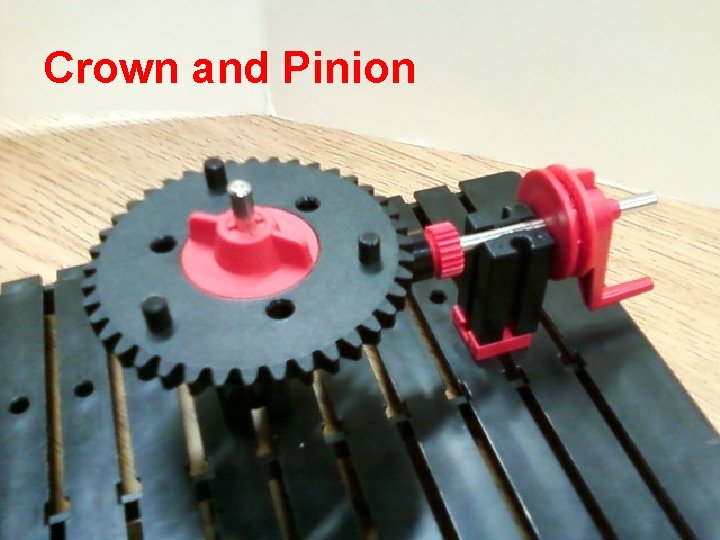
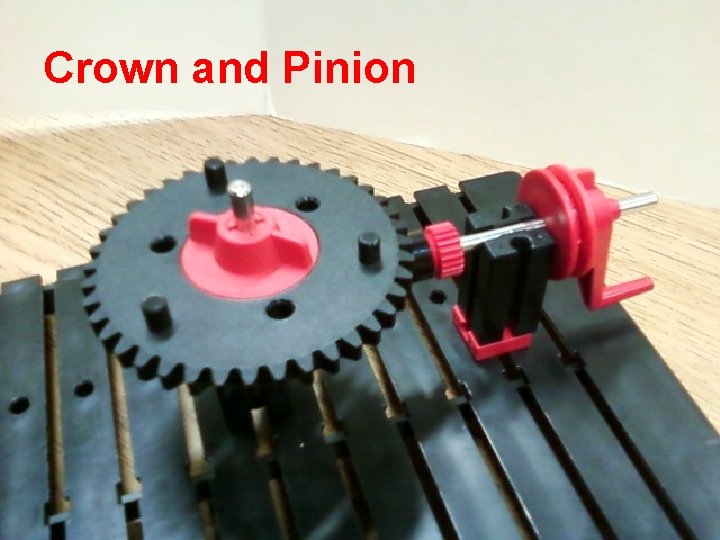
Crown and Pinion
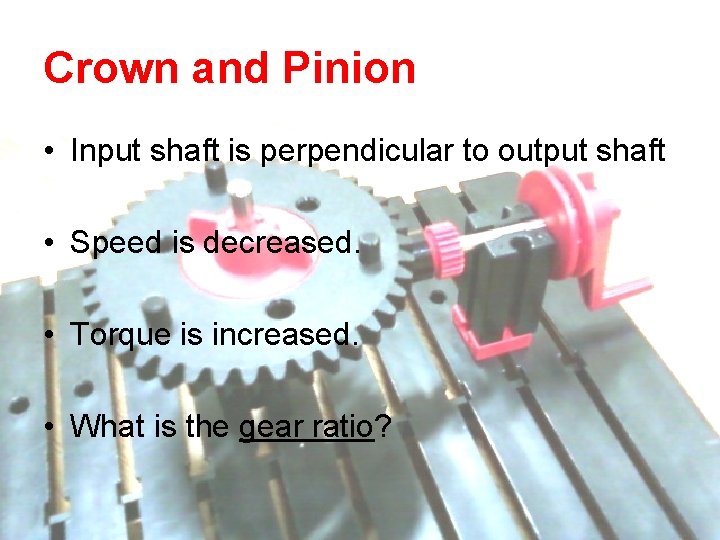
Crown and Pinion • Input shaft is perpendicular to output shaft • Speed is decreased. • Torque is increased. • What is the gear ratio?
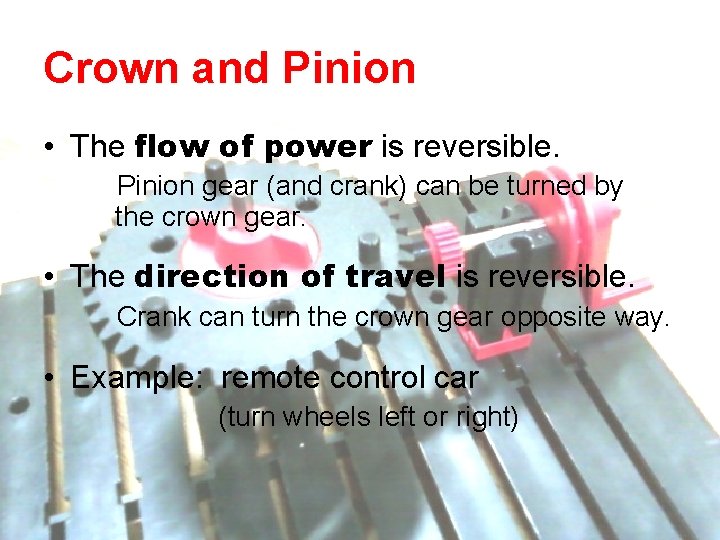
Crown and Pinion • The flow of power is reversible. Pinion gear (and crank) can be turned by the crown gear. • The direction of travel is reversible. Crank can turn the crown gear opposite way. • Example: remote control car (turn wheels left or right)
Crown and Pinion
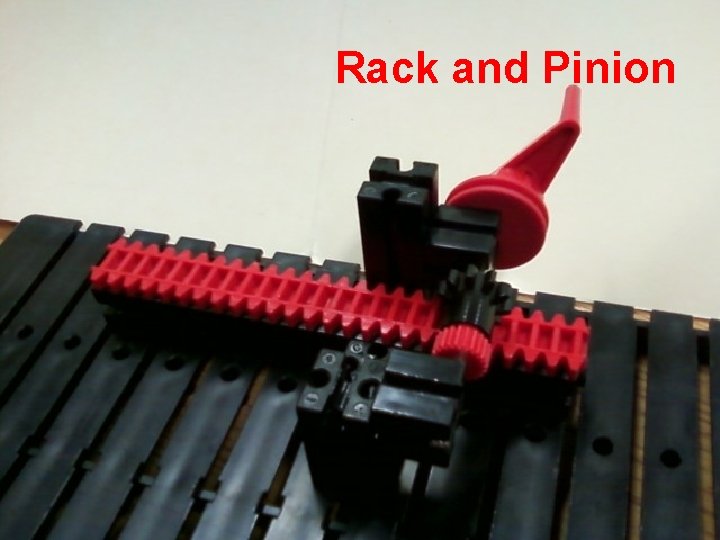
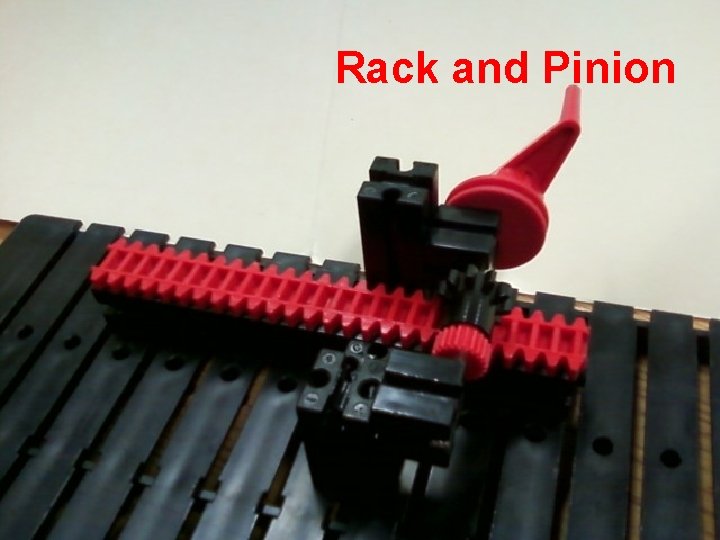
Rack and Pinion
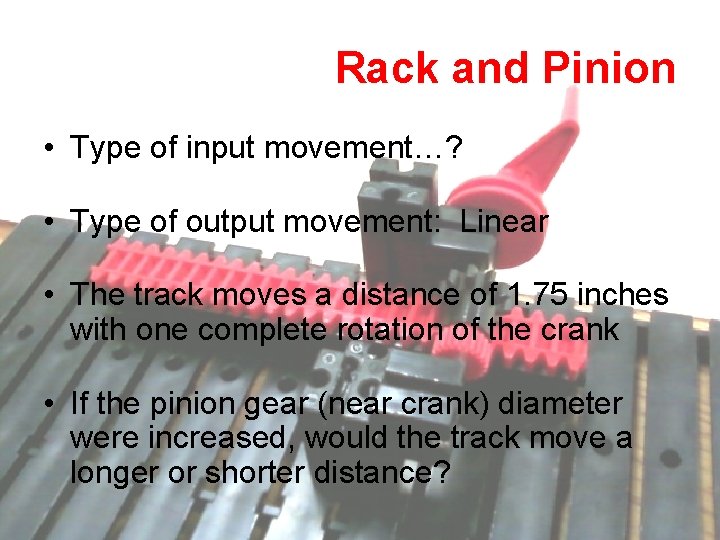
Rack and Pinion • Type of input movement…? • Type of output movement: Linear • The track moves a distance of 1. 75 inches with one complete rotation of the crank • If the pinion gear (near crank) diameter were increased, would the track move a longer or shorter distance?
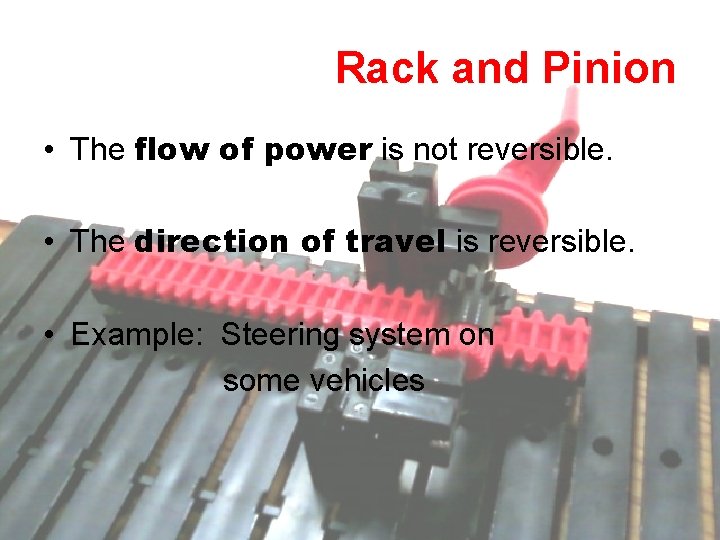
Rack and Pinion • The flow of power is not reversible. • The direction of travel is reversible. • Example: Steering system on some vehicles
Rack and Pinion
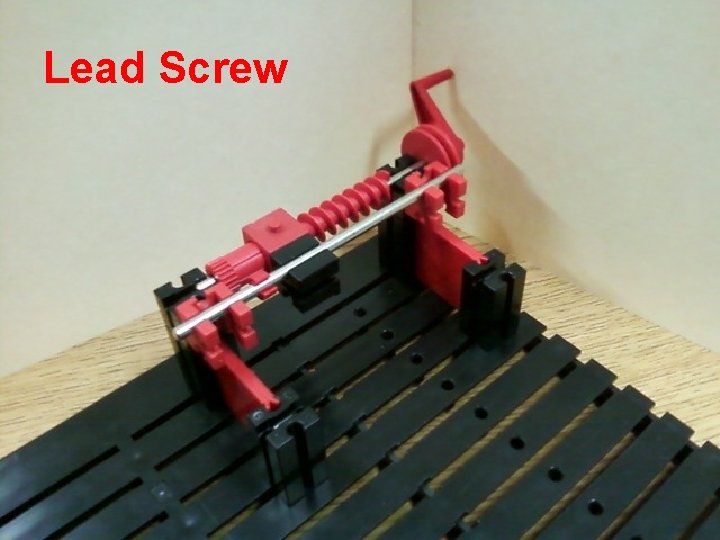
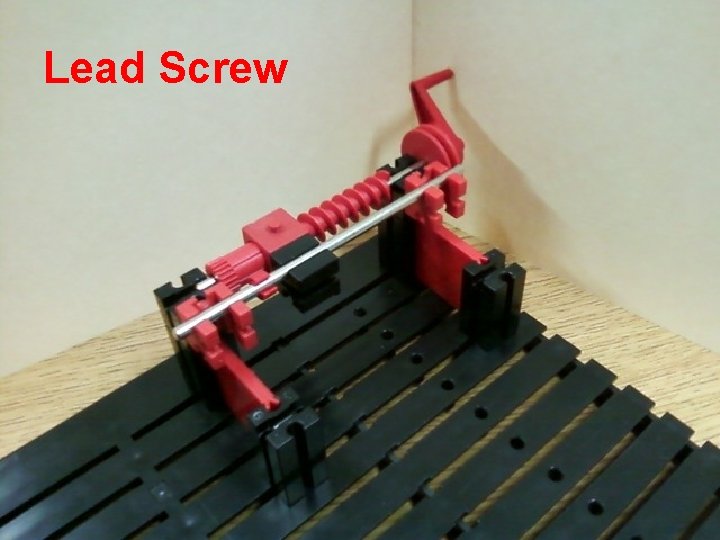
Lead Screw
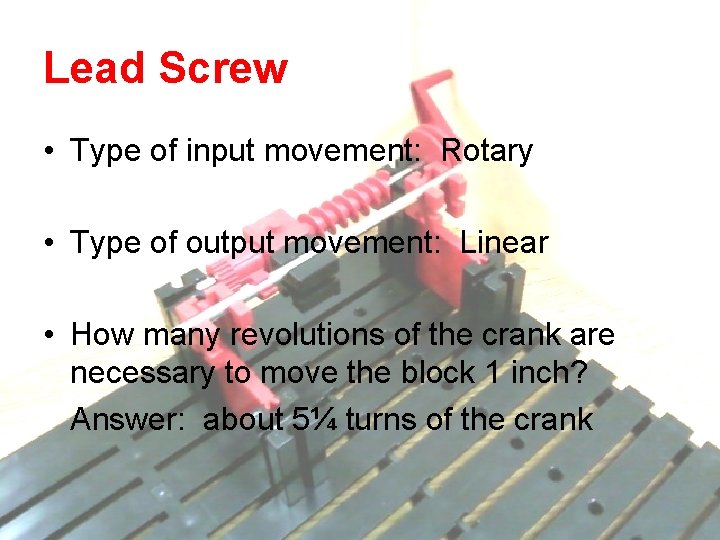
Lead Screw • Type of input movement: Rotary • Type of output movement: Linear • How many revolutions of the crank are necessary to move the block 1 inch? Answer: about 5¼ turns of the crank
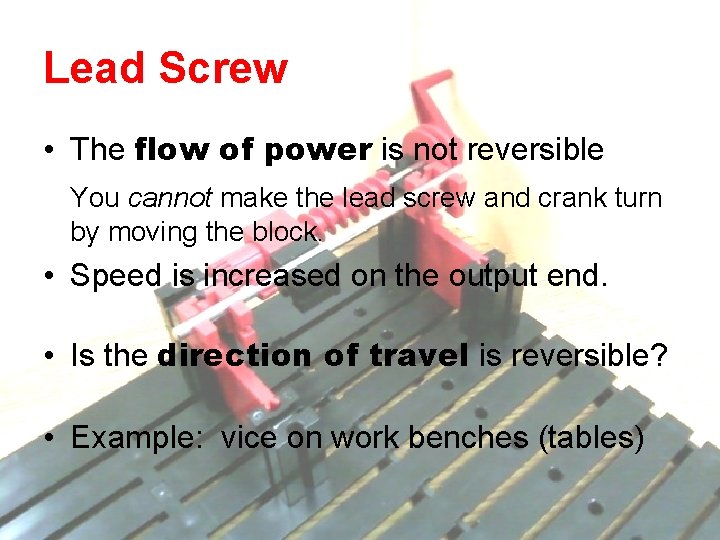
Lead Screw • The flow of power is not reversible You cannot make the lead screw and crank turn by moving the block. • Speed is increased on the output end. • Is the direction of travel is reversible? • Example: vice on work benches (tables)
Lead Screw
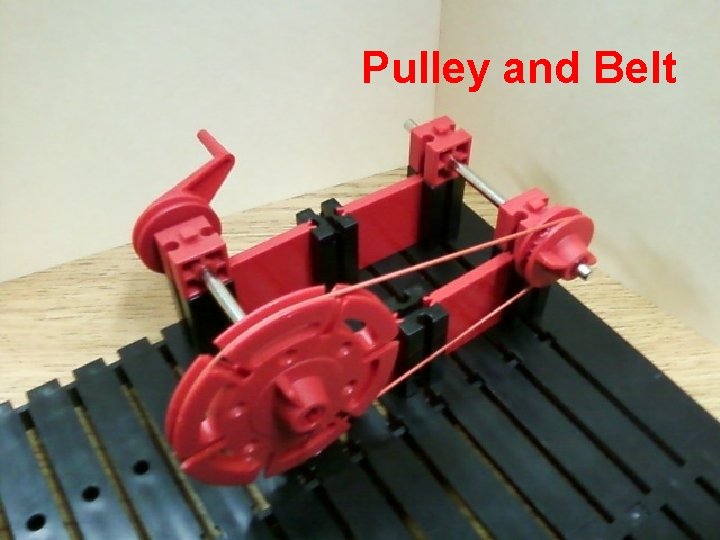
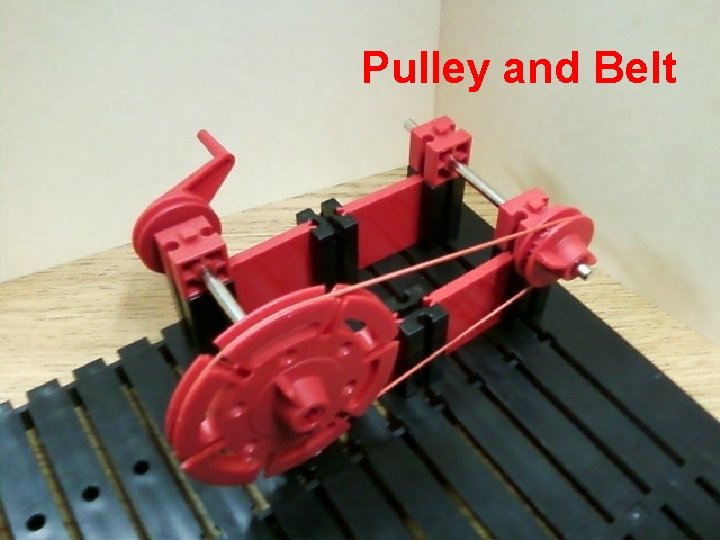
Pulley and Belt
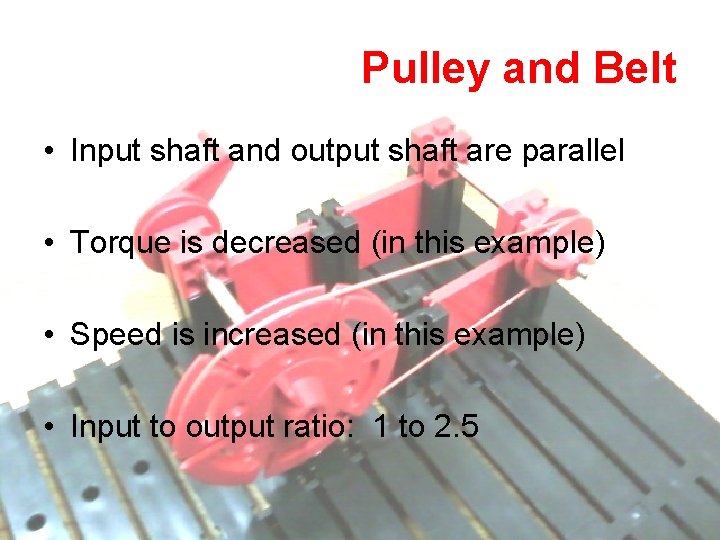
Pulley and Belt • Input shaft and output shaft are parallel • Torque is decreased (in this example) • Speed is increased (in this example) • Input to output ratio: 1 to 2. 5
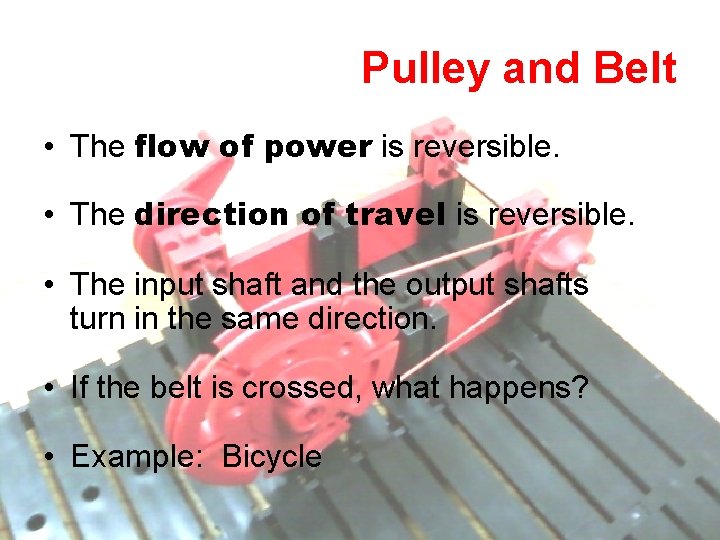
Pulley and Belt • The flow of power is reversible. • The direction of travel is reversible. • The input shaft and the output shafts turn in the same direction. • If the belt is crossed, what happens? • Example: Bicycle
Pulley and Belt
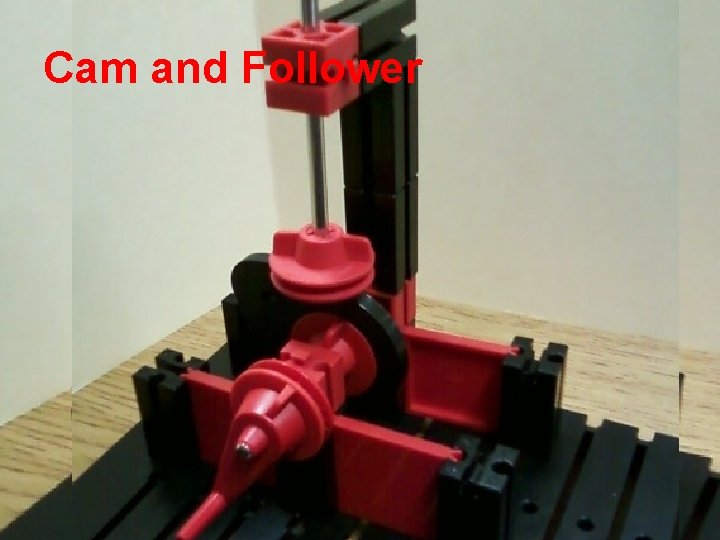
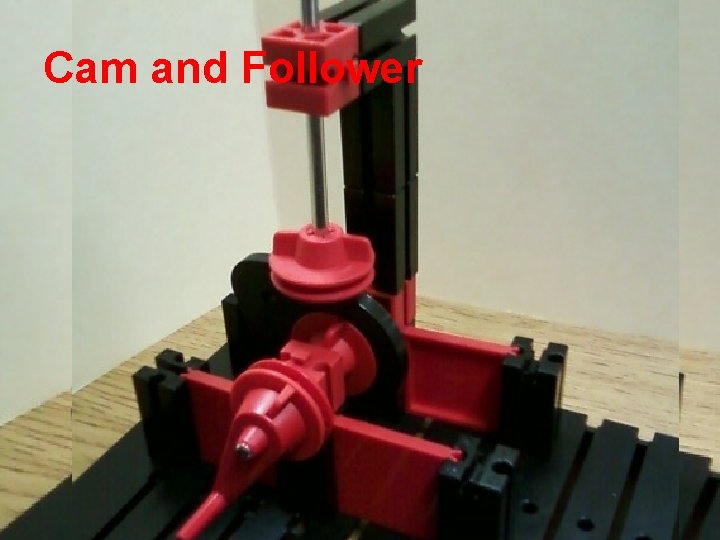
Cam and Follower
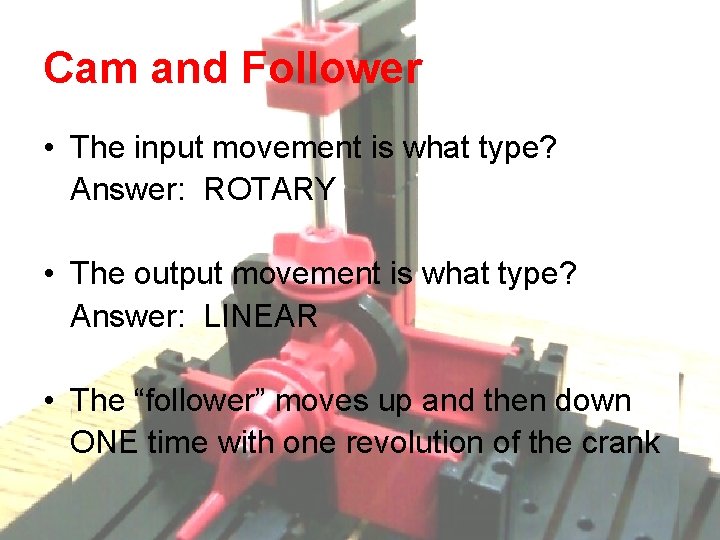
Cam and Follower • The input movement is what type? Answer: ROTARY • The output movement is what type? Answer: LINEAR • The “follower” moves up and then down ONE time with one revolution of the crank
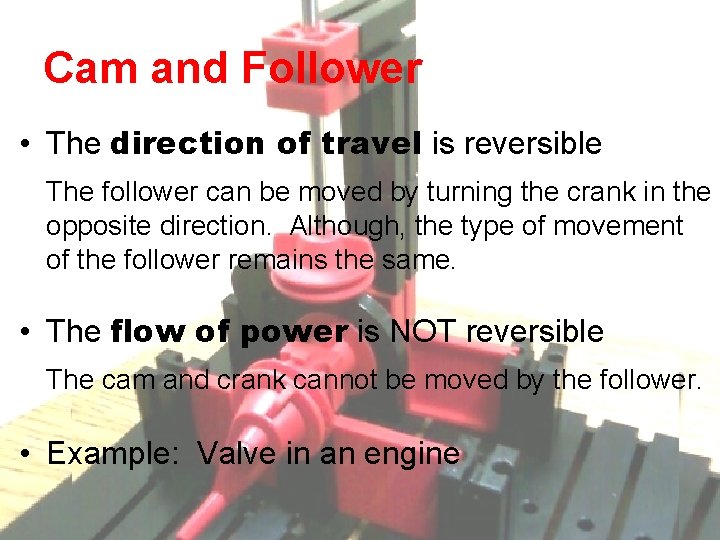
Cam and Follower • The direction of travel is reversible The follower can be moved by turning the crank in the opposite direction. Although, the type of movement of the follower remains the same. • The flow of power is NOT reversible The cam and crank cannot be moved by the follower. • Example: Valve in an engine
Cam and Follower
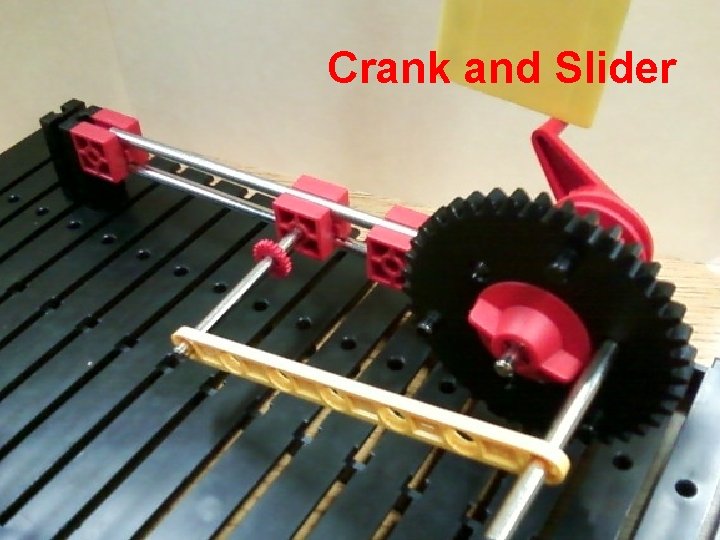
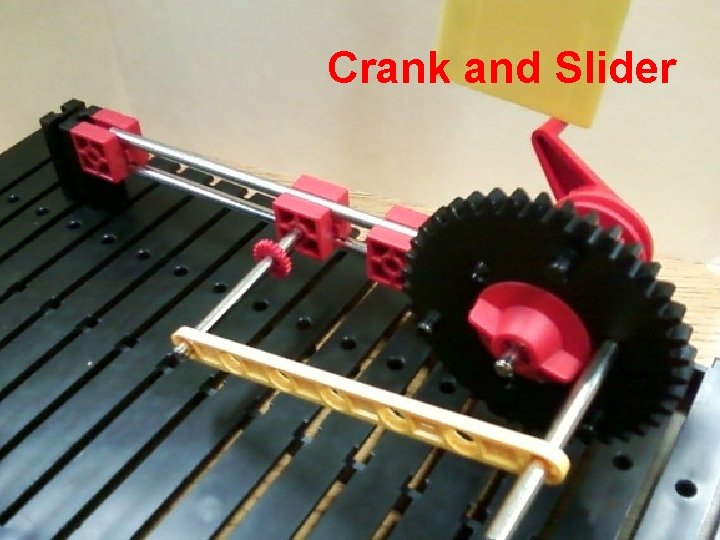
Crank and Slider
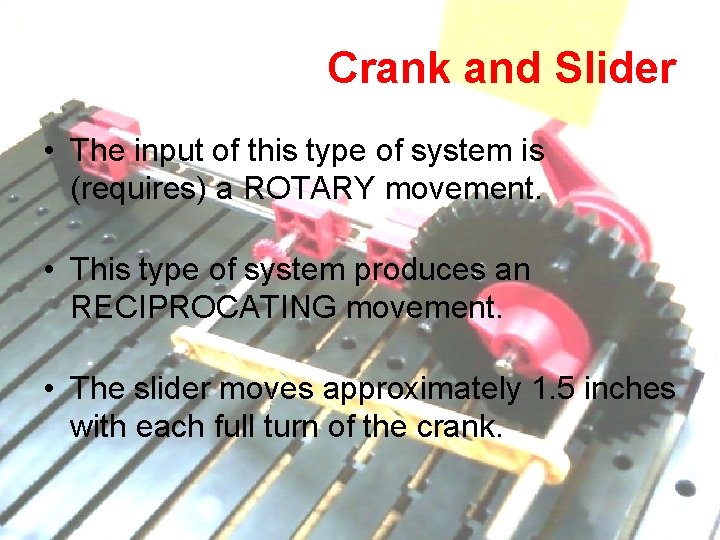
Crank and Slider • The input of this type of system is (requires) a ROTARY movement. • This type of system produces an RECIPROCATING movement. • The slider moves approximately 1. 5 inches with each full turn of the crank.
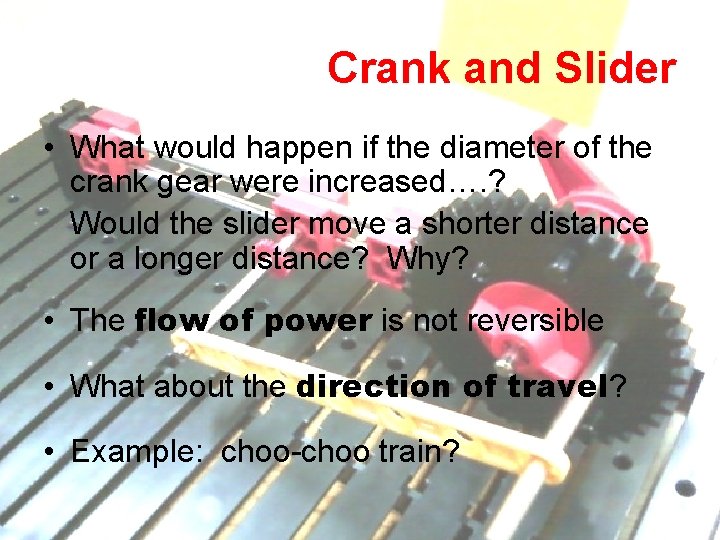
Crank and Slider • What would happen if the diameter of the crank gear were increased…. ? Would the slider move a shorter distance or a longer distance? Why? • The flow of power is not reversible • What about the direction of travel? • Example: choo-choo train?
Crank and Slider
Mechanical Gears • Universal Joint • Bevel Gear Assembly • Simple Gear with Idler • Worm and Wheel • Crown and Pinion
Mechanical Gears • Rack and Pinion • Lead Screw • Pulley and Belt • Cam and Follower • Crank and Slider