
Forging new generations of engineers What is Project

- Slides: 30
Forging new generations of engineers
What is Project Lead The Way? PLTW is a not-for-profit organization. PLTW partners with public schools, higher education institutions and the private sector to grow the nation’s technology workforce.
PLTW Accomplishes This With: • Curricula - Rigorous and Relevant high school engineering courses that use project-based learning. It’s free to participants • Professional Development – High-quality, continuing, and course-specific teacher training.
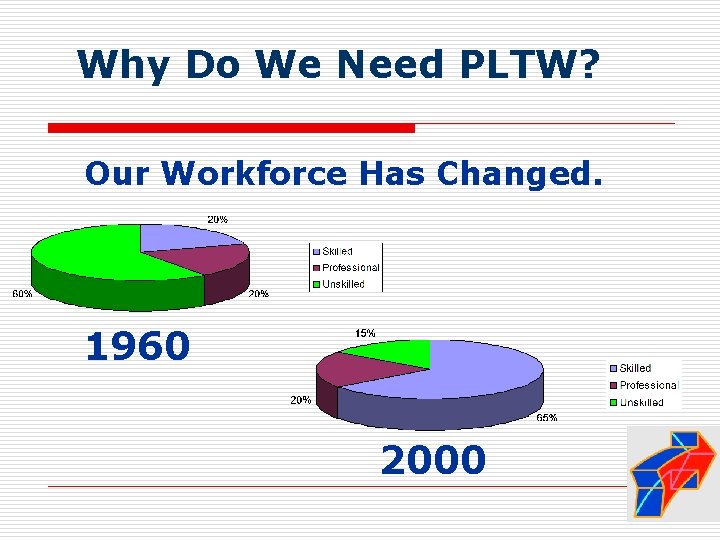
Why Do We Need PLTW? Our Workforce Has Changed. 1960 2000
Are we training the engineers and technicians we need? • There are currently 1. 3 M engineering/engineering technology jobs available in the U. S. without trained people to fill them. • According to the Federal Government we will need 15 million engineers and technology workers by 2020.
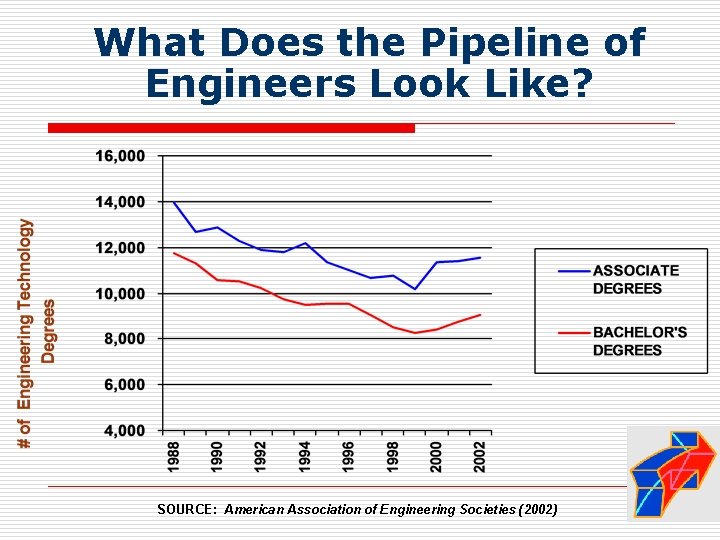
What Does the Pipeline of Engineers Look Like? SOURCE: American Association of Engineering Societies (2002)
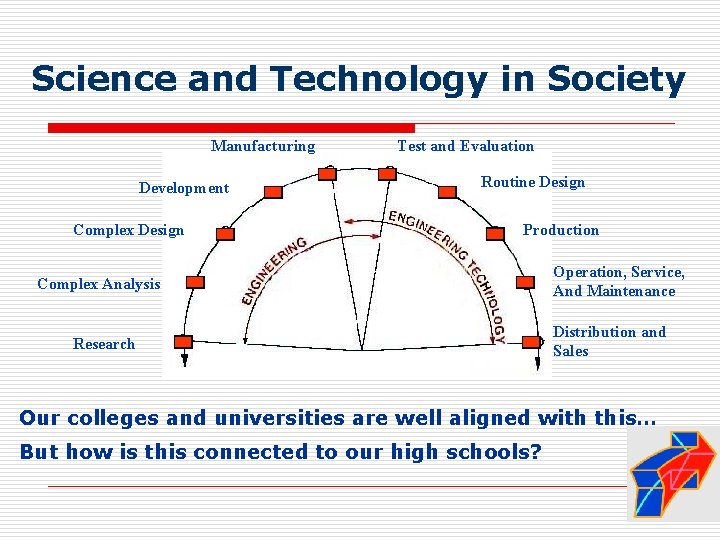
Science and Technology in Society Manufacturing Development Complex Design Test and Evaluation Routine Design Production Complex Analysis Research Operation, Service, And Maintenance Distribution and Sales Our colleges and universities are well aligned with this… But how is this connected to our high schools?
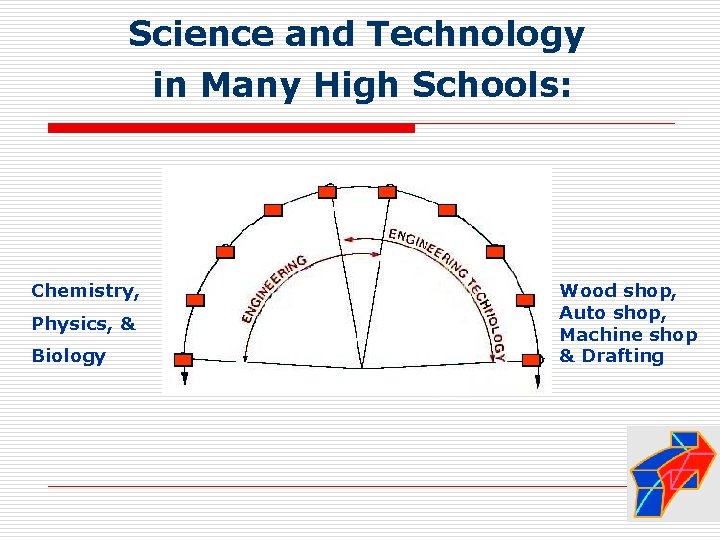
Science and Technology in Many High Schools: Chemistry, Physics, & Biology Wood shop, Auto shop, Machine shop & Drafting
What Can We Do? Make a small change in the culture of American high schools by: • Strengthening the core academic curricula, (e. g. English, math, science, social studies, etc. ) • Adding a rigorous, technical, standards-based program of study in engineering and technology, leading to jobs, trade schools, 2 -year, 4 -year and post graduate degrees.
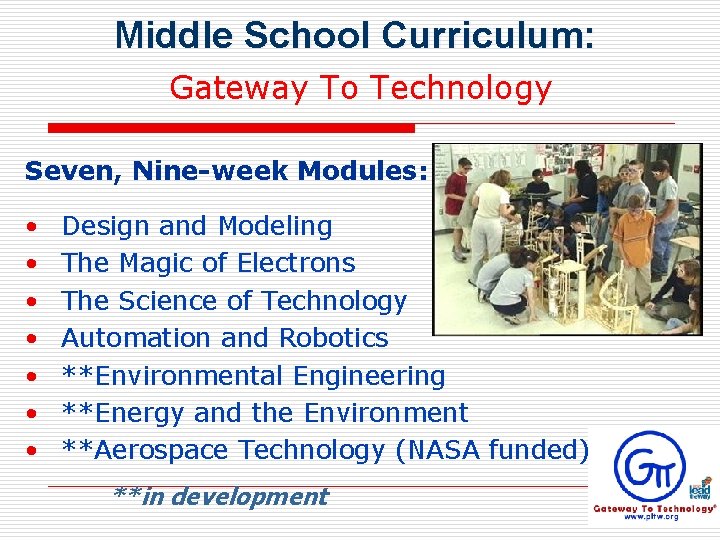
Middle School Curriculum: Gateway To Technology Seven, Nine-week Modules: • • Design and Modeling The Magic of Electrons The Science of Technology Automation and Robotics **Environmental Engineering **Energy and the Environment **Aerospace Technology (NASA funded) **in development
High School Course Program Foundation: • Principles Of Engineering • Introduction to Engineering Design • Digital Electronics ----------------------------------------------------------------- Specialization: • Computer Integrated Manufacturing • Civil Engineering and Architecture • Biotechnical Engineering (New this Year) • Aerospace Technology (New this Year) ----------------------------------------------------------------- Capstone: • Engineering Design and Development Note: Course program requires college prep mathematics each year.
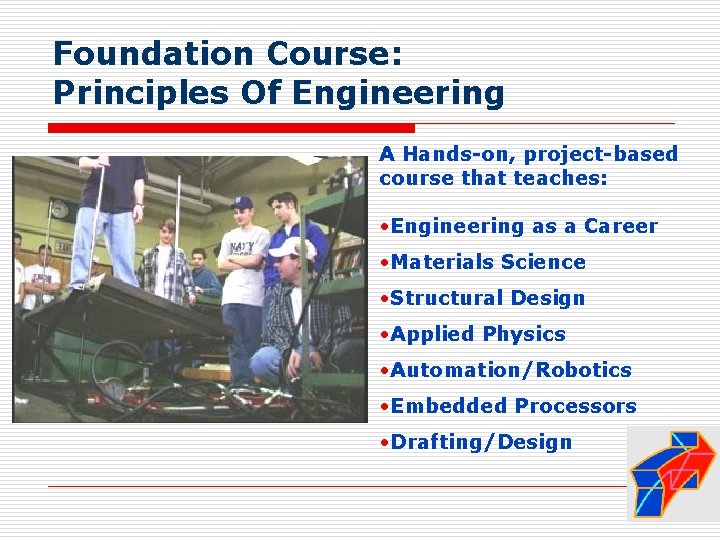
Foundation Course: Principles Of Engineering A Hands-on, project-based course that teaches: • Engineering as a Career • Materials Science • Structural Design • Applied Physics • Automation/Robotics • Embedded Processors • Drafting/Design
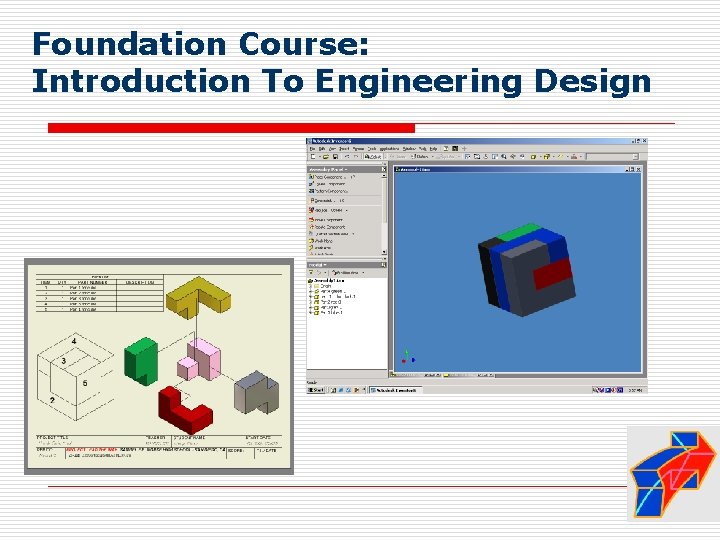
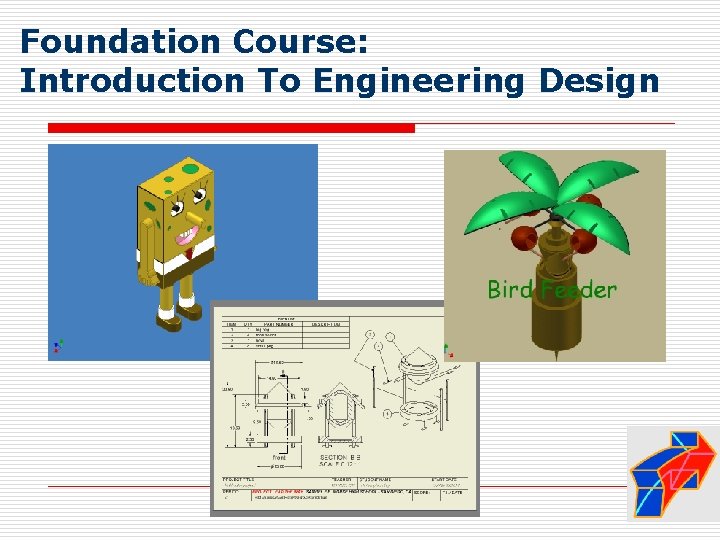
Foundation Course: Introduction To Engineering Design
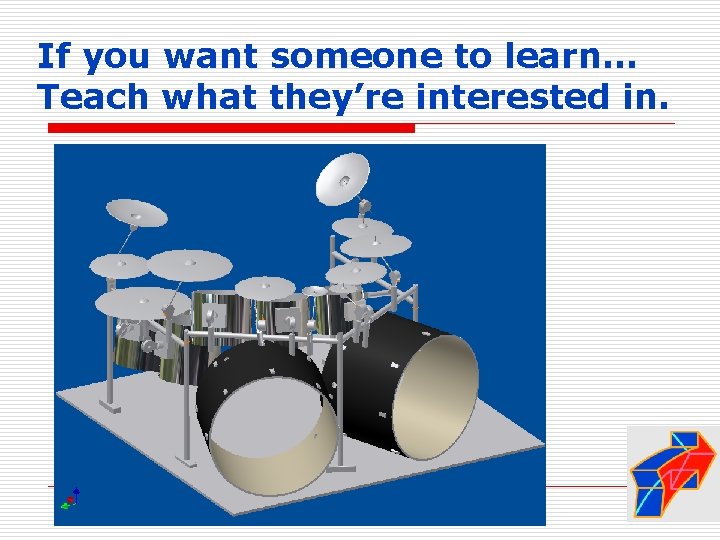
If you want someone to learn… Teach what they’re interested in.
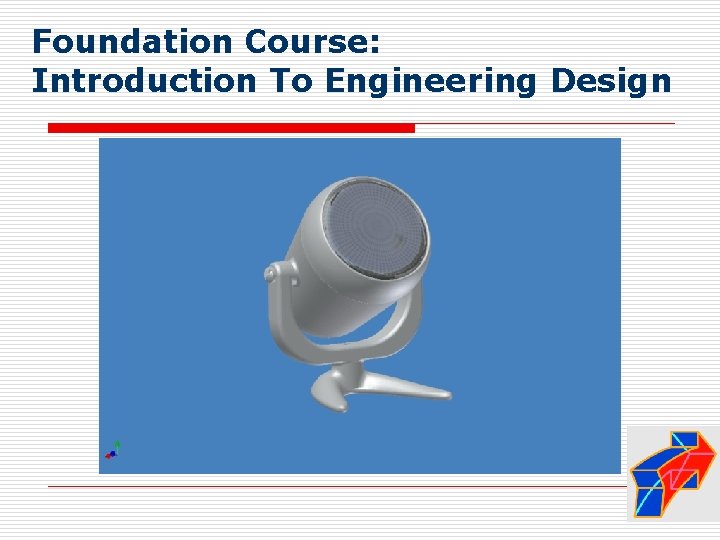
Foundation Course: Introduction To Engineering Design
Foundation Course: Introduction To Engineering Design
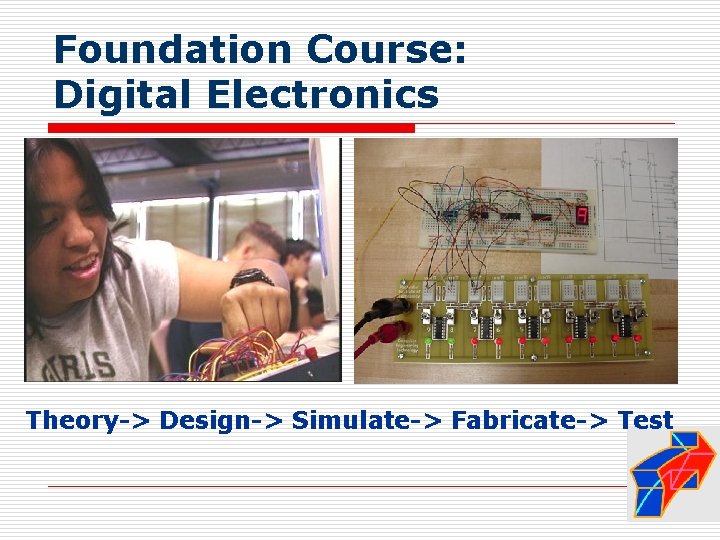
Foundation Course: Digital Electronics Theory-> Design-> Simulate-> Fabricate-> Test
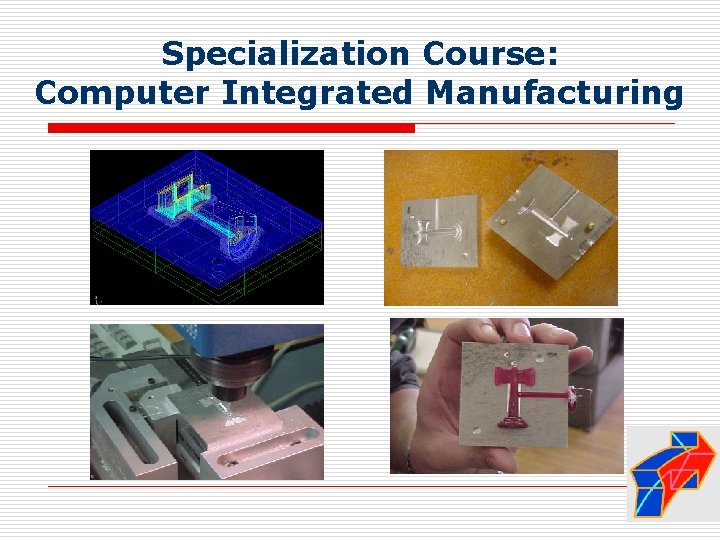
Specialization Course: Computer Integrated Manufacturing
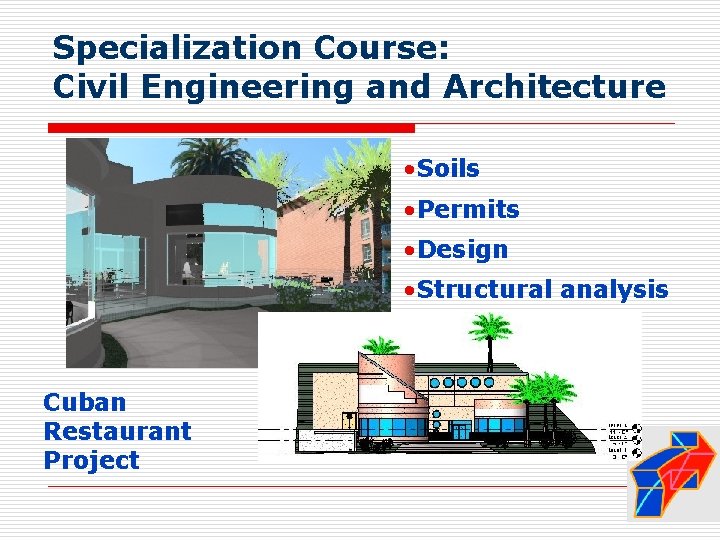
Specialization Course: Civil Engineering and Architecture • Soils • Permits • Design • Structural analysis Cuban Restaurant Project
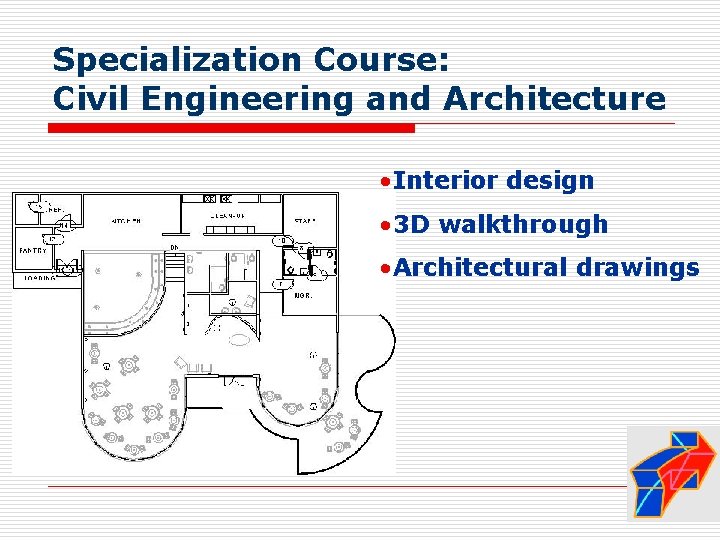
Specialization Course: Civil Engineering and Architecture • Interior design • 3 D walkthrough • Architectural drawings
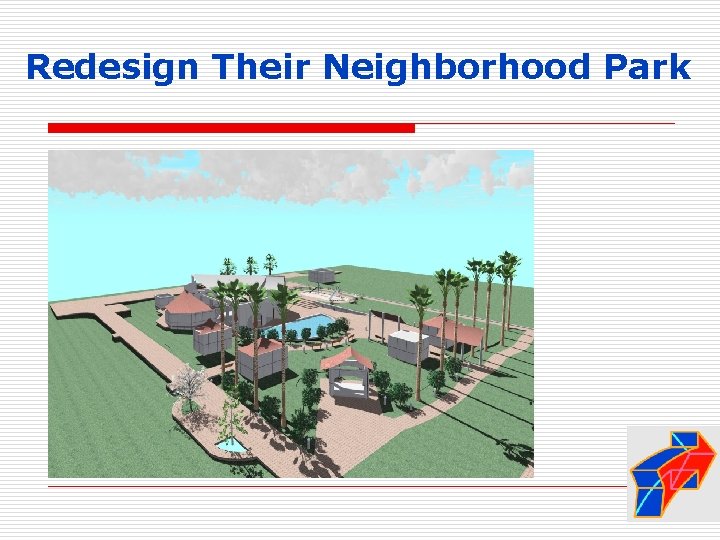
Redesign Their Neighborhood Park
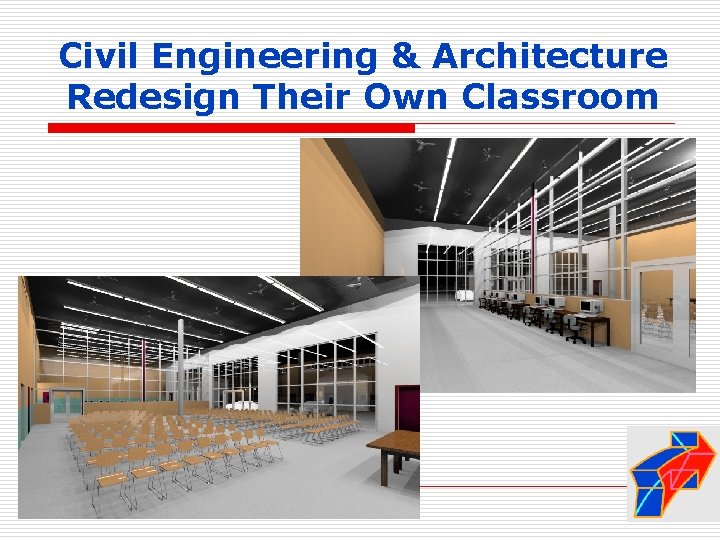
Civil Engineering & Architecture Redesign Their Own Classroom
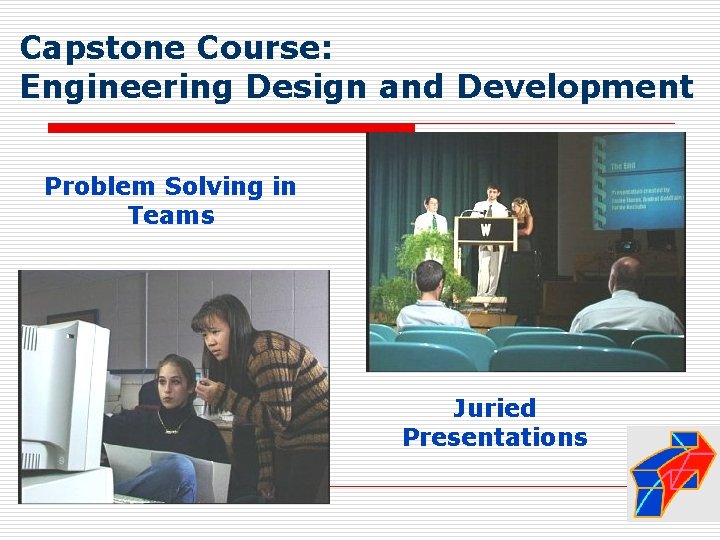
Capstone Course: Engineering Design and Development Problem Solving in Teams Juried Presentations
Participant Growth 1997 - 2006 • 1996 -1997 1 School • 2004 -2005 800 Schools • 2006 -2007 1600+ Schools
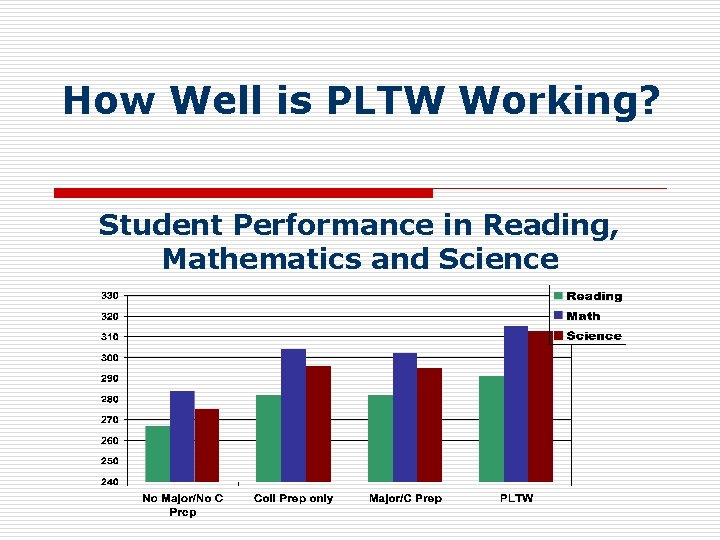
How Well is PLTW Working? Student Performance in Reading, Mathematics and Science
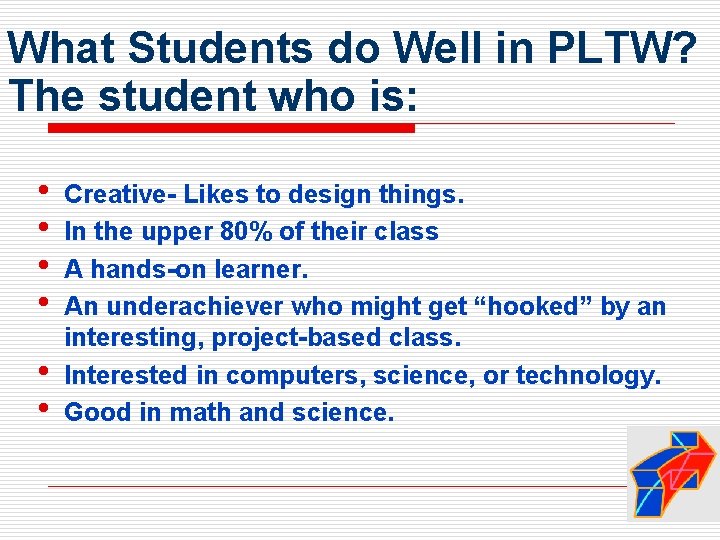
What Students do Well in PLTW? The student who is: • • • Creative- Likes to design things. In the upper 80% of their class A hands-on learner. An underachiever who might get “hooked” by an interesting, project-based class. Interested in computers, science, or technology. Good in math and science.
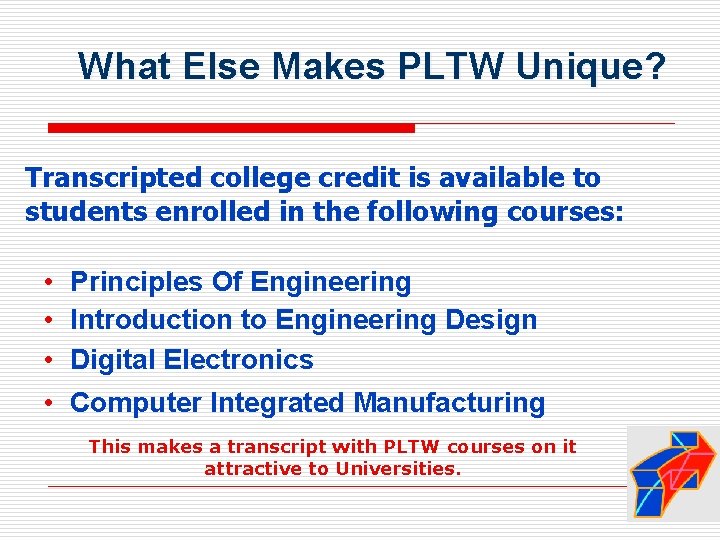
What Else Makes PLTW Unique? Transcripted college credit is available to students enrolled in the following courses: • Principles Of Engineering • Introduction to Engineering Design • Digital Electronics • Computer Integrated Manufacturing This makes a transcript with PLTW courses on it attractive to Universities.
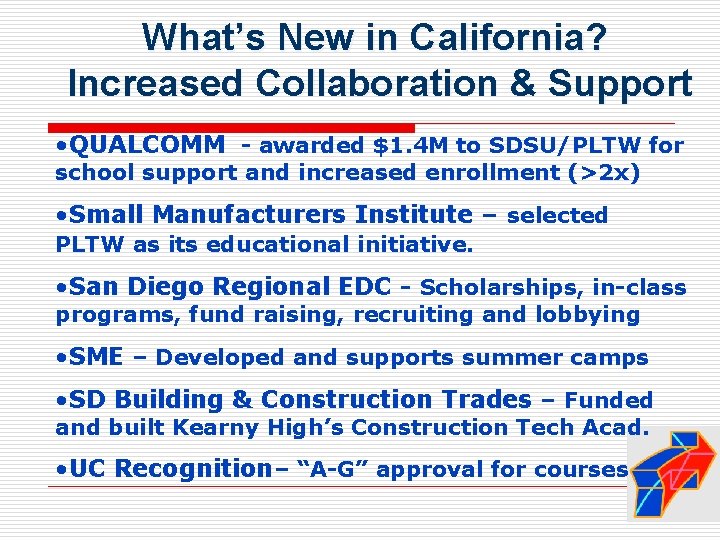
What’s New in California? Increased Collaboration & Support • QUALCOMM - awarded $1. 4 M to SDSU/PLTW for school support and increased enrollment (>2 x) • Small Manufacturers Institute – selected PLTW as its educational initiative. • San Diego Regional EDC - Scholarships, in-class programs, fund raising, recruiting and lobbying • SME – Developed and supports summer camps • SD Building & Construction Trades – Funded and built Kearny High’s Construction Tech Acad. • UC Recognition– “A-G” approval for courses
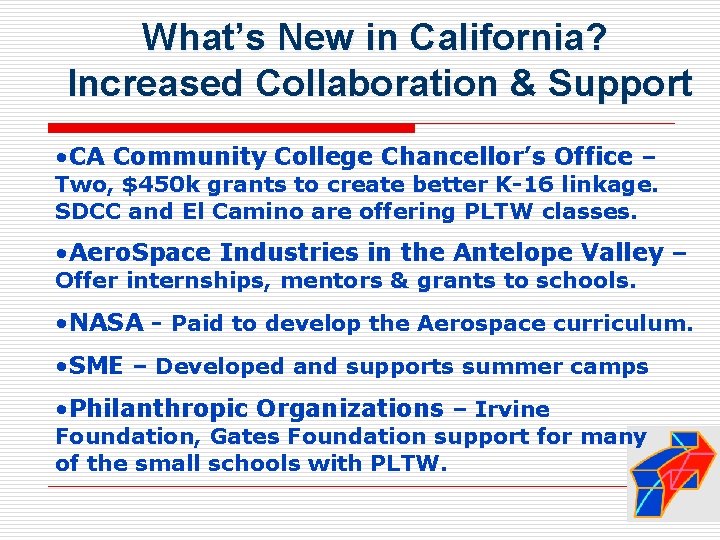
What’s New in California? Increased Collaboration & Support • CA Community College Chancellor’s Office – Two, $450 k grants to create better K-16 linkage. SDCC and El Camino are offering PLTW classes. • Aero. Space Industries in the Antelope Valley – Offer internships, mentors & grants to schools. • NASA - Paid to develop the Aerospace curriculum. • SME – Developed and supports summer camps • Philanthropic Organizations – Irvine Foundation, Gates Foundation support for many of the small schools with PLTW.
Forging new generations of engineers