General Anesthetics What are General Anesthetics A drug

- Slides: 78
General Anesthetics
What are General Anesthetics? A drug that brings about a reversible loss of consciousness Generally administered by an anesthesiologist in order to induce or maintain general anesthesia to facilitate surgery.
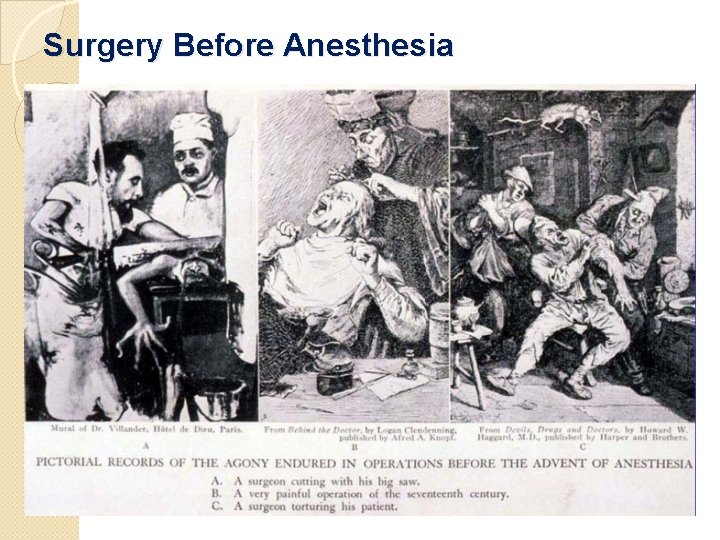
Surgery Before Anesthesia
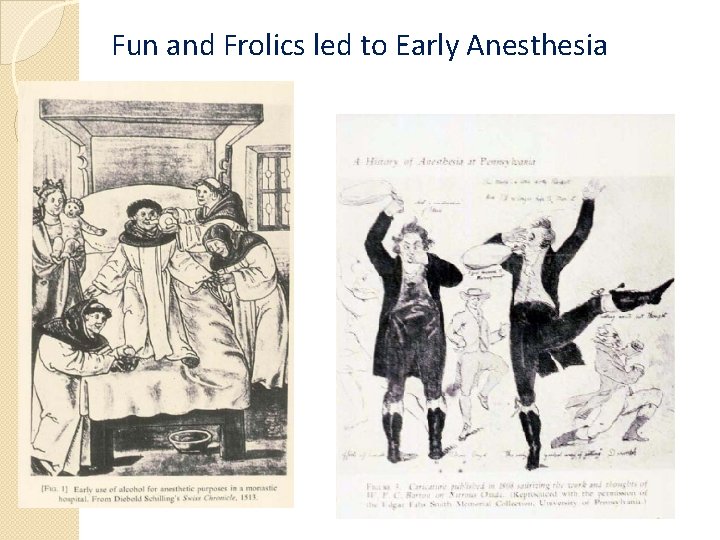
Fun and Frolics led to Early Anesthesia
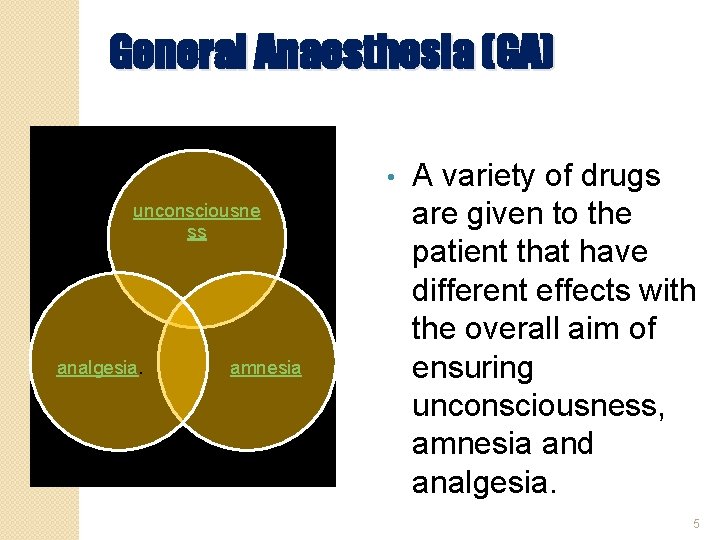
General Anaesthesia (GA) • unconsciousne ss analgesia. amnesia A variety of drugs are given to the patient that have different effects with the overall aim of ensuring unconsciousness, amnesia and analgesia. 5
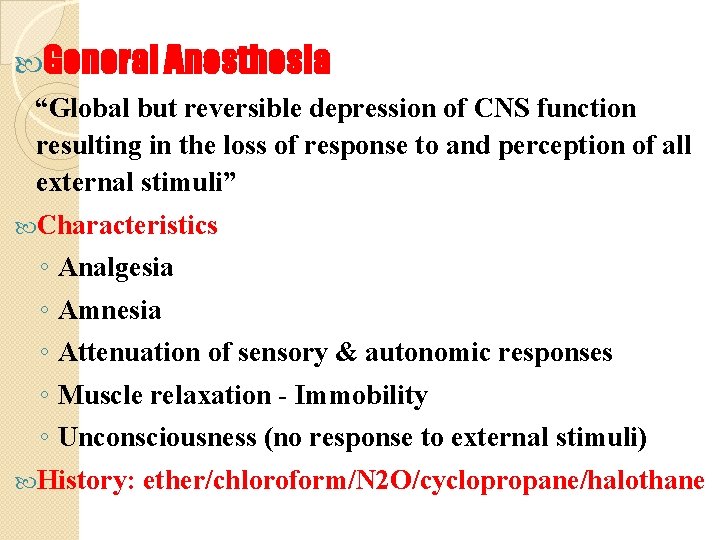
General Anesthesia “Global but reversible depression of CNS function resulting in the loss of response to and perception of all external stimuli” Characteristics ◦ ◦ ◦ Analgesia Amnesia Attenuation of sensory & autonomic responses Muscle relaxation - Immobility Unconsciousness (no response to external stimuli) History: ether/chloroform/N 2 O/cyclopropane/halothane
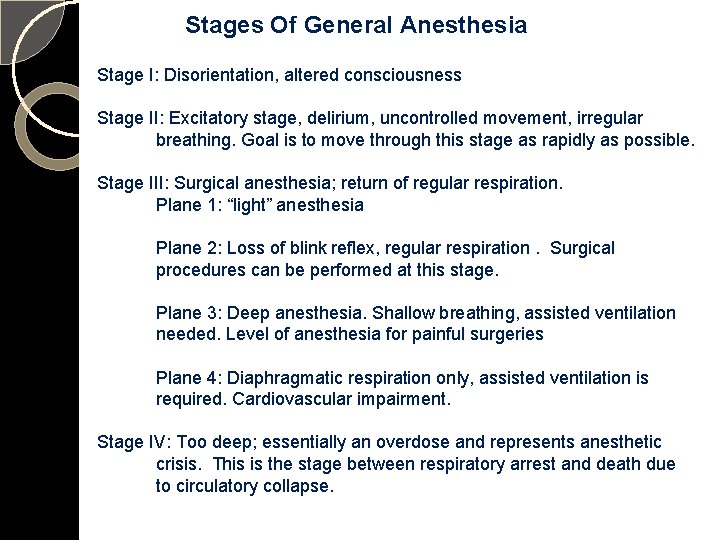
Stages Of General Anesthesia Stage I: Disorientation, altered consciousness Stage II: Excitatory stage, delirium, uncontrolled movement, irregular breathing. Goal is to move through this stage as rapidly as possible. Stage III: Surgical anesthesia; return of regular respiration. Plane 1: “light” anesthesia Plane 2: Loss of blink reflex, regular respiration. Surgical procedures can be performed at this stage. Plane 3: Deep anesthesia. Shallow breathing, assisted ventilation needed. Level of anesthesia for painful surgeries Plane 4: Diaphragmatic respiration only, assisted ventilation is required. Cardiovascular impairment. Stage IV: Too deep; essentially an overdose and represents anesthetic crisis. This is the stage between respiratory arrest and death due to circulatory collapse.
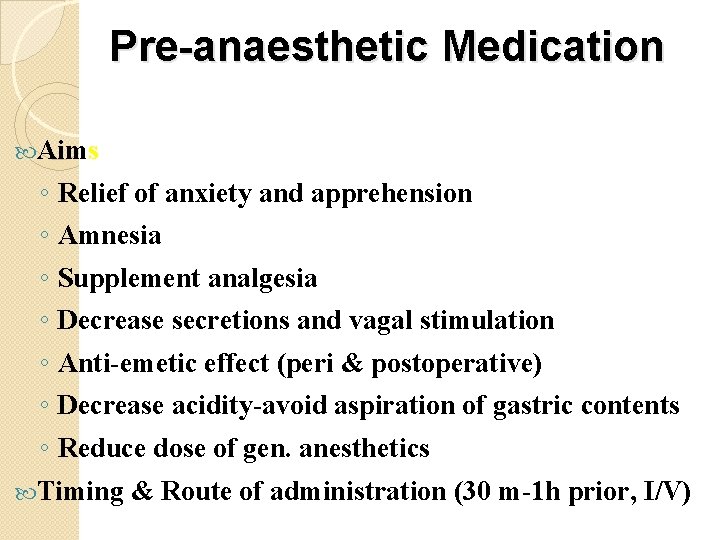
Pre-anaesthetic Medication Aims ◦ ◦ ◦ ◦ Relief of anxiety and apprehension Amnesia Supplement analgesia Decrease secretions and vagal stimulation Anti-emetic effect (peri & postoperative) Decrease acidity-avoid aspiration of gastric contents Reduce dose of gen. anesthetics Timing & Route of administration (30 m-1 h prior, I/V)
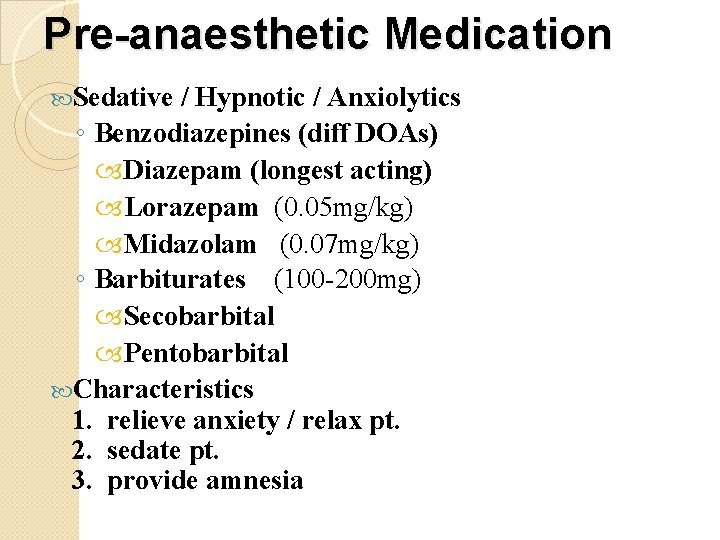
Pre-anaesthetic Medication Sedative / Hypnotic / Anxiolytics ◦ Benzodiazepines (diff DOAs) Diazepam (longest acting) Lorazepam (0. 05 mg/kg) Midazolam (0. 07 mg/kg) ◦ Barbiturates (100 -200 mg) Secobarbital Pentobarbital Characteristics 1. relieve anxiety / relax pt. 2. sedate pt. 3. provide amnesia
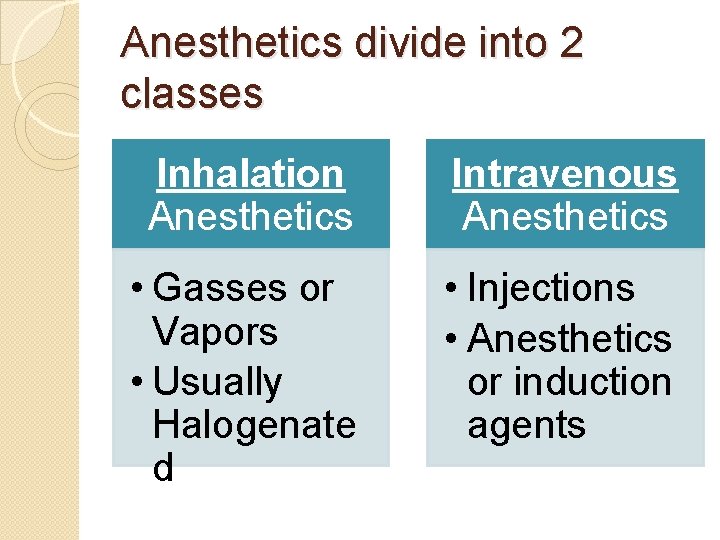
Anesthetics divide into 2 classes Inhalation Anesthetics Intravenous Anesthetics • Gasses or Vapors • Usually Halogenate d • Injections • Anesthetics or induction agents
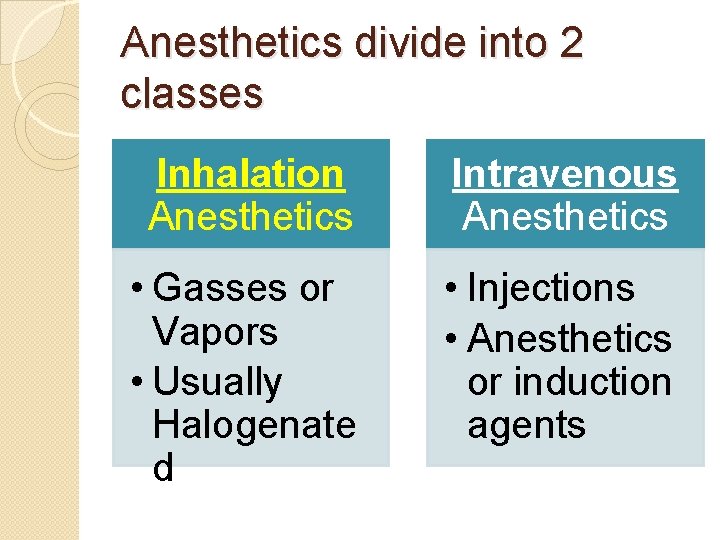
Anesthetics divide into 2 classes Inhalation Anesthetics Intravenous Anesthetics • Gasses or Vapors • Usually Halogenate d • Injections • Anesthetics or induction agents
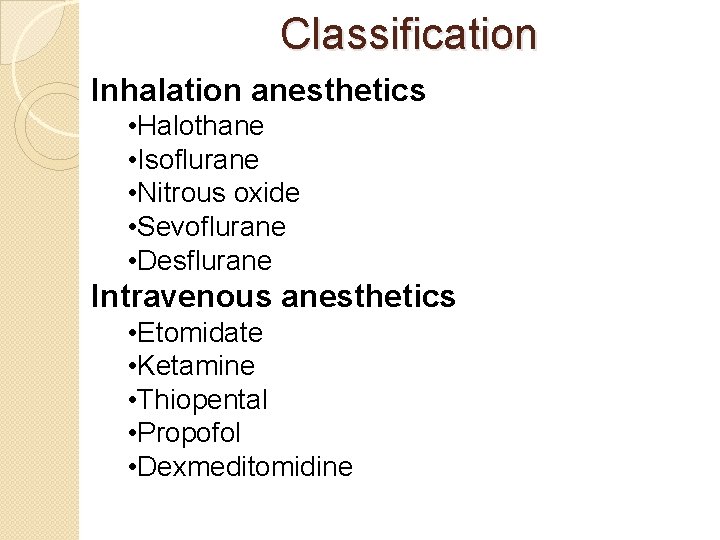
Classification Inhalation anesthetics • Halothane • Isoflurane • Nitrous oxide • Sevoflurane • Desflurane Intravenous anesthetics • Etomidate • Ketamine • Thiopental • Propofol • Dexmeditomidine
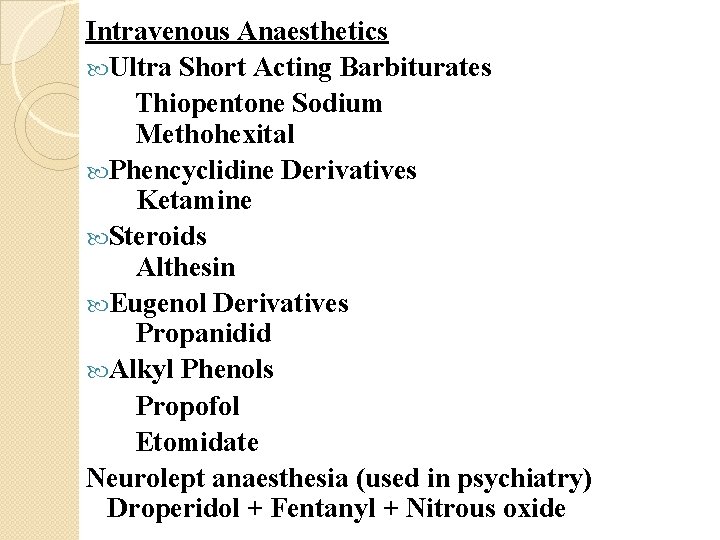
Intravenous Anaesthetics Ultra Short Acting Barbiturates Thiopentone Sodium Methohexital Phencyclidine Derivatives Ketamine Steroids Althesin Eugenol Derivatives Propanidid Alkyl Phenols Propofol Etomidate Neurolept anaesthesia (used in psychiatry) Droperidol + Fentanyl + Nitrous oxide
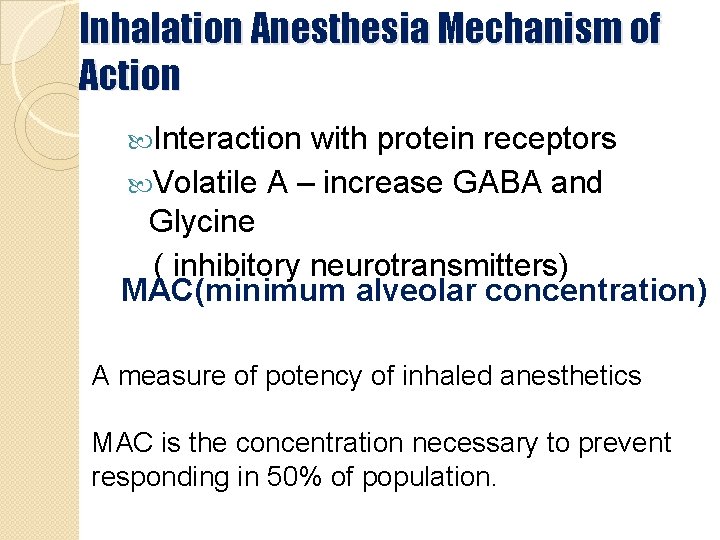
Inhalation Anesthesia Mechanism of Action Interaction with protein receptors Volatile A – increase GABA and Glycine ( inhibitory neurotransmitters) MAC(minimum alveolar concentration) A measure of potency of inhaled anesthetics MAC is the concentration necessary to prevent responding in 50% of population.
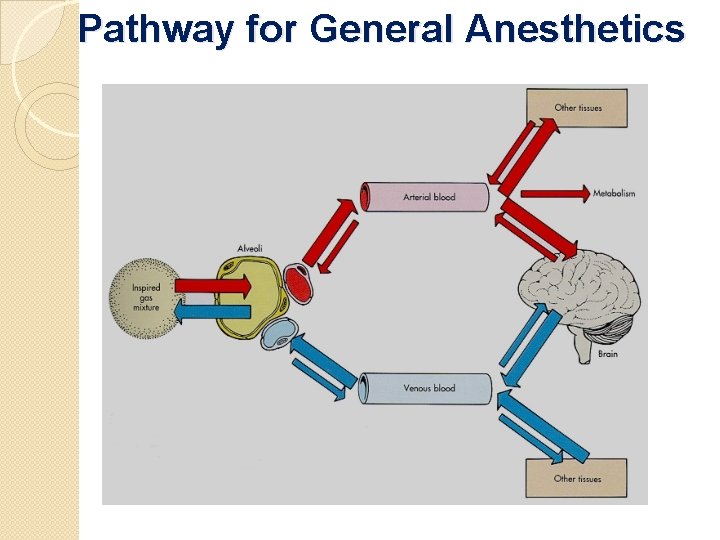
Pathway for General Anesthetics
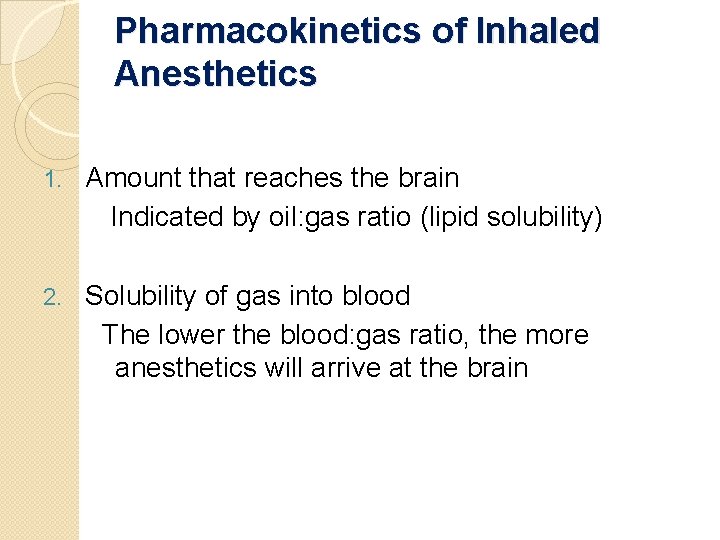
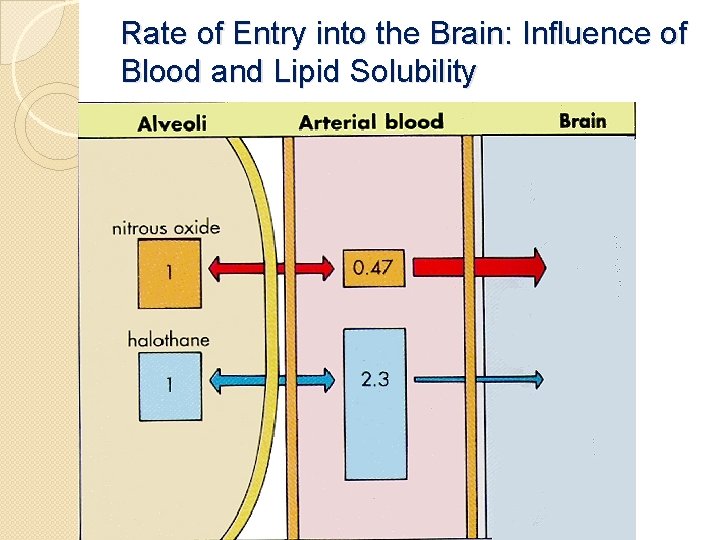
Pharmacokinetics of Inhaled Anesthetics 1. Amount that reaches the brain Indicated by oil: gas ratio (lipid solubility) 2. Solubility of gas into blood The lower the blood: gas ratio, the more anesthetics will arrive at the brain
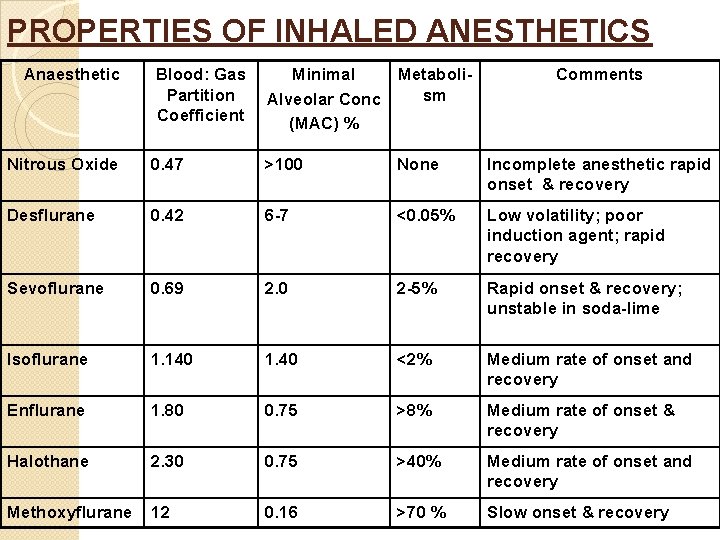
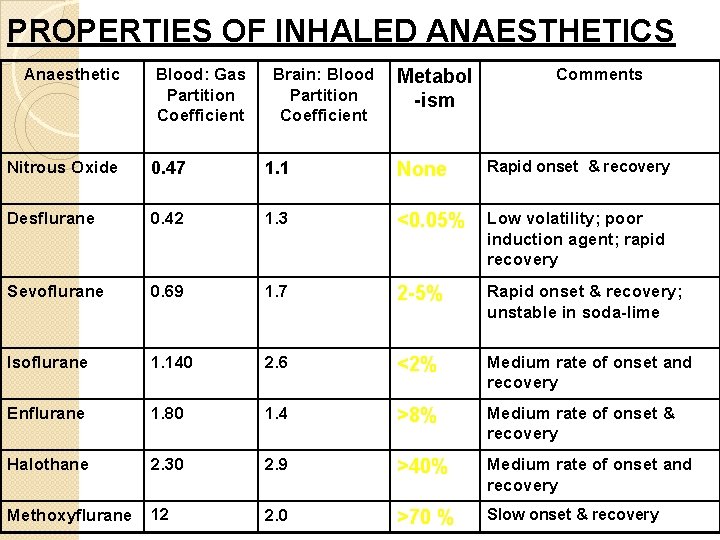
PROPERTIES OF INHALED ANESTHETICS Anaesthetic Blood: Gas Partition Coefficient Minimal Metabolism Alveolar Conc (MAC) % Comments Nitrous Oxide 0. 47 >100 None Incomplete anesthetic rapid onset & recovery Desflurane 0. 42 6 -7 <0. 05% Low volatility; poor induction agent; rapid recovery Sevoflurane 0. 69 2. 0 2 -5% Rapid onset & recovery; unstable in soda-lime Isoflurane 1. 140 1. 40 <2% Medium rate of onset and recovery Enflurane 1. 80 0. 75 >8% Medium rate of onset & recovery Halothane 2. 30 0. 75 >40% Medium rate of onset and recovery Methoxyflurane 12 0. 16 >70 % Slow onset & recovery
PROPERTIES OF INHALED ANAESTHETICS Anaesthetic Blood: Gas Partition Coefficient Brain: Blood Partition Coefficient Metabol -ism Comments Nitrous Oxide 0. 47 1. 1 None Rapid onset & recovery Desflurane 0. 42 1. 3 <0. 05% Low volatility; poor induction agent; rapid recovery Sevoflurane 0. 69 1. 7 2 -5% Rapid onset & recovery; unstable in soda-lime Isoflurane 1. 140 2. 6 <2% Medium rate of onset and recovery Enflurane 1. 80 1. 4 >8% Medium rate of onset & recovery Halothane 2. 30 2. 9 >40% Medium rate of onset and recovery Methoxyflurane 12 2. 0 >70 % Slow onset & recovery
Rate of Entry into the Brain: Influence of Blood and Lipid Solubility
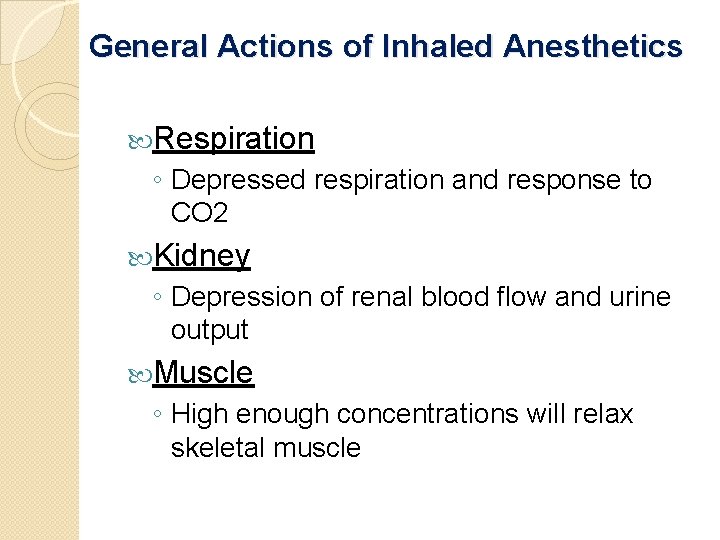
General Actions of Inhaled Anesthetics Respiration ◦ Depressed respiration and response to CO 2 Kidney ◦ Depression of renal blood flow and urine output Muscle ◦ High enough concentrations will relax skeletal muscle
General Actions of Inhaled Anesthetics Cardiovascular System ◦ Generalized reduction in arterial pressure and peripheral vascular resistance. ◦ Isoflurane maintains CO and coronary function better than other agents Central Nervous System ◦ Increased cerebral blood flow and decreased cerebral metabolism
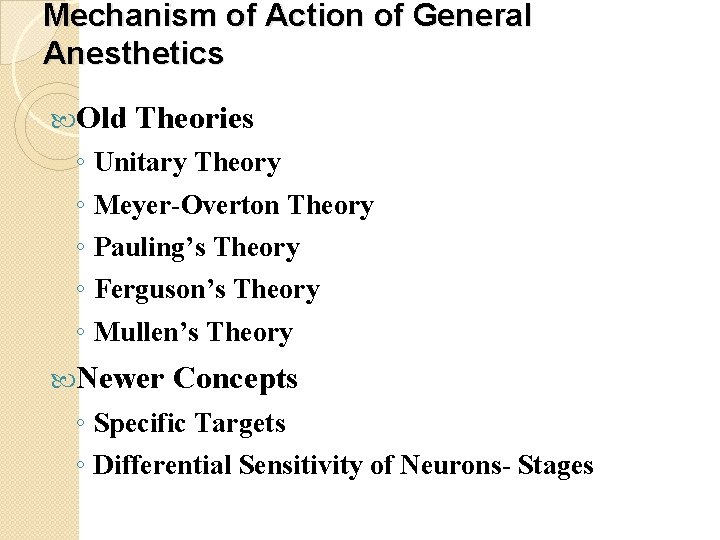
Mechanism of Action of General Anesthetics Old ◦ ◦ ◦ Theories Unitary Theory Meyer-Overton Theory Pauling’s Theory Ferguson’s Theory Mullen’s Theory Newer Concepts ◦ Specific Targets ◦ Differential Sensitivity of Neurons- Stages
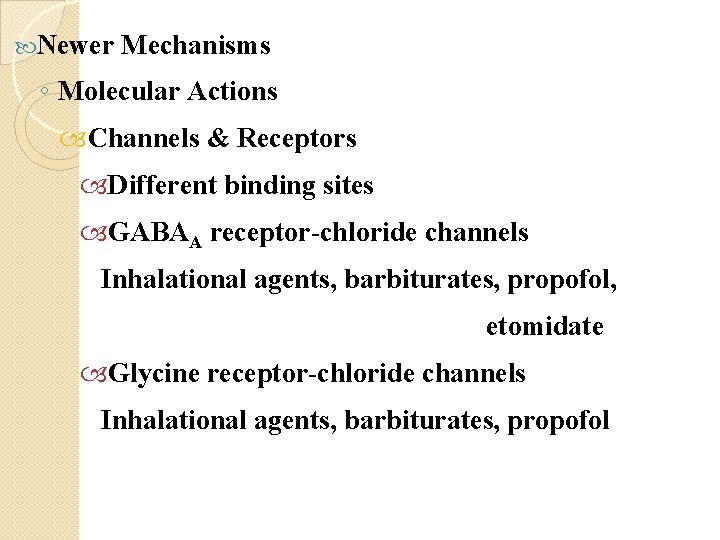
Newer Mechanisms ◦ Molecular Actions Channels & Receptors Different binding sites GABAA receptor-chloride channels Inhalational agents, barbiturates, propofol, etomidate Glycine receptor-chloride channels Inhalational agents, barbiturates, propofol
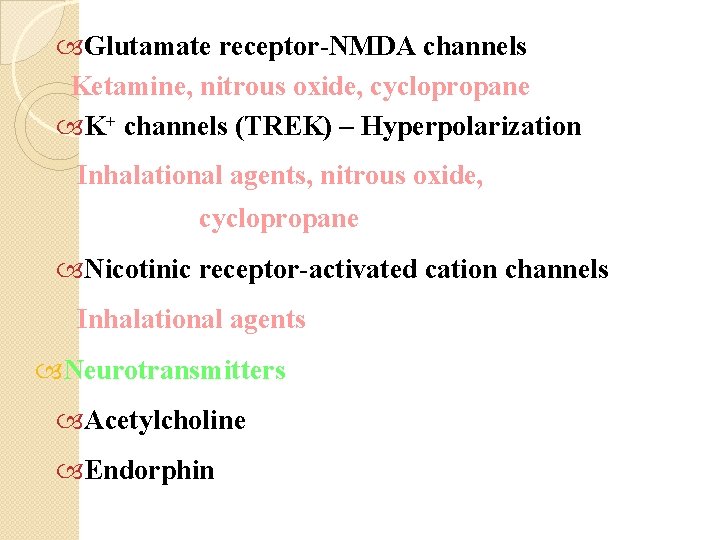
Glutamate receptor-NMDA channels Ketamine, nitrous oxide, cyclopropane K+ channels (TREK) – Hyperpolarization Inhalational agents, nitrous oxide, cyclopropane Nicotinic receptor-activated cation channels Inhalational agents Neurotransmitters Acetylcholine Endorphin
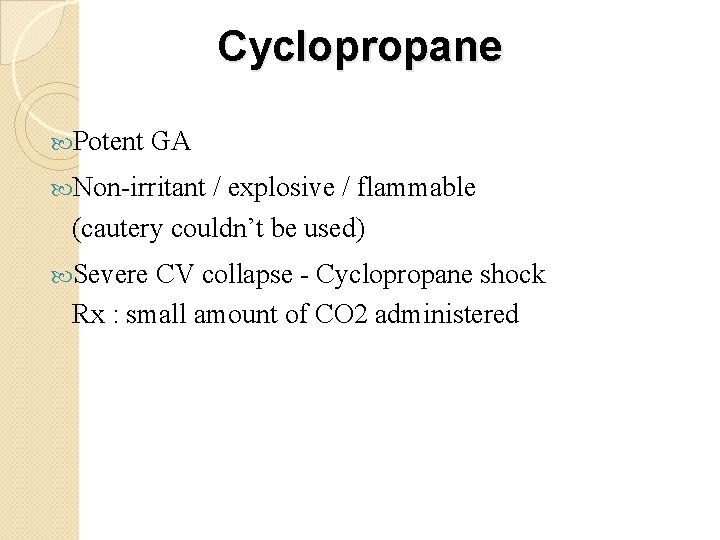
Cyclopropane Potent GA Non-irritant / explosive / flammable (cautery couldn’t be used) Severe CV collapse - Cyclopropane shock Rx : small amount of CO 2 administered
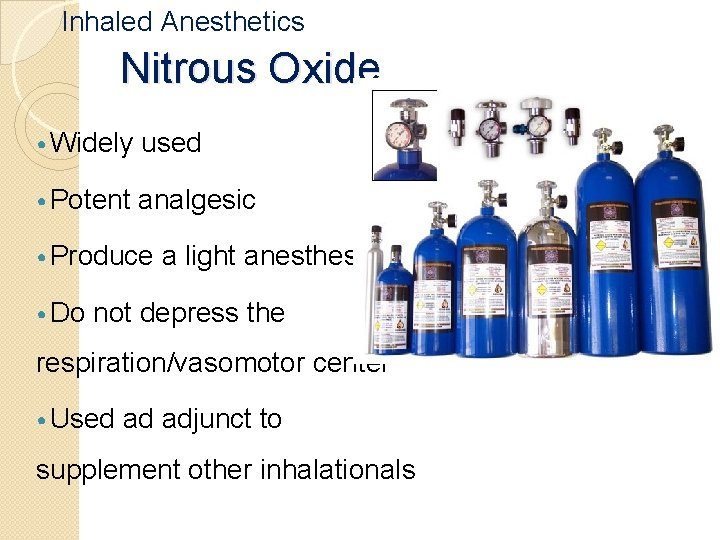
Inhaled Anesthetics Nitrous Oxide • Widely used • Potent analgesic • Produce • Do a light anesthesia not depress the respiration/vasomotor center • Used ad adjunct to supplement other inhalationals
Nitrous Oxide Chemical and Physical Properties ◦ Inorganic gas (N 2 O) ◦ Odourless / colourless / heavier than air ◦ Non-explosive / non-inflammable / supports combustion ◦ Laughing gas: euphoria-small amounts, abused in past Pharmacokinetics ◦ MAC - 105 ◦ B: G part. coef. – 0. 47 at 37 C ◦ Rapid induction & recovery ◦ Not metabolized (99. 9% exhaled unchanged) ◦ Elimination (0. 1% degraded by int. bacteria)
Pharmacological Effects ◦ CVS / Respiratory system (depends on other agents) ◦ CNS (inc. CBF – inc. ICP) ◦ GIT / Muscles Uses ◦ Analgesia (40%) ◦ Sedation (30 -80%) ◦ Anesthesia – less potency - adjuvant - second gas effect - short surgical procedures (dental extraction, postoperative pain, painful dressings, fracture manipulation, child birth)
Adverse effects ◦ Diffusional hypoxia / anoxia ◦ Vitamin B 12 deficiency (inhibits methionine synthetase, req. for vitamin B 12 synthesis) Megaloblastic anemia Peripheral neuropathy ◦ Replaces N 2 in air-containing cavities (obstructed middle ear, air embolus, pneumothorax) enlarges it ◦ Effect of NO 2 & O 2 in same cylinder (1 st insufficient anesthesia – later-on hypoxia)
ADVANTAGES Non-inflammable Very Non-irritating Potent Analgesic: 30 – 40 % Analgesia 65 – 70 % Loss of consciousness 80 % plane of Surgical Anesthesia Non-explosive, Rapid Use however supports combustion. induction and recovery. in procedures of short durations (tooth extraction, obstetrical analgesia, cleaning and debridement of wounds).
Induction and maintenance of anesthesia I/V Thiopentone-Gas-Oxygen-Halothane technique Safe, no organ toxicity (Resp, CVS, Renal or Hepatic) the dose of GA when combined adverse effects, complications recovery period from anaesthesia
DISADVANTAGES Not a potent anesthetic & muscle relaxant Violent excitement dioxide accumulation and hypoxia cardiac irregularities during anesthesia Carbon
DISADVANTAGES Specialized apparatus to control its administration for more than 7 hrs Bone marrow depression ( leucopenia, anemia) Adm adm Peripheral neuropathy & Megaloblastic anemia due to interference with B 12 metabolism, Abortion, peripheral Neuropathy Prolonged Second gas effect leading to transient hypoxia Diffusion hypoxia
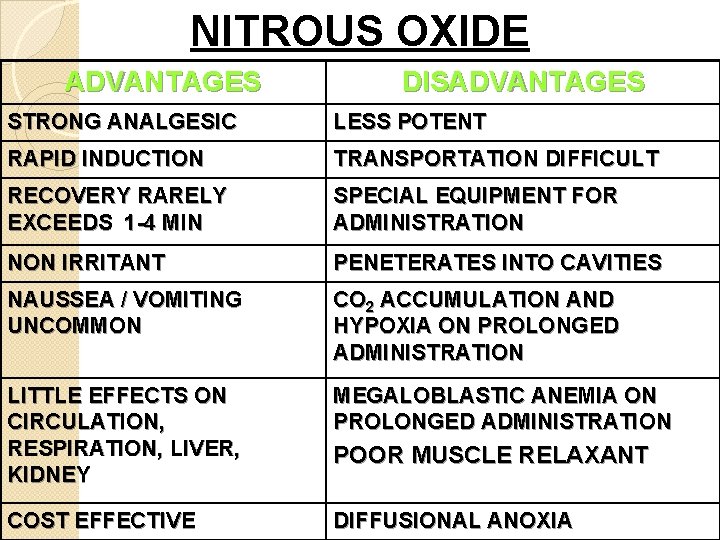
NITROUS OXIDE ADVANTAGES DISADVANTAGES STRONG ANALGESIC LESS POTENT RAPID INDUCTION TRANSPORTATION DIFFICULT RECOVERY RARELY EXCEEDS 1 -4 MIN SPECIAL EQUIPMENT FOR ADMINISTRATION NON IRRITANT PENETERATES INTO CAVITIES NAUSSEA / VOMITING UNCOMMON CO 2 ACCUMULATION AND HYPOXIA ON PROLONGED ADMINISTRATION LITTLE EFFECTS ON CIRCULATION, RESPIRATION, LIVER, KIDNEY MEGALOBLASTIC ANEMIA ON PROLONGED ADMINISTRATION COST EFFECTIVE DIFFUSIONAL ANOXIA POOR MUSCLE RELAXANT
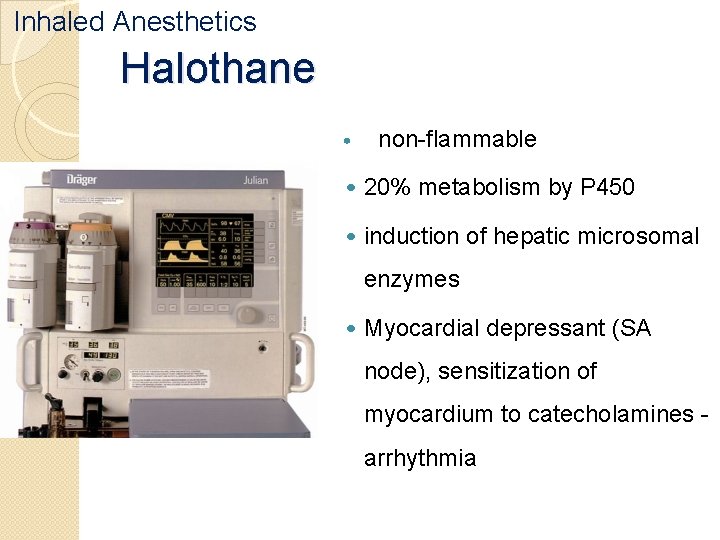
Inhaled Anesthetics Halothane • non-flammable • 20% metabolism by P 450 • induction of hepatic microsomal enzymes • Myocardial depressant (SA node), sensitization of myocardium to catecholamines arrhythmia
Halothane Chemical and Physical Properties ◦ 2 -bromo-2 -chloro-1, 1, 1 -trifluoroethane ◦ Volatile / odourless / colourless ◦ Non-irritant / non-explosive / noninflammable ◦ Light-sensitive / corrosive / interaction rubber Pharmacokinetics ◦ MAC - 0. 75 ◦ B: G part. coef. - 2. 3 ◦ Medium rate of onset & recovery ◦ Metabolism – trifluoroacetic acid - trifluoroacetylchloride ◦ Clearance (hepatic)
Pharmacological Effects ◦ CVS ↓BP / HR Myocardial sensitization to catecholamines Atropine / beta-blockers Redistribution of blood flow ◦ Respiratory system ↑ RR, ↓ Tidal vol. , dec. ventilatory response to CO 2 Inc. Pa. CO 2, raised apneic threshold Bronchodilator – larnygeal/pharyngeal reflexes abolished ◦ CNS inc CBF & dec CMR If CBF inc. —ICP inc. EEG: initial activation-low dose, slowing-high dose
◦ Kidneys (dec. GFR & RBF), -GIT ◦ Liver (dec. portal bl. flow, raised LFTs) ◦ Skeletal muscles (relaxation, inc. curare eff) ◦ Uterus (conc. dependant relaxation) Use ◦ Maintenance anesthesia – 0. 5 -1% ◦ Induction of anesthesia – 2 -4% ◦ Used in children ◦ Low cost Adverse effects ◦ Halothane shake/shivering during recovery ◦ CVS / Resp. sys depression ◦ Chronic toxicity - not carcinogenic/mutagenic
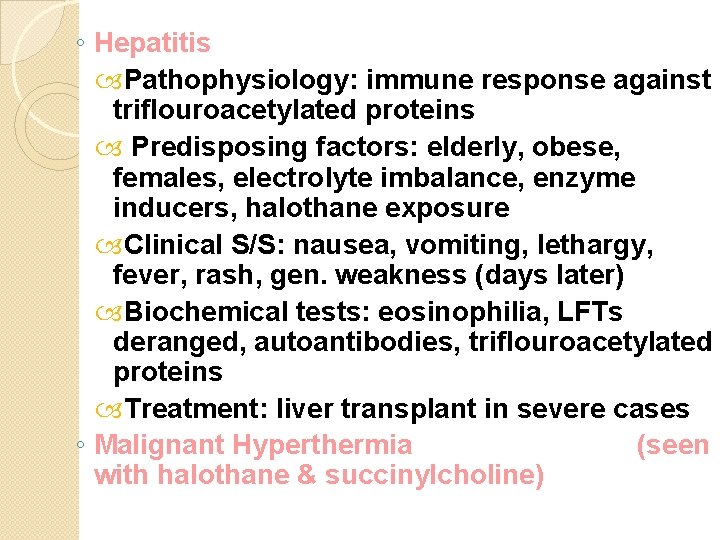
◦ Hepatitis Pathophysiology: immune response against triflouroacetylated proteins Predisposing factors: elderly, obese, females, electrolyte imbalance, enzyme inducers, halothane exposure Clinical S/S: nausea, vomiting, lethargy, fever, rash, gen. weakness (days later) Biochemical tests: eosinophilia, LFTs deranged, autoantibodies, triflouroacetylated proteins Treatment: liver transplant in severe cases ◦ Malignant Hyperthermia (seen with halothane & succinylcholine)
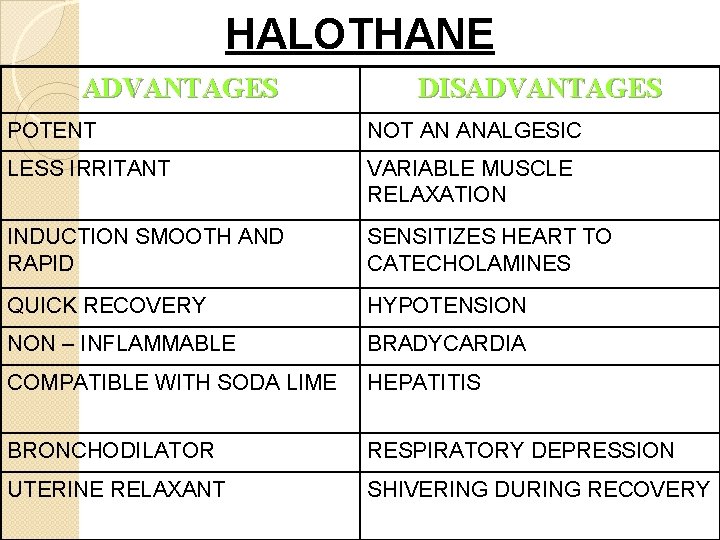
HALOTHANE ADVANTAGES DISADVANTAGES POTENT NOT AN ANALGESIC LESS IRRITANT VARIABLE MUSCLE RELAXATION INDUCTION SMOOTH AND RAPID SENSITIZES HEART TO CATECHOLAMINES QUICK RECOVERY HYPOTENSION NON – INFLAMMABLE BRADYCARDIA COMPATIBLE WITH SODA LIME HEPATITIS BRONCHODILATOR RESPIRATORY DEPRESSION UTERINE RELAXANT SHIVERING DURING RECOVERY
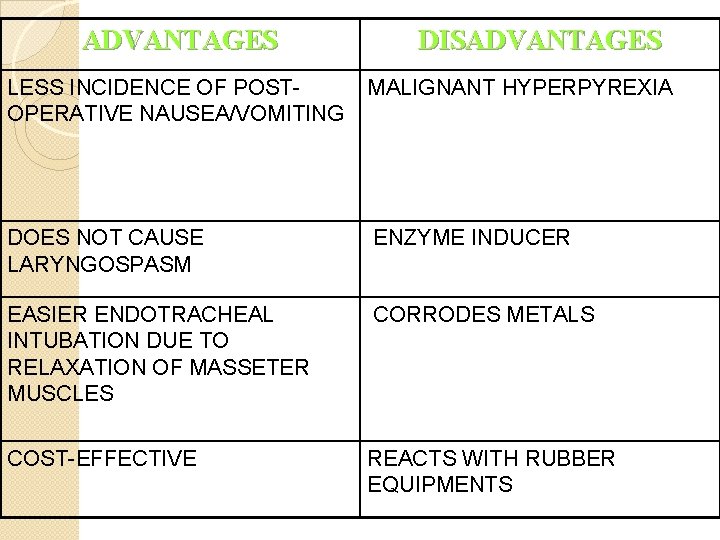
ADVANTAGES DISADVANTAGES LESS INCIDENCE OF POSTOPERATIVE NAUSEA/VOMITING MALIGNANT HYPERPYREXIA DOES NOT CAUSE LARYNGOSPASM ENZYME INDUCER EASIER ENDOTRACHEAL INTUBATION DUE TO RELAXATION OF MASSETER MUSCLES CORRODES METALS COST-EFFECTIVE REACTS WITH RUBBER EQUIPMENTS
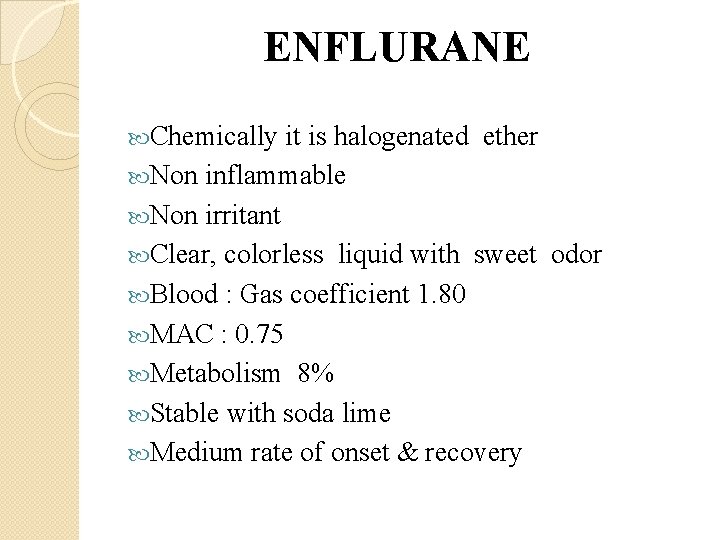
ENFLURANE Chemically it is halogenated ether Non inflammable Non irritant Clear, colorless liquid with sweet odor Blood : Gas coefficient 1. 80 MAC : 0. 75 Metabolism 8% Stable with soda lime Medium rate of onset & recovery
ENFLURANE Pharmacological actions: CVS Resp System CNS Renal System Better Muscle Relaxant ØProduces convulsions and involuntary movements during induction or recovery ØLiver damage is rare ØNot recommended in children & epileptics ØUSE: Maintenance of anesthesia. Not used in children
ISOFLURANE Volatile liquid Non inflammable B: G partition coefficient; 1. 4 MAC : 1. 4 Metabolism: 2% Costly Medium rate of onset & recovery Pharmacological Actions
ISOFLURANE Most widely used volatile anesthetic. Resemble Halothane Except: ØLess incidence of hypotension ØLess sensitization of heart to Catecholamines ØLess toxic ØPowerful Coronary vasodilator, may cause coronary steal phenomenon ØNo pro-convulsive properties ØNot cost effective ØIrritant, resp depression USE: Maintenance of anesthesia
DESFLURANE Volatile halogenated compound TEC 6, an apparatus required for vapourization Non inflammable, Non explosive Pungent smell (not for induction, but maintenance) B: G partition coefficient: 0. 42 MAC: 6 -7 Metabolism: 0. 05% Rapid induction & rapid recovery (low B: G coeff) Pharmacological actions
DESFLURANE Newer drug Chemically similar to Isoflurane Faster induction and recovery due to lower solubility in blood , so preferred for use in day case surgery No significant metabolism Less potent due to high MAC about 6 % Concentration used for induction is 10 %. It can cause respiratory irritation leading to coughing, salivation and bronchospasm USE: Maintenance and ideal for outdoor procedures
SEVOFLURANE Clear, colourless, volatile liquid Non inflammable, non irritant, pleasant smell B: G 0. 69 MAC: 2 Metabolism: 2 -5% ( Nephrotoxic) Rapid induction & recovery (low B: G coeff)
SEVOFLURANE CVS Resp System CNS Renal System Less toxic Can cause malignant hyperthermia USE: Outpatient anesthesia & induction
METHOXYFLURANE Properties Same as Halothane Except: ØGood muscle relaxation ØGood analgesic effect ØSlow induction & recovery ØCause severe renal damage ØNot used any more
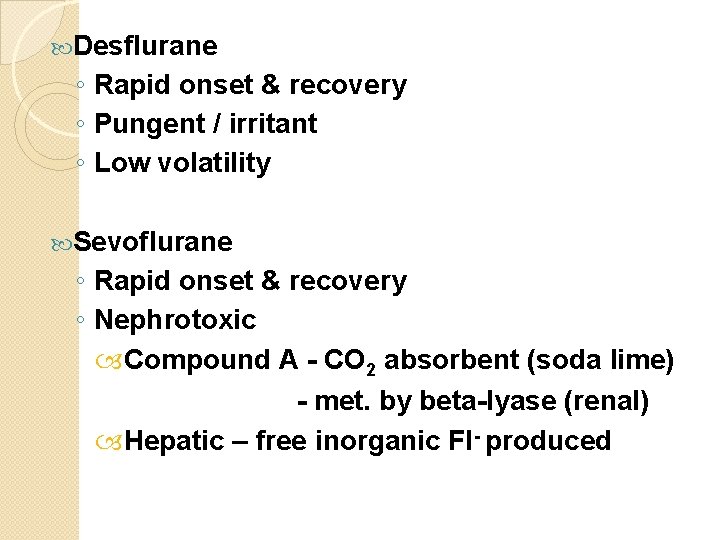
Desflurane ◦ Rapid onset & recovery ◦ Pungent / irritant ◦ Low volatility Sevoflurane ◦ Rapid onset & recovery ◦ Nephrotoxic Compound A - CO 2 absorbent (soda lime) - met. by beta-lyase (renal) Hepatic – free inorganic Fl- produced
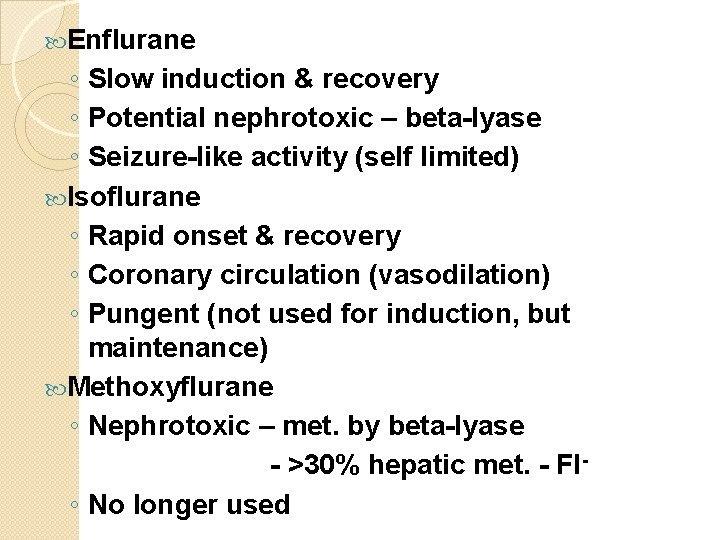
Enflurane ◦ Slow induction & recovery ◦ Potential nephrotoxic – beta-lyase ◦ Seizure-like activity (self limited) Isoflurane ◦ Rapid onset & recovery ◦ Coronary circulation (vasodilation) ◦ Pungent (not used for induction, but maintenance) Methoxyflurane ◦ Nephrotoxic – met. by beta-lyase - >30% hepatic met. - Fl ◦ No longer used
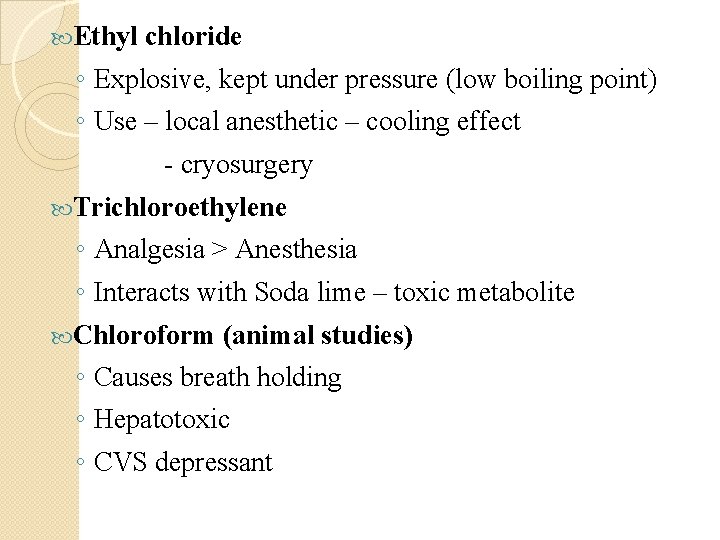
Ethyl chloride ◦ Explosive, kept under pressure (low boiling point) ◦ Use – local anesthetic – cooling effect - cryosurgery Trichloroethylene ◦ Analgesia > Anesthesia ◦ Interacts with Soda lime – toxic metabolite Chloroform (animal studies) ◦ Causes breath holding ◦ Hepatotoxic ◦ CVS depressant
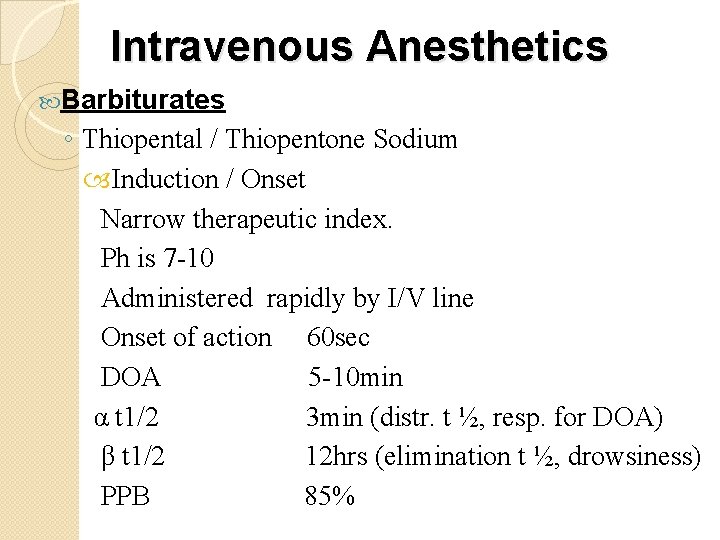
Intravenous Anesthetics Barbiturates ◦ Thiopental / Thiopentone Sodium Induction / Onset Narrow therapeutic index. Ph is 7 -10 Administered rapidly by I/V line Onset of action 60 sec DOA 5 -10 min α t 1/2 3 min (distr. t ½, resp. for DOA) β t 1/2 12 hrs (elimination t ½, drowsiness) PPB 85%
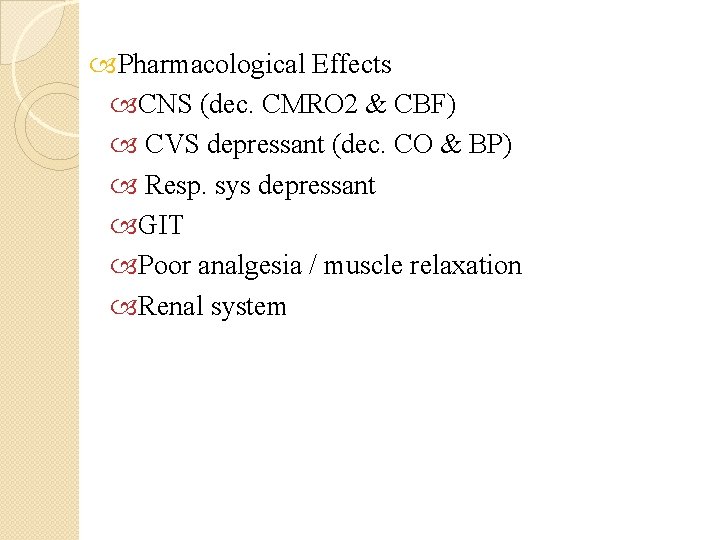
Pharmacological Effects CNS (dec. CMRO 2 & CBF) CVS depressant (dec. CO & BP) Resp. sys depressant GIT Poor analgesia / muscle relaxation Renal system
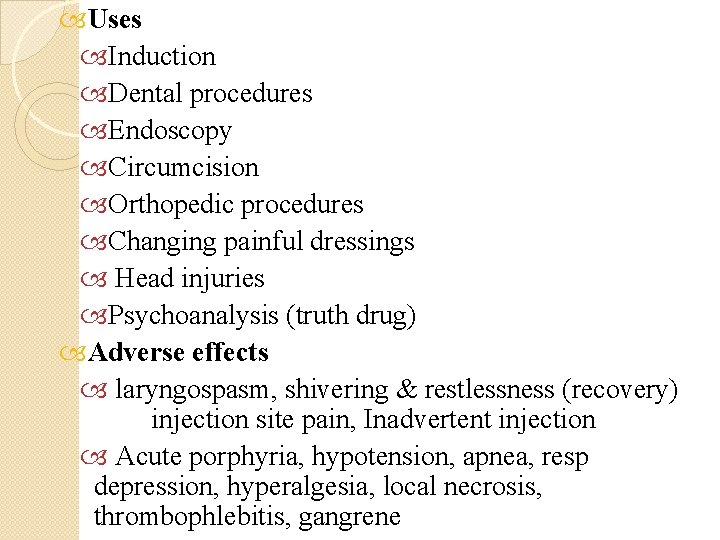
Uses Induction Dental procedures Endoscopy Circumcision Orthopedic procedures Changing painful dressings Head injuries Psychoanalysis (truth drug) Adverse effects laryngospasm, shivering & restlessness (recovery) injection site pain, Inadvertent injection Acute porphyria, hypotension, apnea, resp depression, hyperalgesia, local necrosis, thrombophlebitis, gangrene
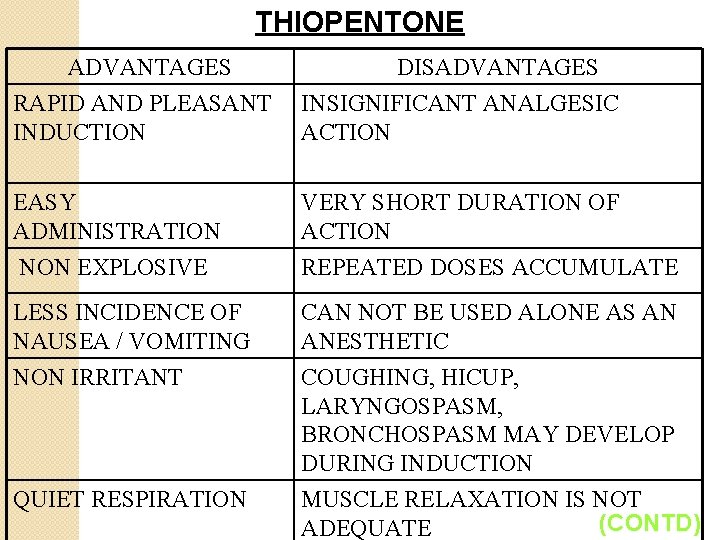
THIOPENTONE ADVANTAGES RAPID AND PLEASANT INDUCTION DISADVANTAGES INSIGNIFICANT ANALGESIC ACTION EASY ADMINISTRATION NON EXPLOSIVE VERY SHORT DURATION OF ACTION REPEATED DOSES ACCUMULATE LESS INCIDENCE OF NAUSEA / VOMITING NON IRRITANT CAN NOT BE USED ALONE AS AN ANESTHETIC COUGHING, HICUP, LARYNGOSPASM, BRONCHOSPASM MAY DEVELOP DURING INDUCTION MUSCLE RELAXATION IS NOT (CONTD) ADEQUATE QUIET RESPIRATION
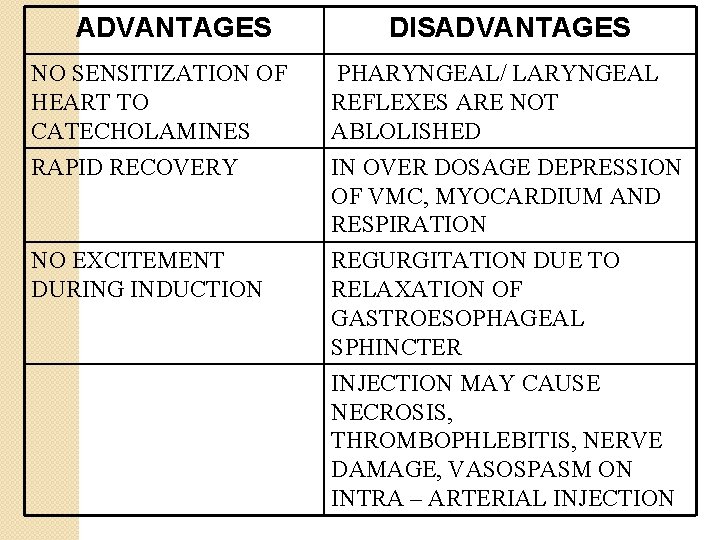
ADVANTAGES NO SENSITIZATION OF HEART TO CATECHOLAMINES RAPID RECOVERY NO EXCITEMENT DURING INDUCTION DISADVANTAGES PHARYNGEAL/ LARYNGEAL REFLEXES ARE NOT ABLOLISHED IN OVER DOSAGE DEPRESSION OF VMC, MYOCARDIUM AND RESPIRATION REGURGITATION DUE TO RELAXATION OF GASTROESOPHAGEAL SPHINCTER INJECTION MAY CAUSE NECROSIS, THROMBOPHLEBITIS, NERVE DAMAGE, VASOSPASM ON INTRA – ARTERIAL INJECTION
Etomidate Carboxylated imidazole Pharmacokinetics ◦ Rapid onset / recovery ◦ T 1/2 : distributive : 2 -4 min eliminative : 2. 9 -5. 3 h ◦ Metabolism (Liver) ◦ Excretion (78% renal, 22% biliary) Pharmacological Effects -- little or no effects on CVS / Resp. sys -- CNS (dec. CMRO 2 & CBF) -- no analgesia
Etomidate Use ◦ Poor cardiovascular reserve (old pts, IHD, cardiomyopathy) Adverse effects ◦ Injection site pain (Rx : lignocaine) ◦ Nausea, vomiting, restlessness, tremors ◦ Steroidogenesis inhibition esp. cortisol, by inhibiting 11 B hydroxylation. This effect is transient if given for short period but hypotension, electrolyte imbalance & oliguria can occur on long use
Advantages Minimum CVS Depression Minimum Respiratory Depression Larger Very margin of safety rapid induction within seconds Rapid recovery within 3 -5 minutes
Disadvantages No analgesic effect Post operative Nausea & vomiting Pain during injection Myoclonus / involuntary movements during induction Adrenocortical Suppression (with prolonged use)
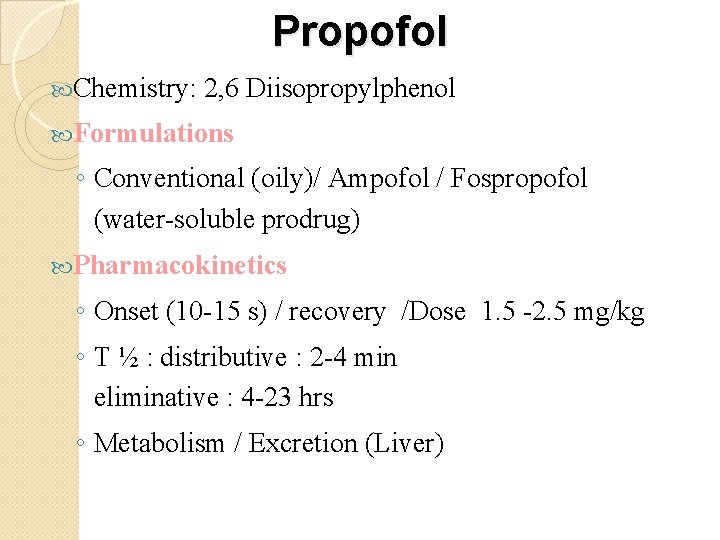
Propofol Chemistry: 2, 6 Diisopropylphenol Formulations ◦ Conventional (oily)/ Ampofol / Fospropofol (water-soluble prodrug) Pharmacokinetics ◦ Onset (10 -15 s) / recovery /Dose 1. 5 -2. 5 mg/kg ◦ T ½ : distributive : 2 -4 min eliminative : 4 -23 hrs ◦ Metabolism / Excretion (Liver)
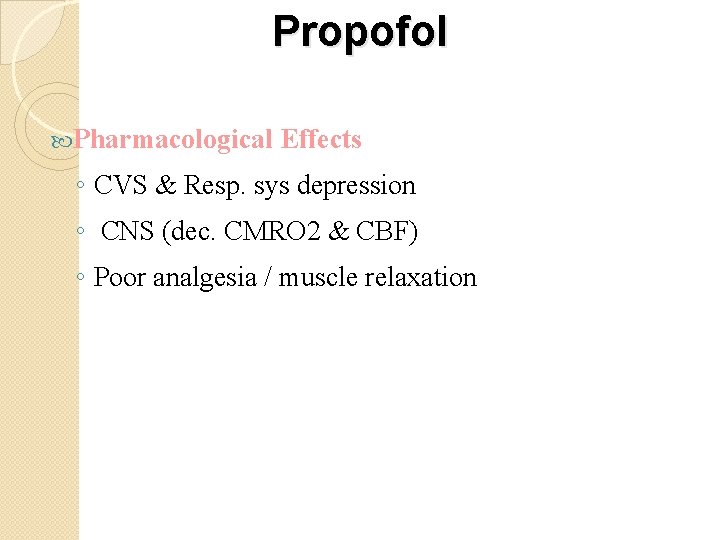
Propofol Pharmacological Effects ◦ CVS & Resp. sys depression ◦ CNS (dec. CMRO 2 & CBF) ◦ Poor analgesia / muscle relaxation
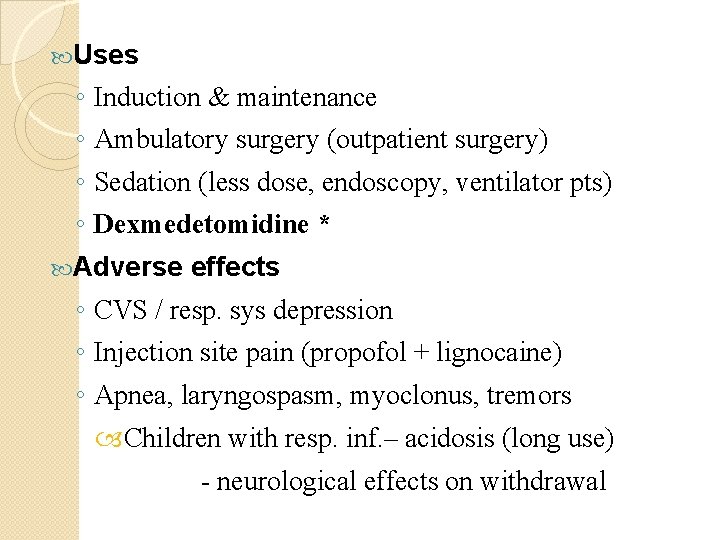
Uses ◦ ◦ Induction & maintenance Ambulatory surgery (outpatient surgery) Sedation (less dose, endoscopy, ventilator pts) Dexmedetomidine * Adverse effects ◦ CVS / resp. sys depression ◦ Injection site pain (propofol + lignocaine) ◦ Apnea, laryngospasm, myoclonus, tremors Children with resp. inf. – acidosis (long use) - neurological effects on withdrawal
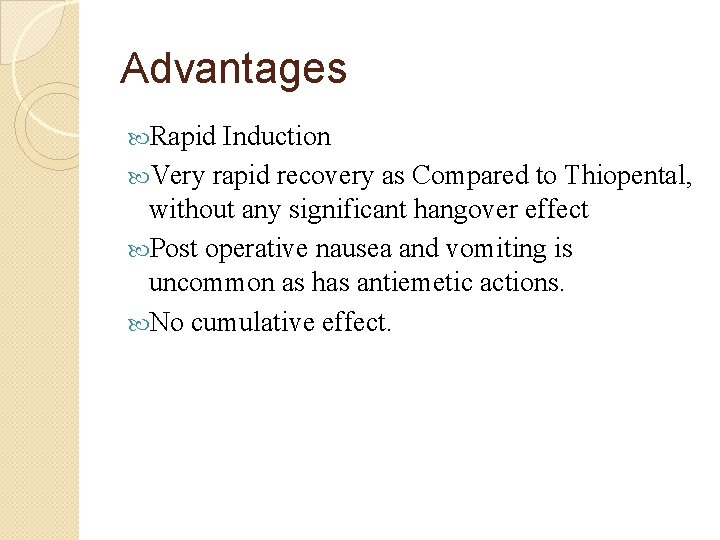
Advantages Rapid Induction Very rapid recovery as Compared to Thiopental, without any significant hangover effect Post operative nausea and vomiting is uncommon as has antiemetic actions. No cumulative effect.
Disadvantages Very expensive Apnoea can occur CVS depression Pain at site of injection Clinical infections
Ketamine Phencyclidine congener (racemic mixture of S & R) Pharmacological Effects ◦ CNS Blocks NMDA receptors (prevents glutamate binding) Psychoactive drug—abused as hallucinogenic Inc. CBF, CMRO 2 & ICP (avoid in head injury) ◦ Stimulates CVS – sympathetic stimulation + NE reuptake block (peak: 2 -4 min, normal: 10 -20 min) ◦ Respiratory – doesn’t abolish reflexes, bronchodilation – sympathetic stimulation + direct eff.
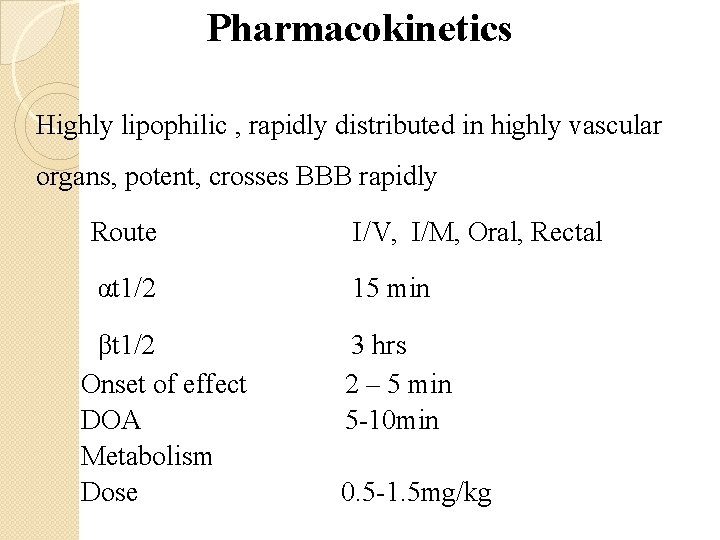
Pharmacokinetics Highly lipophilic , rapidly distributed in highly vascular organs, potent, crosses BBB rapidly Route I/V, I/M, Oral, Rectal αt 1/2 15 min βt 1/2 Onset of effect DOA Metabolism Dose 3 hrs 2 – 5 min 5 -10 min 0. 5 -1. 5 mg/kg
Uses Induction smooth but recovery unpleasant ◦ Dissociative anesthesia: analgesia, catatonia, amnesia, hypnosis, unresponsive to painful stimuli, sometimes involuntary limb movements ◦ Analgesia: short procedures ◦ Old age (poor CV reserves) / children ◦ Topical use (arthritic pains) ◦ Hemodynamic stability (cardiogenic/septic shock) ◦ Asthma / COPD (bronchdilation) Adverse effects ◦ CVS: cardiostimulatory—avoid in IHD ◦ Emergence delirium: hallucinations (Rx: BZs)
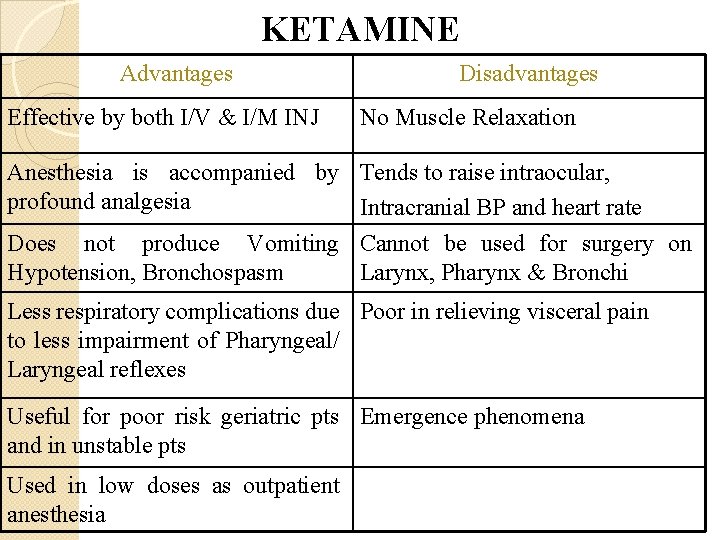
KETAMINE Advantages Effective by both I/V & I/M INJ Disadvantages No Muscle Relaxation Anesthesia is accompanied by Tends to raise intraocular, profound analgesia Intracranial BP and heart rate Does not produce Vomiting Cannot be used for surgery on Hypotension, Bronchospasm Larynx, Pharynx & Bronchi Less respiratory complications due Poor in relieving visceral pain to less impairment of Pharyngeal/ Laryngeal reflexes Useful for poor risk geriatric pts Emergence phenomena and in unstable pts Used in low doses as outpatient anesthesia
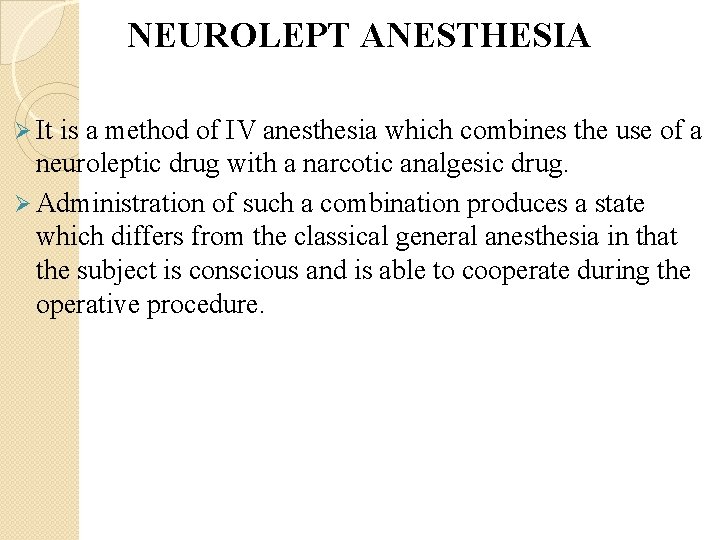
NEUROLEPT ANESTHESIA Ø It is a method of IV anesthesia which combines the use of a neuroleptic drug with a narcotic analgesic drug. Ø Administration of such a combination produces a state which differs from the classical general anesthesia in that the subject is conscious and is able to cooperate during the operative procedure.
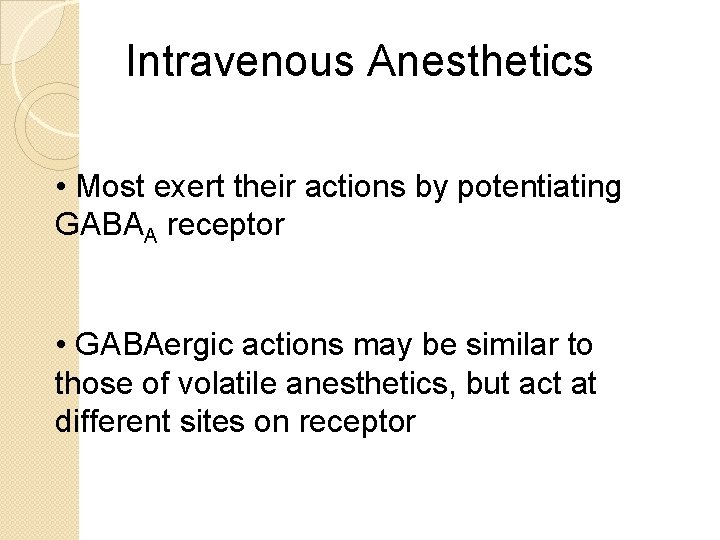
Intravenous Anesthetics • Most exert their actions by potentiating GABAA receptor • GABAergic actions may be similar to those of volatile anesthetics, but act at different sites on receptor
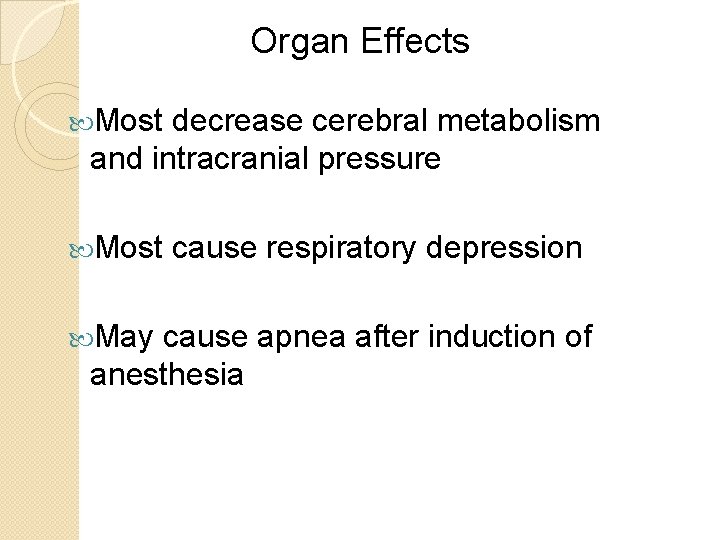
Organ Effects Most decrease cerebral metabolism and intracranial pressure Most May cause respiratory depression cause apnea after induction of anesthesia
Cardiovascular Effects Barbiturates, benzodiazepines and propofol cause cardiovascular depression.
Thiopental sodium Effect terminated not by metabolism but by redistribution repeated administration or prolonged infusion approached equilibrium at redistribution sites Build-up in adipose tissue = very long emergence from anesthesia
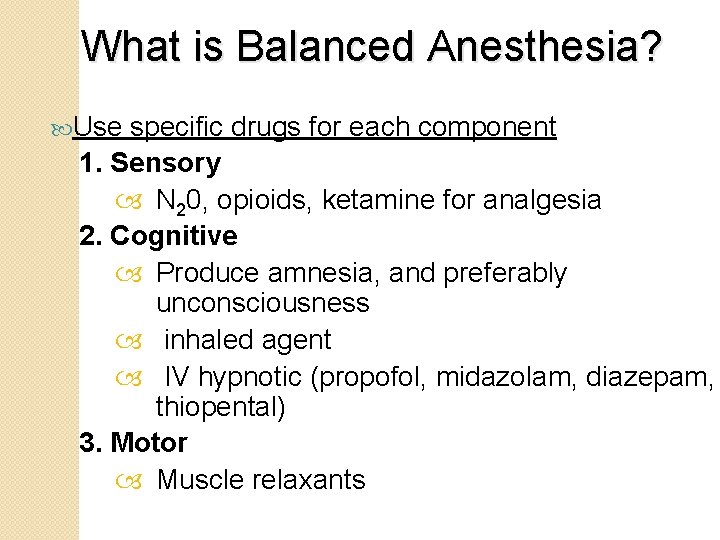
What is Balanced Anesthesia? Use specific drugs for each component 1. Sensory N 20, opioids, ketamine for analgesia 2. Cognitive Produce amnesia, and preferably unconsciousness inhaled agent IV hypnotic (propofol, midazolam, diazepam, thiopental) 3. Motor Muscle relaxants
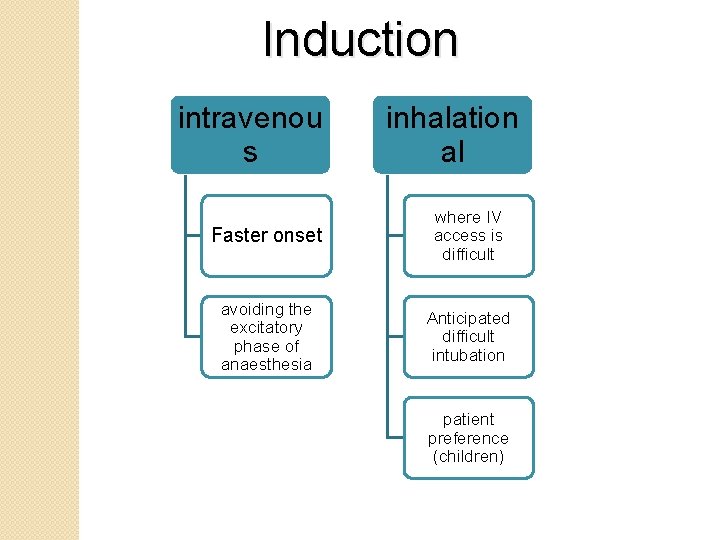
Induction intravenou s inhalation al Faster onset where IV access is difficult avoiding the excitatory phase of anaesthesia Anticipated difficult intubation patient preference (children)