
WHO Programme for International Drug Monitoring ensuring the

- Slides: 31
WHO Programme for International Drug Monitoring : ensuring the safety of medicines Dr Mary Couper & Dr Shanthi Pal Quality Assurance and Safety: Medicines Department of Medicines Policy and Standards 1
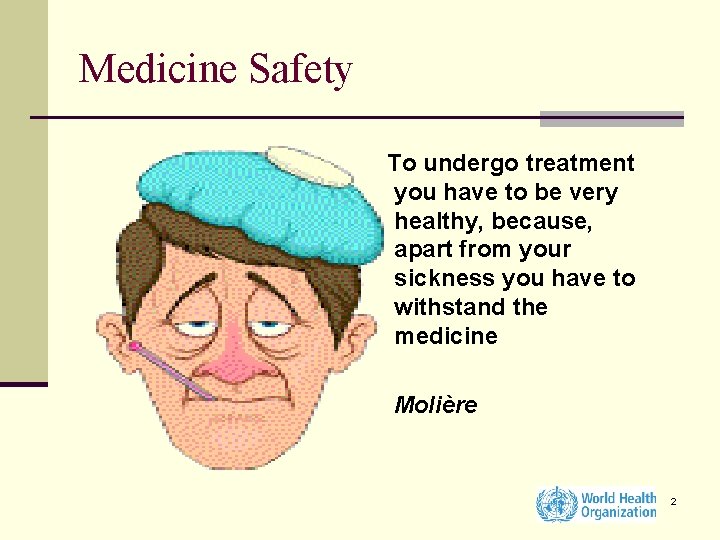
Medicine Safety To undergo treatment you have to be very healthy, because, apart from your sickness you have to withstand the medicine Molière 2
Pharmacovigilance (PV) WHO definition The science and activities relating to the detection, assessment, understanding and prevention of adverse effects or any other drug-related problem 3
Why PV (1) How pre-marketing knowledge about safety problems is created Animal experiments (Incomplete picture) n (ED 50, LD 50, kinetics, carcinogenicity, teratogenicity…) Clinical trials (Incomplete information) n limited size n narrow population n narrow indications n short duration 4
Why PV (2) Topics to be studied after approval n reappraisal of indications n extension or restriction n characteristics of users (risk factors, elderly/children) n inappropriate use n e. g. addiction, off-label n rare adverse effects (ADR 1 in 1000 = 18 200 patients needed) n long-term toxicity n cost assessment 5
Why PV (3) Impact of ADRs The cost factor 588 million $ / year in Germany (1997), > $ 177. 4 billion in the US in 2000, $847 m / year in the UK (2006, BMJ) Humanitarian reasons: n 4 -6 th leading cause of death (Lazarou et al, JAMA; 1998) n Upto 19 % of in-patients will have an ADR (Davies et al, J Clin Pharm & Ther; 2006); n up to 70 % ADRs are preventable (Pirmohamed et al, BMJ; 2006 6
Why PV (4) Newer reasons n Access driven (HIV AIDS, Malaria, TB) If access to medicines is a human right, then preventing avoidable harm from medicines is a professional and a moral obligation (Couper et al. BMJ ; 2006). n Public health approach to HIV-AIDS treatment (Gilks et al. Lancet ; 2006) n Fast track medicines in resource poor settings n Counterfeit medicines 7
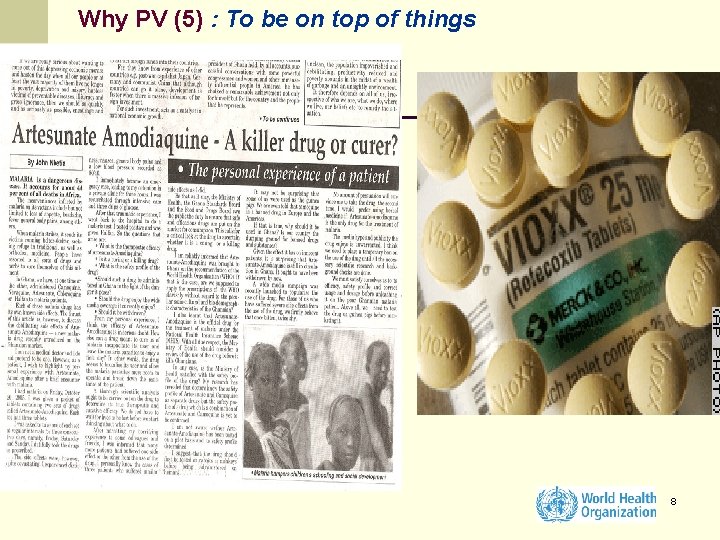
Why PV (5) : To be on top of things 8
Pharmacovigilance : Major Aims n n n early detection of unknown safety problems detection of increases in frequency identification of risk factors quantifying risks preventing patients from being affected unnecessarily Rational and Safe use of Medicines 9
WHO Programme for International Drug Monitoring 10
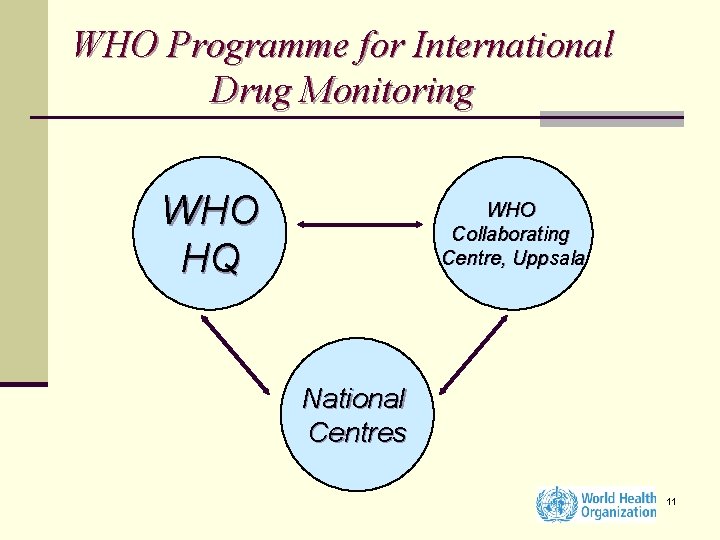
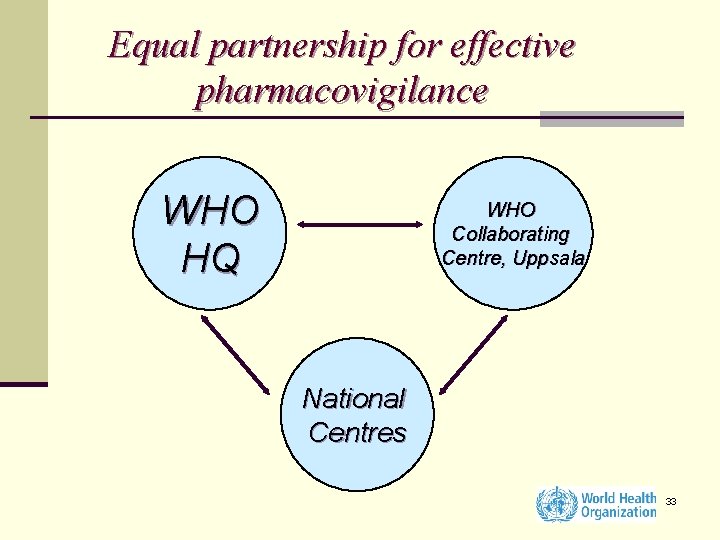
WHO Programme for International Drug Monitoring WHO HQ WHO Collaborating Centre, Uppsala National Centres 11
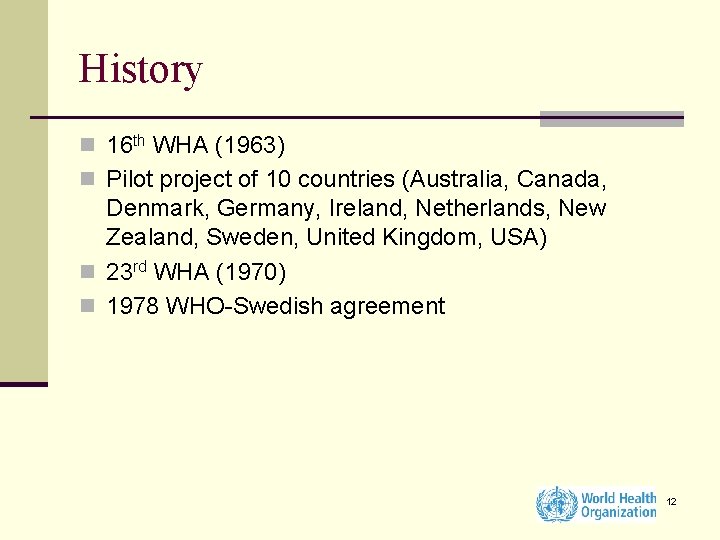
History n 16 th WHA (1963) n Pilot project of 10 countries (Australia, Canada, Denmark, Germany, Ireland, Netherlands, New Zealand, Sweden, United Kingdom, USA) n 23 rd WHA (1970) n 1978 WHO-Swedish agreement 12
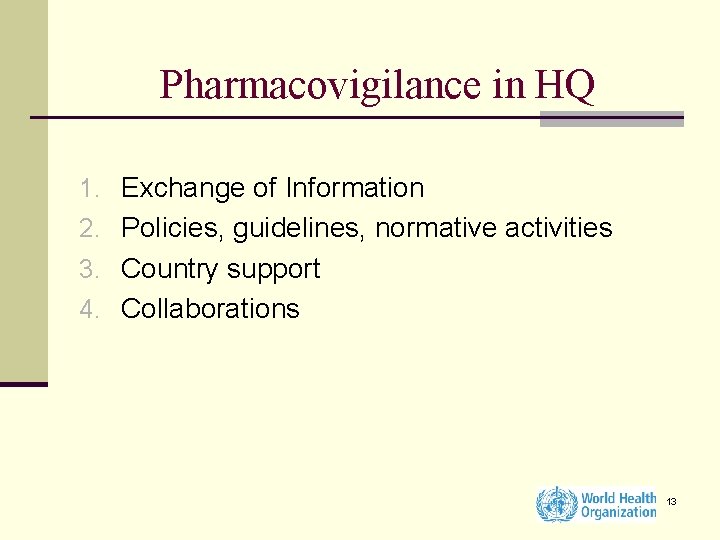
Pharmacovigilance in HQ 1. Exchange of Information 2. Policies, guidelines, normative activities 3. Country support 4. Collaborations 13
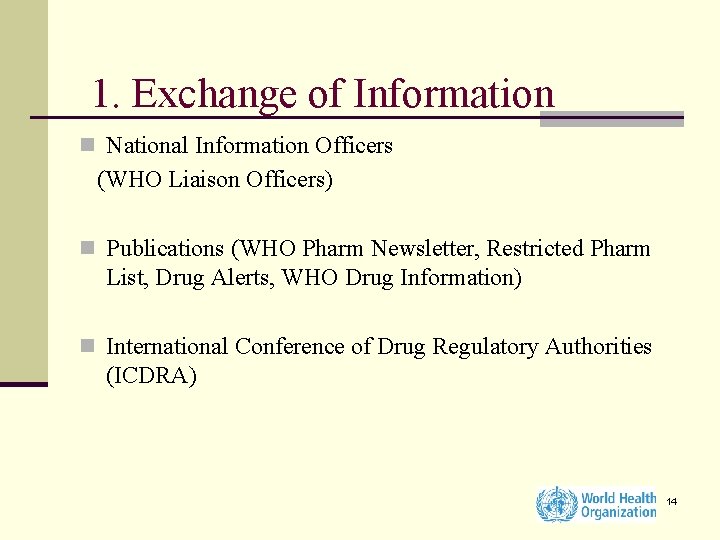
1. Exchange of Information n National Information Officers (WHO Liaison Officers) n Publications (WHO Pharm Newsletter, Restricted Pharm List, Drug Alerts, WHO Drug Information) n International Conference of Drug Regulatory Authorities (ICDRA) 14
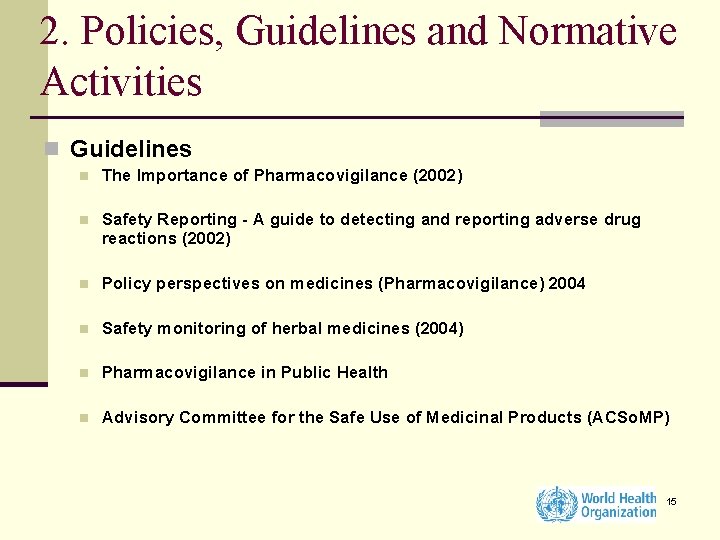
2. Policies, Guidelines and Normative Activities n Guidelines n The Importance of Pharmacovigilance (2002) n Safety Reporting - A guide to detecting and reporting adverse drug reactions (2002) n Policy perspectives on medicines (Pharmacovigilance) 2004 n Safety monitoring of herbal medicines (2004) n Pharmacovigilance in Public Health n Advisory Committee for the Safe Use of Medicinal Products (ACSo. MP) 15
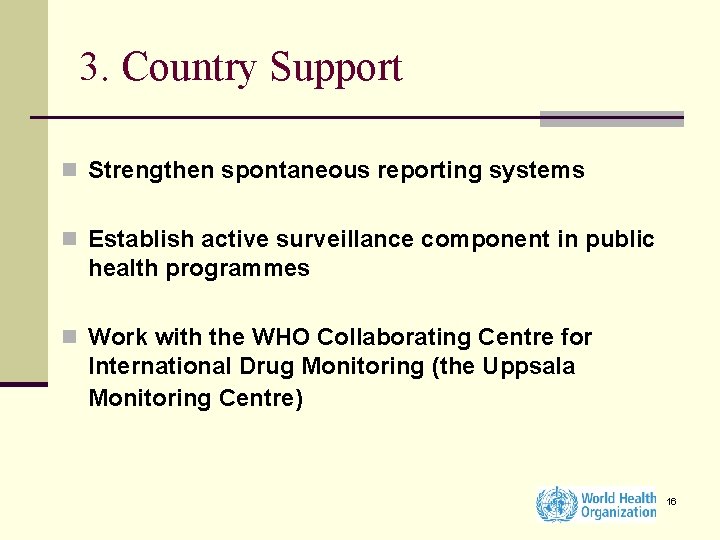
3. Country Support n Strengthen spontaneous reporting systems n Establish active surveillance component in public health programmes n Work with the WHO Collaborating Centre for International Drug Monitoring (the Uppsala Monitoring Centre) 16
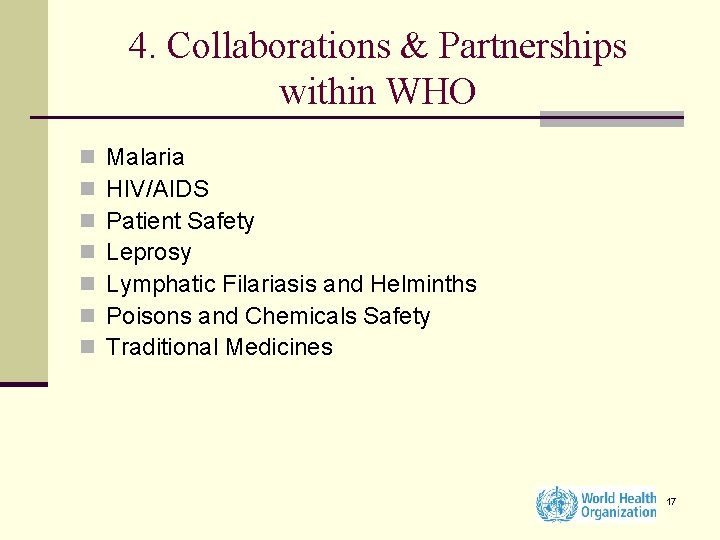
4. Collaborations & Partnerships within WHO n n n n Malaria HIV/AIDS Patient Safety Leprosy Lymphatic Filariasis and Helminths Poisons and Chemicals Safety Traditional Medicines 17
WHO Collaborating Centre the Uppsala Monitoring Centre n established as a foundation 1978 n based on agreement Sweden - WHO n international administrative board n WHO Headquarters responsible for policy n self financing 18
WHO CC Functions n ADR data base & management n Identification of previously unknown drug reactions (Signal detection) n Data management and signal detection tools (WHO-ART, WHO Drug n n dictionary, ATC/DDD, Vigiflow-online, Vigisearch) ADR queries/searches PV training and country support Publications (Uppsala Reports, View Point, Signals document…) Net working (Vigimed) 19
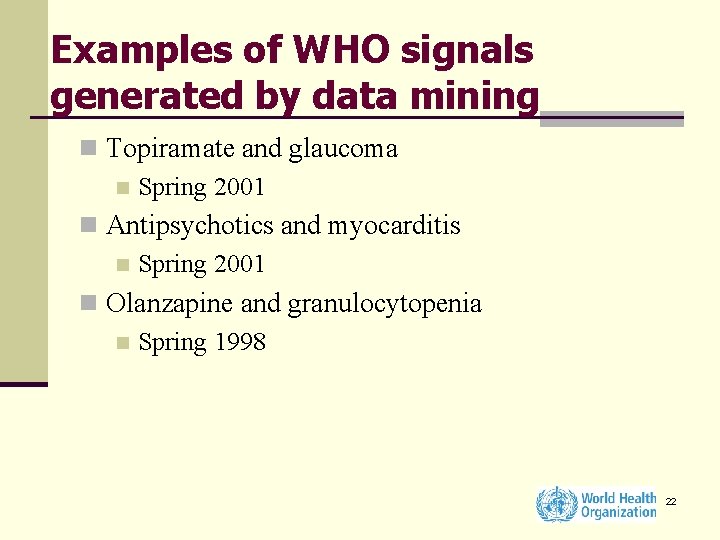
Examples of WHO signals generated by data mining n Topiramate and glaucoma n Spring 2001 n Antipsychotics and myocarditis n Spring 2001 n Olanzapine and granulocytopenia n Spring 1998 22
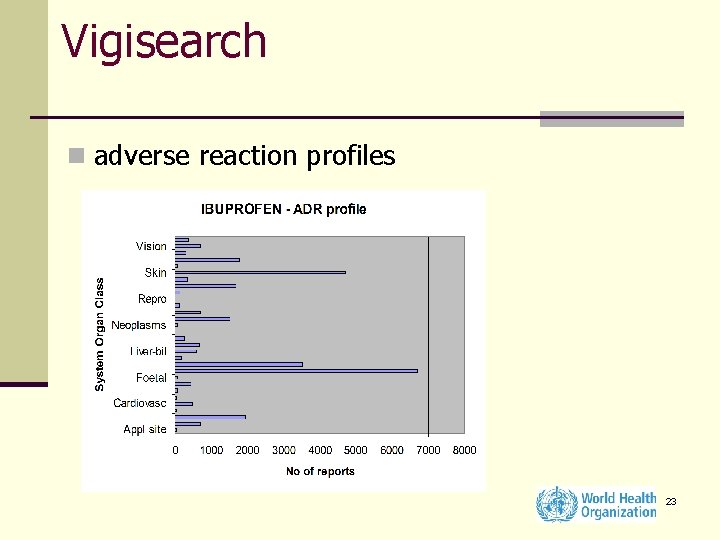
Vigisearch n adverse reaction profiles 23
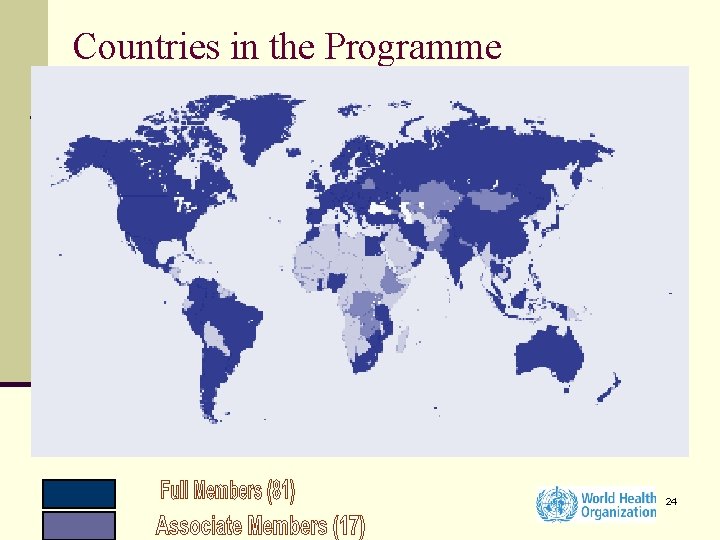
Countries in the Programme 24
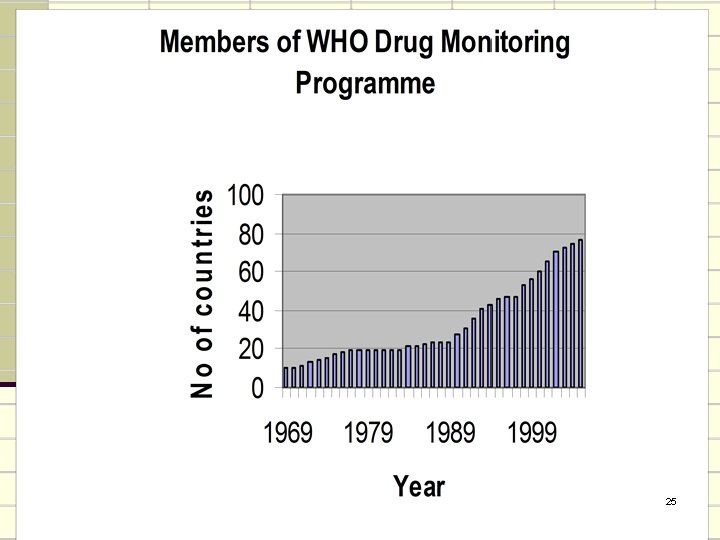
25
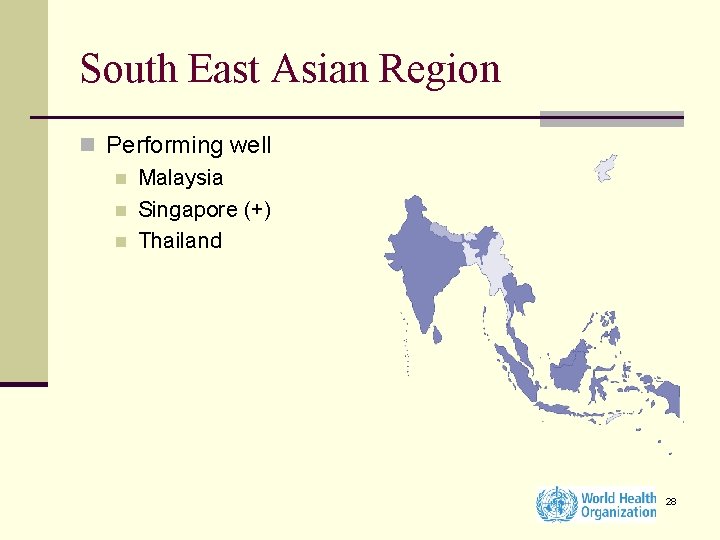
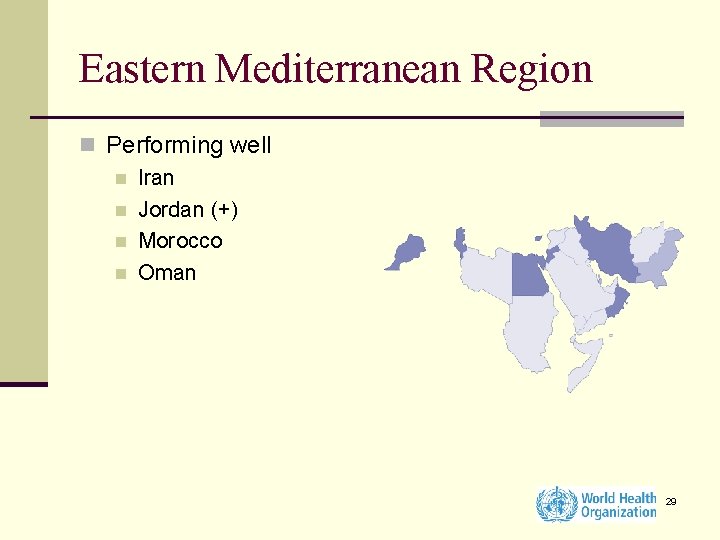
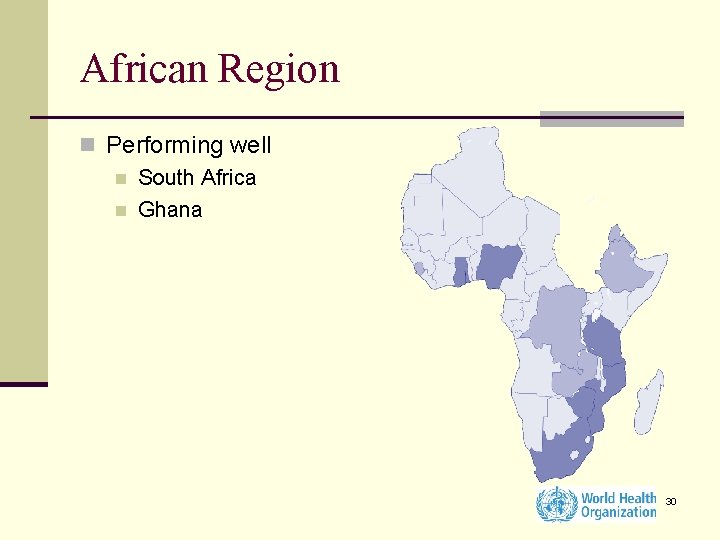
Performance indicator (2005) n Frequency of reporting n At least 4 submissions/12 months – performing well 26
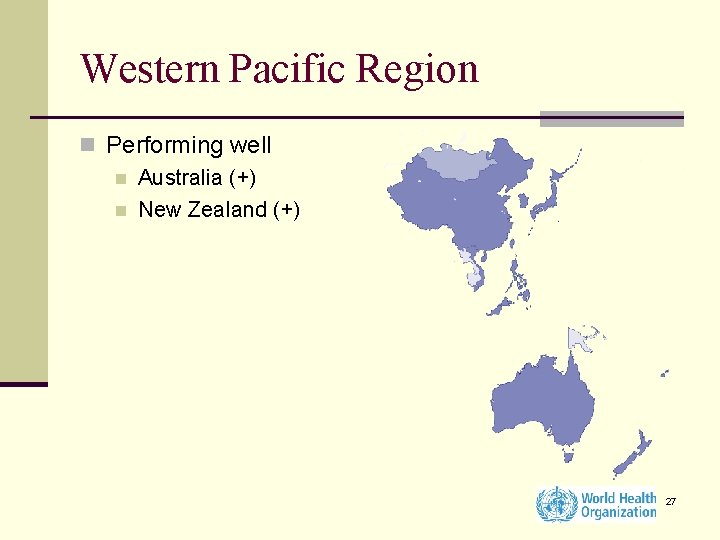
Western Pacific Region n Performing well n Australia (+) n New Zealand (+) 27
South East Asian Region n Performing well n Malaysia n Singapore (+) n Thailand 28
Eastern Mediterranean Region n Performing well n Iran n Jordan (+) n Morocco n Oman 29
African Region n Performing well n South Africa n Ghana 30
European Region n Performing well n Moldova n Russia n Sweden n Switzerland n Turkey n United Kingdom 31
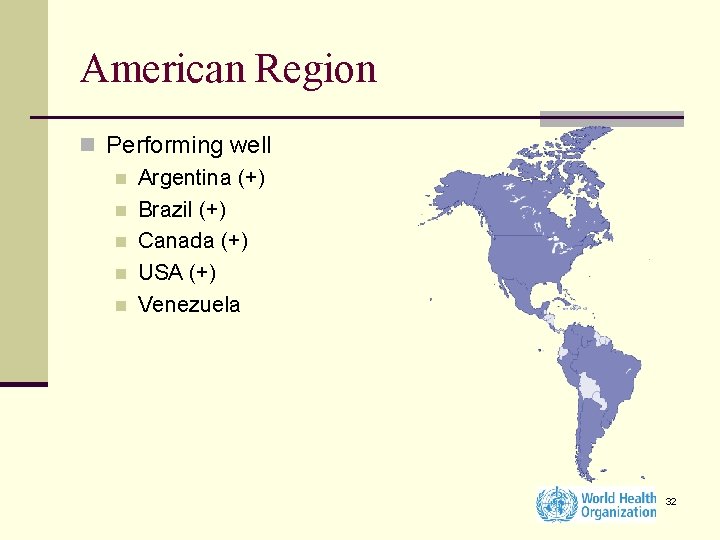
American Region n Performing well n Argentina (+) n Brazil (+) n Canada (+) n USA (+) n Venezuela 32
Equal partnership for effective pharmacovigilance WHO HQ WHO Collaborating Centre, Uppsala National Centres 33