Cholinergic agonists and antagonists Synapses are specialized junctions


- Slides: 60
Cholinergic agonists and antagonists
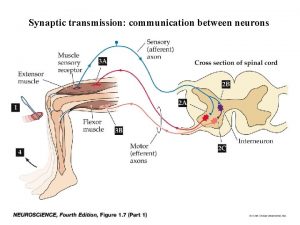
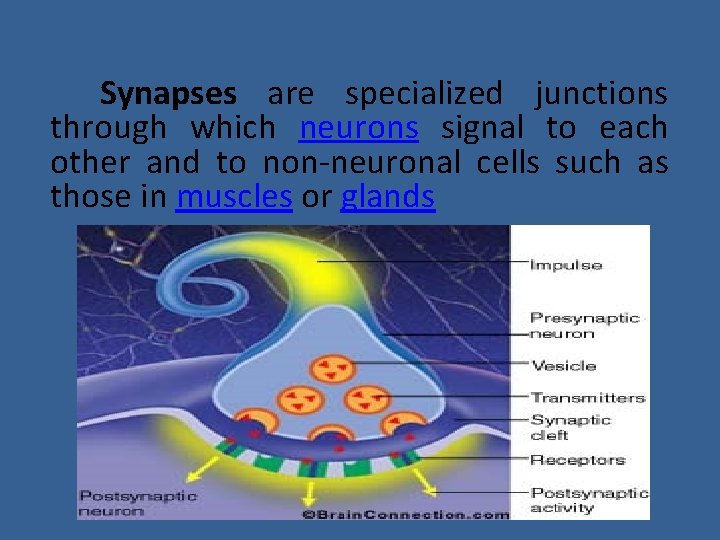
Synapses are specialized junctions through which neurons signal to each other and to non-neuronal cells such as those in muscles or glands
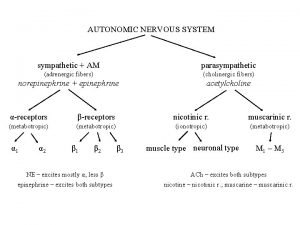
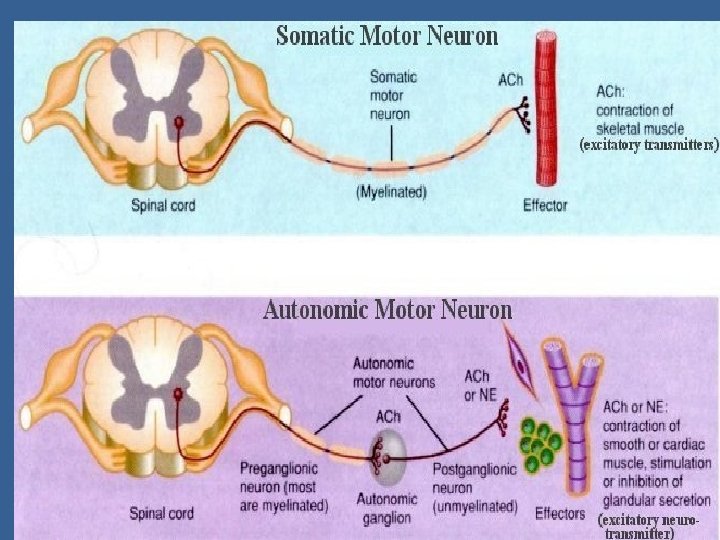
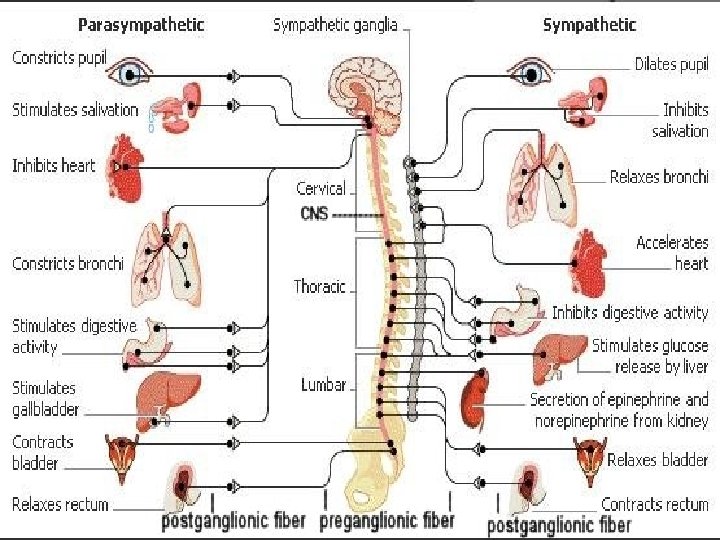
Cholinergic nervous fibres are: 1) preganglionic (sympoathetic and parasypmathetic); 2) all postgnglionic parasympathetic; 3) postganglionic sympathetic which supply sweat glands and vessels of skeletal muscles; 4) somatic nerves; 5) nerves which supply adrenal medulla and carotic sinuses; 6) neurons of CNS Adrenergic nervous fibres are: 1) postganglionic sympathetic, except those which supply sweat glands and vessels of skeletal muscles; 2) neurons of CNS
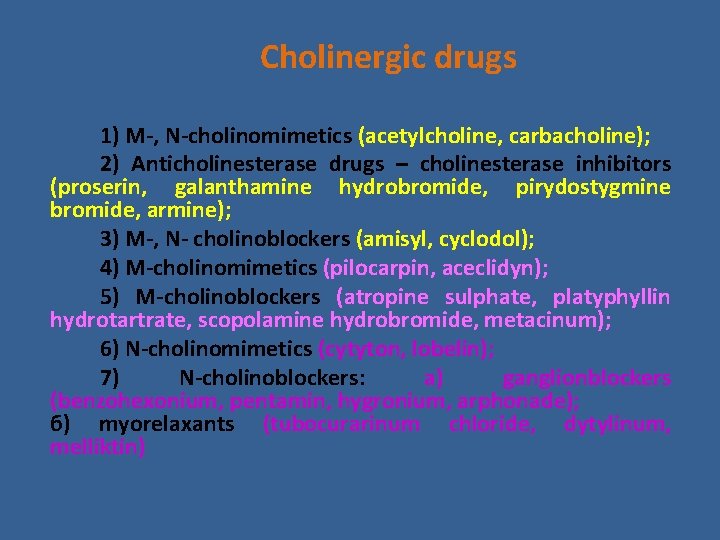
Cholinergic drugs 1) M-, N-cholinomimetics (acetylcholine, carbacholine); 2) Anticholinesterase drugs – cholinesterase inhibitors (proserin, galanthamine hydrobromide, pirydostygmine bromide, armine); 3) M-, N- cholinoblockers (amisyl, cyclodol); 4) M-cholinomimetics (pilocarpin, aceclidyn); 5) M-cholinoblockers (atropine sulphate, platyphyllin hydrotartrate, scopolamine hydrobromide, metacinum); 6) N-cholinomimetics (cytyton, lobelin); 7) N-cholinoblockers: а) ganglionblockers (benzohexonium, pentamin, hygronium, arphonade); б) myorelaxants (tubocurarinum chloride, dytylinum, melliktin)
M-, N-cholinomimetics Acetylcholine Carbacholine
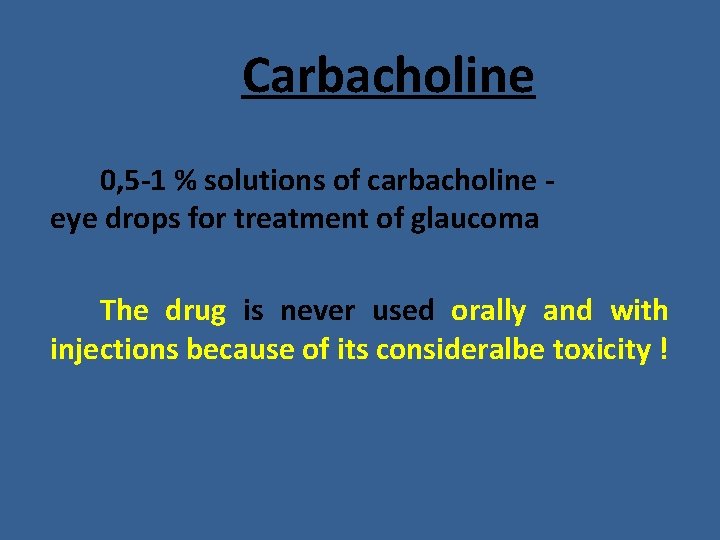
Carbacholine 0, 5 -1 % solutions of carbacholine eye drops for treatment of glaucoma The drug is never used orally and with injections because of its consideralbe toxicity !
M-, N-cholinoblockers Amizyl Cyclodol
Amizyl Indications for administration neurotic disorders, Parkinson disease and other extrapyramidal disorders, for premedication before narcosis, for diseases which are accompanied with spasm of smooth muscles, for dilation of pupil in ophtalmology The drug is administered orally 0, 001 -0, 002 g 3 -4 times per day, as eye dropps - 1 -2 % solution is used Side effects : dryness of mucous membranes, tachycardia, dilation of pupils, disturbances of accomodation. The drug is contraindicated in case of glaucoma!
Cyclodol Anticholinergic drug, mainly blocks central Ncholinoreceptors and peripheral Mcholinoreceptors Usage Parkіnson disease, medicamental parkinsonism
Anticholinesterase drugs Proserinum, Galanthamini hydrobromidum, Armin, Pirydostygmini bromidum
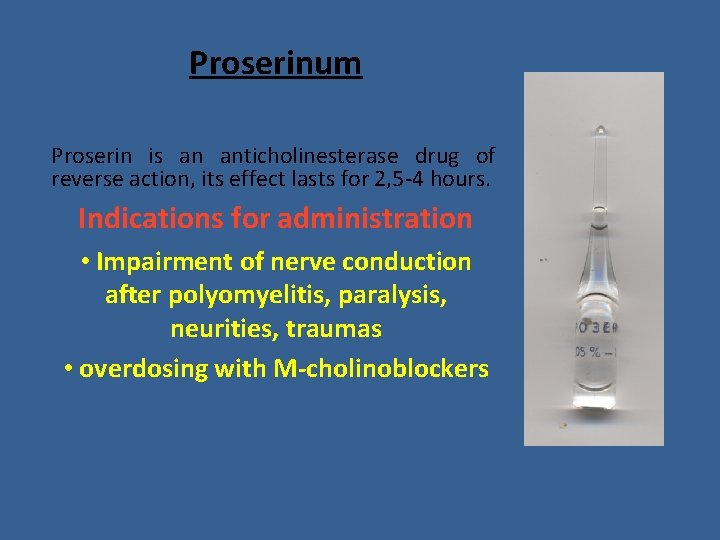
Proserinum Proserin is an anticholinesterase drug of reverse action, its effect lasts for 2, 5 -4 hours. Indications for administration • Impairment of nerve conduction after polyomyelitis, paralysis, neurities, traumas • overdosing with M-cholinoblockers
Galanthamini hydrobromidum Duration of action of Galanthamini hydrobromidum is longer than of Proserinum, that’s why it can be administered 1 -2 times during the day Indications for administration Impairment of nerve conduction after polyomyelitis, paralyses, neuritis, traumas, overdosing with M-cholinoblockers
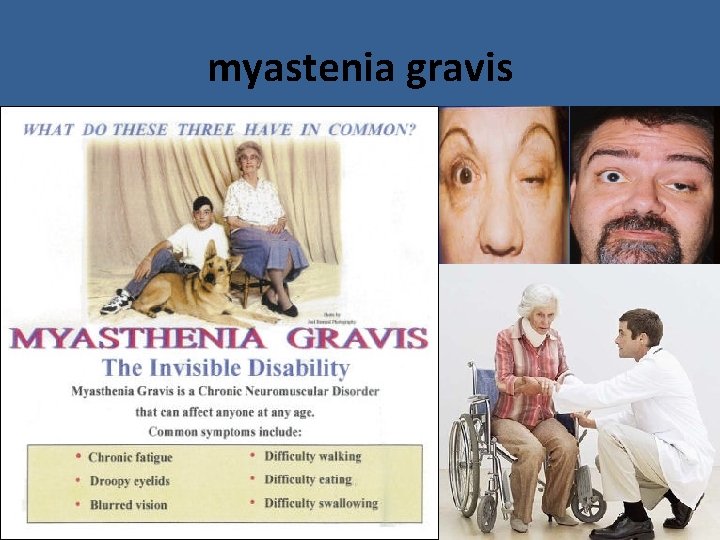
Pirydostigmini bromide (calimin) Usage • myastenia gravis • after traumas, neuritis, paralyses • in a period of recovery after polyomyelitis, encephalitis
myastenia gravis
Anticholinesterase drugs are contraindicated in cases of epilepsia, hyperkinesias, bronchial asthma, stenocardia, bradycardia
Acute poisoning with anticholinesterase drugs (POC) nausea, vomiting, diarrhea, abdominal pain quick contraction of pupils, disturbance of visus (spasm of accomodation) increasing of salivation and sweating bronchospasm tachy- or bradicardia seizures, excitement, loss of consciousness, coma Death is caused by breath insufficiency, bronchospasm and lungs edema
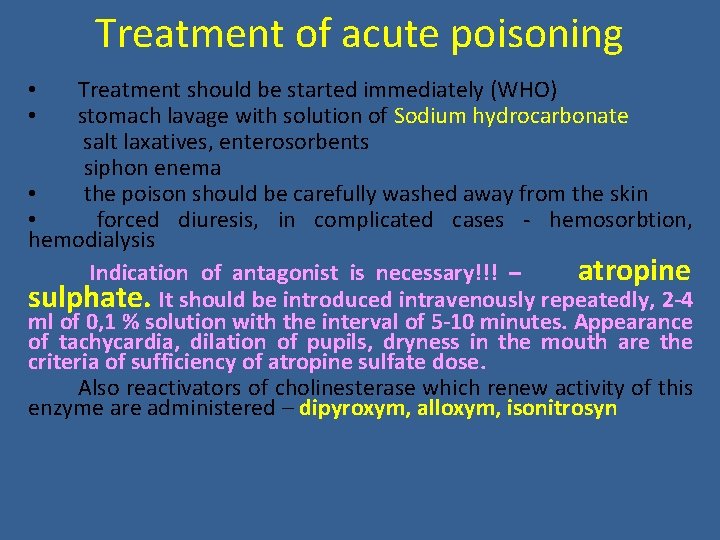
Treatment of acute poisoning Treatment should be started immediately (WHO) stomach lavage with solution of Sodium hydrocarbonate salt laxatives, enterosorbents siphon enema • the poison should be carefully washed away from the skin • forced diuresis, in complicated cases - hemosorbtion, hemodialysis Indication of antagonist is necessary!!! – atropine sulphate. It should be introduced intravenously repeatedly, 2 -4 ml of 0, 1 % solution with the interval of 5 -10 minutes. Appearance of tachycardia, dilation of pupils, dryness in the mouth are the criteria of sufficiency of atropine sulfate dose. Also reactivators of cholinesterase which renew activity of this enzyme are administered – dipyroxym, alloxym, isonitrosyn • •
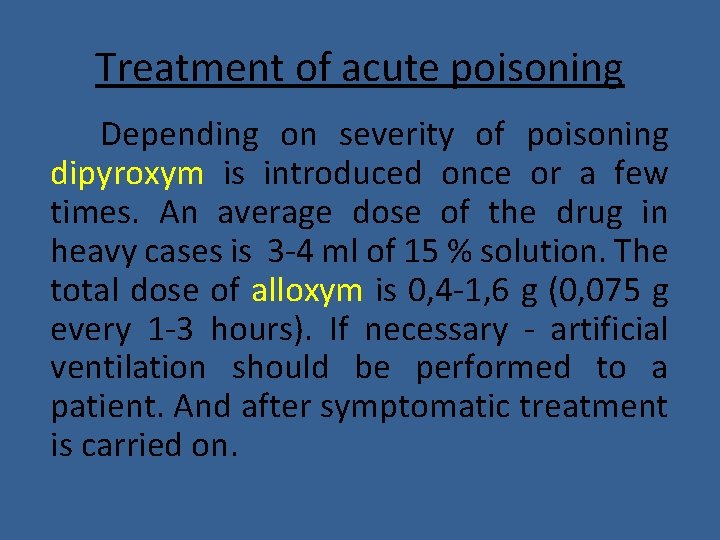
Treatment of acute poisoning Depending on severity of poisoning dipyroxym is introduced once or a few times. An average dose of the drug in heavy cases is 3 -4 ml of 15 % solution. The total dose of alloxym is 0, 4 -1, 6 g (0, 075 g every 1 -3 hours). If necessary - artificial ventilation should be performed to a patient. And after symptomatic treatment is carried on.
M-cholinergic drugs
M-cholinomimetics M-cholinoblockers
M-cholinomimetics Pilocarpini hydrochloridum Aceclidinum
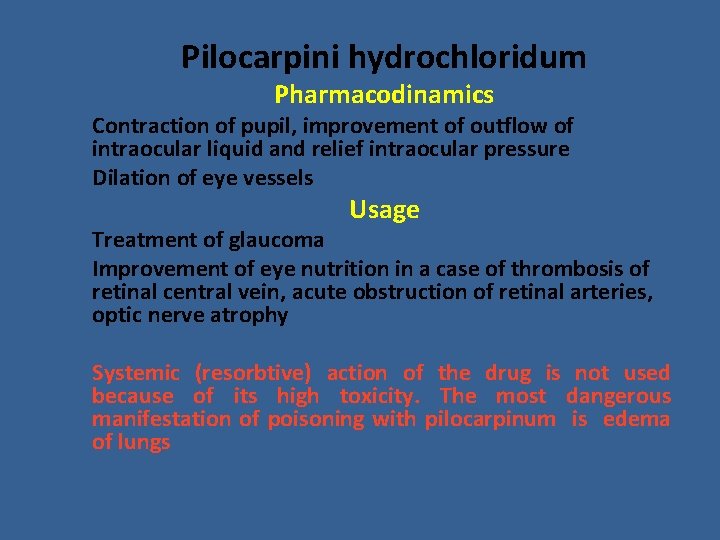
Рilocarpini hydrochloridum Pharmacodinamics Contraction of pupil, improvement of outflow of intraocular liquid and relief intraocular pressure Dilation of eye vessels Usage Treatment of glaucoma Improvement of eye nutrition in a case of thrombosis of retinal central vein, acute obstruction of retinal arteries, optic nerve atrophy Systemic (resorbtive) action of the drug is not used because of its high toxicity. The most dangerous manifestation of poisoning with pilocarpinum is edema of lungs
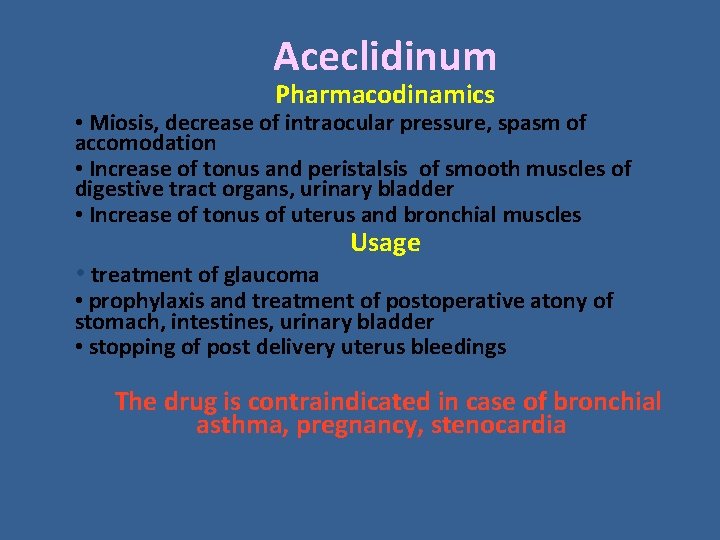
Aceclidinum Pharmacodinamics • Miosis, decrease of intraocular pressure, spasm of accomodation • Increase of tonus and peristalsis of smooth muscles of digestive tract organs, urinary bladder • Increase of tonus of uterus and bronchial muscles • treatment of glaucoma Usage • prophylaxis and treatment of postoperative atony of stomach, intestines, urinary bladder • stopping of post delivery uterus bleedings The drug is contraindicated in case of bronchial asthma, pregnancy, stenocardia
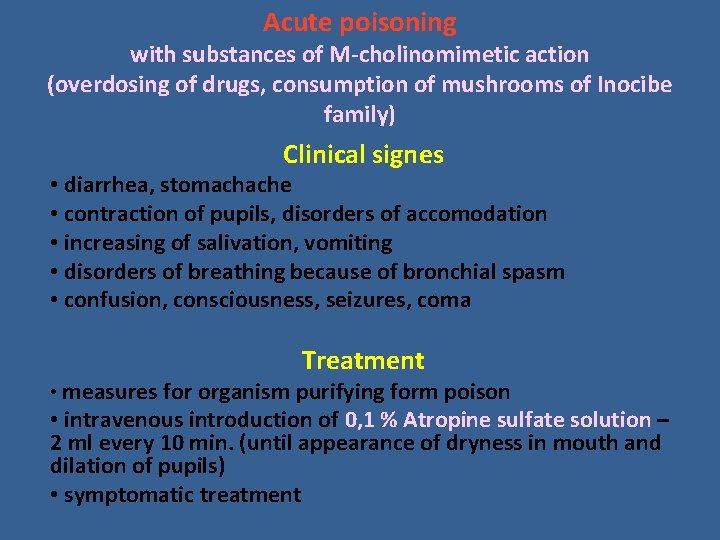
Acute poisoning with substances of M-cholinomimetic action (overdosing of drugs, consumption of mushrooms of Inocibe family) Clinical signes • diarrhea, stomachache • contraction of pupils, disorders of accomodation • increasing of salivation, vomiting • disorders of breathing because of bronchial spasm • confusion, consciousness, seizures, coma Treatment • measures for organism purifying form poison • intravenous introduction of 0, 1 % Atropine sulfate solution – 2 ml every 10 min. (until appearance of dryness in mouth and dilation of pupils) • symptomatic treatment
M-cholinoblockers Atropine sulfate Scopolamine hydrobromide Platyphyllin hydrotartrate Metacinum Dry extract of Belladonna
Pharmacokinetics and usage of M-cholinoblockers Influence on an eye Dilation of a pupil (midriasis) Increasing of intraocular pressure Paralysis of accomodation (cycloplegia) Midriasis and cycloplegia stay for: atropine – 7 -11 days, gomatropine – 1 -2 days, platyphyllin – 5 -6 hours, scopolamine – 4 -5 days Usage Investigation of orbital fundum (posterior chamber of eye) Prevention of synechia (comissures) in case of trauma and operations on eye Contraindication glaucoma
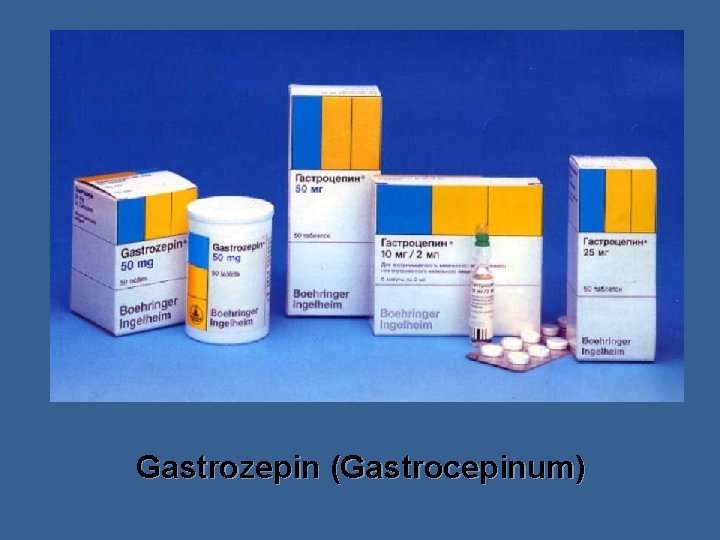
Pharmacodynamics and usage of cholinoblockers M- Pharmacodynamics • Decreasing of function of excretory glands, except mammal glands • Decreasing of tonus and peristalsis of smooth muscles of digestive tract, bronchi, urinary tracts Usage • Ulcer disease of stomach and duodenum (gastrocepin) • Liver, renal, intestinal colics • Dyskinesias of gastrointestinal tract, enteritis, colitis • Cystitis • Bronchial spasm (Ipratropii bromide - atrovent)
Other cases of M-cholinoblockers administration • Holding of atropine test in case of atrioventricular blockade (atropine) • In anesthesiologia for premedicatoin – for prevention of bronchial and laryngeal spasm, syncope, limitation of salivary and bronchial glands secretion (atropine, scopolamine, metacinum) • Poisoning with M-cholinomimetics and POC (atropine) • Sea, air disease (scopolamine, aeronum)
Gastrozepin (Gastrocepinum)
Side effects of M-chlinoblockers Dryness of mucous membranes, dysphagia, dysphonia Tachycardia Increasing of intraocular pressure, glaucoma attack Constipation, retention of urine (ischuria) Formation of bronchial plugs in patients with bronchial asthma • Overheating • • • M-cholinoblockers are absolutely contraindicated in patients with glaucoma
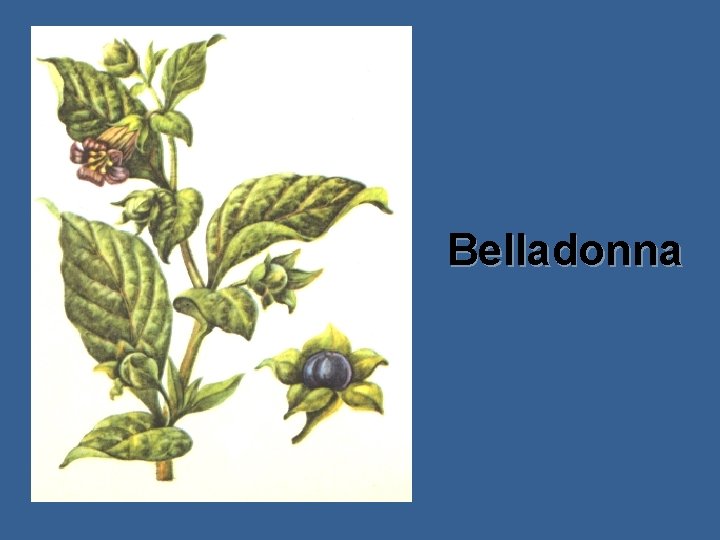
Acute poisoning with substances of Mcholinoblocking action Causes • Overdosing with drugs of Mcholinoblockers group • Consumption of plants, which include alcaloids of this group
Belladonna
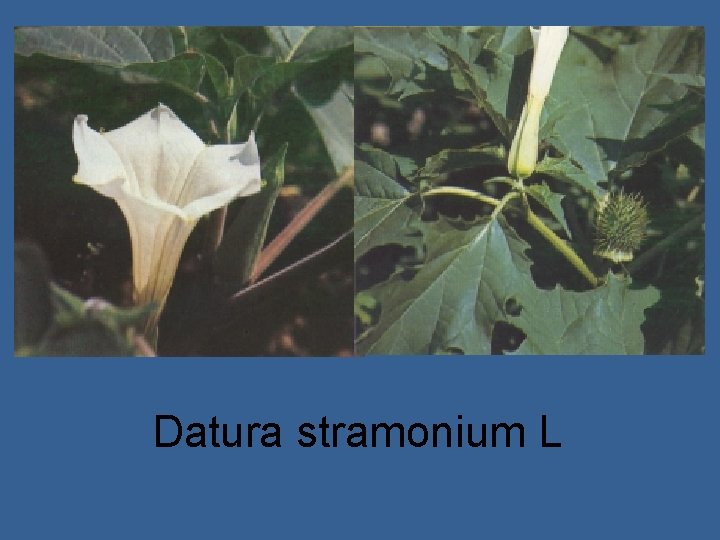
Datura stramonium L
Symptoms of acute poisoning with Mcholinoblockers • “Atropine psychosis”: delirium, hallucinations, disorientation, psychomotor excitement • Redness and dryness of skin, increasing of body temperature • Dryness of mucous membranes causes disorders of swallowing (dysphagia), speech (dysartria, raleness of voice) • Thirst • Quick dilation of pupils (midriasis) • Photophobia • Visus disorders (Paralysis of accomodation) • Tachycardia • Atony of intestines • Retention of urine Death is caused by paralysis of breath center
TREATMENT OF ACUTE POISONING WITH CHOLINOBLOCKERS M- • wash out of stomach with 0, 5 % Tannin solution, laxative agents, sorbents, forced diuresis • Specific antagonists – anticholinesterase drugs: repeated introduction of proserinum, galantaminum, hydrobromidum until symptoms of disappearance of M-cholinoblockers blockade • removal of psychomotor excitement - aminasinum, sybazon, barbiturates • removal of tachycardia – anapryline • for relief of photophobia patient is transferred to a dark room • for decreasing of body temperature ice-cube bottles are placed around the patient • In case of considerable depressing of breathing - artificial ventilation with oxygen inhalation
N-cholinergic drugs
N-cholinomimetics Cytitone Lobeline hydrochloride
Cytitone Pharmacodynamics • increases tone of respiratory center of medulla oblongata reflectively • increases arterial pressure due to reflective excitation of vascular-motor center Usage • respiratory arrest due to inhalation of irritative substances, • traumas, electro-shock, surgical operations • morphine and CO poisoning • shock and collapse conditions, depression of blood circulation and breathing in patients with infectious diseases
Lobeline is a natural alkaloid found in "Indian tobacco" (Lobelia inflata) Usage Breath stop of reflex origin Lobeline has been used as a smoking cessation aid, and may have application in the treatment of other drug addictions such as addiction to amphetamines, cocaine or alcohol.
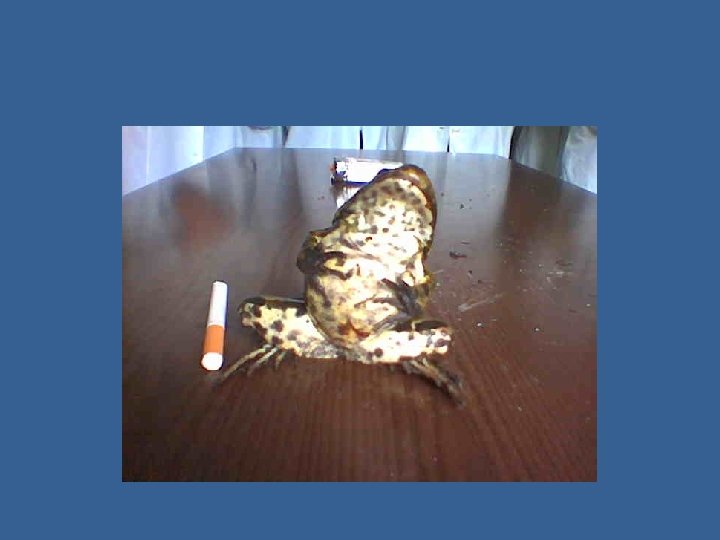
Acute poisoning with nicotine Clinical picture nausea, vomiting, salivation, abdominal pain, diarrhea, dizziness, headache, cold sweat, weakness, loosing of consciousness, tachy- or bradycardia, cardiac arrhythmias, seizures, breathing depression Death is caused by acute depression of respiratory center and paralysis of breathing musculature
Chronic poisoning with nicotine Chronic diseases of respiratory system, Lung cancer, Malignant tumors of other etiology, Ischemic heart disease, Obliterating endarteritis, Gastric and duodenal ulcer disease • Women Depression of female sex hormones production, yellow face, early wrinkles, damaging of teeth, harsh voice, sometimes male type hair growth • Men Deep, irreversible changes of spermatozoids
N-cholinoblockers Ganglionblockers Benzohexonium, pentamin, hygronium, arphonad Myorelaxants Tubocurarine chloride, dithylin, mellictin
Ganglionblockers
PHARMACODYNAMICS • Dilation of peripheral vessels • Decreasing of blood pressure • Decreasing of smooth muscle tone of inner organs (bronchi, GI tract, urinary and bile tracts) • Decreasing of gland secretion: bronchial, gastric, salivary
Benzohexonium Does nor penetrate through blood-brain barrier Duration of action varies from 3 to 6 hours Usage Hypertensive crisis Obliterating endarteritis Spasm of peripheral vessels Intestinal, hepatic, kidney colic Gastric ulcer Bronchial asthma, lung emphysema, lung edema
Pentaminum Duration of action– 2 -4 hours Usage Hypertensive crisis Obliterating endarteritis Spasm of peripheral vessels Intestinal, hepatic, kidney colic Gastric ulcer Bronchial asthma, lung emphysema
Hygronium Effect develops after 2 -3 min, and lasts for 10 -15 min after stopping of infusion Usage For controlled hypotonic For treatment of nephropathy and eclampsia For complex therapy of hypertensive crisis, brain edema, lung edema
Pirilenum Penetrates through blood-brain barrier and blocks central N-cholinergic systems Effect is observed after 1 -2 hours and lasts for 6 -8 hours if administered orally Usage Heavy form of arterial hypertension Trophic disorders
Side effects and complications of ganglionblockers Orthostatic collapse (postural hypotension) Dryness of mucous membranes Disturbance of accommodation General weakness Dizziness Tachycardia Atonia of urinary bladder, intestines (paralytic ileus)
Myorelaxants
Antidepolarizing type of action (pachicurare) Tubocurarine chloride, anatruxonium, pipecuronium bromide, mellictin Depolarizing type of action (leptocurare) dithylinum
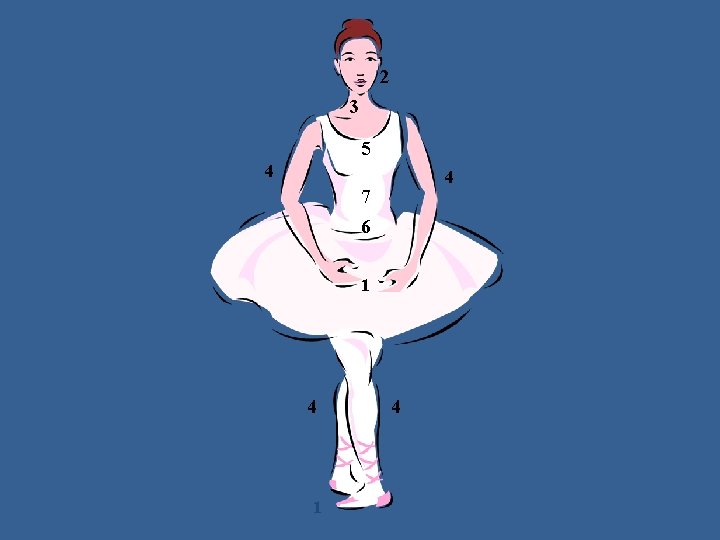
Skeletal muscles relax in such turn Small muscles of fingers, toes, ears, eyes, head, neck, muscles of extremities, trunk, Intercostals muscles and diaphragm Restoring of tone is performed in reversed sequence
2 3 5 4 4 7 6 1 4
Tubocurarine chloride Relaxation begins after 1 -1, 5 min after introduction and lasts for 25 -40 min Usage • For prolonged relaxation of striped muscles during surgical operations • For relaxation of muscles while repositioning fractured bones and complicated dislocations • For prevention of traumatic injuries during seizure therapy of schizophrenia, during epileptic status, seizures of other etiology PROSERINE is introduced to overcome action of the drug
Dithylinum (suxamethonium, succinilcholin, listenon) Miorelaxation develops after 40 -60 sec. Total reviving of muscle tone comes after 5 -10 min. Usage • before such manipulations as tracheal intubation, broncho- and esophagoscopia, cystoscopia • for reposition of fractures bones, dislocations
Insufficiency of buthyrilcholinesterase (genetic pathology) In this pathology action of dithylinum can last for several hours, and all this time the patient should be connected to artificial respiration device TREATMENT • Introduction of fresh-citrate blood • Direct blood infusion from donnor • Introduction of buthyrilcholinesterase
Mellictine Usage For disease and syndrome postencephalitic parkinsonism, spinal arachnoiditis, arachnoencephalitis of Parkinson, All myorelaxants are contraindicated for patients with myasthenia