
Common cold part 2 Prepared by Assist Lect
Common cold part (2) Prepared by: Assist. Lect. Noor Wafaa Hashim
Paracetamol • • • Indications : Mild to moderate pain | Pyrexia Pain | Pyrexia with discomfort Post-immunisation pyrexia in infants Acute migraine

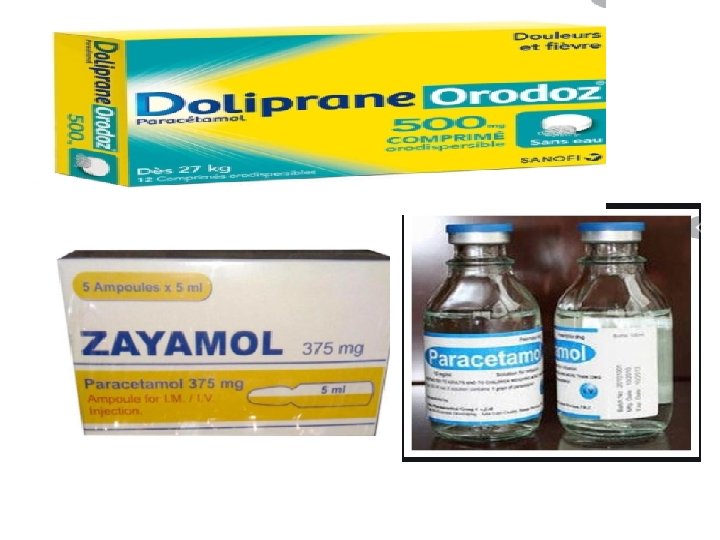
Paracetamol • • • • Paracetamol (Acetaminophen) INDICATIONS AND DOSE: Mild to moderate pain | Pyrexia ▶ BY MOUTH ▶ Adult: 0. 5– 1 g every 4– 6 hours; maximum 4 g per day ▶ BY INTRAVENOUS INFUSION ▶ Adult (body-weight up to 50 kg): 15 mg/kg every 4– 6 hours, dose to be administered over 15 minutes; maximum 60 mg/kg per day ▶ Adult (body-weight 50 kg and above): 1 g every 4– 6 hours, dose to be administered over 15 minutes; maximum 4 g per day ▶ BY RECTUM ▶ Adult: 0. 5– 1 g every 4– 6 hours; maximum 4 g per da
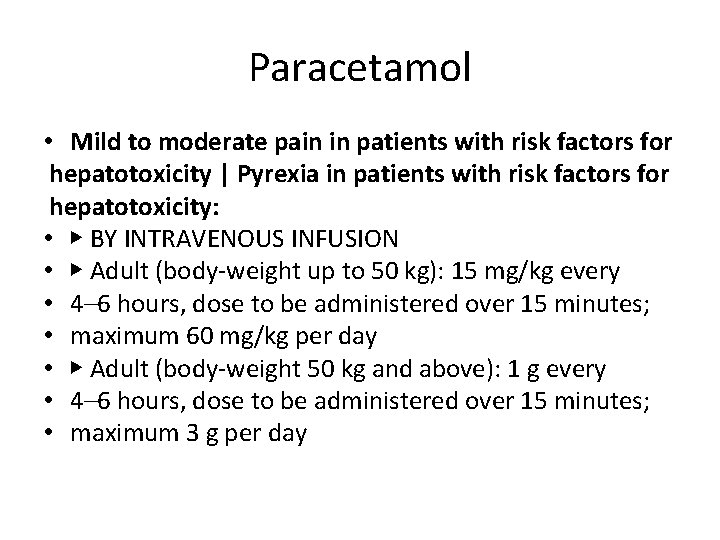
Paracetamol • Mild to moderate pain in patients with risk factors for hepatotoxicity | Pyrexia in patients with risk factors for hepatotoxicity: • ▶ BY INTRAVENOUS INFUSION • ▶ Adult (body-weight up to 50 kg): 15 mg/kg every • 4– 6 hours, dose to be administered over 15 minutes; • maximum 60 mg/kg per day • ▶ Adult (body-weight 50 kg and above): 1 g every • 4– 6 hours, dose to be administered over 15 minutes; • maximum 3 g per day
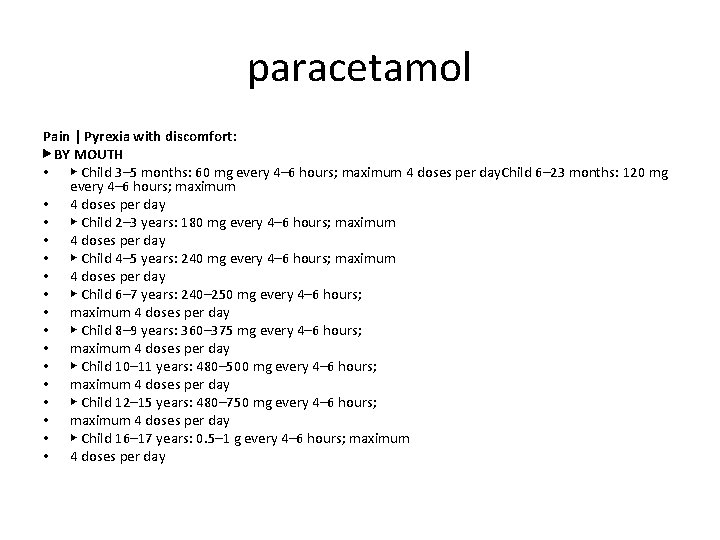
paracetamol Pain | Pyrexia with discomfort: ▶ BY MOUTH • ▶ Child 3– 5 months: 60 mg every 4– 6 hours; maximum 4 doses per day. Child 6– 23 months: 120 mg every 4– 6 hours; maximum • 4 doses per day • ▶ Child 2– 3 years: 180 mg every 4– 6 hours; maximum • 4 doses per day • ▶ Child 4– 5 years: 240 mg every 4– 6 hours; maximum • 4 doses per day • ▶ Child 6– 7 years: 240– 250 mg every 4– 6 hours; • maximum 4 doses per day • ▶ Child 8– 9 years: 360– 375 mg every 4– 6 hours; • maximum 4 doses per day • ▶ Child 10– 11 years: 480– 500 mg every 4– 6 hours; • maximum 4 doses per day • ▶ Child 12– 15 years: 480– 750 mg every 4– 6 hours; • maximum 4 doses per day • ▶ Child 16– 17 years: 0. 5– 1 g every 4– 6 hours; maximum • 4 doses per day
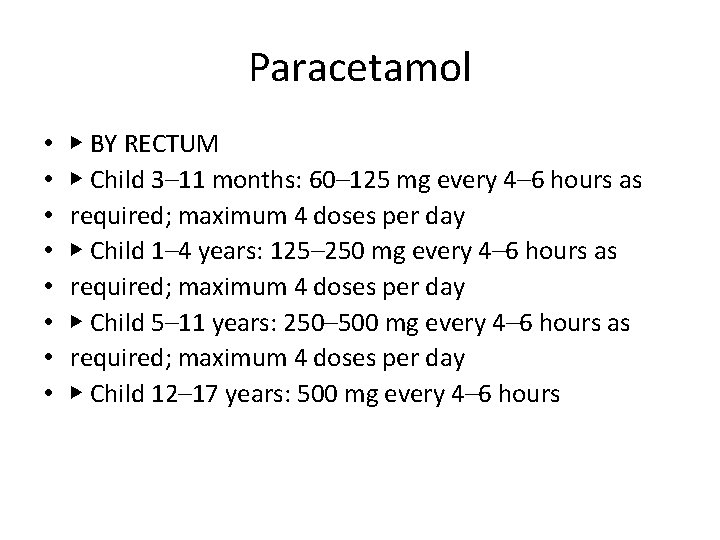
Paracetamol • • ▶ BY RECTUM ▶ Child 3– 11 months: 60– 125 mg every 4– 6 hours as required; maximum 4 doses per day ▶ Child 1– 4 years: 125– 250 mg every 4– 6 hours as required; maximum 4 doses per day ▶ Child 5– 11 years: 250– 500 mg every 4– 6 hours as required; maximum 4 doses per day ▶ Child 12– 17 years: 500 mg every 4– 6 hours
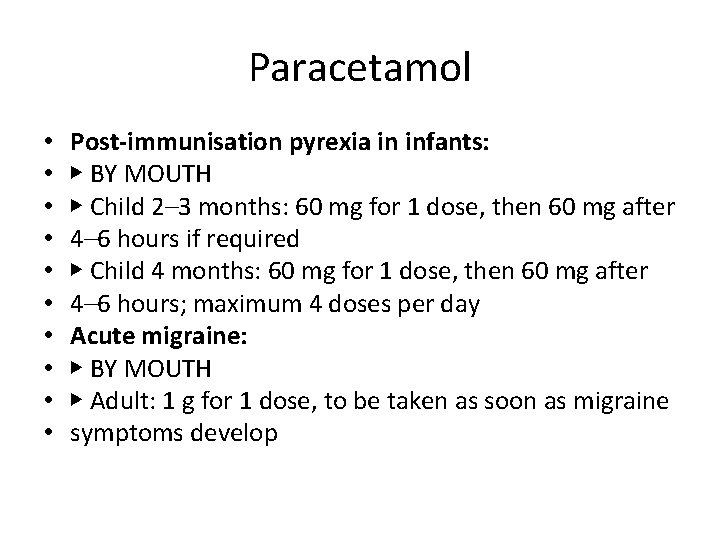
Paracetamol • • • Post-immunisation pyrexia in infants: ▶ BY MOUTH ▶ Child 2– 3 months: 60 mg for 1 dose, then 60 mg after 4– 6 hours if required ▶ Child 4 months: 60 mg for 1 dose, then 60 mg after 4– 6 hours; maximum 4 doses per day Acute migraine: ▶ BY MOUTH ▶ Adult: 1 g for 1 dose, to be taken as soon as migraine symptoms develop
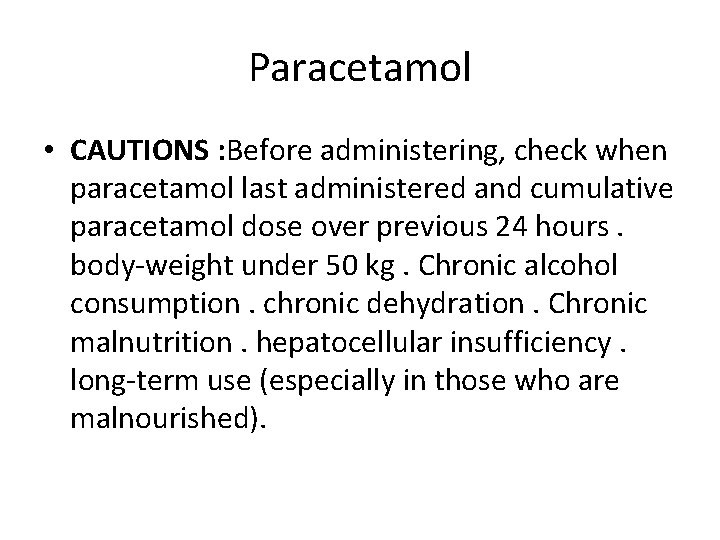
Paracetamol • CAUTIONS : Before administering, check when paracetamol last administered and cumulative paracetamol dose over previous 24 hours. body-weight under 50 kg. Chronic alcohol consumption. chronic dehydration. Chronic malnutrition. hepatocellular insufficiency. long-term use (especially in those who are malnourished).

Paracetamol Side effects: ▶ Common or very common▶ With rectal use Anorectal erythema • PREGNANCY Not known to be harmful. • BREAST FEEDING Amount too small to be harmful. • HEPATIC IMPAIRMENT Dose-related toxicity—avoid large doses. • RENAL IMPAIRMENT • Dose adjustments ▶ In adults Increase infusion dose interval to every 6 hours if e. GFR less than 30 m. L/minute/1. 73 m 2.

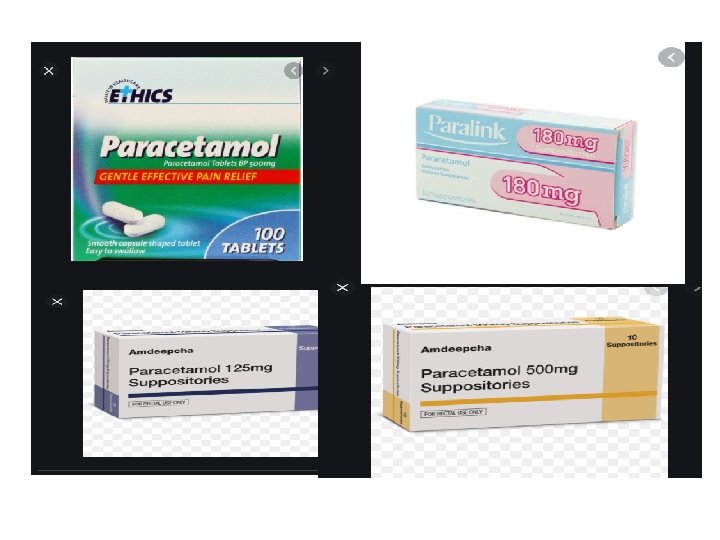
Paracetamol • MEDICINAL FORMS: • Tablet: CAUTIONARY AND ADVISORY LABELS (29, 30) • 29: Do not take more than 2 tablets at any one time. Do not take more than 8 in 24 hours. • 30: contain paracetamol. Do not take anything else containing paracetamol while taking this medicine. Talk to a doctor at once if you take too much of this medicine even if you feel well. • Paracetamol 500 mg • Paracetamol 1 gram
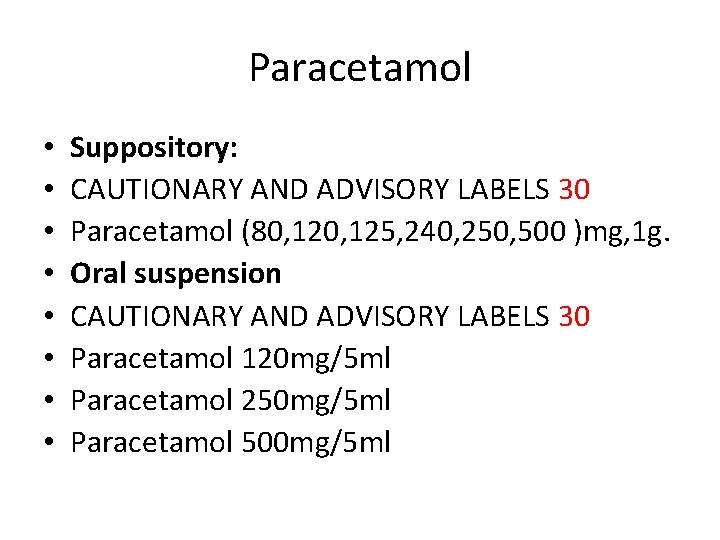
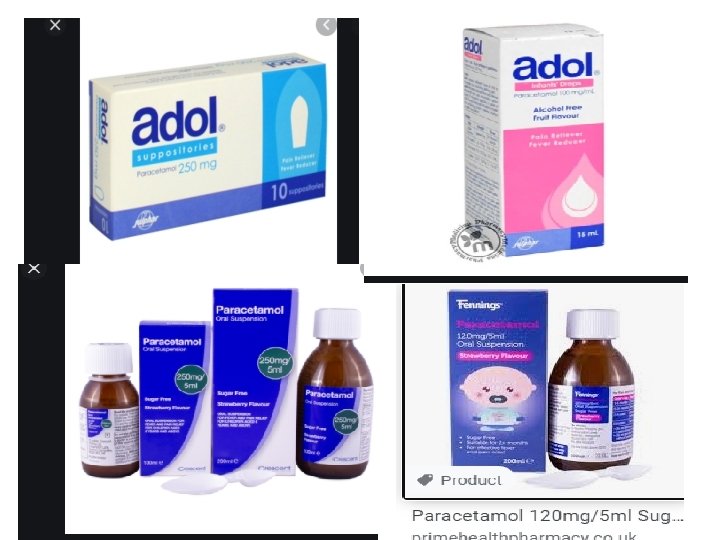
Paracetamol • • Suppository: CAUTIONARY AND ADVISORY LABELS 30 Paracetamol (80, 125, 240, 250, 500 )mg, 1 g. Oral suspension CAUTIONARY AND ADVISORY LABELS 30 Paracetamol 120 mg/5 ml Paracetamol 250 mg/5 ml Paracetamol 500 mg/5 ml
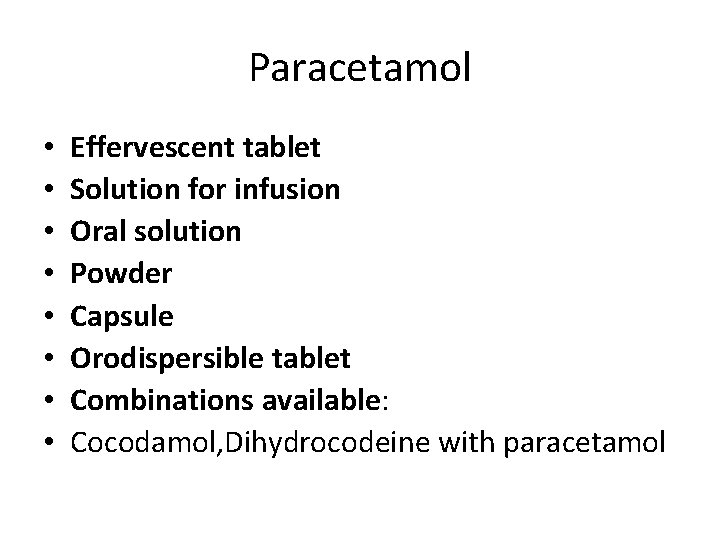
Paracetamol • • Effervescent tablet Solution for infusion Oral solution Powder Capsule Orodispersible tablet Combinations available: Cocodamol, Dihydrocodeine with paracetamol
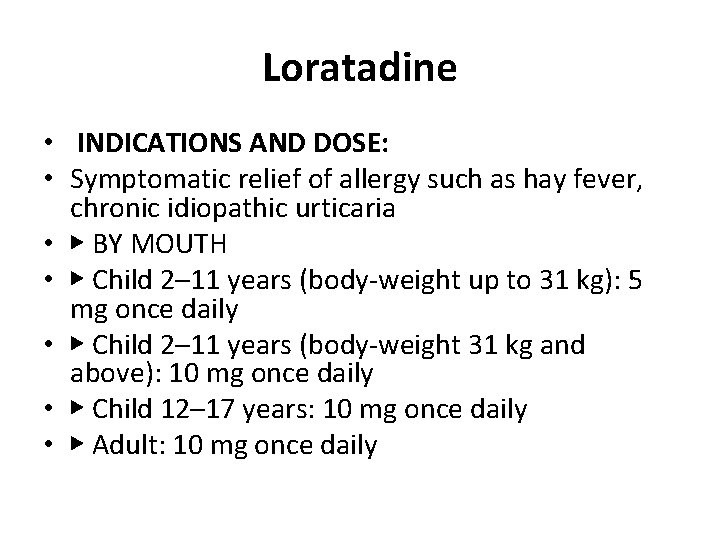
Loratadine • INDICATIONS AND DOSE: • Symptomatic relief of allergy such as hay fever, chronic idiopathic urticaria • ▶ BY MOUTH • ▶ Child 2– 11 years (body-weight up to 31 kg): 5 mg once daily • ▶ Child 2– 11 years (body-weight 31 kg and above): 10 mg once daily • ▶ Child 12– 17 years: 10 mg once daily • ▶ Adult: 10 mg once daily
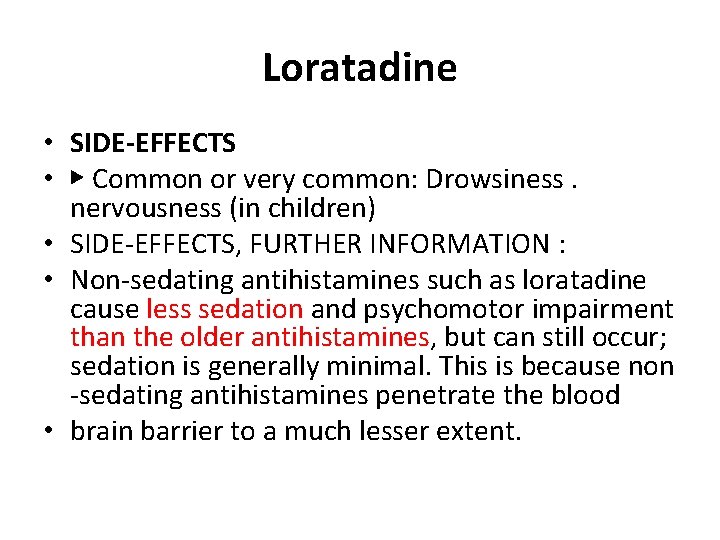
Loratadine • SIDE-EFFECTS • ▶ Common or very common: Drowsiness. nervousness (in children) • SIDE-EFFECTS, FURTHER INFORMATION : • Non-sedating antihistamines such as loratadine cause less sedation and psychomotor impairment than the older antihistamines, but can still occur; sedation is generally minimal. This is because non -sedating antihistamines penetrate the blood • brain barrier to a much lesser extent.
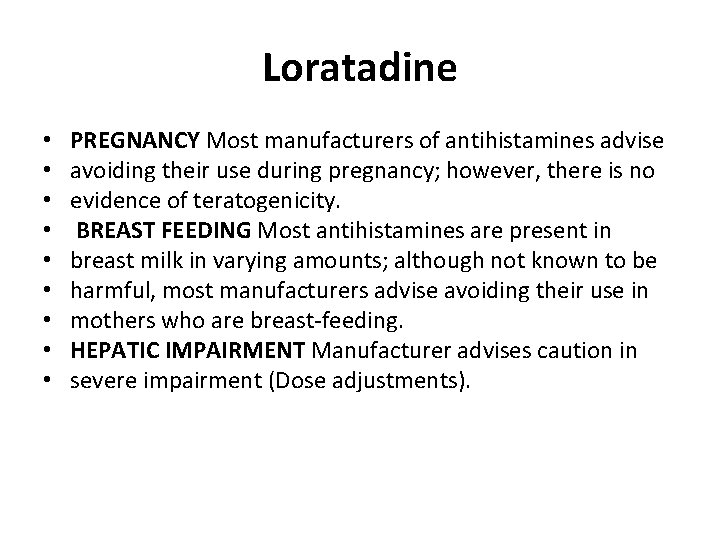
Loratadine • • • PREGNANCY Most manufacturers of antihistamines advise avoiding their use during pregnancy; however, there is no evidence of teratogenicity. BREAST FEEDING Most antihistamines are present in breast milk in varying amounts; although not known to be harmful, most manufacturers advise avoiding their use in mothers who are breast-feeding. HEPATIC IMPAIRMENT Manufacturer advises caution in severe impairment (Dose adjustments).
Loratadine • Driving and skilled tasks Although drowsiness is rare, nevertheless patients and their carers should be advised that it can occur and may affect performance of skilled tasks (e. g. cycling or driving); alcohol should be avoided.
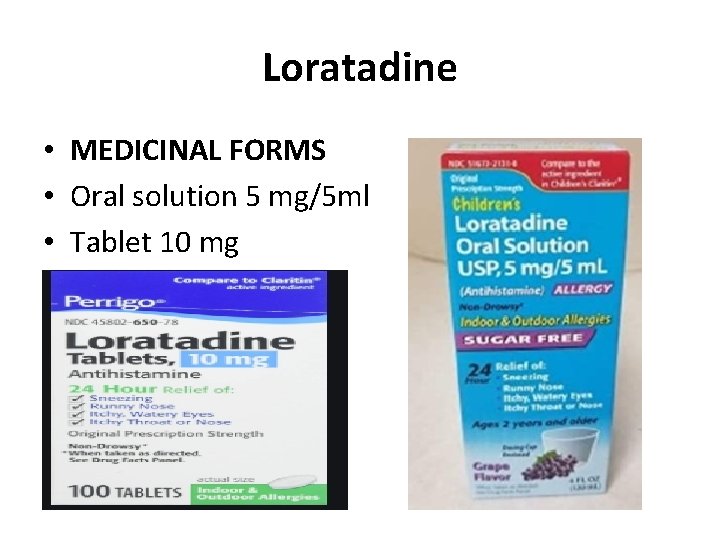
Loratadine • MEDICINAL FORMS • Oral solution 5 mg/5 ml • Tablet 10 mg
Chlorphenamine maleate • INDICATIONS AND DOSE • Symptomatic relief of allergy such as hay fever, urticaria, food allergy, drug reactions | Relief of itch associated with chickenpox • Adult: 4 mg every 4– 6 hours; maximum 24 mg per day • Emergency treatment of anaphylactic reactions▶ BY INTRAMUSCULAR INJECTION, OR BY INTRAVENOUS INJECTION.
Chlorphenamine maleate • IMPORTANT SAFETY INFORMATION • MHRA/CHM ADVICE (MARCH 2008 AND FEBRUARY 2009) OVERTHE- COUNTER COUGH AND COLD MEDICINES FOR CHILDREN • Children under 6 years should not be given over-thecounter cough and cold medicines containing chlorphenamine.
Chlorphenamine maleate • ▶ Side effects: Common or very common Drowsiness, Concentration impaired. coordination abnormal. dizziness. dry mouth. fatigue. headache. nausea. vision blurred. • CAUTIONS : Epilepsy. prostatic hypertrophy (in adults). pyloroduodenal obstruction. susceptibility to angle closure glaucoma. urinary retention. • Children and elderly patients are more susceptible to side-effects.
Chlorphenamine maleate • • • PREGNANCY Most manufacturers of antihistamines advise avoiding their use during pregnancy; however, there is no evidence of teratogenicity. Use in the latter part of the third trimester may cause adverse effects in neonates such as irritability, paradoxical excitability, and tremor. BREAST FEEDING Most antihistamines are present in breastmilk in varying amounts; although not known to be harmful, most manufacturers advise avoiding their use in mothers who are breast-feeding. HEPATIC IMPAIRMENT Manufacturer advises caution.
Chlorphenamine maleate • MEDICINAL FORMS: • Solution for injection(10 mg/1 ml) • Oral solution(2 mg/5 ml ) : CAUTIONARY AND ADVISORY LABELS 2 • 2: THIS MEDICINE MAKE YOU SLEEPY. IF THIS HAPPENS DO NOT DRIVE OR USE TOOLS OR MACHINES. DO NOT DRINK ALCOHOL. • Tablet • CAUTIONARY AND ADVISORY LABELS 2 • ▶ Chlorphenamine maleate (Non-proprietary) • Chlorphenamine maleate 4 mg.

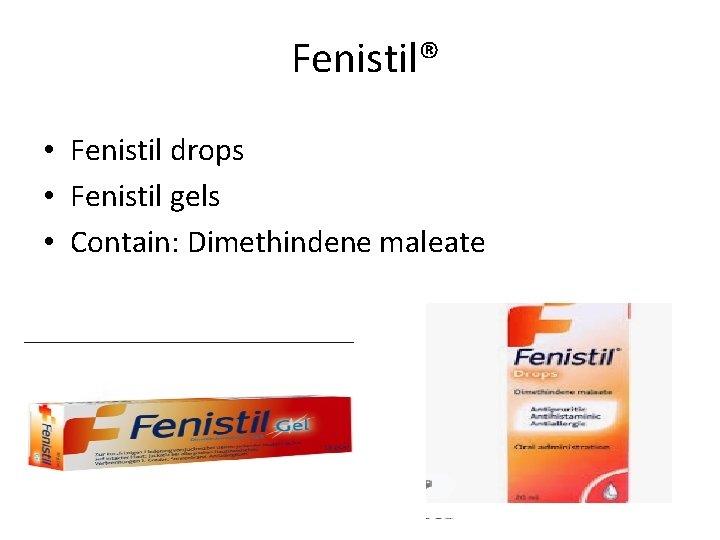
Fenistil® • Fenistil drops • Fenistil gels • Contain: Dimethindene maleate
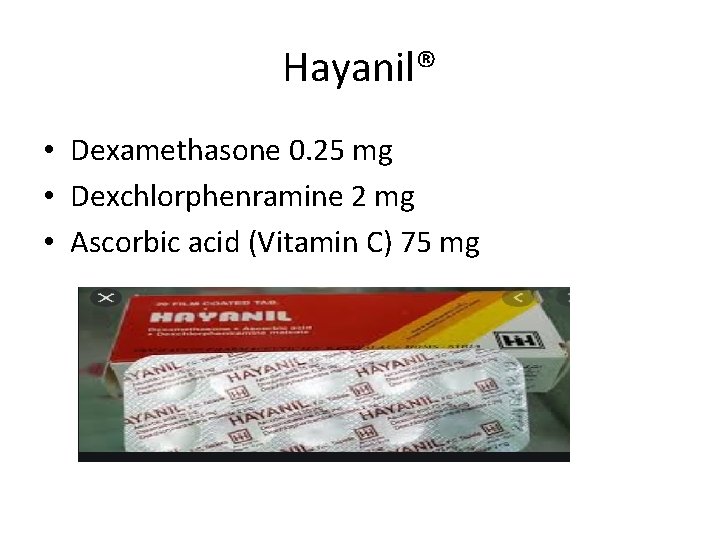
Hayanil® • Dexamethasone 0. 25 mg • Dexchlorphenramine 2 mg • Ascorbic acid (Vitamin C) 75 mg
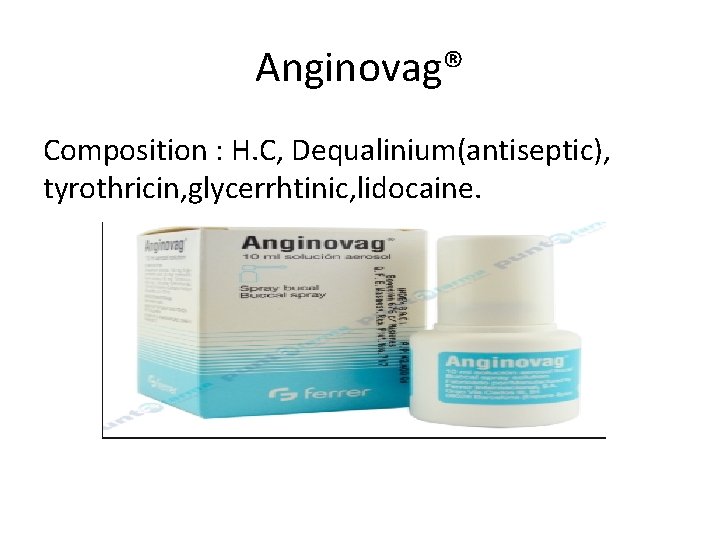
Anginovag® Composition : H. C, Dequalinium(antiseptic), tyrothricin, glycerrhtinic, lidocaine.
Thank you for listening
- Slides: 30