European Culture An Introduction Carrie TANG 27 th

- Slides: 71
European Culture An Introduction Carrie TANG 27 th, Feb 2011 1
European Culture An Introduction n n Greek Culture and Roman Culture The Bible and Christianity The Middle Ages Renaissance and Reformation The 17 th Century The Age of Enlightenment Romanticism Marxism and Darwinism Realism Modernism and Other Trends 2
Division One Greek culture and Roman culture n n Greek Culture Roman Culture 3
Greek Culture n n n n Philosophy & mythology Aesop’s Fables Homer’s epics Art Architecture Sculpture Athena Constellation 4
Greek Culture n n n n The Historical Context Social and Political Structure Homer Lyric Poetry Drama History Philosophy and Science Art, Architecture, Sculpture & Pottery Impact 5 n
The Historical Context Around 1200 B. C. n The 5 th century B. C. n The end of 5 th century B. C. n The 2 nd half of the 4 th century B. C. n In 146 B. C. n 6
Social and Political Structure Democracy “the whole people” n Economy n slave labour Sports the Olympic Games n 7
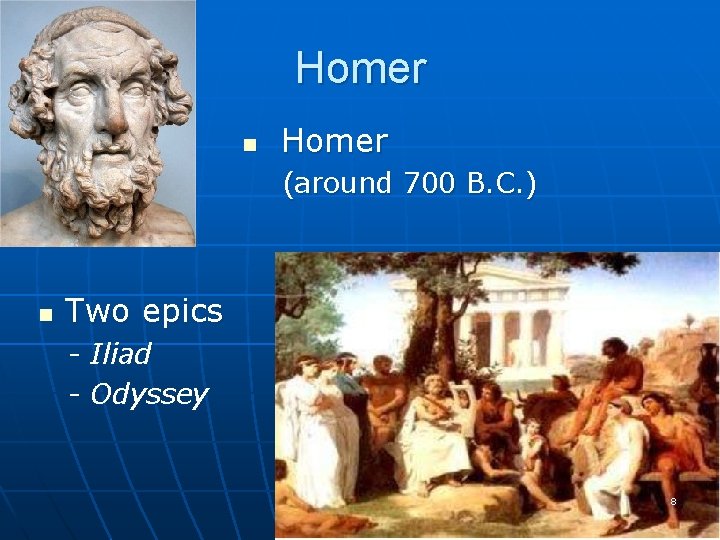
Homer n Homer (around 700 B. C. ) n Two epics - Iliad Odyssey 8
Lyric Poetry n Sappho woman poet, love poems n Pindar odes 9
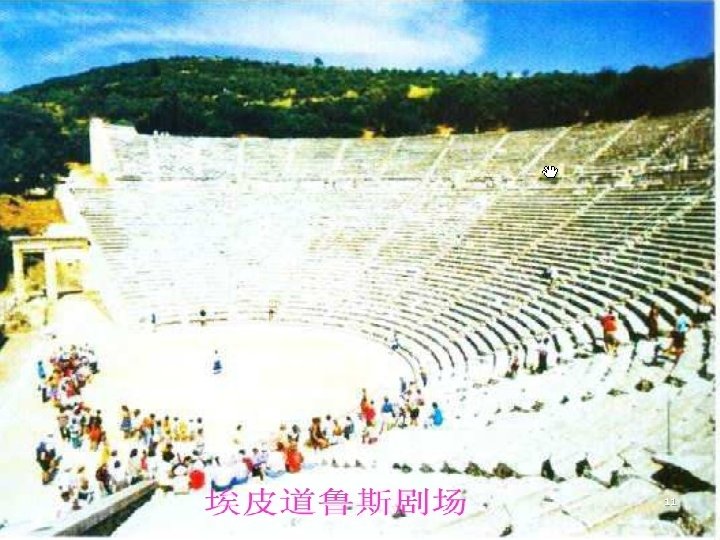
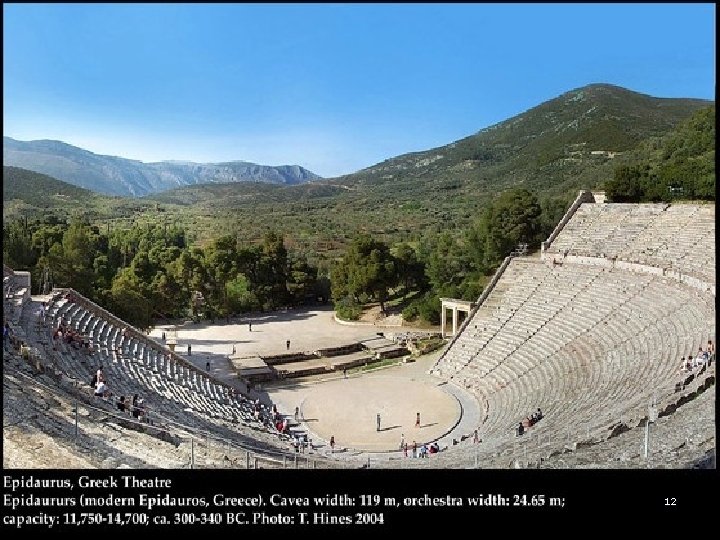
Drama n n religious festivals open-air theaters wearing masks a big chorus 10
11
12
Drama tragedy - comedy n “tragedy” :high-born people Chinese drama:the common people n 13
Drama - Tragedy Aeschylus (525 -456 B. C) Prometheus Bound, Persians & Agamemnon n Sophocles (496 -406 B. C) Oedipus the King, Electra & Antigone n Euripides (484 -406 B. C) Andromache, Medea & Trojan Women n 14
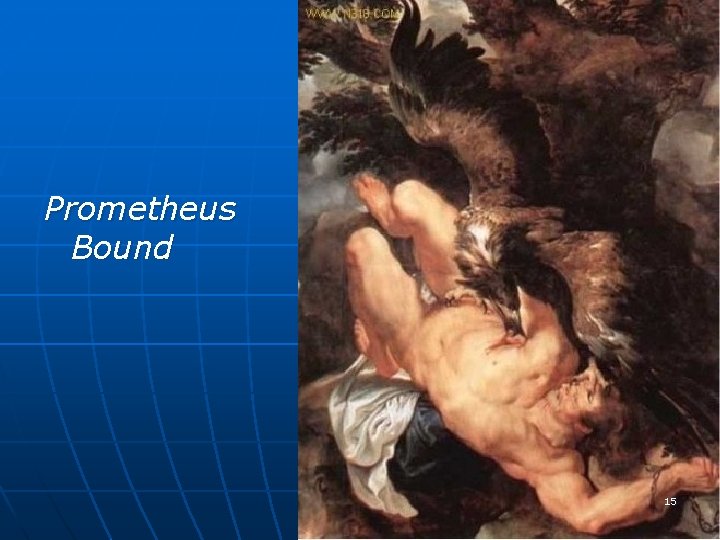
Prometheus Bound 15
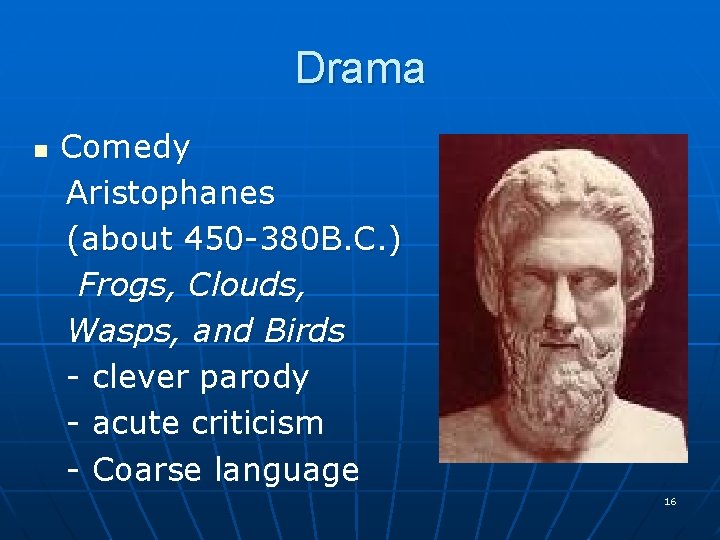
Drama Comedy Aristophanes (about 450 -380 B. C. ) Frogs, Clouds, Wasps, and Birds - clever parody - acute criticism - Coarse language n 16
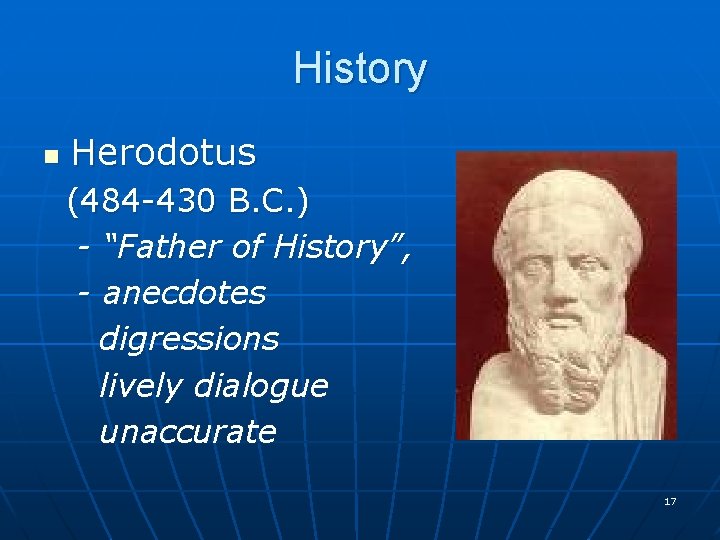
History n Herodotus (484 -430 B. C. ) - “Father of History”, - anecdotes digressions lively dialogue unaccurate 17
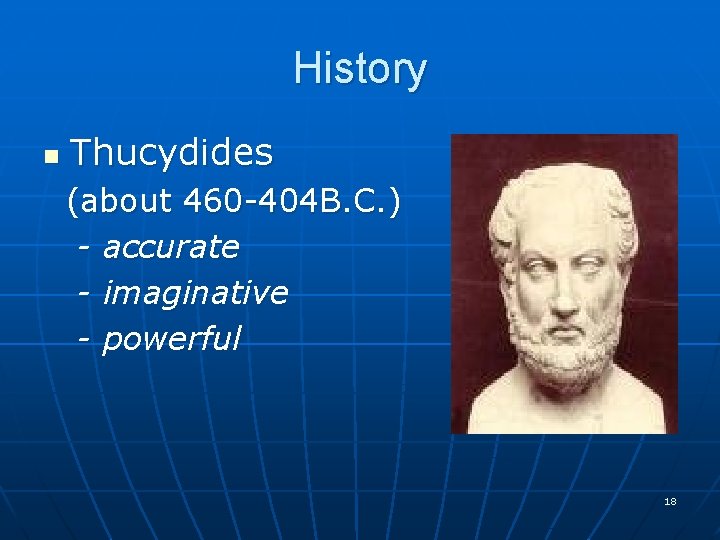
History n Thucydides (about 460 -404 B. C. ) - accurate - imaginative - powerful 18
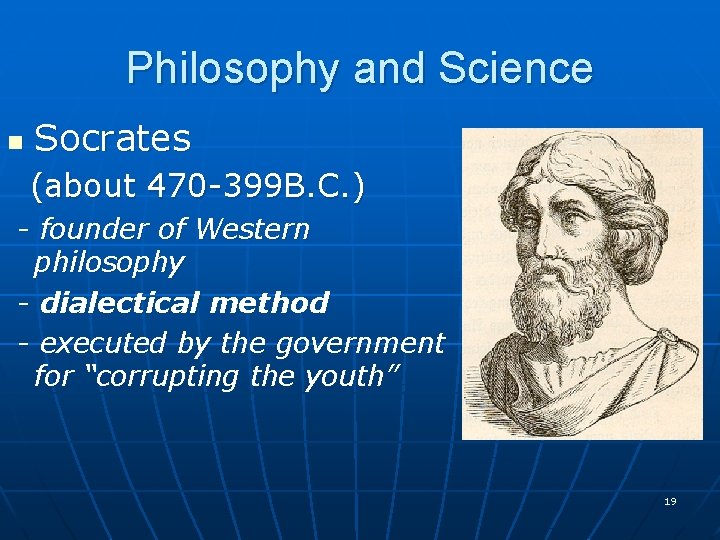
Philosophy and Science n Socrates (about 470 -399 B. C. ) - founder of Western philosophy - dialectical method - executed by the government for “corrupting the youth” 19
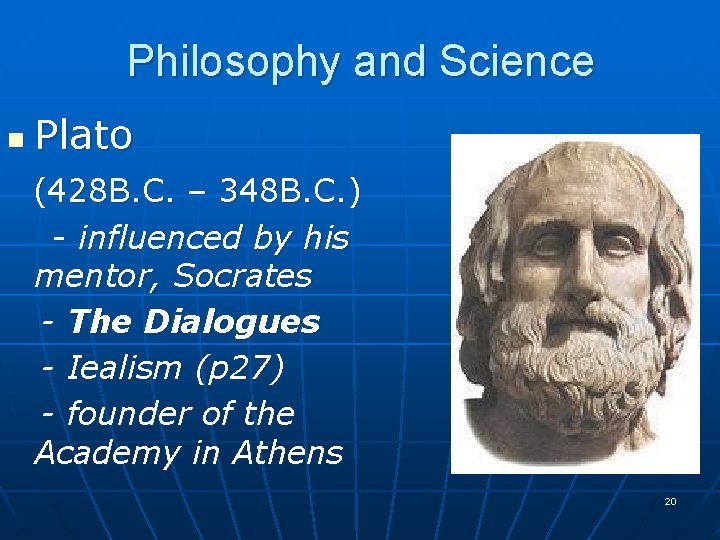
Philosophy and Science n Plato (428 B. C. – 348 B. C. ) - influenced by his mentor, Socrates - The Dialogues - Iealism (p 27) - founder of the Academy in Athens 20
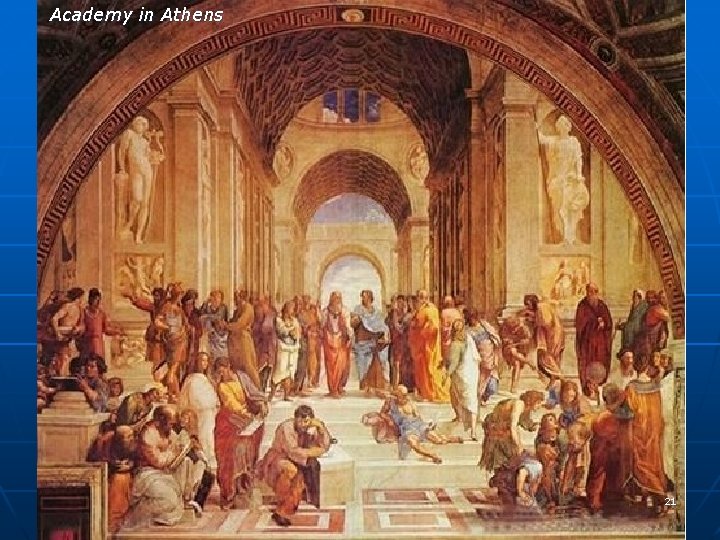
Academy in Athens 21
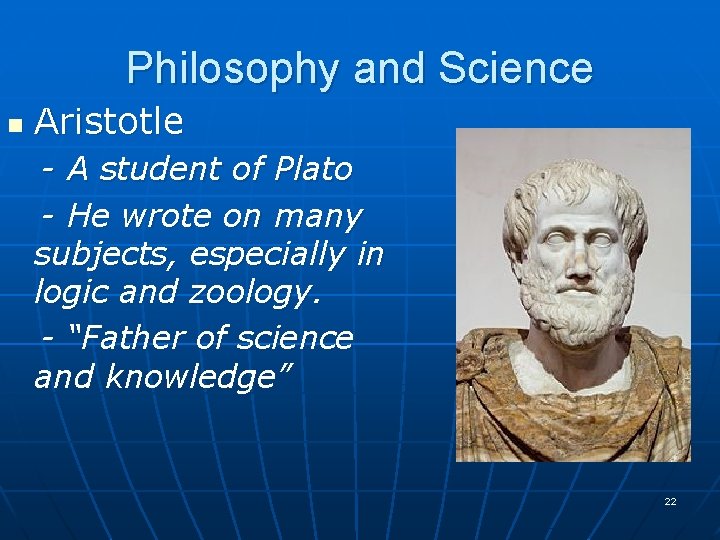
Philosophy and Science n Aristotle - A student of Plato - He wrote on many subjects, especially in logic and zoology. - “Father of science and knowledge” 22
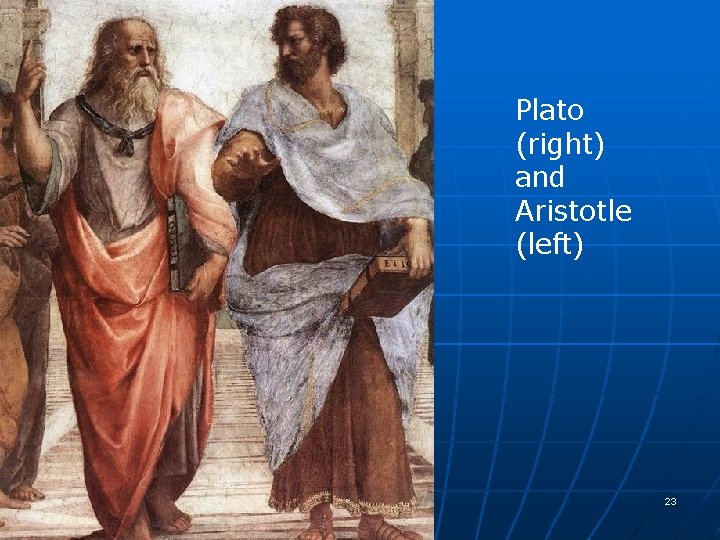
Plato (right) and Aristotle (left) 23
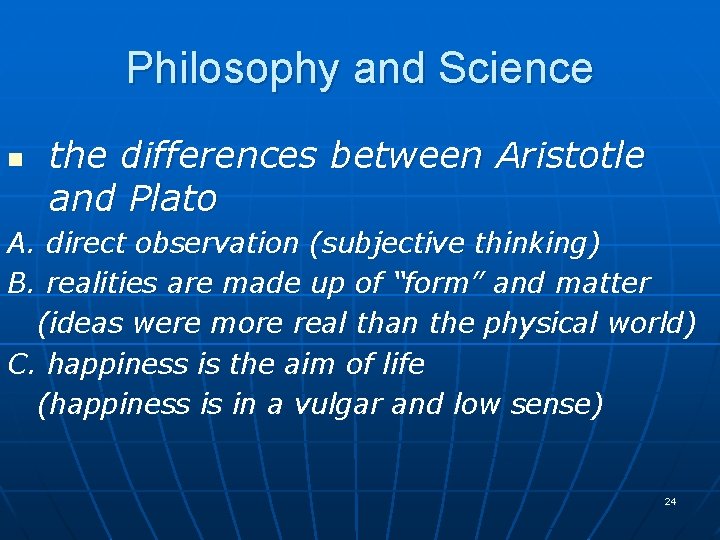
Philosophy and Science n the differences between Aristotle and Plato A. direct observation (subjective thinking) B. realities are made up of “form” and matter (ideas were more real than the physical world) C. happiness is the aim of life (happiness is in a vulgar and low sense) 24
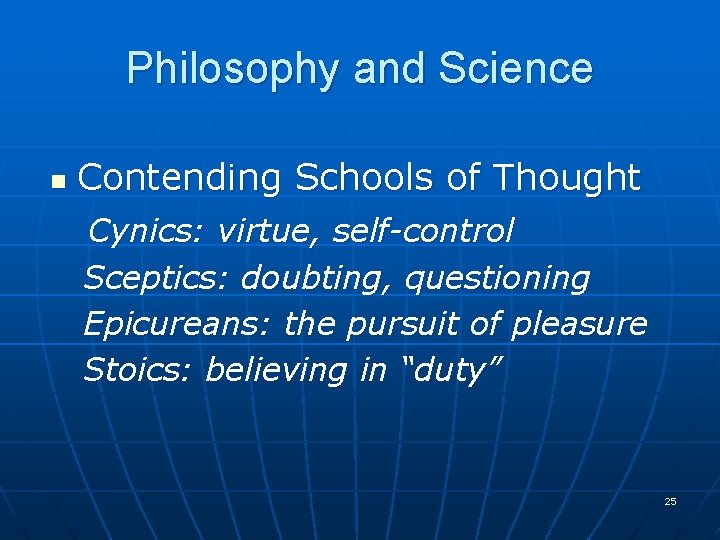
Philosophy and Science Contending Schools of Thought Cynics: virtue, self-control n Sceptics: doubting, questioning Epicureans: the pursuit of pleasure Stoics: believing in “duty” 25
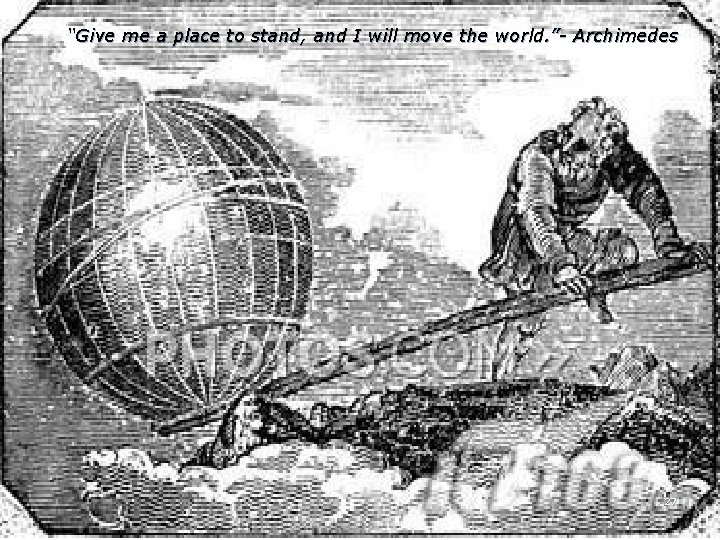
Philosophy and Science n Science Plato Aristotle Democritus Euclid: Father of geometry (Elements) Archimedes:(Principle of the lever) - “Give me a place to stand, and I will move the world. ” 26
“Give me a place to stand, and I will move the world. ”- Archimedes 27
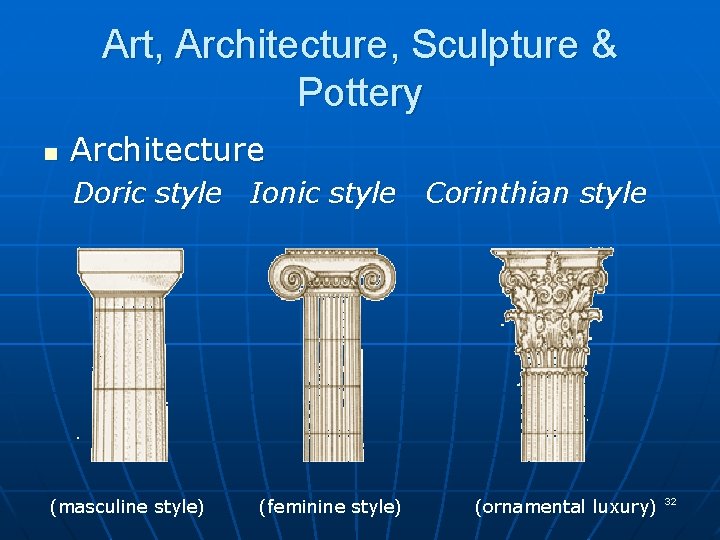
Art, Architecture, Sculpture & Pottery n Architecture the Doric style - Parthenon monotonous, unadorned the Ionic style graceful, elegant the Corinthian style luxurious 28
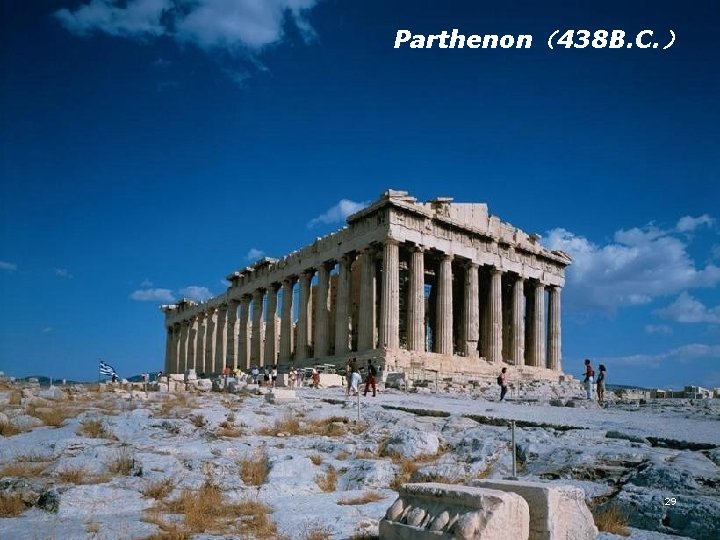
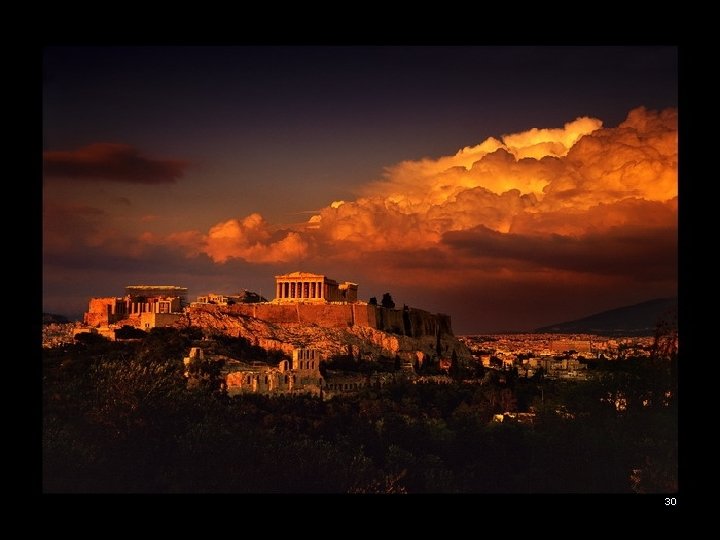
Parthenon(438 B. C. ) 29
30
Art, Architecture, Sculpture & Pottery n The Parthenon in Athens - symbol of Greek culture nearly 2, 500 years Temple of Athena the Virgin 31
Art, Architecture, Sculpture & Pottery n Architecture Doric style Ionic style (masculine style) (feminine style) Corinthian style (ornamental luxury) 32
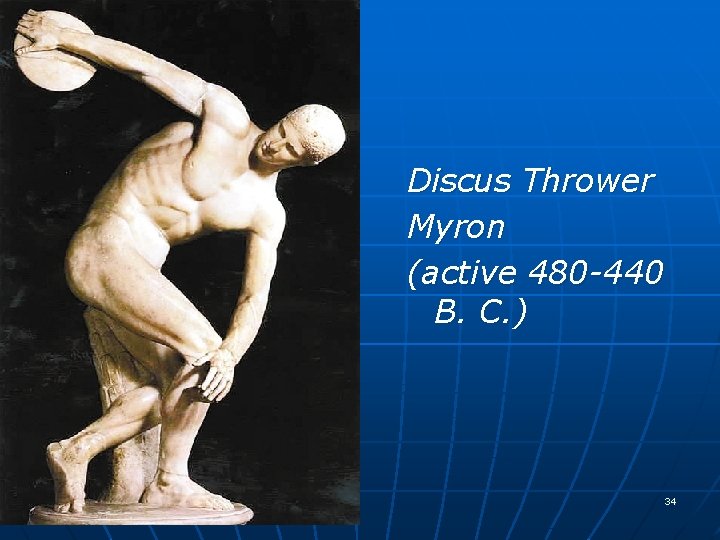
Art, Architecture, Sculpture & Pottery n Scupture Discus Thrower - beauty - strength - balance 33
Discus Thrower Myron (active 480 -440 B. C. ) 34
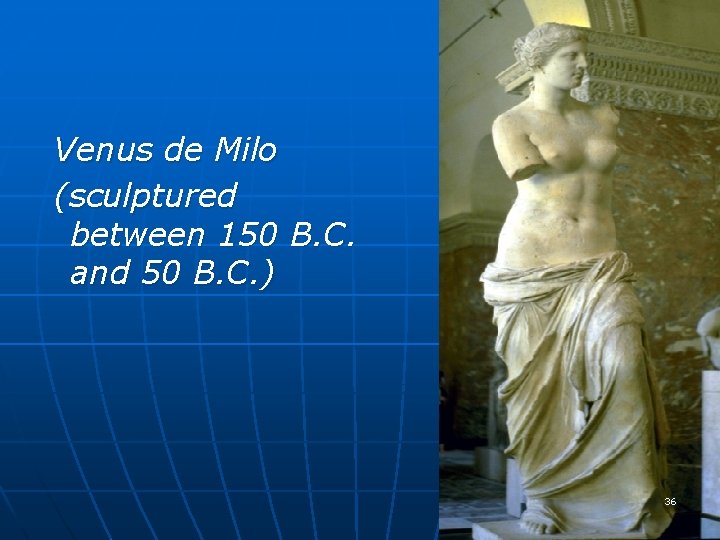
Art, Architecture, Sculpture & Pottery Venus de Milo (sculptured between 150 B. C. and 50 B. C. ) - discovered in Milo in 1820 - in the Musée du Louvre - the beautiful countenance - the grace and loveliness of a female - the symbol of love and beauty 35
Venus de Milo (sculptured between 150 B. C. and 50 B. C. ) 36
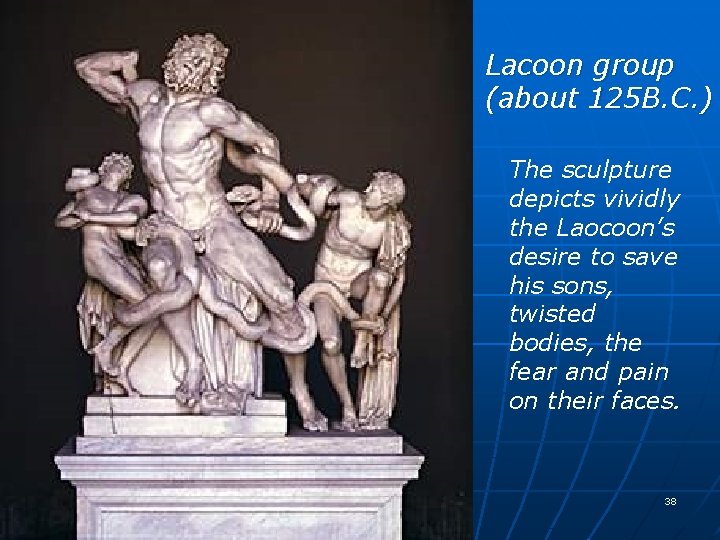
Art, Architecture, Sculpture & Pottery Lacoon group - scuptured in the 1 st century B. C. unearthed in Rome in 1506 184 centimeters high also named “the Laocoon and his sons” 37
Lacoon group (about 125 B. C. ) The sculpture depicts vividly the Laocoon’s desire to save his sons, twisted bodies, the fear and pain on their faces. 38
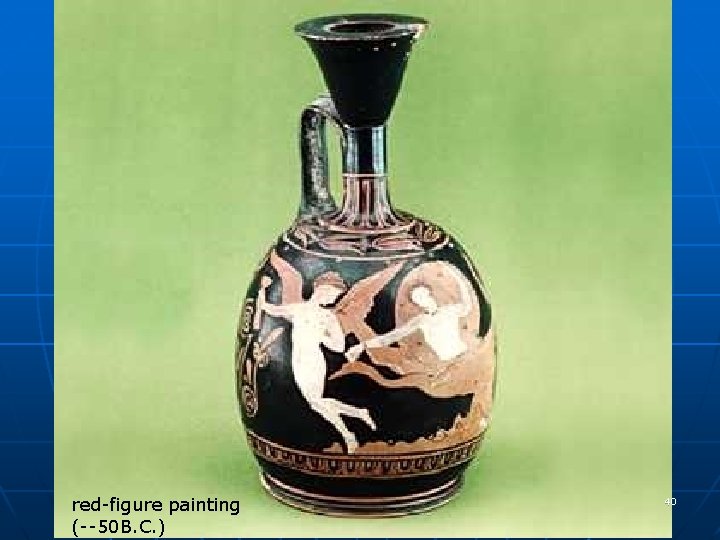
Art, Architecture, Sculpture & Pottery n Pottery - jars and other utensils - vases 39
red-figure painting (--50 B. C. ) 40
Impact Spirit of Innovation - They invented many subjects - They first wrote history - They speculated freely about the nature of the world and the ends of life n 41
Impact n Supreme Achievement The Greeks achieved supreme achievements in nearly all fields of human endeavor 42
Impact Lasting Effect - an example to understand the world - influence in literature n 43
Impact Greek Philosophers Quotes n n n Thou shouldst eat to live; not live to eat. – Socrates I count him braver who overcomes his desires than him who overcomes his enemies. – Aristotle Ignorance, the root and stem of every evil. – Plato 44
Roman Culture n n Romans and Greeks Roman History Latin Literature Architecture, Painting & Sculpture 45
Romans and Greeks n Common - the the citizen-assembly religions Indo-European language family Difference the Romans built up a vast empire, the n Greeks didn’t. 46
Roman History n Pax Romana - 200 years’ peaceful time n Roman law - the core of modern civil and commercial law n Division of the capital - from Rome to Byzantium (Istanbul) Deposition of the West Roman Empire - in 1453 n 47
Latin Literature Prose n Poetry - profound, powerful and beautiful n 48
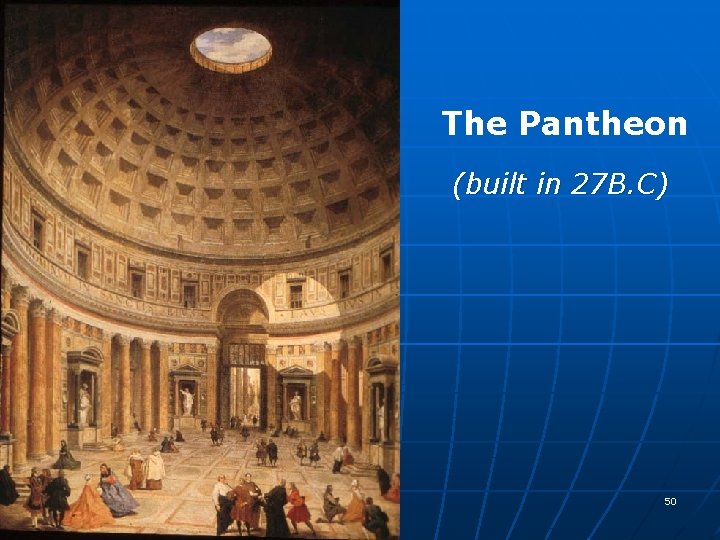
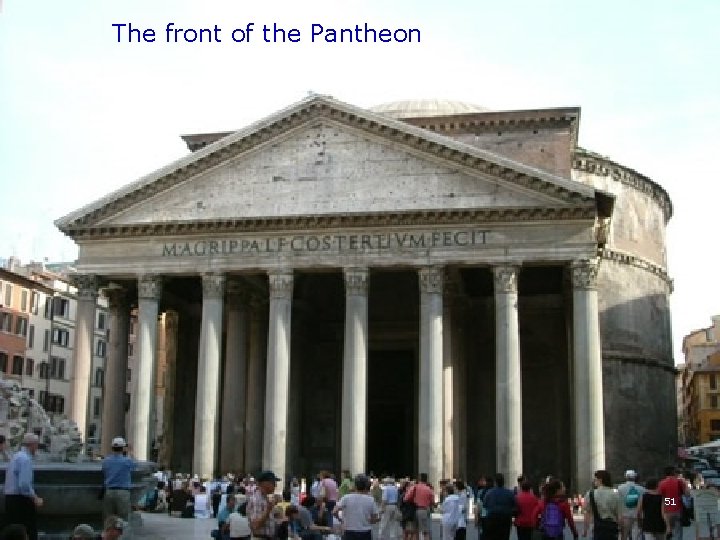
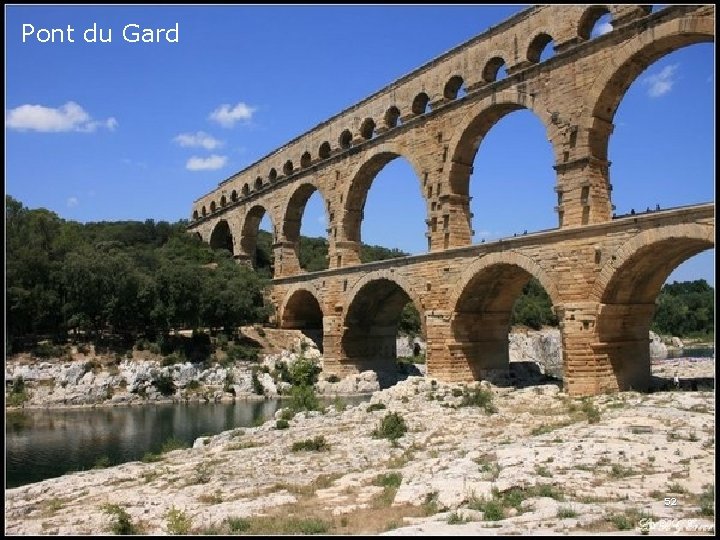
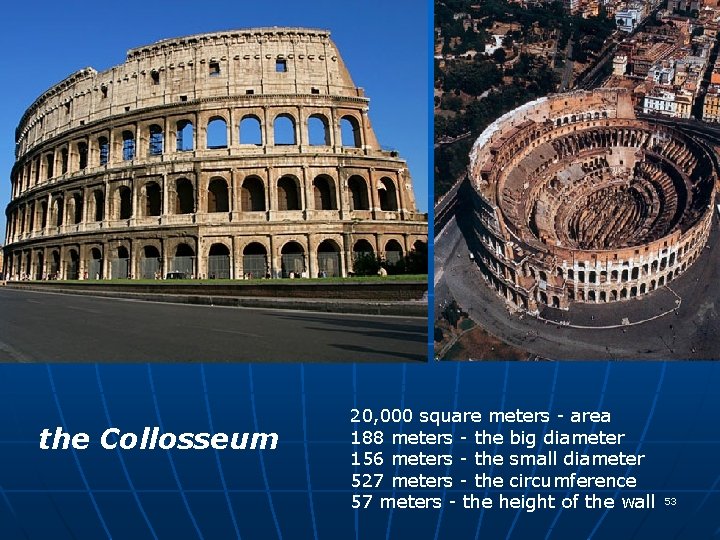
Architecture, Painting & Sculpture n Architecture the Pantheon Pont du Gard the Collosseum n n Painting Sculpture 49
The Pantheon (built in 27 B. C) 50
The front of the Pantheon 51
Pont du Gard 52
the Collosseum 20, 000 square meters - area 188 meters - the big diameter 156 meters - the small diameter 527 meters - the circumference 57 meters - the height of the wall 53
Architecture, Painting & Sculpture Painting – wall paintings still lifes n landscape figure 54
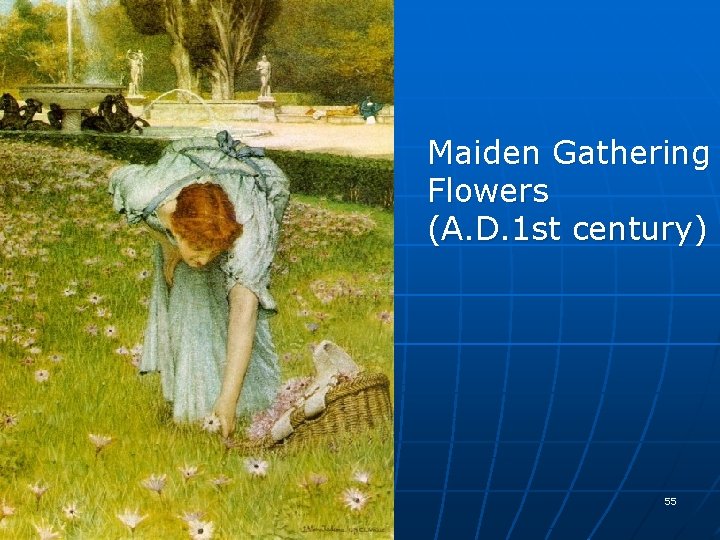
Maiden Gathering Flowers (A. D. 1 st century) 55
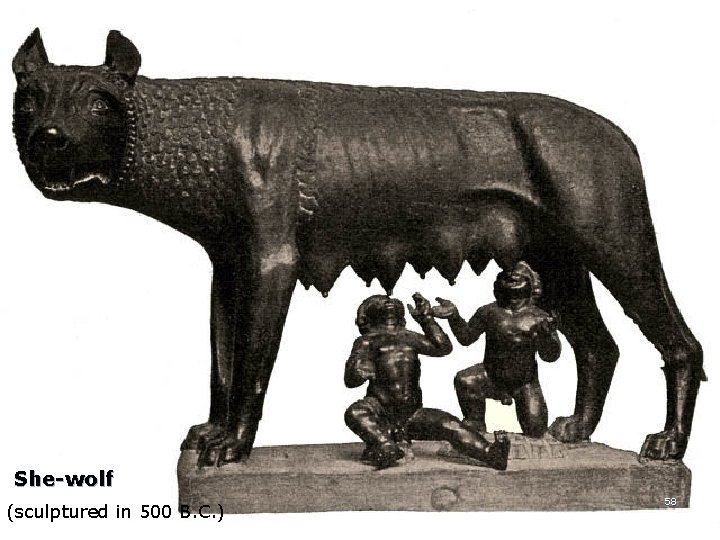
Architecture, Painting & Sculpture n Sculpture Constantine the Great Spoils from the Temple in Jerusalem She-wolf 56
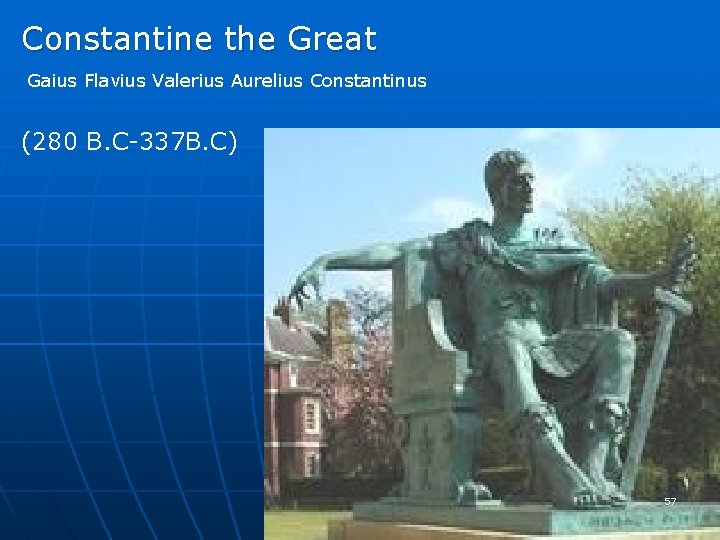
Constantine the Great Gaius Flavius Valerius Aurelius Constantinus (280 B. C-337 B. C) 57
She-wolf (sculptured in 500 B. C. ) 58
Questions for revision n n P 36 1. 2. 6. 7. 8. 9 P 49 1. 2. 3. 9 59
P 36 1. What are the major elements in European culture? n the Greco-Roman element n the Judeo-Christian element 60
P 36 2. What were the main features of ancient Greek society? n democracy (adult male citizens) n economy (slave labour) n social problem (exploitation) n entertainment (sports) 61
P 36 6. Would you say that philosophy was highly developed then? Who were the major philosophers? n No. (idealism, simple materialism or metaphysics) n Socrates, Plato and Aristotle 62
P 36 7. Did Socrates write any book? How then do we know about him? What distinguished his philosophy? n No. n through Dialogue written by Plato n asking and answering questions; dissecting the answers; the dialectical method 63
P 36 8. Tell some of Plato’s ideas. Why do people call him an idealist? n general ideas: beauty, truth, goodness n …for the things which are seen are temporal, but the things which are not seen are eternal. 64
P 36 9. In what important ways was Aristotle different from Plato? What are some of Aristotle’s works that are still influential today? direct observation of nature, theory should follow fact (subjective thinking); “idea” and matter together made individual realities (ideas had higher reality); happiness is the aim of life (happiness is in a vulgar and low sense). n Ethics, Politics, Poetics & Rhetoric n 65
P 49 1. What did the Romans have in common with the Greeks? And what was the chief difference between them? n the citizen-assembly, religion, Indo. European language n difference: Roman empire 66
P 49 2. Explain Pax Romana n the year 27 B. C. , Octavius took supreme power n 2 century later, …reached its greatest extent (a strong army, an influential bureaucracy) 67
P 49 3. What contribution did the Romans make to the rule of law? n In Roman’s earliest stage: patricians n The 3 rd century B. C. : Plebeian n The law was codified (the core of modern civil and commercial law) 68
P 49 9. What is the chief Roman achievement in architecture? Give some examples. n roads, bridges, aqueducts & arenas n the pantheon, Pont du Gard, the Colosseum 69
Topics for discussion and writing n n Discuss the relationship between Greek and Roman culture. Analyze the factors that resulted in the decline of the Western Roman Empire. 70
Thanks! 71