
The Changing Landscape Dr Carrie Pucko and Dr

- Slides: 21
The Changing Landscape Dr. Carrie Pucko and Dr. Ken Tabbutt
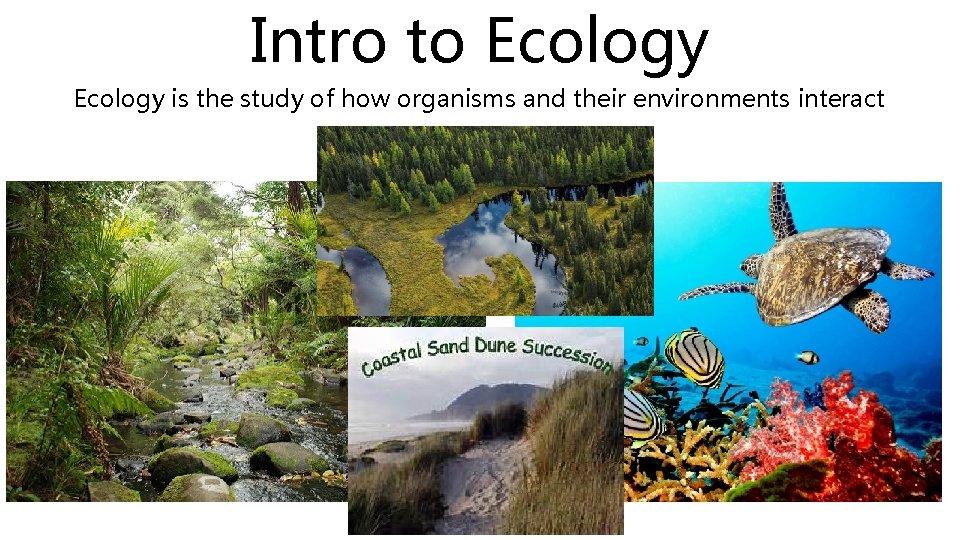
Intro to Ecology is the study of how organisms and their environments interact
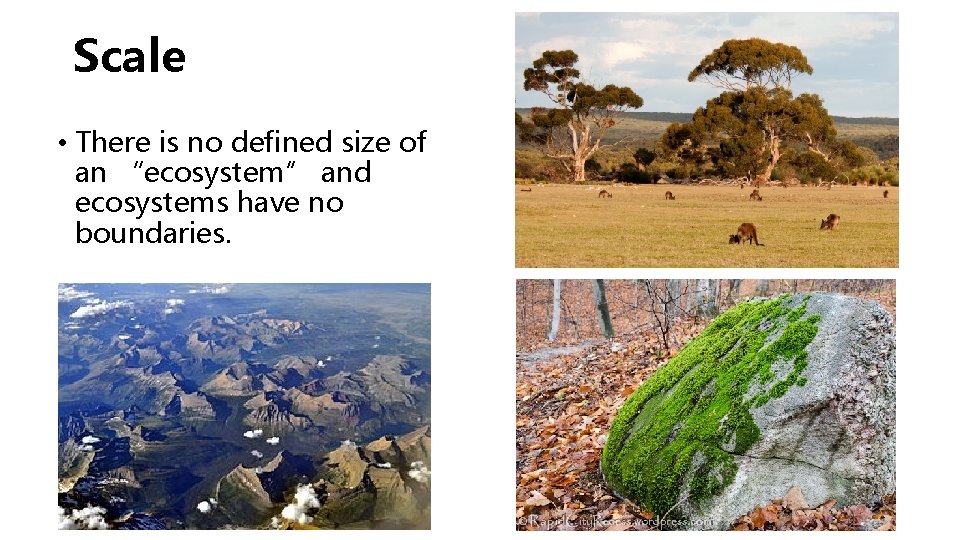
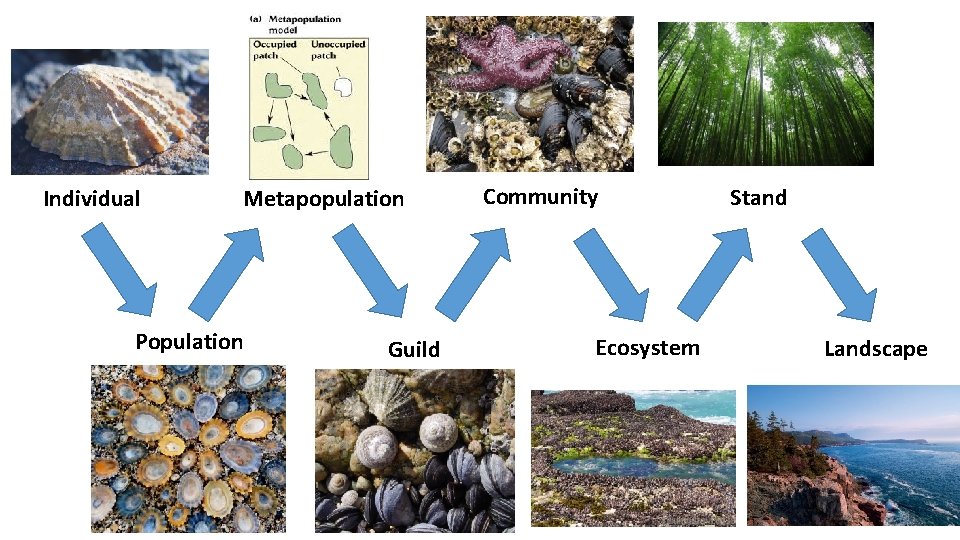
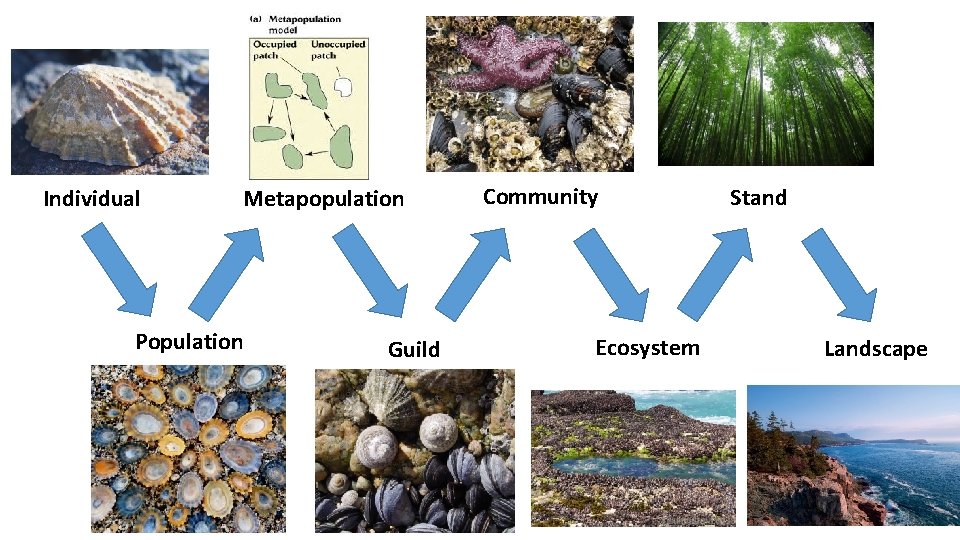
Scale • There is no defined size of an “ecosystem” and ecosystems have no boundaries.
Ecosystems are defined by: Environment Organisms • Climate • Biodiversity • Geology • Species Interactions • Disturbance • Distribution and Quantity of Individual Species or Groups of Species • Precipitation, temperature, timing of events • Bedrock, physical features, hydrology • Natural, human, large- and small-scale, recurrence
Individual Metapopulation Population Guild Community Ecosystem Stand Landscape
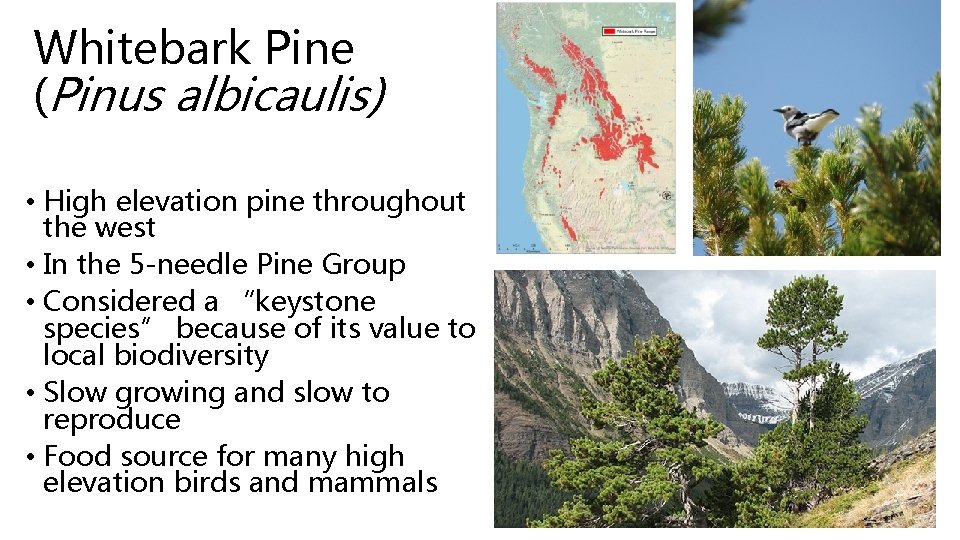
Whitebark Pine (Pinus albicaulis) • High elevation pine throughout the west • In the 5 -needle Pine Group • Considered a “keystone species” because of its value to local biodiversity • Slow growing and slow to reproduce • Food source for many high elevation birds and mammals
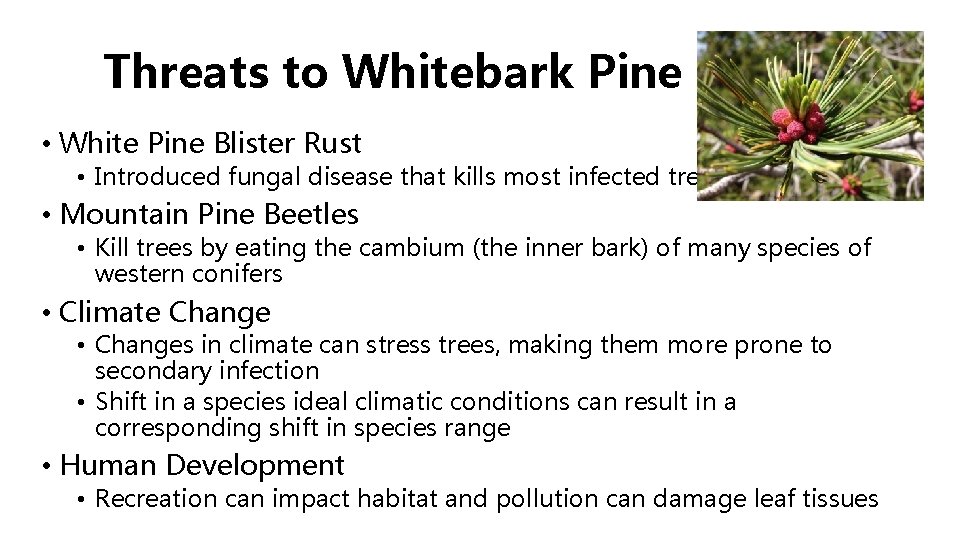
Threats to Whitebark Pine • White Pine Blister Rust • Introduced fungal disease that kills most infected trees • Mountain Pine Beetles • Kill trees by eating the cambium (the inner bark) of many species of western conifers • Climate Change • Changes in climate can stress trees, making them more prone to secondary infection • Shift in a species ideal climatic conditions can result in a corresponding shift in species range • Human Development • Recreation can impact habitat and pollution can damage leaf tissues
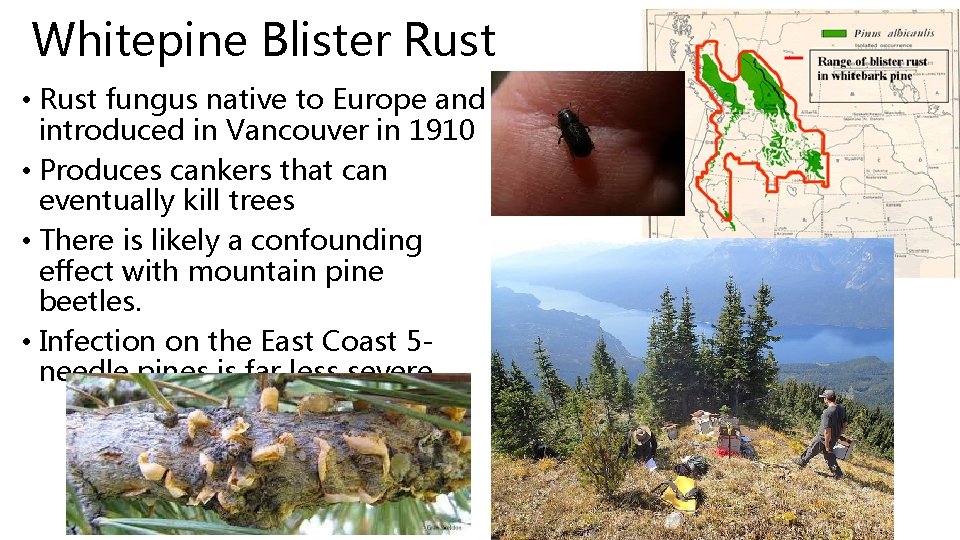
Whitepine Blister Rust • Rust fungus native to Europe and introduced in Vancouver in 1910 • Produces cankers that can eventually kill trees • There is likely a confounding effect with mountain pine beetles. • Infection on the East Coast 5 needle pines is far less severe
Individual Metapopulation Population Guild Community Ecosystem Stand Landscape
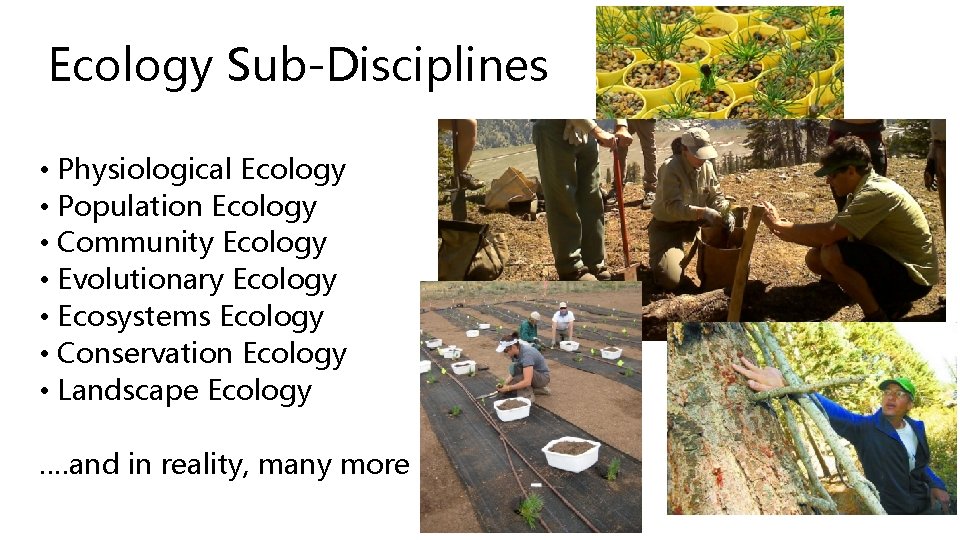
Ecology Sub-Disciplines • Physiological Ecology • Population Ecology • Community Ecology • Evolutionary Ecology • Ecosystems Ecology • Conservation Ecology • Landscape Ecology …. and in reality, many more
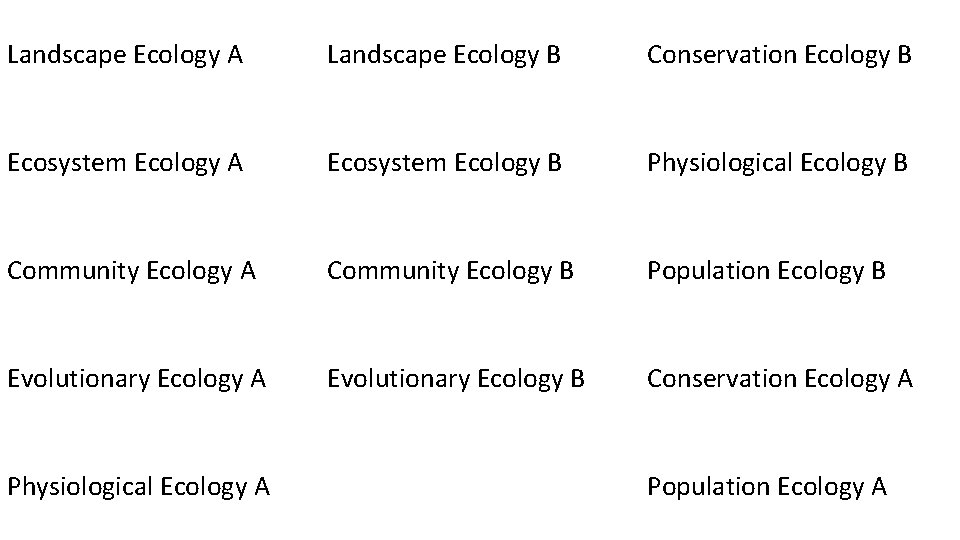
Ecologist Convention • You will be given a piece of paper that tells you what type of ecologist you are going to be for the next half hour. (Ex. Landscape Ecologist A) • You will be working in groups of 3 – 4 to come up with questions that you might try to answer regarding the Whitebark Pine that pertain to your sub-discipline. • Then we will hear from each super-group (A and B combined) about your specific type of ecology and what each type of ecologist might focus on.
Physiological Ecology • Physiological ecology is he study of how environmental factors influence the physiology of organisms. These scientists might study the way in which a coldblooded animal such as a lizard controls its body temperature in daytime heat and the cold desert night. Or they might try to understand how light is captured by different shaped leaves in the rainforest.
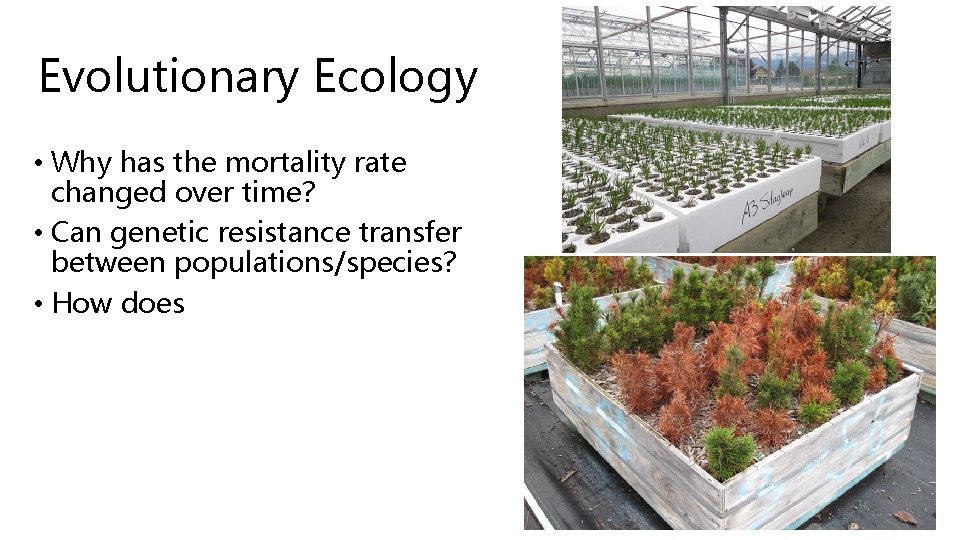
Evolutionary Ecology • Why has the mortality rate changed over time? • Can genetic resistance transfer between populations/species? • How does
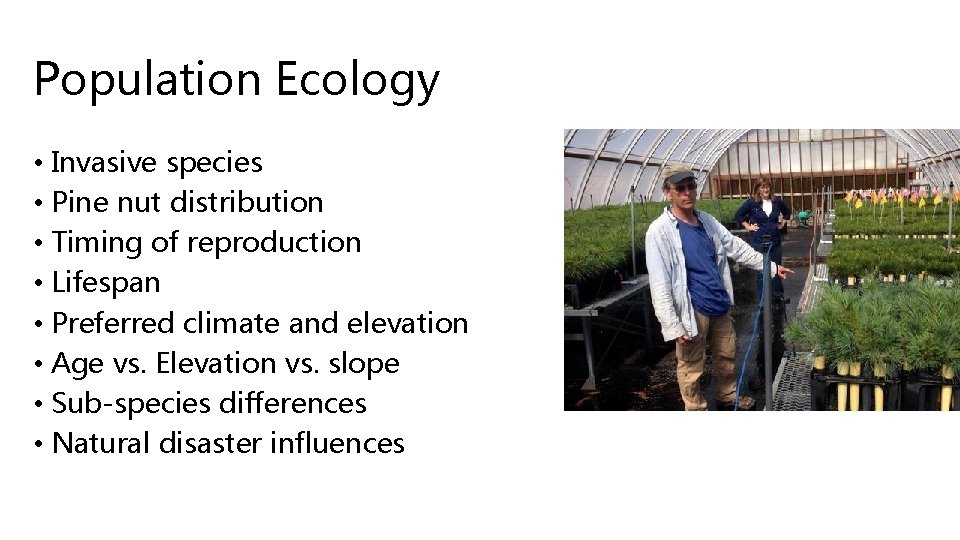
Population Ecology • Invasive species • Pine nut distribution • Timing of reproduction • Lifespan • Preferred climate and elevation • Age vs. Elevation vs. slope • Sub-species differences • Natural disaster influences
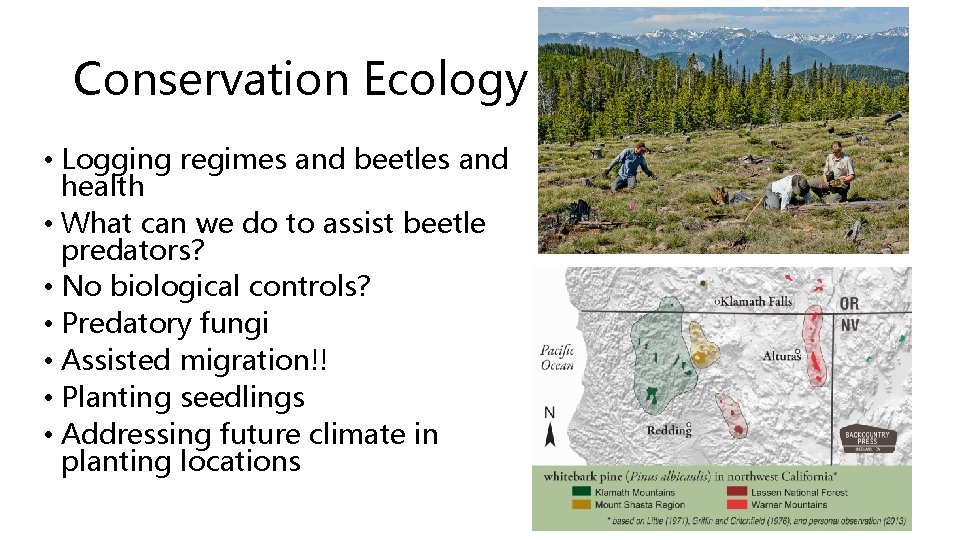
Conservation Ecology • Logging regimes and beetles and health • What can we do to assist beetle predators? • No biological controls? • Predatory fungi • Assisted migration!! • Planting seedlings • Addressing future climate in planting locations
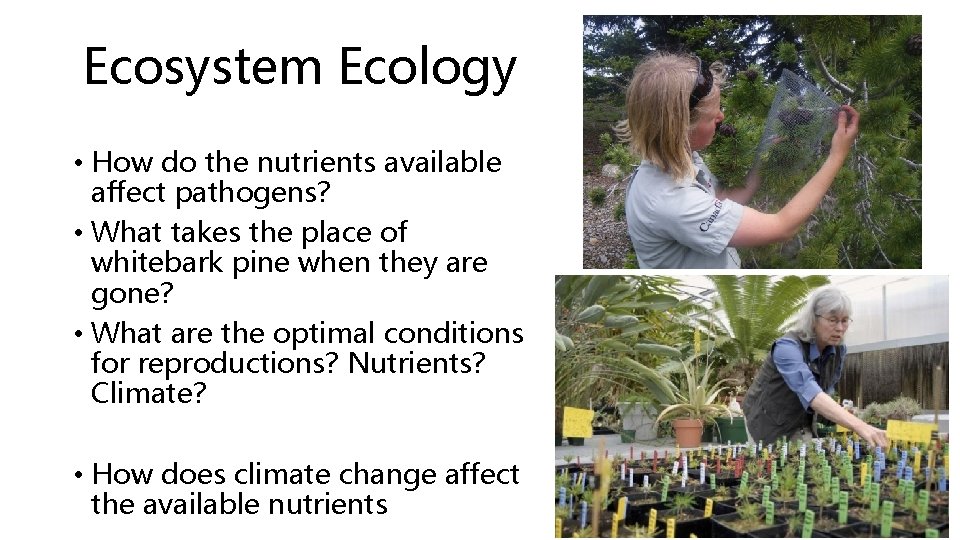
Ecosystem Ecology • How do the nutrients available affect pathogens? • What takes the place of whitebark pine when they are gone? • What are the optimal conditions for reproductions? Nutrients? Climate? • How does climate change affect the available nutrients
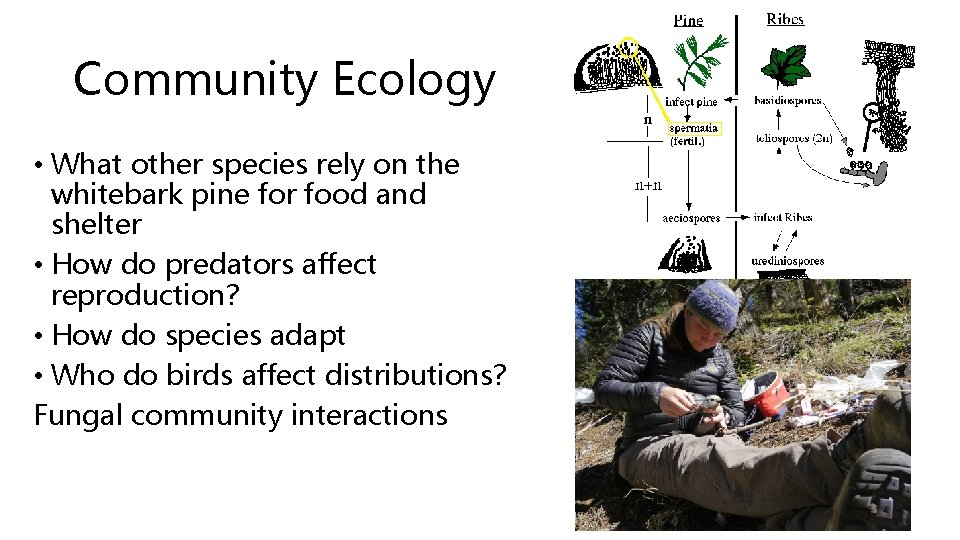
Community Ecology • What other species rely on the whitebark pine for food and shelter • How do predators affect reproduction? • How do species adapt • Who do birds affect distributions? Fungal community interactions
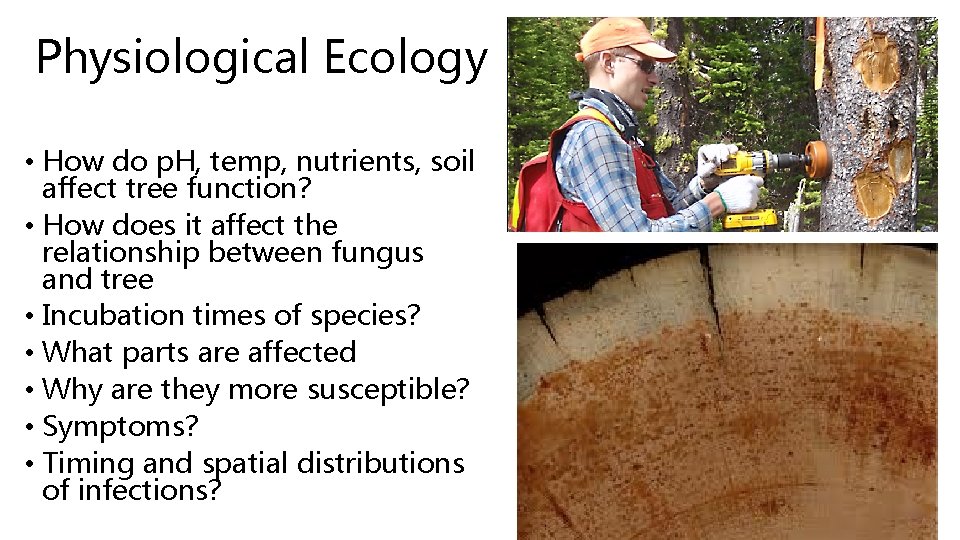
Physiological Ecology • How do p. H, temp, nutrients, soil affect tree function? • How does it affect the relationship between fungus and tree • Incubation times of species? • What parts are affected • Why are they more susceptible? • Symptoms? • Timing and spatial distributions of infections?
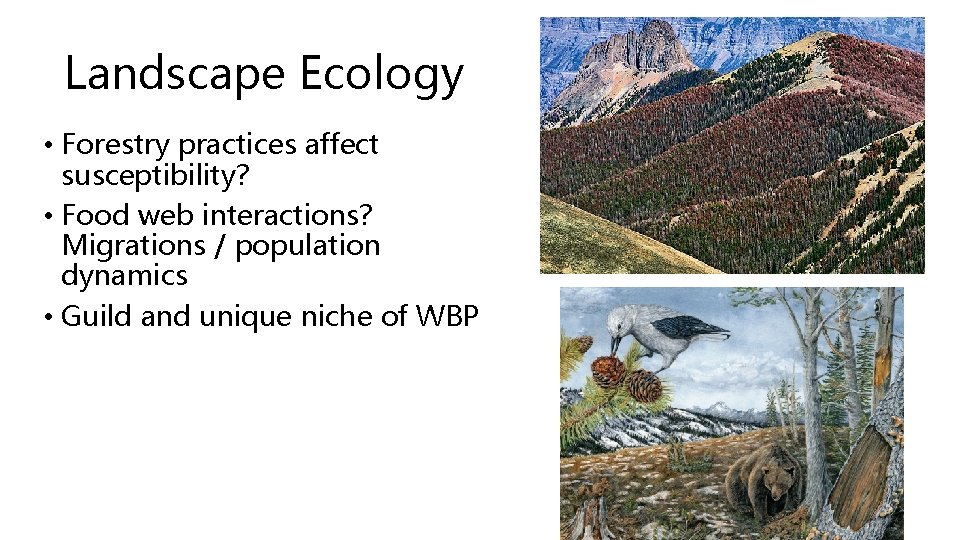
Landscape Ecology • Forestry practices affect susceptibility? • Food web interactions? Migrations / population dynamics • Guild and unique niche of WBP
Basic Tree ID
Landscape Ecology A Landscape Ecology B Conservation Ecology B Ecosystem Ecology A Ecosystem Ecology B Physiological Ecology B Community Ecology A Community Ecology B Population Ecology B Evolutionary Ecology A Evolutionary Ecology B Conservation Ecology A Physiological Ecology A Population Ecology A