
Chinese Dynasties Song Shang Zhou Qin Han Sui


- Slides: 33
Chinese Dynasties Song Shang, Zhou, Qin, Han Sui, Tang, Song Yuan, Ming, Qing, Republic Mao and Deng Communist China Mao and Deng
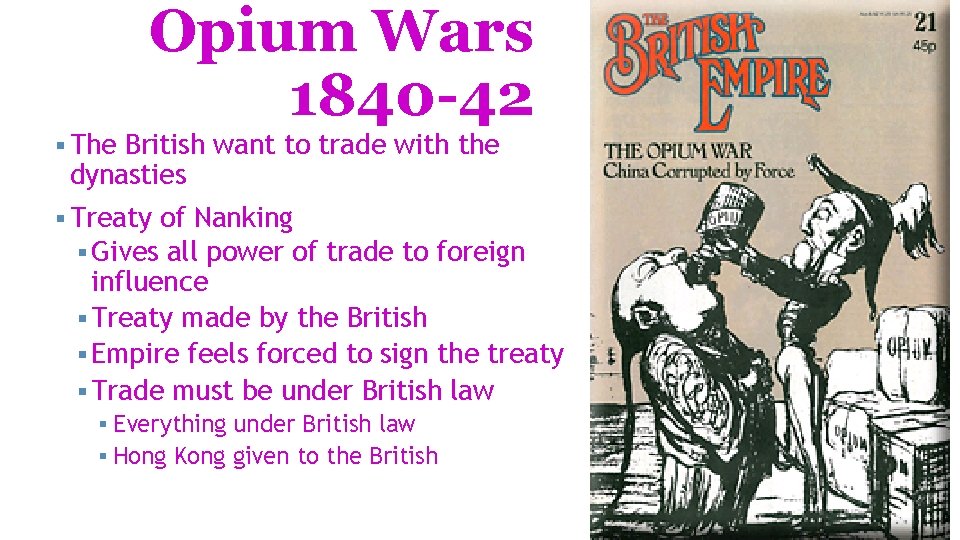
Opium Wars 1840 -42 § The British want to trade with the dynasties § Treaty of Nanking § Gives all power of trade to foreign influence § Treaty made by the British § Empire feels forced to sign the treaty § Trade must be under British law § Everything under British law § Hong Kong given to the British
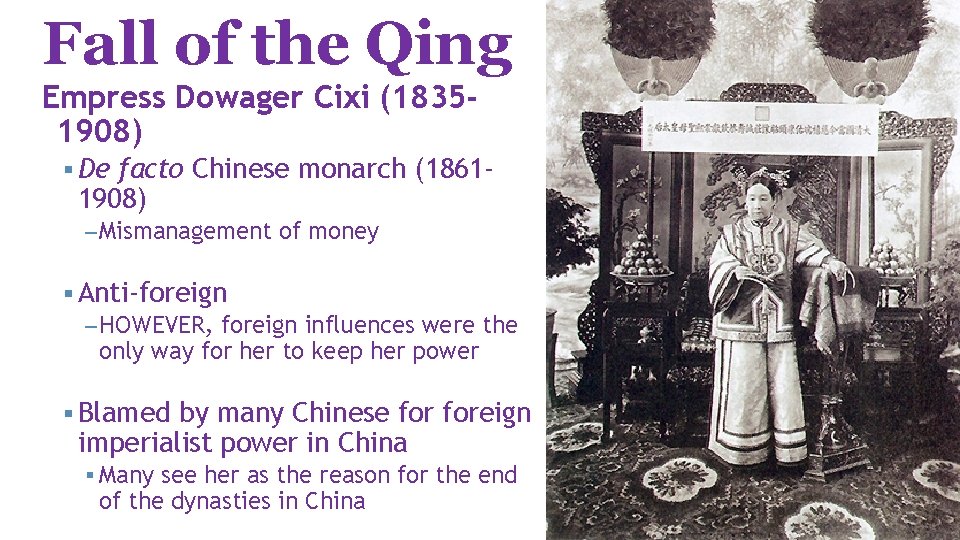
Fall of the Qing Empress Dowager Cixi (18351908) § De facto Chinese monarch (1861 - 1908) – Mismanagement of money § Anti-foreign – HOWEVER, foreign influences were the only way for her to keep her power § Blamed by many Chinese foreign imperialist power in China § Many see her as the reason for the end of the dynasties in China
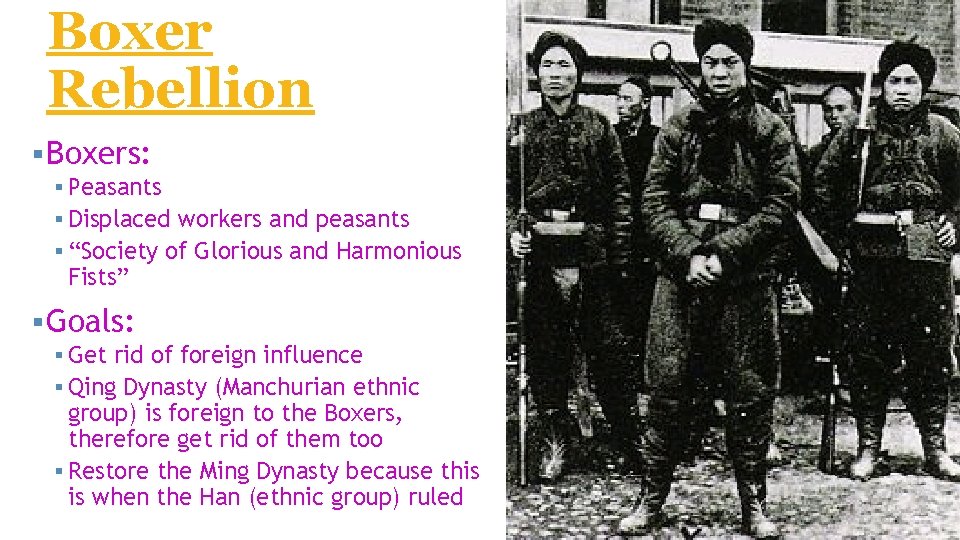
Boxer Rebellion § Boxers: § Peasants § Displaced workers and peasants § “Society of Glorious and Harmonious Fists” § Goals: § Get rid of foreign influence § Qing Dynasty (Manchurian ethnic group) is foreign to the Boxers, therefore get rid of them too § Restore the Ming Dynasty because this is when the Han (ethnic group) ruled
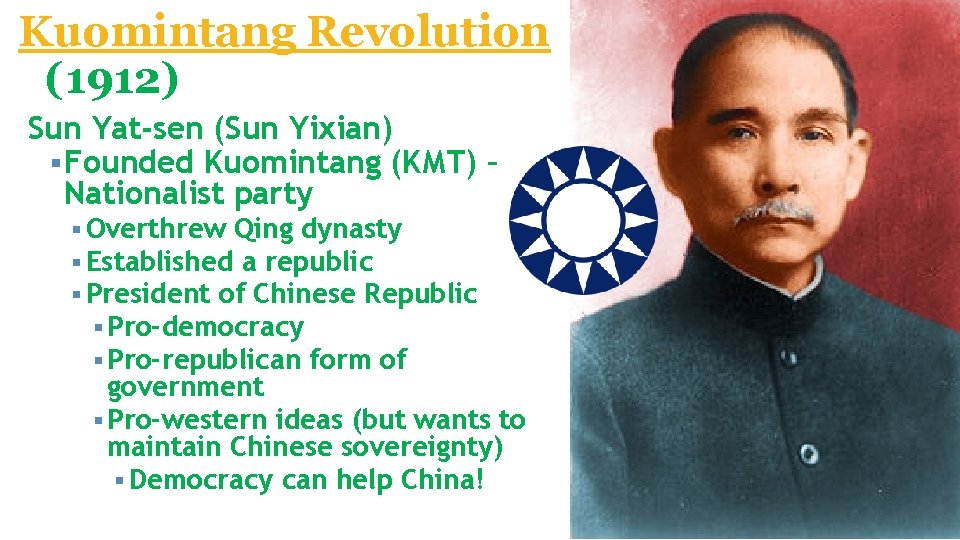
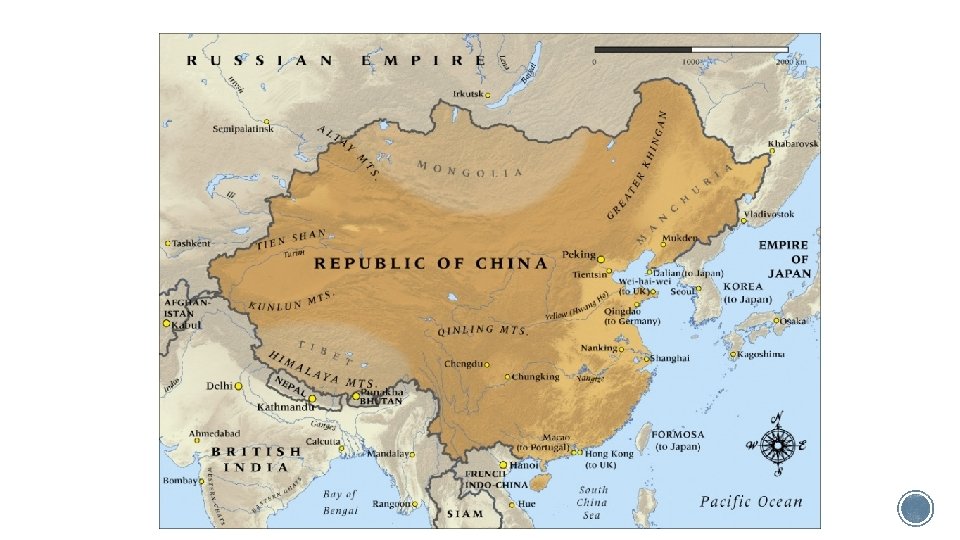
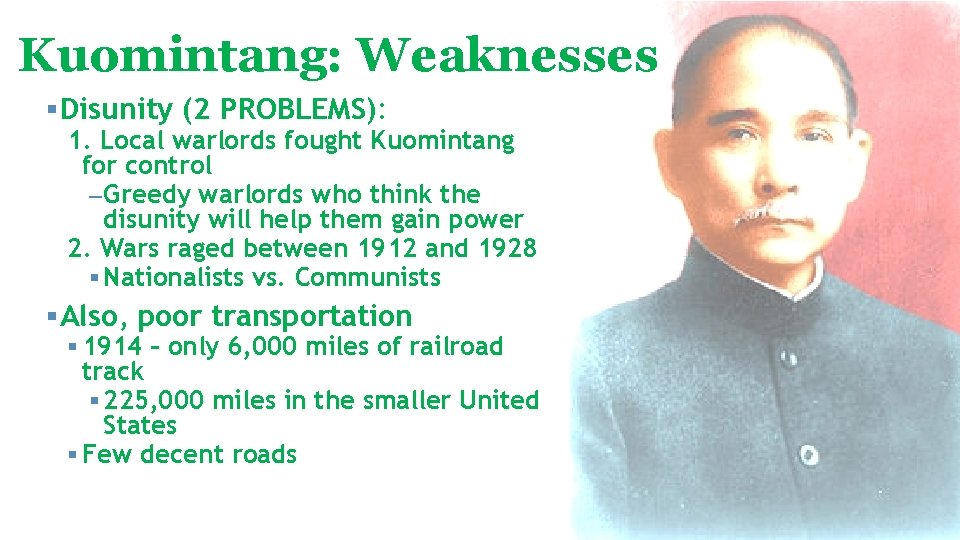
Kuomintang Revolution (1912) Sun Yat-sen (Sun Yixian) § Founded Kuomintang (KMT) – Nationalist party § Overthrew Qing dynasty § Established a republic § President of Chinese Republic § Pro-democracy § Pro-republican form of government § Pro-western ideas (but wants to maintain Chinese sovereignty) § Democracy can help China!
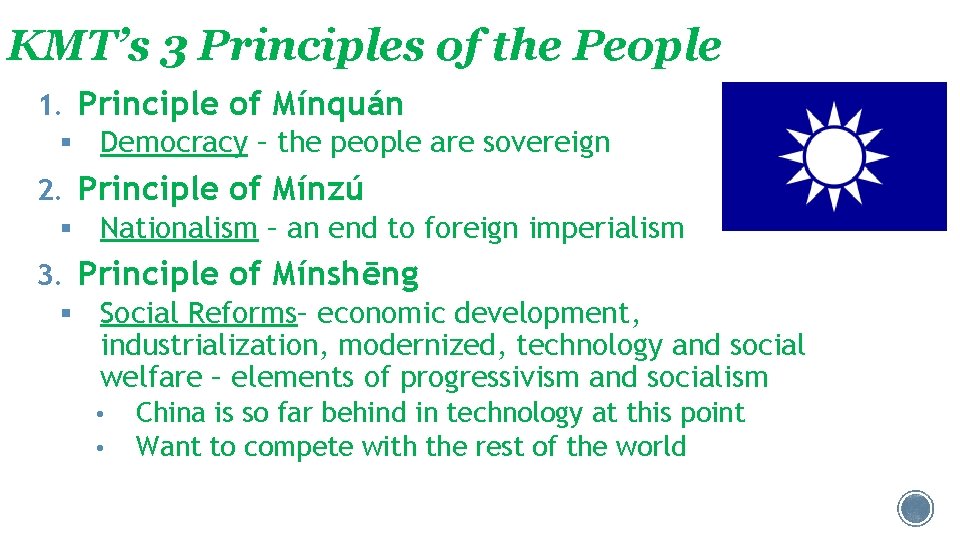
KMT’s 3 Principles of the People 1. Principle of Mínquán § Democracy – the people are sovereign 2. Principle of Mínzú § Nationalism – an end to foreign imperialism 3. Principle of Mínshēng § Social Reforms– economic development, industrialization, modernized, technology and social welfare – elements of progressivism and socialism • China is so far behind in technology at this point • Want to compete with the rest of the world
Kuomintang: Weaknesses § Disunity (2 PROBLEMS): 1. Local warlords fought Kuomintang for control – Greedy warlords who think the disunity will help them gain power 2. Wars raged between 1912 and 1928 § Nationalists vs. Communists § Also, poor transportation § 1914 – only 6, 000 miles of railroad track § 225, 000 miles in the smaller United States § Few decent roads
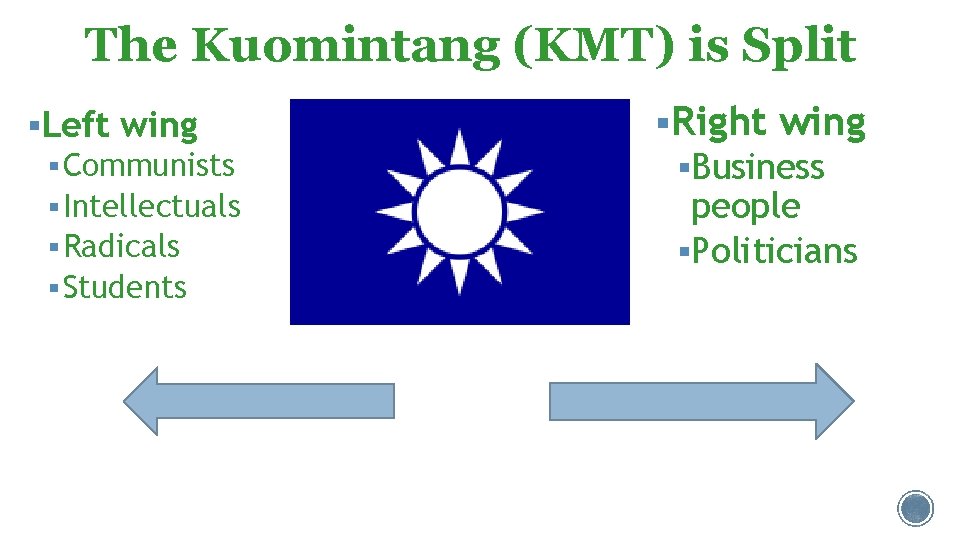
The Kuomintang (KMT) is Split §Left wing § Communists § Intellectuals § Radicals § Students §Right wing §Business people §Politicians
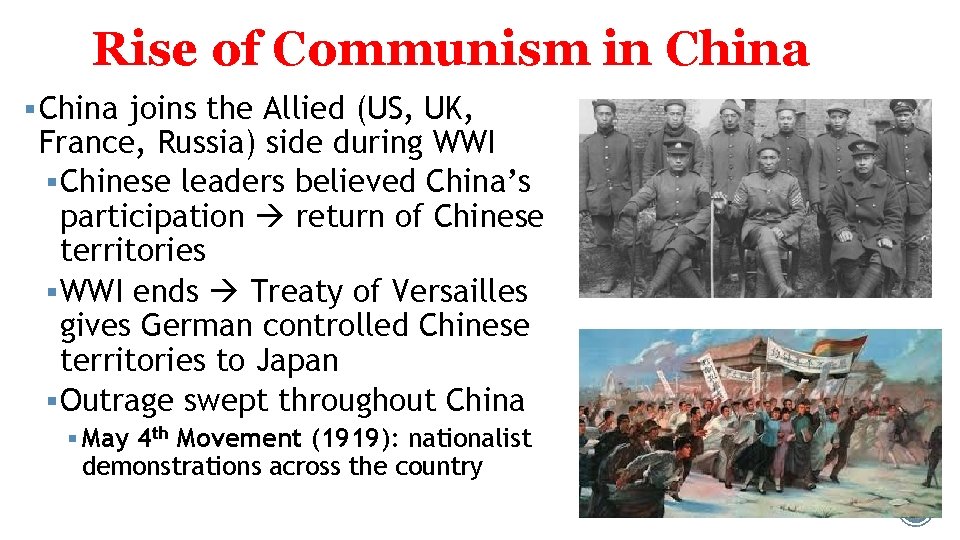
Rise of Communism in China § China joins the Allied (US, UK, France, Russia) side during WWI § Chinese leaders believed China’s participation return of Chinese territories § WWI ends Treaty of Versailles gives German controlled Chinese territories to Japan § Outrage swept throughout China § May 4 th Movement (1919): nationalist demonstrations across the country
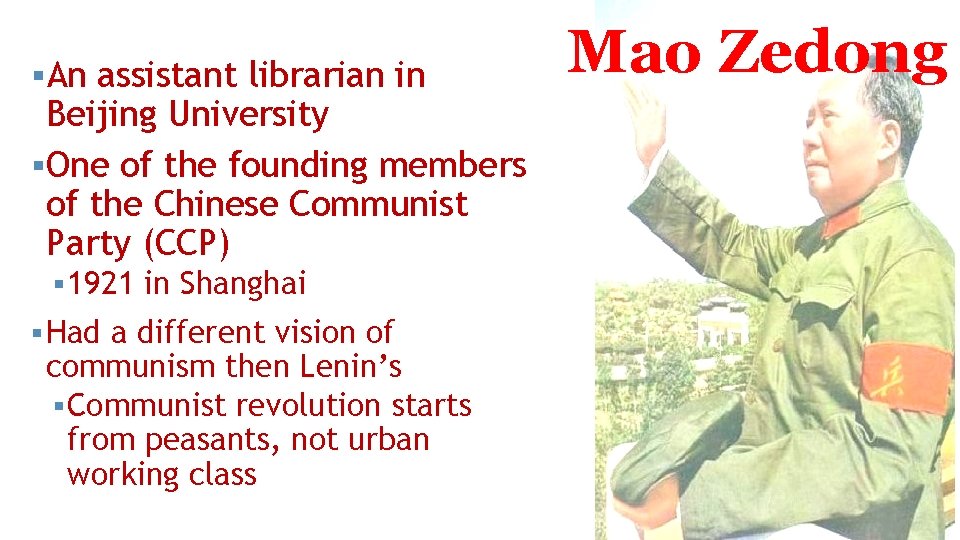
§An assistant librarian in Beijing University §One of the founding members of the Chinese Communist Party (CCP) § 1921 in Shanghai § Had a different vision of communism then Lenin’s § Communist revolution starts from peasants, not urban working class Mao Zedong
Clear tables, pen/pencil, testing folders Homework: (both due Friday) § SS: Global Conflict Paper § Agenda: § LA: “The Balcony Scene’ 2. 2 Analytical Paragraph § After reading ‘The Balcony Scene, ’ write an analytical paragraph answering the following prompt: Is this true love, or infatuation between Romeo and Juliet? This is a formal, analytical writing assignment. Your paragraph must contain a thesis statement, evidence (at least 2 quotes from the text incorporated into complete sentences with context and citation), analysis and a concluding sentence. § R & J Act 1 Quiz § Modern China
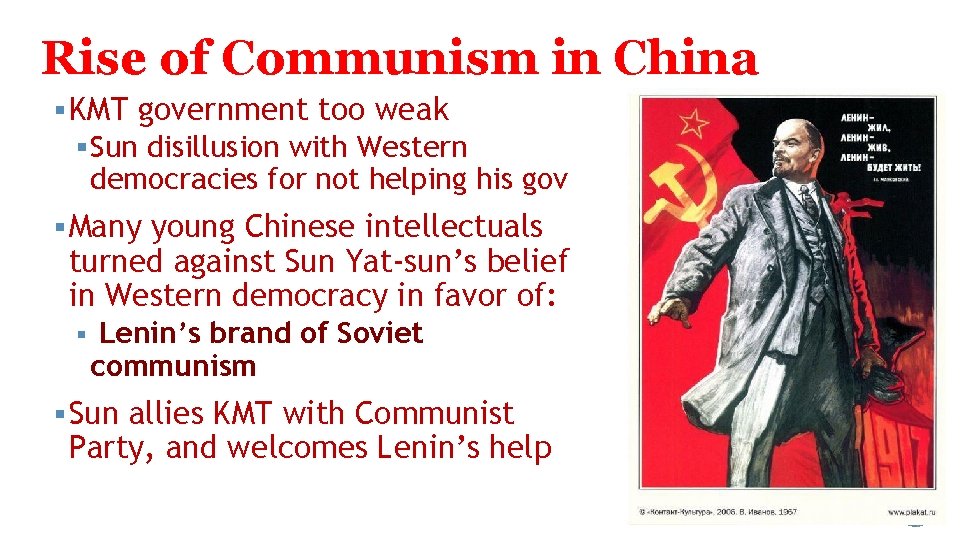
Rise of Communism in China § KMT government too weak § Sun disillusion with Western democracies for not helping his gov § Many young Chinese intellectuals turned against Sun Yat-sun’s belief in Western democracy in favor of: § Lenin’s brand of Soviet communism § Sun allies KMT with Communist Party, and welcomes Lenin’s help
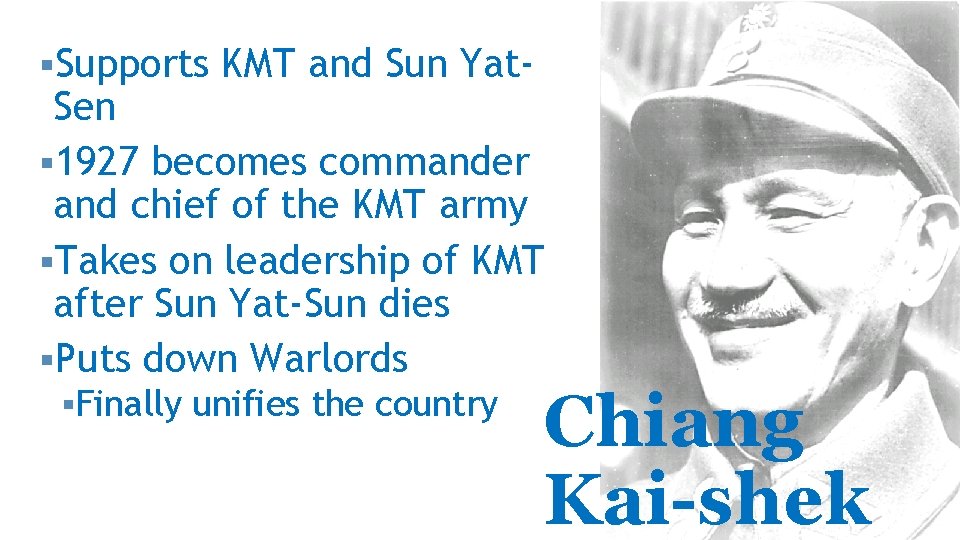
§Supports KMT and Sun Yat- Sen § 1927 becomes commander and chief of the KMT army §Takes on leadership of KMT after Sun Yat-Sun dies §Puts down Warlords §Finally unifies the country Chiang Kai-shek
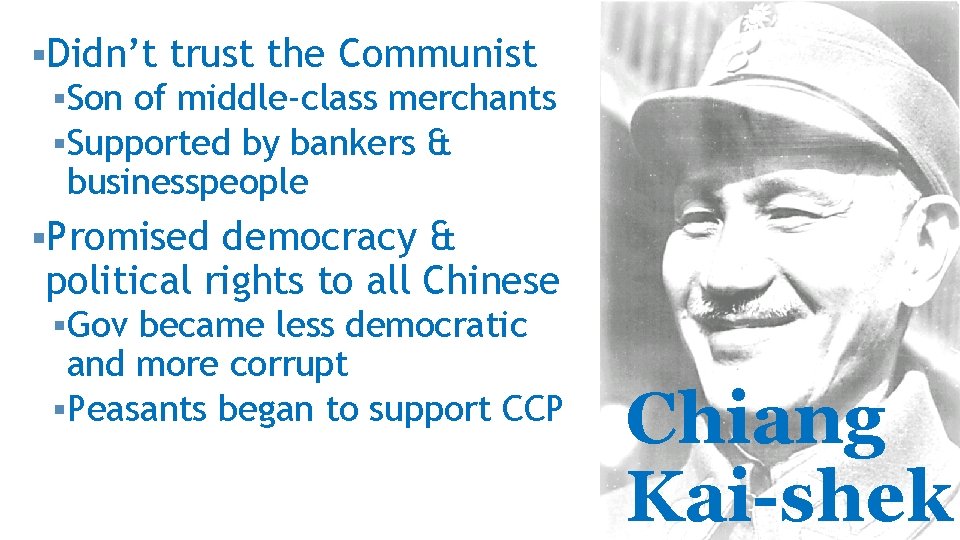
§Didn’t trust the Communist §Son of middle-class merchants §Supported by bankers & businesspeople §Promised democracy & political rights to all Chinese §Gov became less democratic and more corrupt §Peasants began to support CCP Chiang Kai-shek
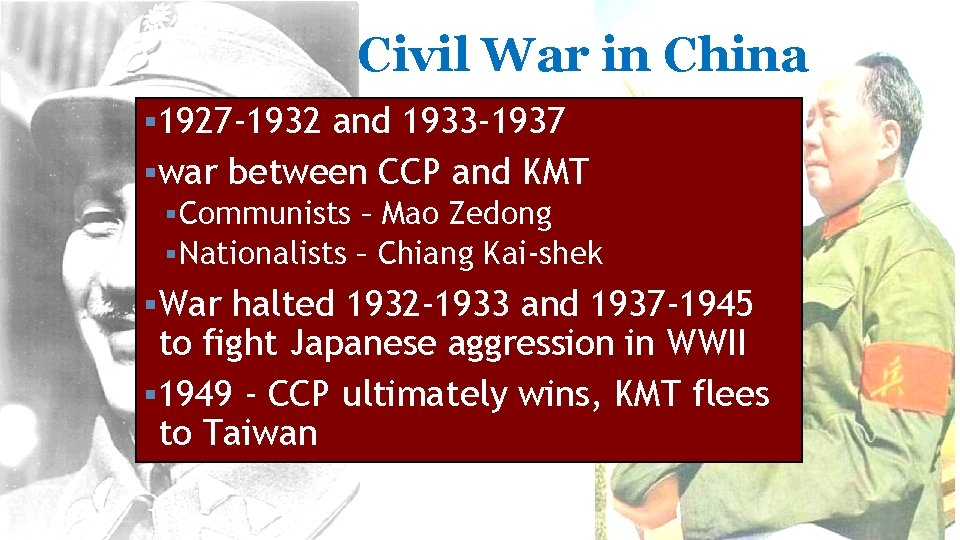
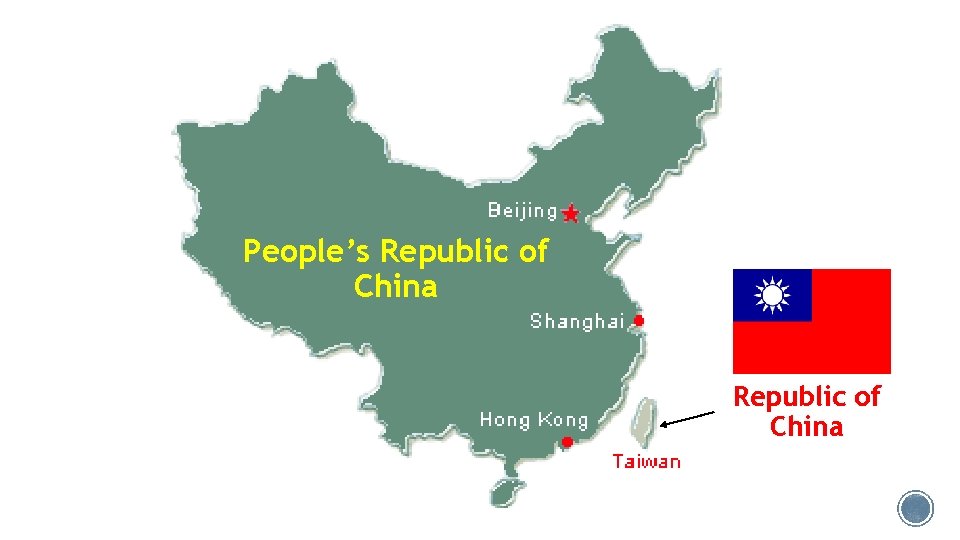
Civil War in China § 1927 -1932 and 1933 -1937 §war between CCP and KMT § Communists – Mao Zedong § Nationalists – Chiang Kai-shek §War halted 1932 -1933 and 1937 -1945 to fight Japanese aggression in WWII § 1949 - CCP ultimately wins, KMT flees to Taiwan
People’s Republic of China
§ https: //youtu. be/4 srw. Sk. D 05 ws
§ 1953 -1957: Mao’s first 5 Year Plan §Soviet influence §Killed landlords & divide land among peasants §Collectivism – farms owned by gov’t & ran by hundreds of families §Focused on expanding industry §Relatively successful
§ 1958 -1962: The Great Leap Forward (second 5 Year Plan) § Collective farms turned in massive communes § Everything done in community (working, eating, sleeping, child rearing) § Homemade steel production BIGGEST FAIL § Triggered massive family (20 mill died) – too busy making steel to farm § State owned enterprises little incentive to be efficient § Mao refused to accept responsibility for failure § Blamed peasants (hoarding food) § Blamed local officials (incompetence) § Blamed bad weather (affected harvests)
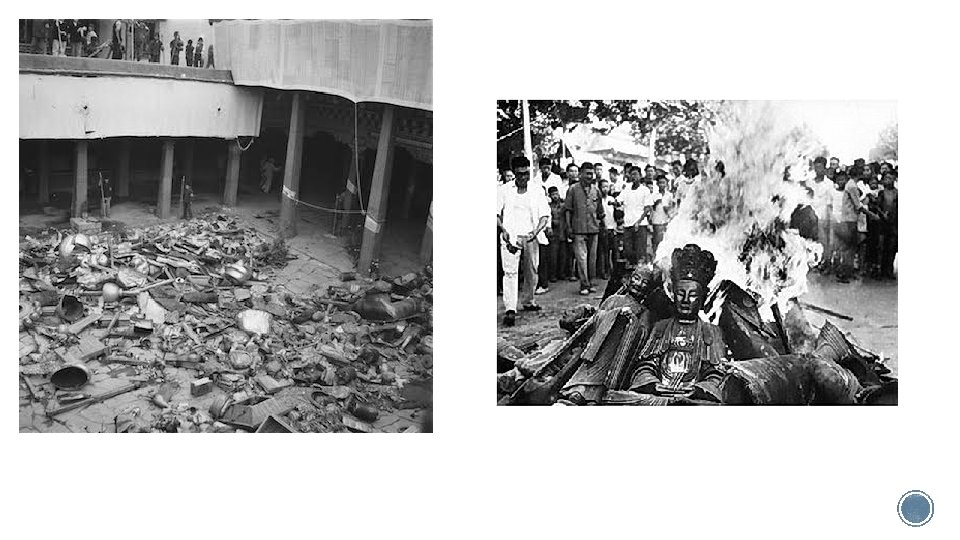
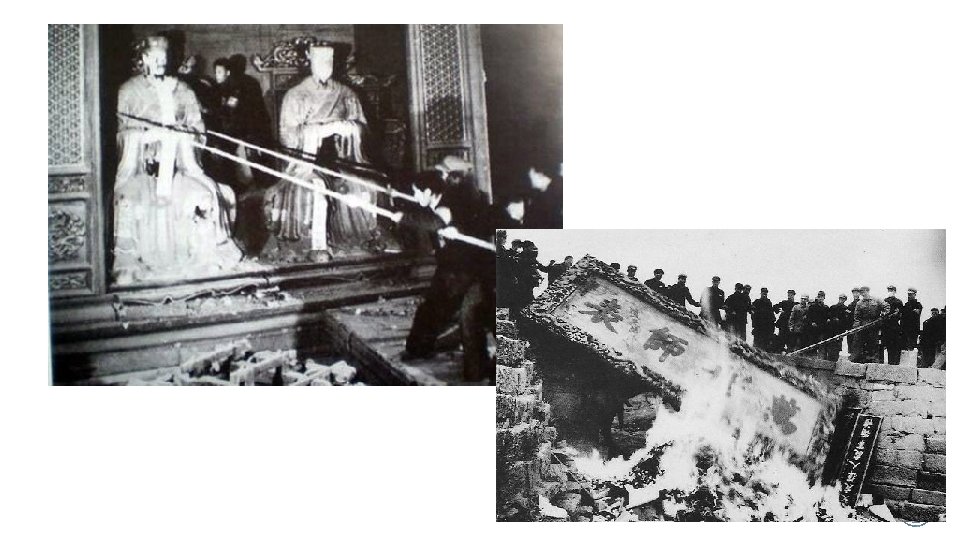
§ 1966 – 1976: Cultural Revolution § Mao sees weakening of socialist ideals urge youth to revolt § Students leave school from Red Guard § Mao seeks to reassert dominance by eliminating oppositions § Claims more books read, the more unintelligent you are and seeks to re-educate youth § Teens sent to farmland to be “re-educated” by peasants/ farmers § 130 million stopped attending school § Economy collapsed § Denounces the 4 olds: ideas, customs, habits, culture § Mao dies in 1976
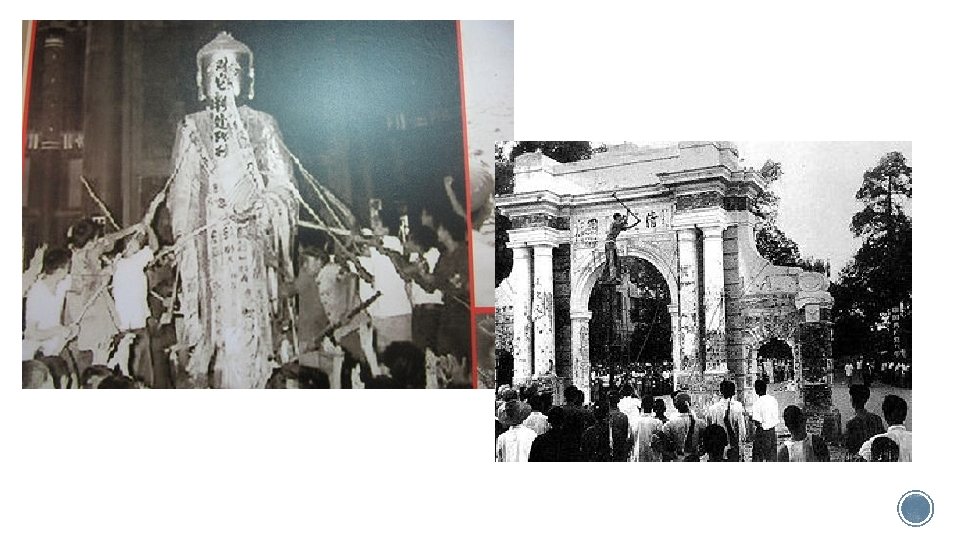
Cultural Revolution § Values of proletarian society (class of wage-earners) § Religion was attacked as one of the “four olds” § Replace religion with loyalty to party (Maoism) § Doctors targeted for bourgeois lifestyle, damaging healthcare § IMPACT: Thousands of years of Chinese culture/history lost § Books burned because deemed politically incorrect § Only literature, art and media that promoted Chinese themes= allowed § Artists resisted= sent to labor camps for “reeducation” § People too afraid to resist destruction of traditional culture
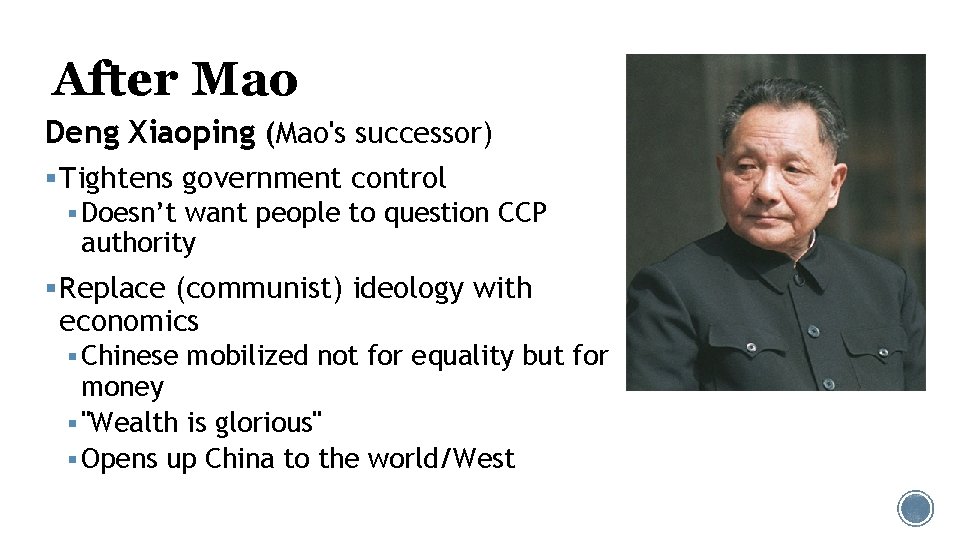
After Mao Deng Xiaoping (Mao's successor) § Tightens government control § Doesn’t want people to question CCP authority § Replace (communist) ideology with economics § Chinese mobilized not for equality but for money § "Wealth is glorious" § Opens up China to the world/West
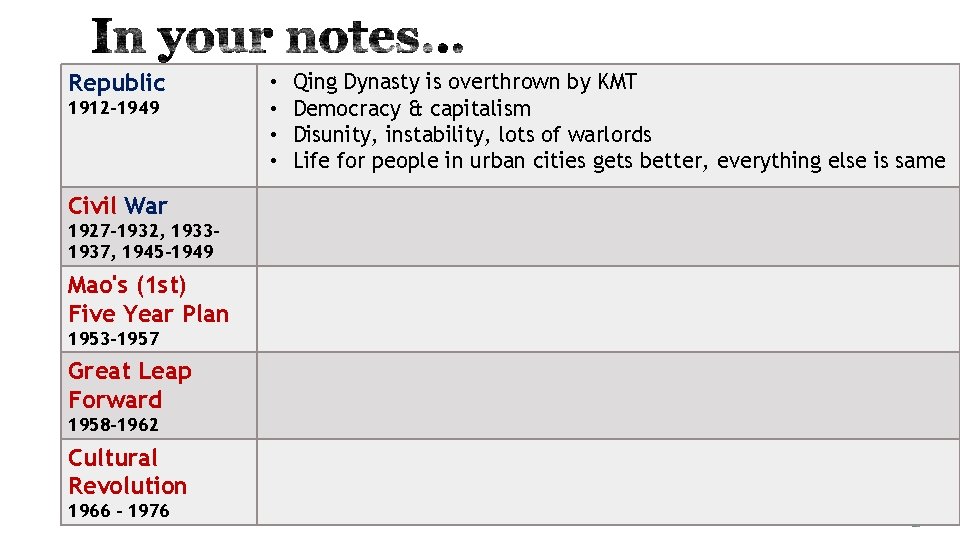
Republic 1912 -1949 Civil War 1927 -1932, 19331937, 1945 -1949 Mao's (1 st) Five Year Plan 1953 -1957 Great Leap Forward 1958 -1962 Cultural Revolution 1966 – 1976 • • Qing Dynasty is overthrown by KMT Democracy & capitalism Disunity, instability, lots of warlords Life for people in urban cities gets better, everything else is same
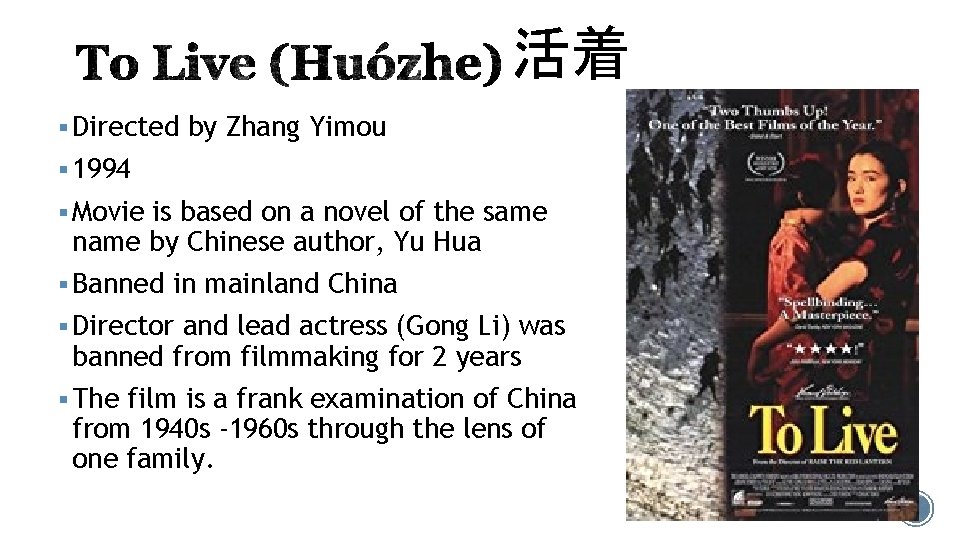
活着 § Directed by Zhang Yimou § 1994 § Movie is based on a novel of the same name by Chinese author, Yu Hua § Banned in mainland China § Director and lead actress (Gong Li) was banned from filmmaking for 2 years § The film is a frank examination of China from 1940 s -1960 s through the lens of one family.
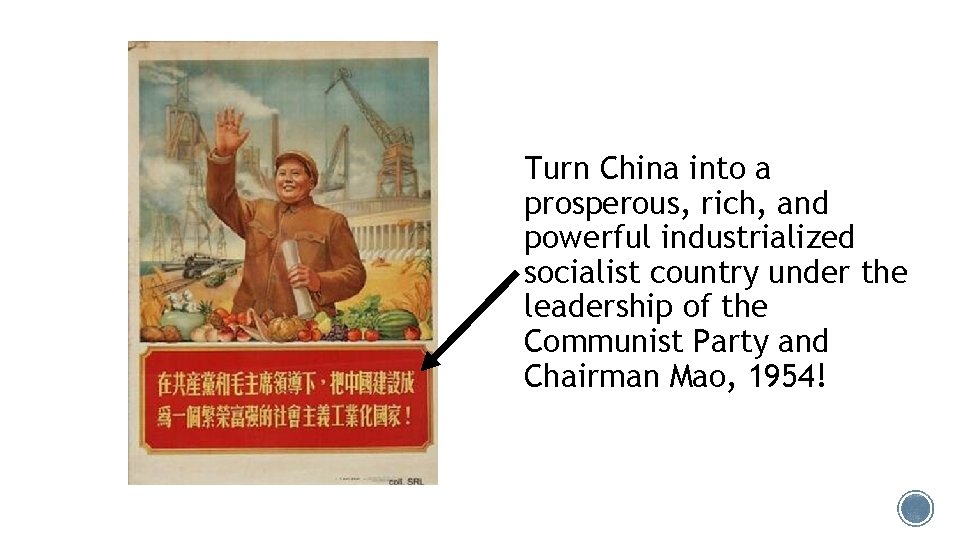
Turn China into a prosperous, rich, and powerful industrialized socialist country under the leadership of the Communist Party and Chairman Mao, 1954!
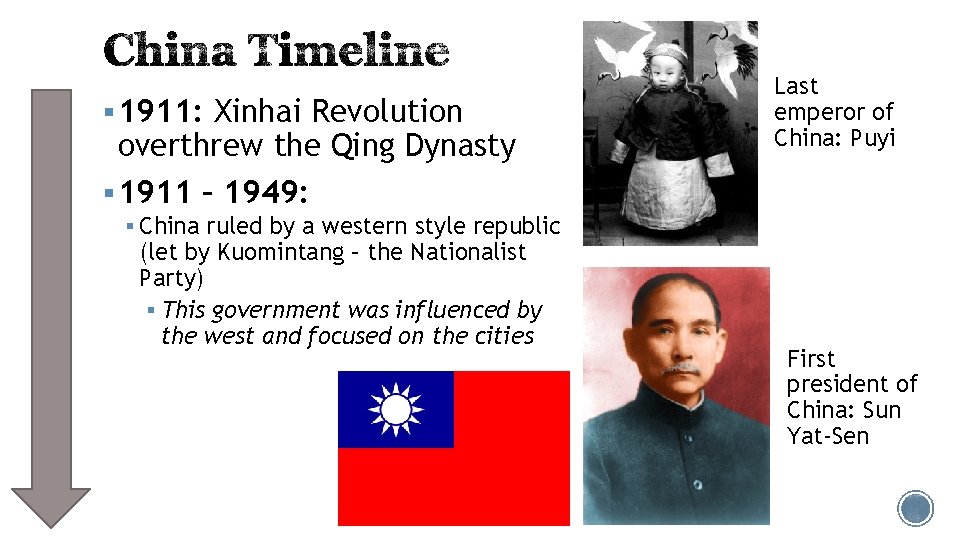
§ 1911: Xinhai Revolution overthrew the Qing Dynasty § 1911 – 1949: Last emperor of China: Puyi § China ruled by a western style republic (let by Kuomintang – the Nationalist Party) § This government was influenced by the west and focused on the cities First president of China: Sun Yat-Sen
§ 1921: Chinese Communist Party (CCP) founded § 1927: Communists forced out of cities. Begin to influence the peasants on the countryside § 1937 – 1945: During WW 2: hostility between Kuomintang and CCP put on hold § CCP is seen as better at fighting the Japanese § CCP controls territory in the countryside where they help peasants & fight imperialist Japan § 1949 CCP has enough support to take over the government, the Koumingtang flees to Taiwan