
Cracked Ribs and Sucking Holes Carrie Valdez MD
Cracked Ribs and Sucking Holes Carrie Valdez, MD Trauma and Acute Care Surgeon, Covenant Hospital carrievaldezmd@gmail. com 248 -390 -5864 cell
Pre-hospital • 35 F MVC- unrestrained, single passenger, head-on into tree • EMS • On scene, GCS 15 • Vitals stable and normal • Transferred to Critical Access Hospital • Diagnosis • Liver laceration, R acetabulum fx, scalp lac, rib fractures, R foot laceration • Transfer to Covenant Hospital- Level 2 trauma center
Transfer • Arrival: • afebrile, BP 161/89, HR 81, O 2 sat 96% on 4 L NC, RR 28 • Labs: • H/H 13/39 • Et. OH 0 (per pt, drank 5 beers over 7 hours prior to MVA) • Imaging reviewed- appropriate care at OSH • Transferred to NTICU • Dr. Valdez, critical care consultation • Dr. Tucker, orthopedic consultation
Cracked Ribs
Rib fractures- how can they kill you? Respiratory failure Pneumothorax (rare) Pain and progressive loss of tidal volume Paradoxical movement of chest wall and loss of bellows Increased intrapulmonary shunt and V/Q mismatch Worsened by aggressive fluid resuscitation PNEUMONIA
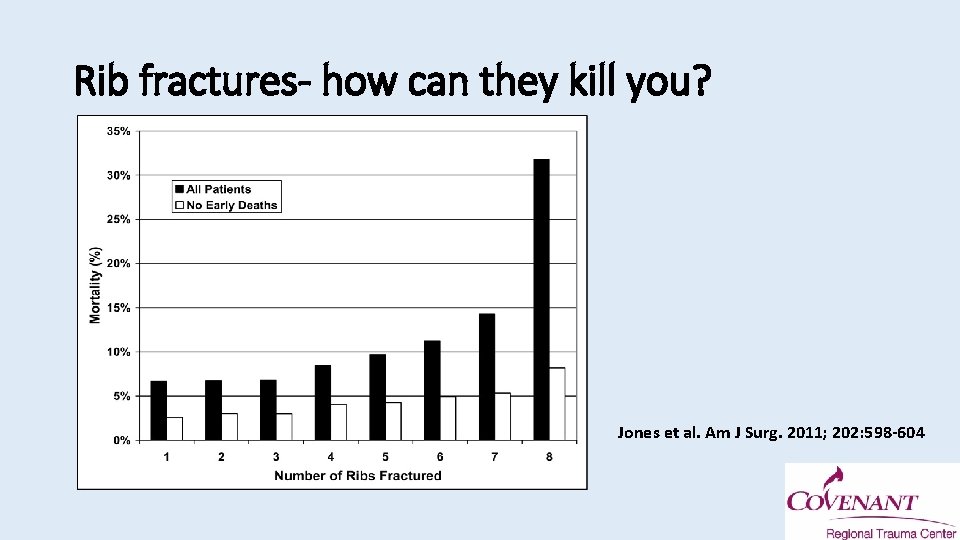
Rib fractures- how can they kill you? Jones et al. Am J Surg. 2011; 202: 598 -604
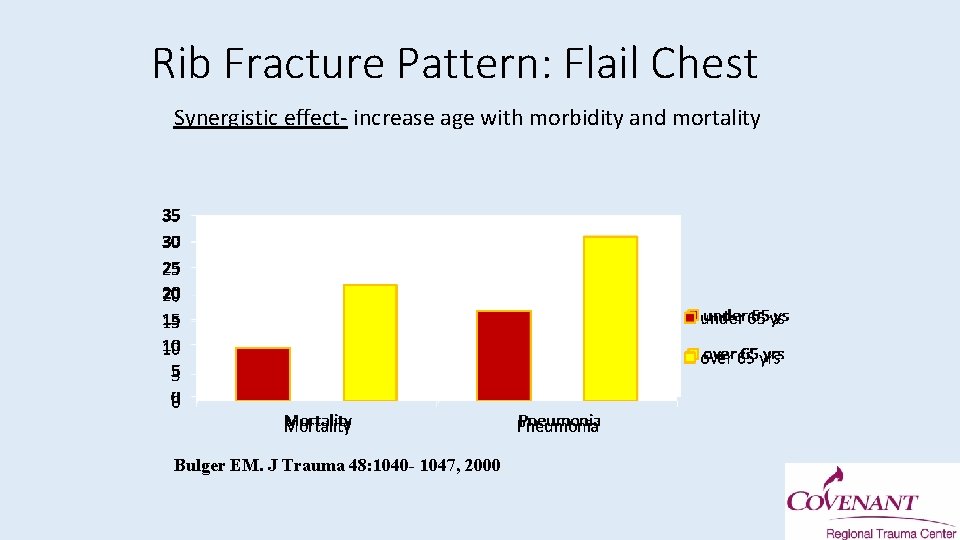
Rib Fracture Pattern: Flail Chest Synergistic effect- increase age with morbidity and mortality Bulger EM. J Trauma 48: 1040 - 1047, 2000.
Rib fractures - treatment • Pain control • Mechanical ventilation needed • - Loss of tidal volume/minute ventilation due to pain • - O 2 failure due to shunting • Surgical rib fixation • Minimal fluid resuscitation
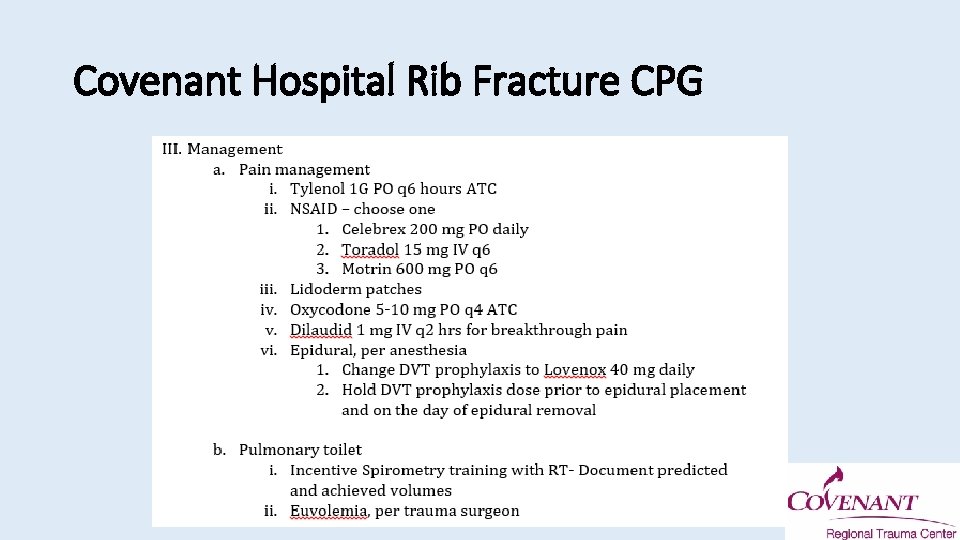
Covenant Hospital Rib Fracture CPG
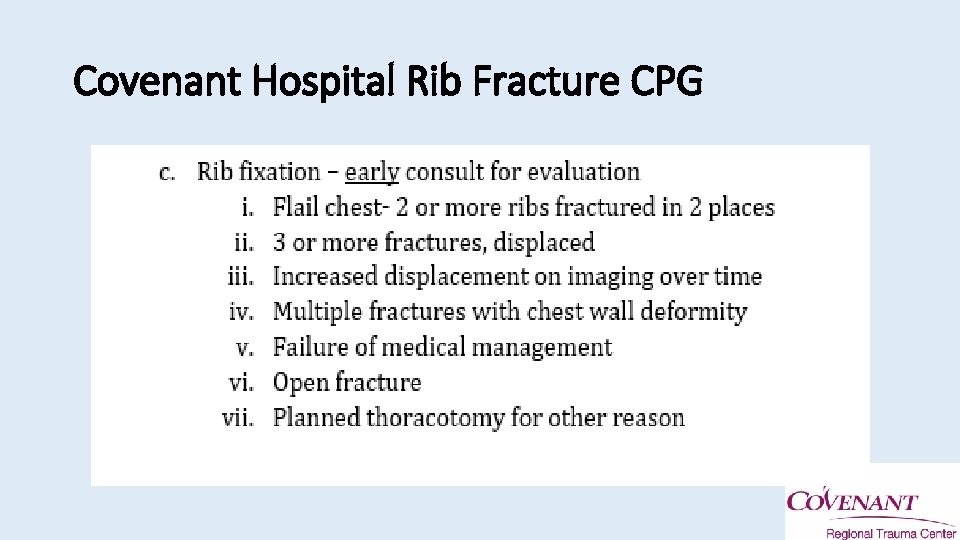
Covenant Hospital Rib Fracture CPG
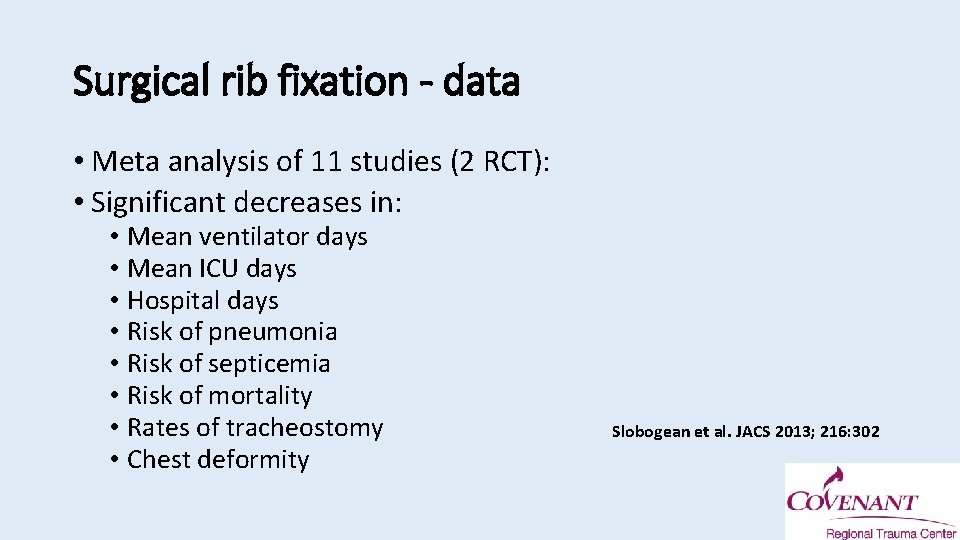
Surgical rib fixation - data • Meta analysis of 11 studies (2 RCT): • Significant decreases in: • Mean ventilator days • Mean ICU days • Hospital days • Risk of pneumonia • Risk of septicemia • Risk of mortality • Rates of tracheostomy • Chest deformity Slobogean et al. JACS 2013; 216: 302
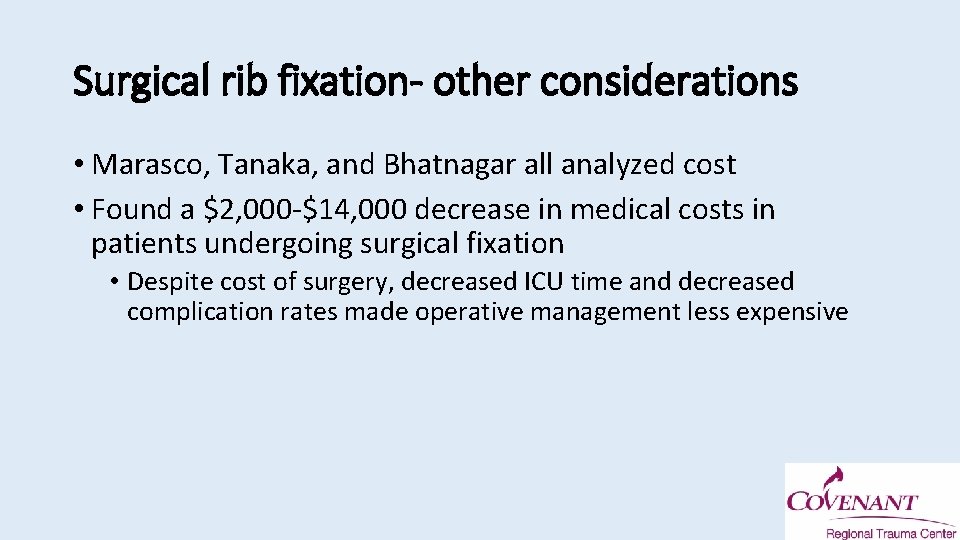
Surgical rib fixation- other considerations • Marasco, Tanaka, and Bhatnagar all analyzed cost • Found a $2, 000 -$14, 000 decrease in medical costs in patients undergoing surgical fixation • Despite cost of surgery, decreased ICU time and decreased complication rates made operative management less expensive
Which Ribs Should We Fix? • Most effective for ribs 4 -8 • Consider ribs 3 -9 • Fix flail segments • Fix displaced segments
Surgical rib fixation - timing • Vital capacity < 55% of predicted • “Take a deep breath” or “cough” • Inability to talk in full sentences • “I’m ok so long as I don’t move” • Timing of procedure: EARLY
Hospital course • HD 2: HDS, no evidence of hemorrhage from liver laceration • HD 3: • Dr. Tucker: ORIF R acetabulum • Dr. Valdez: ORIF L ribs

Rib. Loc System
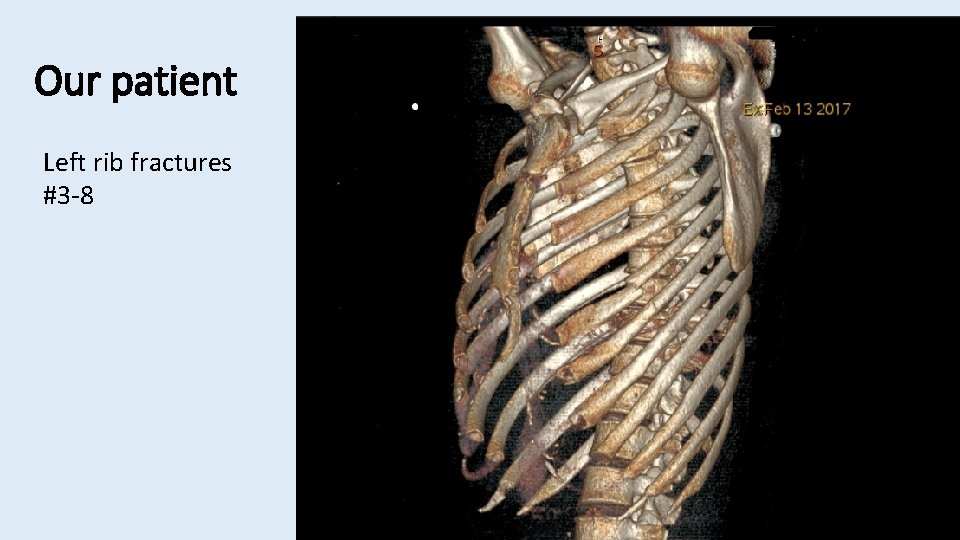
Our patient Left rib fractures #3 -8
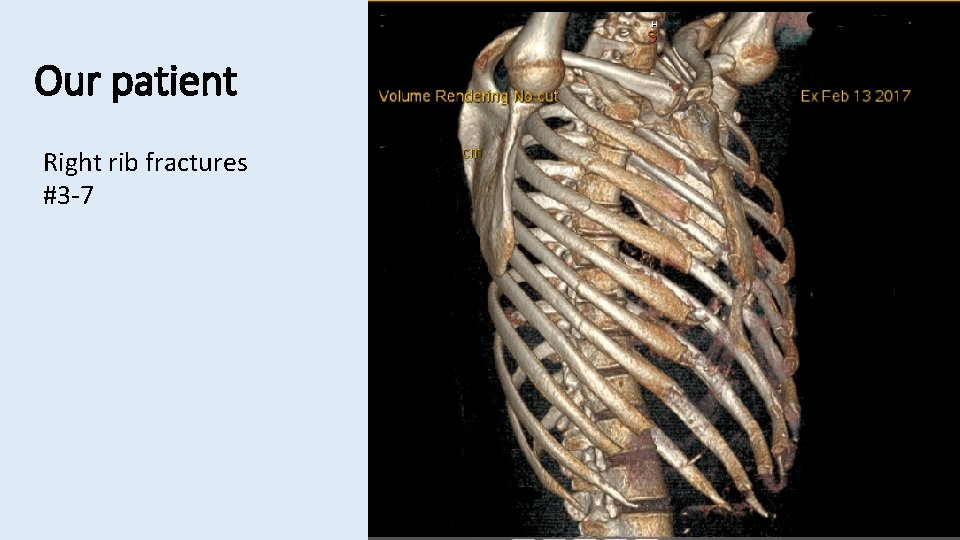
Our patient Right rib fractures #3 -7
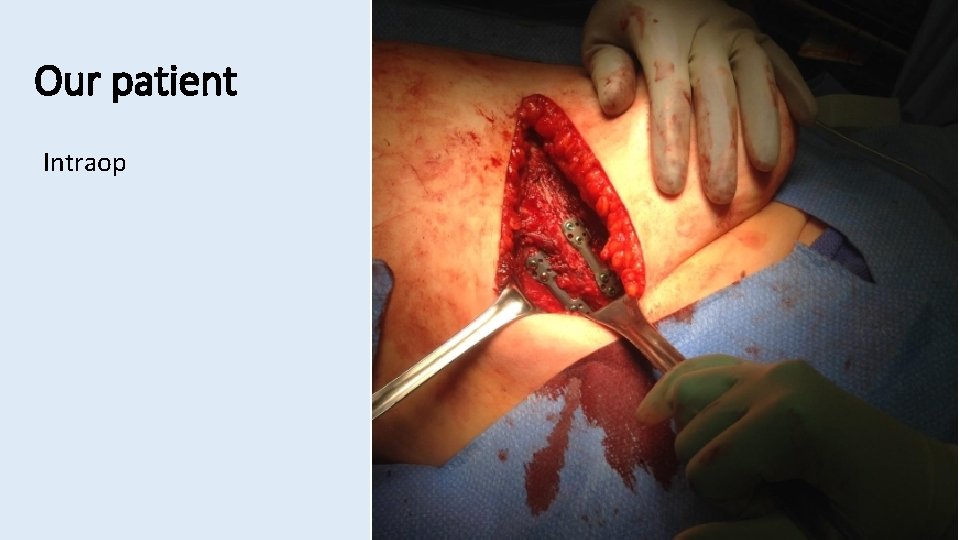
Our patient Intraop
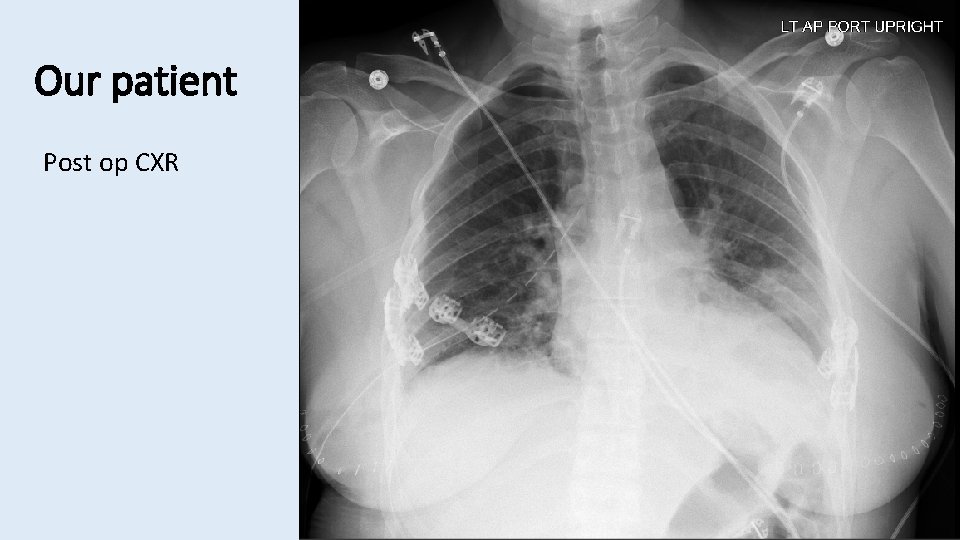
Our patient Post op CXR
Post-op • Rapidly improved respiratory mechanics • Decreased narcotic use • Transferred to rehab • Follow up in trauma clinic • “My ribs feel stable. I’m able to use my crutches. ”
Take away points • Rib fractures require appropriate pain control • Rib fractures require pulmonary toilet • Rib plating is a very useful adjunct for pain control • Shortens length of mechanical ventilation • Shortens length of stay • Most important ribs are #4 -8
Sucking holes
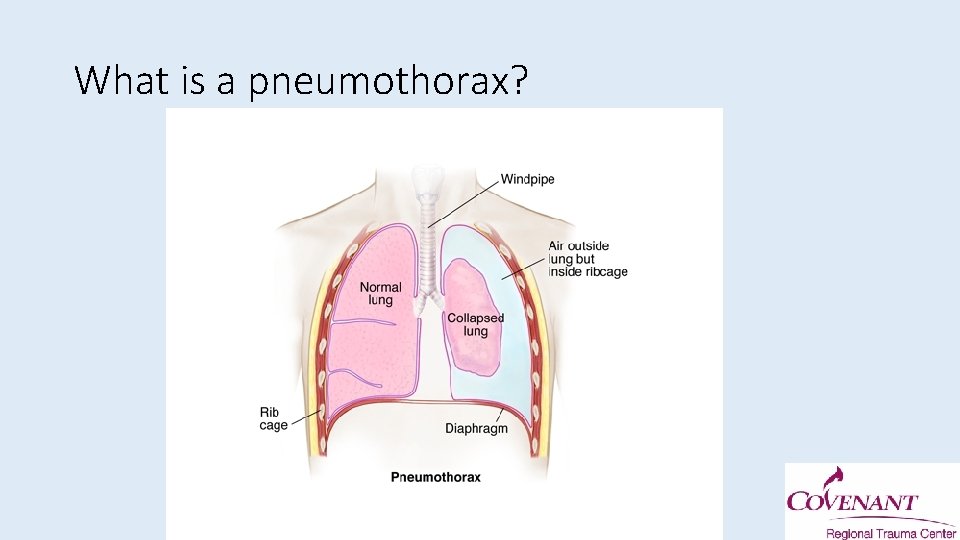
What is a pneumothorax?
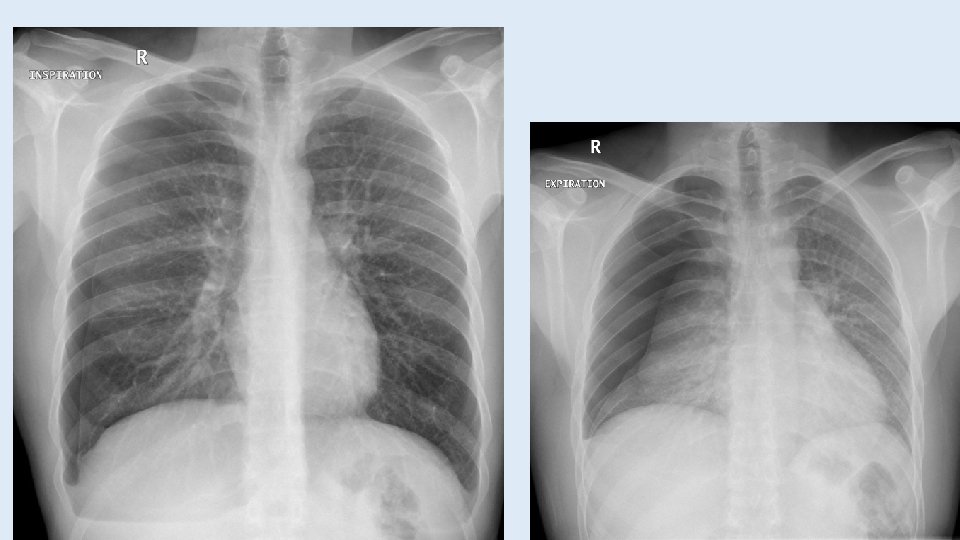
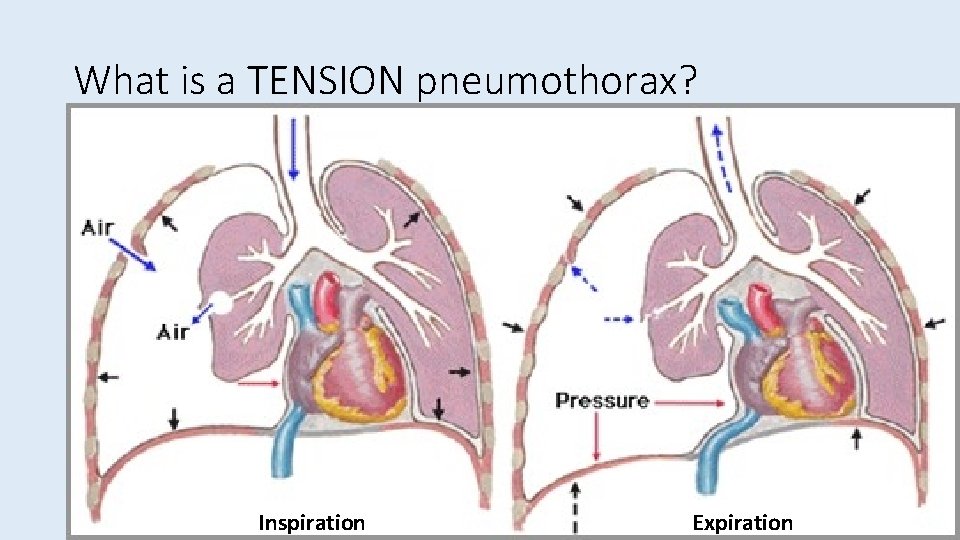
What is a TENSION pneumothorax? Inspiration Expiration
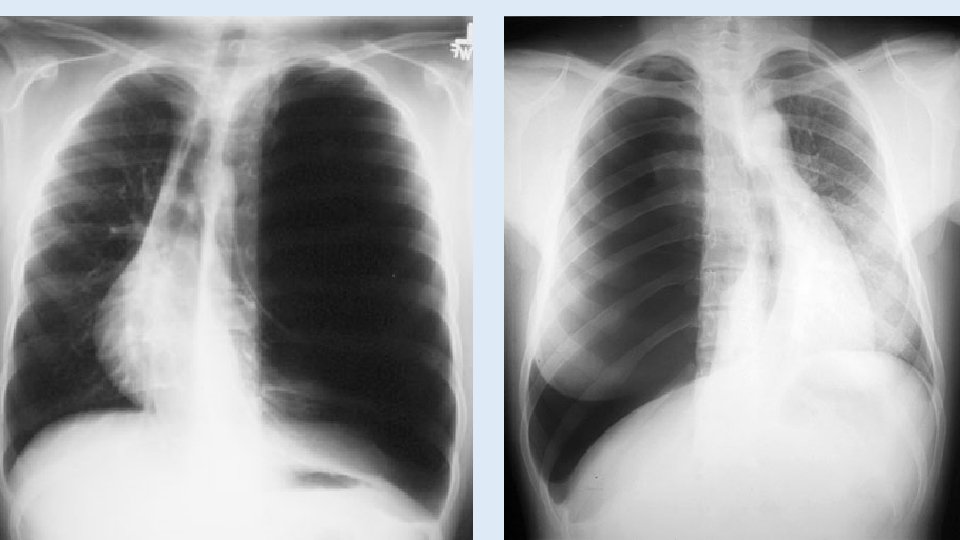
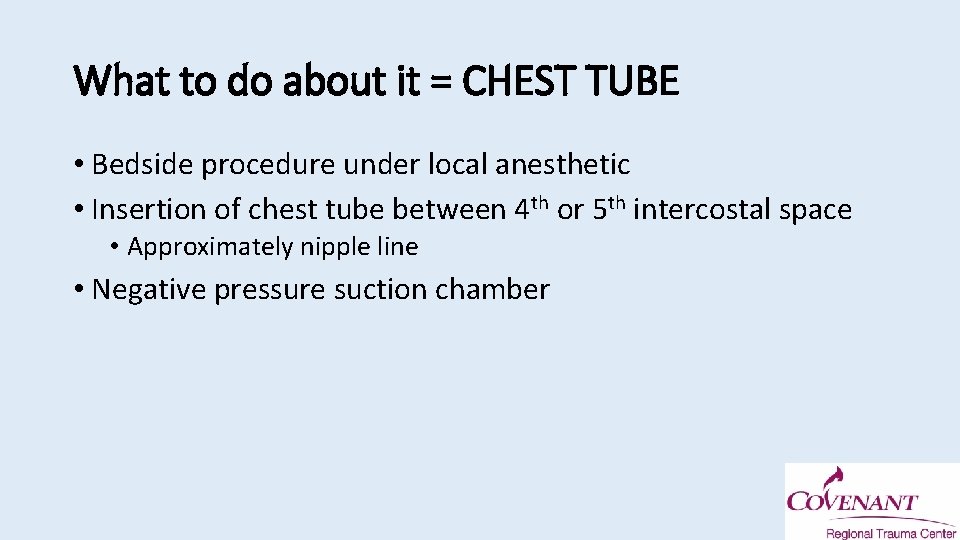
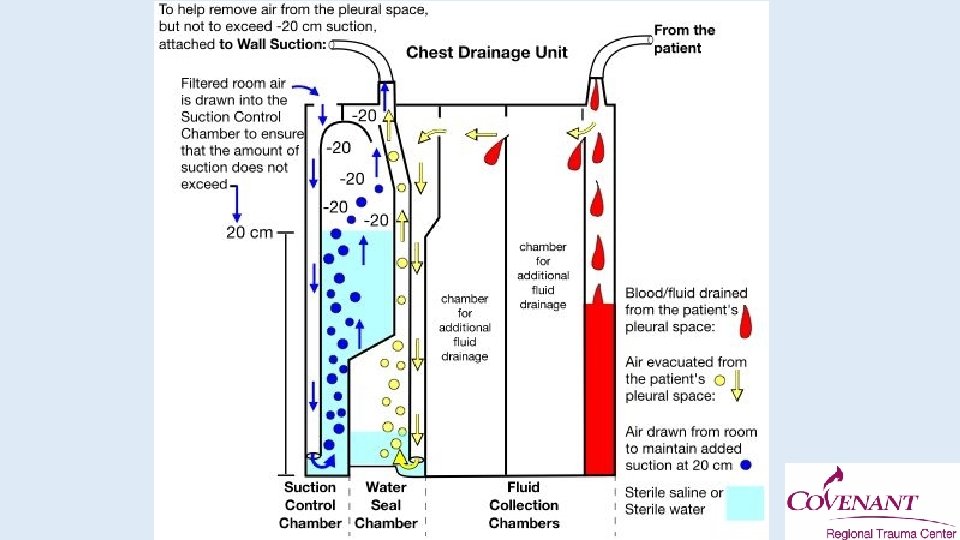
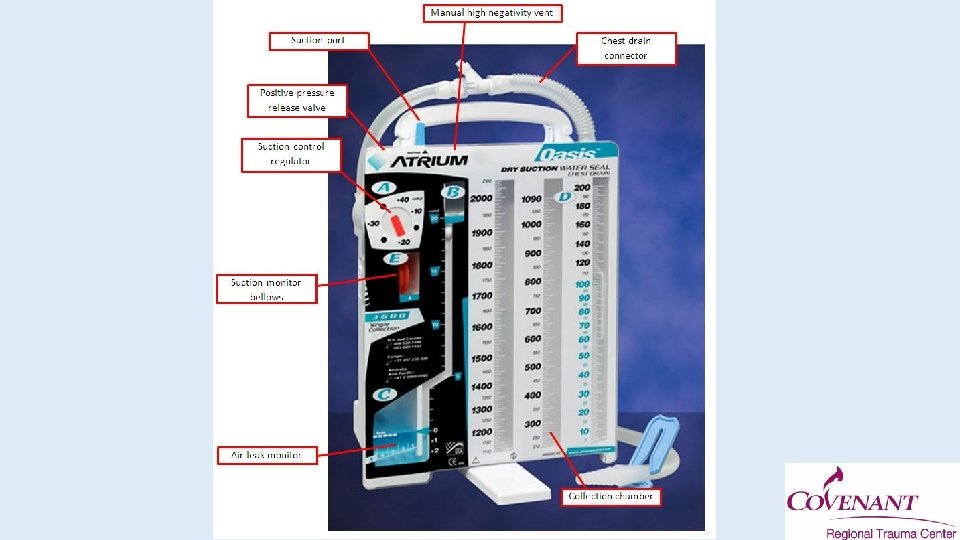
What to do about it = CHEST TUBE • Bedside procedure under local anesthetic • Insertion of chest tube between 4 th or 5 th intercostal space • Approximately nipple line • Negative pressure suction chamber
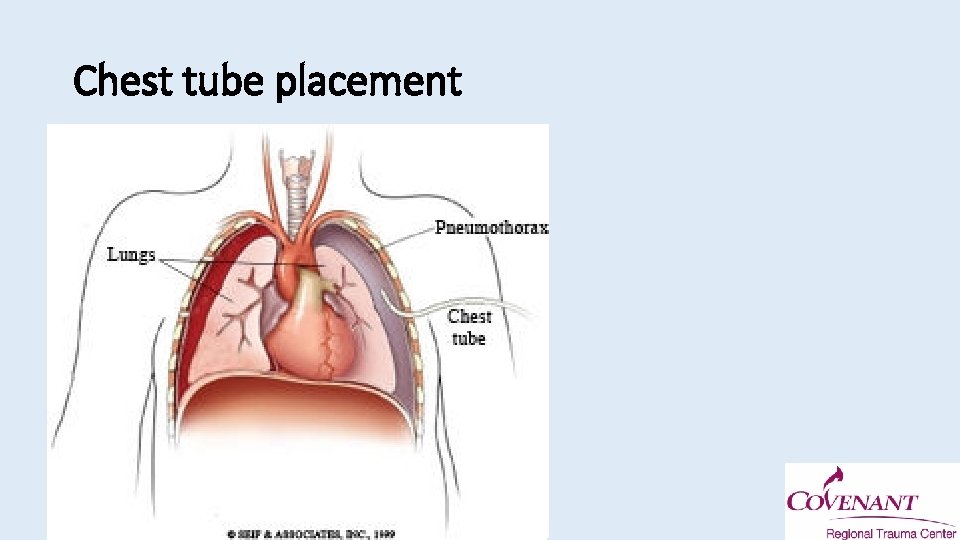
Chest tube placement

Chest tube placed
Dazed and Confused…
Cracked Ribs and Sucking Holes Carrie Valdez, MD Trauma and Acute Care Surgeon, Coven-ant Hospital carrievaldezmd@gmail. com 248 -390 -5864 cell
- Slides: 34