Ergonomic Design of Control Centers Honeywell User Group

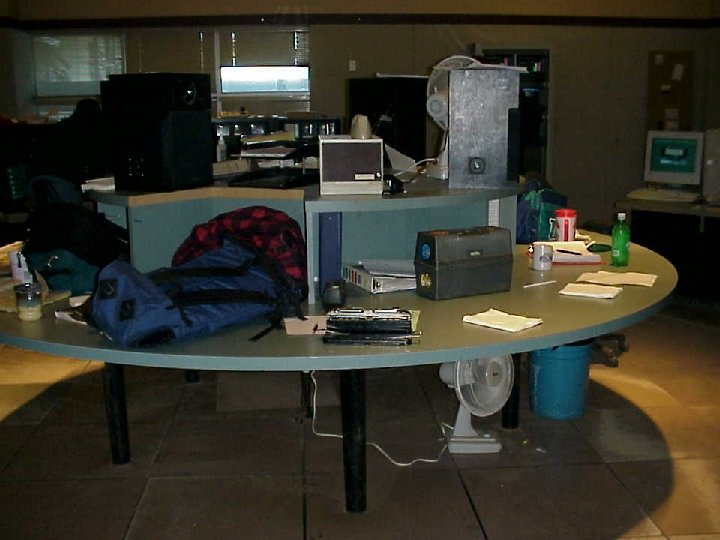
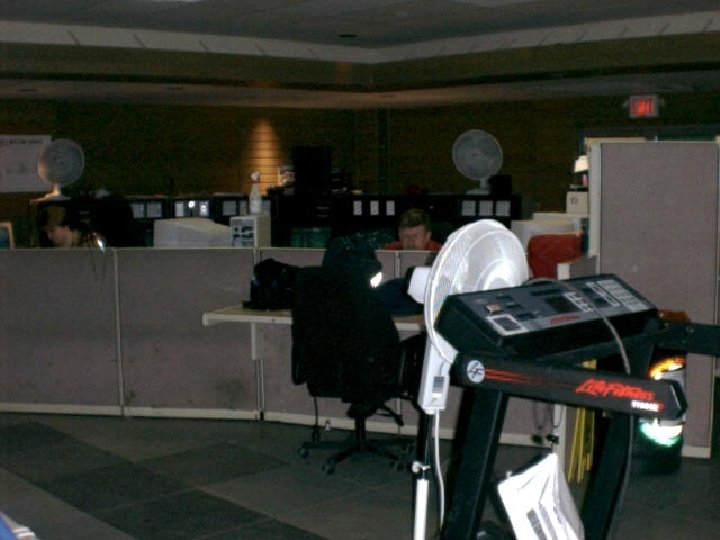
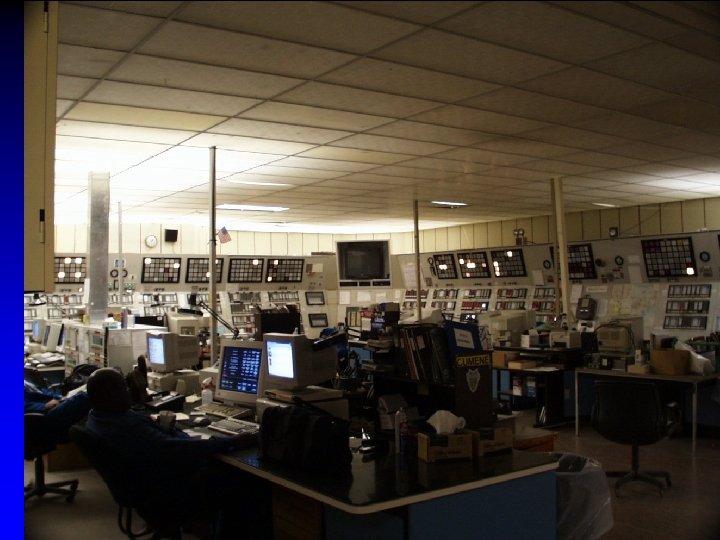


- Slides: 53
Ergonomic Design of Control Centers Honeywell User Group 2000 “Control Performance Go for Gold” ® Abnormal Situation Management is a U. S. registered trademark of Honeywell Inc.
Brad Adams Walker Architecture, P. C. Abnormal Situation Management ® Joint Research and Development Consortium Creating a new paradigm for operations of complex industrial plants, with solution concepts that improve operations ability to prevent and respond to abnormal situations. BAW Architecture ® Abnormal Situation Management is a U. S. registered trademark of Honeywell Inc. 2
Brad Adams Walker Architecture, P. C. 3
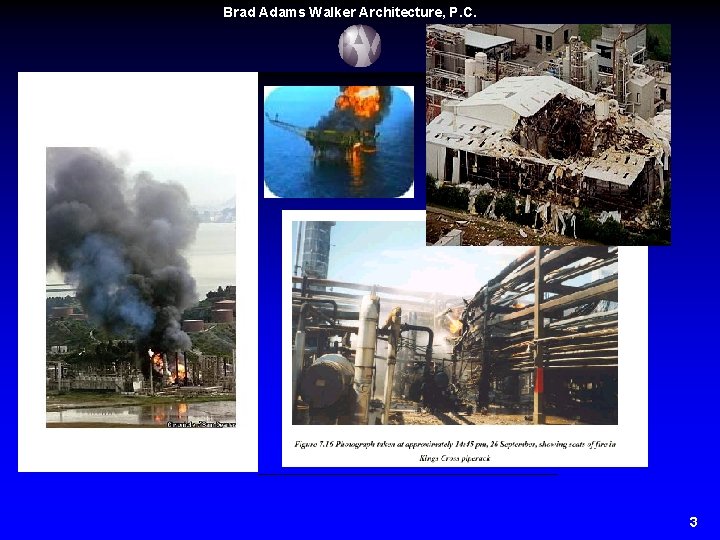
Brad Adams Walker Architecture, P. C. Explosions and Fires u Accidents resulting in major damage to occupied buildings are rare but when they occur the results can be tragic and disastrous. Hickson & Welch (UK - 1992) v La Mede Refinery Total (France - 1993) v Phillips Pasadena, Texas (USA - 1992) v u In each case 5 or more people died as a direct result of being in a building on a CPI site. 4
Brad Adams Walker Architecture, P. C. Common causes u Most fatalities in buildings resulted from Vapor Cloud Explosions (VCE’s). u Other types of overpressure causes, such as Boiling Liquid Expanding Vapor Explosions (BLEVE’s) vessel failure & chemical reaction runaways, should also be considered. 5
Brad Adams Walker Architecture, P. C. Other causes u The escape of toxic gas can also be a threat, as demonstrated by the Bhopal disaster (1984). u Consider the implications of toxic release for people and the protection that a well designed and sited building can provide. u Buildings can also provide protection against fire especially when wearing NOMEX coveralls. 6
Brad Adams Walker Architecture, P. C. Building Compromises u The closer the building to the plant the more effective the occupants could be in operating and maintaining the plant by being closer to the hardware they manage or the people with whom they interface. It is arguable that there is less likelihood of there being an accident due to better communications between key groups of people. 7
Brad Adams Walker Architecture, P. C. u The closer the people are to the plant the higher the risk they run of being exposed to the consequences of the hazards of the plant should these consequences be realized. u To balance these hazards it is important to consider the protection given to the people by the building they occupy. The closer to the hazards the more protection the building must provide and hence, the more it will cost. 8
Brad Adams Walker Architecture, P. C. BAW User Centered Design Services u Feasibility Studies Ø Develop a Shared Vision Ø Comparison current vs. best practices Ø Analysis building location Ø Analysis organization vs. building Ø Order-of-magnitude costs Ø Estimate of the benefits Ø List of recommendations 9
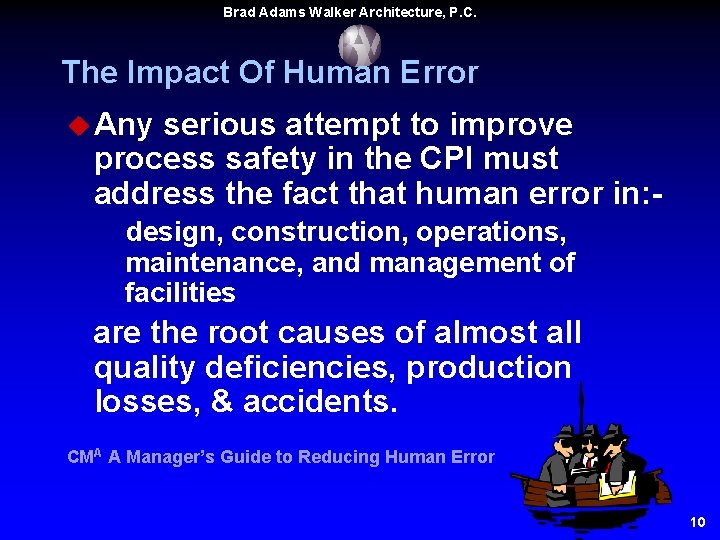
Brad Adams Walker Architecture, P. C. The Impact Of Human Error u Any serious attempt to improve process safety in the CPI must address the fact that human error in: design, construction, operations, maintenance, and management of facilities are the root causes of almost all quality deficiencies, production losses, & accidents. CMA A Manager’s Guide to Reducing Human Error 10
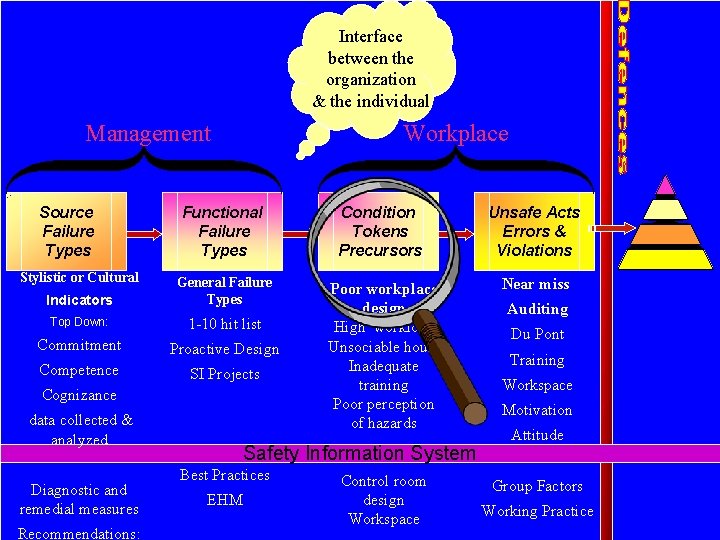
Brad Adams Walker Architecture, P. C. Interface between the organization & the individual Management Source Failure Types Workplace Functional Failure Types Condition Tokens Precursors Unsafe Acts Errors & Violations Indicators General Failure Types Near miss Top Down: 1 -10 hit list Commitment Proactive Design Competence SI Projects Poor workplace design High workload Unsociable hours Inadequate training Poor perception of hazards Stylistic or Cultural Cognizance data collected & analyzed Diagnostic and remedial measures Recommendations: Safety Information System Best Practices EHM Control room design Workspace Auditing Du Pont Training Workspace Motivation Attitude Group Factors Working Practice 11
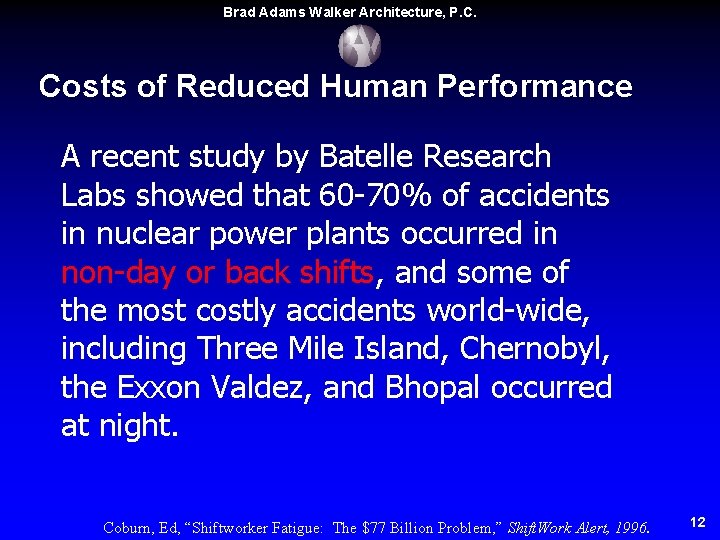
Brad Adams Walker Architecture, P. C. Costs of Reduced Human Performance A recent study by Batelle Research Labs showed that 60 -70% of accidents in nuclear power plants occurred in non-day or back shifts, and some of the most costly accidents world-wide, including Three Mile Island, Chernobyl, the Exxon Valdez, and Bhopal occurred at night. Coburn, Ed, “Shiftworker Fatigue: The $77 Billion Problem, ” Shift. Work Alert, 1996. 12
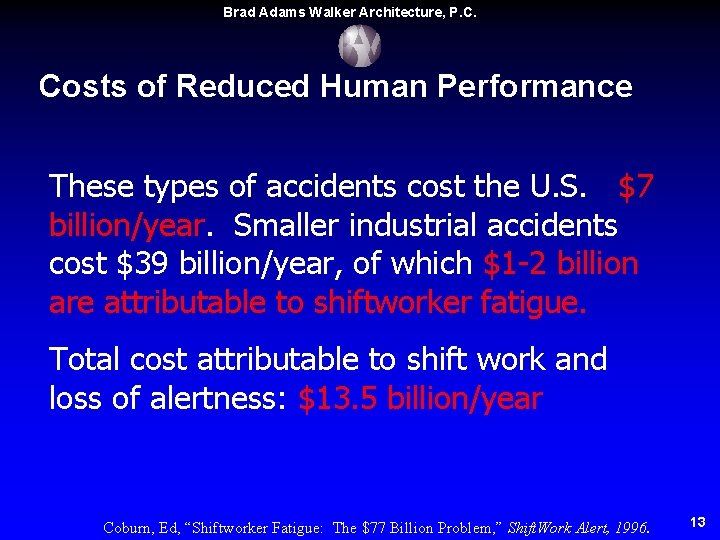
Brad Adams Walker Architecture, P. C. Costs of Reduced Human Performance These types of accidents cost the U. S. $7 billion/year. Smaller industrial accidents cost $39 billion/year, of which $1 -2 billion are attributable to shiftworker fatigue. Total cost attributable to shift work and loss of alertness: $13. 5 billion/year Coburn, Ed, “Shiftworker Fatigue: The $77 Billion Problem, ” Shift. Work Alert, 1996. 13
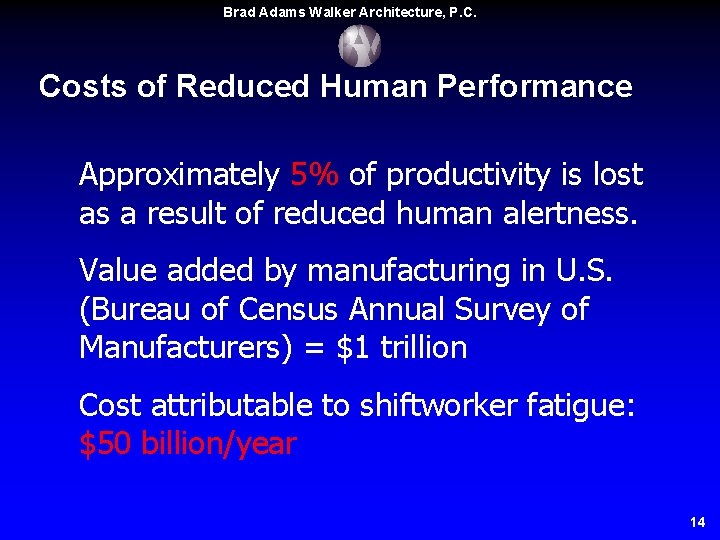
Brad Adams Walker Architecture, P. C. Costs of Reduced Human Performance Approximately 5% of productivity is lost as a result of reduced human alertness. Value added by manufacturing in U. S. (Bureau of Census Annual Survey of Manufacturers) = $1 trillion Cost attributable to shiftworker fatigue: $50 billion/year 14
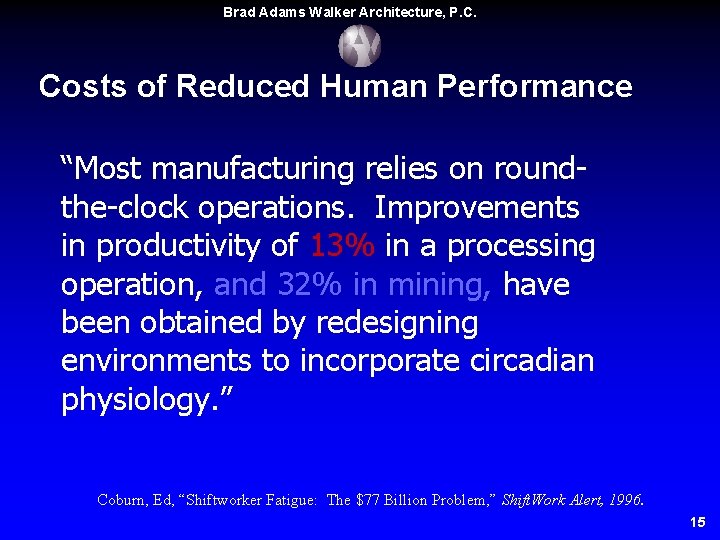
Brad Adams Walker Architecture, P. C. Costs of Reduced Human Performance “Most manufacturing relies on roundthe-clock operations. Improvements in productivity of 13% in a processing operation, and 32% in mining, have been obtained by redesigning environments to incorporate circadian physiology. ” Coburn, Ed, “Shiftworker Fatigue: The $77 Billion Problem, ” Shift. Work Alert, 1996. 15
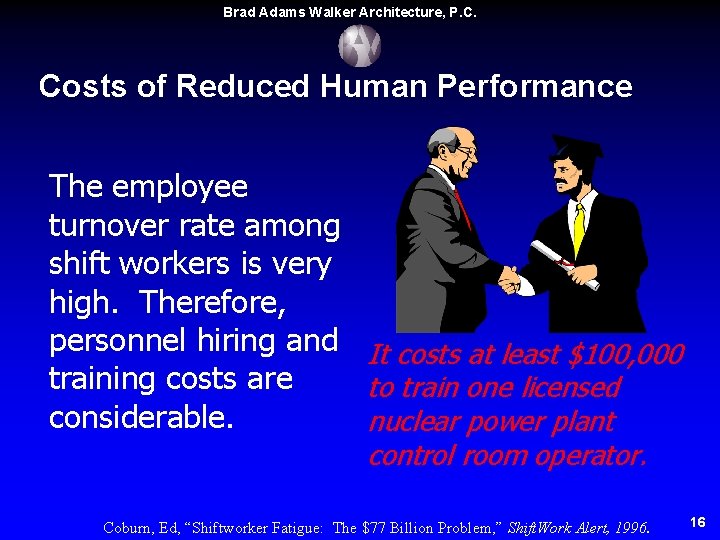
Brad Adams Walker Architecture, P. C. Costs of Reduced Human Performance The employee turnover rate among shift workers is very high. Therefore, personnel hiring and It costs at least $100, 000 training costs are to train one licensed considerable. nuclear power plant control room operator. Coburn, Ed, “Shiftworker Fatigue: The $77 Billion Problem, ” Shift. Work Alert, 1996. 16
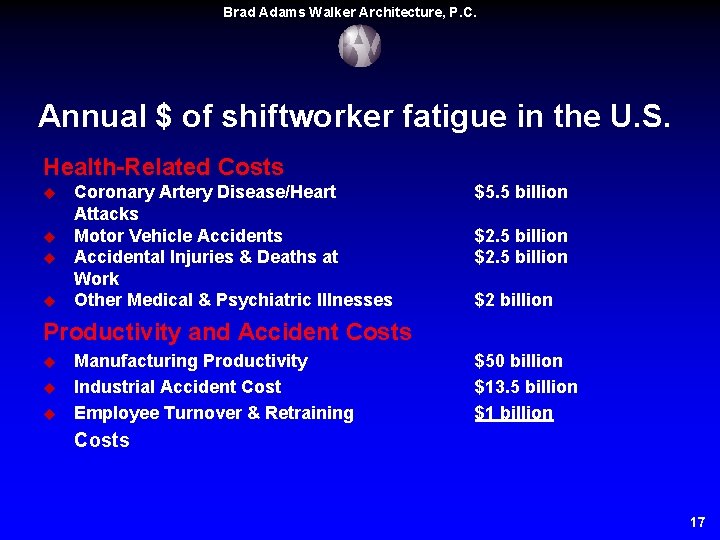
Brad Adams Walker Architecture, P. C. Annual $ of shiftworker fatigue in the U. S. Health-Related Costs u u Coronary Artery Disease/Heart Attacks Motor Vehicle Accidents Accidental Injuries & Deaths at Work Other Medical & Psychiatric Illnesses $5. 5 billion $2 billion Productivity and Accident Costs u u u Manufacturing Productivity Industrial Accident Cost Employee Turnover & Retraining $50 billion $13. 5 billion $1 billion Costs 17
Brad Adams Walker Architecture, P. C. OSHA Repetitive Strain u Fitting a job to the physical limitations of the worker. u 647, 000 lost days of work per year. u Prevention of 300, 000 injuries and save employers $9 billion annually. u This is a fraction of the $77 billion associated with shift worker losses. 18
Brad Adams Walker Architecture, P. C. General Principles of Workstation Design · · Aim for comfortable and varied working postures and dynamic work of moderate intensity involving large muscle groups. Avoid static postures. Consider the possibility of rest. The working posture and need for the body to rest during work are noted and the need for resting surfaces, e. g. in the form of chairs, should be specified here. 19
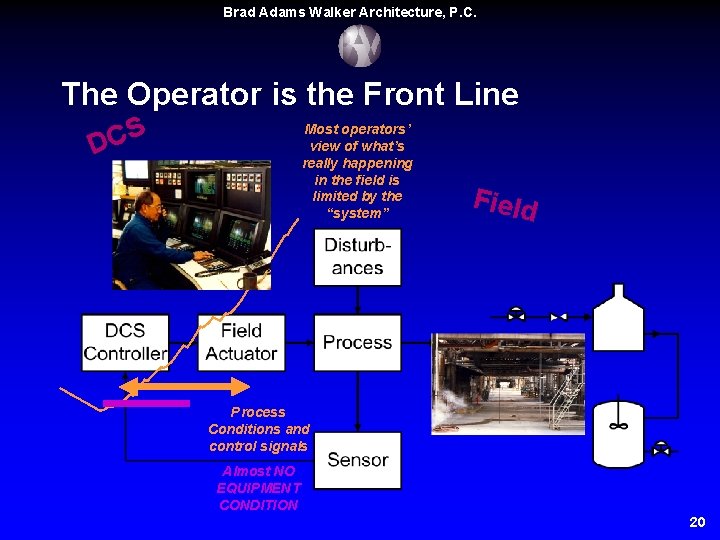
Brad Adams Walker Architecture, P. C. The Operator is the Front Line S C D Most operators’ view of what’s really happening in the field is limited by the “system” Field Process Conditions and control signals Almost NO EQUIPMENT CONDITION 20
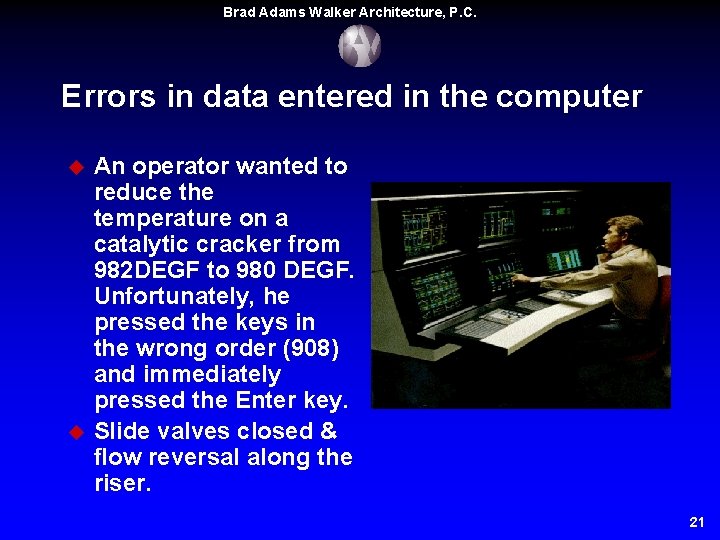
Brad Adams Walker Architecture, P. C. Errors in data entered in the computer u u An operator wanted to reduce the temperature on a catalytic cracker from 982 DEGF to 980 DEGF. Unfortunately, he pressed the keys in the wrong order (908) and immediately pressed the Enter key. Slide valves closed & flow reversal along the riser. 21
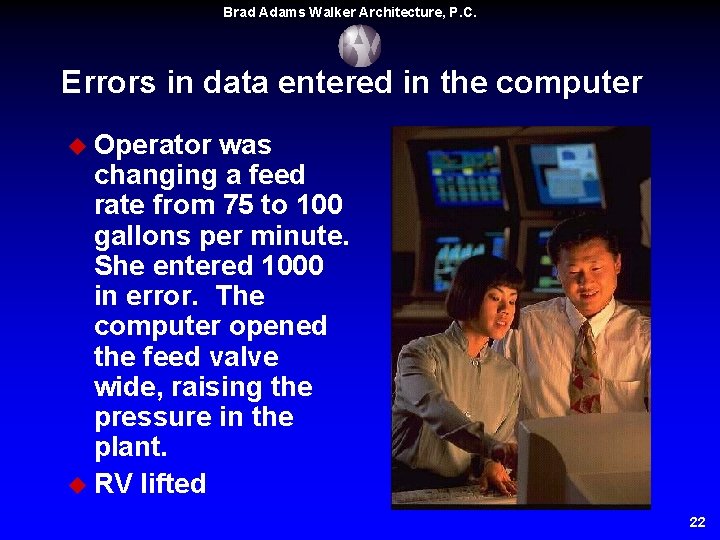
Brad Adams Walker Architecture, P. C. Errors in data entered in the computer u Operator was changing a feed rate from 75 to 100 gallons per minute. She entered 1000 in error. The computer opened the feed valve wide, raising the pressure in the plant. u RV lifted 22
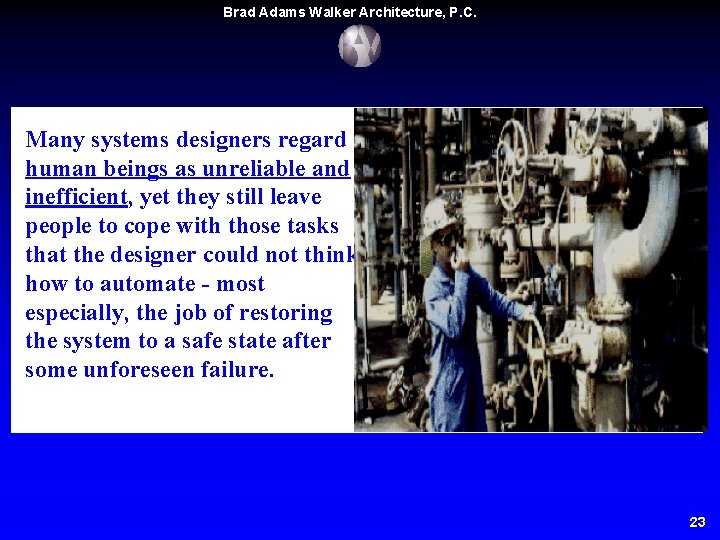
Brad Adams Walker Architecture, P. C. Many systems designers regard human beings as unreliable and inefficient, yet they still leave people to cope with those tasks that the designer could not think how to automate - most especially, the job of restoring the system to a safe state after some unforeseen failure. 23
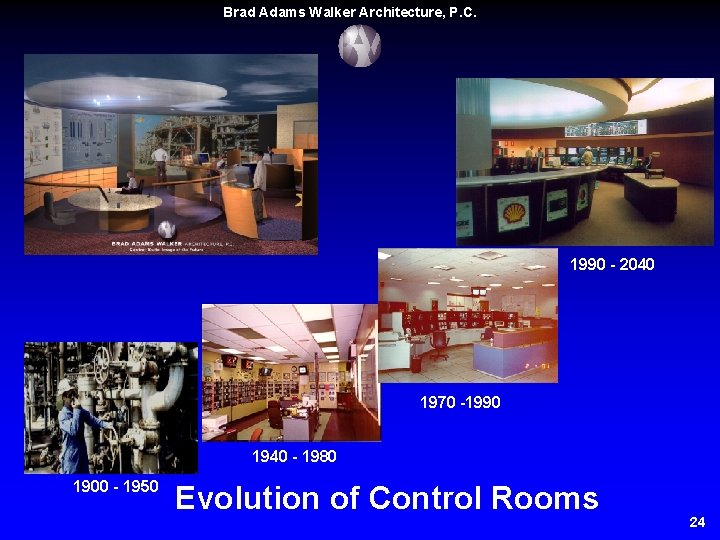
Brad Adams Walker Architecture, P. C. 1990 - 2040 1970 -1990 1940 - 1980 1900 - 1950 Evolution of Control Rooms 24
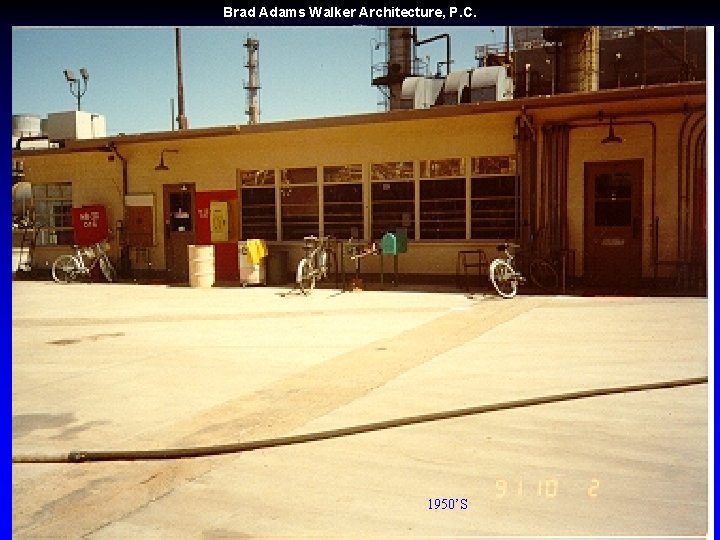
Brad Adams Walker Architecture, P. C. 1950’S 25
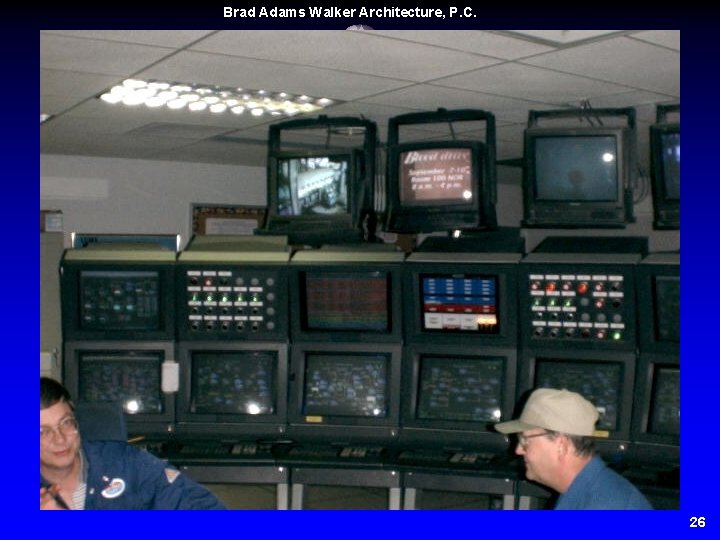
Brad Adams Walker Architecture, P. C. 26
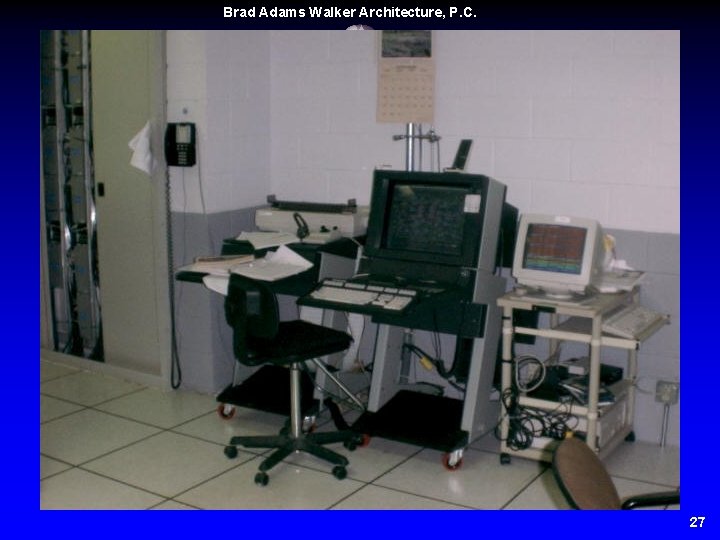
Brad Adams Walker Architecture, P. C. 27
Brad Adams Walker Architecture, P. C. 28
Brad Adams Walker Architecture, P. C. 29
Brad Adams Walker Architecture, P. C. 30
Brad Adams Walker Architecture, P. C. 31
Brad Adams Walker Architecture, P. C. 32
Brad Adams Walker Architecture, P. C. 33
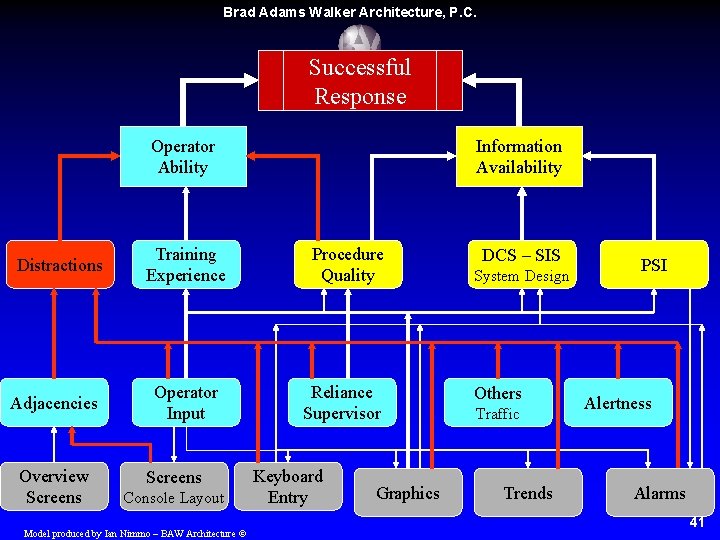
Brad Adams Walker Architecture, P. C. Successful Response Operator Ability Distractions Adjacencies Overview Screens Training Experience Operator Input Screens Console Layout Model produced by Ian Nimmo – BAW Architecture © Information Availability Procedure Quality Reliance Supervisor Keyboard Entry Graphics DCS – SIS System Design Others Traffic Trends PSI Alertness Alarms 41
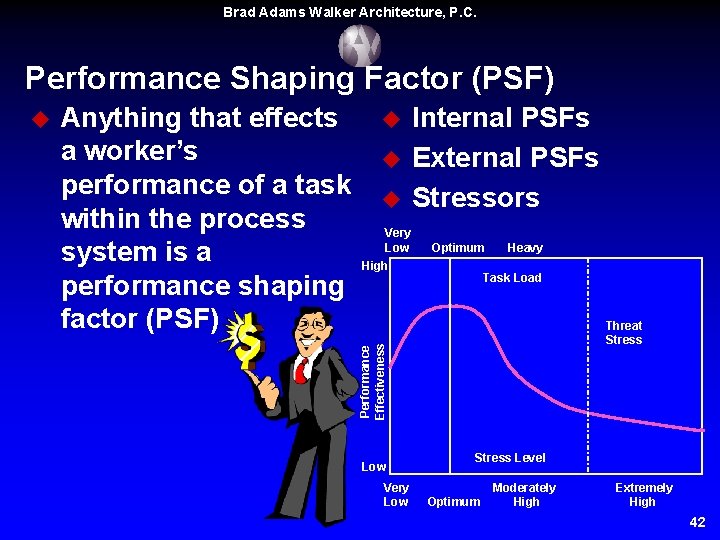
Brad Adams Walker Architecture, P. C. Performance Shaping Factor (PSF) Anything that effects a worker’s performance of a task within the process system is a performance shaping factor (PSF) u u u Very Low High Internal PSFs External PSFs Stressors Optimum Heavy Task Load Threat Stress Performance Effectiveness u Low Very Low Stress Level Optimum Moderately High Extremely High 42
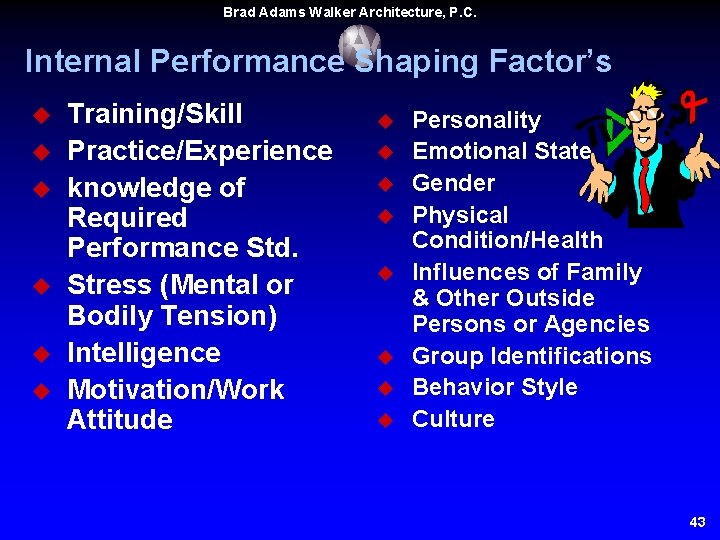
Brad Adams Walker Architecture, P. C. Internal Performance Shaping Factor’s u u u Training/Skill Practice/Experience knowledge of Required Performance Std. Stress (Mental or Bodily Tension) Intelligence Motivation/Work Attitude u u u u Personality Emotional State Gender Physical Condition/Health Influences of Family & Other Outside Persons or Agencies Group Identifications Behavior Style Culture 43
Brad Adams Walker Architecture, P. C. External Performance Shaping Factor’s u Situational Characteristics Ø Ø Ø Ø Architectural Features Environment Work Hours/Work Breaks Shift Rotation Staffing Levels Organizational Structure Actions by others u Task, Equipment, & Procedural Characteristics Ø Ø Ø Ø Procedures Communications Cautions & Warnings Work Methods Team Structure Long & Short Term Memory Control Display Relationships Task Criticality 44
Brad Adams Walker Architecture, P. C. Stressor Performance Shaping Factor’s u Psychological Stressors Ø Ø Ø Ø Suddenness of Onset High Task Speed Heavy Task Load High Jeopardy Risk Threats Sensory Deprivation Distractions Lack of Rewards u Physiological Stressors Ø Ø Ø Ø Ø Long Duration of Stress Fatigue Pain or Discomfort Hunger or Thirst Temperature Extremes Oxygen Deficiency Vibration Chemical Exposure Disruption of Circadian Rhythm 45
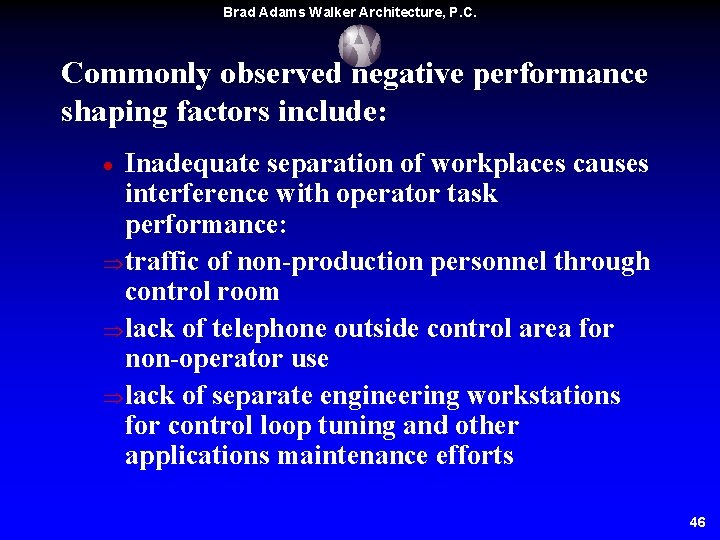
Brad Adams Walker Architecture, P. C. Commonly observed negative performance shaping factors include: Inadequate separation of workplaces causes interference with operator task performance: Þ traffic of non-production personnel through control room Þ lack of telephone outside control area for non-operator use Þ lack of separate engineering workstations for control loop tuning and other applications maintenance efforts · 46
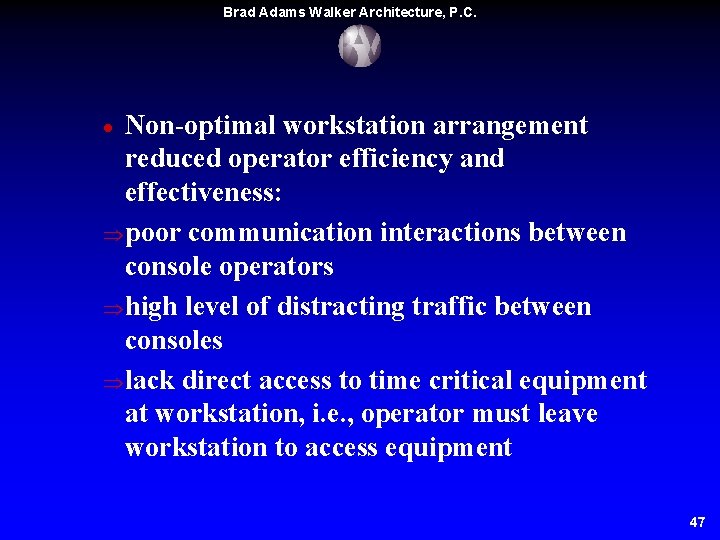
Brad Adams Walker Architecture, P. C. Non-optimal workstation arrangement reduced operator efficiency and effectiveness: Þ poor communication interactions between console operators Þ high level of distracting traffic between consoles Þ lack direct access to time critical equipment at workstation, i. e. , operator must leave workstation to access equipment · 47
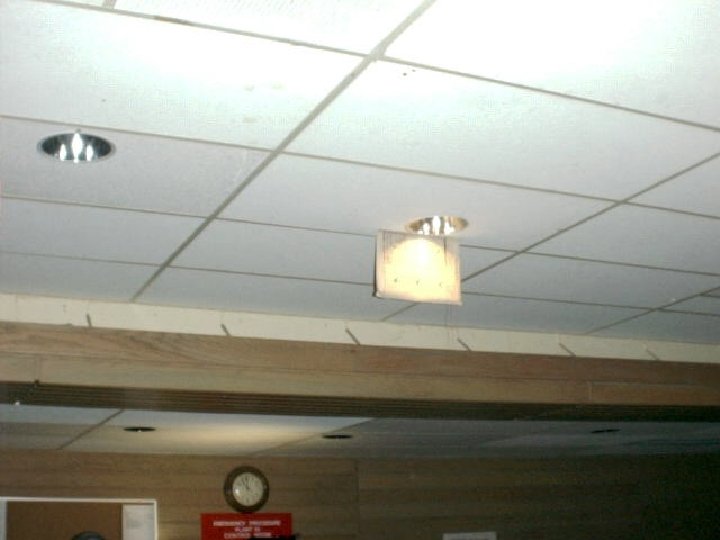
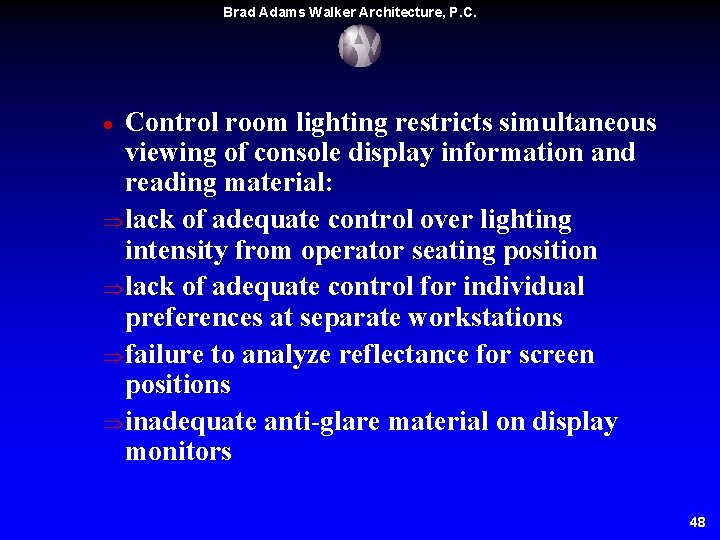
Brad Adams Walker Architecture, P. C. Control room lighting restricts simultaneous viewing of console display information and reading material: Þ lack of adequate control over lighting intensity from operator seating position Þ lack of adequate control for individual preferences at separate workstations Þ failure to analyze reflectance for screen positions Þ inadequate anti-glare material on display monitors · 48
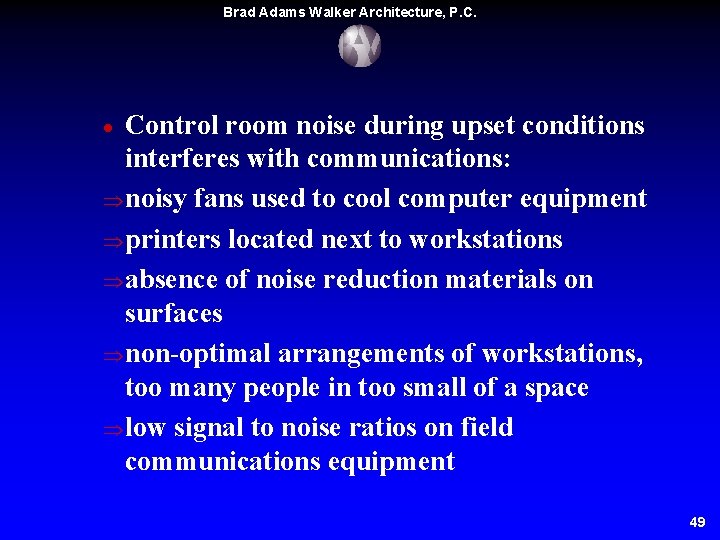
Brad Adams Walker Architecture, P. C. Control room noise during upset conditions interferes with communications: Þ noisy fans used to cool computer equipment Þ printers located next to workstations Þ absence of noise reduction materials on surfaces Þ non-optimal arrangements of workstations, too many people in too small of a space Þ low signal to noise ratios on field communications equipment · 49
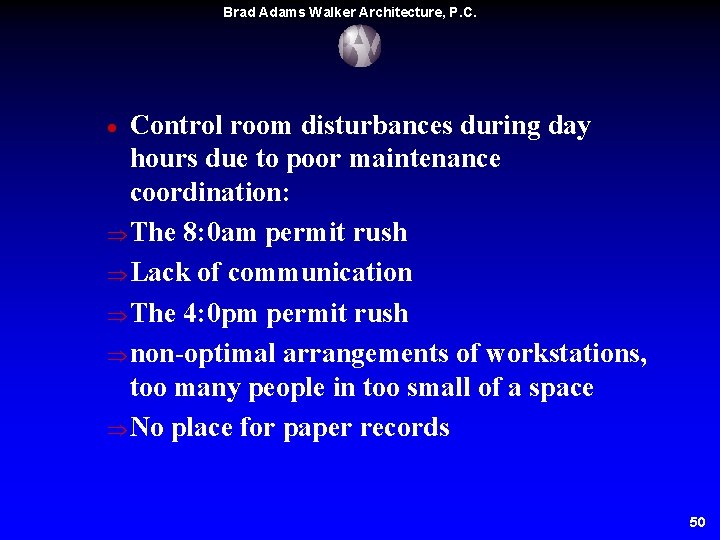
Brad Adams Walker Architecture, P. C. Control room disturbances during day hours due to poor maintenance coordination: Þ The 8: 0 am permit rush Þ Lack of communication Þ The 4: 0 pm permit rush Þ non-optimal arrangements of workstations, too many people in too small of a space Þ No place for paper records · 50
Brad Adams Walker Architecture, P. C. Human factor problems u Increase demands on user’s memory u cause users to be uncertain as to where and when they should focus their attention u make it difficult for users working in terms to share the same situational awareness u impair mental models of the system u increase workload during highdemand periods 51
Brad Adams Walker Architecture, P. C. u Limit the users’ ability to develop effective strategies for coping with task demands u increase stress and anxiety u increase the potential for confusion through enhanced flexibility (i. e. , many possible levels and types of automation). 52
Brad Adams Walker Architecture, P. C. Cognition Operators can process complex information far more capably than the most powerful computers in existence, provided, · · · It is correctly perceived (see above), and Sufficient attention can be devoted (workload is low enough, distractions are under control), and Well known limitations in human processing capabilities are not exceeded. 53
Brad Adams Walker Architecture, P. C. In particular, for example, Ø Ø humans are poor at processing [remembering] more than about seven unrelated things at once for more than a few seconds, humans are poor at conducting more than about three ongoing activities in parallel [simultaneously], but are capable of much more if the activities can be time sliced— conducted sequentially— but only if support is provided at the boundaries of the time slices [humans are very unreliable at saving the status of their own stacks, registers, and flags]. 54
Brad Adams Walker Architecture, P. C. Ø humans perform poorly both in the absence of stress and in the presence of too much of it, Ø humans perform better in context than out of it, especially if they are able to immerse themselves in the task at hand need not wrestle with tools, tasks, or interfaces, 55
Brad Adams Walker Architecture, P. C. Ø humans make consistent and predictable errors of specific types. For example, they make errors in processing incoming data at odds with their expectations (they tend to ignore it), in predicting the likelihood of disjunctive events (the likelihood is underestimated) or conjunctive events (the likelihood is overestimated) and in taking base rates into consideration in estimating outcomes (base rates are not processed as such). 56
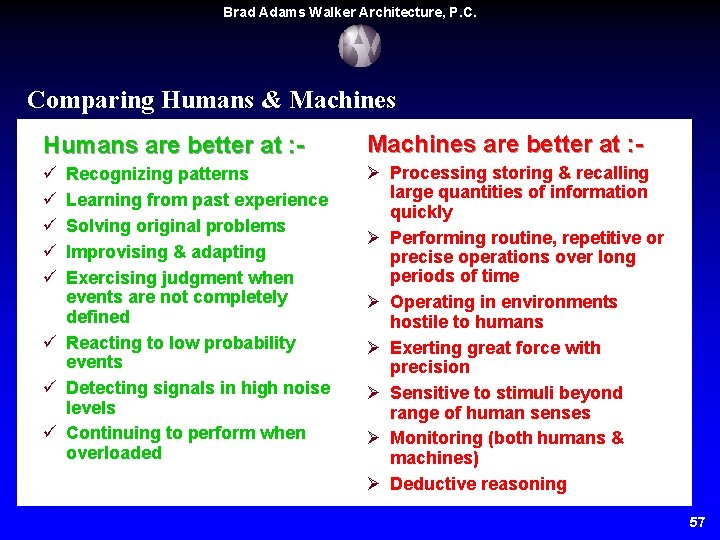
Brad Adams Walker Architecture, P. C. Comparing Humans & Machines Humans are better at : - Machines are better at : - ü ü ü Ø Processing storing & recalling large quantities of information quickly Ø Performing routine, repetitive or precise operations over long periods of time Ø Operating in environments hostile to humans Ø Exerting great force with precision Ø Sensitive to stimuli beyond range of human senses Ø Monitoring (both humans & machines) Ø Deductive reasoning Recognizing patterns Learning from past experience Solving original problems Improvising & adapting Exercising judgment when events are not completely defined ü Reacting to low probability events ü Detecting signals in high noise levels ü Continuing to perform when overloaded 57
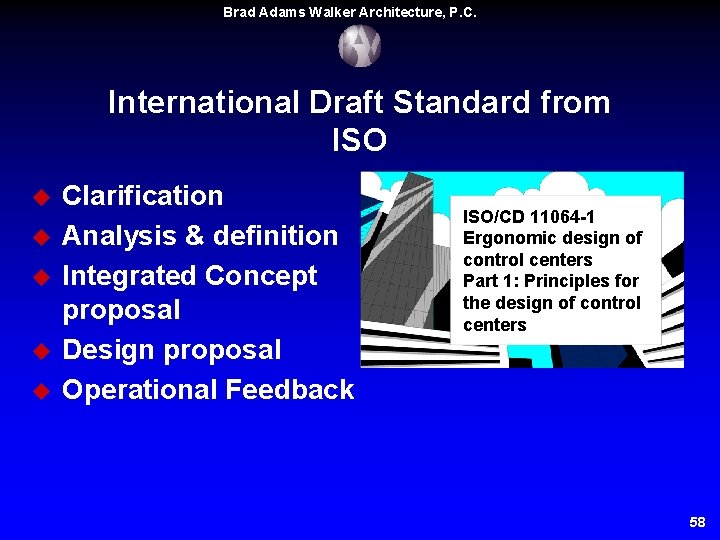
Brad Adams Walker Architecture, P. C. International Draft Standard from ISO u u u Clarification Analysis & definition Integrated Concept proposal Design proposal Operational Feedback ISO/CD 11064 -1 Ergonomic design of control centers Part 1: Principles for the design of control centers 58
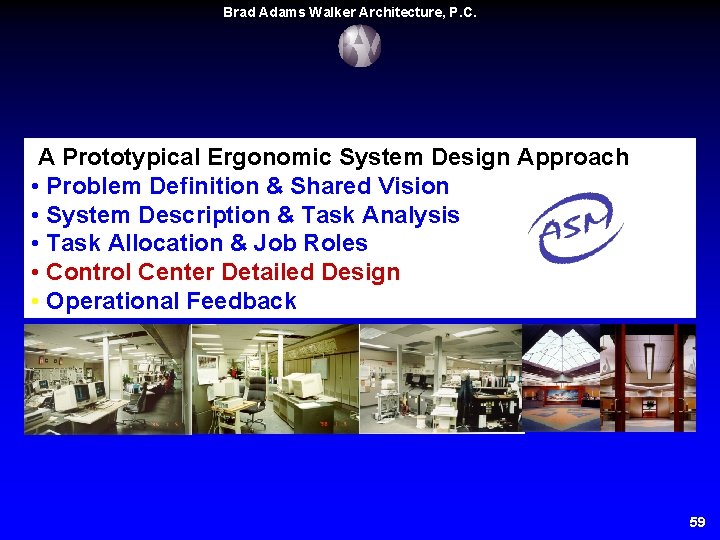
Brad Adams Walker Architecture, P. C. A Prototypical Ergonomic System Design Approach • Problem Definition & Shared Vision • System Description & Task Analysis • Task Allocation & Job Roles • Control Center Detailed Design • Operational Feedback 59
Brad Adams Walker Architecture, P. C. BAW User Centered Design Services u Control Building programming Ø Develop a Shared Vision Ø Control Building Human-Machine System Description Ø Functional Specification Ø Control Room Detailed Design Ø Construction Documents Ø Construction Ø Post Occupancy Survey The End 60