Confined Space Gas Detection Level 3 Definition of



- Slides: 71
Confined Space & Gas Detection Level 3
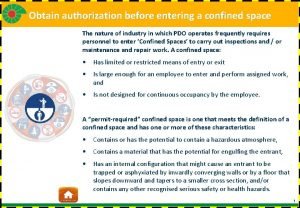
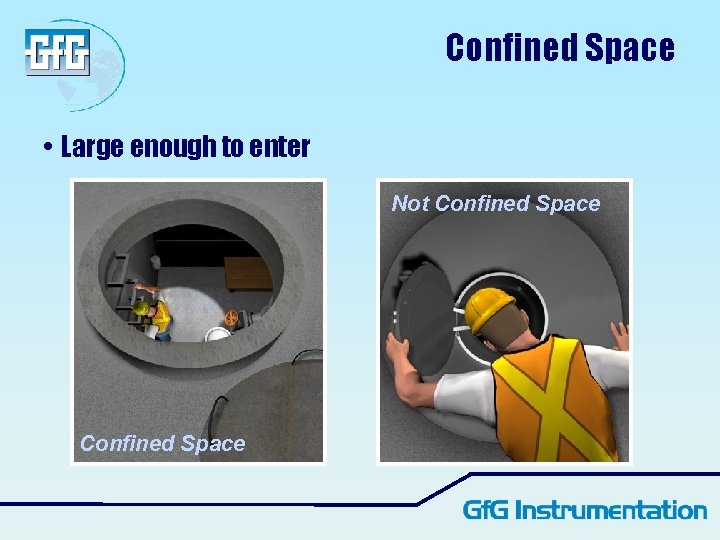
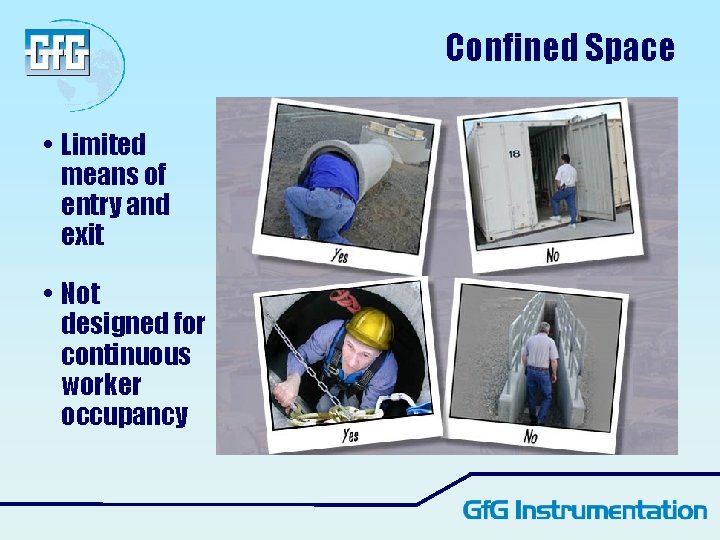
Definition of a Confined Space • Large enough for worker to enter • Are not designed for continuous worker occupancy • Limited openings for entry and exit
Confined Space • Large enough to enter Not Confined Space
Confined Space • Limited means of entry and exit • Not designed for continuous worker occupancy
Permit Required Confined Spaces • One or more of the following: • Hazardous atmosphere (known or potential) • Material with the potential for engulfment • Inwardly sloping walls or dangerously sloping floors or • Contains any other serious safety hazard
Permit Required Confined Spaces Required atmospheric testing • Oxygen • Flammable gases and vapors • Any known or potential toxic contaminants The above tests shall be done with a calibrated direct-reading instrument, and in that order • Before entry it is mandatory to determine that the CS atmosphere is safe! • Periodic monitoring is also required • Monitor and ventilate continuously (recommended) Monitoring determines the air is safe, ventilation keeps it that way!
Non-Permit Confined Spaces • Large enough for worker to enter • Are not designed for continuous worker occupancy • Limited openings for entry and exit • But no other serious safety hazard Elevator Pit
Typical Confined Spaces • • • Storage tanks Ship compartments Process vessels Underground utility vaults Storm drains Boilers Sewers Tunnels Pipelines
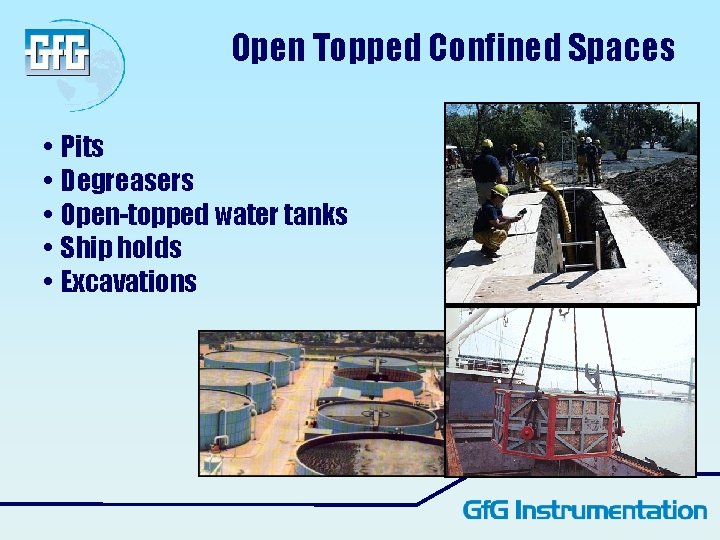
Open Topped Confined Spaces • Pits • Degreasers • Open-topped water tanks • Ship holds • Excavations
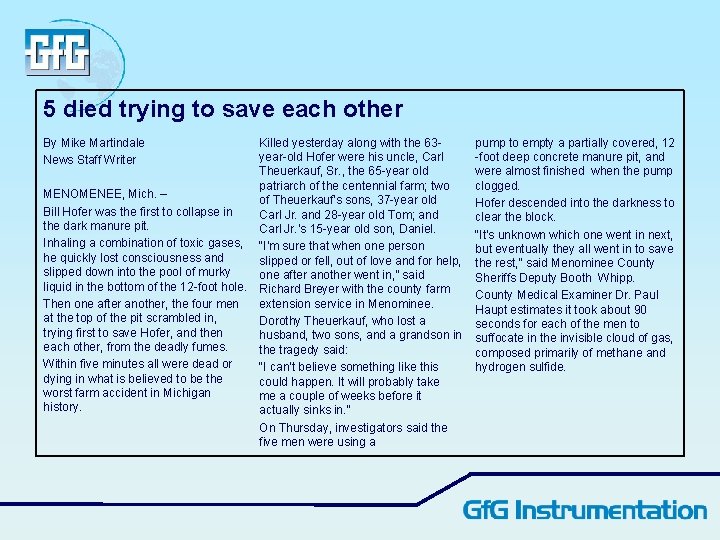
5 died trying to save each other By Mike Martindale News Staff Writer MENOMENEE, Mich. – Bill Hofer was the first to collapse in the dark manure pit. Inhaling a combination of toxic gases, he quickly lost consciousness and slipped down into the pool of murky liquid in the bottom of the 12 -foot hole. Then one after another, the four men at the top of the pit scrambled in, trying first to save Hofer, and then each other, from the deadly fumes. Within five minutes all were dead or dying in what is believed to be the worst farm accident in Michigan history. Killed yesterday along with the 63 year-old Hofer were his uncle, Carl Theuerkauf, Sr. , the 65 -year old patriarch of the centennial farm; two of Theuerkauf’s sons, 37 -year old Carl Jr. and 28 -year old Tom; and Carl Jr. ’s 15 -year old son, Daniel. “I’m sure that when one person slipped or fell, out of love and for help, one after another went in, ” said Richard Breyer with the county farm extension service in Menominee. Dorothy Theuerkauf, who lost a husband, two sons, and a grandson in the tragedy said: “I can’t believe something like this could happen. It will probably take me a couple of weeks before it actually sinks in. ” On Thursday, investigators said the five men were using a pump to empty a partially covered, 12 -foot deep concrete manure pit, and were almost finished when the pump clogged. Hofer descended into the darkness to clear the block. “It’s unknown which one went in next, but eventually they all went in to save the rest, ” said Menominee County Sheriffs Deputy Booth Whipp. County Medical Examiner Dr. Paul Haupt estimates it took about 90 seconds for each of the men to suffocate in the invisible cloud of gas, composed primarily of methane and hydrogen sulfide.
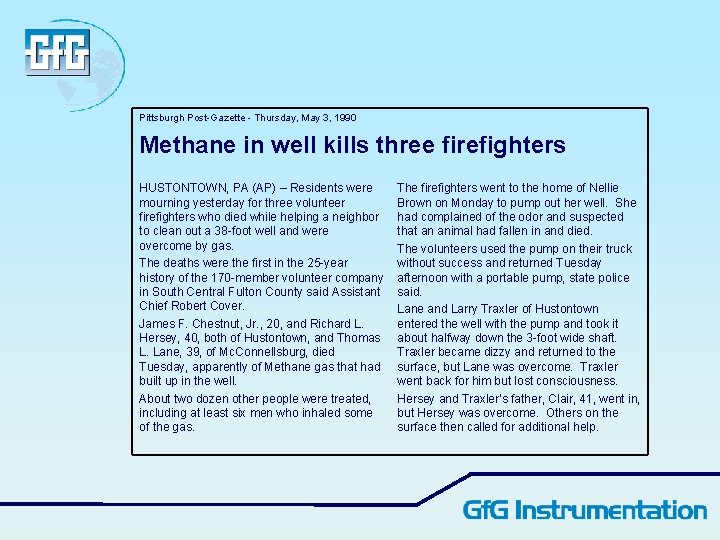
Pittsburgh Post-Gazette - Thursday, May 3, 1990 Methane in well kills three firefighters HUSTONTOWN, PA (AP) – Residents were mourning yesterday for three volunteer firefighters who died while helping a neighbor to clean out a 38 -foot well and were overcome by gas. The deaths were the first in the 25 -year history of the 170 -member volunteer company in South Central Fulton County said Assistant Chief Robert Cover. James F. Chestnut, Jr. , 20, and Richard L. Hersey, 40, both of Hustontown, and Thomas L. Lane, 39, of Mc. Connellsburg, died Tuesday, apparently of Methane gas that had built up in the well. About two dozen other people were treated, including at least six men who inhaled some of the gas. The firefighters went to the home of Nellie Brown on Monday to pump out her well. She had complained of the odor and suspected that an animal had fallen in and died. The volunteers used the pump on their truck without success and returned Tuesday afternoon with a portable pump, state police said. Lane and Larry Traxler of Hustontown entered the well with the pump and took it about halfway down the 3 -foot wide shaft. Traxler became dizzy and returned to the surface, but Lane was overcome. Traxler went back for him but lost consciousness. Hersey and Traxler’s father, Clair, 41, went in, but Hersey was overcome. Others on the surface then called for additional help.
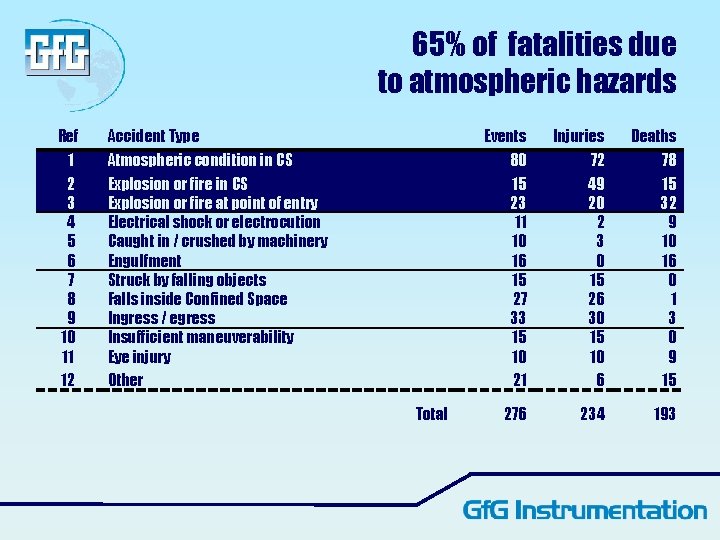
65% of fatalities due to atmospheric hazards Ref 1 2 3 4 5 6 7 8 9 10 11 12 Accident Type Atmospheric condition in CS Explosion or fire at point of entry Electrical shock or electrocution Caught in / crushed by machinery Engulfment Struck by falling objects Falls inside Confined Space Ingress / egress Insufficient maneuverability Eye injury Other Total Events 80 15 23 11 10 16 15 27 33 15 10 21 Injuries 72 49 20 2 3 0 15 26 30 15 10 6 Deaths 78 15 32 9 10 16 0 1 3 0 9 15 276 234 193
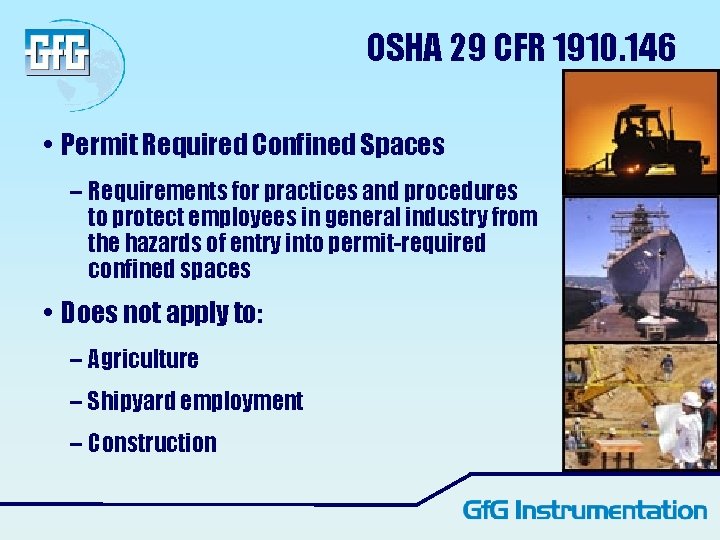
OSHA 29 CFR 1910. 146 • Permit Required Confined Spaces – Requirements for practices and procedures to protect employees in general industry from the hazards of entry into permit-required confined spaces • Does not apply to: – Agriculture – Shipyard employment – Construction
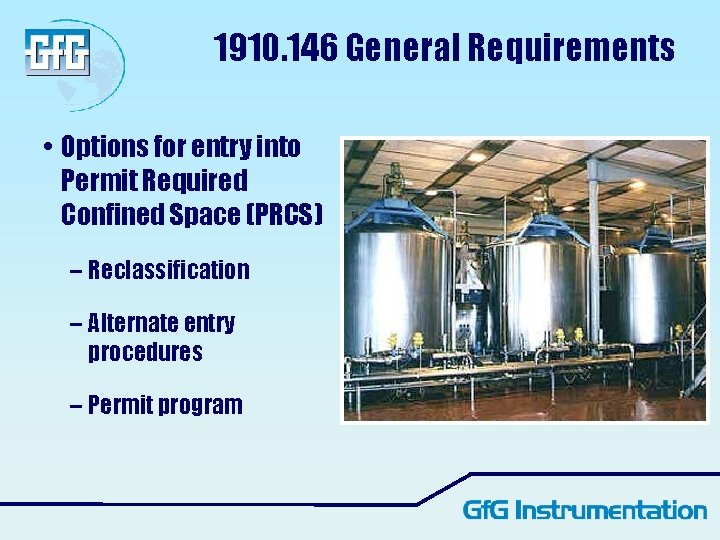
1910. 146 General Requirements • Options for entry into Permit Required Confined Space (PRCS) – Reclassification – Alternate entry procedures – Permit program
Alternate Entry Procedures • If a hazard cannot be eliminated, but can be controlled by continuous forced air ventilation, then alternate entry procedures can be used • Paragraph (c)(5)(i) lists the conditions under which alternate entry procedures can be used • Benefits: – Substantially lower equipment requirements – No attendants required – Solo entries permitted
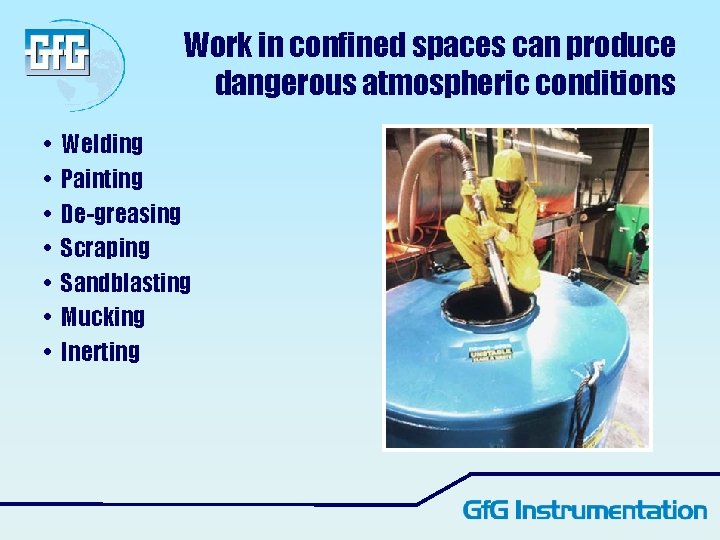
Work in confined spaces can produce dangerous atmospheric conditions • • Welding Painting De-greasing Scraping Sandblasting Mucking Inerting
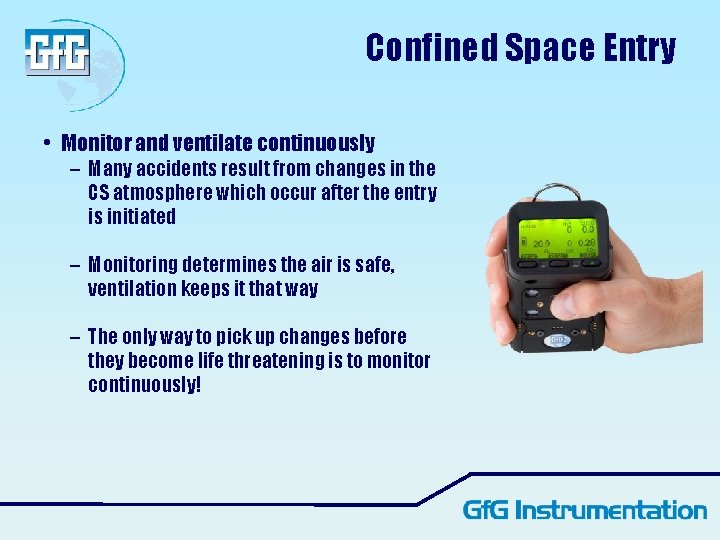
Confined Space Entry • Monitor and ventilate continuously – Many accidents result from changes in the CS atmosphere which occur after the entry is initiated – Monitoring determines the air is safe, ventilation keeps it that way – The only way to pick up changes before they become life threatening is to monitor continuously!
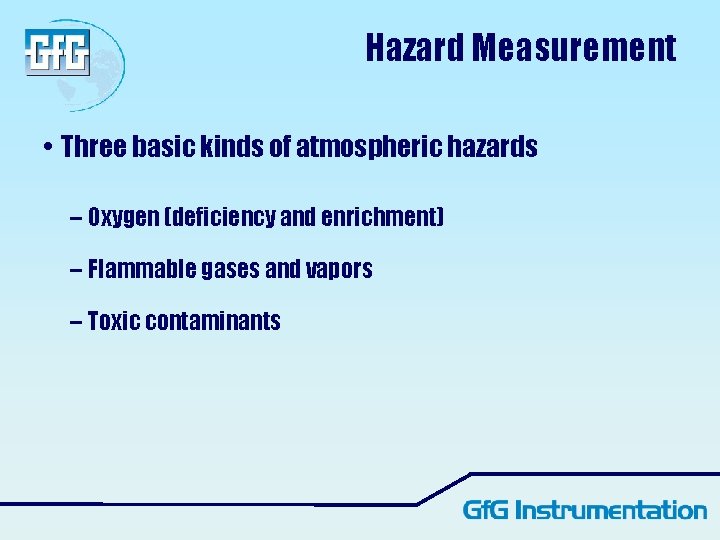
Hazard Measurement • Three basic kinds of atmospheric hazards – Oxygen (deficiency and enrichment) – Flammable gases and vapors – Toxic contaminants
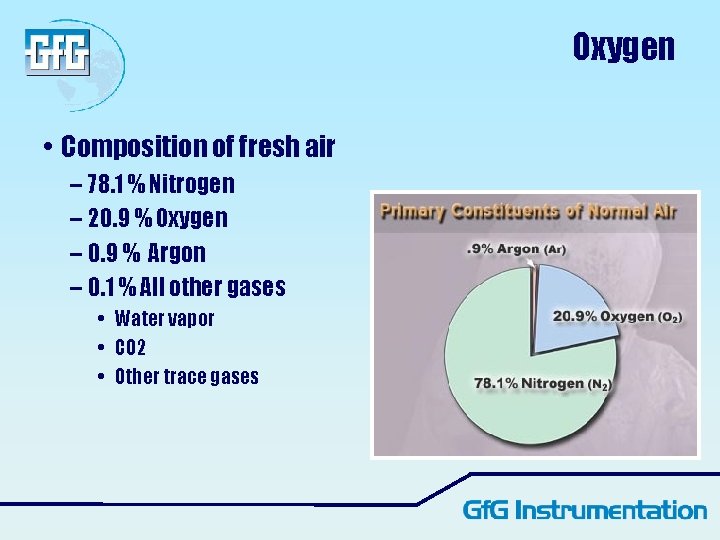
Oxygen • Composition of fresh air – 78. 1 % Nitrogen – 20. 9 % Oxygen – 0. 9 % Argon – 0. 1 % All other gases • Water vapor • CO 2 • Other trace gases
Oxygen • Oxygen Deficiency – Most widely accepted definition: Air is oxygen deficient whenever concentration is less than 19. 5% – OSHA has determined that the leading cause of deaths in confined spaces is asphyxiation
Oxygen Deficiency • Occurrence associated with: • • Confined spaces Unventilated cellars Sewers Wells Mines Ship holds Tanks Enclosures containing inert atmospheres
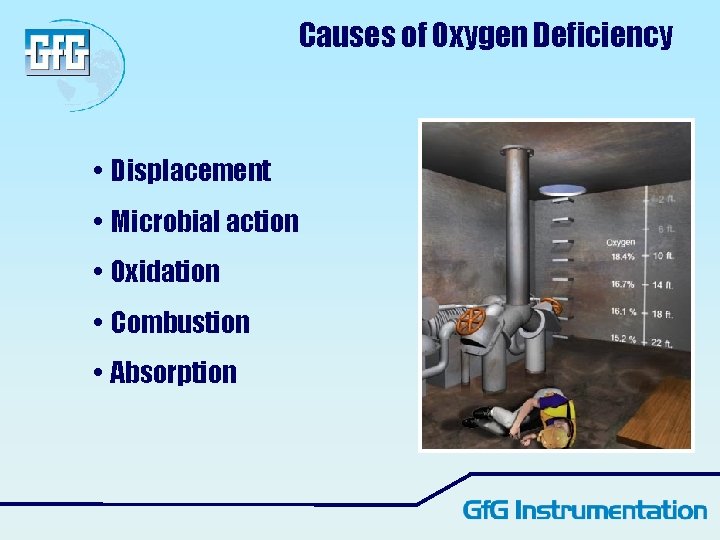
Causes of Oxygen Deficiency • Displacement • Microbial action • Oxidation • Combustion • Absorption
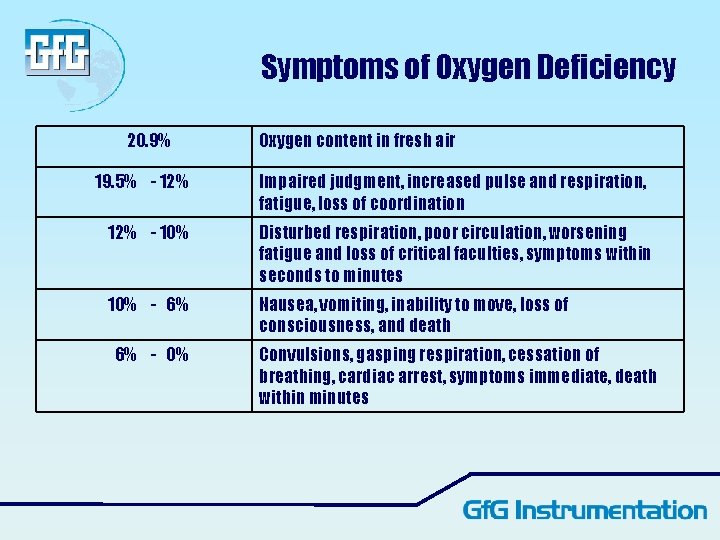
Symptoms of Oxygen Deficiency 20. 9% 19. 5% - 12% Oxygen content in fresh air Impaired judgment, increased pulse and respiration, fatigue, loss of coordination 12% - 10% Disturbed respiration, poor circulation, worsening fatigue and loss of critical faculties, symptoms within seconds to minutes 10% - 6% Nausea, vomiting, inability to move, loss of consciousness, and death 6% - 0% Convulsions, gasping respiration, cessation of breathing, cardiac arrest, symptoms immediate, death within minutes
Toxic Gases and Vapors
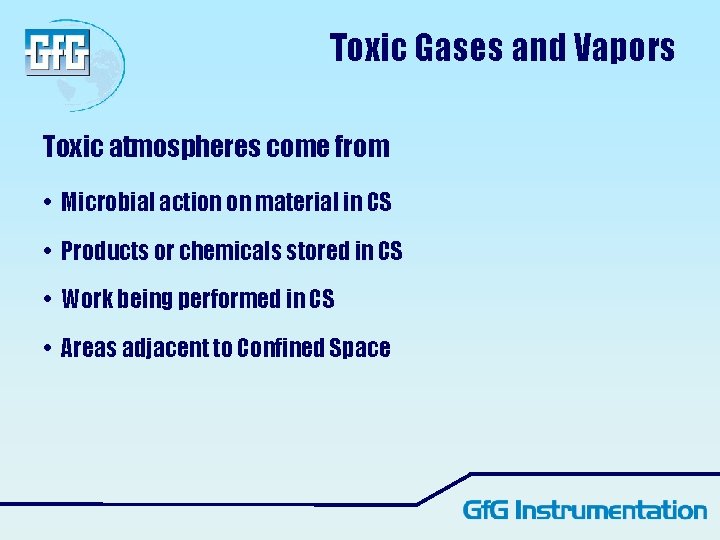
Toxic Gases and Vapors Toxic atmospheres come from • Microbial action on material in CS • Products or chemicals stored in CS • Work being performed in CS • Areas adjacent to Confined Space
Toxic Gases and Vapors • Detection techniques: – Electrochemical Sensors – Photoionization detectors – Non-dispersive infrared (NDIR) – Metal oxide semi-conductor (MOS) – Charge carrier injection (CI)
Permissible Exposure Limit (PEL) • Determined by OSHA • Sets limits for legal unprotected worker exposure to a listed toxic substance • Force of law in USA! • Individual states free to enact stricter, but never less conservative limits • Given in “Parts-per-Million” (ppm) concentrations – 1 % = 10, 000 ppm
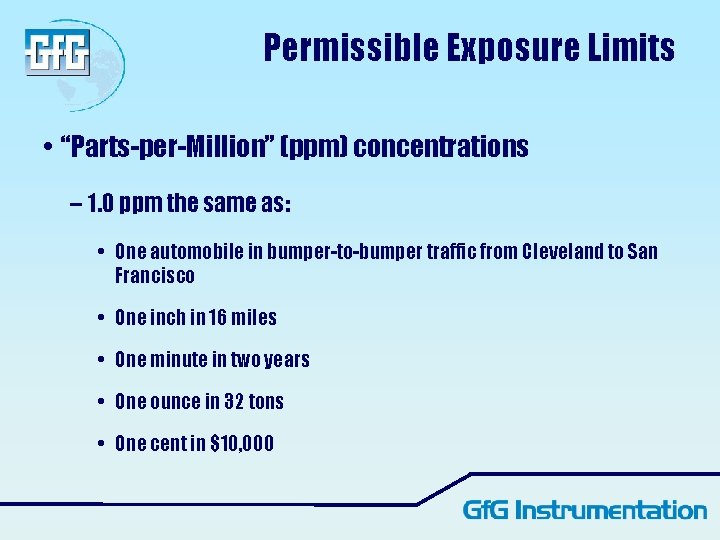
Permissible Exposure Limits • “Parts-per-Million” (ppm) concentrations – 1. 0 ppm the same as: • One automobile in bumper-to-bumper traffic from Cleveland to San Francisco • One inch in 16 miles • One minute in two years • One ounce in 32 tons • One cent in $10, 000
Exposure Limits Defined in Three Ways • Time Weighted Average (TWA) • Ceiling • Short Term Exposure Limit (STEL)
TWA is Projected Value • When monitoring session less than eight hours, TWA projected for the full eight hour shift. • When monitoring session more than 8 hours, TWA calculated on an “equivalent” 8 hour shift basis
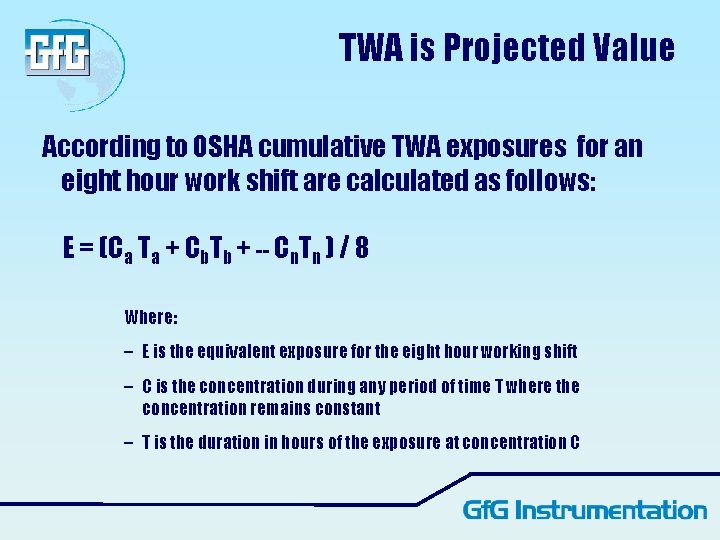
TWA is Projected Value According to OSHA cumulative TWA exposures for an eight hour work shift are calculated as follows: E = (Ca Ta + Cb. Tb +. . Cn. Tn ) / 8 Where: – E is the equivalent exposure for the eight hour working shift – C is the concentration during any period of time T where the concentration remains constant – T is the duration in hours of the exposure at concentration C
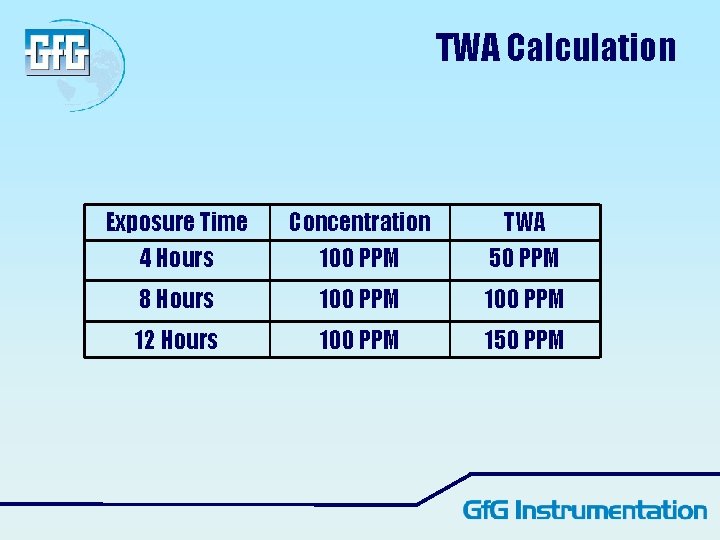
TWA Calculation Exposure Time 4 Hours Concentration 100 PPM TWA 50 PPM 8 Hours 100 PPM 12 Hours 100 PPM 150 PPM
Ceiling Limit • Ceiling is the maximum concentration to which an unprotected worker may be exposed • Ceiling concentration should never be exceeded even for an instant
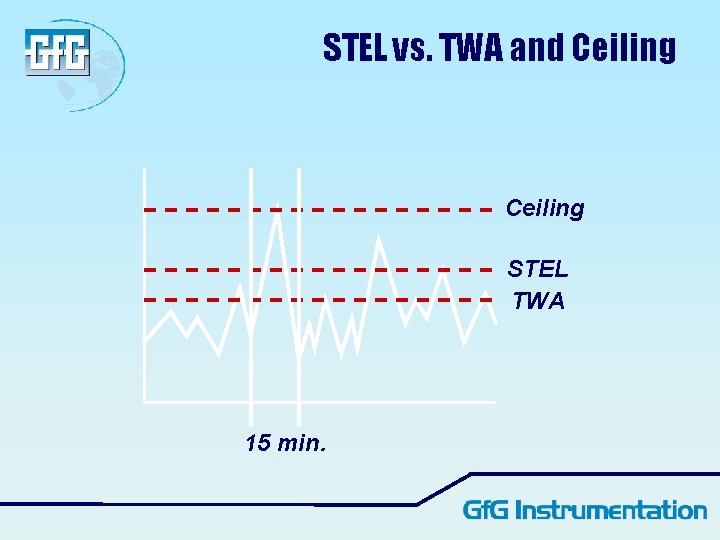
Short Term Exposure Limit (STEL) • Some gases and vapors have an allowable maximum Short Term Exposure Limit which is higher than the 8 hour TWA • STEL values usually calculated as 15 minute, or in some cases, as 5 minute or 10 minute time weighted averages
STEL vs. TWA and Ceiling STEL TWA 15 min.
Carbon Monoxide • Produced as a by product of incomplete combustion • Associated with internal combustion engine exhaust • Vehicles • Pumps • Compressors
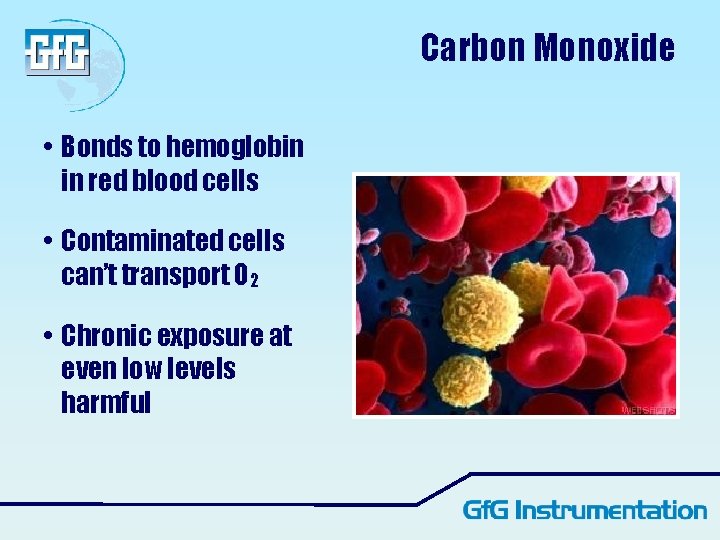
Carbon Monoxide • Bonds to hemoglobin in red blood cells • Contaminated cells can’t transport O 2 • Chronic exposure at even low levels harmful
Characteristics of Carbon Monoxide • Colorless • Odorless • About the same weight as air • Flammable ( LEL is 12. 5 %) • Toxic!
Symptoms of Carbon Monoxide Exposure • Headaches • Fatigue • Nausea and other "Flu-like" symptoms • Loss of consciousness • Brain damage • Coma • Death
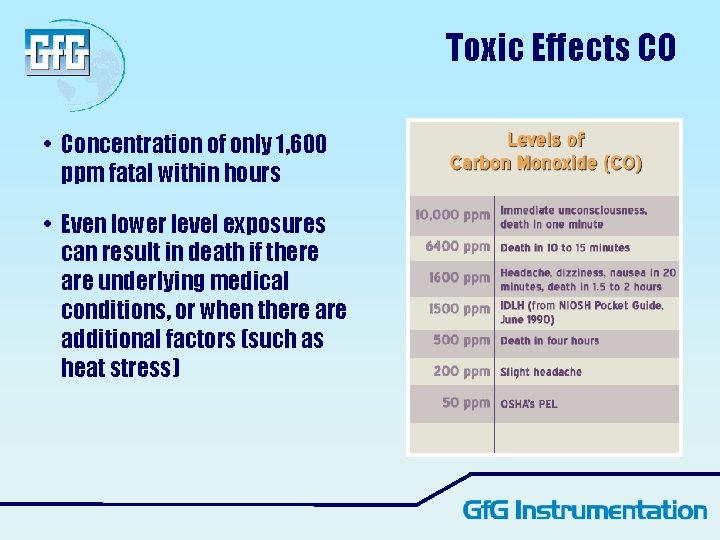
Toxic Effects CO • Concentration of only 1, 600 ppm fatal within hours • Even lower level exposures can result in death if there are underlying medical conditions, or when there additional factors (such as heat stress)
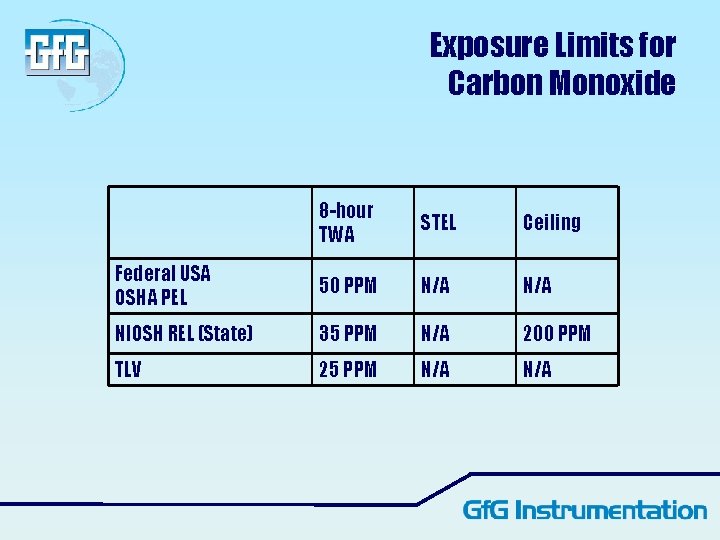
Exposure Limits for Carbon Monoxide 8 -hour TWA STEL Ceiling Federal USA OSHA PEL 50 PPM N/A NIOSH REL (State) 35 PPM N/A 200 PPM TLV 25 PPM N/A
Hydrogen Sulfide • AKA sewer gas • Produced by anaerobic sulfur fixing bacteria • Especially associated with: – Raw sewage – Crude oil – Marine sediments – Tanneries – Pulp and paper industry
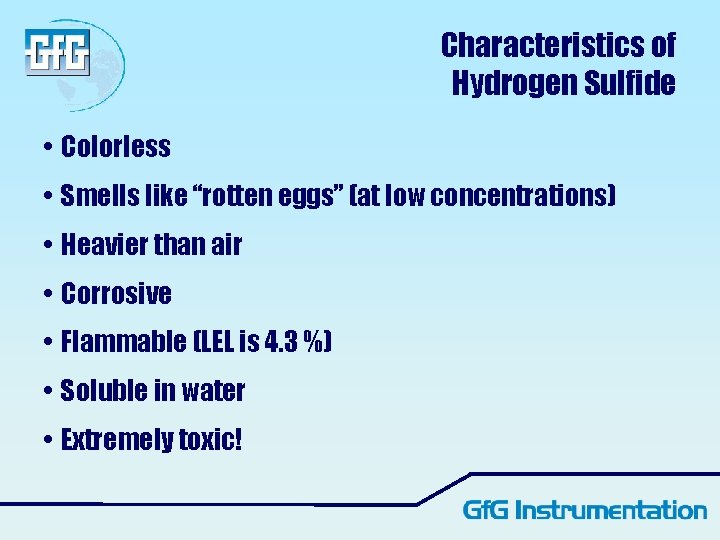
Characteristics of Hydrogen Sulfide • Colorless • Smells like “rotten eggs” (at low concentrations) • Heavier than air • Corrosive • Flammable (LEL is 4. 3 %) • Soluble in water • Extremely toxic!
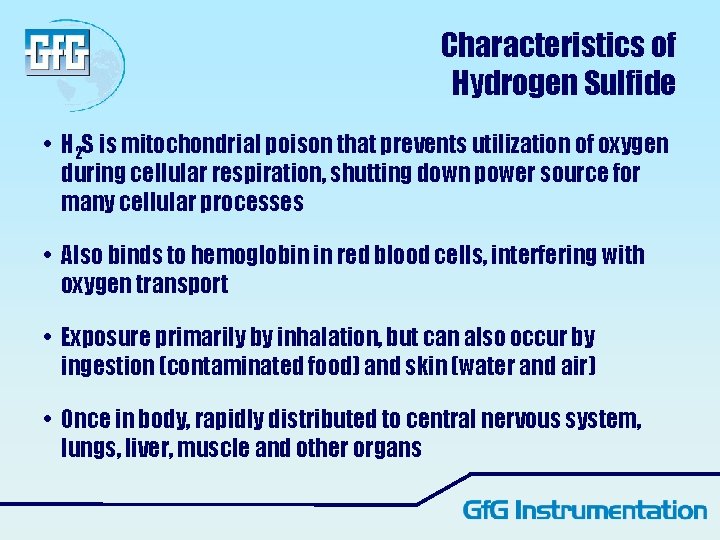
Characteristics of Hydrogen Sulfide • H 2 S is mitochondrial poison that prevents utilization of oxygen during cellular respiration, shutting down power source for many cellular processes • Also binds to hemoglobin in red blood cells, interfering with oxygen transport • Exposure primarily by inhalation, but can also occur by ingestion (contaminated food) and skin (water and air) • Once in body, rapidly distributed to central nervous system, lungs, liver, muscle and other organs
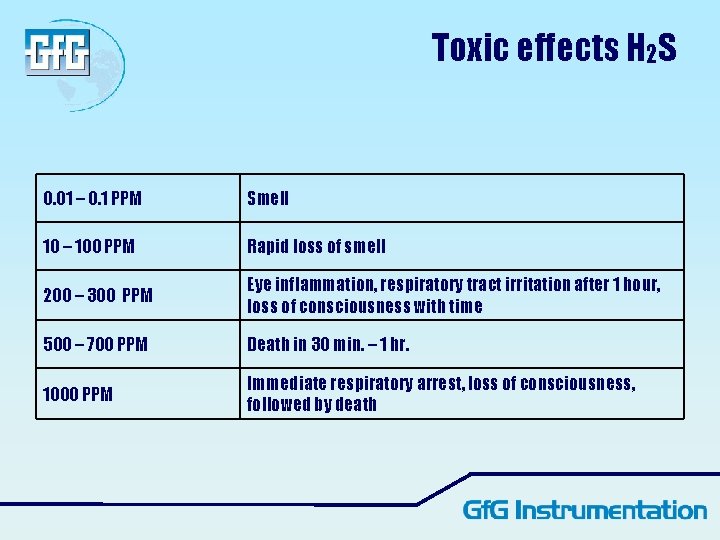
Toxic effects H 2 S 0. 01 – 0. 1 PPM Smell 10 – 100 PPM Rapid loss of smell 200 – 300 PPM Eye inflammation, respiratory tract irritation after 1 hour, loss of consciousness with time 500 – 700 PPM Death in 30 min. – 1 hr. 1000 PPM Immediate respiratory arrest, loss of consciousness, followed by death
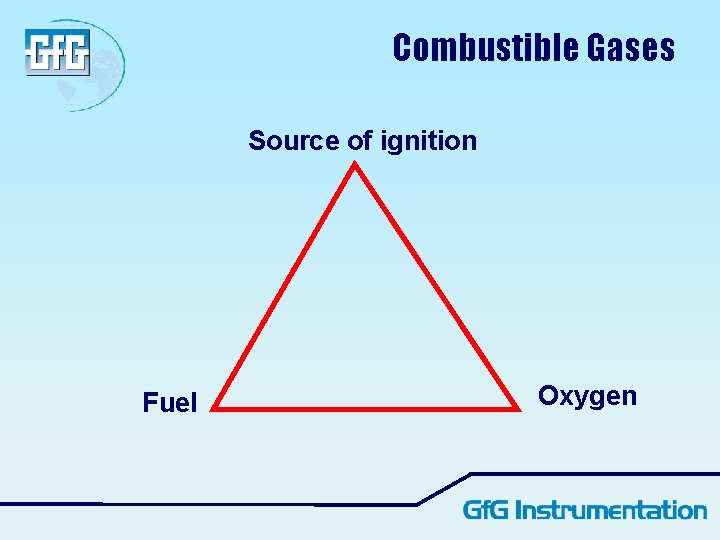
Combustible Gases Source of ignition Fuel Oxygen
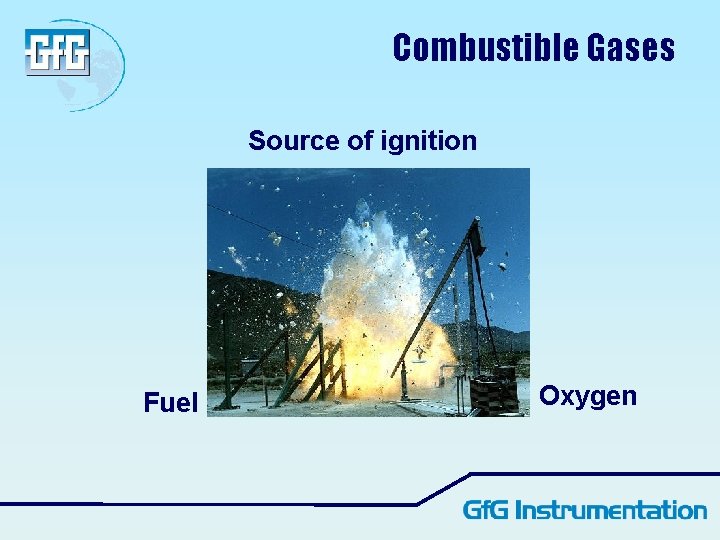
Combustible Gases Source of ignition Fuel Oxygen
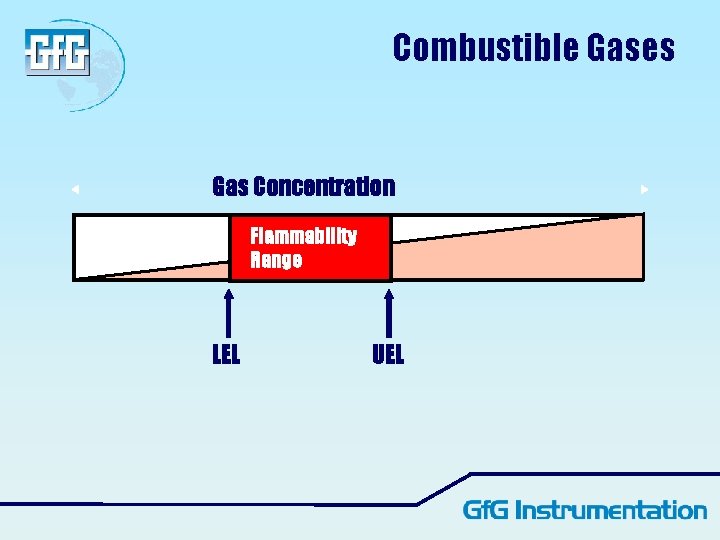
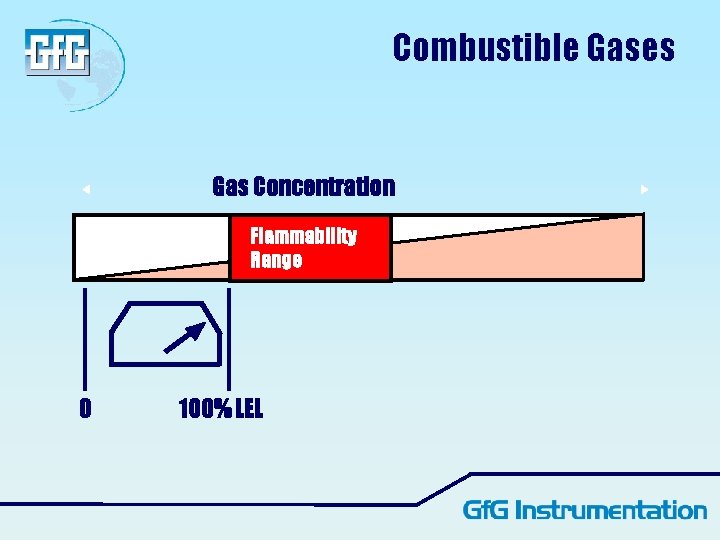
Combustible Gases • Lower Explosion Level (LEL) – 100% LEL is the concentration of combustible gases or vapors which will explode is sufficient oxygen and a source of ignition is present – A combustible hazard exist when the levels exceed 10% LEL
Combustible Gases Gas Concentration Flammability Range LEL UEL
Combustible Gases Gas Concentration Flammability Range 0 100% LEL
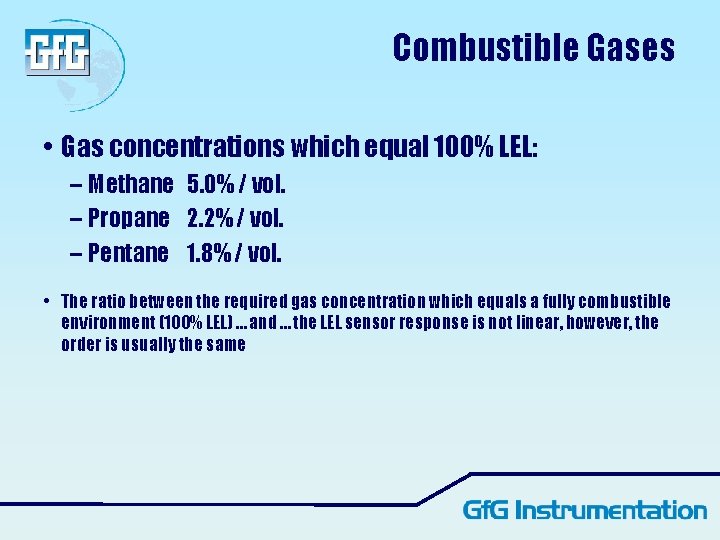
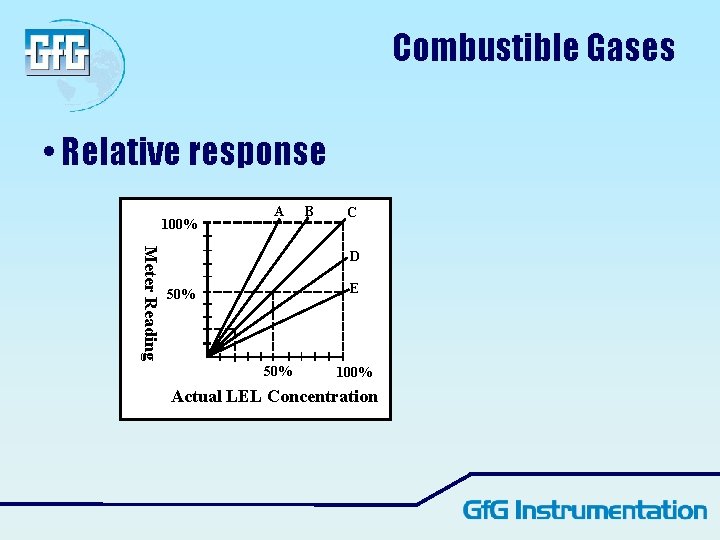
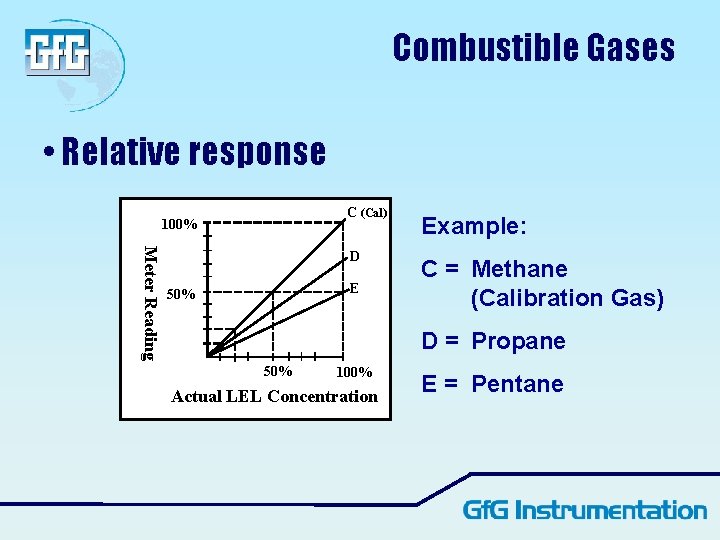
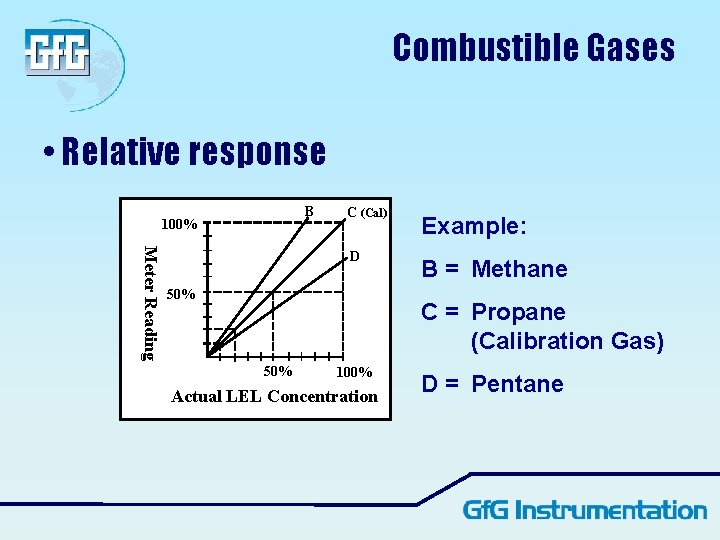
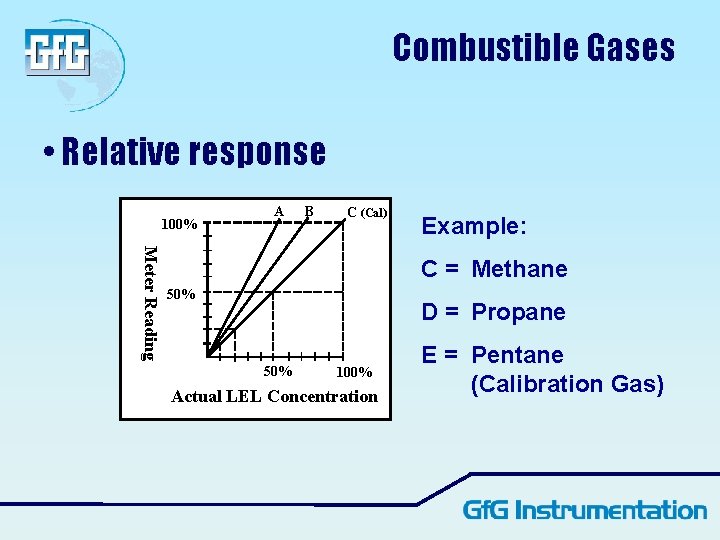
Combustible Gases • Gas concentrations which equal 100% LEL: – Methane 5. 0% / vol. – Propane 2. 2% / vol. – Pentane 1. 8% / vol. • The ratio between the required gas concentration which equals a fully combustible environment (100% LEL) … and … the LEL sensor response is not linear, however, the order is usually the same
Combustible Gases • Relative response 100% A B C Meter Reading D E 50% 100% Actual LEL Concentration
Combustible Gases • Relative response C (Cal) 100% Meter Reading D E 50% Example: C = Methane (Calibration Gas) D = Propane 50% 100% Actual LEL Concentration E = Pentane
Combustible Gases • Relative response B 100% C (Cal) Meter Reading D 50% Example: B = Methane C = Propane (Calibration Gas) 50% 100% Actual LEL Concentration D = Pentane
Combustible Gases • Relative response 100% A B C (Cal) Example: Meter Reading C = Methane 50% D = Propane 50% 100% Actual LEL Concentration E = Pentane (Calibration Gas)
Combustible Gas Sensor Poisoning
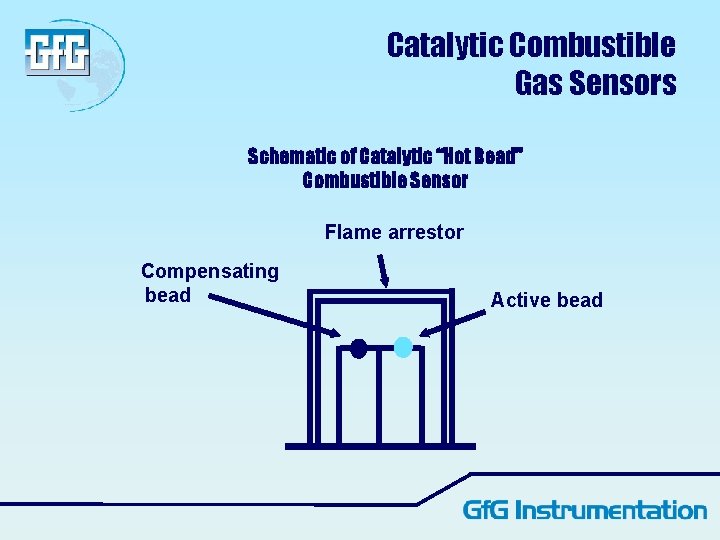
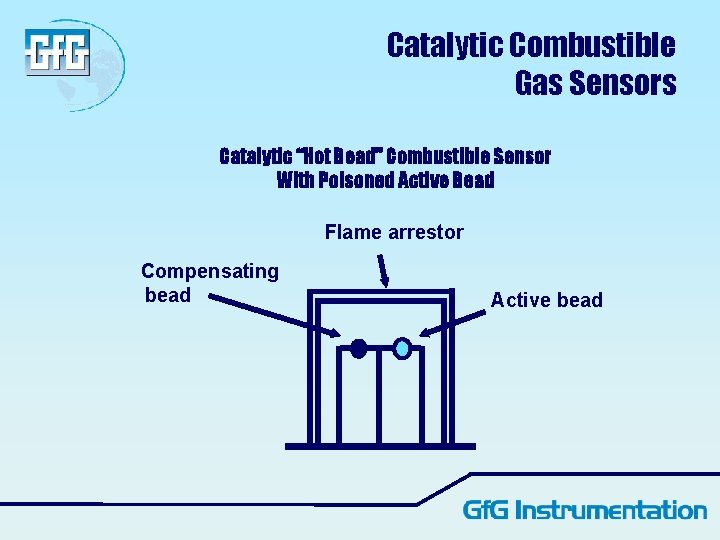
Catalytic Combustible Gas Sensors Schematic of Catalytic “Hot Bead” Combustible Sensor Flame arrestor Compensating bead Active bead
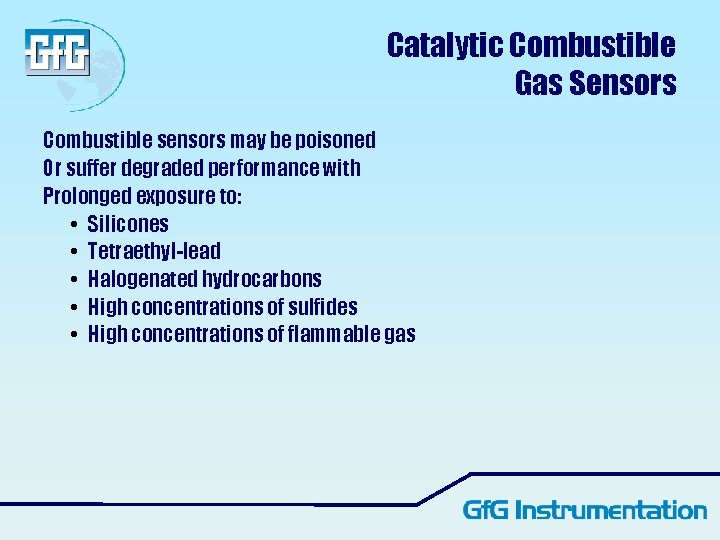
Catalytic Combustible Gas Sensors Combustible sensors may be poisoned Or suffer degraded performance with Prolonged exposure to: • Silicones • Tetraethyl-lead • Halogenated hydrocarbons • High concentrations of sulfides • High concentrations of flammable gas
Catalytic Combustible Gas Sensors Catalytic “Hot Bead” Combustible Sensor With Poisoned Active Bead Flame arrestor Compensating bead Active bead
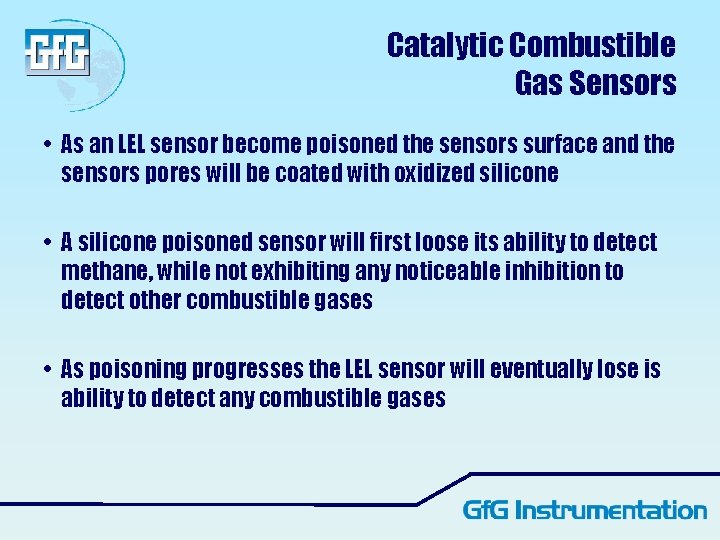
Catalytic Combustible Gas Sensors • As an LEL sensor become poisoned the sensors surface and the sensors pores will be coated with oxidized silicone • A silicone poisoned sensor will first loose its ability to detect methane, while not exhibiting any noticeable inhibition to detect other combustible gases • As poisoning progresses the LEL sensor will eventually lose is ability to detect any combustible gases
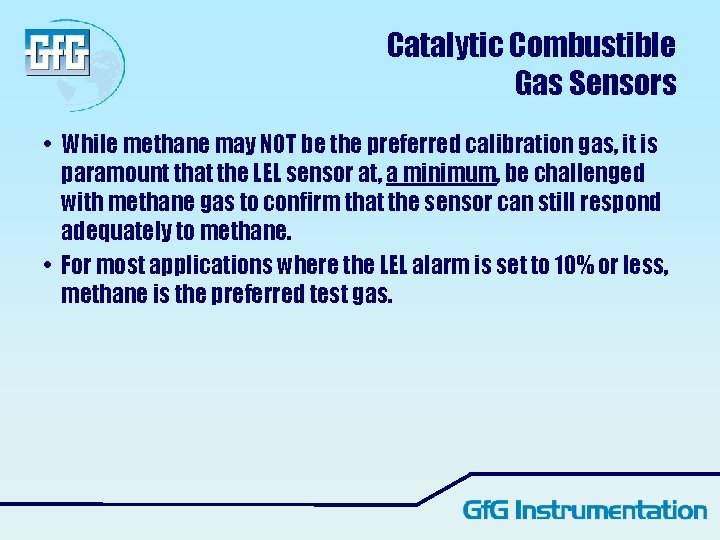
Catalytic Combustible Gas Sensors • While methane may NOT be the preferred calibration gas, it is paramount that the LEL sensor at, a minimum, be challenged with methane gas to confirm that the sensor can still respond adequately to methane. • For most applications where the LEL alarm is set to 10% or less, methane is the preferred test gas.
Pitfalls in Gas Detection Two biggest pitfalls • Can the gas detector detect gas? • Will the atmosphere to be tested get to the detector?
Verification / Calibration • Verify accuracy on a regular basis to guard against any unexpected loss of sensitivity • The safest course of action is to expose the sensors to known concentration test gas before each day’s use! • Never exceed 30 days between verification of sensor accuracy • Verification is also called “Bump Test”
“Bump” Test Vs. Calibration • A “bump” test only provides verification of sensor performance • Only necessary to adjust sensor sensitivity if readings are off by more than 10% (Reading that are too high are not a safety concern) • Calibration includes adjustment
Verification / Calibration Loss of sensitivity can be due to: • Aging or desiccation of the sensors, • Mechanical damage due to dropping or immersion • Exposure to sensor poisons present in the atmosphere being monitored • Loss of sensitivity due to other causes Remember bad or depleted calibration gas may be the reason for apparent deficient sensor response
Pre-entry Methods • Lowering the gas detector into the space to obtain readings in diffusion mode • Using a sample-draw system to draw a sample out of the space
Diffusion Method • Enable the Peak-hold feature to allow the monitor to latch on to the worst case measurements • Turn on the flash-lights built in to the detector is available • Allow the detector to be at each level to be tested long enough obtain a stable reading (20 -30 seconds)
Remote Sampling Methods • Always test sampling system for leakage and proper flow be for sampling the remote space • Hand squeeze aspirators can be tested in just seconds by blocking the inlet and observe that the aspirator remains deflated till the blockage is removed. • Motorized pumps should be tested by blocking the inlet at activating the low flow alarm
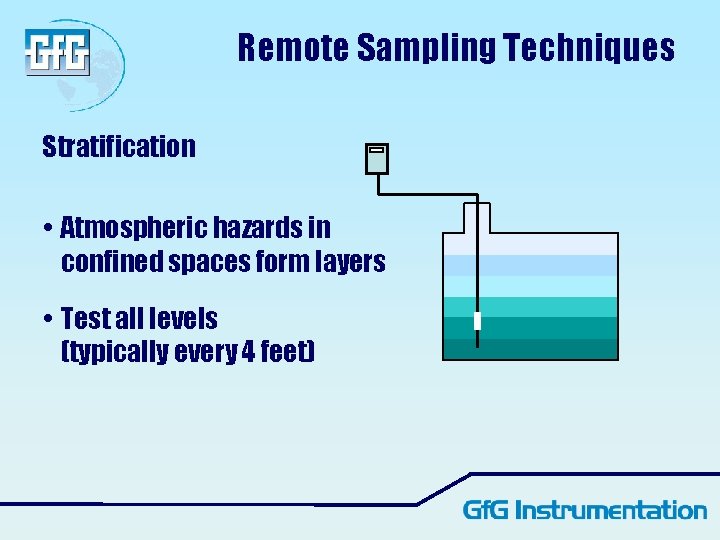
Remote Sampling Techniques • Make sure to sample long enough for the sample to reach the sensors – Motorized Systems: 1 Sec / Foot or 3 Sec / Meter – Manual Systems: 1 Squeeze /Foot or 3 Squeezes per Meter • Make sure to sample for sufficient additional time to make the sensors stabilize (20 -30 seconds).
Remote Sampling Techniques Stratification • Atmospheric hazards in confined spaces form layers • Test all levels (typically every 4 feet)
Questions