
7 12 VENTILATION PROCEDURES ENABLING OBJECTIVES DESCRIBE the
7. 12 VENTILATION PROCEDURES
ENABLING OBJECTIVES • DESCRIBE the objectives for ventilating a compartment for a GFE evolution • DEFINE the terms used to describe ventilation during a GFE evolution • DESCRIBE the procedures for ventilating a compartment for a GFE evolution • DESCRIBE the common difficulties encountered in preparing a compartment for ventilation and the recommended solution to overcome them • CALCULATE the rate of ventilation required to provide general ventilation
ENABLING OBJECTIVES • Given the rated capacity of portable ventilation equipment, CALCULATE its effective capacity • Given solvent concentration in a paint mixture, CALCULATE the rate of dilution ventilation required for a spray painting operation • STATE the flow rate required for local exhaust ventilation during welding operations
REFERENCES: (a) NSTM Chapter 074, Vol 3, Rev 4 (b) OPNAVINST 5100. 19 D, Section C-15
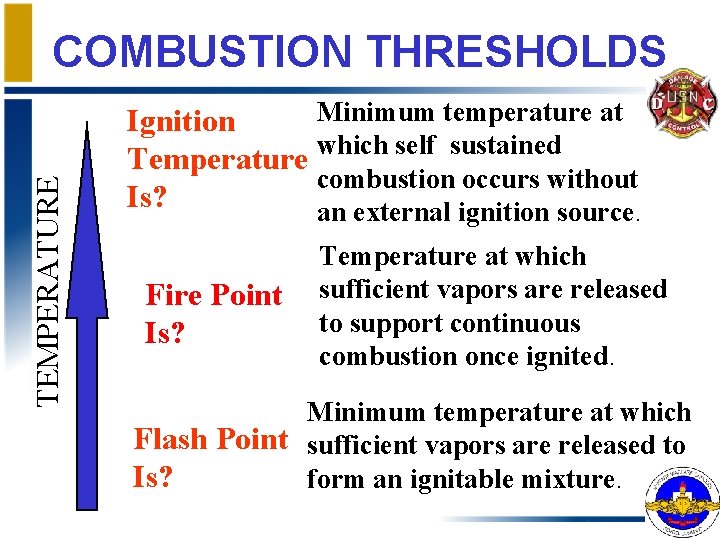
TEMPERATURE COMBUSTION THRESHOLDS Minimum temperature at Ignition which self sustained Temperature combustion occurs without Is? an external ignition source. Fire Point Is? Temperature at which sufficient vapors are released to support continuous combustion once ignited. Minimum temperature at which Flash Point sufficient vapors are released to Is? form an ignitable mixture.
VENTILATION - Definition • Introduction and movement of fresh air into a space • Removes contaminated air • Controls the temperature of the space or tank
When is Ventilation Required? • Entry into a closed compartment or confined space • Maintain Gas Free Conditions • Cleaning a tank or void • Welding, cutting, brazing • Painting, coating or use of solvents to remove paint • Abrasive blasting • Fire extinguishment
VENTILATION - LIMITATIONS • Providing • Flammable, O 2 temporary deficient or enriched ventilation using atmospheres are the portable fans or result of inadequate natural or mechanical blowers can limit hazards to an ventilation acceptable level • Ship configuration, portable blowers availability, duct limits restrict ventilation
VENTILATION OBJECTIVES • Remove contaminated air from space • Limit flammable atmospheres to 10% or less of LEL • Limit toxic concentrations to PEL • Capture & remove contaminants or dilute to safe levels • Provide fresh, breathable air for health and comfort
VENTILATION PRIOR TO ENTRY “There will be a minimum of two air changes prior to entry into a confined space unless installed ventilation is in operation” NSTM 074 -21. 3
EXAMPLE • SPACE 20 ft X 10 ft = 2000 ft 3 • RAMFAN VOLUMETRIC FLOW RATE = 2000 FT 3 / MIN • How many minutes needed for two complete air changes? • 2 MINUTES NEEDED FOR 2 COMPLETE AIR CHANGES
TYPES OF VENTILATION - GENERAL - LOCAL EXHAUST - DILUTION
GENERAL VENTILATION • Provides uncontaminated air for breathing or general comfort • Supply or Exhaust • ONE COMPLETE AIR CHANGE EVERY 3 MINUTES
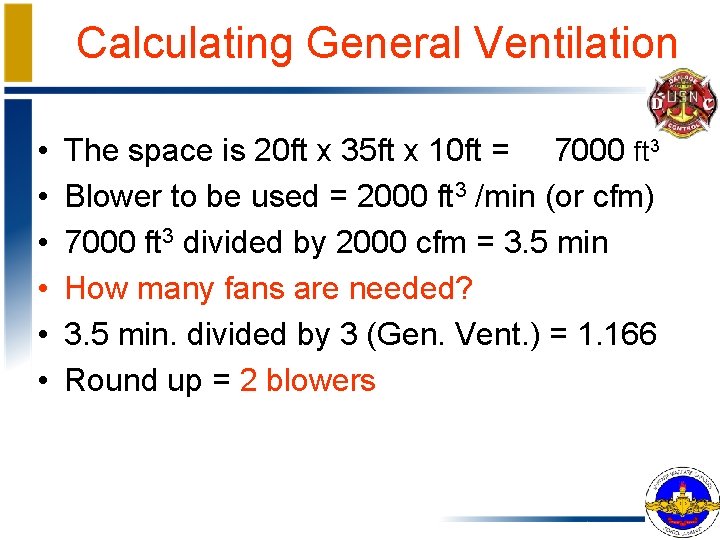
Calculating General Ventilation • • • The space is 20 ft x 35 ft x 10 ft = 7000 ft 3 Blower to be used = 2000 ft 3 /min (or cfm) 7000 ft 3 divided by 2000 cfm = 3. 5 min How many fans are needed? 3. 5 min. divided by 3 (Gen. Vent. ) = 1. 166 Round up = 2 blowers
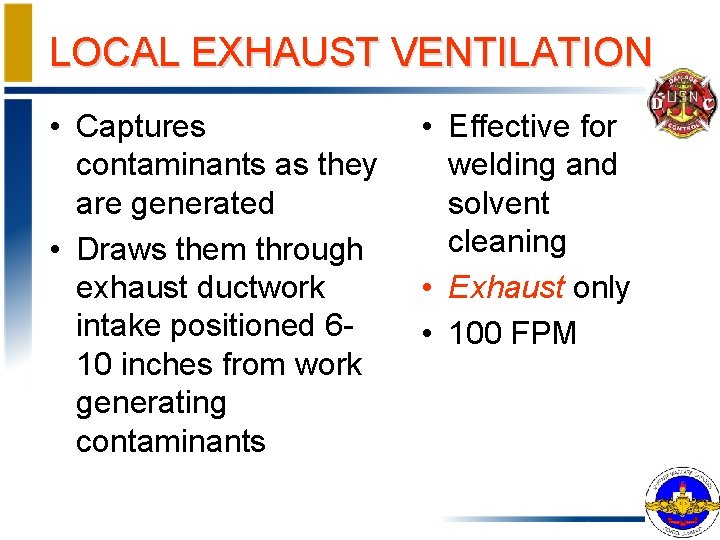
LOCAL EXHAUST VENTILATION • Captures contaminants as they are generated • Draws them through exhaust ductwork intake positioned 610 inches from work generating contaminants • Effective for welding and solvent cleaning • Exhaust only • 100 FPM
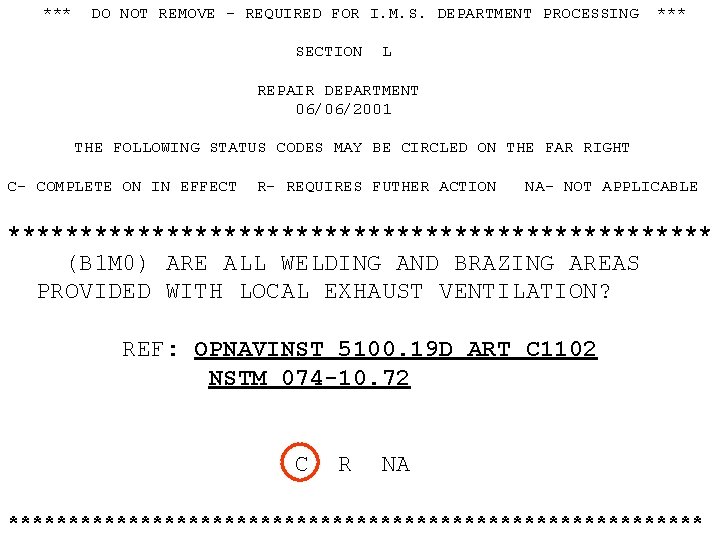
*** DO NOT REMOVE - REQUIRED FOR I. M. S. DEPARTMENT PROCESSING *** SECTION L REPAIR DEPARTMENT 06/06/2001 THE FOLLOWING STATUS CODES MAY BE CIRCLED ON THE FAR RIGHT C- COMPLETE ON IN EFFECT R- REQUIRES FUTHER ACTION NA- NOT APPLICABLE ************************* (B 1 M 0) ARE ALL WELDING AND BRAZING AREAS PROVIDED WITH LOCAL EXHAUST VENTILATION? REF: OPNAVINST 5100. 19 D ART C 1102 NSTM 074 -10. 72 C R NA *****************************
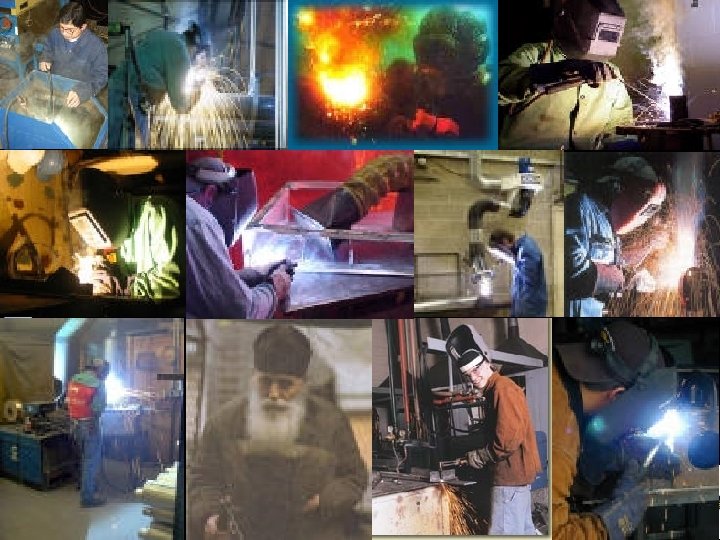
DILUTION VENTILATION • Portable, locally rigged exhaust ventilation • Replaces contaminated air with fresh air, diluting concentration • Used to control flammable, O 2 deficient/enriched areas • SAR may be required when toxics are being generated
VENTILATION CONSIDERATIONS èNeeded capacity (how many fans) based on space size èNeeded ducting based on space layout and obstructions èInitial atmospheric test results èPotential hazards
VENTILATING FLAMMABLE ATMOSPHERES • Equipment explosion proof or intrinsically safe • Equipment grounded to control static electricity
BLOWING VS DRAWING “NEVER BLOW AIR INTO A SPACE WHICH CONTAINS FLAMMABLE OR TOXIC PARTICLES” NSTM 074 -21. 6. 4
WHEN MAY I BLOW AIR INTO A SPACE?
BLOWING AIR ÖNo flammables present or being generated ÖNo toxics present or being generated ÖOnly to provide clean air for breathing and comfort
EXHAUST CONFIGURATION REFERRED OVER SUPPLY • Supply can produce a static charge build-up • Supply could introduce foreign objects into space • Supply can result in contamination of adjacent spaces
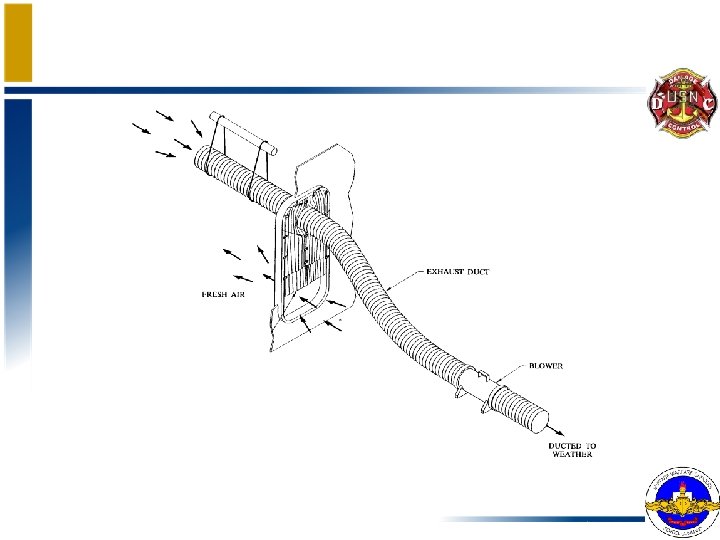
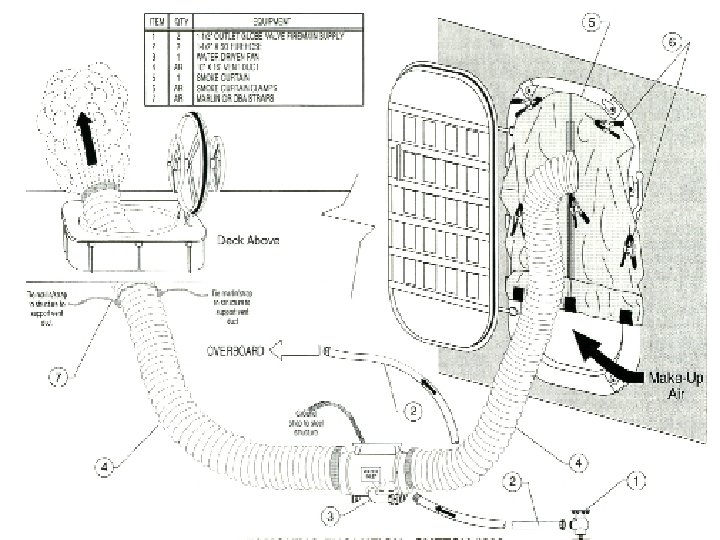
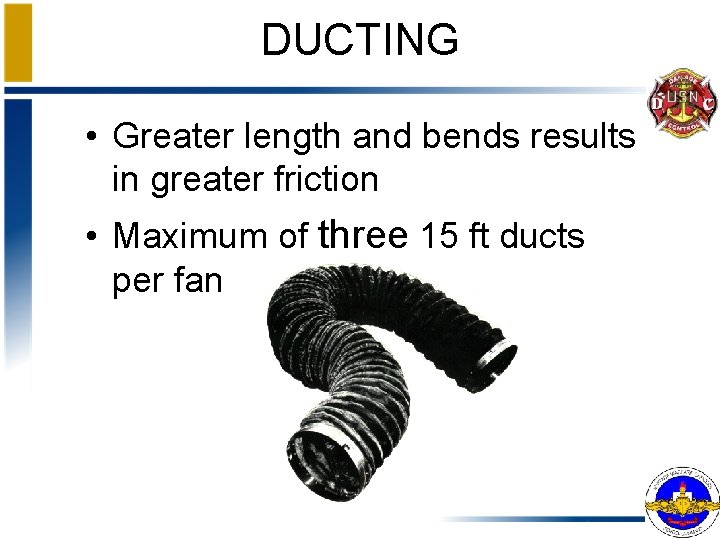
DUCTING • Greater length and bends results in greater friction • Maximum of three 15 ft ducts per fan
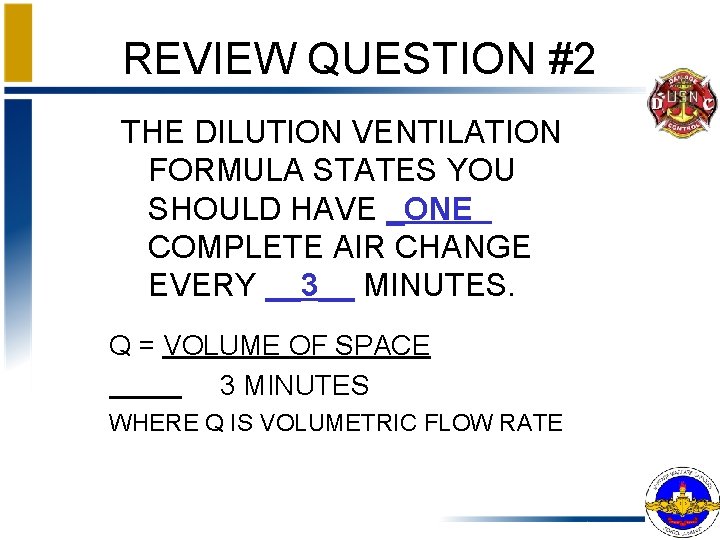
DILUTION VENTILATION VOLUME FORMULA • One complete air change every 3 minutes
EXAMPLE • The space is 15 Ft x 20 ft x 10 ft • What volumetric flow rate is needed?
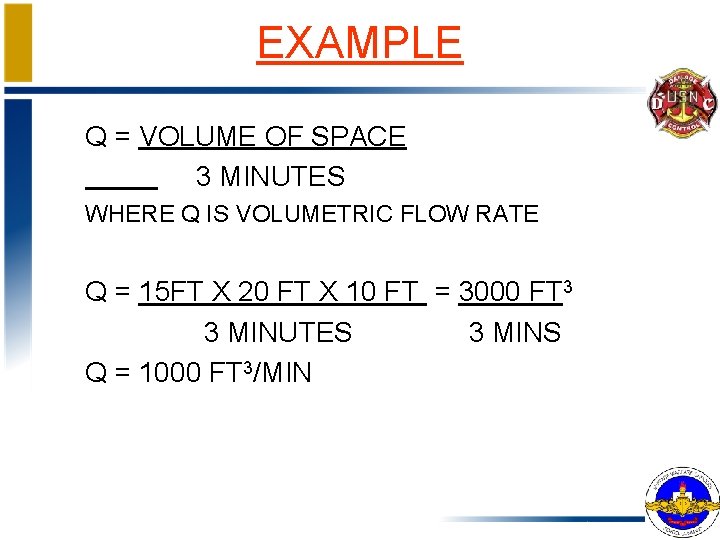
EXAMPLE Q = VOLUME OF SPACE 3 MINUTES WHERE Q IS VOLUMETRIC FLOW RATE Q = 15 FT X 20 FT X 10 FT = 3000 FT 3 3 MINUTES 3 MINS Q = 1000 FT 3/MIN
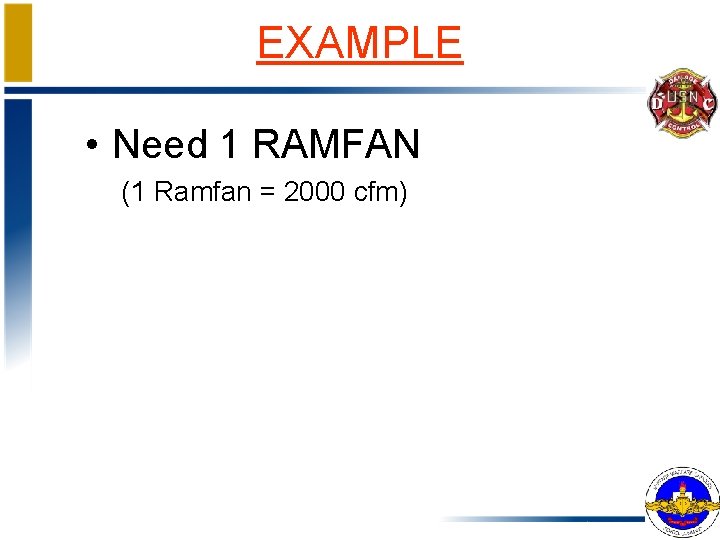
EXAMPLE • Need 1 RAMFAN (1 Ramfan = 2000 cfm)
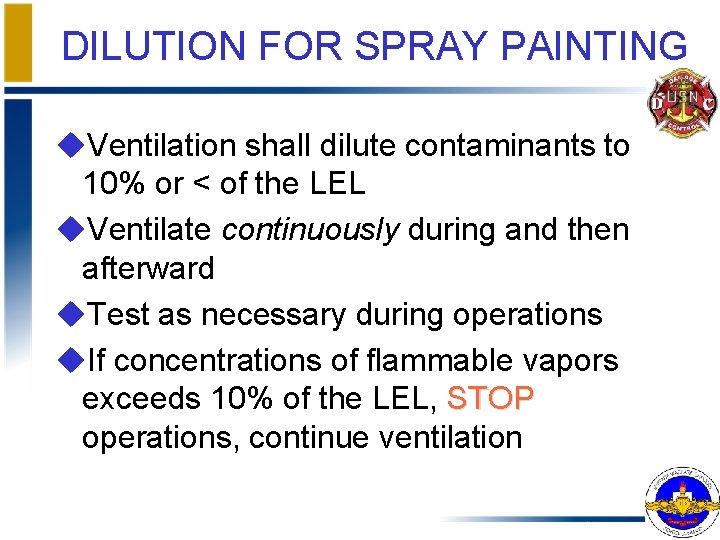
DILUTION FOR SPRAY PAINTING u. Ventilation shall dilute contaminants to 10% or < of the LEL u. Ventilate continuously during and then afterward u. Test as necessary during operations u. If concentrations of flammable vapors exceeds 10% of the LEL, STOP operations, continue ventilation
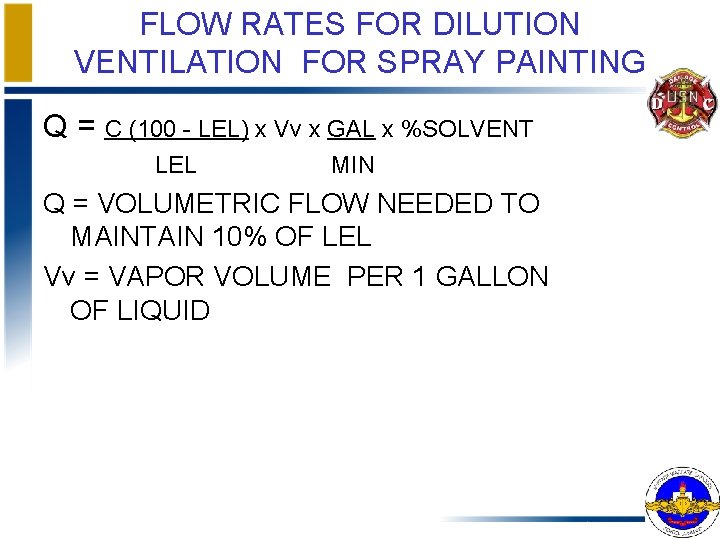
FLOW RATES FOR DILUTION VENTILATION FOR SPRAY PAINTING Q = C (100 - LEL) x Vv x GAL x %SOLVENT LEL MIN Q = VOLUMETRIC FLOW NEEDED TO MAINTAIN 10% OF LEL Vv = VAPOR VOLUME PER 1 GALLON OF LIQUID
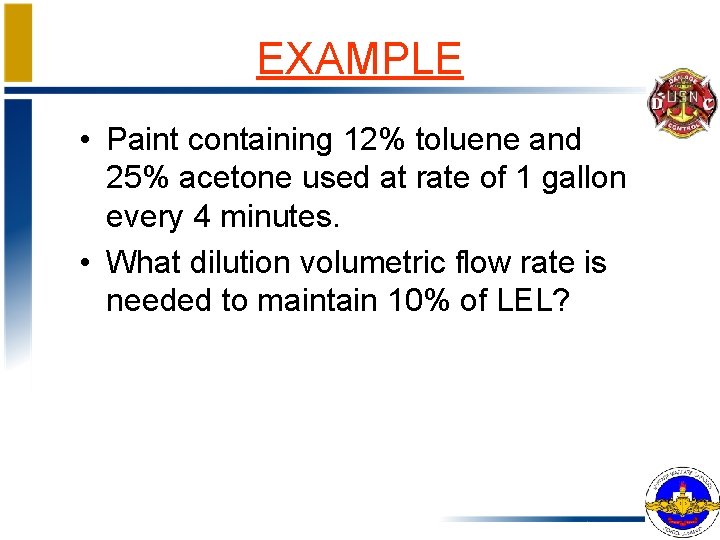
EXAMPLE • Paint containing 12% toluene and 25% acetone used at rate of 1 gallon every 4 minutes. • What dilution volumetric flow rate is needed to maintain 10% of LEL?
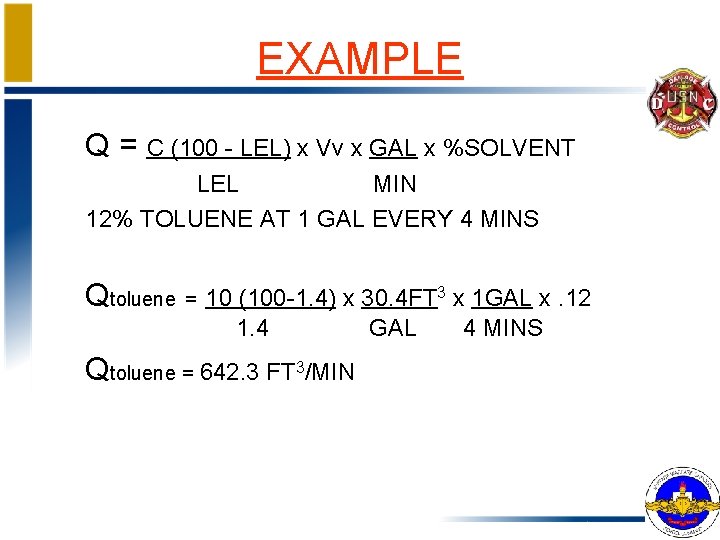
EXAMPLE Q = C (100 - LEL) x Vv x GAL x %SOLVENT LEL MIN 12% TOLUENE AT 1 GAL EVERY 4 MINS Qtoluene = 10 (100 -1. 4) x 30. 4 FT 3 x 1 GAL x. 12 1. 4 Qtoluene = 642. 3 FT 3/MIN GAL 4 MINS
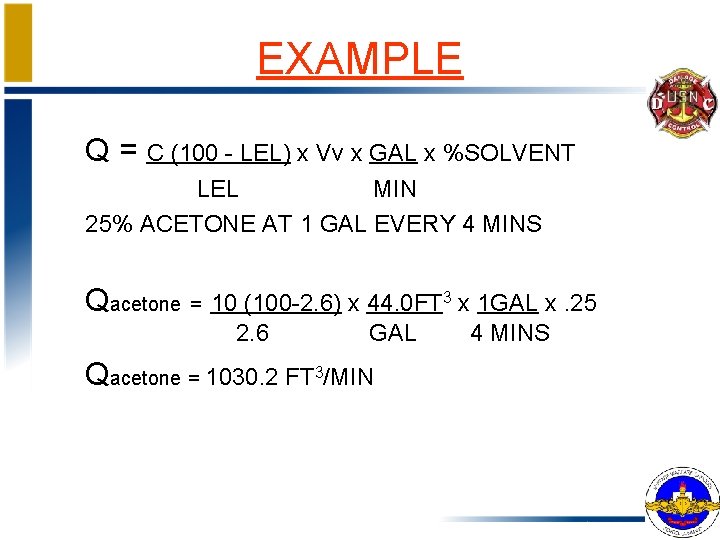
EXAMPLE Q = C (100 - LEL) x Vv x GAL x %SOLVENT LEL MIN 25% ACETONE AT 1 GAL EVERY 4 MINS Qacetone = 10 (100 -2. 6) x 44. 0 FT 3 x 1 GAL x. 25 2. 6 GAL Qacetone = 1030. 2 FT 3/MIN 4 MINS
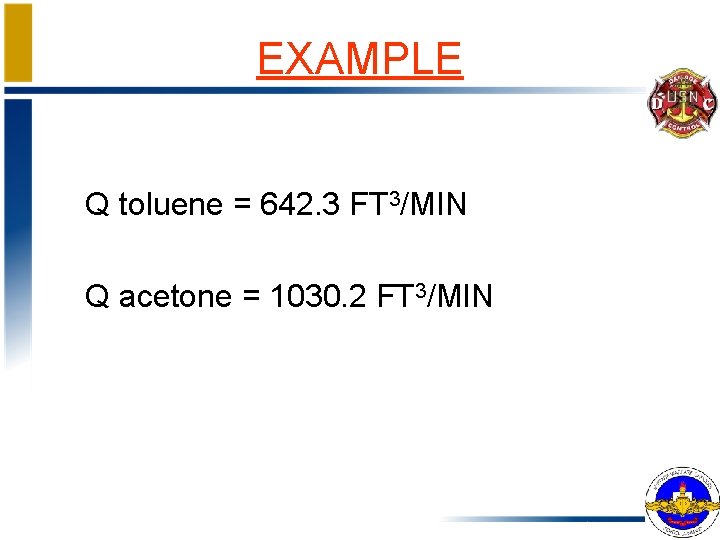
EXAMPLE Q toluene = 642. 3 FT 3/MIN Q acetone = 1030. 2 FT 3/MIN
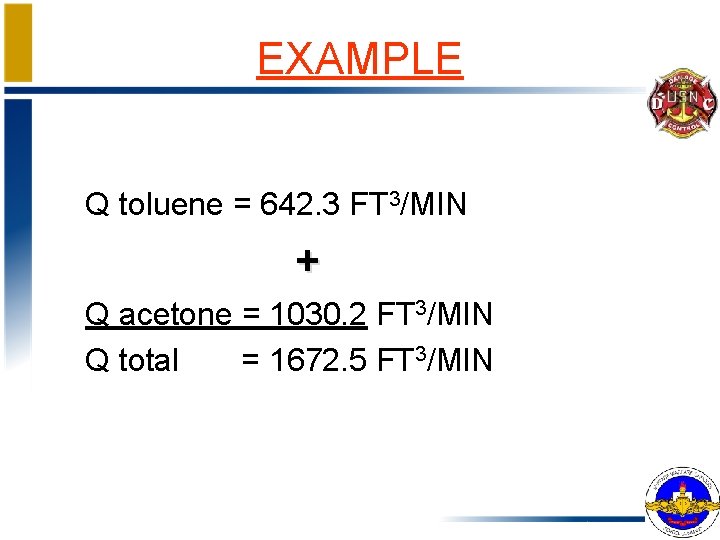
EXAMPLE Q toluene = 642. 3 FT 3/MIN + Q acetone = 1030. 2 FT 3/MIN Q total = 1672. 5 FT 3/MIN
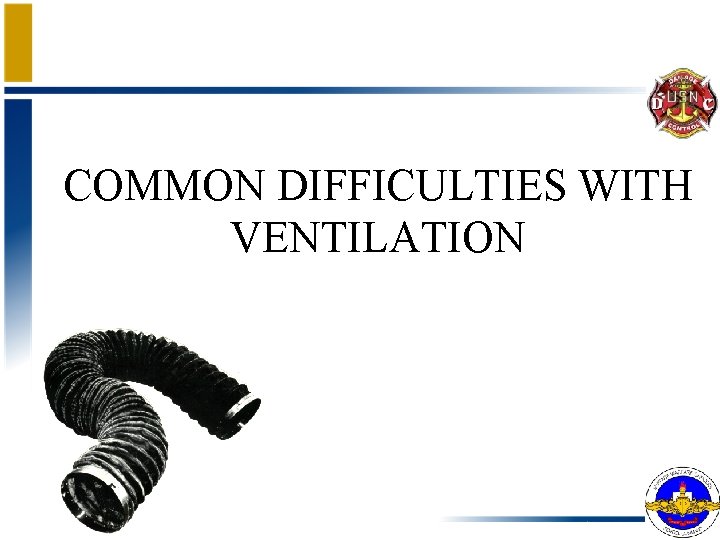
COMMON DIFFICULTIES WITH VENTILATION
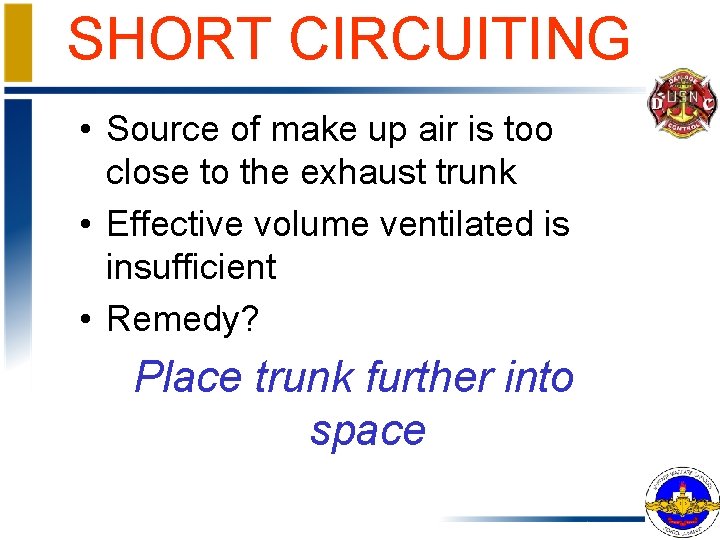
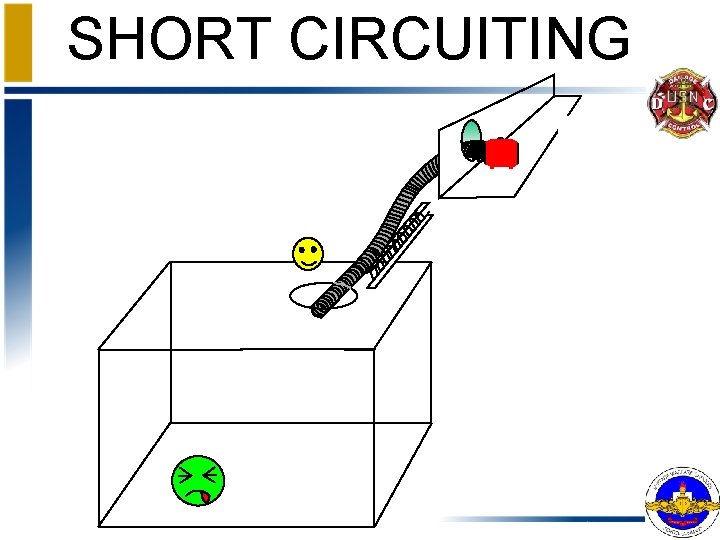
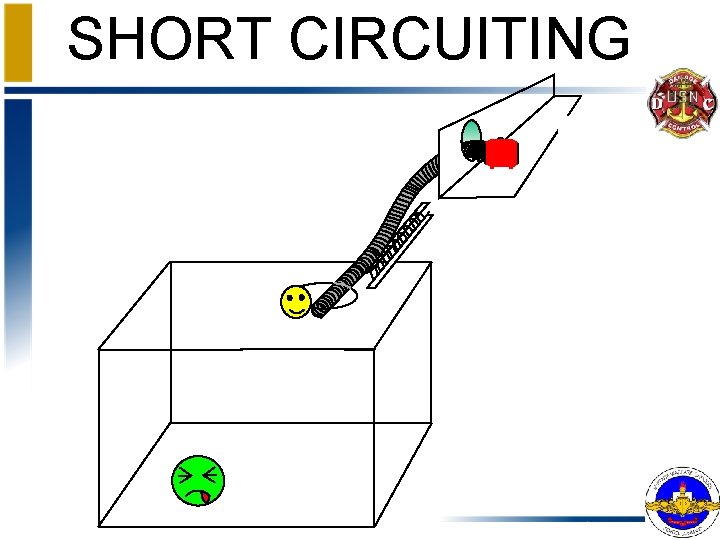
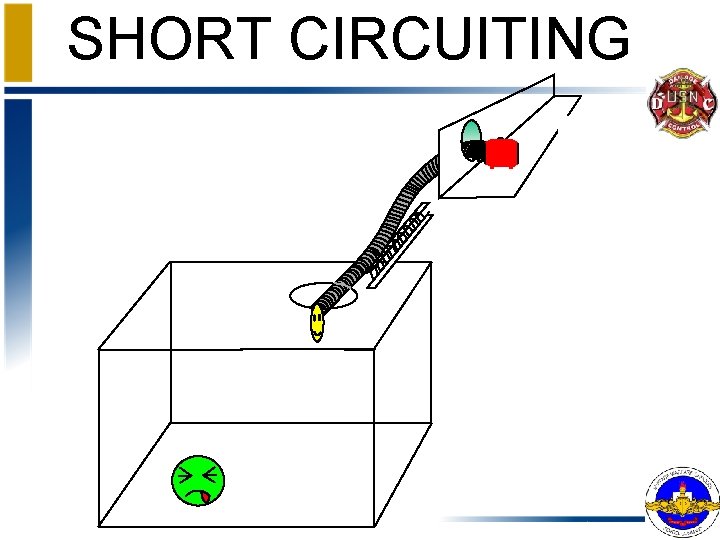
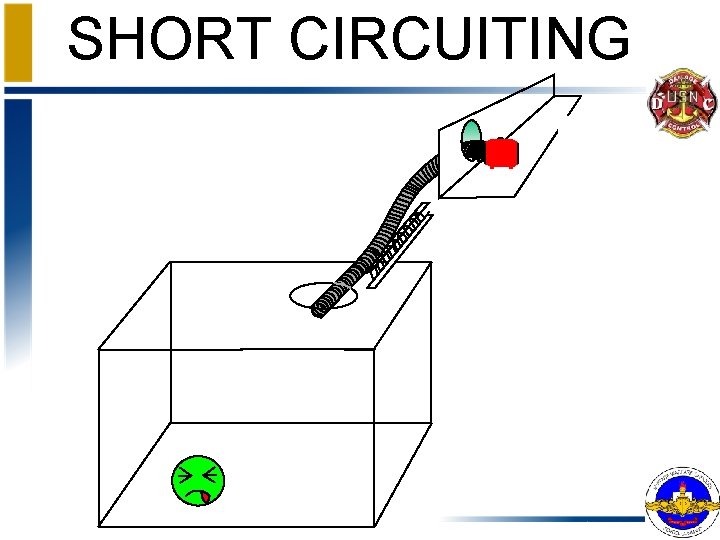
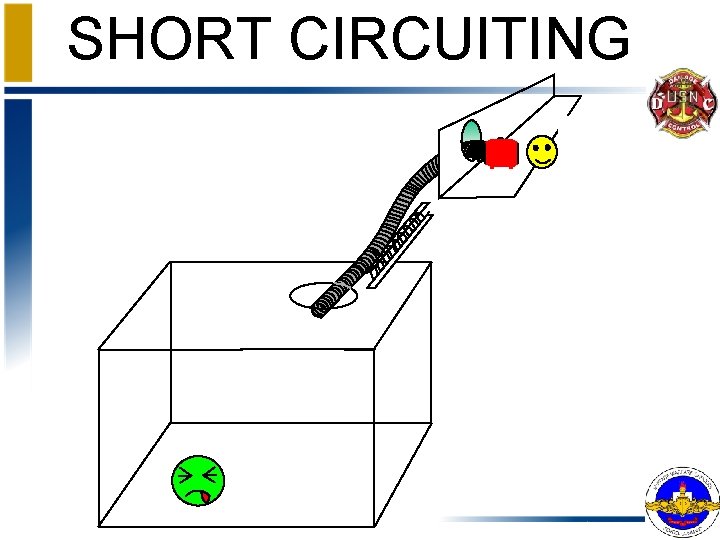
SHORT CIRCUITING • Source of make up air is too close to the exhaust trunk • Effective volume ventilated is insufficient • Remedy? Place trunk further into space
SHORT CIRCUITING
SHORT CIRCUITING
SHORT CIRCUITING
SHORT CIRCUITING
SHORT CIRCUITING
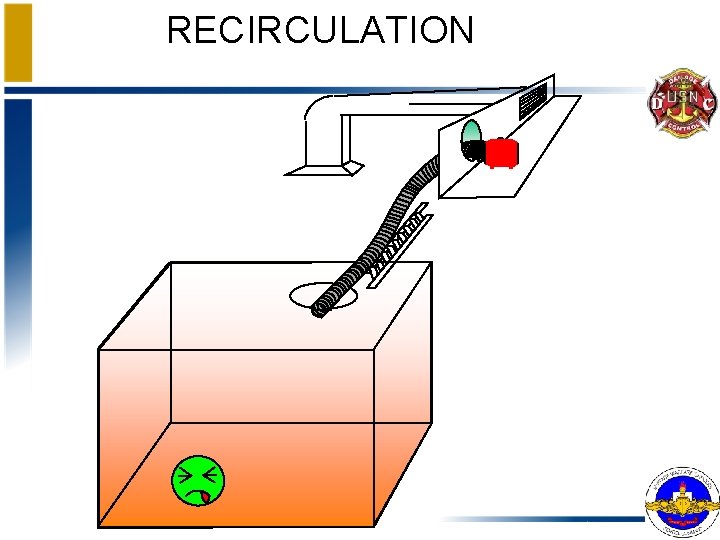
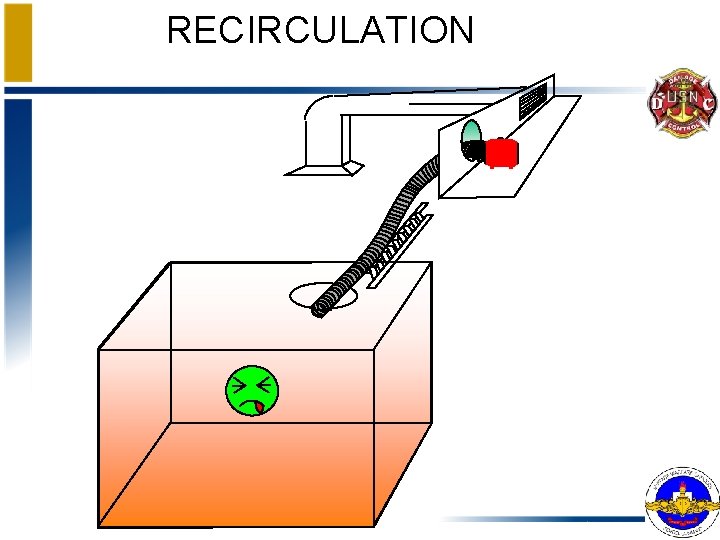
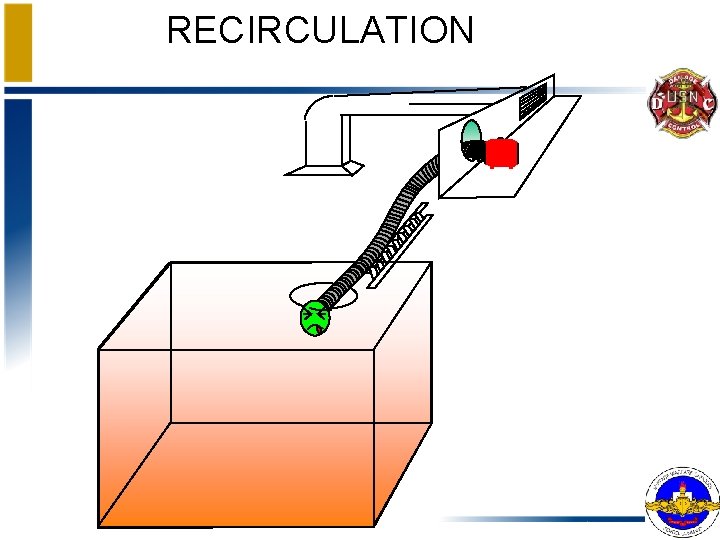
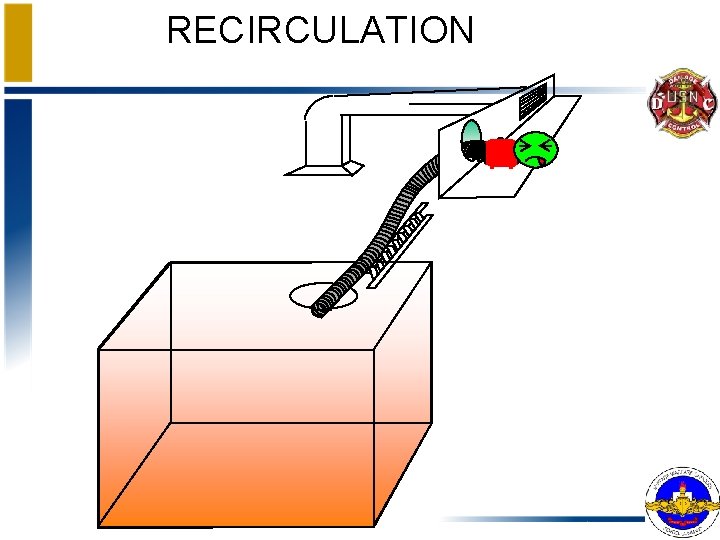
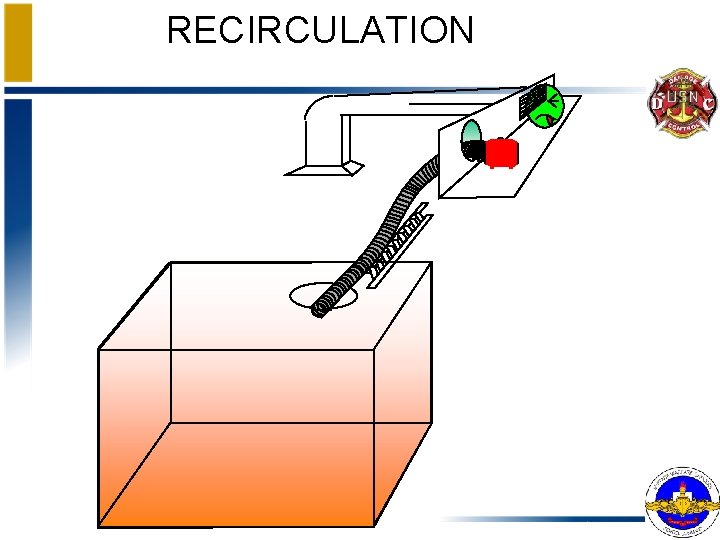
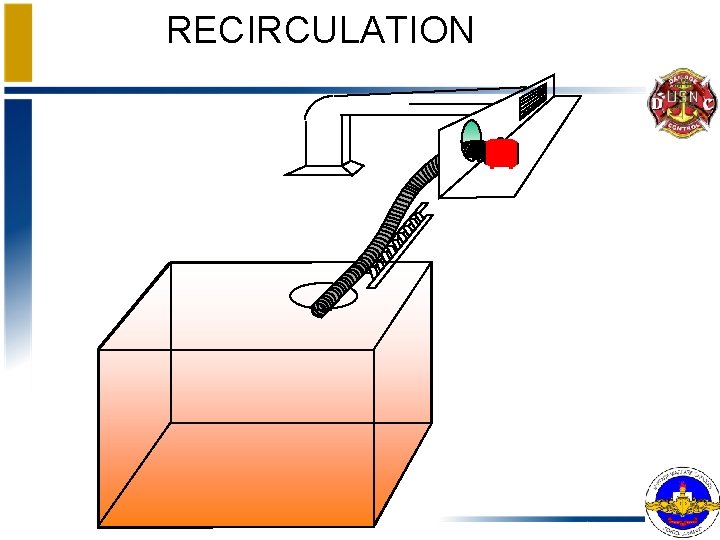
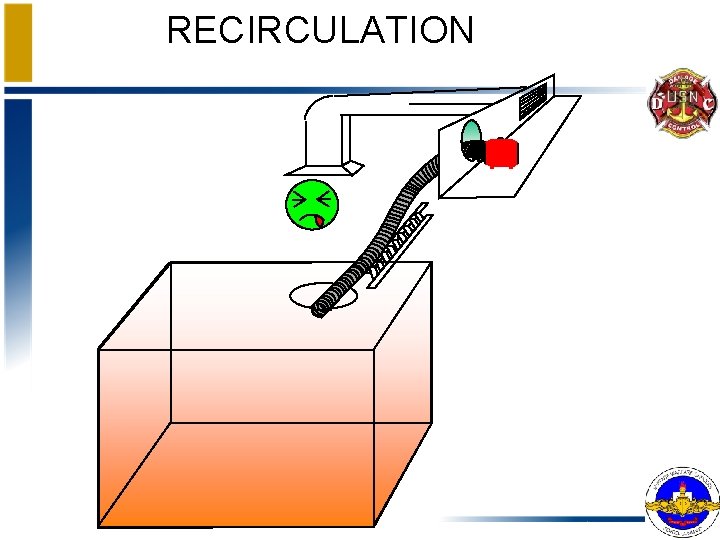
RECIRCULATION OF CONTAMINATED AIR • Exhaust discharge is drawn back into the make-up air • Drawn back into space
RECIRCULATION
RECIRCULATION
RECIRCULATION
RECIRCULATION
RECIRCULATION
RECIRCULATION
RECIRCULATION
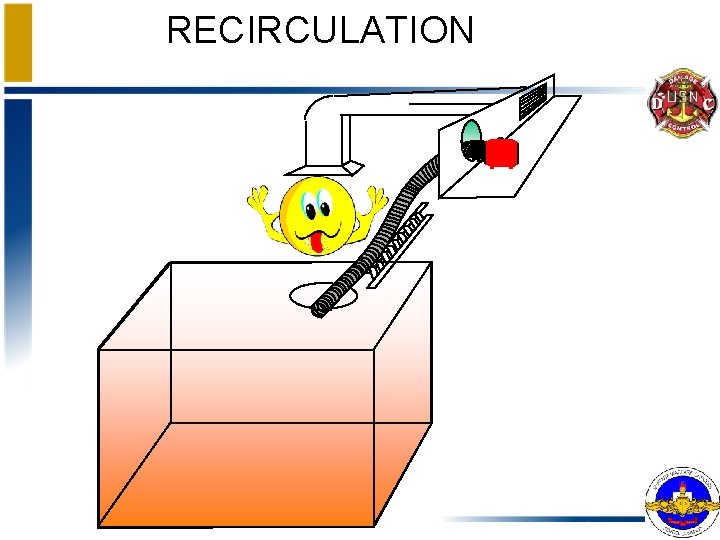
RECIRCULATION
THUMBRULES FOR VENTILATION TO MAINTAIN A GAS FREE CONDITION JAlways suspect a hazardous condition to exist or be created JPersonnel involved in the work or space entry process must either wear or have ready the proper respiratory gear for the hazard suspected
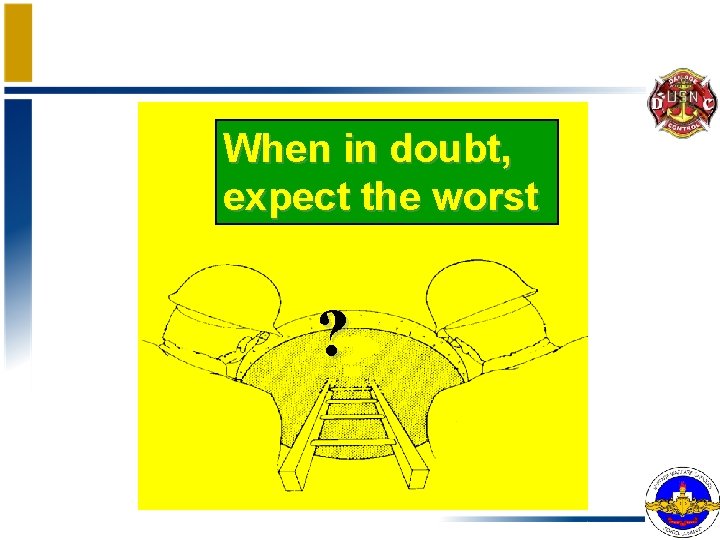
When in doubt, expect the worst ?
ANY QUESTIONS?
SUMMARY We talked about objectives of ventilating, terms, procedures, difficulties, calculations, capacities, concentration in a paint mixture and flow rates required for local exhaust ventilation.
REVIEW QUESTION #1 4 When may air be blown into a space vs. drawn out of a space? 4 No flammables present or being generated 4 No toxics present or being generated 4 Only to provide clean air for breathing and comfort
REVIEW QUESTION #2 THE DILUTION VENTILATION FORMULA STATES YOU SHOULD HAVE ____ COMPLETE AIR CHANGE EVERY _____ MINUTES.
REVIEW QUESTION #2 THE DILUTION VENTILATION FORMULA STATES YOU SHOULD HAVE _ONE COMPLETE AIR CHANGE EVERY __3__ MINUTES. Q = VOLUME OF SPACE 3 MINUTES WHERE Q IS VOLUMETRIC FLOW RATE
REVIEW QUESTION #3 • Explain “Short Circuiting” as it applies to Ventilation. • Source of Make-Up air is too close to exhaust inlet ducting • To remedy the problem? • Place trunk further into space
THE END
- Slides: 70