Capnography for the intensivist Sarah Philipson THE END






- Slides: 48
Capnography for the intensivist Sarah Philipson
THE END.
THE END. Questions?
What CO 2 is capnography? physiology Questions?
What is capnography? Questions? CO 2 physiology
What is capnography? How is it used? Questions? CO 2 physiology
What is capnography? How is it used? Questions? CO 2 physiology Do I care? What are the problems with it?
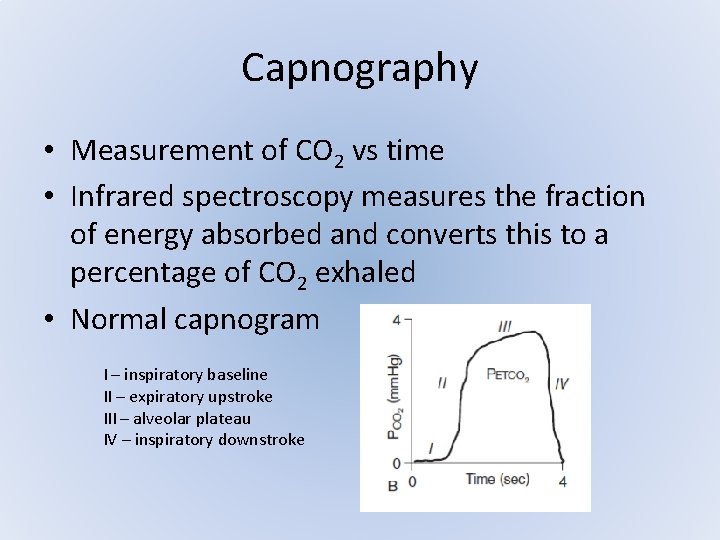
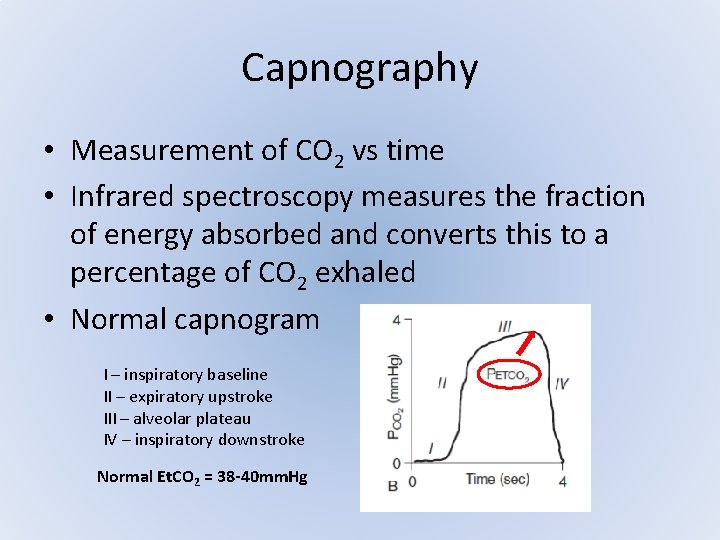
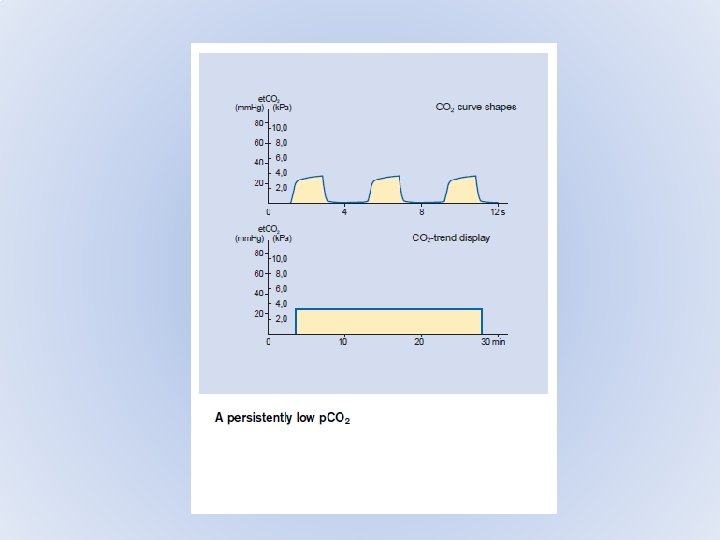
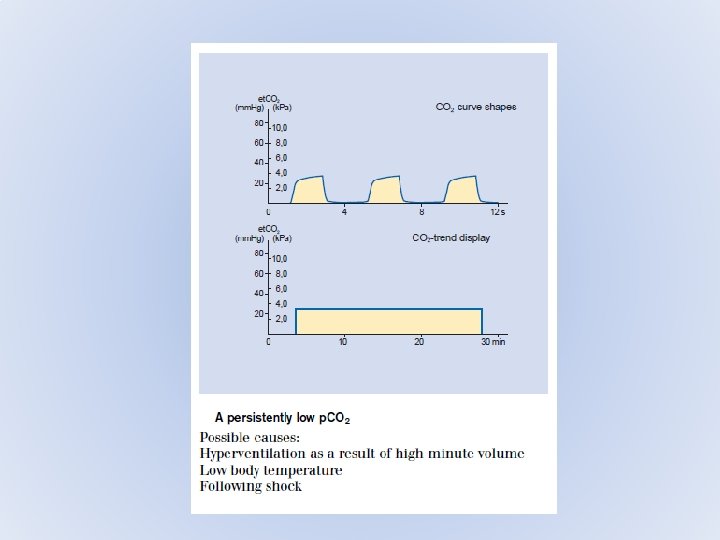
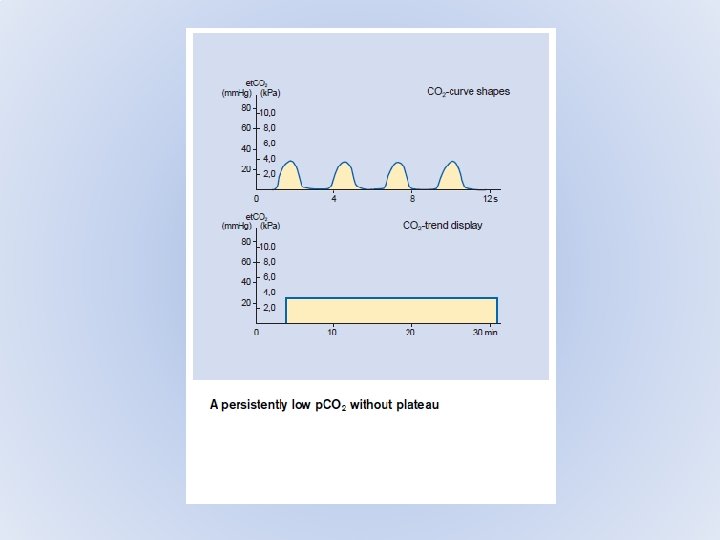
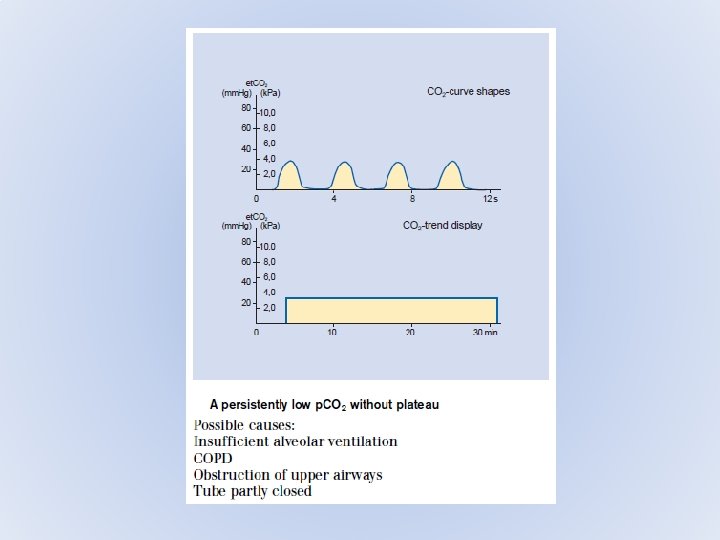
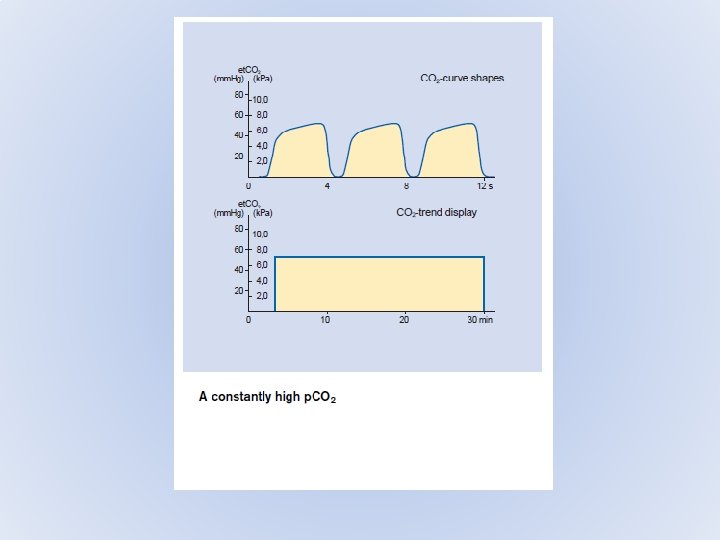
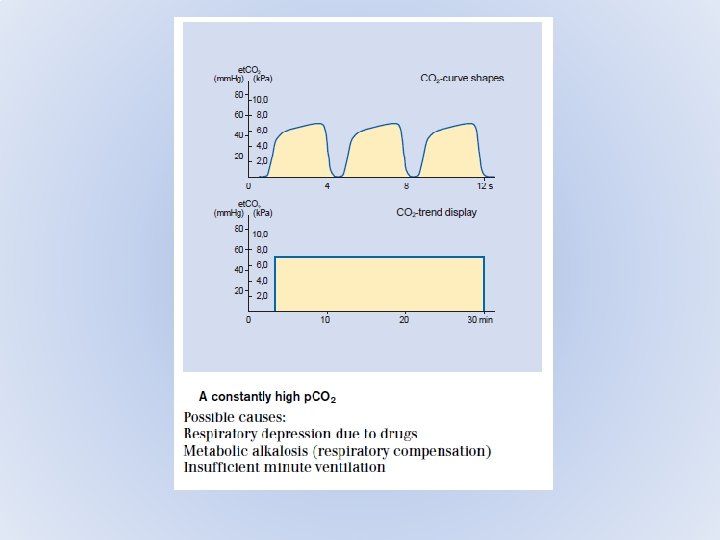
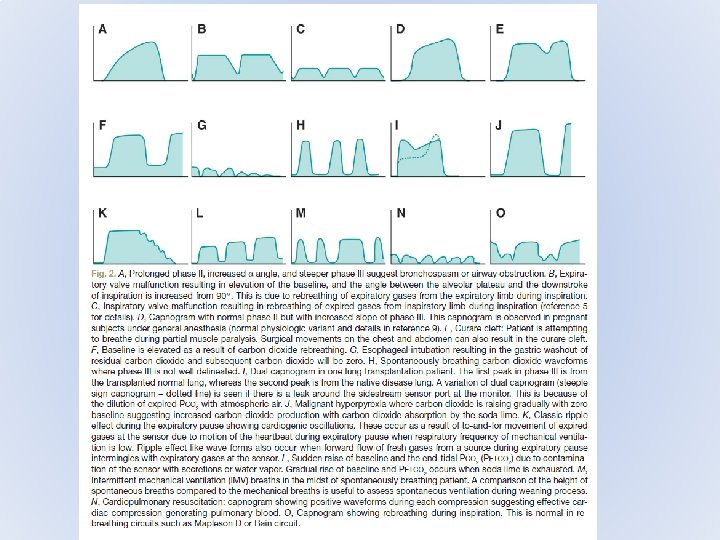
Capnography • Measurement of CO 2 vs time • Infrared spectroscopy measures the fraction of energy absorbed and converts this to a percentage of CO 2 exhaled • Normal capnogram I – inspiratory baseline II – expiratory upstroke III – alveolar plateau IV – inspiratory downstroke
Capnography • Measurement of CO 2 vs time • Infrared spectroscopy measures the fraction of energy absorbed and converts this to a percentage of CO 2 exhaled • Normal capnogram I – inspiratory baseline II – expiratory upstroke III – alveolar plateau IV – inspiratory downstroke
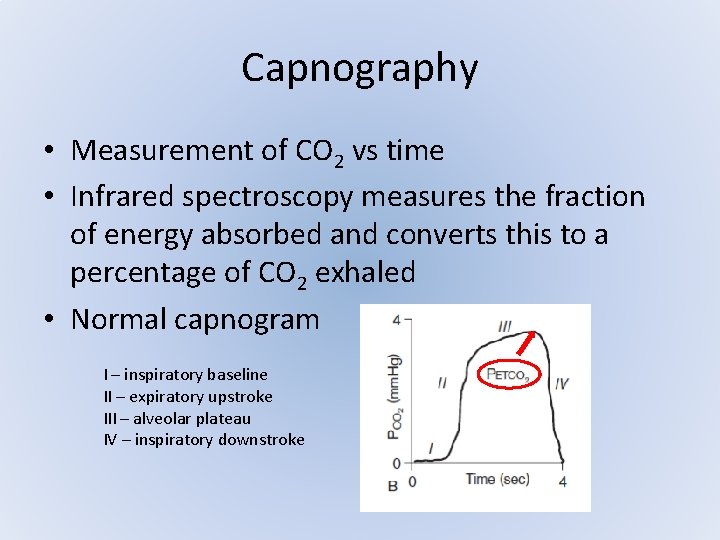
Capnography • Measurement of CO 2 vs time • Infrared spectroscopy measures the fraction of energy absorbed and converts this to a percentage of CO 2 exhaled • Normal capnogram I – inspiratory baseline II – expiratory upstroke III – alveolar plateau IV – inspiratory downstroke Normal Et. CO 2 = 38 -40 mm. Hg
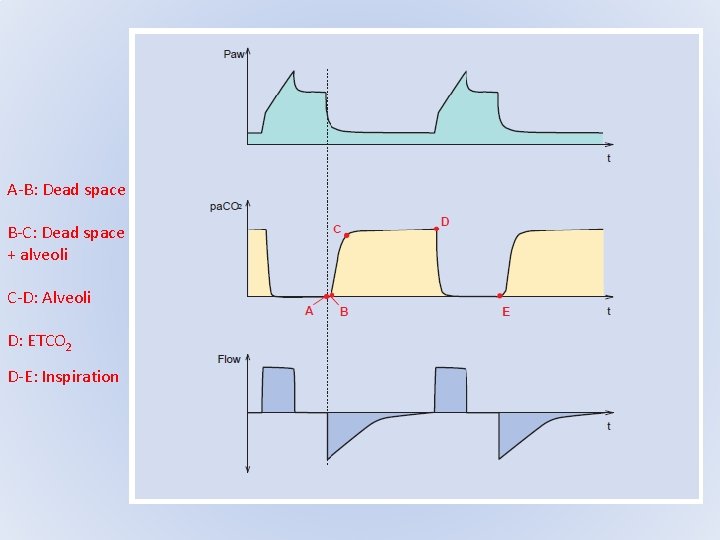
A-B: Dead space B-C: Dead space + alveoli C-D: Alveoli D: ETCO 2 D-E: Inspiration
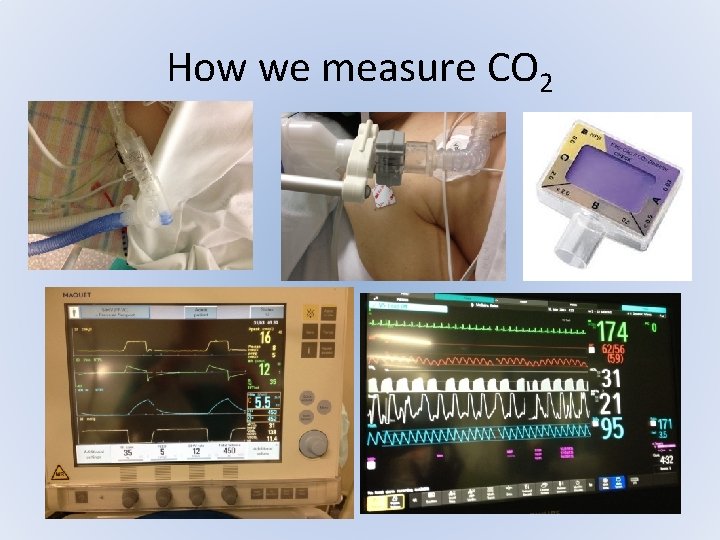
How we measure CO 2
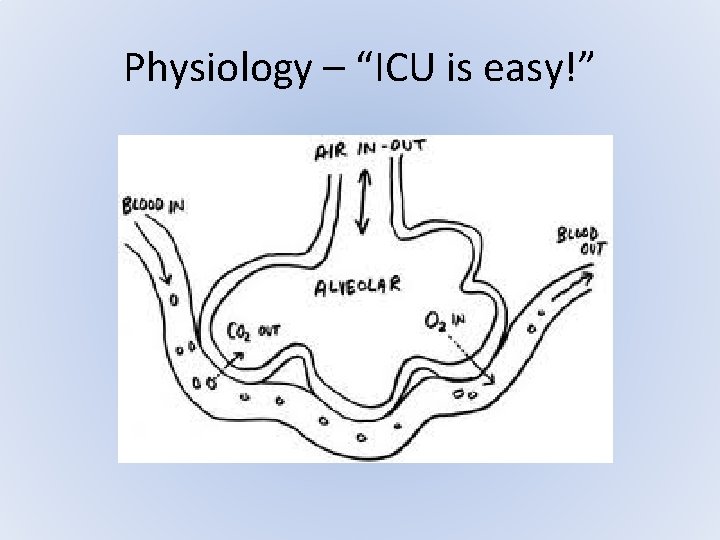
Physiology – “ICU is easy!”
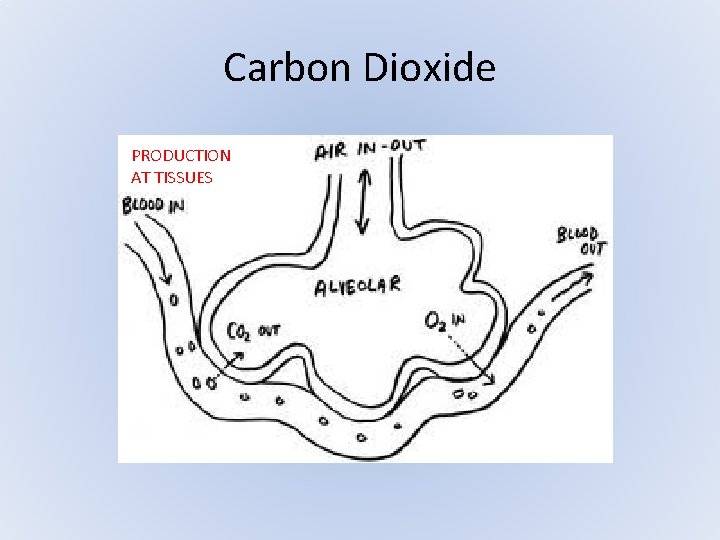
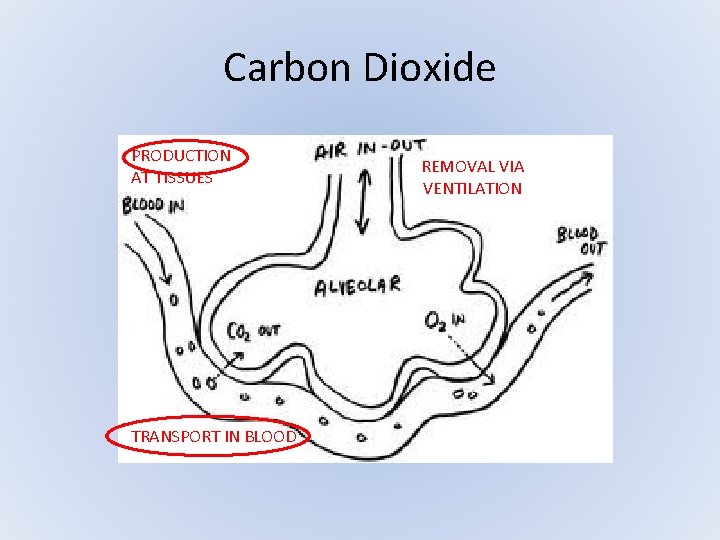
Carbon Dioxide PRODUCTION AT TISSUES
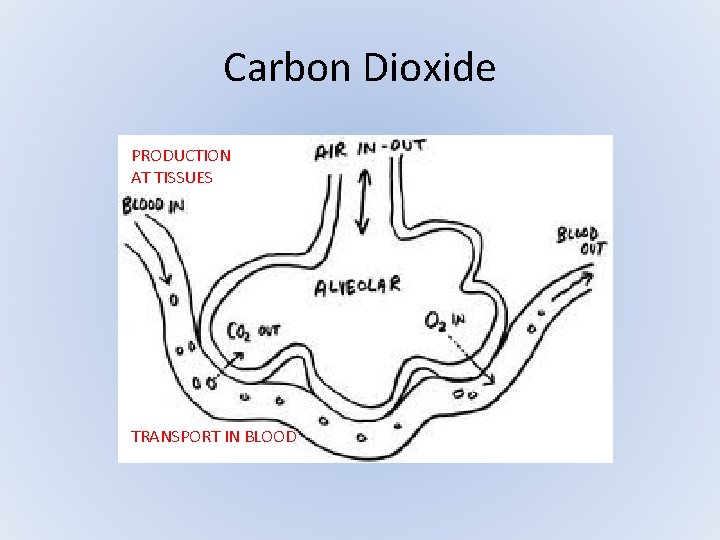
Carbon Dioxide PRODUCTION AT TISSUES TRANSPORT IN BLOOD
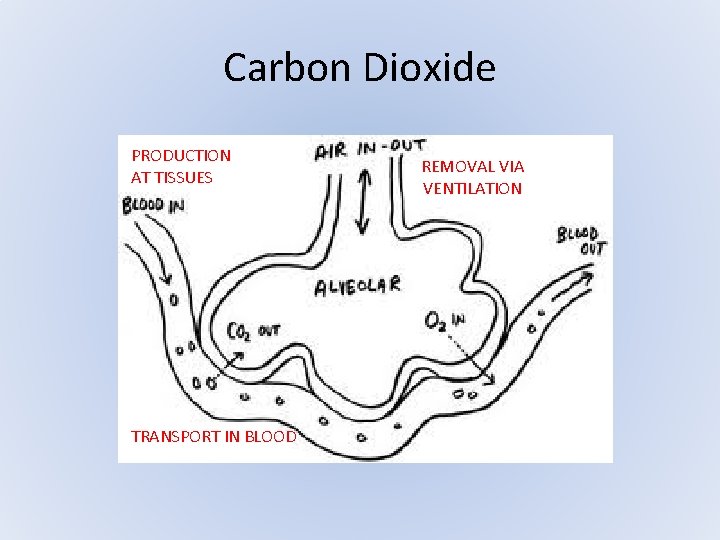
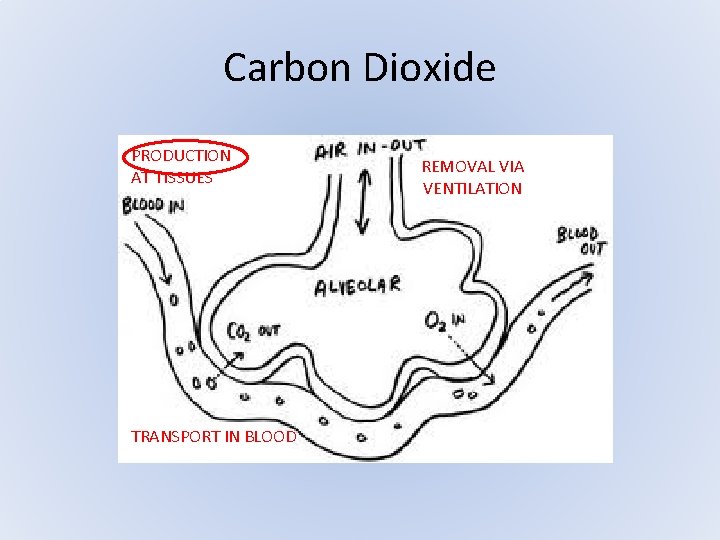
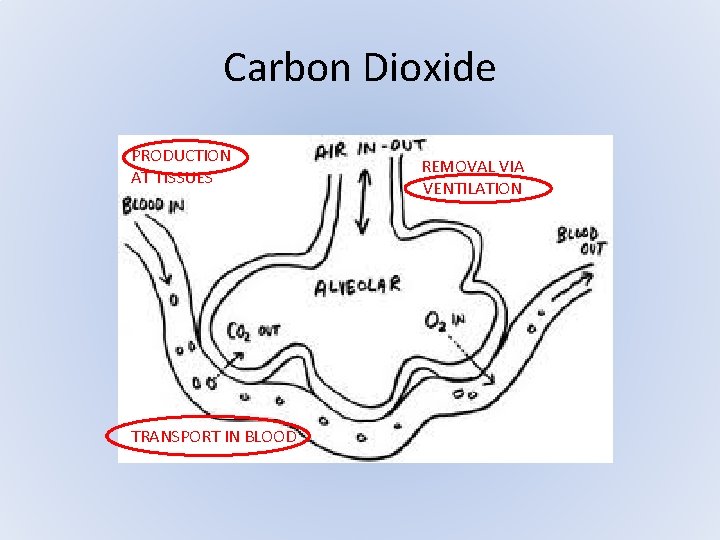
Carbon Dioxide PRODUCTION AT TISSUES TRANSPORT IN BLOOD REMOVAL VIA VENTILATION
Carbon Dioxide PRODUCTION AT TISSUES TRANSPORT IN BLOOD REMOVAL VIA VENTILATION
Carbon Dioxide PRODUCTION AT TISSUES TRANSPORT IN BLOOD REMOVAL VIA VENTILATION
Carbon Dioxide PRODUCTION AT TISSUES TRANSPORT IN BLOOD REMOVAL VIA VENTILATION
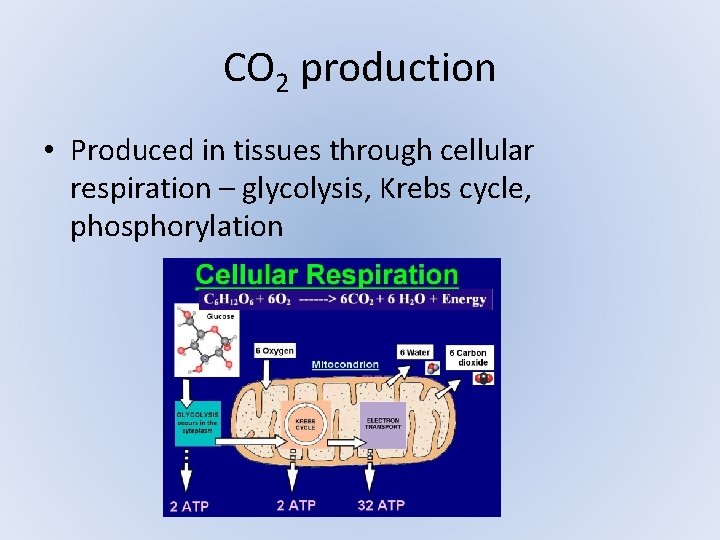
CO 2 production • Produced in tissues through cellular respiration – glycolysis, Krebs cycle, phosphorylation
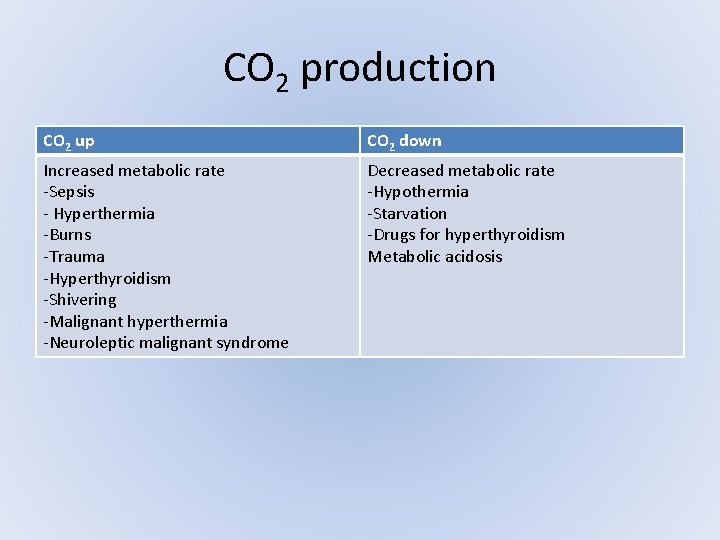
CO 2 production CO 2 up CO 2 down Increased metabolic rate -Sepsis - Hyperthermia -Burns -Trauma -Hyperthyroidism -Shivering -Malignant hyperthermia -Neuroleptic malignant syndrome Decreased metabolic rate -Hypothermia -Starvation -Drugs for hyperthyroidism Metabolic acidosis
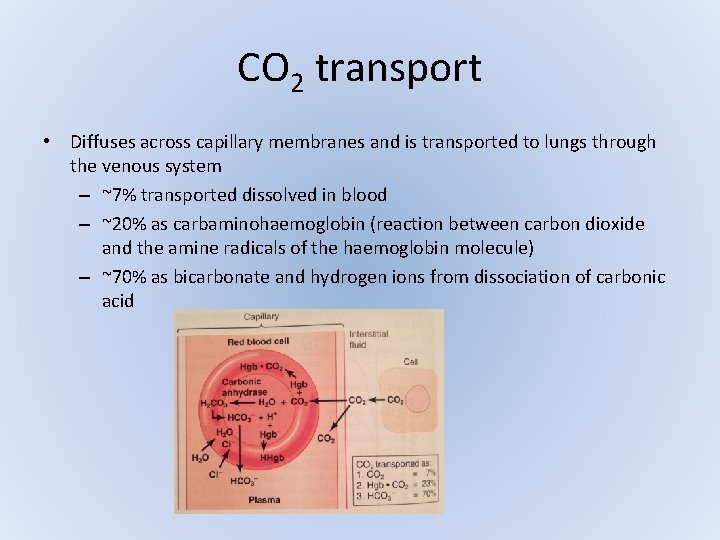
CO 2 transport • Diffuses across capillary membranes and is transported to lungs through the venous system – ~7% transported dissolved in blood – ~20% as carbaminohaemoglobin (reaction between carbon dioxide and the amine radicals of the haemoglobin molecule) – ~70% as bicarbonate and hydrogen ions from dissociation of carbonic acid
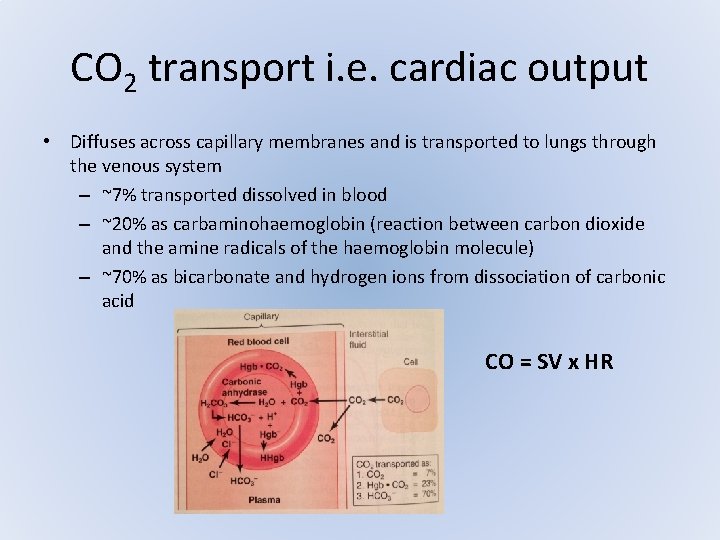
CO 2 transport i. e. cardiac output • Diffuses across capillary membranes and is transported to lungs through the venous system – ~7% transported dissolved in blood – ~20% as carbaminohaemoglobin (reaction between carbon dioxide and the amine radicals of the haemoglobin molecule) – ~70% as bicarbonate and hydrogen ions from dissociation of carbonic acid CO = SV x HR
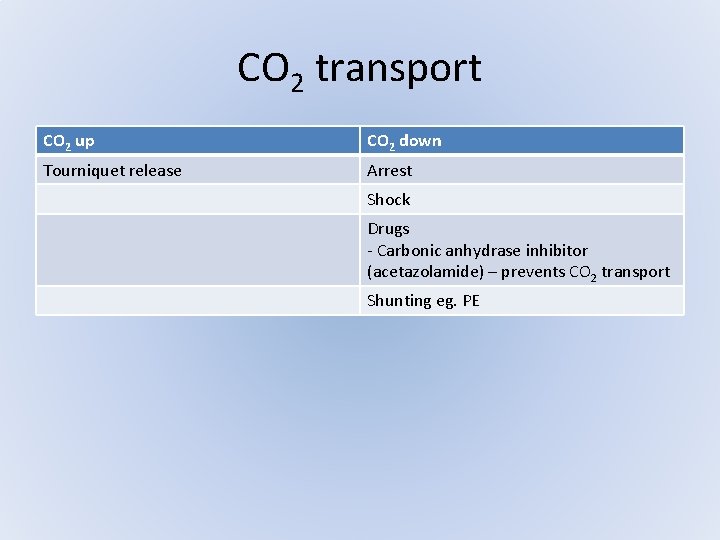
CO 2 transport CO 2 up CO 2 down Tourniquet release Arrest Shock Drugs - Carbonic anhydrase inhibitor (acetazolamide) – prevents CO 2 transport Shunting eg. PE
CO 2 removal i. e. ventilation • Ventilation = rate, volume, diffusion
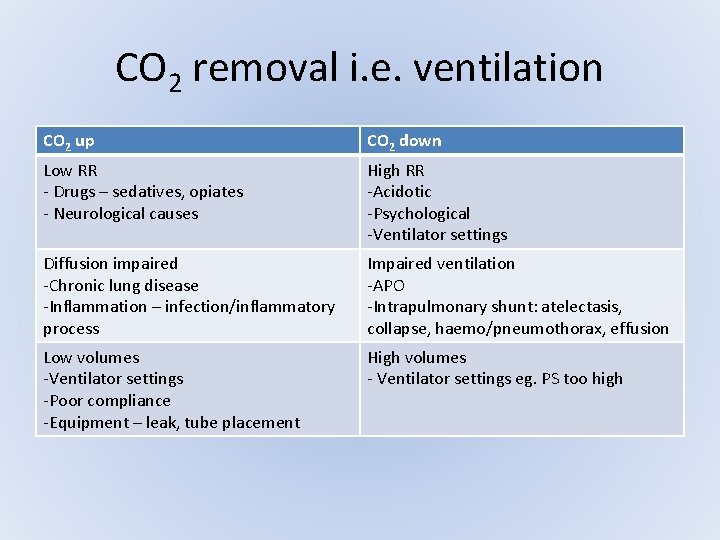
CO 2 removal i. e. ventilation CO 2 up CO 2 down Low RR - Drugs – sedatives, opiates - Neurological causes High RR -Acidotic -Psychological -Ventilator settings Diffusion impaired -Chronic lung disease -Inflammation – infection/inflammatory process Impaired ventilation -APO -Intrapulmonary shunt: atelectasis, collapse, haemo/pneumothorax, effusion Low volumes -Ventilator settings -Poor compliance -Equipment – leak, tube placement High volumes - Ventilator settings eg. PS too high
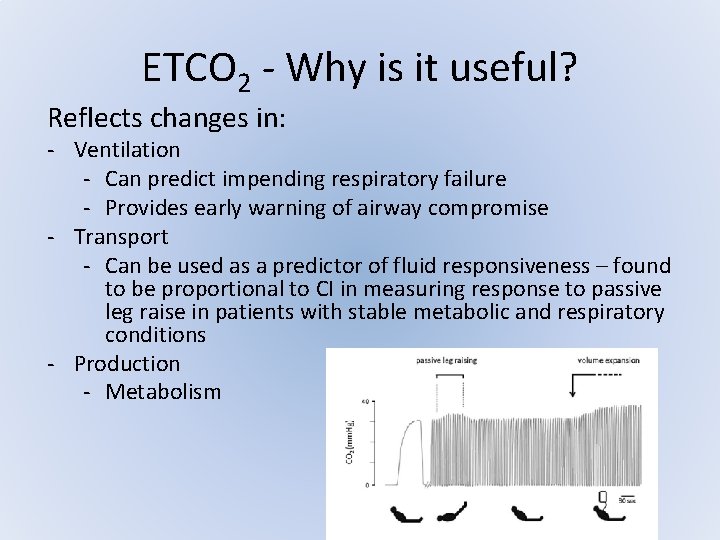
ETCO 2 - Why is it useful? Reflects changes in: - Ventilation - Can predict impending respiratory failure - Provides early warning of airway compromise - Transport - Can be used as a predictor of fluid responsiveness – found to be proportional to CI in measuring response to passive leg raise in patients with stable metabolic and respiratory conditions - Production - Metabolism
Have I convinced you?
Problems with capnography - Only reliable(? ) in patients with stable metabolic and respiratory states - Abnormal Aa gradients make Et. CO 2 not a good predictor of Pa. CO 2, but can still use trend - Needs to be a trend, not a one-off measure - Detects, does not diagnose – more tests! - Difficulty with equipment – easily clogged with water droplets - Normal capnogram can occur with glottic intubation – still need an XR
Convinced? • Capnography • CO 2 physiology – Production – Transport – Ventilation • The capnography curve and what it can tell us • Problems with capnography
KEEP CALM AND WATCH THE CO 2