4 6 Excess Limiting Amounts Percentage Yield and

- Slides: 54
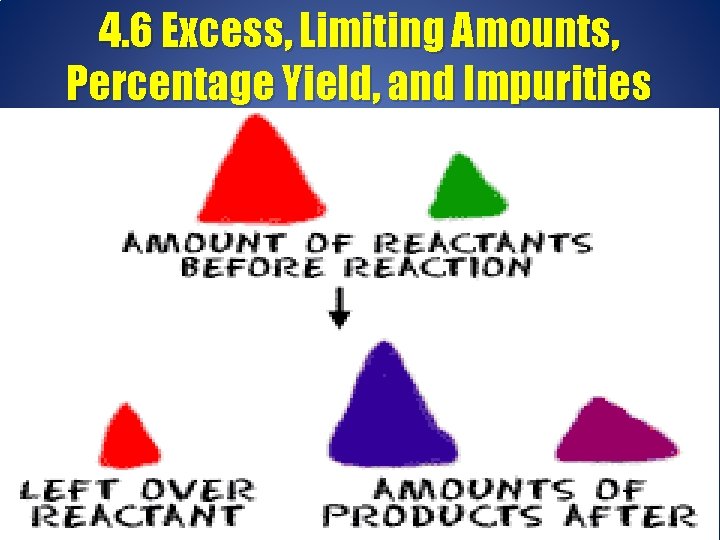
4. 6 Excess, Limiting Amounts, Percentage Yield, and Impurities 1 1
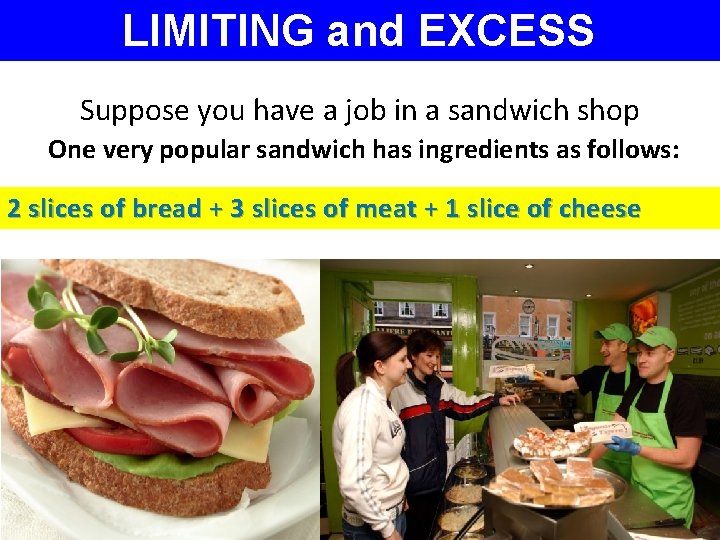
LIMITING and EXCESS REACTANTS Suppose you have a job in a sandwich shop One very popular sandwich has ingredients as follows: 2 slices of bread + 3 slices of meat + 1 slice of cheese 2
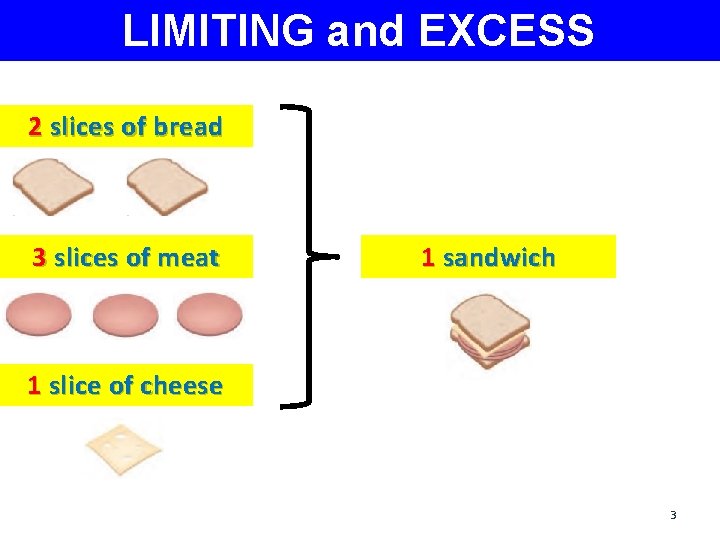
LIMITING and EXCESS REACTANTS 2 slices of bread 3 slices of meat 1 sandwich 1 slice of cheese 3
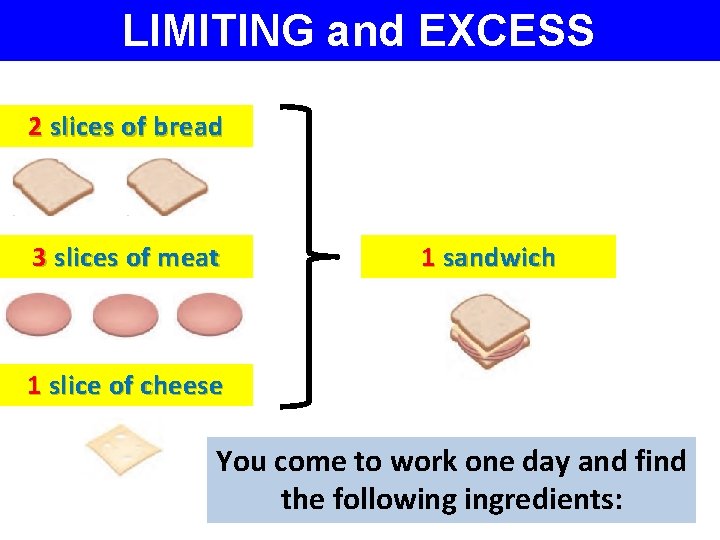
LIMITING and EXCESS REACTANTS 2 slices of bread 3 slices of meat 1 sandwich 1 slice of cheese You come to work one day and find the following ingredients:
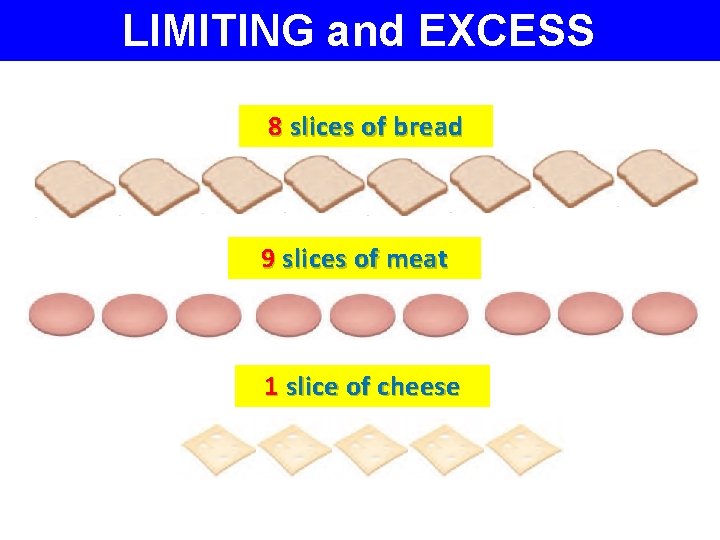
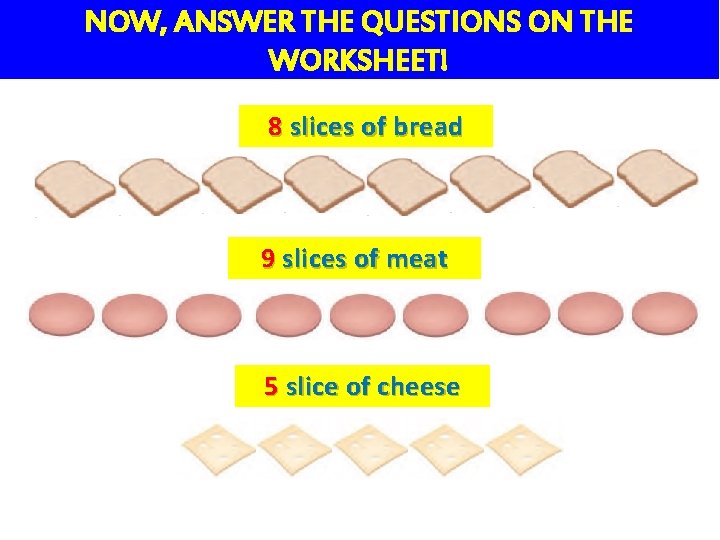
LIMITING and EXCESS REACTANTS 8 slices of bread 9 slices of meat 1 slice of cheese
NOW, ANSWER THE QUESTIONS ON THE WORKSHEET! 8 slices of bread 9 slices of meat 5 slice of cheese
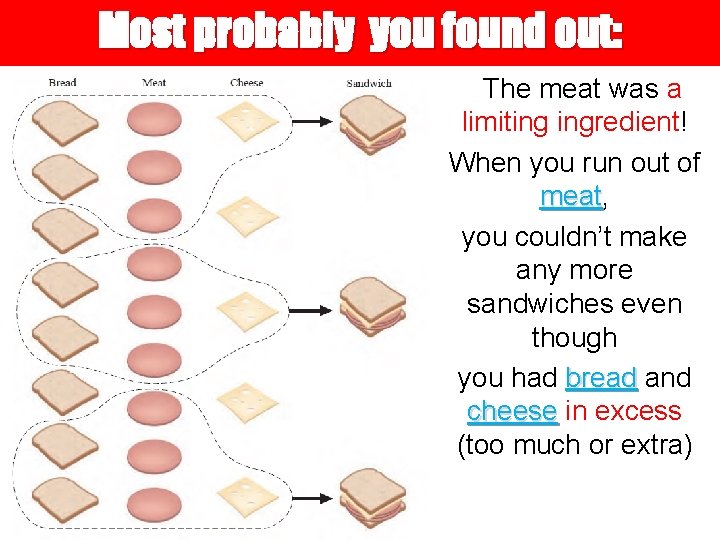
Most probably you found out: The meat was a limiting ingredient! When you run out of meat, meat you couldn’t make any more sandwiches even though you had bread and cheese in excess (too much or extra)
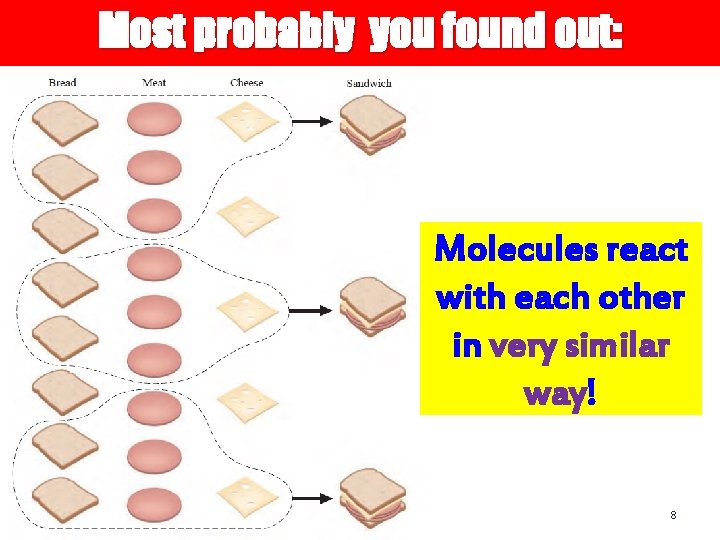
Most probably you found out: Molecules react with each other in very similar way! 8
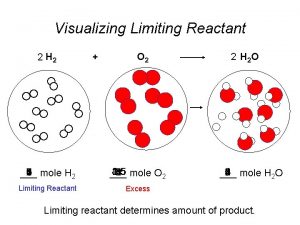
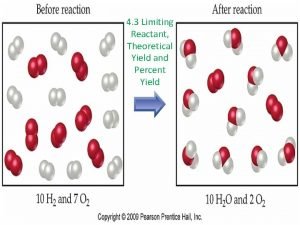
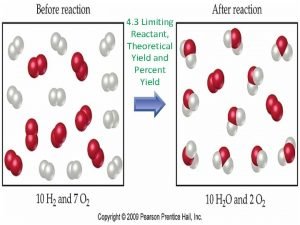
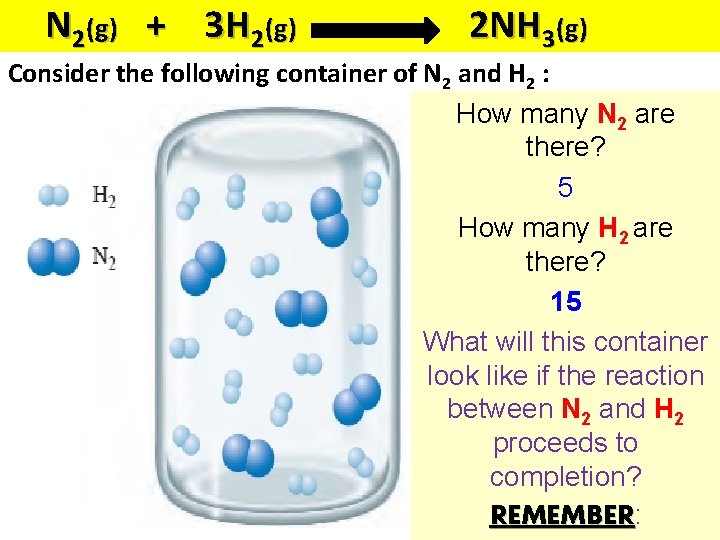
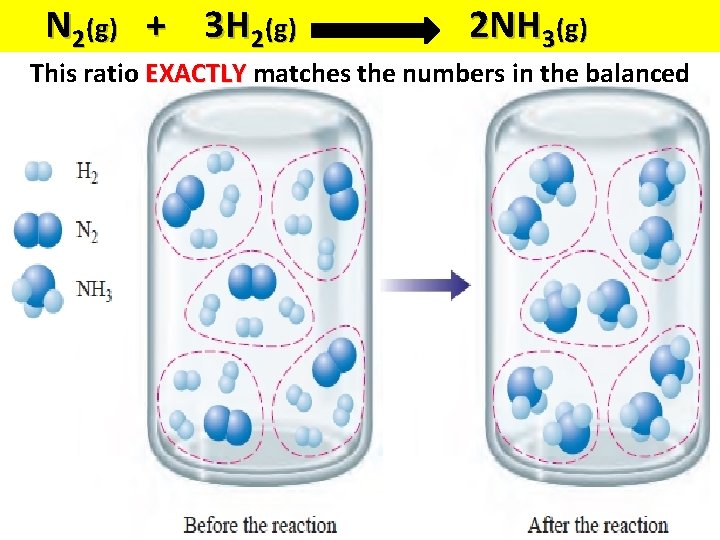
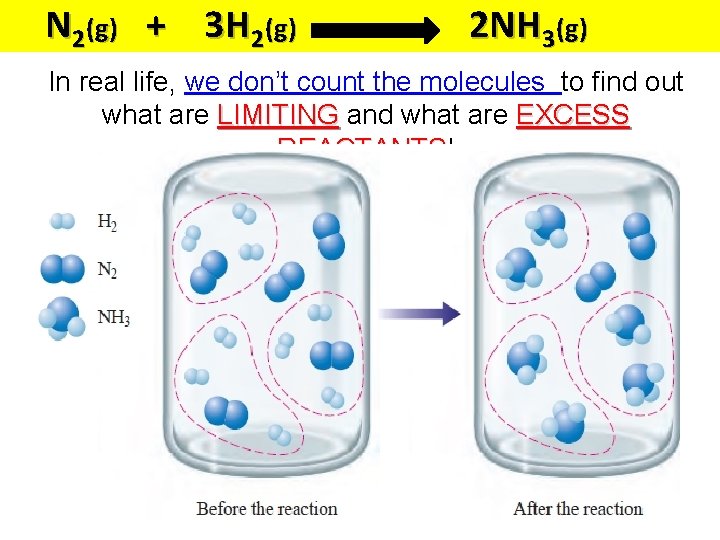
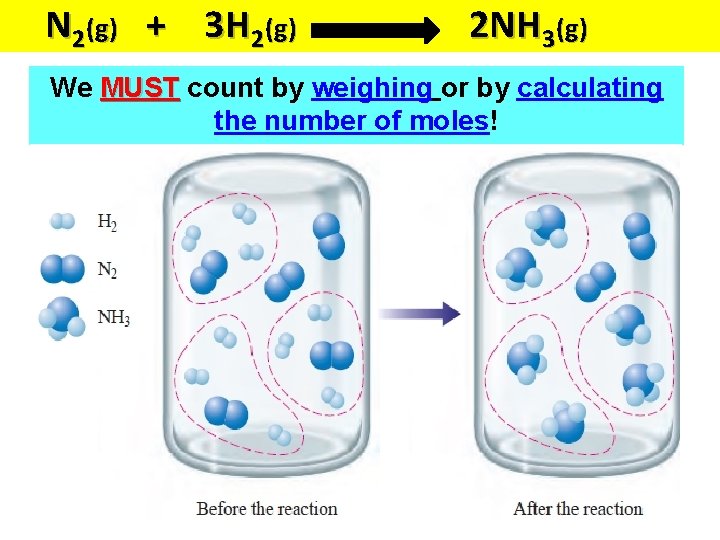
N 2(g) + 3 H 2(g) 2 NH 3(g) Consider the following container of N 2 and H 2 : How many N 2 are there? 5 How many H 2 are there? 15 What will this container look like if the reaction between N 2 and H 2 proceeds to completion? REMEMBER: REMEMBER 9
N 2(g) + 3 H 2(g) 2 NH 3(g) This ratio EXACTLY matches the numbers in the balanced equation 10
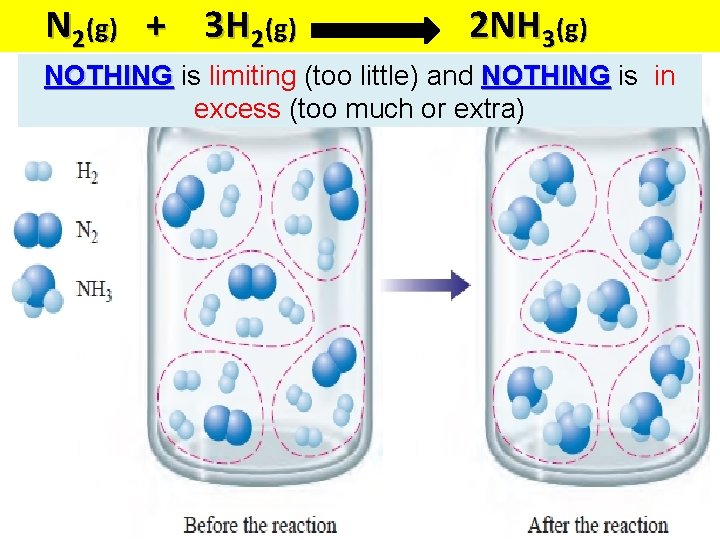
N 2(g) + 3 H 2(g) 2 NH 3(g) NOTHING is limiting (too little) and NOTHING is in excess (too much or extra)
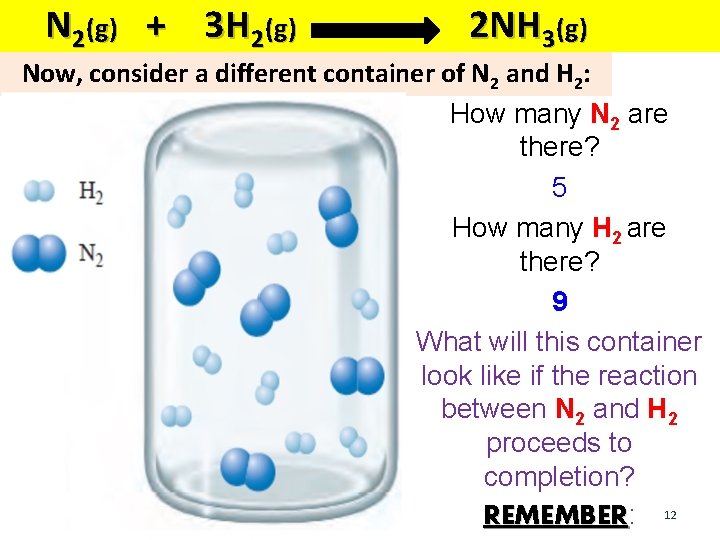
N 2(g) + 3 H 2(g) 2 NH 3(g) Now, consider a different container of N 2 and H 2: How many N 2 are there? 5 How many H 2 are there? 9 What will this container look like if the reaction between N 2 and H 2 proceeds to completion? REMEMBER: REMEMBER 12
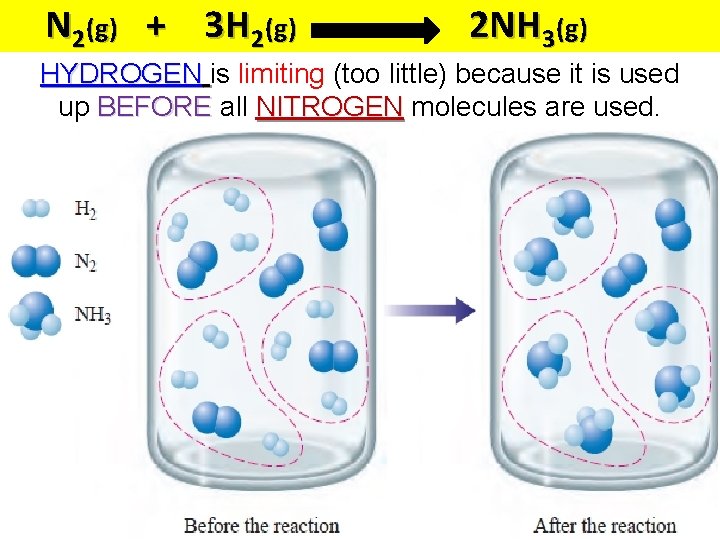
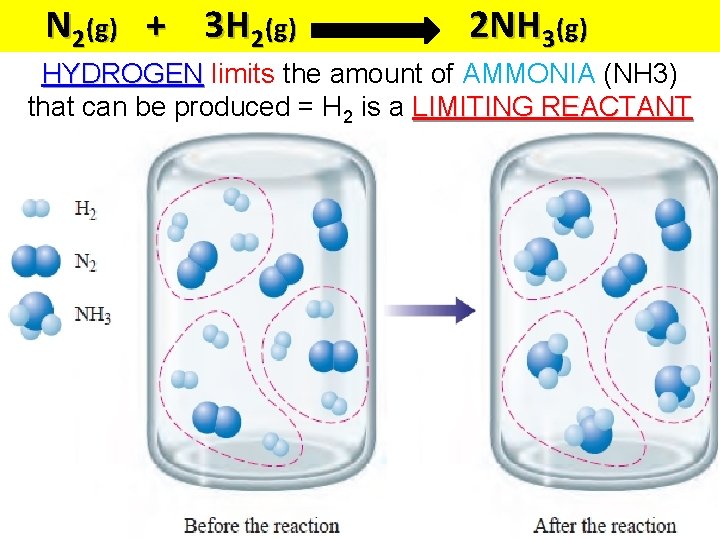
N 2(g) + 3 H 2(g) 2 NH 3(g) HYDROGEN is limiting (too little) because it is used up BEFORE all NITROGEN molecules are used. 13
N 2(g) + 3 H 2(g) 2 NH 3(g) HYDROGEN limits the amount of AMMONIA (NH 3) that can be produced = H 2 is a LIMITING REACTANT 14
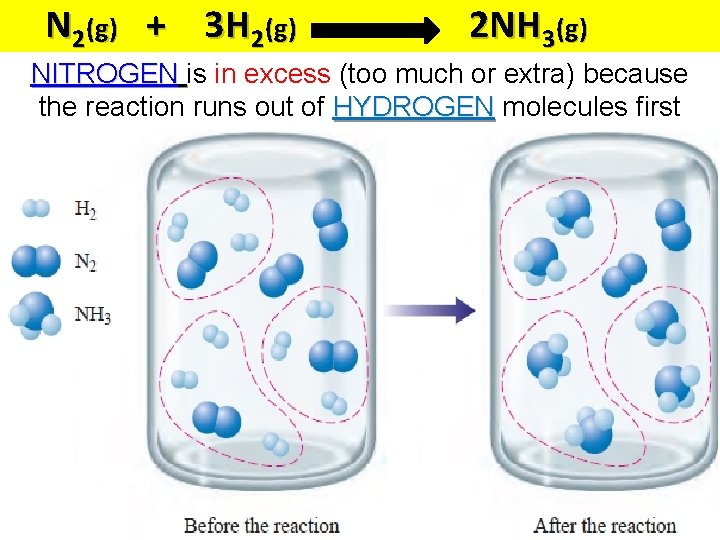
N 2(g) + 3 H 2(g) 2 NH 3(g) NITROGEN is in excess (too much or extra) because the reaction runs out of HYDROGEN molecules first 15
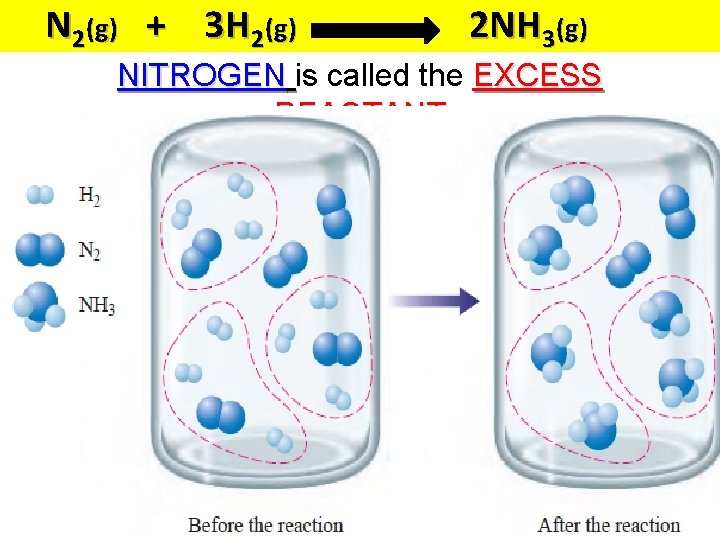
N 2(g) + 3 H 2(g) 2 NH 3(g) NITROGEN is called the EXCESS REACTANT 16
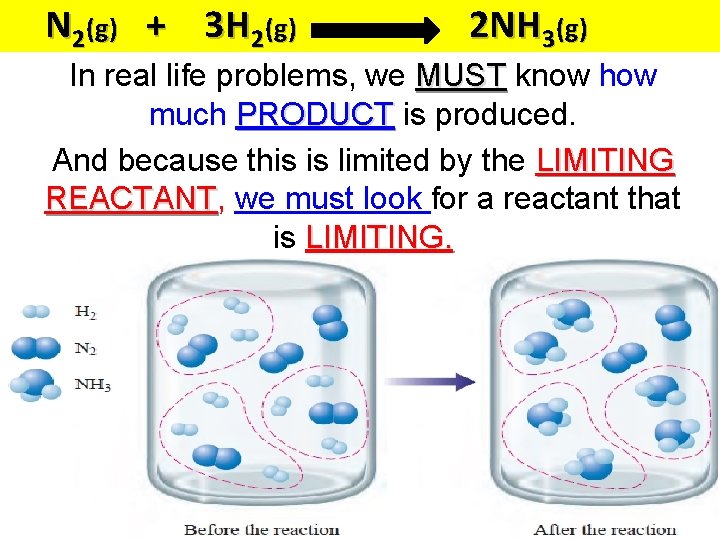
N 2(g) + 3 H 2(g) 2 NH 3(g) In real life problems, we MUST know how much PRODUCT is produced. And because this is limited by the LIMITING REACTANT, REACTANT we must look for a reactant that is LIMITING. 17
N 2(g) + 3 H 2(g) 2 NH 3(g) In real life, we don’t count the molecules to find out what are LIMITING and what are EXCESS REACTANTS! REACTANTS 18
N 2(g) + 3 H 2(g) 2 NH 3(g) We MUST count by weighing or by calculating the number of moles! 19
SAS Curriculum Pathways Username: alexanderacademy Pick “Vlab: Limiting Reactants”
SAS Curriculum Pathways Answers for Data & Observations: • On a separate piece of paper • You will have a data table handout as well Answers for Analysis & Conclusions: • On a separate piece of paper
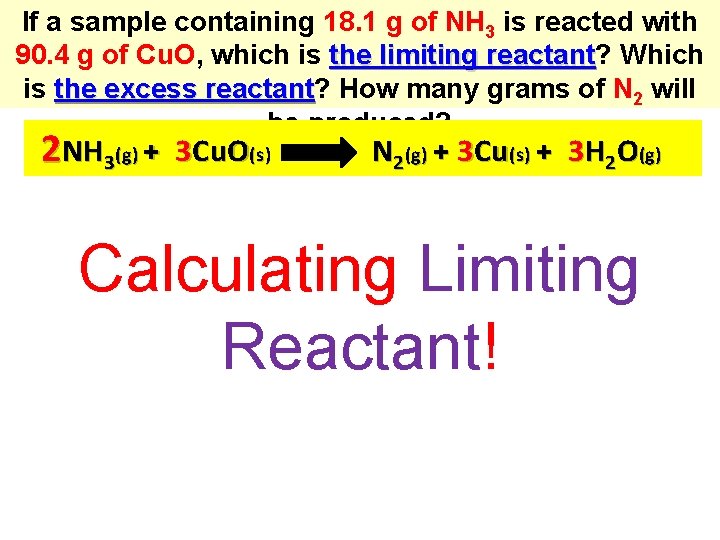
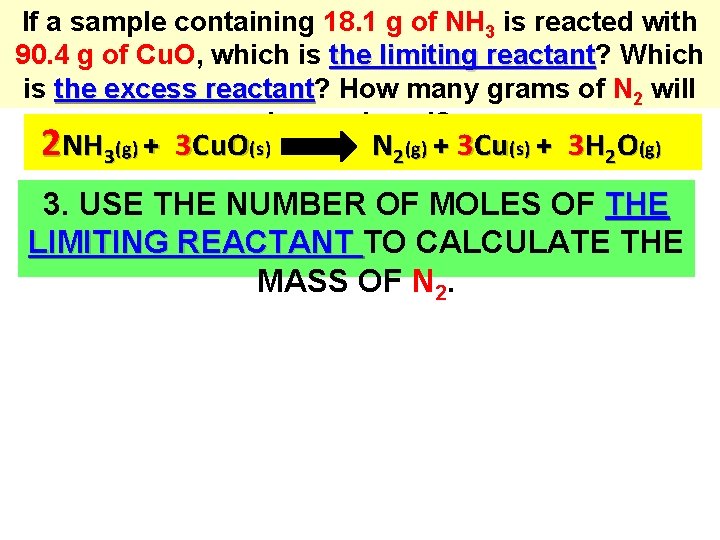
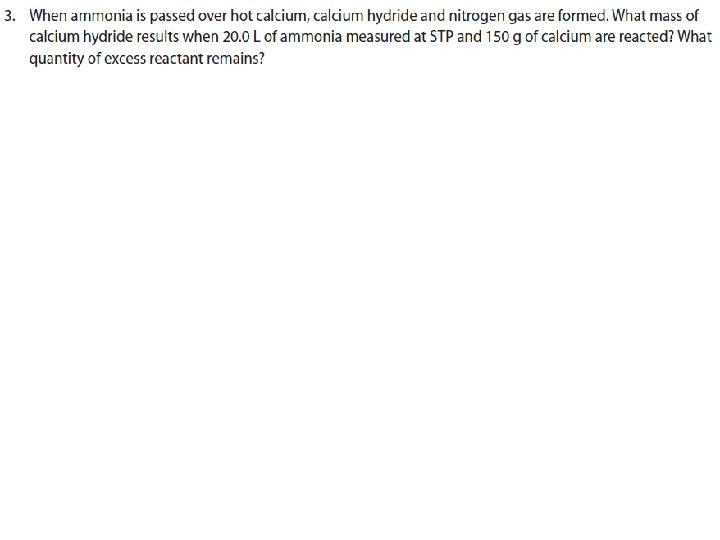
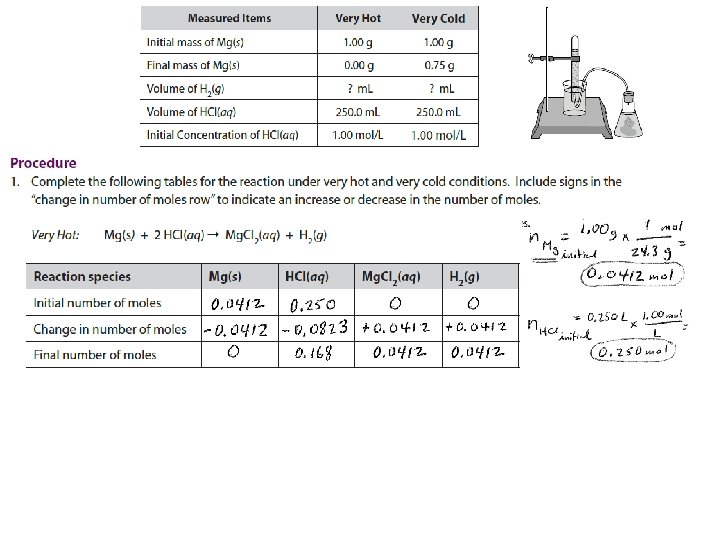
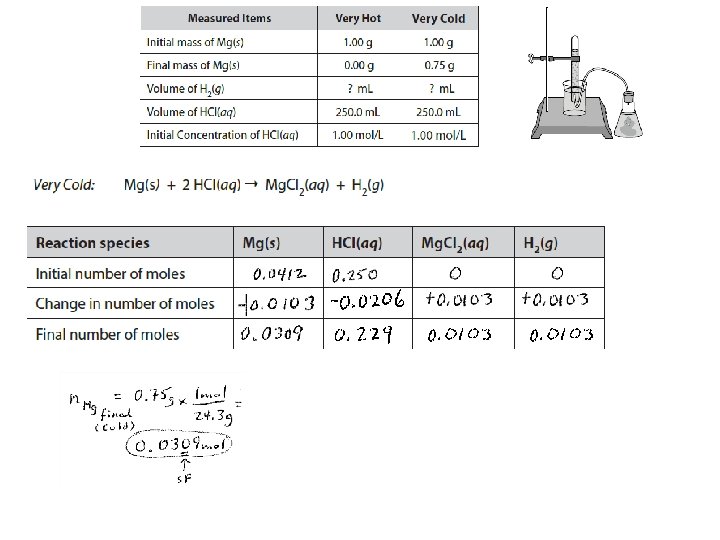
If a sample containing 18. 1 g of NH 3 is reacted with 90. 4 g of Cu. O, which is the limiting reactant? reactant Which is the excess reactant? reactant How many grams of N 2 will be produced? 2 NH 3(g) + 3 Cu. O(s) N 2(g) + 3 Cu(s) + 3 H 2 O(g) Calculating Limiting Reactant!
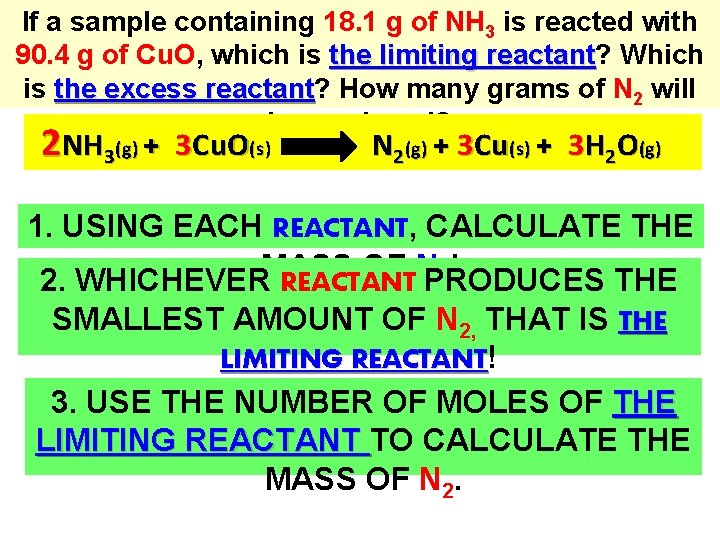
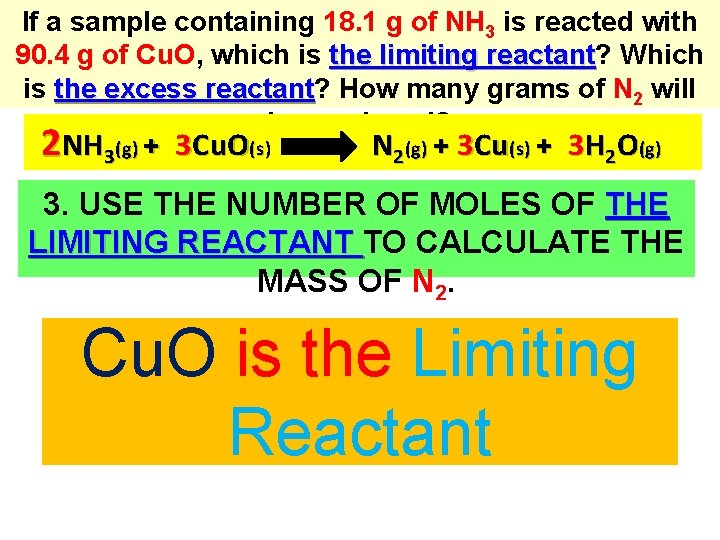
If a sample containing 18. 1 g of NH 3 is reacted with 90. 4 g of Cu. O, which is the limiting reactant? reactant Which is the excess reactant? reactant How many grams of N 2 will be produced? 2 NH 3(g) + 3 Cu. O(s) N 2(g) + 3 Cu(s) + 3 H 2 O(g) 1. USING EACH REACTANT, CALCULATE THE OF N 2! 2. WHICHEVERMASS REACTANT PRODUCES THE SMALLEST AMOUNT OF N 2, THAT IS THE LIMITING REACTANT! 3. USE THE NUMBER OF MOLES OF THE LIMITING REACTANT TO CALCULATE THE MASS OF N 2.
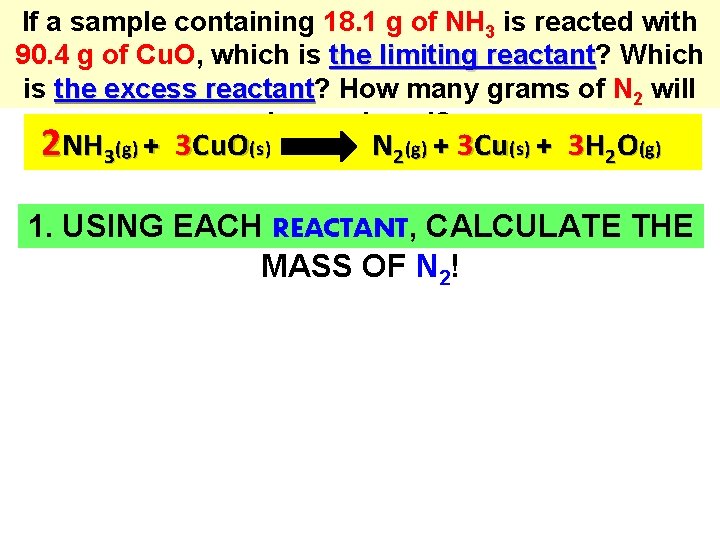
If a sample containing 18. 1 g of NH 3 is reacted with 90. 4 g of Cu. O, which is the limiting reactant? reactant Which is the excess reactant? reactant How many grams of N 2 will be produced? 2 NH 3(g) + 3 Cu. O(s) N 2(g) + 3 Cu(s) + 3 H 2 O(g) 1. USING EACH REACTANT, CALCULATE THE MASS OF N 2!
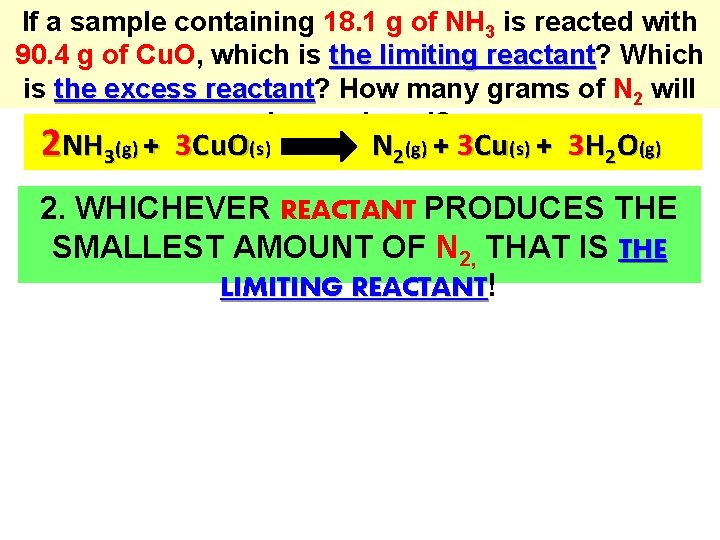
If a sample containing 18. 1 g of NH 3 is reacted with 90. 4 g of Cu. O, which is the limiting reactant? reactant Which is the excess reactant? reactant How many grams of N 2 will be produced? 2 NH 3(g) + 3 Cu. O(s) N 2(g) + 3 Cu(s) + 3 H 2 O(g) 2. WHICHEVER REACTANT PRODUCES THE SMALLEST AMOUNT OF N 2, THAT IS THE LIMITING REACTANT!
If a sample containing 18. 1 g of NH 3 is reacted with 90. 4 g of Cu. O, which is the limiting reactant? reactant Which is the excess reactant? reactant How many grams of N 2 will be produced? 2 NH 3(g) + 3 Cu. O(s) N 2(g) + 3 Cu(s) + 3 H 2 O(g) 3. USE THE NUMBER OF MOLES OF THE LIMITING REACTANT TO CALCULATE THE MASS OF N 2.
If a sample containing 18. 1 g of NH 3 is reacted with 90. 4 g of Cu. O, which is the limiting reactant? reactant Which is the excess reactant? reactant How many grams of N 2 will be produced? 2 NH 3(g) + 3 Cu. O(s) N 2(g) + 3 Cu(s) + 3 H 2 O(g) 3. USE THE NUMBER OF MOLES OF THE LIMITING REACTANT TO CALCULATE THE MASS OF N 2. Cu. O is the Limiting Reactant
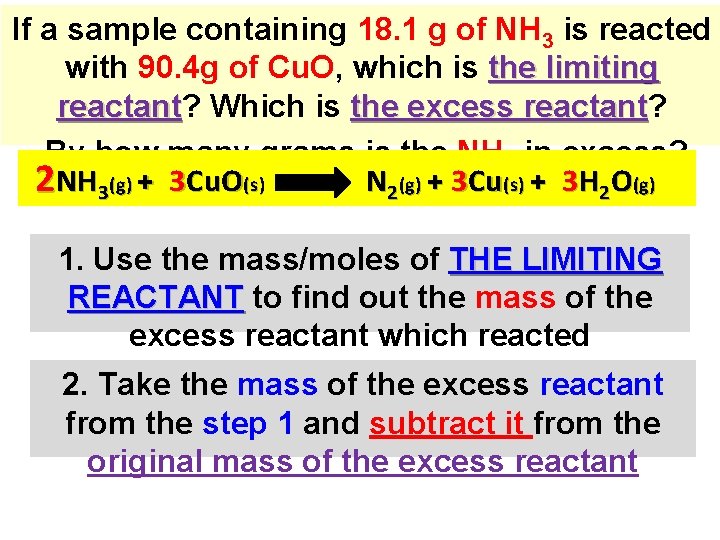
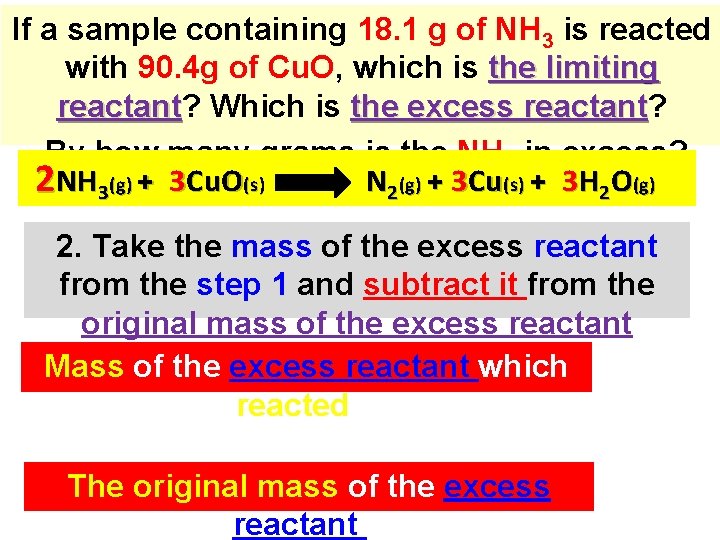
If a sample containing 18. 1 g of NH 3 is reacted with 90. 4 g of Cu. O, which is the limiting reactant? reactant Which is the excess reactant? reactant By how many grams is the NH 3 in excess? 2 NH 3(g) + 3 Cu. O(s) N 2(g) + 3 Cu(s) + 3 H 2 O(g) 1. Use the mass/moles of THE LIMITING REACTANT to find out the mass of the excess reactant which reacted 2. Take the mass of the excess reactant from the step 1 and subtract it from the original mass of the excess reactant
If a sample containing 18. 1 g of NH 3 is reacted with 90. 4 g of Cu. O, which is the limiting reactant? reactant Which is the excess reactant? reactant By how many grams is the NH 3 in excess? 2 NH 3(g) + 3 Cu. O(s) N 2(g) + 3 Cu(s) + 3 H 2 O(g) 1. Use the mass/moles of THE LIMITING REACTANT to find out the mass of the excess reactant which reacted
If a sample containing 18. 1 g of NH 3 is reacted with 90. 4 g of Cu. O, which is the limiting reactant? reactant Which is the excess reactant? reactant By how many grams is the NH 3 in excess? 2 NH 3(g) + 3 Cu. O(s) N 2(g) + 3 Cu(s) + 3 H 2 O(g) 2. Take the mass of the excess reactant from the step 1 and subtract it from the original mass of the excess reactant Mass of the excess reactant which reacted = The original mass of the excess reactant =
32
Classwork/Homework 35
PERCENTAGE PURITY 36 36
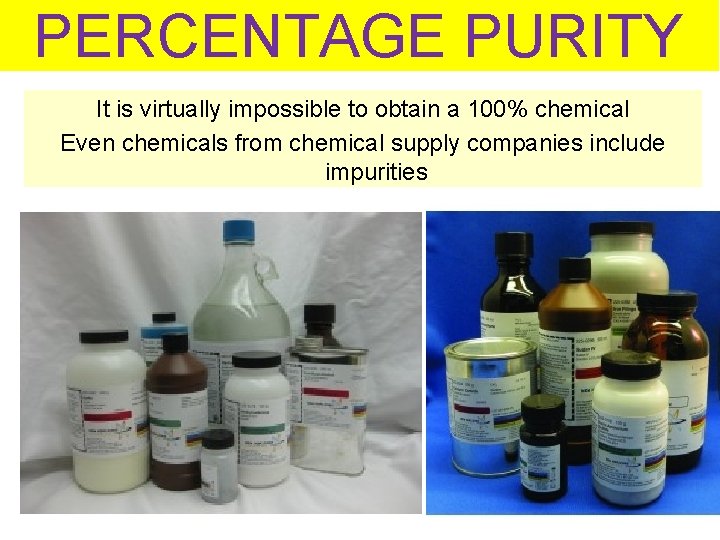
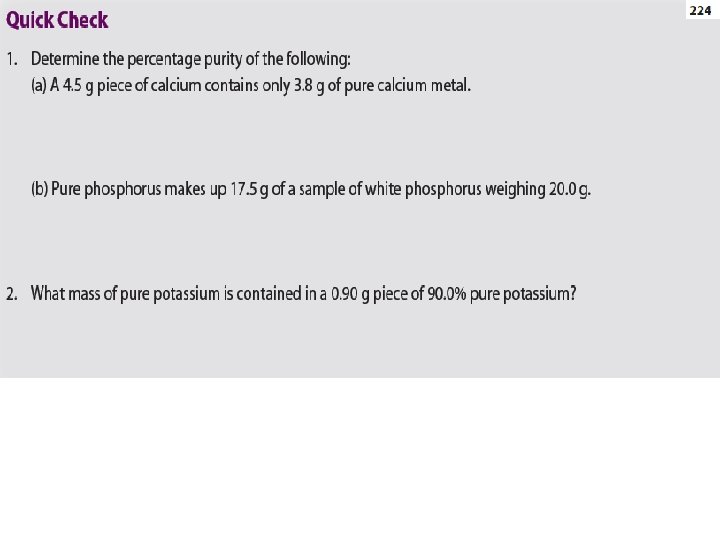
PERCENTAGE PURITY It is virtually impossible to obtain a 100% chemical Even chemicals from chemical supply companies include impurities
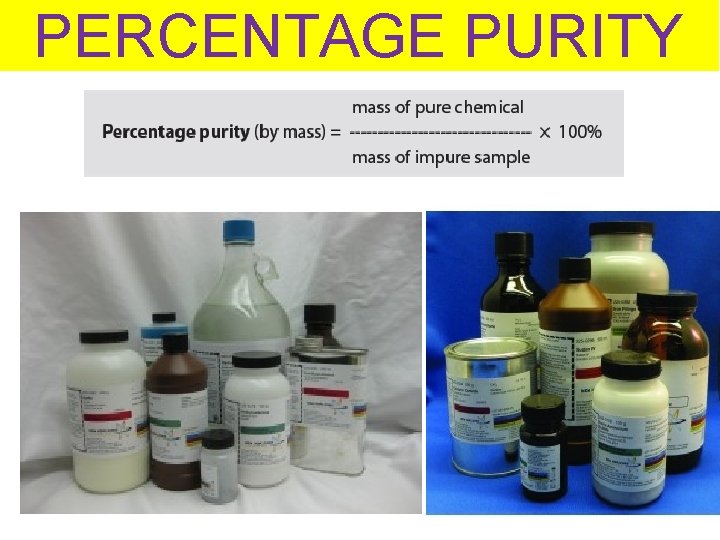
PERCENTAGE PURITY
PERCENTAGE YIELD 40 40
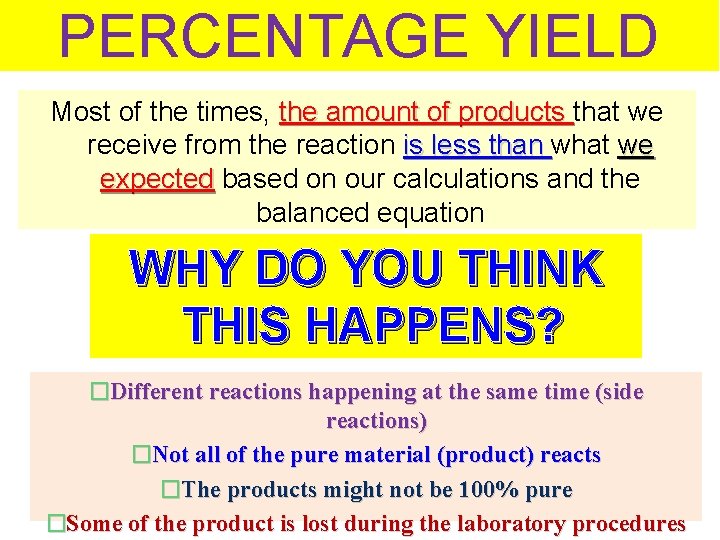
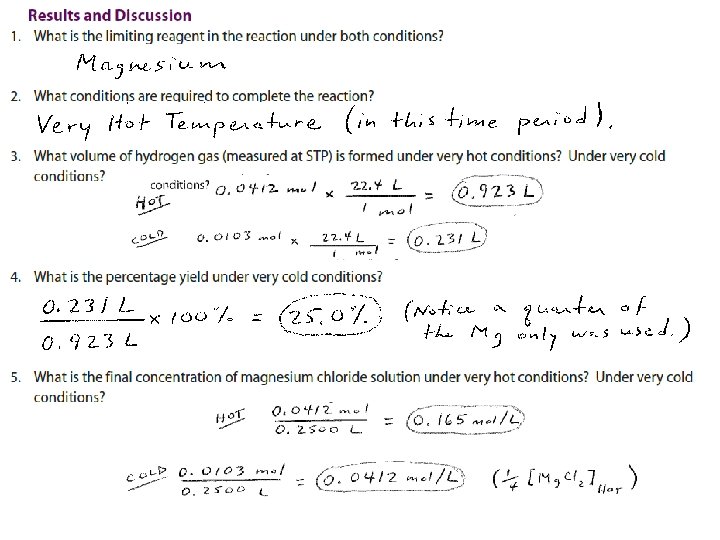
PERCENTAGE YIELD Most of the times, the amount of products that we receive from the reaction is less than what we expected based on our calculations and the balanced equation WHY DO YOU THINK THIS HAPPENS? �Different reactions happening at the same time (side reactions) �Not all of the pure material (product) reacts �The products might not be 100% pure �Some of the product is lost during the laboratory procedures
THEORETICAL YIELD So, the balanced equation and the stoichiometric calculations will give you ONLY THE EXPECTED (THEORETICAL) YIELD of a product
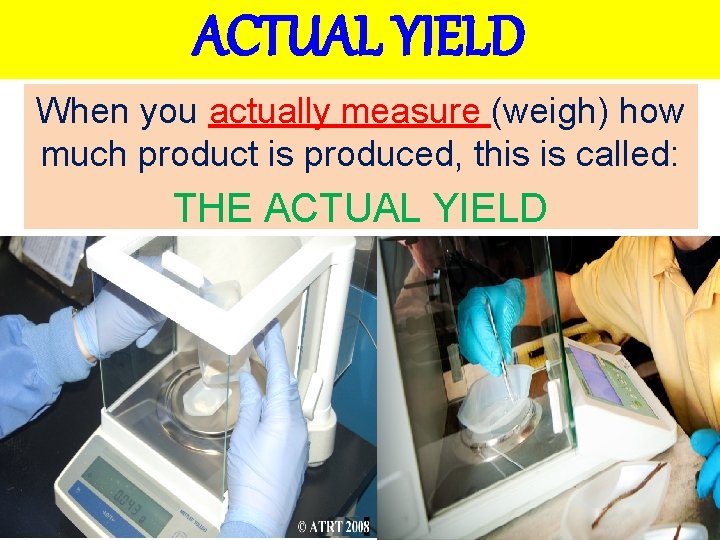
ACTUAL YIELD When you actually measure (weigh) how much product is produced, this is called: THE ACTUAL YIELD
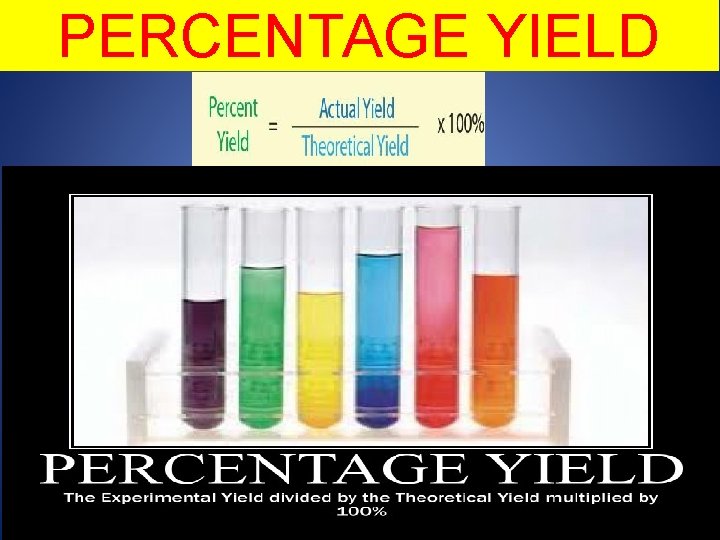
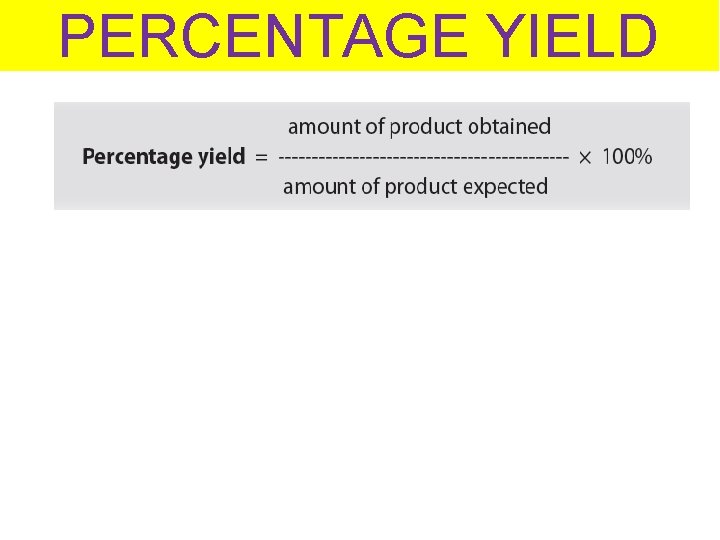
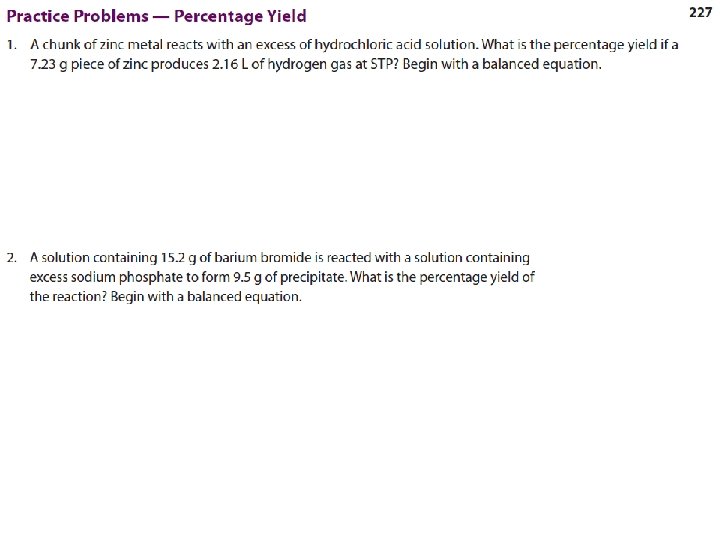
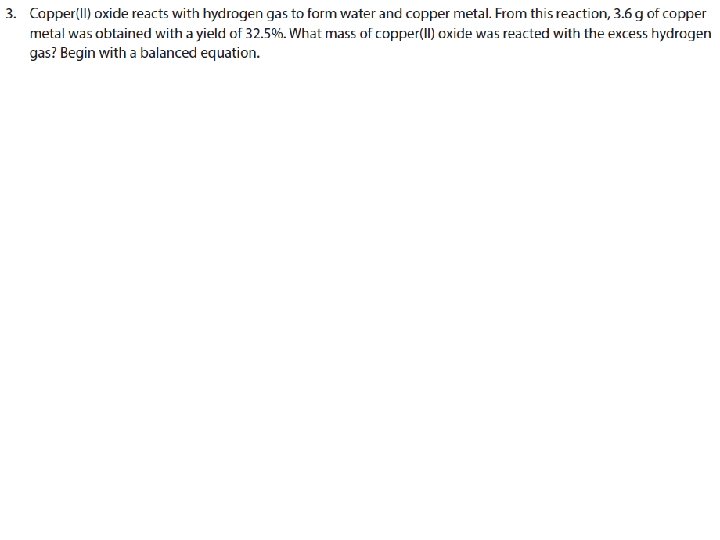
PERCENTAGE YIELD
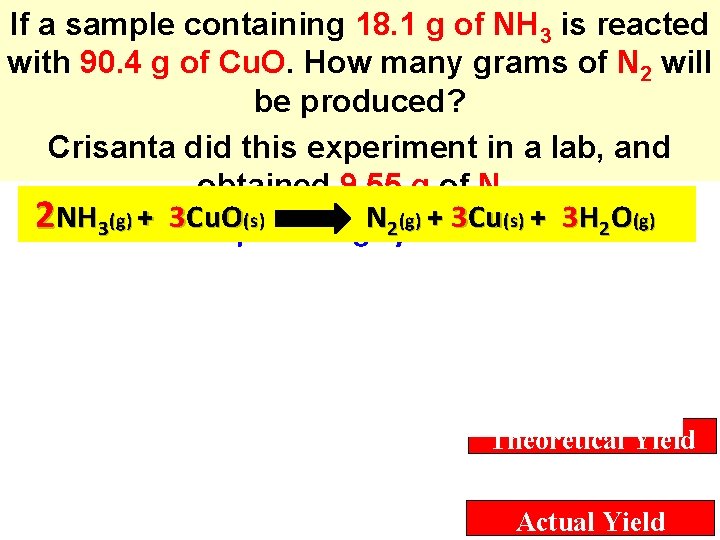
If a sample containing 18. 1 g of NH 3 is reacted with 90. 4 g of Cu. O. How many grams of N 2 will be produced? Crisanta did this experiment in a lab, and obtained 9. 55 g of N 2. 2 What NH 3(g)was + 3 the Cu. Opercentage (s) N 2 yield (g) + 3 Cu(s) + 3 H 2 O(g) of the reaction? 45 Theoretical Yield Actual Yield
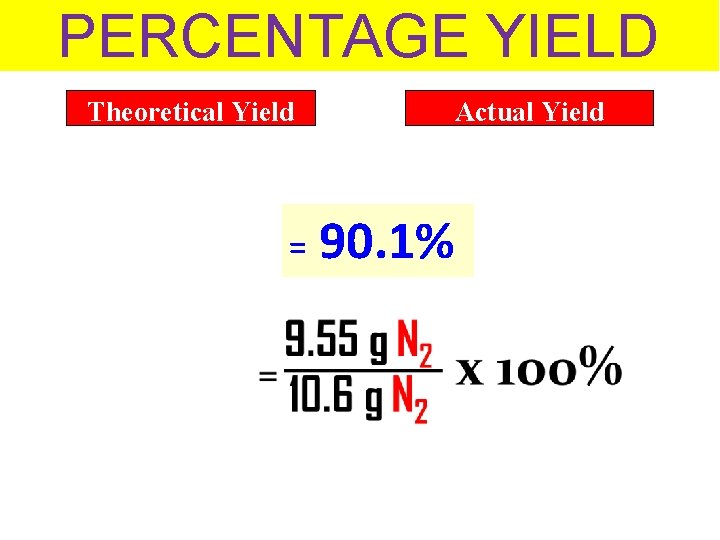
PERCENTAGE YIELD Theoretical Yield Actual Yield = 90. 1%
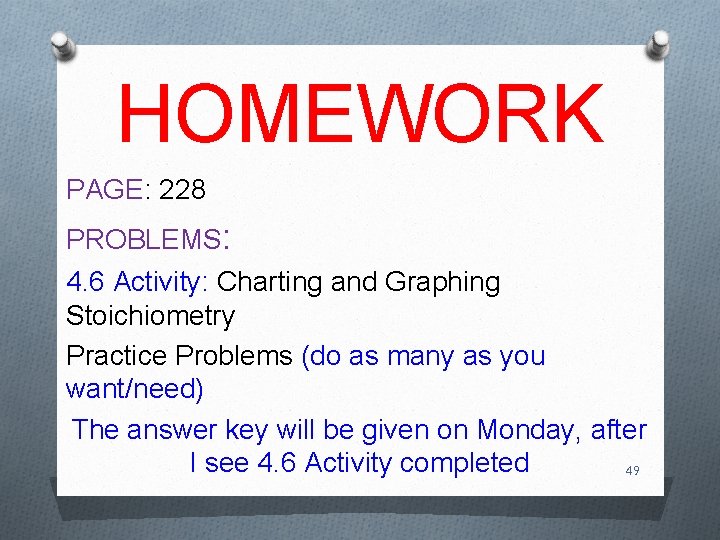
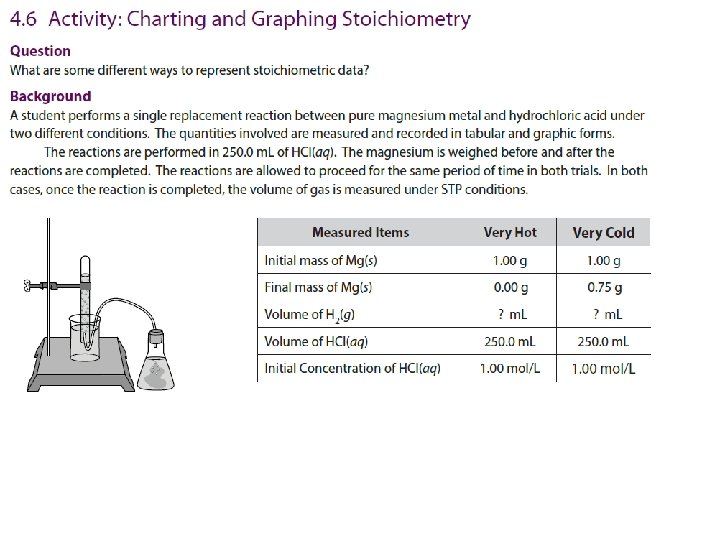
HOMEWORK PAGE: 228 PROBLEMS: 4. 6 Activity: Charting and Graphing Stoichiometry Practice Problems (do as many as you want/need) The answer key will be given on Monday, after I see 4. 6 Activity completed 49
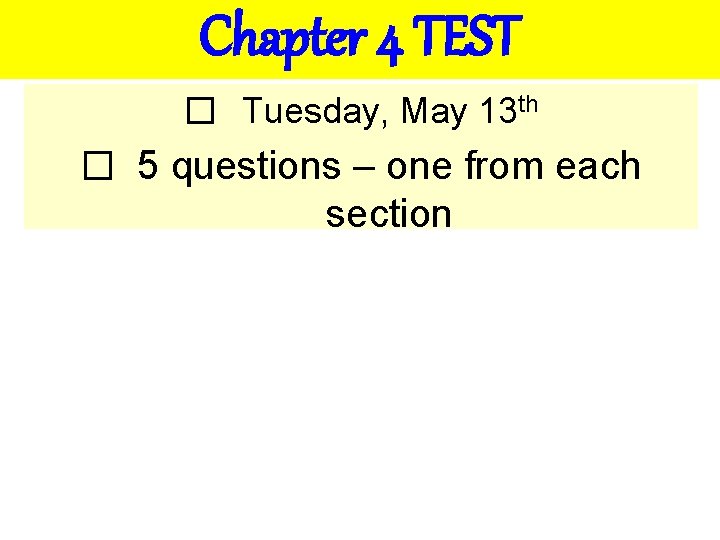
Chapter 4 TEST � Tuesday, May 13 th � 5 questions – one from each section