
Limiting Reactants 48 tires 8 car bodies CB
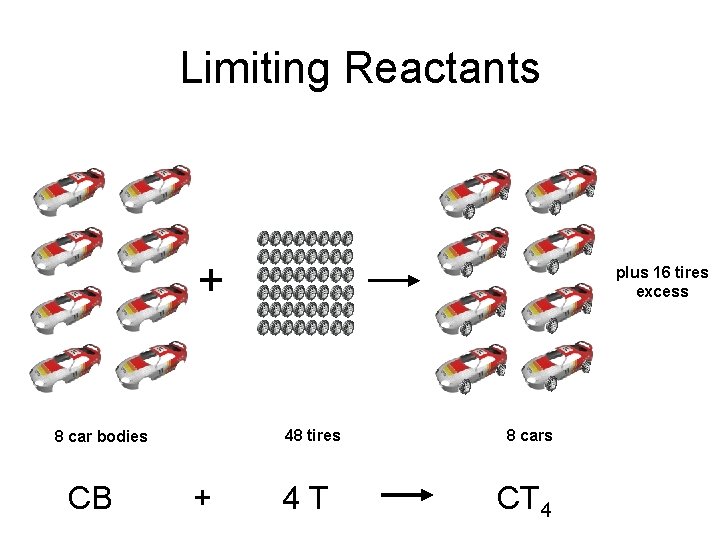
Limiting Reactants + 48 tires 8 car bodies CB plus 16 tires excess + 4 T 8 cars CT 4
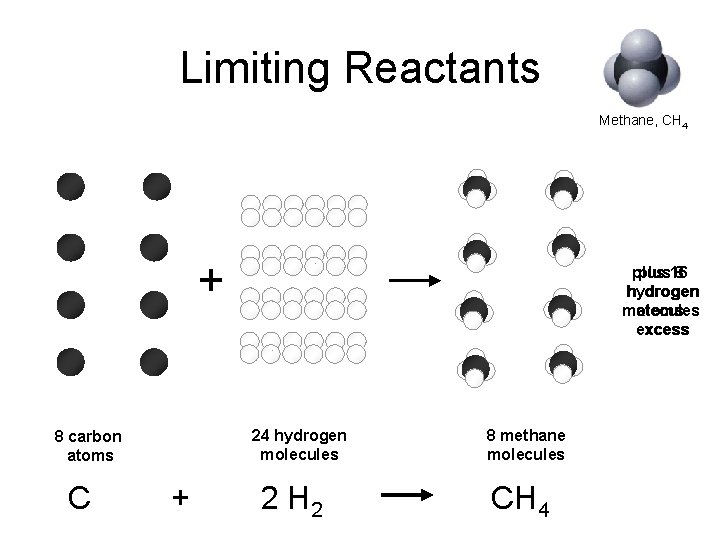
Limiting Reactants Methane, CH 4 + 24 hydrogen molecules 8 carbon atoms C plus 16 8 hydrogen molecules atoms excess + 2 H 2 8 methane molecules CH 4
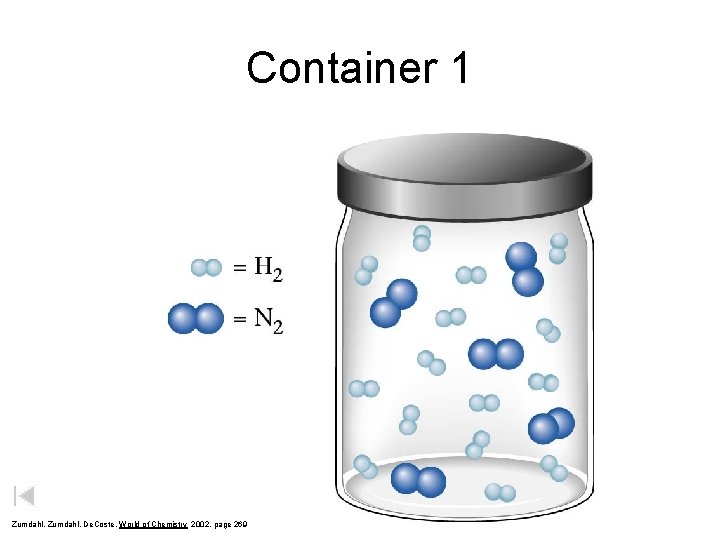
Container 1 Zumdahl, De. Coste, World of Chemistry 2002, page 269
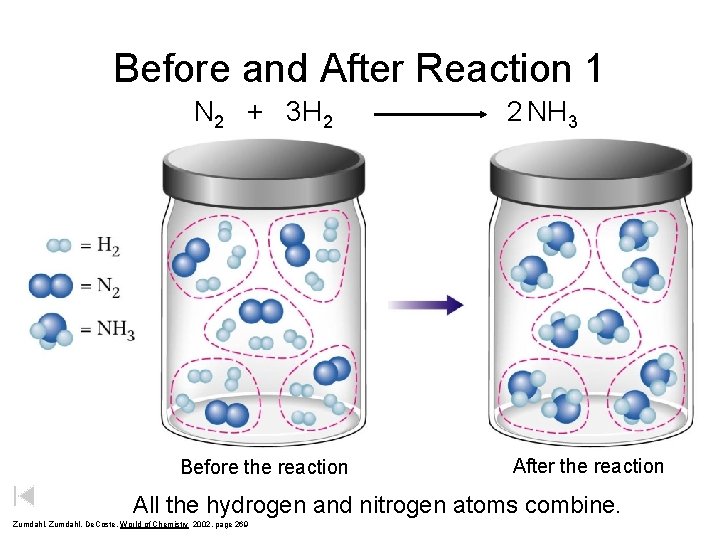
Before and After Reaction 1 N 2 + 3 H 2 Before the reaction 2 NH 3 After the reaction All the hydrogen and nitrogen atoms combine. Zumdahl, De. Coste, World of Chemistry 2002, page 269
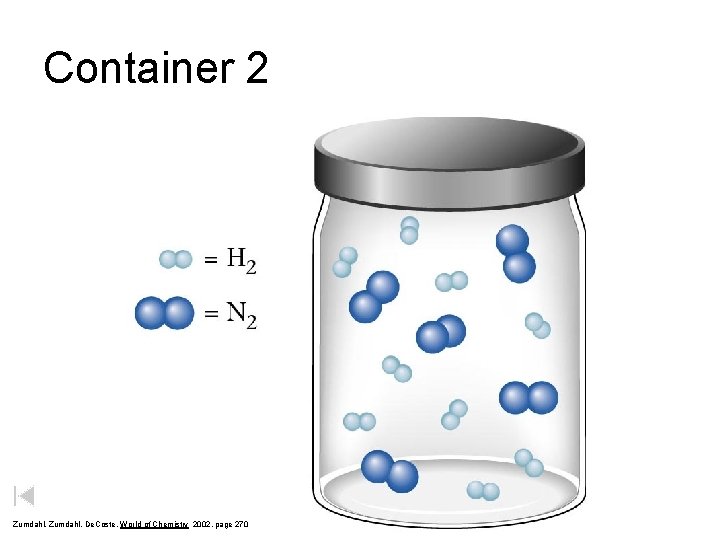
Container 2 Zumdahl, De. Coste, World of Chemistry 2002, page 270
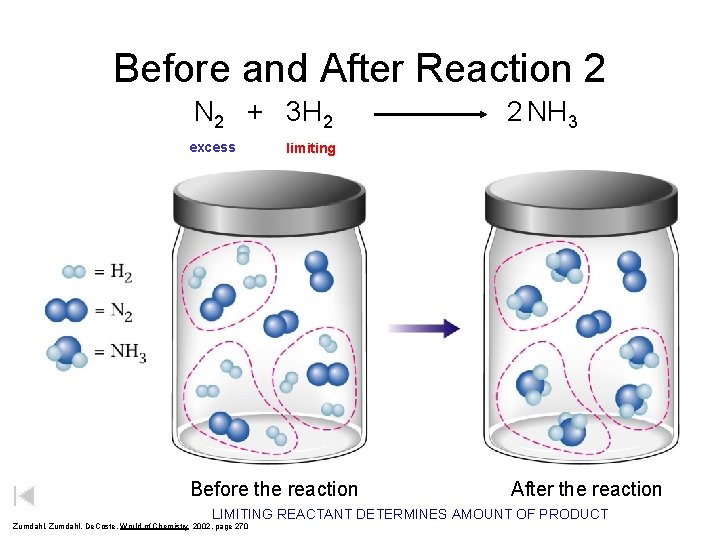
Before and After Reaction 2 N 2 + 3 H 2 excess 2 NH 3 limiting Before the reaction After the reaction LIMITING REACTANT DETERMINES AMOUNT OF PRODUCT Zumdahl, De. Coste, World of Chemistry 2002, page 270
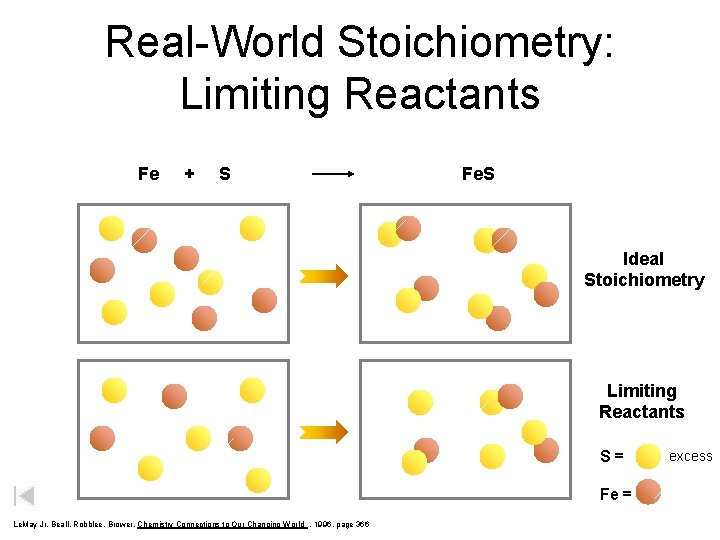
Real-World Stoichiometry: Limiting Reactants Fe + S Fe. S Ideal Stoichiometry Limiting Reactants S= Fe = Le. May Jr, Beall, Robblee, Brower, Chemistry Connections to Our Changing World , 1996, page 366 excess
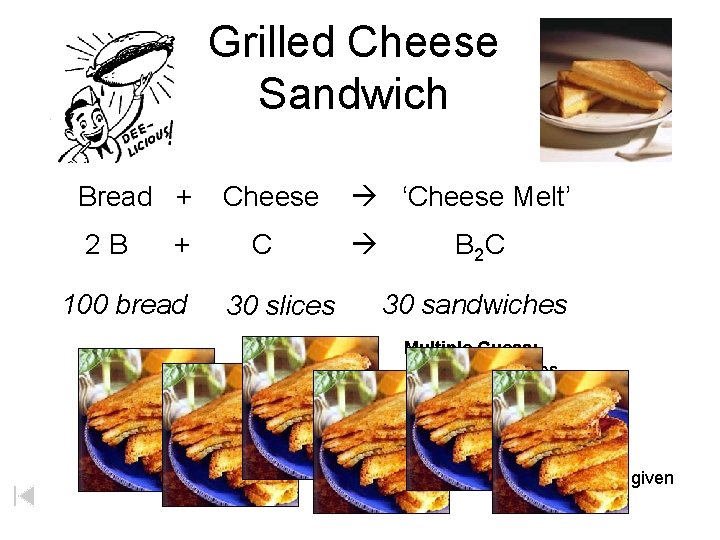
Grilled Cheese Sandwich Bread + 2 B + 100 bread Cheese C 30 slices ‘Cheese Melt’ B 2 C 30 ? sandwiches Multiple Guess: 130 sandwiches 100 sandwiches 90 sandwiches 60 sandwiches 30 sandwiches Not enough information given
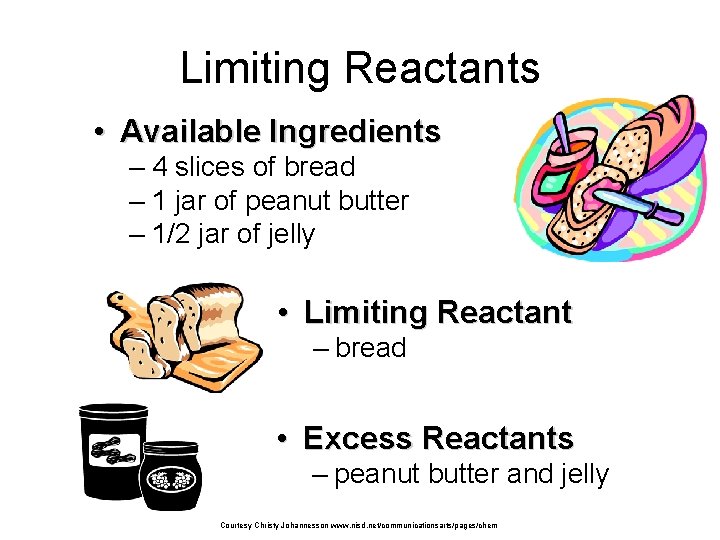
Limiting Reactants • Available Ingredients – 4 slices of bread – 1 jar of peanut butter – 1/2 jar of jelly • Limiting Reactant – bread • Excess Reactants – peanut butter and jelly Courtesy Christy Johannesson www. nisd. net/communicationsarts/pages/chem
Limiting Reactants • Limiting Reactant – used up in a reaction – determines the amount of product • Excess Reactant – added to ensure that the other reactant is completely used up – cheaper & easier to recycle Courtesy Christy Johannesson www. nisd. net/communicationsarts/pages/chem
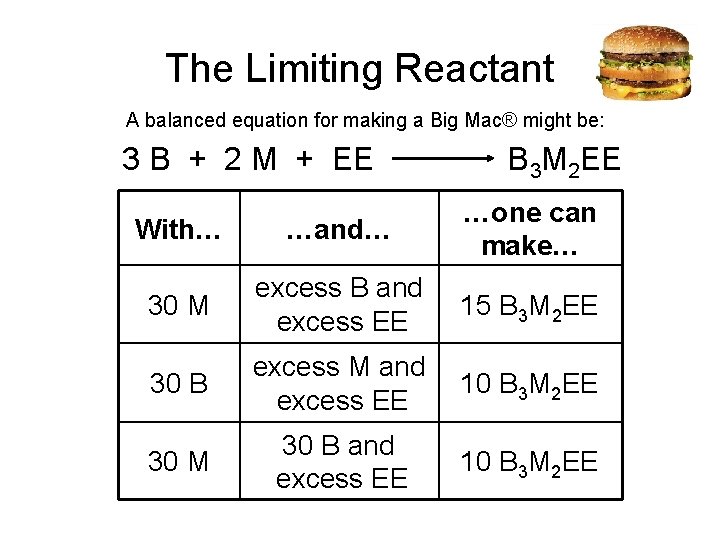
The Limiting Reactant A balanced equation for making a Big Mac® might be: 3 B + 2 M + EE B 3 M 2 EE With… …and… …one can make… 30 M excess B and excess EE 15 B 3 M 2 EE 30 B excess M and excess EE 10 B 3 M 2 EE 30 M 30 B and excess EE 10 B 3 M 2 EE
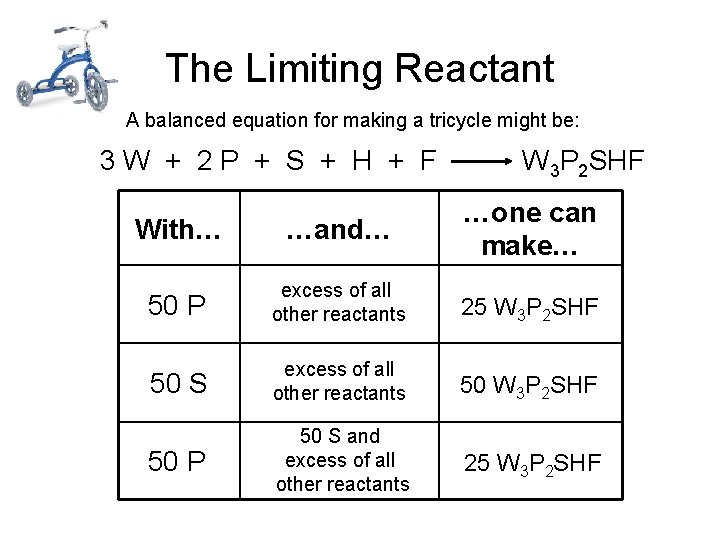
The Limiting Reactant A balanced equation for making a tricycle might be: 3 W + 2 P + S + H + F W 3 P 2 SHF With… …and… …one can make… 50 P excess of all other reactants 25 W 3 P 2 SHF 50 S excess of all other reactants 50 W 3 P 2 SHF 50 P 50 S and excess of all other reactants 25 W 3 P 2 SHF
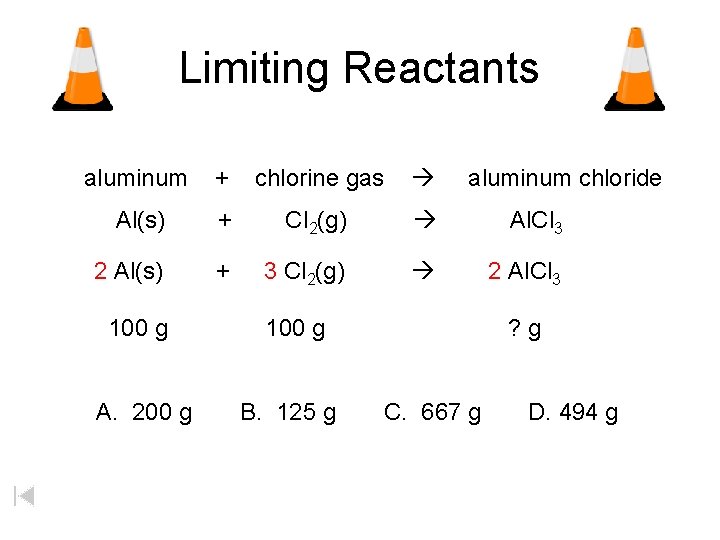
Limiting Reactants aluminum + chlorine gas Al(s) + Cl 2(g) Al. Cl 3 2 Al(s) + 3 Cl 2(g) 2 Al. Cl 3 100 g A. 200 g aluminum chloride 100 g B. 125 g ? g C. 667 g D. 494 g
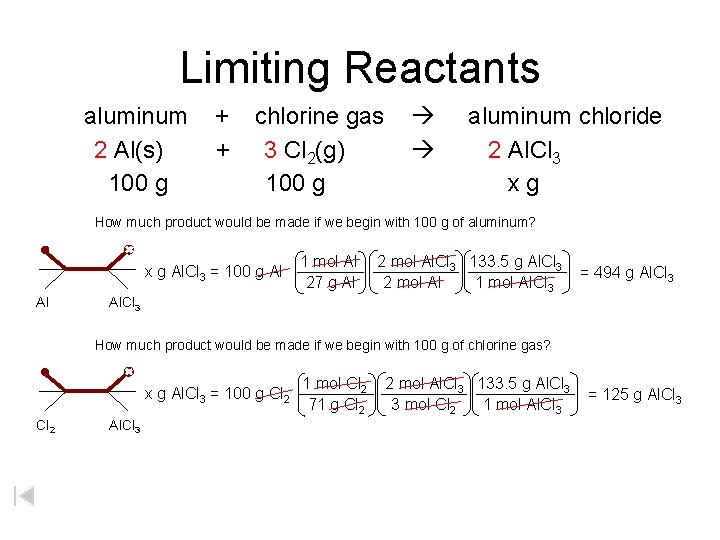
Limiting Reactants aluminum 2 Al(s) 100 g + + chlorine gas 3 Cl 2(g) 100 g aluminum chloride 2 Al. Cl 3 xg How much product would be made if we begin with 100 g of aluminum? x g Al. Cl 3 = 100 g Al Al 1 mol Al 27 g Al 2 mol Al. Cl 3 133. 5 g Al. Cl 3 2 mol Al 1 mol Al. Cl 3 = 494 g Al. Cl 3 How much product would be made if we begin with 100 g of chlorine gas? x g Al. Cl 3 = 100 g Cl 2 Al. Cl 3 1 mol Cl 2 71 g Cl 2 2 mol Al. Cl 3 133. 5 g Al. Cl 3 3 mol Cl 2 1 mol Al. Cl 3 = 125 g Al. Cl 3
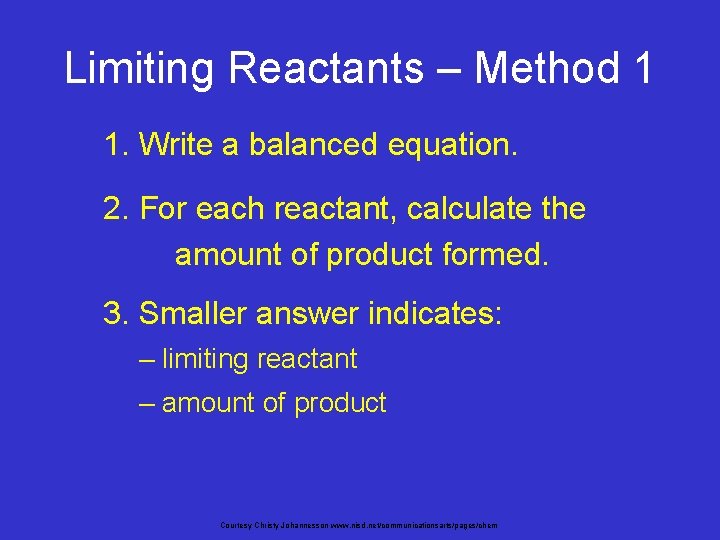
Limiting Reactants – Method 1 1. Write a balanced equation. 2. For each reactant, calculate the amount of product formed. 3. Smaller answer indicates: – limiting reactant – amount of product Courtesy Christy Johannesson www. nisd. net/communicationsarts/pages/chem
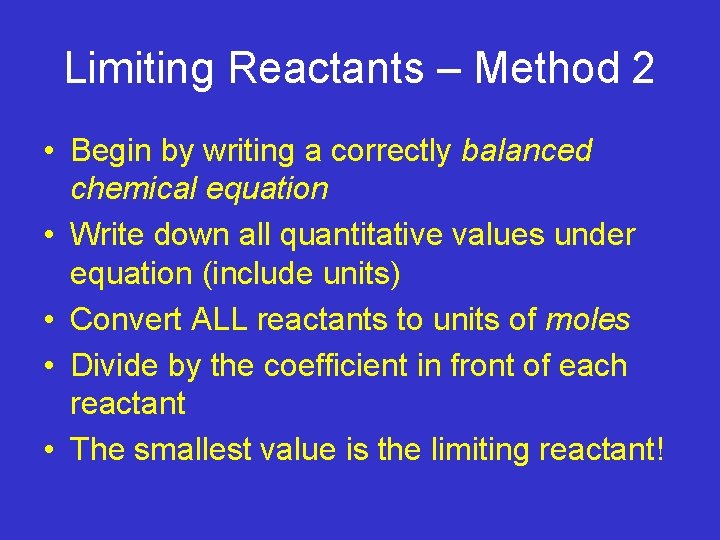
Limiting Reactants – Method 2 • Begin by writing a correctly balanced chemical equation • Write down all quantitative values under equation (include units) • Convert ALL reactants to units of moles • Divide by the coefficient in front of each reactant • The smallest value is the limiting reactant!
- Slides: 16