22 16 Nitrosation of Alkylamines Nitrosyl Cation and
- Slides: 50
22. 16 Nitrosation of Alkylamines
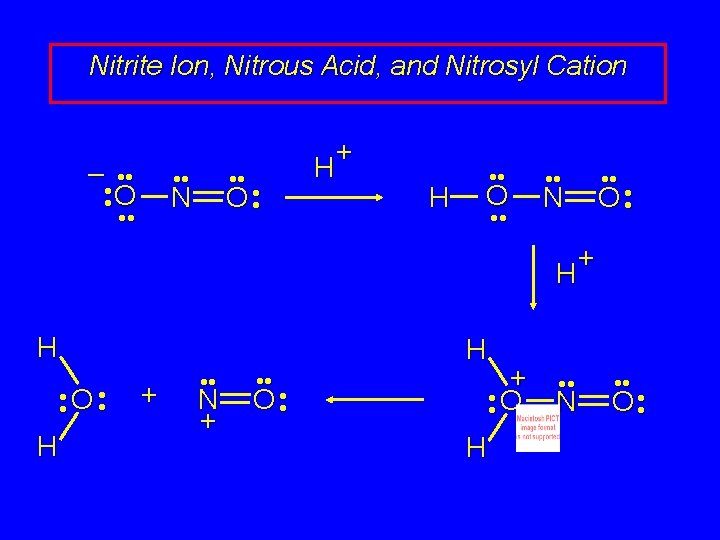
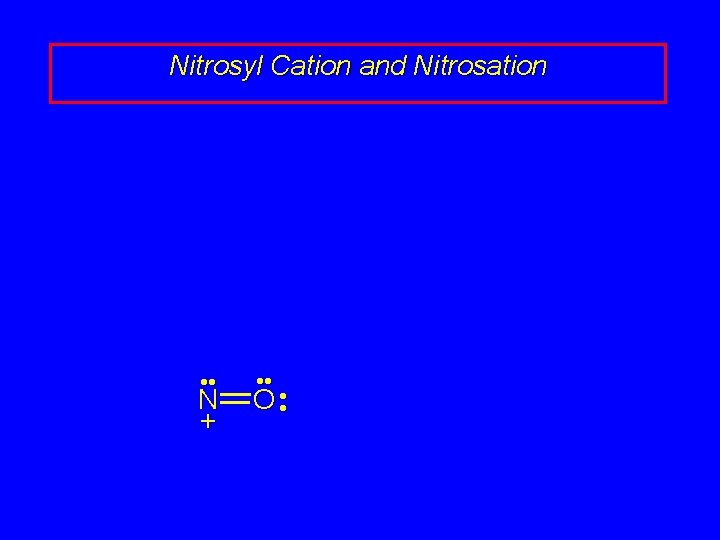
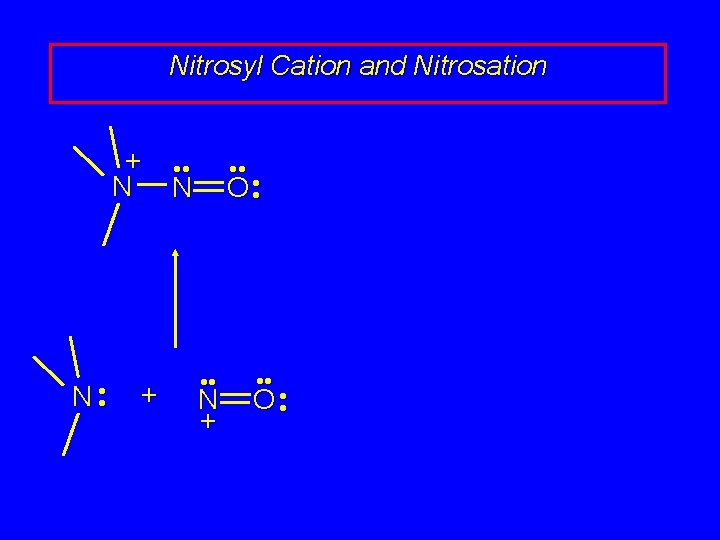
Nitrosyl Cation and Nitrosation • • N + • • O • •
Nitrosyl Cation and Nitrosation + N N • • + • • O • • N + • • O • •
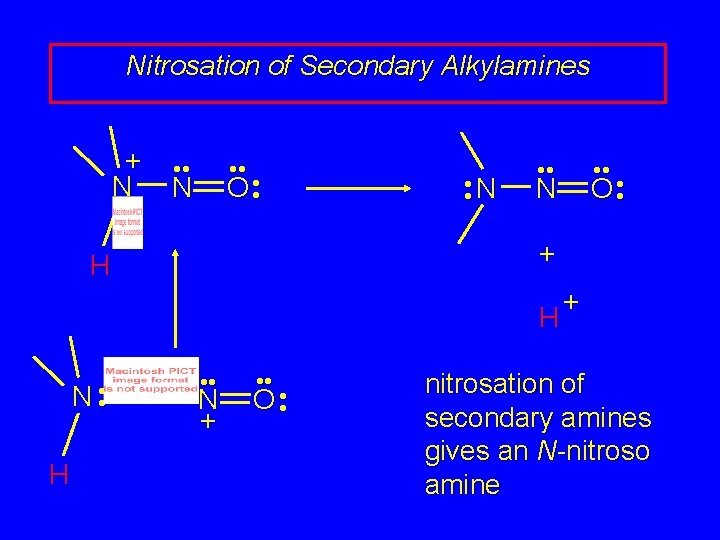
Nitrosation of Secondary Alkylamines + N • • O • • N • • N H H O • • N + H N • • + • • N + • • O • • + nitrosation of secondary amines gives an N-nitroso amine
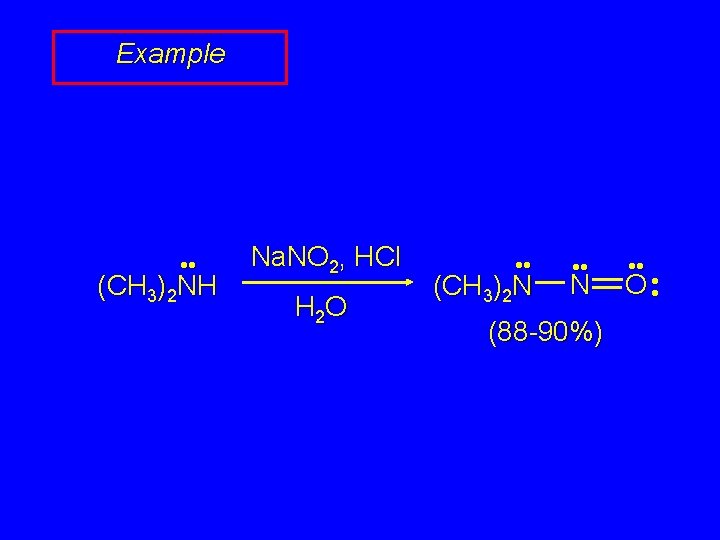
Example • • (CH 3)2 NH Na. NO 2, HCl H 2 O • • (CH 3)2 N • • N (88 -90%) • • O • •
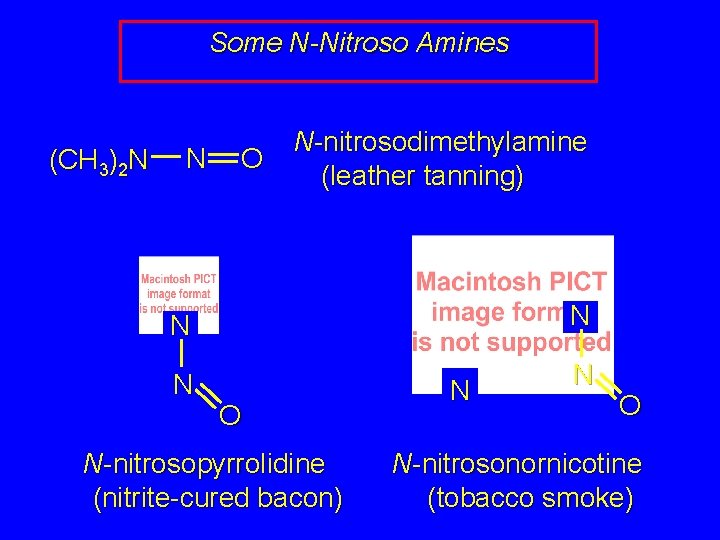
Some N-Nitroso Amines (CH 3)2 N N O N-nitrosodimethylamine (leather tanning) N N O N-nitrosopyrrolidine (nitrite-cured bacon) N O N-nitrosonornicotine (tobacco smoke)
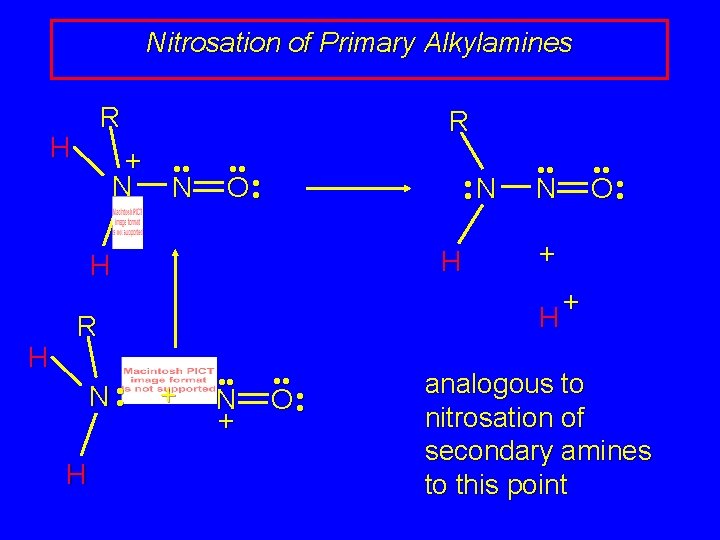
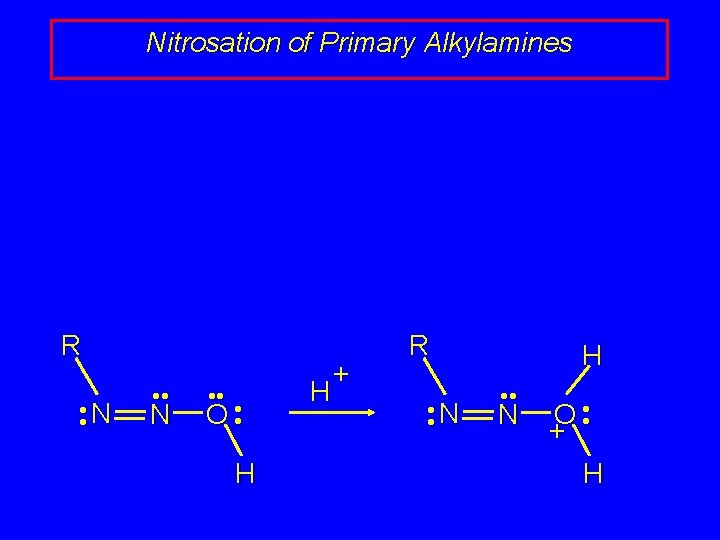
Nitrosation of Primary Alkylamines R H + N R • • N • • O • • N H H H N • • H + • • N + • • O • • N + H R • • + analogous to nitrosation of secondary amines to this point
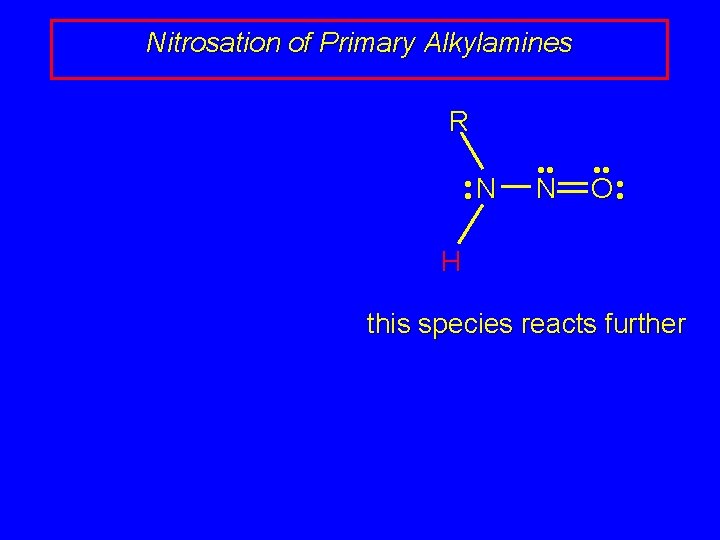
Nitrosation of Primary Alkylamines R • • N • • O • • H this species reacts further
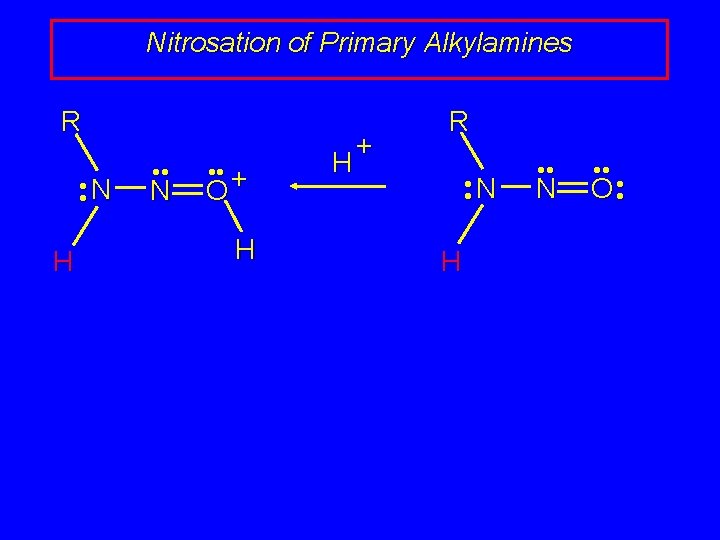
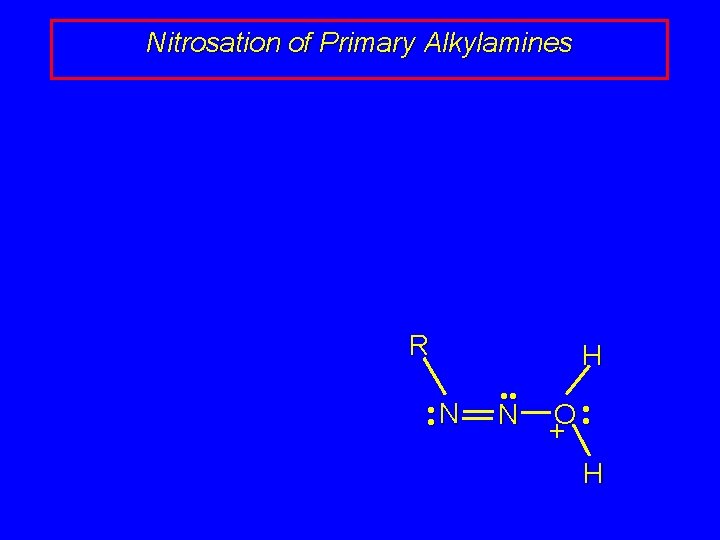
Nitrosation of Primary Alkylamines R • • N H • • N • • + O H H + R • • N H • • N • • O • •
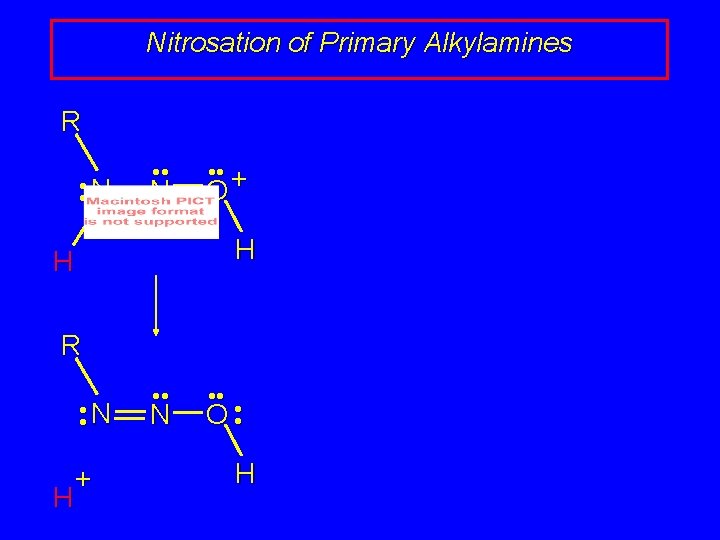
Nitrosation of Primary Alkylamines R • • N • • + O H H R • • N H + • • N • • O • • H
Nitrosation of Primary Alkylamines R • • N • • O • • H H + R • • N H • • N O • • + H
Nitrosation of Primary Alkylamines R • • N H • • N O • • + H
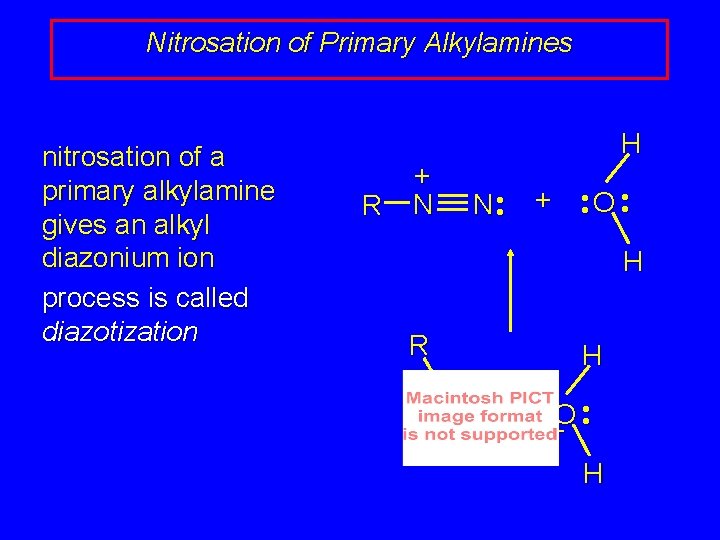
Nitrosation of Primary Alkylamines nitrosation of a primary alkylamine gives an alkyl diazonium ion process is called diazotization H R + N N • • + • • O • • H R • • N H • • N O • • + H
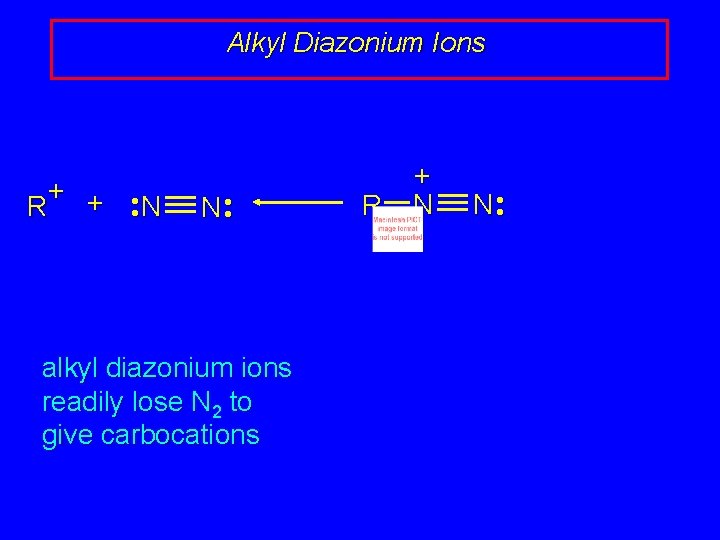
Alkyl Diazonium Ions + + • R • N N • • alkyl diazonium ions readily lose N 2 to give carbocations R + N N • •
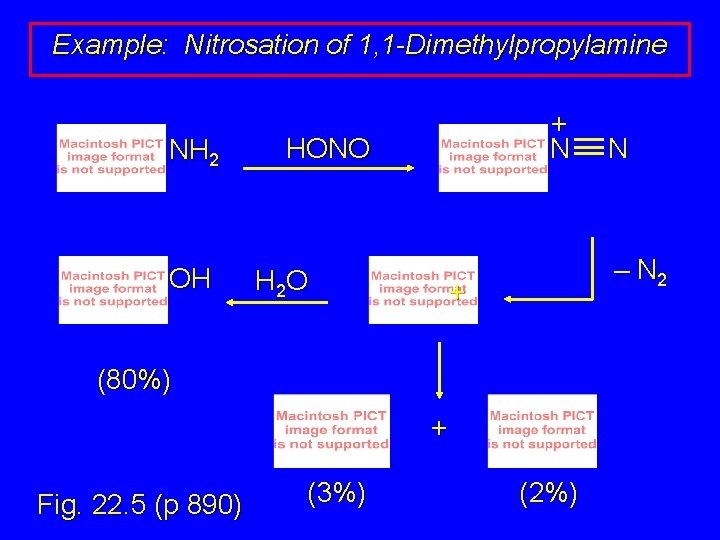
Example: Nitrosation of 1, 1 -Dimethylpropylamine NH 2 OH + N HONO H 2 O – N 2 + (80%) + Fig. 22. 5 (p 890) (3%) N (2%)
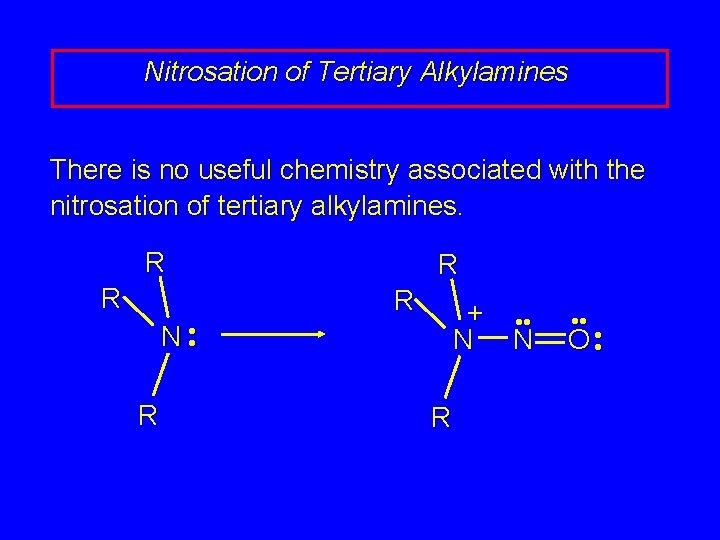
Nitrosation of Tertiary Alkylamines There is no useful chemistry associated with the nitrosation of tertiary alkylamines. R R + N N • • R R • • N • • O • •
22. 17 Nitrosation of Arylamines
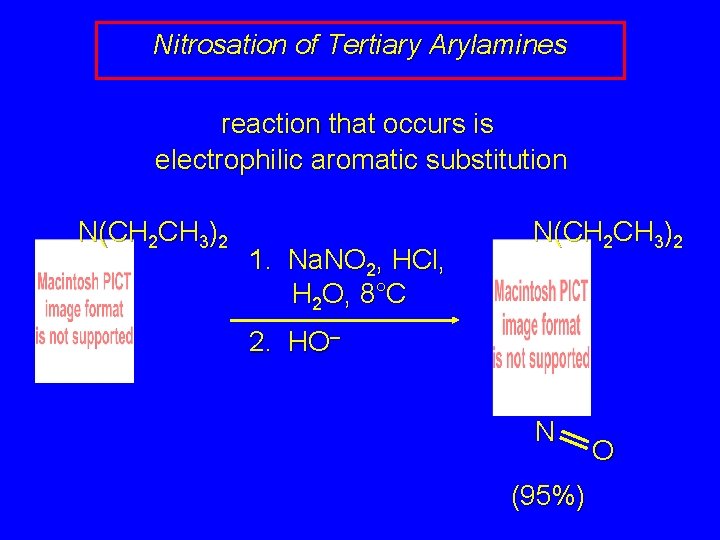
Nitrosation of Tertiary Arylamines reaction that occurs is electrophilic aromatic substitution N(CH 2 CH 3)2 1. Na. NO 2, HCl, H 2 O, 8°C N(CH 2 CH 3)2 2. HO– N (95%) O
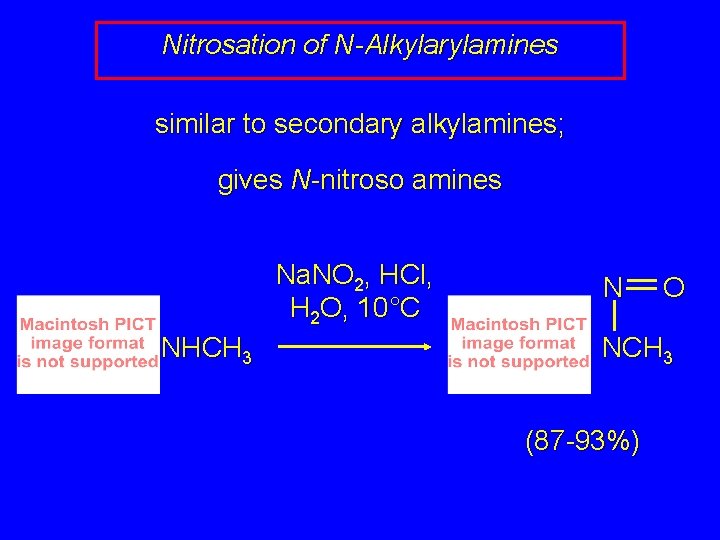
Nitrosation of N-Alkylarylamines similar to secondary alkylamines; gives N-nitroso amines Na. NO 2, HCl, H 2 O, 10°C NHCH 3 N O NCH 3 (87 -93%)
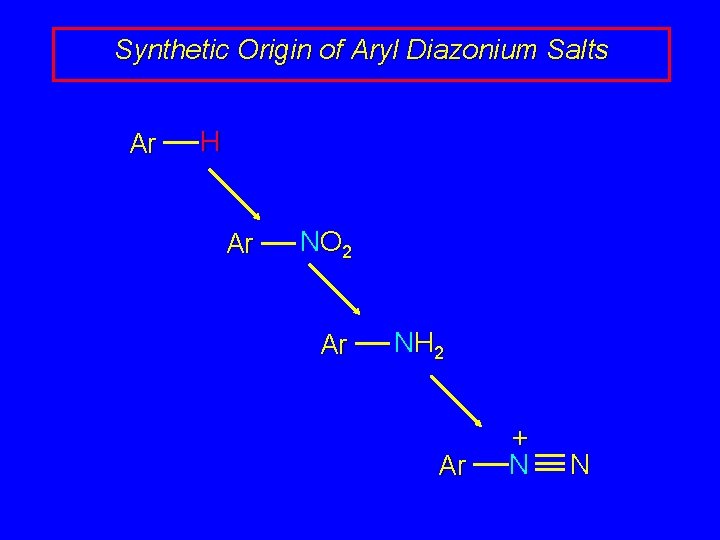
Nitrosation of Primary Arylamines gives aryl diazonium ions are much more stable than alkyl diazonium ions most aryl diazonium ions are stable under the conditions of their formation (0 -10°C)
Nitrosation of Primary Arylamines gives aryl diazonium ions are much more stable than alkyl diazonium ions most aryl diazonium ions are stable under the conditions of their formation (0 -10°C) + RN + Ar. N N N fast + R + N 2 slow + Ar + N 2
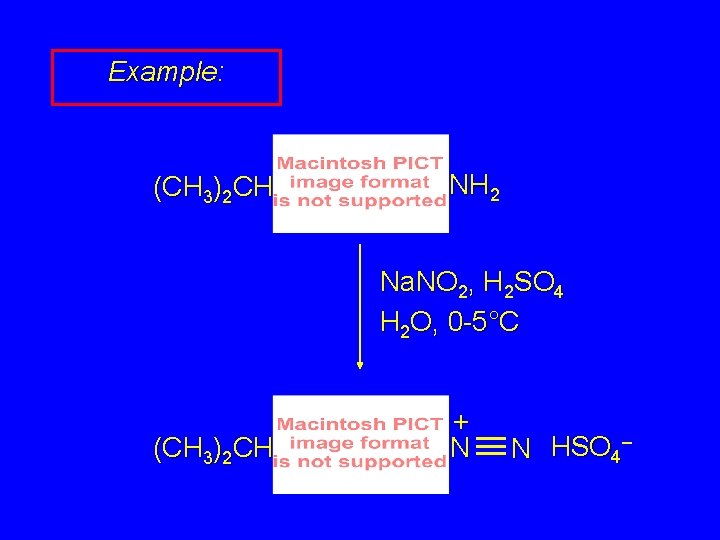
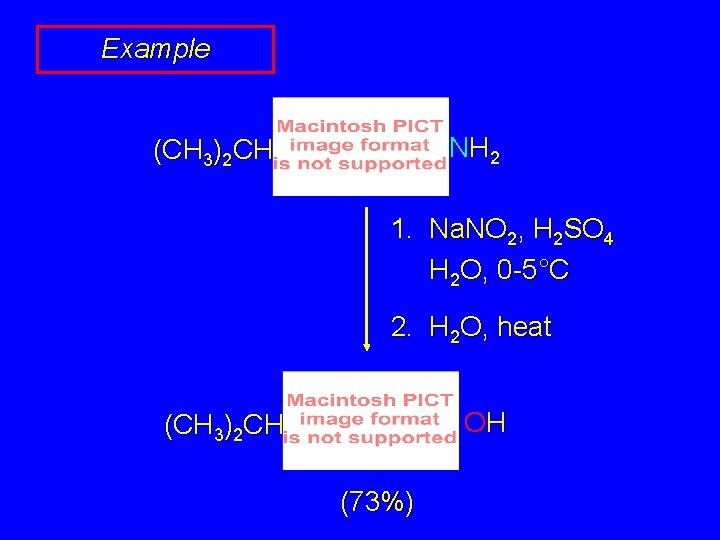
Example: (CH 3)2 CH NH 2 Na. NO 2, H 2 SO 4 H 2 O, 0 -5°C (CH 3)2 CH + N N HSO 4–
Synthetic Origin of Aryl Diazonium Salts Ar H Ar NO 2 Ar NH 2 Ar + N N
22. 18 Synthetic Transformations of Aryl Diazonium Salts
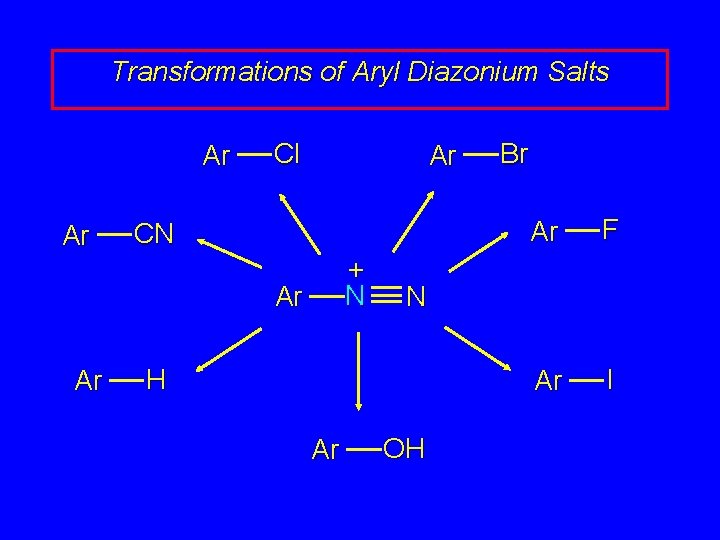
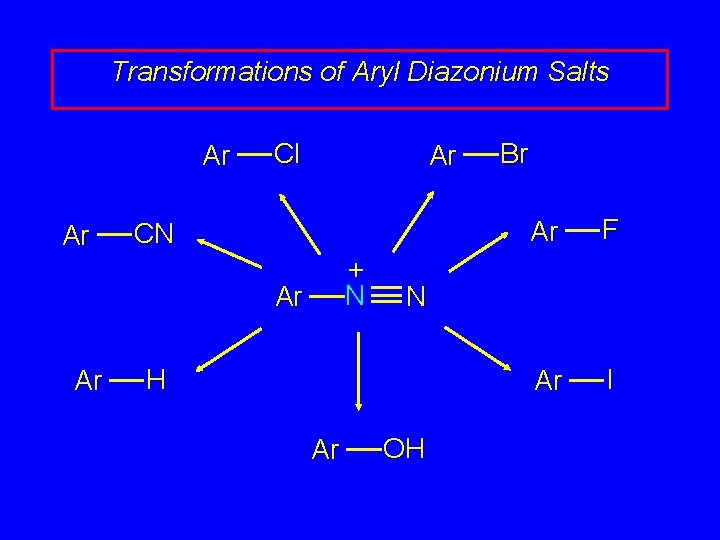
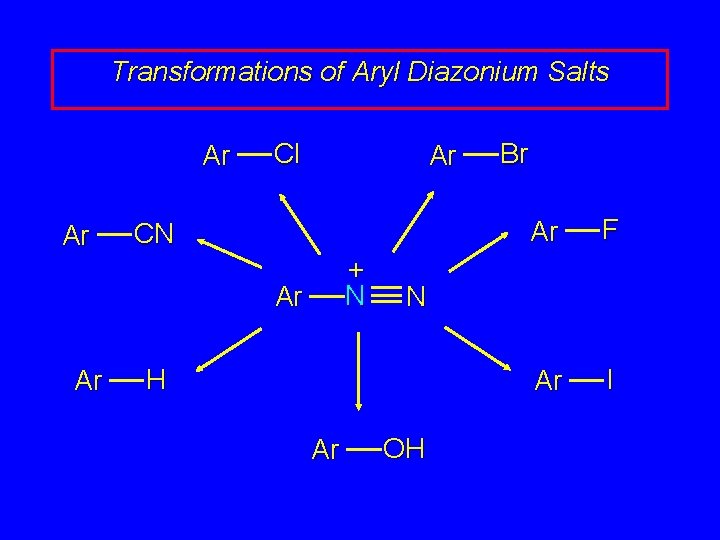
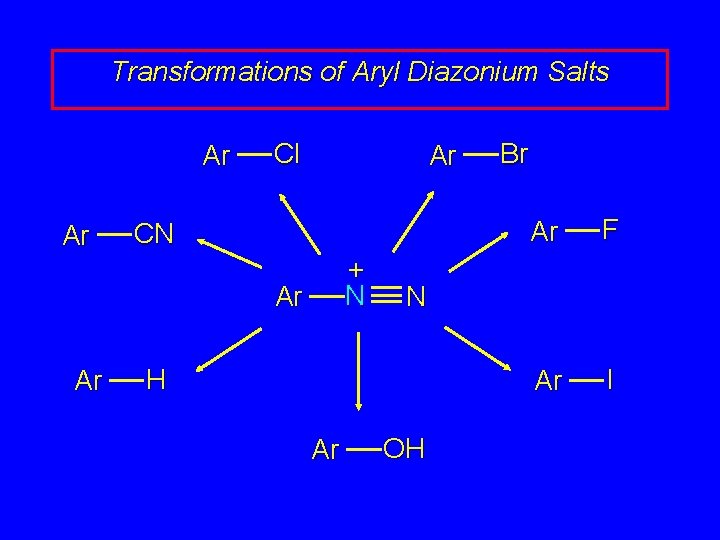
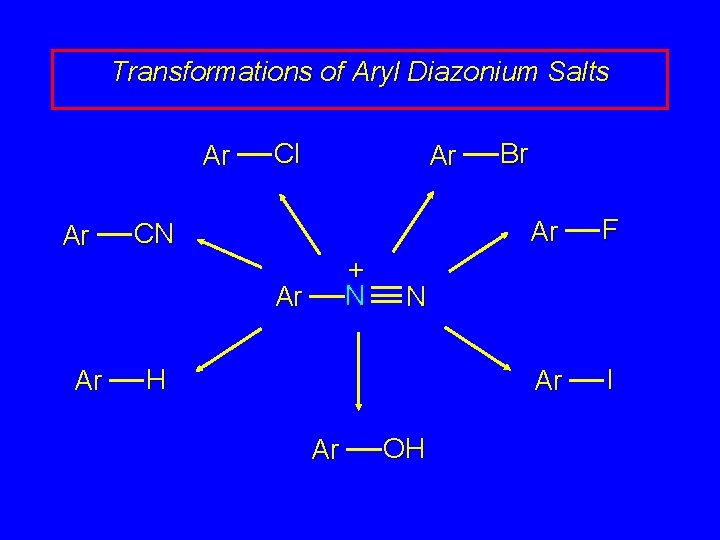
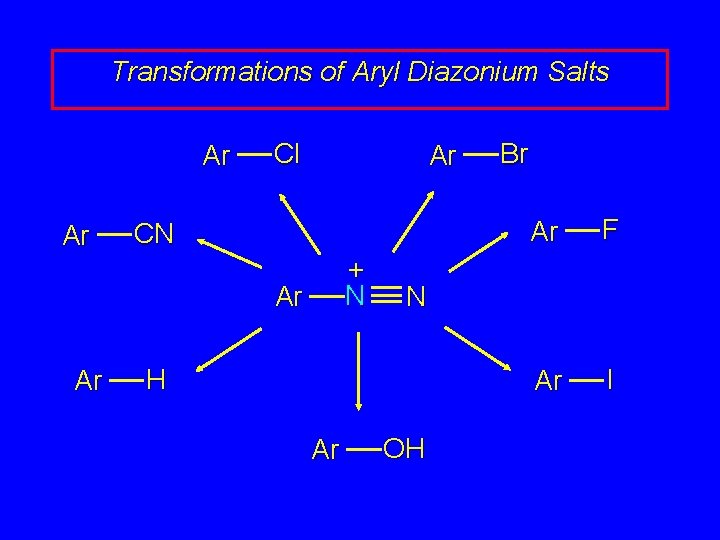
Transformations of Aryl Diazonium Salts Ar Ar Cl Ar CN + N Ar Ar Ar F Ar I N H Ar Br OH
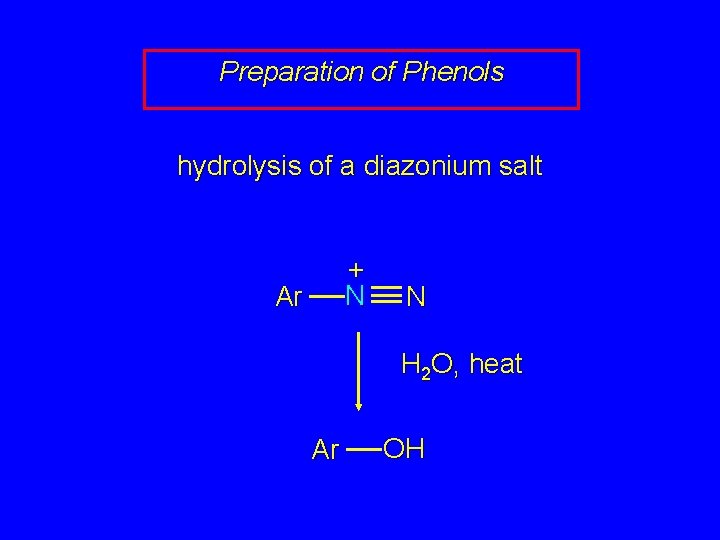
Preparation of Phenols hydrolysis of a diazonium salt + N Ar N H 2 O, heat Ar OH
Example NH 2 (CH 3)2 CH 1. Na. NO 2, H 2 SO 4 H 2 O, 0 -5°C 2. H 2 O, heat OH (CH 3)2 CH (73%)
Transformations of Aryl Diazonium Salts Ar Ar Cl Ar CN + N Ar Ar Ar F Ar I N H Ar Br OH
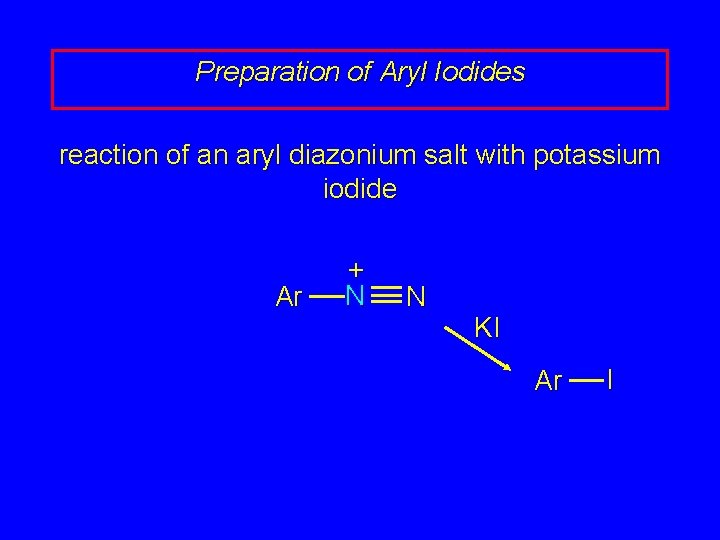
Preparation of Aryl Iodides reaction of an aryl diazonium salt with potassium iodide Ar + N N KI Ar I
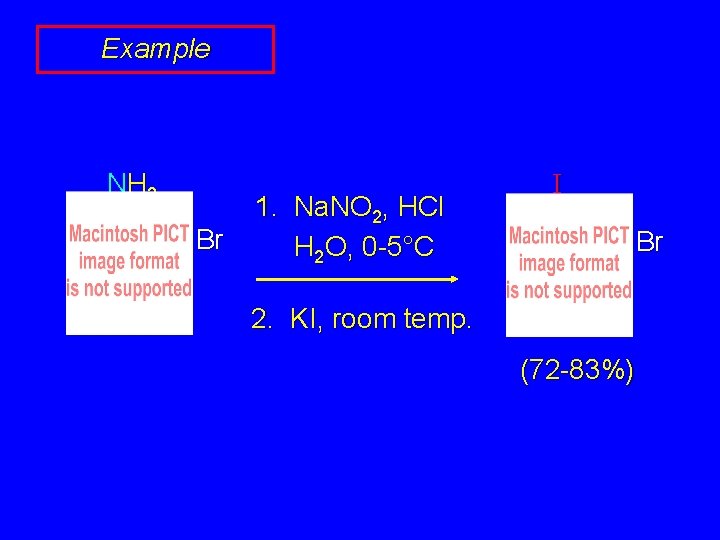
Example NH 2 Br 1. Na. NO 2, HCl H 2 O, 0 -5°C I Br 2. KI, room temp. (72 -83%)
Transformations of Aryl Diazonium Salts Ar Ar Cl Ar CN + N Ar Ar Ar F Ar I N H Ar Br OH
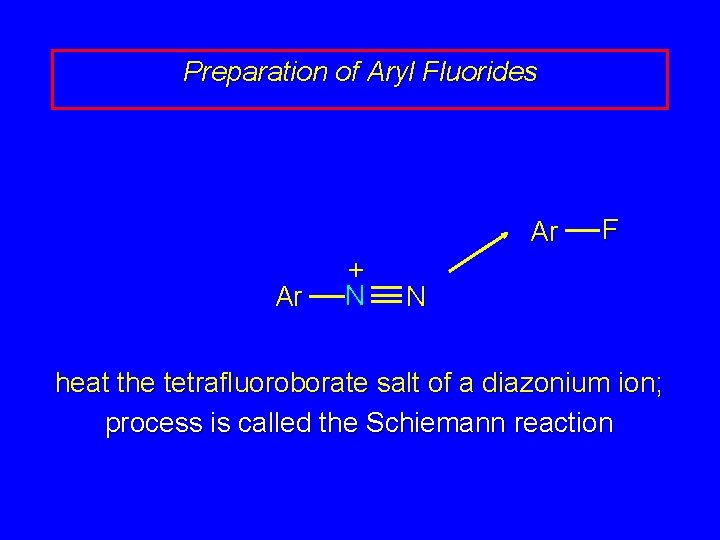
Preparation of Aryl Fluorides Ar Ar + N F N heat the tetrafluoroborate salt of a diazonium ion; process is called the Schiemann reaction
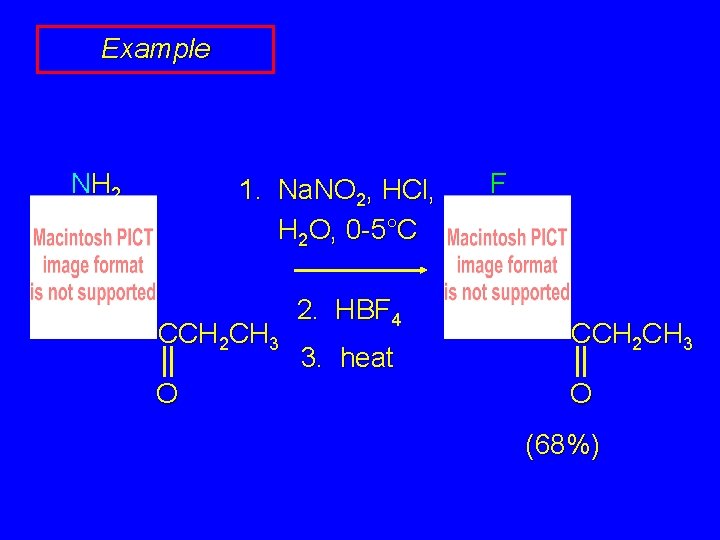
Example NH 2 1. Na. NO 2, HCl, H 2 O, 0 -5°C CCH 2 CH 3 O 2. HBF 4 3. heat F CCH 2 CH 3 O (68%)
Transformations of Aryl Diazonium Salts Ar Ar Cl Ar CN + N Ar Ar Ar F Ar I N H Ar Br OH
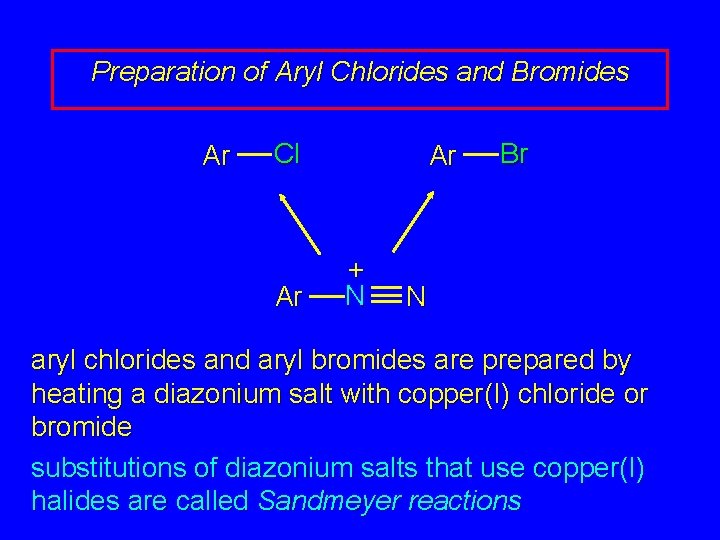
Preparation of Aryl Chlorides and Bromides Ar Cl Ar Ar + N Br N aryl chlorides and aryl bromides are prepared by heating a diazonium salt with copper(I) chloride or bromide substitutions of diazonium salts that use copper(I) halides are called Sandmeyer reactions
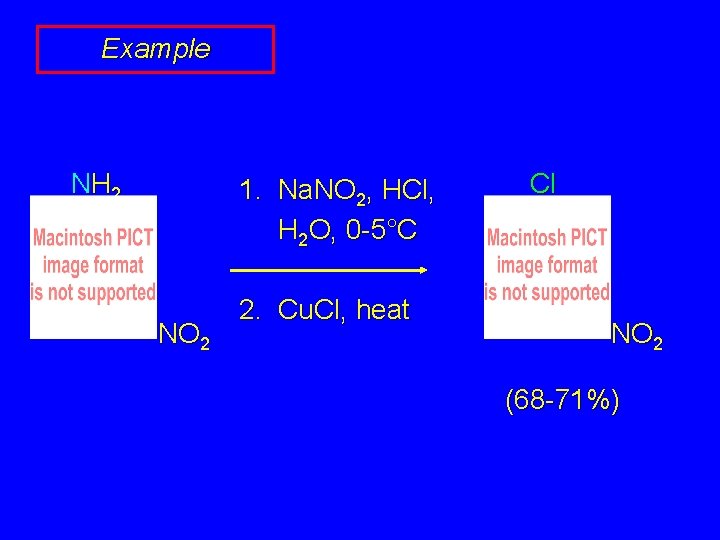
Example NH 2 1. Na. NO 2, HCl, H 2 O, 0 -5°C NO 2 2. Cu. Cl, heat Cl NO 2 (68 -71%)
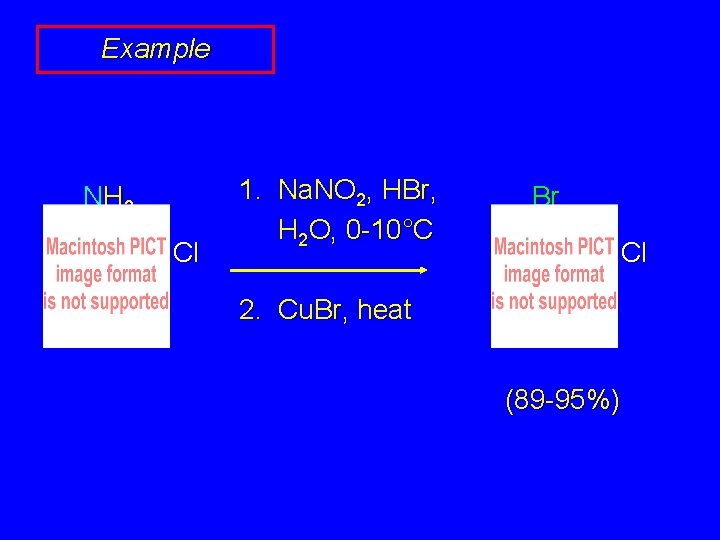
Example NH 2 Cl 1. Na. NO 2, HBr, H 2 O, 0 -10°C Br Cl 2. Cu. Br, heat (89 -95%)
Transformations of Aryl Diazonium Salts Ar Ar Cl Ar CN + N Ar Ar Ar F Ar I N H Ar Br OH
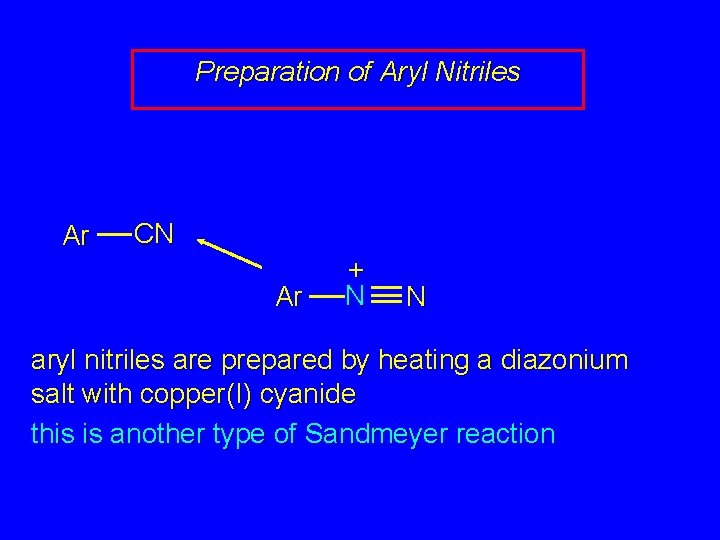
Preparation of Aryl Nitriles Ar CN Ar + N N aryl nitriles are prepared by heating a diazonium salt with copper(I) cyanide this is another type of Sandmeyer reaction
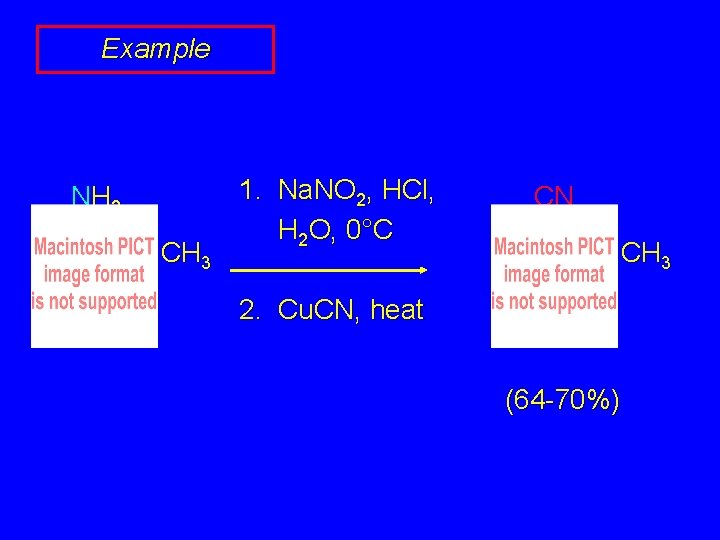
Example NH 2 CH 3 1. Na. NO 2, HCl, H 2 O, 0°C CN CH 3 2. Cu. CN, heat (64 -70%)
Transformations of Aryl Diazonium Salts Ar Ar Cl Ar CN + N Ar Ar Ar F Ar I N H Ar Br OH
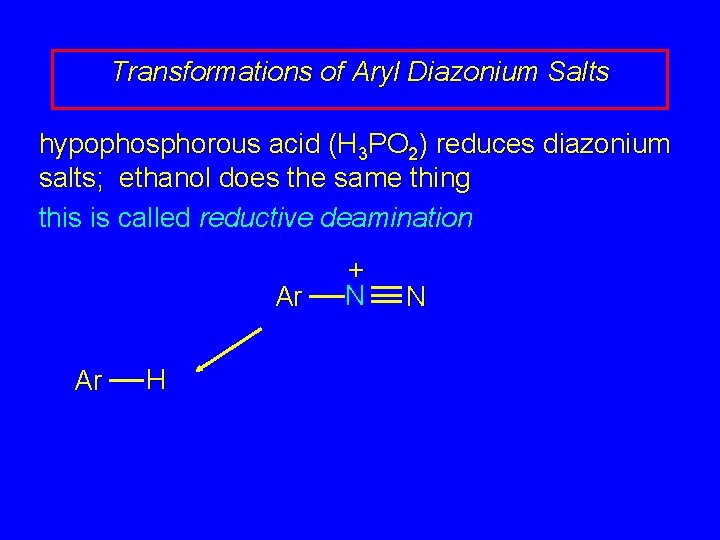
Transformations of Aryl Diazonium Salts hypophosphorous acid (H 3 PO 2) reduces diazonium salts; ethanol does the same thing this is called reductive deamination Ar Ar H + N N
Example NH 2 CH 3 Na. NO 2, H 2 SO 4, H 3 PO 2 CH 3 (70 -75%)
Value of Diazonium Salts 1) allows introduction of substituents such as OH, F, I, and CN on the ring 2) allows preparation of otherwise difficultly accessible substitution patterns
Example NH 2 Br Na. NO 2, H 2 SO 4, Br H O, CH CH OH 2 3 2 H 2 O Br Br Br (100%) Br (74 -77%)
22. 19 Azo Coupling
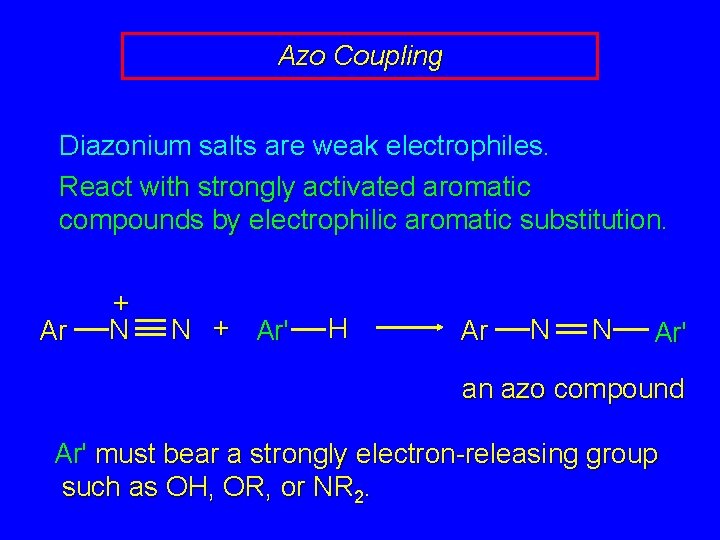
Azo Coupling Diazonium salts are weak electrophiles. React with strongly activated aromatic compounds by electrophilic aromatic substitution.
Azo Coupling Diazonium salts are weak electrophiles. React with strongly activated aromatic compounds by electrophilic aromatic substitution. Ar + N N + Ar' H Ar N N Ar' an azo compound Ar' must bear a strongly electron-releasing group such as OH, OR, or NR 2.
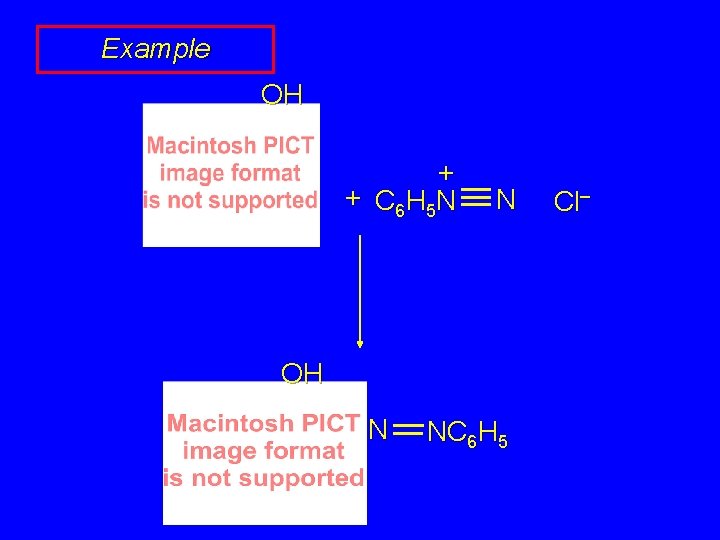
Example OH + + C 6 H 5 N N OH N NC 6 H 5 Cl–