
Chapter 4 Forces Between Particles 4 4 4
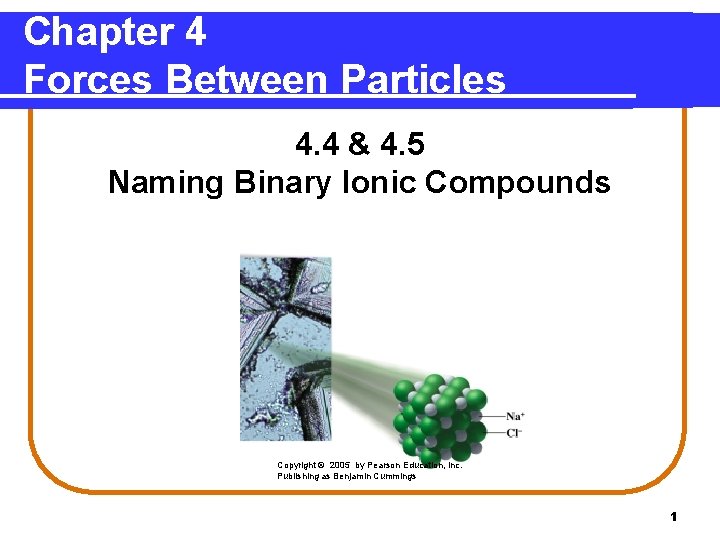
Chapter 4 Forces Between Particles 4. 4 & 4. 5 Naming Binary Ionic Compounds Copyright © 2005 by Pearson Education, Inc. Publishing as Benjamin Cummings 1
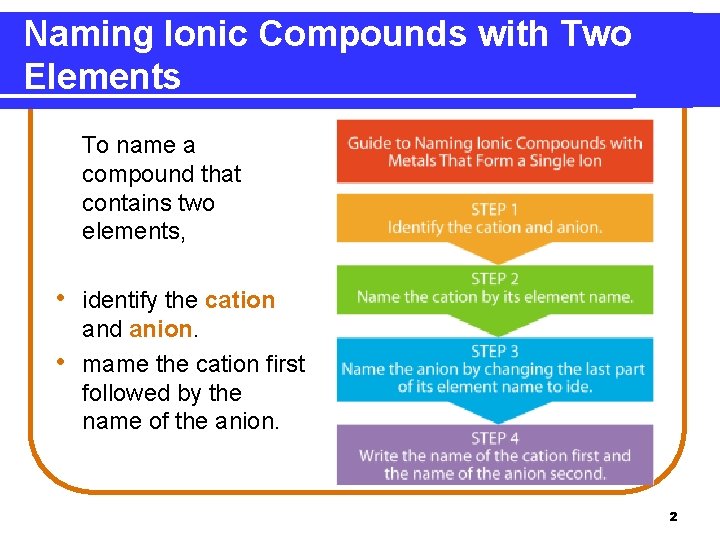
Naming Ionic Compounds with Two Elements To name a compound that contains two elements, • identify the cation • and anion. mame the cation first followed by the name of the anion. 2
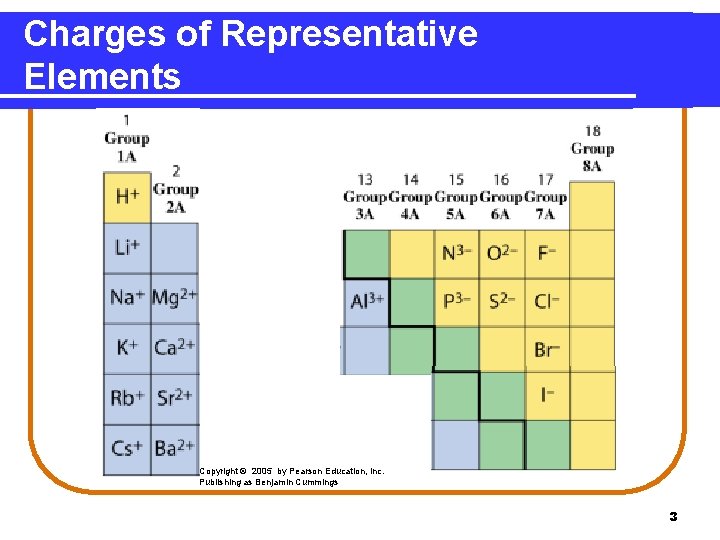
Charges of Representative Elements Copyright © 2005 by Pearson Education, Inc. Publishing as Benjamin Cummings 3
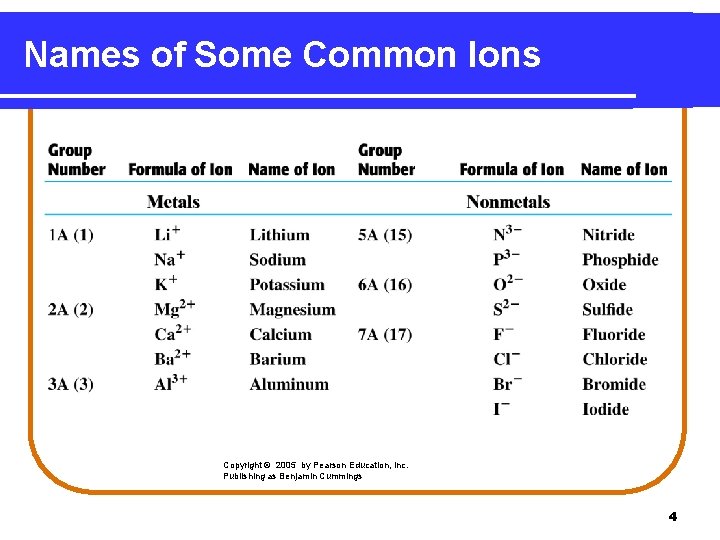
Names of Some Common Ions Copyright © 2005 by Pearson Education, Inc. Publishing as Benjamin Cummings 4
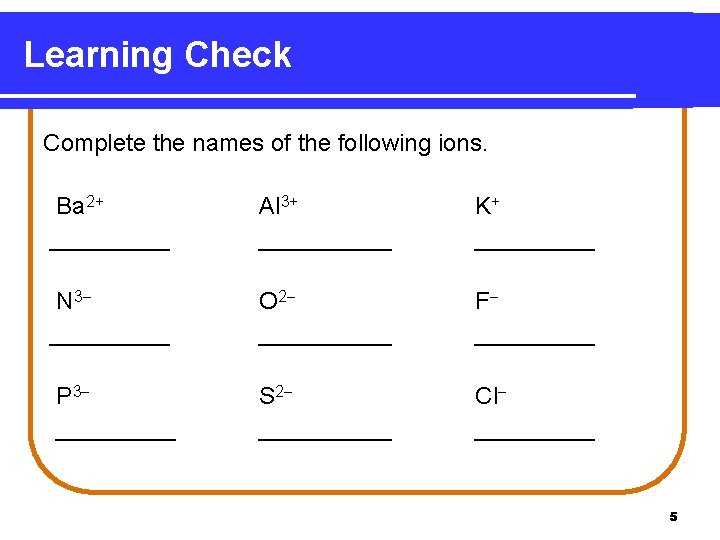
Learning Check Complete the names of the following ions. Ba 2+ _____ Al 3+ _____ K+ _____ N 3 _____ O 2 _____ F _____ P 3 _____ S 2 _____ Cl _____ 5
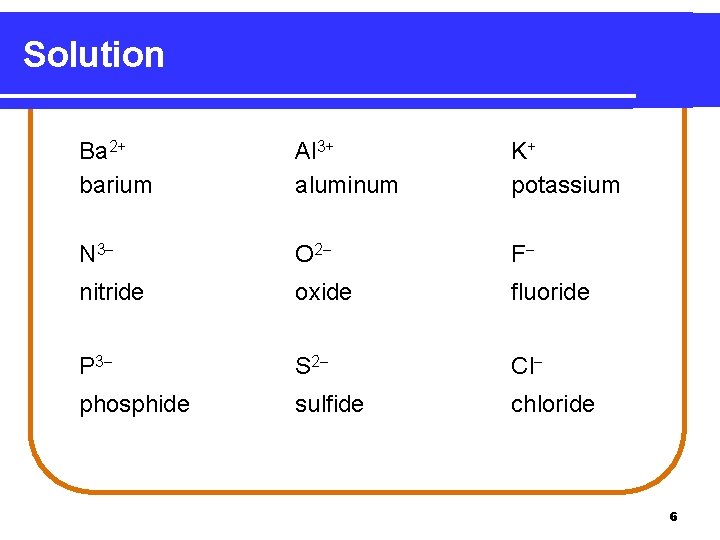
Solution Ba 2+ barium Al 3+ aluminum K+ potassium N 3 O 2 F nitride oxide fluoride P 3 S 2 Cl phosphide sulfide chloride 6
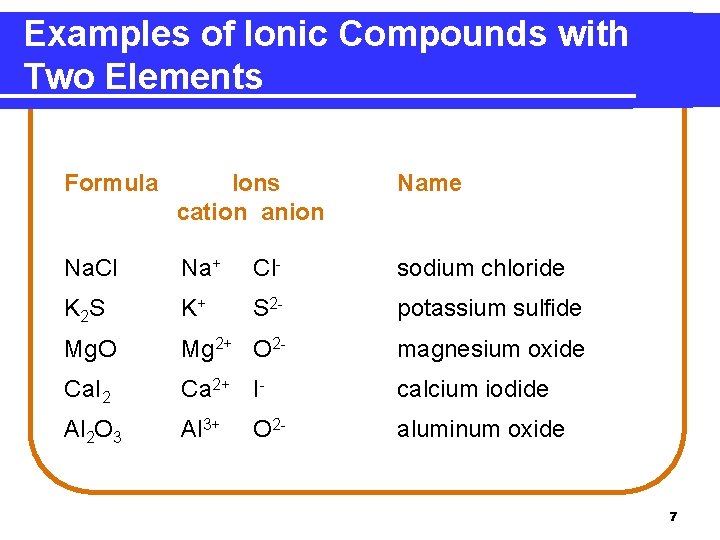
Examples of Ionic Compounds with Two Elements Formula Ions cation anion Name Na. Cl Na+ Cl- sodium chloride K 2 S K+ S 2 - potassium sulfide Mg. O Mg 2+ O 2 - magnesium oxide Ca. I 2 Ca 2+ I- calcium iodide Al 2 O 3 Al 3+ aluminum oxide O 2 - 7
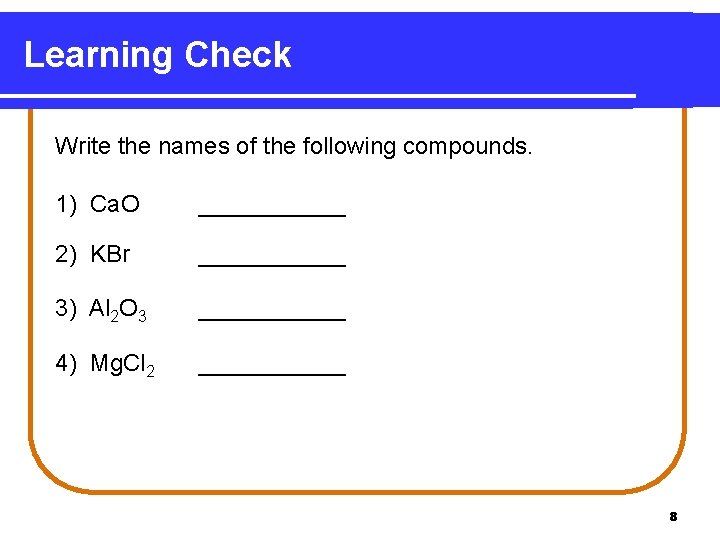
Learning Check Write the names of the following compounds. 1) Ca. O ______ 2) KBr ______ 3) Al 2 O 3 ______ 4) Mg. Cl 2 ______ 8
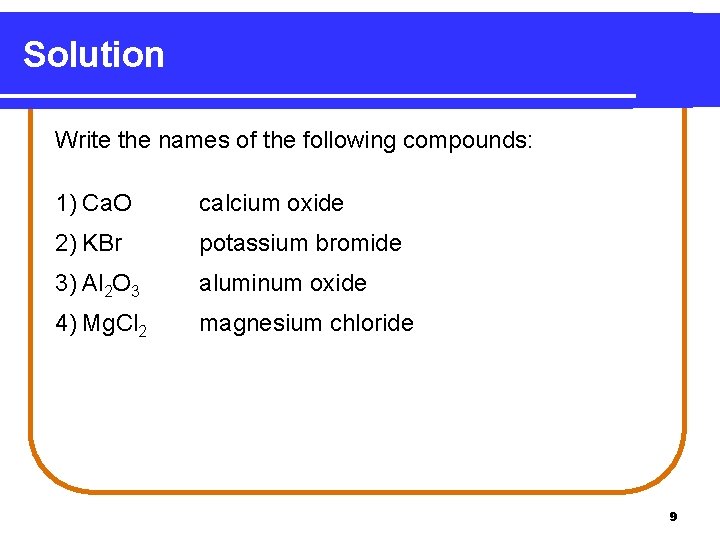
Solution Write the names of the following compounds: 1) Ca. O calcium oxide 2) KBr potassium bromide 3) Al 2 O 3 aluminum oxide 4) Mg. Cl 2 magnesium chloride 9
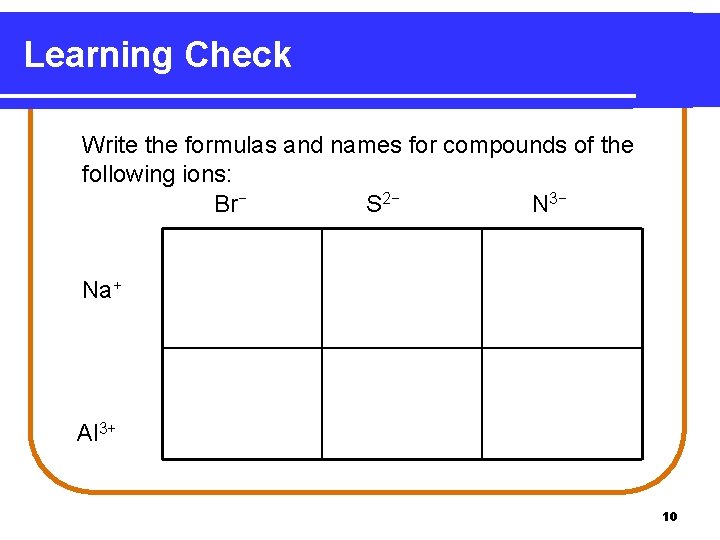
Learning Check Write the formulas and names for compounds of the following ions: Br− S 2− N 3− Na+ Al 3+ 10
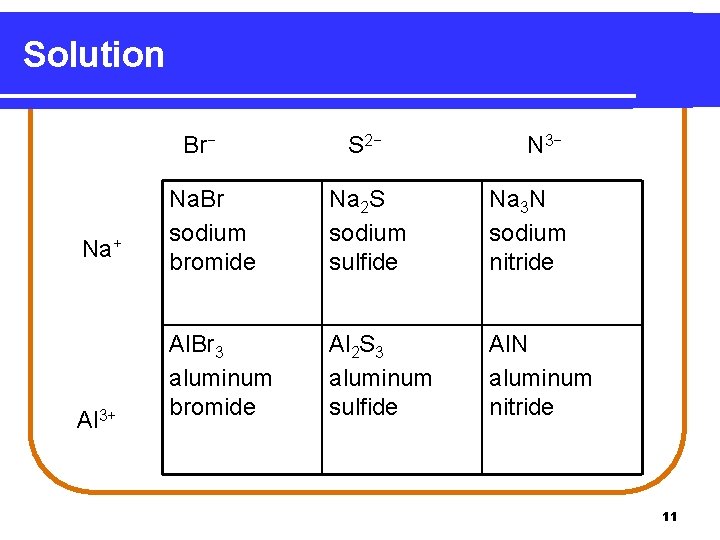
Solution Br− Na+ Al 3+ S 2− N 3− Na. Br sodium bromide Na 2 S sodium sulfide Na 3 N sodium nitride Al. Br 3 aluminum bromide Al 2 S 3 aluminum sulfide Al. N aluminum nitride 11
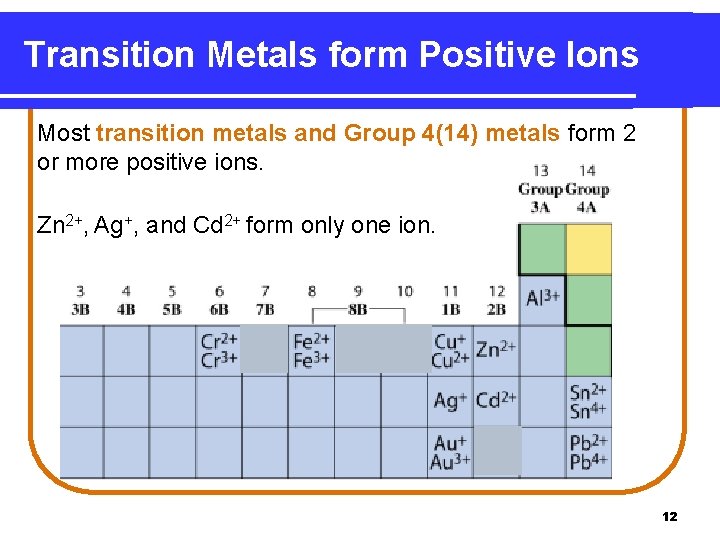
Transition Metals form Positive Ions Most transition metals and Group 4(14) metals form 2 or more positive ions. Zn 2+, Ag+, and Cd 2+ form only one ion. 12
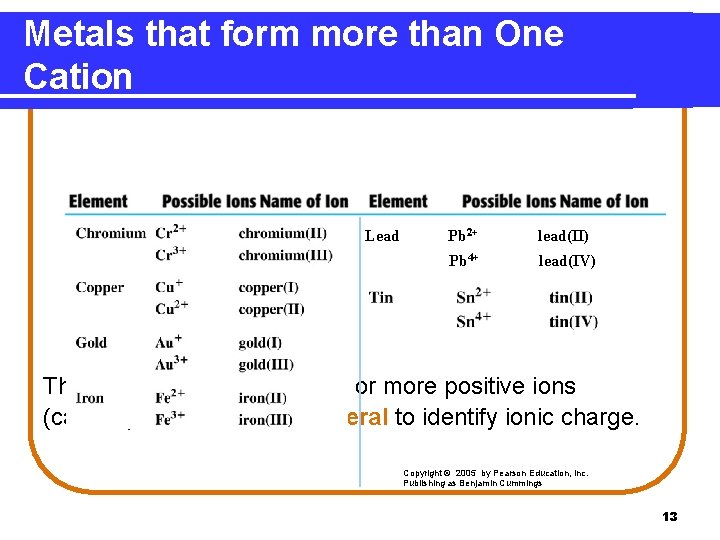
Metals that form more than One Cation Lead Pb 2+ lead(II) Pb 4+ lead(IV) The name of metals with two or more positive ions (cations) use a Roman numeral to identify ionic charge. Copyright © 2005 by Pearson Education, Inc. Publishing as Benjamin Cummings 13
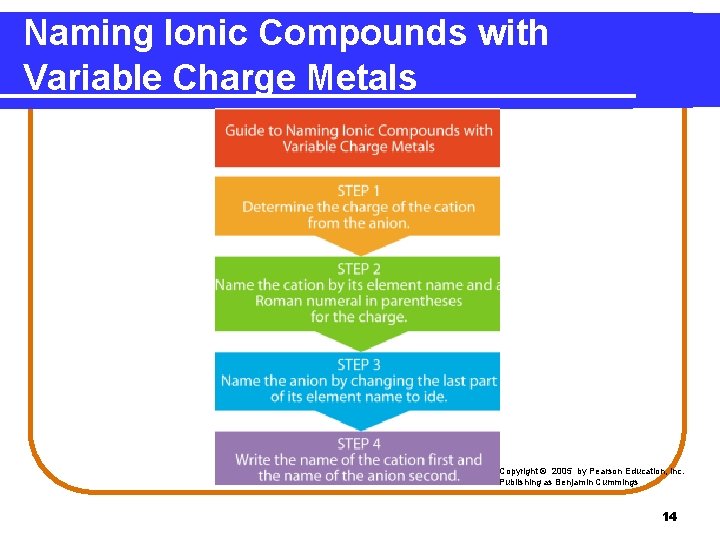
Naming Ionic Compounds with Variable Charge Metals Copyright © 2005 by Pearson Education, Inc. Publishing as Benjamin Cummings 14
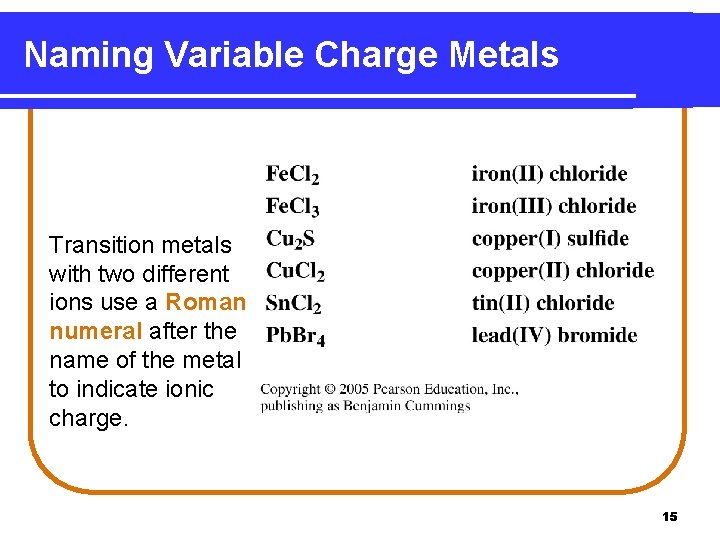
Naming Variable Charge Metals Transition metals with two different ions use a Roman numeral after the name of the metal to indicate ionic charge. 15
Naming Fe. Cl 2 To name Fe. Cl 2 1. Determine the charge of the cation using the charge of the anion (Cl-). Fe ion + 2 Cl- = Fe ion + 2 - = 0 Fe ion = 2+ 2. Name the cation by the element name and add a Roman numeral in parenthesis to show its charge. Fe 2+ = iron(II) 3. Write the anion with an ide ending. Fe. Cl 2 = iron(II) chloride 16
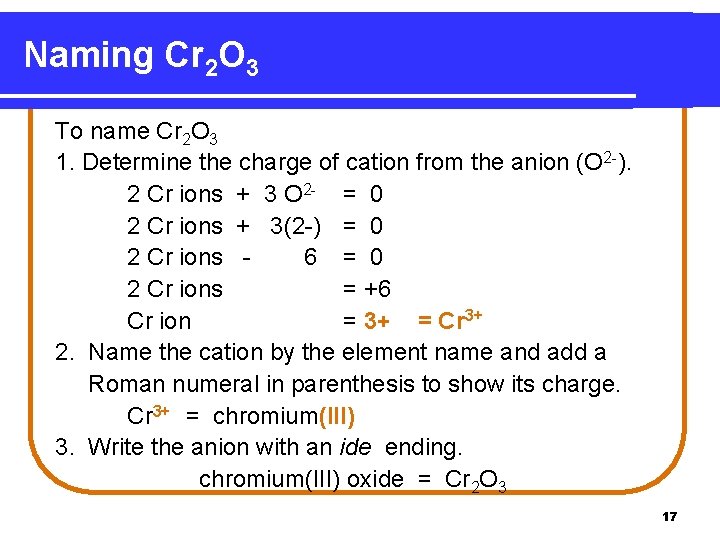
Naming Cr 2 O 3 To name Cr 2 O 3 1. Determine the charge of cation from the anion (O 2 -). 2 Cr ions + 3 O 2 - = 0 2 Cr ions + 3(2 -) = 0 2 Cr ions 6 = 0 2 Cr ions = +6 Cr ion = 3+ = Cr 3+ 2. Name the cation by the element name and add a Roman numeral in parenthesis to show its charge. Cr 3+ = chromium(III) 3. Write the anion with an ide ending. chromium(III) oxide = Cr 2 O 3 17
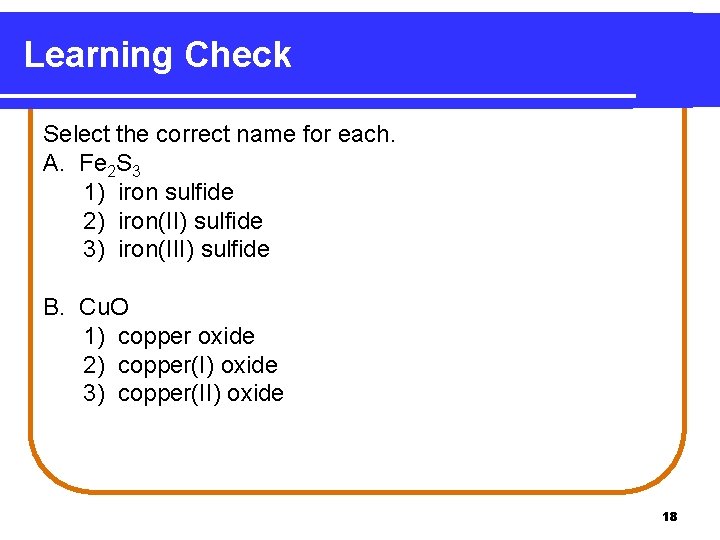
Learning Check Select the correct name for each. A. Fe 2 S 3 1) iron sulfide 2) iron(II) sulfide 3) iron(III) sulfide B. Cu. O 1) copper oxide 2) copper(I) oxide 3) copper(II) oxide 18
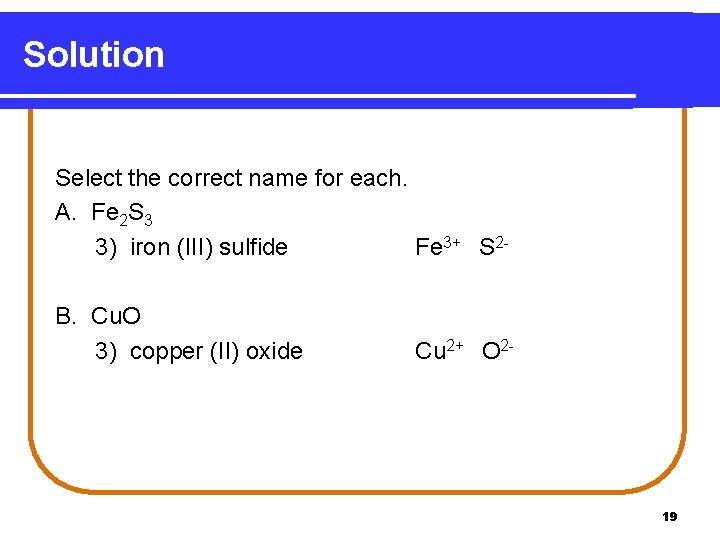
Solution Select the correct name for each. A. Fe 2 S 3 3) iron (III) sulfide Fe 3+ S 2 B. Cu. O 3) copper (II) oxide Cu 2+ O 2 - 19
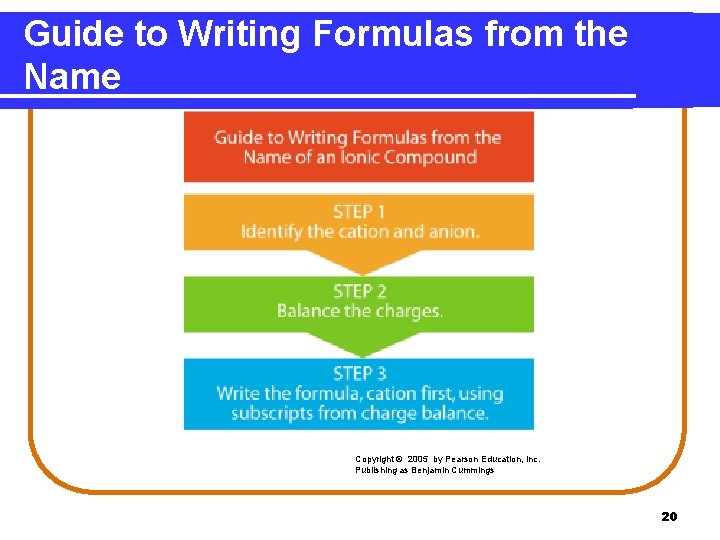
Guide to Writing Formulas from the Name Copyright © 2005 by Pearson Education, Inc. Publishing as Benjamin Cummings 20
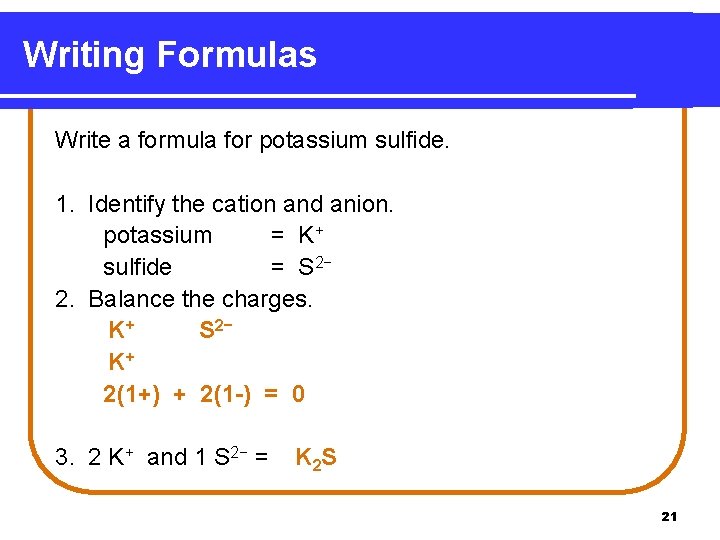
Writing Formulas Write a formula for potassium sulfide. 1. Identify the cation and anion. potassium = K+ sulfide = S 2− 2. Balance the charges. K+ S 2− K+ 2(1+) + 2(1 -) = 0 3. 2 K+ and 1 S 2− = K 2 S 21
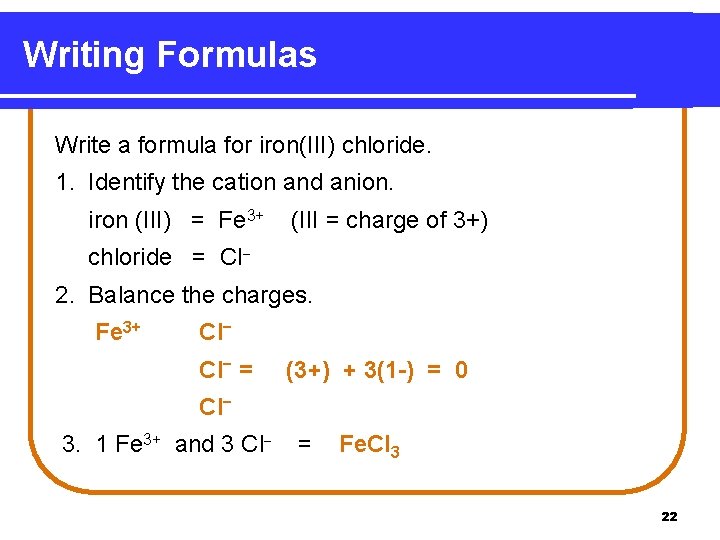
Writing Formulas Write a formula for iron(III) chloride. 1. Identify the cation and anion. iron (III) = Fe 3+ (III = charge of 3+) chloride = Cl− 2. Balance the charges. Fe 3+ Cl− = (3+) + 3(1 -) = 0 Cl− 3. 1 Fe 3+ and 3 Cl− = Fe. Cl 3 22
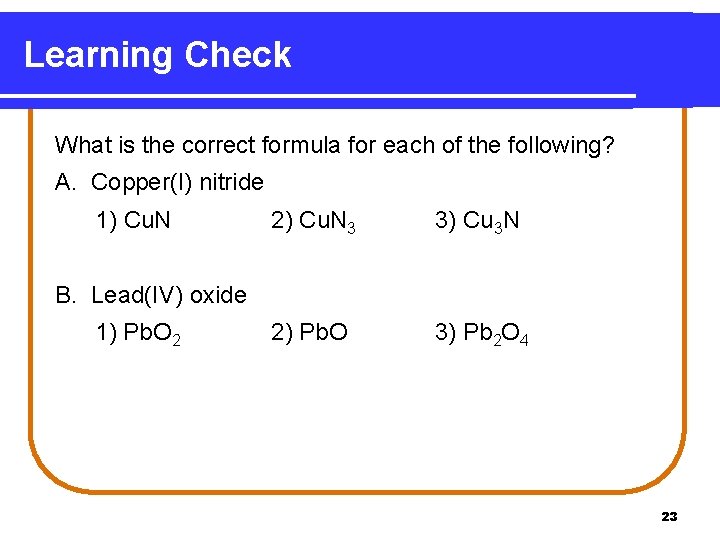
Learning Check What is the correct formula for each of the following? A. Copper(I) nitride 1) Cu. N 2) Cu. N 3 3) Cu 3 N 2) Pb. O 3) Pb 2 O 4 B. Lead(IV) oxide 1) Pb. O 2 23
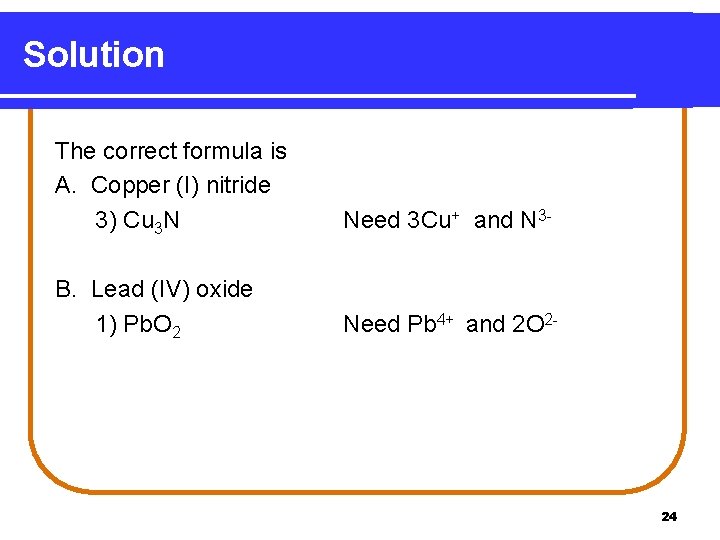
Solution The correct formula is A. Copper (I) nitride 3) Cu 3 N Need 3 Cu+ and N 3 - B. Lead (IV) oxide 1) Pb. O 2 Need Pb 4+ and 2 O 2 - 24
- Slides: 24