
Section 2 4Defining Naming Writing Acids Bases We
Section 2. 4—Defining, Naming & Writing Acids & Bases We need to know how acids and bases behave when talking about ant-acids!
Acids
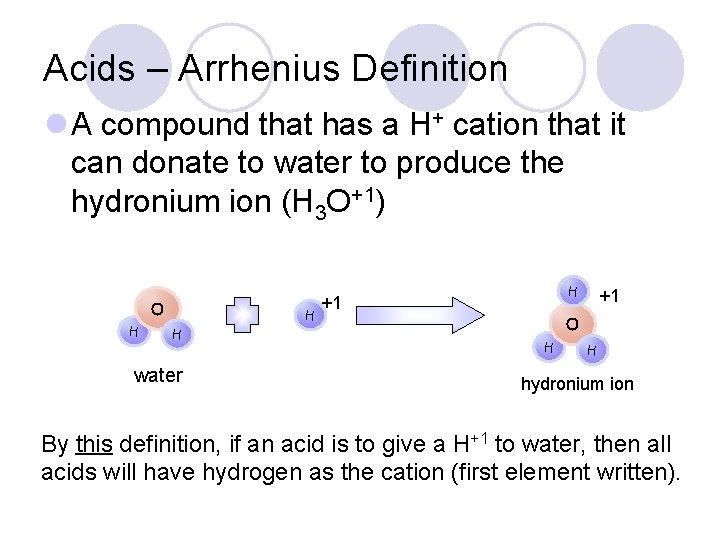
Acids – Arrhenius Definition l A compound that has a H+ cation that it can donate to water to produce the hydronium ion (H 3 O+1) O H H H water H +1 +1 O H H hydronium ion By this definition, if an acid is to give a H+1 to water, then all acids will have hydrogen as the cation (first element written).
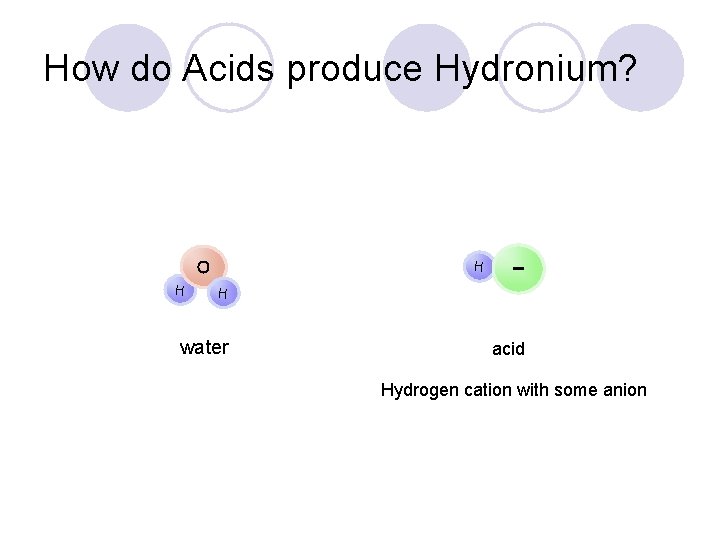
How do Acids produce Hydronium? O H H H water acid Hydrogen cation with some anion
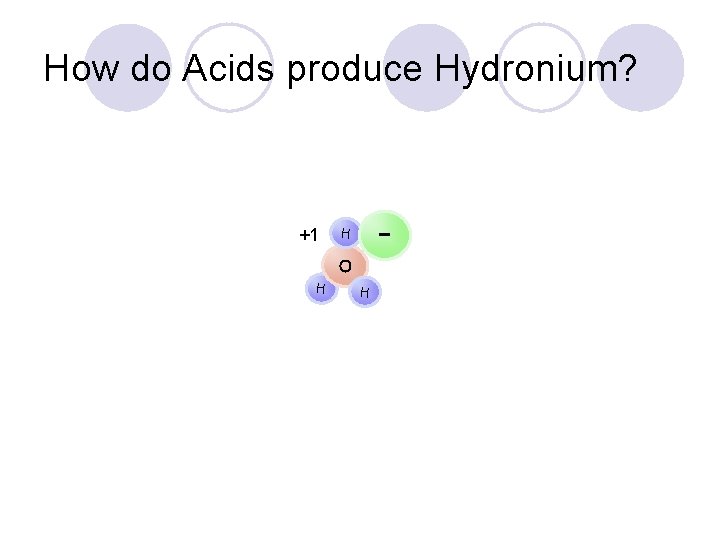
How do Acids produce Hydronium? +1 - H O H H
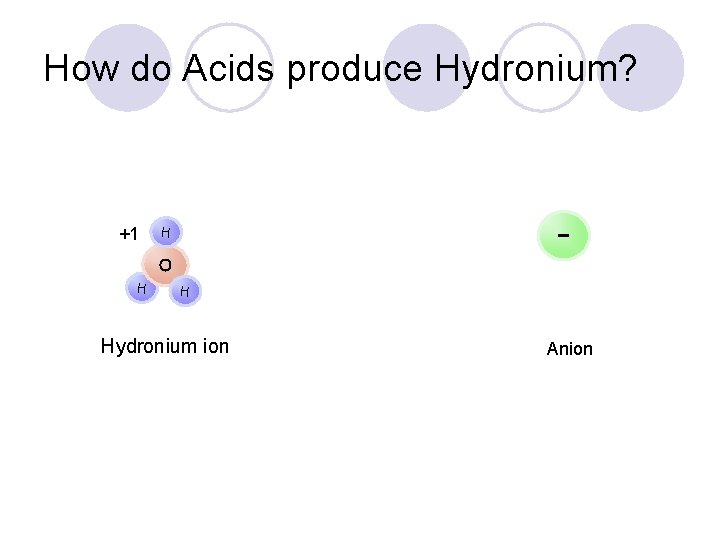
How do Acids produce Hydronium? +1 - H O H H Hydronium ion Anion
Naming Acids
Naming Non-oxygen Acids l These compounds : ¡Start with “H” (more than 1 “H” is OK, too). ¡Have only 2 elements in total (One of them is hydrogen the other is NOT oxygen. ) ¡Examples: HCl H 2 S l To name these compounds: ¡Use “hydro____ic acid” ¡Fill in the blank with the anion’s name without the last syllable
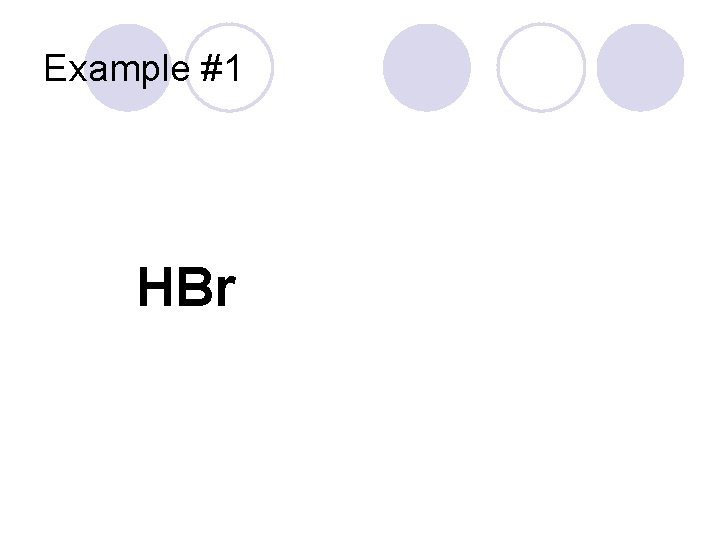
Example #1 HBr
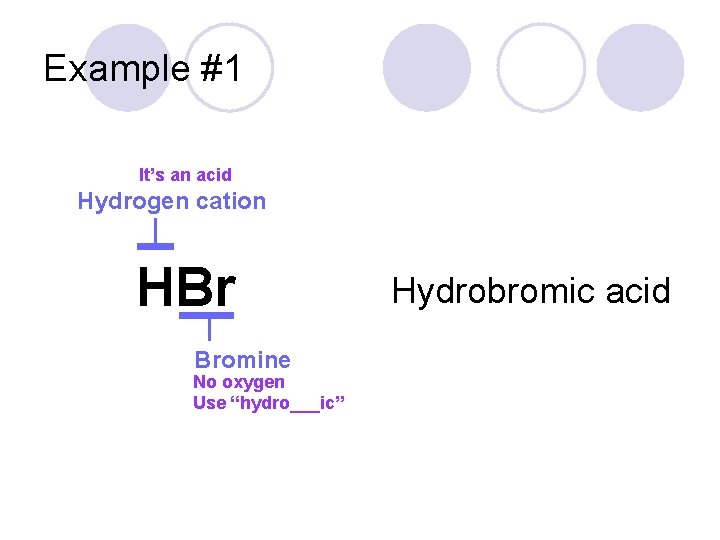
Example #1 It’s an acid Hydrogen cation HBr Bromine No oxygen Use “hydro___ic” Hydrobromic acid
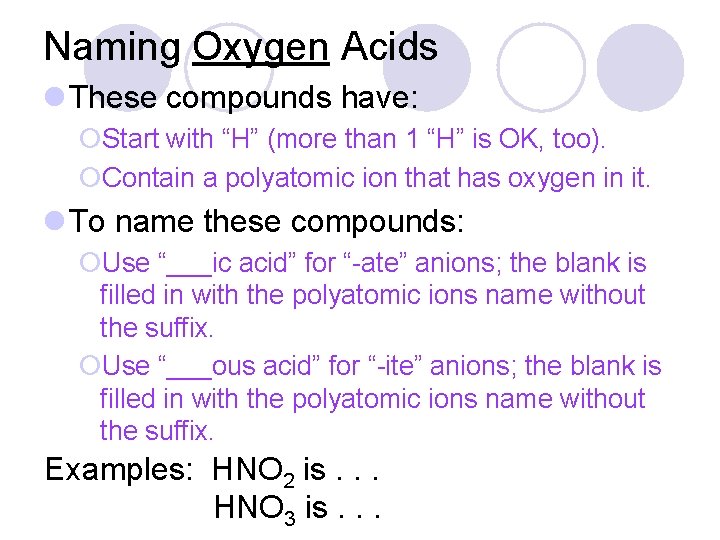
Naming Oxygen Acids l These compounds have: ¡Start with “H” (more than 1 “H” is OK, too). ¡Contain a polyatomic ion that has oxygen in it. l To name these compounds: ¡Use “___ic acid” for “-ate” anions; the blank is filled in with the polyatomic ions name without the suffix. ¡Use “___ous acid” for “-ite” anions; the blank is filled in with the polyatomic ions name without the suffix. Examples: HNO 2 is. . . HNO 3 is. . .
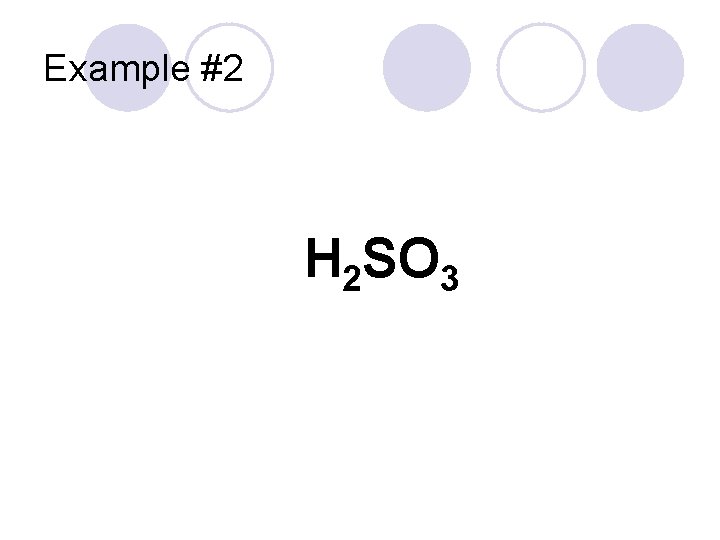
Example #2 H 2 SO 3
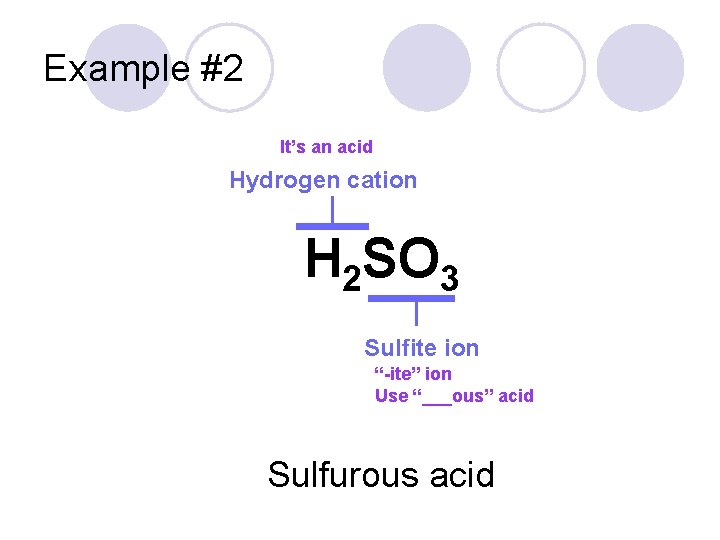
Example #2 It’s an acid Hydrogen cation H 2 SO 3 Sulfite ion “-ite” ion Use “___ous” acid Sulfurous acid
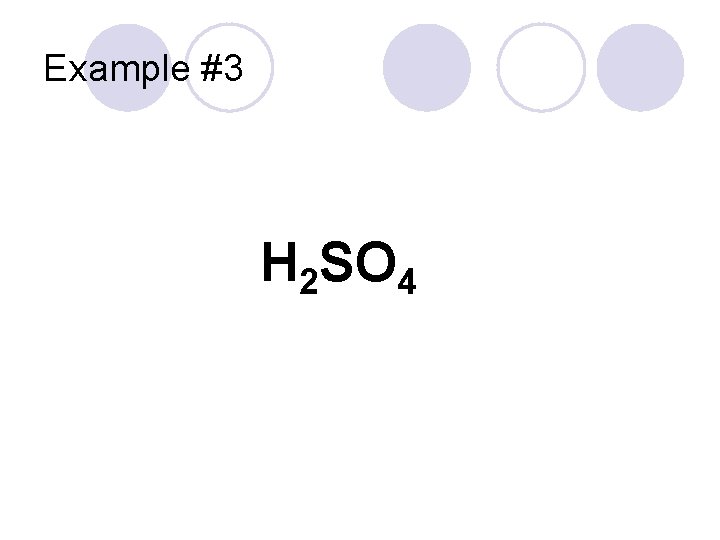
Example #3 H 2 SO 4
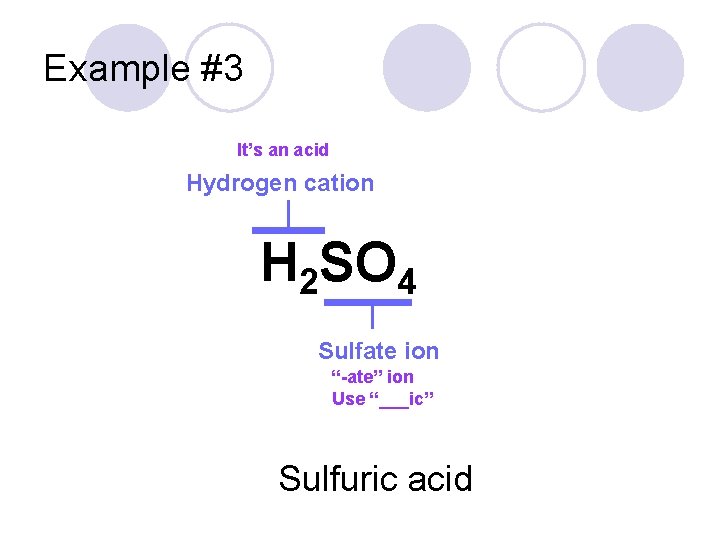
Example #3 It’s an acid Hydrogen cation H 2 SO 4 Sulfate ion “-ate” ion Use “___ic” Sulfuric acid
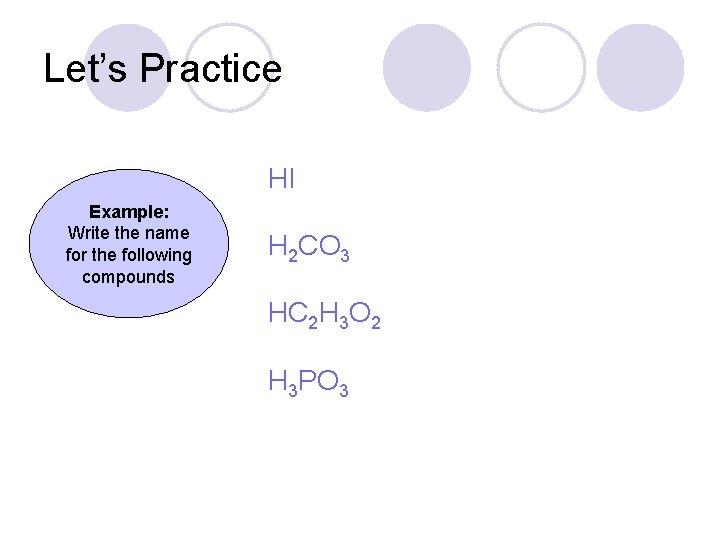
Let’s Practice HI Example: Write the name for the following compounds H 2 CO 3 HC 2 H 3 O 2 H 3 PO 3
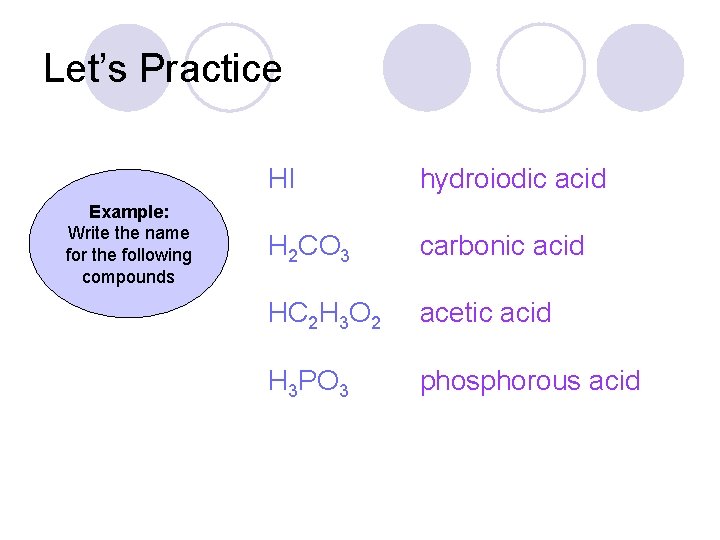
Let’s Practice Example: Write the name for the following compounds HI hydroiodic acid H 2 CO 3 carbonic acid HC 2 H 3 O 2 acetic acid H 3 PO 3 phosphorous acid
Writing Acid Formulas
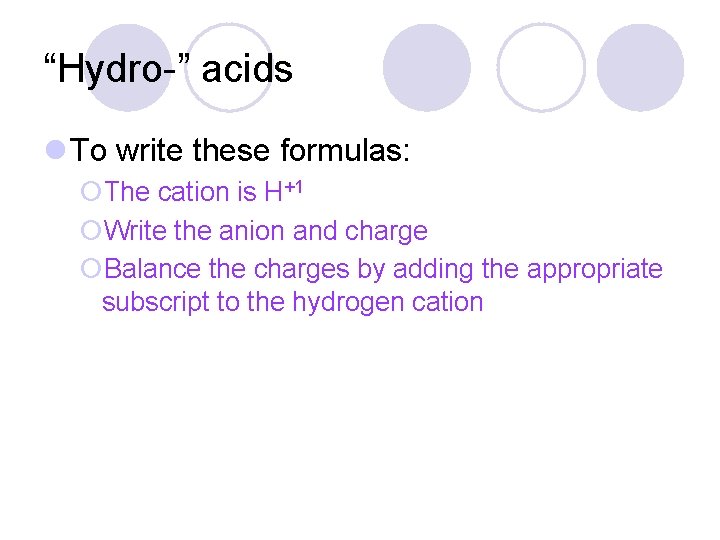
“Hydro-” acids l To write these formulas: ¡The cation is H+1 ¡Write the anion and charge ¡Balance the charges by adding the appropriate subscript to the hydrogen cation
Example #4 Hydrofluoric acid
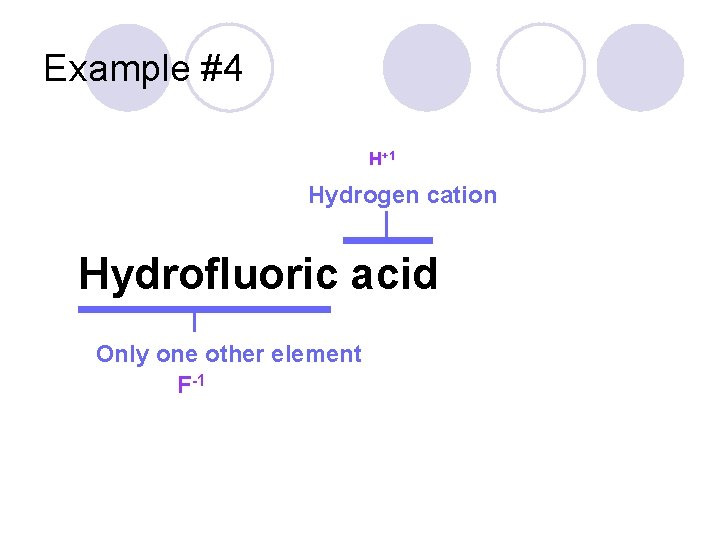
Example #4 H+1 Hydrogen cation Hydrofluoric acid Only one other element F-1
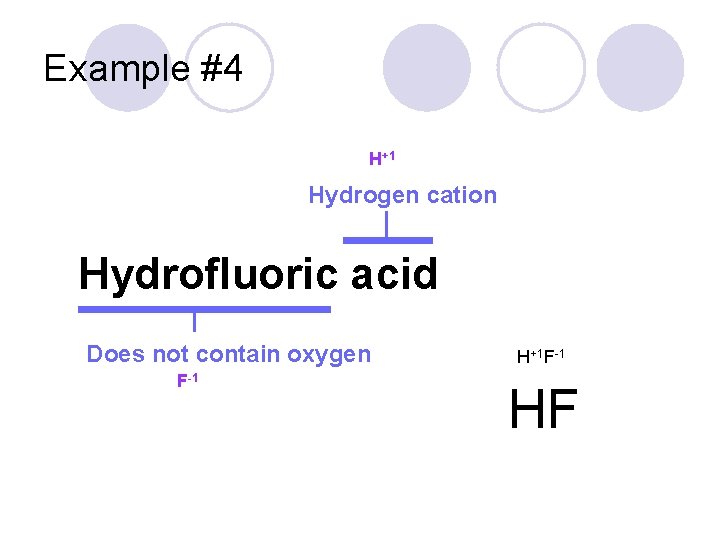
Example #4 H+1 Hydrogen cation Hydrofluoric acid Does not contain oxygen F-1 H+1 F-1 HF
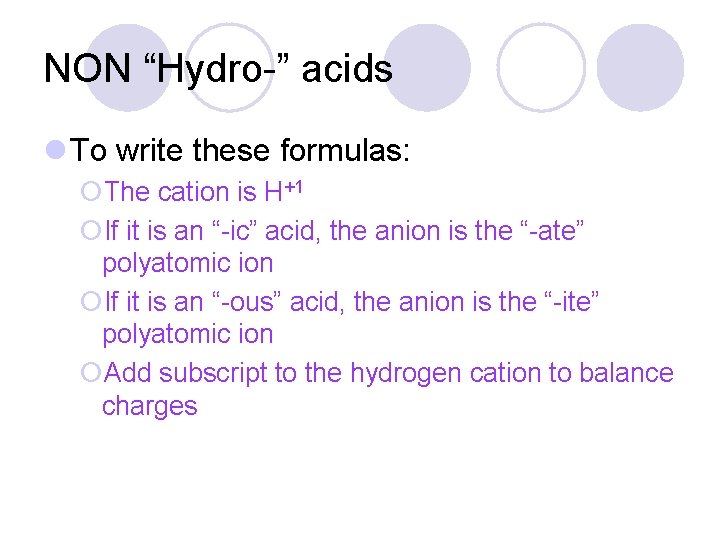
NON “Hydro-” acids l To write these formulas: ¡The cation is H+1 ¡If it is an “-ic” acid, the anion is the “-ate” polyatomic ion ¡If it is an “-ous” acid, the anion is the “-ite” polyatomic ion ¡Add subscript to the hydrogen cation to balance charges
Example #5 Carbonic acid
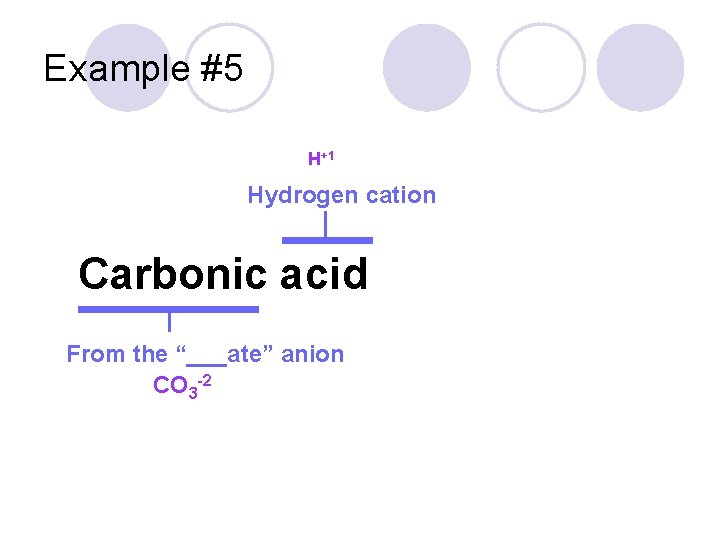
Example #5 H+1 Hydrogen cation Carbonic acid From the “___ate” anion CO 3 -2
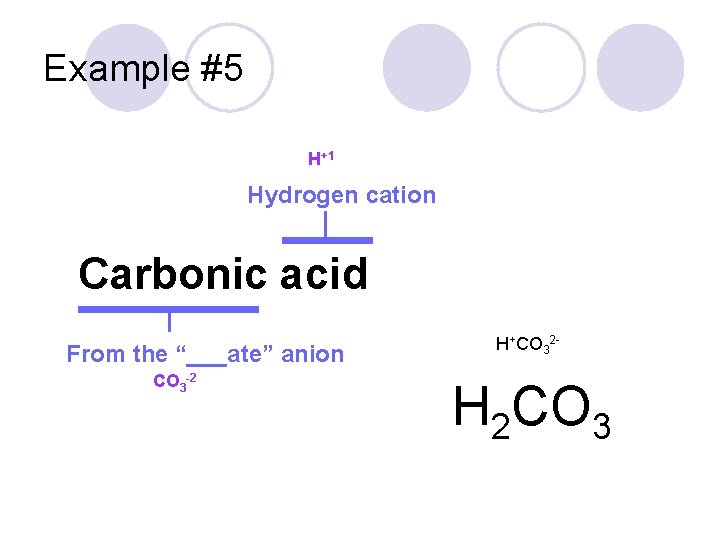
Example #5 H+1 Hydrogen cation Carbonic acid From the “___ate” anion CO 3 -2 H+CO 32 - H 2 CO 3
Example #6 Nitrous acid
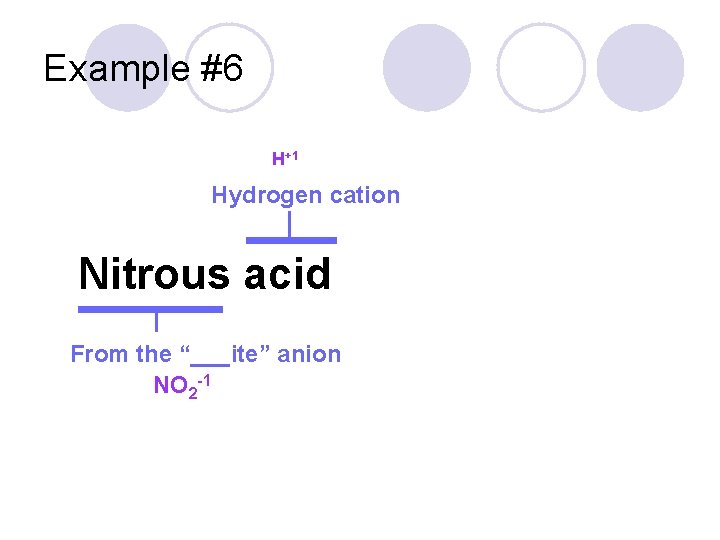
Example #6 H+1 Hydrogen cation Nitrous acid From the “___ite” anion NO 2 -1
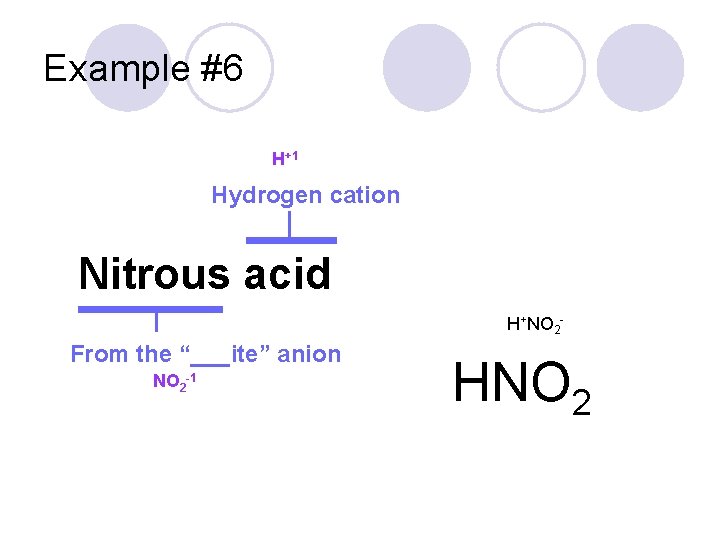
Example #6 H+1 Hydrogen cation Nitrous acid H+NO 2 - From the “___ite” anion NO 2 -1 HNO 2
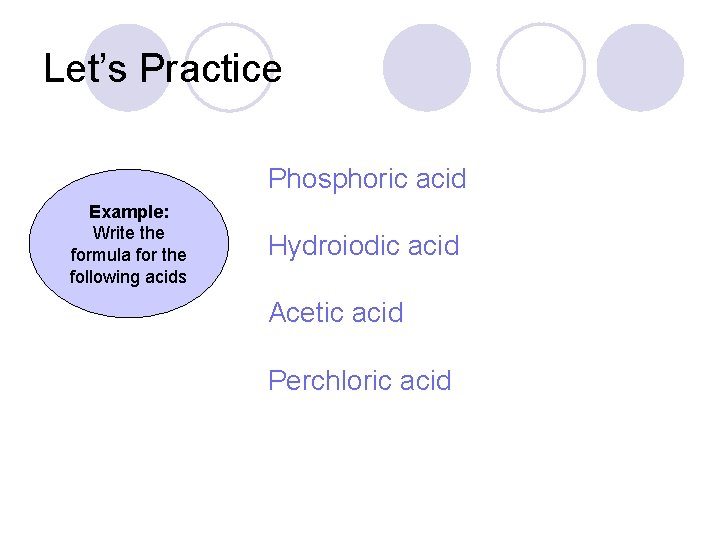
Let’s Practice Phosphoric acid Example: Write the formula for the following acids Hydroiodic acid Acetic acid Perchloric acid
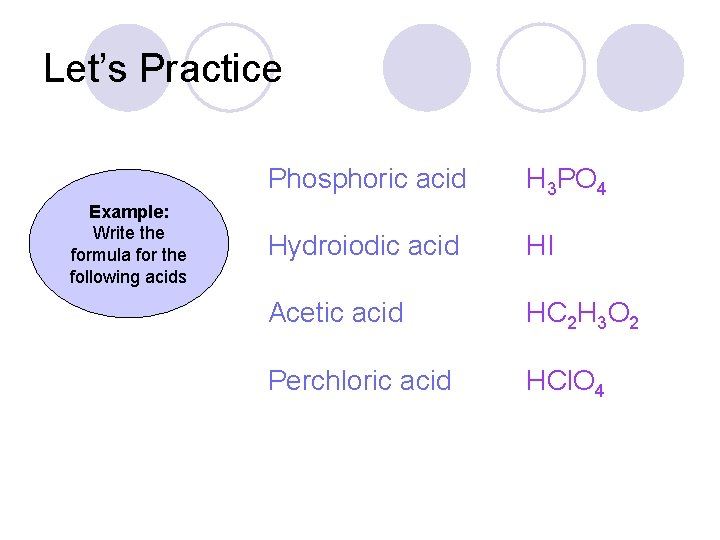
Let’s Practice Example: Write the formula for the following acids Phosphoric acid H 3 PO 4 Hydroiodic acid HI Acetic acid HC 2 H 3 O 2 Perchloric acid HCl. O 4
Bases Objective: • Define and distinguish between acids & bases • Explain and use nomenclature rules for naming and writing formulas for bases
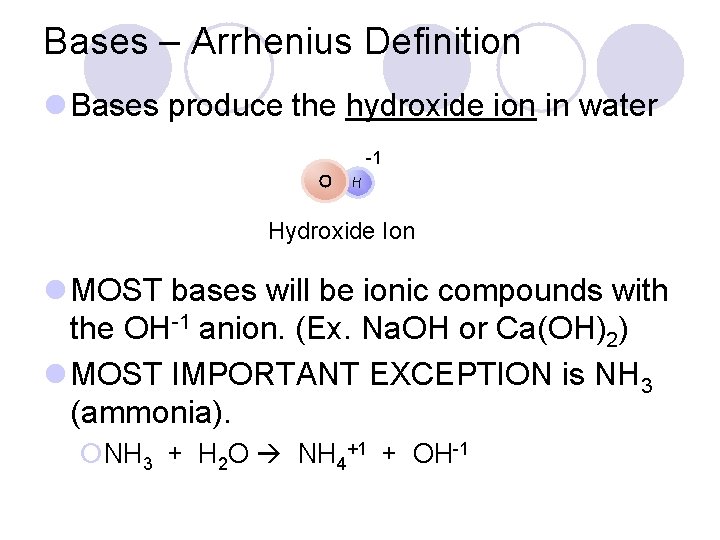
Bases – Arrhenius Definition l Bases produce the hydroxide ion in water -1 O H Hydroxide Ion l MOST bases will be ionic compounds with the OH-1 anion. (Ex. Na. OH or Ca(OH)2) l MOST IMPORTANT EXCEPTION is NH 3 (ammonia). ¡NH 3 + H 2 O NH 4+1 + OH-1

Naming & Writing Bases
Naming Bases l Most bases are just ionic compounds with “hydroxide” as their anion l The most common exception to this is ammonia. NH 3 is a base even though it doesn’t contain “-OH” as the anion.
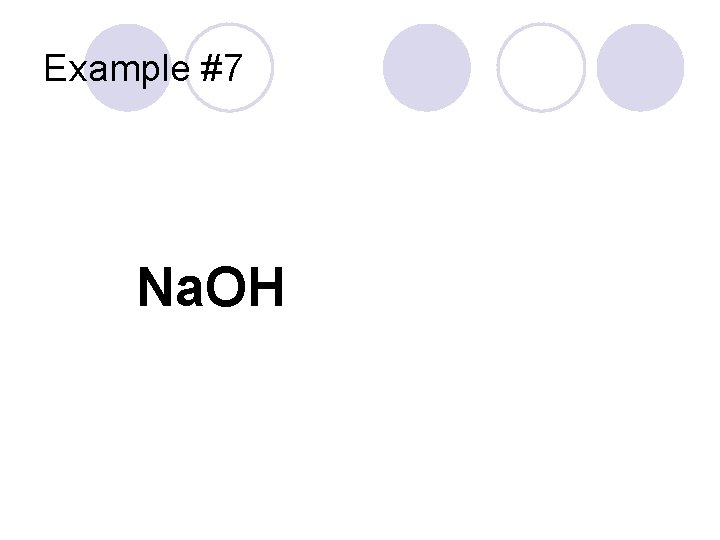
Example #7 Na. OH
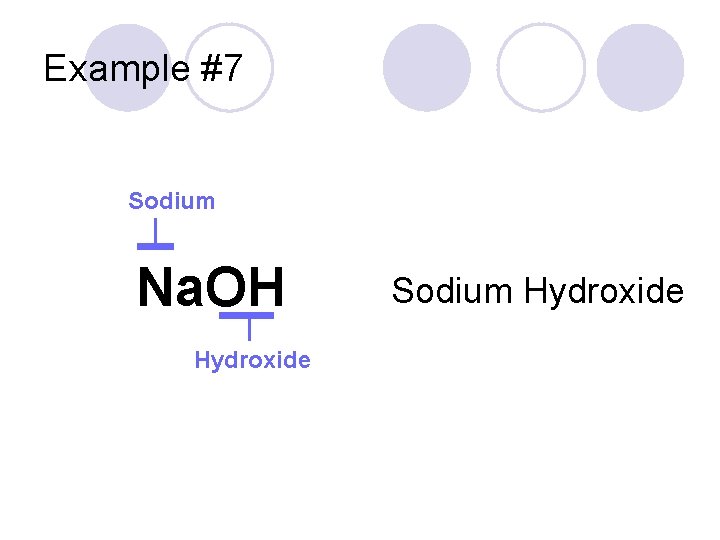
Example #7 Sodium Na. OH Hydroxide Sodium Hydroxide
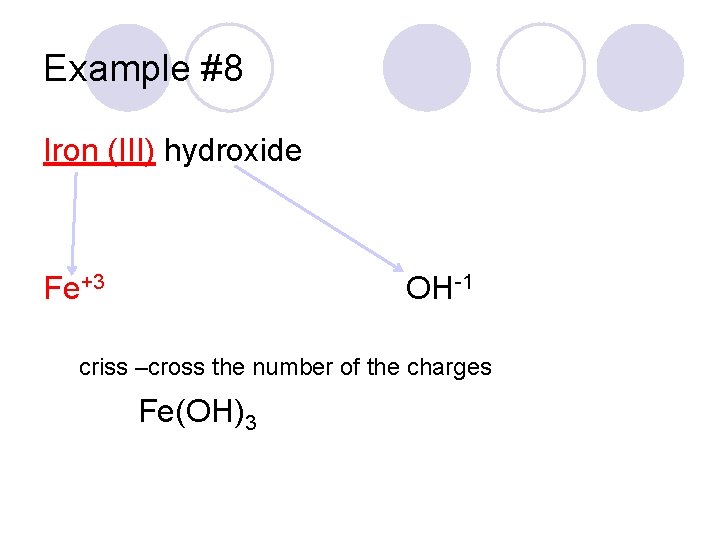
Example #8 Iron (III) hydroxide Fe+3 OH-1 criss –cross the number of the charges Fe(OH)3
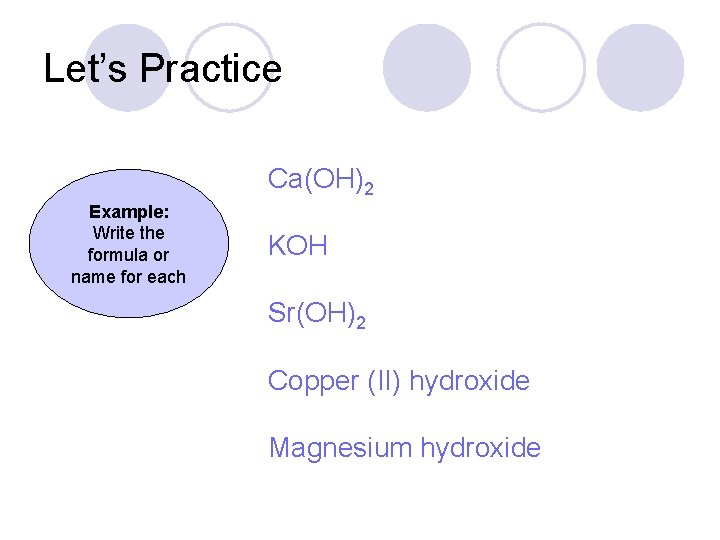
Let’s Practice Ca(OH)2 Example: Write the formula or name for each KOH Sr(OH)2 Copper (II) hydroxide Magnesium hydroxide
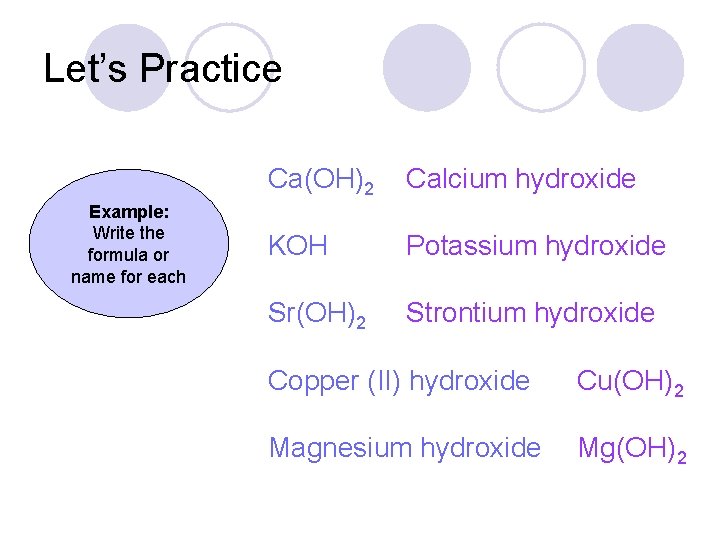
Let’s Practice Example: Write the formula or name for each Ca(OH)2 Calcium hydroxide KOH Potassium hydroxide Sr(OH)2 Strontium hydroxide Copper (II) hydroxide Cu(OH)2 Magnesium hydroxide Mg(OH)2
- Slides: 40