Todays Trainer Pietro Tozzi 33 years experience of








- Slides: 50
Today’s Trainer: - Pietro Tozzi • 33 years’ experience of teaching in London comprehensive schools • Head of Department Experience • Mentored over 55 ITT trainees and NQTs • Delivered training courses at St Mary’s University College, Strawberry Hill • Acted as a case study for an awarding body • Assisted in the writing of the GCSE 2010 Modular, Linked Pair Pilot & A-Level (2017) Schemes of Work • Nominated for a National Teaching Award
GCSE 2015 -18 Some key topic changes and their implications for teaching and learning
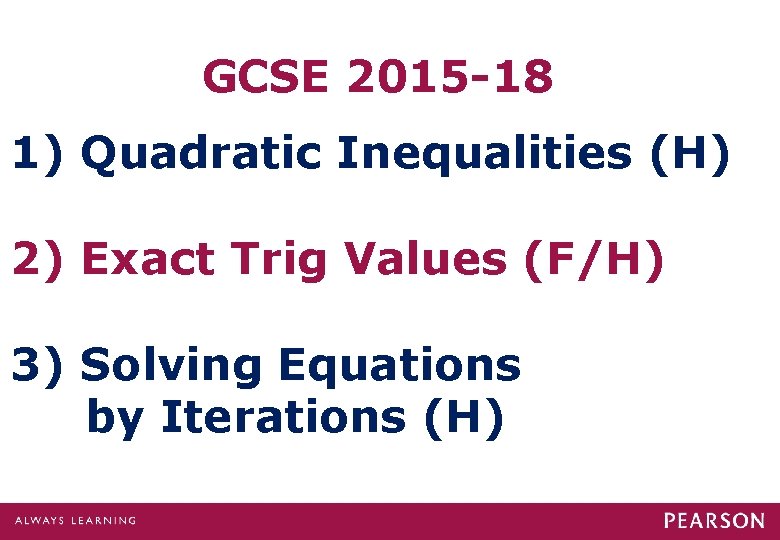
GCSE 2015 -18 1) Quadratic Inequalities (H) 2) Exact Trig Values (F/H) 3) Solving Equations by Iterations (H)
Teaching Strategies & Resources Dropbox link to free resources. See folder with files containing lesson plans and worksheets for some of the new topics http: //tinyurl. com/p 6 qgbe 4
1) Quadratic Inequalities (New to Higher)
www. examsolutions. co. uk
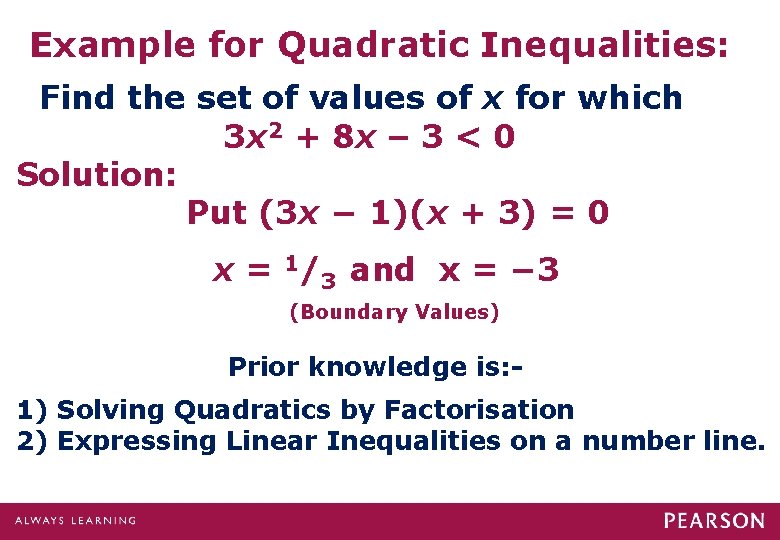
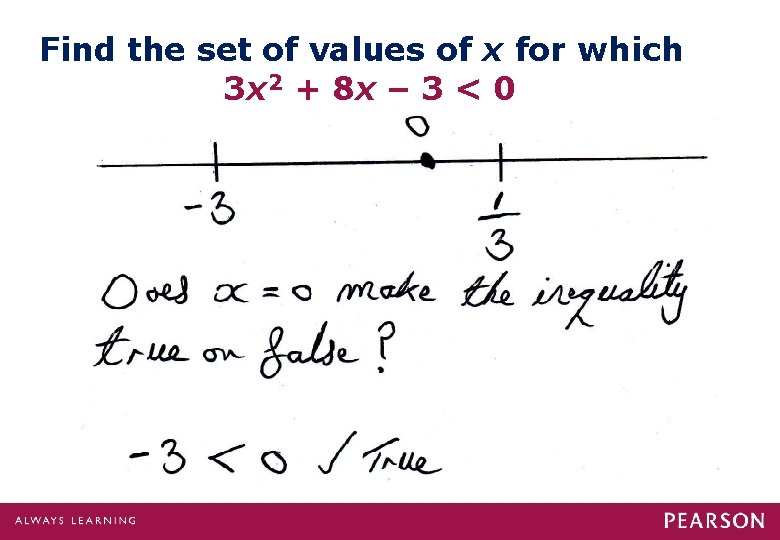
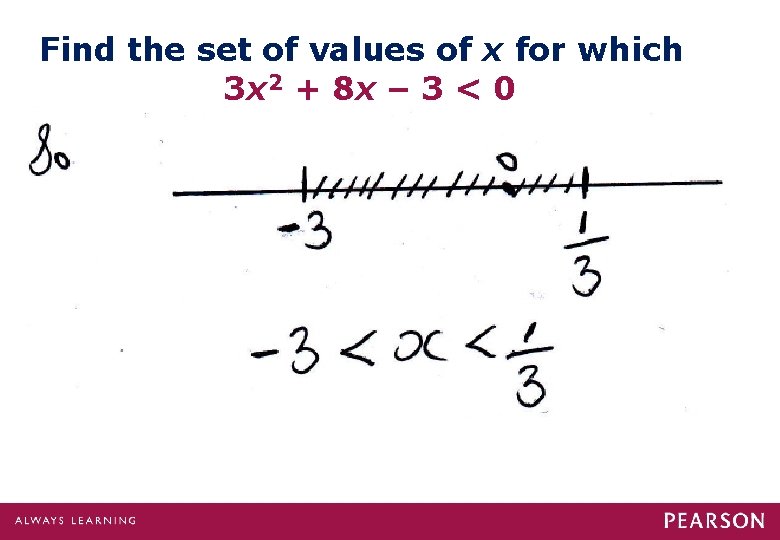
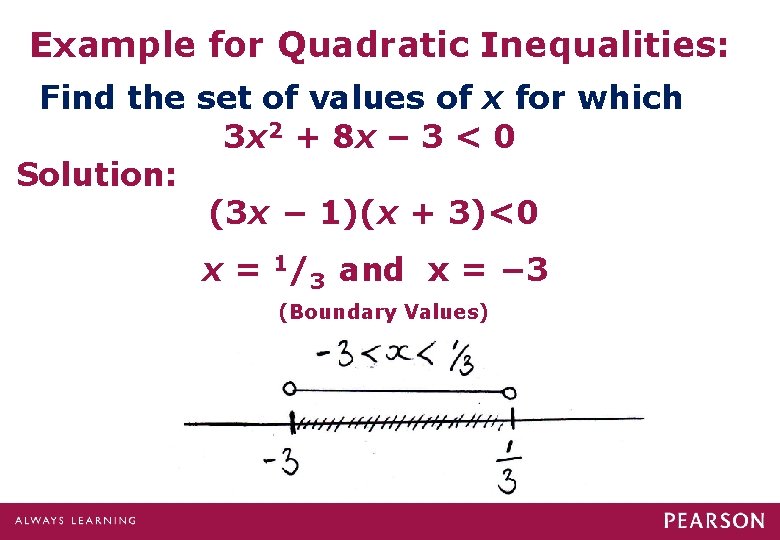
Example for Quadratic Inequalities: Find the set of values of x for which 3 x 2 + 8 x – 3 < 0 Solution: Put (3 x − 1)(x + 3) = 0 x = 1/3 and x = − 3 (Boundary Values) Prior knowledge is: 1) Solving Quadratics by Factorisation 2) Expressing Linear Inequalities on a number line.
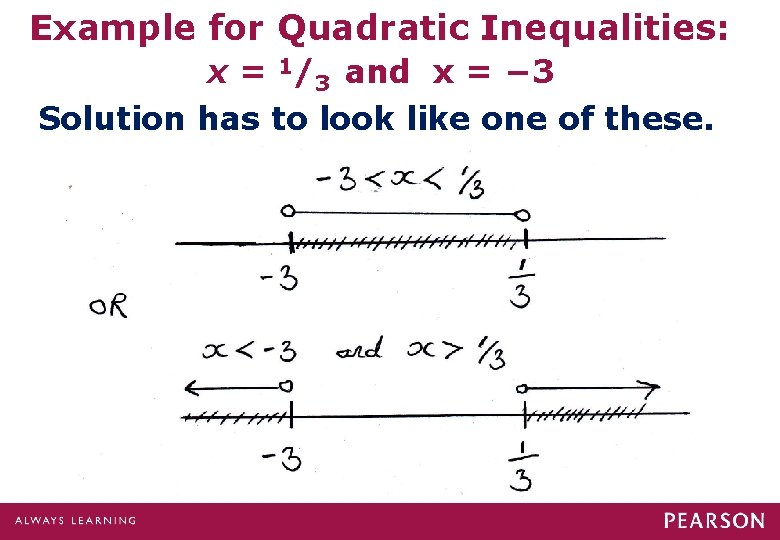
Example for Quadratic Inequalities: x = 1/3 and x = − 3 Solution has to look like one of these.
Find the set of values of x for which 3 x 2 + 8 x – 3 < 0
Find the set of values of x for which 3 x 2 + 8 x – 3 < 0
Example for Quadratic Inequalities: Find the set of values of x for which 3 x 2 + 8 x – 3 < 0 Solution: (3 x − 1)(x + 3)<0 x = 1/3 and x = − 3 (Boundary Values)
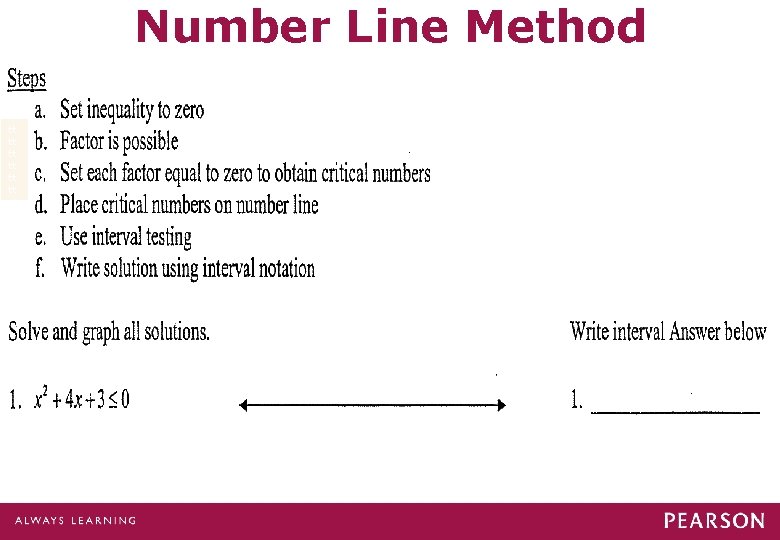
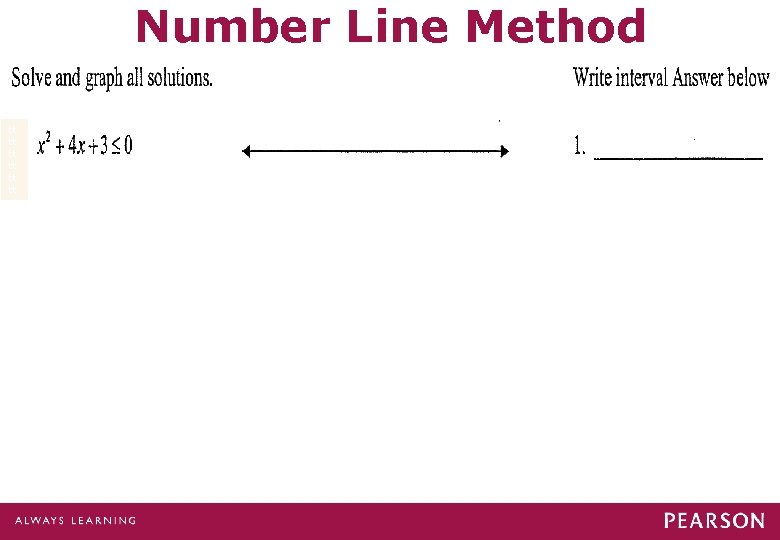
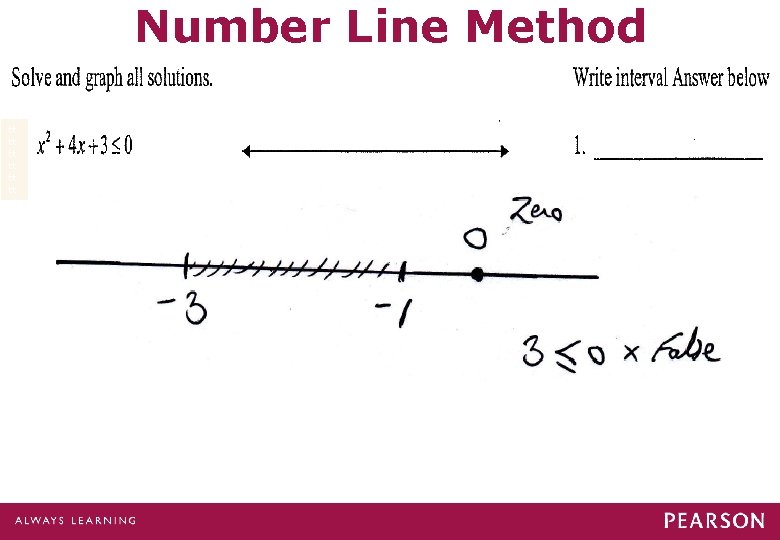
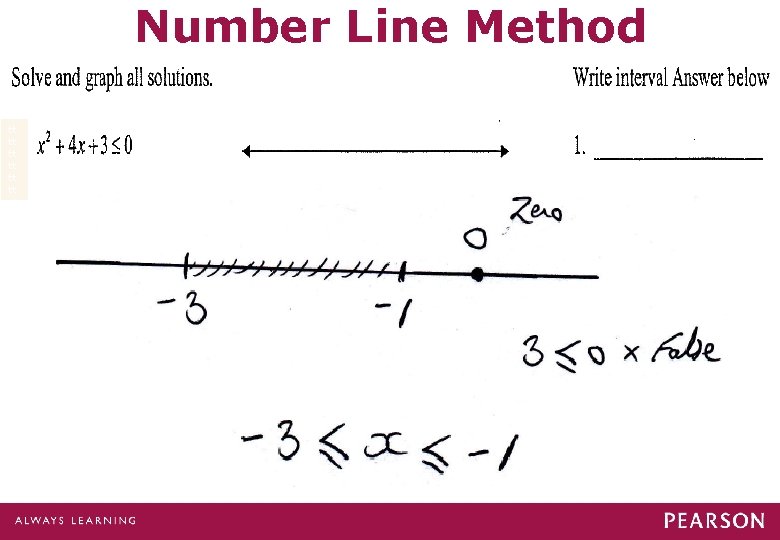
Number Line Method fg gf tt ffj tt jjj tt jf tt tt
Number Line Method fg gf tt ffj tt jjj tt jf tt tt
Number Line Method fg gf tt ffj tt jjj tt jf tt tt
Number Line Method fg gf tt ffj tt jjj tt jf tt tt
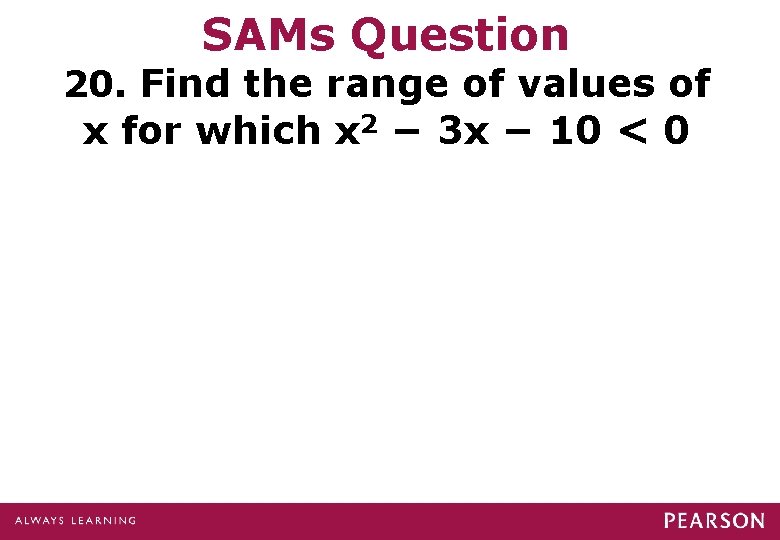
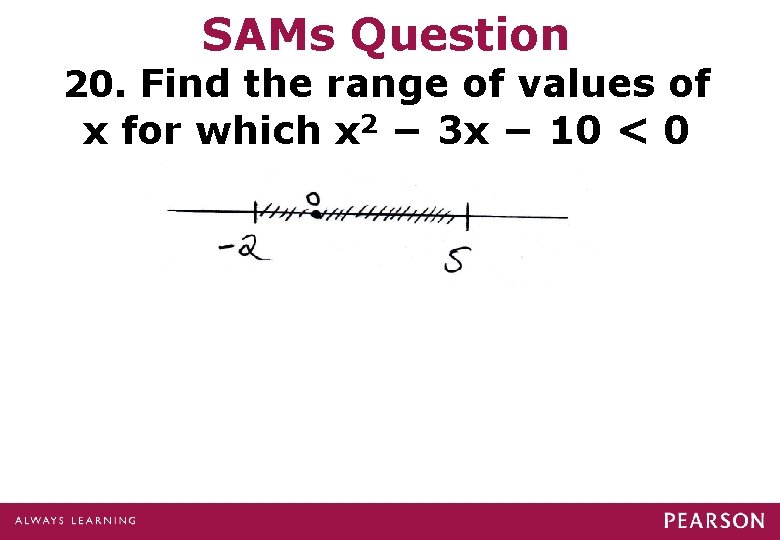
SAMs Question 20. Find the range of values of x for which x 2 − 3 x − 10 < 0
SAMs Question 20. Find the range of values of x for which x 2 − 3 x − 10 < 0
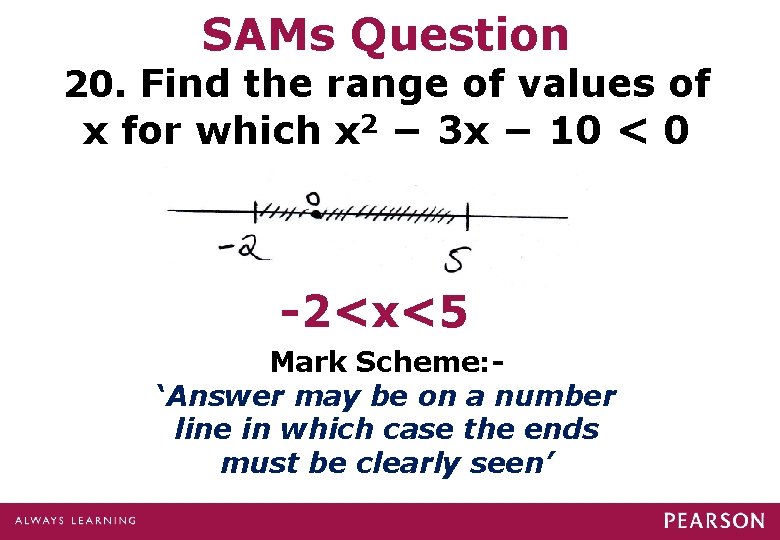
SAMs Question 20. Find the range of values of x for which x 2 − 3 x − 10 < 0 -2<x<5 Mark Scheme: ‘Answer may be on a number line in which case the ends must be clearly seen’
2) Trigonometry (NEW to Foundation)
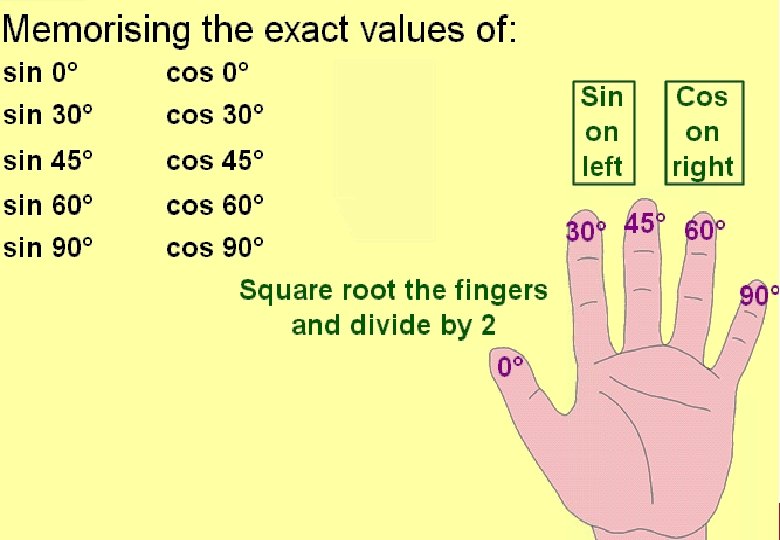
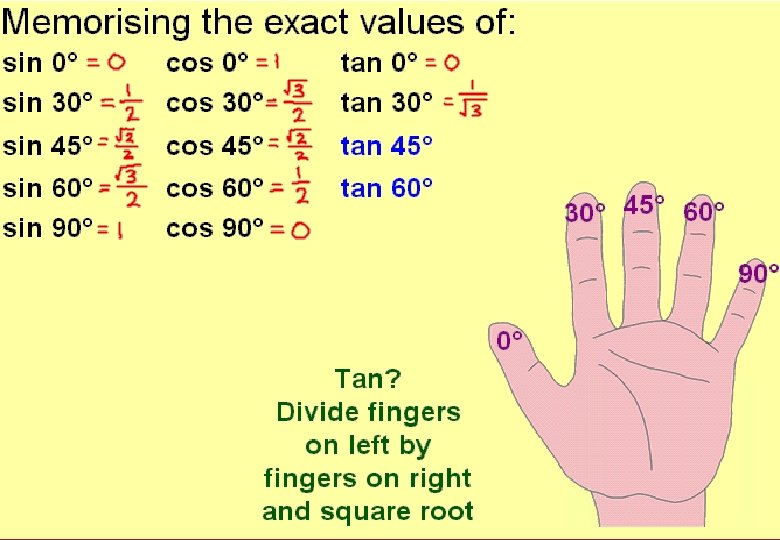
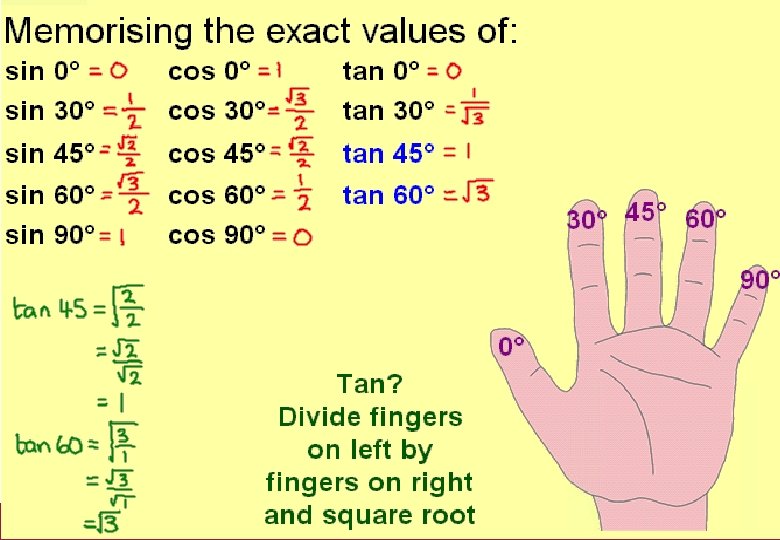
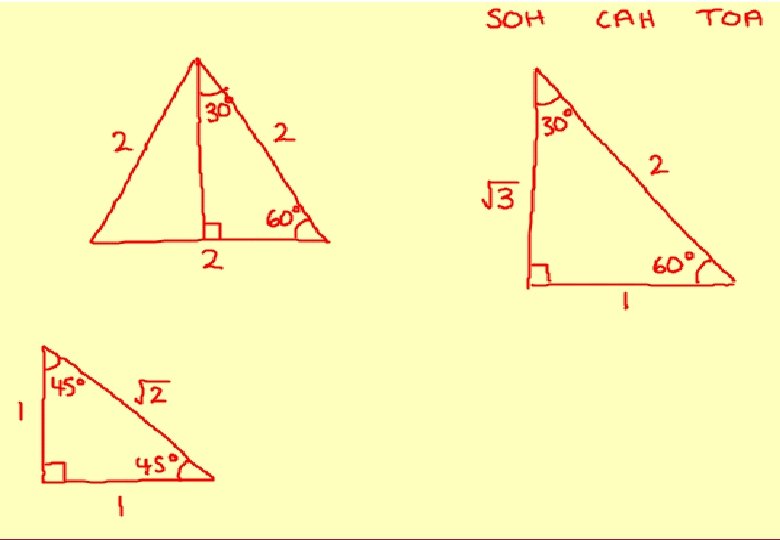
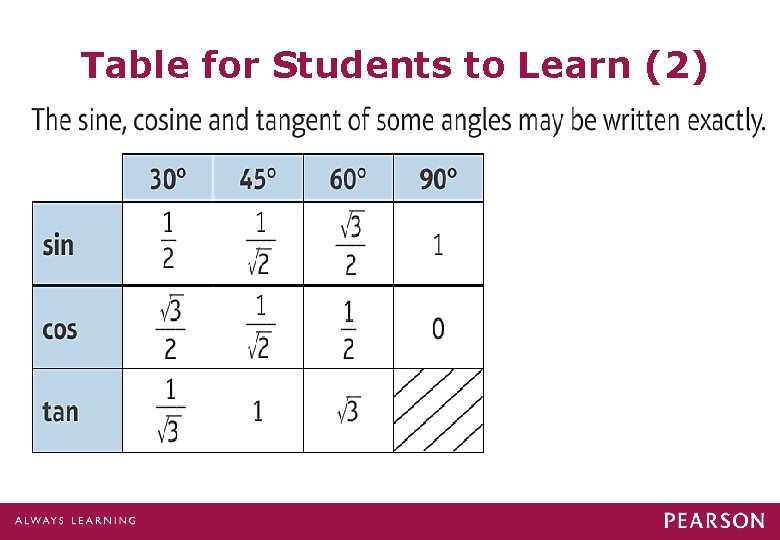
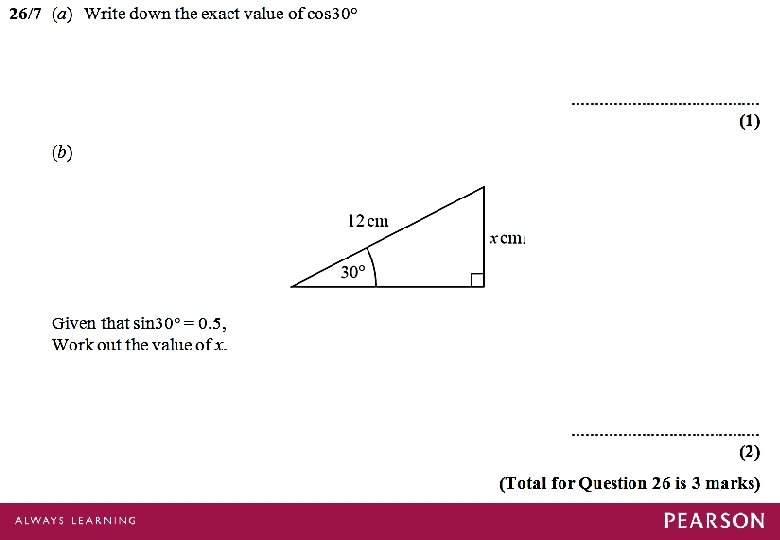
Exact Trigonometric Values (Both Tiers)
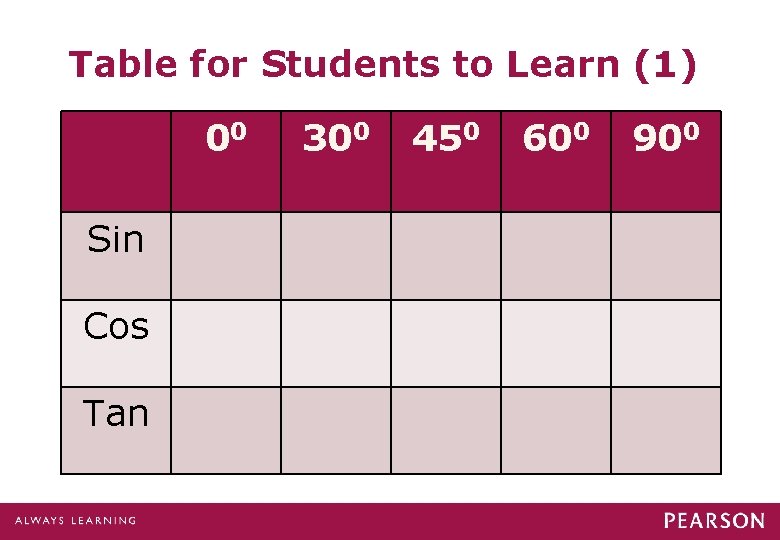
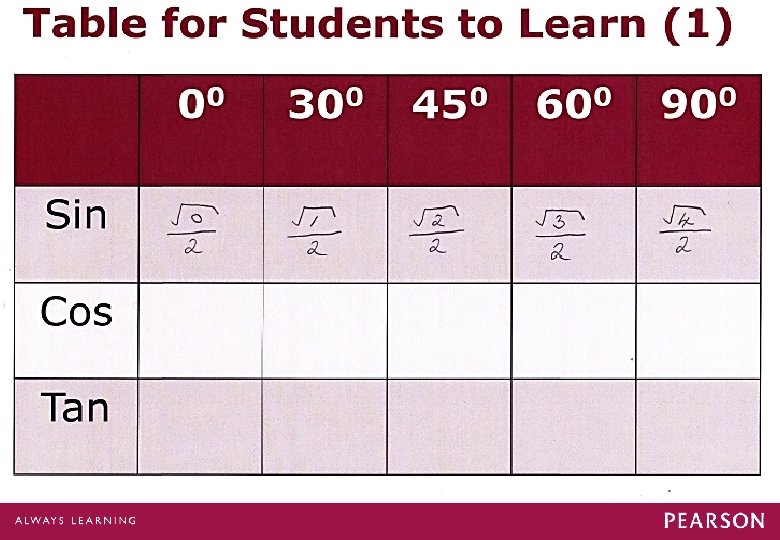
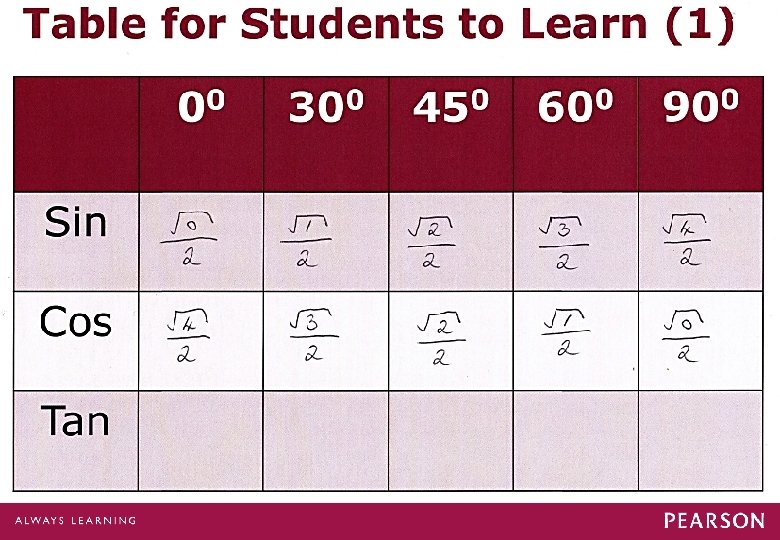
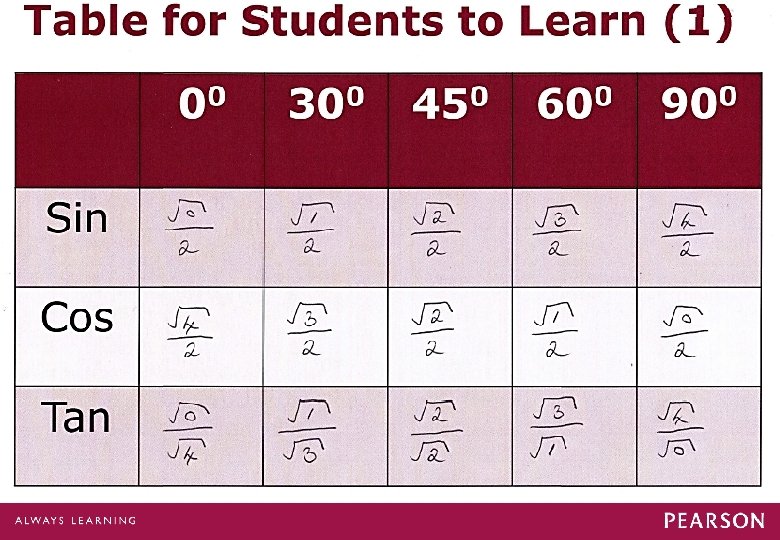
Table for Students to Learn (1) 00 Sin Cos Tan 300 450 600 900
Exact Values
Table for Students to Learn (2)
3) Solving Equations by Iteration (NEW to Higher)
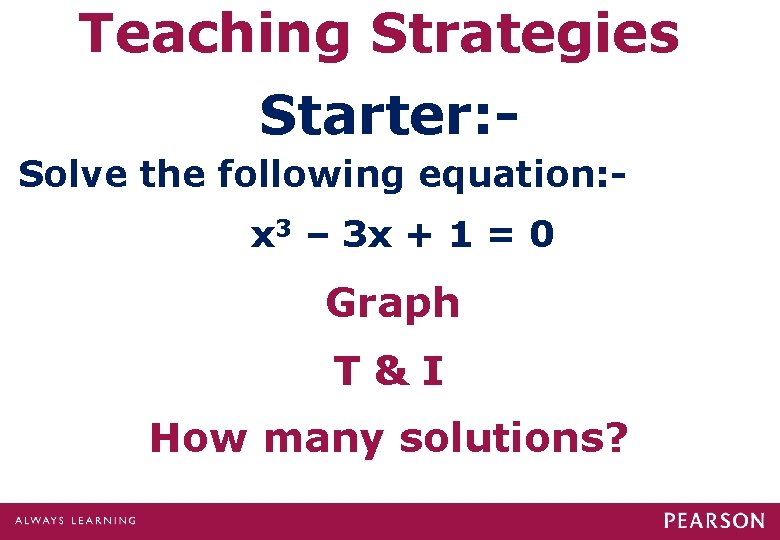
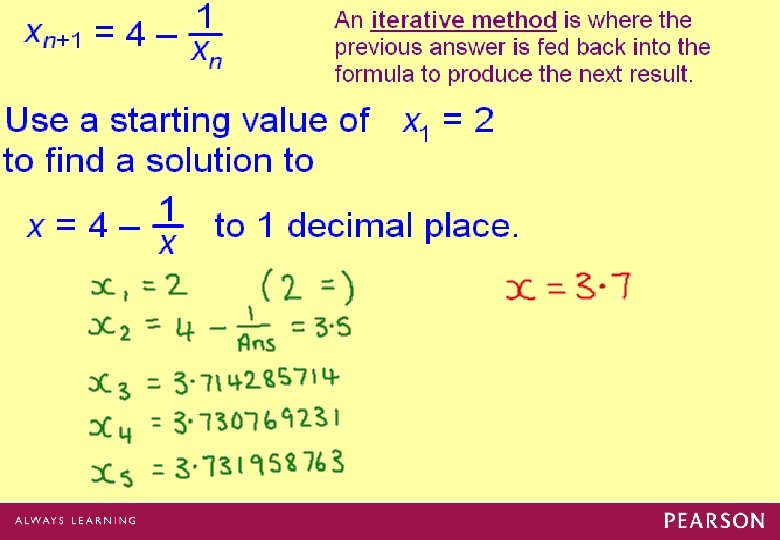
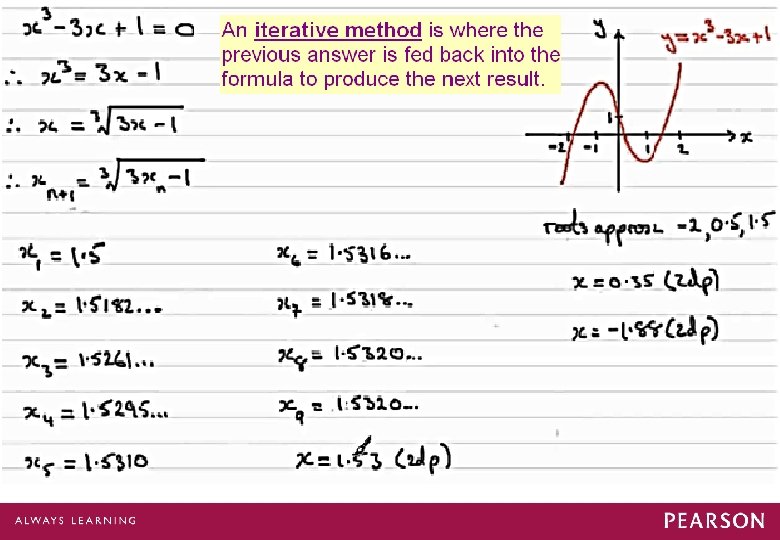
Teaching Strategies Starter: Solve the following equation: x 3 – 3 x + 1 = 0 Graph T&I How many solutions?
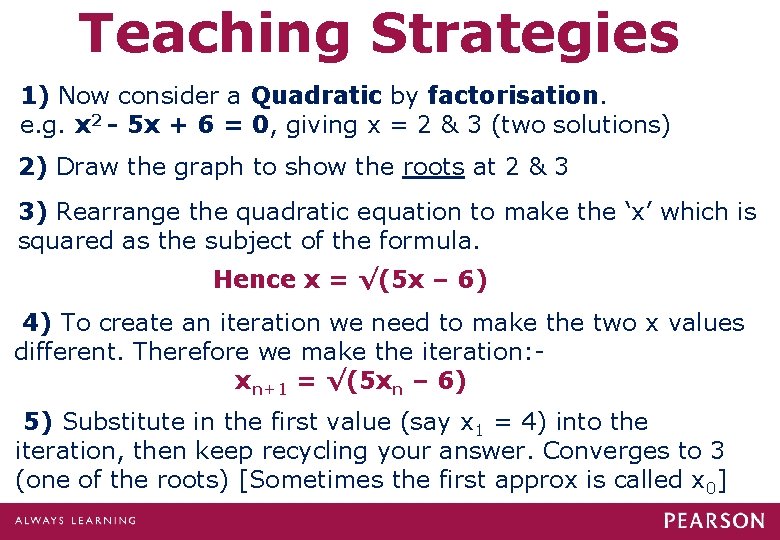
Teaching Strategies 1) Now consider a Quadratic by factorisation. e. g. x 2 - 5 x + 6 = 0, giving x = 2 & 3 (two solutions) 2) Draw the graph to show the roots at 2 & 3 3) Rearrange the quadratic equation to make the ‘x’ which is squared as the subject of the formula. Hence x = √(5 x – 6) 4) To create an iteration we need to make the two x values different. Therefore we make the iteration: xn+1 = √(5 xn – 6) 5) Substitute in the first value (say x 1 = 4) into the iteration, then keep recycling your answer. Converges to 3 (one of the roots) [Sometimes the first approx is called x 0]
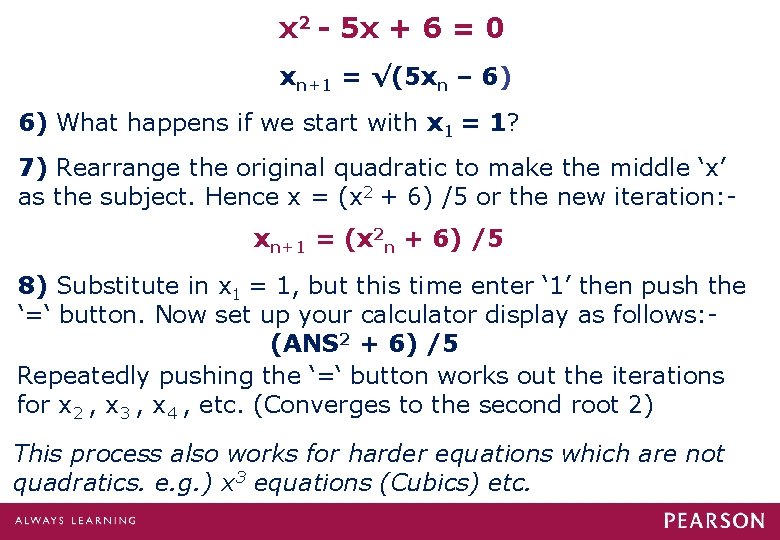
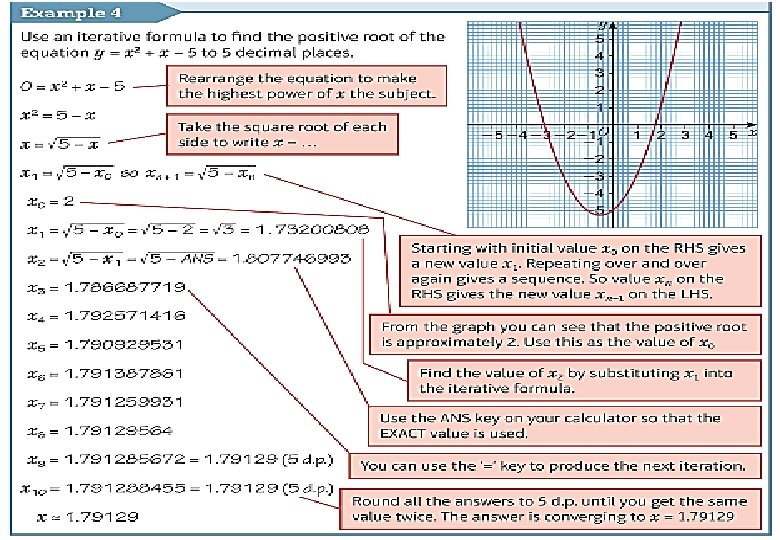
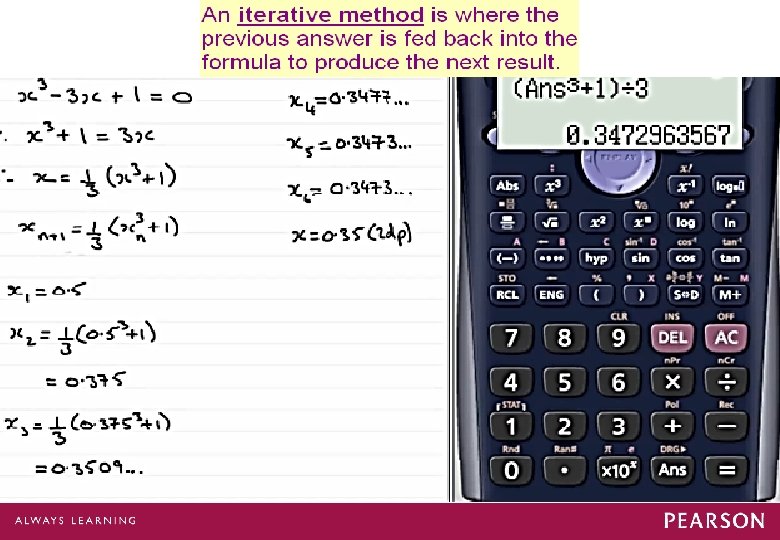
x 2 - 5 x + 6 = 0 xn+1 = √(5 xn – 6) 6) What happens if we start with x 1 = 1? 7) Rearrange the original quadratic to make the middle ‘x’ as the subject. Hence x = (x 2 + 6) /5 or the new iteration: xn+1 = (x 2 n + 6) /5 8) Substitute in x 1 = 1, but this time enter ‘ 1’ then push the ‘=‘ button. Now set up your calculator display as follows: (ANS 2 + 6) /5 Repeatedly pushing the ‘=‘ button works out the iterations for x 2 , x 3 , x 4 , etc. (Converges to the second root 2) This process also works for harder equations which are not quadratics. e. g. ) x 3 equations (Cubics) etc.
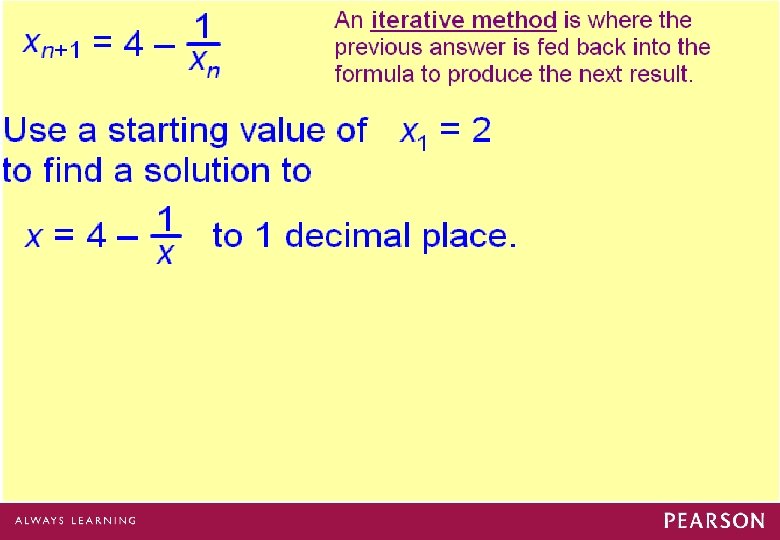
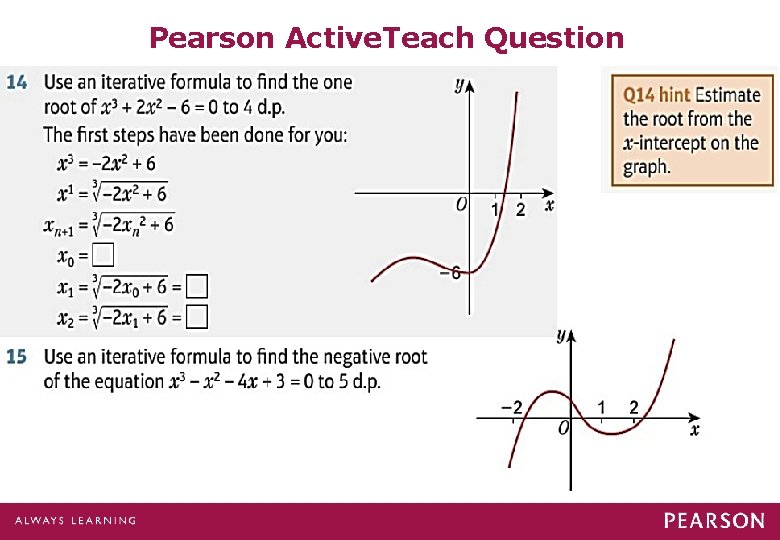
Pearson Active. Teach Question
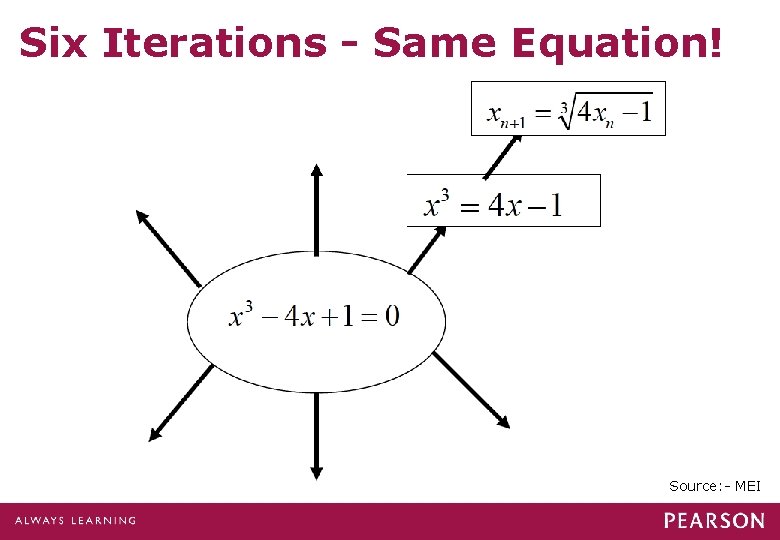
Six Iterations - Same Equation! Source: - MEI
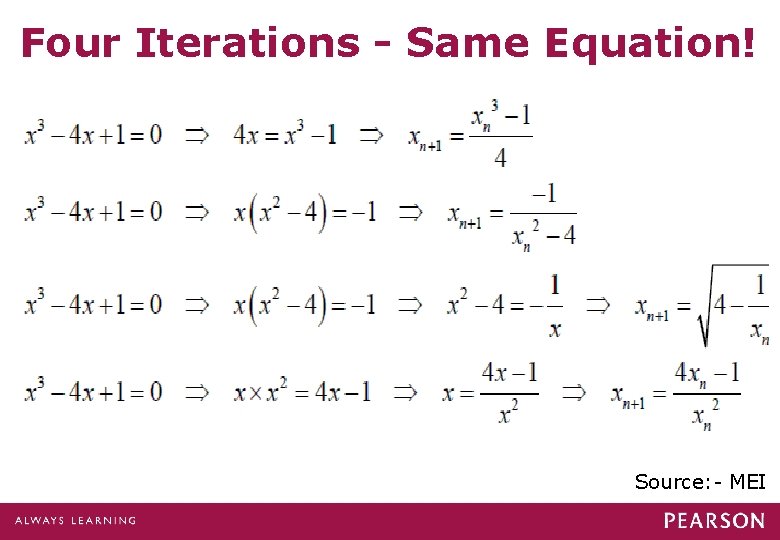
Four Iterations - Same Equation! Source: - MEI
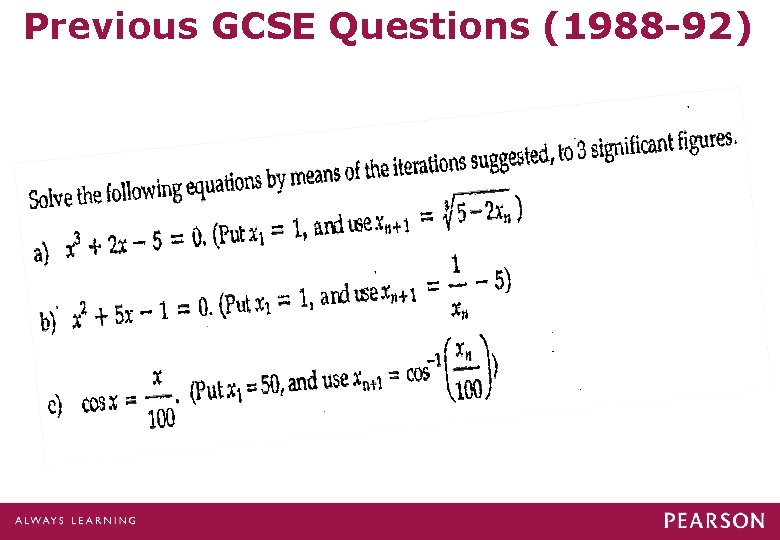
Previous GCSE Questions (1988 -92)
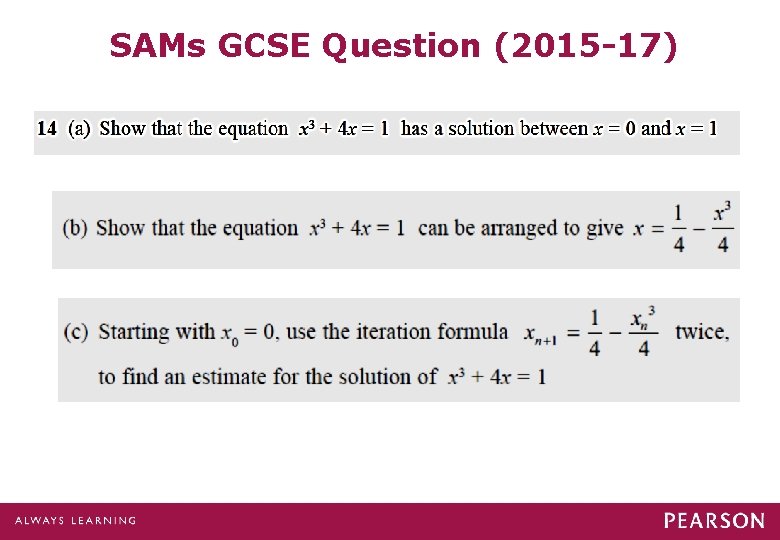
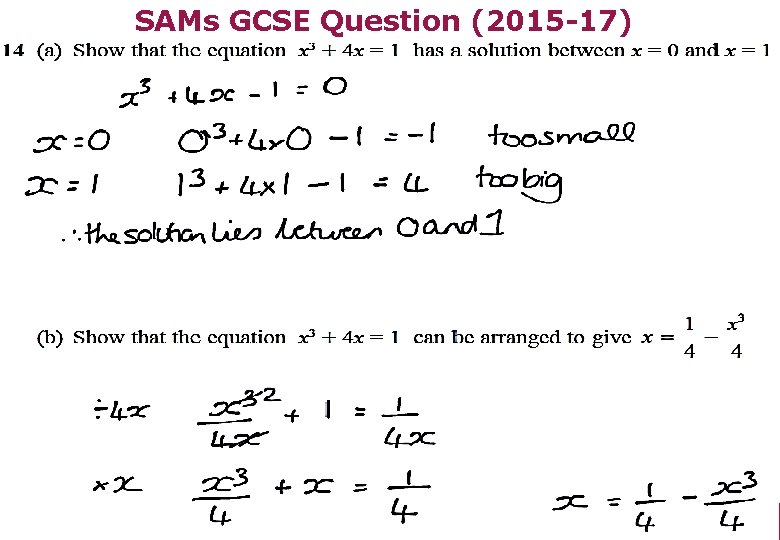
SAMs GCSE Question (2015 -17)
SAMs GCSE Question (2015 -17)
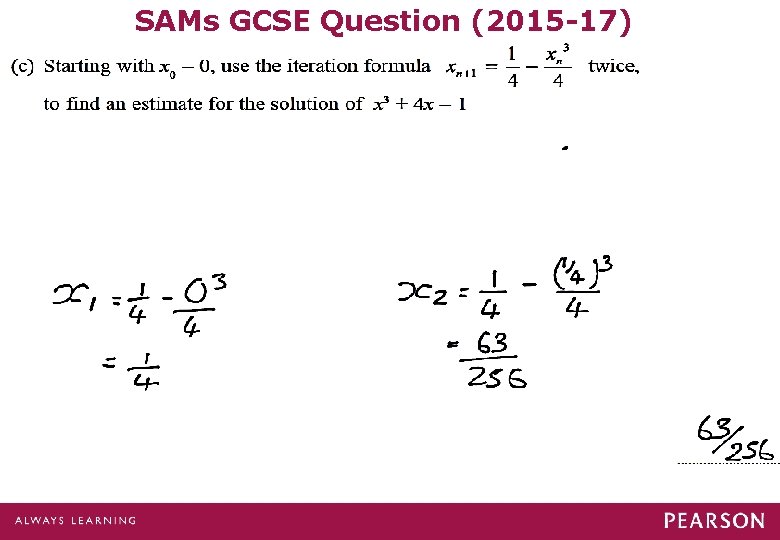
SAMs GCSE Question (2015 -17)
Thank you for your attention Any Questions?