The management of severe hypoxaemic respiratory failure in
- Slides: 45
The management of severe hypoxaemic respiratory failure in critical care Simon Baudouin Senior Lecturer in Critical Care University of Newcastle
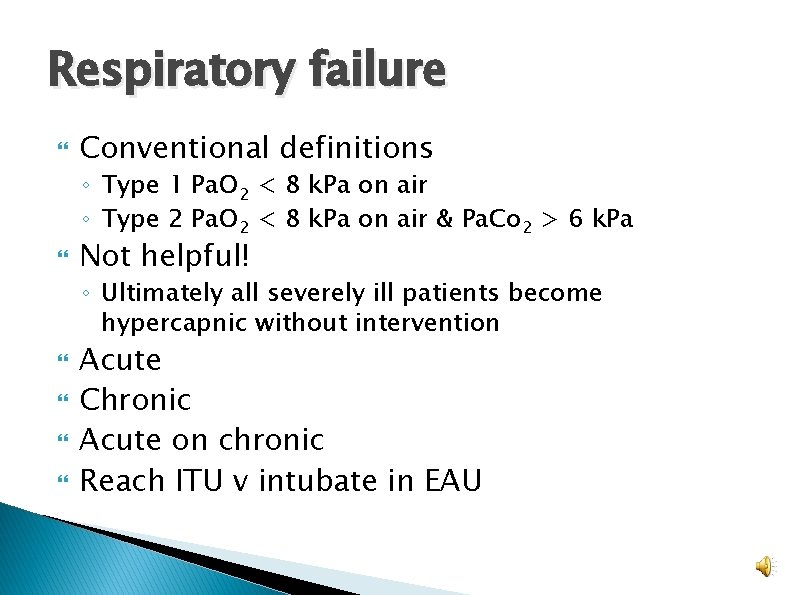
Respiratory failure Conventional definitions ◦ Type 1 Pa. O 2 < 8 k. Pa on air ◦ Type 2 Pa. O 2 < 8 k. Pa on air & Pa. Co 2 > 6 k. Pa Not helpful! ◦ Ultimately all severely ill patients become hypercapnic without intervention Acute Chronic Acute on chronic Reach ITU v intubate in EAU
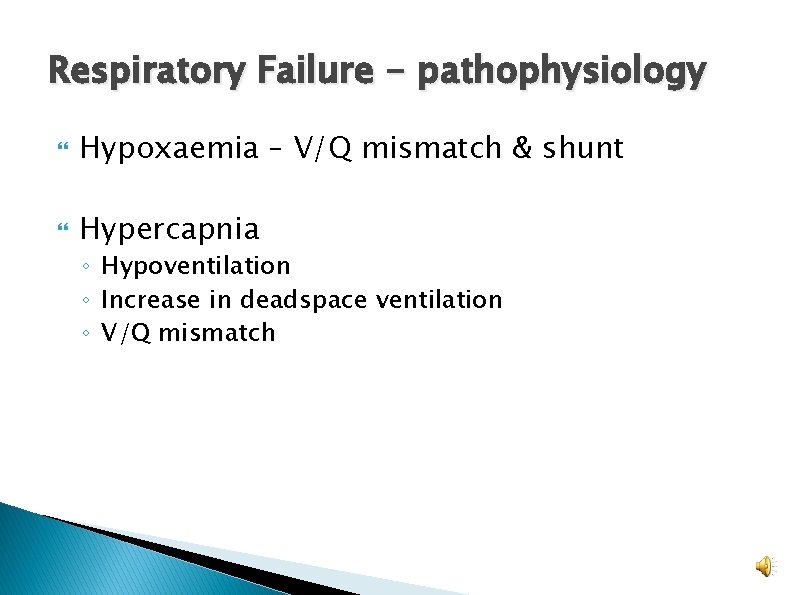
Respiratory Failure - pathophysiology Hypoxaemia – V/Q mismatch & shunt Hypercapnia ◦ Hypoventilation ◦ Increase in deadspace ventilation ◦ V/Q mismatch
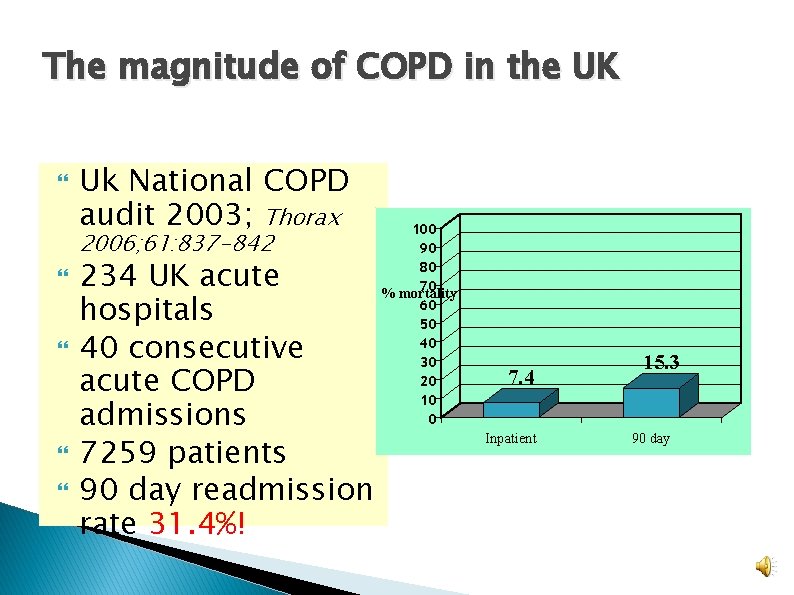
The magnitude of COPD in the UK Uk National COPD audit 2003; Thorax 2006; 61: 837 -842 234 UK acute hospitals 40 consecutive acute COPD admissions 7259 patients 90 day readmission rate 31. 4%! 100 90 80 70 % mortality 60 50 40 30 20 10 0 7. 4 Inpatient 15. 3 90 day
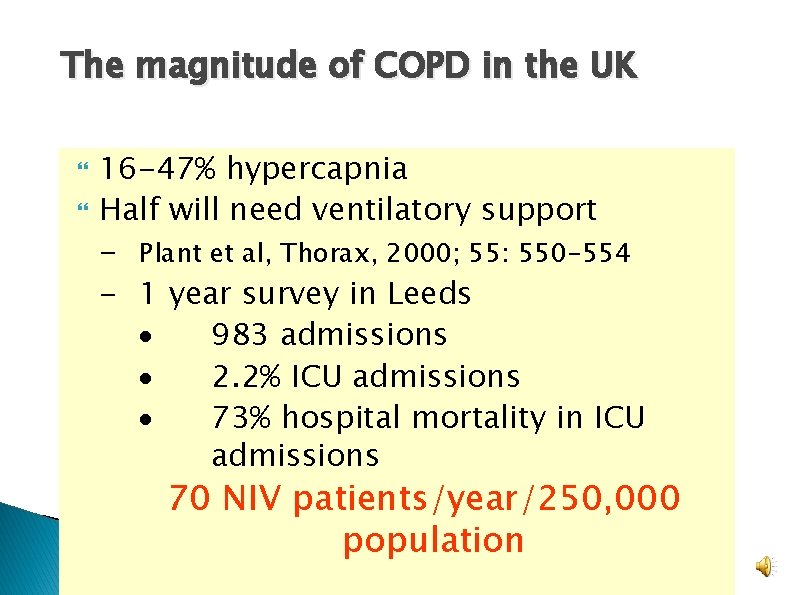
The magnitude of COPD in the UK 16 -47% hypercapnia Half will need ventilatory support - Plant et al, Thorax, 2000; 55: 550 -554 - 1 year survey in Leeds 983 admissions 2. 2% ICU admissions 73% hospital mortality in ICU admissions 70 NIV patients/year/250, 000 population
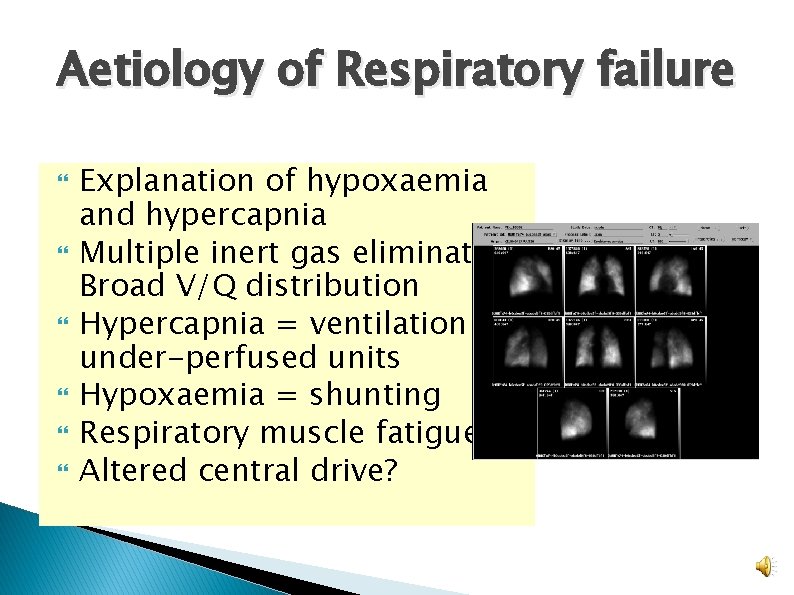
Aetiology of Respiratory failure Explanation of hypoxaemia and hypercapnia Multiple inert gas elimination Broad V/Q distribution Hypercapnia = ventilation to under-perfused units Hypoxaemia = shunting Respiratory muscle fatigue? Altered central drive?
Oxygen treatment Hypoxaemia is usually correctable with low flow O 2 The optimal target Sa. O 2 is unknown > 90% - O 2 dissociation curve > 85% (ARDS net) One small study (n = 36) 6. 6 h. Pa v 9. 0 h. Pa - no difference (underpowered) High flow O 2 will worsen Hypercapnia Change to controlled O 2 will reduce Pa. CO 2
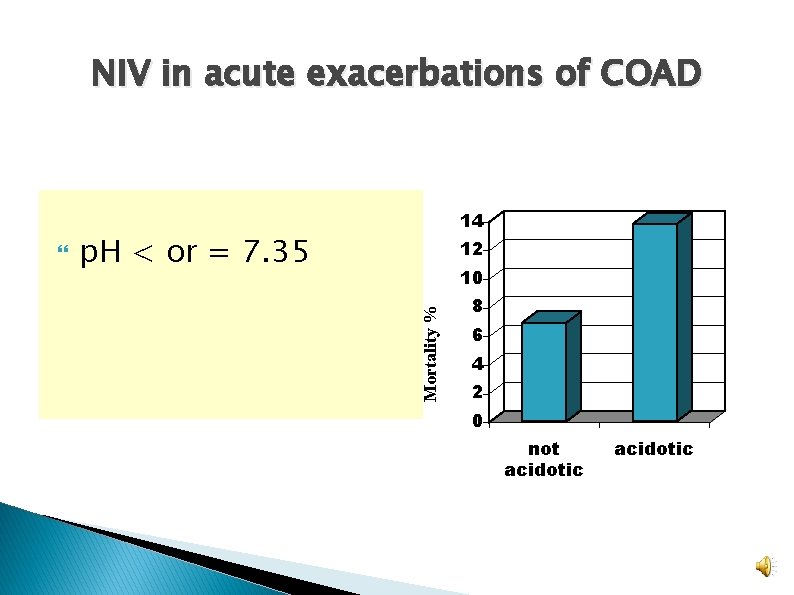
NIV in acute exacerbations of COAD p. H < or = 7. 35 12 10 Mortality % 14 8 6 4 2 0 not acidotic
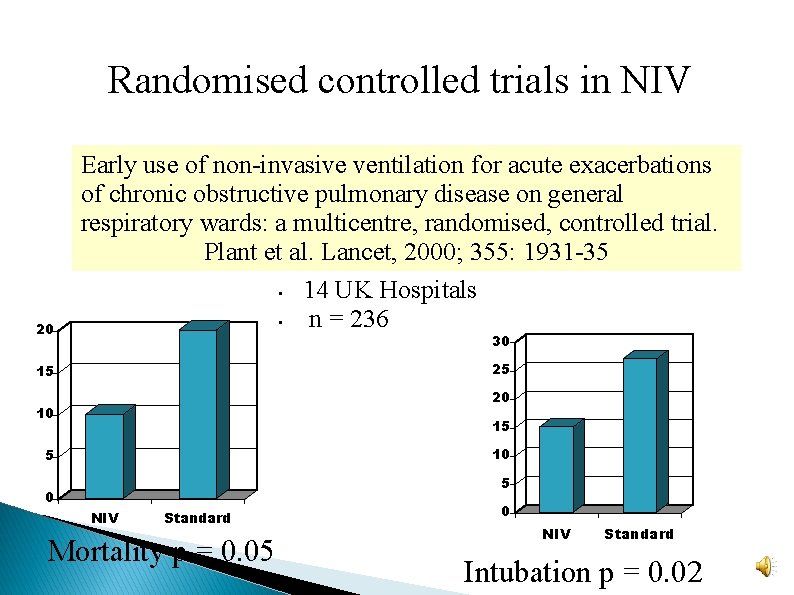
Randomised controlled trials in NIV 20 Early use of non-invasive ventilation for acute exacerbations of chronic obstructive pulmonary disease on general respiratory wards: a multicentre, randomised, controlled trial. Plant et al. Lancet, 2000; 355: 1931 -35 • 14 UK Hospitals • n = 236 30 25 15 20 10 15 10 5 5 0 NIV Standard Mortality p = 0. 05 0 NIV Standard Intubation p = 0. 02
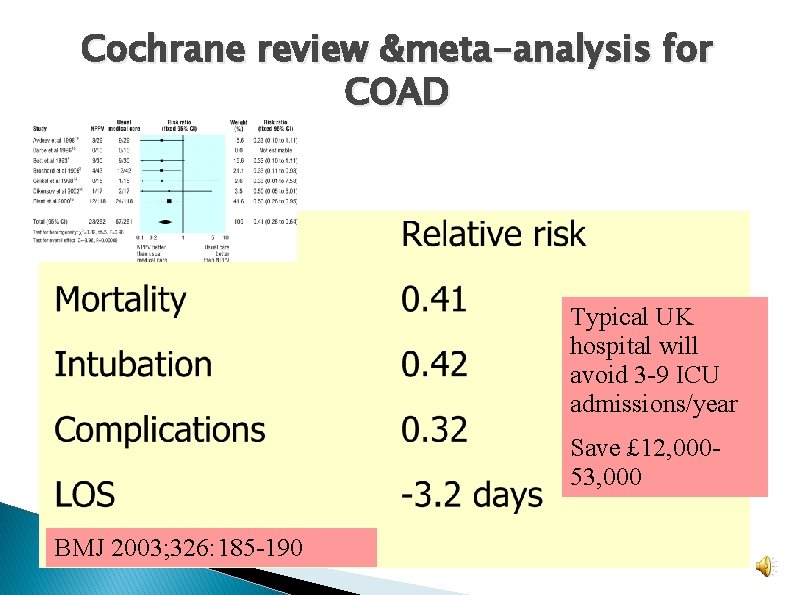
Cochrane review &meta-analysis for COAD Typical UK hospital will avoid 3 -9 ICU admissions/year Save £ 12, 00053, 000 BMJ 2003; 326: 185 -190
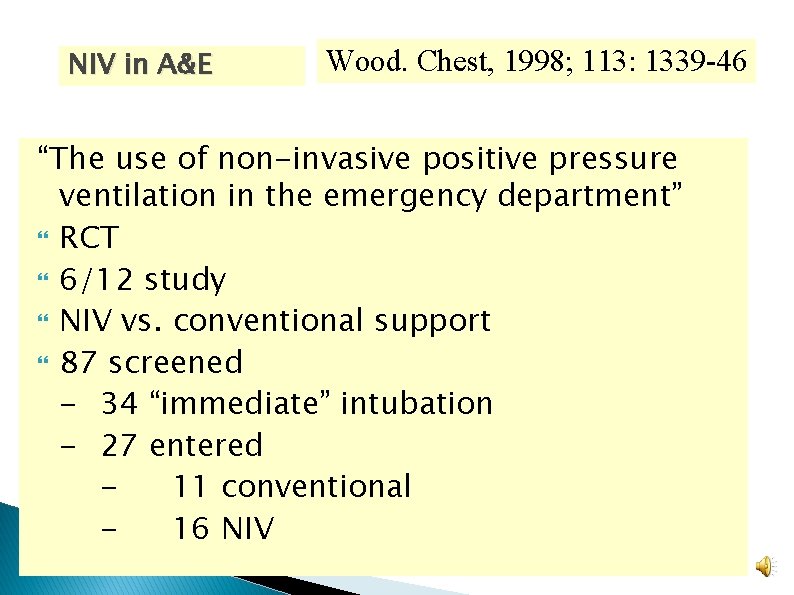
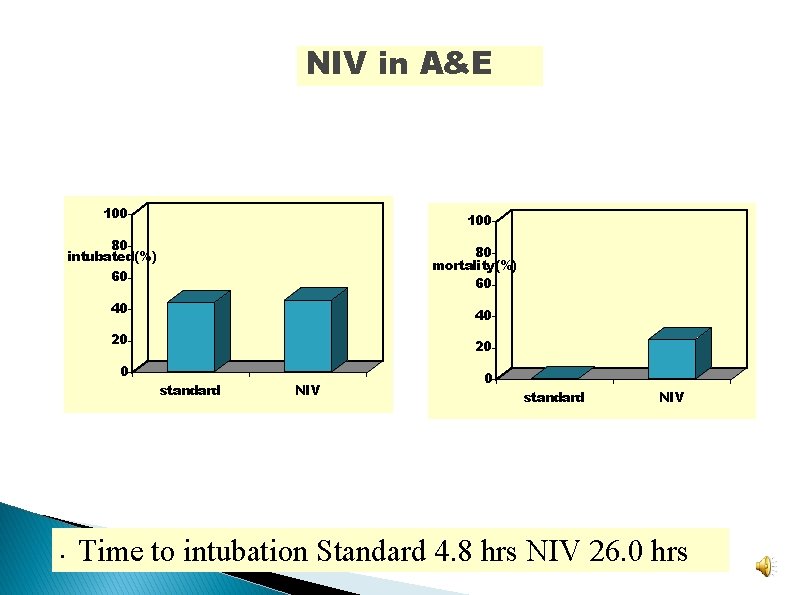
NIV in A&E Wood. Chest, 1998; 113: 1339 -46 “The use of non-invasive positive pressure ventilation in the emergency department” RCT 6/12 study NIV vs. conventional support 87 screened - 34 “immediate” intubation - 27 entered 11 conventional 16 NIV
NIV in A&E 100 80 intubated(%) 80 mortality(%) 60 60 40 40 20 20 0 standard • NIV 0 standard NIV Time to intubation Standard 4. 8 hrs NIV 26. 0 hrs
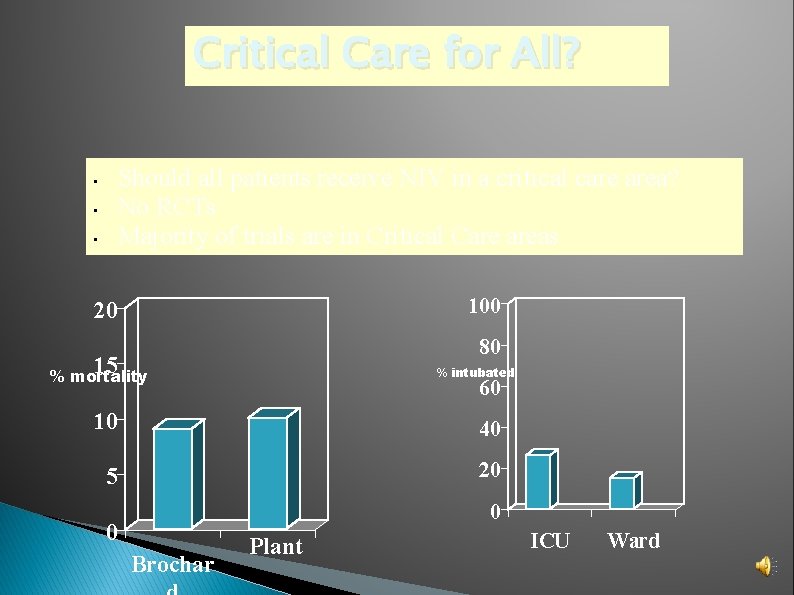
Critical Care for All? • • • Should all patients receive NIV in a critical care area? No RCTs Majority of trials are in Critical Care areas 100 20 80 15 % intubated % mortality 60 10 40 5 20 0 0 Brochar Plant ICU Ward
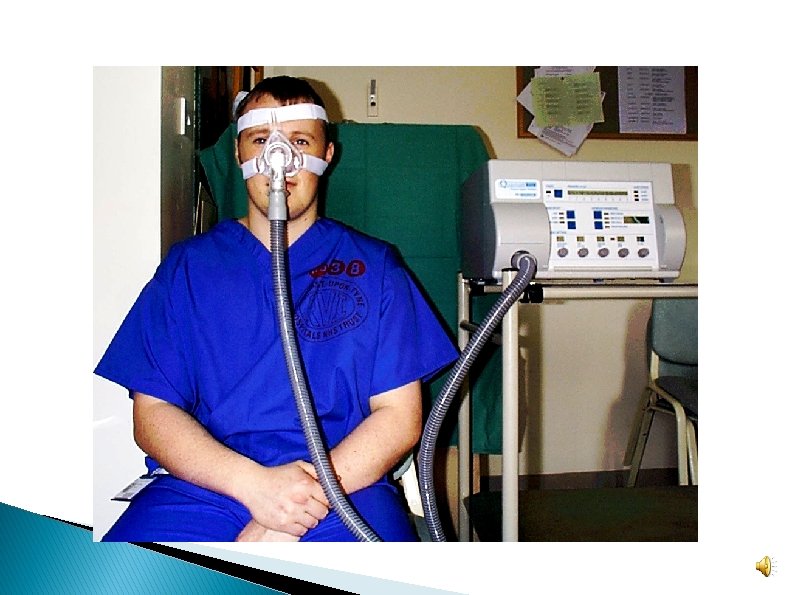
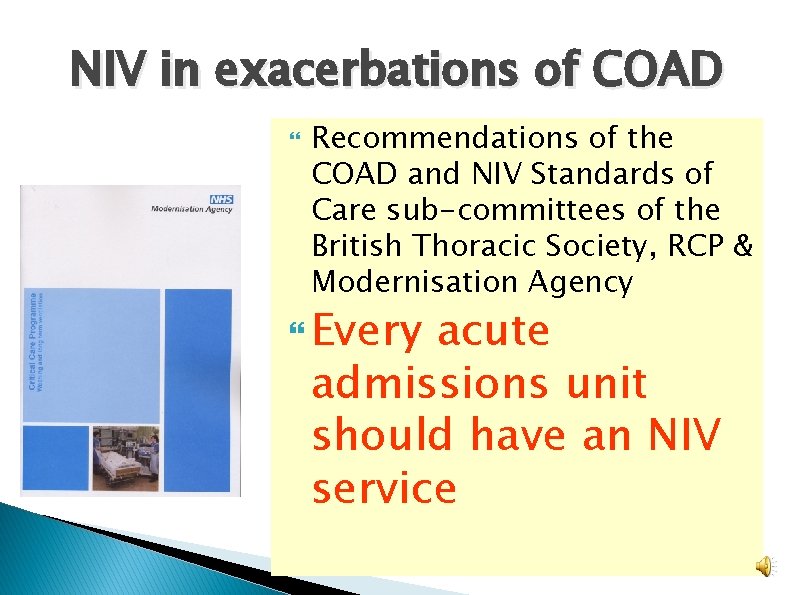
NIV in exacerbations of COAD Recommendations of the COAD and NIV Standards of Care sub-committees of the British Thoracic Society, RCP & Modernisation Agency Every acute admissions unit should have an NIV service
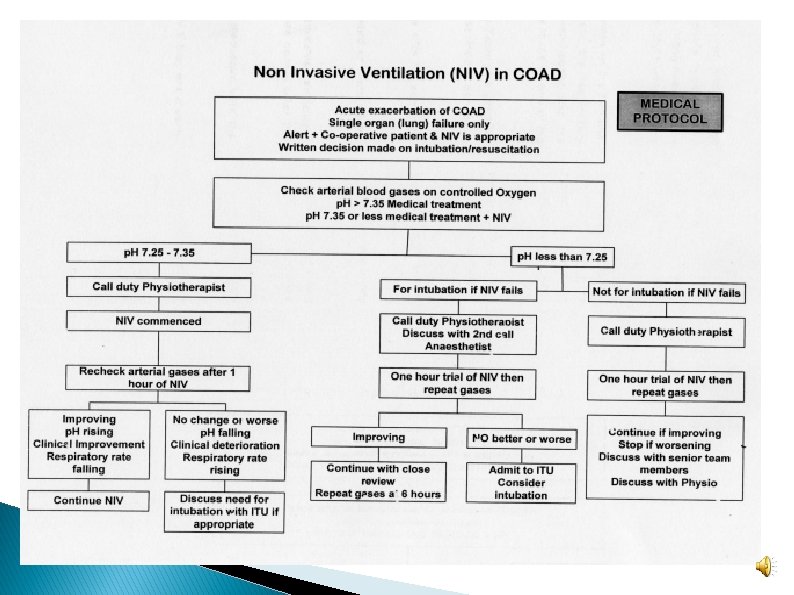
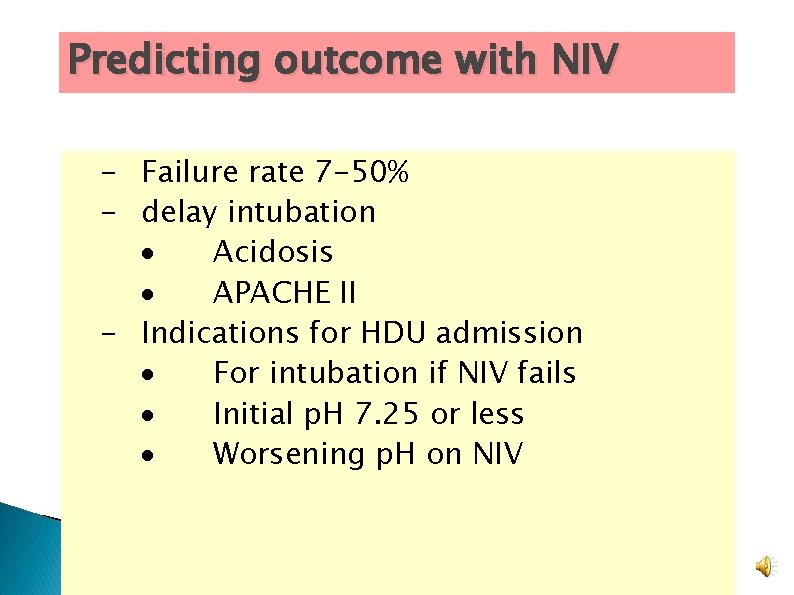
Predicting outcome with NIV - Failure rate 7 -50% - delay intubation Acidosis APACHE II - Indications for HDU admission For intubation if NIV fails Initial p. H 7. 25 or less Worsening p. H on NIV
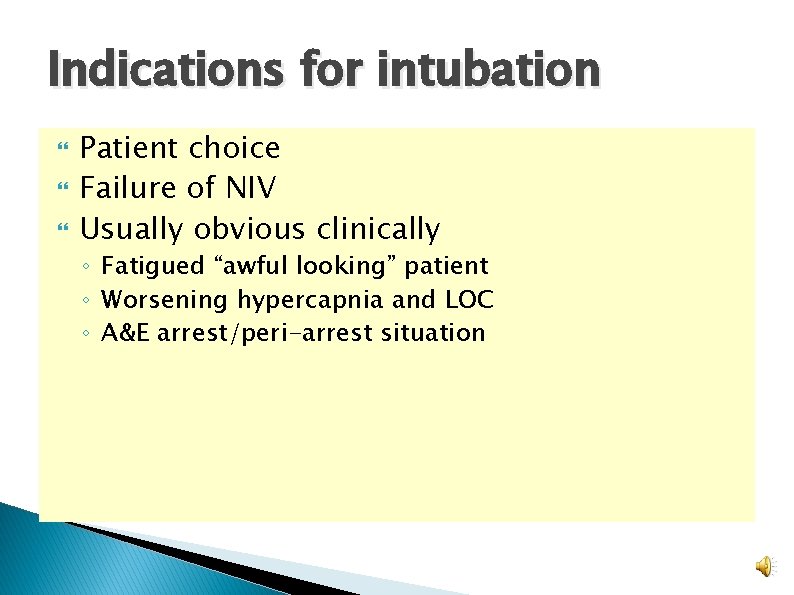
Indications for intubation Patient choice Failure of NIV Usually obvious clinically ◦ Fatigued “awful looking” patient ◦ Worsening hypercapnia and LOC ◦ A&E arrest/peri-arrest situation
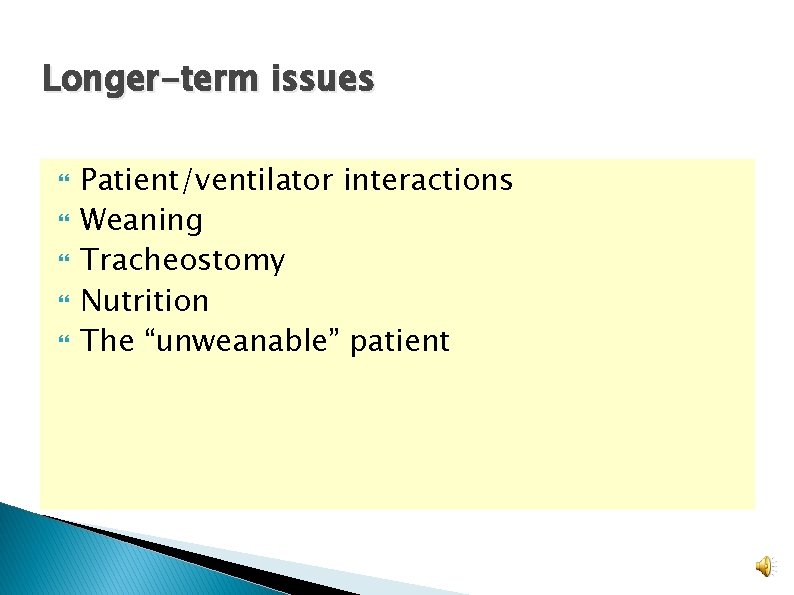
Longer-term issues Patient/ventilator interactions Weaning Tracheostomy Nutrition The “unweanable” patient
Weaning Rapid trial of extubation (onto NIV) Early tracheostomy Regular Sedation cessation Weaning protocols A little progress every day!
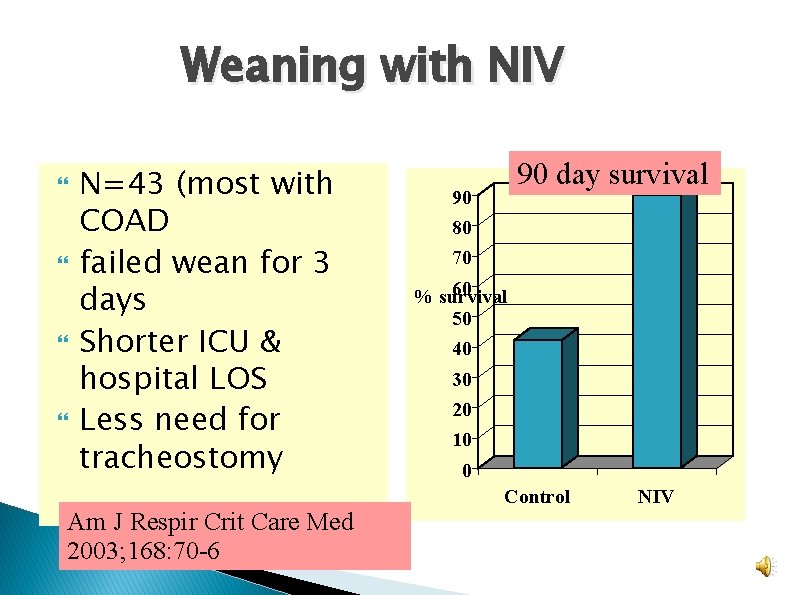
Weaning with NIV N=43 (most with COAD failed wean for 3 days Shorter ICU & hospital LOS Less need for tracheostomy Am J Respir Crit Care Med 2003; 168: 70 -6 90 day survival 90 80 70 60 % survival 50 40 30 20 10 0 Control NIV
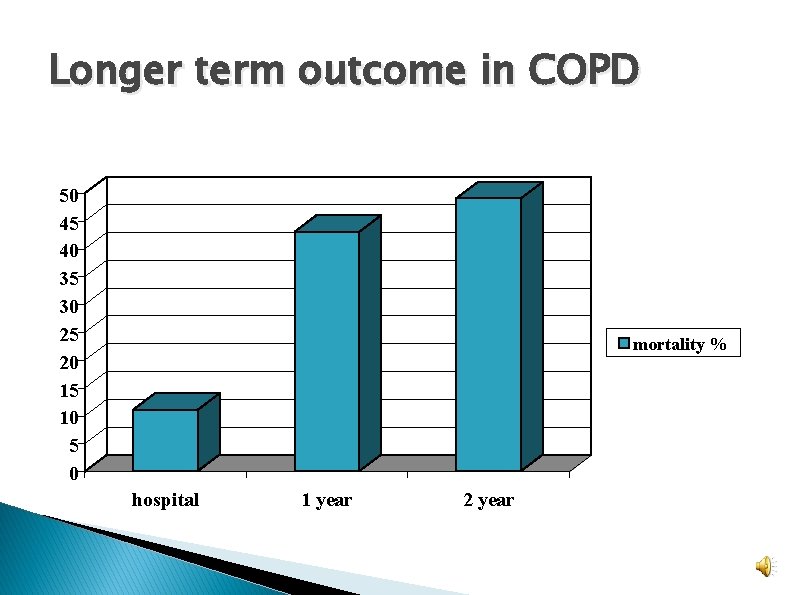
Longer term outcome in COPD 50 45 40 35 30 25 20 15 10 5 0 mortality % hospital 1 year 2 year
Summary COPD admissions will increase NIV is effective in both survival and prevention of intubation Outcome of ventilation in COPD is no worse than in other conditions Patient choice and informed decisions
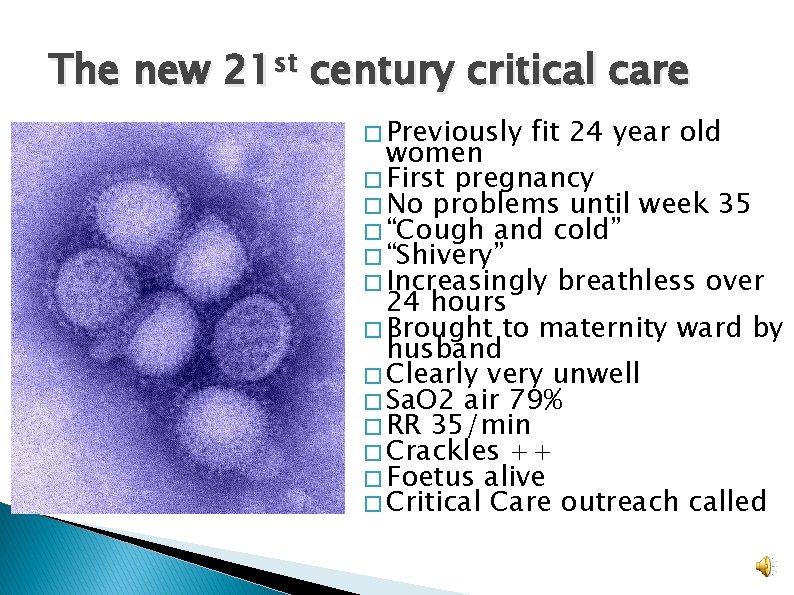
The new 21 st century critical care � Previously fit 24 year old women � First pregnancy � No problems until week 35 � “Cough and cold” � “Shivery” � Increasingly breathless over 24 hours � Brought to maternity ward by husband � Clearly very unwell � Sa. O 2 air 79% � RR 35/min � Crackles ++ � Foetus alive � Critical Care outreach called
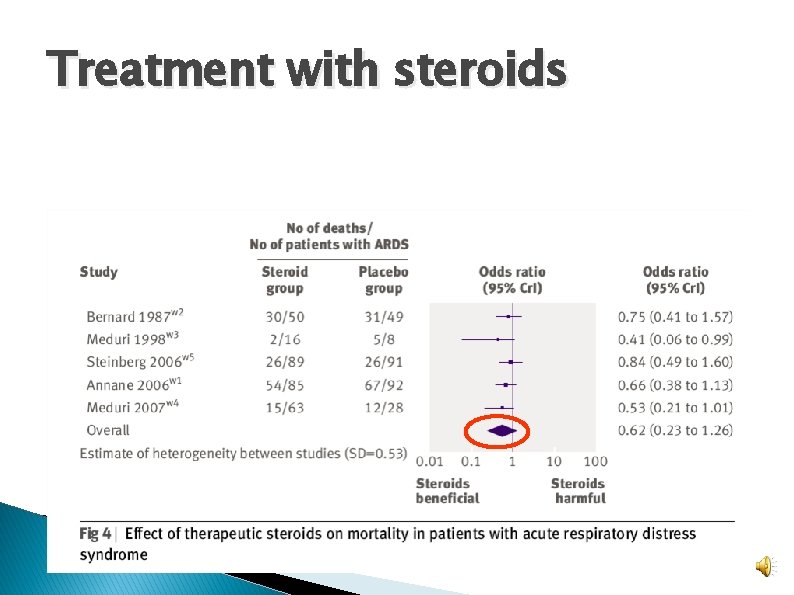
Treatment with steroids
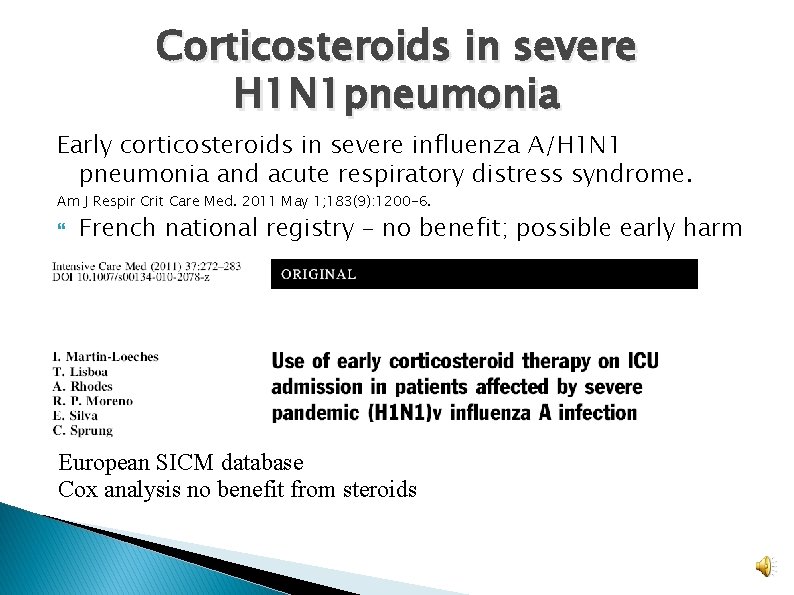
Corticosteroids in severe H 1 N 1 pneumonia Early corticosteroids in severe influenza A/H 1 N 1 pneumonia and acute respiratory distress syndrome. Am J Respir Crit Care Med. 2011 May 1; 183(9): 1200 -6. French national registry – no benefit; possible early harm European SICM database Cox analysis no benefit from steroids
Delivery? Critical Care obstetric intensivist Separate the two patients Foetus is viable Ventilation for the Mother is inevitable Experience from other units Urgent Caesarean section Ventilated with Critical Care ventilator during section Healthy girl delivered Mother transferred to critical care unit
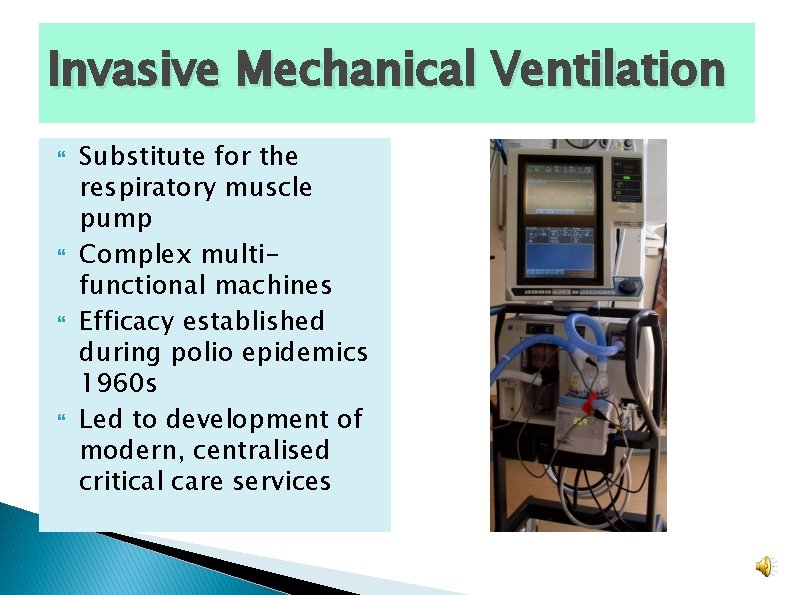
Invasive Mechanical Ventilation Substitute for the respiratory muscle pump Complex multifunctional machines Efficacy established during polio epidemics 1960 s Led to development of modern, centralised critical care services
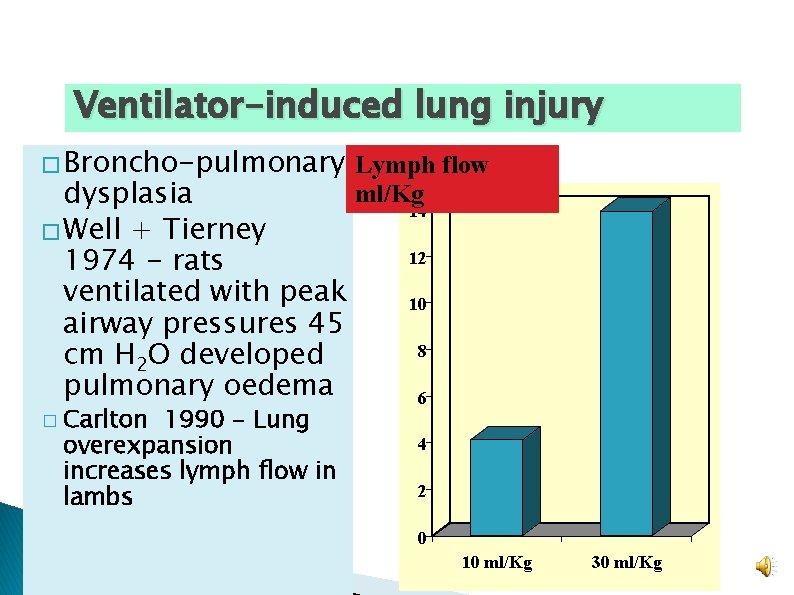
Ventilator-induced lung injury � Broncho-pulmonary dysplasia � Well + Tierney 1974 - rats ventilated with peak airway pressures 45 cm H 2 O developed pulmonary oedema � Carlton 1990 - Lung overexpansion increases lymph flow in lambs Lymph flow ml/Kg 14 12 10 8 6 4 2 0 10 ml/Kg 30 ml/Kg
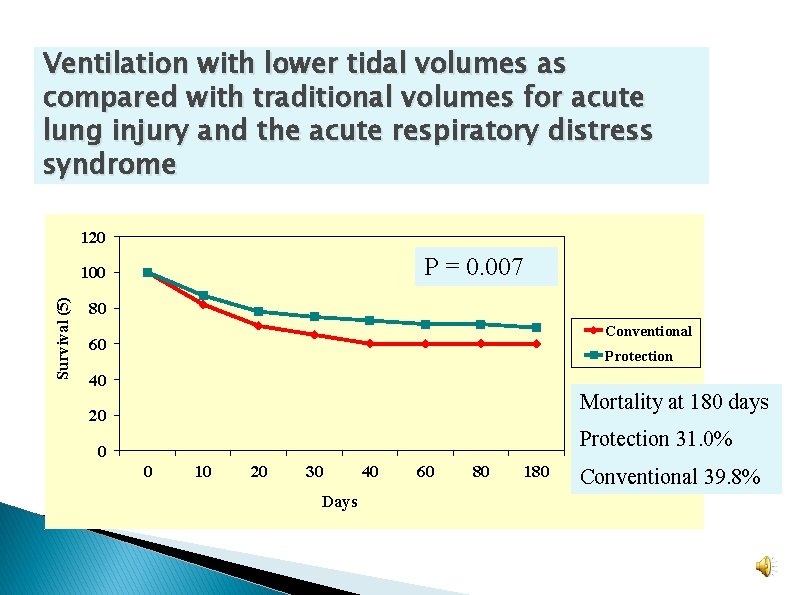
Ventilation with lower tidal volumes as compared with traditional volumes for acute lung injury and the acute respiratory distress syndrome 120 P = 0. 007 Survival (5) 100 80 Conventional 60 Protection 40 Mortality at 180 days 20 Protection 31. 0% 0 0 10 20 30 Days 40 60 80 180 Conventional 39. 8%
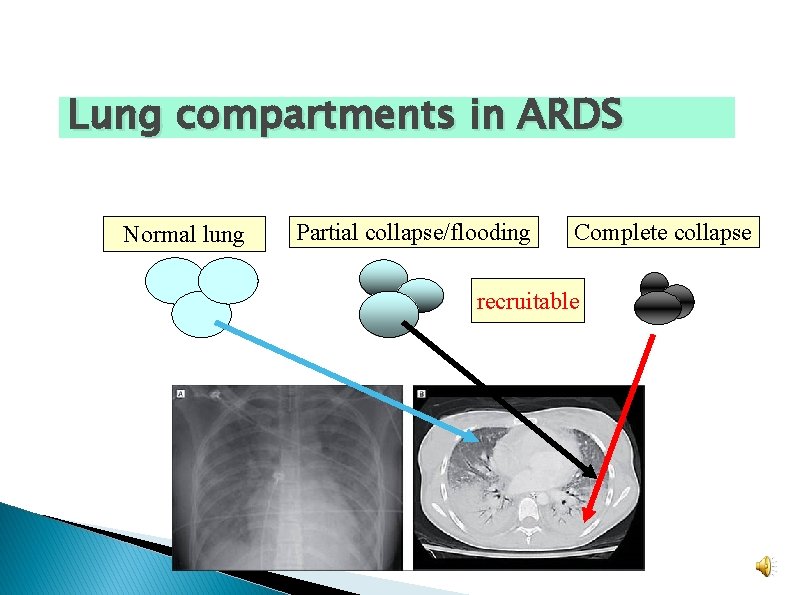
Lung compartments in ARDS Normal lung Partial collapse/flooding Complete collapse recruitable
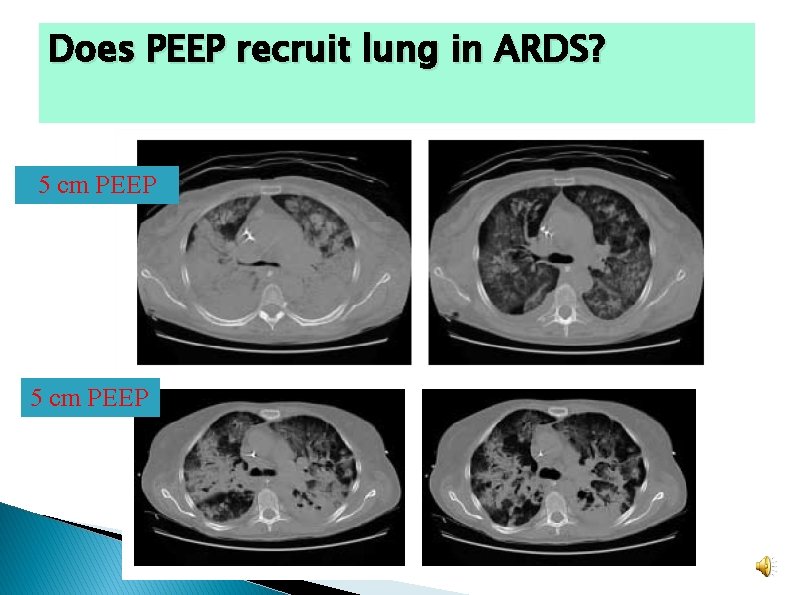
Does PEEP recruit lung in ARDS? 5 cm PEEP
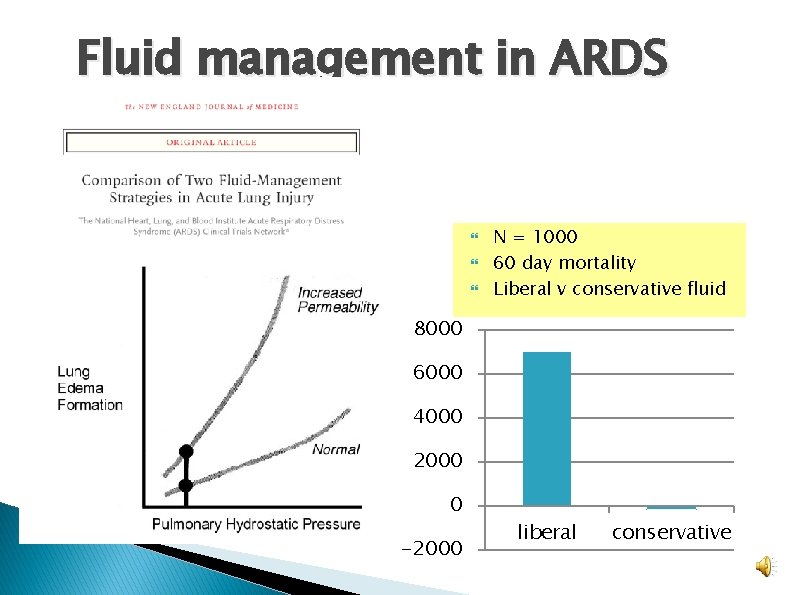
Fluid management in ARDS N = 1000 60 day mortality Liberal v conservative fluid Fluid balance 8000 6000 4000 2000 0 -2000 liberal conservative
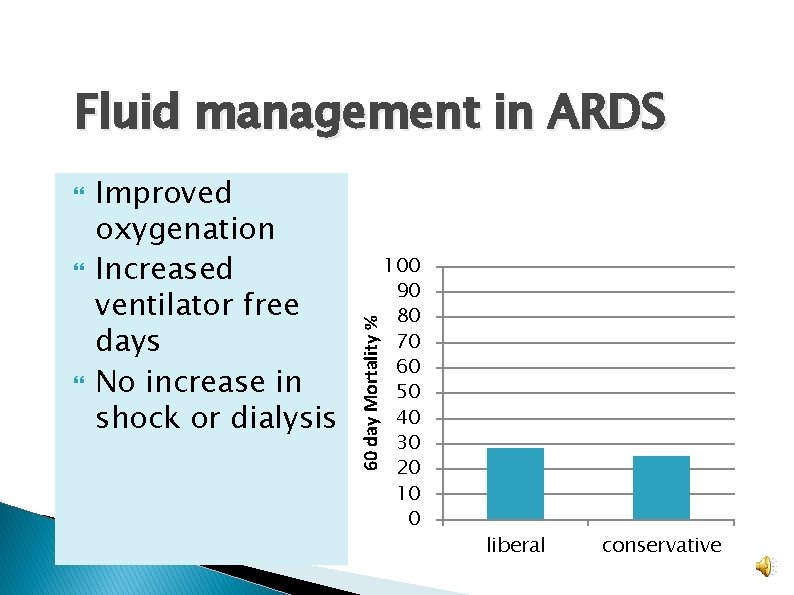
Improved oxygenation Increased ventilator free days No increase in shock or dialysis 60 day Mortality % Fluid management in ARDS 100 90 80 70 60 50 40 30 20 10 0 liberal conservative
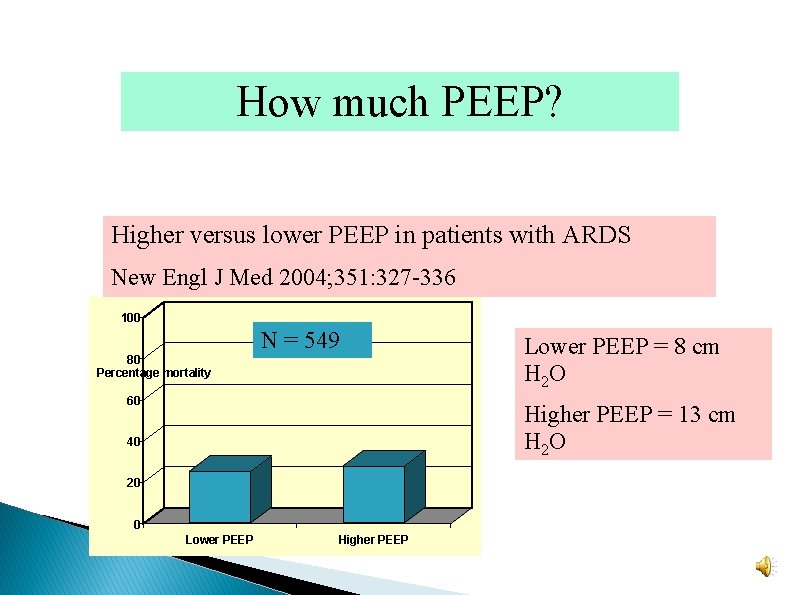
How much PEEP? Higher versus lower PEEP in patients with ARDS New Engl J Med 2004; 351: 327 -336 100 N = 549 80 Percentage mortality 60 Lower PEEP = 8 cm H 2 O Higher PEEP = 13 cm H 2 O 40 20 0 Lower PEEP Higher PEEP
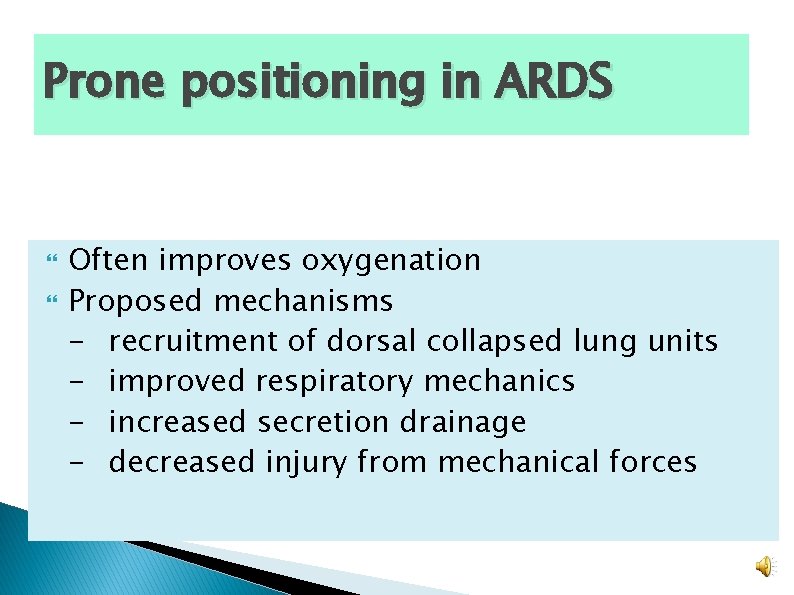
Prone positioning in ARDS Often improves oxygenation Proposed mechanisms - recruitment of dorsal collapsed lung units - improved respiratory mechanics - increased secretion drainage - decreased injury from mechanical forces
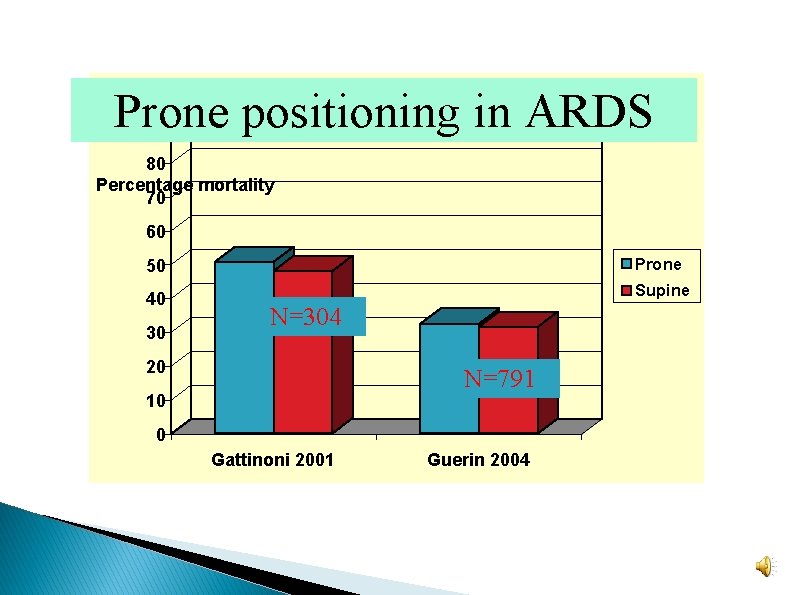
Prone positioning in ARDS 100 90 80 Percentage mortality 70 60 50 Prone 40 Supine 30 N=304 20 N=791 10 0 Gattinoni 2001 Guerin 2004
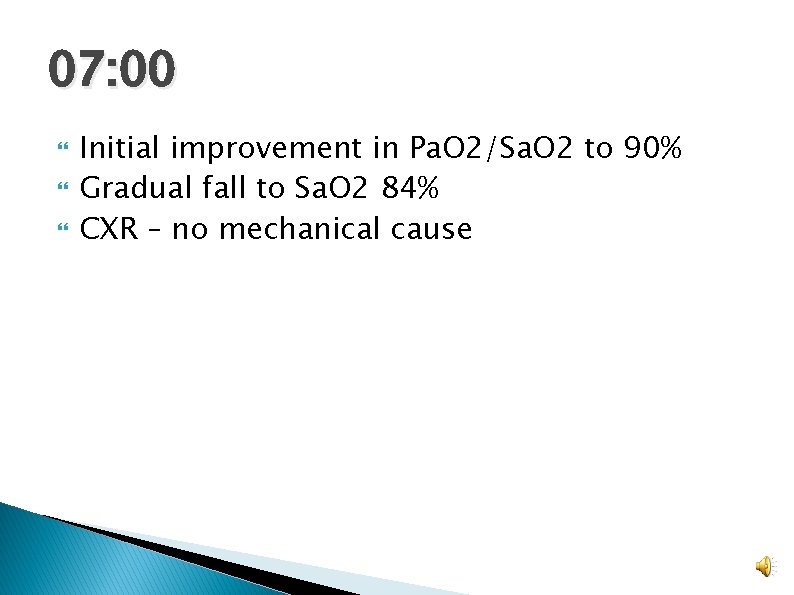
07: 00 Initial improvement in Pa. O 2/Sa. O 2 to 90% Gradual fall to Sa. O 2 84% CXR – no mechanical cause
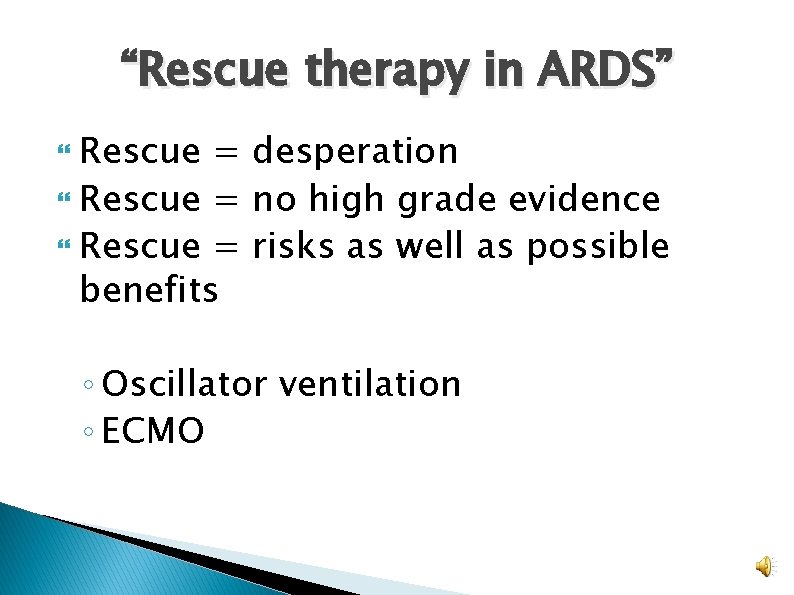
“Rescue therapy in ARDS” Rescue = desperation Rescue = no high grade evidence Rescue = risks as well as possible benefits ◦ Oscillator ventilation ◦ ECMO
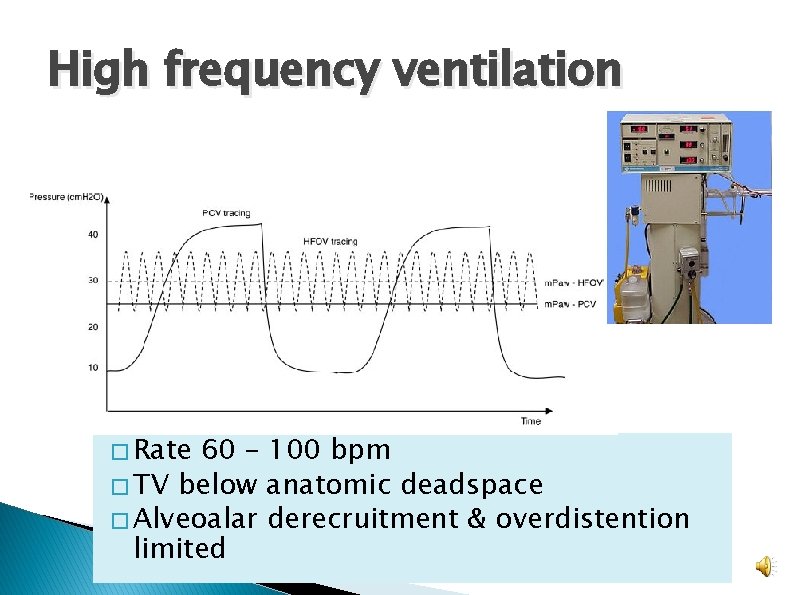
High frequency ventilation � Rate 60 – 100 bpm � TV below anatomic deadspace � Alveoalar derecruitment & overdistention limited
Large, multi-centre RCT • Conventional v high frequency ventilation • Complete recruitment 2012 • Over 800 patients •
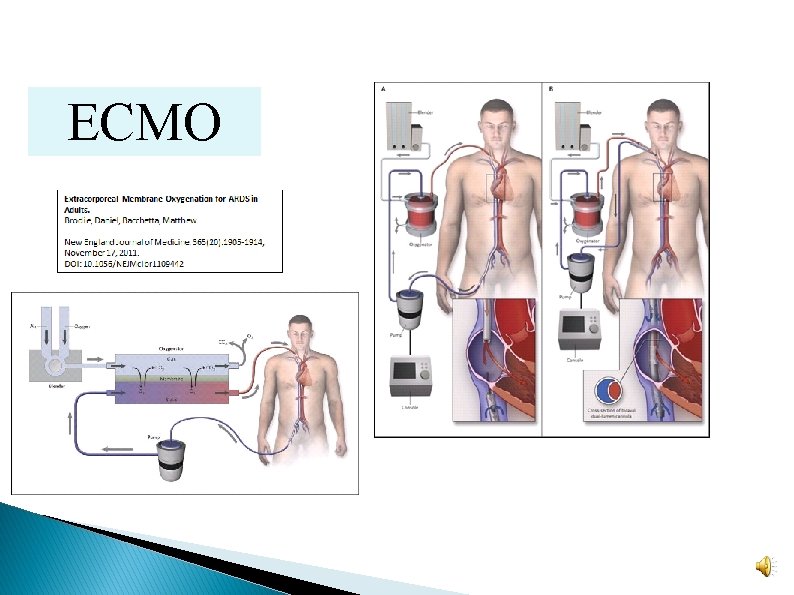
ECMO
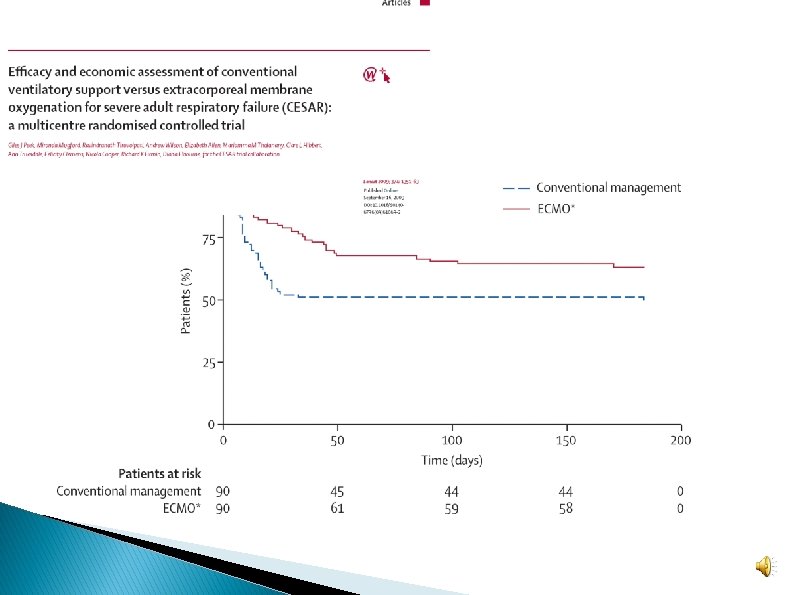
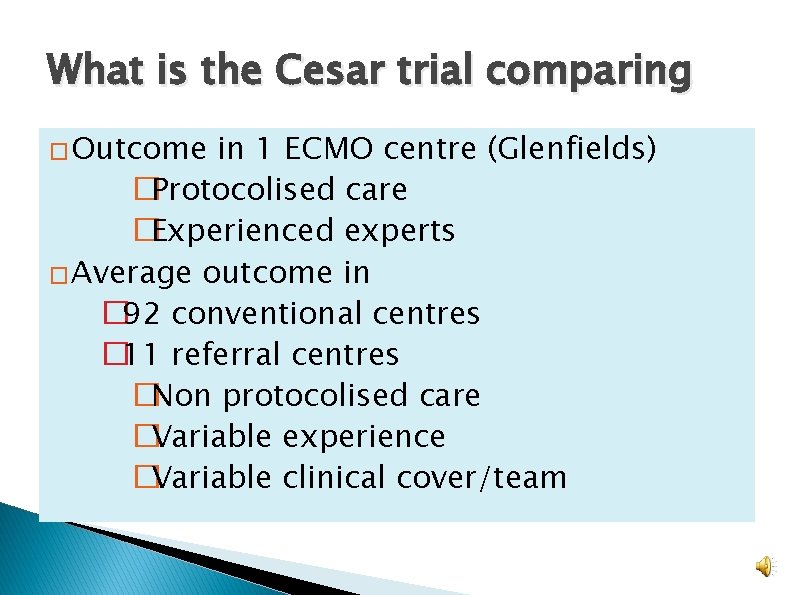
What is the Cesar trial comparing � Outcome in 1 ECMO centre (Glenfields) �Protocolised care �Experienced experts � Average outcome in � 92 conventional centres � 11 referral centres �Non protocolised care �Variable experience �Variable clinical cover/team
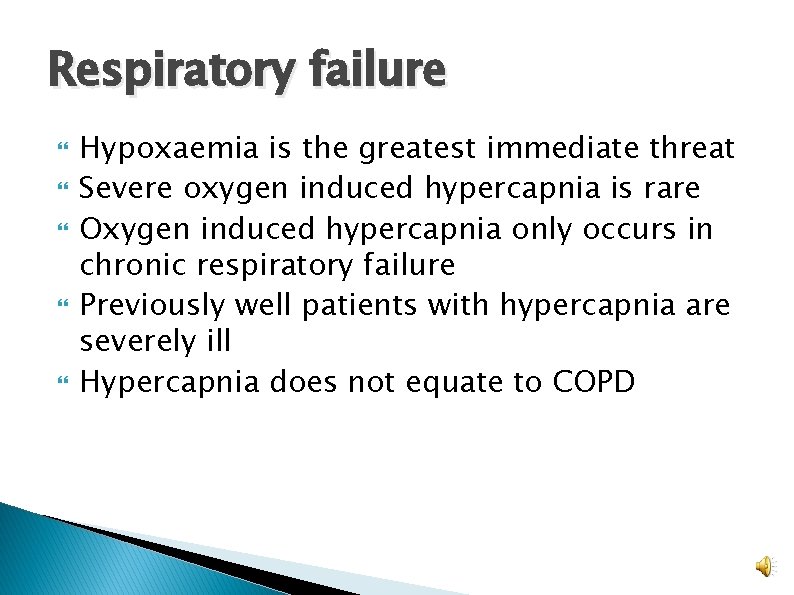
Respiratory failure Hypoxaemia is the greatest immediate threat Severe oxygen induced hypercapnia is rare Oxygen induced hypercapnia only occurs in chronic respiratory failure Previously well patients with hypercapnia are severely ill Hypercapnia does not equate to COPD