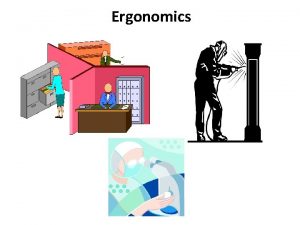
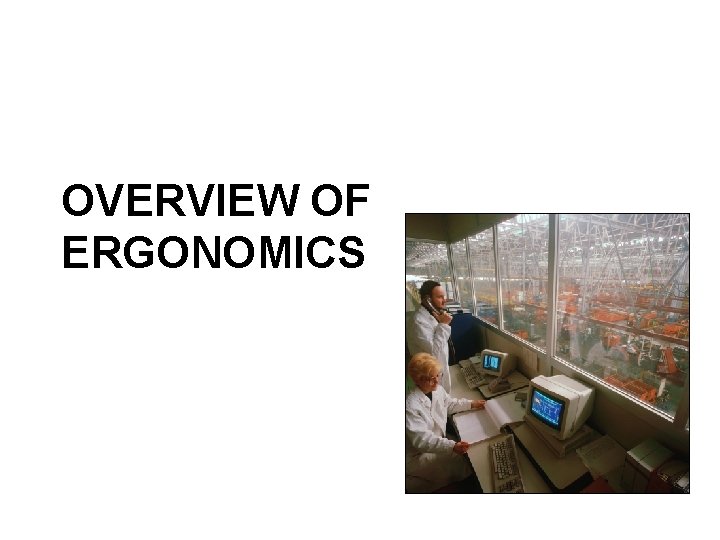
OVERVIEW OF ERGONOMICS Ergonomics definitions Study of work



- Slides: 96
OVERVIEW OF ERGONOMICS
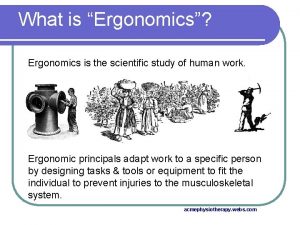
Ergonomics definitions • “Study of work” • “User-centred design” • “Human factors in design” 3 key domains: • Physical • Cognitive • Organisational
Ergonomics definitions Different terminology…! UK – ‘Ergonomics’ USA – ‘Human Factors’
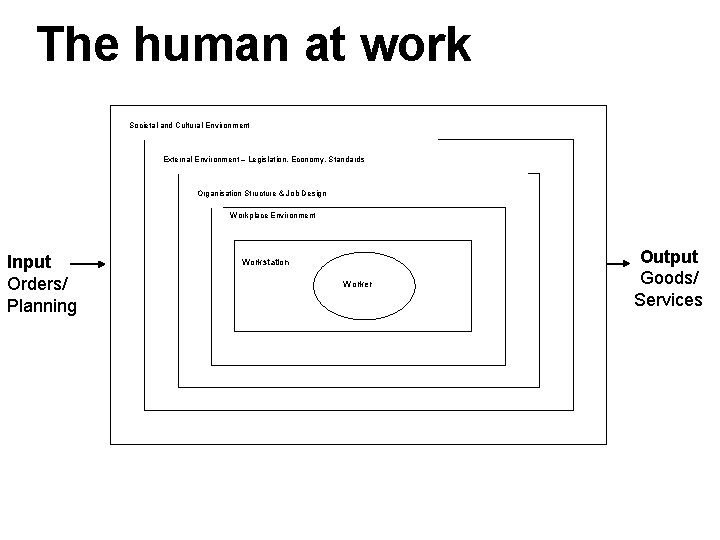
The human at work Societal and Cultural Environment External Environment – Legislation, Economy, Standards Organisation Structure & Job Design Workplace Environment Input Orders/ Planning Workstation Worker Output Goods/ Services
Scope of ergonomics Human characteristics considered: • Anatomy • Physiology • Psychology
Scope of ergonomics Ergonomics should be applied for all designs involving humans, e. g. : • • Furniture Appliances Tools Sports equipment • Vehicles • Transport • Spaces
Scope of ergonomics Describe a piece of equipment you regularly use that has considered ergonomics in its design and use. What are the relevant features that make it ergonomically well designed?
Benefits of ergonomics • Faster • Easier • Safer > Enhanced productivity
Occupational ergonomics(1) The worker
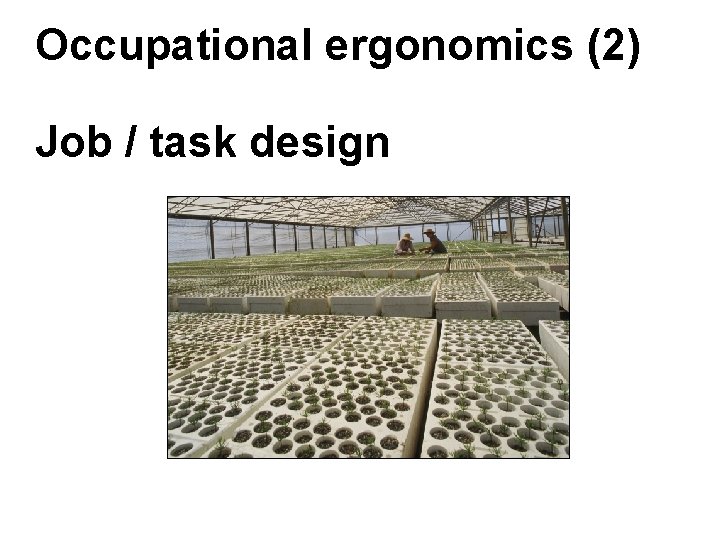
Occupational ergonomics (2) Job / task design Add pics
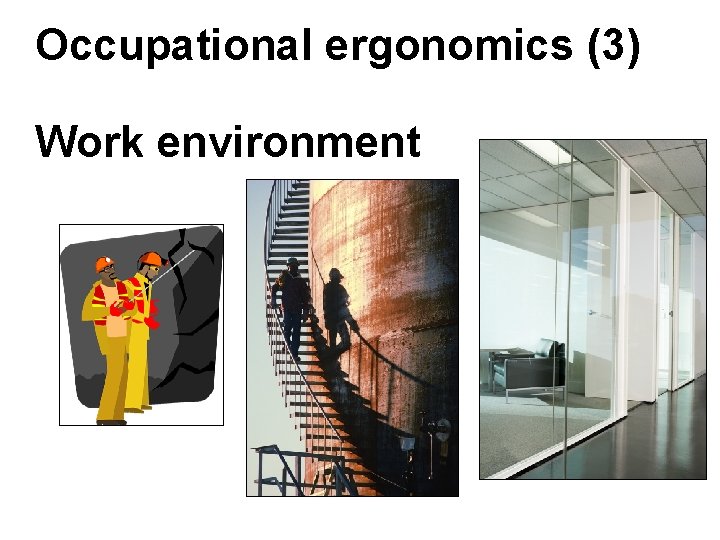
Occupational ergonomics (3) Work environment
Occupational ergonomics (4) Equipment design
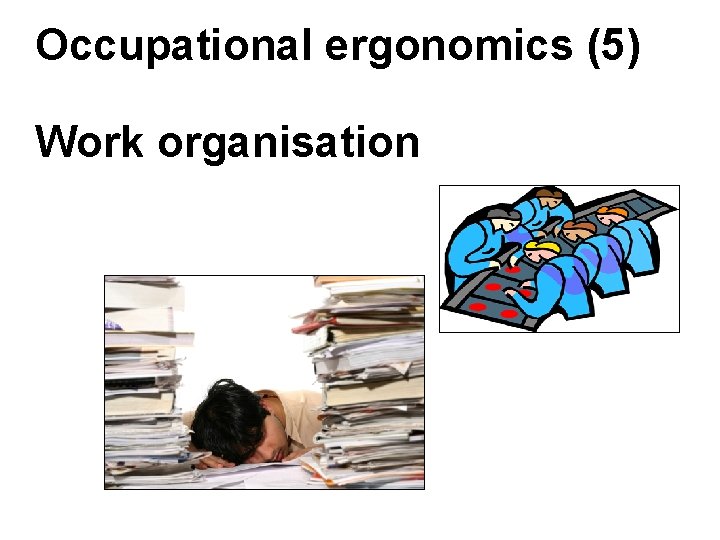
Occupational ergonomics (5) Work organisation
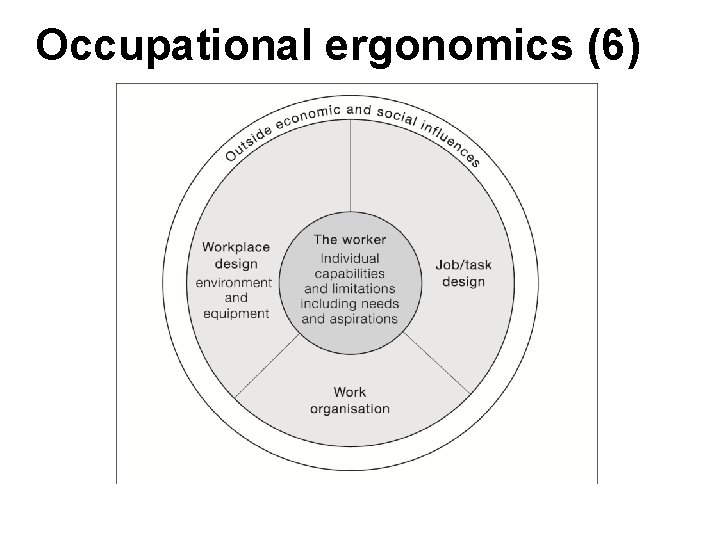
Occupational ergonomics (6)
Systems of work Factors to consider?
Human characteristics & limitations • Physical • Cognitive What impacts on these characteristics and results in differences between people?
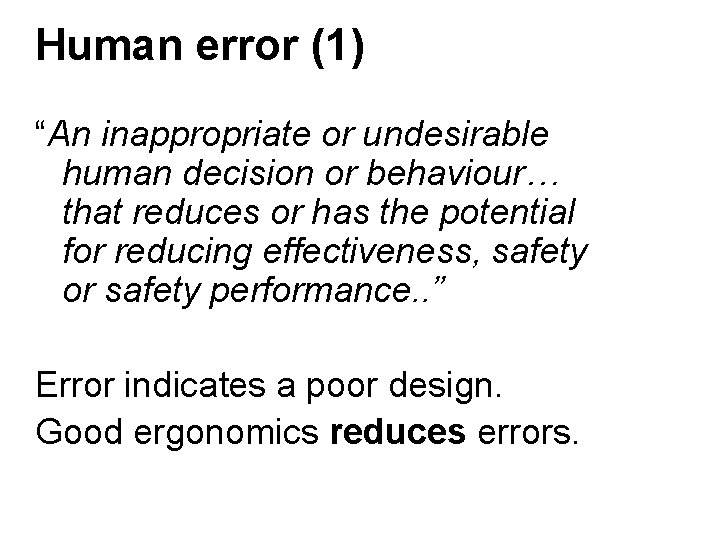
Human error (1) “An inappropriate or undesirable human decision or behaviour… that reduces or has the potential for reducing effectiveness, safety or safety performance. . ” Error indicates a poor design. Good ergonomics reduces errors.
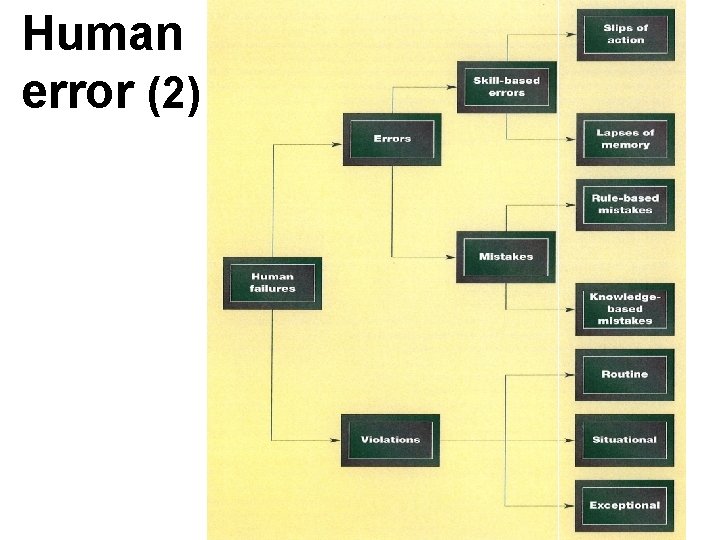
Human error (2)
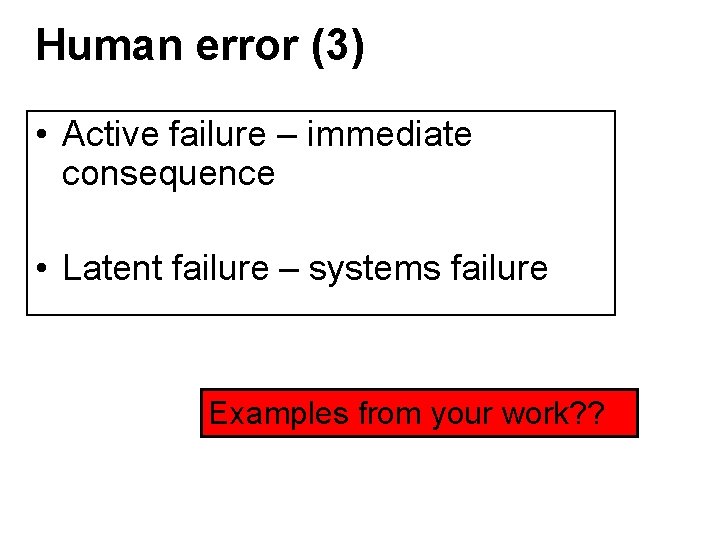
Human error (3) • Active failure – immediate consequence • Latent failure – systems failure Examples from your work? ?
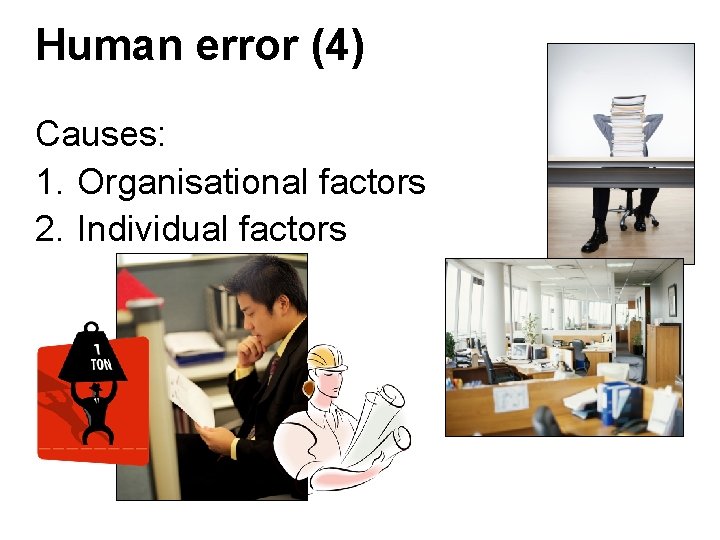
Human error (4) Causes: 1. Organisational factors 2. Individual factors
Human error (5) Reduce problems with errors by: 1. Improving the training 2. Improving workplace design, and detecting errors early (eg feedback to allow remedial actions) 3. Reducing impact of the error
Teamwork (1) Work team – Collection of individuals who work together to achieve a goal or complete a set of tasks • Self-managed • Integrated
Teamwork (2) Benefits? • Increase problem solving • Improved employee performance • Multiple perspectives • Increased output • Frees up managers
Teamwork (3) Limitations / drawbacks? • Unequal effort • Different levels of skill/ fitness • Slow achieving agreements – time wasting • Conflict • Competition
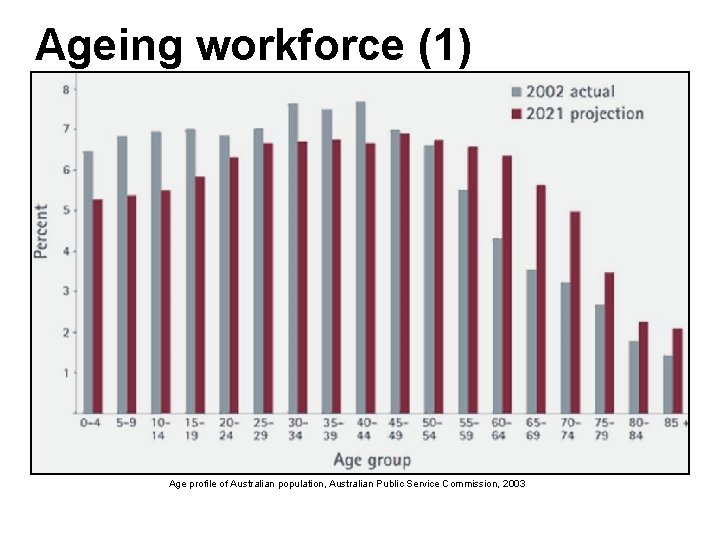
Ageing workforce (1) Age profile of Australian population, Australian Public Service Commission, 2003
Ageing workforce (2) True or false? ? 1. Older workers have more accidents. 2. Vision & hearing acuity decrease with age. 3. Older workers recuperate faster following injury / illness. 4. Older workers may be more at risk of sprains and strains.
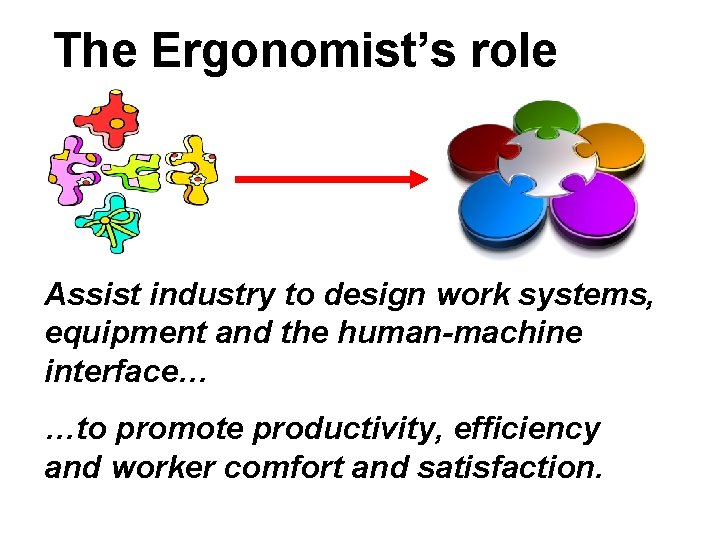
The Ergonomist’s role Assist industry to design work systems, equipment and the human-machine interface… …to promote productivity, efficiency and worker comfort and satisfaction.
Summary • Overview of Ergonomics – – – – Definition Scope Application Human capacities Human error Teamwork Ageing Role of the Ergonomist
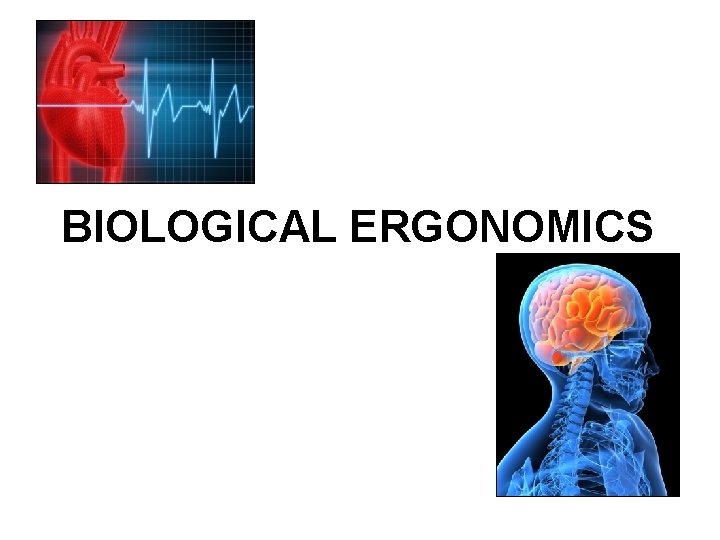
BIOLOGICAL ERGONOMICS
Body Systems & Functions • • • Framework Moving parts Energy conversion Movement control Feedback systems Decision making • Skeleton • Joints • Metabolism & physiology • Nervous system • Senses – vision, hearing, touch etc • Brain
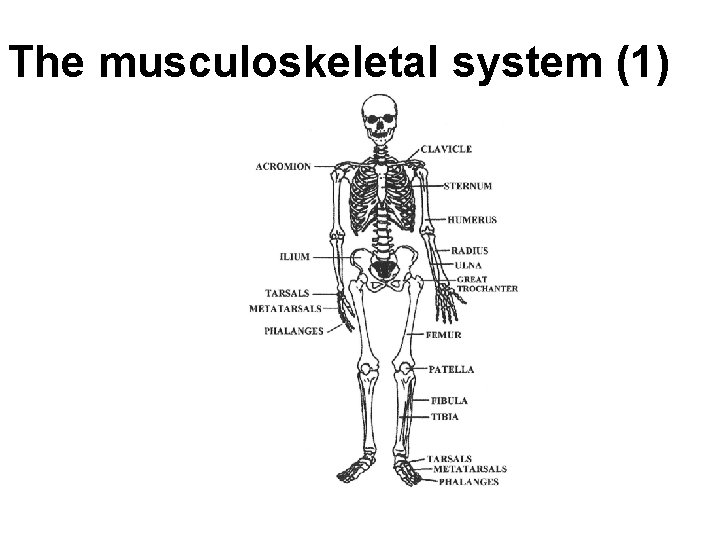
The musculoskeletal system (1)
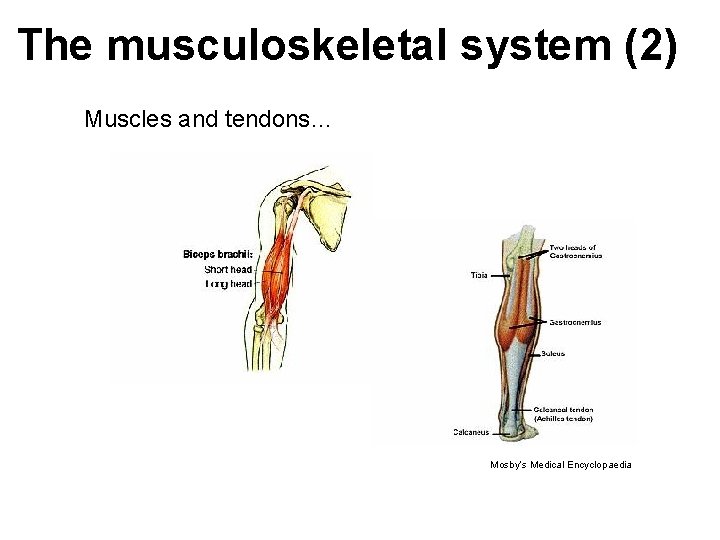
The musculoskeletal system (2) Muscles and tendons… Mosby’s Medical Encyclopaedia
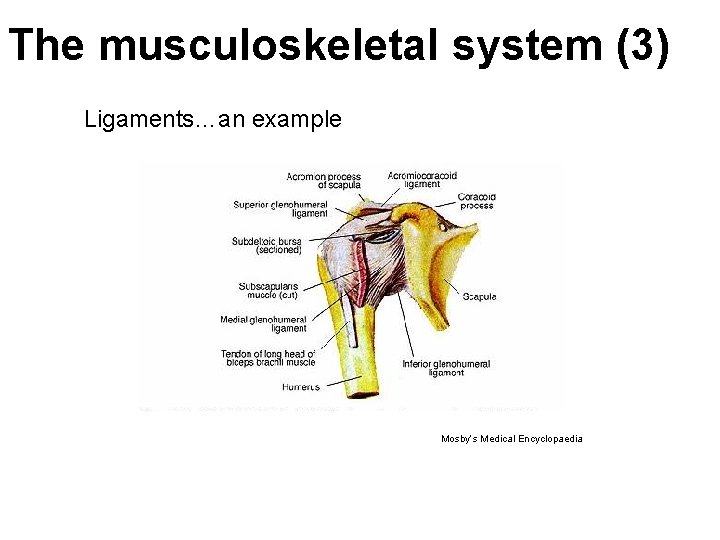
The musculoskeletal system (3) Ligaments…an example Mosby’s Medical Encyclopaedia
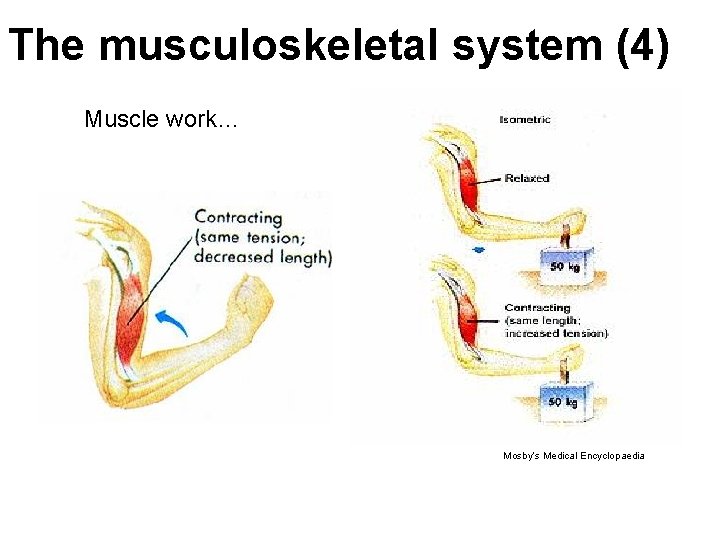
The musculoskeletal system (4) Muscle work… Mosby’s Medical Encyclopaedia
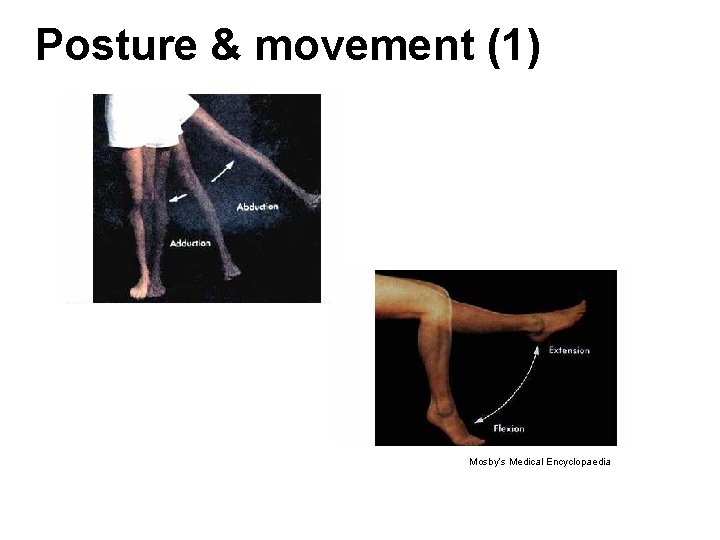
Posture & movement (1) Mosby’s Medical Encyclopaedia
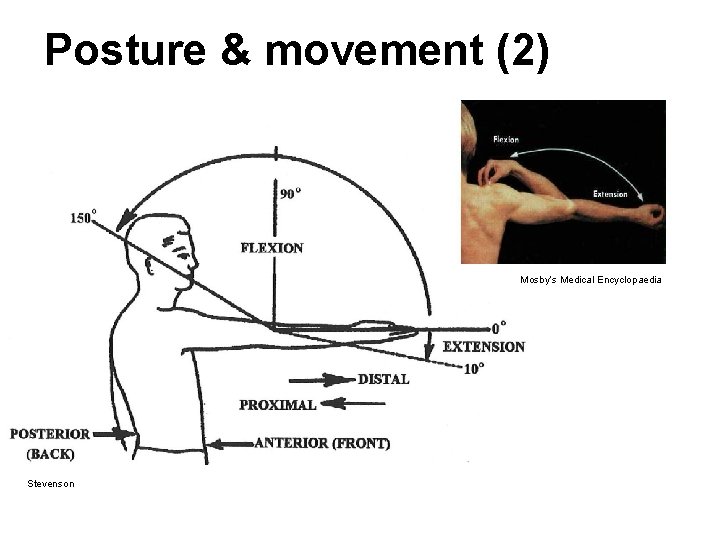
Posture & movement (2) Mosby’s Medical Encyclopaedia Stevenson
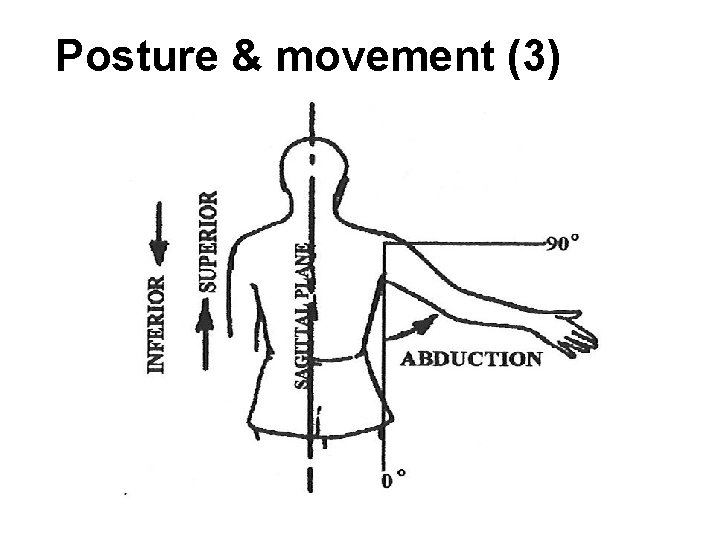
Posture & movement (3)
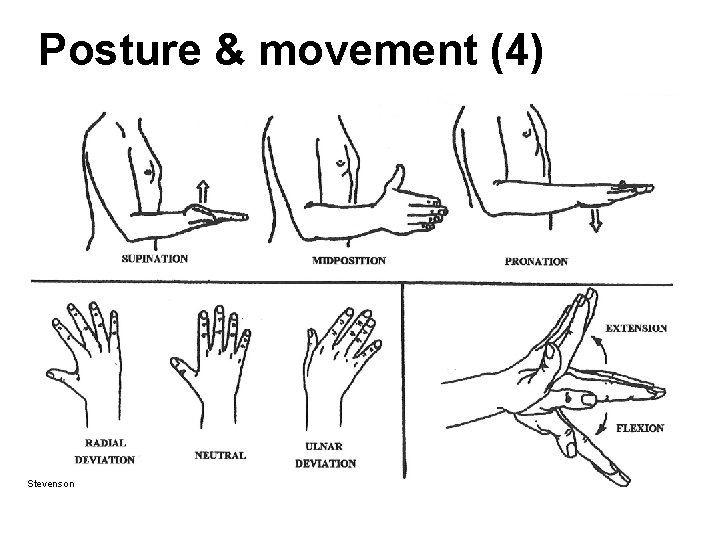
Posture & movement (4) Stevenson
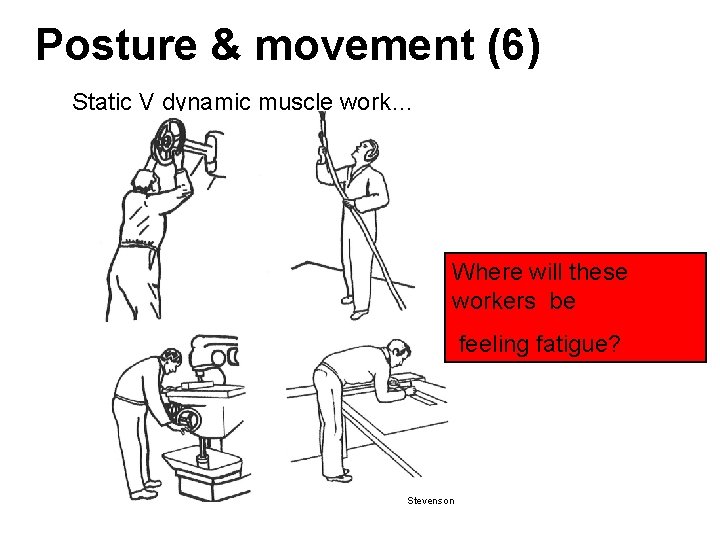
Posture & movement (5) Static V dynamic muscle work… Stevenson Where will these workers be feeling fatigue?
Posture & movement (6) Static V dynamic muscle work… Where will these workers be feeling fatigue? Stevenson
Biomechanics (1) The interaction of human movement and posture…. …. . levers and forces
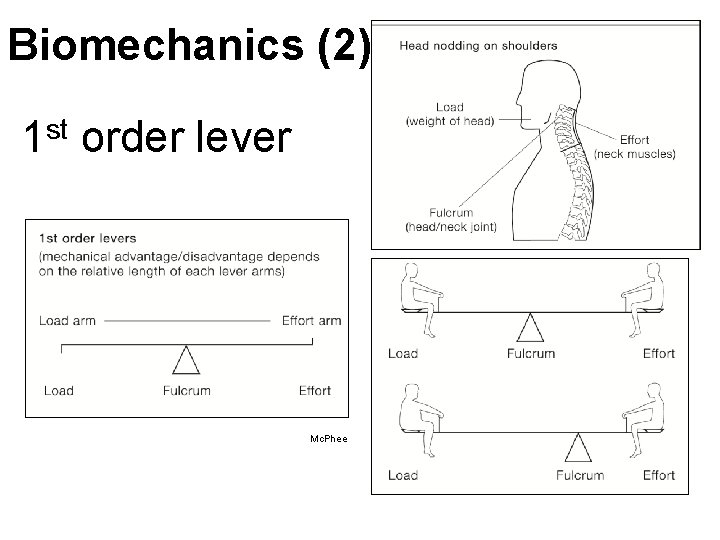
Biomechanics (2) st 1 order lever Mc. Phee
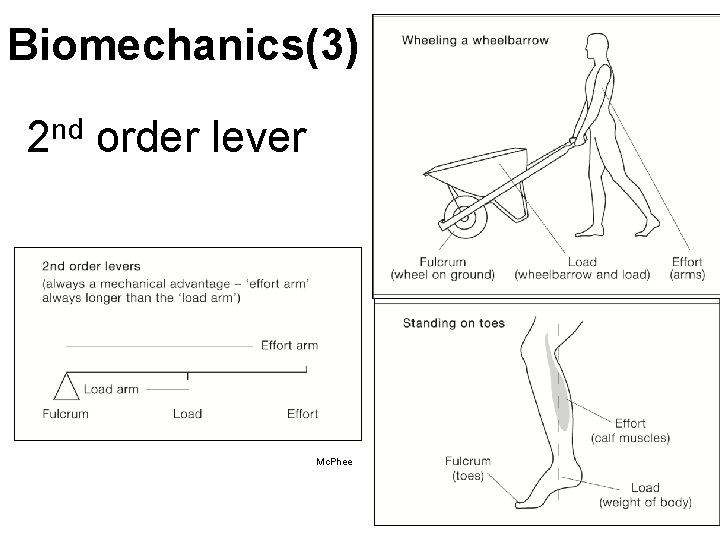
Biomechanics(3) nd 2 order lever Mc. Phee
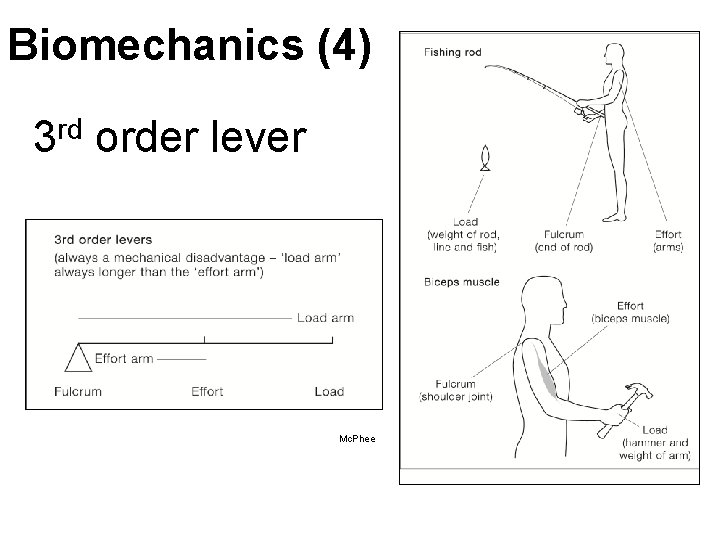
Biomechanics (4) rd 3 order lever Mc. Phee
Biomechanics & the Musculoskeletal system Key issues for work design? • Postures – eg arm, wrist, back? • Muscle action – static V dynamic? • Levers?
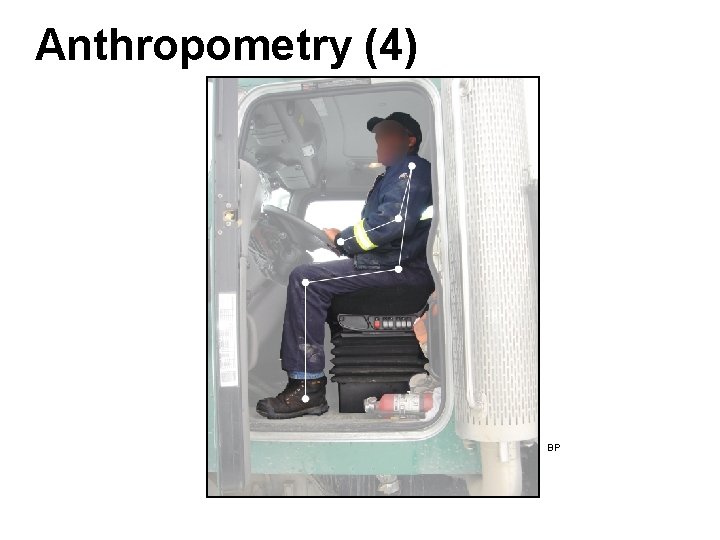
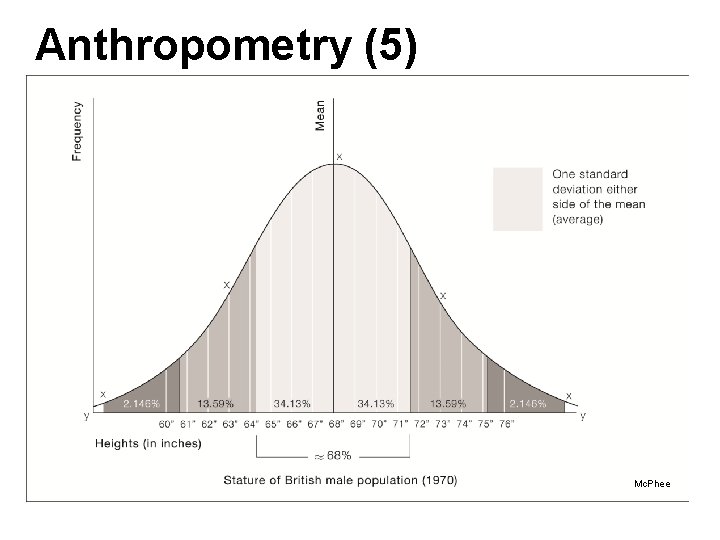
Anthropometry (1) Dimensions of the human body… applied to designs Includes: height, circumference, weight, range of movements Static & dynamic measurements
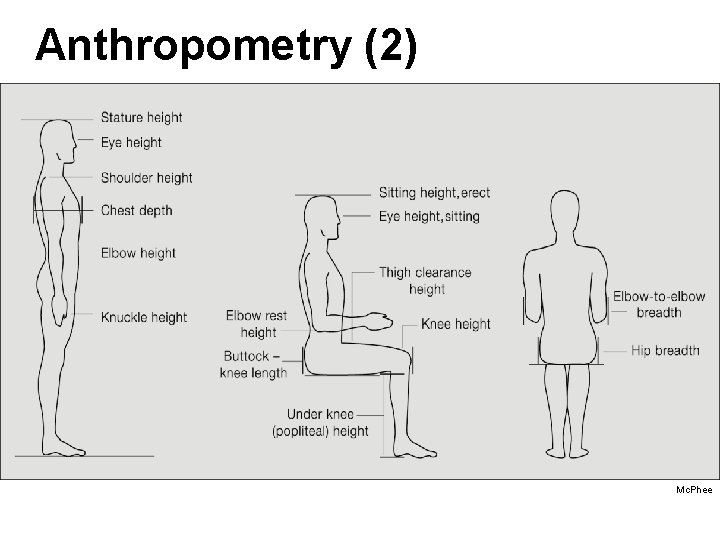
Anthropometry (2) Mc. Phee
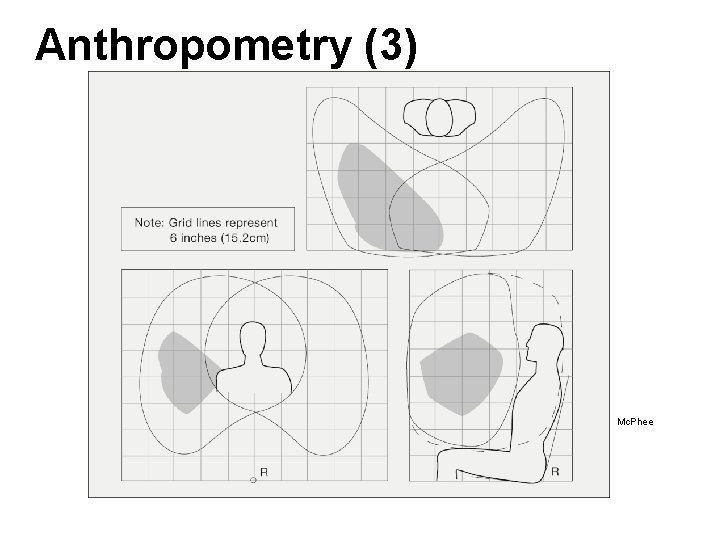
Anthropometry (3) Mc. Phee
Anthropometry (4) BP
Anthropometry (5) Mc. Phee
Anthropometry (6) Factors affecting body size? • Age • Sex • Ethnicity • Fitness & health • Occupation • Posture & body position
Work physiology (1) Human physical abilities also affected by: • Strength • Work capacity • Endurance • Fatigue
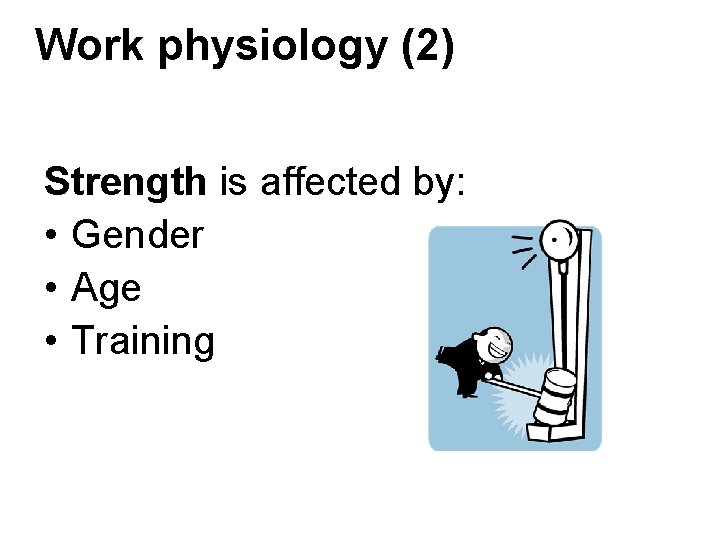
Work physiology (2) Strength is affected by: • Gender • Age • Training
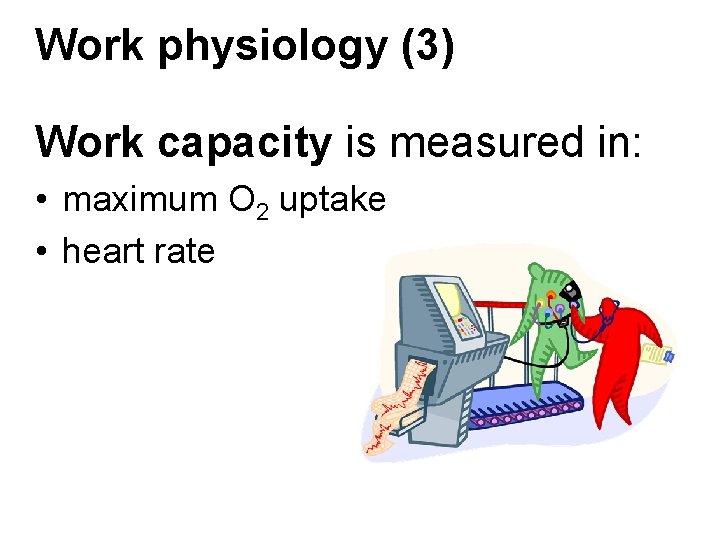
Work physiology (3) Work capacity is measured in: • maximum O 2 uptake • heart rate
Work physiology (4) Endurance & muscle efficiency is enhanced by: • • Eliminating unnecessary movements Using muscles according to their function Use of body weight & momentum & gravity Balance Vary movements & postures Postures that allow maximum torque No. of movements Provide practice
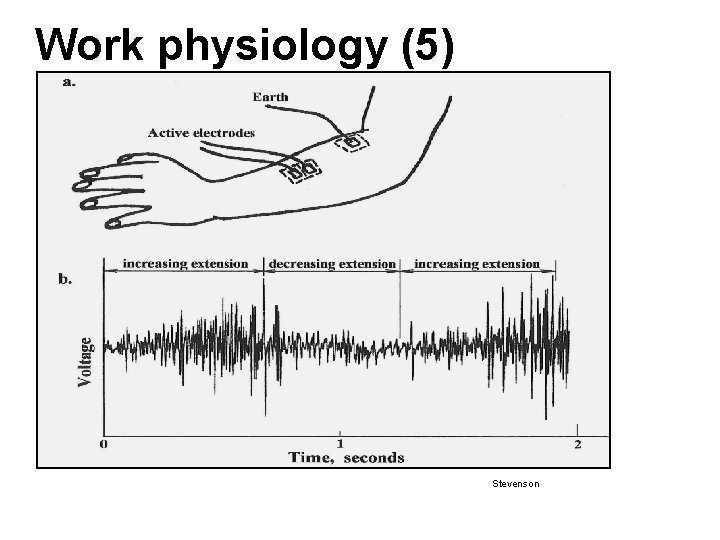
Work physiology (5) Stevenson
Work physiology (6) Fatigue from: • • Static muscle work Work at outer range of joint movement Use high forces Long duration
PSYCHOLOGY AT WORK
Issues to consider: • • • Perception Motivation Memory Risk perception Work stress Work organisation
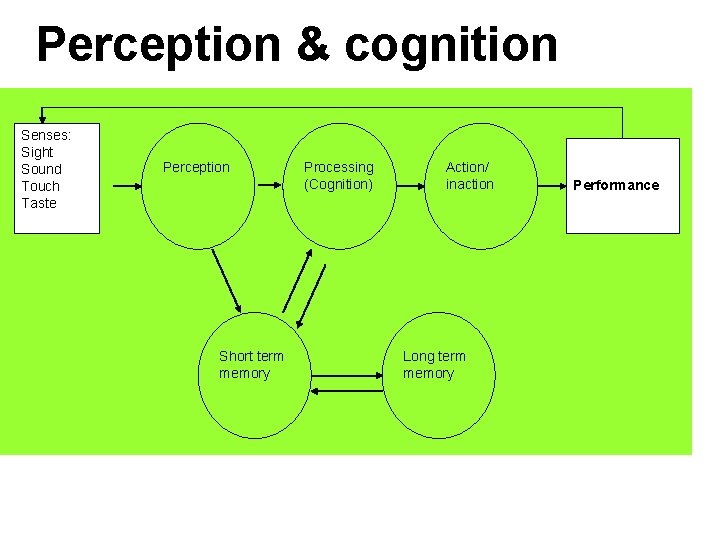
Perception & cognition Senses: Sight Sound Touch Taste Perception Short term memory Processing (Cognition) Action/ inaction Long term memory Performance
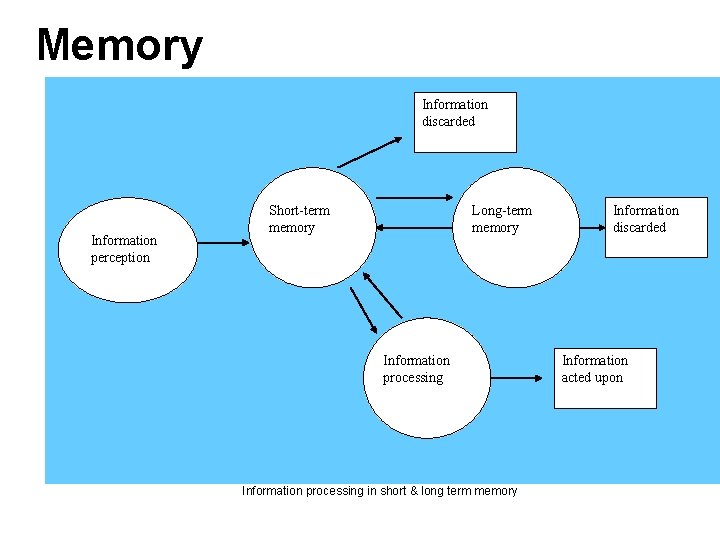
Memory Information discarded Information perception Short-term memory Long-term memory Information processing in short & long term memory Information discarded Information acted upon
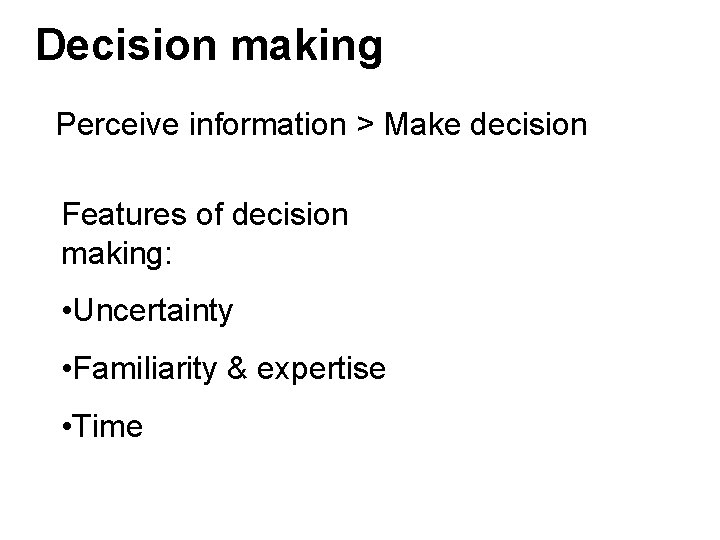
Decision making Perceive information > Make decision Features of decision making: • Uncertainty • Familiarity & expertise • Time
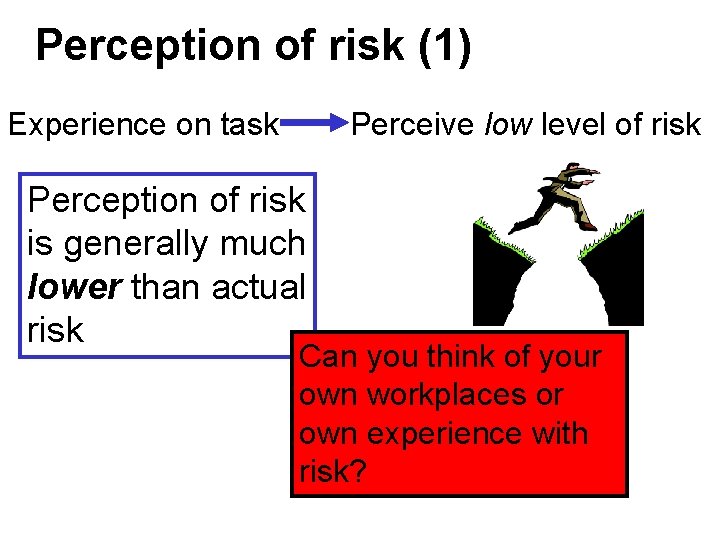
Perception of risk (1) Experience on task Perceive low level of risk Perception of risk is generally much lower than actual risk Can you think of your own workplaces or own experience with risk?
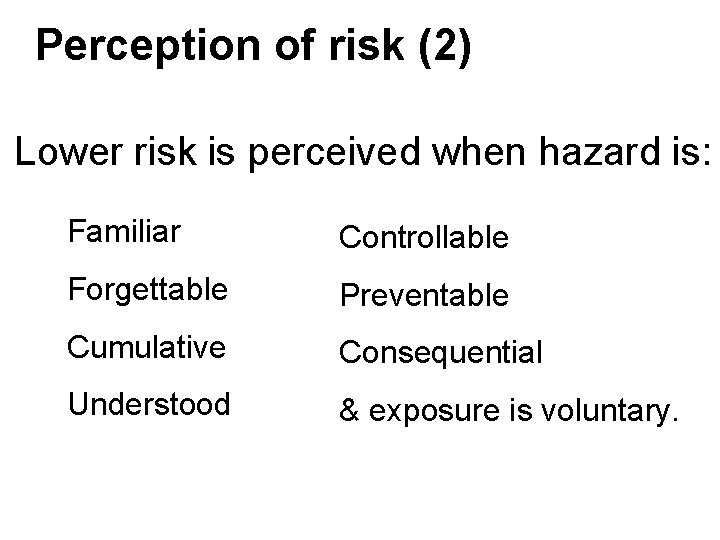
Perception of risk (2) Lower risk is perceived when hazard is: Familiar Controllable Forgettable Preventable Cumulative Consequential Understood & exposure is voluntary.
Perception of risk (3) Risk compensation: People adjust behaviours to compensate for changes in perceived risk. The lower risk perception, the more and greater the risks that will be taken….
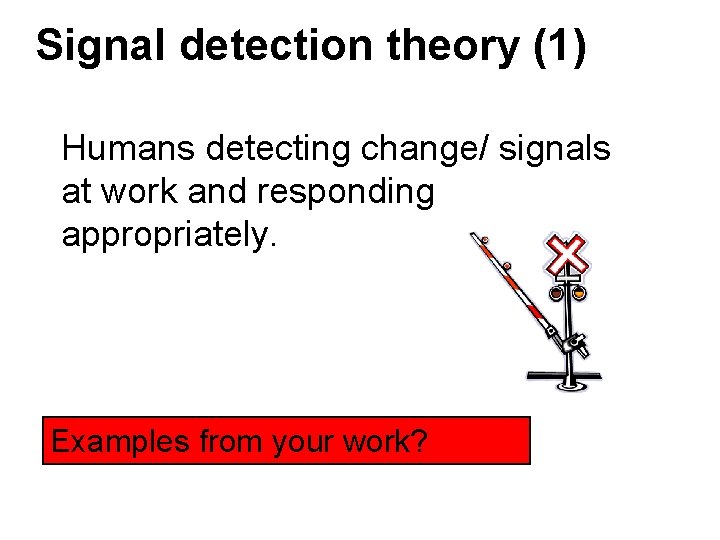
Signal detection theory (1) Humans detecting change/ signals at work and responding appropriately. Examples from your work?
Signal detection theory (2)
Signal detection theory (3) How can workplaces improve correct responses & reduce errors? • Reducing noise • Reducing distractors • Reducing extraneous information • Increasing the strength of the signal • Presenting information clearly & simply
Vigilance (1) Monitoring equipment or processes at work Examples: • Free response • Inspection task • Successive task • Simultaneous • Sensory • Cognitive
Vigilance (2) Methods to enhance vigilance performance: • Mix of signals – eg visual & auditory • Ensure signal stands out • Make signal dynamic • Provide 2 operators for monitoring • Provide 10 mins rest or other activity per 30 mins of monitoring • Install artificial signals that require response
Vigilance (3) Methods to enhance vigilance performance (contd. ): • Refresher training • Vary stimulation inversely to task stimulation • Avoid over or underload • Require operator to report all signals, even those signals in doubt
Motivation & behaviour (1) Workplace motivation – Individual’s intention or willingness to perform a task Extrinsic V intrinsic ……. . wide variation in ‘rewards’ What ‘rewards’ have & have NOT worked in your workplace? Why?
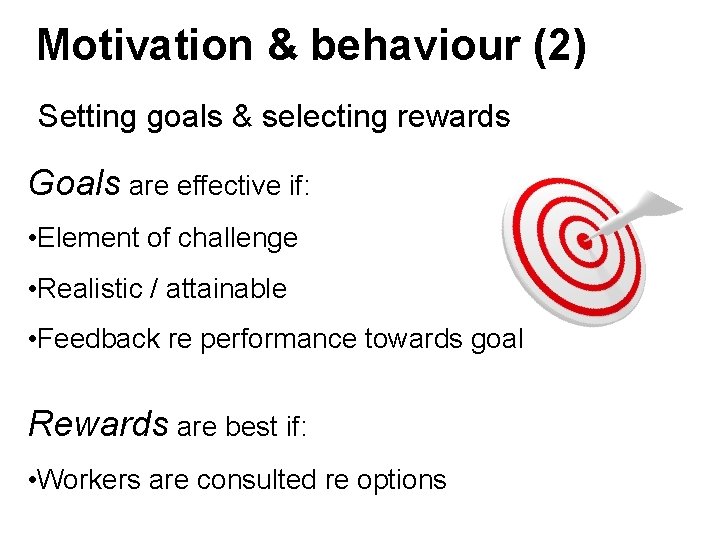
Motivation & behaviour (2) Setting goals & selecting rewards Goals are effective if: • Element of challenge • Realistic / attainable • Feedback re performance towards goal Rewards are best if: • Workers are consulted re options
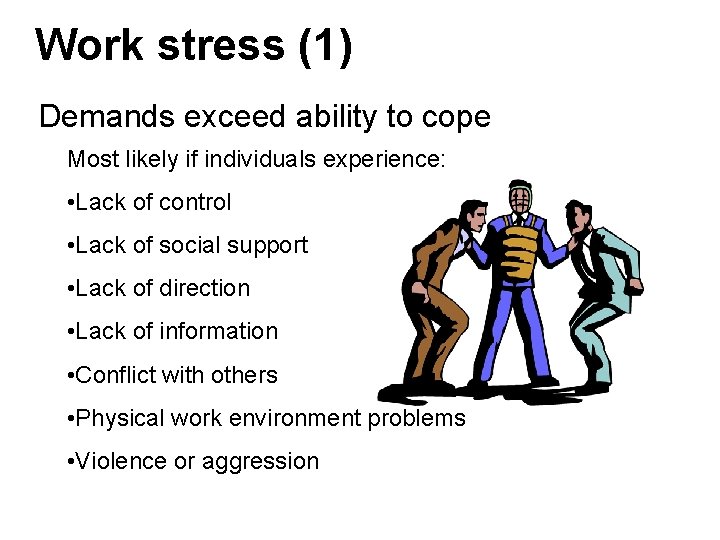
Work stress (1) Demands exceed ability to cope Most likely if individuals experience: • Lack of control • Lack of social support • Lack of direction • Lack of information • Conflict with others • Physical work environment problems • Violence or aggression
Work stress (2) Signs of stress… Psych: Physical: • Anxiety • Increased blood pressure • Depression • Aggression • Confusion • Increased heart rate • Muscle tension • Headaches Behavioural: • Smoking • Alcohol abuse • Drug abuse • Absenteeism • Poor performance
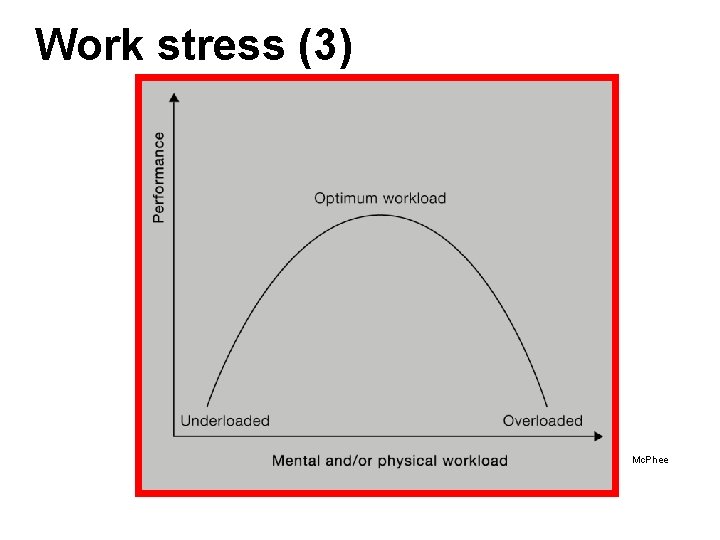
Work stress (3) Mc. Phee
Work stress (4) How should organisations manage stress at work? What’s it got to do with ergonomics?
Work organisation (1) Workplace culture and way the workplace functions • • • management style organisation of work groups industry norms & history work hierarchy work hours etc
Work organisation (2) Work shifts Flexible V Shiftwork V Extended hours
Work organisation (3) Managing shiftwork: • Reduce consecutive night shifts – eg max. 3 x 8 hr/wk or 2 x 12 hr/wk • Rapidly rotate rosters – eg each 2 -3 days • Forward rotations – day>afternoon>night • Compressed weeks • Personal coping strategies
Rest & work breaks (1) Work pauses Spontaneous & often unplanned breaks in a task Examples from your work?
Rest & work breaks (2) Work breaks Definition: meal breaks and other breaks where people can take time to recover from a task How long to break? How often? Examples from your work?
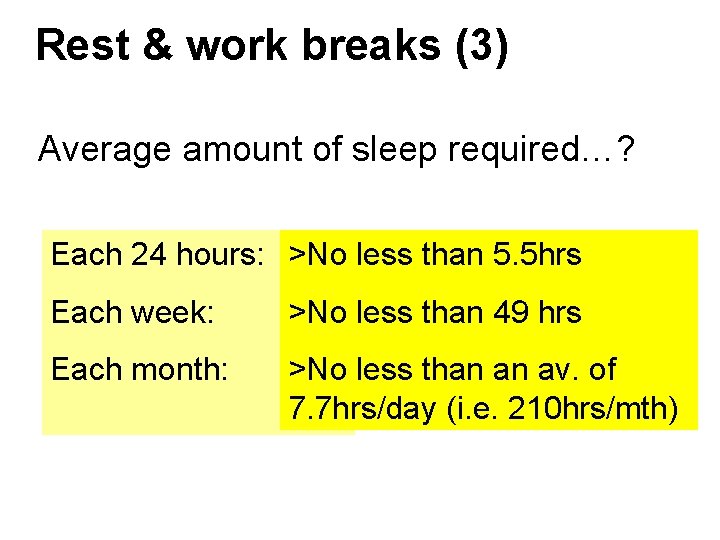
Rest & work breaks (3) Average amount of sleep required…? Each 24 hours: >No less than 5. 5 hrs Each week: >No less than 49 hrs Each month: >No less than an av. of 7. 7 hrs/day (i. e. 210 hrs/mth)
DEVELOPING AN ERGONOMICS STRATEGY
Issues to consider • • Workplace culture Types of teams used in workplace Ergonomics at the design phase Competence of Ergonomics advice
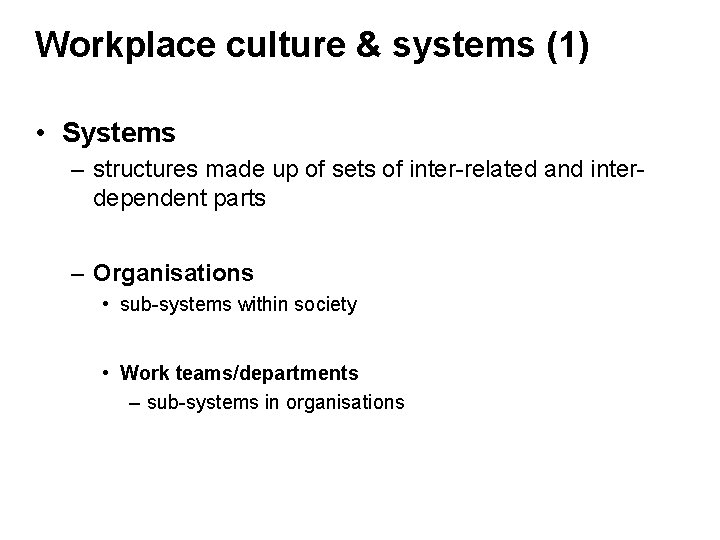
Workplace culture & systems (1) • Systems – structures made up of sets of inter-related and interdependent parts – Organisations • sub-systems within society • Work teams/departments – sub-systems in organisations
Workplace culture & systems (2) Managing change Has your team/organisation undergone major change? What factors hindered peoples’ acceptance? What factors helped the process and made it work?
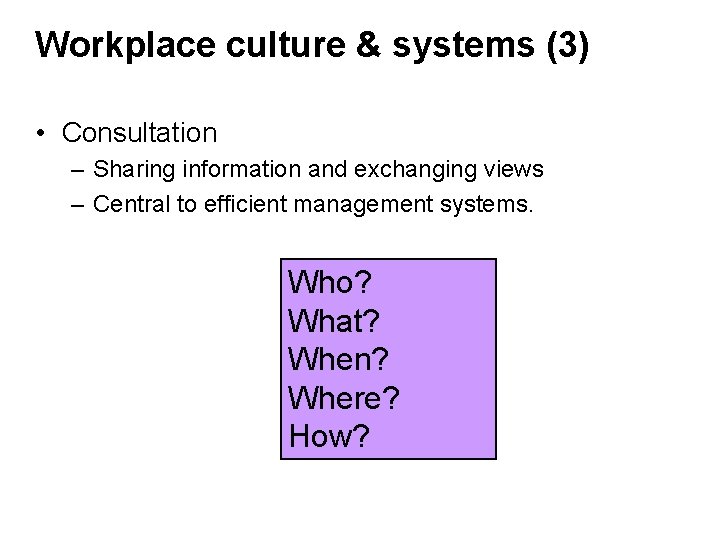
Workplace culture & systems (3) • Consultation – Sharing information and exchanging views – Central to efficient management systems. Who? What? When? Where? How?
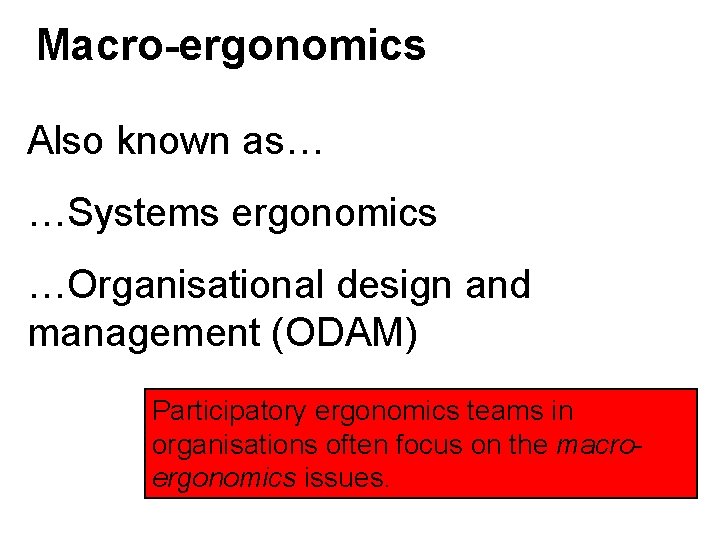
Macro-ergonomics Also known as… …Systems ergonomics …Organisational design and management (ODAM) Participatory ergonomics teams in organisations often focus on the macroergonomics issues.
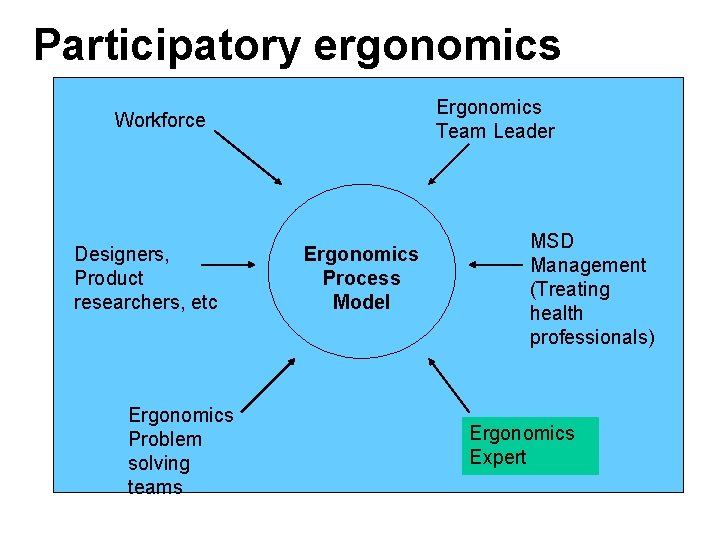
Participatory ergonomics Ergonomics Team Leader Workforce Designers, Product researchers, etc Ergonomics Problem solving teams Ergonomics Process Model MSD Management (Treating health professionals) Ergonomics Expert
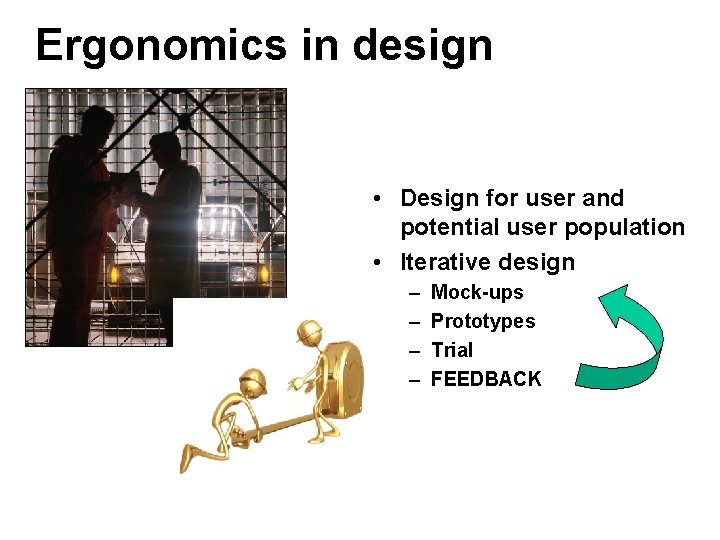
Ergonomics in design • Design for user and potential user population • Iterative design – – Mock-ups Prototypes Trial FEEDBACK
Ergonomics in design How do we reduce design errors? What designs have you been involved with that worked well? What steps did you take to achieve success?
Professional Ergonomists …“facilitates practical application of ergonomics in industry and other areas Encourages scientific research by qualified persons in the field of study and practice…”
IEA Technical committees include: Aerospace Gender & work Process control Ageing Healthcare Psychophysiology Anthropometry Human reliability Quality management Auditory ergonomics Musculoskeletal disorders Safety Building & construction O. D. A. M Slips, trips & falls Children Primary industry Computers
IEA provides: • Criteria for assessing and endorsing certifying bodies & programs • List of competencies for Ergonomists e. g. ‘Certified Professional Ergonomist’ (CPE) & similar titles
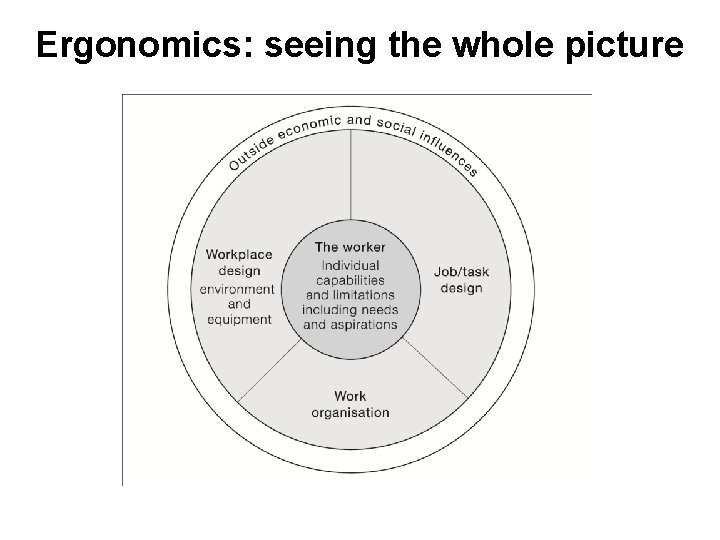
Ergonomics: seeing the whole picture