Work Environment Physics Ph D Katarzyna Jach Katarzyna

- Slides: 67
Work Environment Physics Ph. D Katarzyna Jach Katarzyna. jach@pwr. edu. pl http: //ksz. pwr. edu. pl/ office hours: B 1 building r. 415 c 1
Grading requirements l Passing the final test (two last lecture 13. 06 and 19. 06) l Alternative: grading by activity 2
Work Environment Physics = Ergonomics 3
Work Environment Physics = Ergonomics l Ergonomic design l Work environment factors l Microclimate l Noise l Lighting l Ergonomic workload l Accessibility, usability …. 4
Outline l Work Environment Physics – what is this? l History l Ergonomic design 5
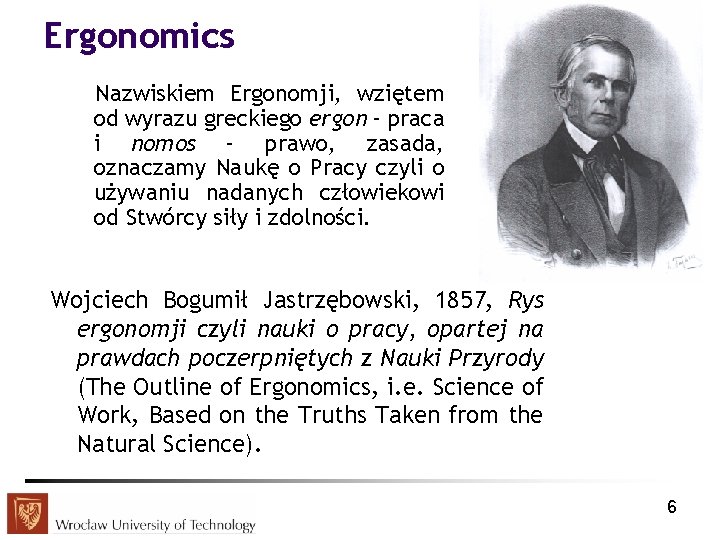
Ergonomics Nazwiskiem Ergonomji, wziętem od wyrazu greckiego ergon – praca i nomos – prawo, zasada, oznaczamy Naukę o Pracy czyli o używaniu nadanych człowiekowi od Stwórcy siły i zdolności. Wojciech Bogumił Jastrzębowski, 1857, Rys ergonomji czyli nauki o pracy, opartej na prawdach poczerpniętych z Nauki Przyrody (The Outline of Ergonomics, i. e. Science of Work, Based on the Truths Taken from the Natural Science). 6
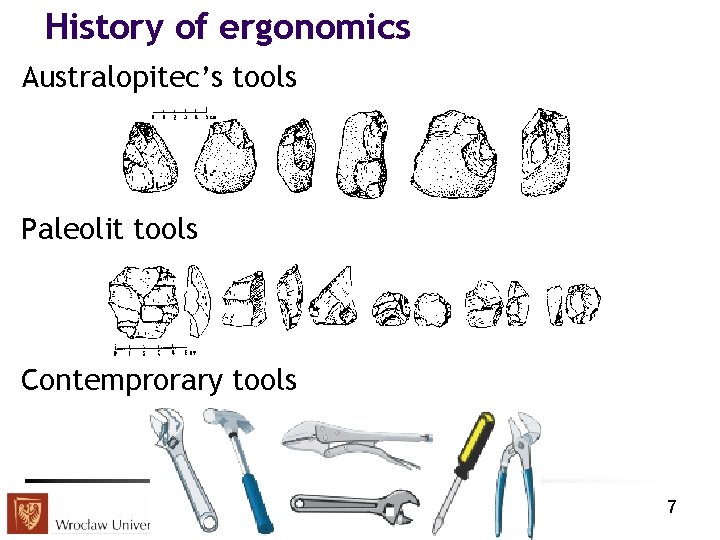
History of ergonomics Australopitec’s tools Paleolit tools Contemprorary tools 7
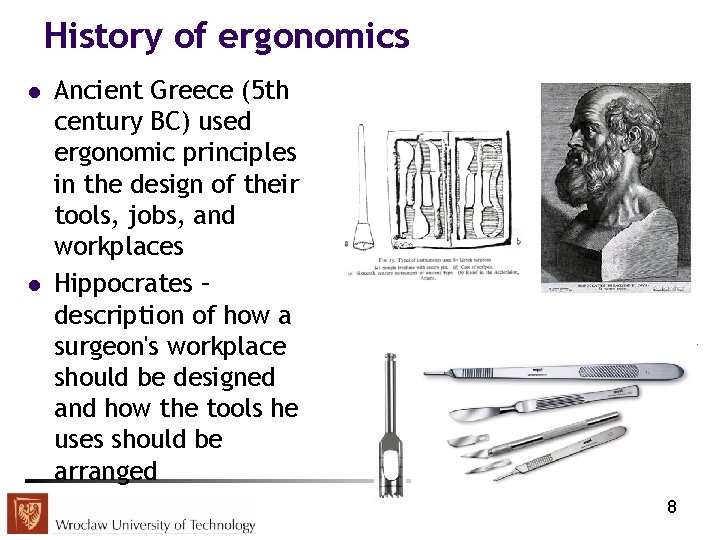
History of ergonomics l l Ancient Greece (5 th century BC) used ergonomic principles in the design of their tools, jobs, and workplaces Hippocrates – description of how a surgeon's workplace should be designed and how the tools he uses should be arranged 8
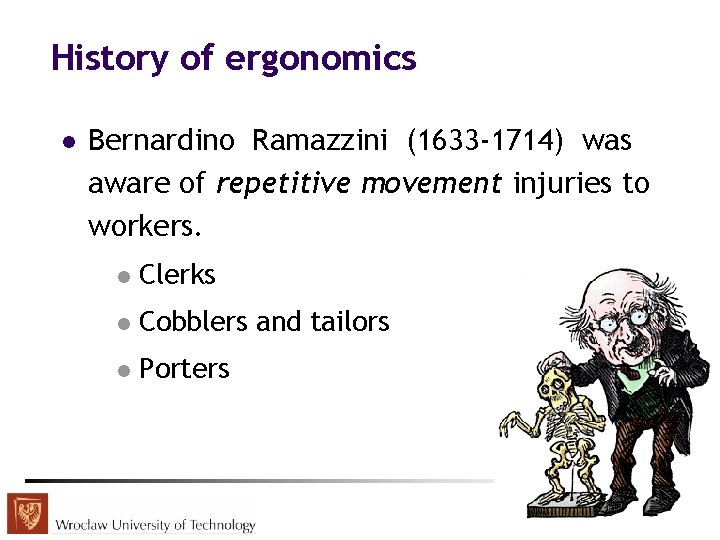
History of ergonomics l Bernardino Ramazzini (1633 -1714) was aware of repetitive movement injuries to workers. l Clerks l Cobblers and tailors l Porters
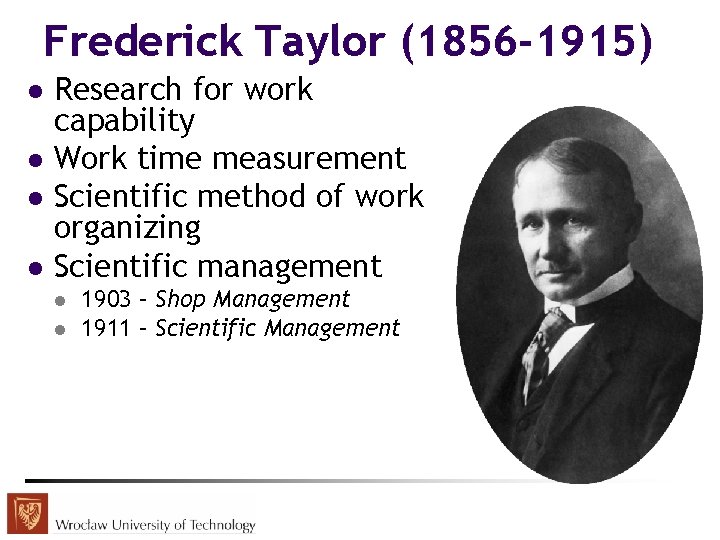
Frederick Taylor (1856 -1915) l l Research for work capability Work time measurement Scientific method of work organizing Scientific management l l 1903 – Shop Management 1911 – Scientific Management
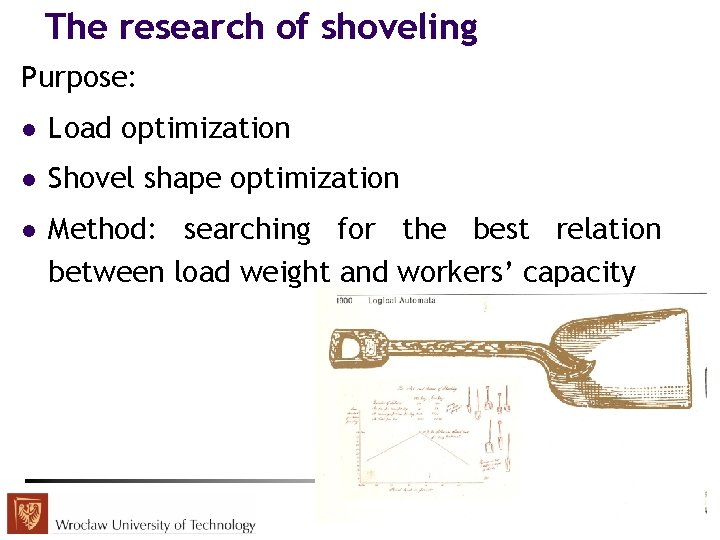
The research of shoveling Purpose: l Load optimization l Shovel shape optimization l Method: searching for the best relation between load weight and workers’ capacity 11
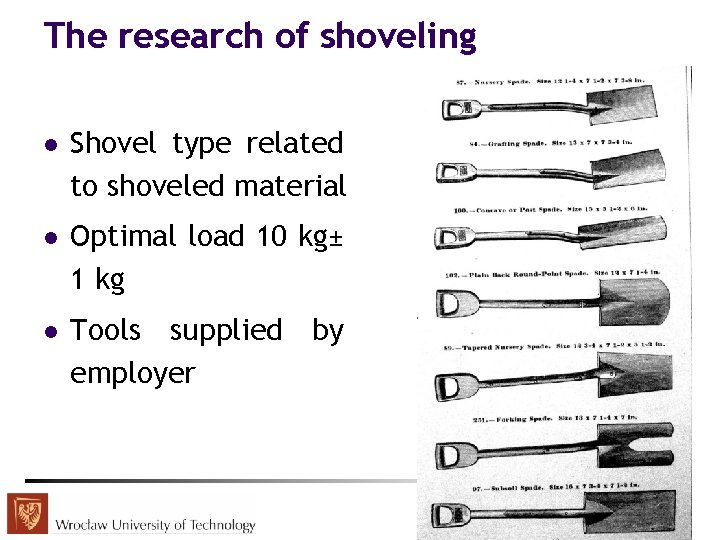
The research of shoveling l Shovel type related to shoveled material l Optimal load 10 kg± 1 kg l Tools supplied by employer
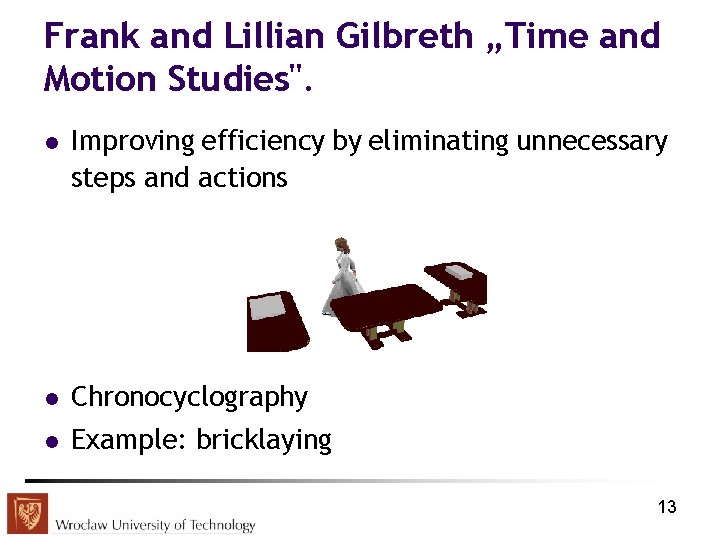
Frank and Lillian Gilbreth „Time and Motion Studies". l Improving efficiency by eliminating unnecessary steps and actions l Chronocyclography l Example: bricklaying 13
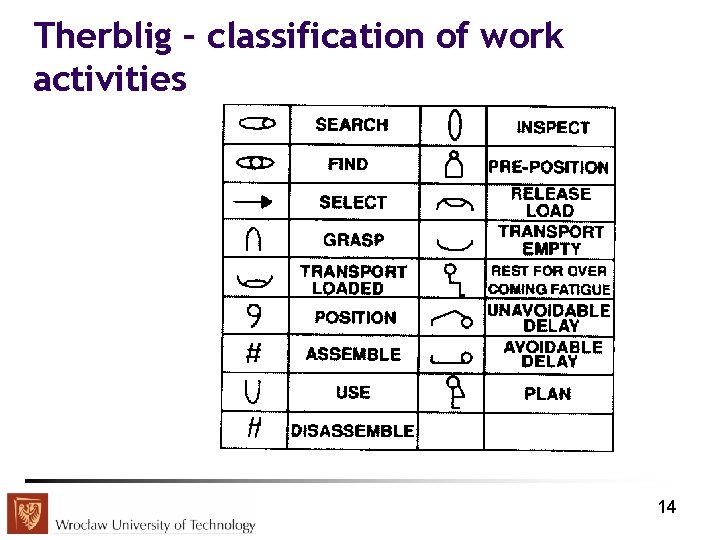
Therblig – classification of work activities 14
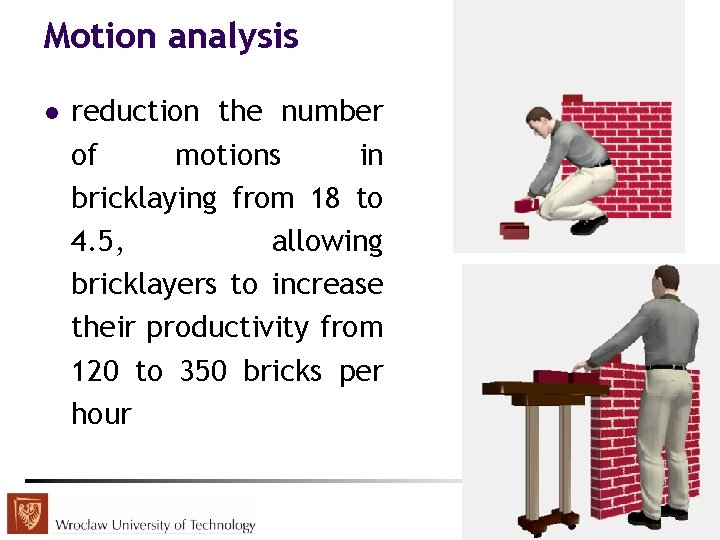
Motion analysis l reduction the number of motions in bricklaying from 18 to 4. 5, allowing bricklayers to increase their productivity from 120 to 350 bricks per hour 15
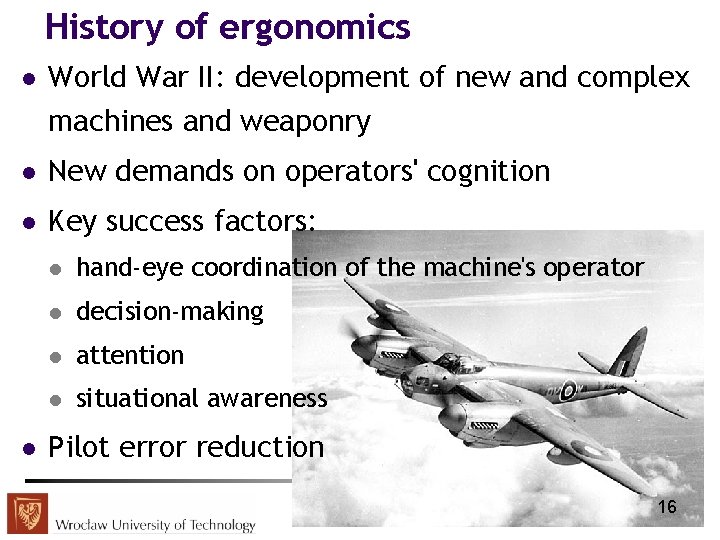
History of ergonomics l World War II: development of new and complex machines and weaponry l New demands on operators' cognition l Key success factors: l l hand-eye coordination of the machine's operator l decision-making l attention l situational awareness Pilot error reduction 16
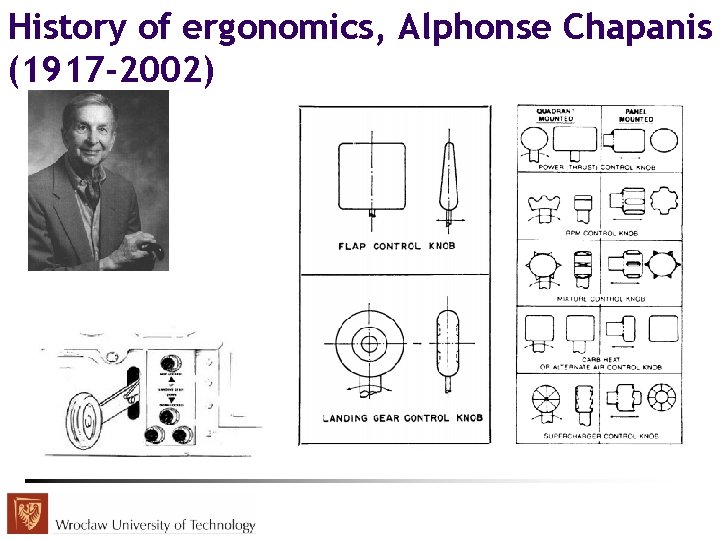
History of ergonomics, Alphonse Chapanis (1917 -2002)
History of ergonomics l Systematic investigations of toleration limits of physical, mental and environment overload l Rational principles of device design l International organisations: l 1949 – Ergonomic Society (Great Britain) l 1977 – Polish Ergonomic Towarzystwo Ergonomiczne Society - Polskie (PTErg) 18
Ergonomics Science about relation between human beings and their work environment. /Kenneth Frank Hywel Murrell 1949/ 19
Ergonomics l Ergonomics is the science of designing the workplace environment to fit the user 20
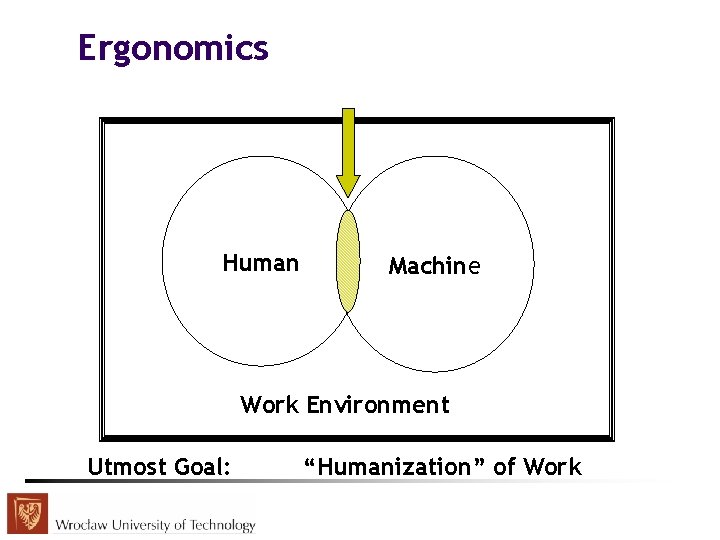
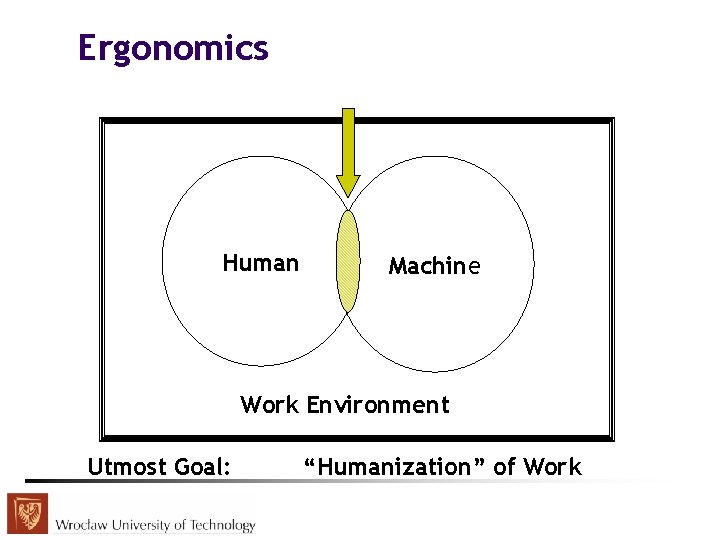
Ergonomics Human Machine Work Environment Utmost Goal: “Humanization” of Work
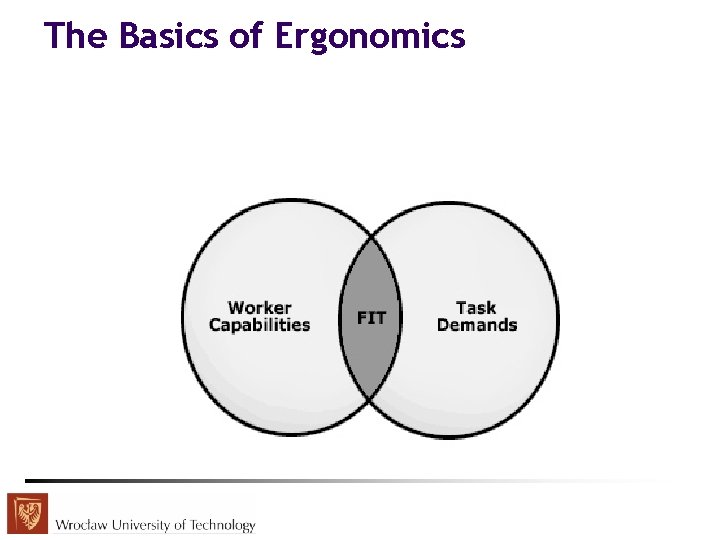
The Basics of Ergonomics
Ergon – work Nomos – law Ergonomics = laws of work Science of fitting workplace conditions and job demands to the capabilities of the working population 23
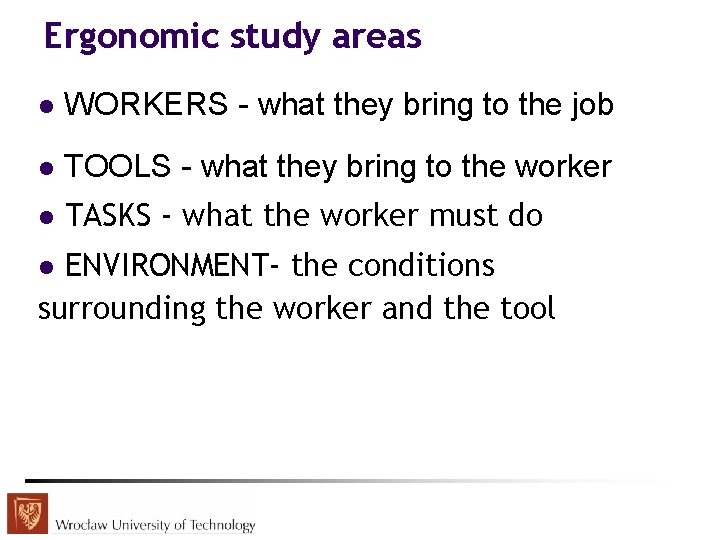
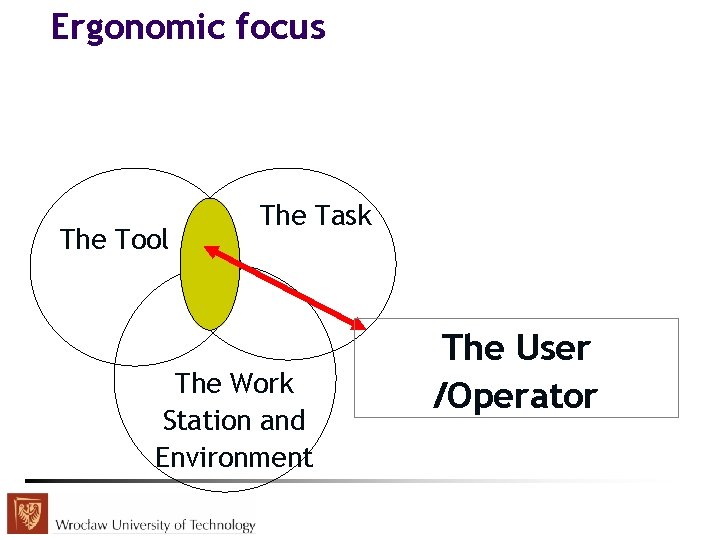
Ergonomic study areas l WORKERS - what they bring to the job l TOOLS - what they bring to the worker l TASKS - what the worker must do ENVIRONMENT- the conditions surrounding the worker and the tool l
Ergonomic focus The Tool The Task The Work Station and Environment The User /Operator
Ergonomics is the science of improving employee performance and well-being in relation to the l l job tasks l equipment, l the environment. Ergonomics is a continuous improvement effort to design the workplace for what people do well, and design against what people don’t do well. l 26
Ergonomics (or human factors) is the scientific discipline concerned with the understanding of interactions among humans and other elements of a system, and the profession that applies theory, principles, data and methods to design in order to optimize human wellbeing and overall system performance. /IEA - International Ergonomics Association (2000)/ 27
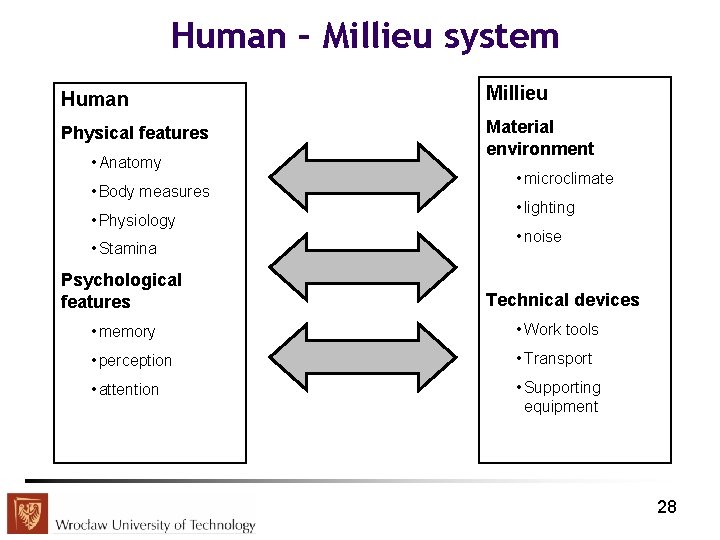
Human – Millieu system Human Millieu Physical features Material environment • Anatomy • Body measures • Physiology • Stamina Psychological features • microclimate • lighting • noise Technical devices • memory • Work tools • perception • Transport • attention • Supporting equipment 28
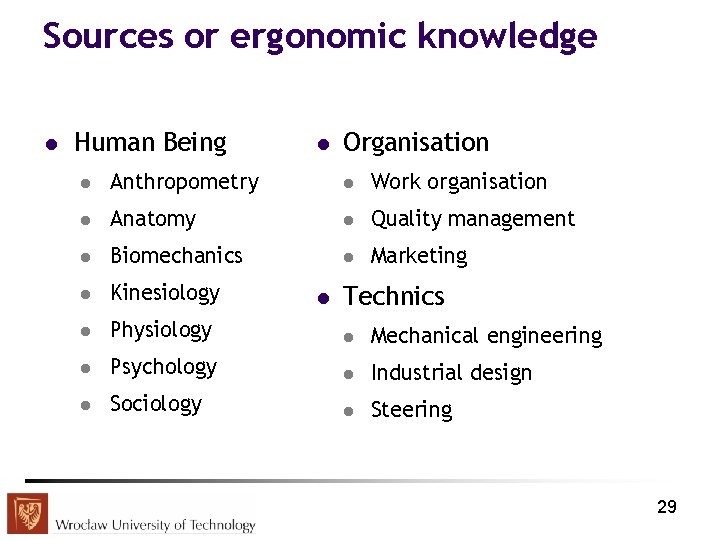
Sources or ergonomic knowledge l Human Being l Organisation l Anthropometry l Work organisation l Anatomy l Quality management l Biomechanics l Marketing l Kinesiology l Physiology l Mechanical engineering l Psychology l Industrial design l Sociology l Steering l Technics 29
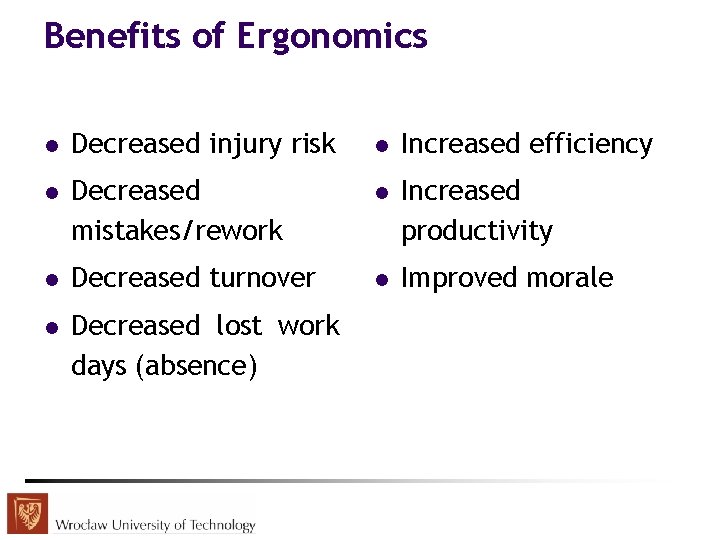
Benefits of Ergonomics l Decreased injury risk l Increased efficiency l Decreased mistakes/rework l Increased productivity l Decreased turnover l Improved morale l Decreased lost work days (absence)
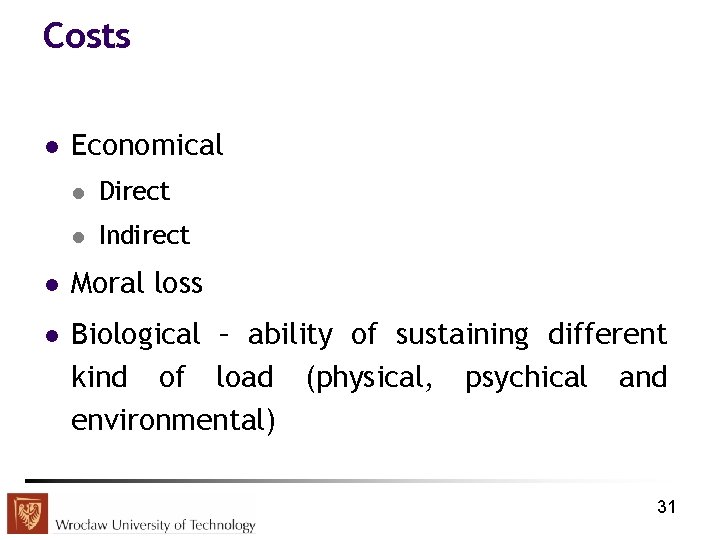
Costs l Economical l Direct l Indirect l Moral loss l Biological – ability of sustaining different kind of load (physical, psychical and environmental) 31
35
36
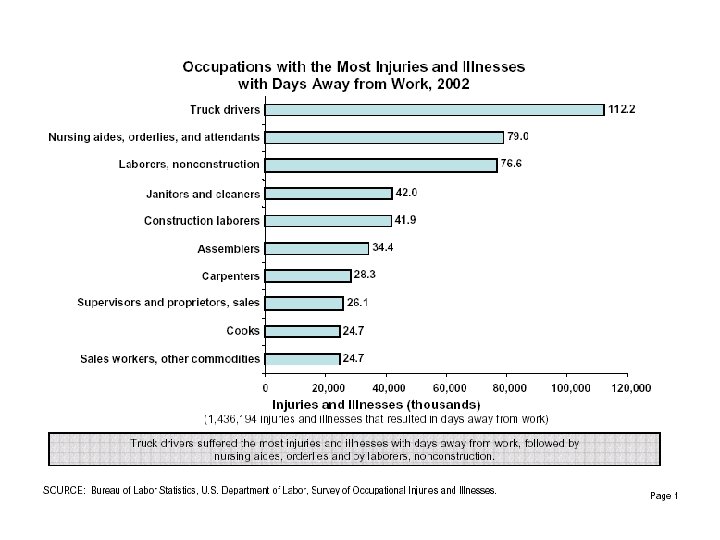
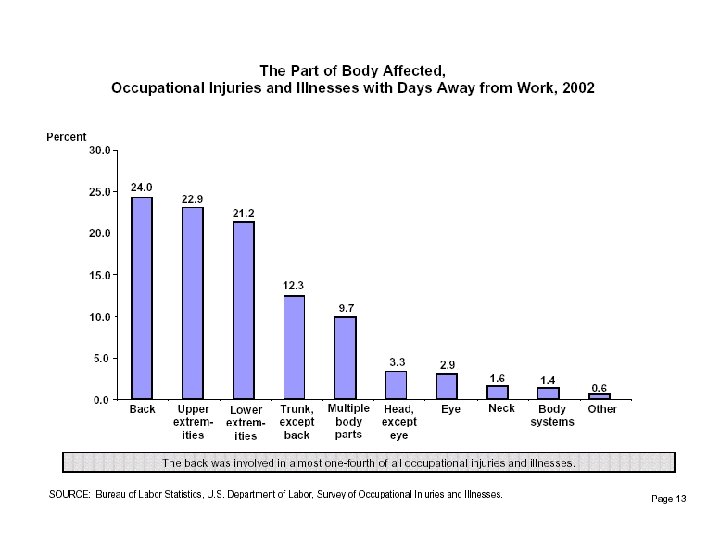
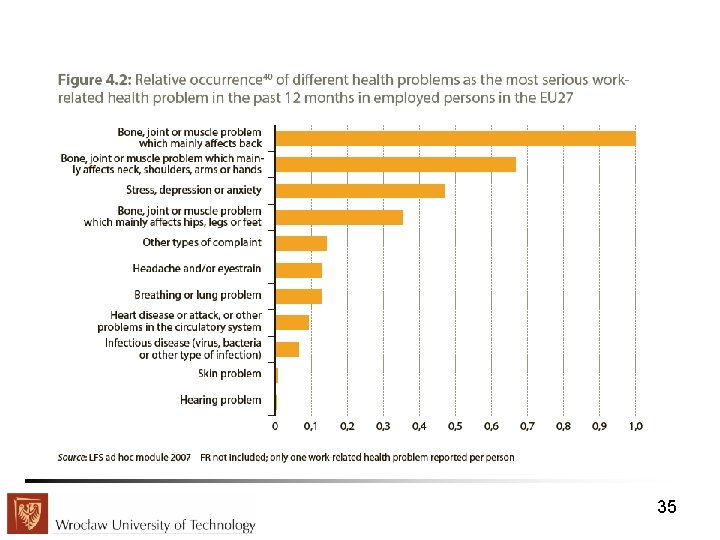
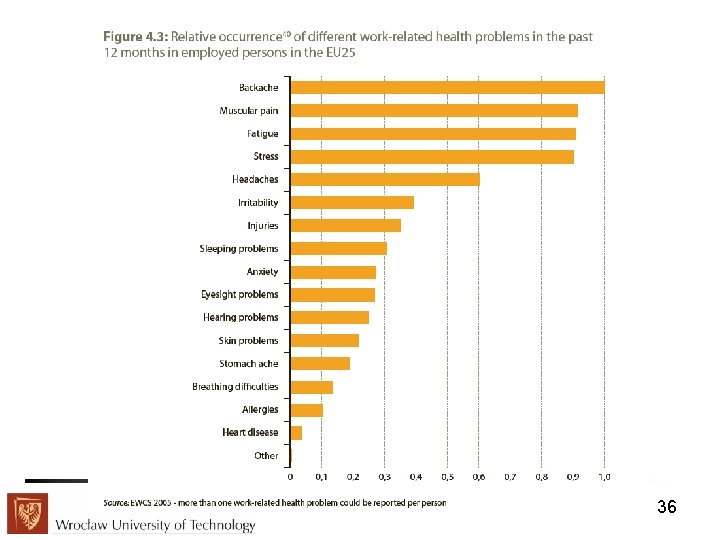
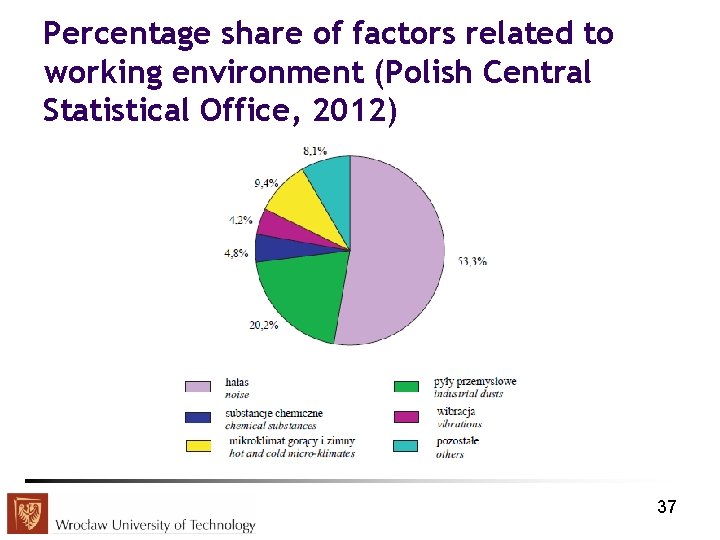
Percentage share of factors related to working environment (Polish Central Statistical Office, 2012) 37
Ergonomics Human Machine Work Environment Utmost Goal: “Humanization” of Work
Ergonomics is the science of improving employee performance and well-being in relation to the l l job tasks l equipment, l the environment. Ergonomics is a continuous improvement effort to design the workplace for what people do well, and design against what people don’t do well. l 39
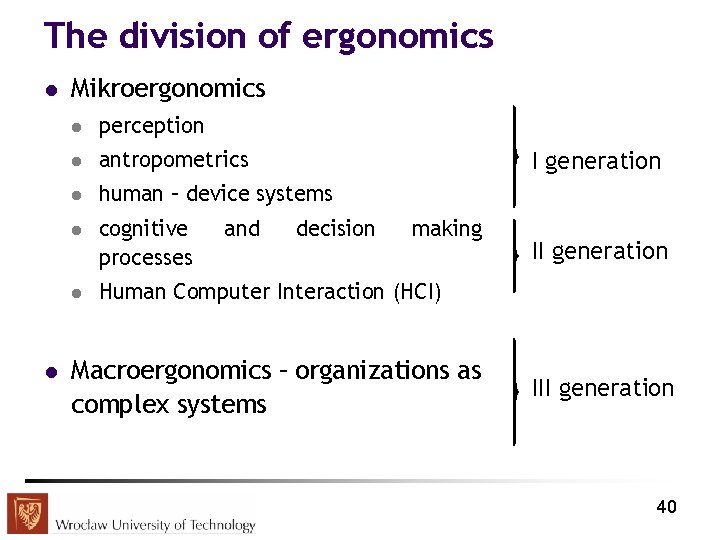
The division of ergonomics l l Mikroergonomics l perception l antropometrics l human – device systems l cognitive processes l Human Computer Interaction (HCI) and I generation decision making Macroergonomics – organizations as complex systems II generation III generation 40
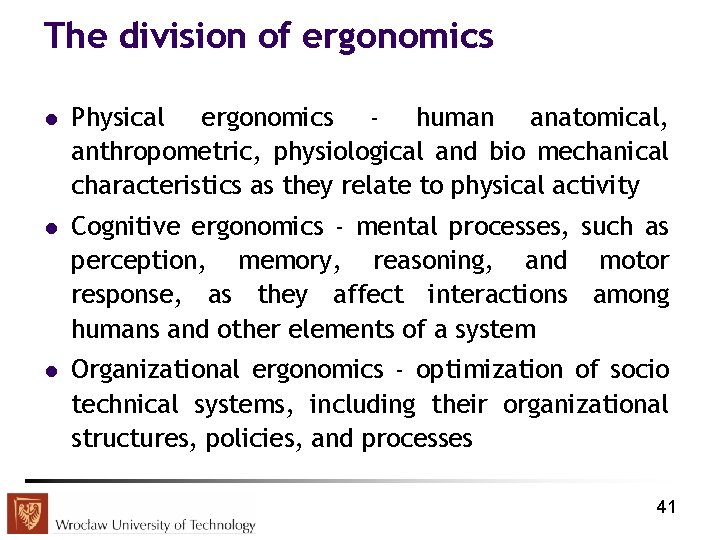
The division of ergonomics l Physical ergonomics - human anatomical, anthropometric, physiological and bio mechanical characteristics as they relate to physical activity l Cognitive ergonomics - mental processes, such as perception, memory, reasoning, and motor response, as they affect interactions among humans and other elements of a system l Organizational ergonomics - optimization of socio technical systems, including their organizational structures, policies, and processes 41
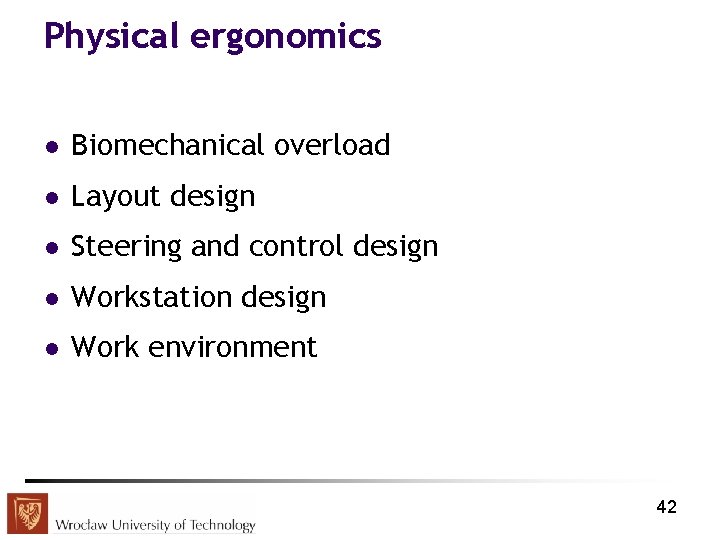
Physical ergonomics l Biomechanical overload l Layout design l Steering and control design l Workstation design l Work environment 42
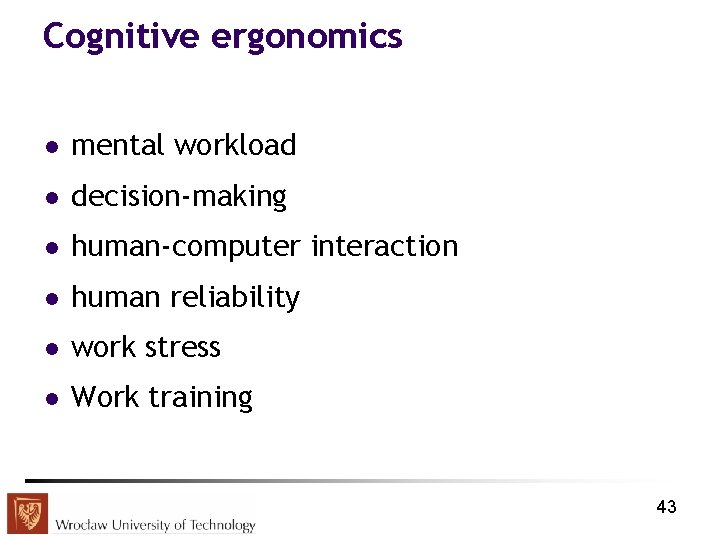
Cognitive ergonomics l mental workload l decision-making l human-computer interaction l human reliability l work stress l Work training 43
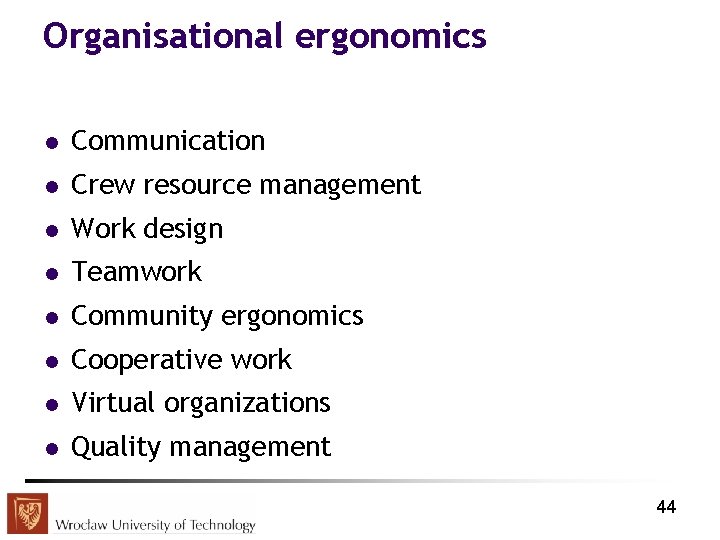
Organisational ergonomics l Communication l Crew resource management l Work design l Teamwork l Community ergonomics l Cooperative work l Virtual organizations l Quality management 44
The division of ergonomics l Corrective ergonomics – the improvement of the existing state l Conceptive ergonomics – proper design 45
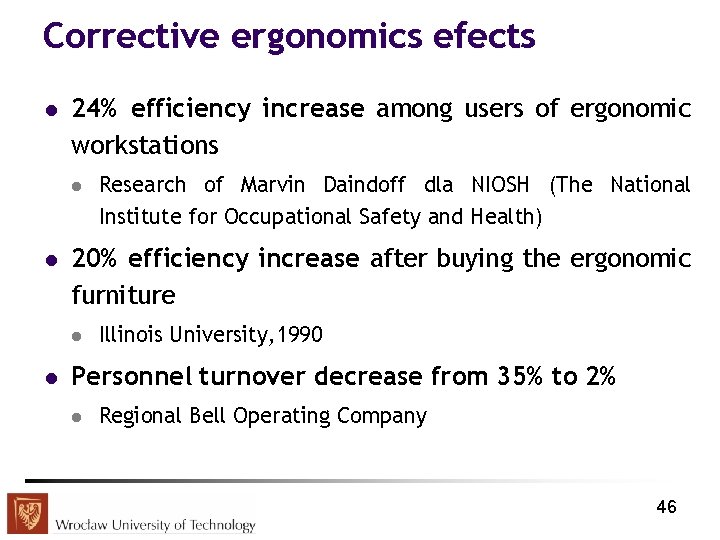
Corrective ergonomics efects l 24% efficiency increase among users of ergonomic workstations l l 20% efficiency increase after buying the ergonomic furniture l l Research of Marvin Daindoff dla NIOSH (The National Institute for Occupational Safety and Health) Illinois University, 1990 Personnel turnover decrease from 35% to 2% l Regional Bell Operating Company 46
Ergonomic design 47
Stages of ergonomic design 1. Body measures 2. Biomechanical activity 3. User – workstation relations 48
Body measures l Most important for design l Human body is the main part of every workstation l Variety of body measures l In population l Purpose: designing for everyone 49
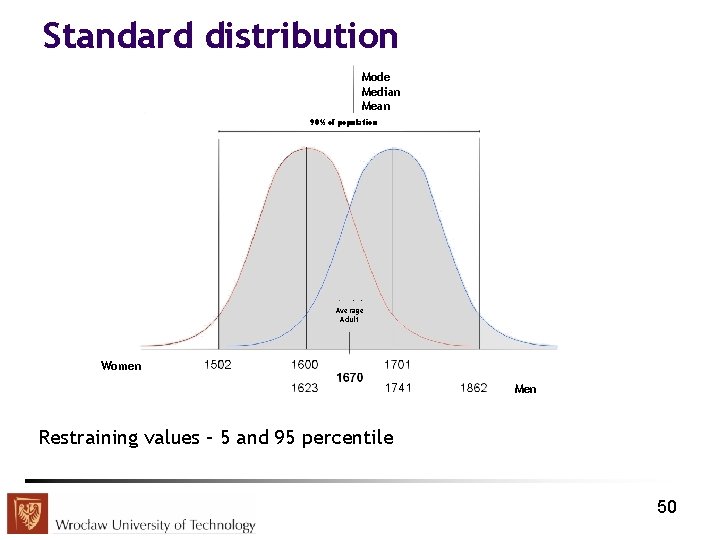
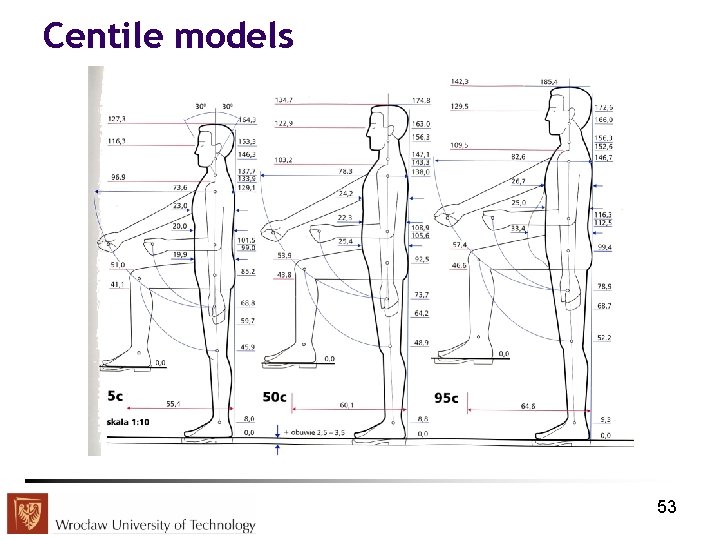
Standard distribution Mode Median Mean 90% of population Average Adult Women Men Restraining values – 5 and 95 percentile 50
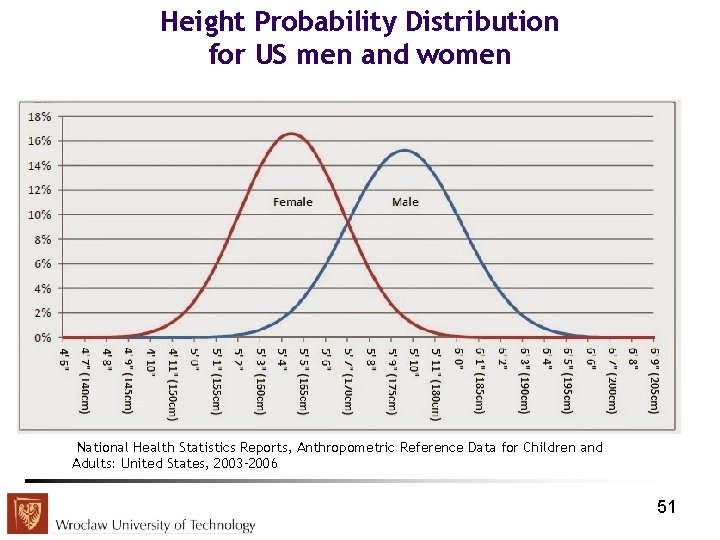
Height Probability Distribution for US men and women National Health Statistics Reports, Anthropometric Reference Data for Children and Adults: United States, 2003– 2006 51
52
Centile models 53
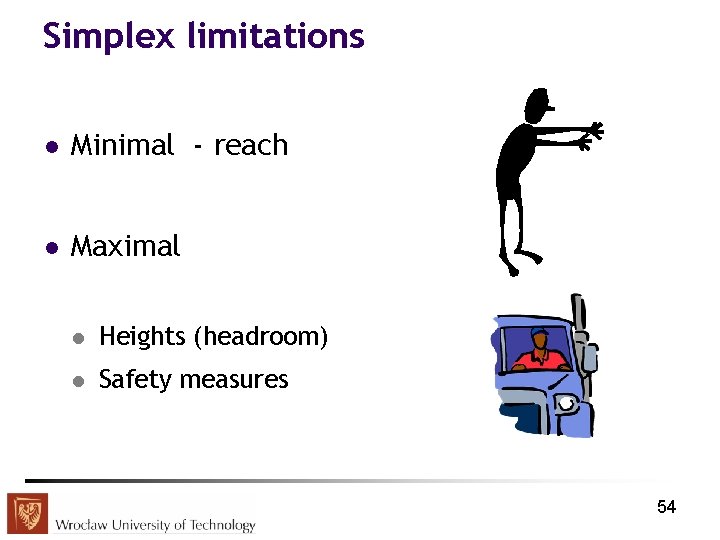
Simplex limitations l Minimal - reach l Maximal l Heights (headroom) l Safety measures 54
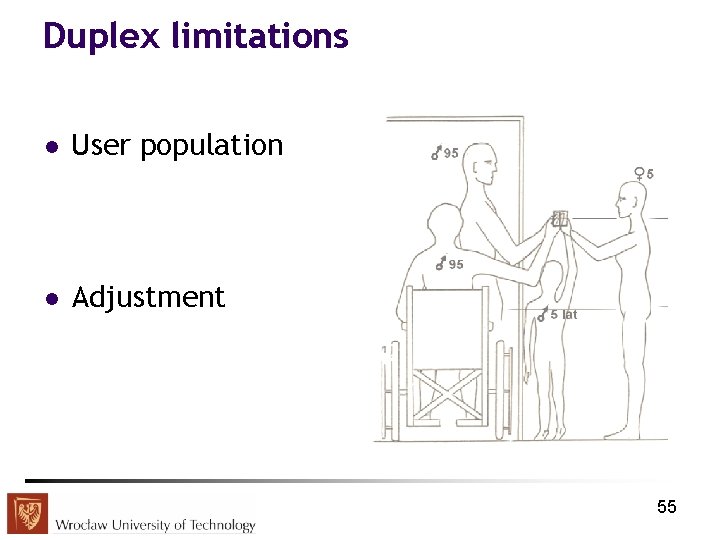
Duplex limitations l User population l Adjustment 55
Biomechanical and physiological features l l Physiological features l Senses activity l Fatigue Biomechanical agility l Permissible spread of joint mobility l Prompted forces and torques 56
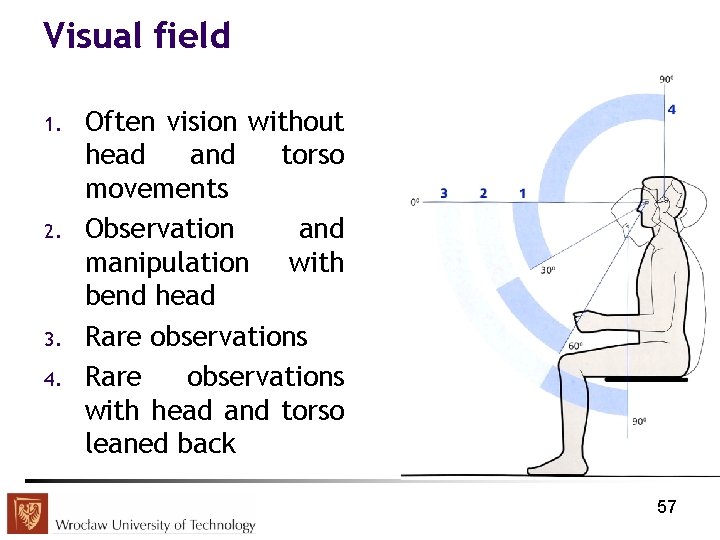
Visual field 1. 2. 3. 4. Often vision without head and torso movements Observation and manipulation with bend head Rare observations with head and torso leaned back 57
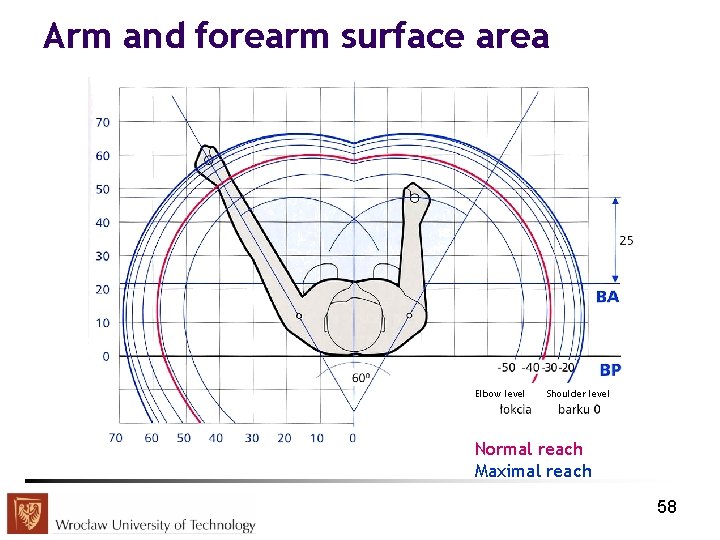
Arm and forearm surface area Elbow level Shoulder level Normal reach Maximal reach 58
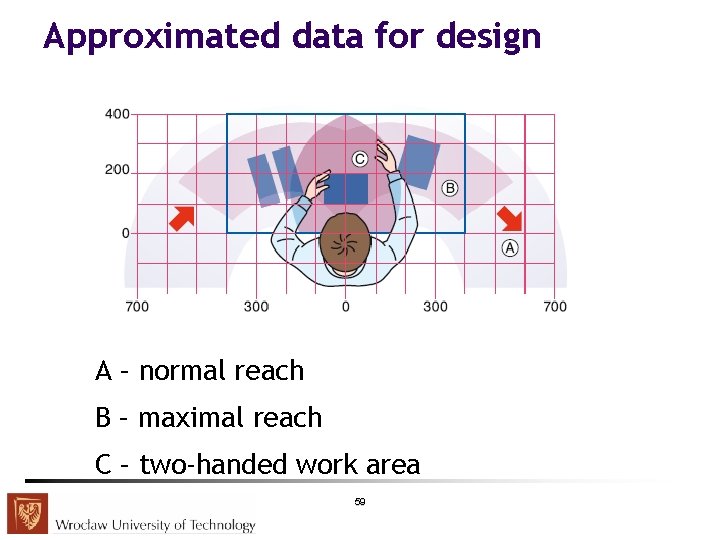
Approximated data for design A – normal reach B – maximal reach C – two-handed work area 59
Principles of motion economy 1. 2. 3. 4. 5. 6. 7. Two hands should begin and complete motions at the same time Two hands should not be idle at the same time Upright and forward facing posture Several different natural and safe postures at work Motions of arms opposite and symmetrical directions simultaneously Momentum should be used whenever possible Smooth curved motions are better than straightline and sharp changes 60
3. Relation analysis l l Analysis of all activities l Equipment choice l Working posture choice Bondable points 61
Equipment choice l Task l Layout criteria by Mc. Cormick l Importance l Frequency of use l Sequence of use l Similar functionality 62
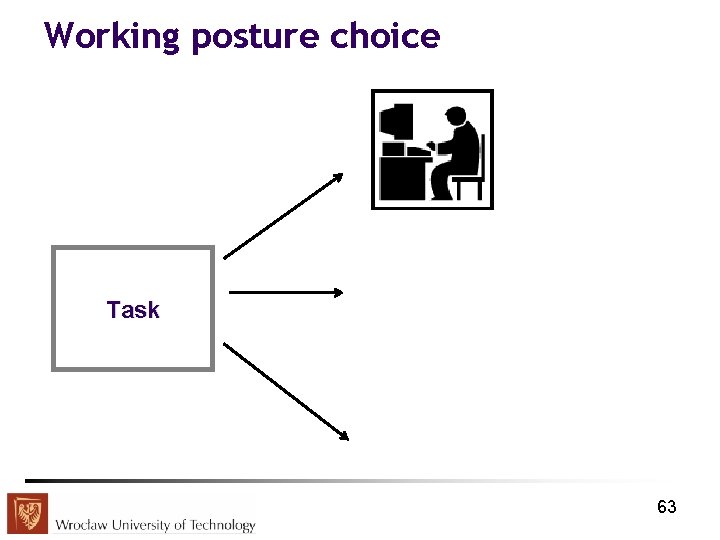
Working posture choice Task 63
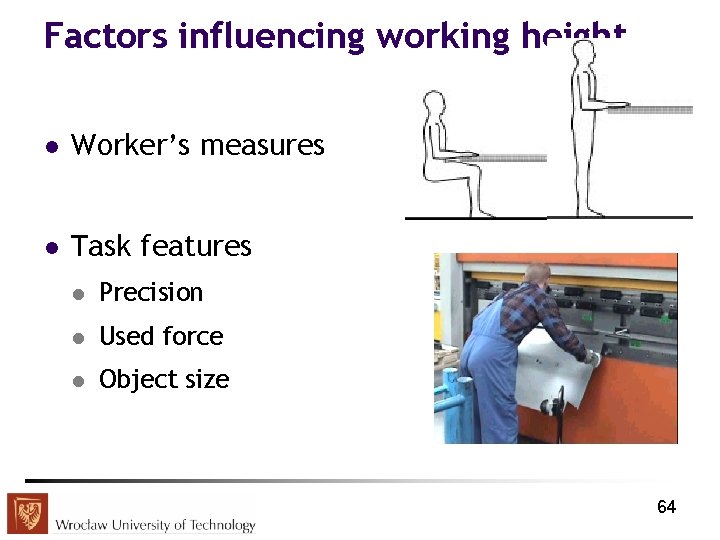
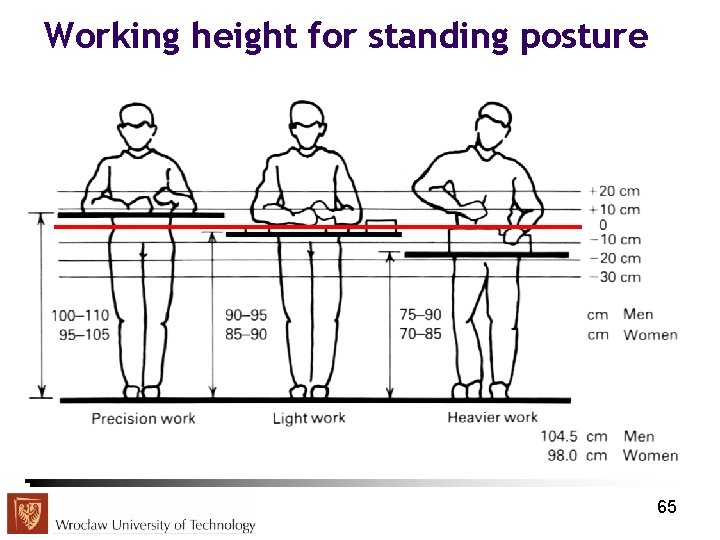
Factors influencing working height l Worker’s measures l Task features l Precision l Used force l Object size 64
Working height for standing posture 65
Six Pillars of Ergonomic Design 1. 2. 3. User Orientation: Design and application of tools, procedures, and systems must be user-oriented, rather than just “task” oriented Diversity: Recognition of diversity in human capabilities and limitations, rather than “stereotyping” workers/users Effect on Humans: Tools, procedures, and systems influence human behaviour and well-being 66
Six Pillars of Ergonomic Design 4. Objective Data: Empirical information and evaluation is key in design process, rather than just use of “common sense” 5. Scientific Method: test and retest hypothesis with real data, rather than “anecdotal” evidence or “good estimates” 6. Systems: object, procedures, environments, and people are interconnected, affect one another, and do not exist in “isolation” 67