
ERGONOMICS LEARNING OBJECTIVES After completing this lesson you

ERGONOMICS
LEARNING OBJECTIVES After completing this lesson, you will know how to… P Define ergonomics P Explains ways to prevent work-related musculoskeletal disorders P Name environmental factors that may affect you while working P Name physical stressors that may put pressure or stress on parts of the body
OSHA defines ergonomics as: The science of “designing the job to fit the worker, instead of forcing the worker to fit the job. ”
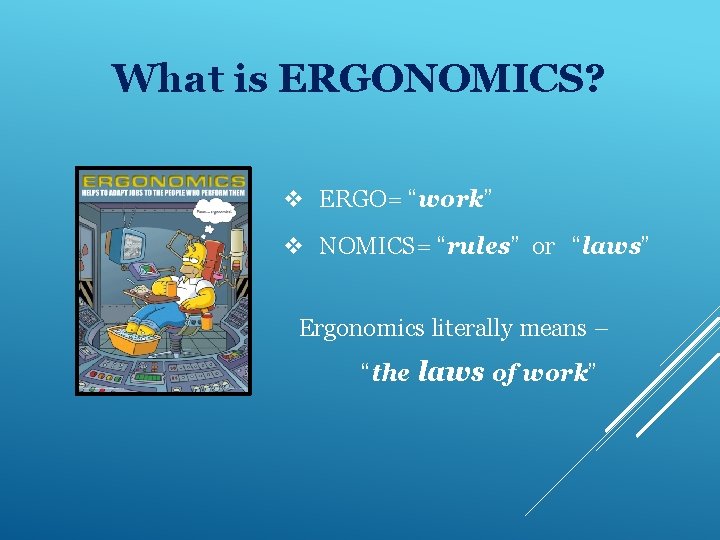
What is ERGONOMICS? v ERGO= “work” v NOMICS= “rules” or “laws” Ergonomics literally means – “the laws of work”
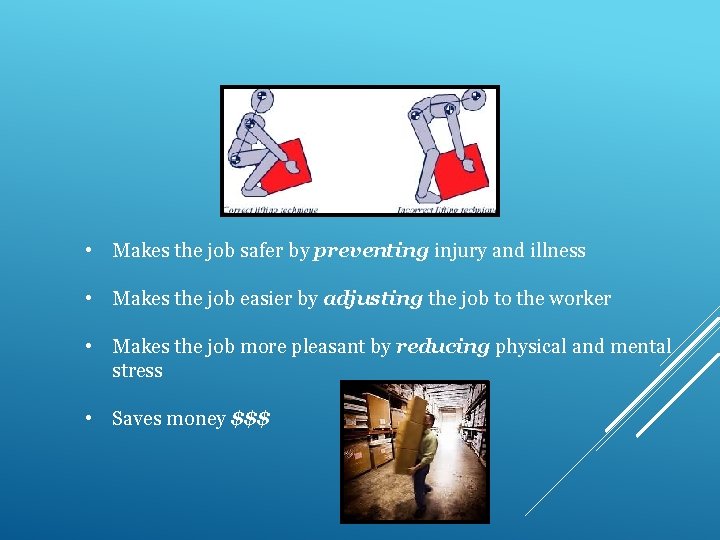
• Makes the job safer by preventing injury and illness • Makes the job easier by adjusting the job to the worker • Makes the job more pleasant by reducing physical and mental stress • Saves money $$$

Ergonomic Factors v Two Categories of Ergonomic Factors 1. Environmental 2. Physical
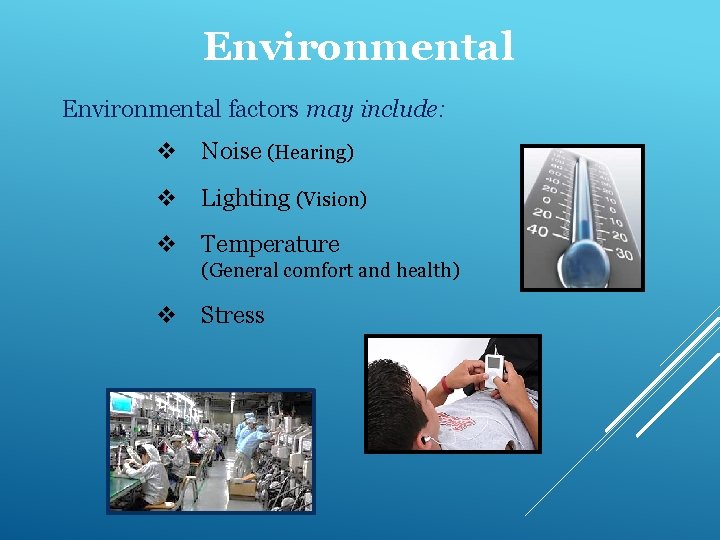
Environmental factors may include: v Noise (Hearing) v Lighting (Vision) v Temperature (General comfort and health) v Stress

Extreme Temperatures Do you work in cold or hot conditions for extended periods of time? Working in excessive temperatures may: • Lead to muscle fatigue, which may lead to increase risk of sprains and strains. • Reduce blood flow to your hands and fingers creating numbness, which may cause loss of grip and may damage your hands and wrists.
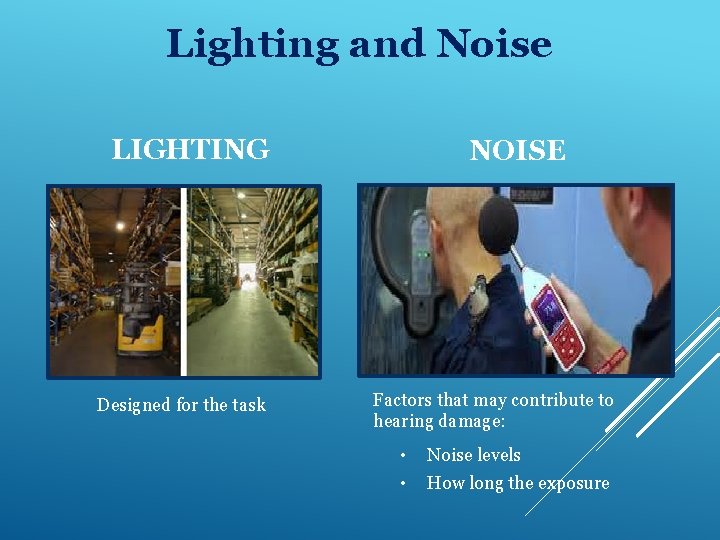
Lighting and Noise LIGHTING Designed for the task NOISE Factors that may contribute to hearing damage: • • Noise levels How long the exposure

Stress
Physical Stressors Physical stressors place pressure or stress on parts of the body such as joints, muscles, nerves, tendons, bones and ligaments Examples: v Force v Contact Stress v Vibration v Repetition v Awkward Posture

Force • Lifting something heavy and carrying it. • Pushing or pulling heavy objects. • Using a tool handle that is too small. - This may result in pinching, squeezing or gripping the handle, which can cause tension on the hand. • Using a glove that is too large and doesn’t fit properly. - This will require more force to hold onto a tool. - This can especially affect those with smaller hands. • Using a heavy tool that is not balanced may require a lot of force to control.

Contact Stress A hard or sharp surface or object pressing into the soft tissues, the tendons, nerves and blood vessels. What are some contact stresses at your work?

Repetition Repeating the same motion over and over places stress on your muscles and joints. The amount of stress depends on these factors: • How quickly the job is done • How long the job takes • How much force the job requires; and • How much recovery time there is between motions What are some jobs that require repetition?

Awkward Posture ut o b ta ha W St c ati e? Po r stu v Working with the arms raised v Bending at the back v Bending at the neck v Twisting v Reaching v Bending the wrists v Kneeling or squatting What awkward postures do you work in?

Vibration The two main types of vibration that may lead to musculoskeletal injuries are: 1) Hand/arm vibration 2) Whole body vibration If you don’t encounter these at work, what about other activities? Example: v Whole body vibration
Work-Related Musculoskeletal Disorders (WMSDs)
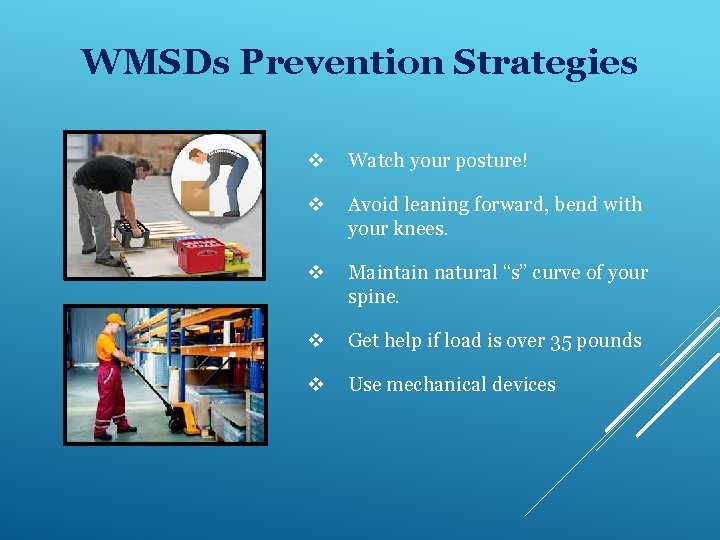
WMSDs Prevention Strategies v Watch your posture! v Avoid leaning forward, bend with your knees. v Maintain natural “s” curve of your spine. v Get help if load is over 35 pounds v Use mechanical devices

Reach Zone
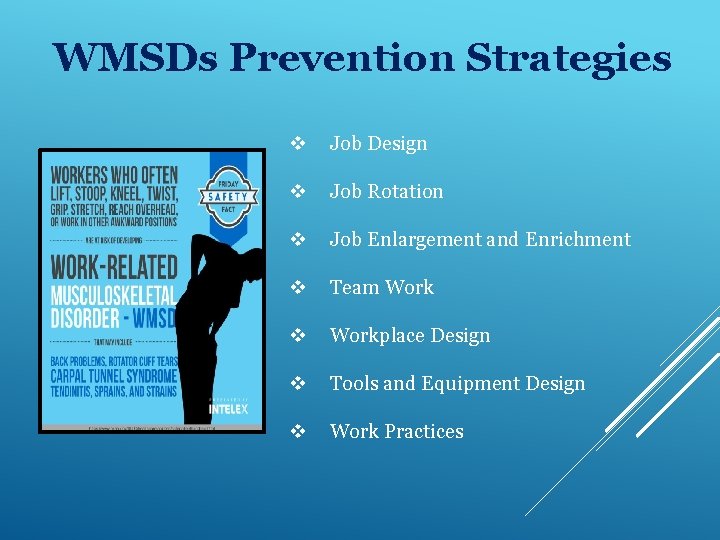
WMSDs Prevention Strategies v Job Design v Job Rotation v Job Enlargement and Enrichment v Team Work v Workplace Design v Tools and Equipment Design v Work Practices
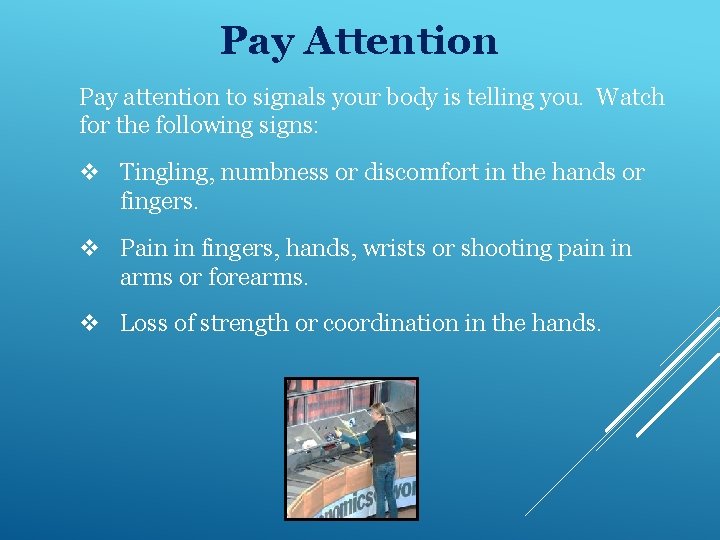
Pay Attention Pay attention to signals your body is telling you. Watch for the following signs: v Tingling, numbness or discomfort in the hands or fingers. v Pain in fingers, hands, wrists or shooting pain in arms or forearms. v Loss of strength or coordination in the hands.
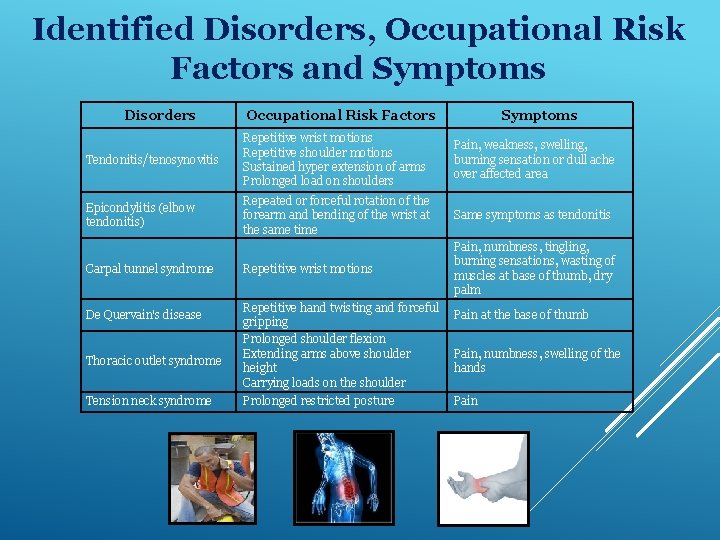
Identified Disorders, Occupational Risk Factors and Symptoms Disorders Occupational Risk Factors Symptoms Tendonitis/tenosynovitis Repetitive wrist motions Repetitive shoulder motions Sustained hyper extension of arms Prolonged load on shoulders Pain, weakness, swelling, burning sensation or dull ache over affected area Epicondylitis (elbow tendonitis) Repeated or forceful rotation of the forearm and bending of the wrist at the same time Same symptoms as tendonitis Repetitive wrist motions Pain, numbness, tingling, burning sensations, wasting of muscles at base of thumb, dry palm Carpal tunnel syndrome De Quervain's disease Thoracic outlet syndrome Tension neck syndrome Repetitive hand twisting and forceful gripping Prolonged shoulder flexion Extending arms above shoulder height Carrying loads on the shoulder Prolonged restricted posture Pain at the base of thumb Pain, numbness, swelling of the hands Pain
No ONE Solution For All People come in all shapes and sizes. What works for one person may not work for another. What works today may not work tomorrow. We all change due to time and other circumstances.
Meet the Challenge! v Individuals must take responsibility for their own ergonomic concerns. v Listen to your body--pay attention to those aches and pains! v Contact your Safety Officer (SO) or Human Resource Office (HRO) with any question or concerns. v Contact the above SO or HRO to request a basic ergonomic evaluation of your work station.

Learning Objectives 1. Define ergonomics 2. Explains ways to prevent work-related musculoskeletal disorders 3. Name environmental factors that may affect you while working 4. Name physical stressors that may put pressure or stress on parts of the body THANK YOU!
- Slides: 25