Open Standards for the Practice of Conservation Planning


- Slides: 43
Open Standards for the Practice of Conservation Planning, Managing, Monitoring, and Learning from Projects (and Programs) at All Scales Bronte Park, Tasmania January 2017
Attribution Product of the Conservation Coaches Network, 2012 These presentations were developed based on materials from Foundations of Success (FOS), The Nature Conservancy (TNC), and World Wildlife Fund (WWF). CCNet strongly recommends that this presentation is given by experts familiar with the adaptive management process presented by the Conservation Measures Partnership’s Open Standards for the Practice of Conservation. You are free to share this presentation and adapt it for your use. Please attribute the work to CCNet or FOS, TNC and WWF. If you significantly alter, transform, or build upon this work, it may be appropriate to remove the CCNet logo.
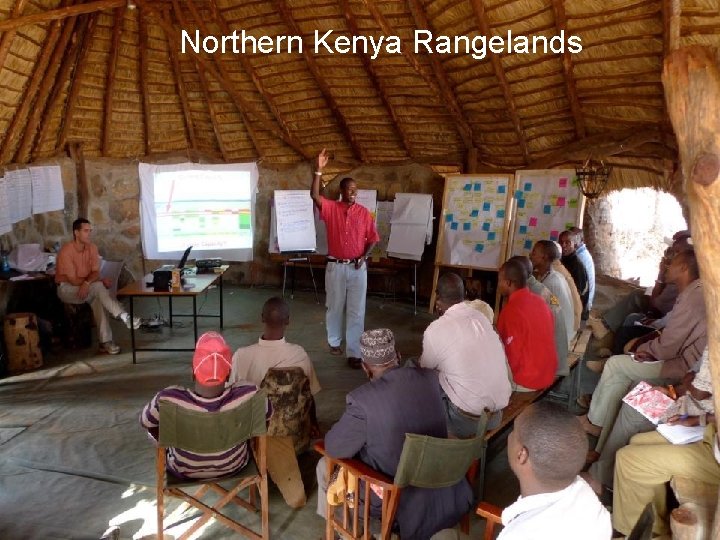
CAP Stories from around the World Northern Kenya Rangelands Why we like CAP
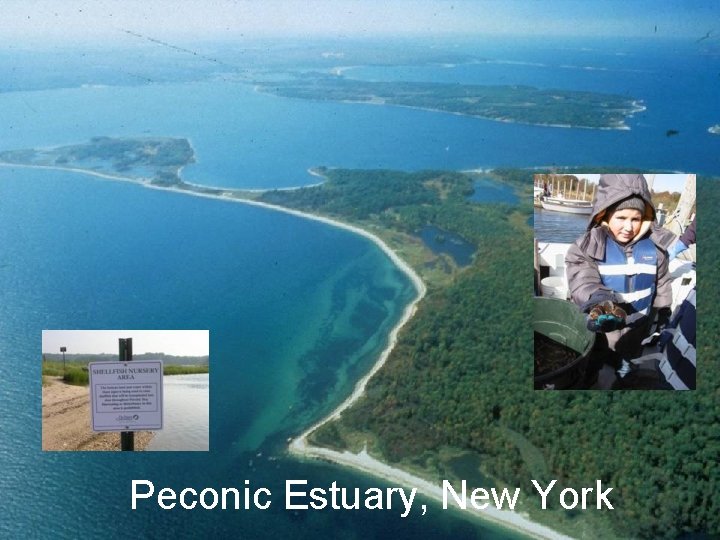
Peconic Estuary, New York
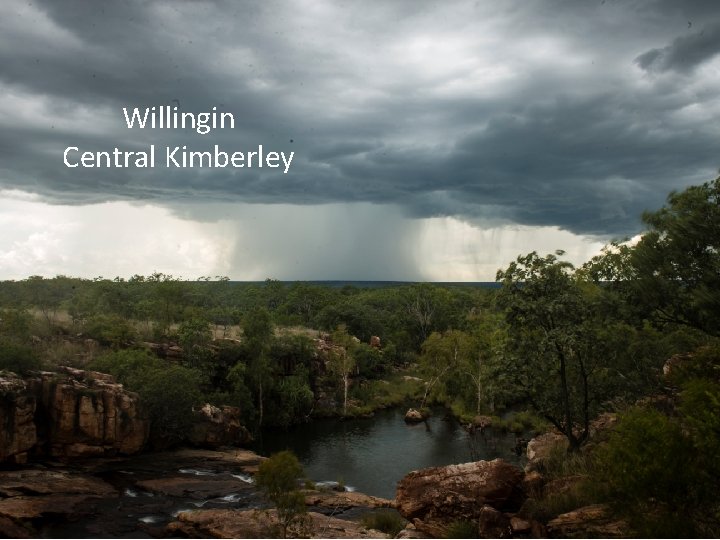
Willingin Central Kimberley
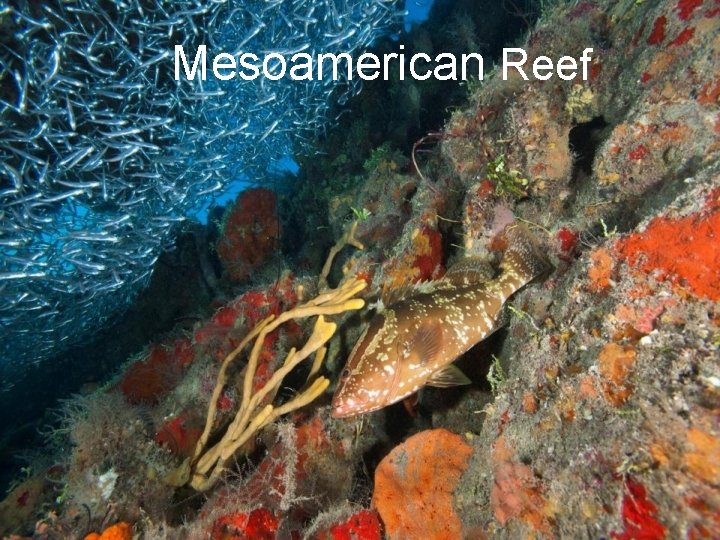
Mesoamerican Reef
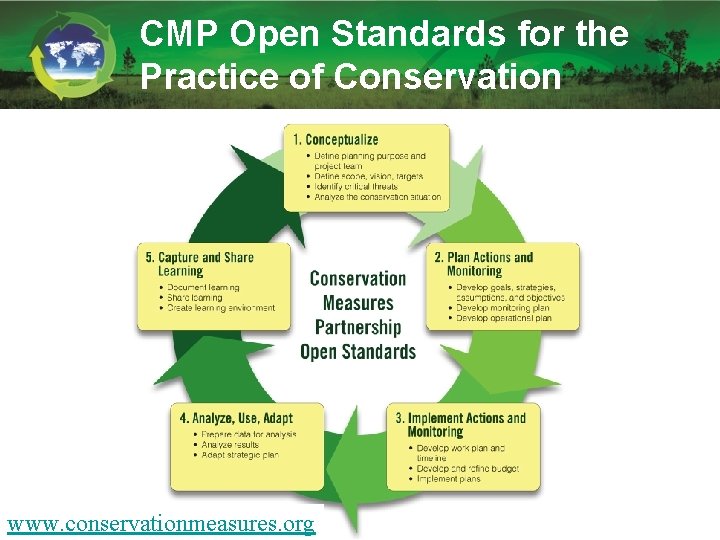
CMP Open Standards for the Practice of Conservation www. conservationmeasures. org
Why Plan? Planning links knowledge to action Friedmann (1973)
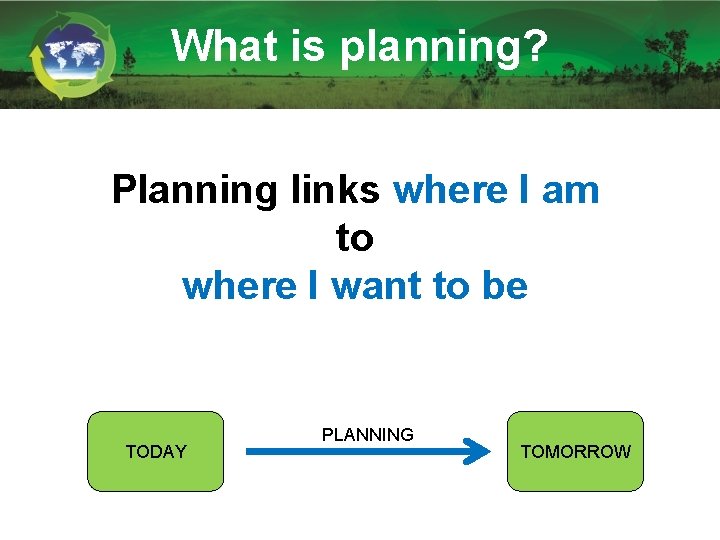
What is planning? Planning links where I am to where I want to be TODAY PLANNING TOMORROW
A longer list • To Improve Results - “Studies have consistently shown that developing a clear vision, planning and setting clear goals and strategies greatly improves organizational performance and success. ” • It allows the community to develop a shared vision, mission, goals and activities • It helps clarify roles and responsibilities • It enables the development of clear management strategies that can be monitored and measured to determine whether they are working or not (eg abating a threat or improving target) • It helps communities solve problems. • It helps build stronger teams and helps communities to get organized. • It helps groups to attract resources.
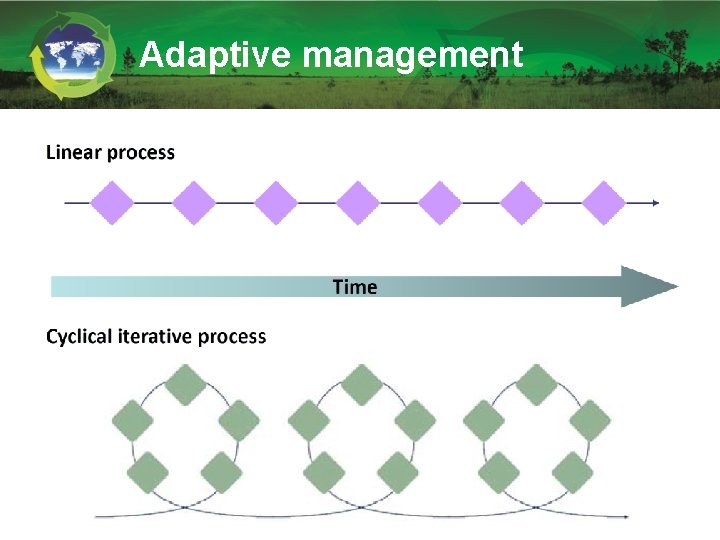
Adaptive management
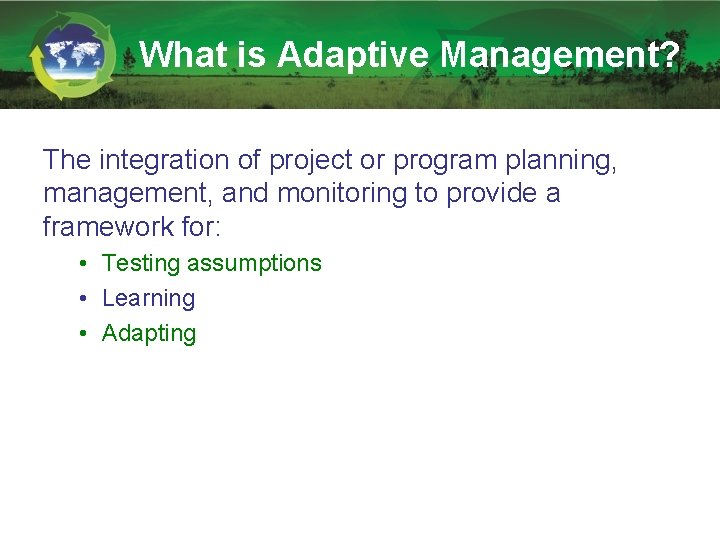
What is Adaptive Management? The integration of project or program planning, management, and monitoring to provide a framework for: • Testing assumptions • Learning • Adapting
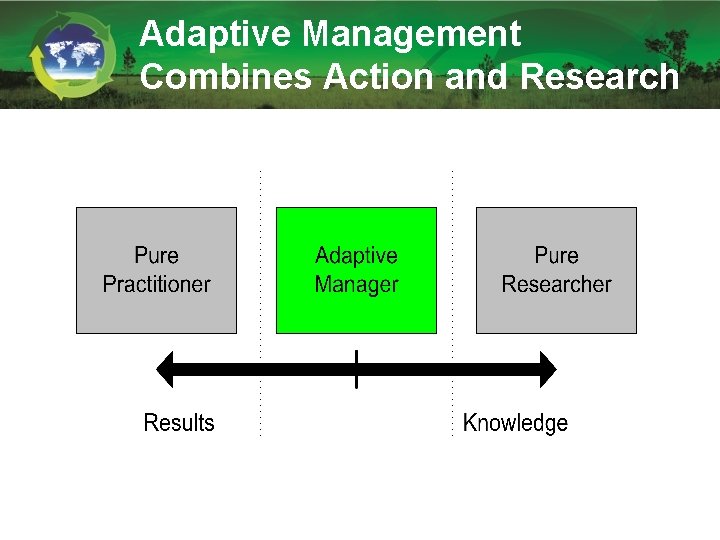
Adaptive Management Combines Action and Research
The Basic Project Management Cycle
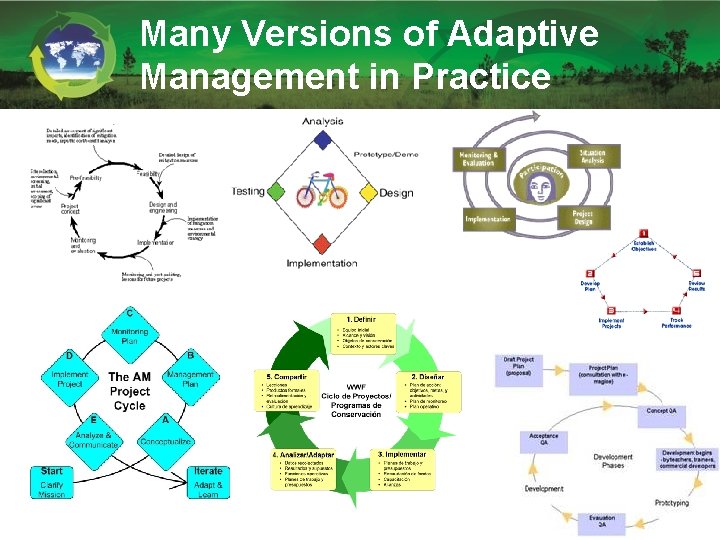
Many Versions of Adaptive Management in Practice
The Conservation Measures Partnership (CMP)
Open Standards for the Practice of Conservation • Developed by leading orgs & agencies • Draws on many fields • Open source & common language • Used around the world • • State Wildlife Agencies National Park Systems Donor Funding Programs Academic Training
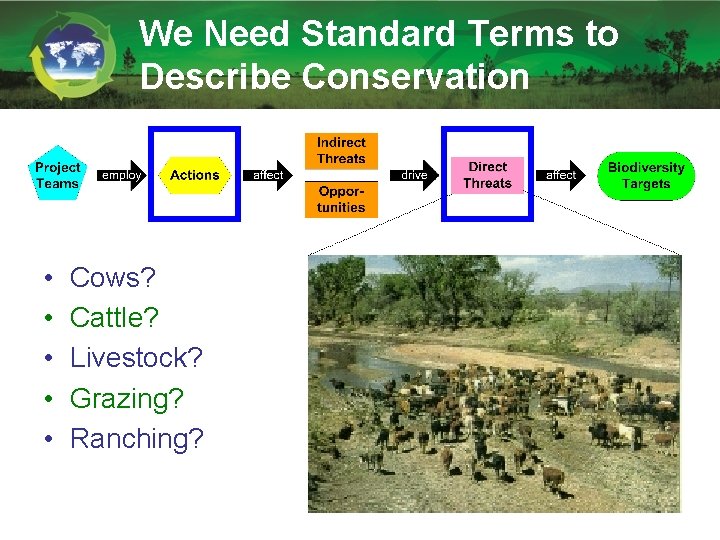
We Need Standard Terms to Describe Conservation • • • Cows? Cattle? Livestock? Grazing? Ranching?
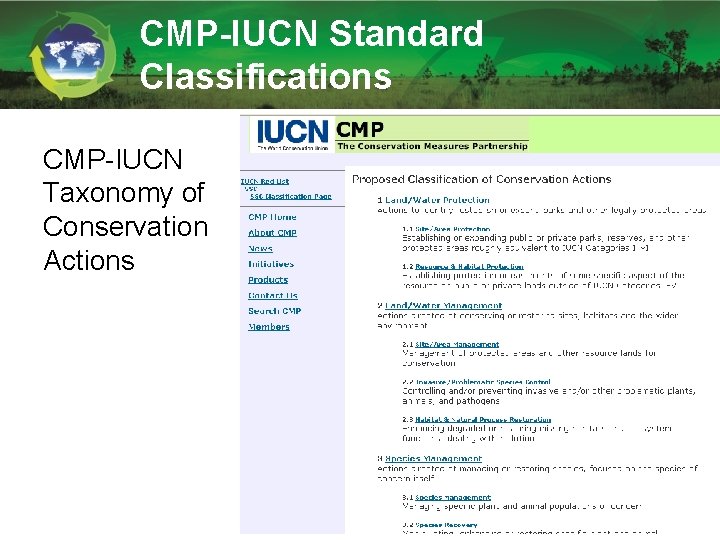
CMP-IUCN Standard Classifications CMP-IUCN Taxonomy of Conservation Actions
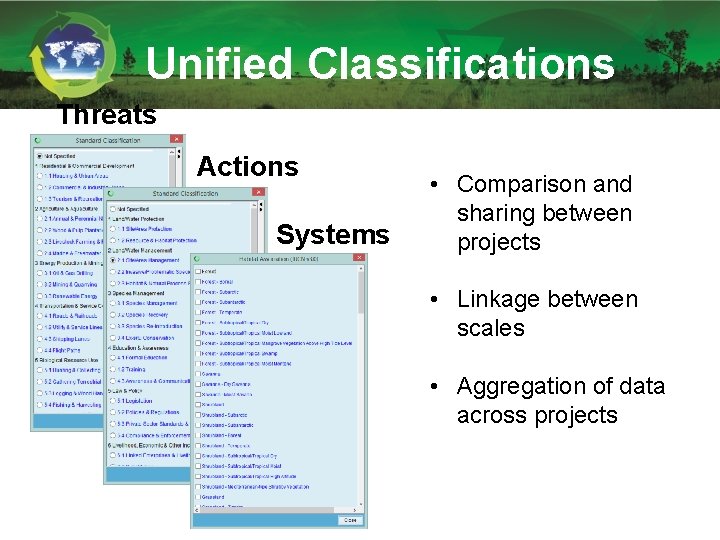
Unified Classifications Threats Actions Systems • Comparison and sharing between projects • Linkage between scales • Aggregation of data across projects
So what ? • Clear insight into where resources (people, $s) are required, and why • Better sharing of information across organisations • Greater efficiency & quality in planning, budgeting & forecasting • Improve reporting • More resources for more effective impact
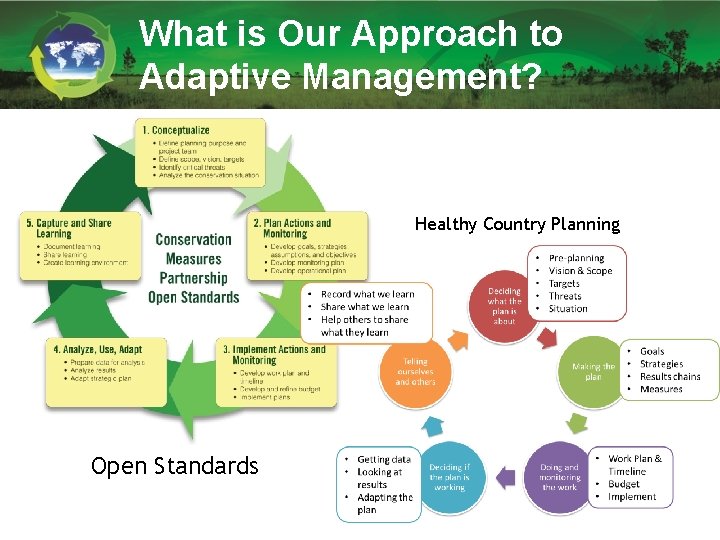
What is Our Approach to Adaptive Management? Healthy Country Planning Open Standards
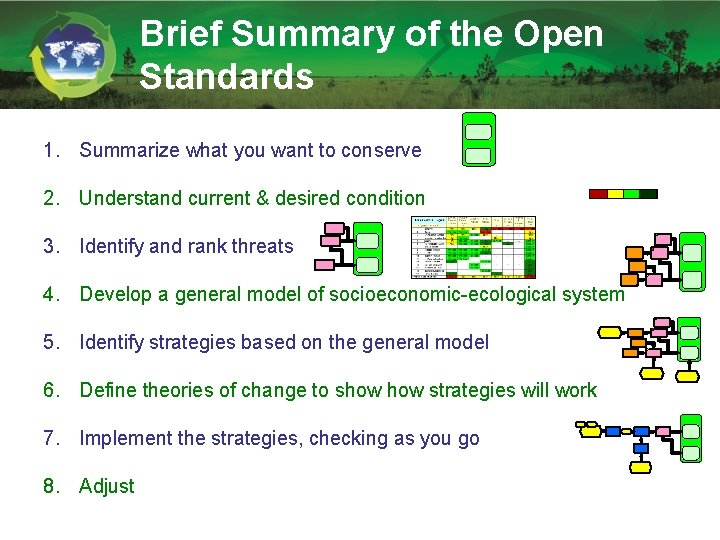
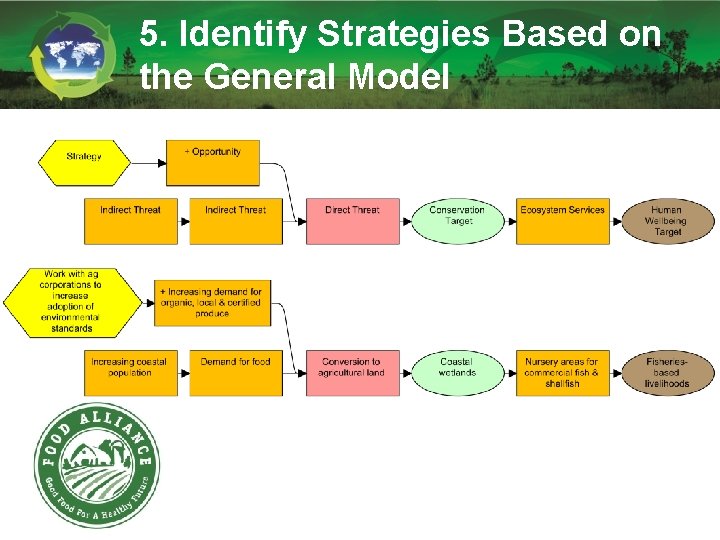
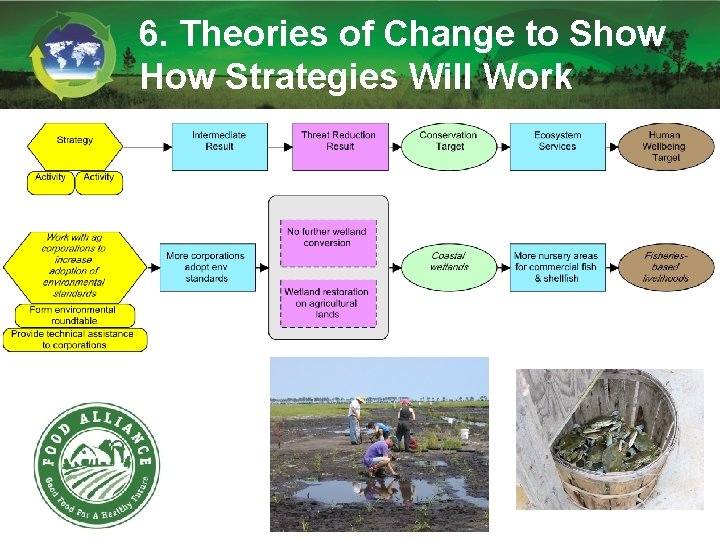
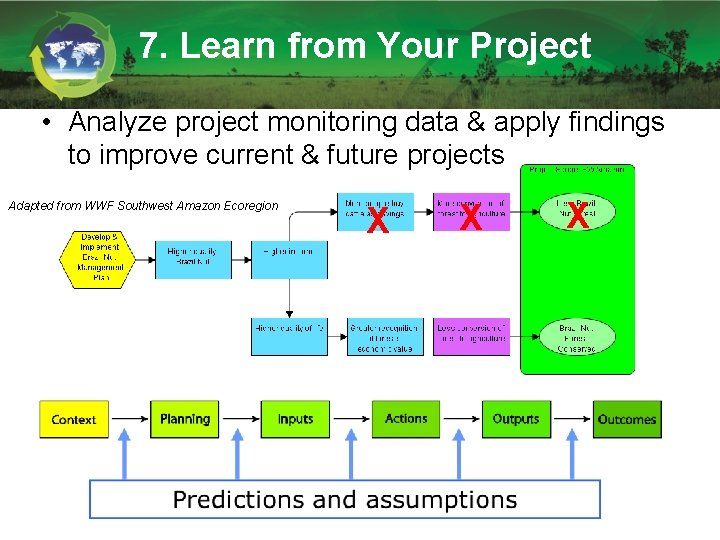
Brief Summary of the Open Standards 1. Summarize what you want to conserve 2. Understand current & desired condition 3. Identify and rank threats 4. Develop a general model of socioeconomic-ecological system 5. Identify strategies based on the general model 6. Define theories of change to show strategies will work 7. Implement the strategies, checking as you go 8. Adjust
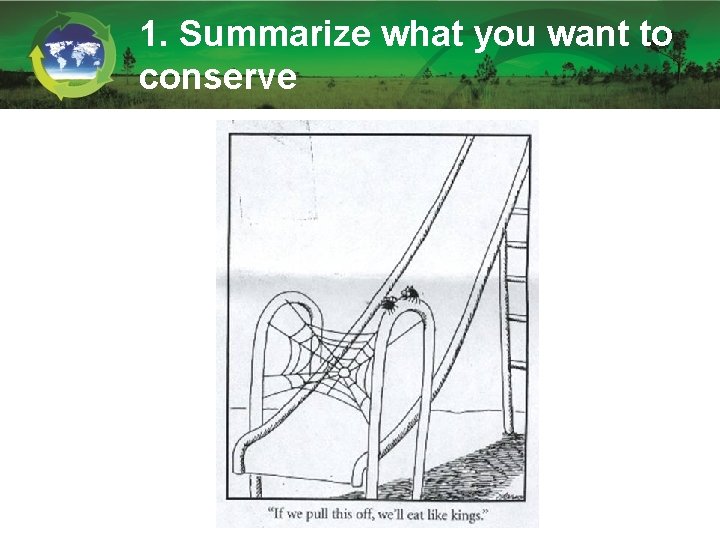
1. Summarize what you want to conserve
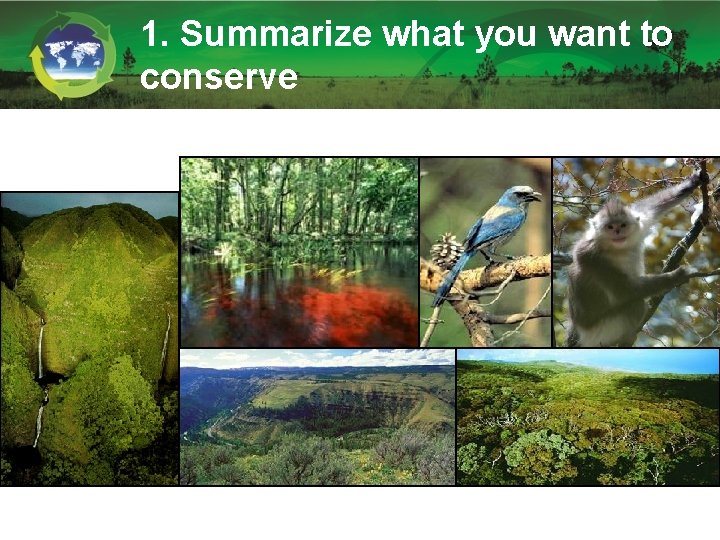
1. Summarize what you want to conserve
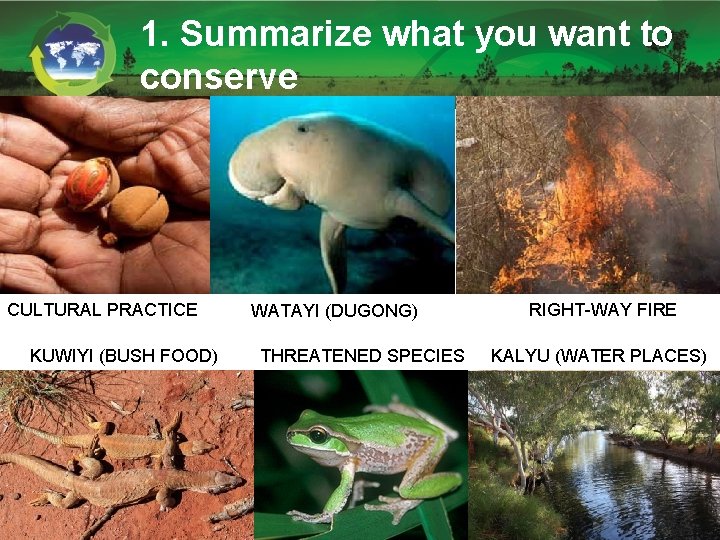
1. Summarize what you want to conserve CULTURAL PRACTICE KUWIYI (BUSH FOOD) WATAYI (DUGONG) THREATENED SPECIES RIGHT-WAY FIRE KALYU (WATER PLACES)
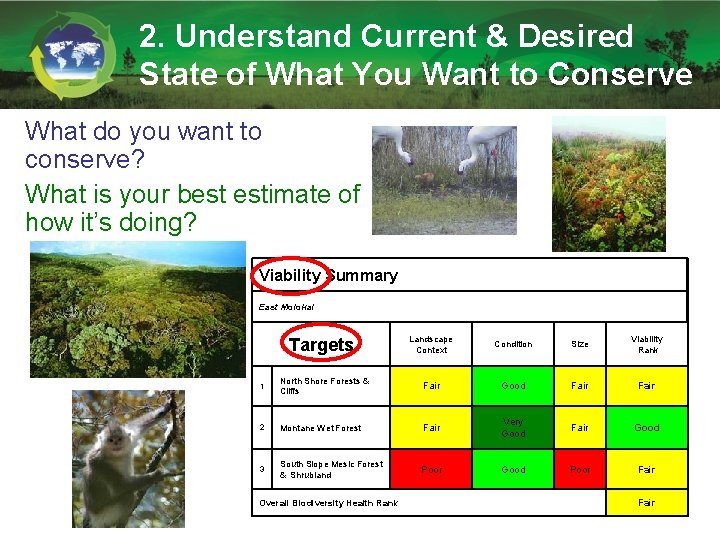
2. Understand Current & Desired State of What You Want to Conserve What do you want to conserve? What is your best estimate of how it’s doing? Viability Summary East Molokai Targets Landscape Context Condition Size Viability Rank 1 North Shore Forests & Cliffs Fair Good Fair 2 Montane Wet Forest Fair Very Good Fair Good 3 South Slope Mesic Forest & Shrubland Poor Good Poor Fair Overall Biodiversity Health Rank Fair
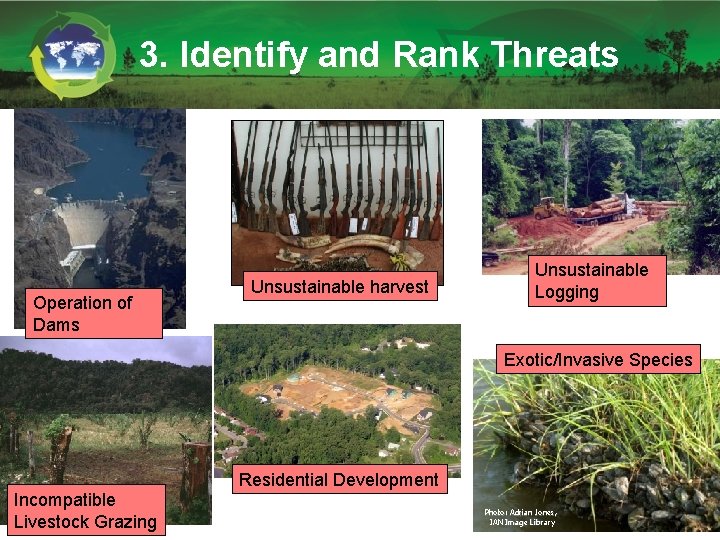
3. Identify and Rank Threats Operation of Dams Unsustainable harvest Unsustainable Logging Exotic/Invasive Species Residential Development Incompatible Livestock Grazing Photo: Adrian Jones, IAN Image Library
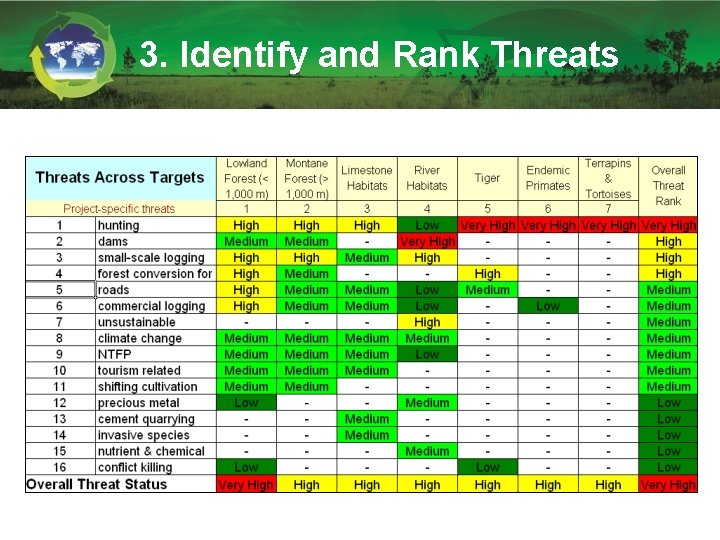
3. Identify and Rank Threats
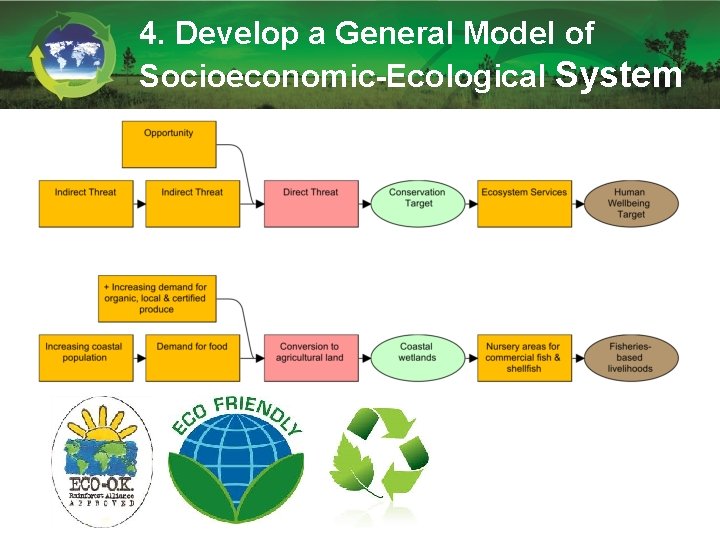
4. Develop a General Model of Socioeconomic-Ecological System
5. Identify Strategies Based on the General Model
6. Theories of Change to Show How Strategies Will Work
7. Learn from Your Project • Analyze project monitoring data & apply findings to improve current & future projects Adapted from WWF Southwest Amazon Ecoregion X X X
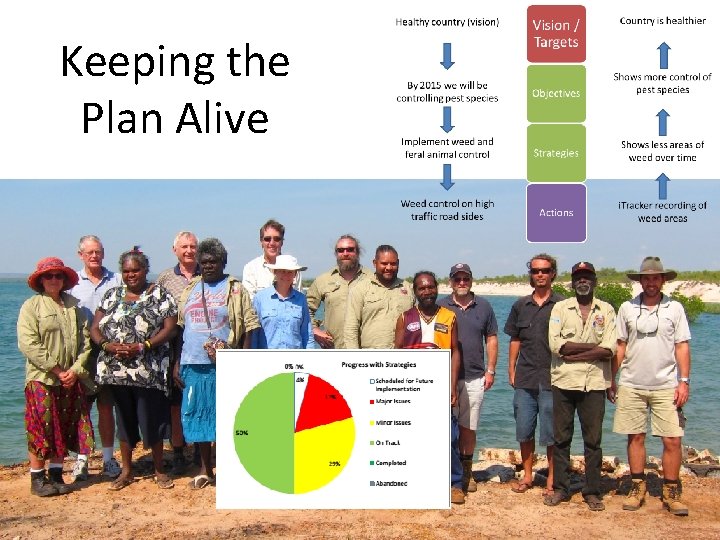
Keeping the Plan Alive
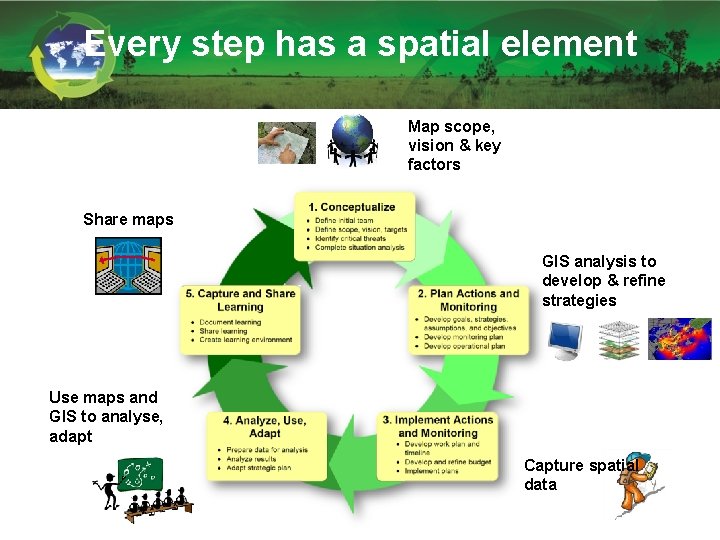
Every step has a spatial element Map scope, vision & key factors Share maps GIS analysis to develop & refine strategies Use maps and GIS to analyse, adapt Capture spatial data
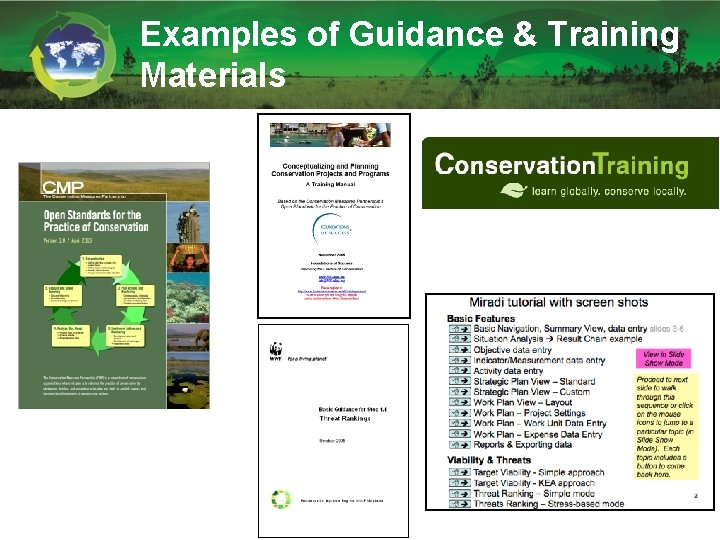
Examples of Guidance & Training Materials
Miradi Software TM Adaptive Management Software for Conservation Projects www. Miradi. org or info@Miradi. org CMP The Conservation Measures Partnership
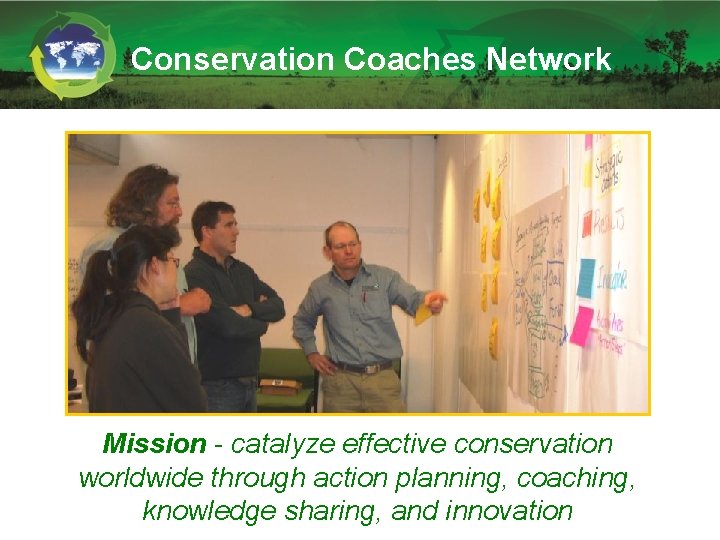
Conservation Coaches Network Mission - catalyze effective conservation worldwide through action planning, coaching, knowledge sharing, and innovation
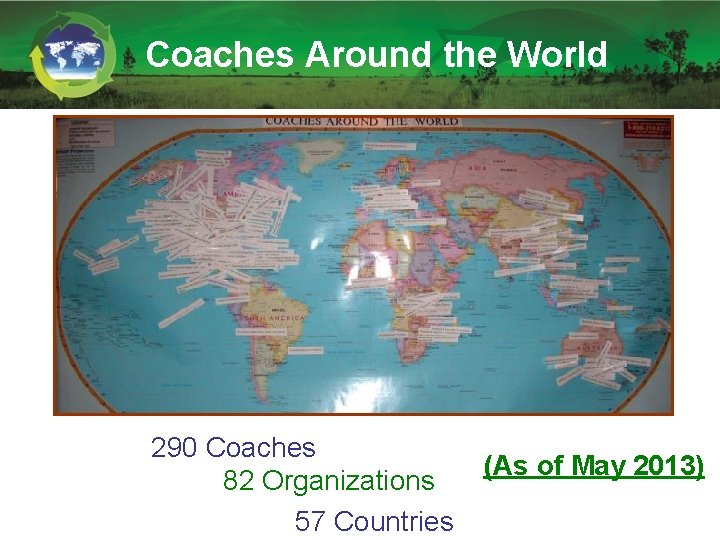
Coaches Around the World 290 Coaches 82 Organizations 57 Countries (As of May 2013)
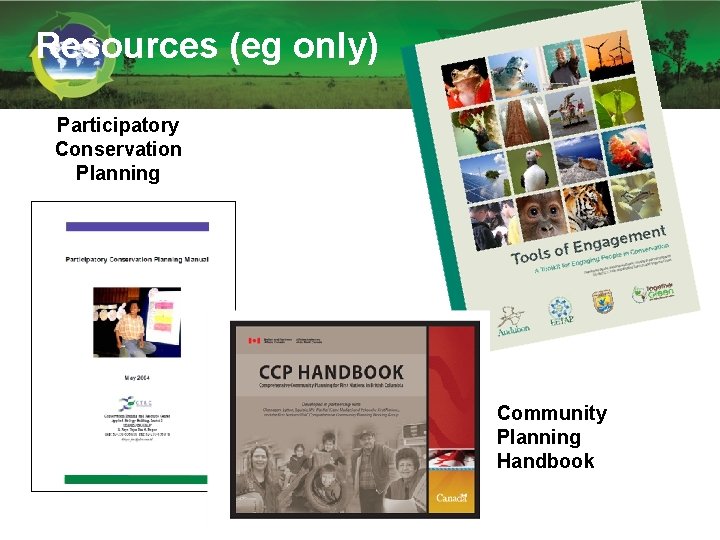
Resources (eg only) Participatory Conservation Planning Audubon Tools of Engagement Community Planning Handbook
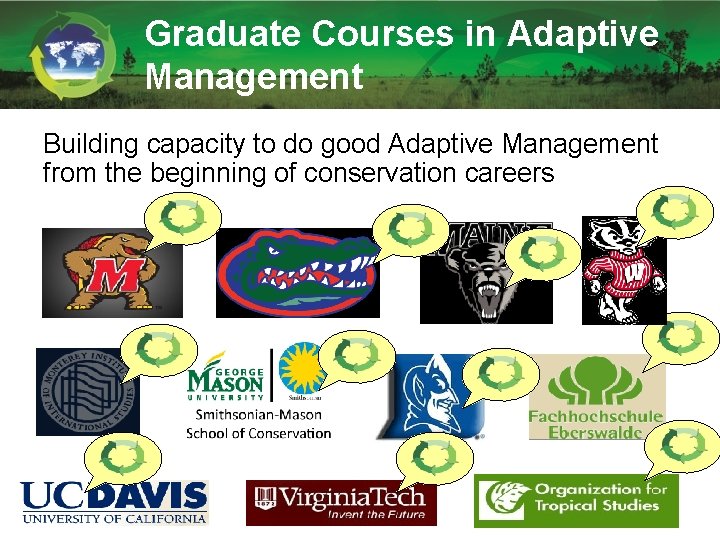
Graduate Courses in Adaptive Management Building capacity to do good Adaptive Management from the beginning of conservation careers
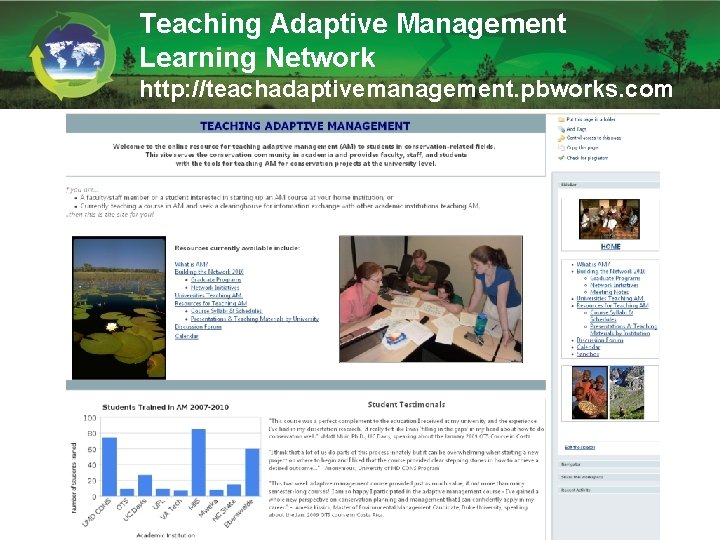
Teaching Adaptive Management Learning Network http: //teachadaptivemanagement. pbworks. com