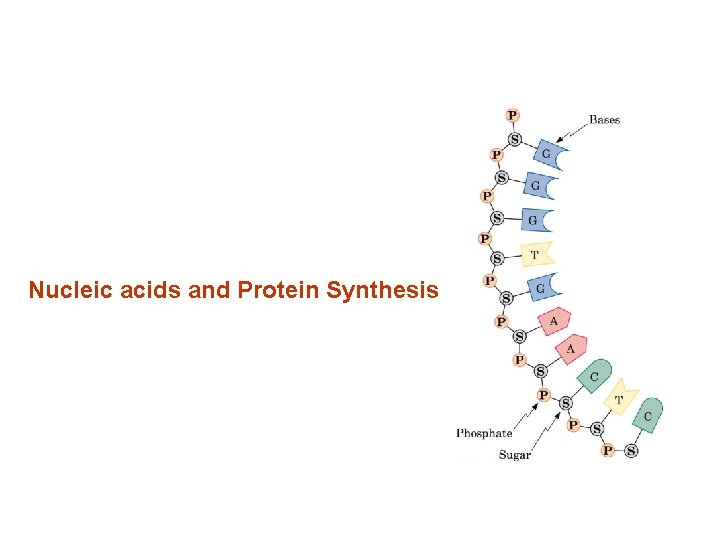
Nucleic acids and Protein Synthesis The Shape of
- Slides: 75
Nucleic acids and Protein Synthesis
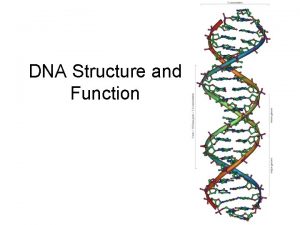
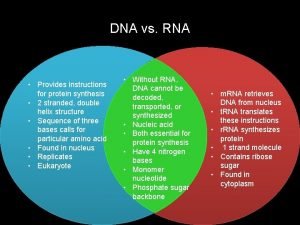
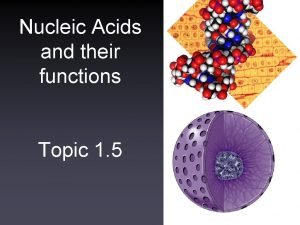
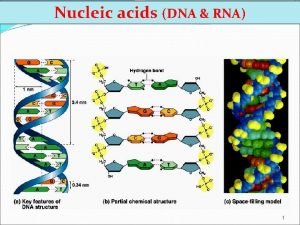
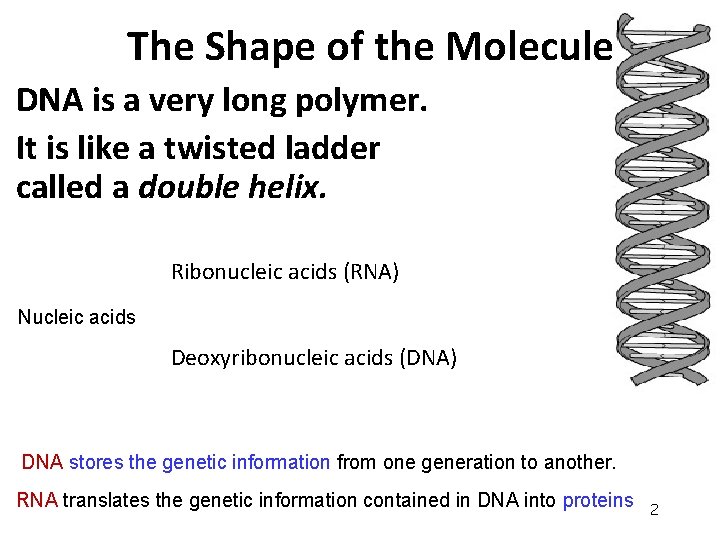
The Shape of the Molecule DNA is a very long polymer. It is like a twisted ladder called a double helix. Ribonucleic acids (RNA) Nucleic acids Deoxyribonucleic acids (DNA) DNA stores the genetic information from one generation to another. RNA translates the genetic information contained in DNA into proteins 2
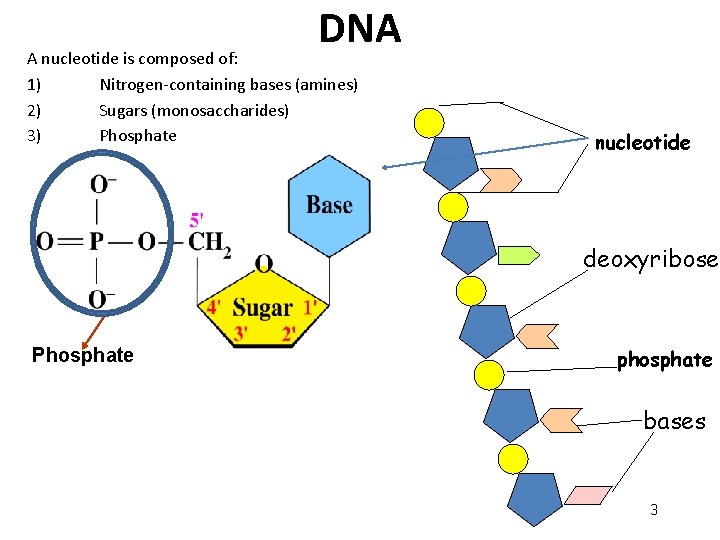
DNA A nucleotide is composed of: 1) Nitrogen-containing bases (amines) 2) Sugars (monosaccharides) 3) Phosphate nucleotide deoxyribose Phosphate phosphate bases 3
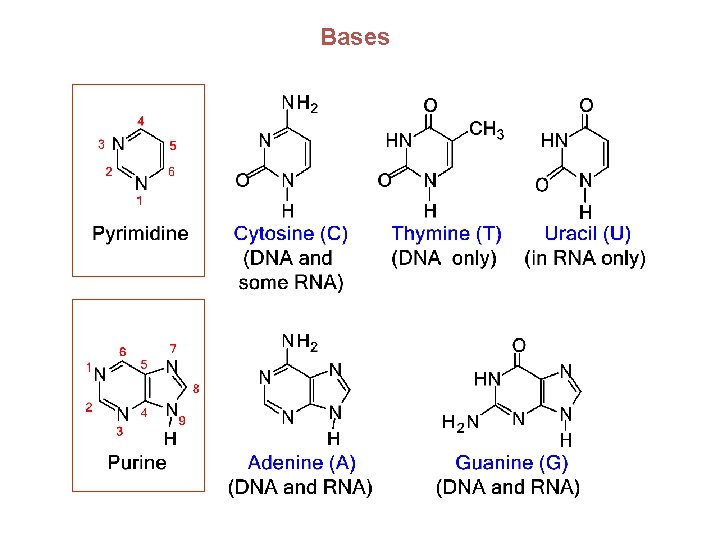
Bases
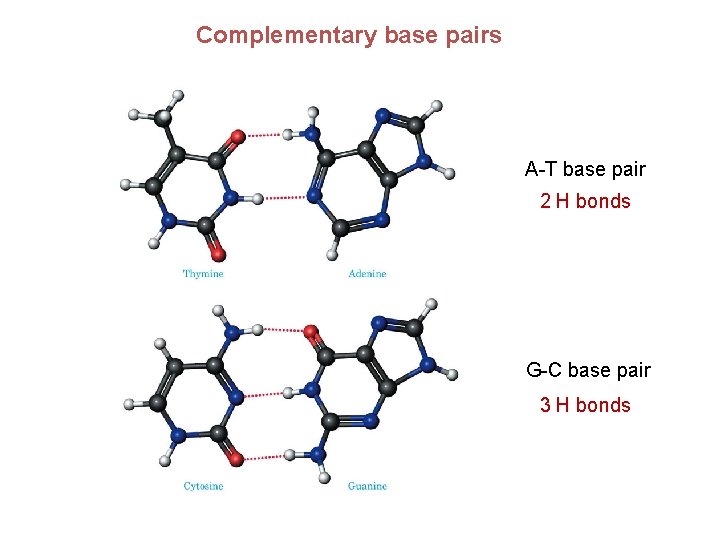
Complementary base pairs A-T base pair 2 H bonds G-C base pair 3 H bonds
Cis-Plantin https: //www. youtube. com/watch? v=Dbv. Cwd 9 XXt. Q 2 minutes
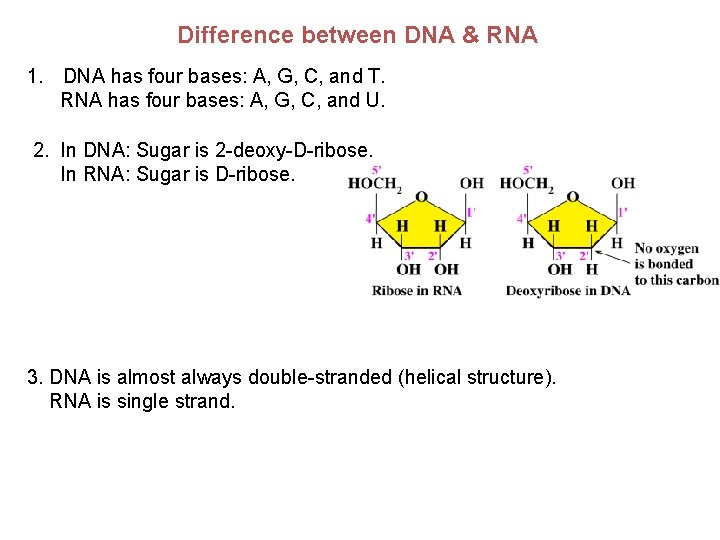
Difference between DNA & RNA 1. DNA has four bases: A, G, C, and T. RNA has four bases: A, G, C, and U. 2. In DNA: Sugar is 2 -deoxy-D-ribose. In RNA: Sugar is D-ribose. 3. DNA is almost always double-stranded (helical structure). RNA is single strand.
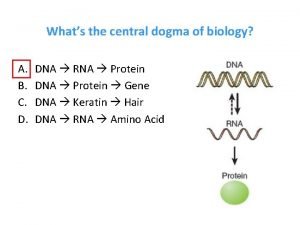
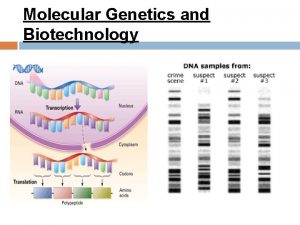
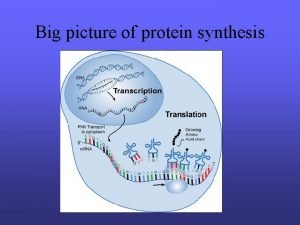
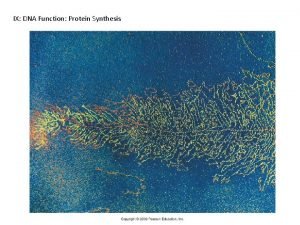
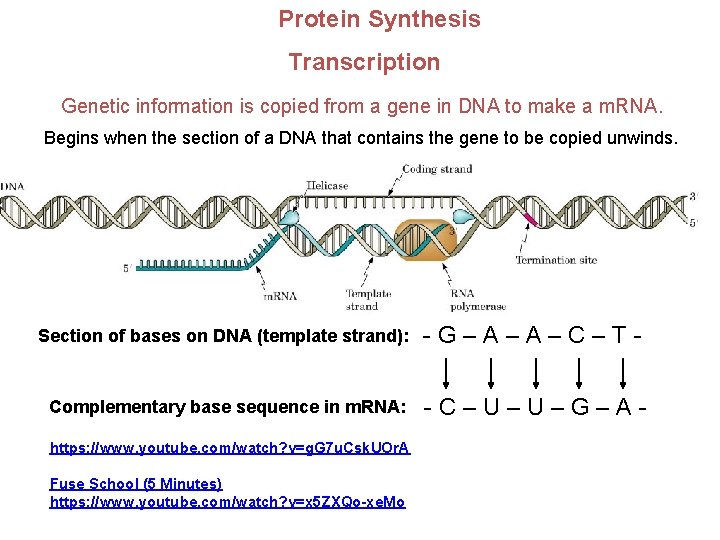
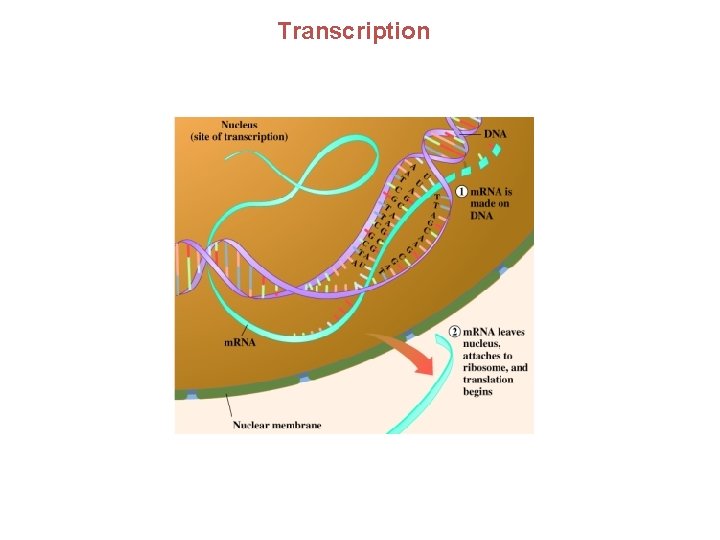
Protein Synthesis Transcription Genetic information is copied from a gene in DNA to make a m. RNA. Begins when the section of a DNA that contains the gene to be copied unwinds. Section of bases on DNA (template strand): -G–A–A–C–T- Complementary base sequence in m. RNA: -C–U–U–G–A- https: //www. youtube. com/watch? v=g. G 7 u. Csk. UOr. A Fuse School (5 Minutes) https: //www. youtube. com/watch? v=x 5 ZXQo-xe. Mo
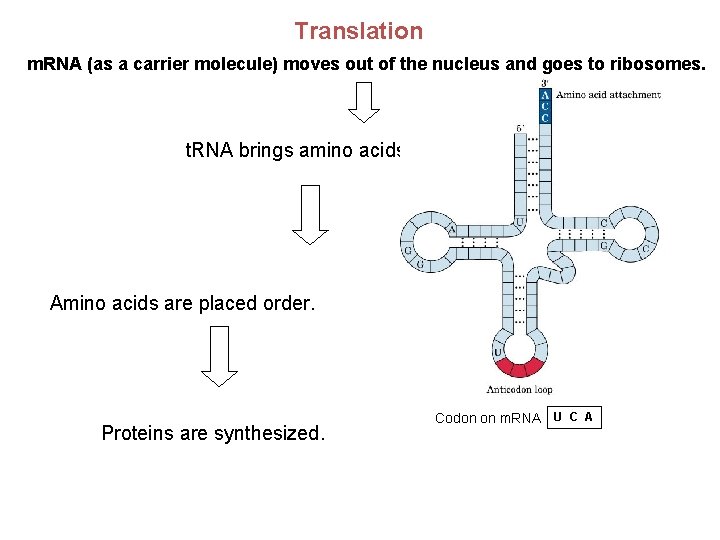
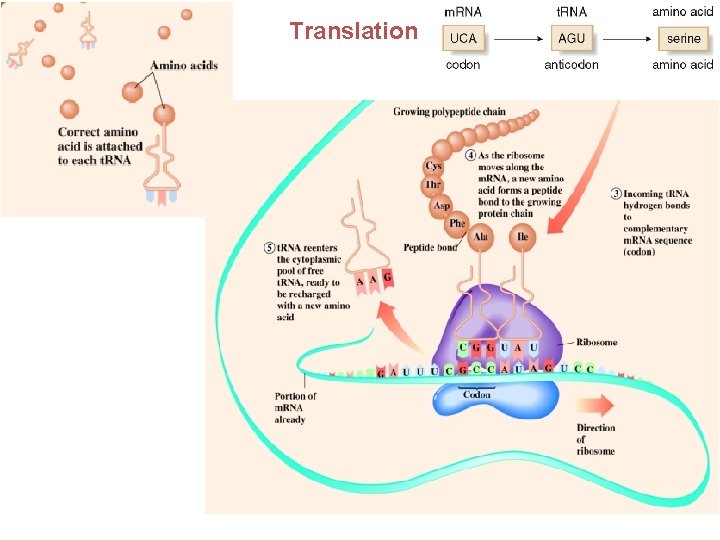
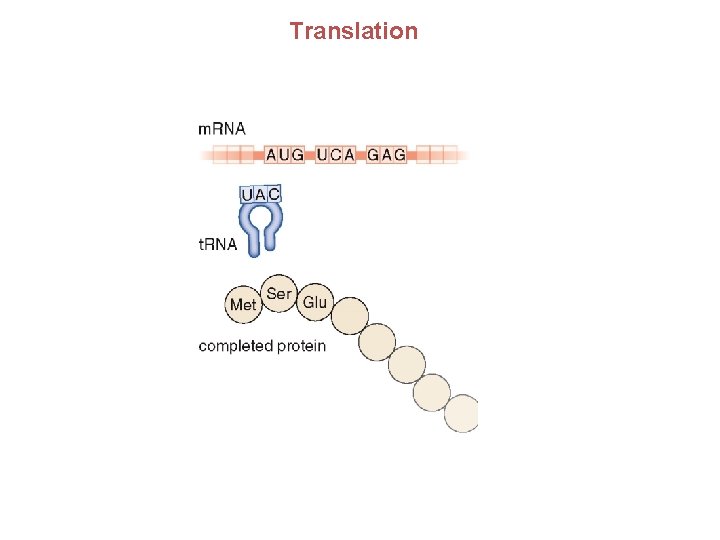
Translation m. RNA (as a carrier molecule) moves out of the nucleus and goes to ribosomes. t. RNA brings amino acids. Amino acids are placed order. Proteins are synthesized. Codon on m. RNA U C A
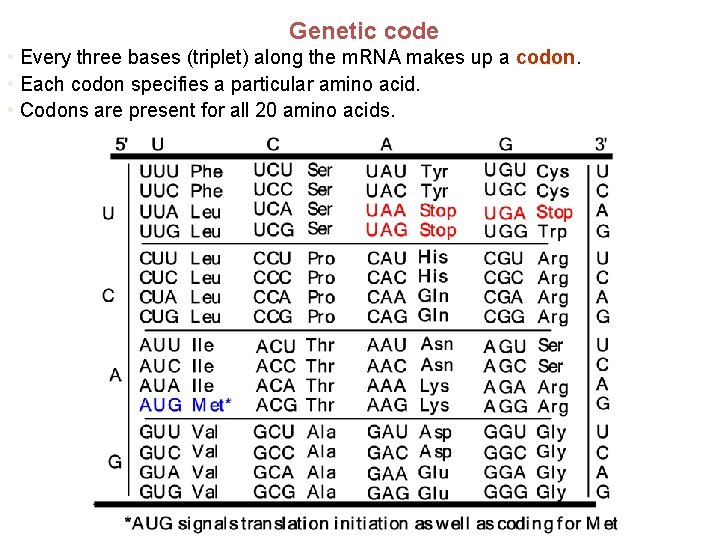
Genetic code • Every three bases (triplet) along the m. RNA makes up a codon. • Each codon specifies a particular amino acid. • Codons are present for all 20 amino acids.
Transcription
Translation
Translation
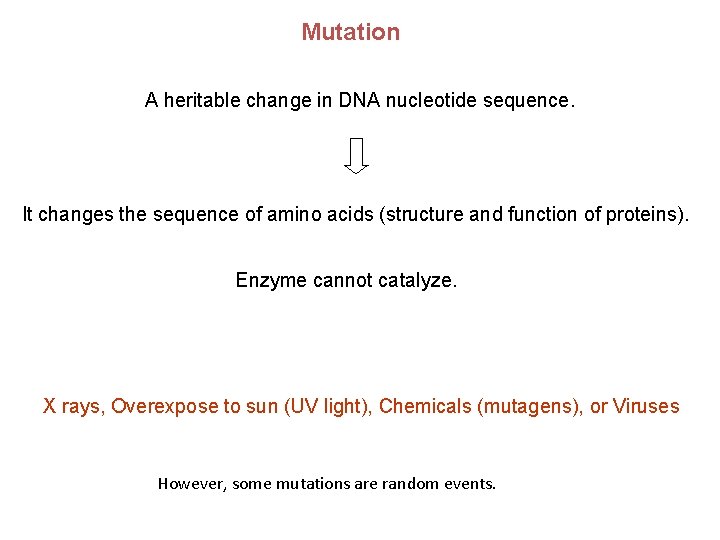
Mutation A heritable change in DNA nucleotide sequence. It changes the sequence of amino acids (structure and function of proteins). Enzyme cannot catalyze. X rays, Overexpose to sun (UV light), Chemicals (mutagens), or Viruses However, some mutations are random events.
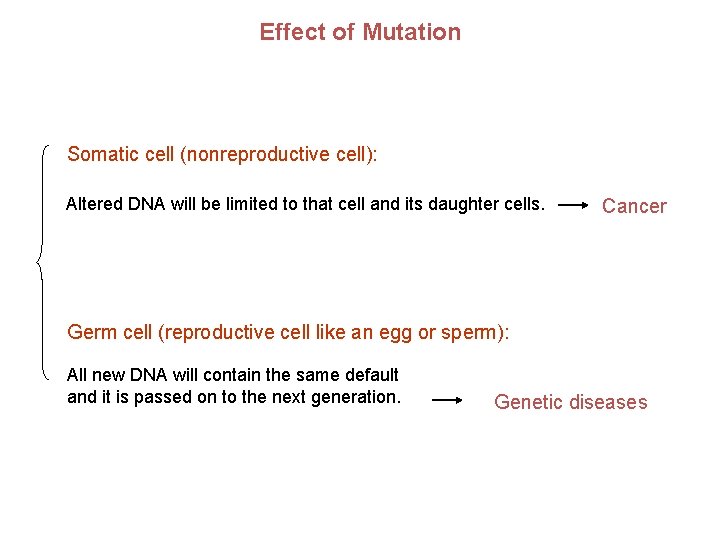
Effect of Mutation Somatic cell (nonreproductive cell): Altered DNA will be limited to that cell and its daughter cells. Cancer Germ cell (reproductive cell like an egg or sperm): All new DNA will contain the same default and it is passed on to the next generation. Genetic diseases
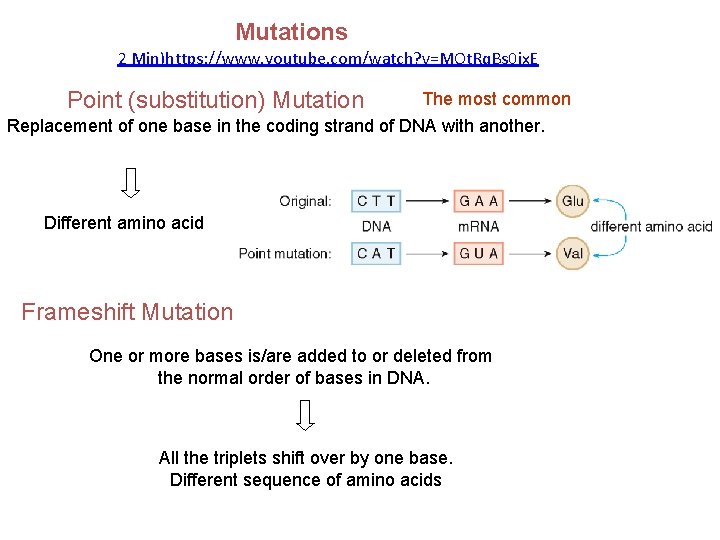
Mutations 2 Min)https: //www. youtube. com/watch? v=MOt. Rq. Bs 0 jx. E Point (substitution) Mutation The most common Replacement of one base in the coding strand of DNA with another. Different amino acid Frameshift Mutation One or more bases is/are added to or deleted from the normal order of bases in DNA. All the triplets shift over by one base. Different sequence of amino acids
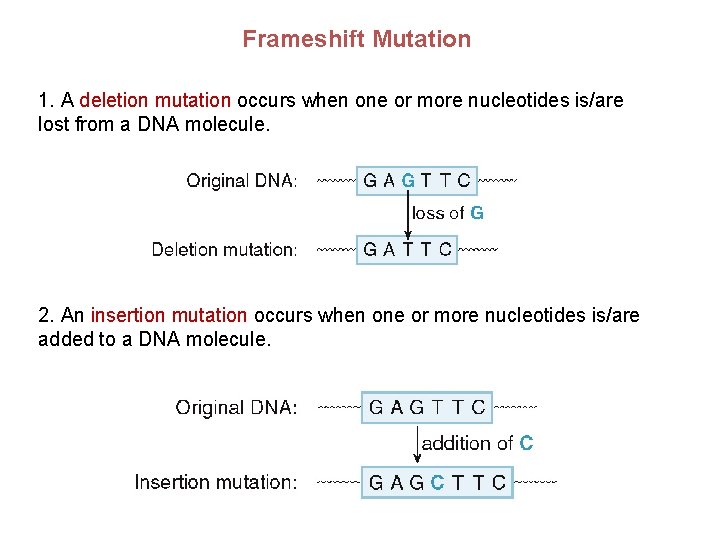
Frameshift Mutation 1. A deletion mutation occurs when one or more nucleotides is/are lost from a DNA molecule. 2. An insertion mutation occurs when one or more nucleotides is/are added to a DNA molecule.
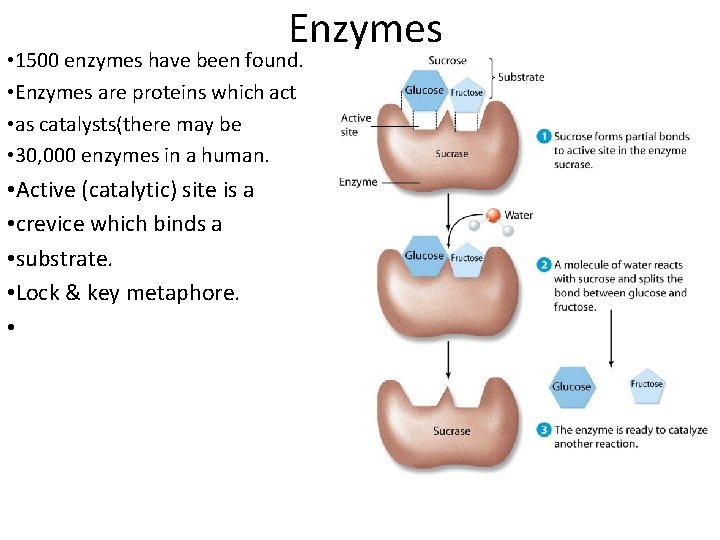
Enzymes • 1500 enzymes have been found. • Enzymes are proteins which act • as catalysts(there may be • 30, 000 enzymes in a human. • Active (catalytic) site is a • crevice which binds a • substrate. • Lock & key metaphore. •
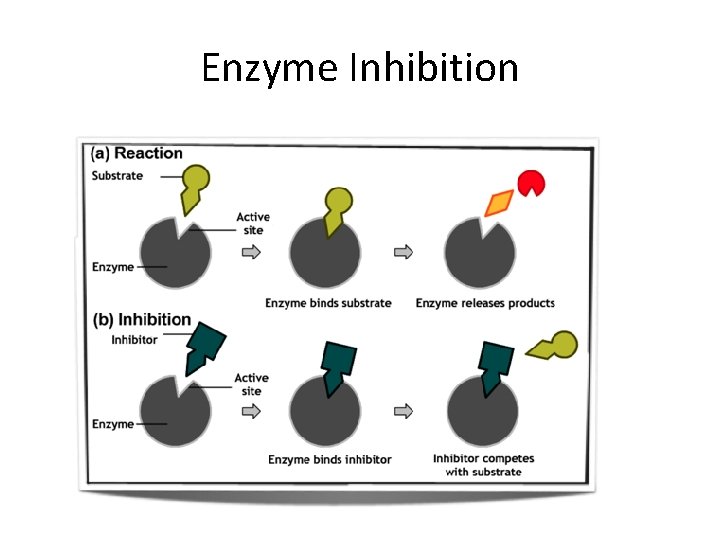
Enzyme Inhibition
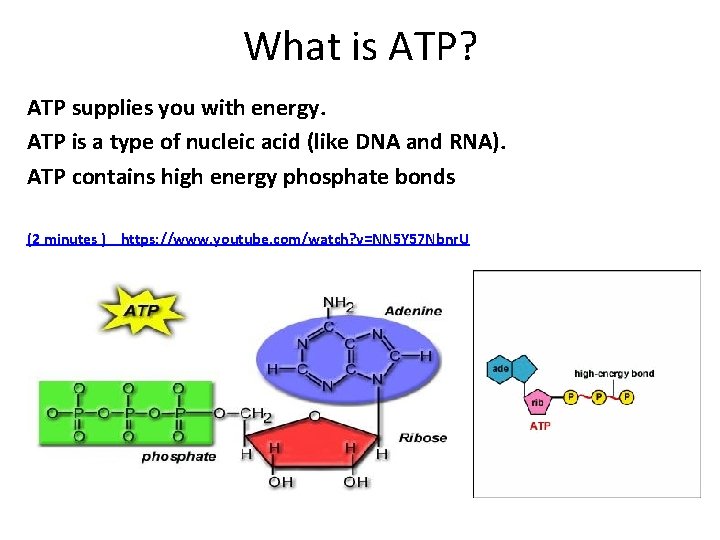
What is ATP? ATP supplies you with energy. ATP is a type of nucleic acid (like DNA and RNA). ATP contains high energy phosphate bonds (2 minutes ) https: //www. youtube. com/watch? v=NN 5 Y 57 Nbnr. U
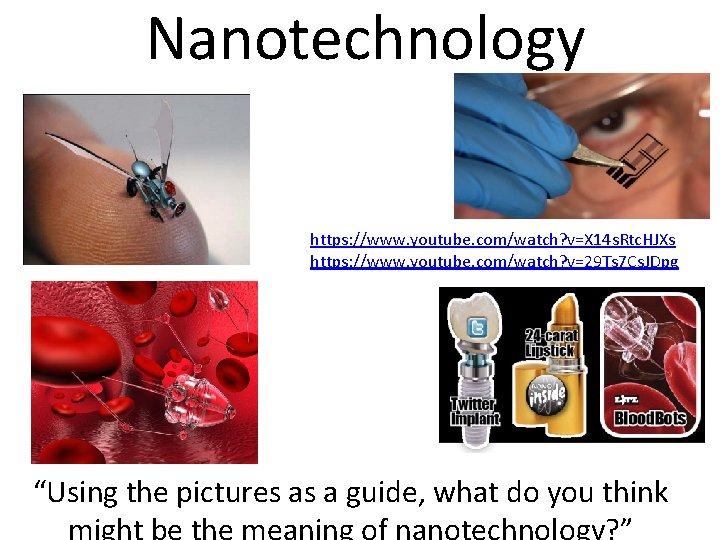
Nanotechnology https: //www. youtube. com/watch? v=X 14 s. Rtc. HJXs https: //www. youtube. com/watch? v=29 Ts 7 Cs. JDpg “Using the pictures as a guide, what do you think
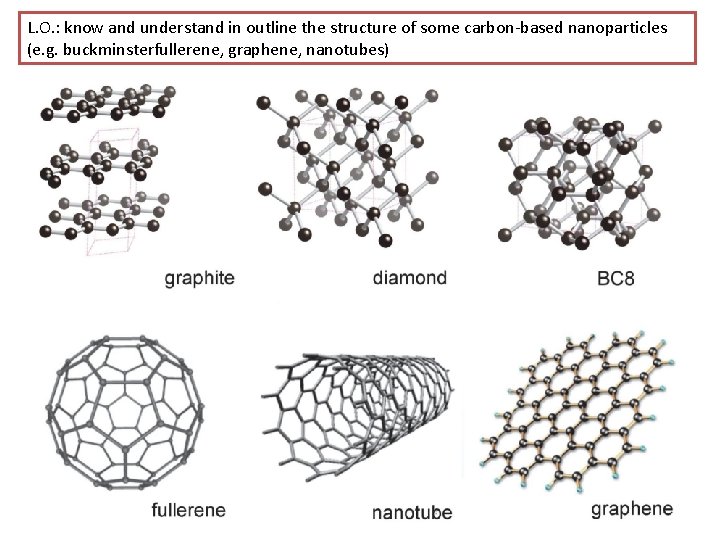
Learning Objectives ü appreciate the nanoscale ü know some uses of nanoparticles ü know and understand how chemistry can help to solve some environmental problems ü know and understand how chemistry can help to use natural resources more efficiently ü know and understand in outline the structure of some carbon-based nanoparticles (e. g. buckminsterfullerene, graphene nanotubes)
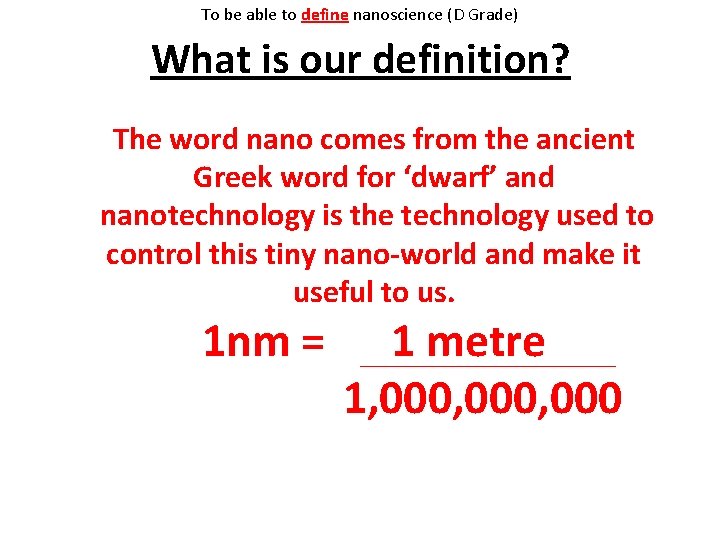
To be able to define nanoscience (D Grade) What is our definition? The word nano comes from the ancient Greek word for ‘dwarf’ and nanotechnology is the technology used to control this tiny nano-world and make it useful to us. 1 nm = 1 metre 1, 000, 000
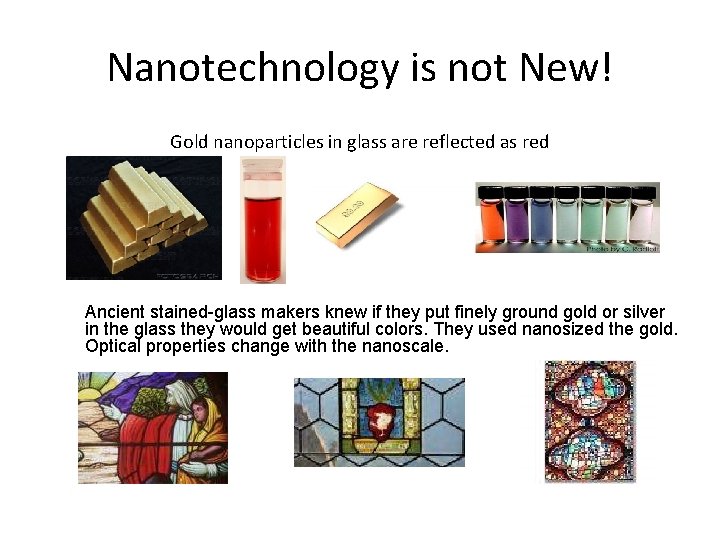
Nanotechnology is not New! Gold nanoparticles in glass are reflected as red Ancient stained-glass makers knew if they put finely ground gold or silver in the glass they would get beautiful colors. They used nanosized the gold. Optical properties change with the nanoscale.
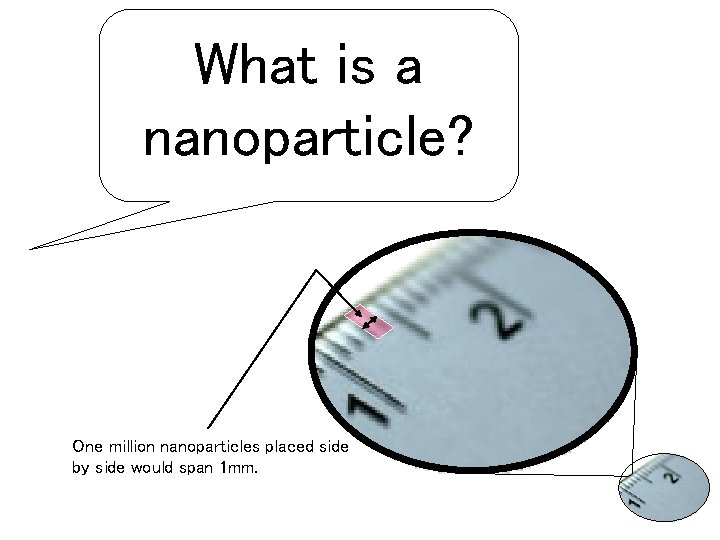
Chapter 6 GCSE Science What is a nanoparticle? One million nanoparticles placed side by side would span 1 mm.
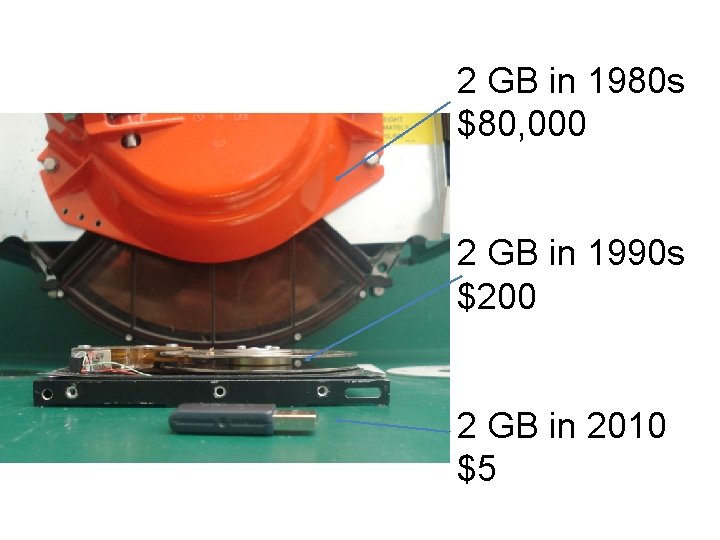
2 GB in 1980 s $80, 000 2 GB in 1990 s $200 2 GB in 2010 $5
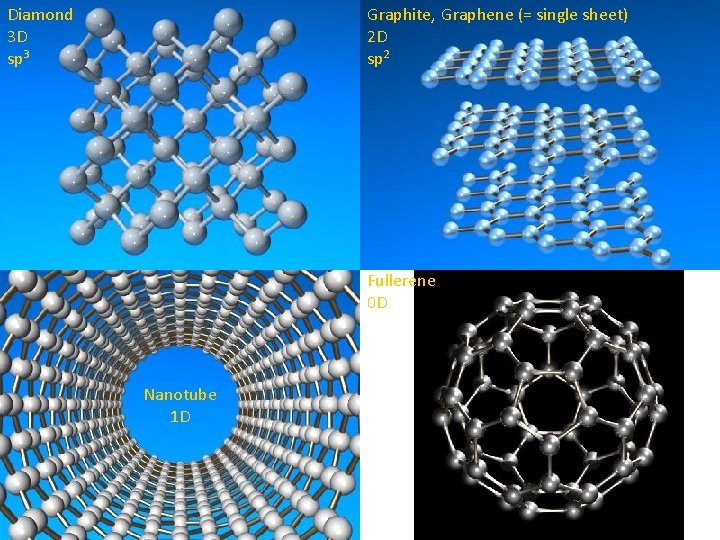
Allotropes • Carbon can bond with itself in at least three different ways giving us 3 different materials – Diamond – Graphite – Buckyballs and nanotubes
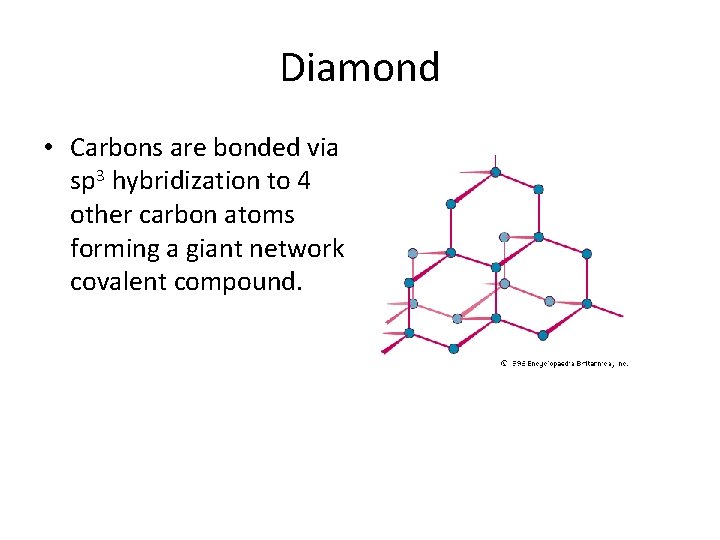
Diamond • Carbons are bonded via sp 3 hybridization to 4 other carbon atoms forming a giant network covalent compound.
Properties of Diamond • High melting point due to strong directional covalent bonds (3550 C) • Extremely hard because it is difficult to break atoms apart or move them in relation to one another • No electrical conductivity because electrons are localized in specific bonds • Insoluble in polar and non-polar solvents because molecular bonds are stronger than any intermolecular forces
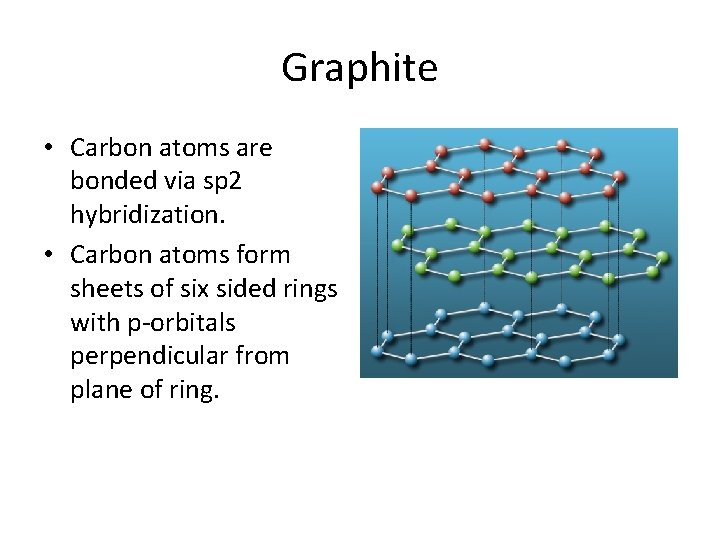
Graphite • Carbon atoms are bonded via sp 2 hybridization. • Carbon atoms form sheets of six sided rings with p-orbitals perpendicular from plane of ring.
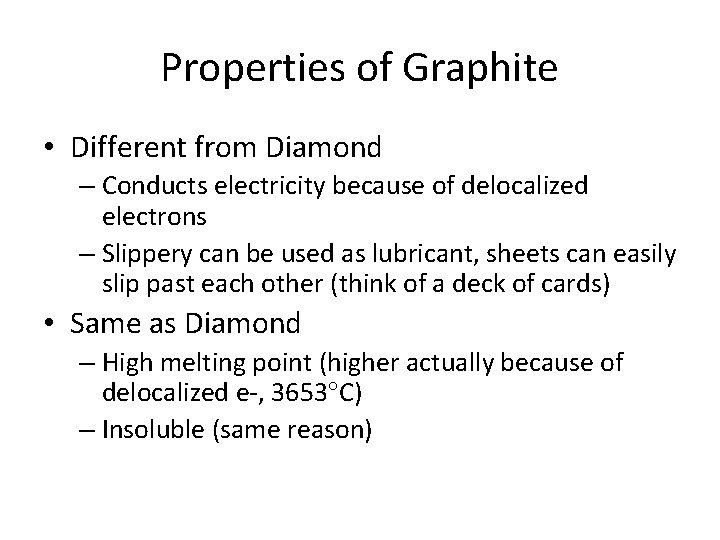
Properties of Graphite • Different from Diamond – Conducts electricity because of delocalized electrons – Slippery can be used as lubricant, sheets can easily slip past each other (think of a deck of cards) • Same as Diamond – High melting point (higher actually because of delocalized e-, 3653 C) – Insoluble (same reason)
Diamond 3 D sp 3 Graphite, Graphene (= single sheet) 2 D sp 2 Fullerene 0 D Nanotube 1 D
L. O. : know and understand in outline the structure of some carbon-based nanoparticles (e. g. buckminsterfullerene, graphene, nanotubes)
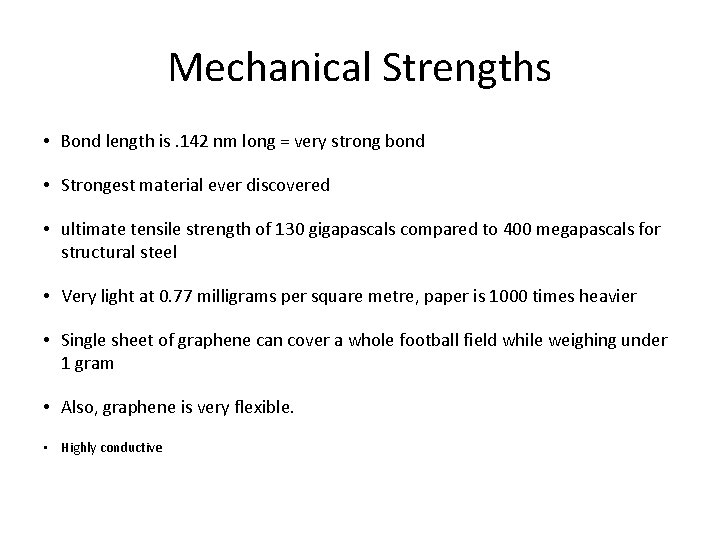
Mechanical Strengths • Bond length is. 142 nm long = very strong bond • Strongest material ever discovered • ultimate tensile strength of 130 gigapascals compared to 400 megapascals for structural steel • Very light at 0. 77 milligrams per square metre, paper is 1000 times heavier • Single sheet of graphene can cover a whole football field while weighing under 1 gram • Also, graphene is very flexible. • Highly conductive
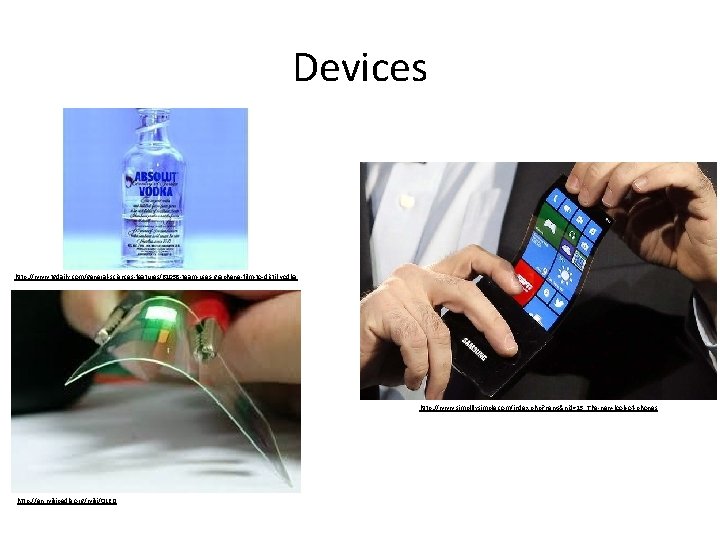
Devices http: //www. tgdaily. com/general-sciences-features/61058 -team-uses-graphene-film-to-distil-vodka http: //www. simplifysimple. com/index. php? news&nid=15_The-new-look-of-phones http: //en. wikipedia. org/wiki/OLED
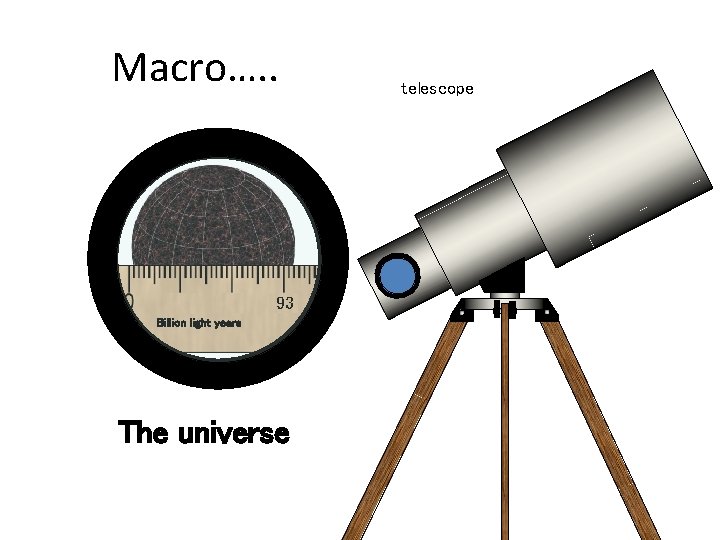
Macro…. . 93 Chapter 6 GCSE Science Billion light years The universe telescope
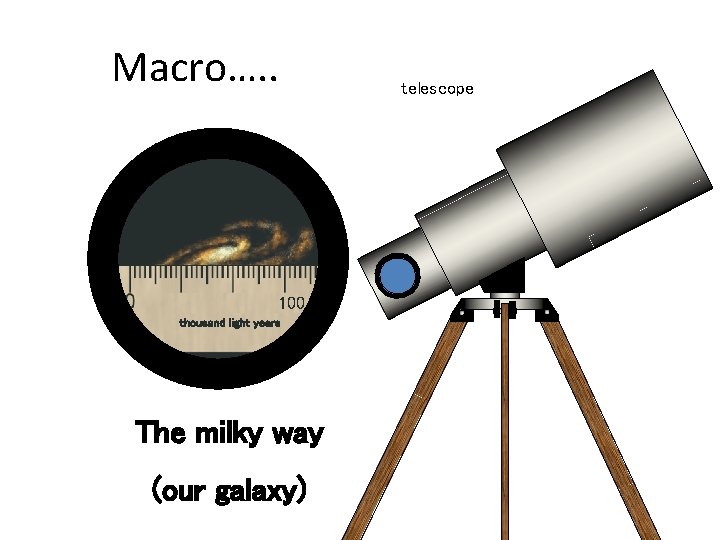
Macro…. . 100 Chapter 6 GCSE Science thousand light years The milky way (our galaxy) telescope
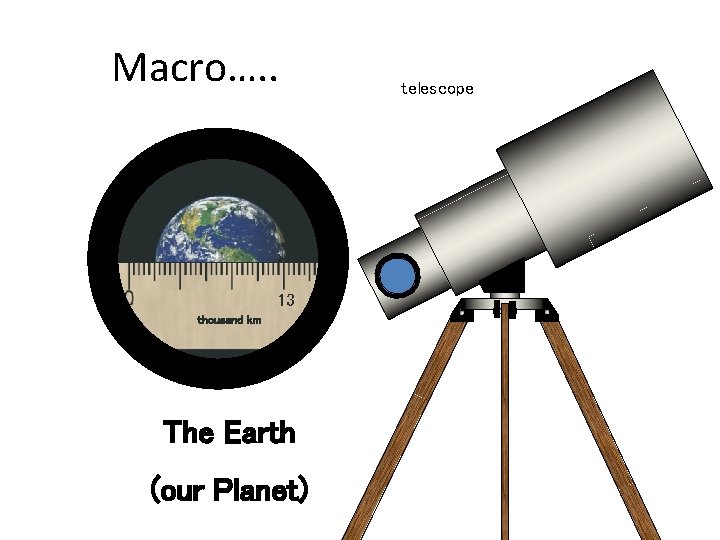
Macro…. . 13 Chapter 6 GCSE Science thousand km The Earth (our Planet) telescope
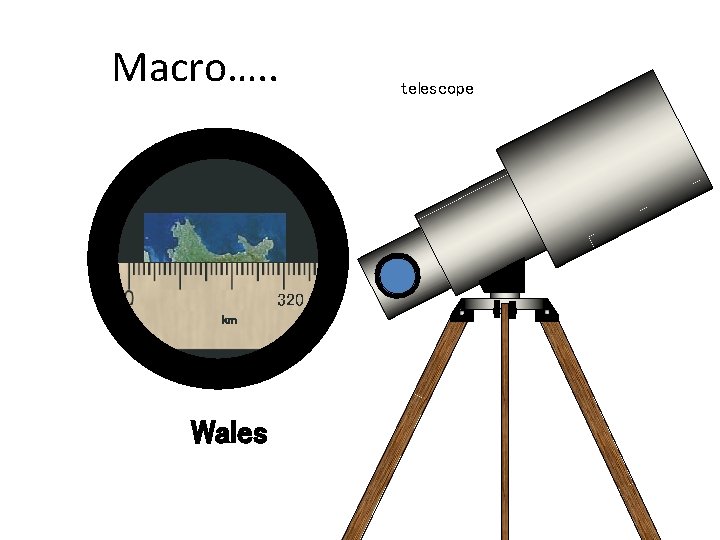
Macro…. . 320 Chapter 6 GCSE Science km Wales telescope
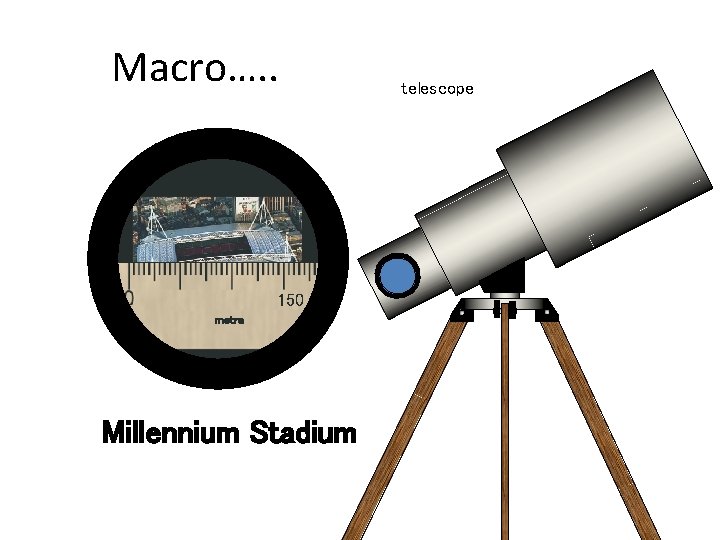
Macro…. . 150 Chapter 6 GCSE Science metre Millennium Stadium telescope
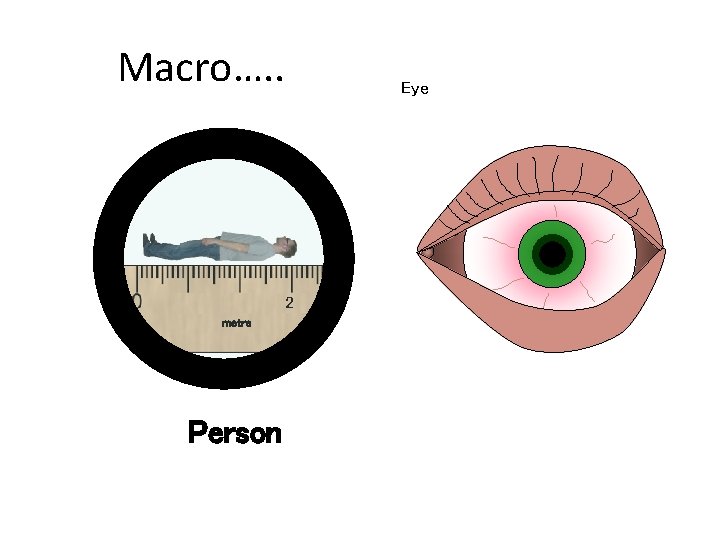
Macro…. . 2 Chapter 6 GCSE Science metre Person Eye
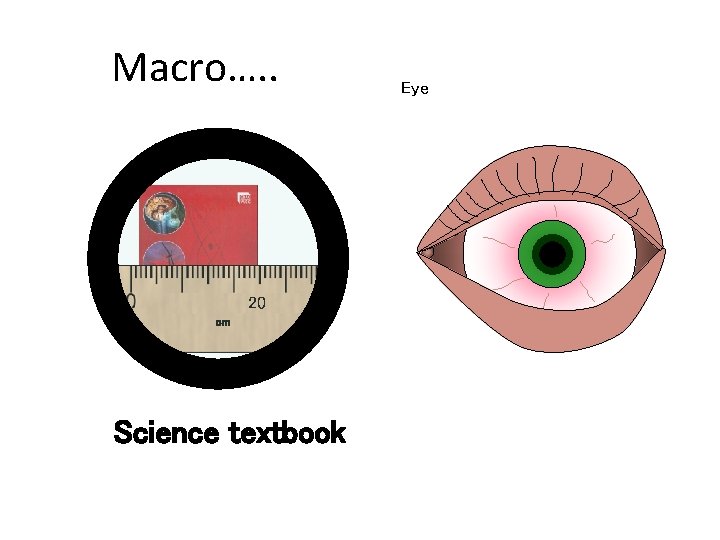
Macro…. . 20 Chapter 6 GCSE Science cm Science textbook Eye
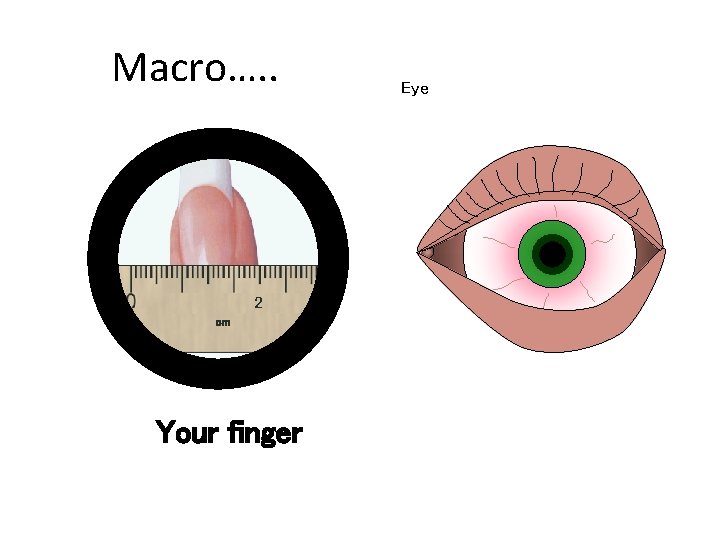
Macro…. . 2 Chapter 6 GCSE Science cm Your finger Eye
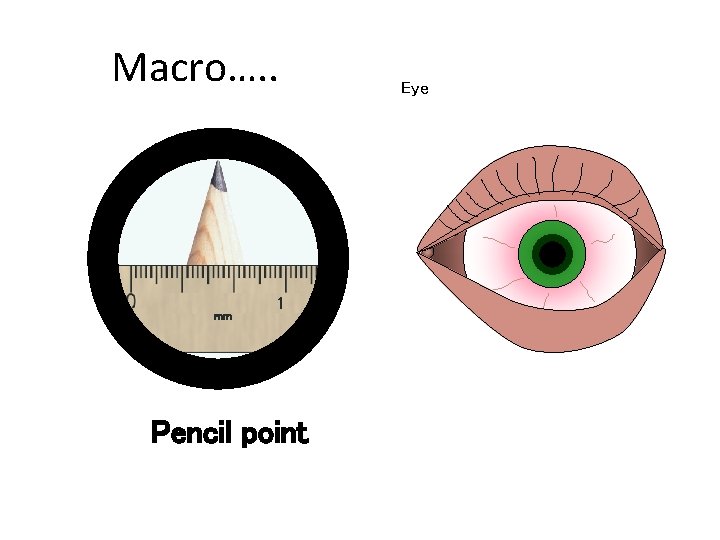
Macro…. . Chapter 6 GCSE Science mm 1 Pencil point Eye
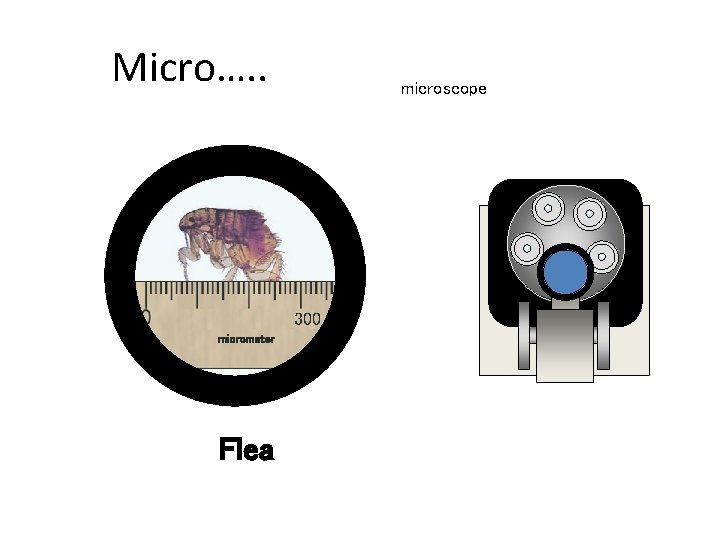
Micro…. . microscope 300 Chapter 6 GCSE Science micrometer Flea
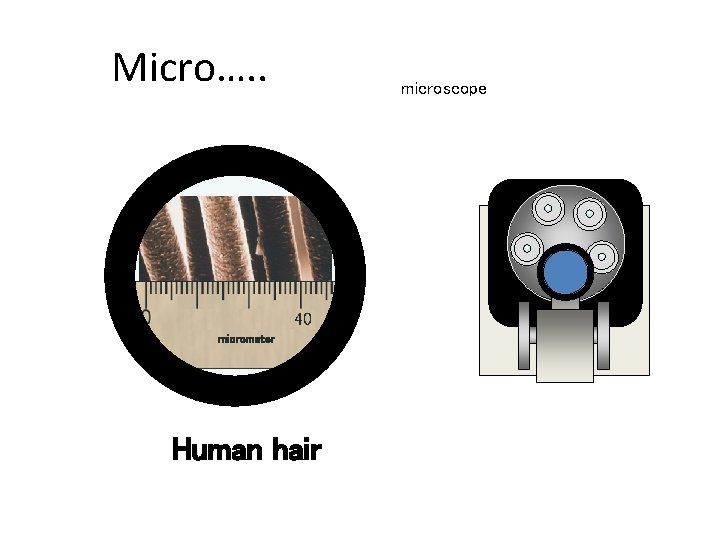
Micro…. . microscope 40 Chapter 6 GCSE Science micrometer Human hair
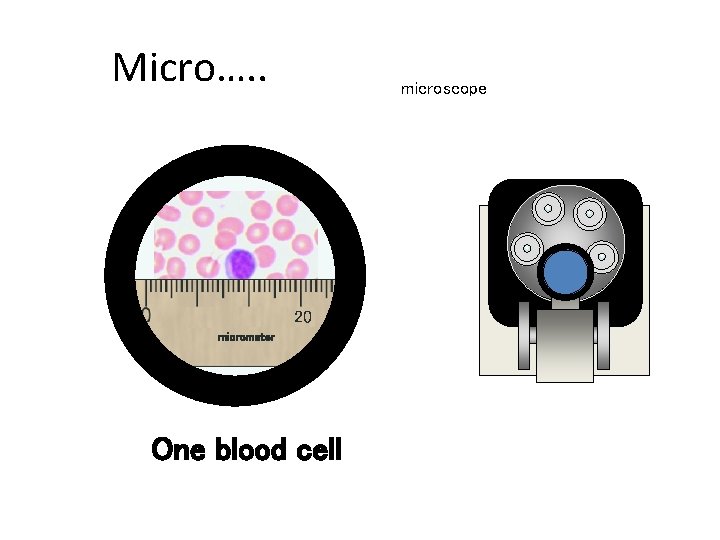
Micro…. . microscope 20 Chapter 6 GCSE Science micrometer One blood cell
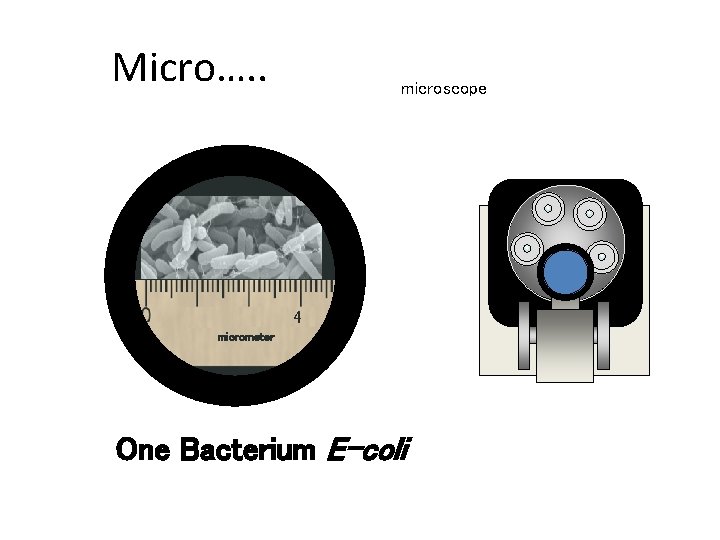
Micro…. . microscope 4 Chapter 6 GCSE Science micrometer One Bacterium E-coli
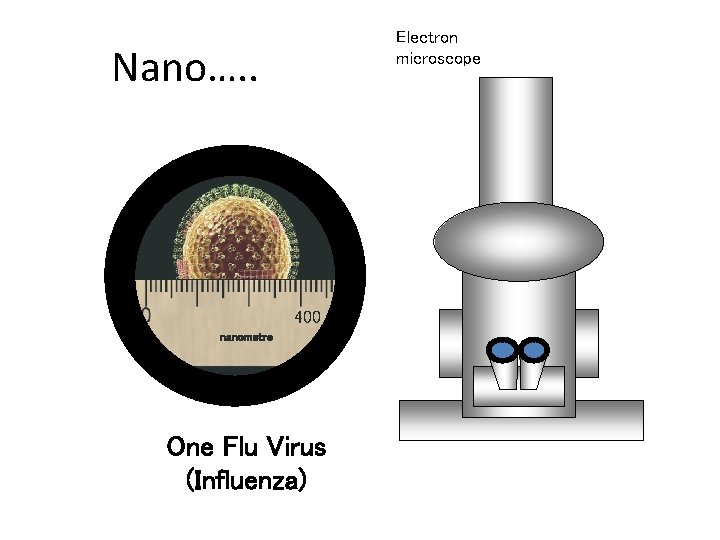
Electron microscope Nano…. . 400 Chapter 6 GCSE Science nanometre One Flu Virus (Influenza)
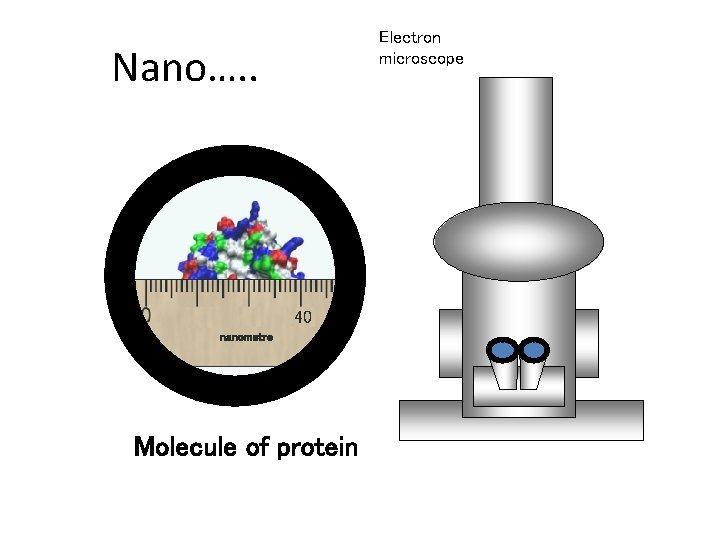
Electron microscope Nano…. . 40 Chapter 6 GCSE Science nanometre Molecule of protein
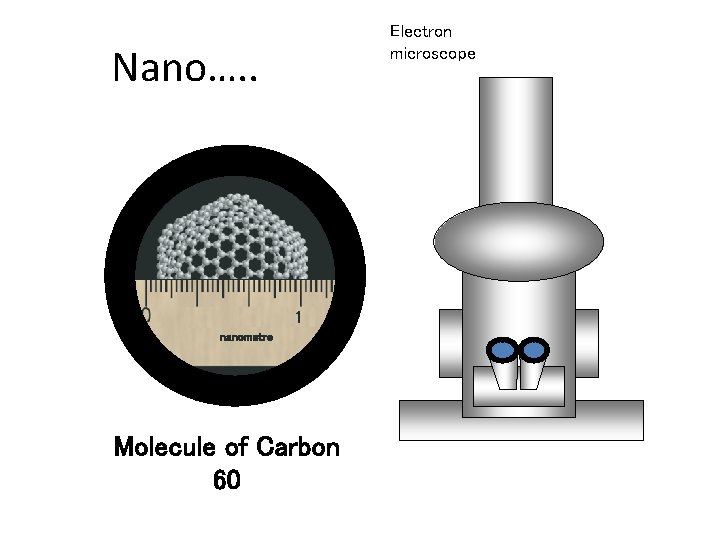
Electron microscope Nano…. . 1 Chapter 6 GCSE Science nanometre Molecule of Carbon 60
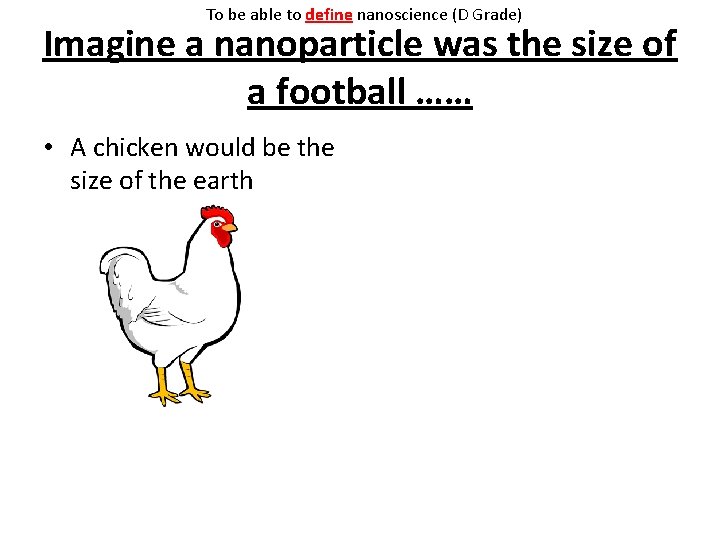
To be able to define nanoscience (D Grade) Imagine a nanoparticle was the size of a football …… • A chicken would be the size of the earth
To be able to define nanoscience (D Grade) Video • Watch the video and define `nanotechology` https: //www. youtube. com/watch? v=DAOFpgocfrg
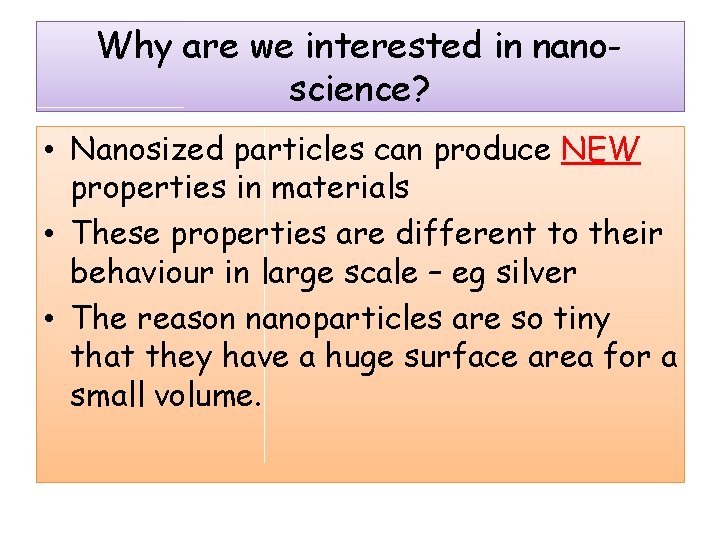
Why are we interested in nanoscience? • Nanosized particles can produce NEW properties in materials • These properties are different to their behaviour in large scale – eg silver • The reason nanoparticles are so tiny that they have a huge surface area for a small volume.
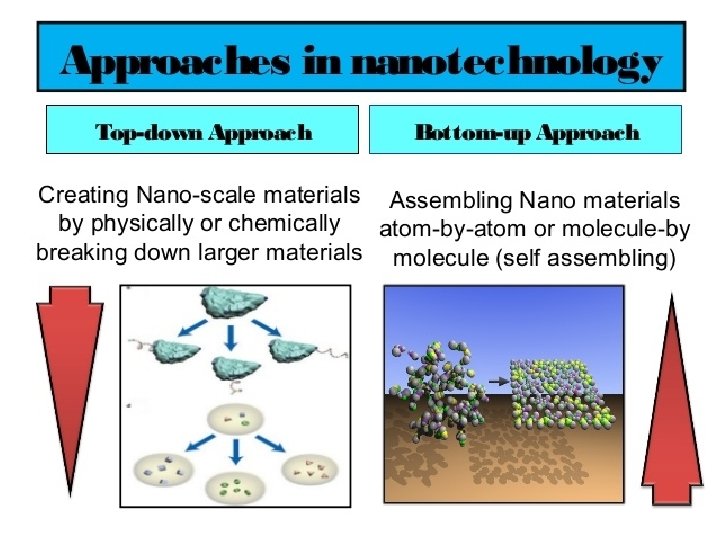
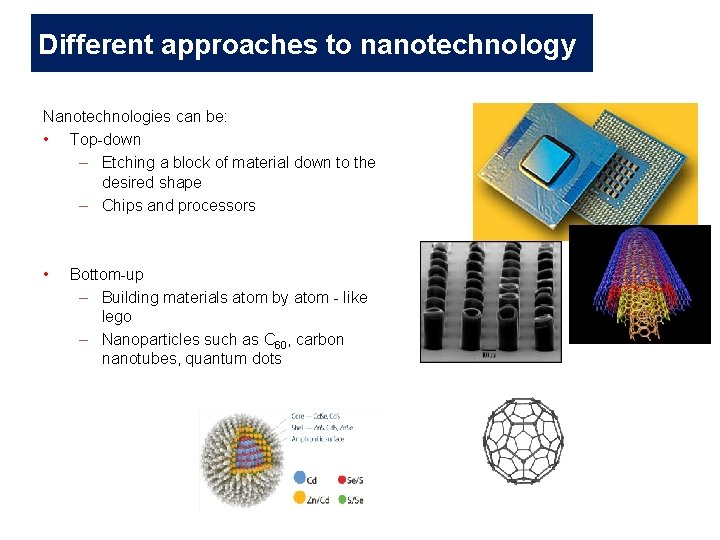
Different approaches to nanotechnology Nanotechnologies can be: • Top-down – Etching a block of material down to the desired shape – Chips and processors • Bottom-up – Building materials atom by atom - like lego – Nanoparticles such as C 60, carbon nanotubes, quantum dots
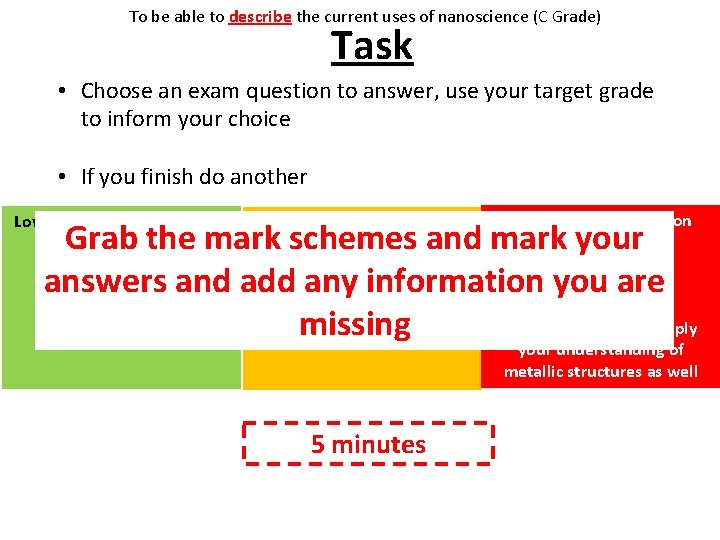
To be able to describe the current uses of nanoscience (C Grade) Task • Choose an exam question to answer, use your target grade to inform your choice • If you finish do another Low Demand Exam Question Standard Demand Question High Deamand Question Grab the mark schemes and mark your Hip Replacement answers information you are Sun Cream and add Eitherany Tennis Ball Question This requires you to apply missing your understanding of metallic structures as well 5 minutes
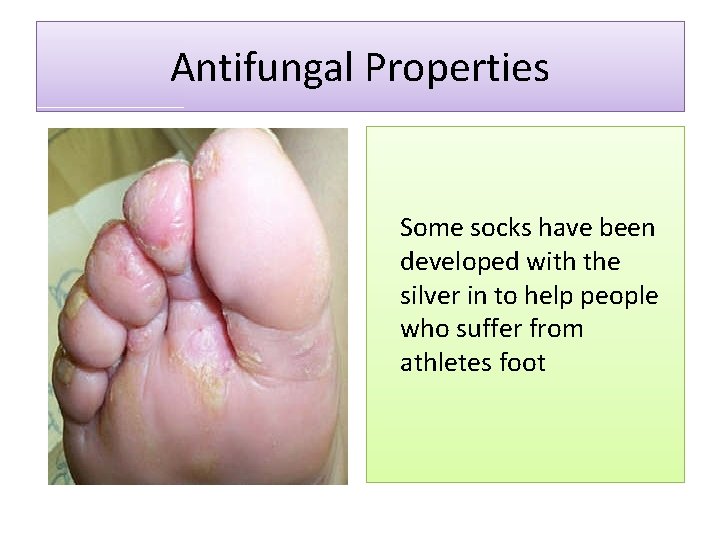
Antifungal Properties Some socks have been developed with the silver in to help people who suffer from athletes foot
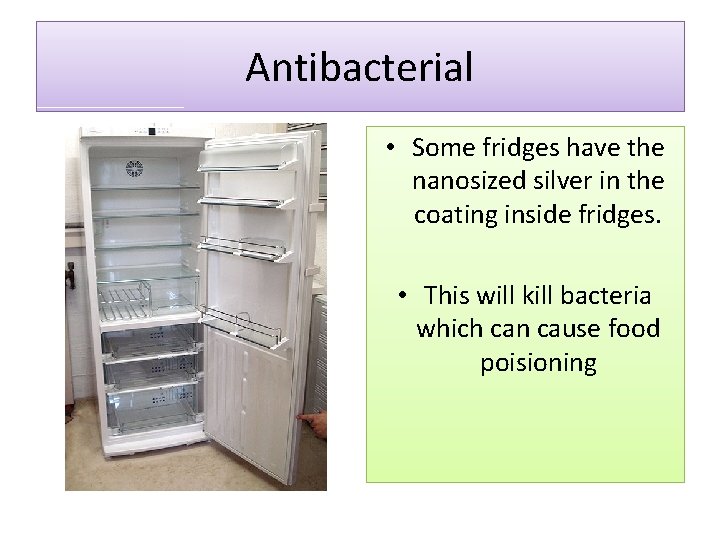
Antibacterial • Some fridges have the nanosized silver in the coating inside fridges. • This will kill bacteria which can cause food poisioning
Nano-sized zinc oxide absorb and reflect UV light while being transparent to visible light. Why is this useful? Where could be use this? https: //www. youtube. com/watch? v=C 7 Bjk. XF 2 bx. U
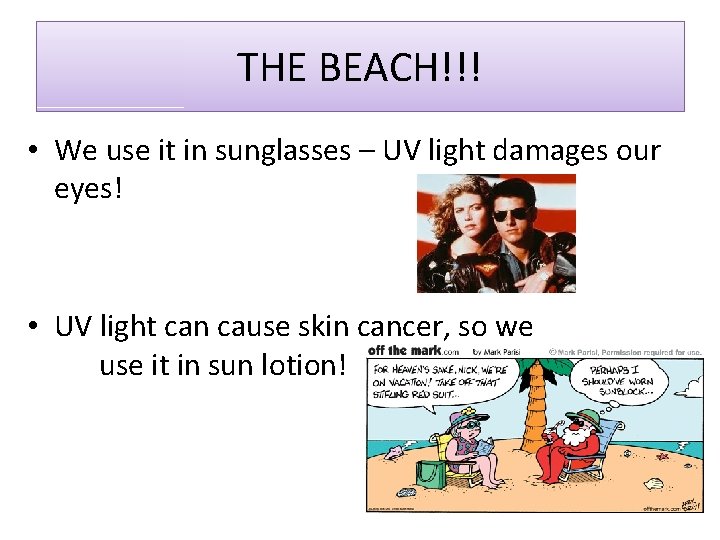
THE BEACH!!! • We use it in sunglasses – UV light damages our eyes! • UV light can cause skin cancer, so we use it in sun lotion!
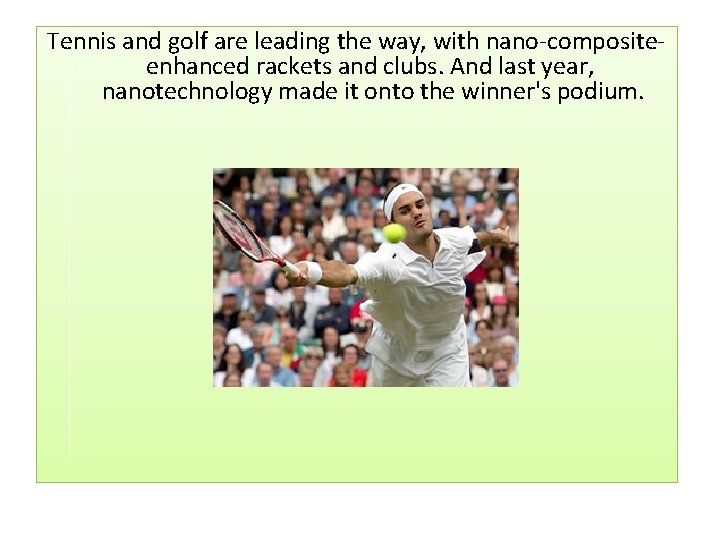
Tennis and golf are leading the way, with nano-compositeenhanced rackets and clubs. And last year, nanotechnology made it onto the winner's podium.
Cosmetics Nanaoparticles in face creams can be absorbed much deeper into the skin.
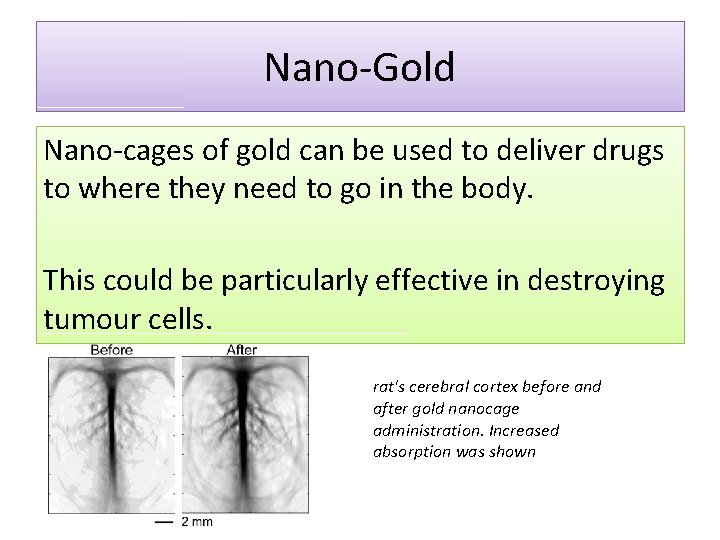
Nano-Gold Nano-cages of gold can be used to deliver drugs to where they need to go in the body. This could be particularly effective in destroying tumour cells. rat's cerebral cortex before and after gold nanocage administration. Increased absorption was shown
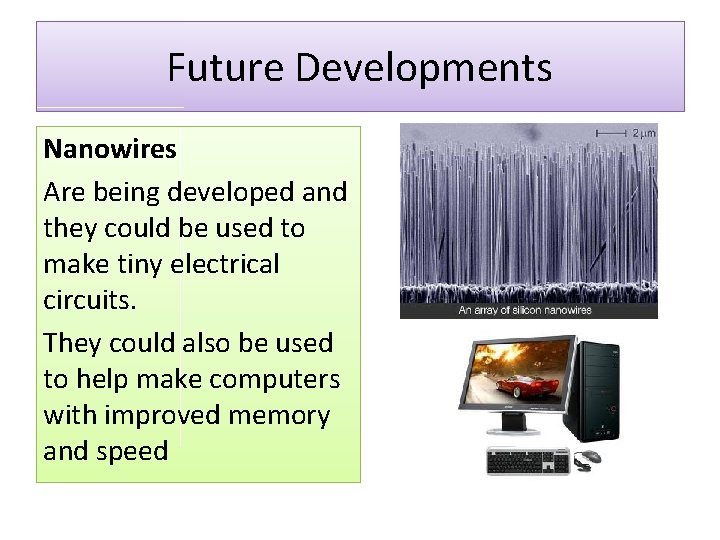
Future Developments Nanowires Are being developed and they could be used to make tiny electrical circuits. They could also be used to help make computers with improved memory and speed
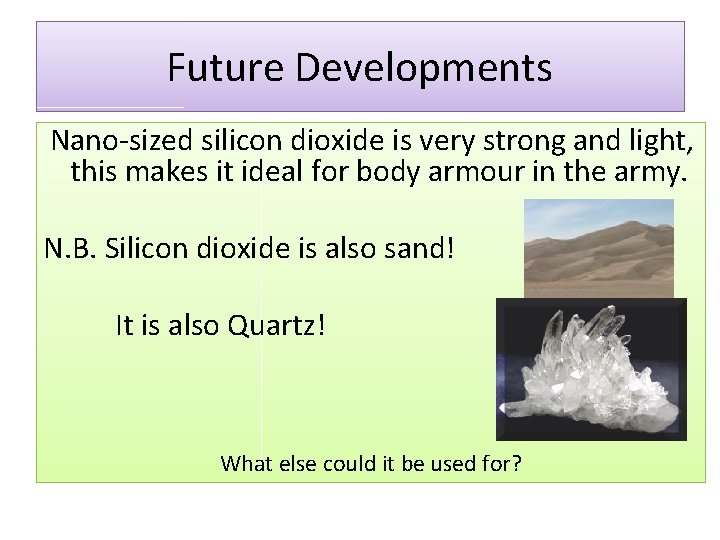
Future Developments Nano-sized silicon dioxide is very strong and light, this makes it ideal for body armour in the army. N. B. Silicon dioxide is also sand! It is also Quartz! What else could it be used for?
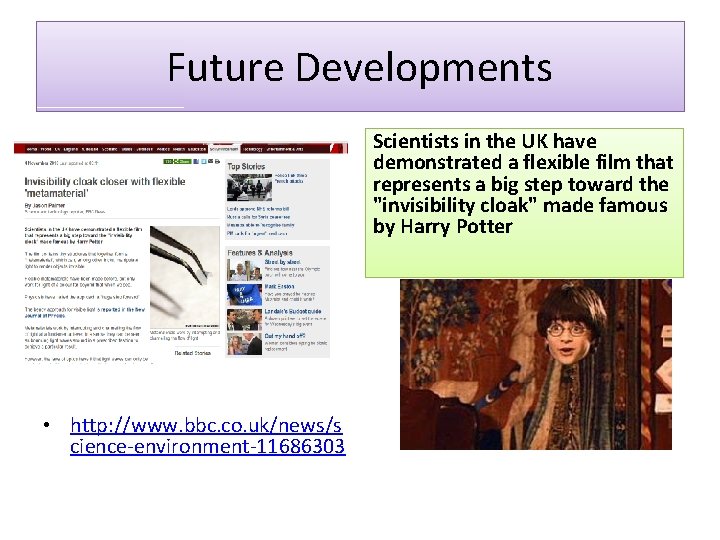
Future Developments Scientists in the UK have demonstrated a flexible film that represents a big step toward the "invisibility cloak" made famous by Harry Potter • http: //www. bbc. co. uk/news/s cience-environment-11686303
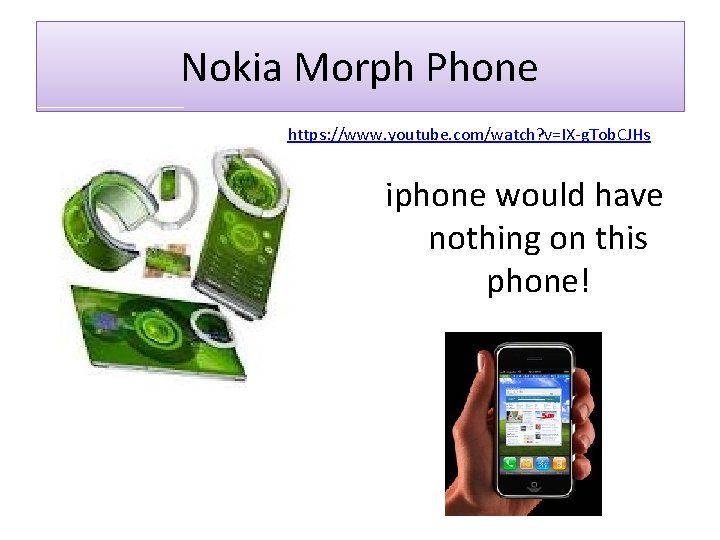
Nokia Morph Phone https: //www. youtube. com/watch? v=IX-g. Tob. CJHs iphone would have nothing on this phone!
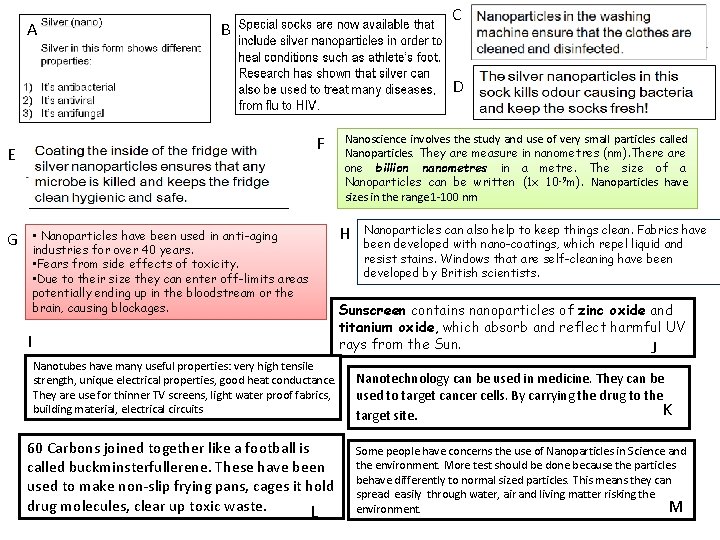
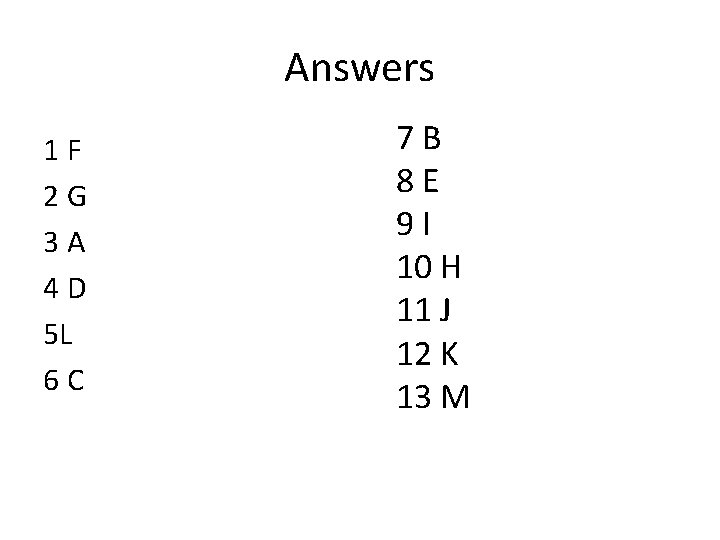
A C B D F E • Nanoparticles have been used in anti-aging industries for over 40 years. • Fears from side effects of toxicity. • Due to their size they can enter off-limits areas potentially ending up in the bloodstream or the brain, causing blockages. G I Nanotubes have many useful properties: very high tensile strength, unique electrical properties, good heat conductance. They are use for thinner TV screens, light water proof fabrics, building material, electrical circuits 60 Carbons joined together like a football is called buckminsterfullerene. These have been used to make non-slip frying pans, cages it hold drug molecules, clear up toxic waste. L Nanoscience involves the study and use of very small particles called Nanoparticles. They are measure in nanometres (nm). There are one billion nanometres in a metre. The size of a Nanoparticles can be written (1 x 10 -9 m). Nanoparticles have sizes in the range 1 -100 nm H Nanoparticles can also help to keep things clean. Fabrics have been developed with nano-coatings, which repel liquid and resist stains. Windows that are self-cleaning have been developed by British scientists. Sunscreen contains nanoparticles of zinc oxide and titanium oxide, which absorb and reflect harmful UV rays from the Sun. J Nanotechnology can be used in medicine. They can be used to target cancer cells. By carrying the drug to the K target site. Some people have concerns the use of Nanoparticles in Science and the environment. More test should be done because the particles behave differently to normal sized particles. This means they can spread easily through water, air and living matter risking the M environment.
Answers 1 F 2 G 3 A 4 D 5 L 6 C 7 B 8 E 9 I 10 H 11 J 12 K 13 M
To be able to describe the current uses of nanoscience (C Grade) Task • Choose an exam question to answer, use your target grade to inform your choice • If you finish do another Low Demand Exam Question Standard Demand Question High Deamand Question Grab the mark schemes and mark your Hip Replacement answers information you are Sun Cream and add Eitherany Tennis Ball Question This requires you to apply missing your understanding of metallic structures as well 5 minutes
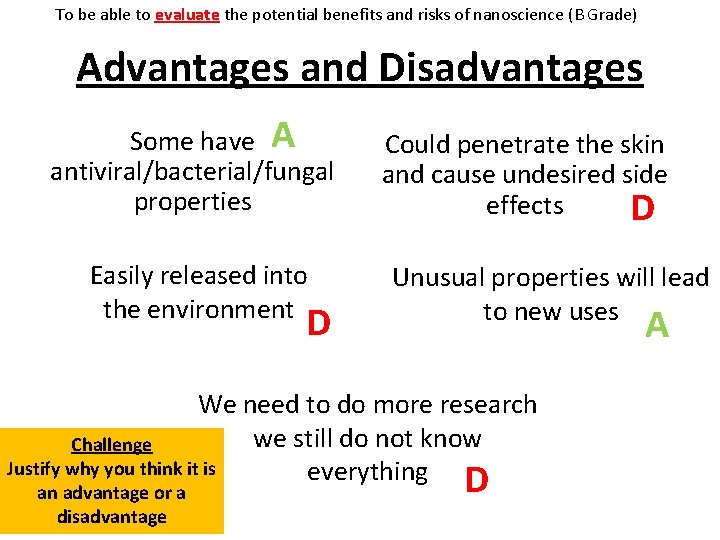
To be able to evaluate the potential benefits and risks of nanoscience (B Grade) Advantages and Disadvantages Some have A antiviral/bacterial/fungal properties Easily released into the environment D Could penetrate the skin and cause undesired side effects D Unusual properties will lead to new uses We need to do more research we still do not know Challenge Justify why you think it is everything D an advantage or a disadvantage A
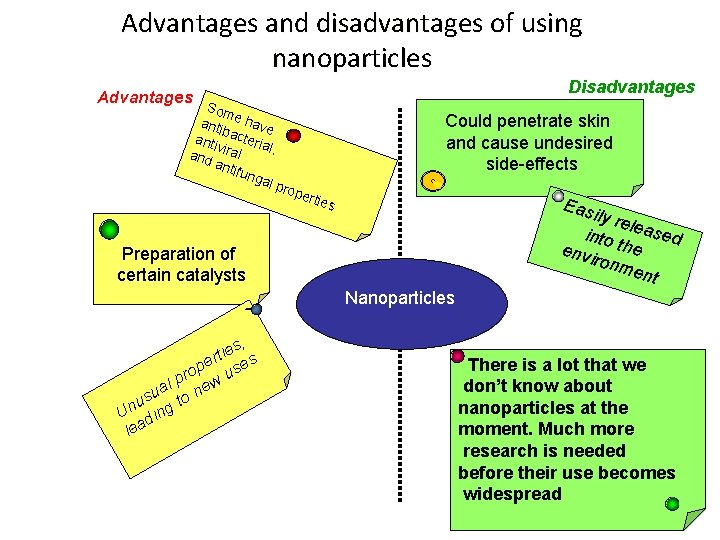
Advantages and disadvantages of using nanoparticles Disadvantages Advantages S om anti e have bac t anti vira erial, l and anti fung al p ro Could penetrate skin and cause undesired side-effects pert ies Eas ily re into leased envi the ronm ent Preparation of certain catalysts Chapter 6 GCSE Science Nanoparticles s, e i ert ses p pro ew u l a su to n u Un ding lea There is a lot that we don’t know about nanoparticles at the moment. Much more research is needed before their use becomes widespread
Activity All scientific advances are faced with 2 questions: - What can we do? - What should we do? Pick one of the ideas for future development and think about the two questions. Come to an overall opinion and present your findings to the person next to you
Peer Assessment You will then peer assess each others presentations using 2 stars and a wish (2 good points and one improvement) Ask yourself – Have any of the presentations changed your opinion of nanoscience?