
Molecular Genetics and Biotechnology What is DNA Main
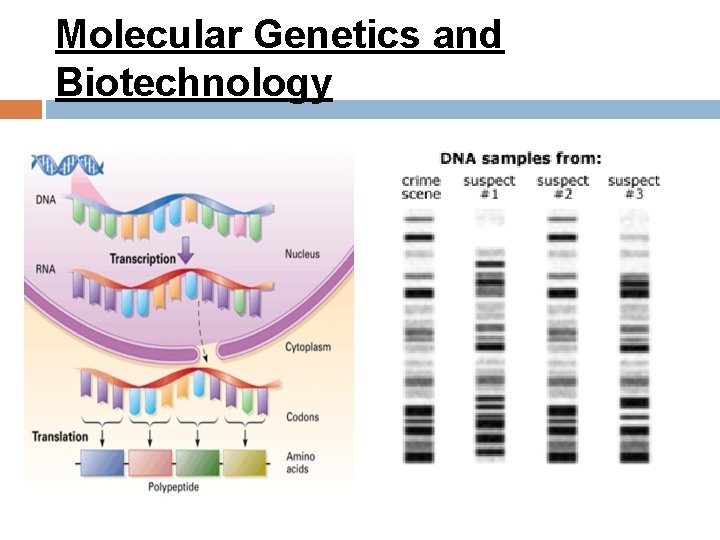
Molecular Genetics and Biotechnology

What is DNA?
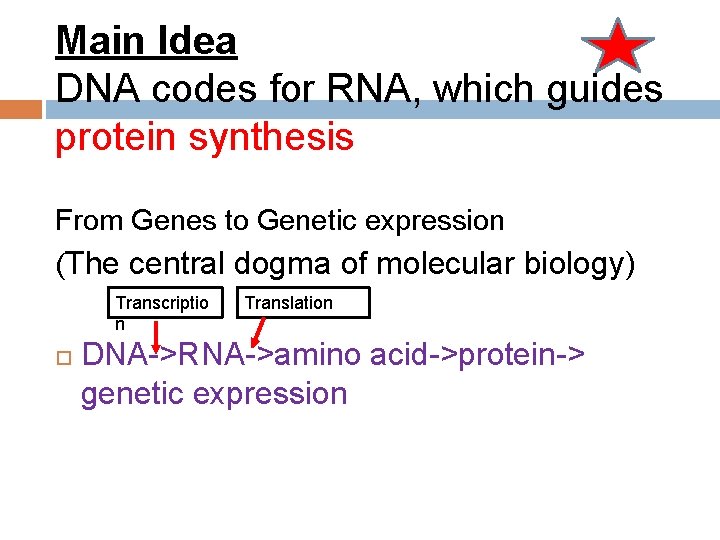
Main Idea DNA codes for RNA, which guides protein synthesis From Genes to Genetic expression (The central dogma of molecular biology) Transcriptio n Translation DNA->RNA->amino acid->protein-> genetic expression
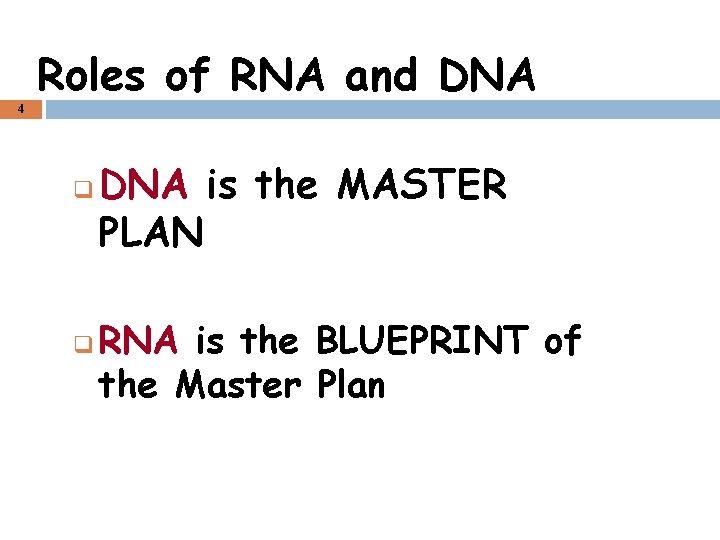
Roles of RNA and DNA 4 q q DNA is the MASTER PLAN RNA is the BLUEPRINT of the Master Plan

Roles of RNA and DNA 5 q Amoeba Sisters why RNA is just as cool as DNA q https: //youtu. be/0 Elo-z. X 1 k 8 M q Answer questions on worksheet

DNA vs RNA DNA Sugar-Deoxyribose Double Stranded Nitrogen Bases: Adenine, Thymine, Gaunine, Cytosine, Difference: Thymine G, C, A, T RNA Sugar Ribose Single Stranded Nitrogen Bases: Adenine, Uracil, Guanine, Cytosine Difference: Uracil G, C, A, U

Protein Synthesis Amoeba Sister Protein Synthesis http: //www. youtube. com/watch? v=h 5 m. Jb. P 23 B uo Answer the following questions in your notes as you view the video
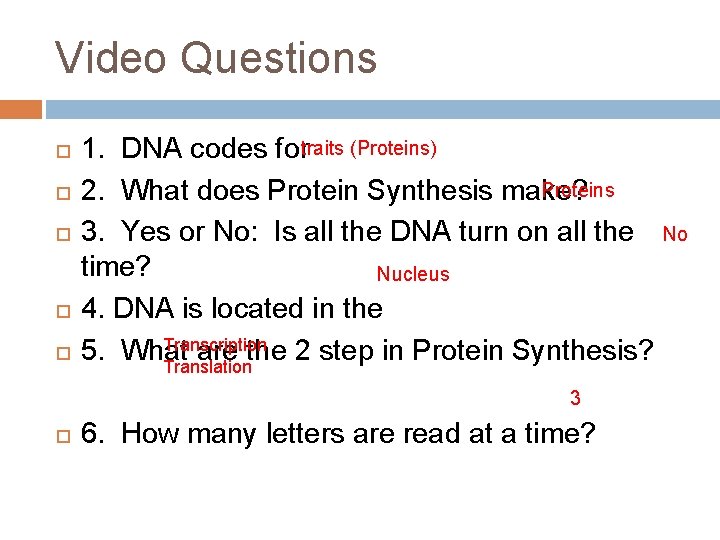
Video Questions traits (Proteins) 1. DNA codes for Proteins 2. What does Protein Synthesis make? 3. Yes or No: Is all the DNA turn on all the time? Nucleus 4. DNA is located in the Transcription 5. What are the 2 step in Protein Synthesis? Translation 3 6. How many letters are read at a time? No
RNA & Protein Synthesis DNA remains in the nucleus, but in order for it to get its instructions translated into proteins, it must send its message to the ribosomes where proteins are made. There a 3 types of RNA involved in this process m. RNA: t. RNA: r. RNA
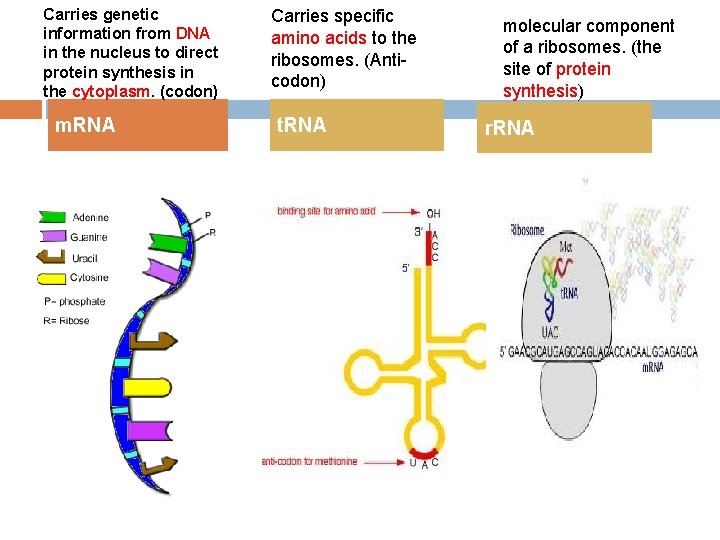
Carries genetic information from DNA in the nucleus to direct protein synthesis in the cytoplasm. (codon) m. RNA Carries specific amino acids to the ribosomes. (Anticodon) t. RNA molecular component of a ribosomes. (the site of protein synthesis) r. RNA
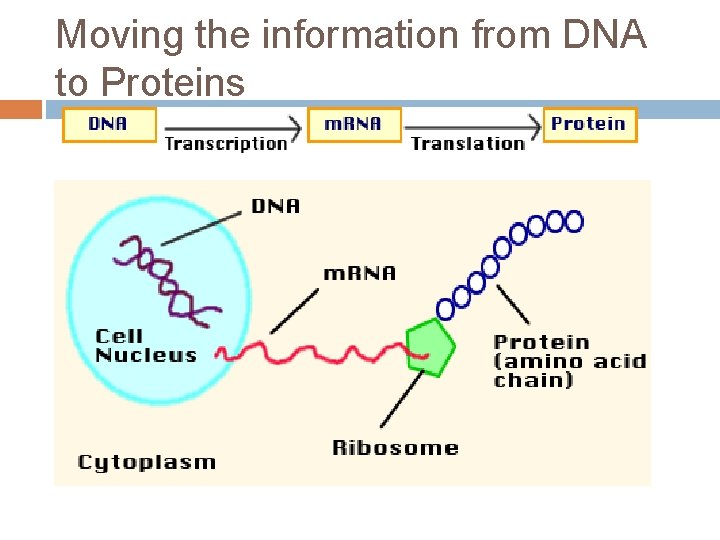
Moving the information from DNA to Proteins
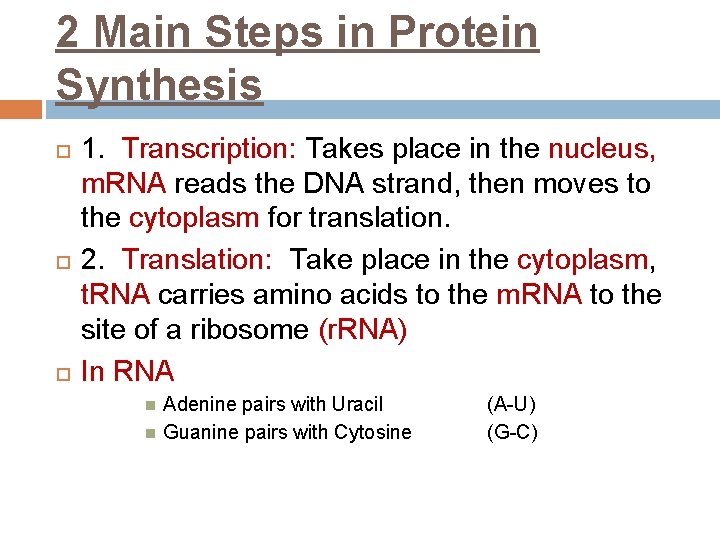
2 Main Steps in Protein Synthesis 1. Transcription: Takes place in the nucleus, m. RNA reads the DNA strand, then moves to the cytoplasm for translation. 2. Translation: Take place in the cytoplasm, t. RNA carries amino acids to the m. RNA to the site of a ribosome (r. RNA) In RNA Adenine pairs with Uracil Guanine pairs with Cytosine (A-U) (G-C)
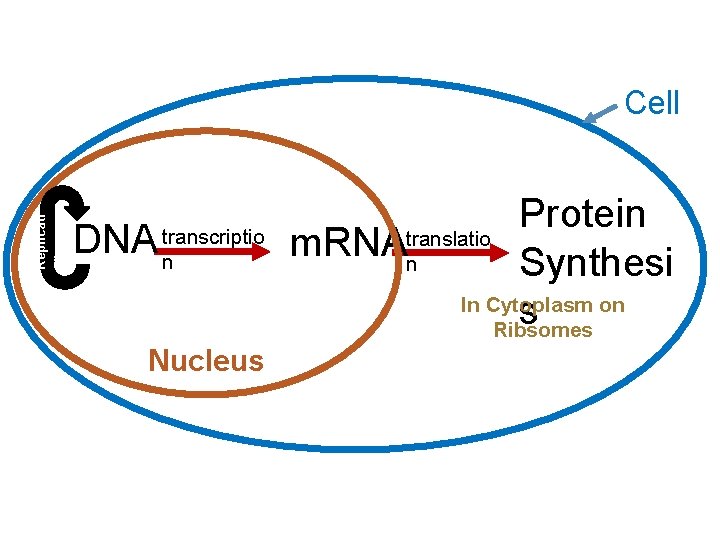
Replicati on Cell DNA transcriptio n Nucleus Protein m. RNAtranslatio n Synthesi In Cytoplasm on s Ribsomes

Circle a Codon and put a square around and Anti. Codon What biomolecule does the growing amino acid chain make? _______
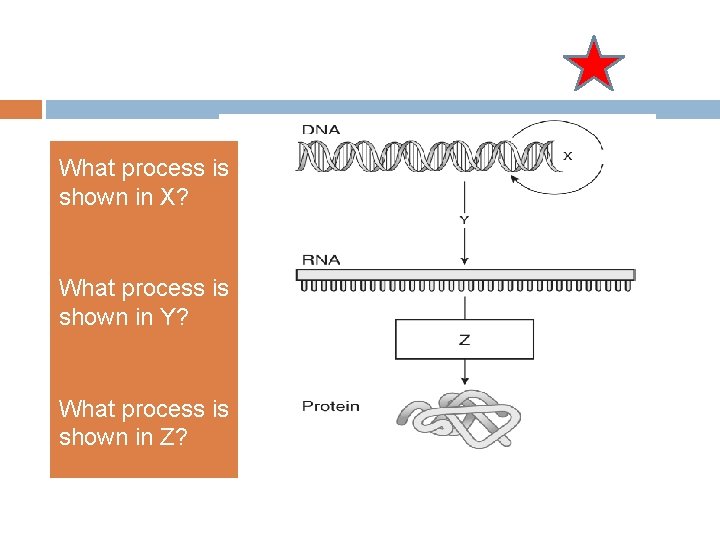
What process is shown in X? What process is shown in Y? What process is shown in Z?

How does m. RNA code for proteins? DNA TACGCACATTTACGCGG Ribosome m. RNA AUGCGUGUAAAUGCGCC ? Protein aa aa Met. Arg. Val. Asn. Ala. Cys. Ala aa aa aa How can you code for 20 amino acids with only 4 DNA bases (A, U, G, C)? aa

m. RNA Codes for Proteins in Triplets DNA TACGCACATTTACGCGG Codon m. RNA Protei n Ribosome AUGCGUGUAAAUGCGCC Met. Arg. Val. Asn. Ala. Cys. Ala Codon = block of 3 m. RNA bases

How are the Codons Matched to Amino Acids? DNA TACGCACATTTACGCGG m. RNA AUGCGUGUAAAUGCGCC Codon t. RNA Amino Acid UAC Met GCA Arg CAU Anti-codon Val Anti-codon = block of 3 t. RNA
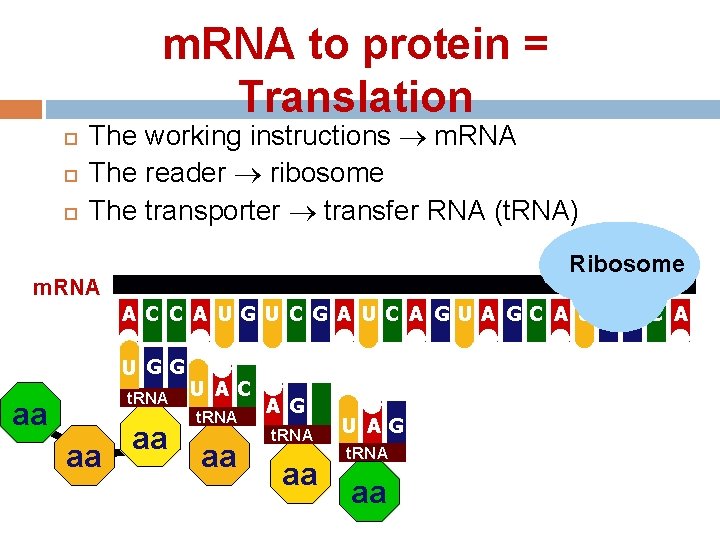
m. RNA to protein = Translation The working instructions m. RNA The reader ribosome The transporter transfer RNA (t. RNA) Ribosome m. RNA A C C A U G U C G A U C A G U A G C A U G G t. RNA aa aa aa U A C t. RNA aa A G t. RNA aa C U A G t. RNA aa

Rememb er we use the Codon Chart only for m. RNA DNA CCT CTT TAC ACA CGG AGG GTA CGC TAT TCT ATG ATT ACA CGG TTG CGA TCC ATA ATC m. RNA protein

Protein Synthesis Mark through the t. RNA. Only use m. RNA for the correct Amino Acid

Protein Synthesis Worksheet: Homework
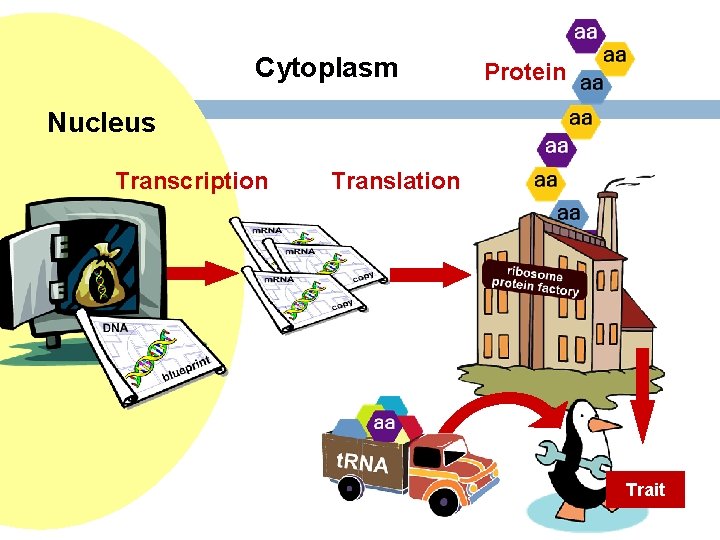
Cytoplasm Protein Nucleus Transcription Translation Trait
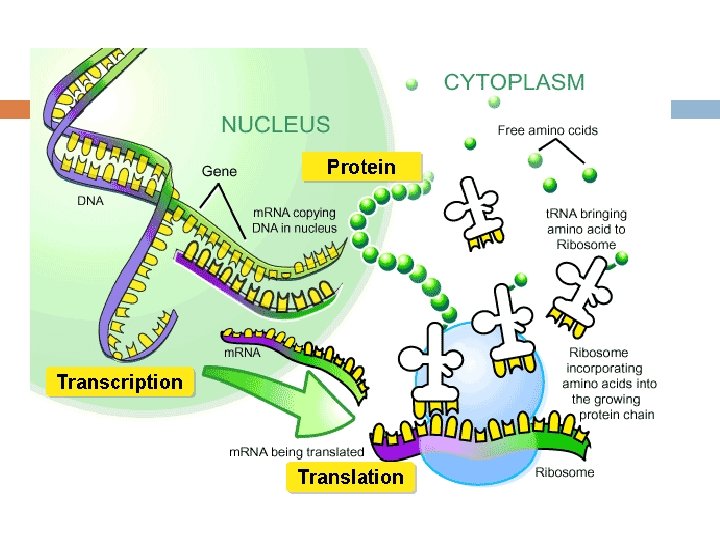
Protein Transcription Translation

Applied Genetics: is the manipulation; of the hereditary characteristics of an organism to improve or create specific traits in offspring. Selective breeding: directed breeding to produce plant and animal with desirable traits. Ex: breeding plants to produce larger fruits/vegetable Inbreeding: Two closely related organism are bred to have the desired traits and to eliminate the undesired ones in future generations. Inbreeding is a technique used in

Test Cross • A test cross involves breeding an organism that has the unknown genotype with one that is homozygous recessive for the desired trait. • If the unknown parent genotype is homozygous dominant, all the offspring will have the dominant phenotype. • If the unknown parent genotype is heterozygous, the offspring will show a 1: 1 phenotypic ratio. Copyright © Mc. Graw-Hill Education Applied Genetics

Genetic Engineering Luciferase gene Genetic engineering is technology that involves manipulating the DNA of one organism in order to insert the DNA of another organism. A scientist inserts a gene from one organism into a 2 nd organism. The 2 nd organism displays the gene. What has occurred? Aequorea victoria jellyfish Transcription and Translation http: //atlantablackstar. com/2014/01/09/x-interestingly-scaryexamples-genetic-engineering/
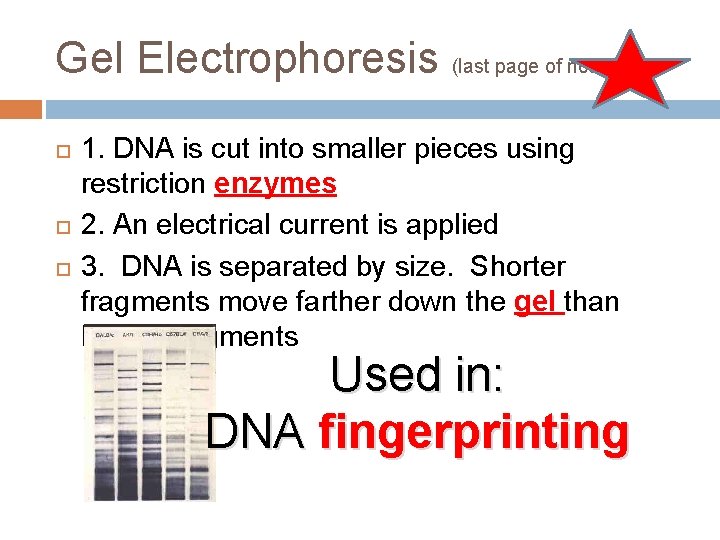
Gel Electrophoresis (last page of notes) 1. DNA is cut into smaller pieces using restriction enzymes 2. An electrical current is applied 3. DNA is separated by size. Shorter fragments move farther down the gel than longer fragments Used in: DNA fingerprinting

Gel Electrophoresis (example) Look at the example of DNA taken at the crime scene (Column 1). Which suspect committed the crime? � Suspect 1 � Suspect 2 � Suspect 3
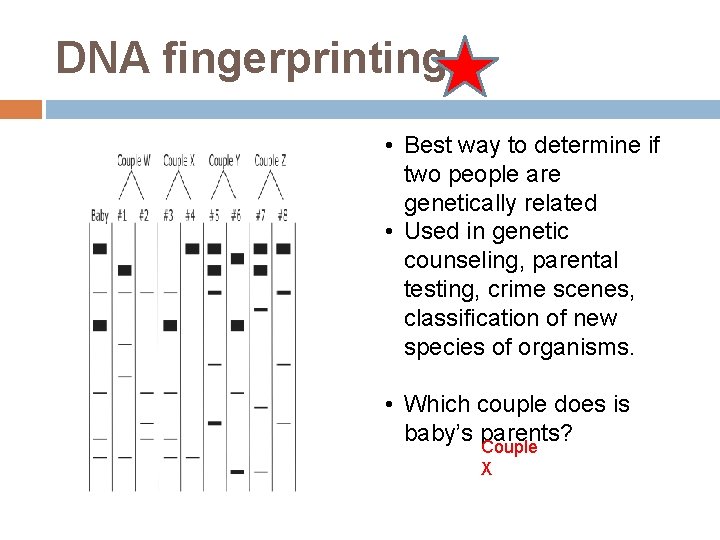
DNA fingerprinting • Best way to determine if two people are genetically related • Used in genetic counseling, parental testing, crime scenes, classification of new species of organisms. • Which couple does is baby’s parents? Couple X

Biotechnology • Biotechnology is the use of genetic engineering to find solutions to problems. • Goal for the Human Genome Project was to sequence all the nucleotides in the human body. (3 Billion nucleotides and 20, 000 -25, 000 genes) • This was completed in 2003 0 88 Copyright © Mc. Graw-Hill Education DNA Technology
The Genome and Genetic Disorders Pharmacogenomics The study of how genetic inheritance affects the body’s response to drugs is called pharmacogenomics. Gene therapy is a technique aimed at correcting mutated genes that cause human diseases. Scientists insert a normal gene into a chromosome to replace a dysfunctional gene. Copyright © Mc. Graw-Hill Education The Human Genome
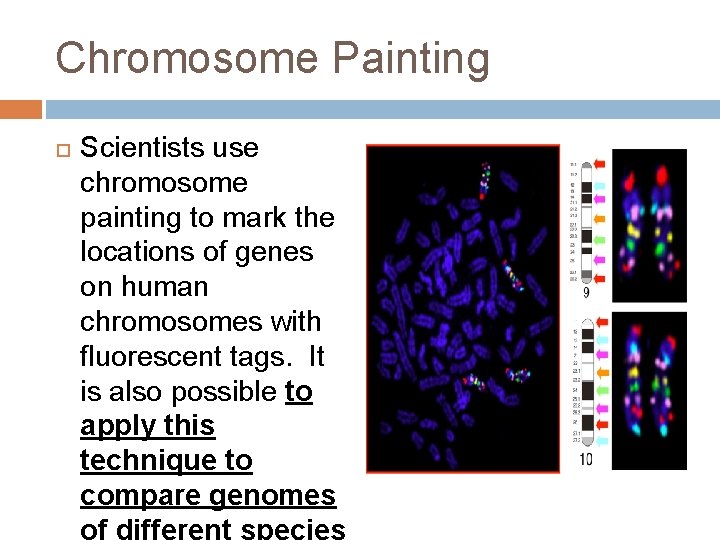
Chromosome Painting Scientists use chromosome painting to mark the locations of genes on human chromosomes with fluorescent tags. It is also possible to apply this technique to compare genomes of different species
Mutation Video http: //www. youtube. com/watch? v=Gie. Z 3 pk 9 Y Vo
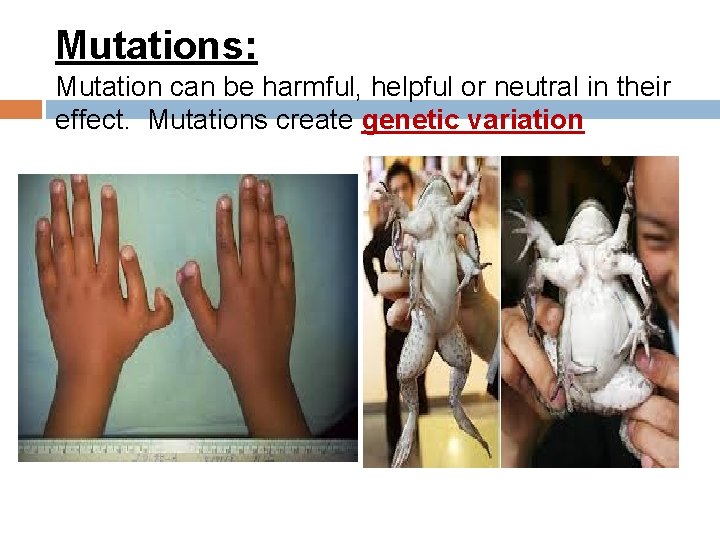
Mutations: Mutation can be harmful, helpful or neutral in their effect. Mutations create genetic variation
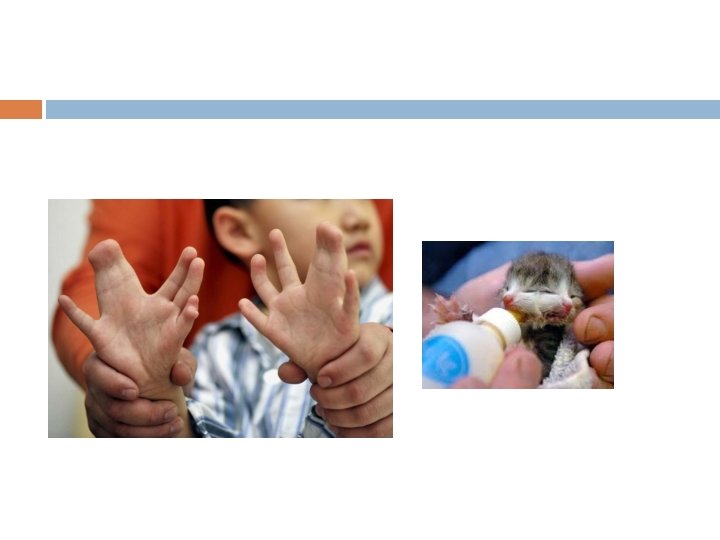
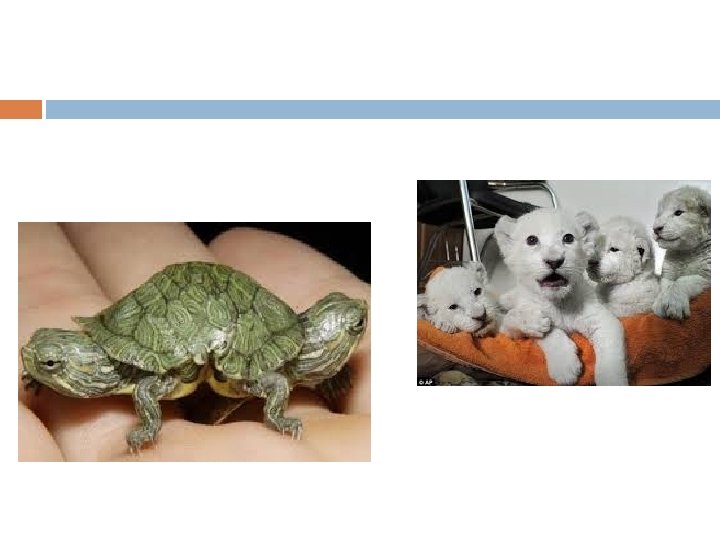
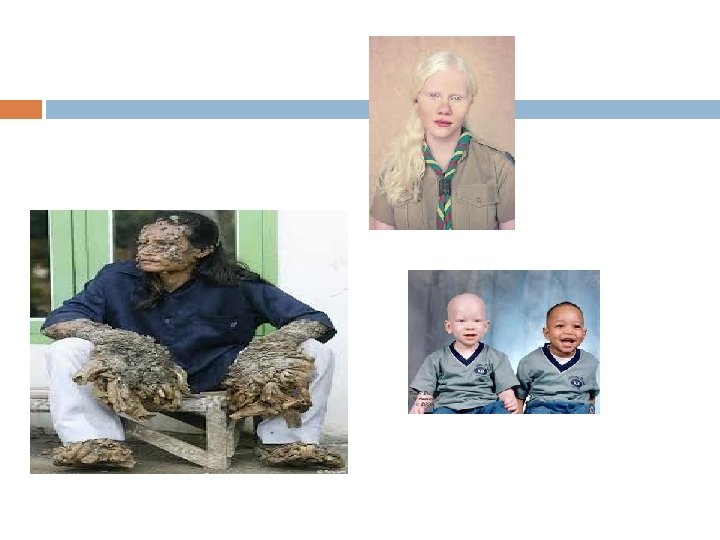
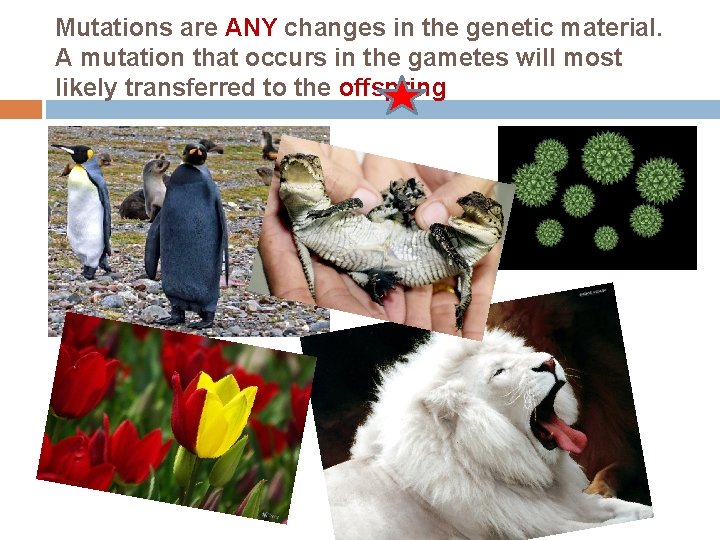
Mutations are ANY changes in the genetic material. A mutation that occurs in the gametes will most likely transferred to the offspring
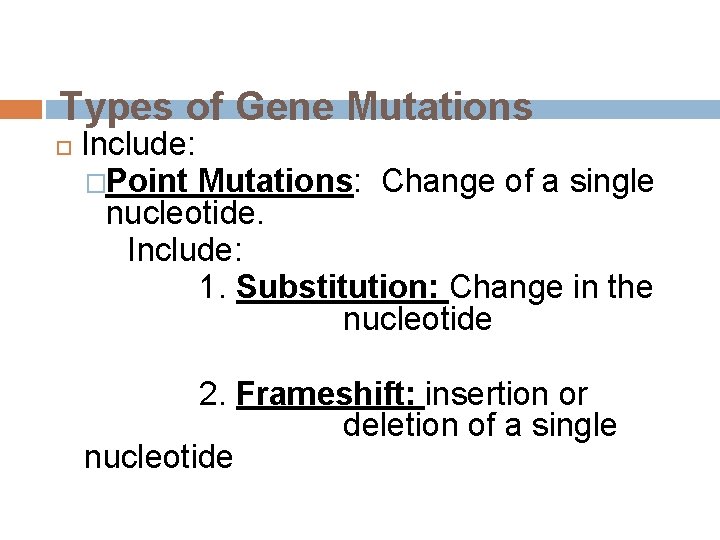
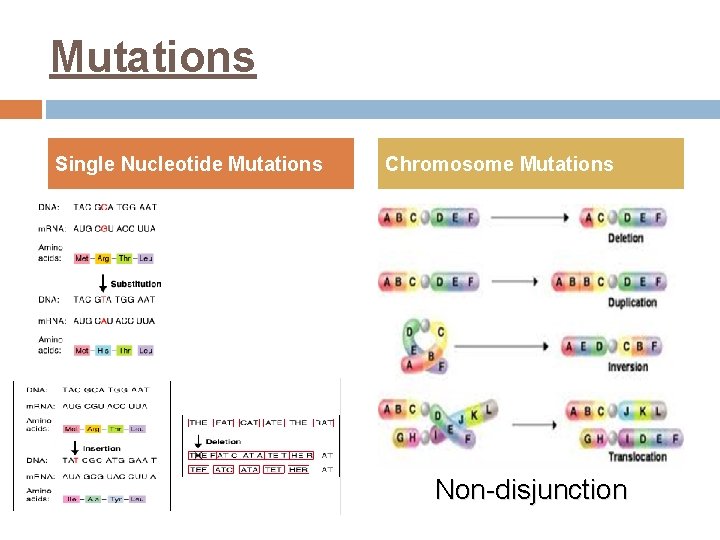
Types of Gene Mutations Include: �Point Mutations: Change of a single nucleotide. Include: 1. Substitution: Change in the nucleotide 2. Frameshift: insertion or deletion of a single nucleotide
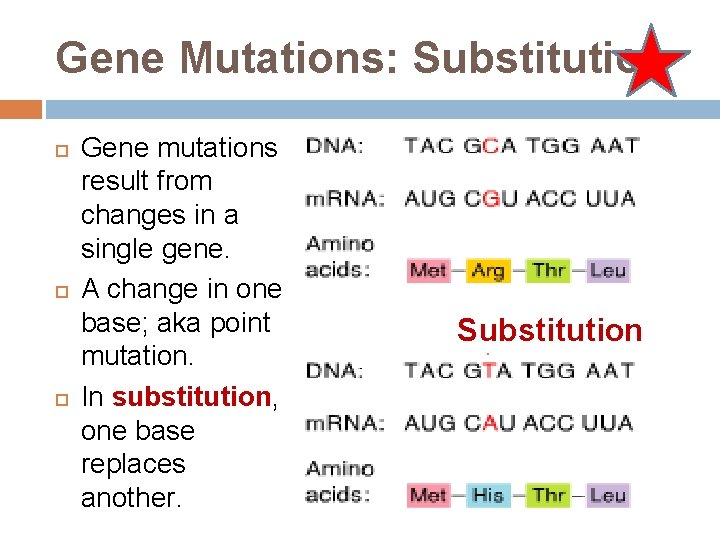
Gene Mutations: Substitution Gene mutations result from changes in a single gene. A change in one base; aka point mutation. In substitution, one base replaces another. Substitution

Gene Mutations: (Frameshift) Insertion/Deletion In an insertion, an extra base is inserted into the base sequence. The loss of a single letter shows the effect of a deletion. Insertion Deletion Shifts right or left in reading frame = Frameshift mutation
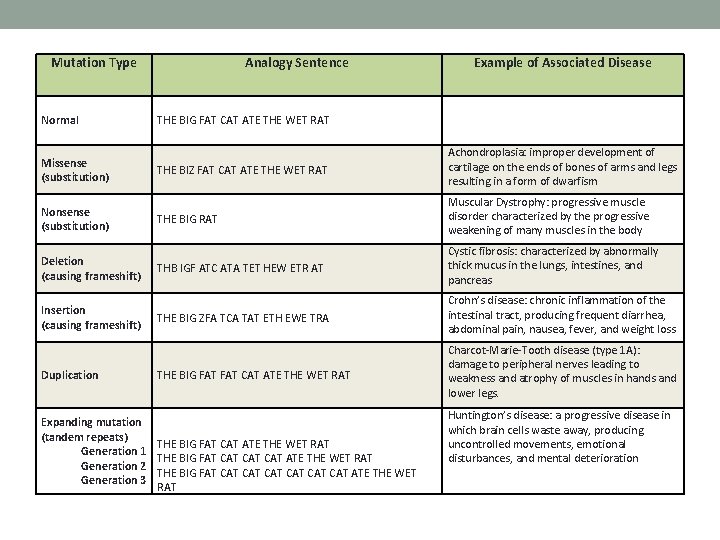
Mutation Type Analogy Sentence Example of Associated Disease THE BIG FAT CAT ATE THE WET RAT THE BIZ FAT CAT ATE THE WET RAT Achondroplasia: improper development of cartilage on the ends of bones of arms and legs resulting in a form of dwarfism THE BIG RAT Muscular Dystrophy: progressive muscle disorder characterized by the progressive weakening of many muscles in the body THB IGF ATC ATA TET HEW ETR AT Cystic fibrosis: characterized by abnormally thick mucus in the lungs, intestines, and pancreas THE BIG ZFA TCA TAT ETH EWE TRA Crohn’s disease: chronic inflammation of the intestinal tract, producing frequent diarrhea, abdominal pain, nausea, fever, and weight loss Duplication THE BIG FAT CAT ATE THE WET RAT Charcot-Marie-Tooth disease (type 1 A): damage to peripheral nerves leading to weakness and atrophy of muscles in hands and lower legs. Expanding mutation (tandem repeats) Generation 1 Generation 2 Generation 3 THE BIG FAT CAT ATE THE WET RAT THE BIG FAT CAT CAT ATE THE WET RAT Normal Missense (substitution) Nonsense (substitution) Deletion (causing frameshift) Insertion (causing frameshift) Huntington’s disease: a progressive disease in which brain cells waste away, producing uncontrolled movements, emotional disturbances, and mental deterioration
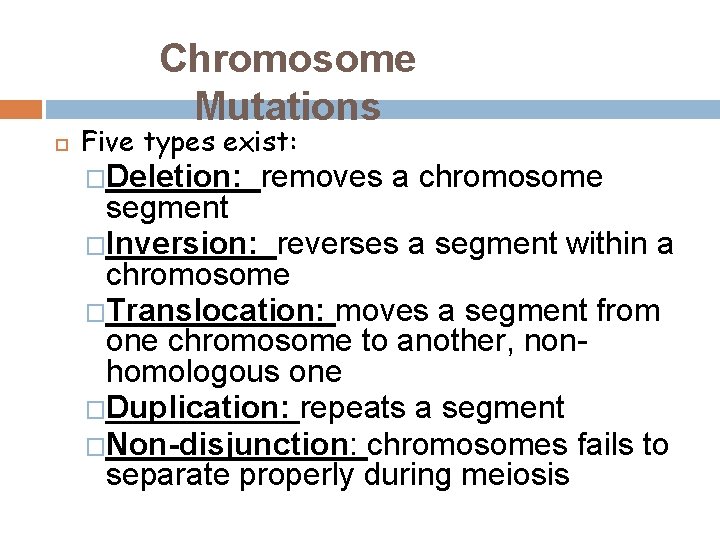
Chromosome Mutations Five types exist: �Deletion: removes a chromosome segment �Inversion: reverses a segment within a chromosome �Translocation: moves a segment from one chromosome to another, nonhomologous one �Duplication: repeats a segment �Non-disjunction: chromosomes fails to separate properly during meiosis
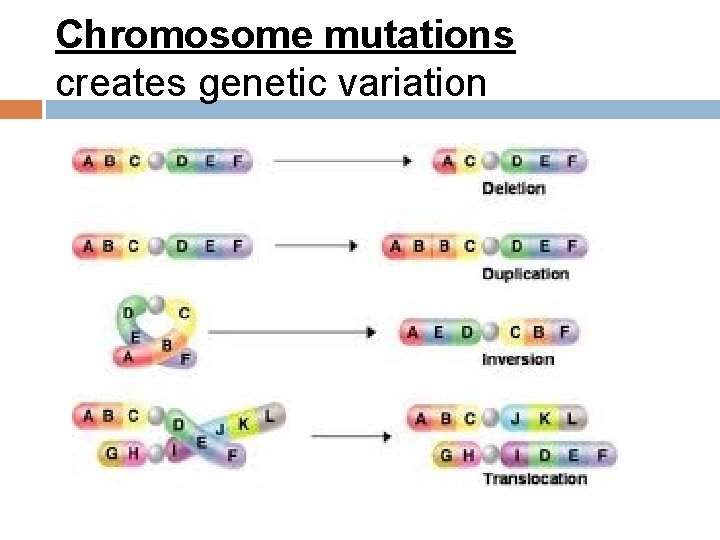
Chromosome mutations creates genetic variation
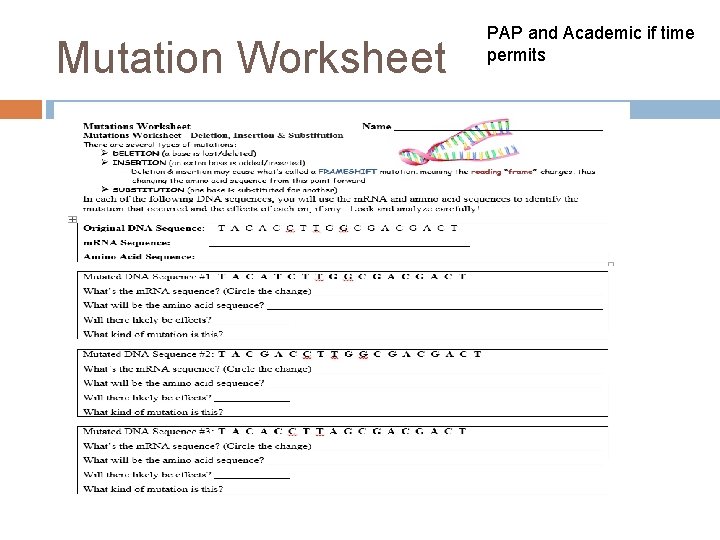
Mutation Worksheet PAP and Academic if time permits
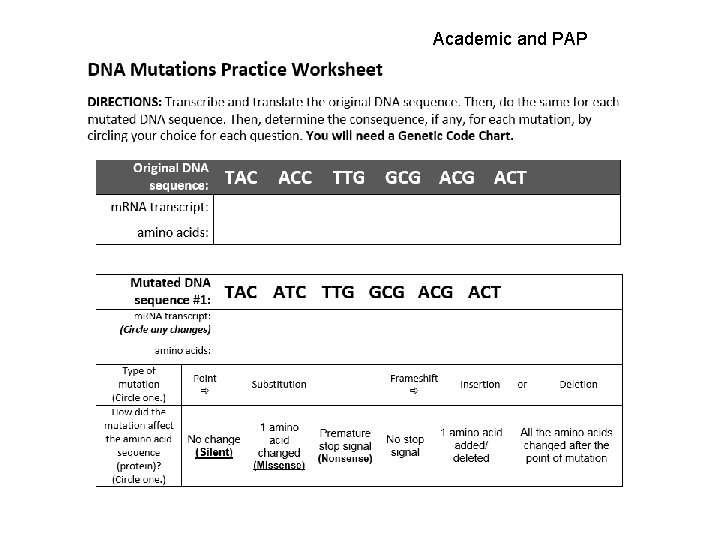
Academic and PAP
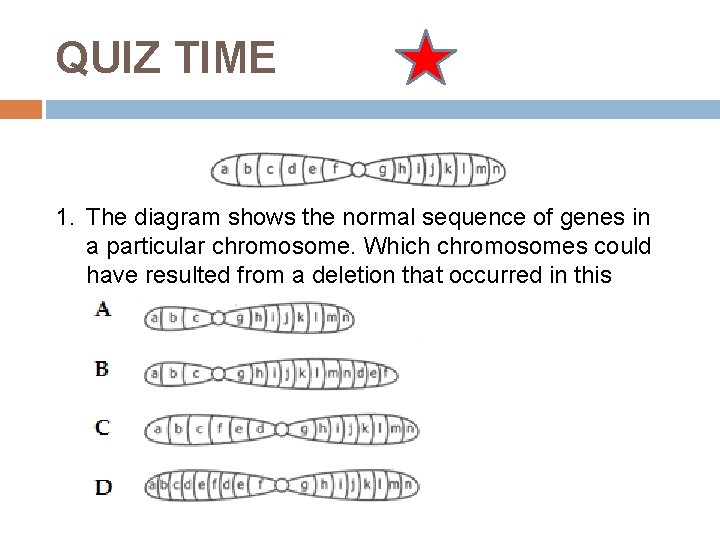
QUIZ TIME 1. The diagram shows the normal sequence of genes in a particular chromosome. Which chromosomes could have resulted from a deletion that occurred in this chromosome?

Nucleus What have we learned: From Gene aa to Protein: Reviewaa Transcription DNA aa Translation m. RNA aa Protein aa aa aa A C C A UGU C G A UC A GUA GC A U GGC A Cytoplasm t. RNA aa Ribosome Trait
Mutations Single Nucleotide Mutations Chromosome Mutations Non-disjunction
- Slides: 51