New Developments in HVAF Coating Equipment and Technology
- Slides: 69
New Developments in HVAF Coating Equipment and Technology Andrew Verstak averstak@kermetico. com
Scope: Introduction. Flash-carbide 1. HVAF Gun Design: How and Why 2. HVAF Carbides: Coating quality 3. Cost vs Quality: Economy, Balanced and Ultra Modes 4. Convertible HVAF+HVOF Systems 5. Internal Diameter Spraying 6. Kermetico HVAF and HVAF+HVOF equipment
Introduction High-Velocity Air-Fuel Spraying (HVAF) What is so Special about this technology? • Coating Quality • Cost Illustration of recent development: HVAF Flash Carbide An Economical Alternative To Electroplated Hard Chrome
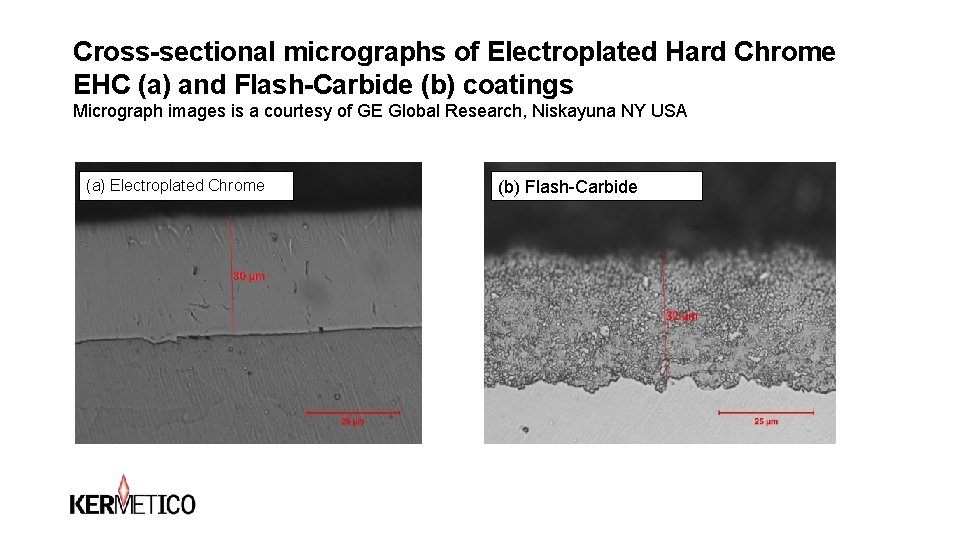
Flash-Carbide: Flash-Carbide is hard and very dense coating of WC-10 Co-4 Cr composite material, applied with Kermetico High-Velocity Air-Fuel (HVAF) spray method onto various metallic parts and structures to improve their surface resistance to severe wear and corrosion. Typically the Flash-Carbide coating thickness is lower than dimensional tolerances of the treated parts (15 -30 micron) with small thickness deviation, 1 -3 microns, while as-sprayed surface roughness is similar to ground surface, typically Ra =1. 5 -1. 9 micron. Thus, the Flash-Carbide surface does not require dimensional grinding. Final surface roughness is achieved with a simple polishing.
Cross-sectional micrographs of Electroplated Hard Chrome EHC (a) and Flash-Carbide (b) coatings Micrograph images is a courtesy of GE Global Research, Niskayuna NY USA (a) Electroplated Chrome (b) Flash-Carbide
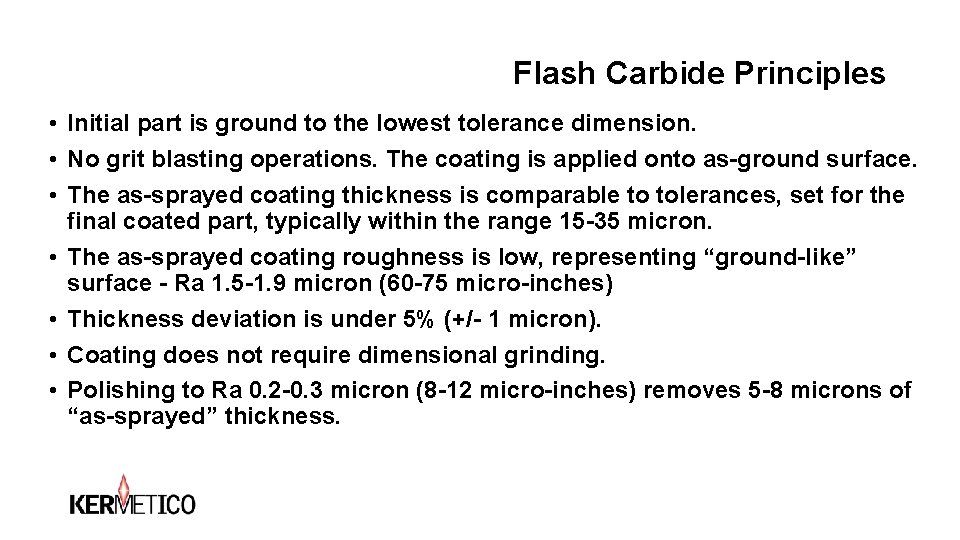
Flash Carbide Principles • Initial part is ground to the lowest tolerance dimension. • No grit blasting operations. The coating is applied onto as-ground surface. • The as-sprayed coating thickness is comparable to tolerances, set for the final coated part, typically within the range 15 -35 micron. • The as-sprayed coating roughness is low, representing “ground-like” surface - Ra 1. 5 -1. 9 micron (60 -75 micro-inches) • Thickness deviation is under 5% (+/- 1 micron). • Coating does not require dimensional grinding. • Polishing to Ra 0. 2 -0. 3 micron (8 -12 micro-inches) removes 5 -8 microns of “as-sprayed” thickness.
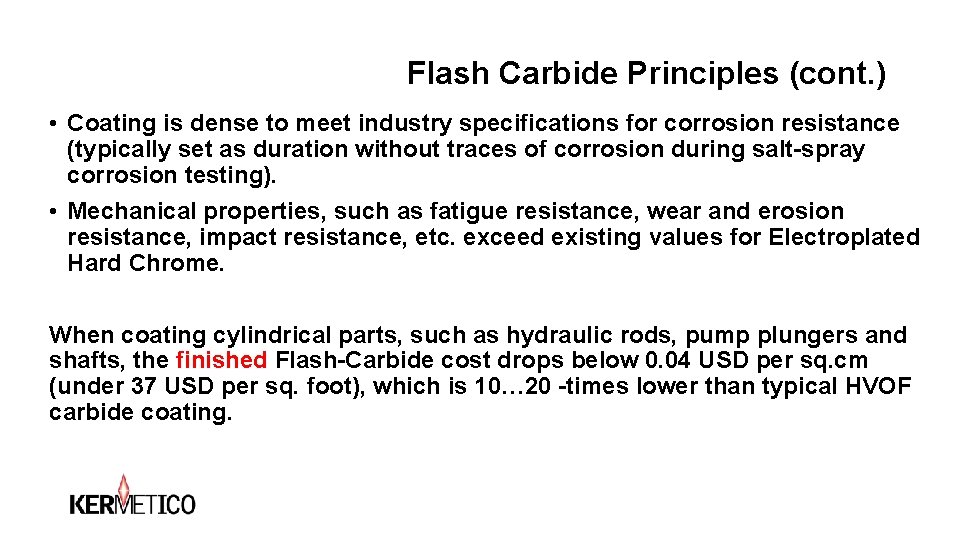
Flash Carbide Principles (cont. ) • Coating is dense to meet industry specifications for corrosion resistance (typically set as duration without traces of corrosion during salt-spray corrosion testing). • Mechanical properties, such as fatigue resistance, wear and erosion resistance, impact resistance, etc. exceed existing values for Electroplated Hard Chrome. When coating cylindrical parts, such as hydraulic rods, pump plungers and shafts, the finished Flash-Carbide cost drops below 0. 04 USD per sq. cm (under 37 USD per sq. foot), which is 10… 20 -times lower than typical HVOF carbide coating.
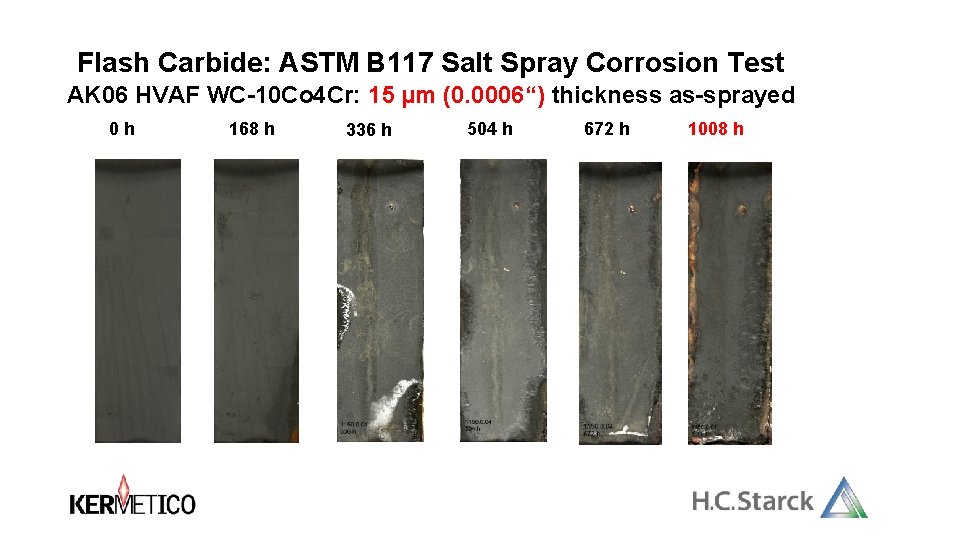
Flash Carbide: ASTM B 117 Salt Spray Corrosion Test AK 06 HVAF WC-10 Co 4 Cr: 15 µm (0. 0006“) thickness as-sprayed 0 h 168 h 336 h 504 h 672 h 1008 h
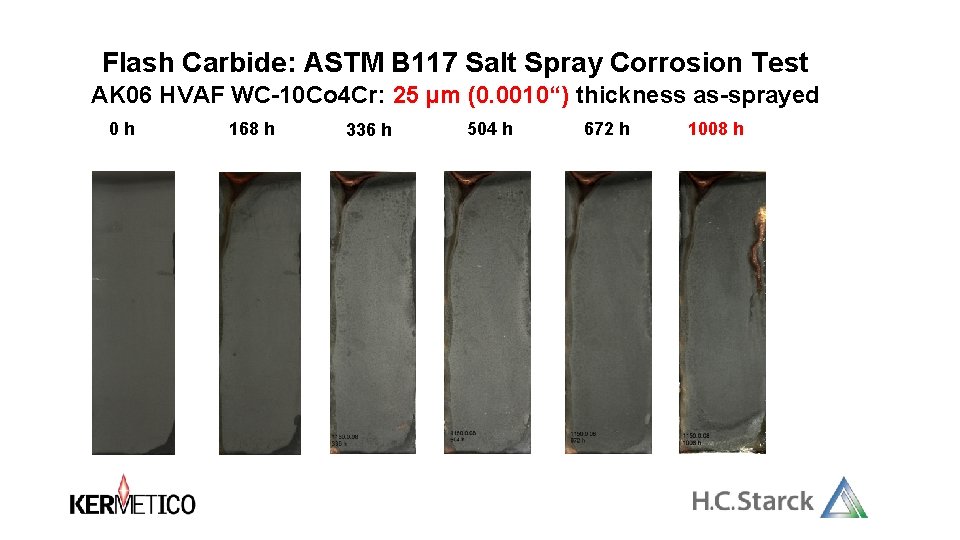
Flash Carbide: ASTM B 117 Salt Spray Corrosion Test AK 06 HVAF WC-10 Co 4 Cr: 25 µm (0. 0010“) thickness as-sprayed 0 h 168 h 336 h 504 h 672 h 1008 h
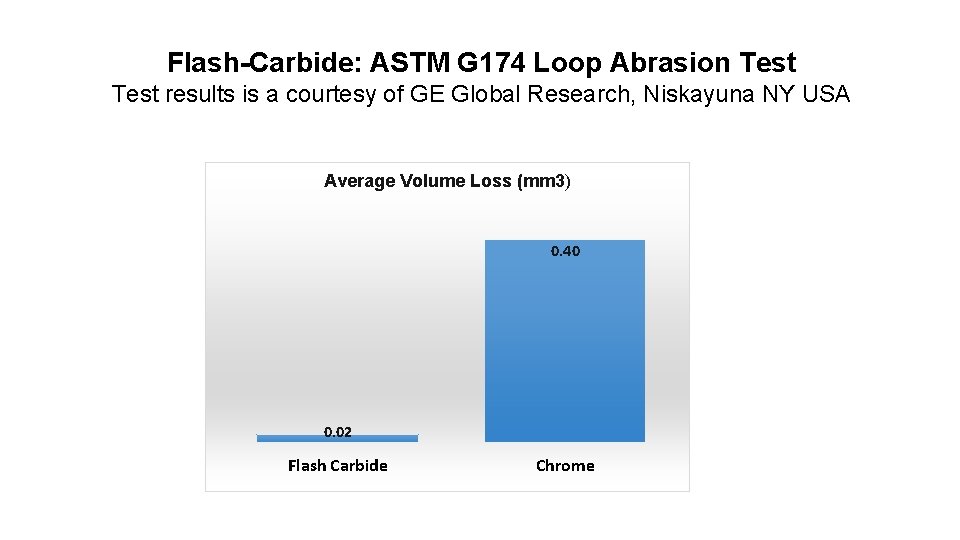
Flash-Carbide: ASTM G 174 Loop Abrasion Test results is a courtesy of GE Global Research, Niskayuna NY USA Average Volume Loss (mm 3) 0. 40 0. 02 Flash Carbide Chrome
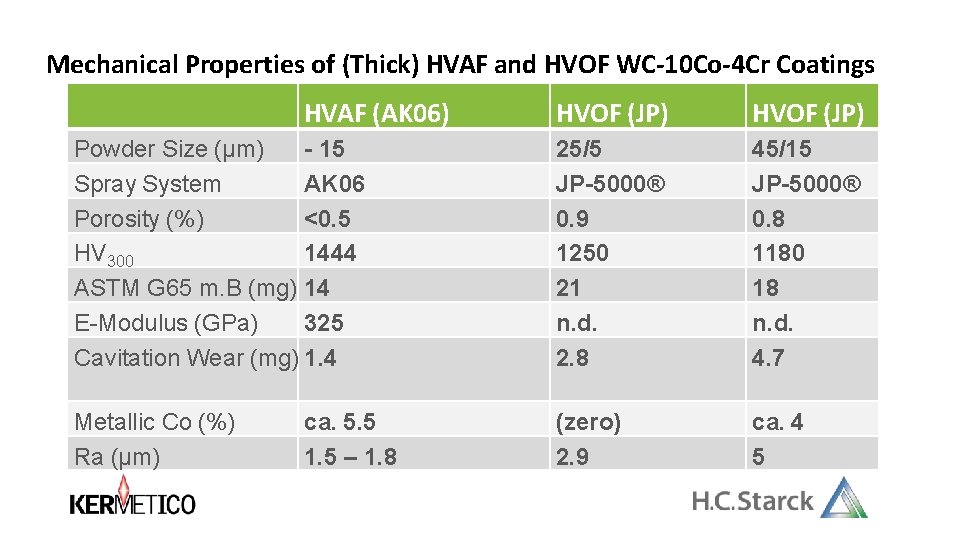
Mechanical Properties of (Thick) HVAF and HVOF WC-10 Co-4 Cr Coatings HVAF (AK 06) HVOF (JP) Powder Size (µm) - 15 Spray System AK 06 Porosity (%) <0. 5 HV 300 1444 ASTM G 65 m. B (mg) 14 E-Modulus (GPa) 325 Cavitation Wear (mg) 1. 4 25/5 JP-5000® 0. 9 1250 21 n. d. 2. 8 45/15 JP-5000® 0. 8 1180 18 n. d. 4. 7 Metallic Co (%) Ra (µm) (zero) 2. 9 ca. 4 5 ca. 5. 5 1. 5 – 1. 8
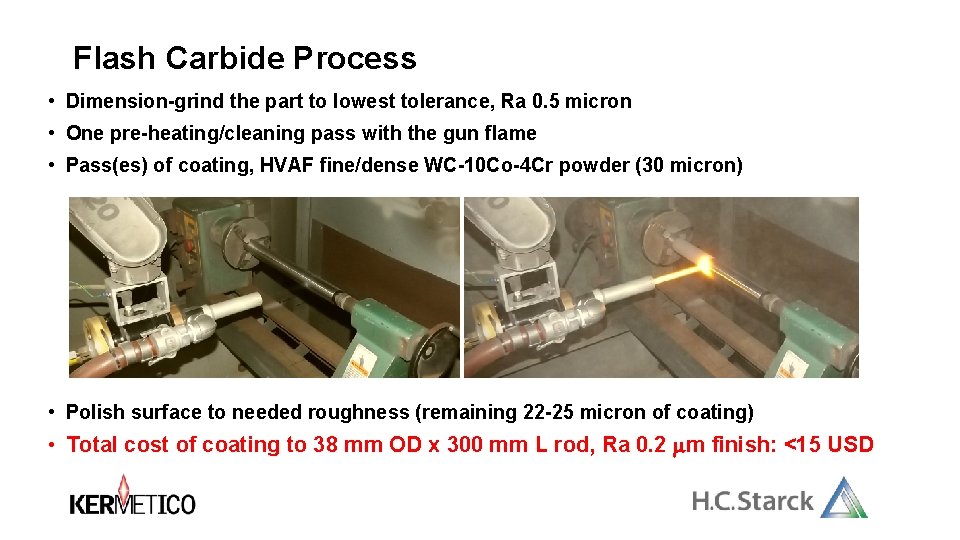
Flash Carbide Process • Dimension-grind the part to lowest tolerance, Ra 0. 5 micron • One pre-heating/cleaning pass with the gun flame • Pass(es) of coating, HVAF fine/dense WC-10 Co-4 Cr powder (30 micron) • Polish surface to needed roughness (remaining 22 -25 micron of coating) • Total cost of coating to 38 mm OD x 300 mm L rod, Ra 0. 2 mm finish: <15 USD
1. HVAF gun design: How and Why
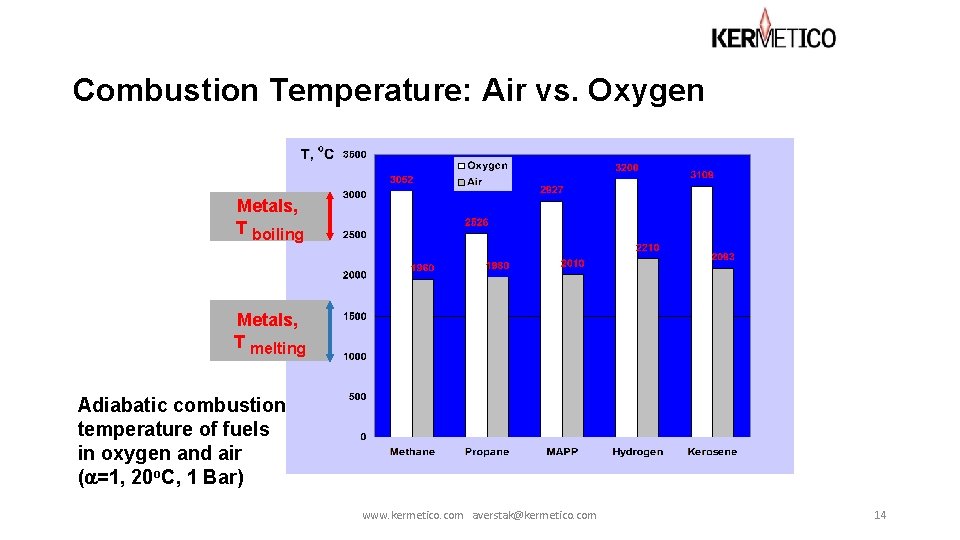
Combustion Temperature: Air vs. Oxygen Metals, T boiling Metals, T melting Adiabatic combustion temperature of fuels in oxygen and air (a=1, 20 o. C, 1 Bar) www. kermetico. com averstak@kermetico. com 14
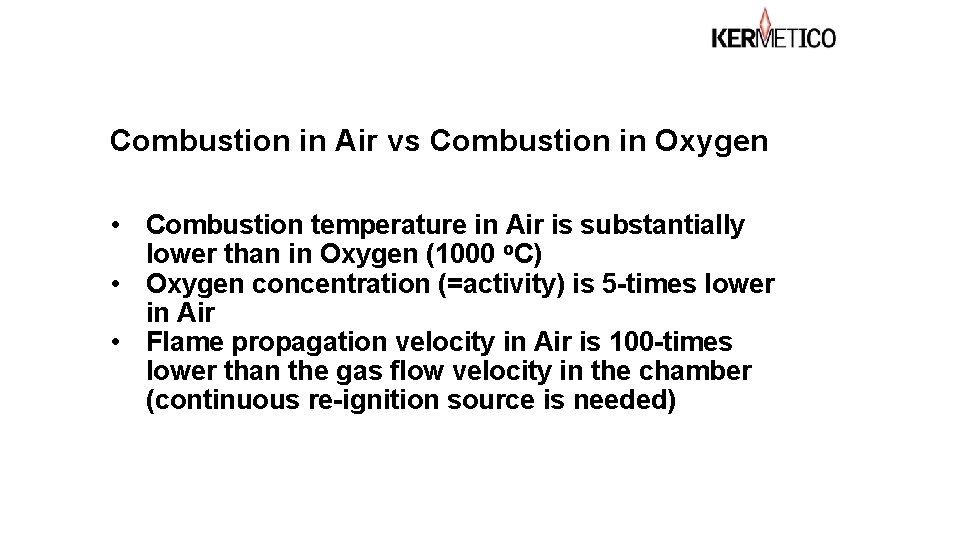
Combustion in Air vs Combustion in Oxygen • Combustion temperature in Air is substantially lower than in Oxygen (1000 o. C) • Oxygen concentration (=activity) is 5 -times lower in Air • Flame propagation velocity in Air is 100 -times lower than the gas flow velocity in the chamber (continuous re-ignition source is needed)
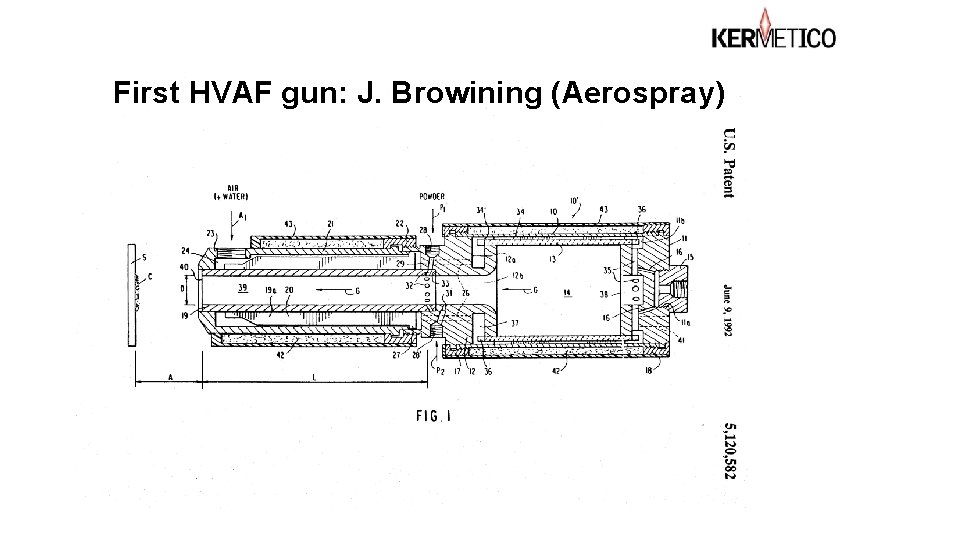
First HVAF gun: J. Browining (Aerospray)
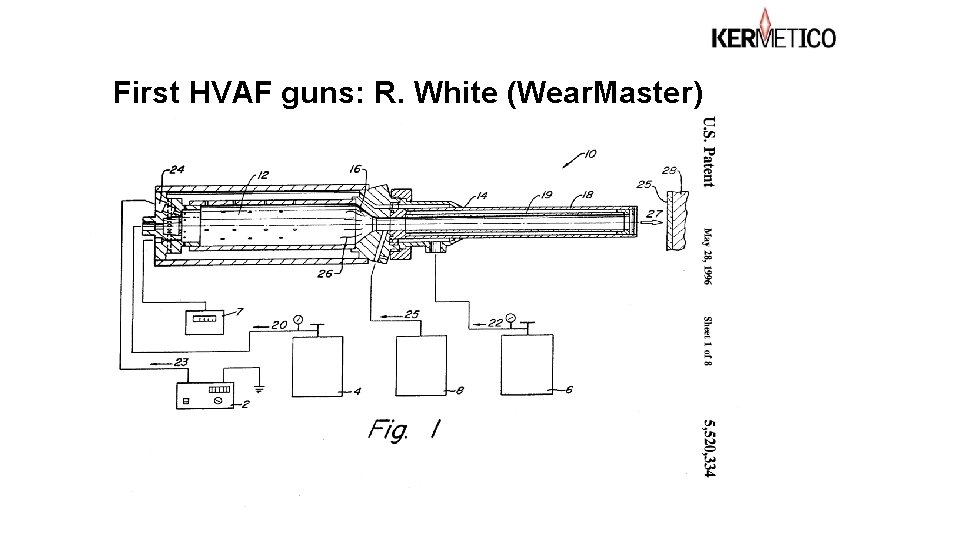
First HVAF guns: R. White (Wear. Master)
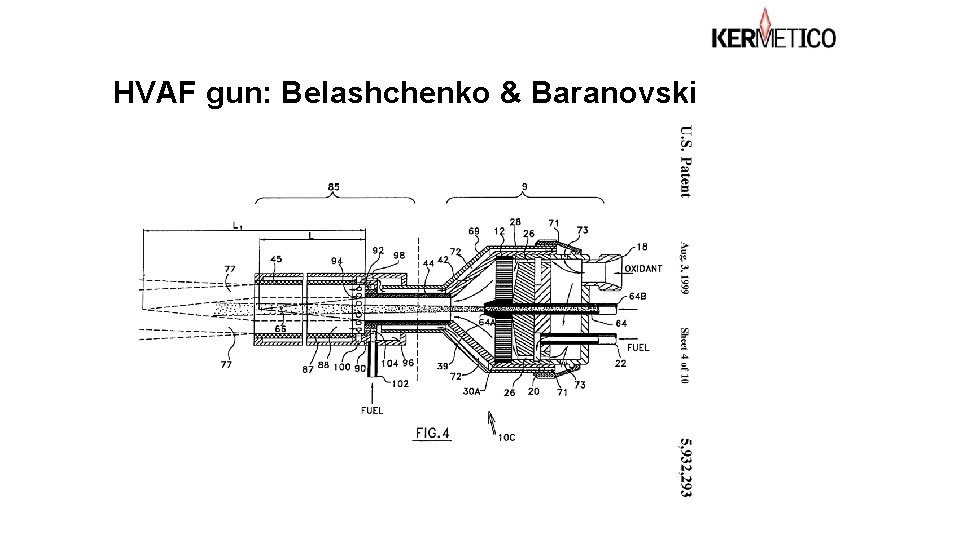
HVAF gun: Belashchenko & Baranovski
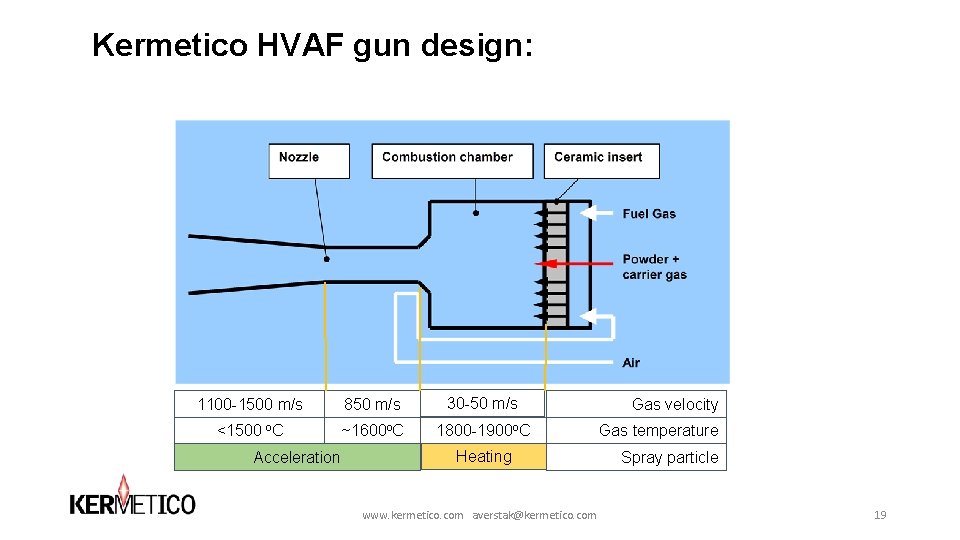
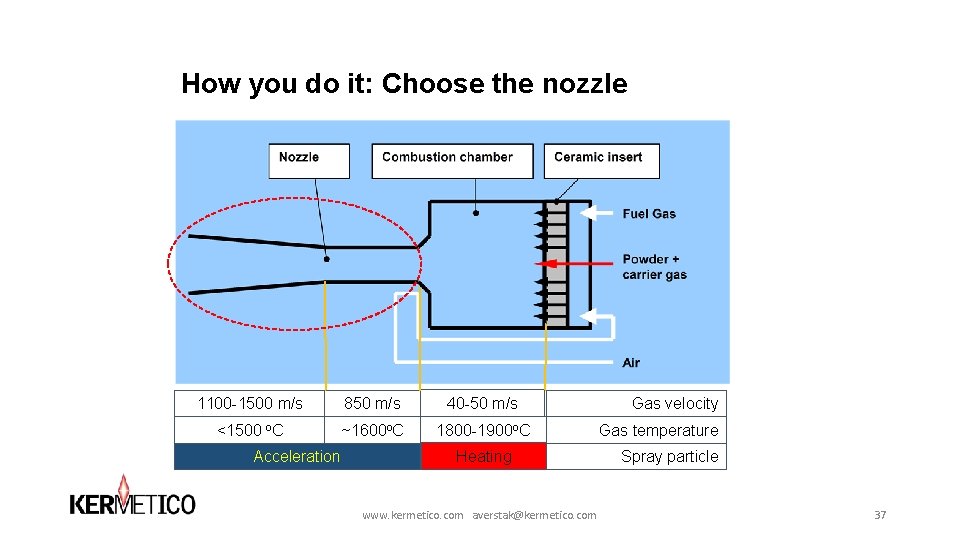
Kermetico HVAF gun design: 1100 -1500 m/s 850 m/s 30 -50 m/s <1500 o. C ~1600 o. C 1800 -1900 o. C Acceleration Heating www. kermetico. com averstak@kermetico. com Gas velocity Gas temperature Spray particle 19
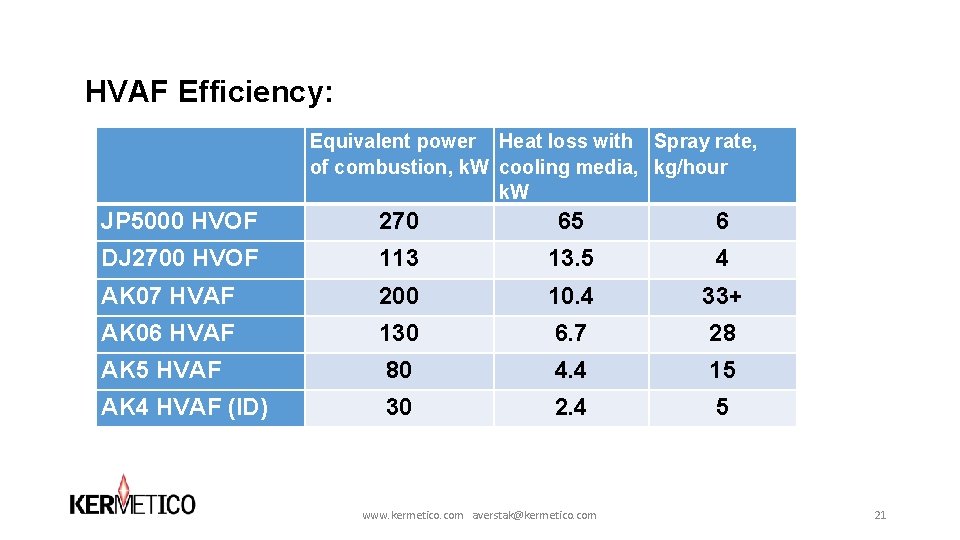
Combustion temperature: design AF vs OF Ability to use heating in long/ slow-gas combustion chambers = long time for “soft” heating (5 -10 times longer than in HVOF) High pressure in the chamber = better heat transfer Result: High energy efficiency of HVAF (same or lower power while higher spray rates than HVOF) www. kermetico. com averstak@kermetico. com 20
HVAF Efficiency: Equivalent power Heat loss with Spray rate, of combustion, k. W cooling media, kg/hour k. W JP 5000 HVOF 270 65 6 DJ 2700 HVOF 113 13. 5 4 AK 07 HVAF 200 10. 4 33+ AK 06 HVAF 130 6. 7 28 AK 5 HVAF 80 4. 4 15 AK 4 HVAF (ID) 30 2. 4 5 www. kermetico. com averstak@kermetico. com 21
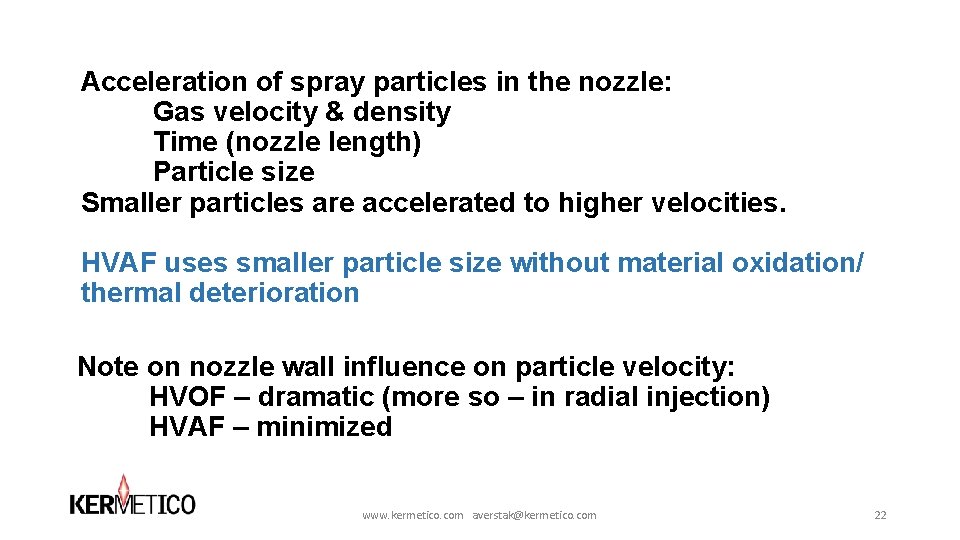
Acceleration of spray particles in the nozzle: Gas velocity & density Time (nozzle length) Particle size Smaller particles are accelerated to higher velocities. HVAF uses smaller particle size without material oxidation/ thermal deterioration Note on nozzle wall influence on particle velocity: HVOF – dramatic (more so – in radial injection) HVAF – minimized www. kermetico. com averstak@kermetico. com 22
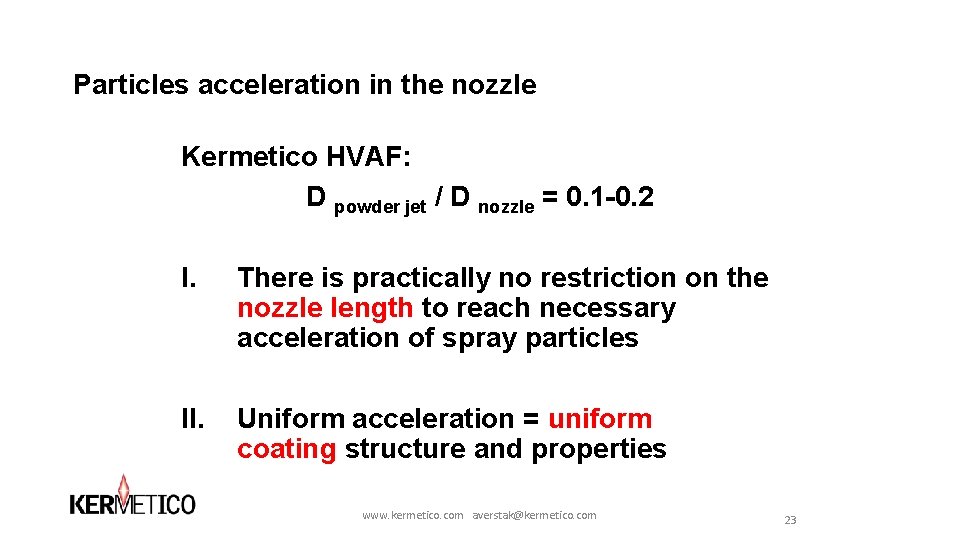
Particles acceleration in the nozzle Kermetico HVAF: D powder jet / D nozzle = 0. 1 -0. 2 I. There is practically no restriction on the nozzle length to reach necessary acceleration of spray particles II. Uniform acceleration = uniform coating structure and properties www. kermetico. com averstak@kermetico. com 23
2. HVAF Carbides: Coating quality A superior quality and performance of carbide coatings deposited with HVAF has been proven by multiple R&D and industrial applications
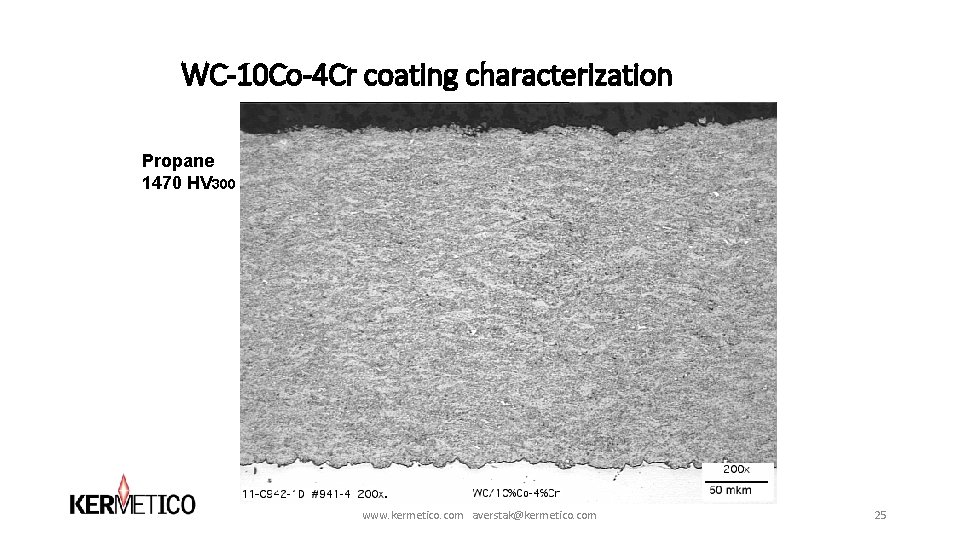
WC-10 Co-4 Cr coating characterization Propane 1470 HV 300 www. kermetico. com averstak@kermetico. com 25
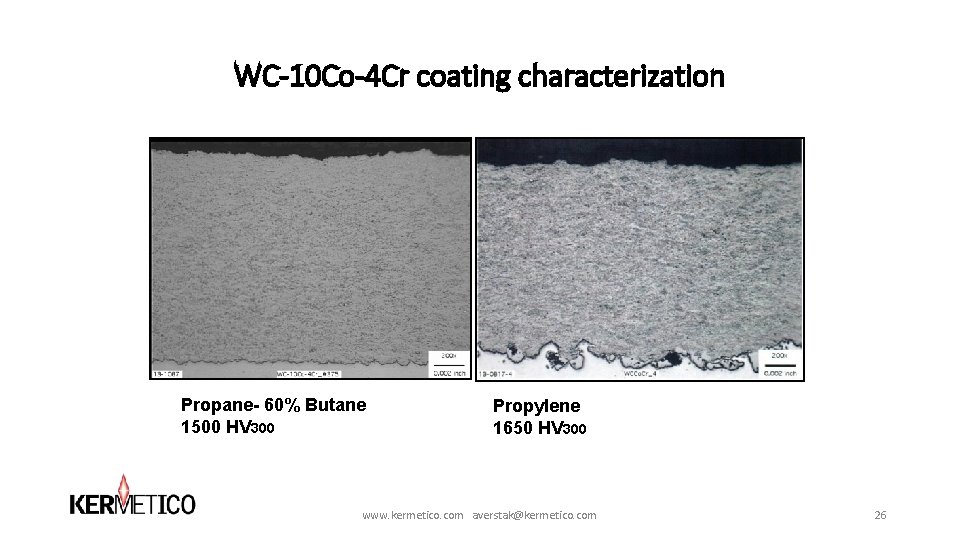
WC-10 Co-4 Cr coating characterization Propane- 60% Butane 1500 HV 300 Propylene 1650 HV 300 www. kermetico. com averstak@kermetico. com 26
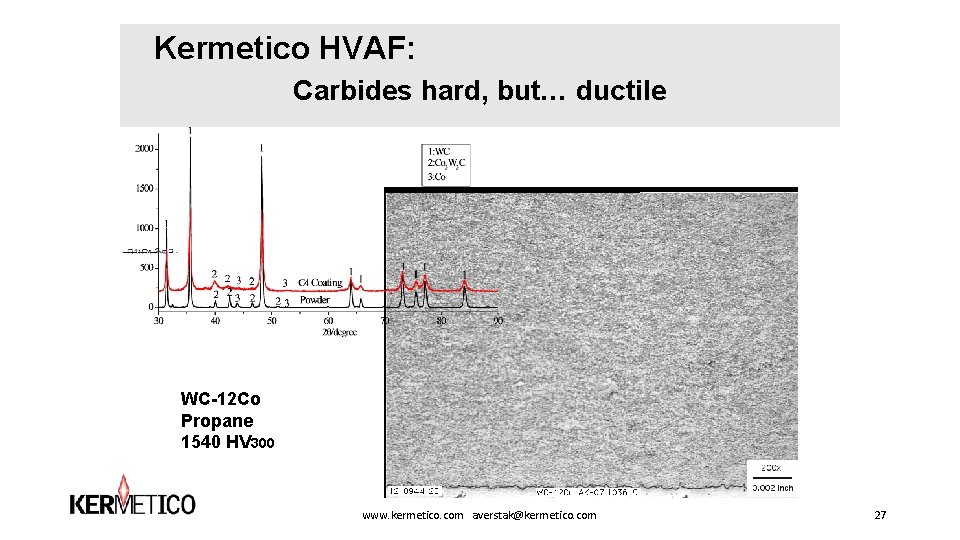
Kermetico HVAF: Carbides hard, but… ductile WC-12 Co Propane 1540 HV 300 www. kermetico. com averstak@kermetico. com 27
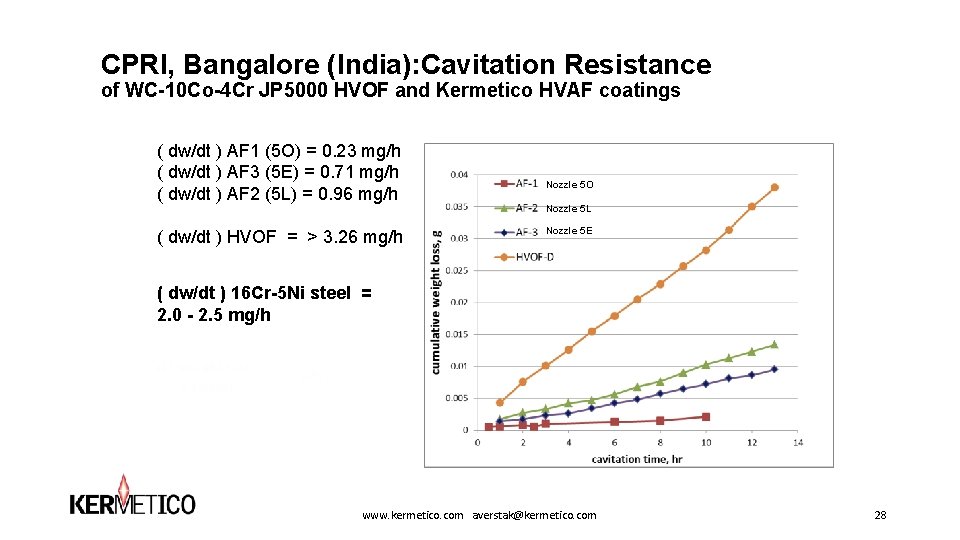
CPRI, Bangalore (India): Cavitation Resistance of WC-10 Co-4 Cr JP 5000 HVOF and Kermetico HVAF coatings ( dw/dt ) AF 1 (5 O) = 0. 23 mg/h ( dw/dt ) AF 3 (5 E) = 0. 71 mg/h ( dw/dt ) AF 2 (5 L) = 0. 96 mg/h ( dw/dt ) HVOF = > 3. 26 mg/h Nozzle 5 O Nozzle 5 L Nozzle 5 E ( dw/dt ) 16 Cr-5 Ni steel = 2. 0 - 2. 5 mg/h www. kermetico. com averstak@kermetico. com 28
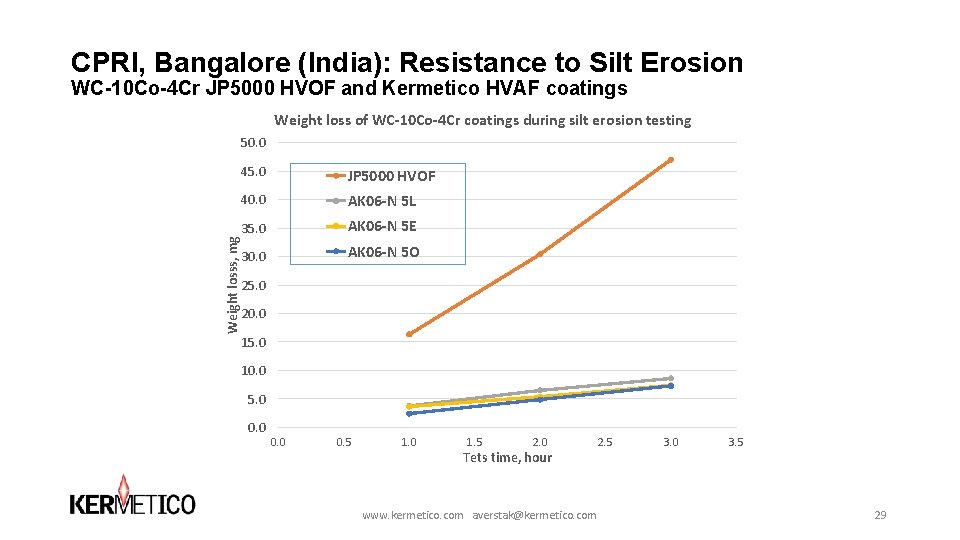
CPRI, Bangalore (India): Resistance to Silt Erosion WC-10 Co-4 Cr JP 5000 HVOF and Kermetico HVAF coatings Weight loss of WC-10 Co-4 Cr coatings during silt erosion testing Weight losss, mg 50. 0 45. 0 JP 5000 HVOF 40. 0 AK 06 -N 5 L 35. 0 AK 06 -N 5 E 30. 0 AK 06 -N 5 O 25. 0 20. 0 15. 0 10. 0 5. 0 0. 5 1. 0 1. 5 2. 0 Tets time, hour www. kermetico. com averstak@kermetico. com 2. 5 3. 0 3. 5 29
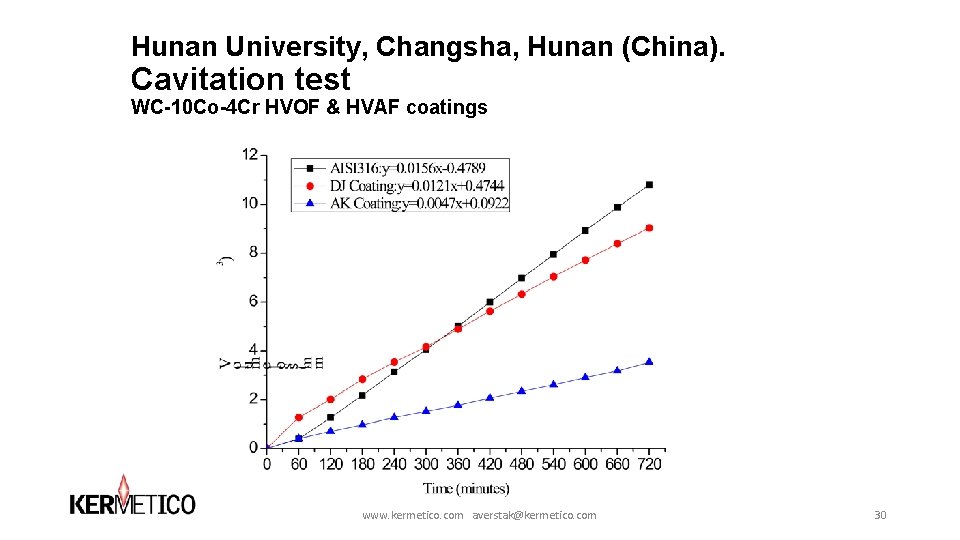
Hunan University, Changsha, Hunan (China). Cavitation test WC-10 Co-4 Cr HVOF & HVAF coatings www. kermetico. com averstak@kermetico. com 30
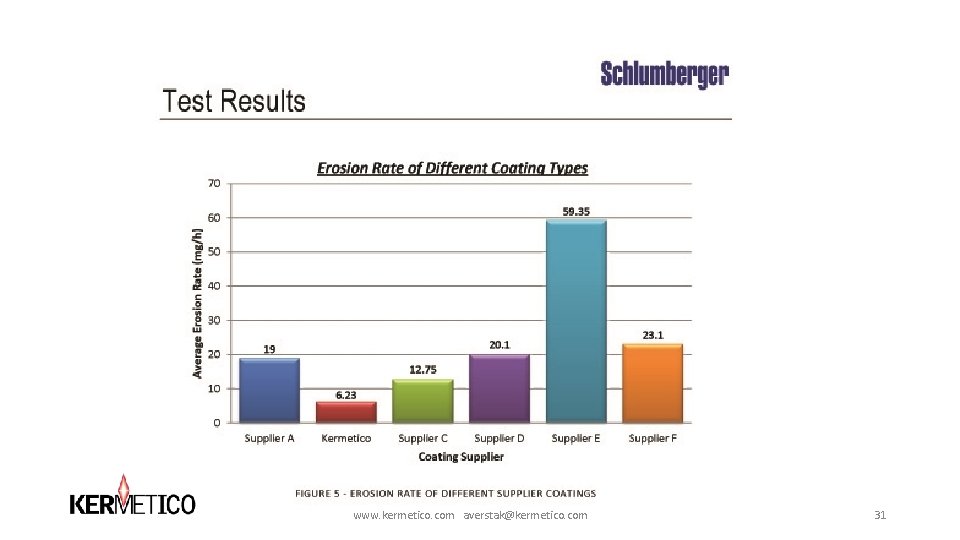
www. kermetico. com averstak@kermetico. com 31
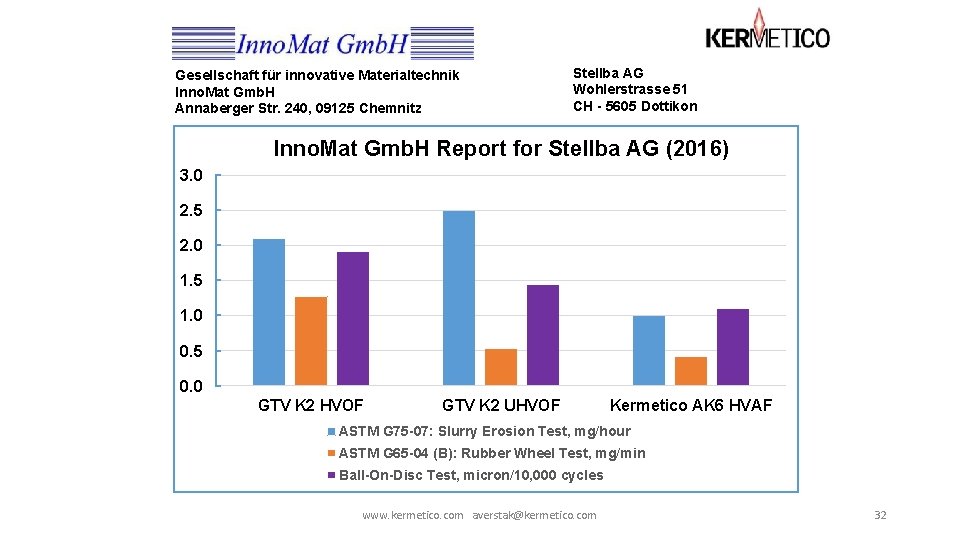
Gesellschaft für innovative Materialtechnik Inno. Mat Gmb. H Annaberger Str. 240, 09125 Chemnitz Stellba AG Wohlerstrasse 51 CH - 5605 Dottikon Inno. Mat Gmb. H Report for Stellba AG (2016) 3. 0 2. 5 2. 0 1. 5 1. 0 0. 5 0. 0 GTV K 2 HVOF GTV K 2 UHVOF Kermetico AK 6 HVAF ASTM G 75 -07: Slurry Erosion Test, mg/hour ASTM G 65 -04 (B): Rubber Wheel Test, mg/min Ball-On-Disc Test, micron/10, 000 cycles www. kermetico. com averstak@kermetico. com 32
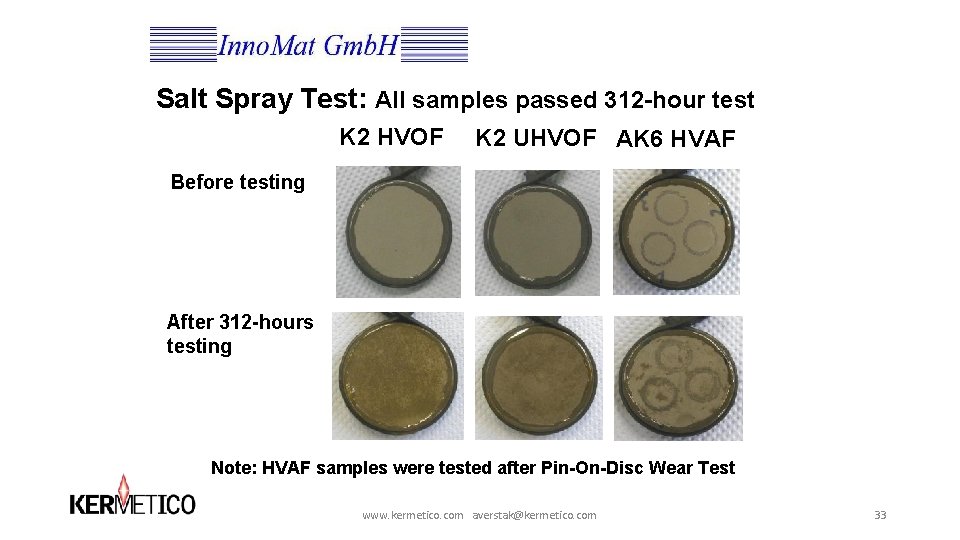
Salt Spray Test: All samples passed 312 -hour test K 2 HVOF K 2 UHVOF AK 6 HVAF Before testing After 312 -hours testing Note: HVAF samples were tested after Pin-On-Disc Wear Test www. kermetico. com averstak@kermetico. com 33
Kermetico HVAF WC-10 Co-4 Cr coatings compared to HVOF: 1) Harder (related to cohesion strength) 2) More Ductile (related to Co-matrix properties) 3) More resistant to cavitation, erosion and abrasive wear www. kermetico. com averstak@kermetico. com 34
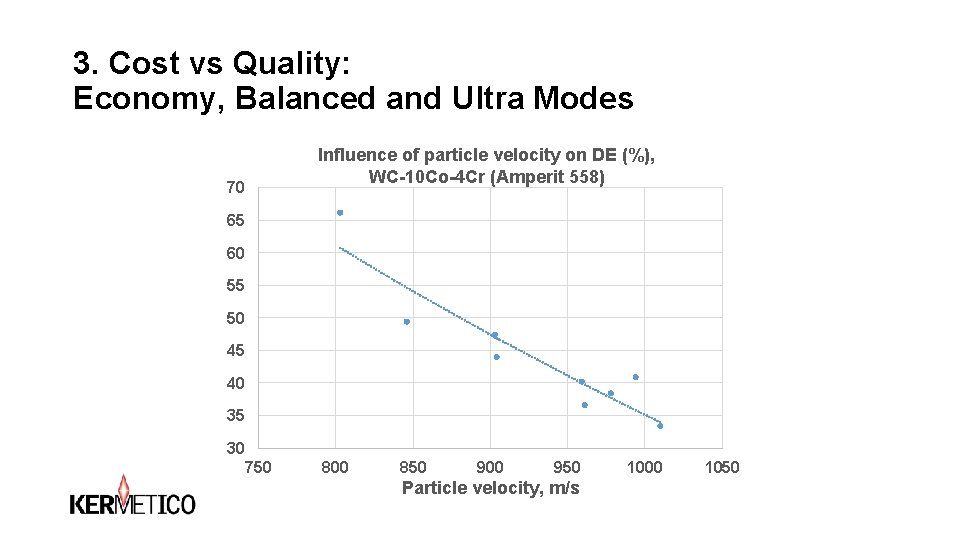
3. Cost vs Quality: Economy, Balanced and Ultra Modes Influence of particle velocity on DE (%), WC-10 Co-4 Cr (Amperit 558) 70 65 60 55 50 45 40 35 30 750 800 850 900 950 Particle velocity, m/s 1000 1050
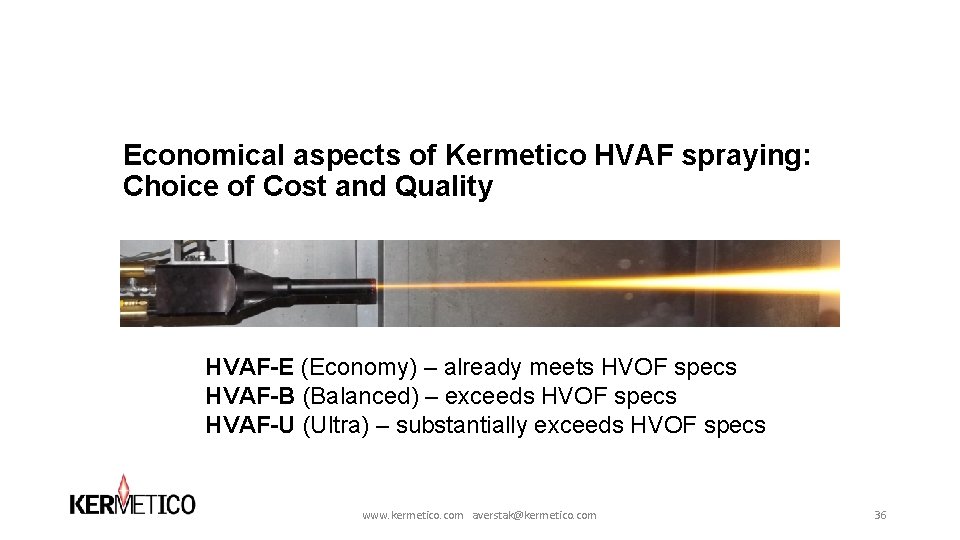
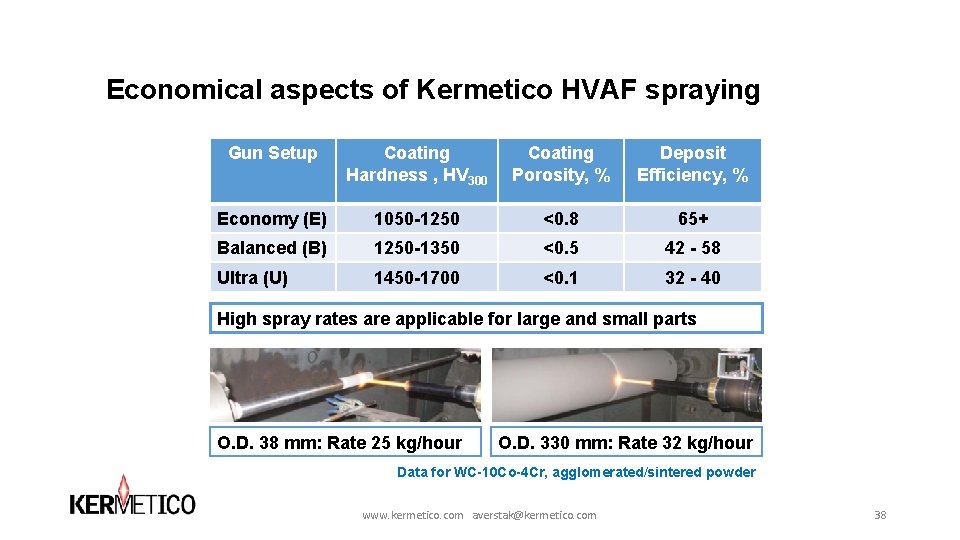
Economical aspects of Kermetico HVAF spraying: Choice of Cost and Quality HVAF-E (Economy) – already meets HVOF specs HVAF-B (Balanced) – exceeds HVOF specs HVAF-U (Ultra) – substantially exceeds HVOF specs www. kermetico. com averstak@kermetico. com 36
How you do it: Choose the nozzle 1100 -1500 m/s 850 m/s 40 -50 m/s <1500 o. C ~1600 o. C 1800 -1900 o. C Acceleration Heating www. kermetico. com averstak@kermetico. com Gas velocity Gas temperature Spray particle 37
Economical aspects of Kermetico HVAF spraying Gun Setup Coating Hardness , HV 300 Coating Porosity, % Deposit Efficiency, % Economy (E) 1050 -1250 <0. 8 65+ Balanced (B) 1250 -1350 <0. 5 42 - 58 Ultra (U) 1450 -1700 <0. 1 32 - 40 High spray rates are applicable for large and small parts O. D. 38 mm: Rate 25 kg/hour O. D. 330 mm: Rate 32 kg/hour Data for WC-10 Co-4 Cr, agglomerated/sintered powder www. kermetico. com averstak@kermetico. com 38
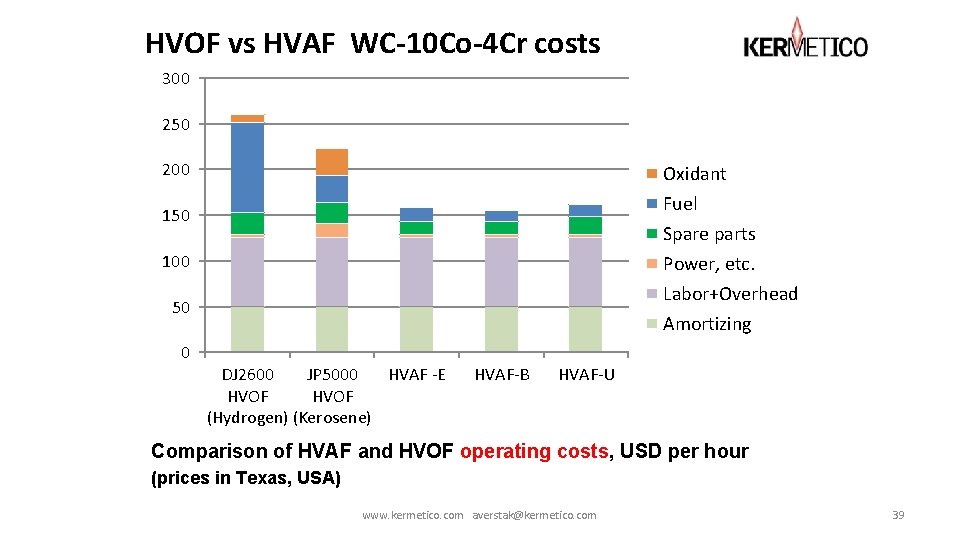
HVOF vs HVAF WC-10 Co-4 Cr costs 300 250 200 Oxidant Fuel Spare parts Power, etc. 150 100 Labor+Overhead Amortizing 50 0 DJ 2600 JP 5000 HVAF -E HVOF (Hydrogen) (Kerosene) HVAF-B HVAF-U Comparison of HVAF and HVOF operating costs, USD per hour (prices in Texas, USA) www. kermetico. com averstak@kermetico. com 39
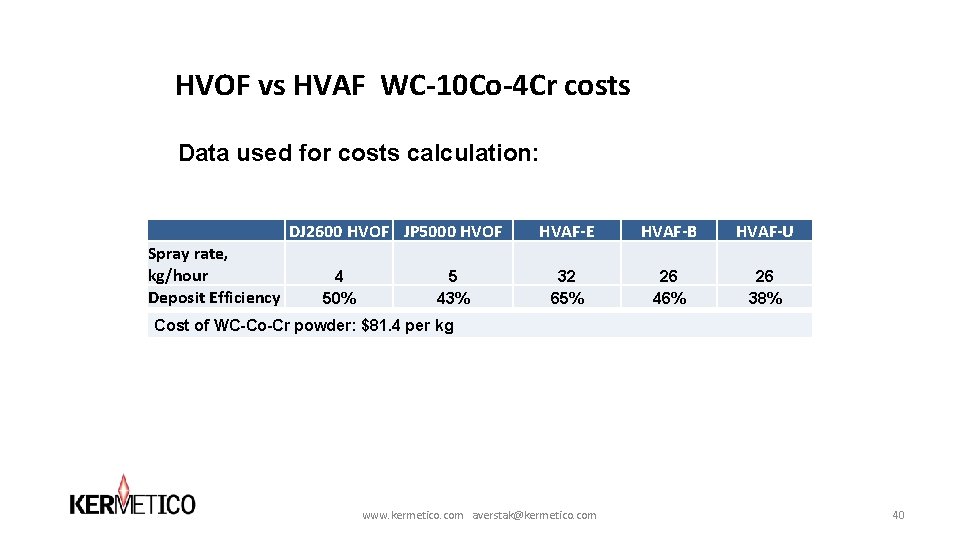
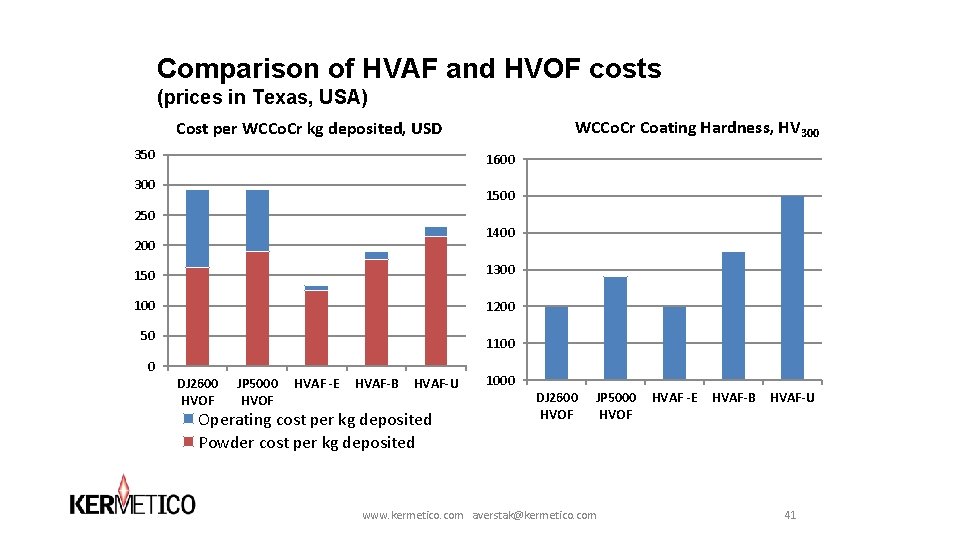
HVOF vs HVAF WC-10 Co-4 Cr costs Data used for costs calculation: DJ 2600 HVOF JP 5000 HVOF Spray rate, kg/hour Deposit Efficiency 4 50% 5 43% HVAF-E HVAF-B HVAF-U 32 65% 26 46% 26 38% Cost of WC-Co-Cr powder: $81. 4 per kg www. kermetico. com averstak@kermetico. com 40
Comparison of HVAF and HVOF costs (prices in Texas, USA) WCCo. Cr Coating Hardness, HV 300 Cost per WCCo. Cr kg deposited, USD 350 1600 300 1500 250 1400 200 150 1300 1200 50 1100 0 DJ 2600 HVOF JP 5000 HVOF HVAF -E HVAF-B HVAF-U Operating cost per kg deposited Powder cost per kg deposited 1000 DJ 2600 HVOF JP 5000 HVOF www. kermetico. com averstak@kermetico. com HVAF -E HVAF-B HVAF-U 41
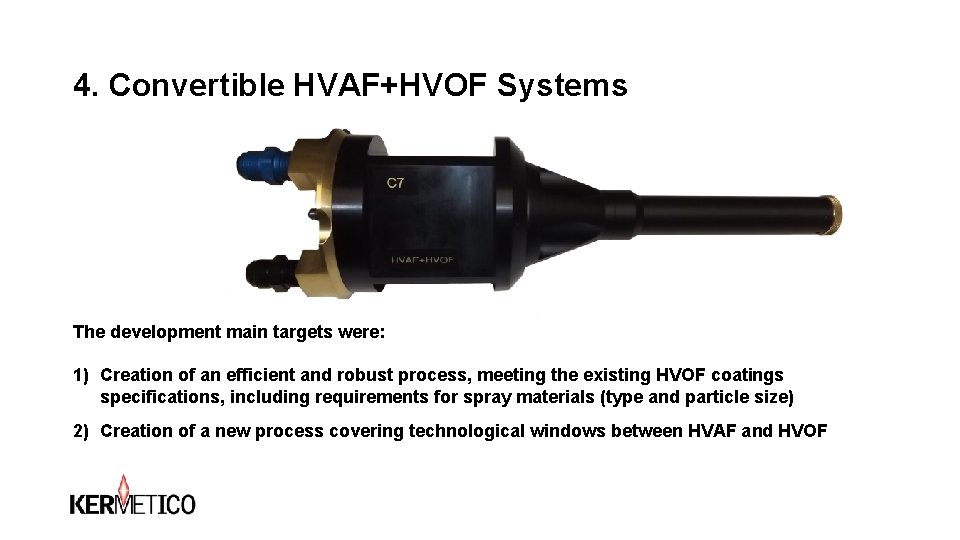
4. Convertible HVAF+HVOF Systems The development main targets were: 1) Creation of an efficient and robust process, meeting the existing HVOF coatings specifications, including requirements for spray materials (type and particle size) 2) Creation of a new process covering technological windows between HVAF and HVOF
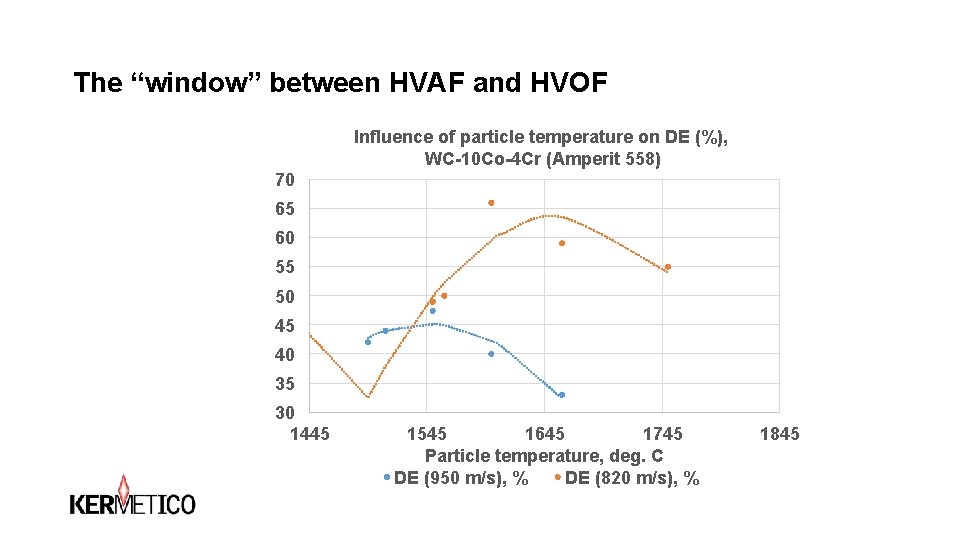
The “window” between HVAF and HVOF Particle temperature, deg. C
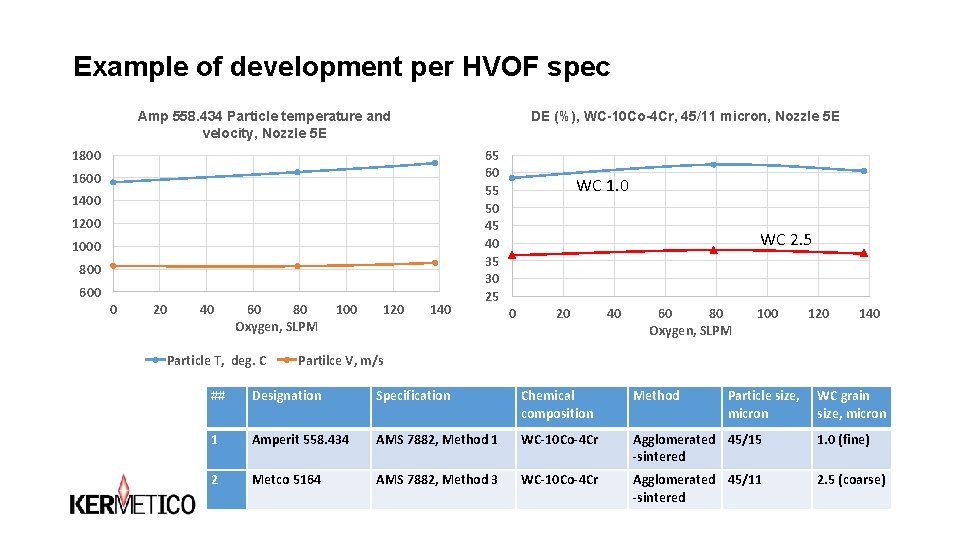
Example of development per HVOF spec Amp 558. 434 Particle temperature and velocity, Nozzle 5 E DE (%), WC-10 Co-4 Cr, 45/11 micron, Nozzle 5 E 1800 1600 1400 1200 1000 800 600 0 20 40 60 80 Oxygen, SLPM Particle T, deg. C 100 120 140 65 60 55 50 45 40 35 30 25 WC 1. 0 WC 2. 5 0 20 40 60 80 Oxygen, SLPM 100 120 140 Partilce V, m/s ## Designation Specification Chemical composition Method Particle size, micron WC grain size, micron 1 Amperit 558. 434 AMS 7882, Method 1 WC-10 Co-4 Cr Agglomerated 45/15 -sintered 1. 0 (fine) 2 Metco 5164 AMS 7882, Method 3 WC-10 Co-4 Cr Agglomerated 45/11 -sintered 2. 5 (coarse)
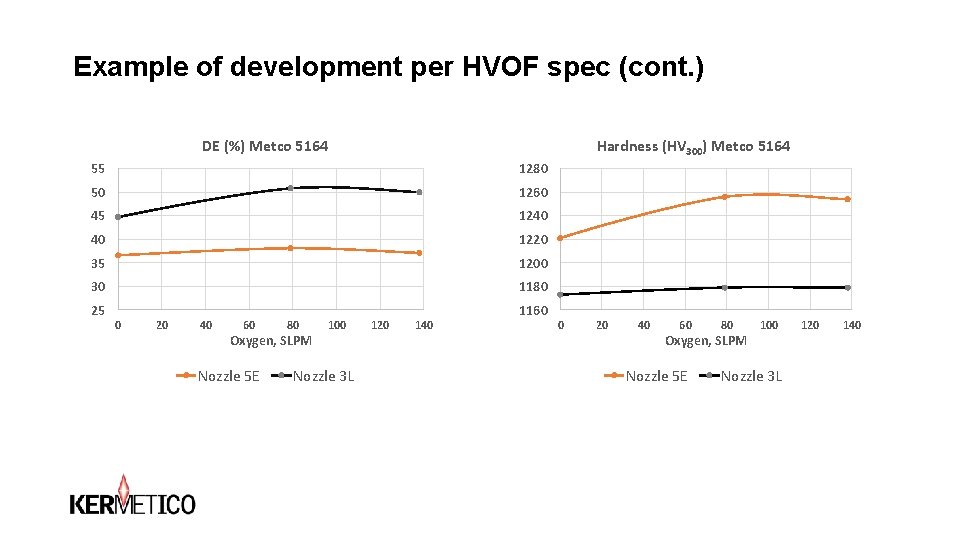
Example of development per HVOF spec (cont. ) DE (%) Metco 5164 Hardness (HV 300) Metco 5164 55 1280 50 1260 45 1240 40 1220 35 1200 30 1180 25 1160 0 20 40 60 80 Oxygen, SLPM Nozzle 5 E 100 Nozzle 3 L 120 140
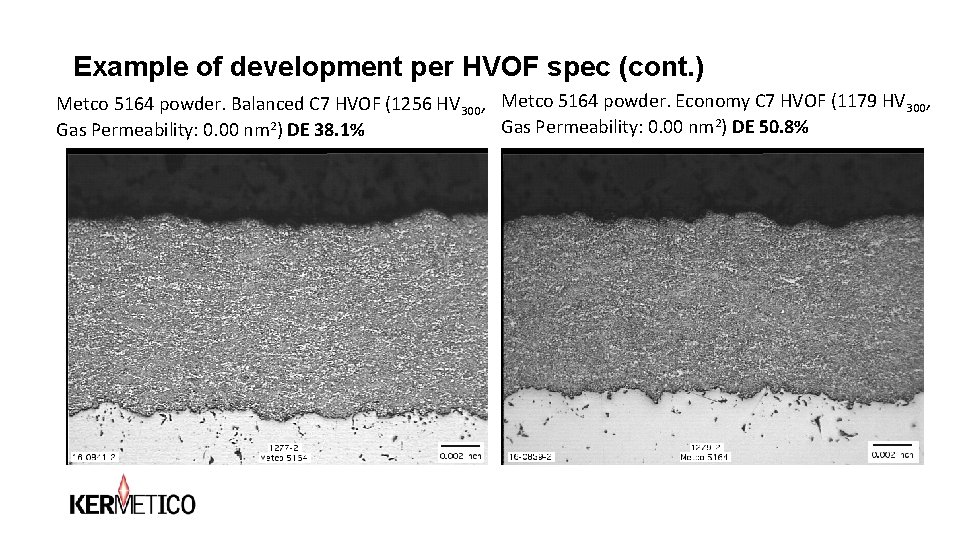
Example of development per HVOF spec (cont. ) Metco 5164 powder. Balanced C 7 HVOF (1256 HV 300, Metco 5164 powder. Economy C 7 HVOF (1179 HV 300, Gas Permeability: 0. 00 nm 2) DE 50. 8% Gas Permeability: 0. 00 nm 2) DE 38. 1%
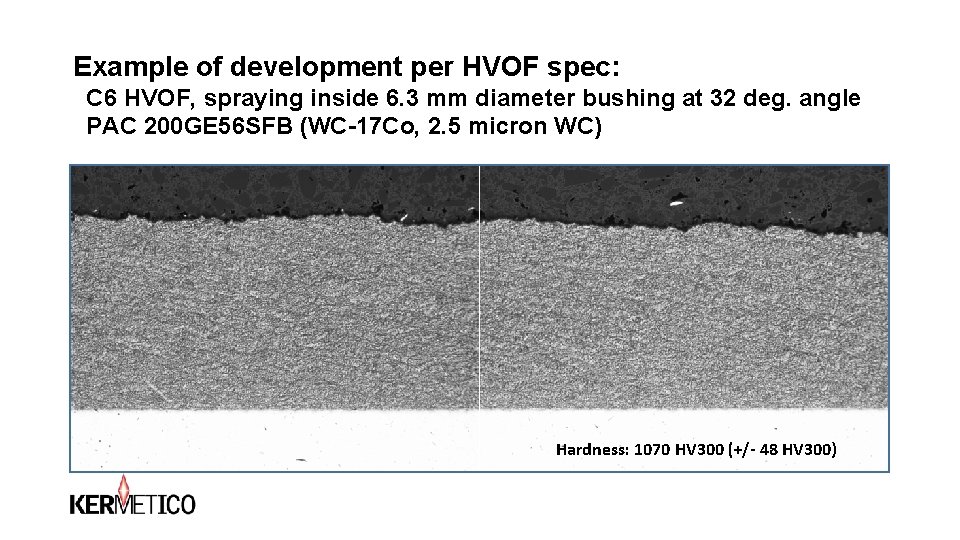
Example of development per HVOF spec: C 6 HVOF, spraying inside 6. 3 mm diameter bushing at 32 deg. angle PAC 200 GE 56 SFB (WC-17 Co, 2. 5 micron WC) Hardness: 1070 HV 300 (+/- 48 HV 300)
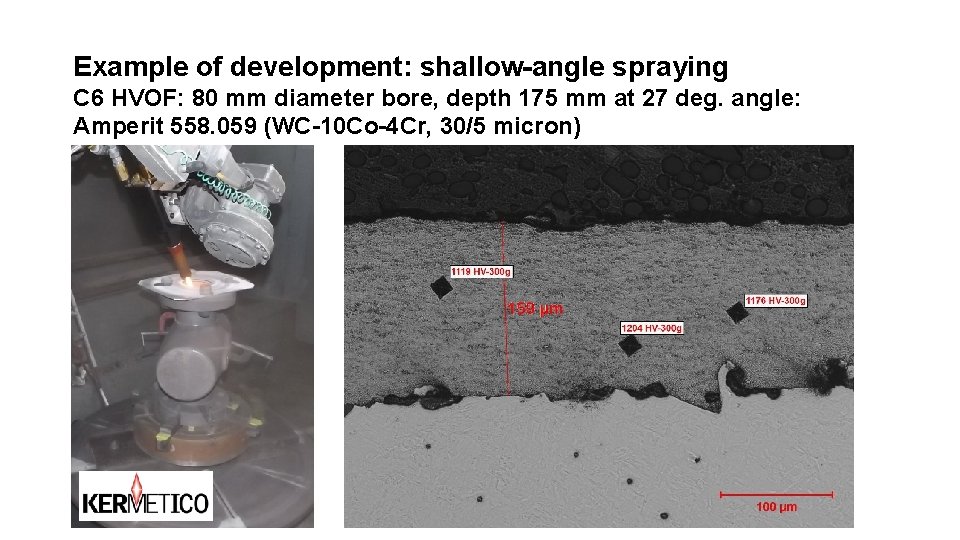
Example of development: shallow-angle spraying C 6 HVOF: 80 mm diameter bore, depth 175 mm at 27 deg. angle: Amperit 558. 059 (WC-10 Co-4 Cr, 30/5 micron)
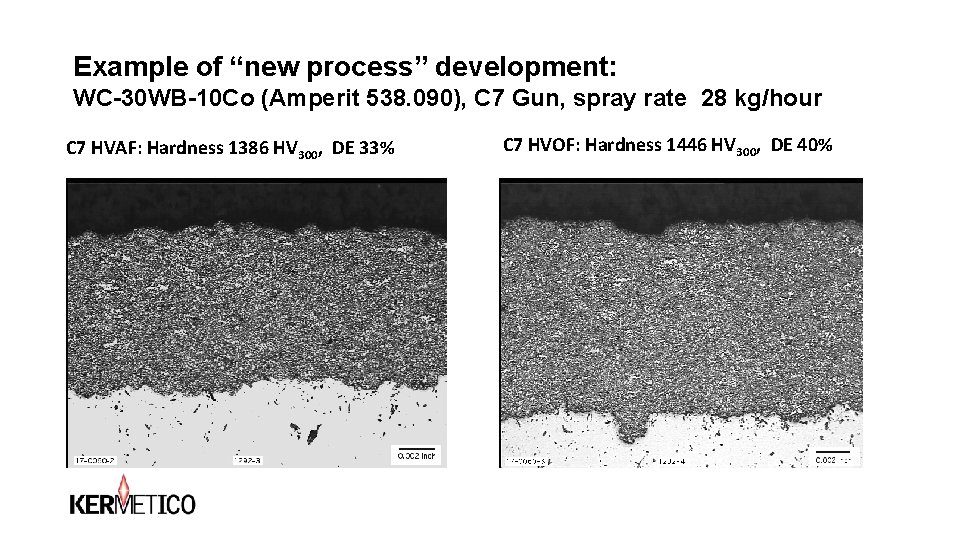
Example of “new process” development: WC-30 WB-10 Co (Amperit 538. 090), C 7 Gun, spray rate 28 kg/hour C 7 HVAF: Hardness 1386 HV 300, DE 33% C 7 HVOF: Hardness 1446 HV 300, DE 40%
5. Internal Diameter Spraying Factors affecting small-ID coating technology q Short distance available for combustion, spray particles heating and acceleration q Need to use fine particle size q Heat accumulation q Strong influence of the jet reflection, dust, etc.
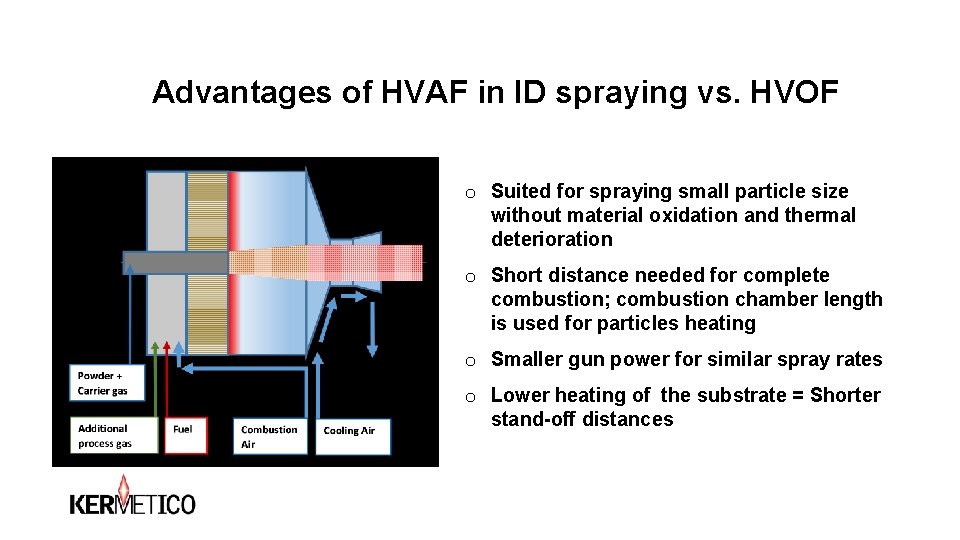
Advantages of HVAF in ID spraying vs. HVOF o Suited for spraying small particle size without material oxidation and thermal deterioration o Short distance needed for complete combustion; combustion chamber length is used for particles heating o Smaller gun power for similar spray rates o Lower heating of the substrate = Shorter stand-off distances
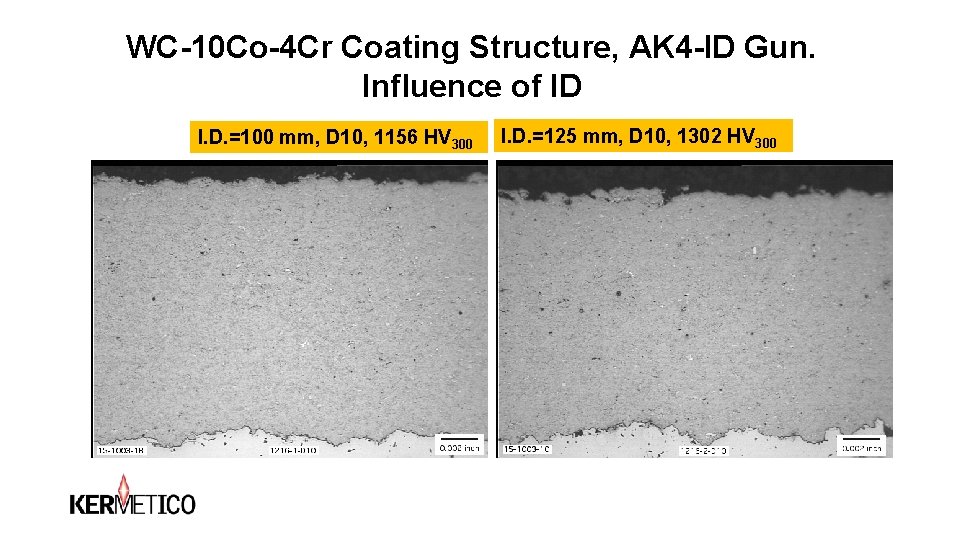
WC-10 Co-4 Cr Coating Structure, AK 4 -ID Gun. Influence of ID I. D. =100 mm, D 10, 1156 HV 300 I. D. =125 mm, D 10, 1302 HV 300
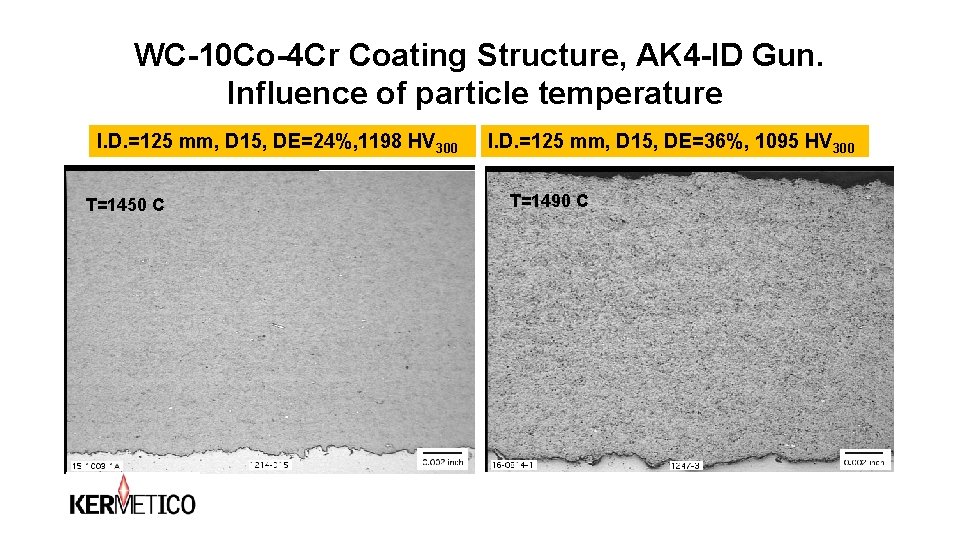
WC-10 Co-4 Cr Coating Structure, AK 4 -ID Gun. Influence of particle temperature I. D. =125 mm, D 15, DE=24%, 1198 HV 300 T=1450 C I. D. =125 mm, D 15, DE=36%, 1095 HV 300 T=1490 C
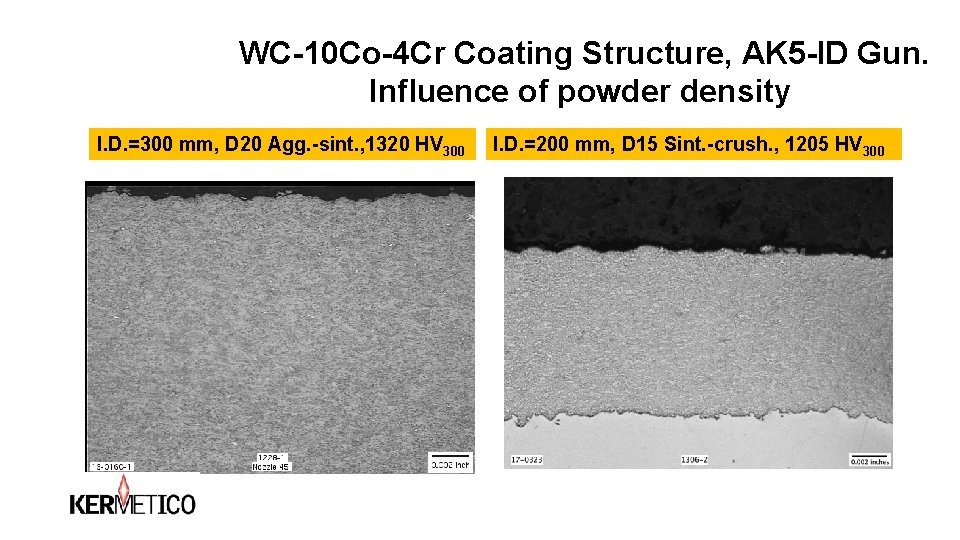
WC-10 Co-4 Cr Coating Structure, AK 5 -ID Gun. Influence of powder density I. D. =300 mm, D 20 Agg. -sint. , 1320 HV 300 I. D. =200 mm, D 15 Sint. -crush. , 1205 HV 300
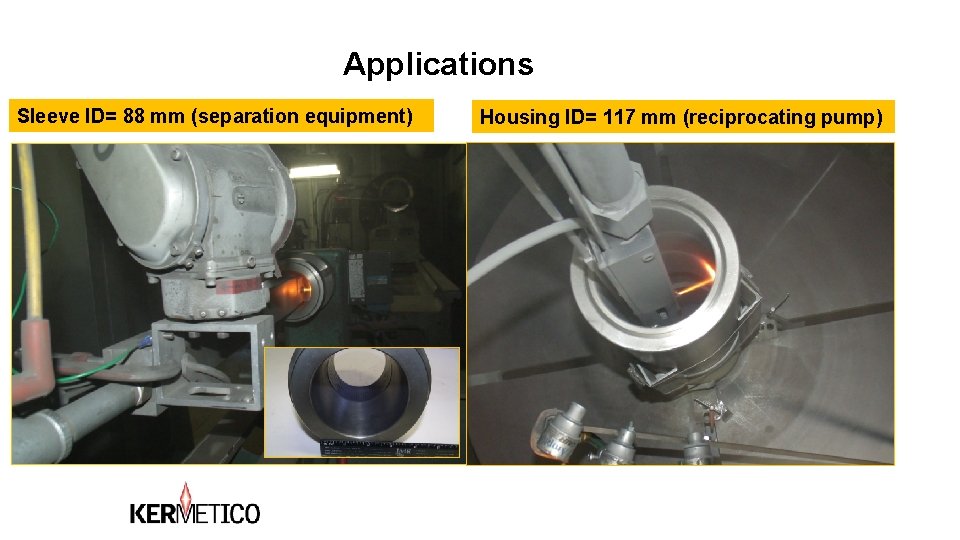
Applications Sleeve ID= 88 mm (separation equipment) Housing ID= 117 mm (reciprocating pump)
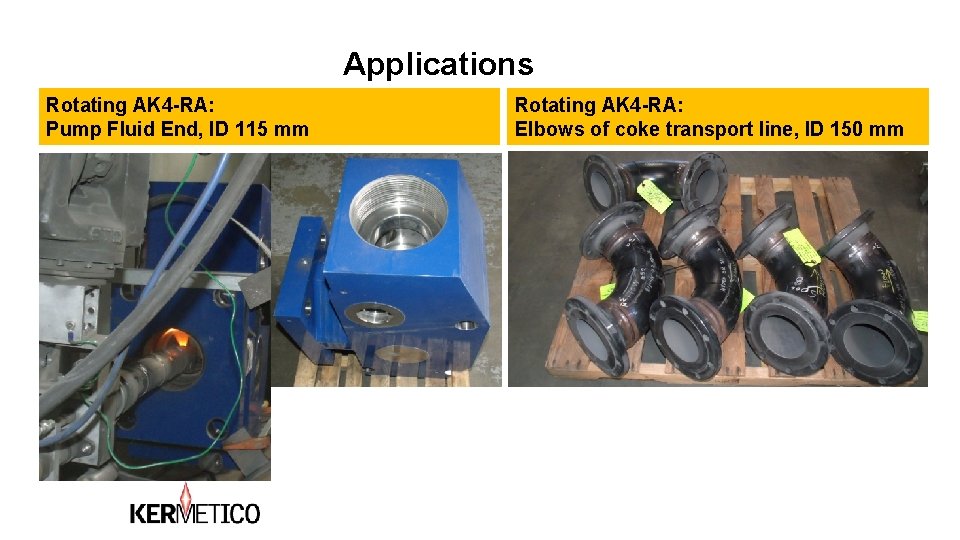
Applications Rotating AK 4 -RA: Pump Fluid End, ID 115 mm Rotating AK 4 -RA: Elbows of coke transport line, ID 150 mm
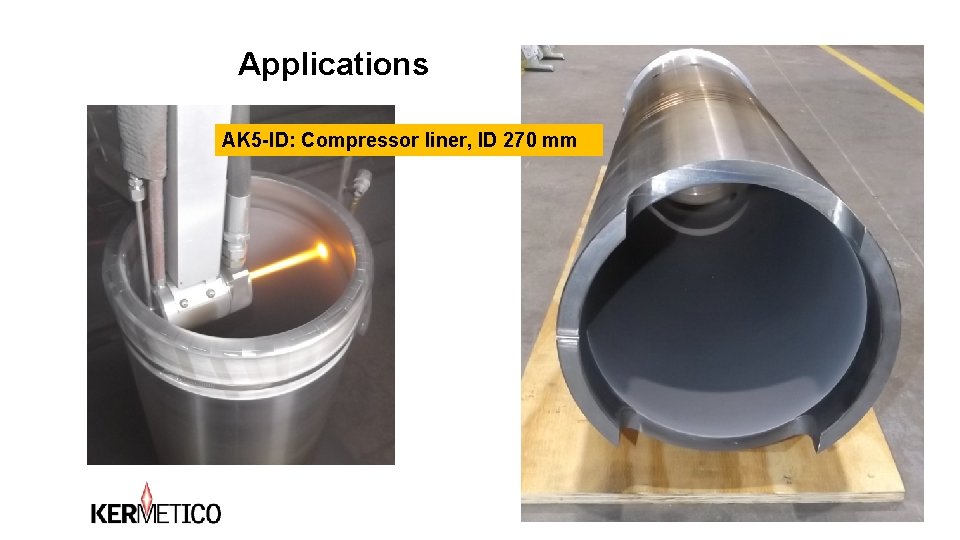
Applications AK 5 -ID: Compressor liner, ID 270 mm
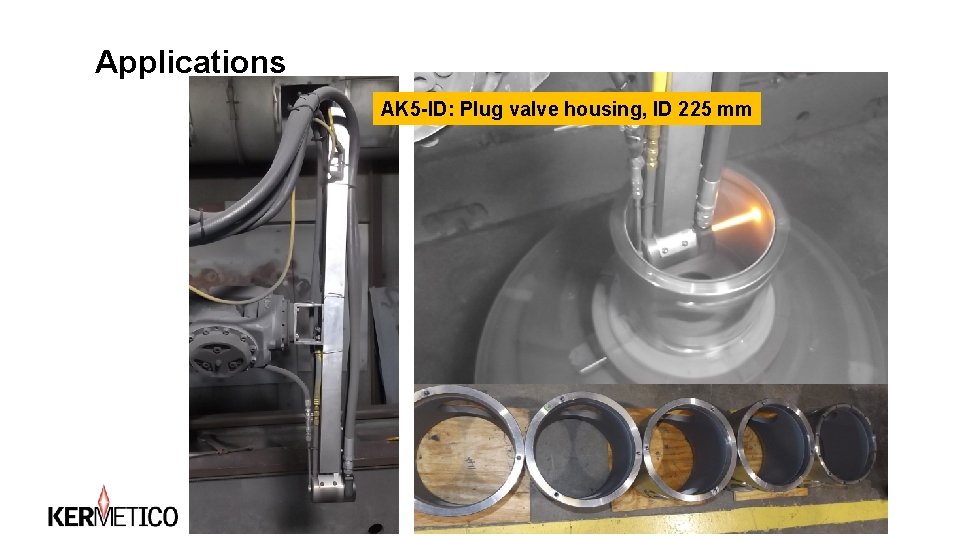
Applications AK 5 -ID: Plug valve housing, ID 225 mm
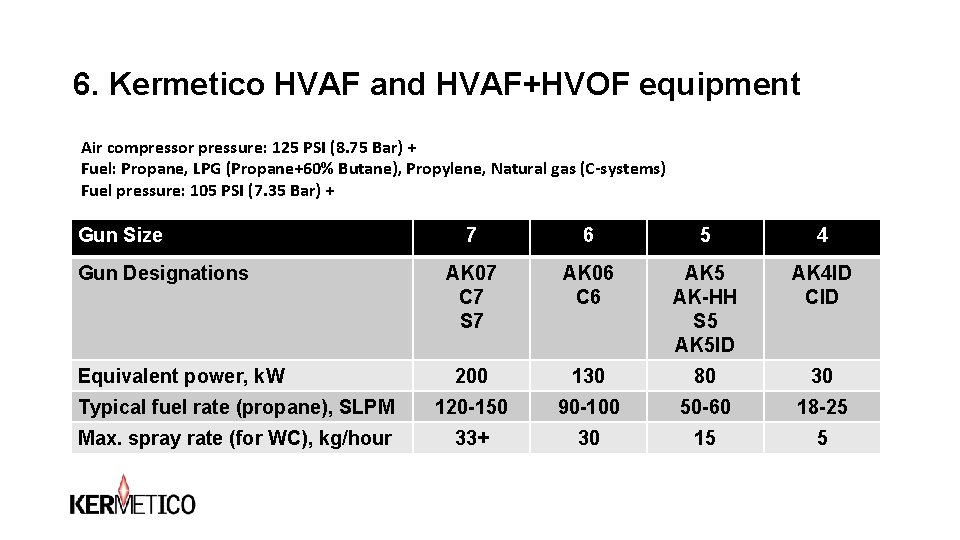
6. Kermetico HVAF and HVAF+HVOF equipment Air compressor pressure: 125 PSI (8. 75 Bar) + Fuel: Propane, LPG (Propane+60% Butane), Propylene, Natural gas (C-systems) Fuel pressure: 105 PSI (7. 35 Bar) + Gun Size 7 6 5 4 AK 07 C 7 S 7 AK 06 C 6 AK 5 AK-HH S 5 AK 5 ID AK 4 ID CID 200 130 80 30 Typical fuel rate (propane), SLPM 120 -150 90 -100 50 -60 18 -25 Max. spray rate (for WC), kg/hour 33+ 30 15 5 Gun Designations Equivalent power, k. W
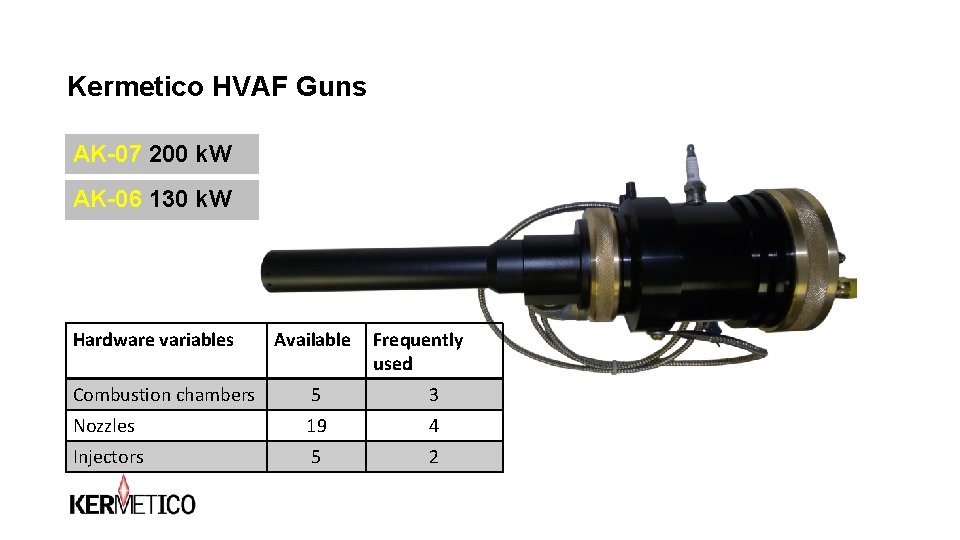
Kermetico HVAF Guns AK-07 200 k. W AK-06 130 k. W Hardware variables Available Frequently used Combustion chambers 5 3 Nozzles 19 4 Injectors 5 2
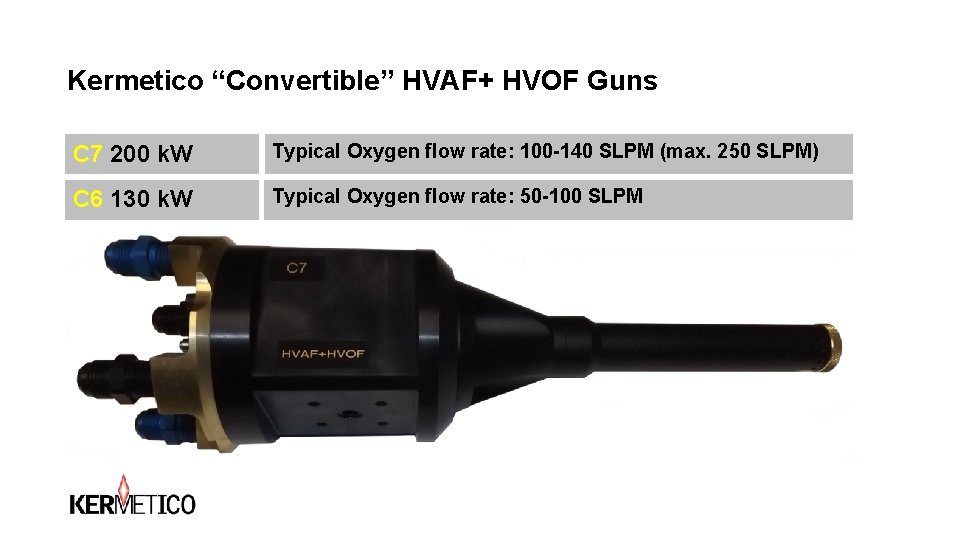
Kermetico “Convertible” HVAF+ HVOF Guns C 7 200 k. W Typical Oxygen flow rate: 100 -140 SLPM (max. 250 SLPM) C 6 130 k. W Typical Oxygen flow rate: 50 -100 SLPM
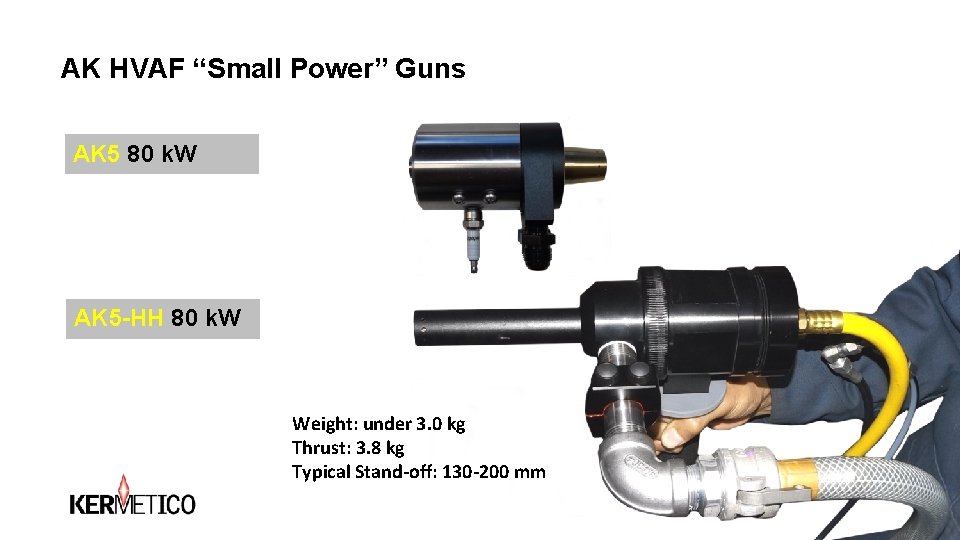
AK HVAF “Small Power” Guns AK 5 80 k. W AK 5 -HH 80 k. W Weight: under 3. 0 kg Thrust: 3. 8 kg Typical Stand-off: 130 -200 mm
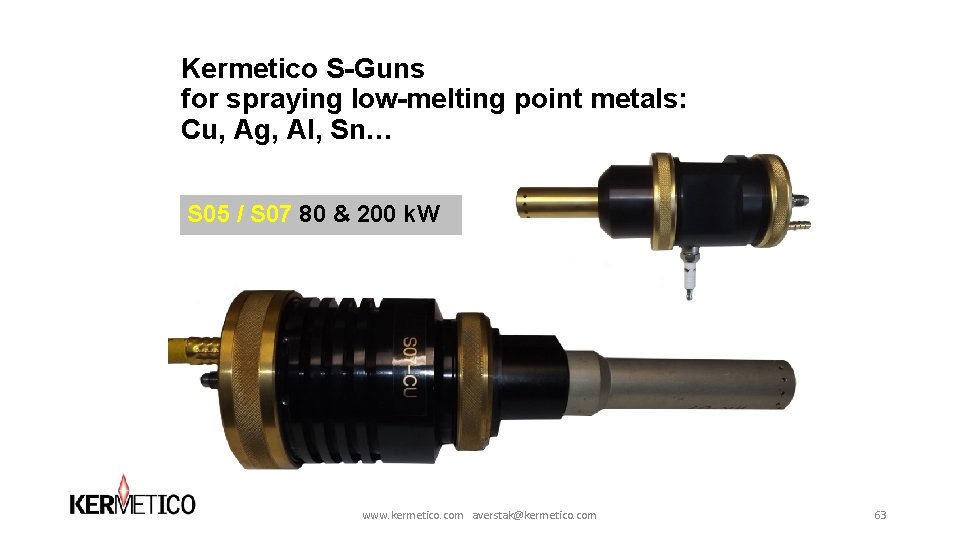
Kermetico S-Guns for spraying low-melting point metals: Cu, Ag, Al, Sn… S 05 / S 07 80 & 200 k. W www. kermetico. com averstak@kermetico. com 63
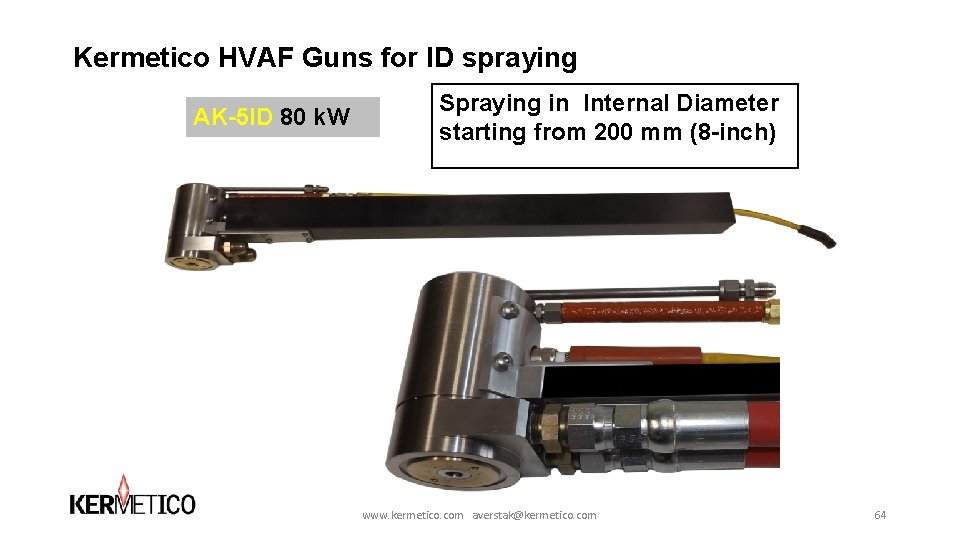
Kermetico HVAF Guns for ID spraying AK-5 ID 80 k. W Spraying in Internal Diameter starting from 200 mm (8 -inch) www. kermetico. com averstak@kermetico. com 64
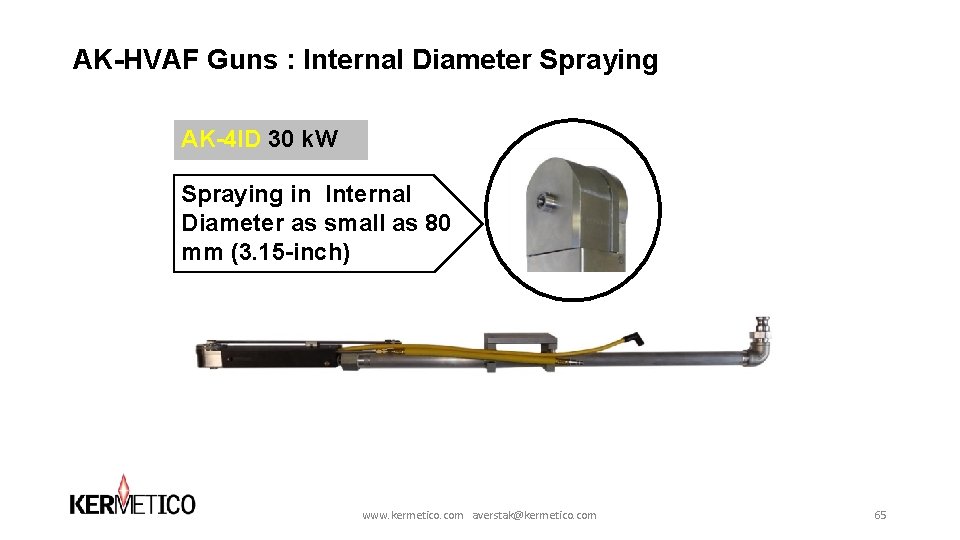
AK-HVAF Guns : Internal Diameter Spraying AK-4 ID 30 k. W Spraying in Internal Diameter as small as 80 mm (3. 15 -inch) www. kermetico. com averstak@kermetico. com 65
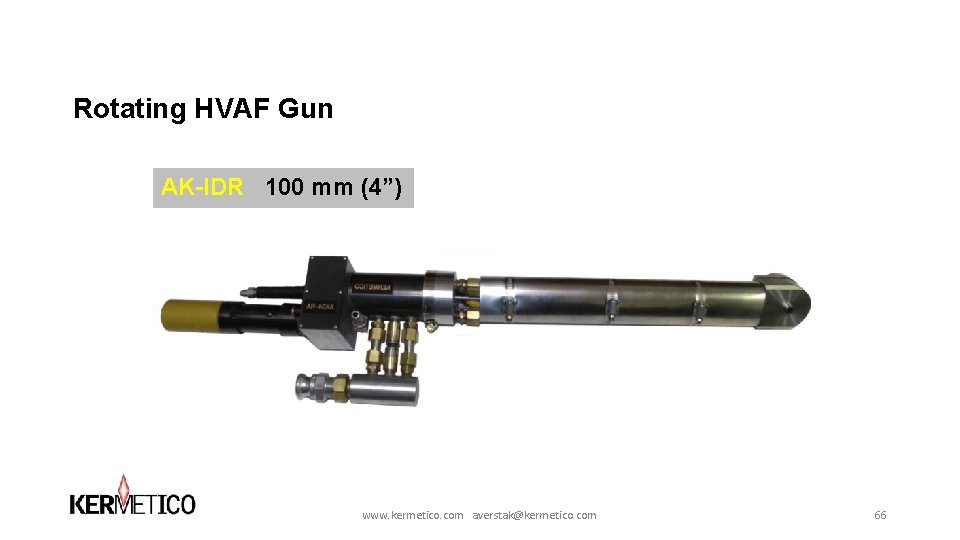
Rotating HVAF Gun AK-IDR 100 mm (4”) www. kermetico. com averstak@kermetico. com 66
Summary • Multiple data confirmed improved quality of HVAF-sprayed WC-coatings as compared to state-of-the art HVOF. Herewith, in many industrial applications it is reasonable to sacrifice some quality to achieve higher DE and correspondingly lower cost with HVAF, still meeting the specified coating quality requirements. • A line of AK HVAF guns of different power is created to address the variety of industrial applications with the best efficiency. The hardware allows operation in different modes to balance the coating quality and cost. • The Convertible HVAF+HVOF guns are developed to meet existing HVOF specifications, while depositing lower cost coatings utilizing high spray rates of C-guns. Simultaneously new technological windows “in between HVAF and HVOF” processes became available for development of more efficient technologies and new materials.
Summary (cont. ) • The technology for deposition of high-quality WC-coatings into small internal diameters is developed and commercialized, including spray materials, equipment and processes. • The concept of “Flash Carbide” coating is developed, targeting deposition of high-quality coatings at extremely low cost due to reduction of coating thickness and elimination of the need for dimensional grinding in the process.
Thank you! Additional information at: www. Kermetico. com