
A Stress Analysis of Sputter Coating on the

- Slides: 14
A Stress Analysis of Sputter Coating on the LSST Primary-Tertiary Mirror by Blake Coughenour A Summary of Results from Substrate temperature and strain during sputter deposition of aluminum on cast borosilicate glass in a Gemini Observatory coating chamber by Jacques Sebag et al.
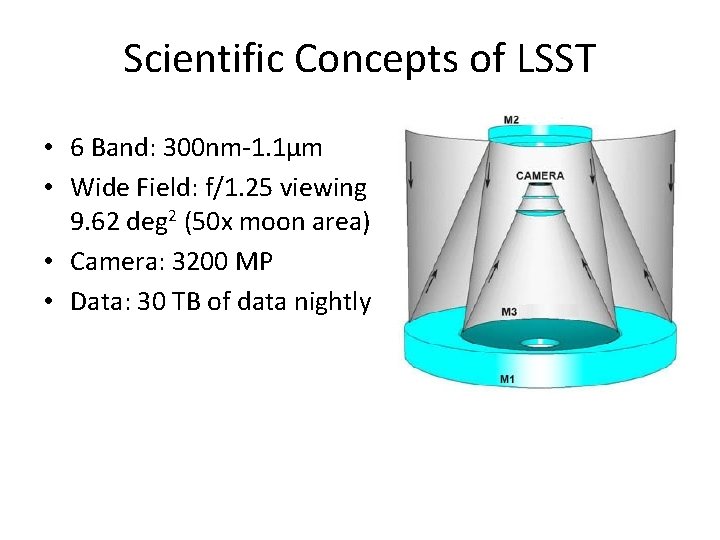
Scientific Concepts of LSST • 6 Band: 300 nm-1. 1μm • Wide Field: f/1. 25 viewing 9. 62 deg 2 (50 x moon area) • Camera: 3200 MP • Data: 30 TB of data nightly
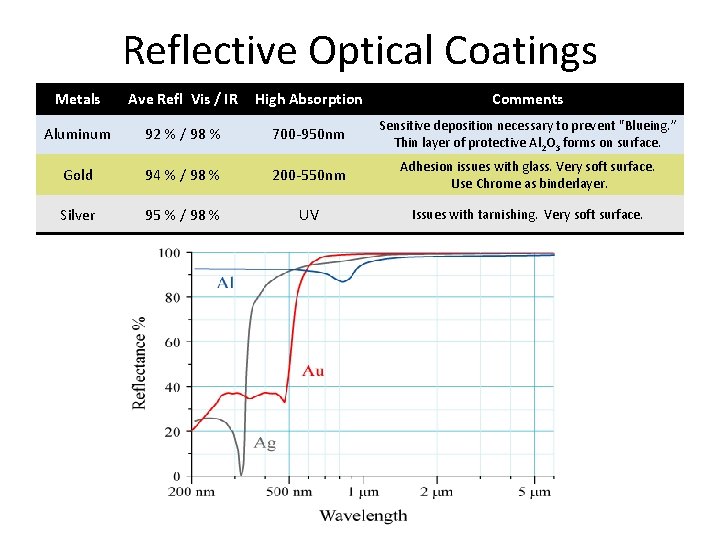
Reflective Optical Coatings Metals Ave Refl Vis / IR High Absorption Comments Aluminum 92 % / 98 % 700 -950 nm Sensitive deposition necessary to prevent "Blueing. ” Thin layer of protective Al 2 O 3 forms on surface. Gold 94 % / 98 % 200 -550 nm Adhesion issues with glass. Very soft surface. Use Chrome as binderlayer. Silver 95 % / 98 % UV Issues with tarnishing. Very soft surface.
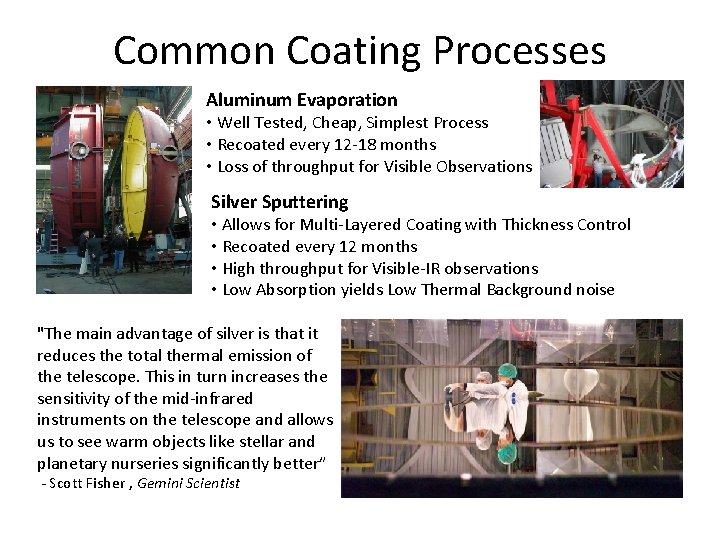
Common Coating Processes Aluminum Evaporation • Well Tested, Cheap, Simplest Process • Recoated every 12 -18 months • Loss of throughput for Visible Observations Silver Sputtering • Allows for Multi-Layered Coating with Thickness Control • Recoated every 12 months • High throughput for Visible-IR observations • Low Absorption yields Low Thermal Background noise "The main advantage of silver is that it reduces the total thermal emission of the telescope. This in turn increases the sensitivity of the mid-infrared instruments on the telescope and allows us to see warm objects like stellar and planetary nurseries significantly better” - Scott Fisher , Gemini Scientist
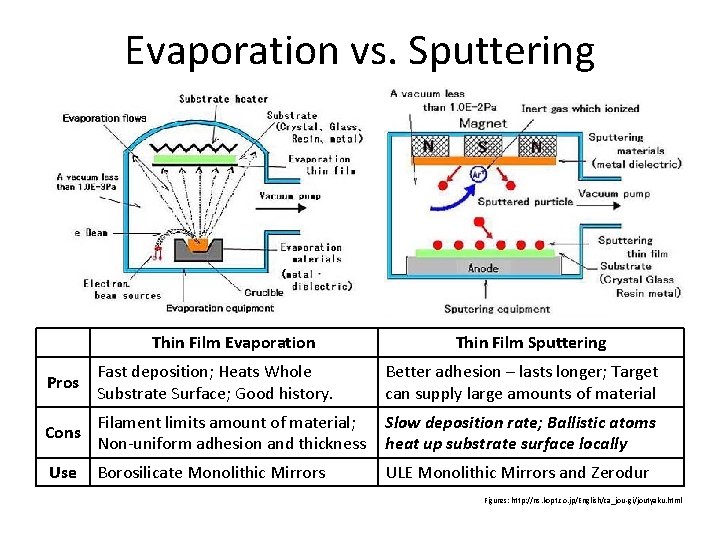
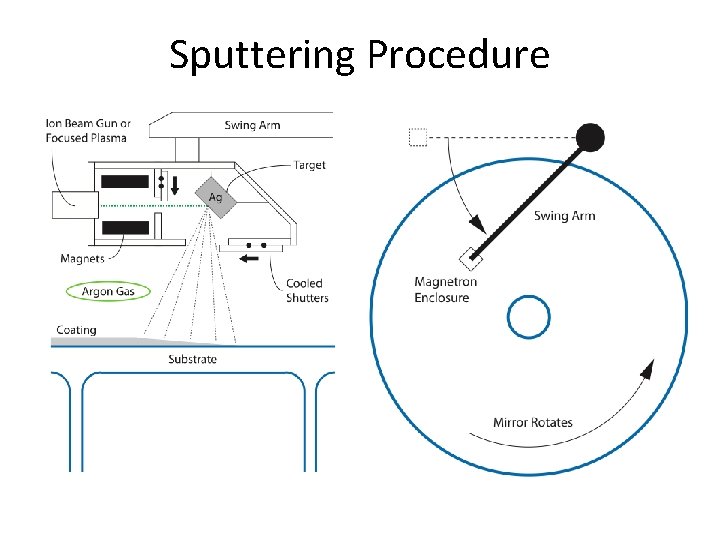
Evaporation vs. Sputtering Thin Film Evaporation Thin Film Sputtering Pros Fast deposition; Heats Whole Substrate Surface; Good history. Better adhesion – lasts longer; Target can supply large amounts of material Cons Filament limits amount of material; Slow deposition rate; Ballistic atoms Non-uniform adhesion and thickness heat up substrate surface locally Use Borosilicate Monolithic Mirrors ULE Monolithic Mirrors and Zerodur Figures: http: //ns. kopt. co. jp/English/ca_jou-gi/joutyaku. html
Sputtering Procedure
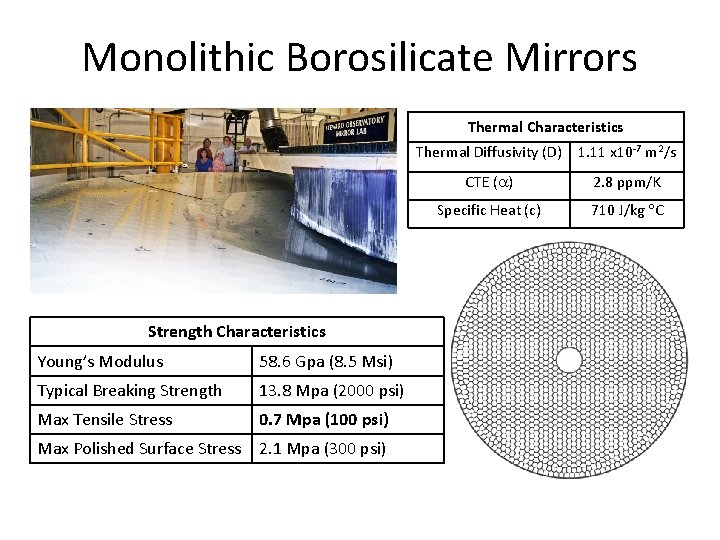
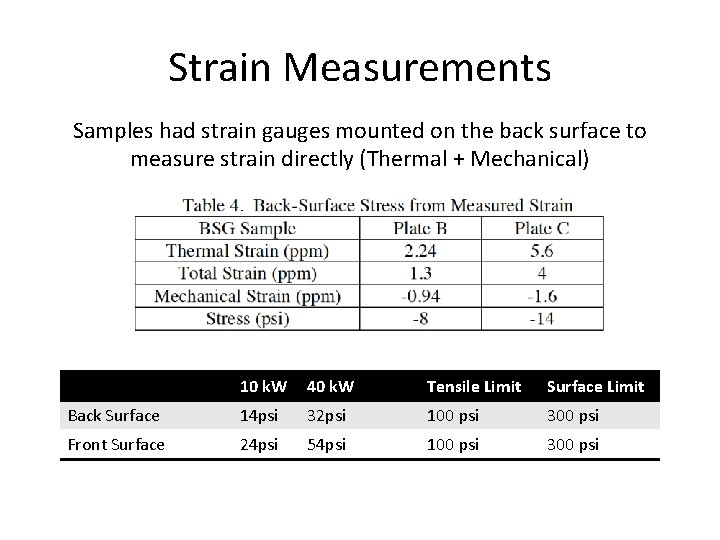
Monolithic Borosilicate Mirrors Thermal Characteristics Strength Characteristics Young’s Modulus 58. 6 Gpa (8. 5 Msi) Typical Breaking Strength 13. 8 Mpa (2000 psi) Max Tensile Stress 0. 7 Mpa (100 psi) Max Polished Surface Stress 2. 1 Mpa (300 psi) Thermal Diffusivity (D) 1. 11 x 10 -7 m 2/s CTE ( ) 2. 8 ppm/K Specific Heat (c) 710 J/kg C
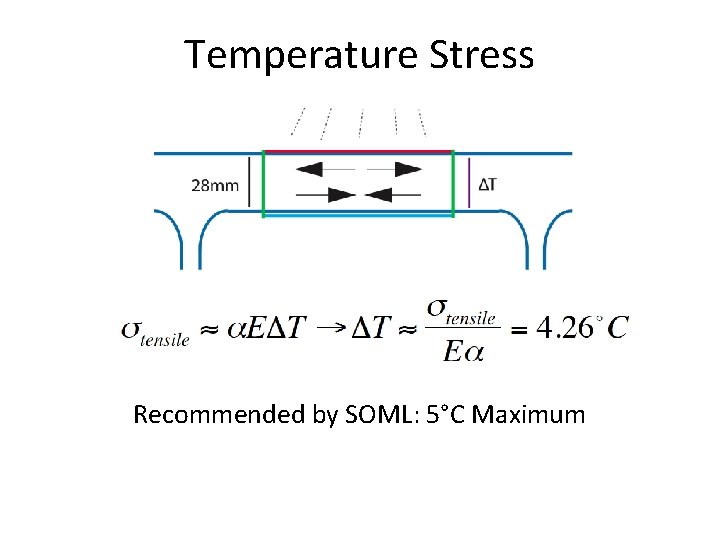
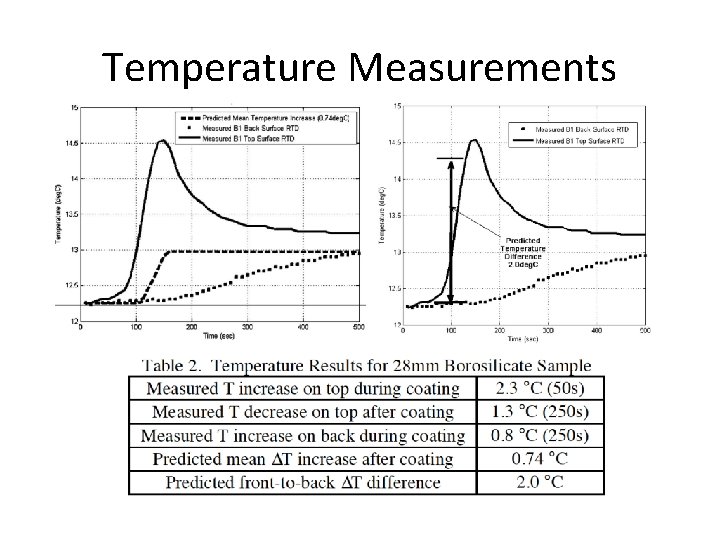
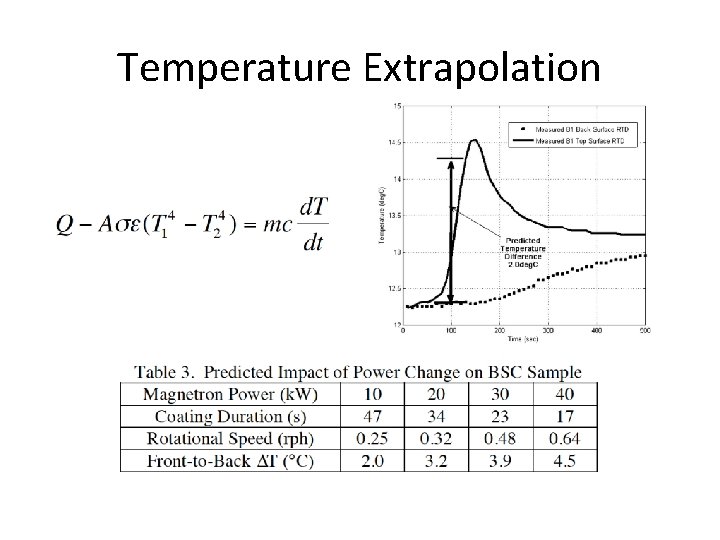
Temperature Stress Recommended by SOML: 5°C Maximum
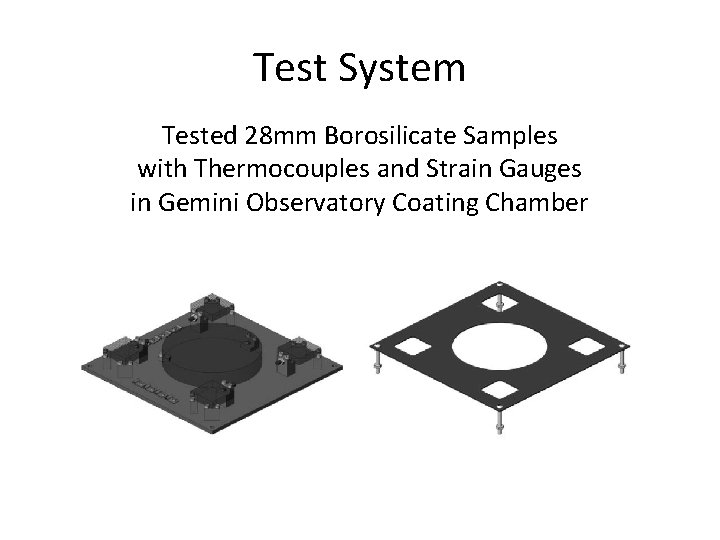
Test System Tested 28 mm Borosilicate Samples with Thermocouples and Strain Gauges in Gemini Observatory Coating Chamber
Temperature Measurements
Temperature Extrapolation
Strain Measurements Samples had strain gauges mounted on the back surface to measure strain directly (Thermal + Mechanical) 10 k. W 40 k. W Tensile Limit Surface Limit Back Surface 14 psi 32 psi 100 psi 300 psi Front Surface 24 psi 54 psi 100 psi 300 psi
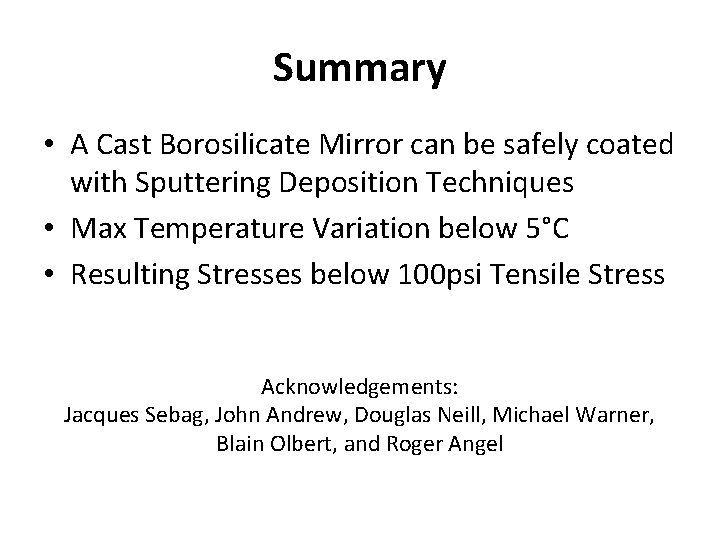
Summary • A Cast Borosilicate Mirror can be safely coated with Sputtering Deposition Techniques • Max Temperature Variation below 5°C • Resulting Stresses below 100 psi Tensile Stress Acknowledgements: Jacques Sebag, John Andrew, Douglas Neill, Michael Warner, Blain Olbert, and Roger Angel
Questions?