MANUFACTURE OF MICROCAPSULES PHYSICAL METHODS 1 Pan Coating

- Slides: 15
MANUFACTURE OF MICROCAPSULES ( PHYSICAL METHODS)
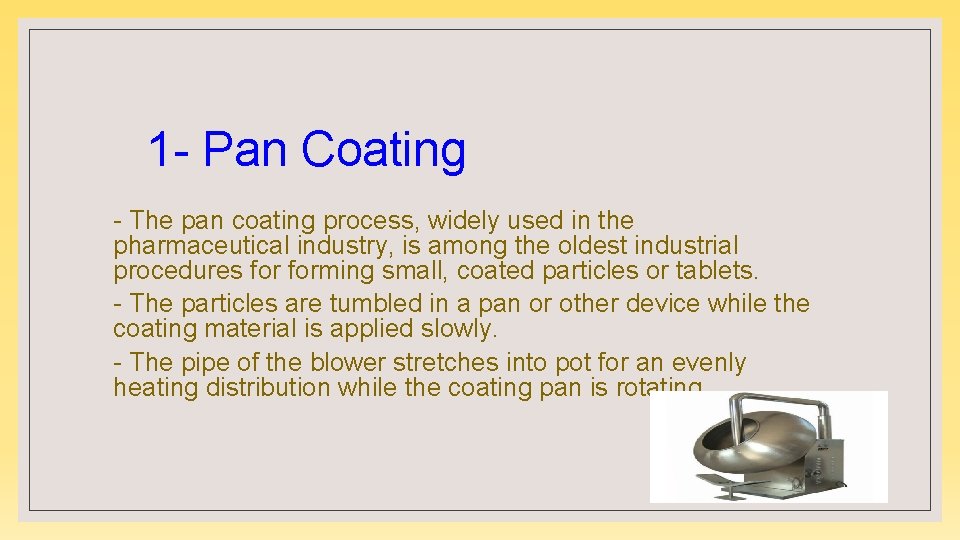
1 - Pan Coating - The pan coating process, widely used in the pharmaceutical industry, is among the oldest industrial procedures forming small, coated particles or tablets. - The particles are tumbled in a pan or other device while the coating material is applied slowly. - The pipe of the blower stretches into pot for an evenly heating distribution while the coating pan is rotating.
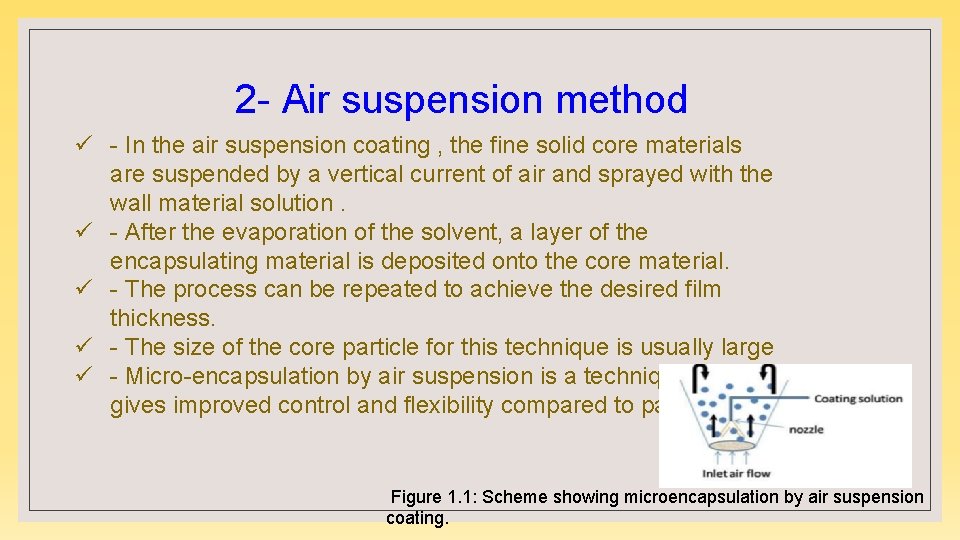
2 - Air suspension method ü - In the air suspension coating , the fine solid core materials are suspended by a vertical current of air and sprayed with the wall material solution. ü - After the evaporation of the solvent, a layer of the encapsulating material is deposited onto the core material. ü - The process can be repeated to achieve the desired film thickness. ü - The size of the core particle for this technique is usually large ü - Micro-encapsulation by air suspension is a technique that gives improved control and flexibility compared to pan coating Figure 1. 1: Scheme showing microencapsulation by air suspension coating.
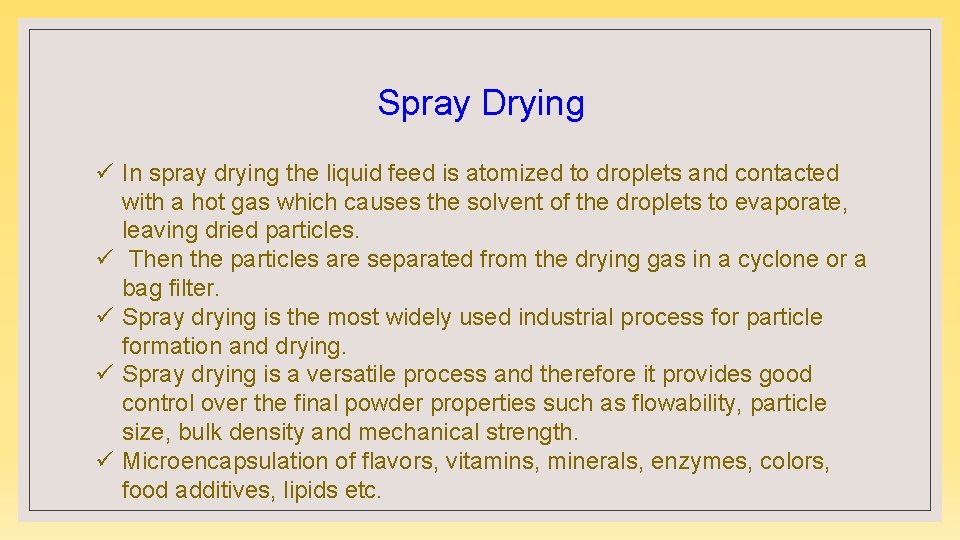
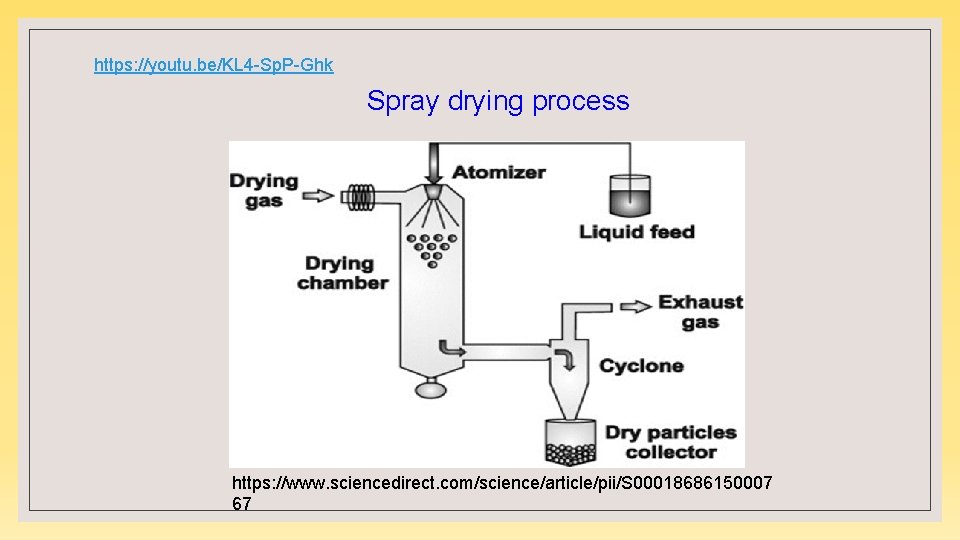
Spray Drying ü In spray drying the liquid feed is atomized to droplets and contacted with a hot gas which causes the solvent of the droplets to evaporate, leaving dried particles. ü Then the particles are separated from the drying gas in a cyclone or a bag filter. ü Spray drying is the most widely used industrial process for particle formation and drying. ü Spray drying is a versatile process and therefore it provides good control over the final powder properties such as flowability, particle size, bulk density and mechanical strength. ü Microencapsulation of flavors, vitamins, minerals, enzymes, colors, food additives, lipids etc.
https: //youtu. be/KL 4 -Sp. P-Ghk Spray drying process https: //www. sciencedirect. com/science/article/pii/S 00018686150007 67
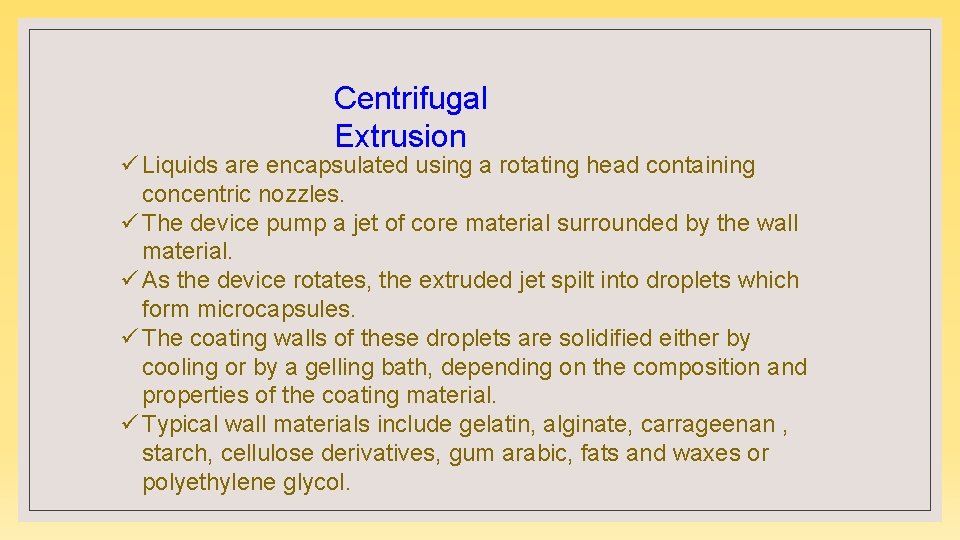
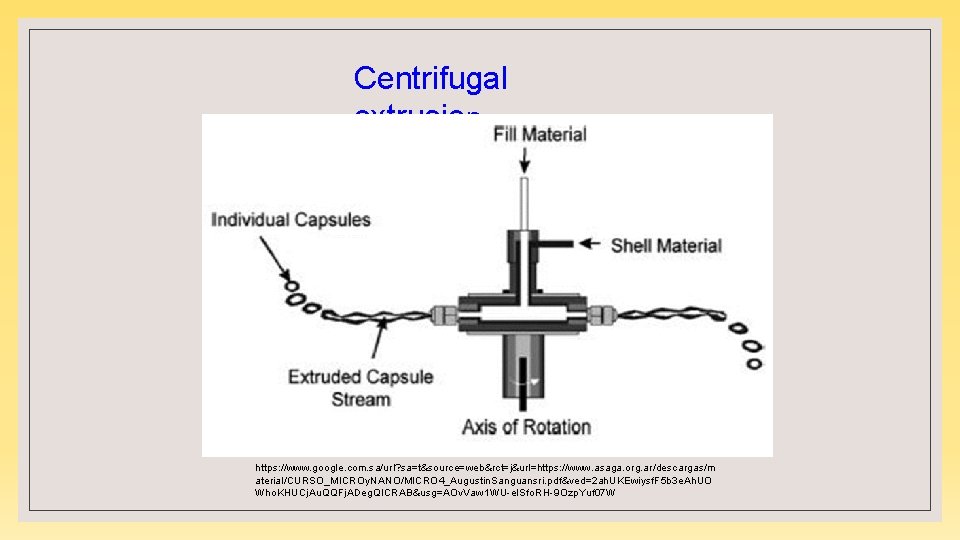
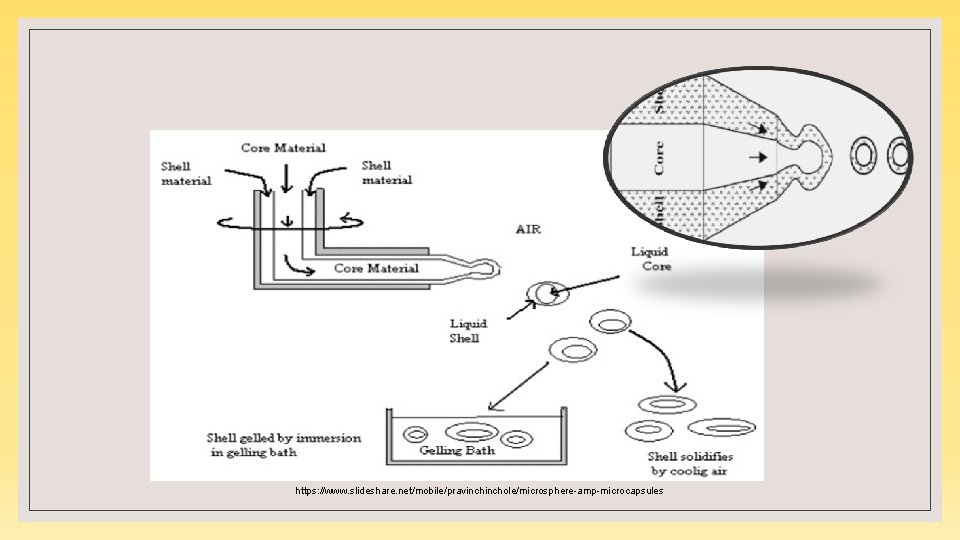
Centrifugal Extrusion ü Liquids are encapsulated using a rotating head containing concentric nozzles. ü The device pump a jet of core material surrounded by the wall material. ü As the device rotates, the extruded jet spilt into droplets which form microcapsules. ü The coating walls of these droplets are solidified either by cooling or by a gelling bath, depending on the composition and properties of the coating material. ü Typical wall materials include gelatin, alginate, carrageenan , starch, cellulose derivatives, gum arabic, fats and waxes or polyethylene glycol.
Centrifugal extrusion https: //www. google. com. sa/url? sa=t&source=web&rct=j&url=https: //www. asaga. org. ar/descargas/m aterial/CURSO_MICROy. NANO/MICRO 4_Augustin. Sanguansri. pdf&ved=2 ah. UKEwiysf. F 5 b 3 e. Ah. UO Who. KHUCj. Au. QQFj. ADeg. QICRAB&usg=AOv. Vaw 1 WU-e. ISfo. RH-9 Ozp. Yuf 07 W
https: //www. slideshare. net/mobile/pravinchole/microsphere-amp-microcapsules
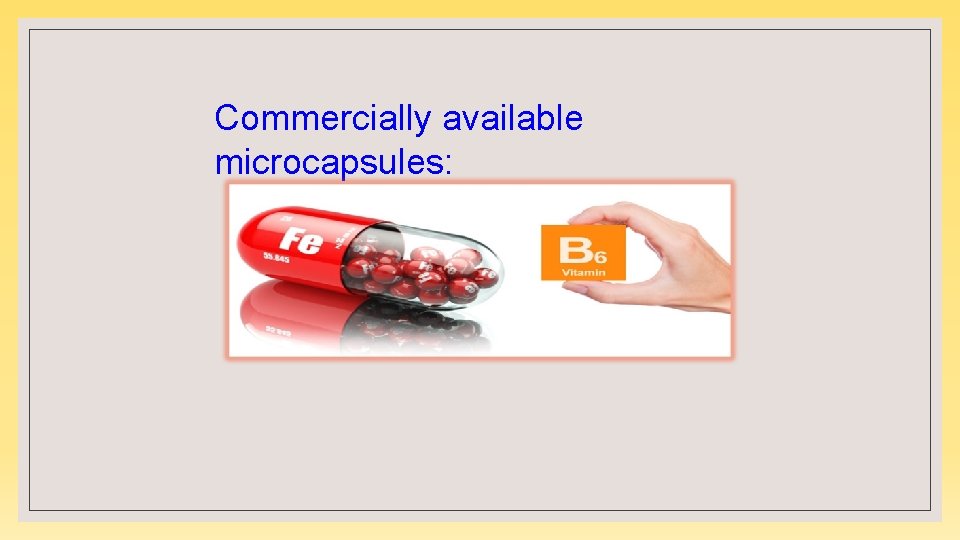
Commercially available microcapsules:
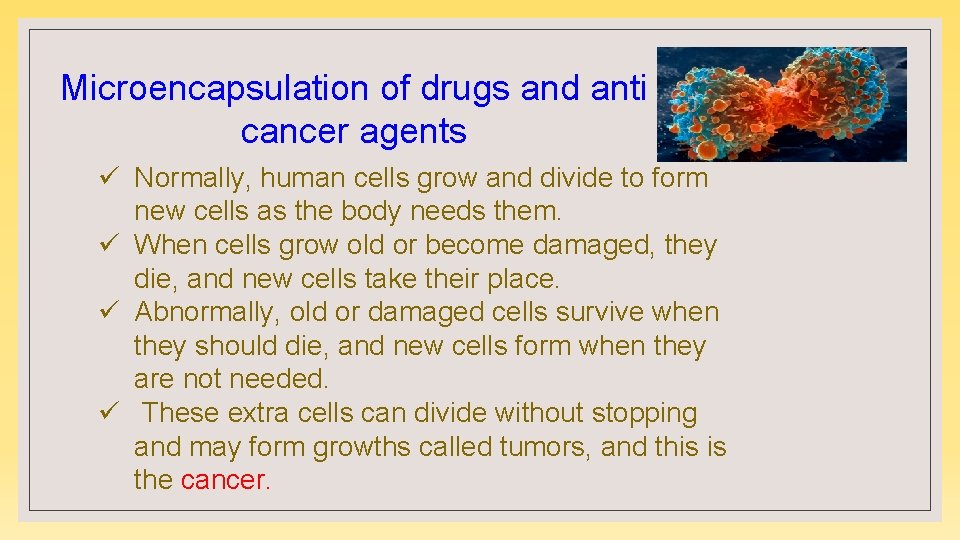
Microencapsulation of drugs and anti cancer agents ü Normally, human cells grow and divide to form new cells as the body needs them. ü When cells grow old or become damaged, they die, and new cells take their place. ü Abnormally, old or damaged cells survive when they should die, and new cells form when they are not needed. ü These extra cells can divide without stopping and may form growths called tumors, and this is the cancer.
These are drugs that are effective in the treatment of cancerous disease. There are several major classes of anticancer drugs, these includes: 1 -alkylating agents 2 antimetabolite 3 -natural products 4 -hormones In addition, there a number of drugs that do not fall within those classes but also used in the treatment of malignant diseases. Cyclophosphamide, Carboplatin, Dicycloplatin, oxaliplatin, cisplatin.
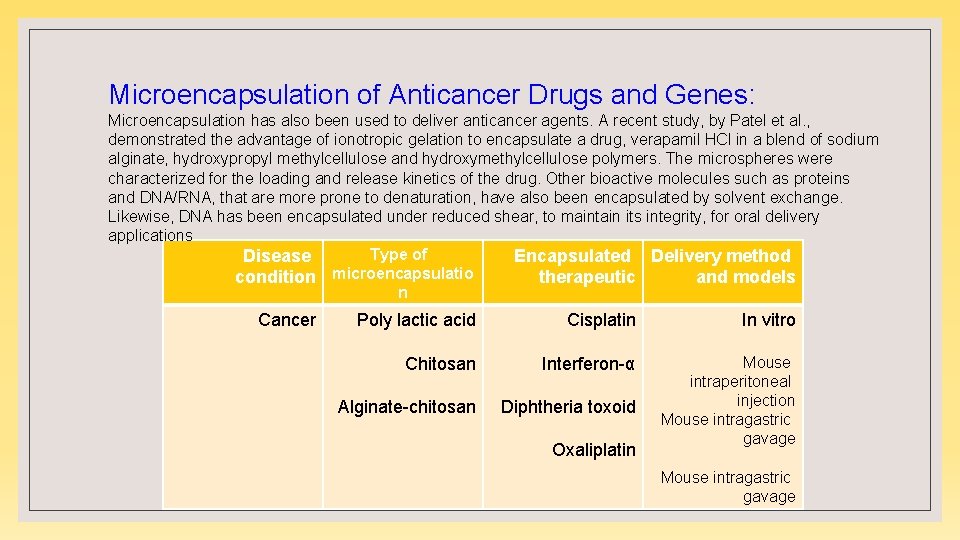
Microencapsulation of Anticancer Drugs and Genes: Microencapsulation has also been used to deliver anticancer agents. A recent study, by Patel et al. , demonstrated the advantage of ionotropic gelation to encapsulate a drug, verapamil HCl in a blend of sodium alginate, hydroxypropyl methylcellulose and hydroxymethylcellulose polymers. The microspheres were characterized for the loading and release kinetics of the drug. Other bioactive molecules such as proteins and DNA/RNA, that are more prone to denaturation, have also been encapsulated by solvent exchange. Likewise, DNA has been encapsulated under reduced shear, to maintain its integrity, for oral delivery applications Type of Disease Encapsulated Delivery method condition microencapsulatio therapeutic and models n Cancer Poly lactic acid Cisplatin In vitro Chitosan Interferon-α Alginate-chitosan Diphtheria toxoid Mouse intraperitoneal injection Mouse intragastric gavage Oxaliplatin Mouse intragastric gavage
Students name: Shahad alshamrani Shaimaa alzelaai Heba alharbi Lujain alabbas Noura halabi
References ü Das SK, Rajabalaya R, Halder T, Khanam J. Microencapsulation techniques and its practices. 2011; (January). ü Zuidam NJ, Shimoni E. Overview of Microencapsulates for Use in Food Products or Processes and Methods to Make Them. 2010: 3 -30. ü Poshadri A, Kuna A. MICROENCAPSULATION TECHNOLOGY A REVIEW. 2010; 38(1): 86 -102. ü Poncelet D. Microencapsulation Fundamentals , methods and applications. 2015; (January 2006). doi: 10. 1007/1 -4020 -4741 -X ü http: //www. ejpmr. com/admin/assets/article_issue/1519801331. pdf ü https: //benthamscience. com/journals/anti-cancer-agents-in-medicinal-chemistry/ ü https: //www. britannica. com/science/anticancer-drug ü https: //www. cancer. gov/about-cancer/understanding/what-is-cancer? redirect=true ü https: //www. ncbi. nlm. nih. gov/pmc/articles/PMC 4595965/