
The Characterization of Novel Carboxysilane Depositions on Stainless
The Characterization of Novel Carboxysilane Depositions on Stainless Steel Substrates for Inertness, Wear Resistance, and Corrosion Resistance Applications Gary Barone, Marty Higgins, David Smith Silco. Tek Corporation
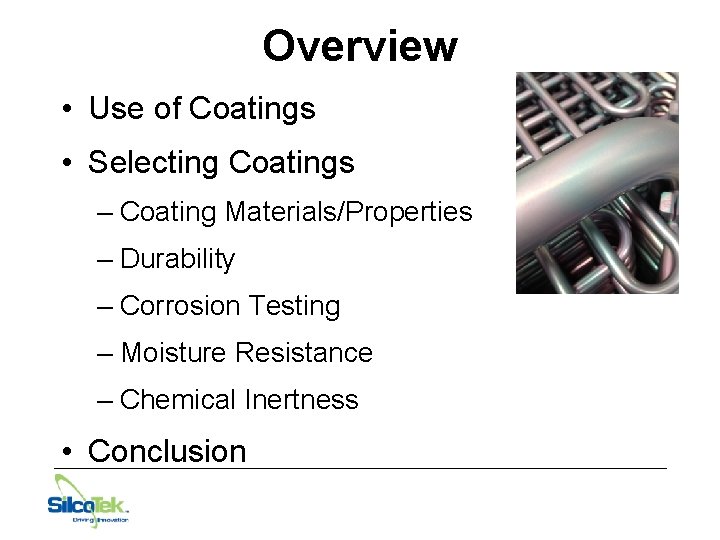
Overview • Use of Coatings • Selecting Coatings – Coating Materials/Properties – Durability – Corrosion Testing – Moisture Resistance – Chemical Inertness • Conclusion
Using Coatings • Most analytical pathways are stainless steel – Great structurally – Good corrosion resistance – Poor chemical properties for analytical chemists • Coatings used to improve material properties. • Industries are demanding harsher services for silicon coatings (like Silco. Nert® 2000 (Sulfinert). • Carboxysilane coatings (Dursan®) more robust.
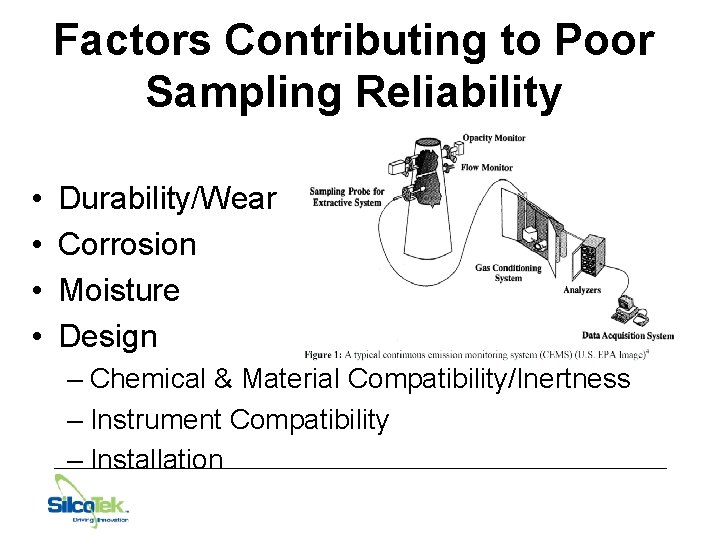
Factors Contributing to Poor Sampling Reliability • • Durability/Wear Corrosion Moisture Design – Chemical & Material Compatibility/Inertness – Instrument Compatibility – Installation
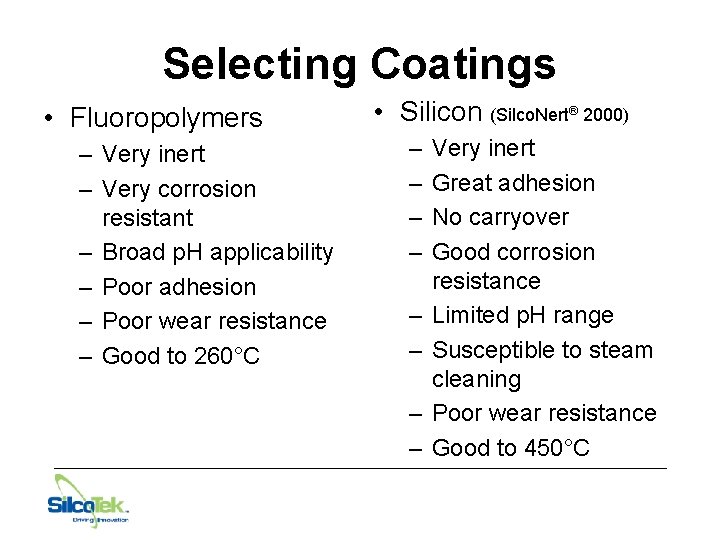
Selecting Coatings • Fluoropolymers – Very inert – Very corrosion resistant – Broad p. H applicability – Poor adhesion – Poor wear resistance – Good to 260°C • Silicon (Silco. Nert® 2000) – – – – Very inert Great adhesion No carryover Good corrosion resistance Limited p. H range Susceptible to steam cleaning Poor wear resistance Good to 450°C
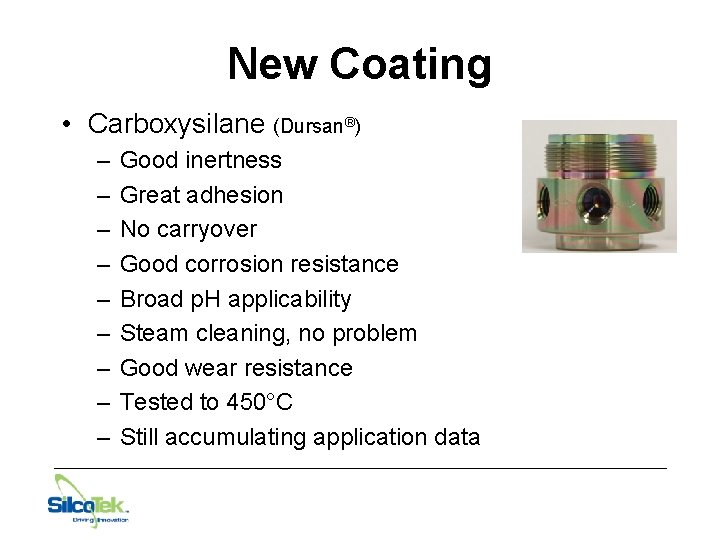
New Coating • Carboxysilane (Dursan®) – – – – – Good inertness Great adhesion No carryover Good corrosion resistance Broad p. H applicability Steam cleaning, no problem Good wear resistance Tested to 450°C Still accumulating application data
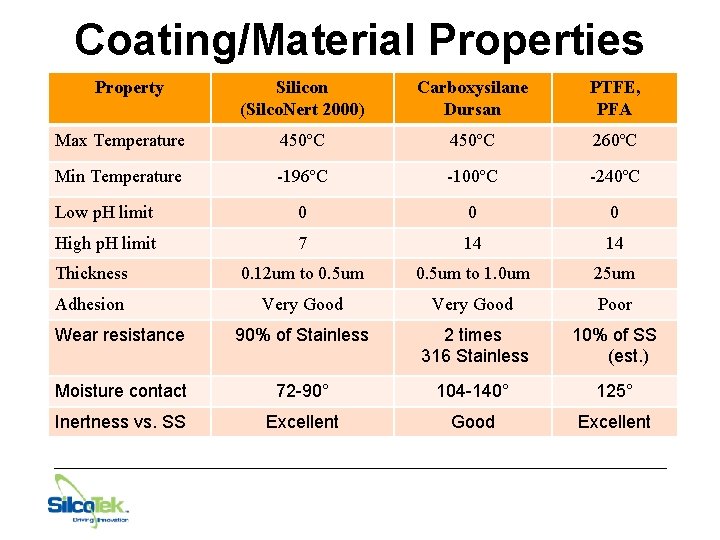
Coating/Material Properties Property Silicon (Silco. Nert 2000) Carboxysilane Dursan PTFE, PFA Max Temperature 450ºC 260ºC Min Temperature -196ºC -100ºC -240ºC Low p. H limit 0 0 0 High p. H limit 7 14 14 Thickness 0. 12 um to 0. 5 um to 1. 0 um 25 um Adhesion Very Good Poor Wear resistance 90% of Stainless 2 times 316 Stainless 10% of SS (est. ) Moisture contact 72 -90° 104 -140° 125° Inertness vs. SS Excellent Good Excellent
Improving wear resistance & Durability • Equipment and sample conditions can damage surfaces and increase activity. • Valve cycling/purging cause delamination • Particulate in sample streams • Abrasive cleaning • Existing coatings • Prone to wear • Easily damaged • Result: Adsorption & loss of sample
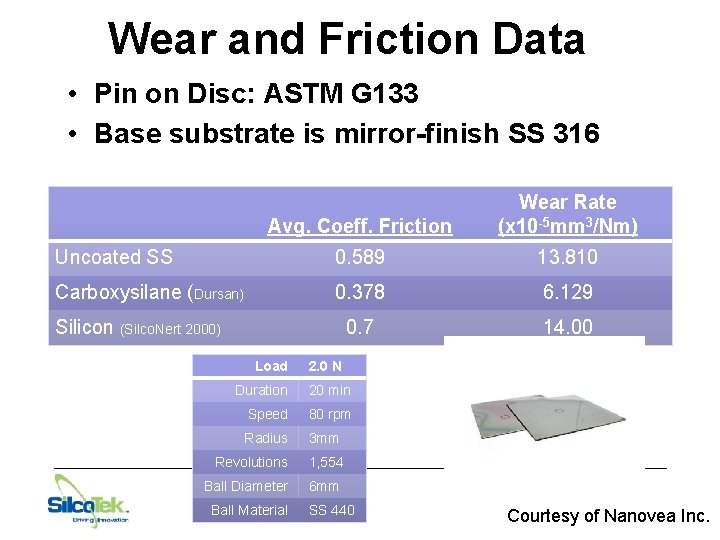
Wear and Friction Data • Pin on Disc: ASTM G 133 • Base substrate is mirror-finish SS 316 Avg. Coeff. Friction Wear Rate (x 10 -5 mm 3/Nm) Uncoated SS 0. 589 13. 810 Carboxysilane (Dursan) 0. 378 6. 129 0. 7 14. 00 Silicon (Silco. Nert 2000) Load 2. 0 N Duration 20 min Speed 80 rpm Radius 3 mm Revolutions 1, 554 Ball Diameter 6 mm Ball Material SS 440 Courtesy of Nanovea Inc.
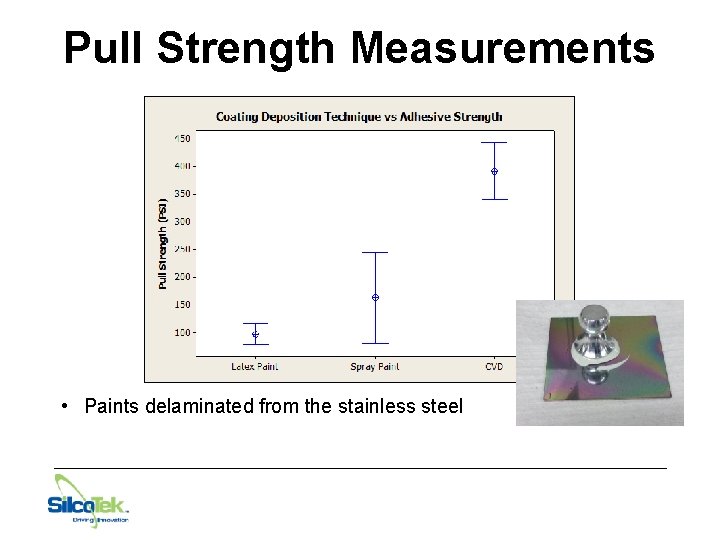
Pull Strength Measurements • Paints delaminated from the stainless steel
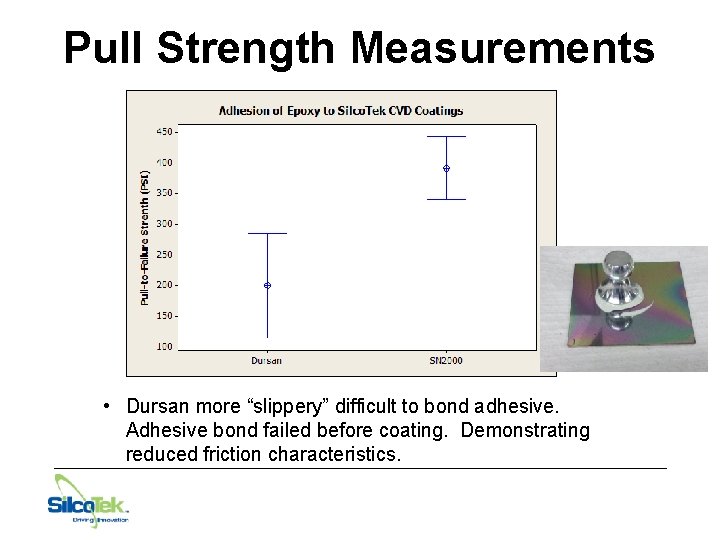
Pull Strength Measurements • Dursan more “slippery” difficult to bond adhesive. Adhesive bond failed before coating. Demonstrating reduced friction characteristics.
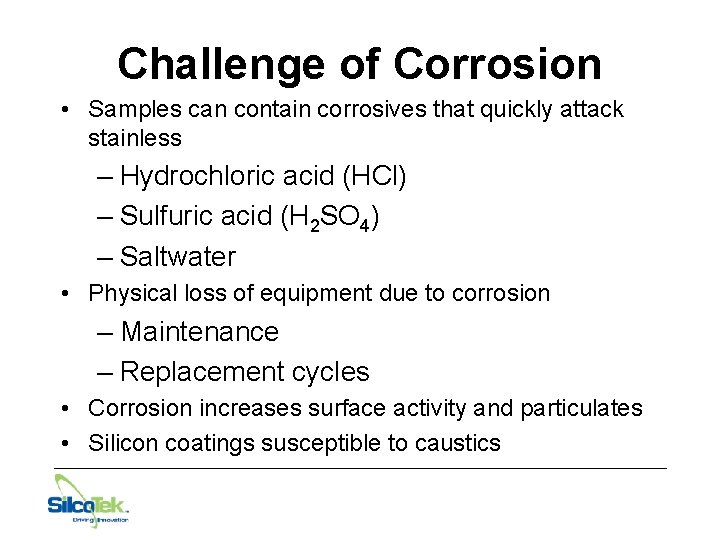
Challenge of Corrosion • Samples can contain corrosives that quickly attack stainless – Hydrochloric acid (HCl) – Sulfuric acid (H 2 SO 4) – Saltwater • Physical loss of equipment due to corrosion – Maintenance – Replacement cycles • Corrosion increases surface activity and particulates • Silicon coatings susceptible to caustics
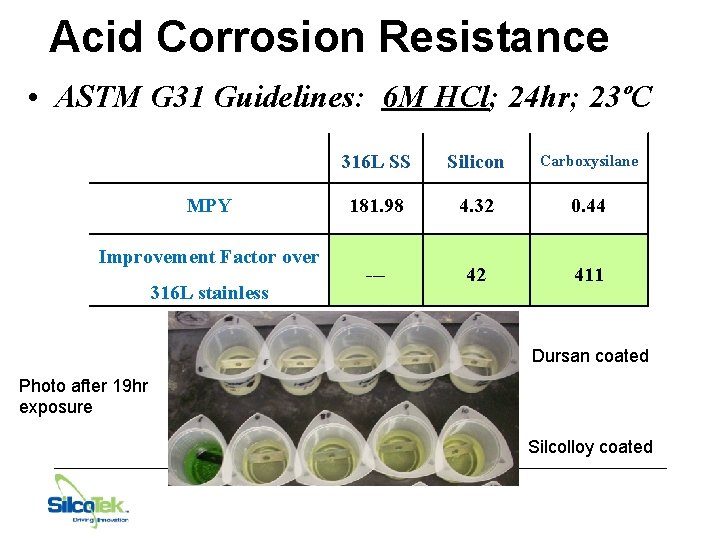
Acid Corrosion Resistance • ASTM G 31 Guidelines: 6 M HCl; 24 hr; 23ºC MPY Improvement Factor over 316 L stainless 316 L SS Silicon Carboxysilane 181. 98 4. 32 0. 44 --- 42 411 Dursan coated Photo after 19 hr exposure Silcolloy coated
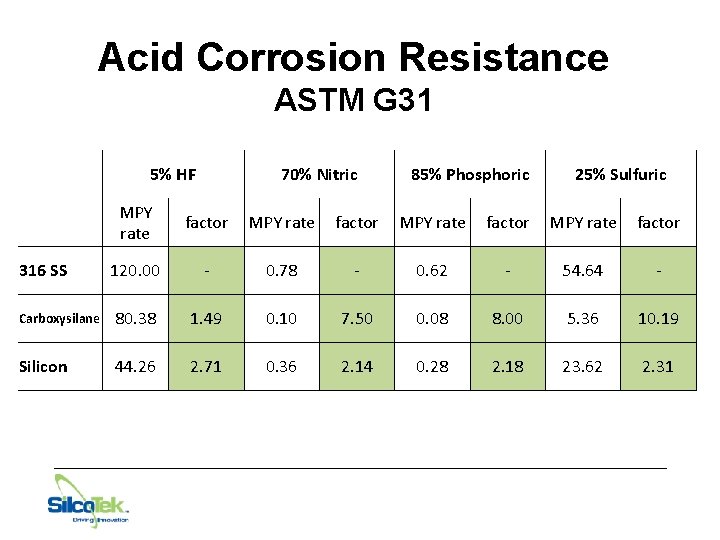
Acid Corrosion Resistance ASTM G 31 5% HF 70% Nitric 85% Phosphoric 25% Sulfuric MPY rate factor 120. 00 - 0. 78 - 0. 62 - 54. 64 - Carboxysilane 80. 38 1. 49 0. 10 7. 50 0. 08 8. 00 5. 36 10. 19 Silicon 44. 26 2. 71 0. 36 2. 14 0. 28 2. 18 23. 62 2. 31 316 SS
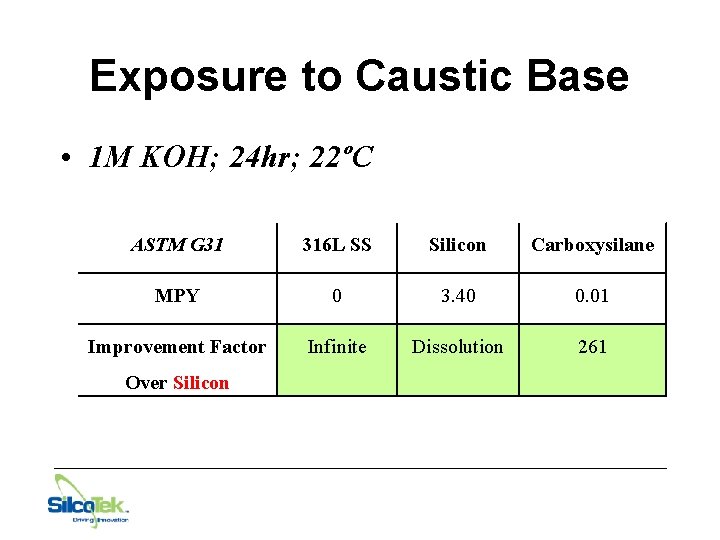
Exposure to Caustic Base • 1 M KOH; 24 hr; 22ºC ASTM G 31 316 L SS Silicon Carboxysilane MPY 0 3. 40 0. 01 Improvement Factor Infinite Dissolution 261 Over Silicon
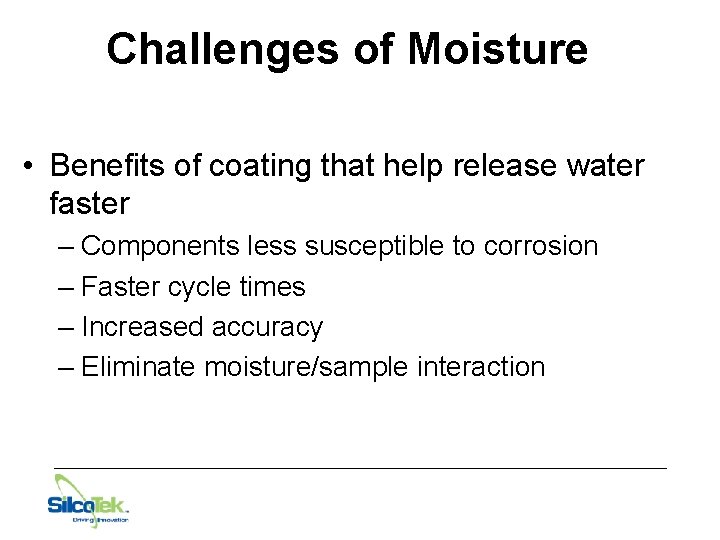
Challenges of Moisture • Benefits of coating that help release water faster – Components less susceptible to corrosion – Faster cycle times – Increased accuracy – Eliminate moisture/sample interaction
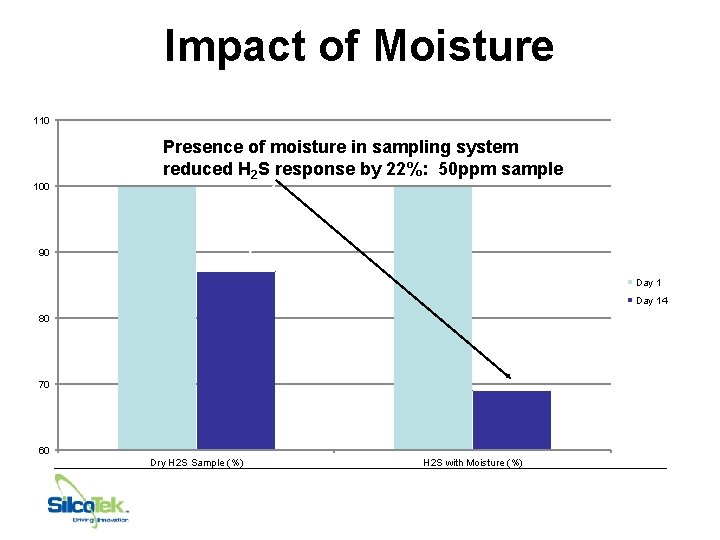
Impact of Moisture 110 100 Presence of moisture in sampling system reduced H 2 S response by 22%: 50 ppm sample 90 Day 14 80 70 60 Dry H 2 S Sample (%) H 2 S with Moisture (%)
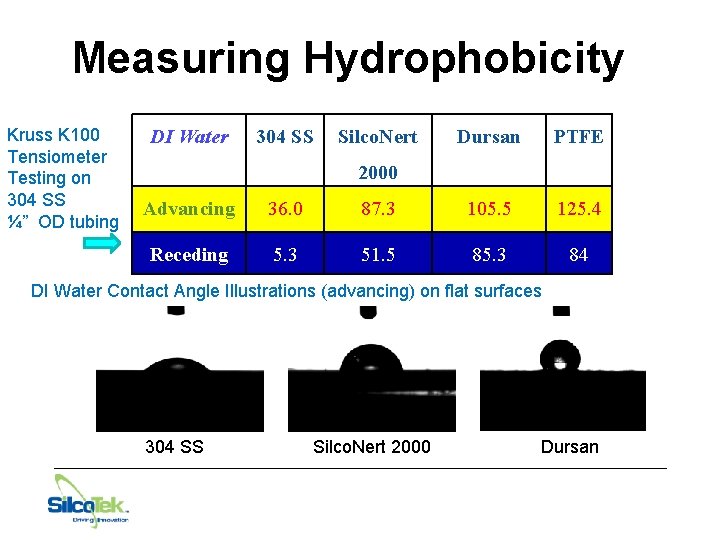
Measuring Hydrophobicity Kruss K 100 Tensiometer Testing on 304 SS ¼” OD tubing DI Water 304 SS Silco. Nert Dursan PTFE 2000 Advancing 36. 0 87. 3 105. 5 125. 4 Receding 5. 3 51. 5 85. 3 84 DI Water Contact Angle Illustrations (advancing) on flat surfaces: 304 SS Silco. Nert 2000 Dursan
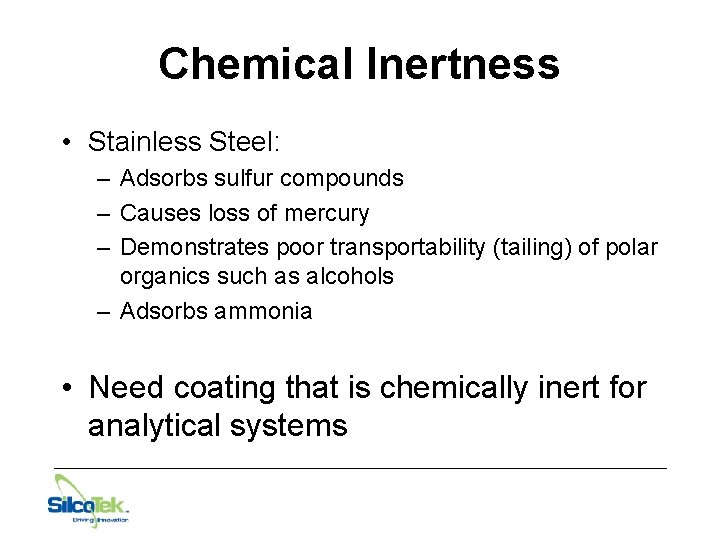
Chemical Inertness • Stainless Steel: – Adsorbs sulfur compounds – Causes loss of mercury – Demonstrates poor transportability (tailing) of polar organics such as alcohols – Adsorbs ammonia • Need coating that is chemically inert for analytical systems
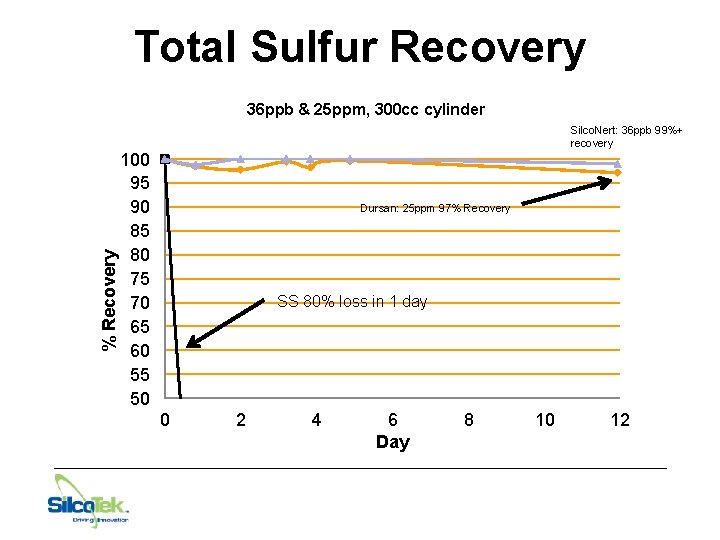
Total Sulfur Recovery % Recovery 36 ppb & 25 ppm, 300 cc cylinder Silco. Nert: 36 ppb 99%+ recovery 100 95 90 85 80 75 70 65 60 55 50 Dursan: 25 ppm 97% Recovery SS 80% loss in 1 day 0 2 4 6 Day 8 10 12
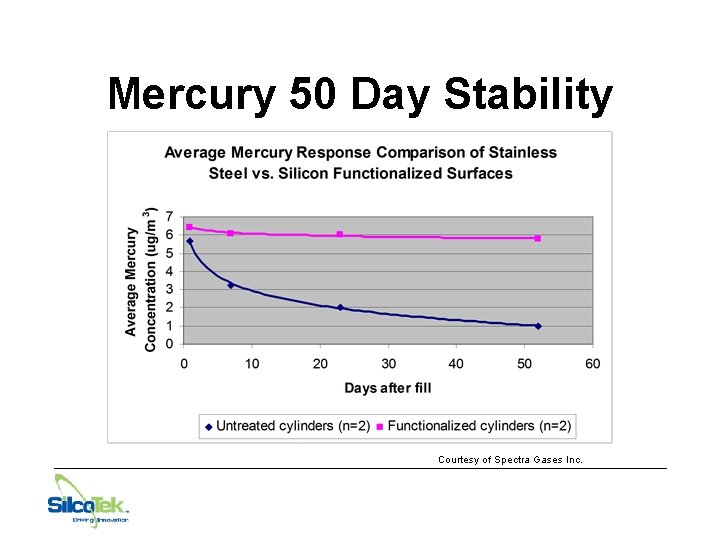
Mercury 50 Day Stability Courtesy of Spectra Gases Inc. 21
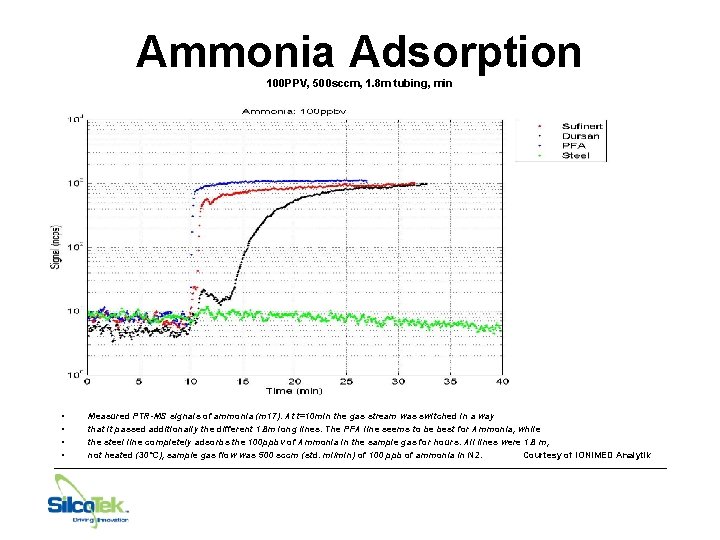
Ammonia Adsorption 100 PPV, 500 sccm, 1. 8 m tubing, min • • Measured PTR-MS signals of ammonia (m 17). At t=10 min the gas stream was switched in a way that it passed additionally the different 1. 8 m long lines. The PFA line seems to be best for Ammonia, while the steel line completely adsorbs the 100 ppbv of Ammonia in the sample gas for hours. All lines were 1. 8 m, not heated (30°C), sample gas flow was 500 sccm (std. ml/min) of 100 ppb of ammonia in N 2. Courtesy of IONIMED Analytik
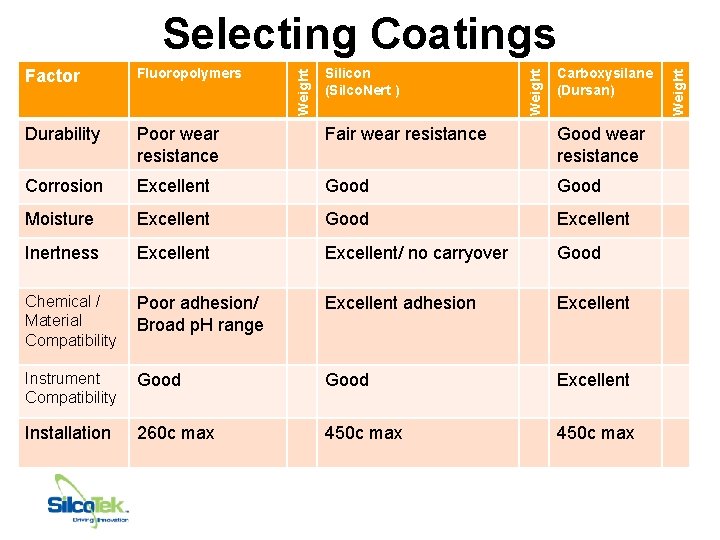
Silicon (Silco. Nert ) Durability Poor wear resistance Fair wear resistance Good wear resistance Corrosion Excellent Good Moisture Excellent Good Excellent Inertness Excellent/ no carryover Good Chemical / Material Compatibility Poor adhesion/ Broad p. H range Excellent adhesion Excellent Instrument Compatibility Good Excellent Installation 260 c max 450 c max Weight Fluoropolymers Weight Factor Carboxysilane (Dursan) Weight Selecting Coatings
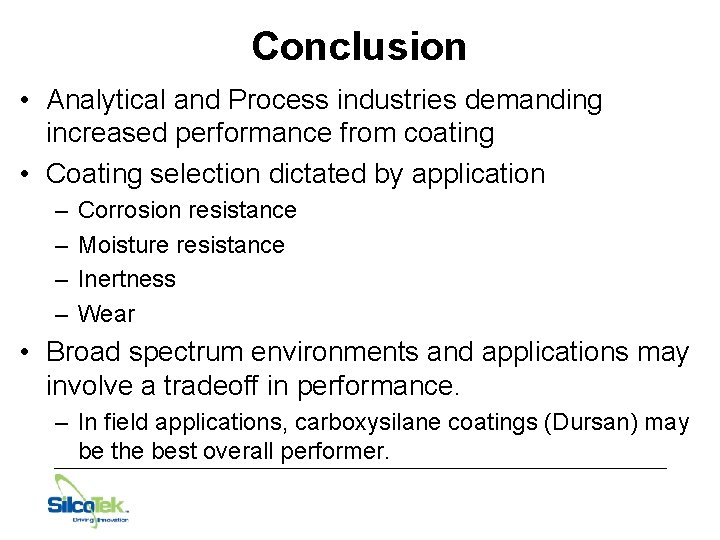
Conclusion • Analytical and Process industries demanding increased performance from coating • Coating selection dictated by application – – Corrosion resistance Moisture resistance Inertness Wear • Broad spectrum environments and applications may involve a tradeoff in performance. – In field applications, carboxysilane coatings (Dursan) may be the best overall performer.
- Slides: 24