Monitoring the adequacy of organ perfusion function in

- Slides: 44
Monitoring the adequacy of organ perfusion & function in shock Mervyn Singer Bloomsbury Institute of Intensive Care Medicine, University College London, UK
Declarations of potential conflicts. . (Deltex) (Edwards) Oxford Optronix - free probes
Shock Delivery to, or utilisation of, oxygen that is inadequate to meet the cells’ metabolic needs
O 2 Shock - a physiological definition o hypoxic hypoxia (low PO 2) DO 2 o circulatory hypoxia (low CO) o anaemic hypoxia (low Hb) o cytotoxic dysoxia (mitochondrial dysfunction) VO 2
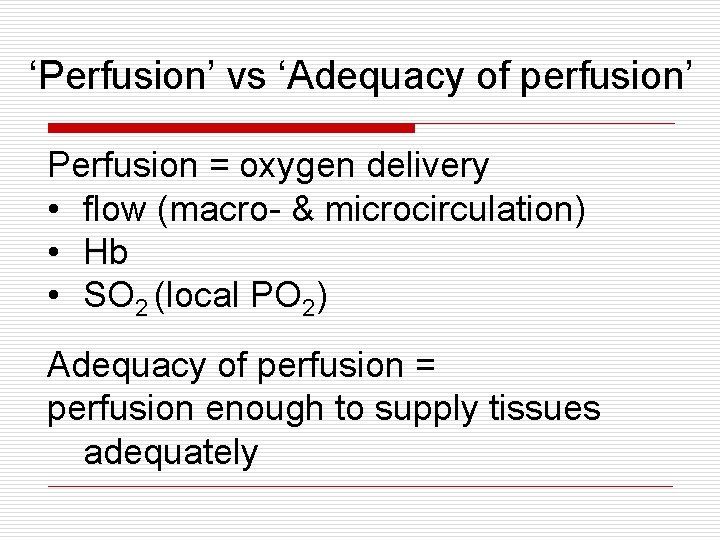
‘Perfusion’ vs ‘Adequacy of perfusion’ Perfusion = oxygen delivery • flow (macro- & microcirculation) • Hb • SO 2 (local PO 2) Adequacy of perfusion = perfusion enough to supply tissues adequately
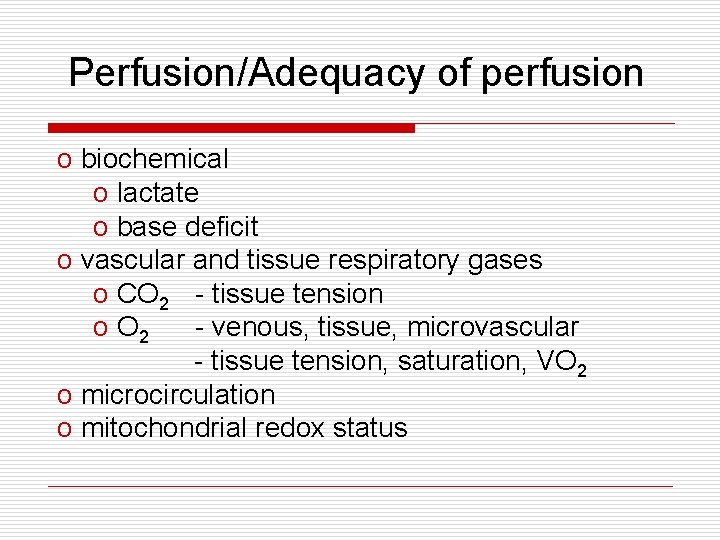
Perfusion/Adequacy of perfusion o biochemical o lactate o base deficit o vascular and tissue respiratory gases o CO 2 - tissue tension o O 2 - venous, tissue, microvascular - tissue tension, saturation, VO 2 o microcirculation o mitochondrial redox status
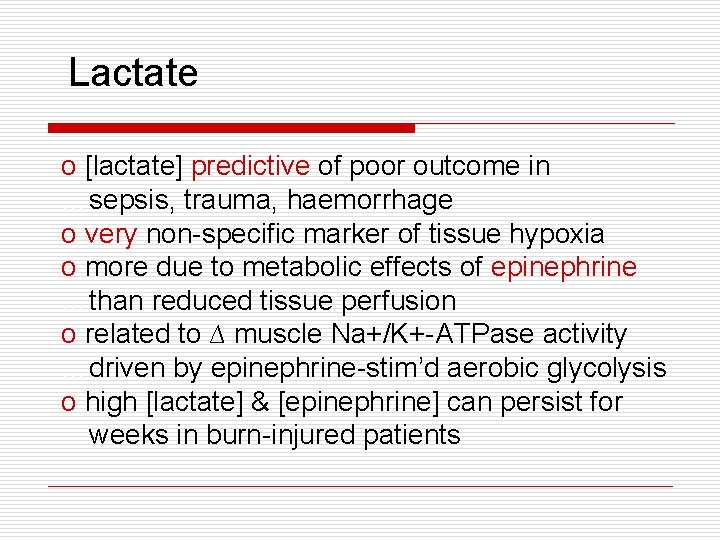
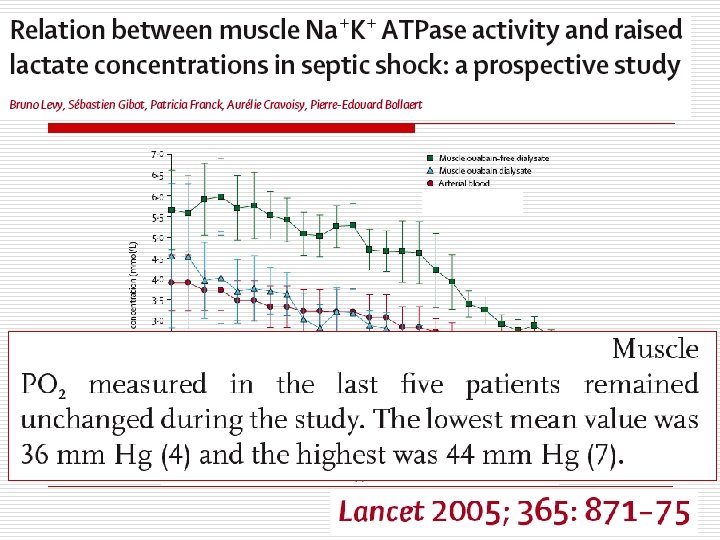
Lactate o [lactate] predictive of poor outcome in …sepsis, trauma, haemorrhage o very non-specific marker of tissue hypoxia o more due to metabolic effects of epinephrine …than reduced tissue perfusion o related to ∆ muscle Na+/K+-ATPase activity …driven by epinephrine-stim’d aerobic glycolysis o high [lactate] & [epinephrine] can persist for …weeks in burn-injured patients
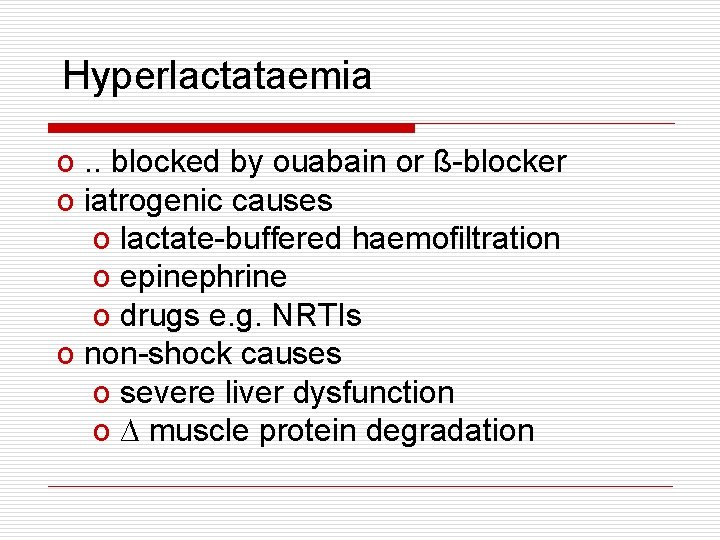
Hyperlactataemia o. . blocked by ouabain or ß-blocker o iatrogenic causes o lactate-buffered haemofiltration o epinephrine o drugs e. g. NRTIs o non-shock causes o severe liver dysfunction o ∆ muscle protein degradation
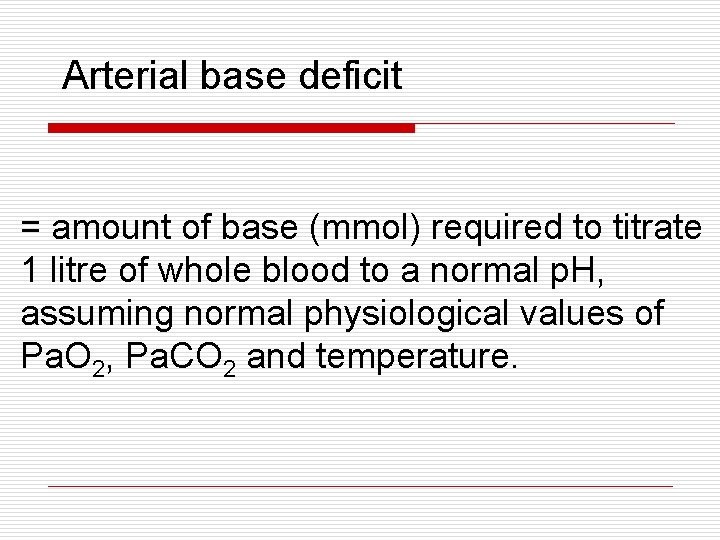
Arterial base deficit = amount of base (mmol) required to titrate 1 litre of whole blood to a normal p. H, assuming normal physiological values of Pa. O 2, Pa. CO 2 and temperature.
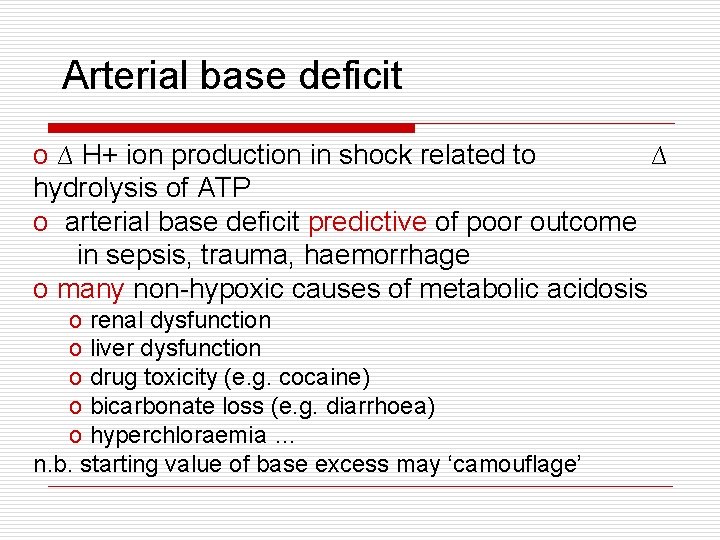
Arterial base deficit o ∆ H+ ion production in shock related to …. . ∆ hydrolysis of ATP o arterial base deficit predictive of poor outcome … in sepsis, trauma, haemorrhage o many non-hypoxic causes of metabolic acidosis o renal dysfunction o liver dysfunction o drug toxicity (e. g. cocaine) o bicarbonate loss (e. g. diarrhoea) o hyperchloraemia … n. b. starting value of base excess may ‘camouflage’
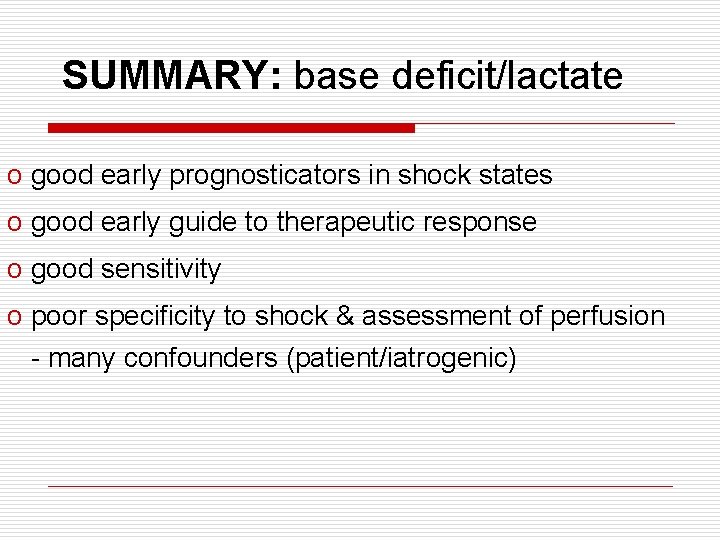
SUMMARY: base deficit/lactate o good early prognosticators in shock states o good early guide to therapeutic response o good sensitivity o poor specificity to shock & assessment of perfusion - many confounders (patient/iatrogenic)
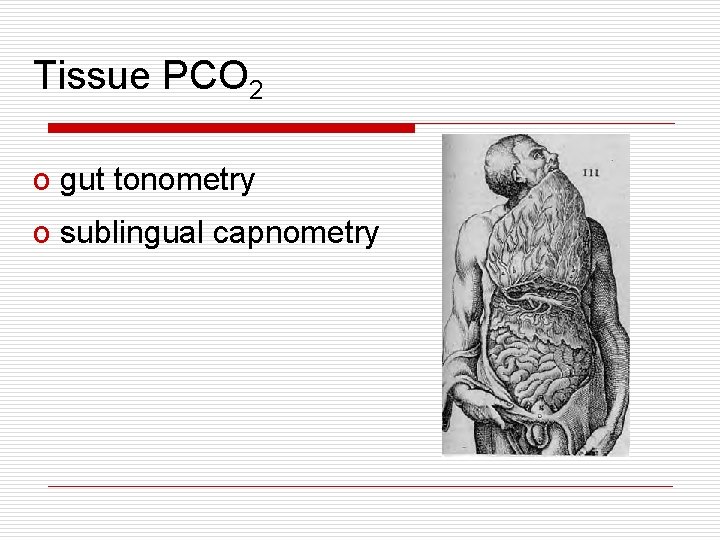
Tissue PCO 2 o gut tonometry o sublingual capnometry
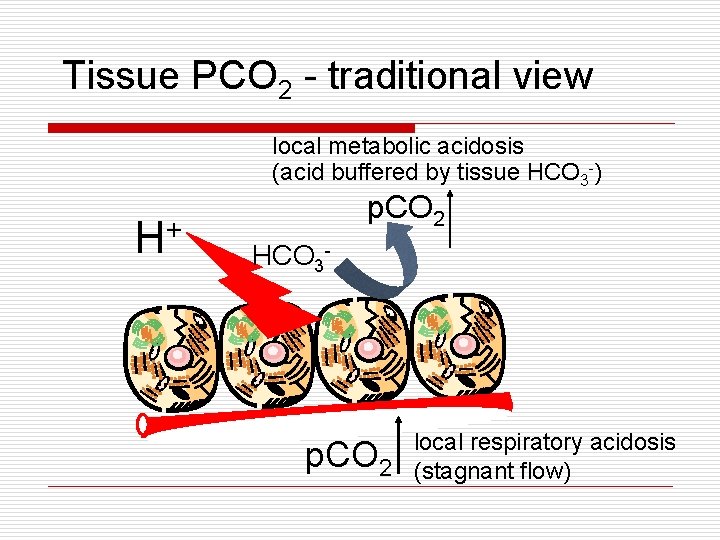
Tissue PCO 2 - traditional view local metabolic acidosis (acid buffered by tissue HCO 3 -) + H p. CO 2 HCO 3 - local respiratory acidosis p. CO 2 (stagnant flow)
Gutierrez G. Blood flow, not hypoxia, determines intramucosal PCO 2. Crit Care 2005; 9: 149 -50
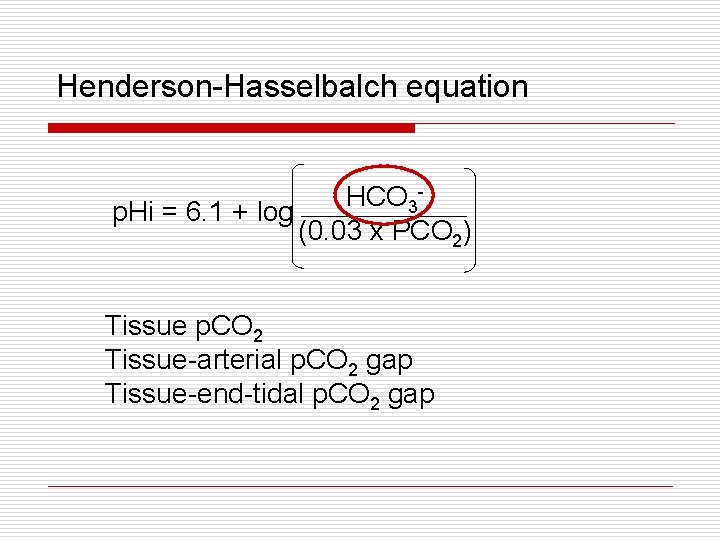
Henderson-Hasselbalch equation HCO 3 p. Hi = 6. 1 + log (0. 03 x PCO 2) Tissue p. CO 2 Tissue-arterial p. CO 2 gap Tissue-end-tidal p. CO 2 gap
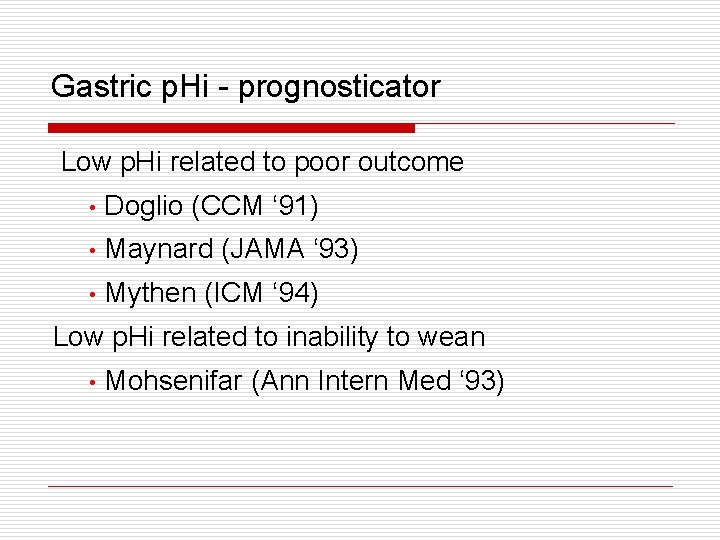
Gastric p. Hi - prognosticator Low p. Hi related to poor outcome • Doglio (CCM ‘ 91) • Maynard (JAMA ‘ 93) • Mythen (ICM ‘ 94) Low p. Hi related to inability to wean • Mohsenifar (Ann Intern Med ‘ 93)
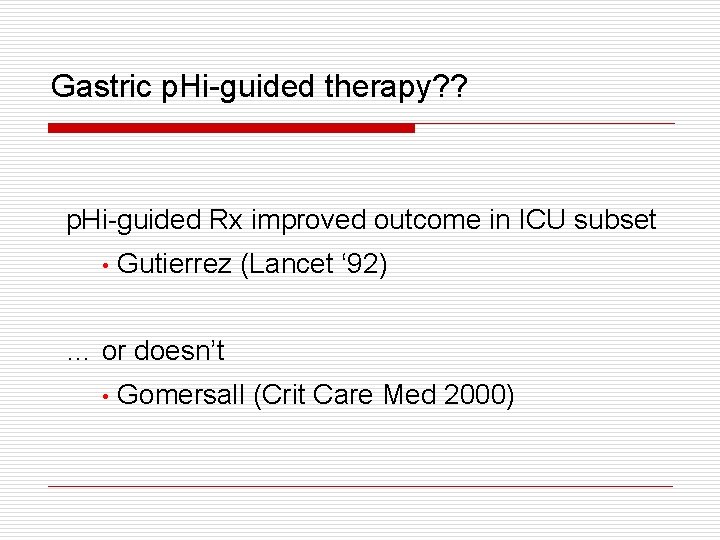
Gastric p. Hi-guided therapy? ? p. Hi-guided Rx improved outcome in ICU subset • Gutierrez (Lancet ‘ 92) … or doesn’t • Gomersall (Crit Care Med 2000)
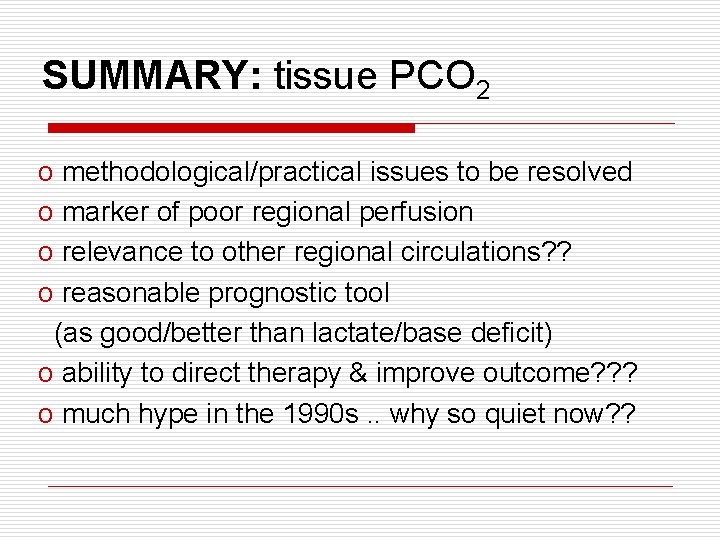
SUMMARY: tissue PCO 2 o methodological/practical issues to be resolved o marker of poor regional perfusion o relevance to other regional circulations? ? o reasonable prognostic tool (as good/better than lactate/base deficit) o ability to direct therapy & improve outcome? ? ? o much hype in the 1990 s. . why so quiet now? ?
Oxygen o mixed/central venous O 2 saturation o tissue oxygen tension & saturation o oxygen consumption
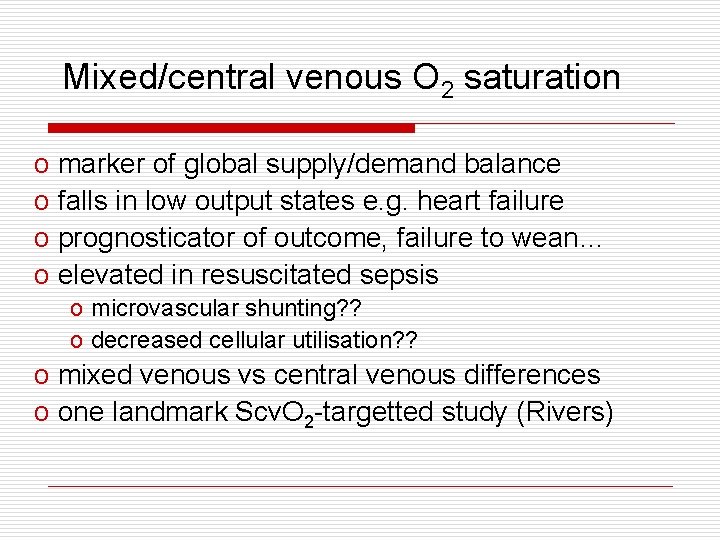
Mixed/central venous O 2 saturation o marker of global supply/demand balance o falls in low output states e. g. heart failure o prognosticator of outcome, failure to wean… o elevated in resuscitated sepsis o microvascular shunting? ? o decreased cellular utilisation? ? o mixed venous vs central venous differences o one landmark Scv. O 2 -targetted study (Rivers)
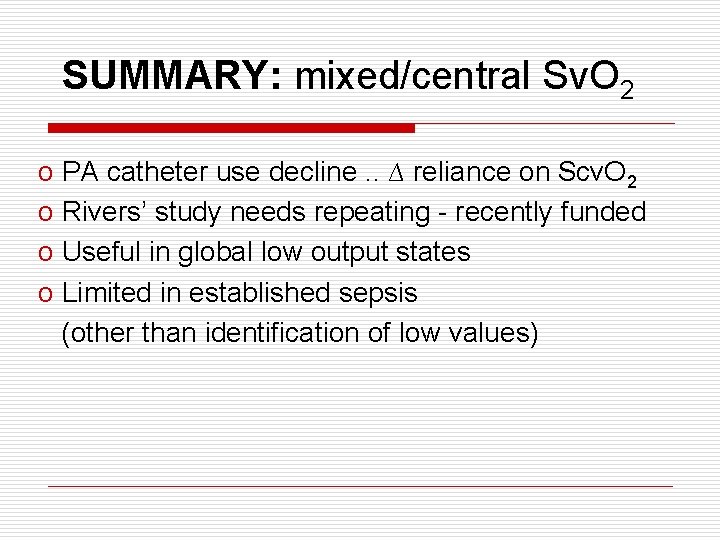
SUMMARY: mixed/central Sv. O 2 o PA catheter use decline. . ∆ reliance on Scv. O 2 o Rivers’ study needs repeating - recently funded o Useful in global low output states o Limited in established sepsis (other than identification of low values)
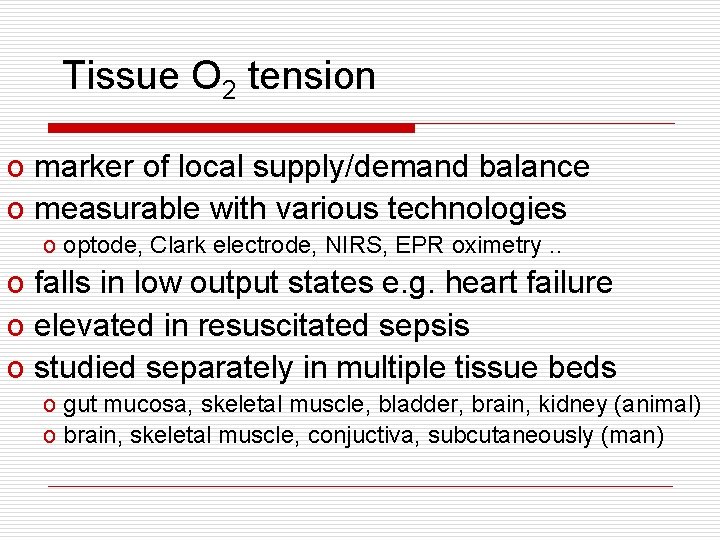
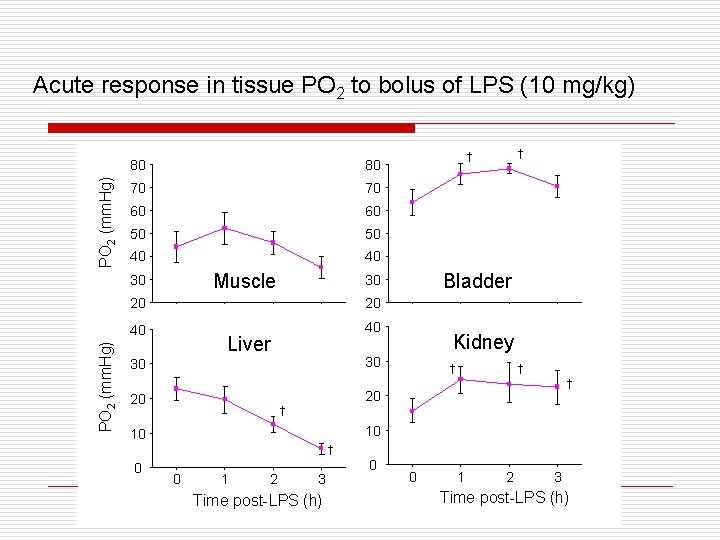
Tissue O 2 tension o marker of local supply/demand balance o measurable with various technologies o optode, Clark electrode, NIRS, EPR oximetry. . o falls in low output states e. g. heart failure o elevated in resuscitated sepsis o studied separately in multiple tissue beds o gut mucosa, skeletal muscle, bladder, brain, kidney (animal) o brain, skeletal muscle, conjuctiva, subcutaneously (man)
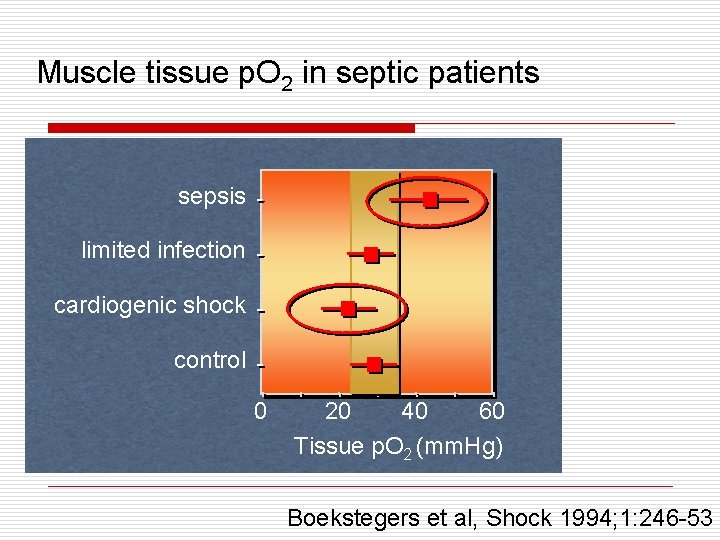
Muscle tissue p. O 2 in septic patients sepsis limited infection cardiogenic shock control 0 60 20 40 Tissue p. O 2 (mm. Hg) Boekstegers et al, Shock 1994; 1: 246 -53
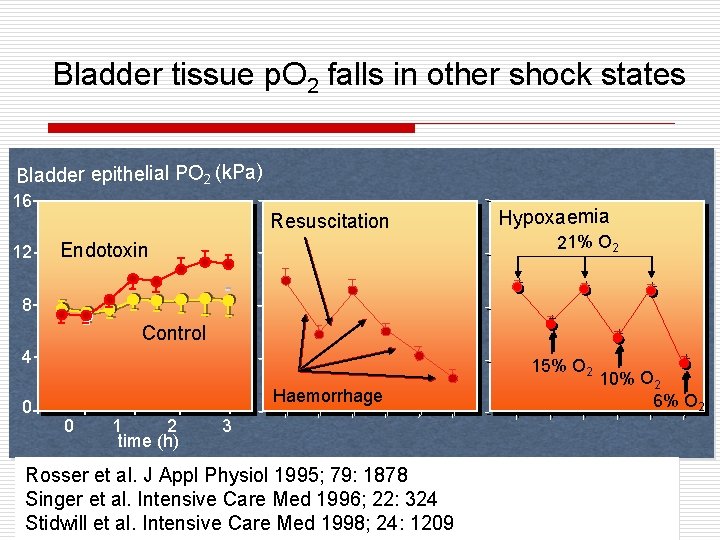
Bladder tissue p. O 2 falls in other shock states Bladder epithelial PO 2 (k. Pa) 16 12 Resuscitation Endotoxin Hypoxaemia 21% O 2 8 Control 4 0 15% O 2 Haemorrhage 0 1 2 time (h) 3 Rosser et al. J Appl Physiol 1995; 79: 1878 Singer et al. Intensive Care Med 1996; 22: 324 Stidwill et al. Intensive Care Med 1998; 24: 1209 10% O 2 6% O 2
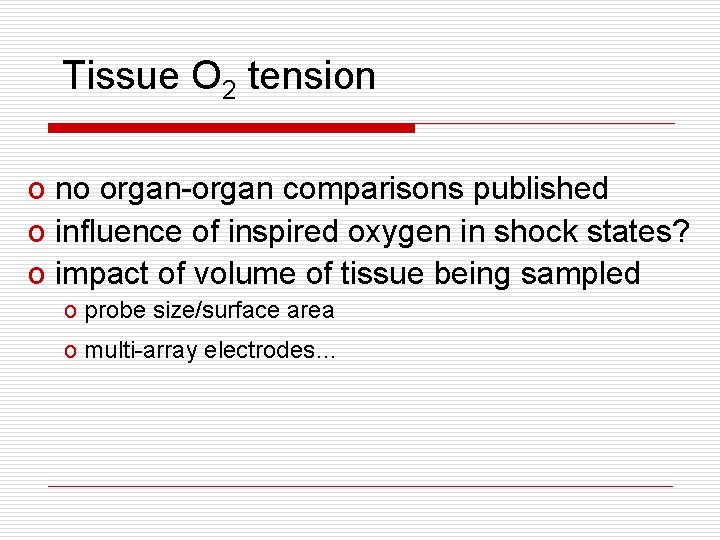
Tissue O 2 tension o no organ-organ comparisons published o influence of inspired oxygen in shock states? o impact of volume of tissue being sampled o probe size/surface area o multi-array electrodes…
PO 2 (mm. Hg) Acute response in tissue PO 2 to bolus of LPS (10 mg/kg) 80 80 70 70 60 60 50 50 40 40 Muscle PO 2 (mm. Hg) 30 Bladder 30 20 20 40 40 Liver Kidney 30 30 † † † 20 20 † 10 10 † 0 0 1 2 3 Time post-LPS (h)
Microvascular O 2 tension/saturation o Can be relatively non-invasive o NIRS, spectrophotometry techniques … measures oxy. Hb (? Mb) in tissue/microvascul o porphyrin phosphorescence technique … measures microvascular PO 2 o skeletal muscle St. O 2 parallels changes in human …whole body DO 2 during trauma resuscitation
SUMMARY: tissue/microvascular O 2 o tissue PO 2 (SO 2) = useful marker of local supplydemand balance in non-septic shock or in early …unresuscitated sepsis o raised in resuscitated sepsis - marker of mitochondrial dysfunction o microvascular PO 2 - may provide similar info but …comparative studies needed o no outcome-related PO 2 -guided studies o research tool at present until better defined in pts
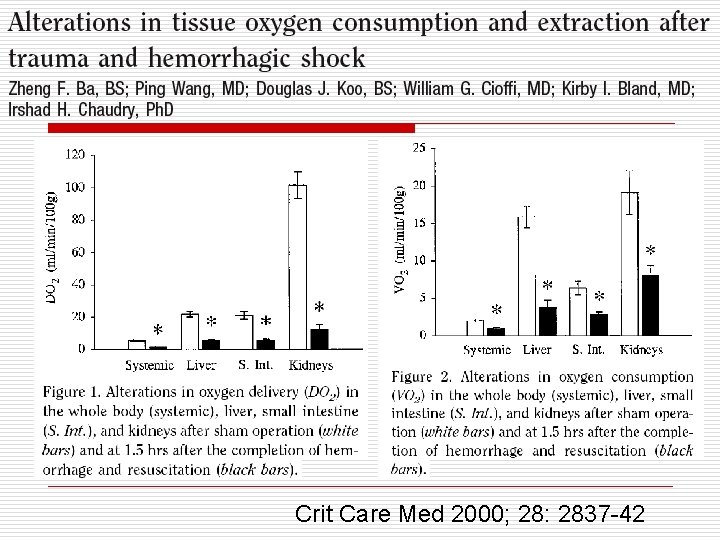
Whole body/regional O 2 consumption o Low VO 2 or poor response in VO 2 to challenge (fluid/dobutamine) = poor prognosis o Whole body ≠ regional VO 2 o How much VO 2 is coupled or uncoupled to ATP …production in shock states?
Crit Care Med 2000; 28: 2837 -42
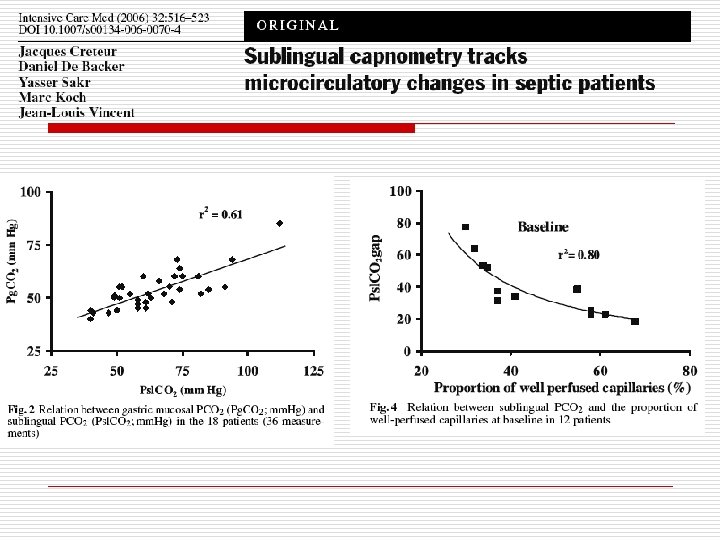
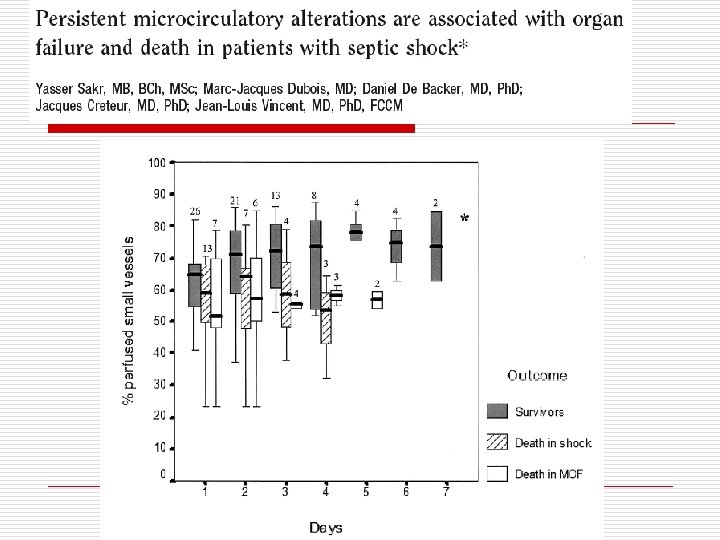
Microcirculation o mainly measured sublingually o relevance of tongue to other organ beds? … but does correlate with gastric & s/l PCO 2 o prognosticator of outcome in sepsis
Microcirculation o relevance to local tissue O 2? ? o ? reactive to decreased mitochondrial utilisation c/f hyperoxia o +tive correlation between capillary O 2 extraction & degree of regional capillary stopped-flow - i. e. remaining functionally normal capillaries offload more O 2 to surrounding tissue o minimal cell death seen in sepsis o need for automated semi-quantification technique o no outcome-related microcirc’n-guided studies
SUMMARY: microcirculation o interesting research tool for assessing perfusion o applicability of tongue to other tissue beds? o pathophysiological questions - causative or 2°? ? o relative infancy - not a routine clinical tool yet
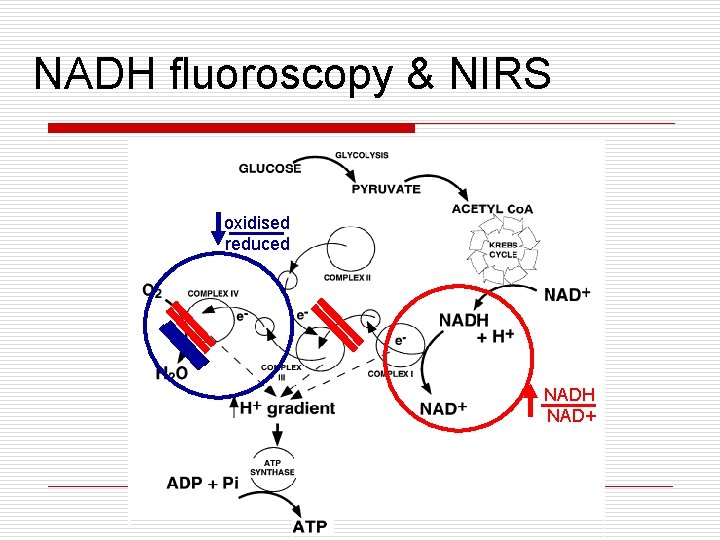
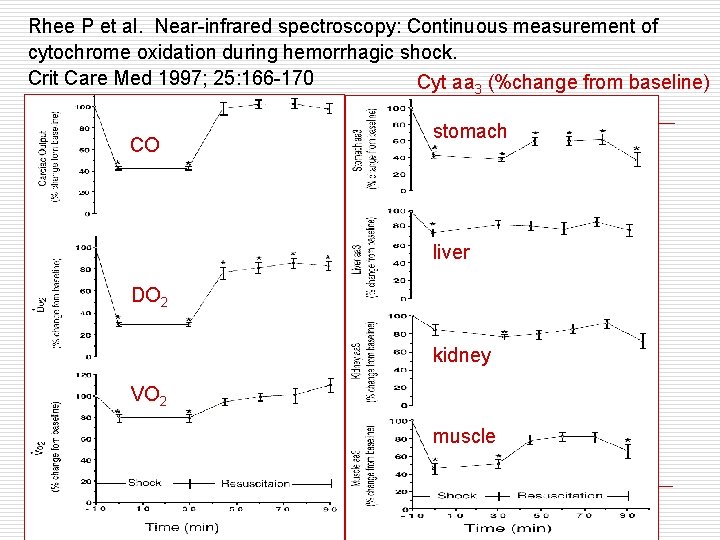
Mitochondrial function o >90% of VO 2 used by mitochondria o >90% of ATP in most cells generated by ETC o. . thus mitos play a fundamental role in shock o degree of dysfunction in established septic shock relates to poor outcome o ATP not yet measurable at bedside o redox status can be used for trend-following
NADH fluoroscopy & NIRS oxidised reduced NADH NAD+
Rhee P et al. Near-infrared spectroscopy: Continuous measurement of cytochrome oxidation during hemorrhagic shock. Crit Care Med 1997; 25: 166 -170 Cyt aa 3 (%change from baseline) CO stomach liver DO 2 kidney VO 2 muscle
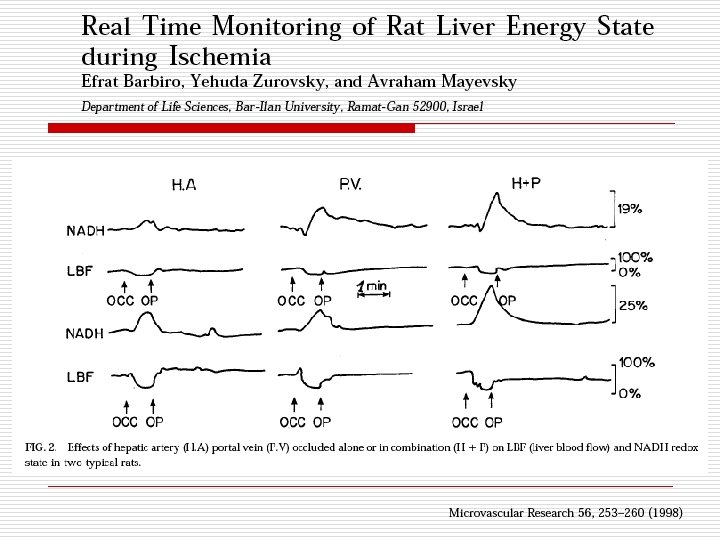
Mitochondrial redox state o cannot yet be quantified in vivo o good for trend-following … … ideally from normal baseline o limited use in patient who’s already critically ill
SUMMARY: mitochondrion o. . the ideal organelle to monitor the adequacy of organ perfusion o. . but, at present, no bedside mitochondrial monitor that offers more than trend following
SUMMARY: overall o shock is not an homogenous condition o we still lack the perfect bedside tool to assess adequacy of organ perfusion o will there ever be one? o is measuring site representative of other organ beds? o should we use an amalgam of technologies? o tool-directed outcome studies are needed