
INCREASING ACCESS AND IMPACT AND MEETING FUNDER MANDATES

- Slides: 79
INCREASING ACCESS AND IMPACT AND MEETING FUNDER MANDATES
HOW IT ALL GOT STARTED: Open Data Executive Order May 9, 2013 The Obama Administration took steps to make information generated and stored by the Federal Government more open and accessible to innovators and the public, to fuel entrepreneurship and economic growth while increasing government transparency and efficiency. The public access requirement applies now to new awards resulting from proposals submitted, or due, on or after January 25, 2016. Since that time Texas State University has received approx. 135 awards under this requirement. 2
OBJECTIVES OF THE EXECUTIVE ORDER (PUBLICATIONS) v Public can read, download, analyze in digital form v 12 -month post-publication embargo as guideline, with stakeholder petitions to change v Easy public search, analysis of, and access to publications v Full public access to metadata without charge upon first publication v Public-private collaboration v Attribution to authors, journals, and original publishers v Archival solutions that provide long-term preservation & access without charge v Uses widely available, nonproprietary standards/formats v Provides access for persons with disabilities v Enables integration and interoperability with other Federal archival solutions and other appropriate archives. 3
OBJECTIVES OF THE EXECUTIVE ORDER (DIGITAL DATA) v Maximize free access while protecting privacy and confidentiality, national security v Recognizing intellectual property rights v Balancing costs & benefits of long-term preservation v Require data management plans (DMPs) v Allow inclusion of costs in applications for funding v Ensure appropriate evaluation of DMPs v Monitor compliance by investigators v Encourage deposit of data in public repositories, where possible v Cooperate with the private sector v Develop approaches for data citation & attribution v Support training, education and workforce development v Assess long-term needs for preservation and options for repositories 4
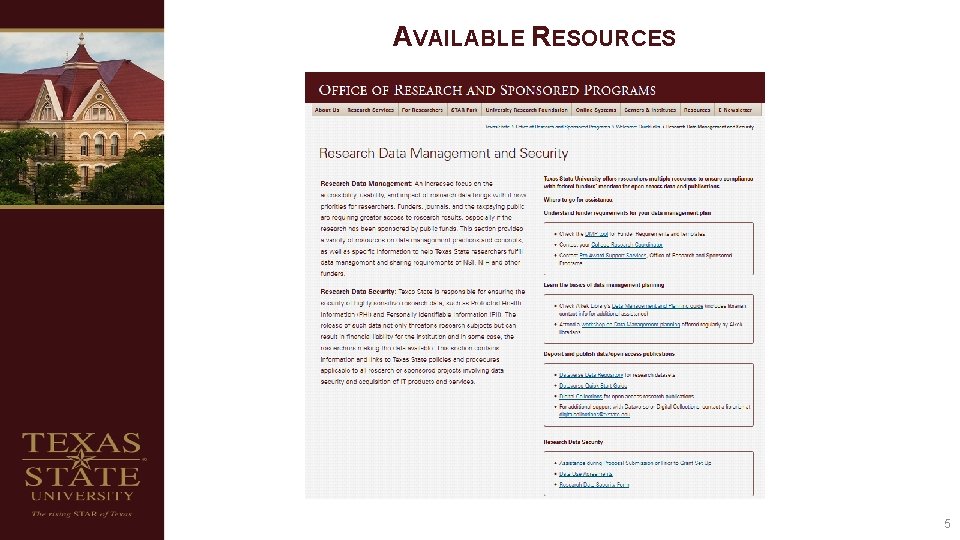
AVAILABLE RESOURCES 5
DATA MANAGEMENT PLANS v Different funders = Different requirements v Types of data produced v Data and metadata standards v Policies for access v Policies for reuse v Plans for archiving v Roles and responsibilities 6
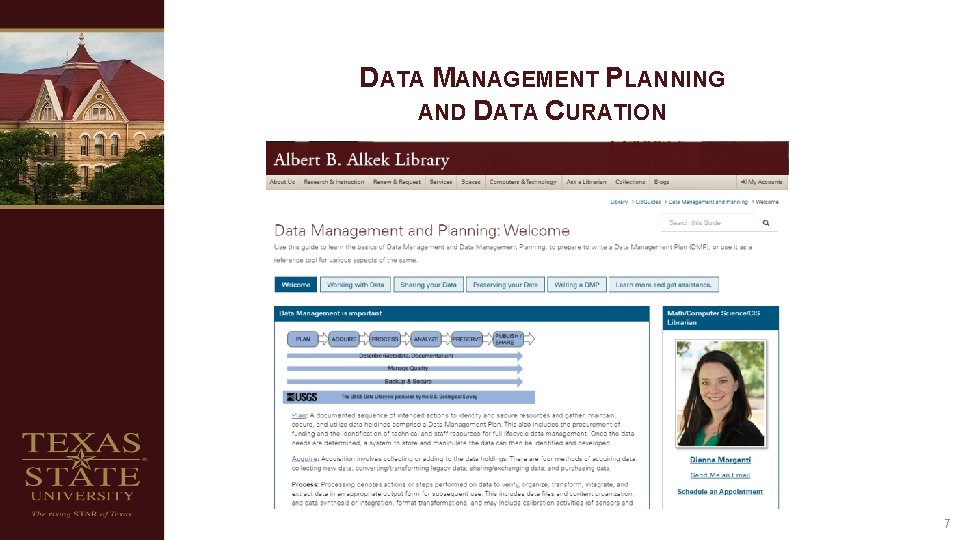
DATA MANAGEMENT PLANNING AND DATA CURATION 7
CHOOSING A REPOSITORY 1. Does the solicitation specify a repository for the data or software? 2. Does institution have an institutional repository? 3. Is there a discipline-relevant repository used by the research community? 4. Is the repository sustainable? And if not, are there contingency plans? 5. Does the repository require at least minimal identification and description sufficient to enable discovery, access, and retrieval? 6. Has the PI made any contingency plans in the event a designated repository becomes unavailable? 8
WHO ARE OUR IN-HOUSE REPOSITORIES BEST FOR? v Anyone who needs or wants to share their publications – – DOI issued for Data (meets base requirements for most funders) Data preserved for required time (plus more) Indexing, and others previously mentioned Collocate your data and pubs with your prior data and pubs, and with those of the department and University v Non-confidential data – Funder requirement to de-identify/anonymize/cleanse • Library can help with this – Texas State Policy v Active Texas State Net. ID – Though we are working on allowing cross-institution working groups v Small-Medium sized files self-service – Large data accommodated via consultation – Library can help facilitate that connection v Any file type – Open non-proprietary is encouraged – We can help with conversion 9
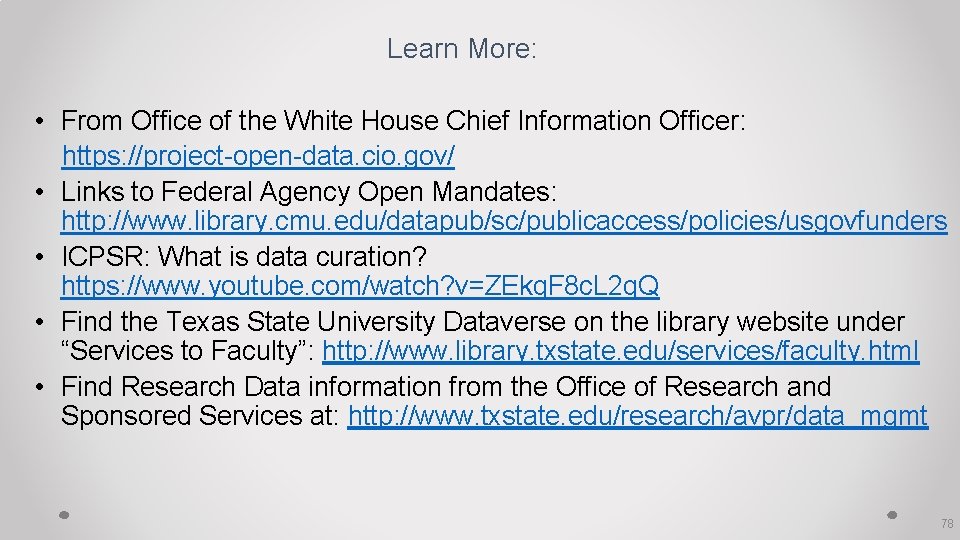
LEARN MORE: v From Office of the White House Chief Information Officer: https: //project-open-data. cio. gov/ v Links to Federal Agency Open Mandates: http: //www. library. cmu. edu/datapub/sc/publicaccess/policies/usgovfunders v ICPSR: What is data curation? https: //www. youtube. com/watch? v=ZEkq. F 8 c. L 2 q. Q v Find the Texas State University Dataverse on the library website under “Services to Faculty”: http: //www. library. txstate. edu/services/faculty. html v Find Research Data information from the Office of Research and Sponsored Services at http: //www. txstate. edu/research/avpr/data_mgmt 10
Digital Repositories • TXST Digital Collections Repository • TXST Dataverse Repository
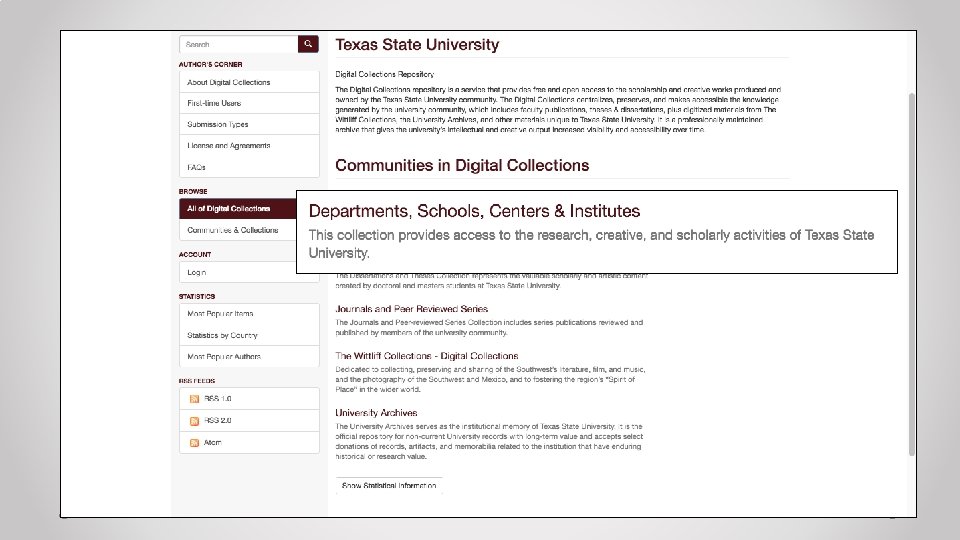
TXST Digital Collections Repository
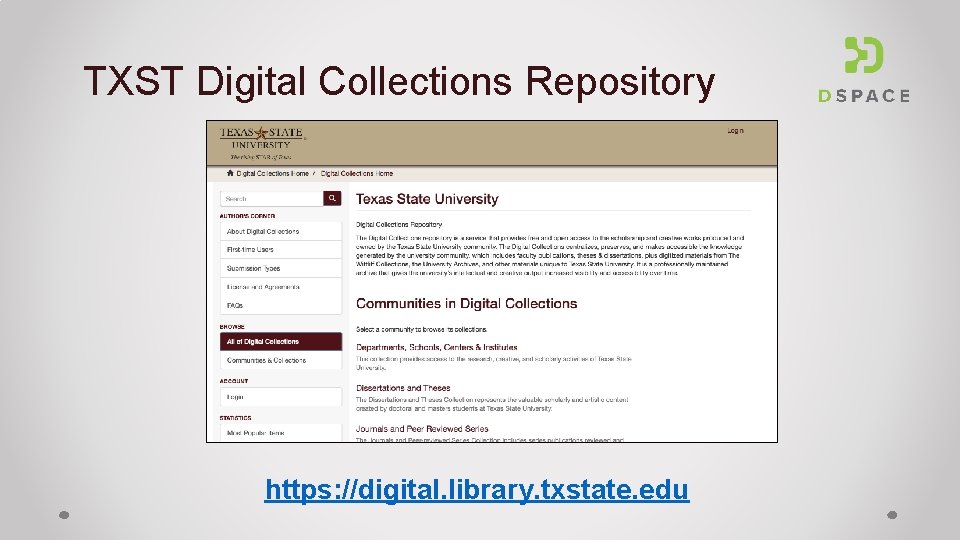
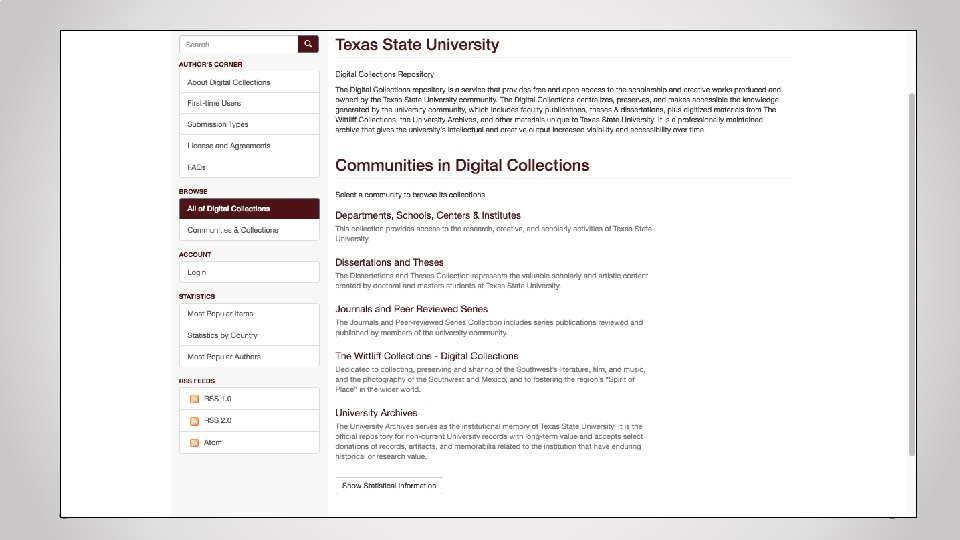
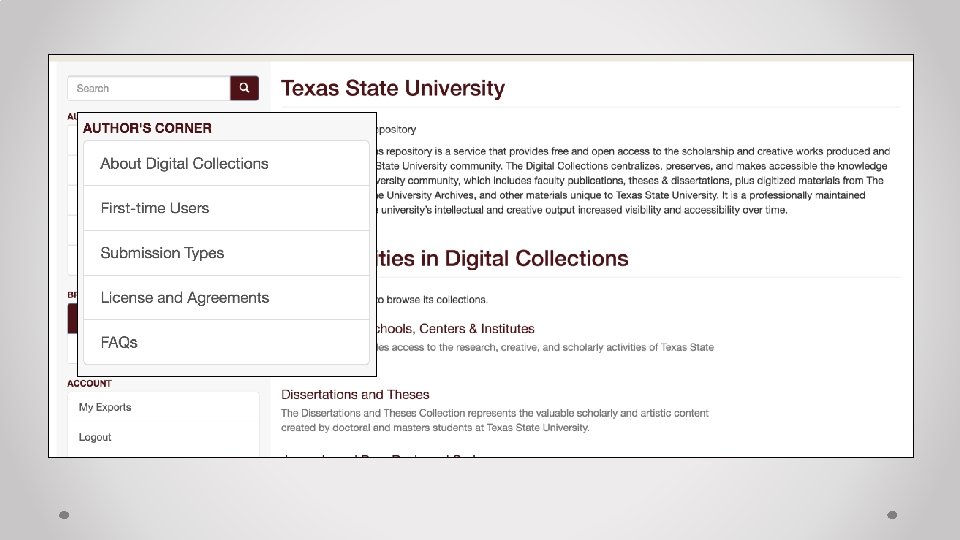
TXST Digital Collections Repository https: //digital. library. txstate. edu
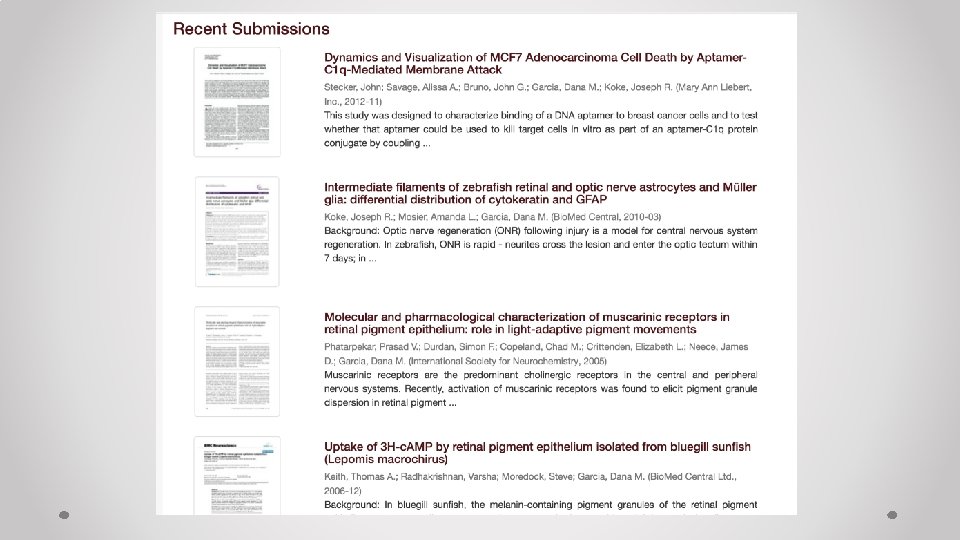
TXST Digital Collections Repository Scholarly Work of TXST Community § Articles § Books and chapters § Working papers § Presentations § Conference posters § Reports https: //digital. library. txstate. edu
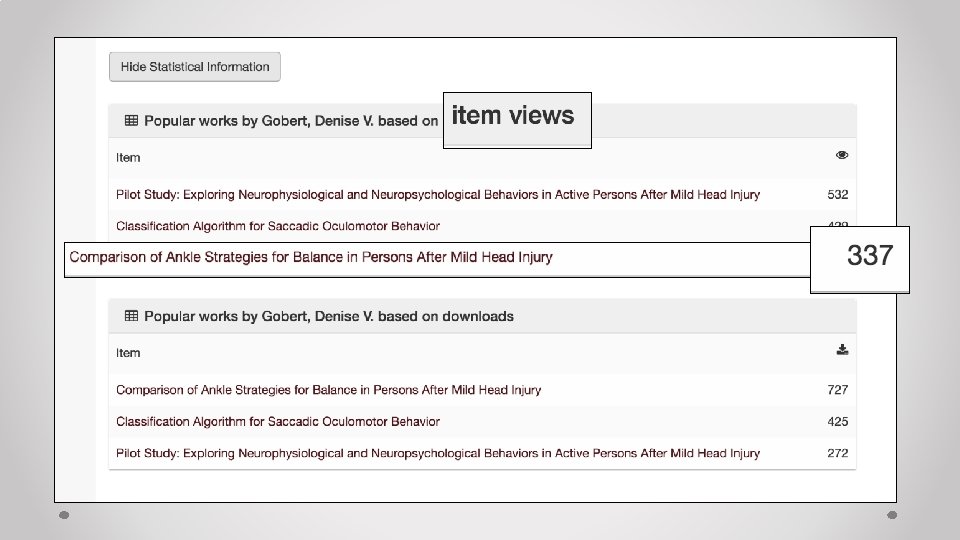
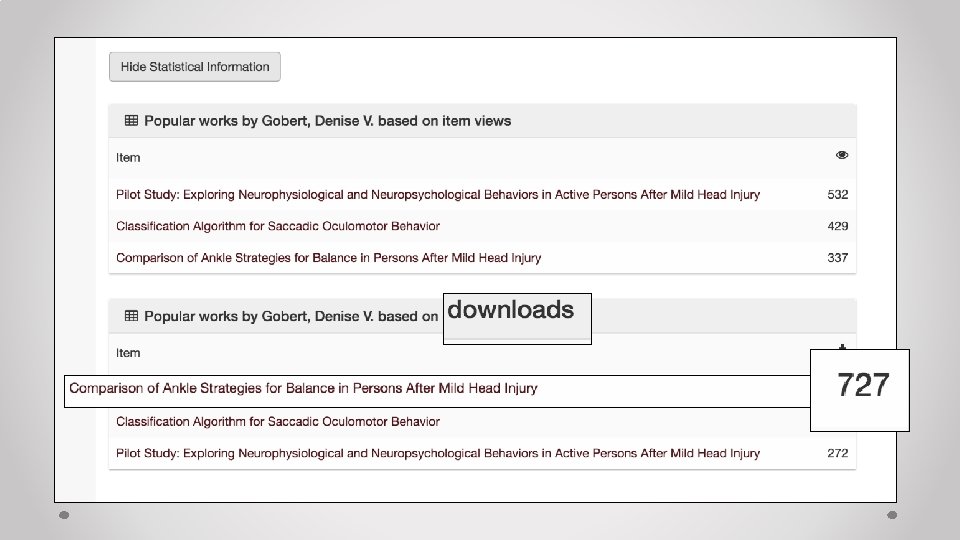
TXST Digital Collections Repository Benefits and Features § Showcase for research output of TXST § Permanent URL (handles) § Organize and archive § Increase citations and impact § Viewable statistics https: //digital. library. txstate. edu
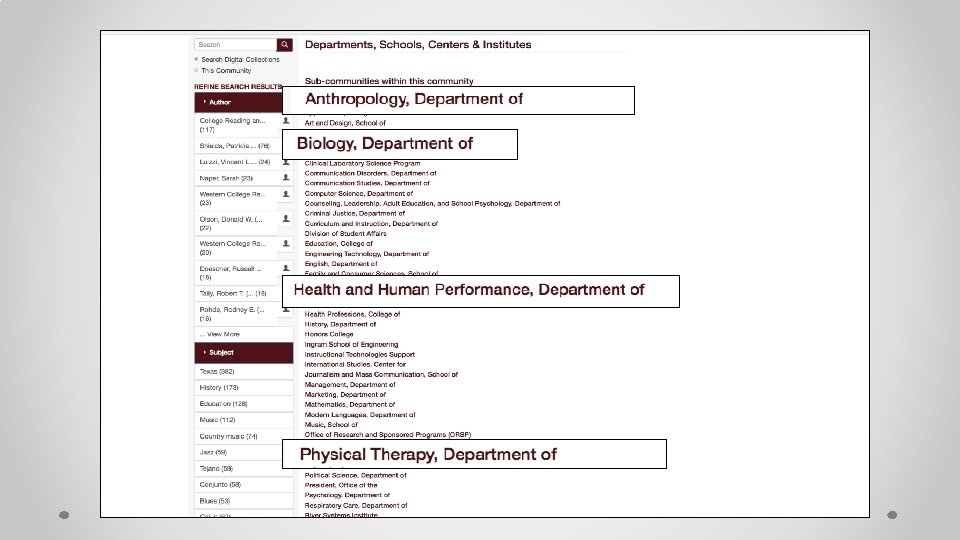
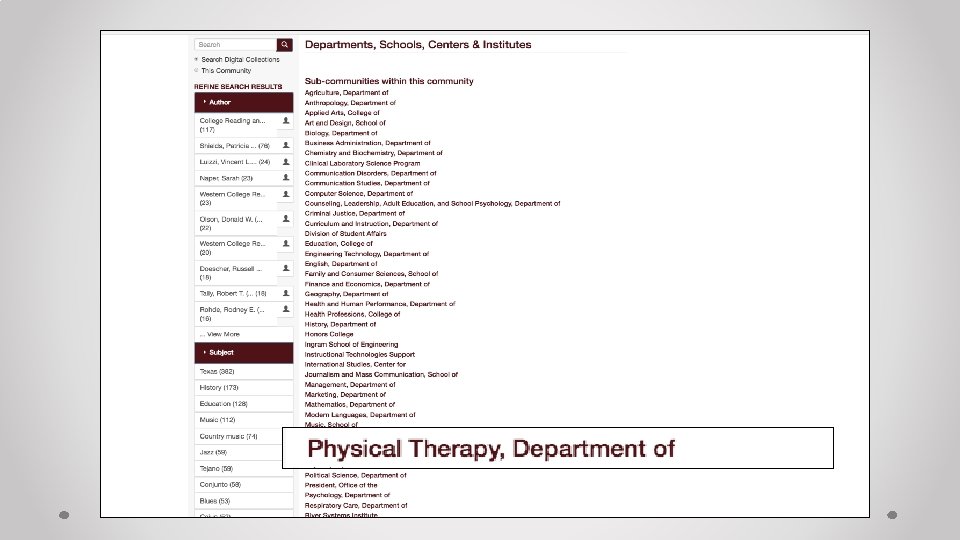
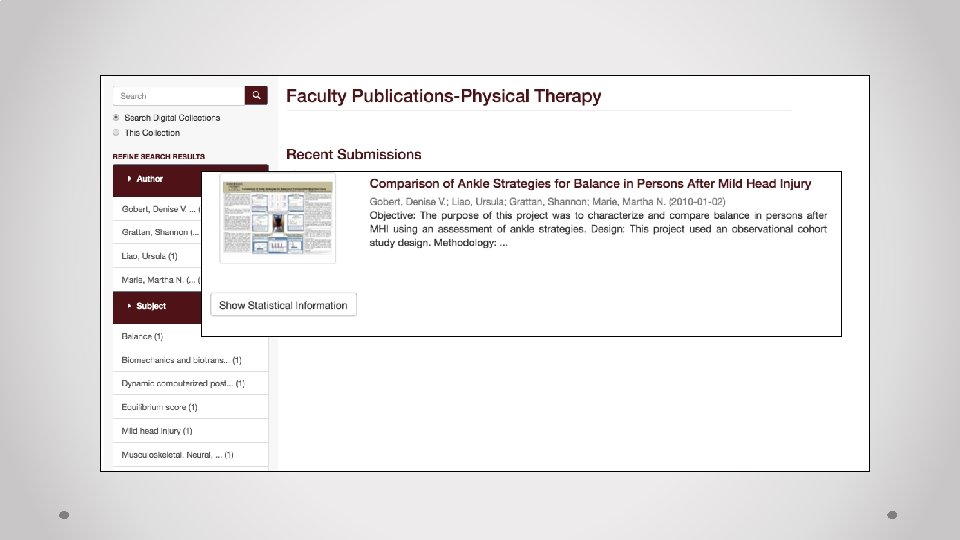
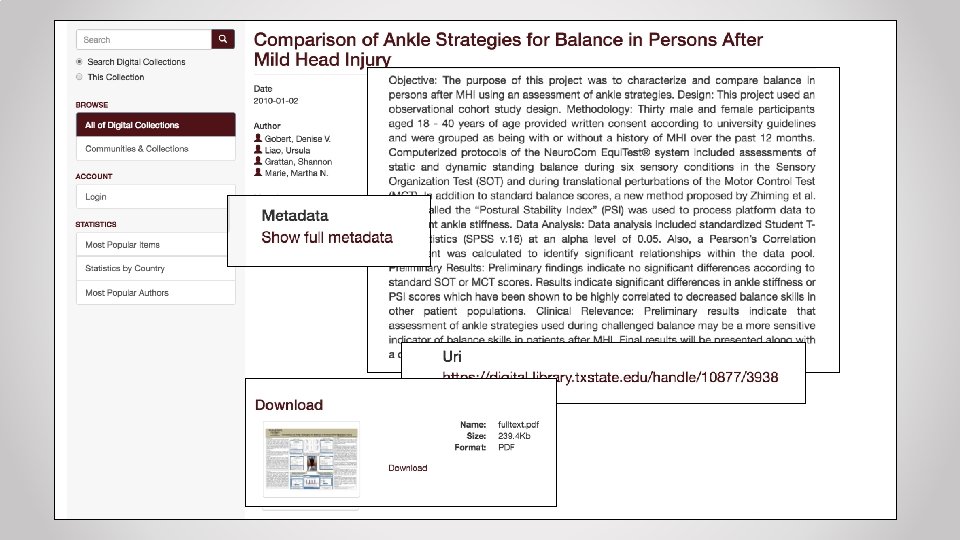
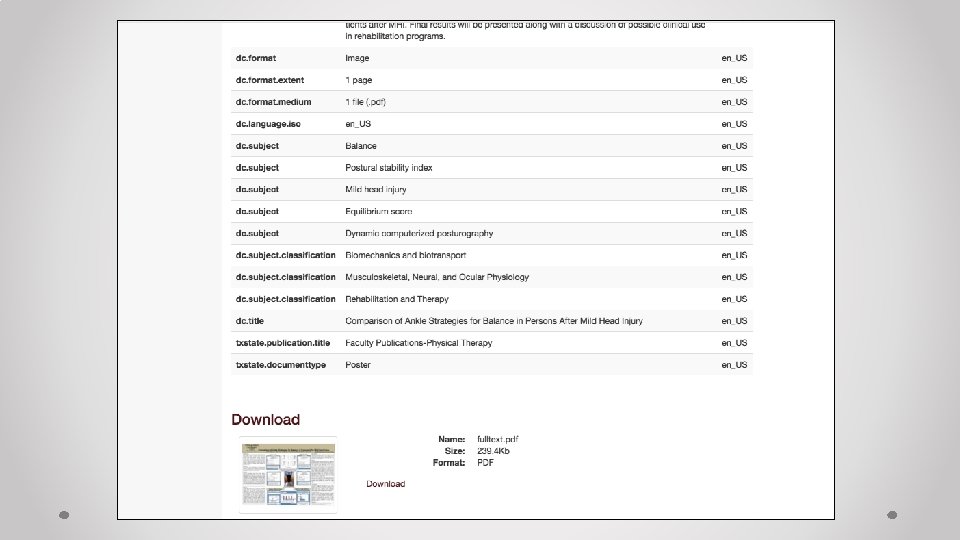
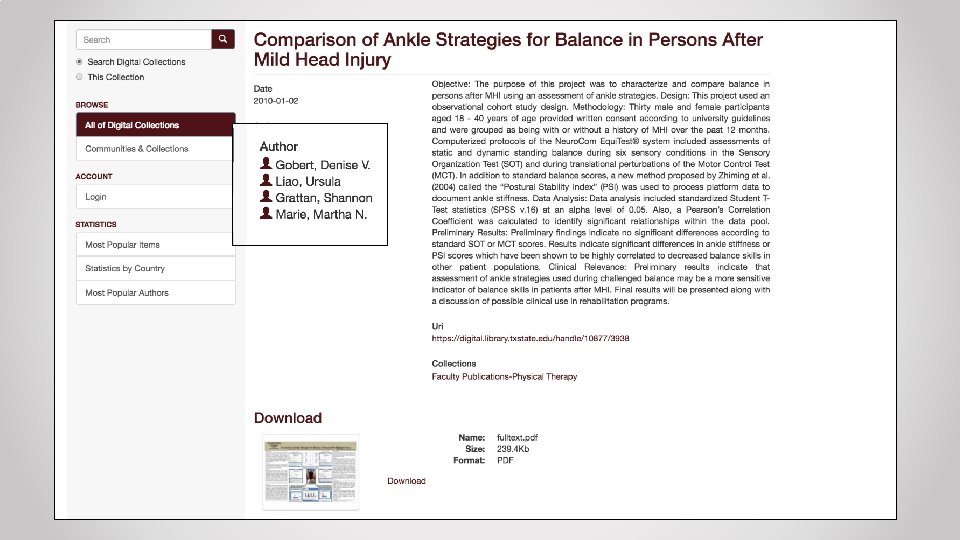
A Look Around Digital Collections
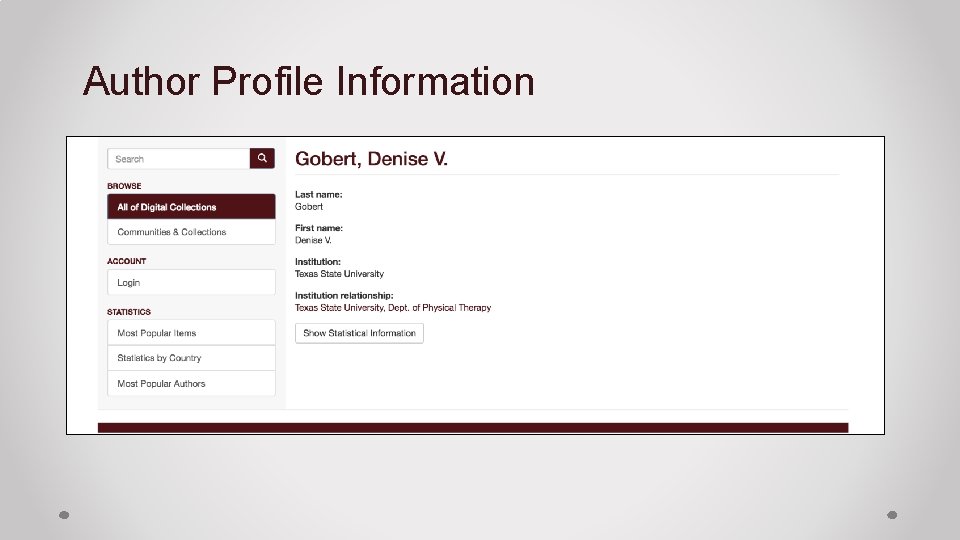
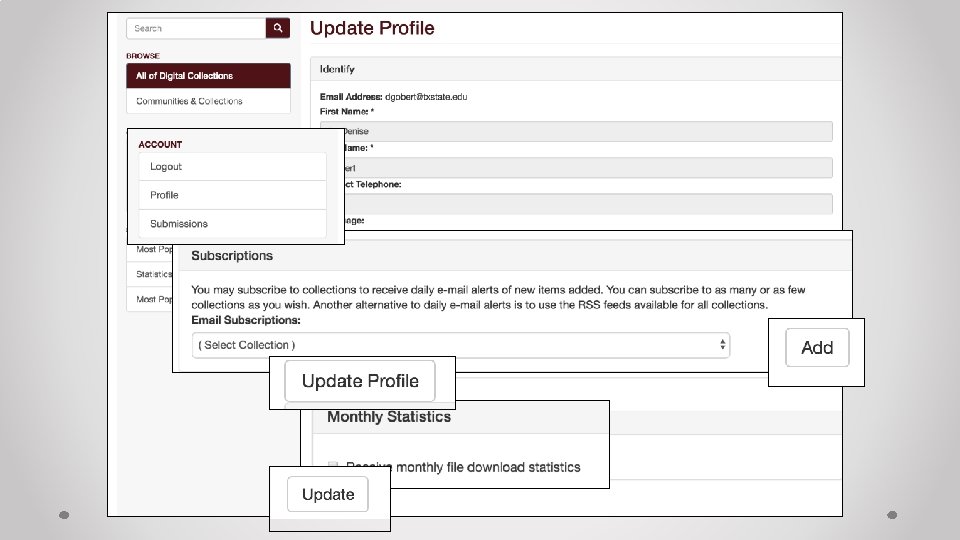
Author Profile Information
Citations and Impact
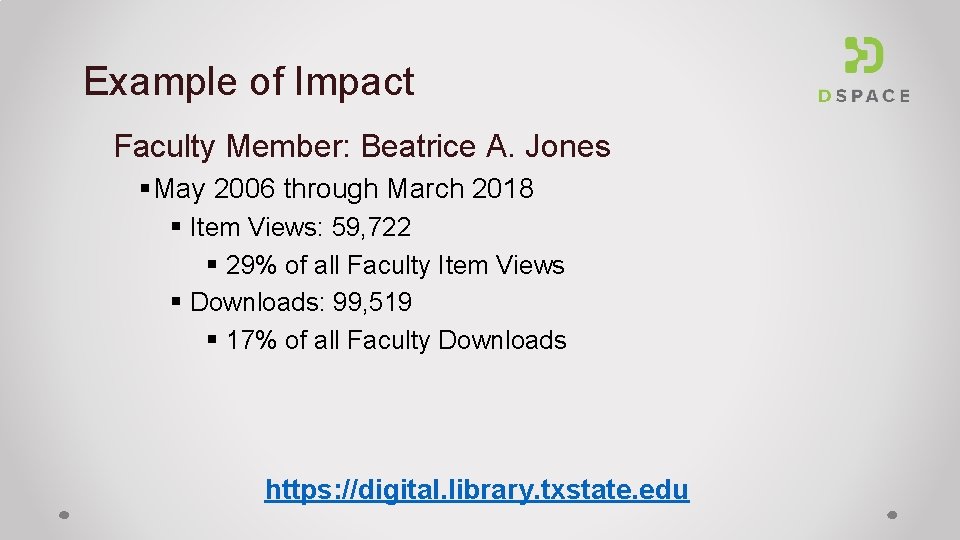
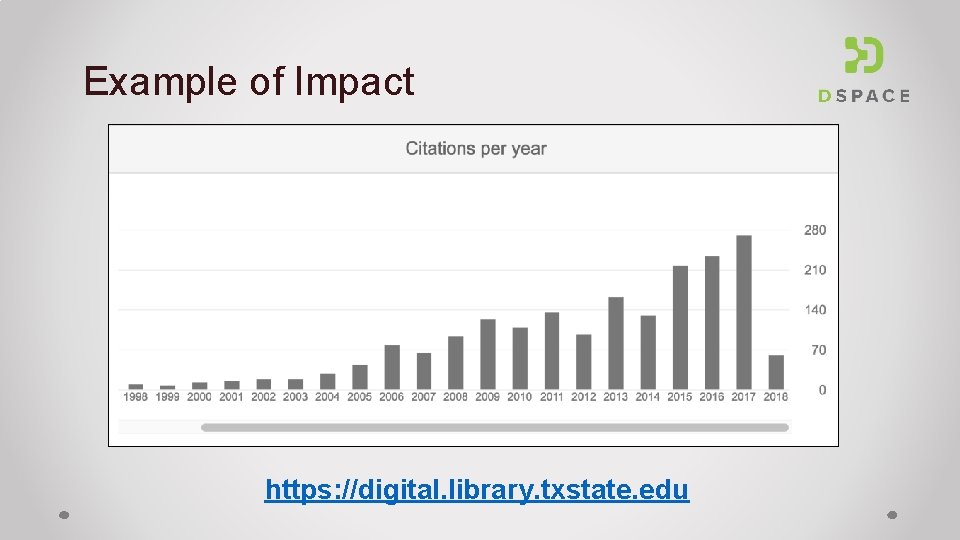
Example of Impact Faculty Member: Beatrice A. Jones § May 2006 through March 2018 § Item Views: 59, 722 § 29% of all Faculty Item Views § Downloads: 99, 519 § 17% of all Faculty Downloads https: //digital. library. txstate. edu
Example of Impact https: //digital. library. txstate. edu
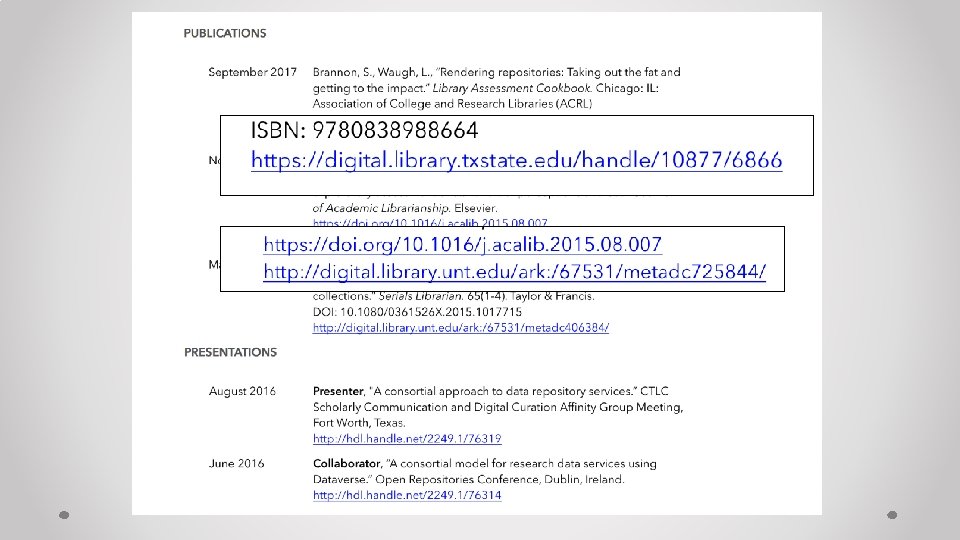
Organization and Archiving
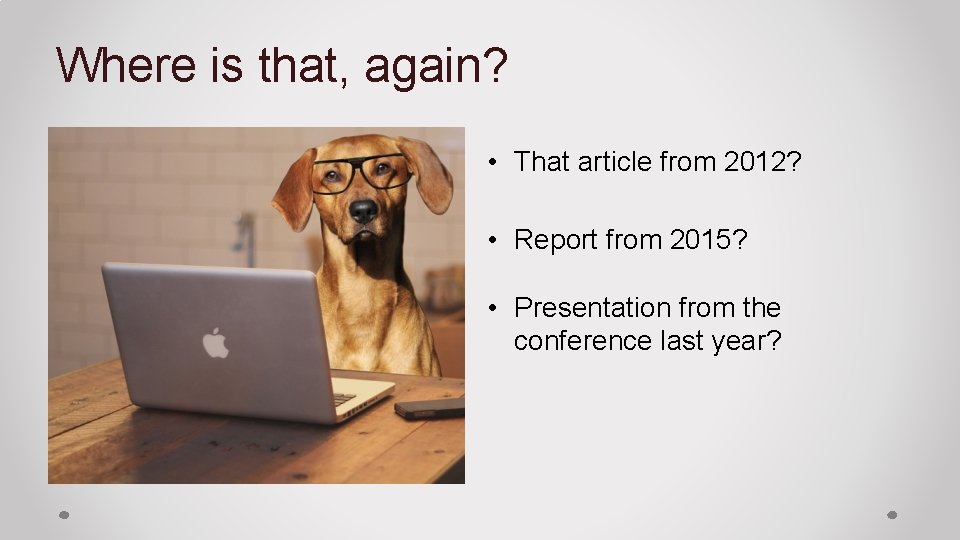
Where is that, again? • That article from 2012? • Report from 2015? • Presentation from the conference last year?
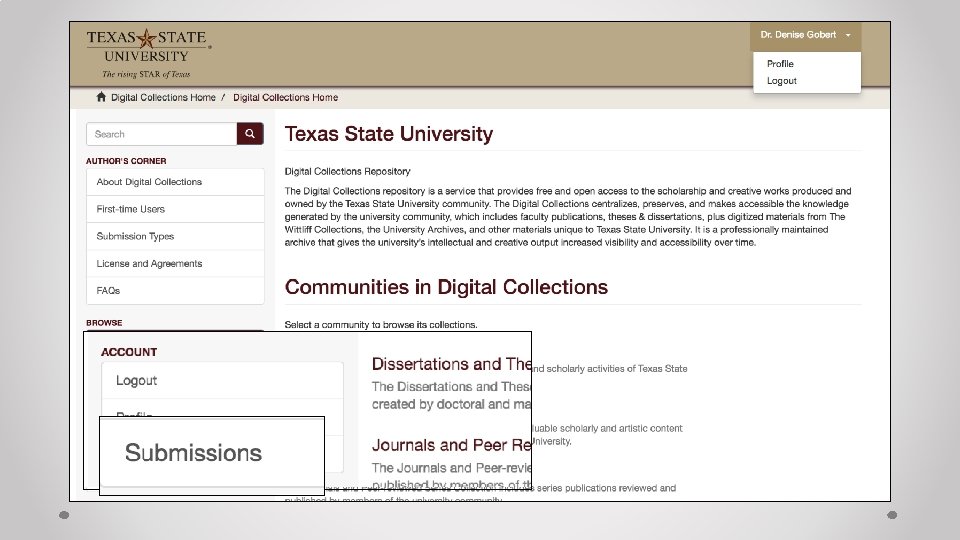
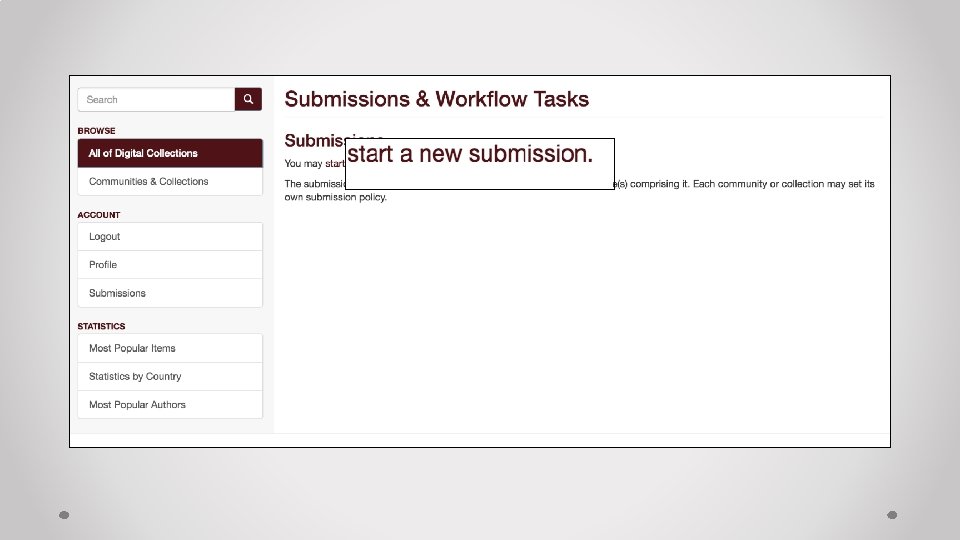
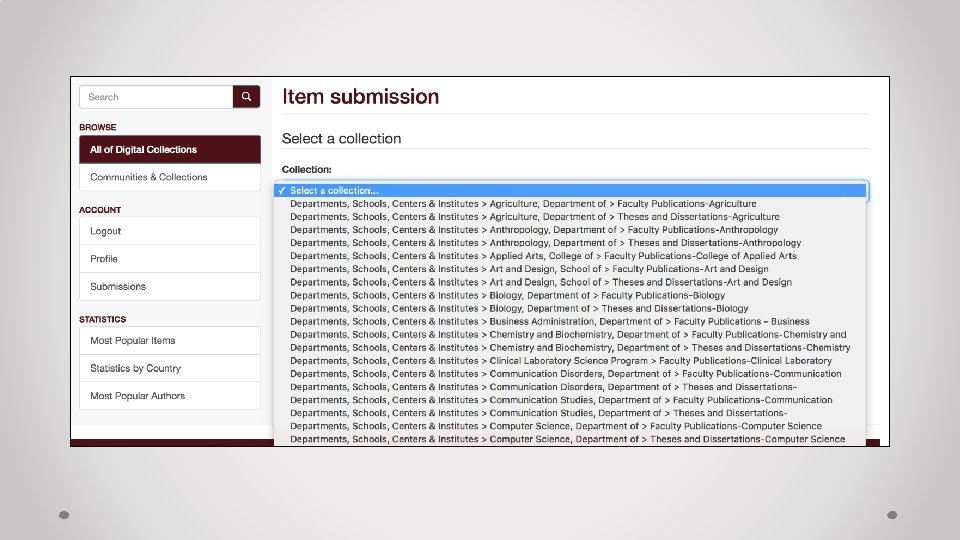
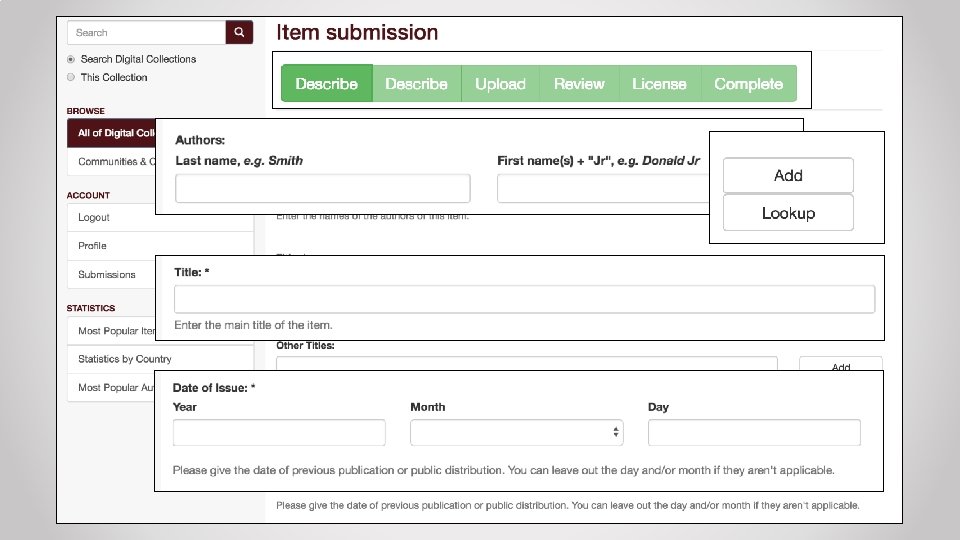
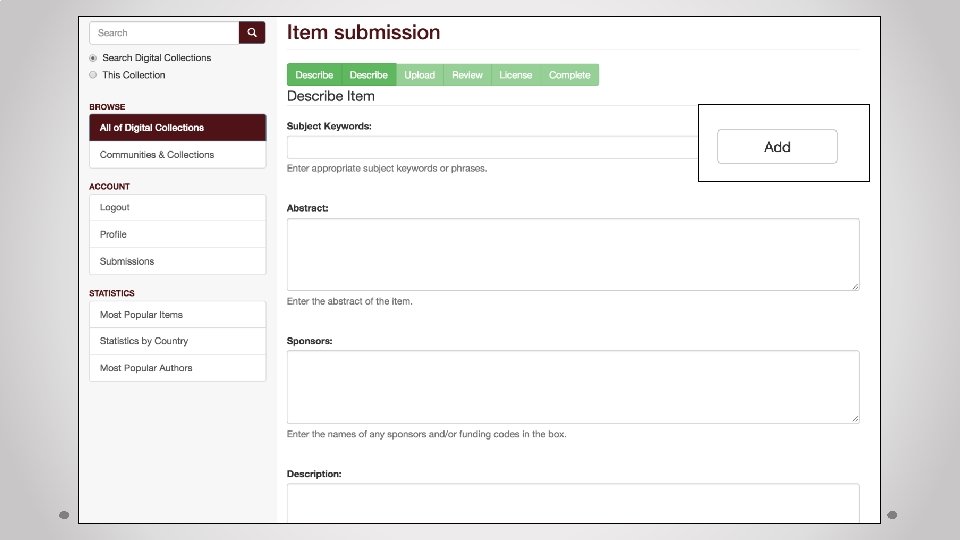
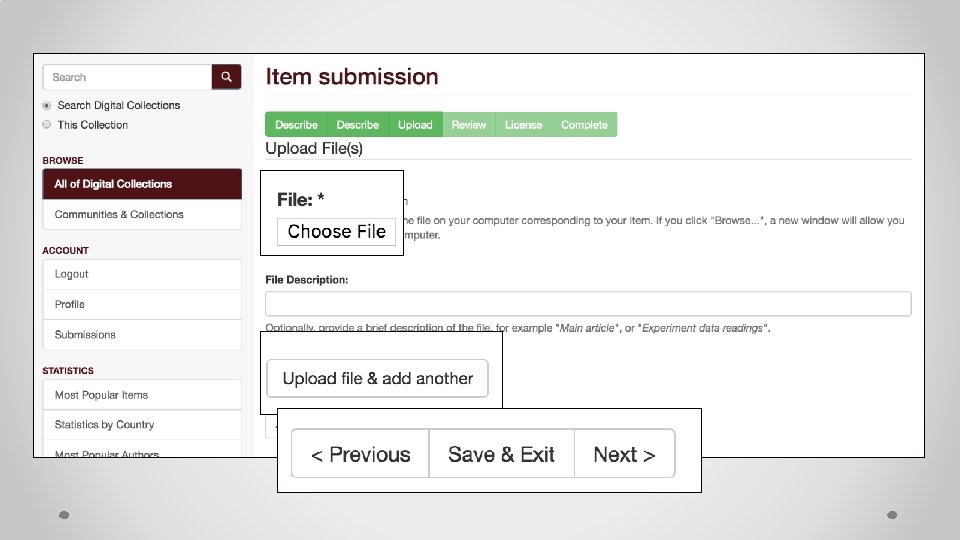
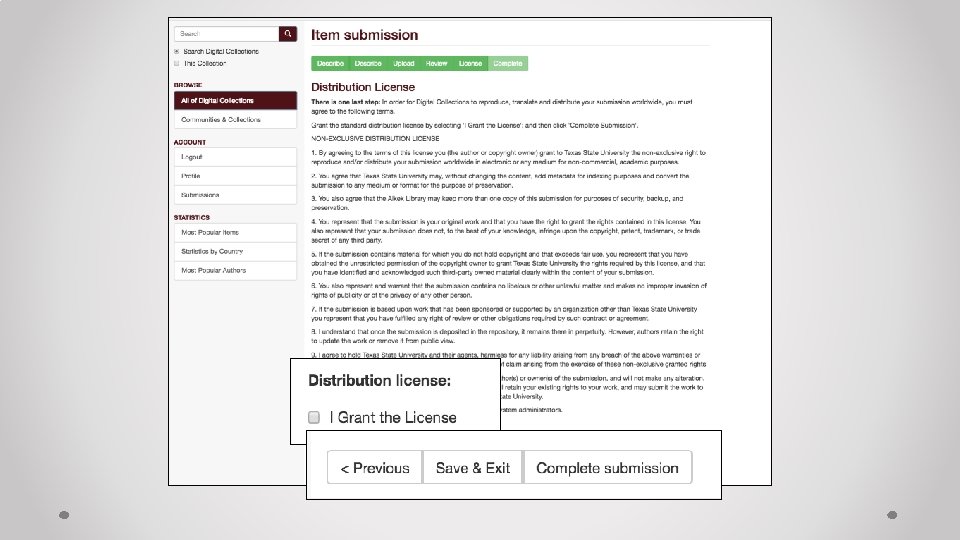
Submitting Your Work
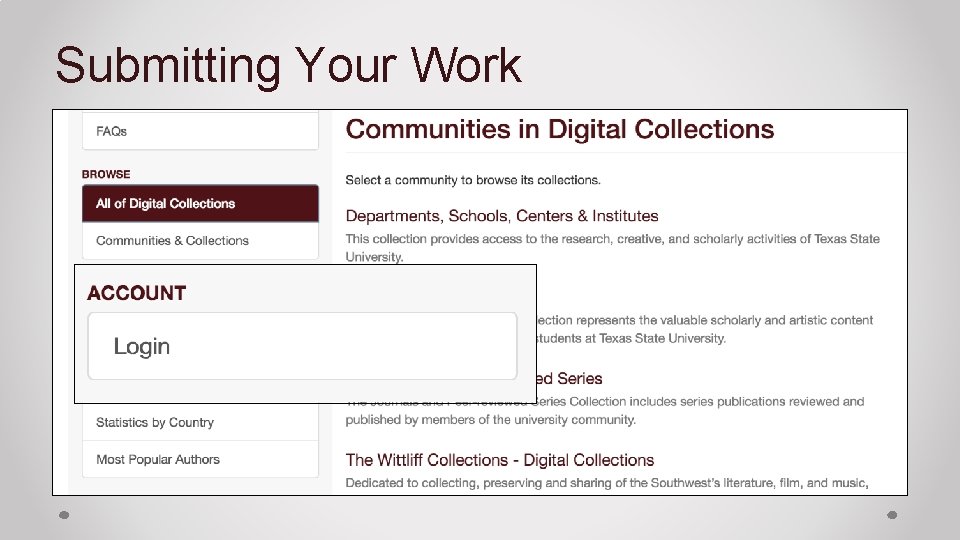
Submitting Your Work
Submitting Your Work • Email me your items: o lwaugh@txstate. edu o digitalcollections@txstate. edu • We’ll upload it, normalize the file format, check copyright, add metadata – anything you need!
Preprint, Post-Print, Publisher PDF, Oh my!
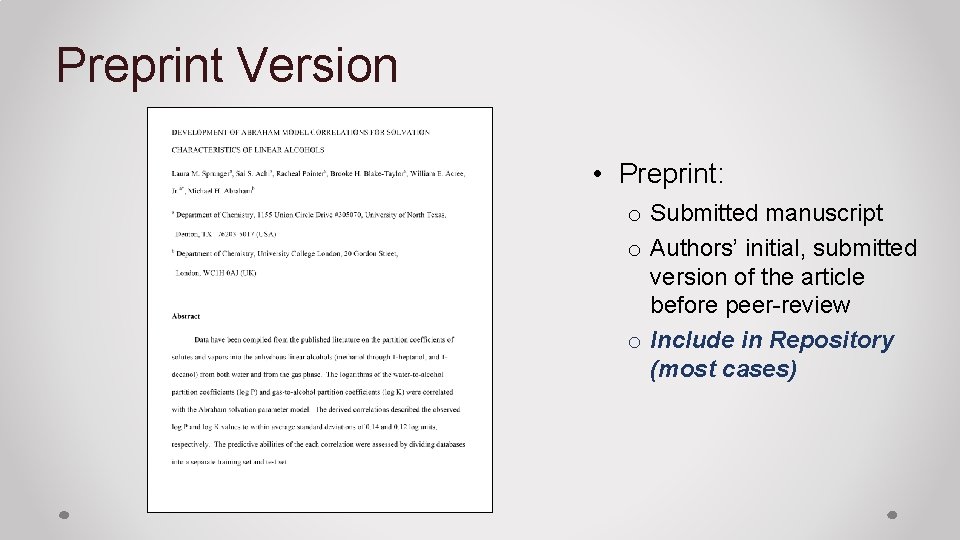
Preprint Version • Preprint: o Submitted manuscript o Authors’ initial, submitted version of the article before peer-review o Include in Repository (most cases)
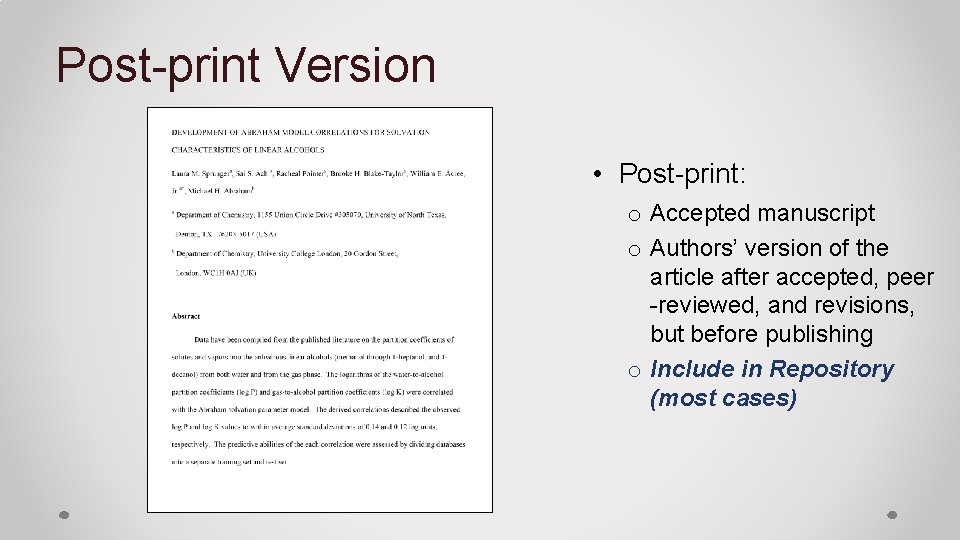
Post-print Version • Post-print: o Accepted manuscript o Authors’ version of the article after accepted, peer -reviewed, and revisions, but before publishing o Include in Repository (most cases)
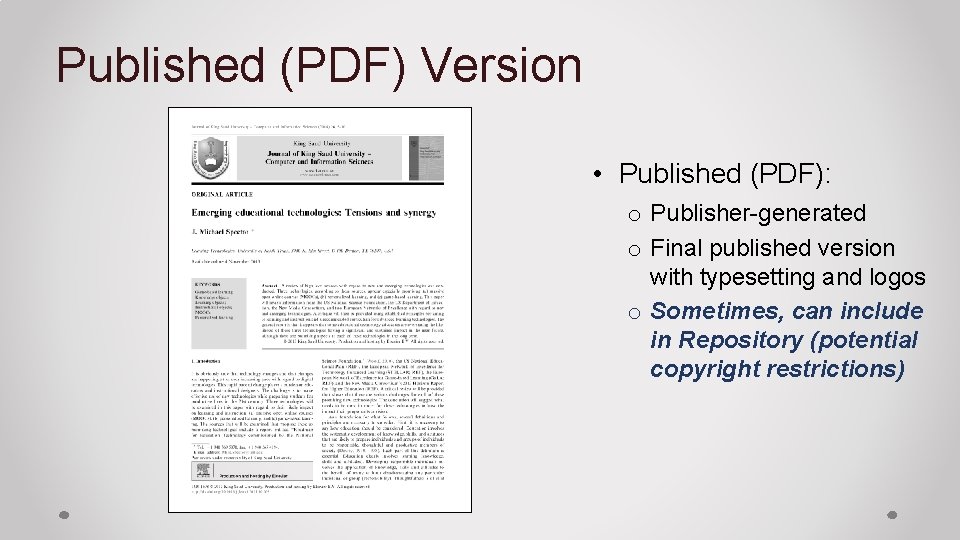
Published (PDF) Version • Published (PDF): o Publisher-generated o Final published version with typesetting and logos o Sometimes, can include in Repository (potential copyright restrictions)
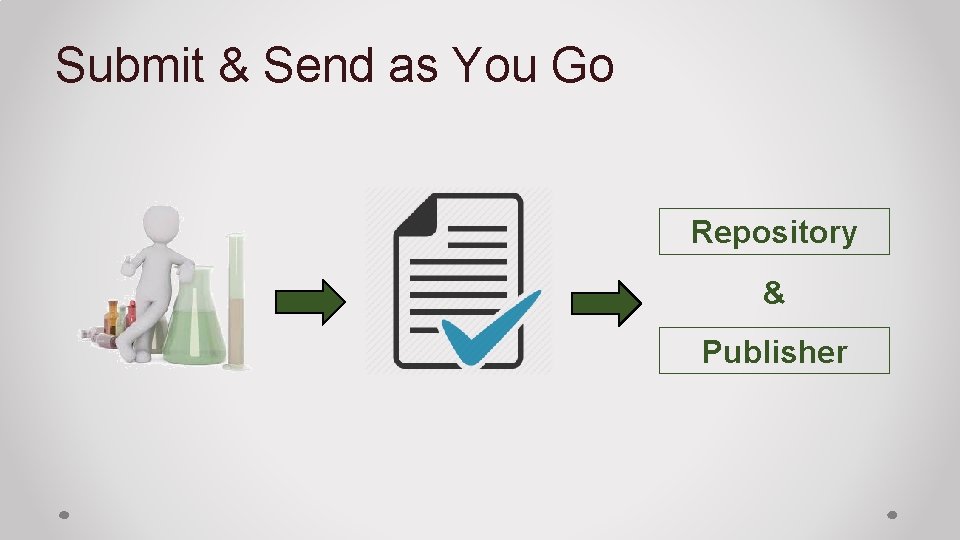
Submit & Send as You Go Repository & Publisher
TXST Dataverse Repository
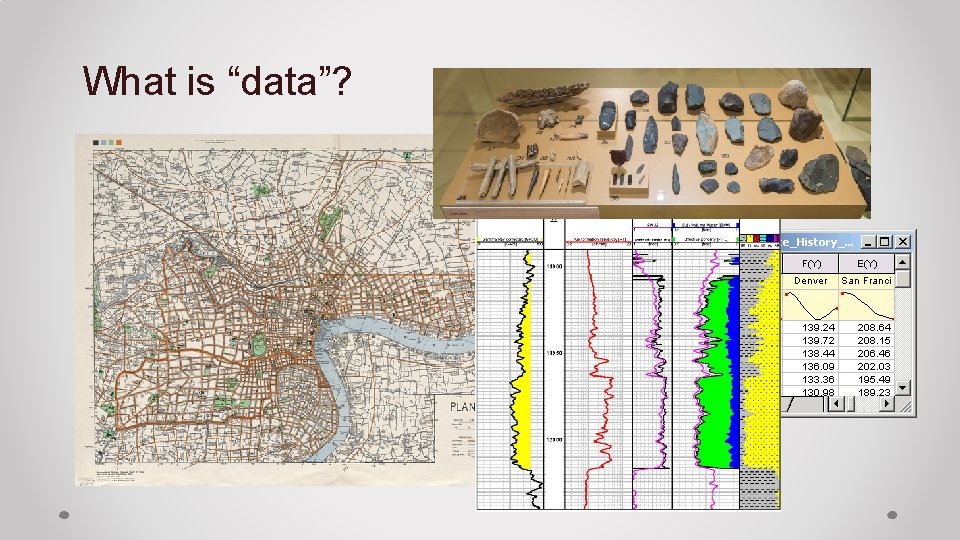
What is “data”?
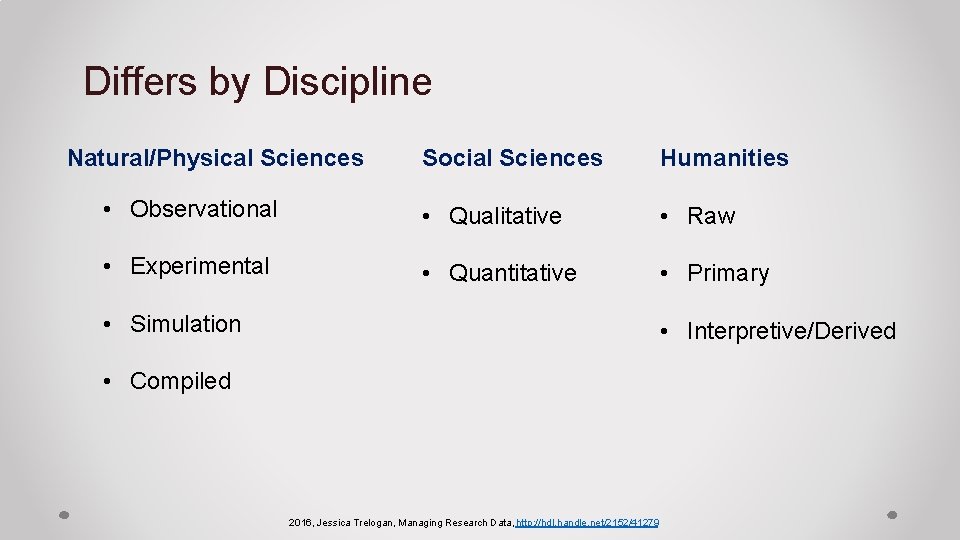
Differs by Discipline Natural/Physical Sciences Social Sciences Humanities • Observational • Qualitative • Raw • Experimental • Quantitative • Primary • Simulation • Interpretive/Derived • Compiled 2016, Jessica Trelogan, Managing Research Data, http: //hdl. handle. net/2152/41279
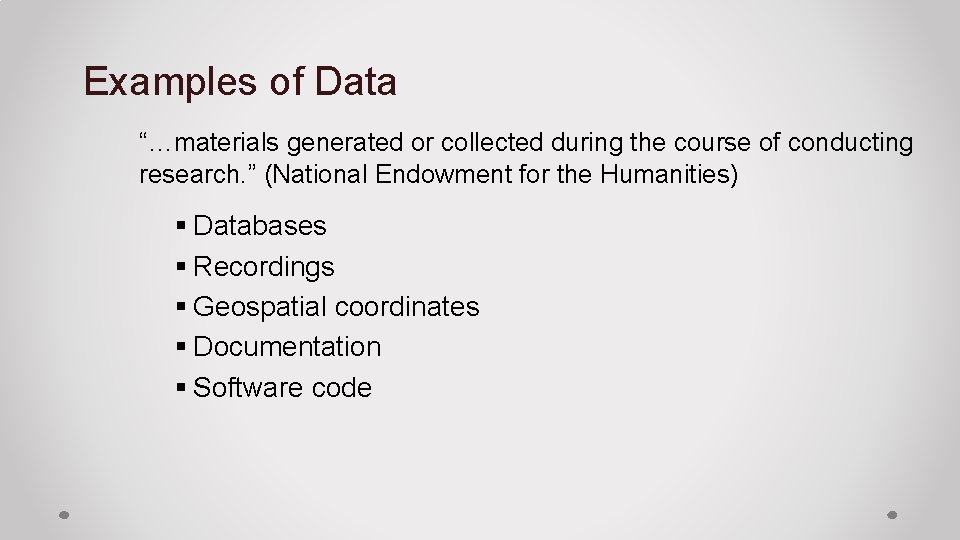
Examples of Data “…materials generated or collected during the course of conducting research. ” (National Endowment for the Humanities) § Databases § Recordings § Geospatial coordinates § Documentation § Software code
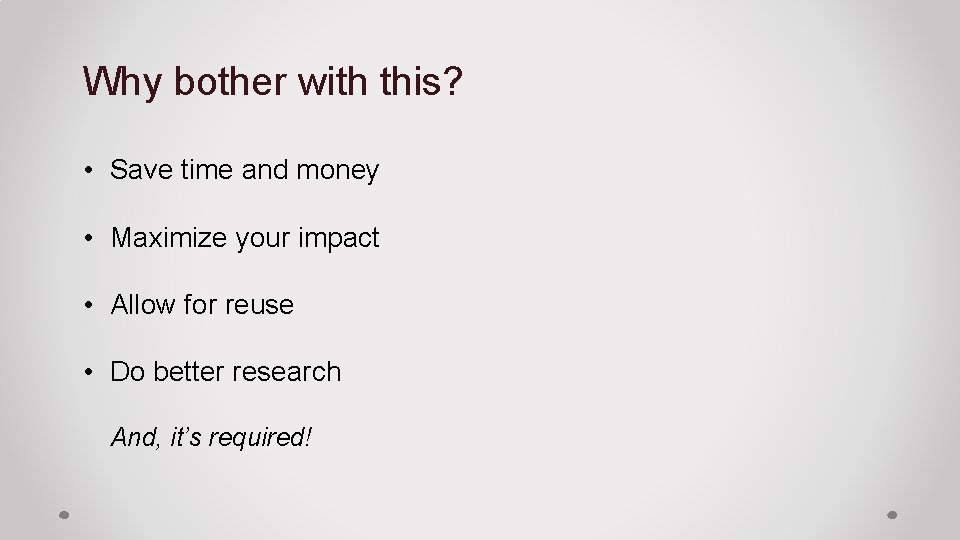
Why bother with this? • Save time and money • Maximize your impact • Allow for reuse • Do better research And, it’s required!
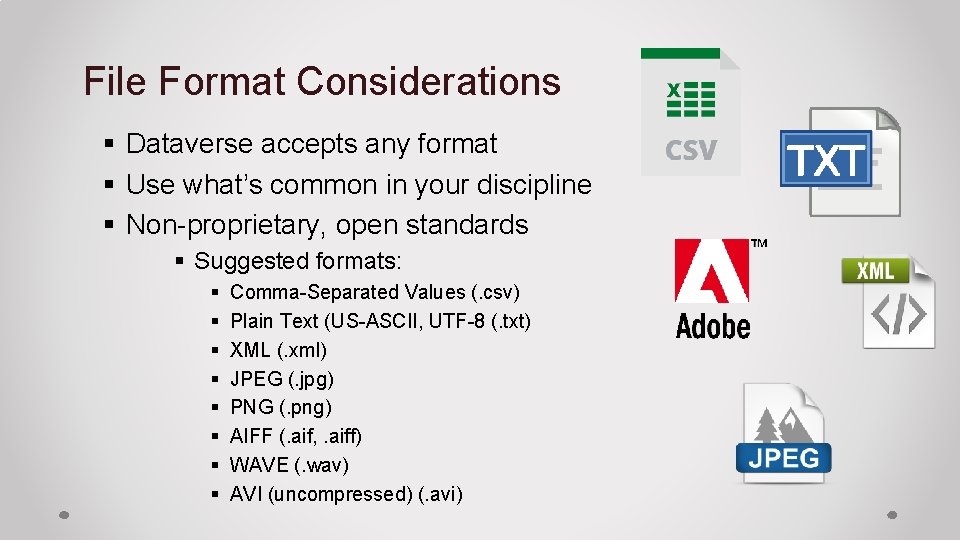
File Format Considerations § Dataverse accepts any format § Use what’s common in your discipline § Non-proprietary, open standards § Suggested formats: § § § § Comma-Separated Values (. csv) Plain Text (US-ASCII, UTF-8 (. txt) XML (. xml) JPEG (. jpg) PNG (. png) AIFF (. aif, . aiff) WAVE (. wav) AVI (uncompressed) (. avi)
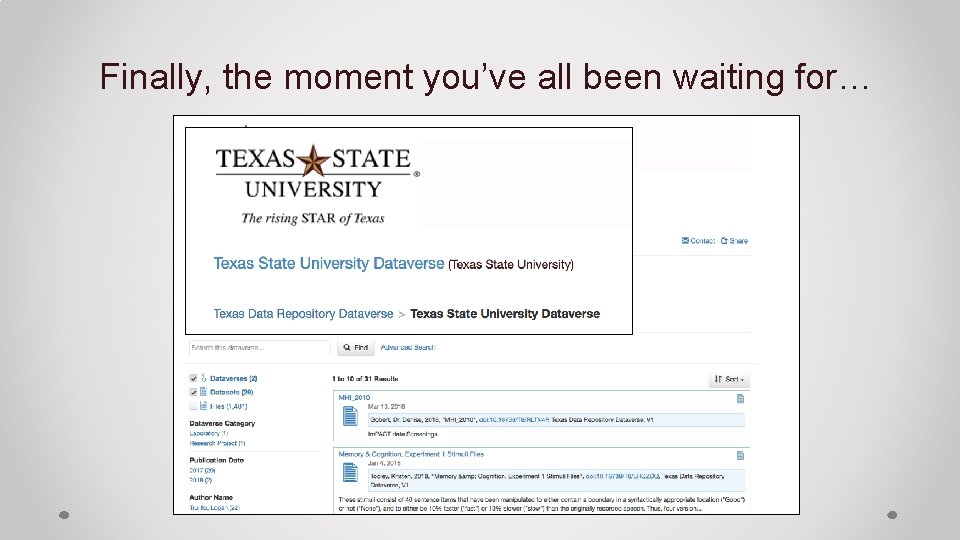
Finally, the moment you’ve all been waiting for…
TXST Dataverse Repository Benefits and Features § Meeting funder mandates § Permanent URL (doi) § Organize and archive § Increase citations and impact § (receive credit for you work) § Viewable statistics https: //digital. library. txstate. edu
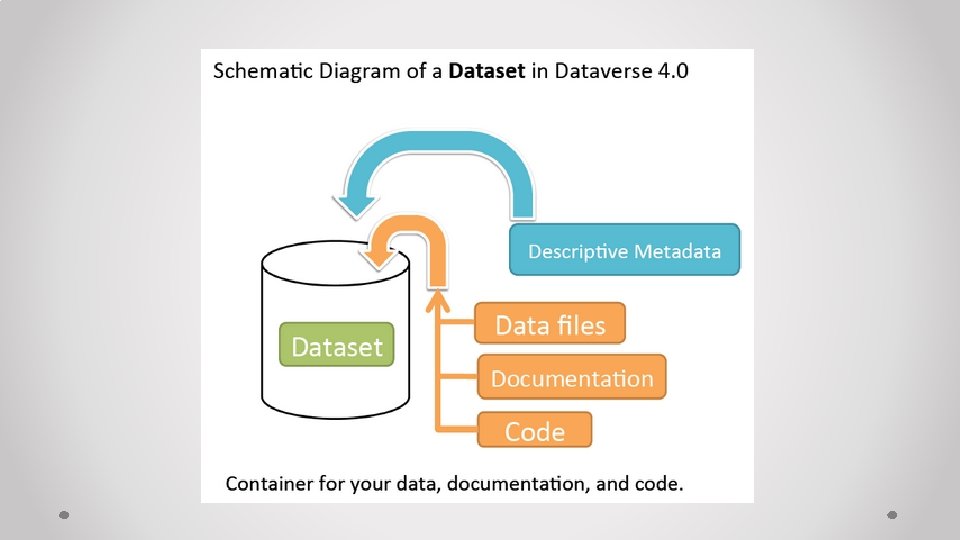
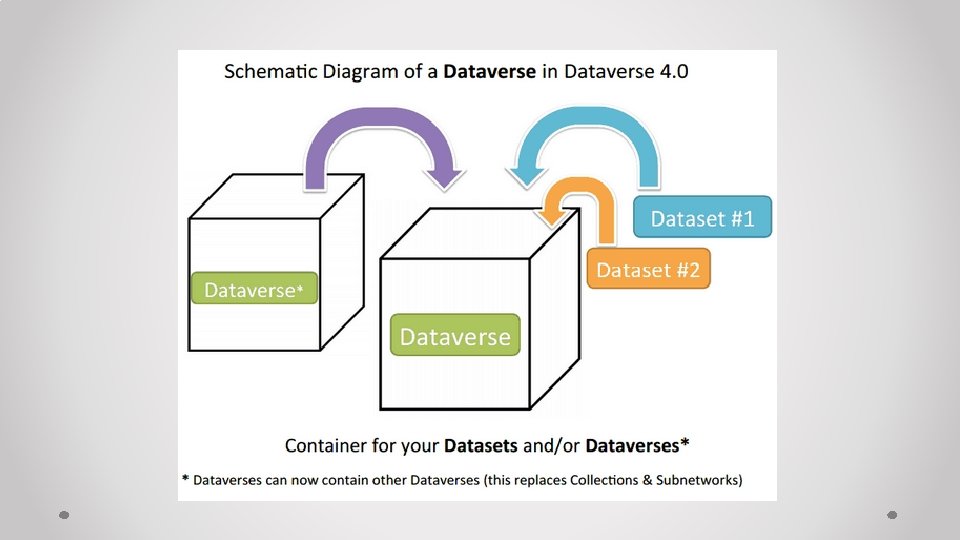
Structure of Dataverse
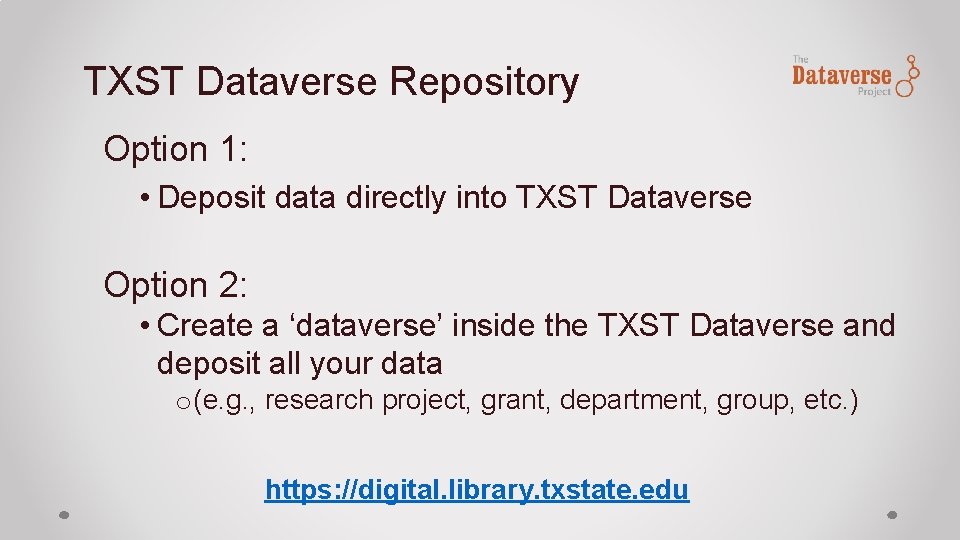
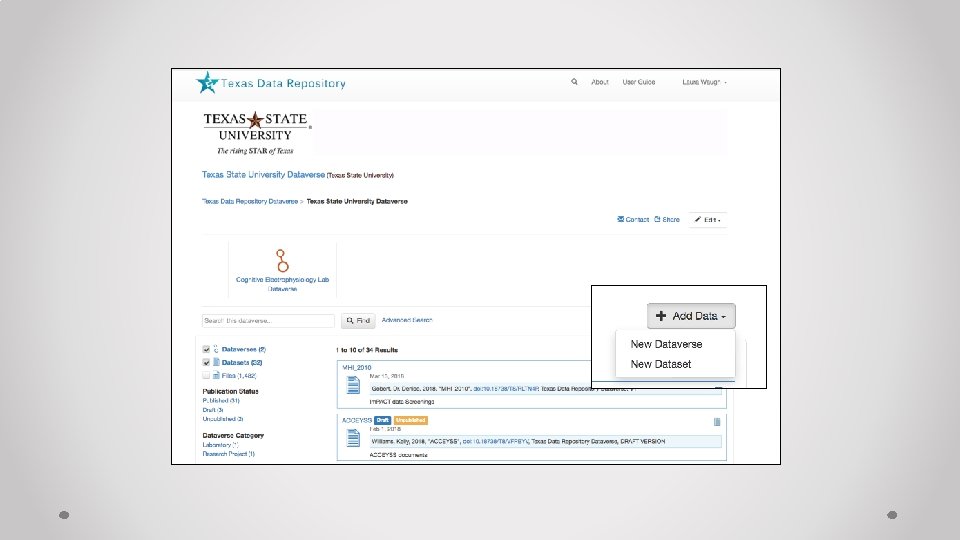
TXST Dataverse Repository Option 1: • Deposit data directly into TXST Dataverse Option 2: • Create a ‘dataverse’ inside the TXST Dataverse and deposit all your data o (e. g. , research project, grant, department, group, etc. ) https: //digital. library. txstate. edu
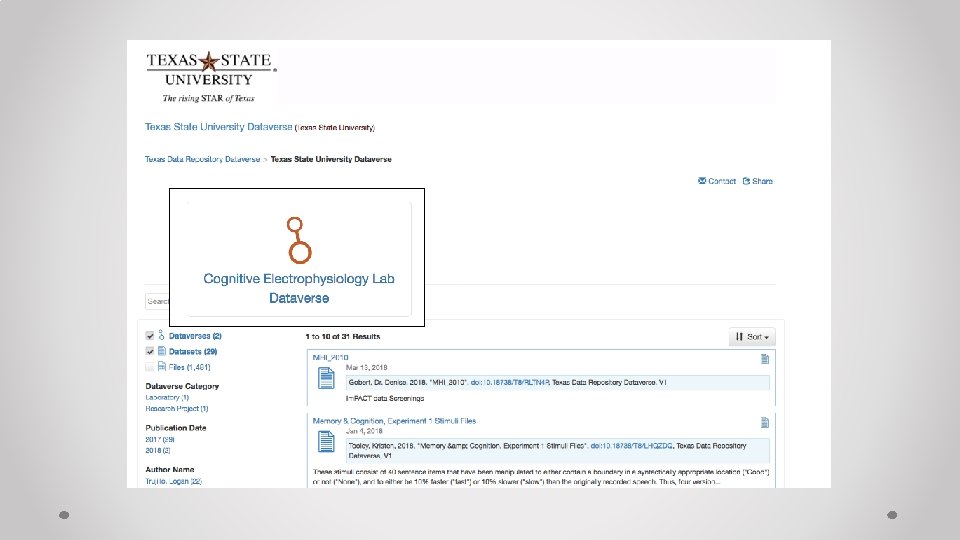
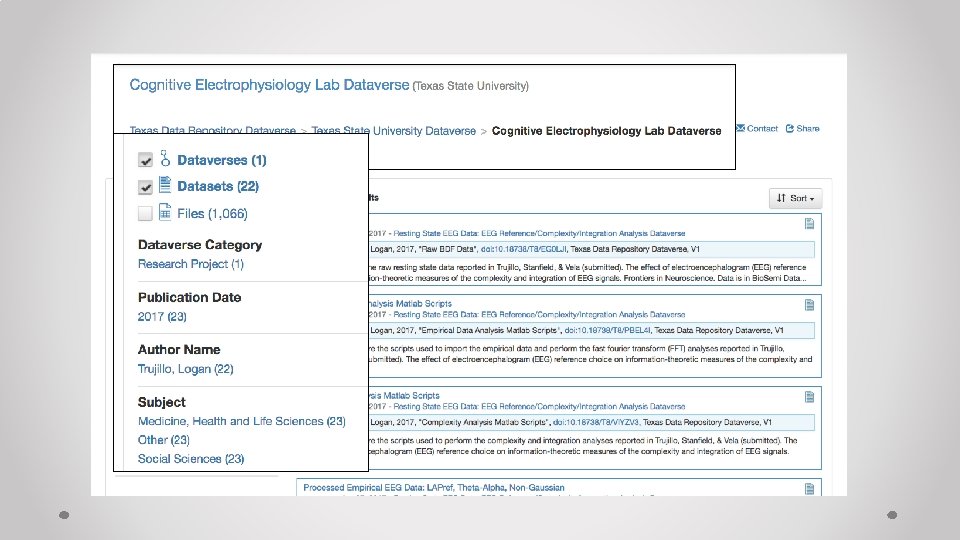
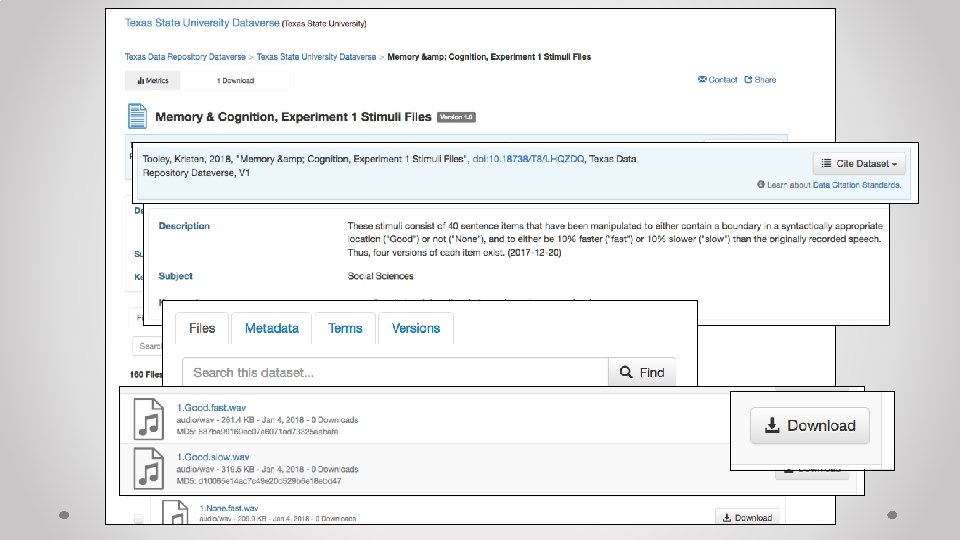
A Look Around Dataverse
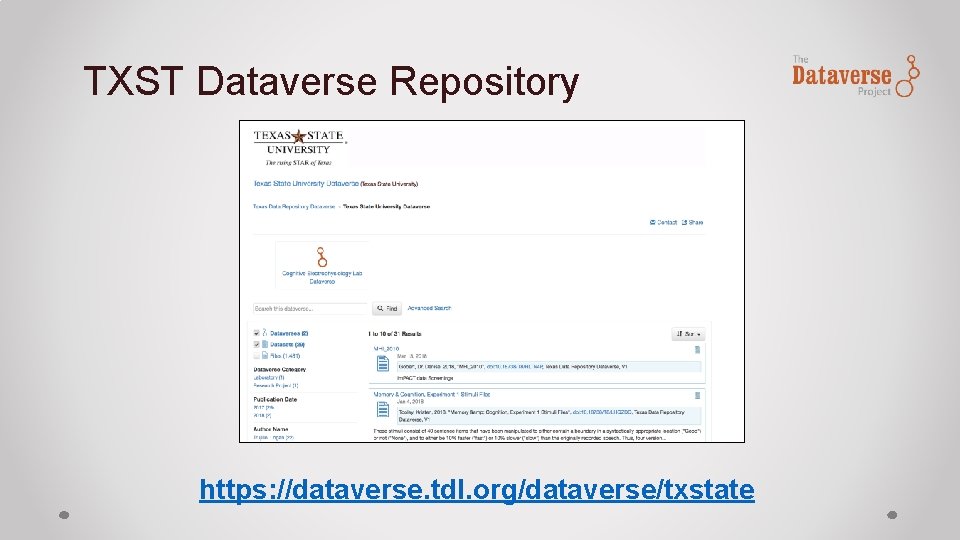
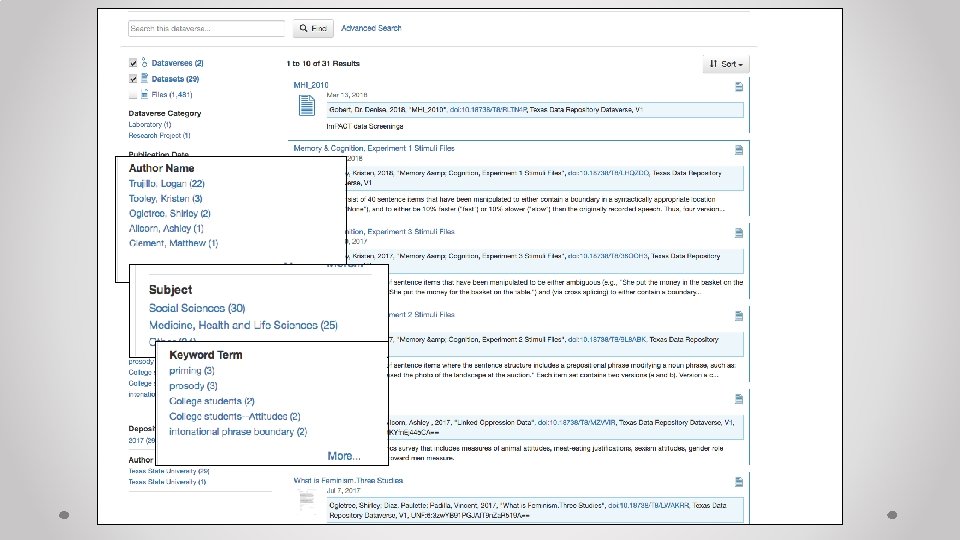
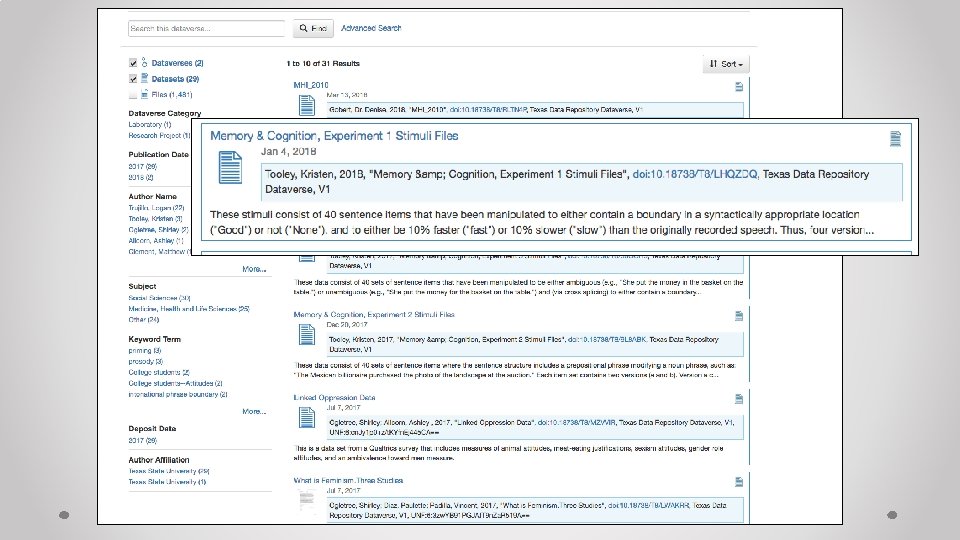
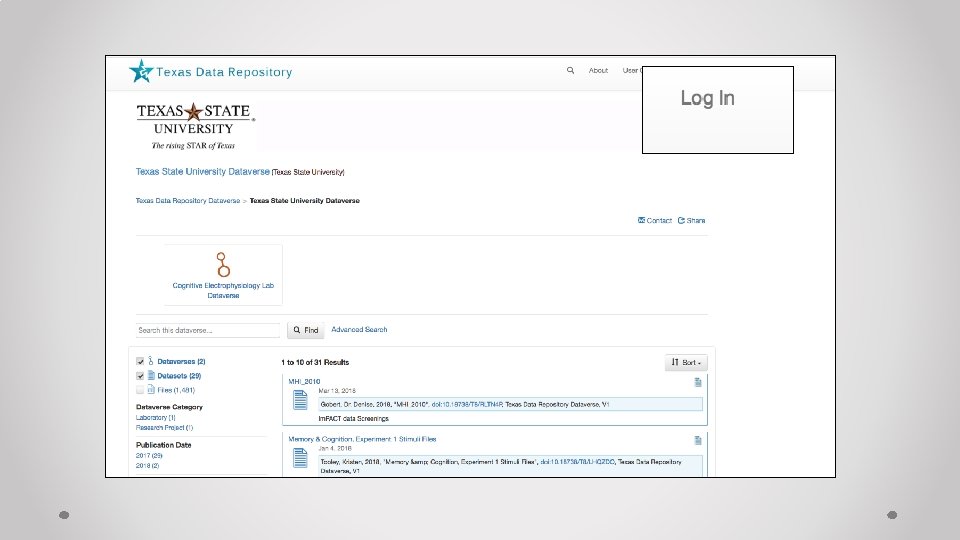
TXST Dataverse Repository https: //dataverse. tdl. org/dataverse/txstate
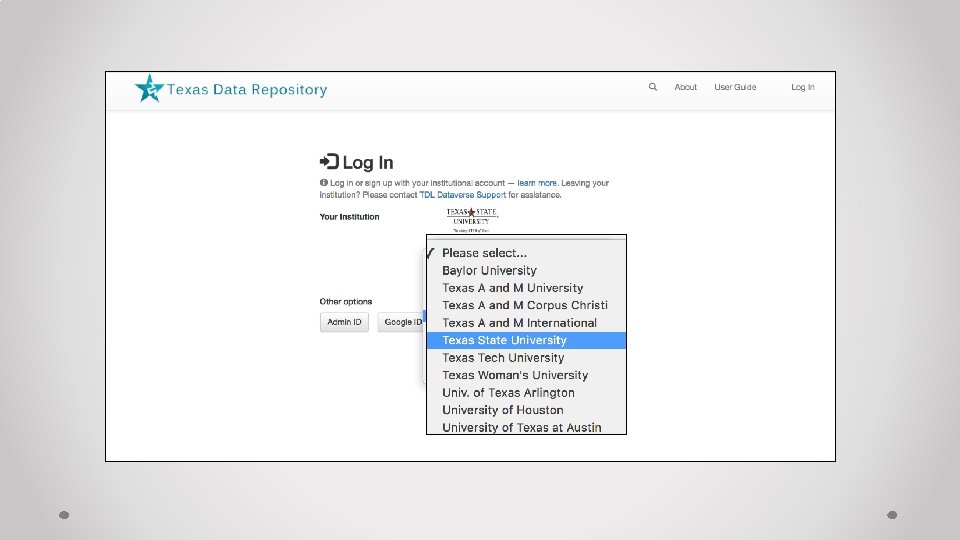
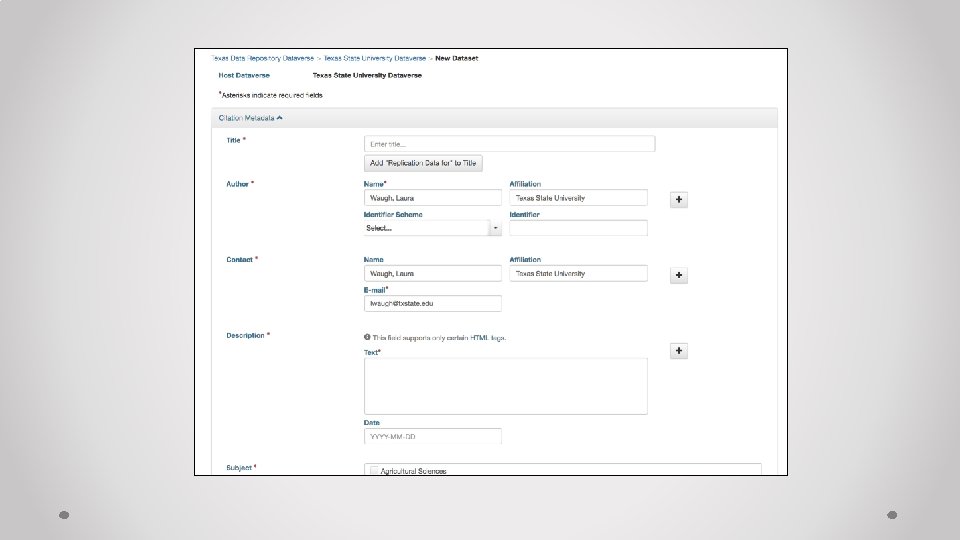
Submitting Your Data
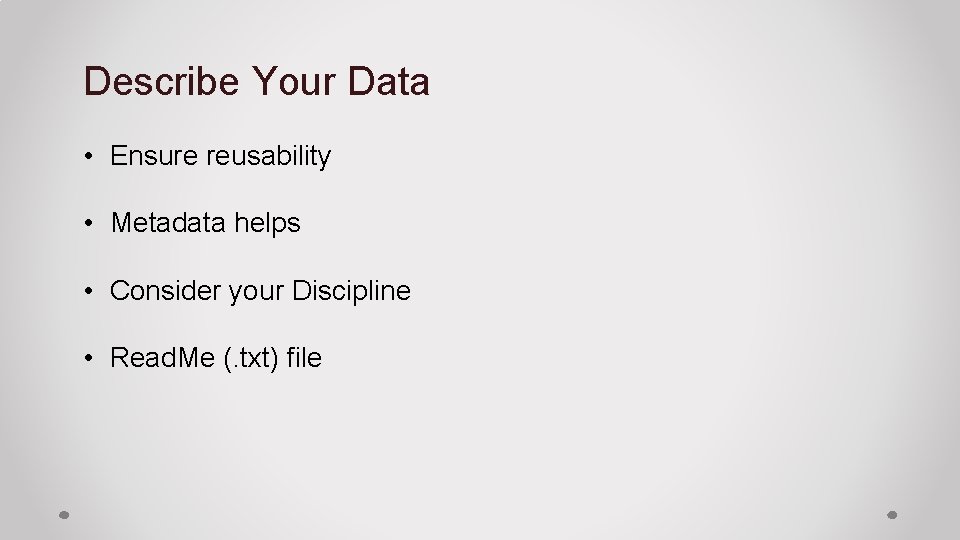
Describe Your Data • Ensure reusability • Metadata helps • Consider your Discipline • Read. Me (. txt) file
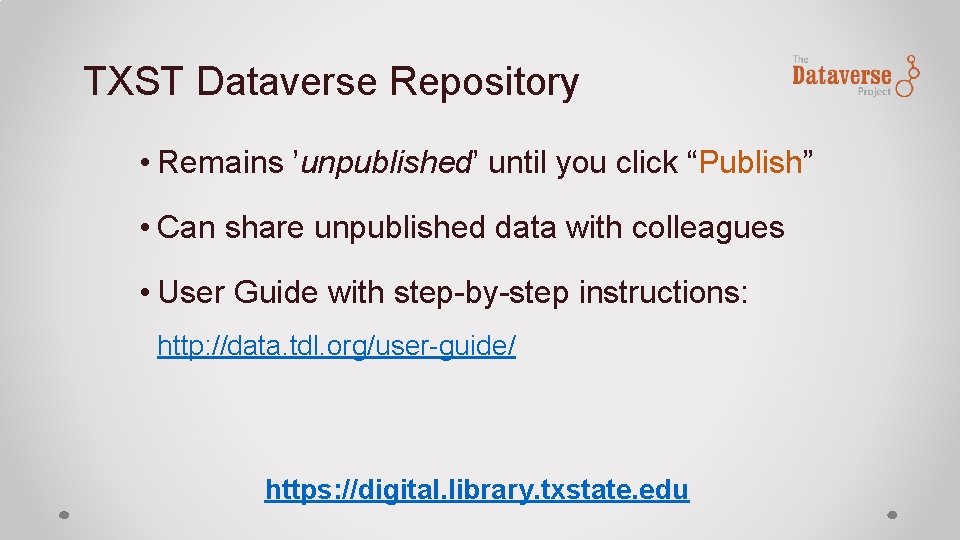
TXST Dataverse Repository • Remains ’unpublished’ until you click “Publish” • Can share unpublished data with colleagues • User Guide with step-by-step instructions: http: //data. tdl. org/user-guide/ https: //digital. library. txstate. edu
Learn More: • From Office of the White House Chief Information Officer: https: //project-open-data. cio. gov/ • Links to Federal Agency Open Mandates: http: //www. library. cmu. edu/datapub/sc/publicaccess/policies/usgovfunders • ICPSR: What is data curation? https: //www. youtube. com/watch? v=ZEkq. F 8 c. L 2 q. Q • Find the Texas State University Dataverse on the library website under “Services to Faculty”: http: //www. library. txstate. edu/services/faculty. html • Find Research Data information from the Office of Research and Sponsored Services at: http: //www. txstate. edu/research/avpr/data_mgmt 78
Questions? § Dianna Morganti diannamorganti@txstate. edu § Laura Waugh lwaugh@txstate. edu