
Lecture 6 7 Sedimentary and Metamorphic Rocks Part









- Slides: 51
Lecture 6 -7 Sedimentary and Metamorphic Rocks Part 1 Sedimentary Rocks Kyanite, Sillimanite, and Andalucite
What is a sedimentary rock? • Sedimentary rocks result from mechanical and chemical weathering • Comprise ~ 5% of Earth’s upper crust • About 75% of rocks at surface • Contain evidence of past environments • Record how sediment is transported • Often contain fossils
What is the economic importance of sedimentary rocks? • They are important for economic reasons because they contain • Coal • Petroleum and natural gas • Iron, aluminum, uranium and manganese • Geologists use them to read Earth’s history
Cementation • Precipitation of chemicals dissolved in water binds grains of a sediment together. • After the cements solidify, compaction drives out the excess water. • Important part of Lithification • Remember where cements come from?
Types of sedimentary rocks • Chemical rocks – sediment from ions that were once in solution • Detrital rocks –sediment transported as solid particles
Detrital sedimentary rocks • Constituents of detrital rocks can include • Clay minerals • Quartz • Feldspars • Micas • Particle size is used to distinguish among the various types of detrital rocks
Detrital sedimentary rocks • Mudrocks: less than. 063 mm – 1. Mud: small particles easily kept in suspension – Settles in quiet water – Includes Shale: mud-sized particles <. 004 mm deposited in thin bedding layers called laminae Most common sedimentary rock 2. Larger mudrock grains called silts silt-sized particles. 004 -. 063 mm Gritty grains can be felt
Detrital sedimentary rocks • Sandstone – Made of sand-sized particles larger than. 063 mm and less than 2 mm – Forms in a variety of environments – Sorting, angularity and composition of grains can be used to interpret the rock’s history – Quartz is the predominant mineral (due to its durable nature)
Detrital sedimentary rocks • Conglomerate and breccia – Both composed of particles > 2 mm in diameter – Conglomerate consists largely of rounded clasts. Rounded pebbles in high velocity areas – Breccia is composed of large angular particles Breccia is made of shattered rock that accumulates at the base of a cliff
Energy • Coarse sediments are deposited in high energy (fast water) environments such as under breaking waves at the beach, or in the beds of fast streams. • Fine sediments are deposited in low energy environments, e. g. the slow water of deep lagoons, the abyssal plain, etc.
Chemical sedimentary rocks • Precipitated material once in solution • Precipitation of material occurs two ways: • Inorganic processes: the minerals precipitate out of water • Organic processes: animals and plants precipitate the minerals to use as shells or skeletons http: //www. ucmp. berkeley. edu/collections/micro. html
• Common chemical sedimentary rocks • Limestone –Most abundant chemical rock –Made of the mineral calcite Ca. CO 3 –Marine biochemical limestones form as coral reefs, coquina (broken shells), and chalk (microscopic organisms) –Inorganic limestones include travertine (caves) and oolitic limestone (Bahamas)
http: //www. ndsu. nodak. edu/instruct/ashworth/coursework/g 410/evaporites/saltbeds. jpg • Common chemical sedimentary rocks • Evaporites –Evaporation triggers deposition of chemical precipitates –Examples include rock salt and rock gypsum
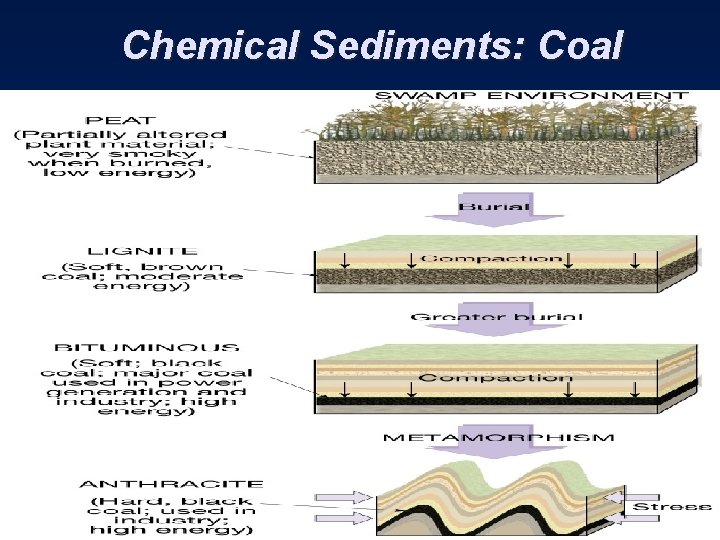
Chemical Sediments: Coal
Sedimentary environment determines roundness sorting, mineral diversity Character of detrital sediments depends on time, 6_5 distance, and energy. For example, in streams: Particles are large and irregular, and consist of a variety of lithologies, including the least resistant. Particles are mid-sized and of intermediate sphericity, and include resistant and nonresistant lithologies. HIGHLANDS LOWLANDS Particles are small and nearly spherical, and consist mainly of the most resistant lithologies, such as quartz. NEAR-COASTAL
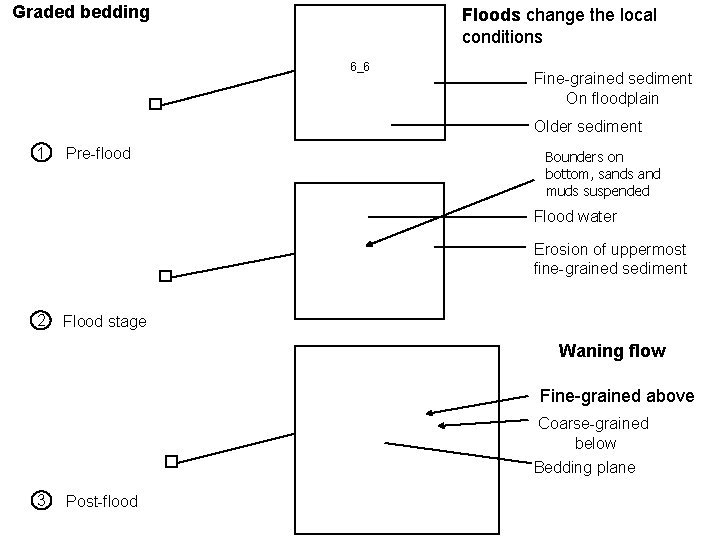
Graded bedding Floods change the local conditions 6_6 Fine-grained sediment On floodplain Older sediment 1 Pre-flood Bounders on bottom, sands and muds suspended Flood water Erosion of uppermost fine-grained sediment 2 Flood stage Waning flow Fine-grained above Coarse-grained below Bedding plane 3 Post-flood
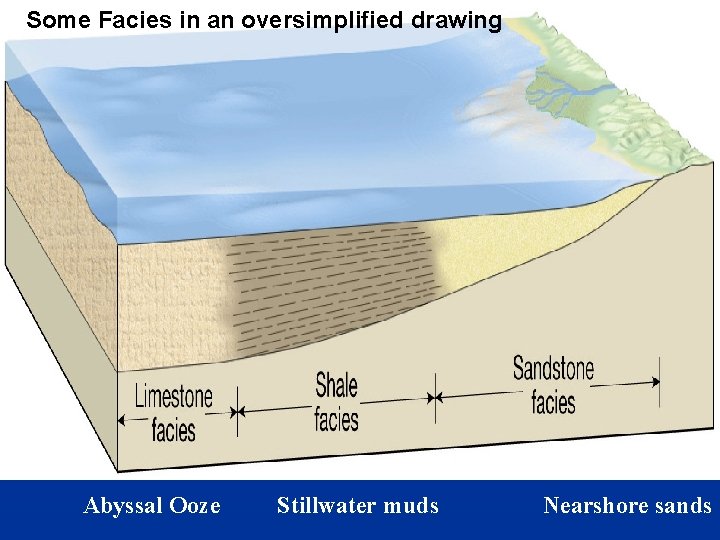
• Sedimentary Facies • Different sediments accumulate next to each other at same time • Each unit (called a facies) possesses a distinctive characteristics reflecting the conditions in a particular environment • The merging of adjacent facies tends to be a gradual transition
Some Facies in an oversimplified drawing Abyssal Ooze Stillwater muds Nearshore sands
Strata- Bedding Planes
Slabs of eroding sandstone with ripple marks
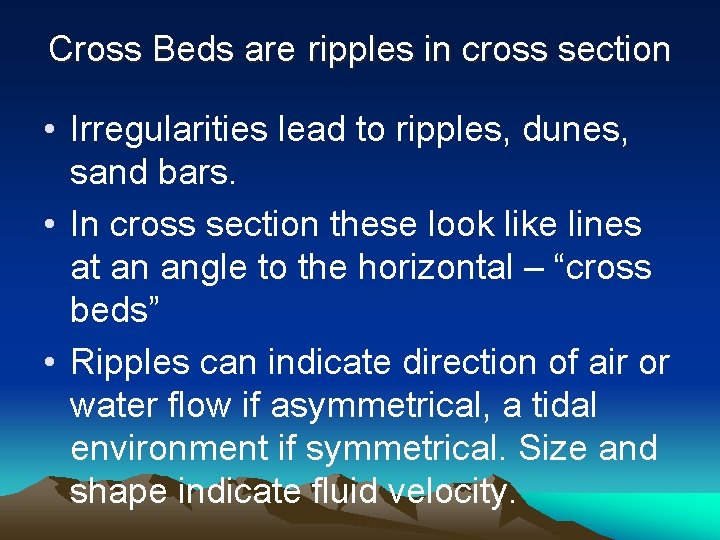
Cross Beds are ripples in cross section • Irregularities lead to ripples, dunes, sand bars. • In cross section these look like lines at an angle to the horizontal – “cross beds” • Ripples can indicate direction of air or water flow if asymmetrical, a tidal environment if symmetrical. Size and shape indicate fluid velocity.
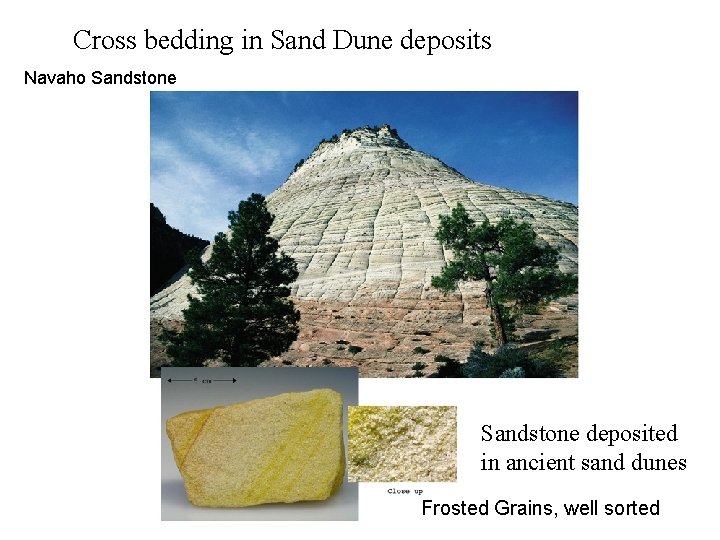
Cross bedding in Sand Dune deposits Navaho Sandstone deposited in ancient sand dunes Frosted Grains, well sorted
Mud Cracks: clay layer shrinks during drying, curls upward; cracks fill next flood. Useful for right-side up
Terms for Marine (i. e. Ocean) Environments 6_27 and some characteristic sediment facies Continental shelf Shallo w marin e Abyssal Plain Dee Define Graded Beds Continental slope p ma rine Submarine volcanoes
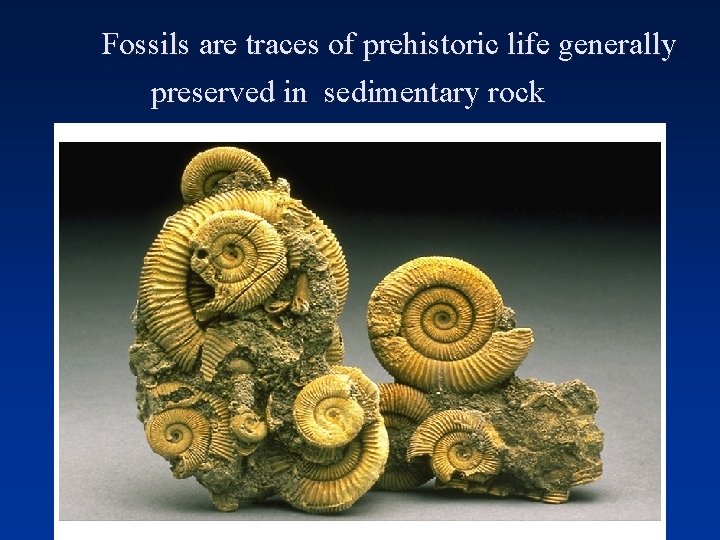
Fossils are traces of prehistoric life generally preserved in sedimentary rock
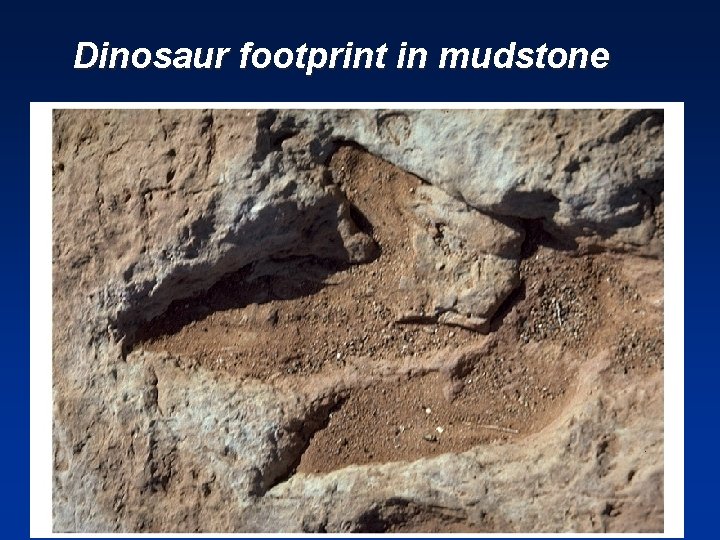
Dinosaur footprint in mudstone
End of Sedimentary Rocks
Part 2 Metamorphism and Metamorphic Rocks
Metamorphism • … is the transformation of rock by high temperatures (heat) and pressure • Metamorphic rocks are produced by transformation of: • Sedimentary and Igneous rocks, and by the further alteration of other metamorphic rocks • These are the source of many important minerals – Talc (lubricant, insulators, refractories), Corundum, Garnet (abrasives), Kyanite (ceramics), Micas (insulators), Chrysotile (“asbestos” for fireproofing), etc.
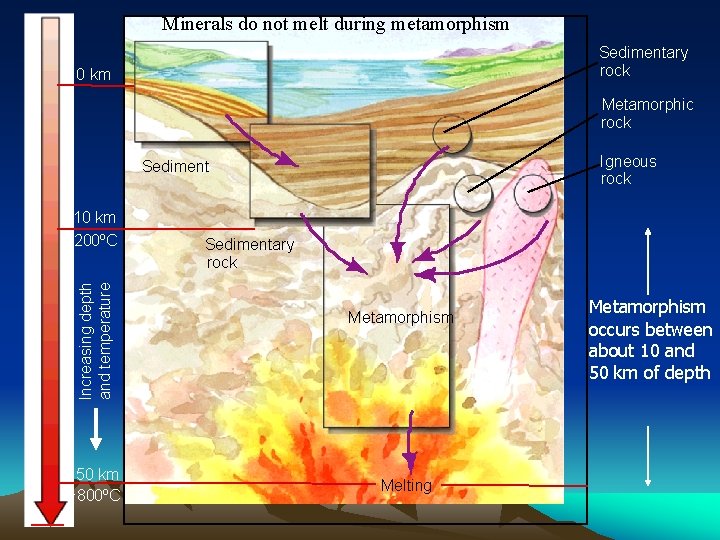
Minerals do not melt during metamorphism Sedimentary rock 0 km Metamorphic rock Igneous rock Sediment Increasing depth and temperature 10 km ~200ºC 50 km ~800ºC Sedimentary rock Metamorphism Melting Metamorphism occurs between about 10 and 50 km of depth
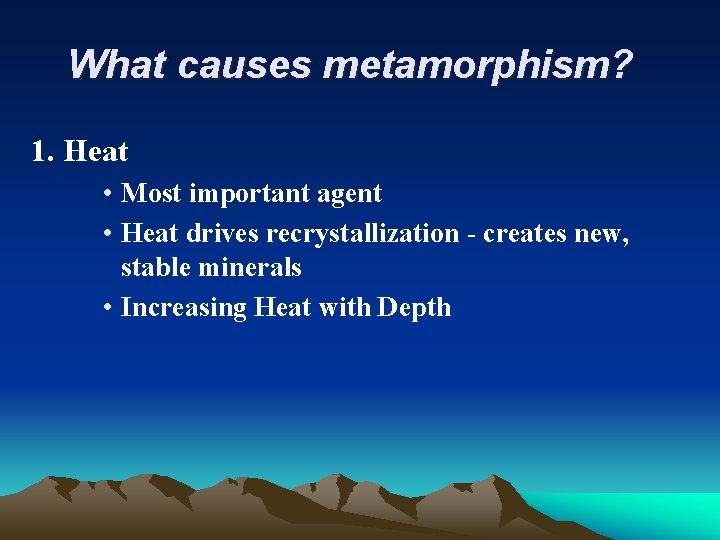
What causes metamorphism? 1. Heat • Most important agent • Heat drives recrystallization - creates new, stable minerals • Increasing Heat with Depth
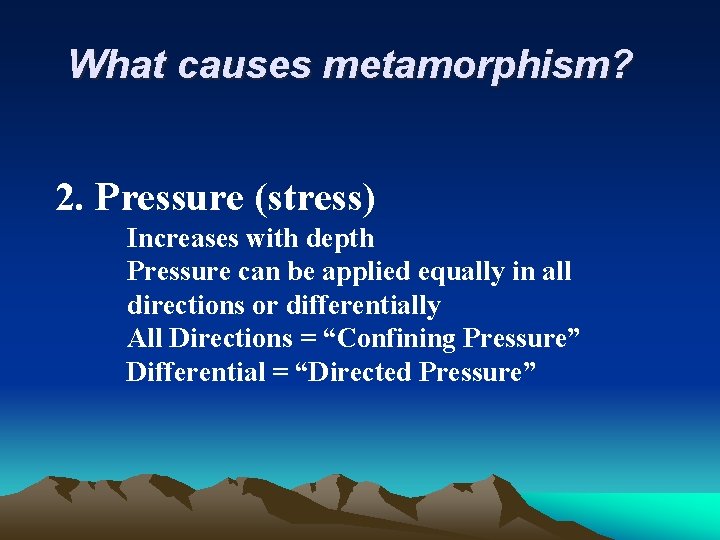
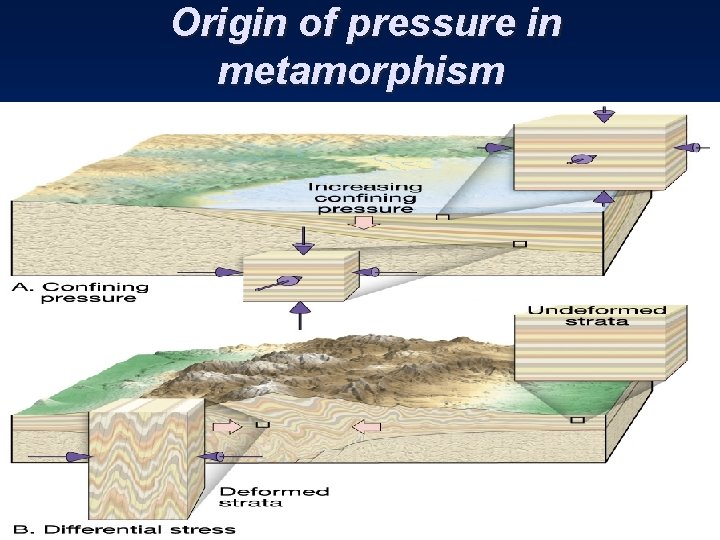
What causes metamorphism? 2. Pressure (stress) Increases with depth Pressure can be applied equally in all directions or differentially All Directions = “Confining Pressure” Differential = “Directed Pressure”
Origin of pressure in metamorphism (Burial) (Convergent Margin)
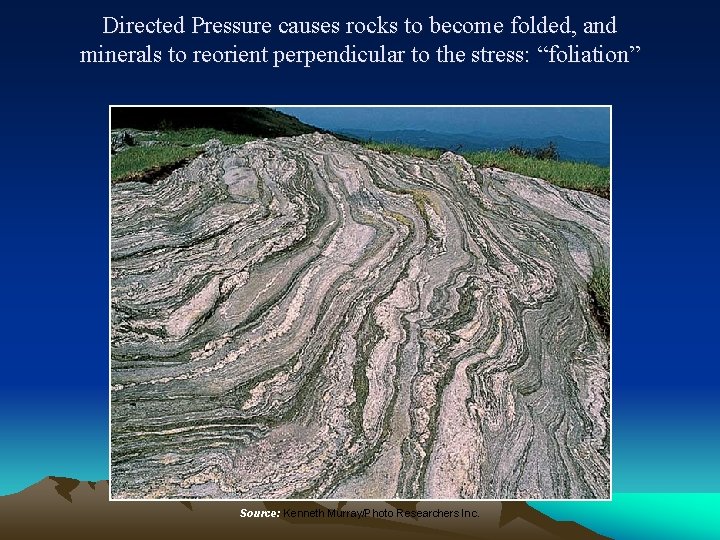
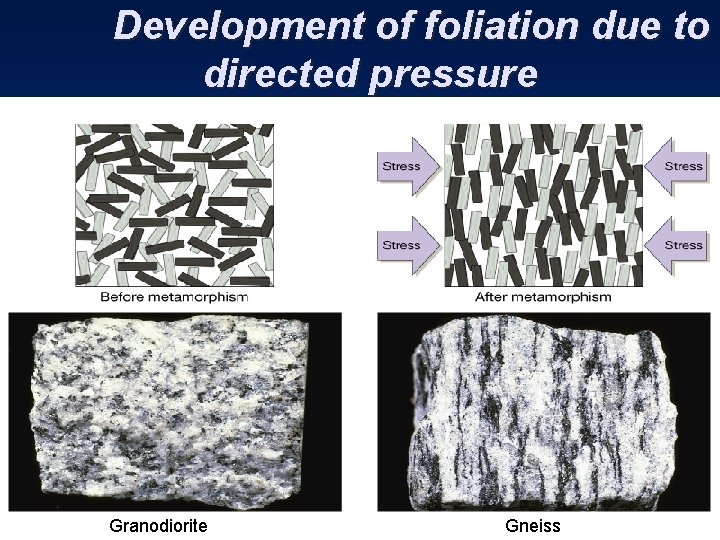
Directed Pressure causes rocks to become folded, and minerals to reorient perpendicular to the stress: “foliation” Source: Kenneth Murray/Photo Researchers Inc.
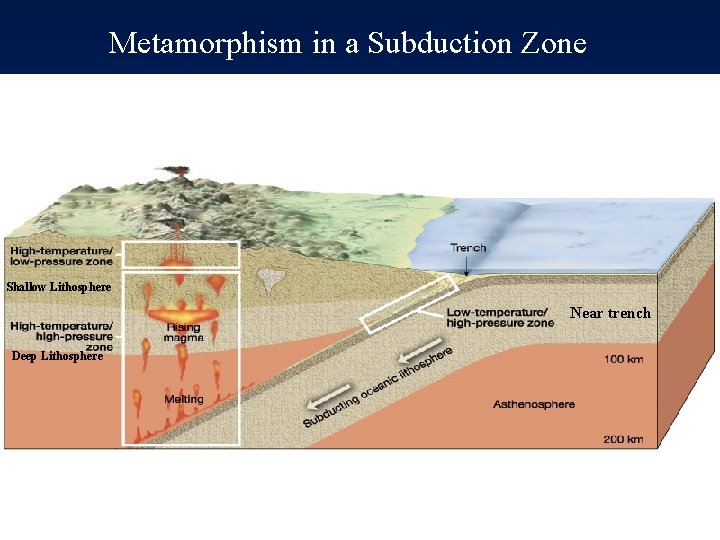
Main factors affecting metamorphism 3. Parent rock • Metamorphic rocks usually have the same chemical composition as the rock they were formed from. • Different minerals, but made of the same atoms. • Exception: water carries in new atoms and removes others. Important at MOR and in subduction zones.
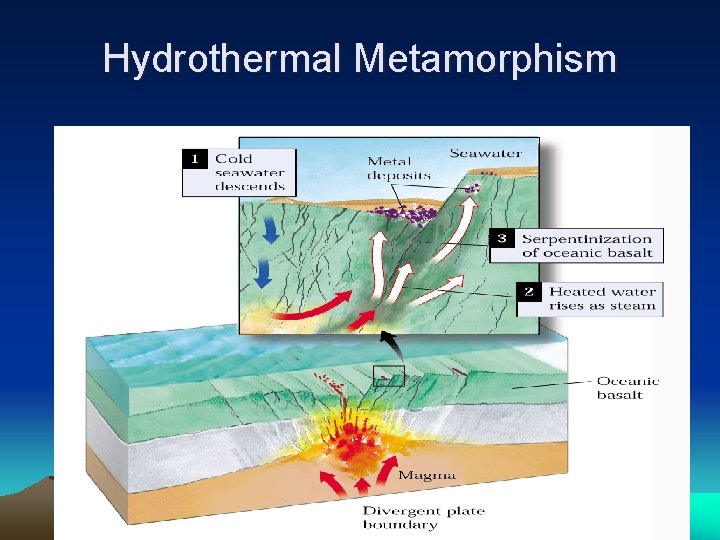
Metamorphic Settings • Three types of metamorphic settings: • Contact metamorphism – due heat from adjacent rocks • Hydrothermal metamorphism – chemical alterations from hot, ion-rich water • Regional metamorphism -- Occurs in the cores of mountain belts and subduction zones (Converging Margins). Makes great volumes of metamorphic rock. Includes: – Burial Metamorphism – e. g. Burial of sediments deeper than 10 km – non-foliated – Dynamothermal Metamorphism – Directed pressure in Plate Tectonic Processes - foliated
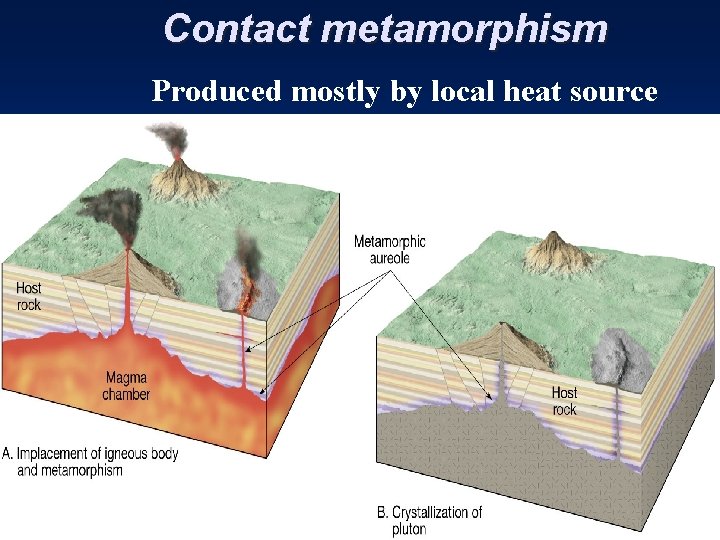
Contact metamorphism Produced mostly by local heat source
2. Hydrothermal Metamorphism • Due circulation of water near Magma • Important at mid-ocean ridge
Hydrothermal Metamorphism
Metamorphism in a Subduction Zone Shallow Lithosphere Near trench Deep Lithosphere
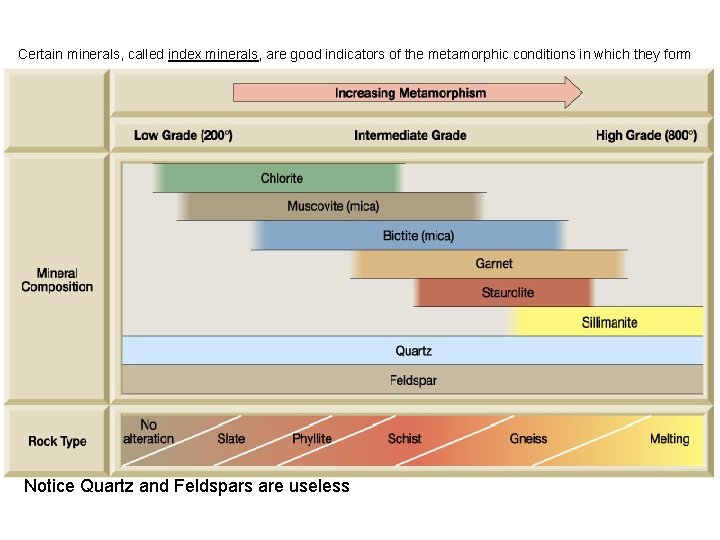
Metamorphic Grade and Index Minerals • Certain minerals, called index minerals, are good indicators of the metamorphic conditions in which they form
Certain minerals, called index minerals, are good indicators of the metamorphic conditions in which they form Notice Quartz and Feldspars are useless Note Quartz and Feldspar are not index minerals: Why?
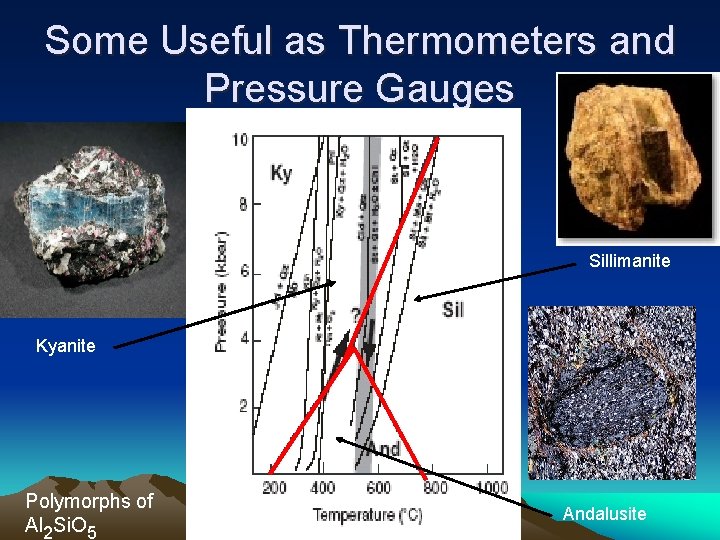
Some Useful as Thermometers and Pressure Gauges Sillimanite Kyanite Polymorphs of Al 2 Si. O 5 Andalusite
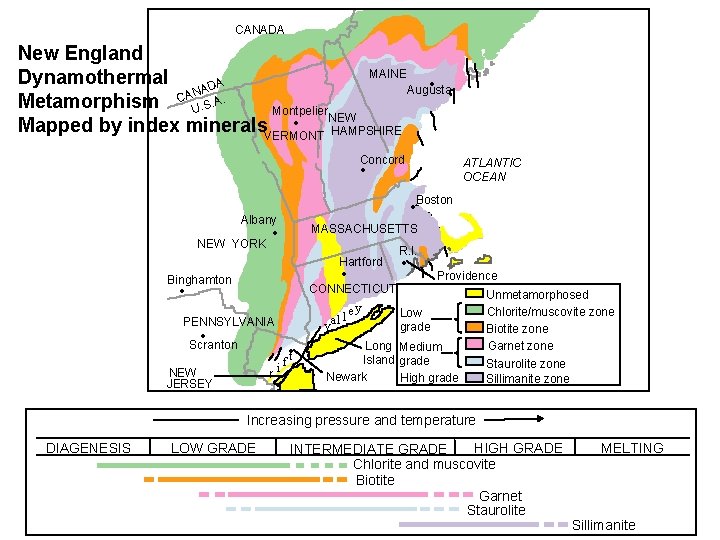
CANADA 7_21 New England MAINE Dynamothermal A D Augusta NA Metamorphism CAU. S. A. Montpelier Mapped by index minerals. VERMONT NEW HAMPSHIRE Concord Boston Albany NEW YORK MASSACHUSETTS Hartford Binghamton R. I. CONNECTICUT PENNSYLVANIA Scranton NEW JERSEY r i ATLANTIC OCEAN ft va l l ey Providence Low grade Long Medium Island grade Newark High grade Unmetamorphosed Chlorite/muscovite zone Biotite zone Garnet zone Staurolite zone Sillimanite zone Increasing pressure and temperature DIAGENESIS LOW GRADE HIGH GRADE INTERMEDIATE GRADE Chlorite and muscovite Biotite Garnet Staurolite MELTING Sillimanite
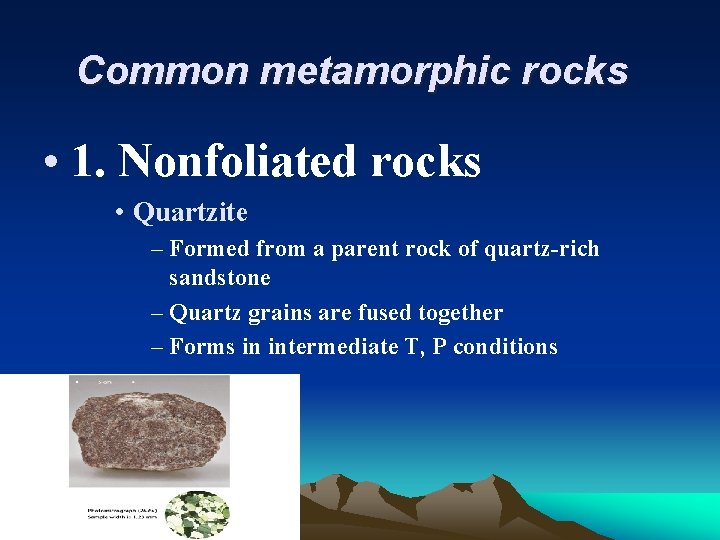
Common metamorphic rocks • 1. Nonfoliated rocks • Quartzite – Formed from a parent rock of quartz-rich sandstone – Quartz grains are fused together – Forms in intermediate T, P conditions
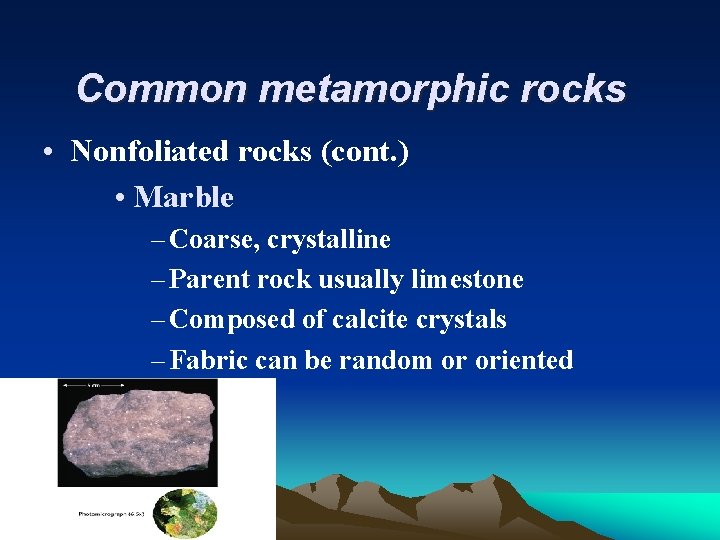
Common metamorphic rocks • Nonfoliated rocks (cont. ) • Marble – Coarse, crystalline – Parent rock usually limestone – Composed of calcite crystals – Fabric can be random or oriented
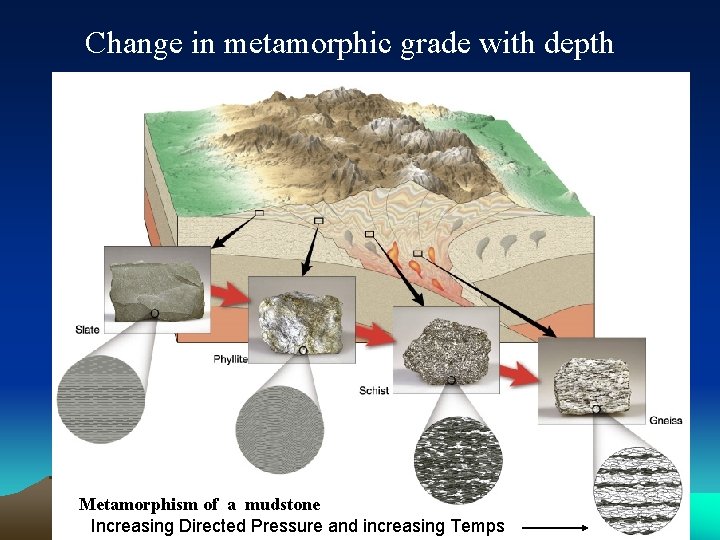
Change in metamorphic grade with depth Metamorphism of a mudstone Increasing Directed Pressure and increasing Temps
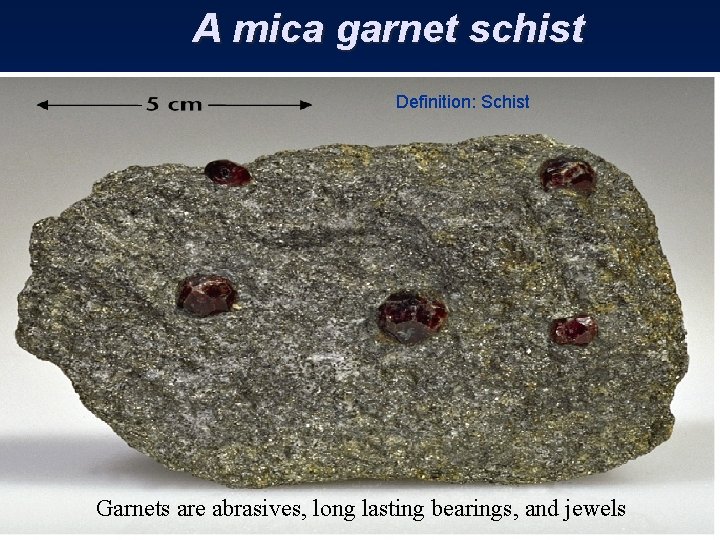
A mica garnet schist Definition: Schist Garnets are abrasives, long lasting bearings, and jewels
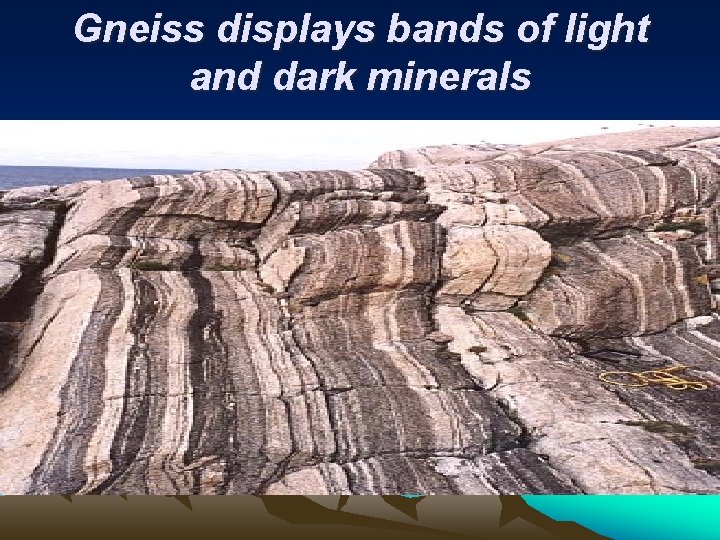
Gneiss displays bands of light and dark minerals
Development of foliation due to directed pressure Granodiorite Gneiss
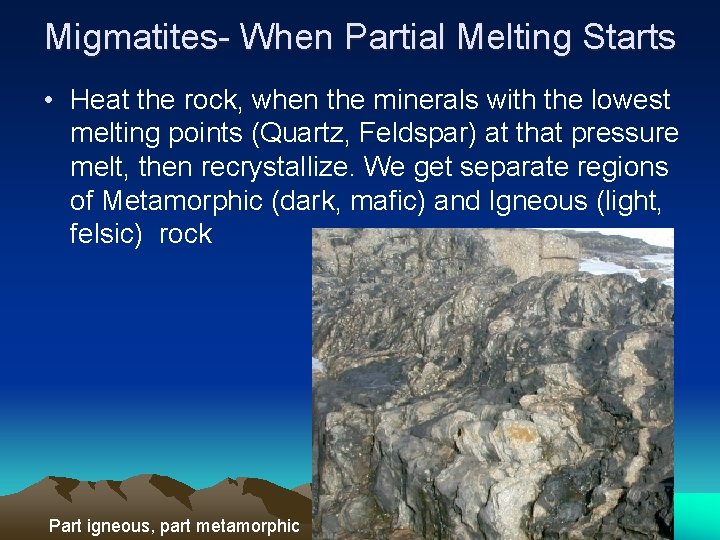
Migmatites- When Partial Melting Starts • Heat the rock, when the minerals with the lowest melting points (Quartz, Feldspar) at that pressure melt, then recrystallize. We get separate regions of Metamorphic (dark, mafic) and Igneous (light, felsic) rock Part igneous, part metamorphic