include set include string std setstd string 2




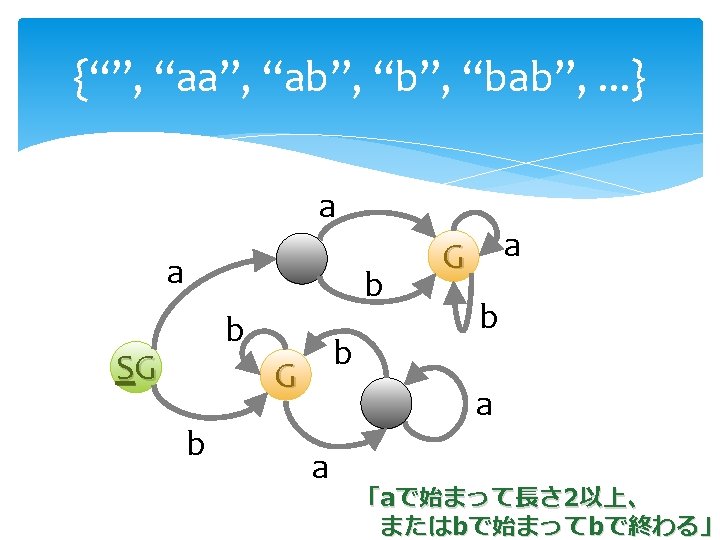
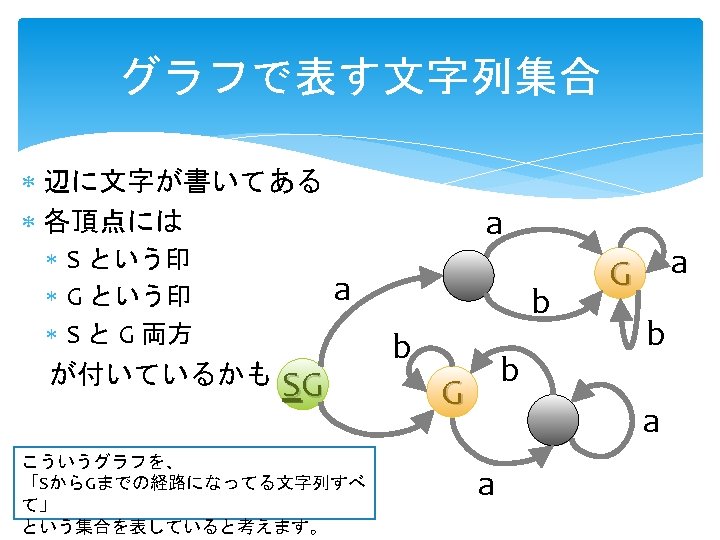
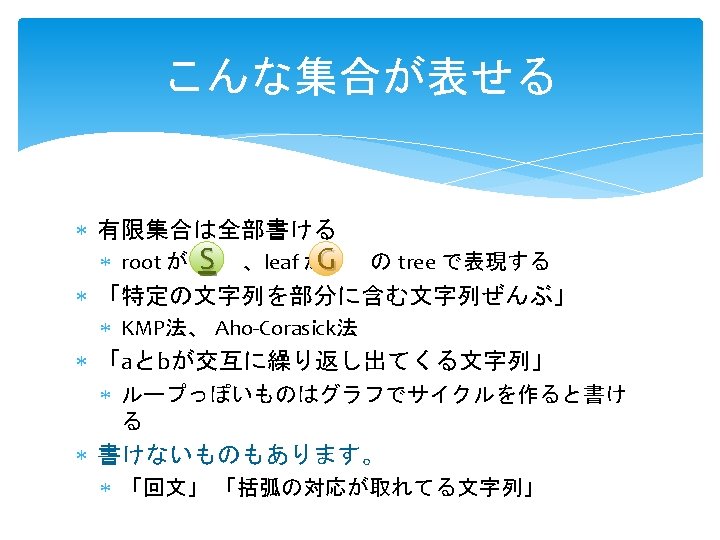

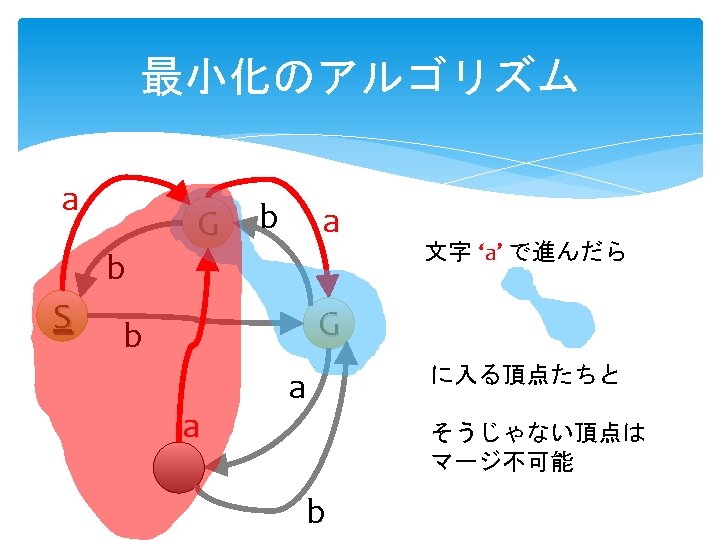
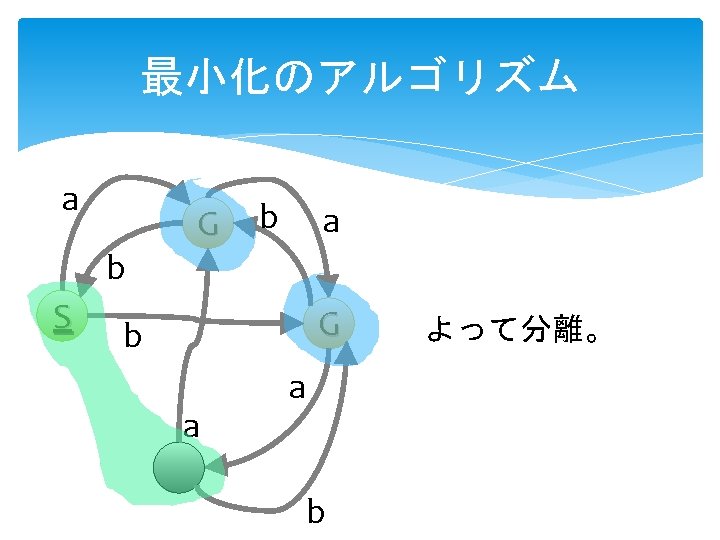
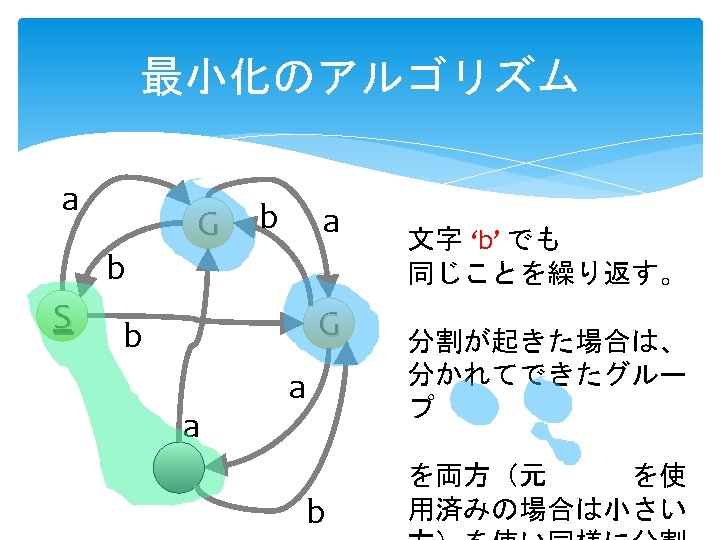
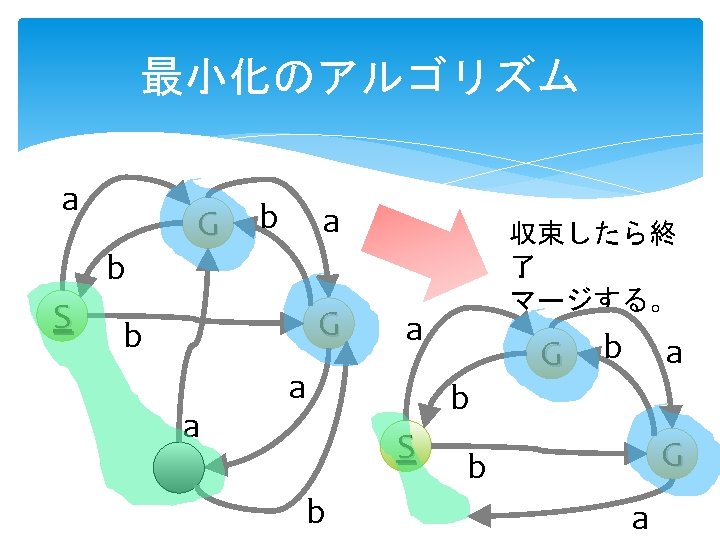








- Slides: 98
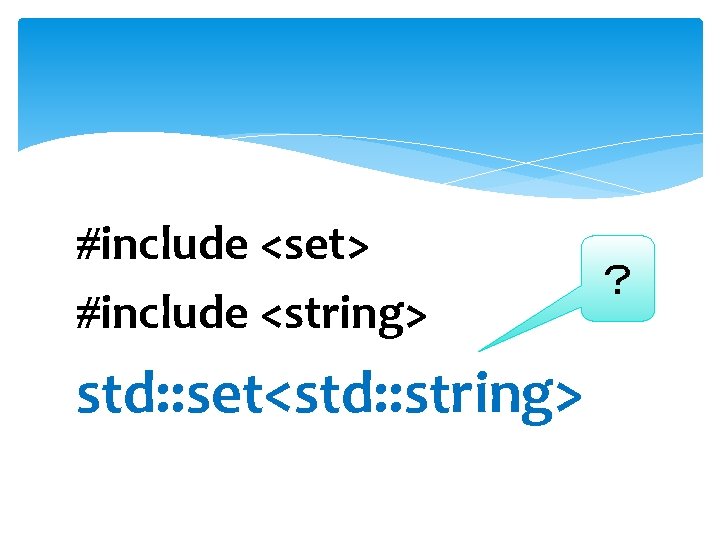
#include <set> #include <string> std: : set<std: : string> ?
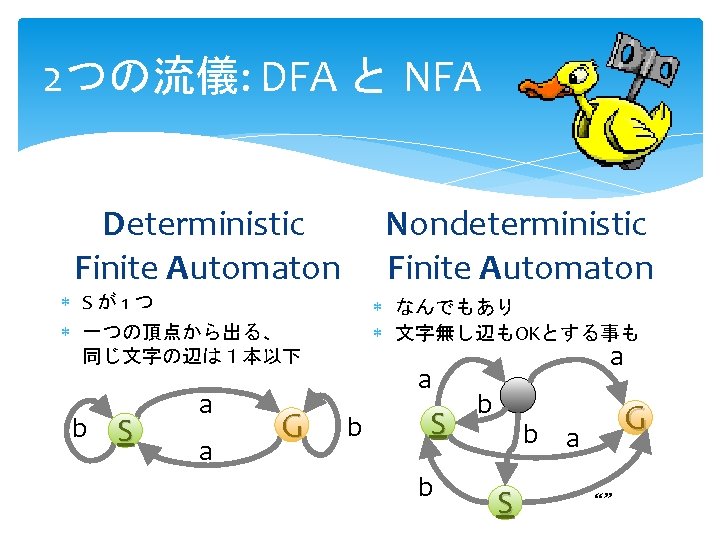
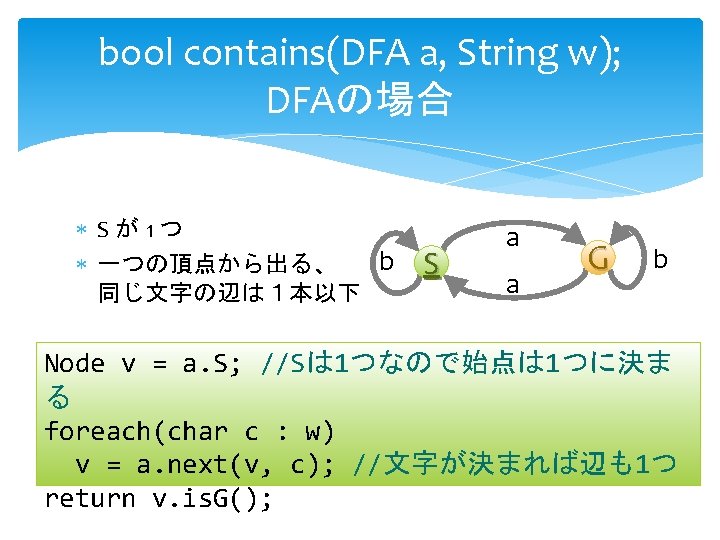
2つの流儀: DFA と NFA Nondeterministic Finite Automaton Deterministic Finite Automaton Sが1つ 一つの頂点から出る、 同じ文字の辺は1本以下 b S a a G なんでもあり 文字無し辺もOKとする事も a b S b a b G b a S “”
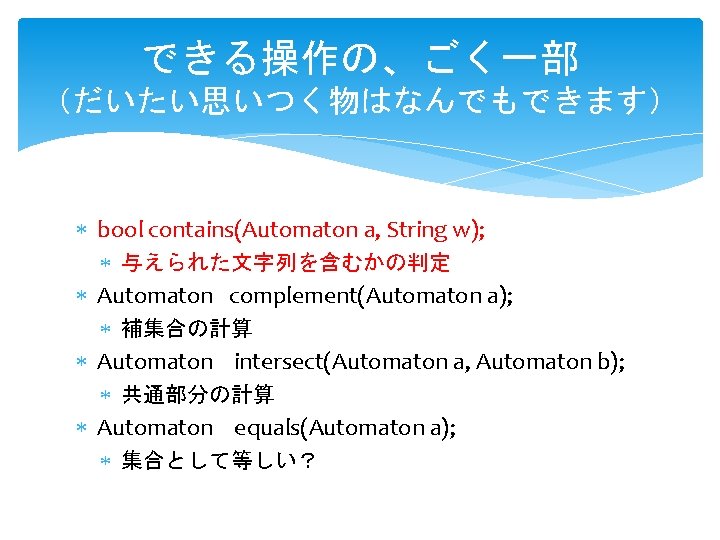
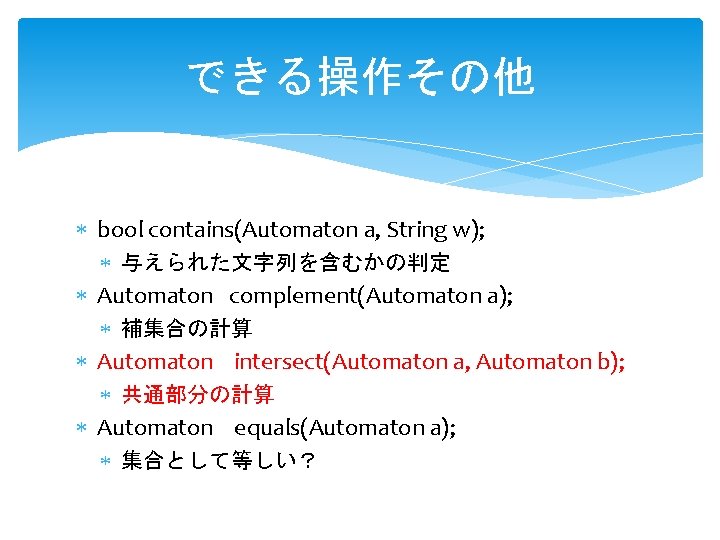
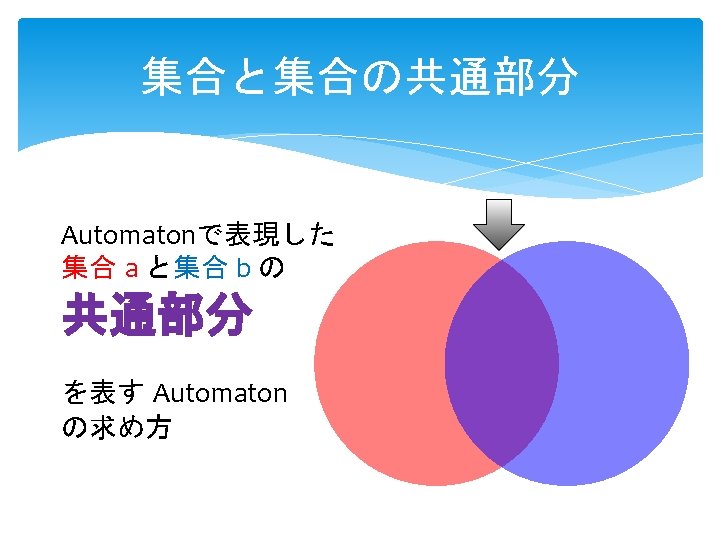
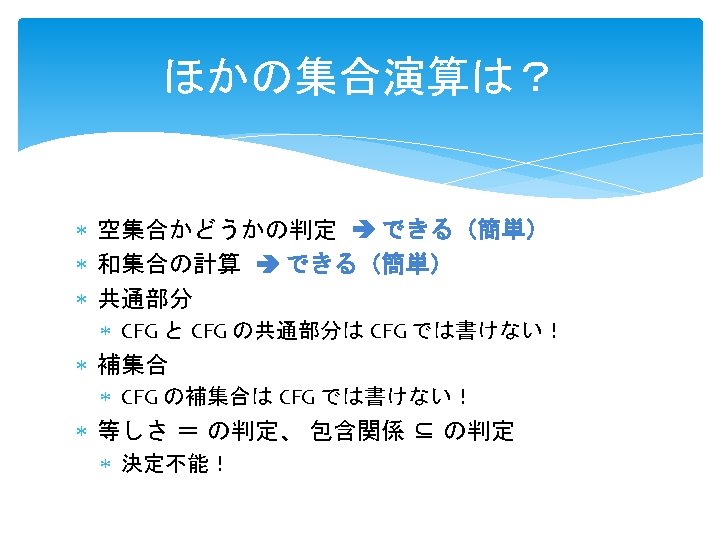
できる操作の、ごく一部 (だいたい思いつく物はなんでもできます) bool contains(Automaton a, String w); 与えられた文字列を含むかの判定 Automaton complement(Automaton a); 補集合の計算 Automaton intersect(Automaton a, Automaton b); 共通部分の計算 Automaton equals(Automaton a); 集合として等しい?
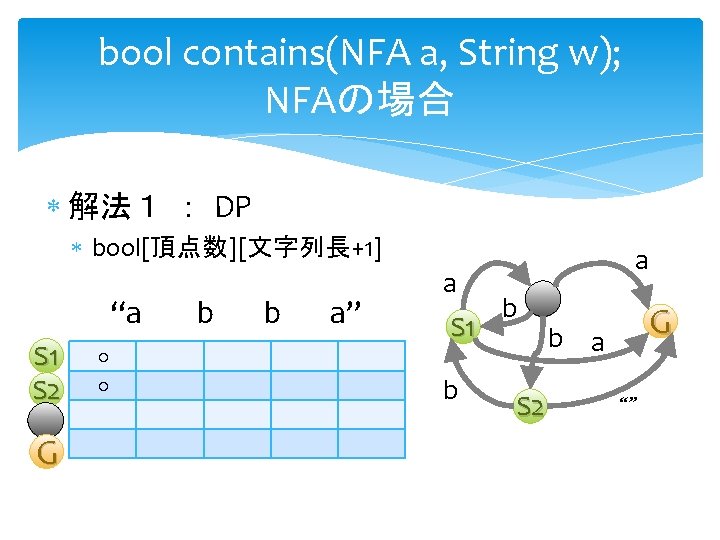
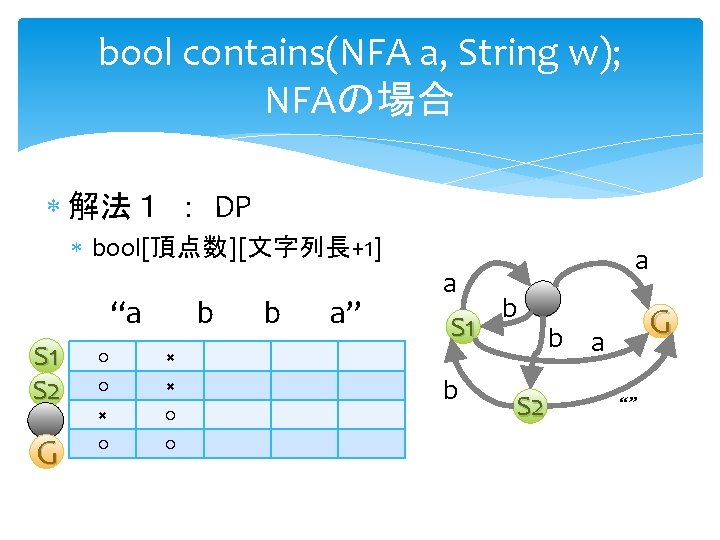
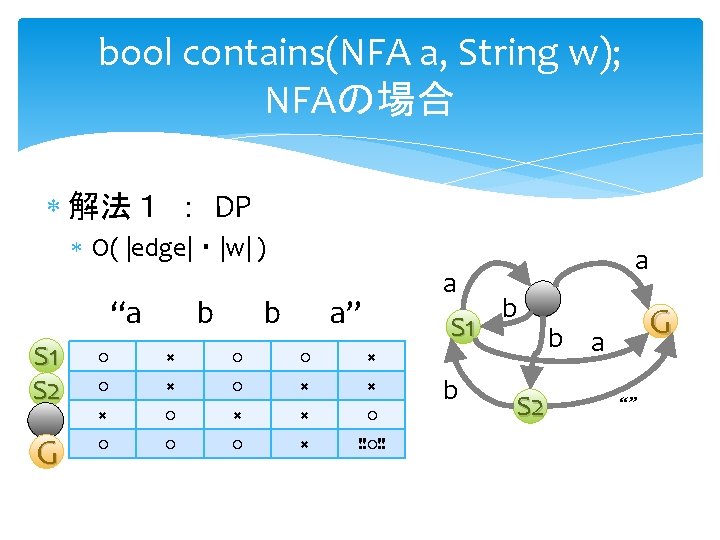
bool contains(NFA a, String w); NFAの場合 解法1 : DP bool[頂点数][文字列長+1] “a S 1 S 2 G b b a” a S 1 a b ○ ○ b S 2 G b a “”
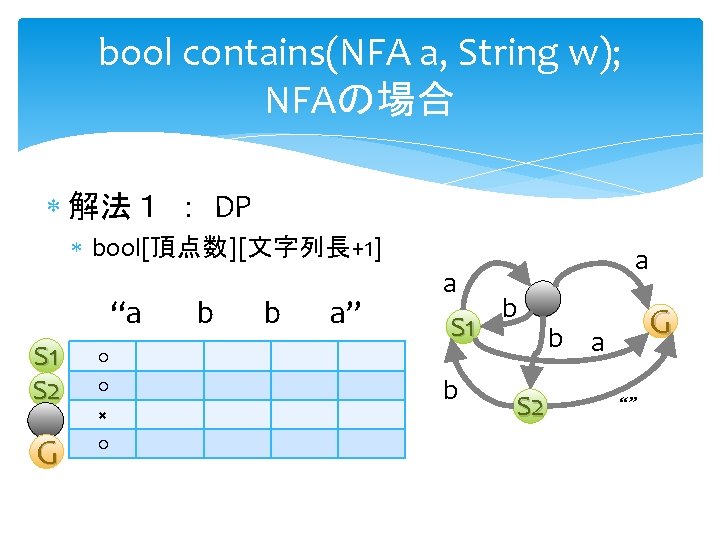
bool contains(NFA a, String w); NFAの場合 解法1 : DP bool[頂点数][文字列長+1] “a S 1 S 2 ○ G ○ ○ × b b a” a S 1 b a b S 2 G b a “”
bool contains(NFA a, String w); NFAの場合 解法1 : DP bool[頂点数][文字列長+1] “a b S 1 S 2 ○ × × ○ G ○ ○ b a” a S 1 b a b S 2 G b a “”
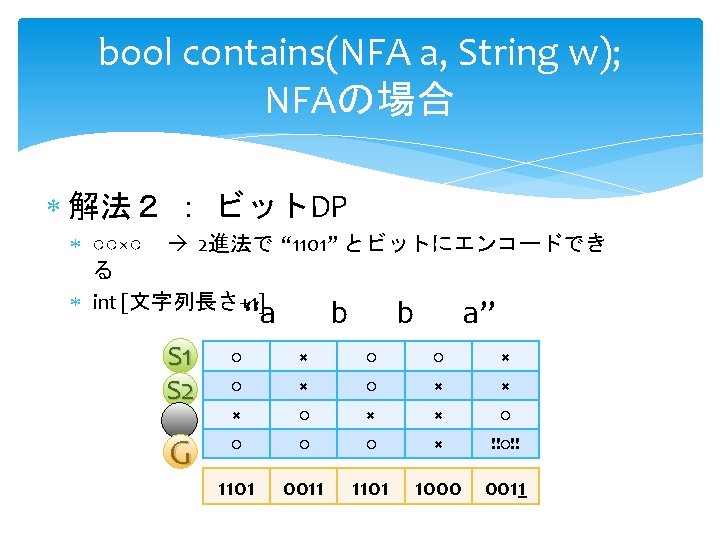
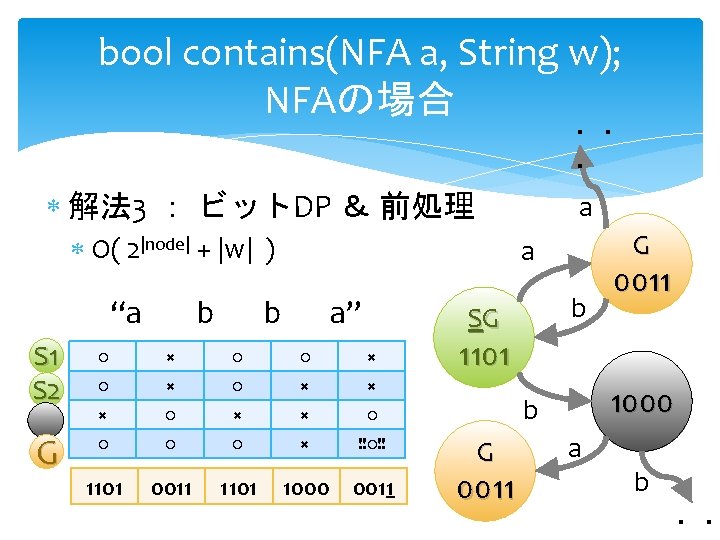
bool contains(NFA a, String w); NFAの場合 ・・ ・ a 解法 3 : ビットDP & 前処理 O( 2|node| + |w| ) “a b G a b a” b SG S 1 S 2 ○ × ○ × ○ × × ○ G ○ ○ ○ × !!○!! 1101 0011 1101 1000 b G 0011 a b ・・
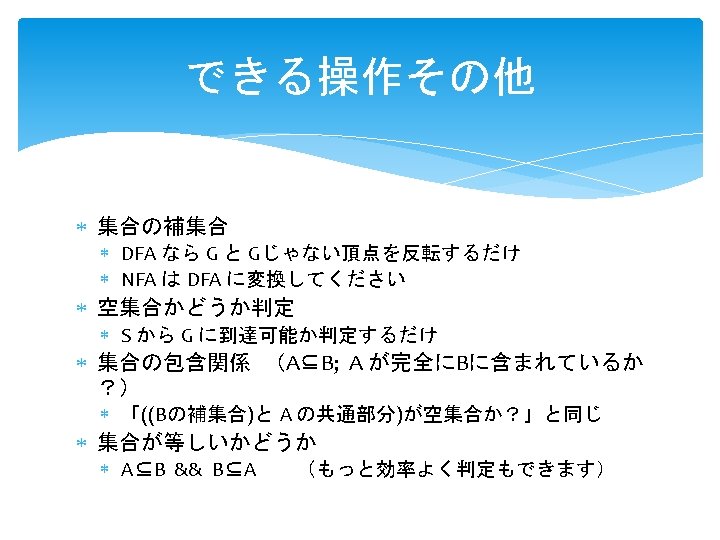
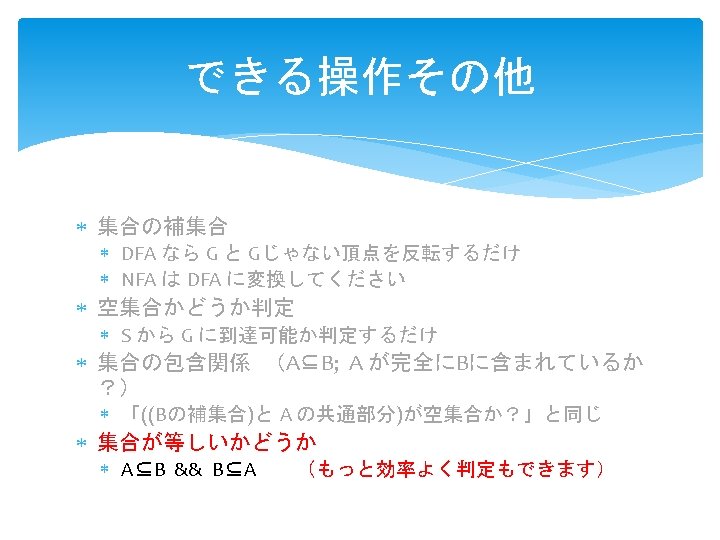
できる操作その他 bool contains(Automaton a, String w); 与えられた文字列を含むかの判定 Automaton complement(Automaton a); 補集合の計算 Automaton intersect(Automaton a, Automaton b); 共通部分の計算 Automaton equals(Automaton a); 集合として等しい?
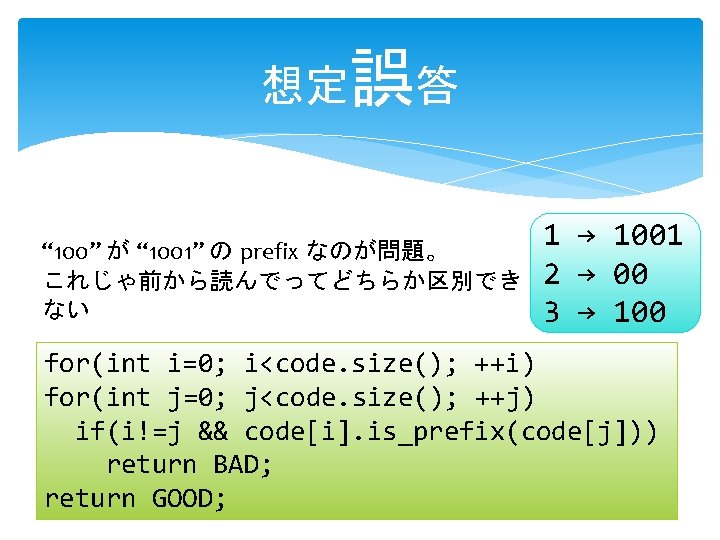
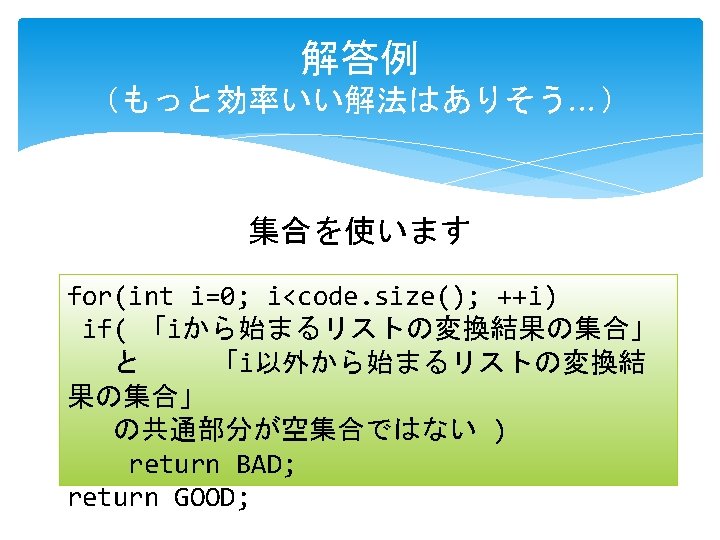
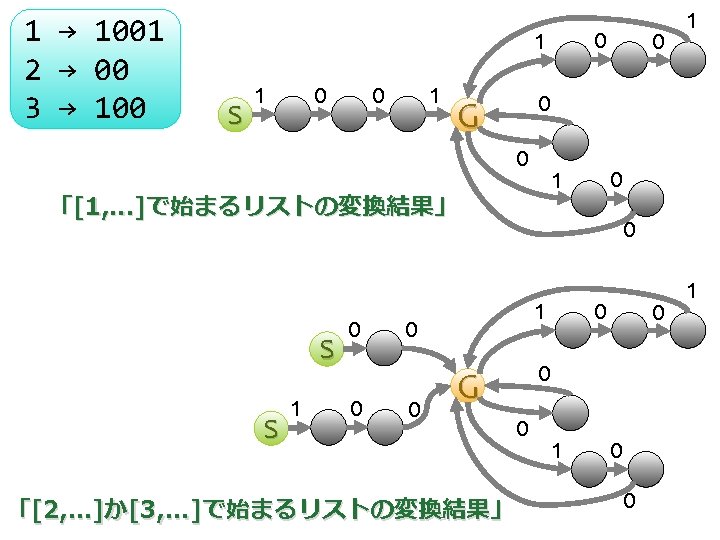
想定誤答 “ 100” が “ 1001” の prefix なのが問題。 これじゃ前から読んでってどちらか区別でき ない 1 → 1001 2 → 00 3 → 100 for(int i=0; i<code. size(); ++i) for(int j=0; j<code. size(); ++j) if(i!=j && code[i]. is_prefix(code[j])) return BAD; return GOOD;
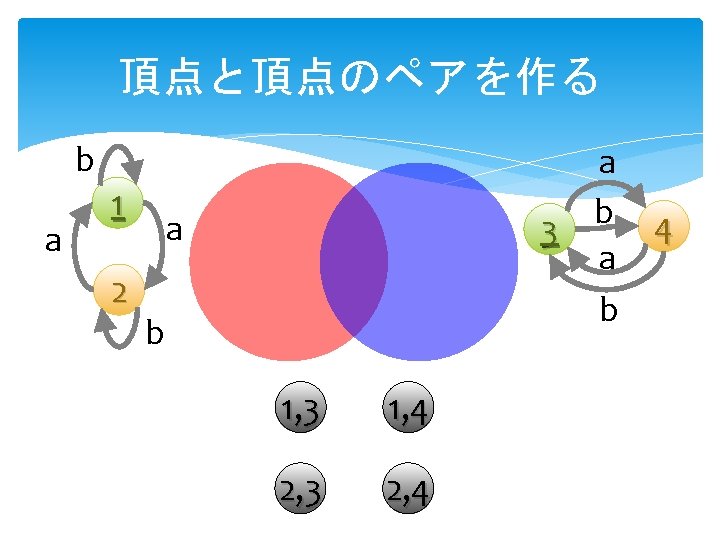
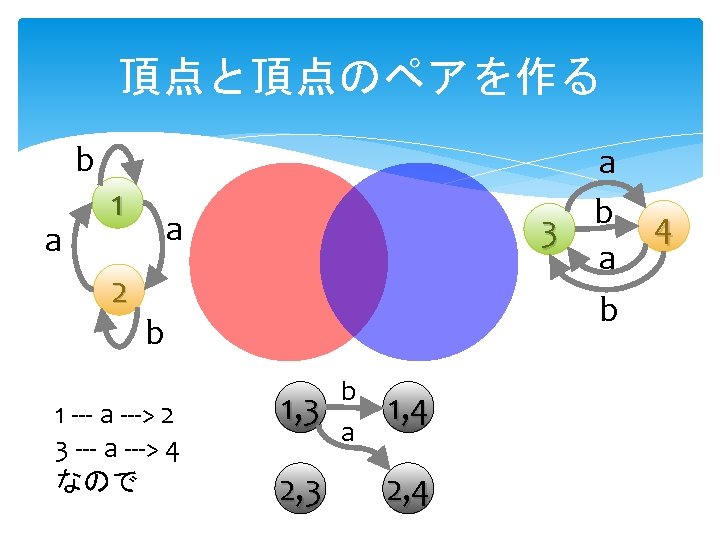
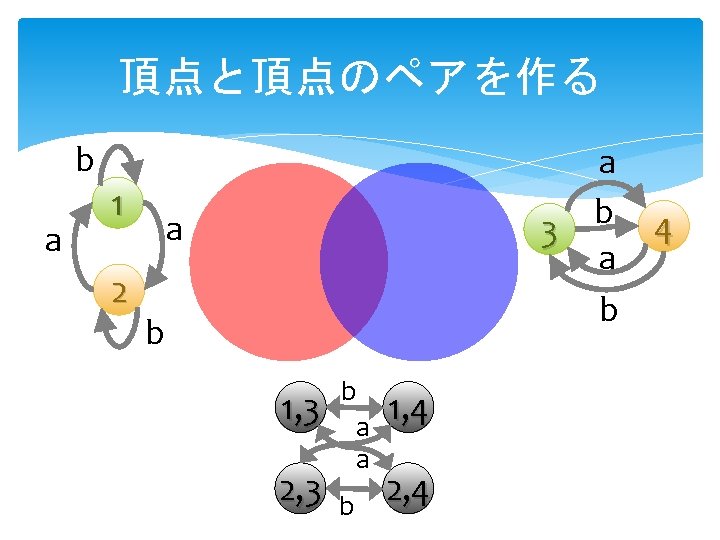
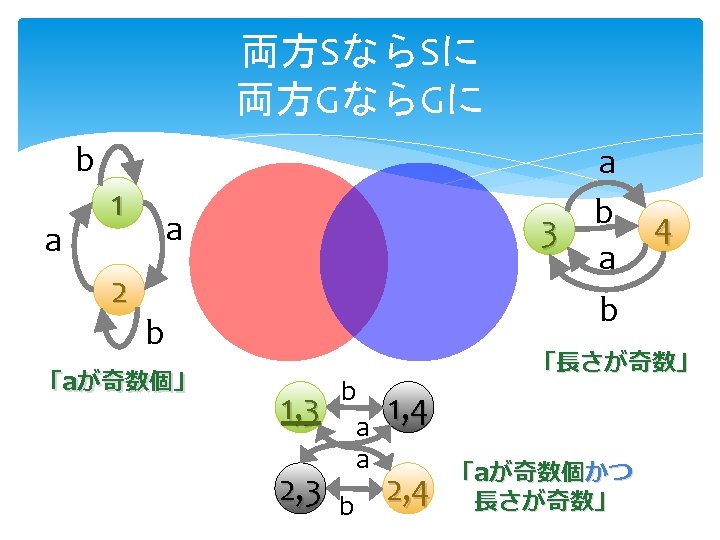
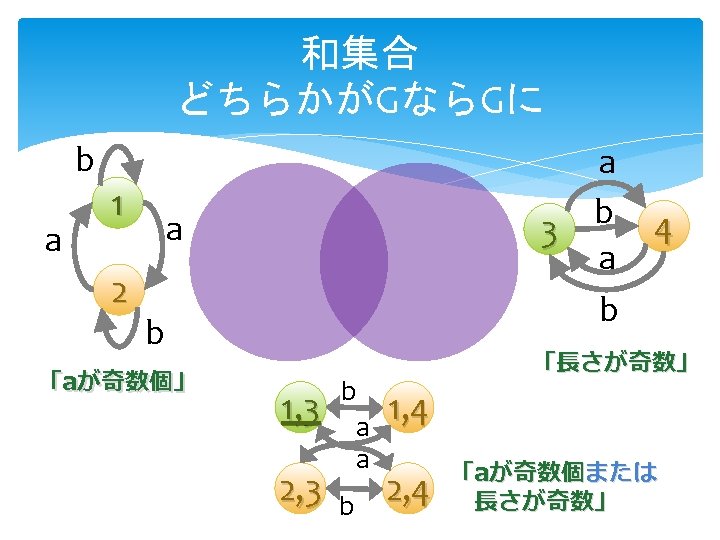
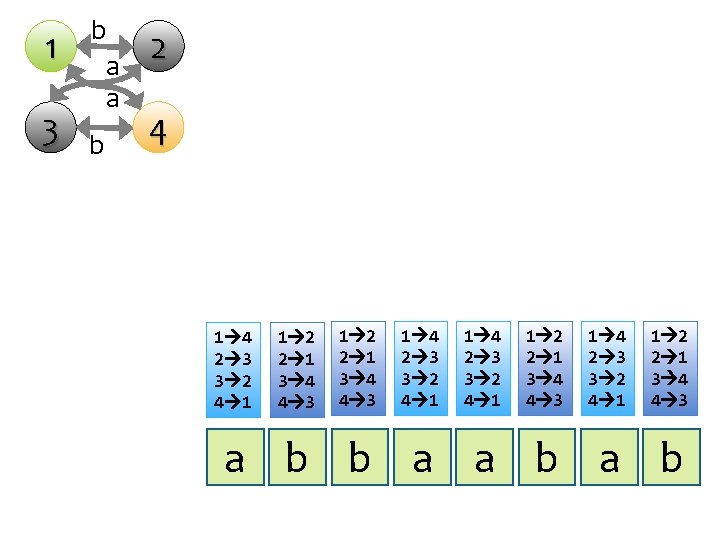
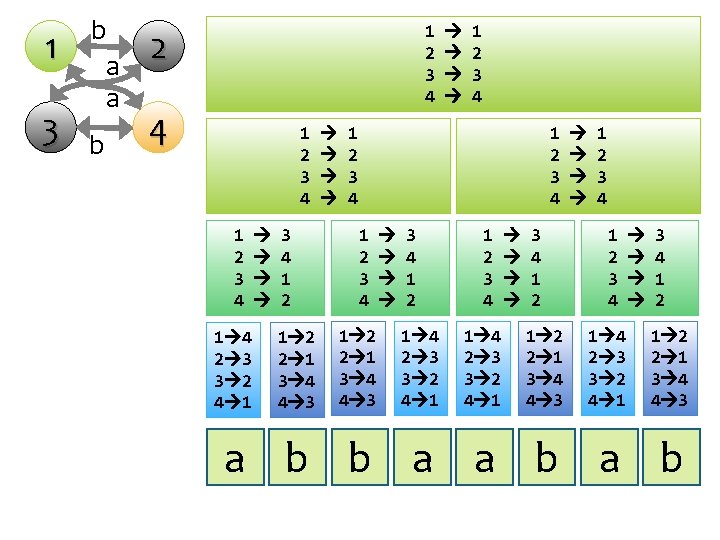
1 3 b a a b 2 4 1 4 2 3 3 2 4 1 1 2 2 1 3 4 4 3 1 4 2 3 3 2 4 1 1 2 2 1 3 4 4 3 a b b a a b
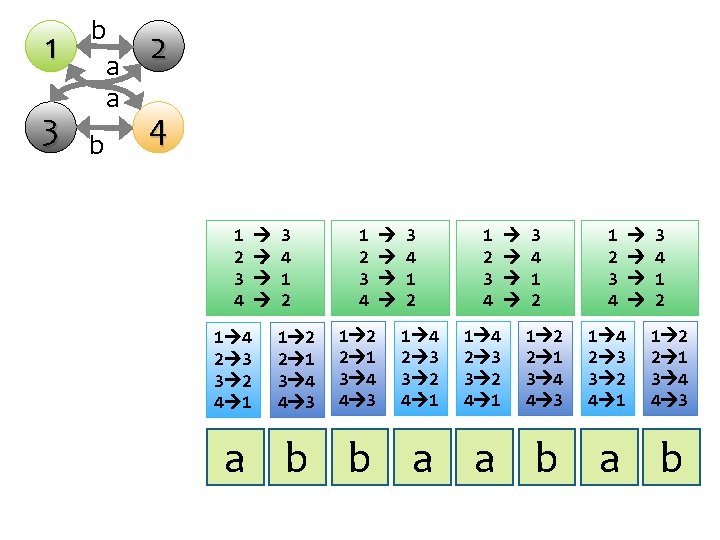
1 3 b a a b 2 4 1 2 3 4 1 4 2 3 3 2 4 1 3 4 1 2 2 1 3 4 4 3 1 2 3 4 1 2 2 1 3 4 4 3 3 4 1 2 1 4 2 3 3 2 4 1 1 2 3 4 1 4 2 3 3 2 4 1 3 4 1 2 1 2 2 1 3 4 4 3 a b b a a b
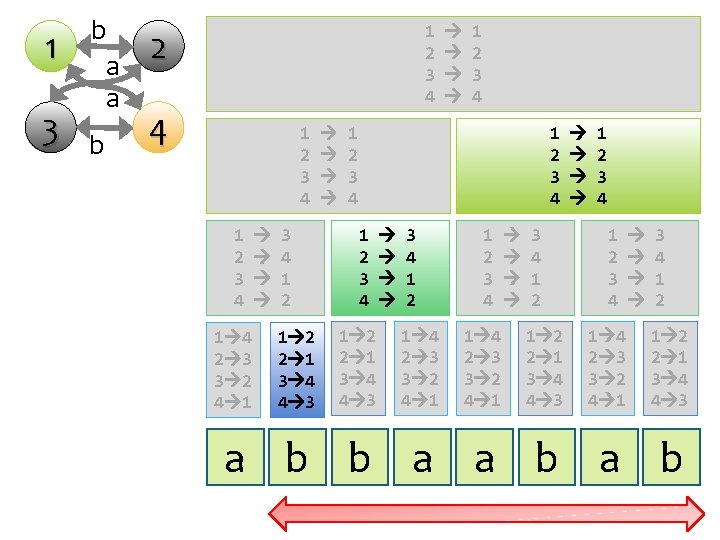
1 3 b a a b 1 2 3 4 2 4 1 2 3 4 1 4 2 3 3 2 4 1 3 4 1 2 2 1 3 4 4 3 1 2 3 4 1 2 2 1 3 4 4 3 3 4 1 2 1 4 2 3 3 2 4 1 1 2 3 4 1 4 2 3 3 2 4 1 3 4 1 2 2 1 3 4 4 3 a b b a a b
1 3 b a a b 1 2 3 4 2 4 1 2 3 4 1 4 2 3 3 2 4 1 3 4 1 2 2 1 3 4 4 3 1 2 3 4 1 2 2 1 3 4 4 3 3 4 1 2 1 4 2 3 3 2 4 1 1 2 3 4 1 4 2 3 3 2 4 1 3 4 1 2 2 1 3 4 4 3 a b b a a b
練習問題 AOJ 2017 AOJ 1169 Topcoder SRM 378 Div 1 Hard Topcoder TCO’ 09 Semifinal Medium
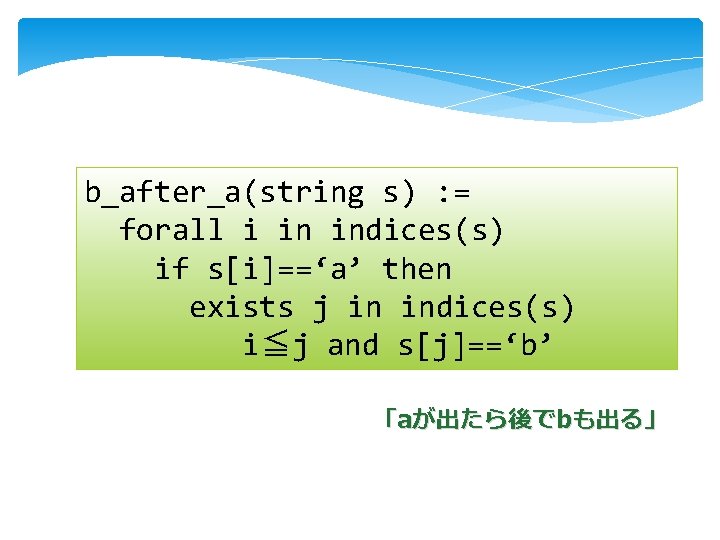
b_after_a(string s) : = forall i in indices(s) if s[i]==‘a’ then exists j in indices(s) i≦j and s[j]==‘b’ 「aが出たら後でbも出る」
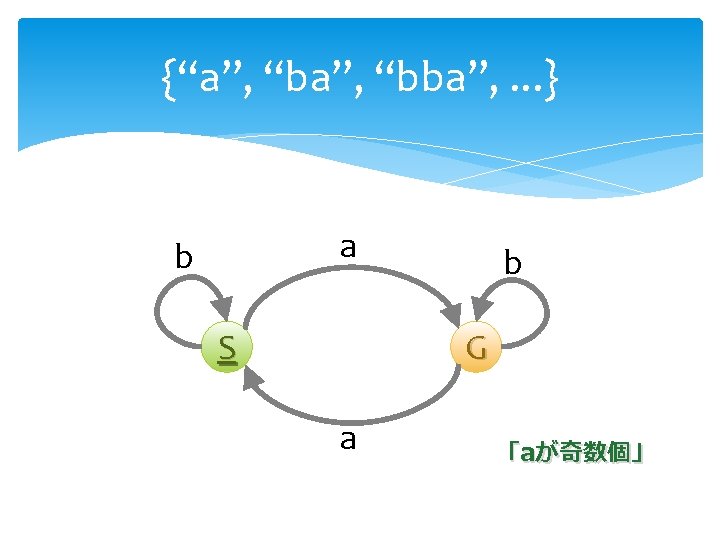
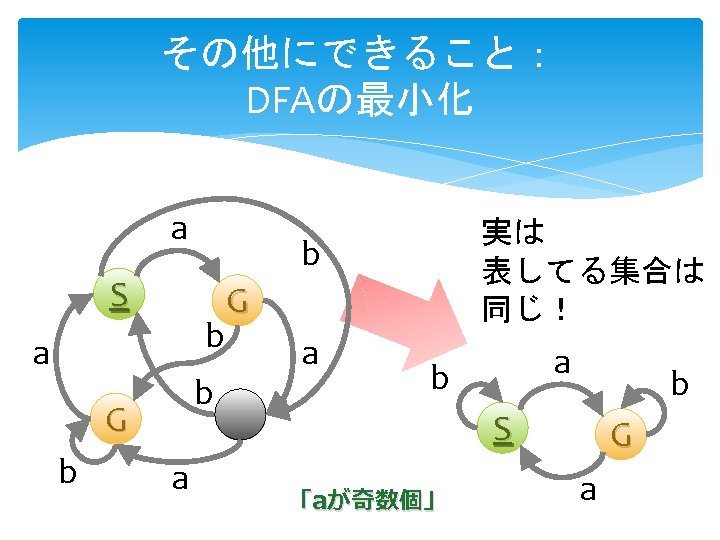
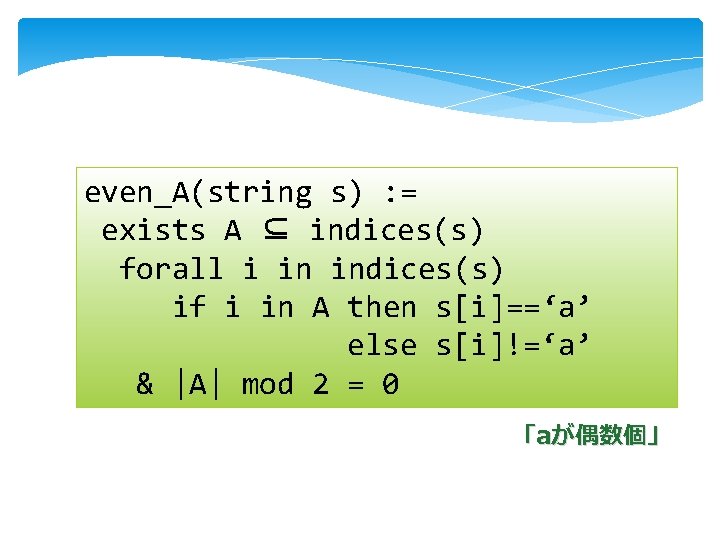
even_A(string s) : = exists A ⊆ indices(s) forall i in indices(s) if i in A then s[i]==‘a’ else s[i]!=‘a’ & |A| mod 2 = 0 「aが偶数個」
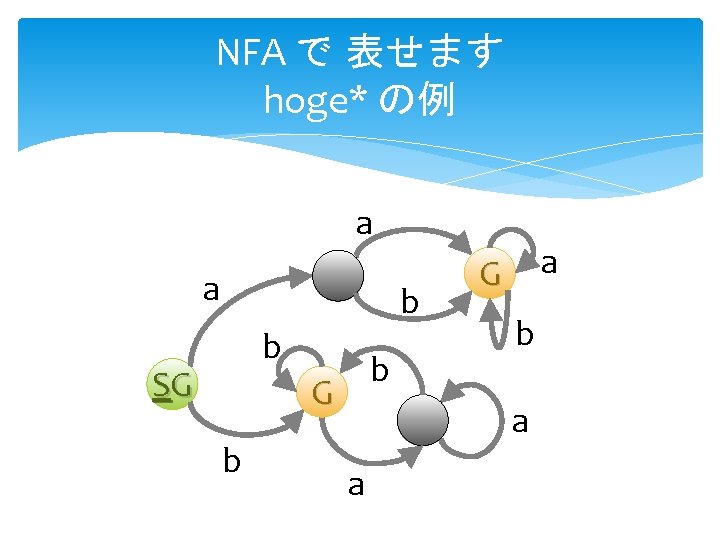
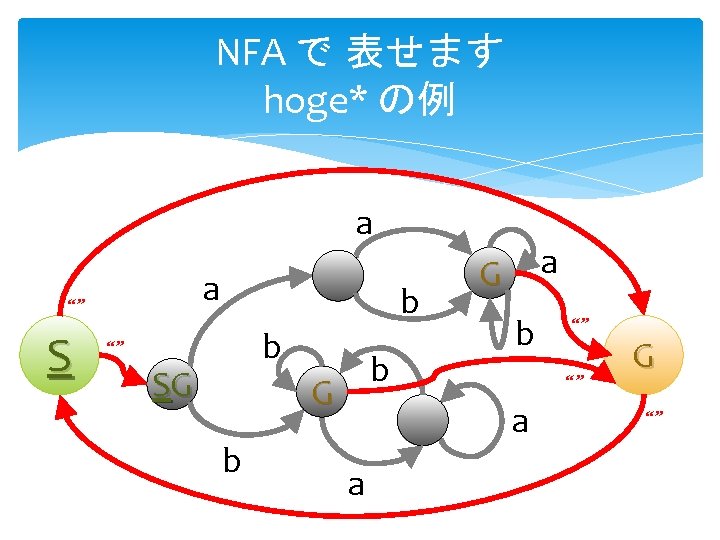
NFA で 表せます hoge* の例 a a b b SG b a a
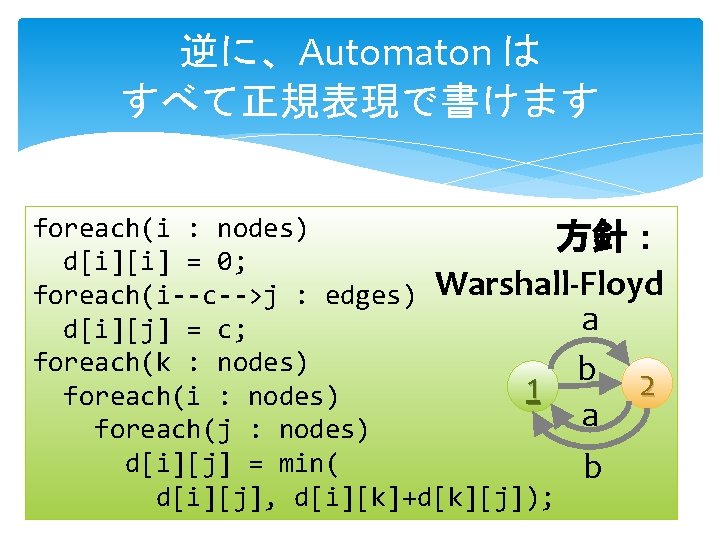
逆に、Automaton は すべて正規表現で書けます foreach(i : nodes) 方針: d[i][i] = 0; foreach(i--c-->j : edges) Warshall-Floyd a d[i][j] = c; foreach(k : nodes) b 2 1 foreach(i : nodes) a foreach(j : nodes) d[i][j] = min( b d[i][j], d[i][k]+d[k][j]);
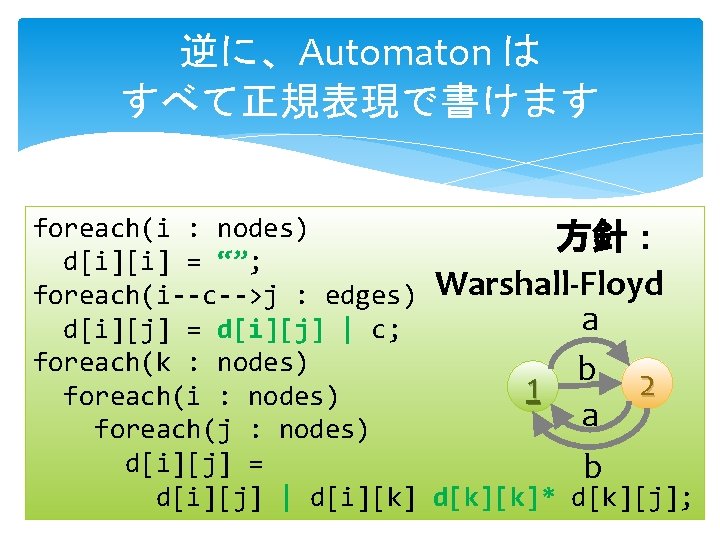
逆に、Automaton は すべて正規表現で書けます foreach(i : nodes) 方針: d[i][i] = “”; foreach(i--c-->j : edges) Warshall-Floyd a d[i][j] = d[i][j] | c; foreach(k : nodes) b 2 1 foreach(i : nodes) a foreach(j : nodes) d[i][j] = b d[i][j] | d[i][k] d[k][k]* d[k][j];
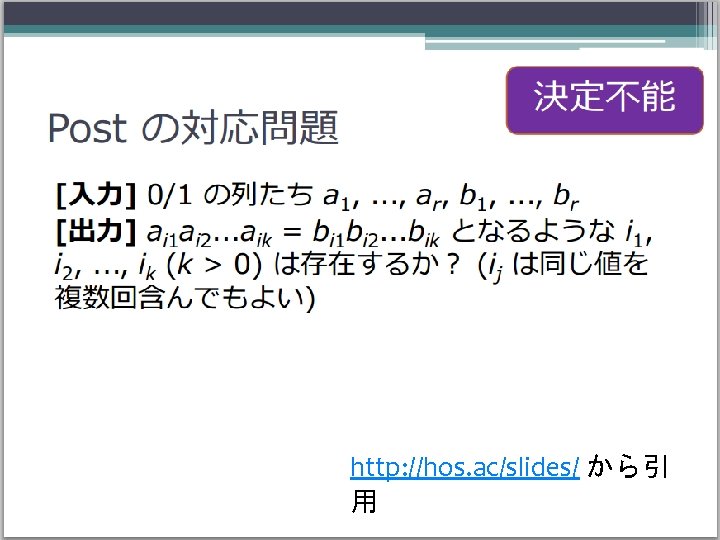
http: //hos. ac/slides/ から引 用
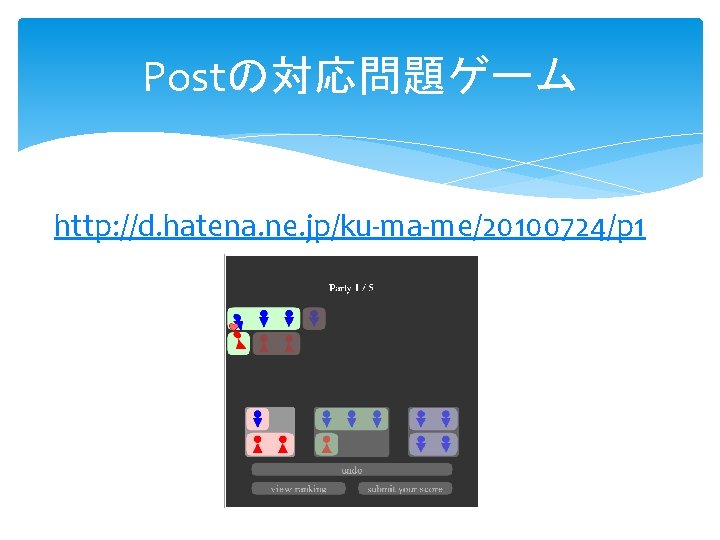
Postの対応問題ゲーム http: //d. hatena. ne. jp/ku-ma-me/20100724/p 1
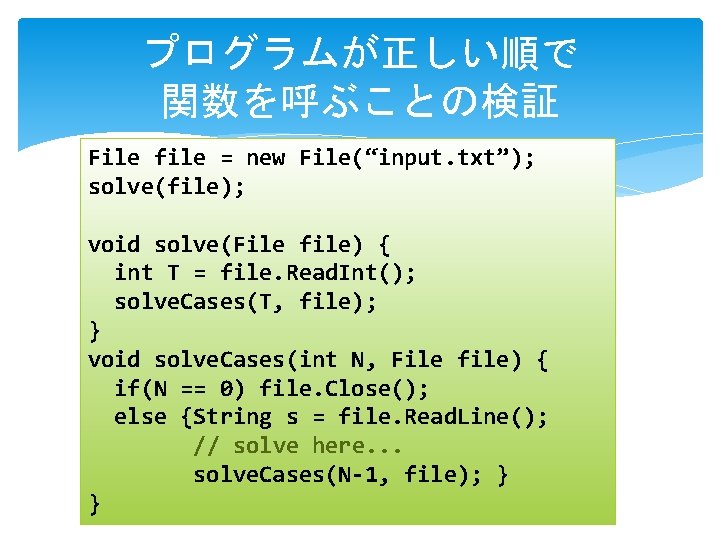
プログラムが正しい順で 関数を呼ぶことの検証 File file = new File(“input. txt”); solve(file); void solve(File file) { int T = file. Read. Int(); solve. Cases(T, file); } void solve. Cases(int N, File file) { if(N == 0) file. Close(); else {String s = file. Read. Line(); // solve here. . . solve. Cases(N-1, file); } }
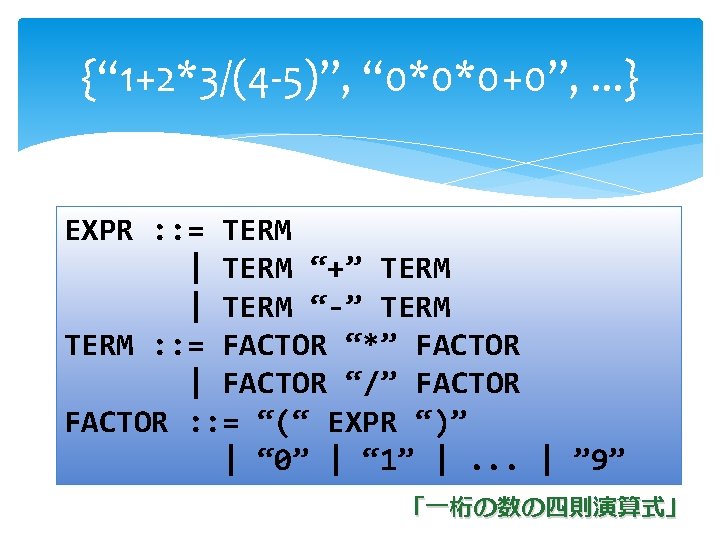
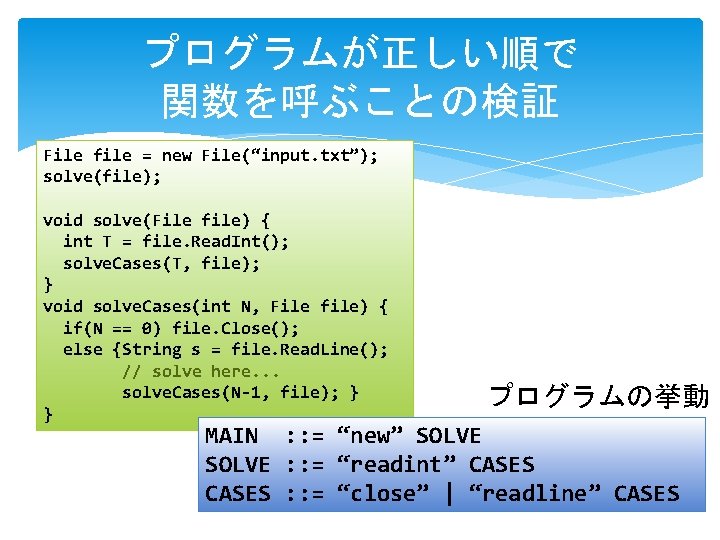
プログラムが正しい順で 関数を呼ぶことの検証 File file = new File(“input. txt”); solve(file); void solve(File file) { int T = file. Read. Int(); solve. Cases(T, file); } void solve. Cases(int N, File file) { if(N == 0) file. Close(); else {String s = file. Read. Line(); // solve here. . . solve. Cases(N-1, file); } } プログラムの挙動 MAIN : : = “new” SOLVE : : = “readint” CASES : : = “close” | “readline” CASES
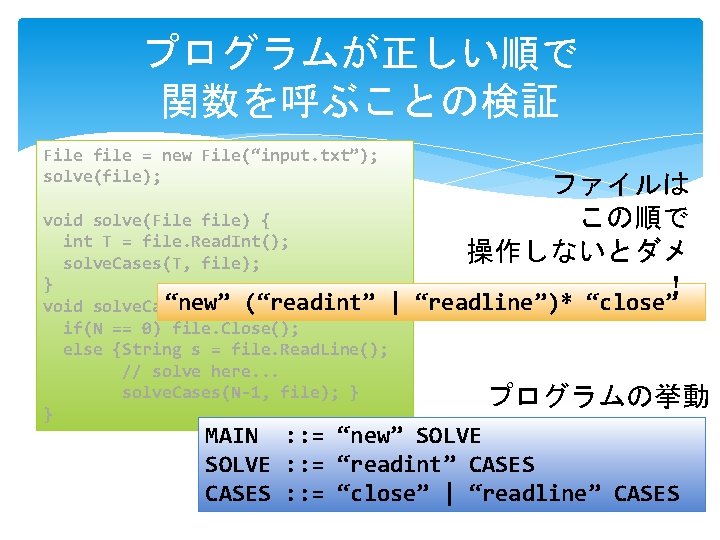
プログラムが正しい順で 関数を呼ぶことの検証 File file = new File(“input. txt”); solve(file); void solve(File file) { int T = file. Read. Int(); solve. Cases(T, file); } “new” N, (“readint” void solve. Cases(int File file) {| if(N == 0) file. Close(); else {String s = file. Read. Line(); // solve here. . . solve. Cases(N-1, file); } } ファイルは この順で 操作しないとダメ ! “readline”)* “close” プログラムの挙動 MAIN : : = “new” SOLVE : : = “readint” CASES : : = “close” | “readline” CASES
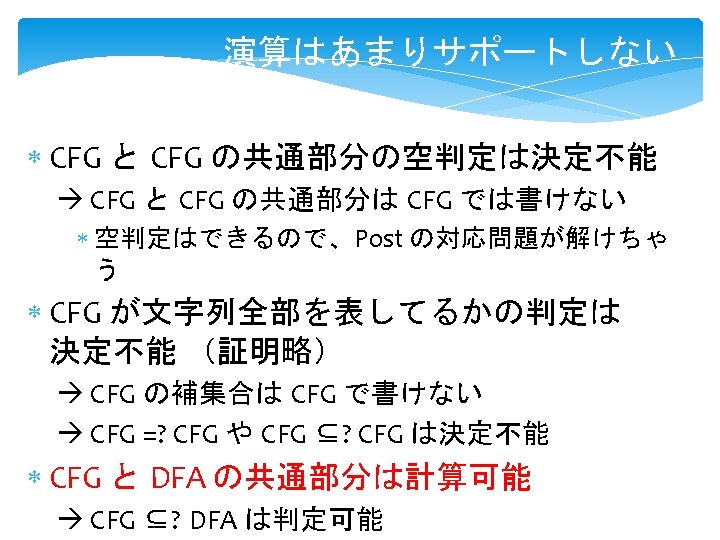
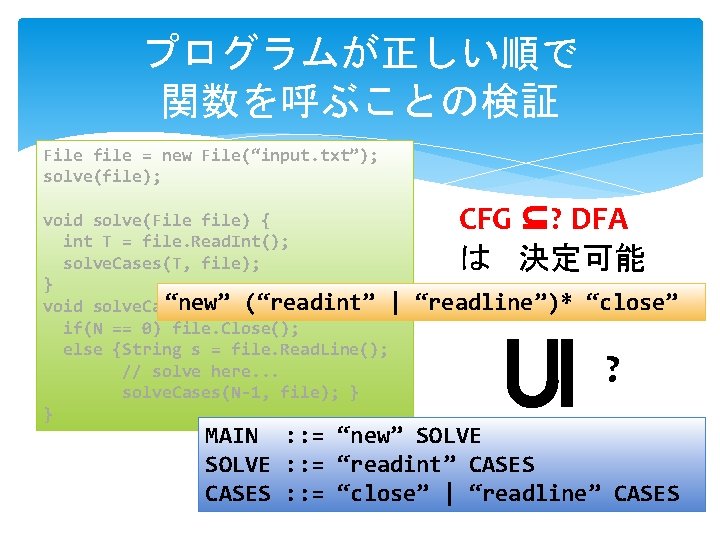
プログラムが正しい順で 関数を呼ぶことの検証 File file = new File(“input. txt”); solve(file); CFG ⊆? DFA は 決定可能 “readline”)* “close” ⊆ void solve(File file) { int T = file. Read. Int(); solve. Cases(T, file); } “new” N, (“readint” void solve. Cases(int File file) {| if(N == 0) file. Close(); else {String s = file. Read. Line(); // solve here. . . solve. Cases(N-1, file); } } ? MAIN : : = “new” SOLVE : : = “readint” CASES : : = “close” | “readline” CASES