
Expanding STD Prevention Opportunities Mark Thrun MD Associate

- Slides: 22
Expanding STD Prevention Opportunities Mark Thrun, MD Associate Professor of Medicine University of Colorado School of Medicine Director, HIV/STD Prevention and Control Director, Denver Prevention Training Center Denver Public Health
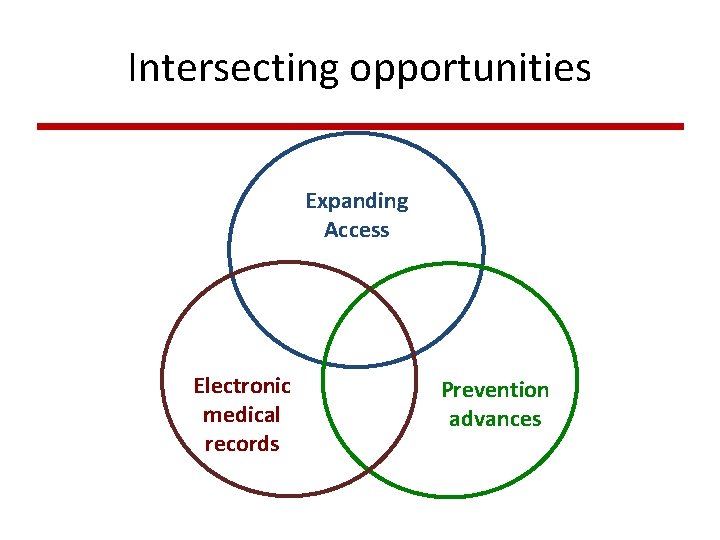
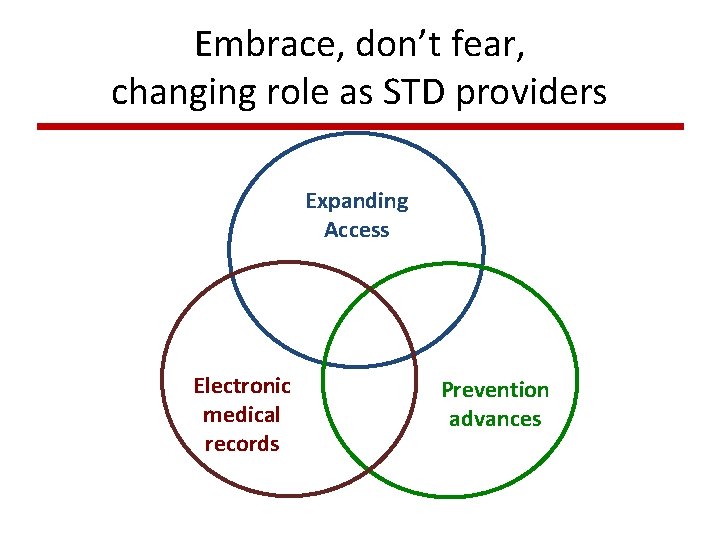
Intersecting opportunities Expanding Access Electronic medical records Prevention advances
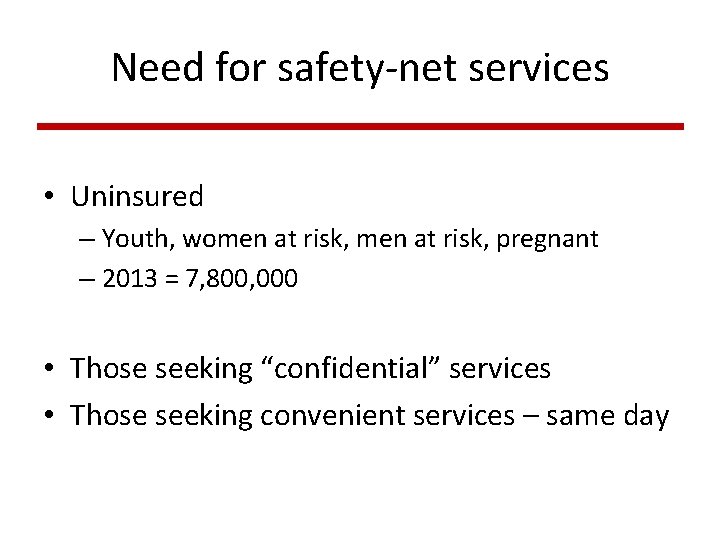
Need for safety-net services • Uninsured – Youth, women at risk, pregnant – 2013 = 7, 800, 000 • Those seeking “confidential” services • Those seeking convenient services – same day
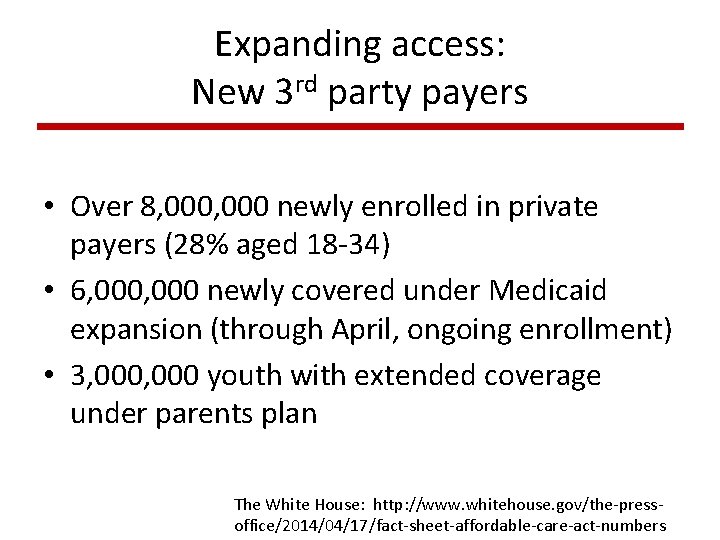
Expanding access: New 3 rd party payers • Over 8, 000 newly enrolled in private payers (28% aged 18 -34) • 6, 000 newly covered under Medicaid expansion (through April, ongoing enrollment) • 3, 000 youth with extended coverage under parents plan The White House: http: //www. whitehouse. gov/the-pressoffice/2014/04/17/fact-sheet-affordable-care-act-numbers
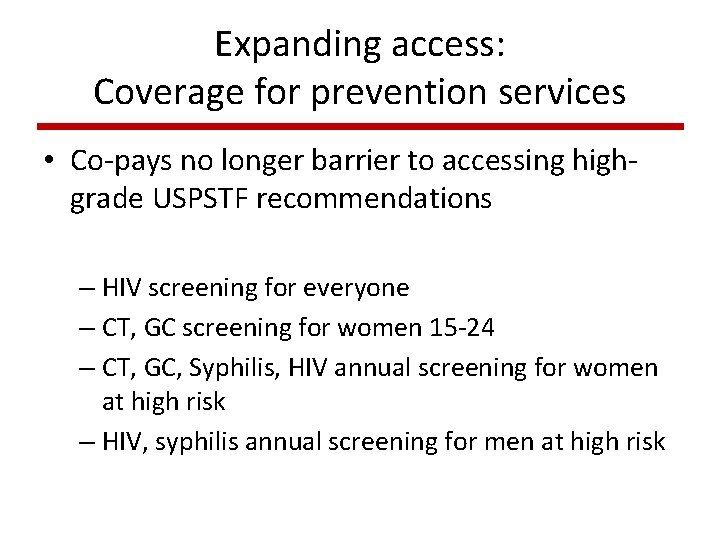
Expanding access: Coverage for prevention services • Co-pays no longer barrier to accessing highgrade USPSTF recommendations – HIV screening for everyone – CT, GC screening for women 15 -24 – CT, GC, Syphilis, HIV annual screening for women at high risk – HIV, syphilis annual screening for men at high risk
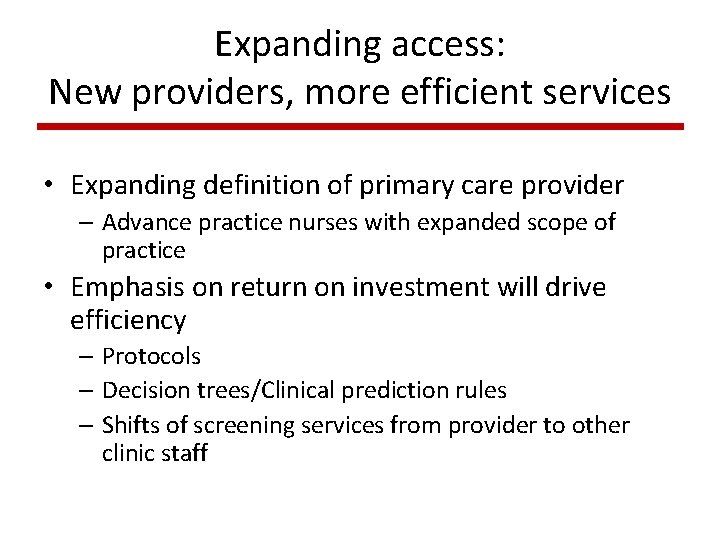
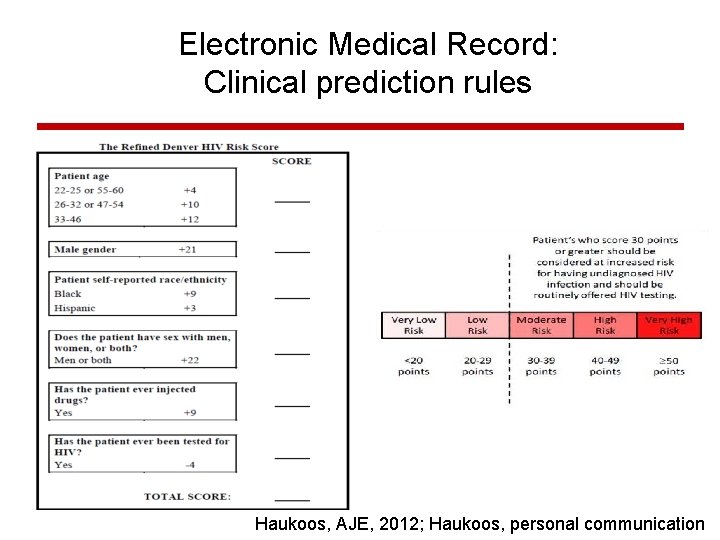
Expanding access: New providers, more efficient services • Expanding definition of primary care provider – Advance practice nurses with expanded scope of practice • Emphasis on return on investment will drive efficiency – Protocols – Decision trees/Clinical prediction rules – Shifts of screening services from provider to other clinic staff
Electronic Medical Record: Clinical prediction rules Haukoos, AJE, 2012; Haukoos, personal communication
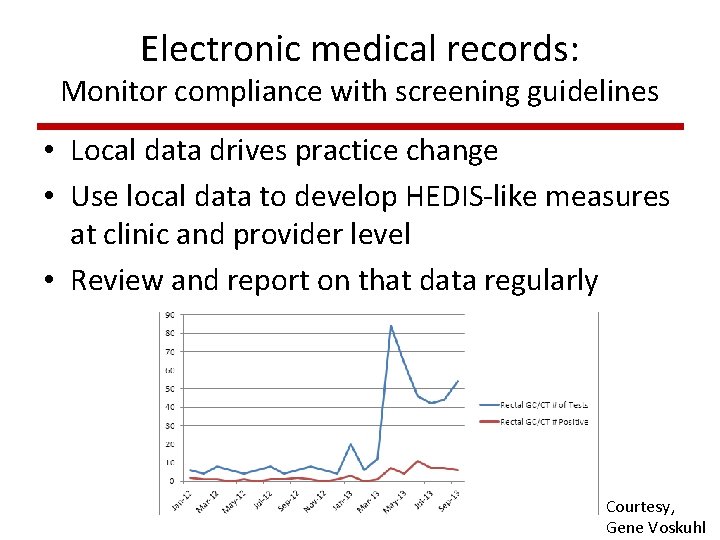
Electronic medical records: Monitor compliance with screening guidelines • Local data drives practice change • Use local data to develop HEDIS-like measures at clinic and provider level • Review and report on that data regularly Courtesy, Gene Voskuhl
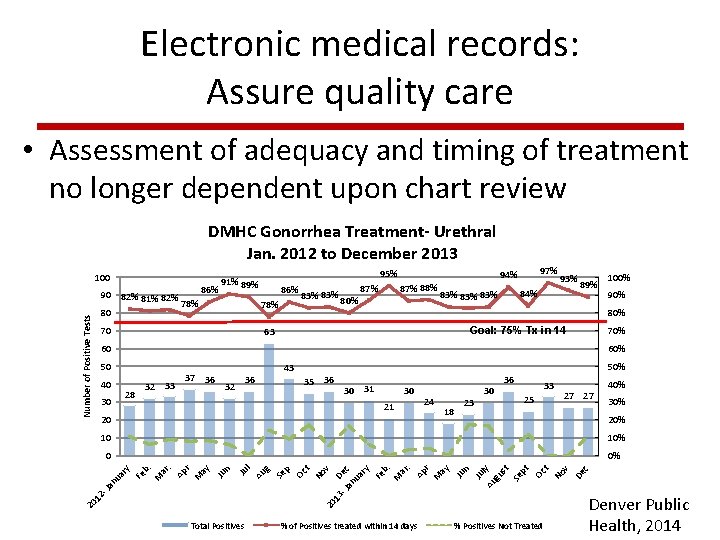
Electronic medical records: Assure quality care • Assessment of adequacy and timing of treatment no longer dependent upon chart review DMHC Gonorrhea Treatment- Urethral Jan. 2012 to December 2013 100 82% 81% 82% 80 78% 86% 78% 70 83% 87% 88% 87% 80% 97% 94% 93% 84% 83% 83% 89% 100% 90% 80% Goal: 75% Tx in 14 63 70% 60 60% 50 40 28 30 32 33 37 36 50% 43 36 32 35 36 30 31 30 21 20 24 30 18 23 36 33 25 27 27 40% 30% 20% v 13 D - J ec an ua ry Fe b. M ar. Ap r M ay Ju n Ju Au ly gu st Se pt Oc t No v De c t 20 20 No Oc g Se p l Au Ju n Ju M Ap ar M Fe ar 12 - Ja nu ay 0% r 0. 10% b. 10 y Number of Positive Tests 90 86% 95% 91% 89% Total Positives % of Positives treated within 14 days % Positives Not Treated Denver Public Health, 2014
Prevention advances: Increased sensitivity • HIV – 4 th generation test • Syphilis – Expanded use of sensitive and specific EIA • GC/CT – NAAT for all anatomic sites • Trich – NAAT testing
Prevention advances: Greater access to screening • HIV – Community screening programs • DPH $170/patient cost in clinic versus $45/per patient for community based screening – Expanded use of rapid tests – Home testing • Syphilis – POC tests pending • GC/CT – Ease of specimen collection = greater reach
Prevention advances: Integrated sexual health care • Both in “traditional” STD and reproductive health settings • But also in “newer” primary care settings
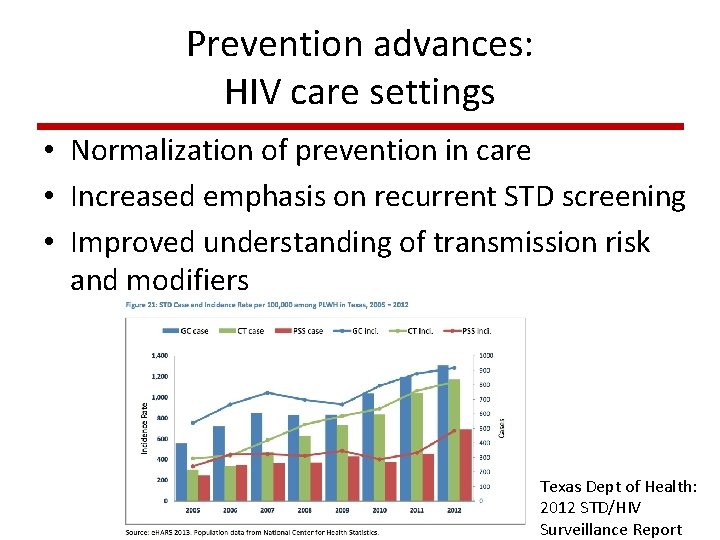
Prevention advances: HIV care settings • Normalization of prevention in care • Increased emphasis on recurrent STD screening • Improved understanding of transmission risk and modifiers Texas Dept of Health: 2012 STD/HIV Surveillance Report
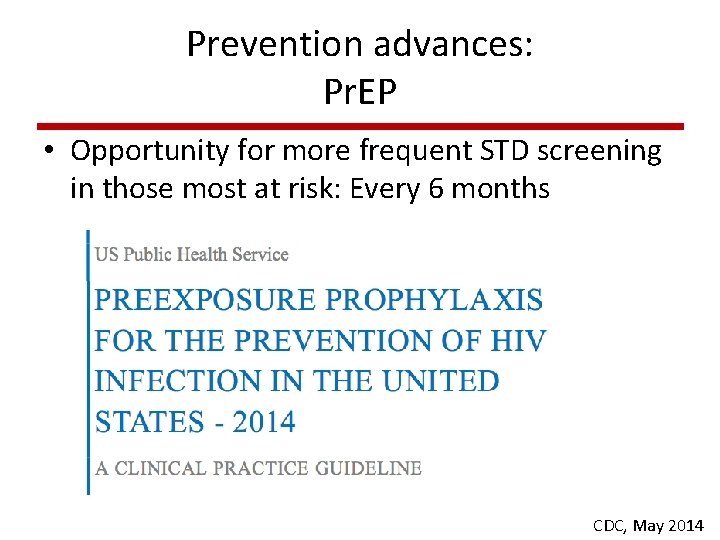
Prevention advances: Pr. EP • Opportunity for more frequent STD screening in those most at risk: Every 6 months CDC, May 2014
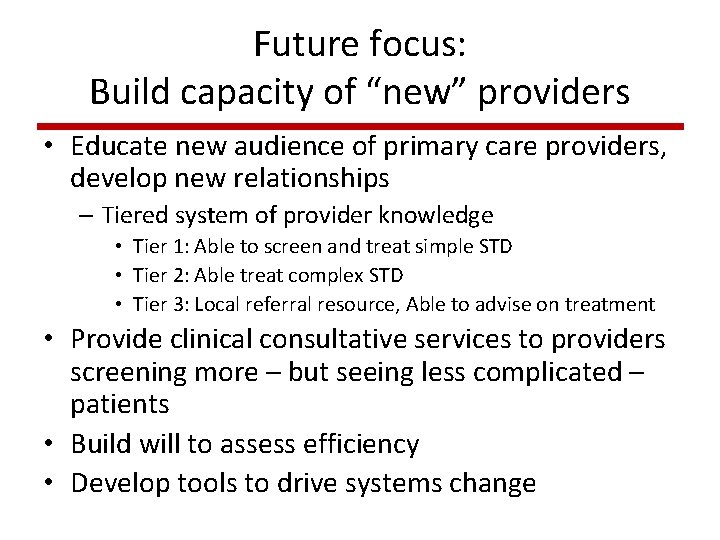
Future focus: Build capacity of “new” providers • Educate new audience of primary care providers, develop new relationships – Tiered system of provider knowledge • Tier 1: Able to screen and treat simple STD • Tier 2: Able treat complex STD • Tier 3: Local referral resource, Able to advise on treatment • Provide clinical consultative services to providers screening more – but seeing less complicated – patients • Build will to assess efficiency • Develop tools to drive systems change
Future focus: Build capacity of “new” providers • Reach providers in new ways – Mobile apps – Online – Through EMR prompts, “HEDIS” measure • Real-time consultation – Online – Email
Future focus: Embrace shift in data systems • Public health surveillance no longer only defined by data reportable under law • Historical biases related to “super-secure” sexual health data shifting – Changing laws – Changing attitudes • Clinical service delivery data guides program development and intervention at patient level • • screening rates/penetration treatment timeliness treatment adequacy integration of services
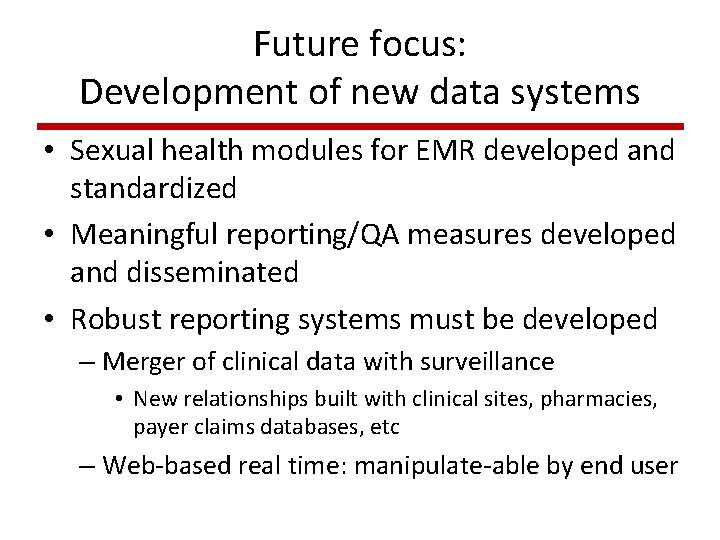
Future focus: Development of new data systems • Sexual health modules for EMR developed and standardized • Meaningful reporting/QA measures developed and disseminated • Robust reporting systems must be developed – Merger of clinical data with surveillance • New relationships built with clinical sites, pharmacies, payer claims databases, etc – Web-based real time: manipulate-able by end user
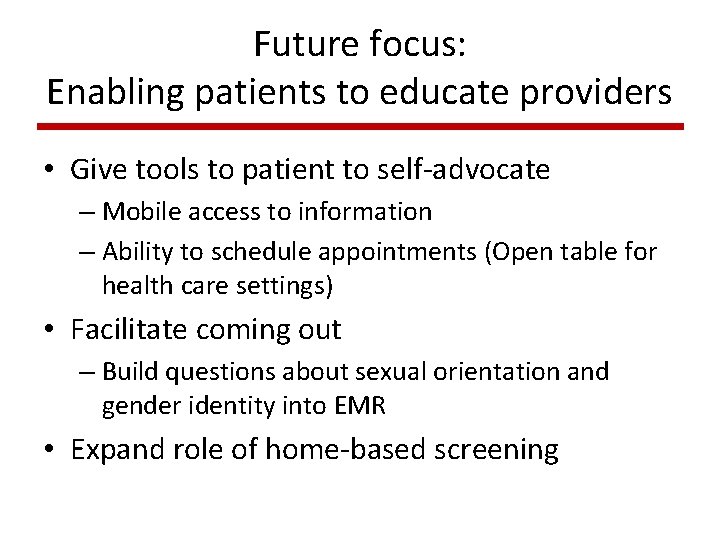
Future focus: Enabling patients to educate providers • Give tools to patient to self-advocate – Mobile access to information – Ability to schedule appointments (Open table for health care settings) • Facilitate coming out – Build questions about sexual orientation and gender identity into EMR • Expand role of home-based screening
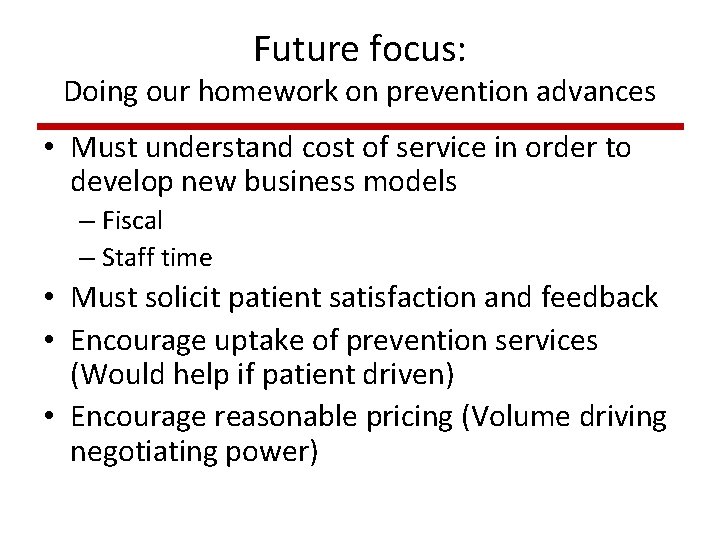
Future focus: Doing our homework on prevention advances • Must understand cost of service in order to develop new business models – Fiscal – Staff time • Must solicit patient satisfaction and feedback • Encourage uptake of prevention services (Would help if patient driven) • Encourage reasonable pricing (Volume driving negotiating power)
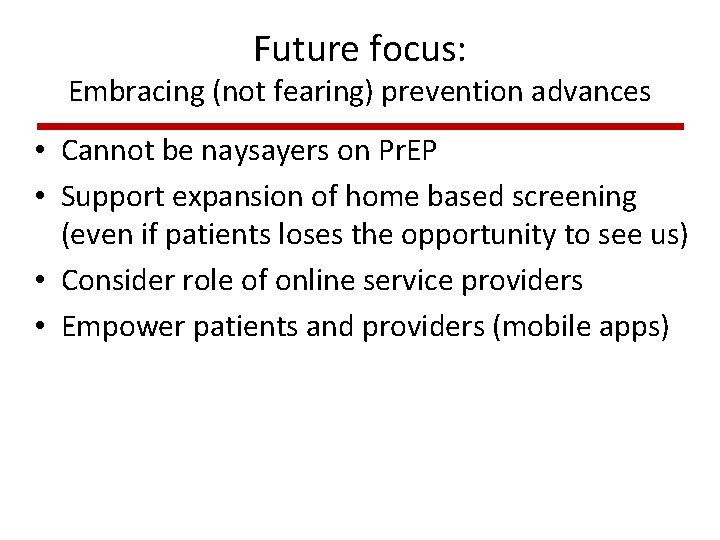
Future focus: Embracing (not fearing) prevention advances • Cannot be naysayers on Pr. EP • Support expansion of home based screening (even if patients loses the opportunity to see us) • Consider role of online service providers • Empower patients and providers (mobile apps)
Embrace, don’t fear, changing role as STD providers Expanding Access Electronic medical records Prevention advances