ERGOLINE ALKALOIDS ERGOT ALKALOIDS AVDAR MAHMUZU ALKALOTLER Prof

- Slides: 56
ERGOLINE ALKALOIDS ERGOT ALKALOIDS ÇAVDAR MAHMUZU ALKALOİTLERİ Prof. Dr. İhsan Çalış
References • Pharmacognosy: Jean BRUNETON – Phytochemistry, Medicinal Plants – Lavosier, 1999 (English Ed. ), 2009 (French Ed. ) – Paris, Lavosier • Drogen analyse: H. Wagner, S. Bladt, E. M. Zgainski – Springer-Verlag, Berlin, 1983
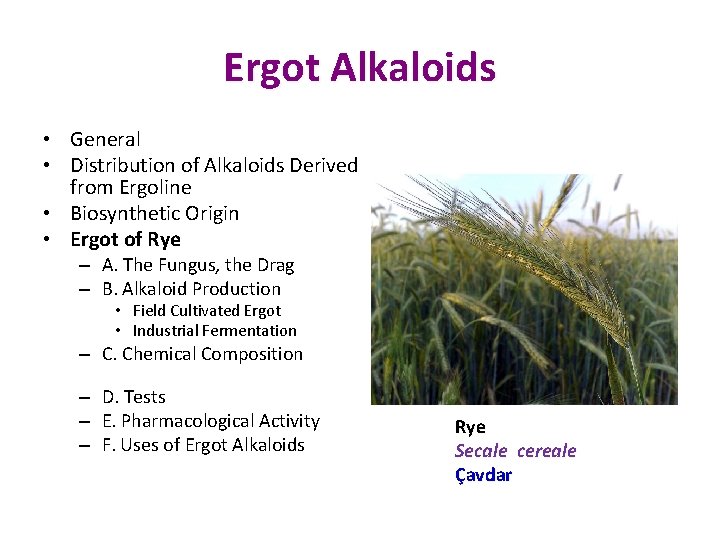
Ergot Alkaloids • General • Distribution of Alkaloids Derived from Ergoline • Biosynthetic Origin • Ergot of Rye – A. The Fungus, the Drag – B. Alkaloid Production • Field Cultivated Ergot • Industrial Fermentation – C. Chemical Composition – D. Tests – E. Pharmacological Activity – F. Uses of Ergot Alkaloids Rye Secale cereale Çavdar
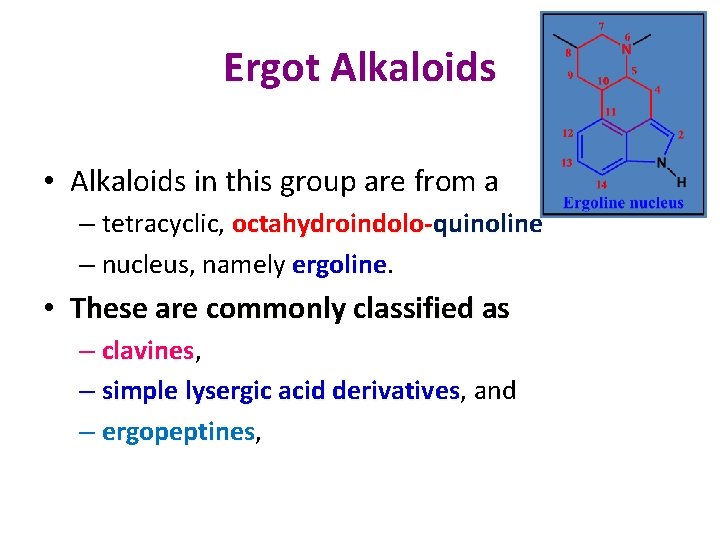
Ergot Alkaloids • Alkaloids in this group are from a – tetracyclic, octahydroindolo-quinoline – nucleus, namely ergoline • These are commonly classified as – clavines, clavines – simple lysergic acid derivatives, and derivatives – ergopeptines, ergopeptines
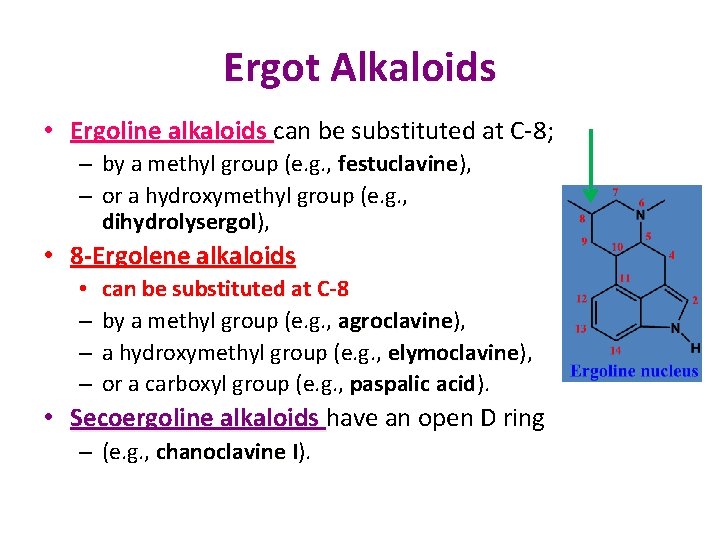
Ergot Alkaloids • Ergoline alkaloids can be substituted at C-8; – by a methyl group (e. g. , festuclavine), festuclavine – or a hydroxymethyl group (e. g. , dihydrolysergol), dihydrolysergol • 8 -Ergolene alkaloids • – – – can be substituted at C-8 by a methyl group (e. g. , agroclavine), agroclavine a hydroxymethyl group (e. g. , elymoclavine), elymoclavine or a carboxyl group (e. g. , paspalic acid). acid • Secoergoline alkaloids have an open D ring – (e. g. , chanoclavine I). I
Ergot Alkaloids 9 -Ergolene alkaloids Ergoline alkaloids Secoergoline alks. Related alks. 8 -Ergolene alkaloids
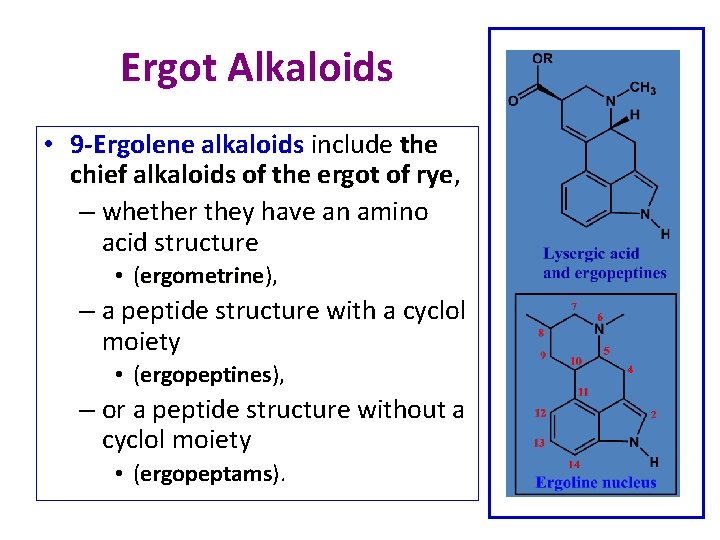
Ergot Alkaloids • 9 -Ergolene alkaloids include the chief alkaloids of the ergot of rye, rye – whether they have an amino acid structure • (ergometrine), ergometrine – a peptide structure with a cyclol moiety • (ergopeptines), – or a peptide structure without a cyclol moiety • (ergopeptams).
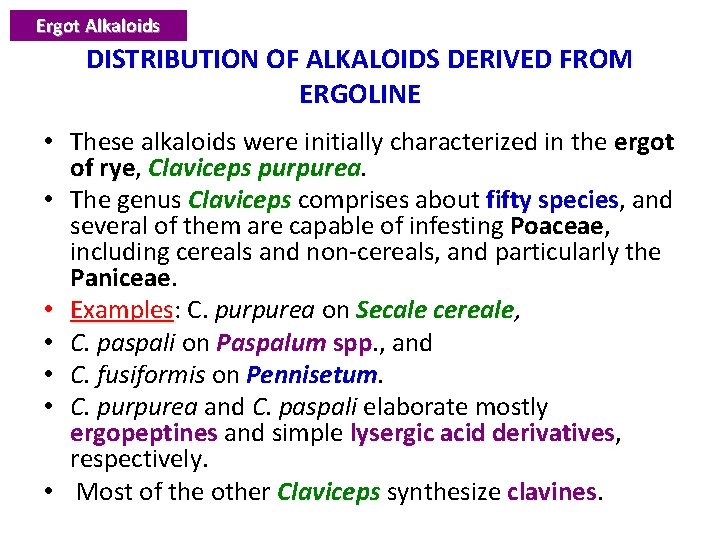
Ergot Alkaloids DISTRIBUTION OF ALKALOIDS DERIVED FROM ERGOLINE • These alkaloids were initially characterized in the ergot of rye, rye Claviceps purpurea • The genus Claviceps comprises about fifty species, and species several of them are capable of infesting Poaceae, Poaceae including cereals and non-cereals, and particularly the Paniceae • Examples: C. purpurea on Secale cereale, Examples cereale • C. paspali on Paspalum spp. , and spp • C. fusiformis on Pennisetum • C. purpurea and C. paspali elaborate mostly ergopeptines and simple lysergic acid derivatives, ergopeptines derivatives respectively. • Most of the other Claviceps synthesize clavines
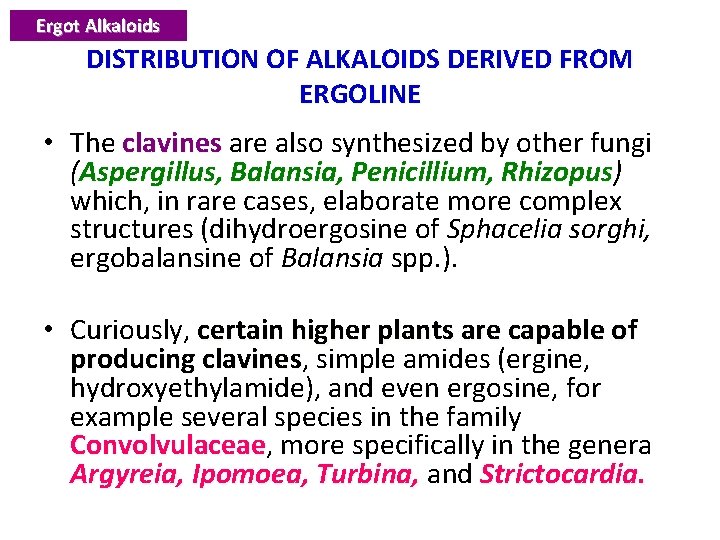
Ergot Alkaloids DISTRIBUTION OF ALKALOIDS DERIVED FROM ERGOLINE • The clavines are also synthesized by other fungi (Aspergillus, Balansia, Penicillium, Rhizopus) Rhizopus which, in rare cases, elaborate more complex structures (dihydroergosine of Sphacelia sorghi, ergobalansine of Balansia spp. ). • Curiously, certain higher plants are capable of producing clavines, simple amides (ergine, clavines hydroxyethylamide), and even ergosine, for example several species in the family Convolvulaceae, more specifically in the genera Convolvulaceae Argyreia, Ipomoea, Turbina, and Strictocardia.
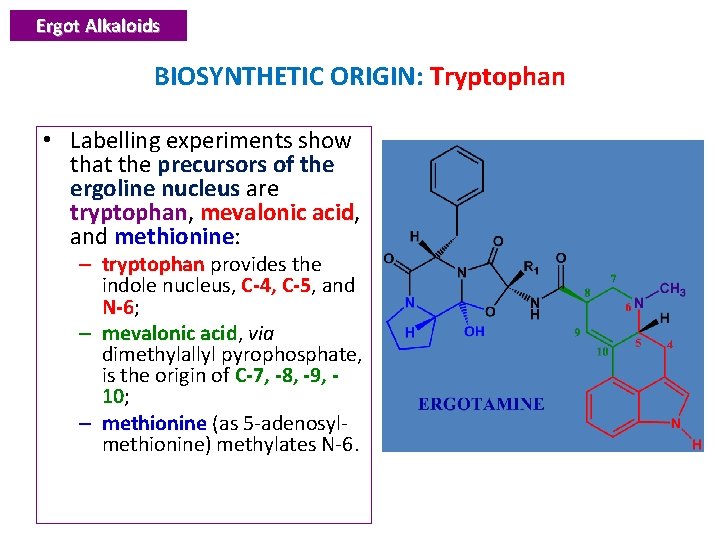
Ergot Alkaloids BIOSYNTHETIC ORIGIN: Tryptophan • Labelling experiments show that the precursors of the ergoline nucleus are nucleus tryptophan, tryptophan mevalonic acid, acid and methionine: methionine – tryptophan provides the tryptophan indole nucleus, C-4, C-5, and C-5 N-6; N-6 – mevalonic acid, via acid dimethylallyl pyrophosphate, is the origin of C-7, -8, -9, 10; 10 – methionine (as 5 -adenosylmethionine) methylates N-6.
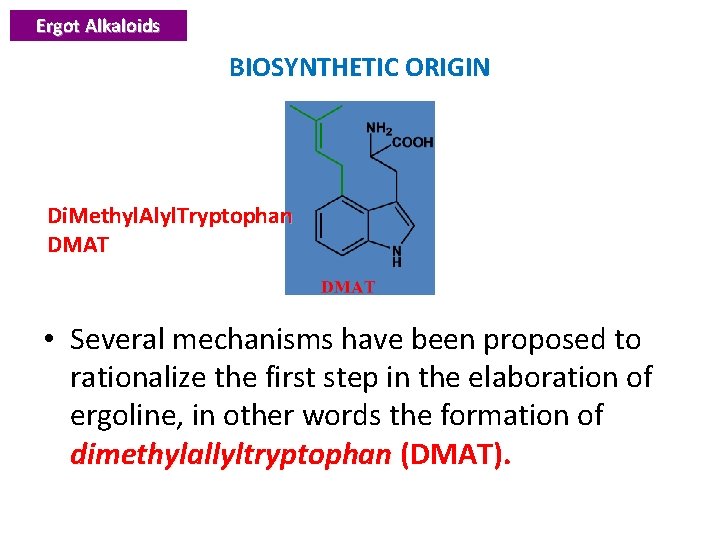
Ergot Alkaloids BIOSYNTHETIC ORIGIN Di. Methyl. Alyl. Tryptophan DMAT • Several mechanisms have been proposed to rationalize the first step in the elaboration of ergoline, in other words the formation of dimethylallyltryptophan (DMAT).
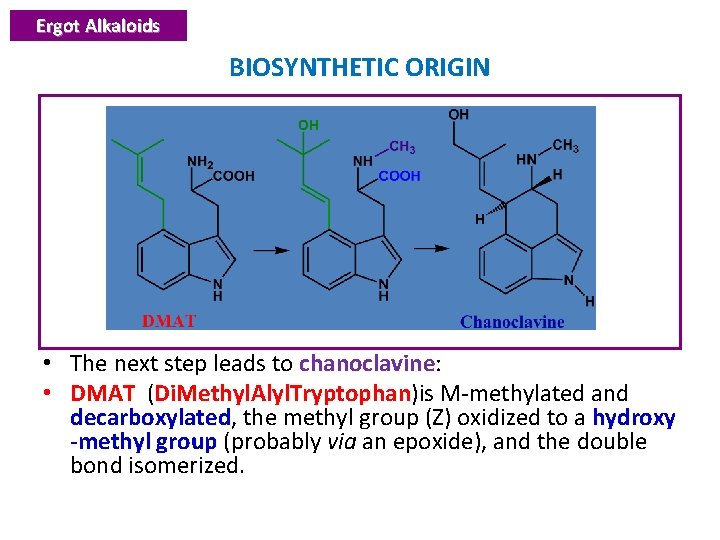
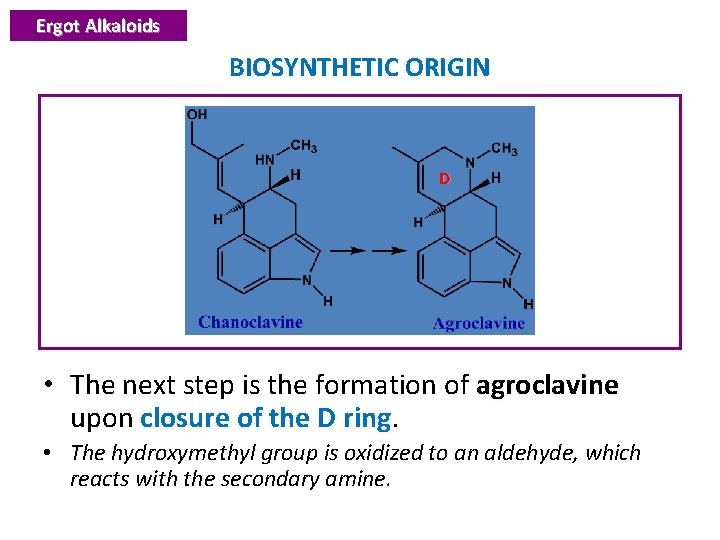
Ergot Alkaloids BIOSYNTHETIC ORIGIN • The next step leads to chanoclavine: chanoclavine • DMAT (Di. Methyl. Alyl. Tryptophan)is M-methylated and decarboxylated, the methyl group (Z) oxidized to a hydroxy decarboxylated -methyl group (probably via an epoxide), and the double bond isomerized.
Ergot Alkaloids BIOSYNTHETIC ORIGIN D • The next step is the formation of agroclavine upon closure of the D ring • The hydroxymethyl group is oxidized to an aldehyde, which reacts with the secondary amine.
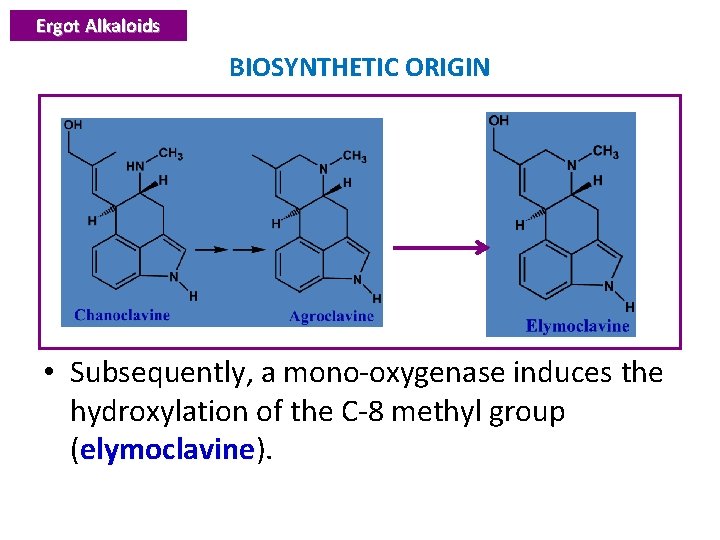
Ergot Alkaloids BIOSYNTHETIC ORIGIN • Subsequently, a mono-oxygenase induces the hydroxylation of the C-8 methyl group (elymoclavine). elymoclavine
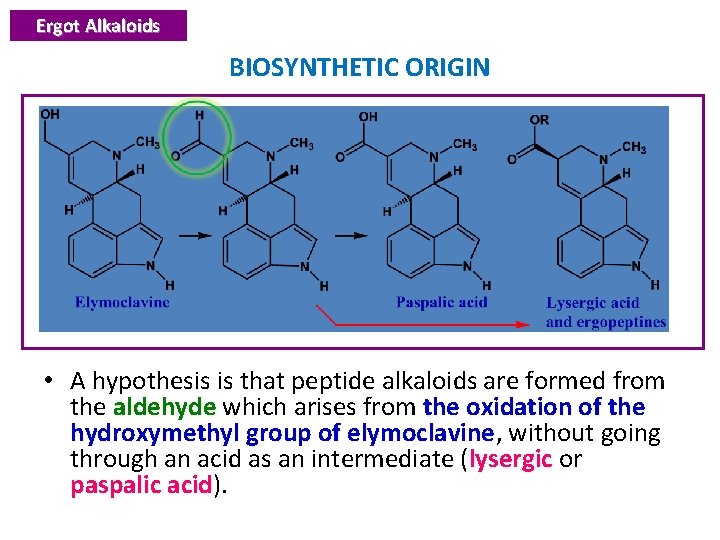
Ergot Alkaloids BIOSYNTHETIC ORIGIN • A hypothesis is that peptide alkaloids are formed from the aldehyde which arises from the oxidation of the hydroxymethyl group of elymoclavine, without going elymoclavine through an acid as an intermediate (lysergic or paspalic acid). acid
Ergot Alkaloids ERGOT OF RYE, Claviceps purpurea (Fries) Tulasne ERGOTISM • It was around 1000 A. D. that the first precise descriptions of "St. Anthony's fire" appeared; they fire referred to ergotism outbreaks, which ravaged western Europe for several centuries. • Ergotism, the consequence of the ingestion by humans Ergotism of the cereals contaminated by the fungus, commonly fungus occurred as one of two forms: – Gangrenous form ("St. Anthony's fire"); the disease began fire with a painful inflammation of the extremities, and resulted in numb, blackened, and dry extremities, sometimes ending with their spontaneous loss at a joint; – Convulsive form; the dominant Symptoms were mental form agitation, delirium, and sensory perturbations.
Ergot Alkaloids ERGOT OF RYE, Claviceps purpurea (Fries) Tulasne • The prevalence of ergotism decreased rapidly as agriculture improved and as nutrition became more diversified • Ergotism epidemies did take place in the north and the east of Europe until the nineteenth Century , and in the former Soviet Union until 1926. • More recently (1977 -78), 47 deaths linked to the ingestion of contaminated cereals were documented in Ethiopia
Ergot Alkaloids ERGOT OF RYE, Claviceps purpurea (Fries) Tulasne • The responsibility of bread made from infested rye was not suspected until the end of the seventeenth century, and it was not demonstrated in animals until one century later. • The fungal nature of ergot was recognized in 1711, but the 1711 mystery of its development cycle was not elucidated until 1853 • The twentieth century was to be that of the isolation of the alkaloids (ergotamine, Stoll, 1918), of the demonstration of 1918 their pharmacological properties, and later, of their mass production by fermentation. • The oxytocic properties of ergot had long been known (Lonicer, 1582) and used (pulvis parturiens) before they 1582 became reserved for the control of post-partum hemorrhage (this led to a decrease in the number of still births!).
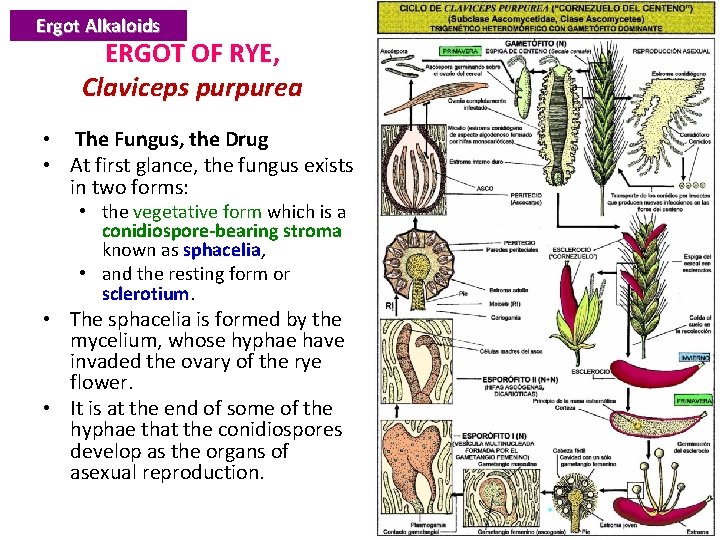
Ergot Alkaloids ERGOT OF RYE, Claviceps purpurea • The Fungus, the Drug • At first glance, the fungus exists in two forms: • the vegetative form which is a vegetative form conidiospore-bearing stroma known as sphacelia, sphacelia • and the resting form or sclerotium • The sphacelia is formed by the mycelium, whose hyphae have invaded the ovary of the rye flower. • It is at the end of some of the hyphae that the conidiospores develop as the organs of asexual reproduction.
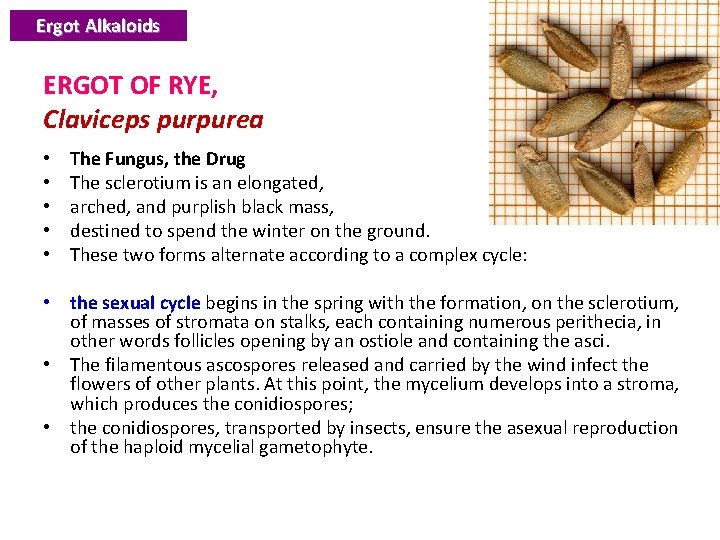
Ergot Alkaloids ERGOT OF RYE, Claviceps purpurea • • • The Fungus, the Drug The sclerotium is an elongated, arched, and purplish black mass, destined to spend the winter on the ground. These two forms alternate according to a complex cycle: • the sexual cycle begins in the spring with the formation, on the sclerotium, cycle of masses of stromata on stalks, each containing numerous perithecia, in other words follicles opening by an ostiole and containing the asci. • The filamentous ascospores released and carried by the wind infect the flowers of other plants. At this point, the mycelium develops into a stroma, which produces the conidiospores; • the conidiospores, transported by insects, ensure the asexual reproduction of the haploid mycelial gametophyte.
Ergot Alkaloids ERGOT OF RYE, Claviceps purpurea (Fries) Tulasne • B. Alkaloid Production • For a long time, the needs of the pharmaceutical industry were fulfilled exclusively by extraction from sclerotia obtained by artificially infesting rye • • Later, it became possible to meet part of the international demand for active alkaloids by saprophytic culture of selected strains of various species of Claviceps. • The alkaloids extracted from the culture media were used directly or after chemical transformation (semisynthesis). semisynthesis • Rehacek and Sajdl (1990) note that: ". . . the parasitic culture of ergot in the western hemisphere (predominantly re Switzerland) has almost stopped".
Ergot Alkaloids ERGOT OF RYE, Claviceps purpurea (Fries) Tulasne Field Cultivated Ergot (Çavdar Mahmuzu) • Ergots are obtained by artificial infestation of cereals with strains of the fungus selected for their virulence and their high concentration of alkaloids. This infestation was initially practiced on rye. • The traditional method: – First, the selected strain is cultured in a liquid medium with a composition appropriate for inducing the formation of conidiospores. – At the time of infestation, an inoculum is prepared by suspending the spores in water (3, 000 -5, 000 spores per mm 3). – Next, the inoculum is used to inoculate the young ears (at the latest at the very beginning of the floration). – The injection is accomplished using Systems resembling hypodermic syringes connected to a reservoir containing the conidiospore suspension; a specially designed mechanical device brings the ears in contact with the needles. – The harvest may begin six to seven weeks after inoculation. – The yield of sclerotia is very variable and can reach 300 kg/hectare (= 300 kg/2. 47 acres).
Ergot Alkaloids ERGOT OF RYE, Claviceps purpurea (Fries) Tulasne Industrial Fermentation • The knowledge of how to develop Claviceps on synthetic media is about one hundred years old. • The different Claviceps can be cultured at p. Hs near 5. 5, which are best adjusted with ammonium salts of the acids of Krebs' cycle (succinate, citrate). • Frequently, the alkaloid production is dependent on the phosphate concentration of the medium, and for many strains, on the precise concentrations of minerals (iron, zinc, copper, boron) which directly influence the productivity. • The oxygenation of the culture medium must be intense. Cell differentiation and alkaloid production are controlled by the addition of nutrients: a rich medium causes the formation of abundant hyphal mycelium and no alkaloid production. • For many strains, it is the phosphate concentration that conditions the passage from the mycelium proliferation phase to the biochemical differentiation phase. Tryptophan, added at the beginning of the fermentation, acts as an enzymatic inducer, and therefore it increases the quantity of alkaloids formed.
Ergot Alkaloids ERGOT OF RYE, Claviceps purpurea (Fries) Tulasne • Alkaloids produced • Two approaches are possible: • A. The first one consists of producing simple ergolenes, namely paspalic ergolenes acid or the hydroxyethylamide of lysergic acid. • Once isolated from the culture medium, the two ergolene derivatives are transformed—the first by isomerization, the second by hydrolysis—into lysergic acid, the starting material for the synthesis of non-peptidic alkaloids used in therapeutics (ergometrine and others). – Some clavines can also be the starting materials for the synthesis of more complex products. • B. The second approach, which is more recent, leads to the direct production of ergopeptines, particularly ergocryptine, from strains of C. ergopeptines ergocryptine purpurea and possibly from other species. • The fermentation is lengthy, and the ergopeptines are obtained in a yield on the order of g/L. The culture can be directed by adding to the medium the amino acids that are the precursors of the desired tricyclic peptide.
Ergot Alkaloids ERGOT OF RYE, Claviceps purpurea (Fries) Tulasne • C. Chemical Composition: • The ergot of rye is a drug of complex composition. Besides the sugars and a large number of amino acids, the drug contains a high proportion of lipids: 20 to 40% of its mass consists of an oil which readily turns rancid, hence its degradation in storage. Note also the presence of sterols (ergosterol and related compounds), compounds amines arising from the decarboxylation of amino acids, and pigments.
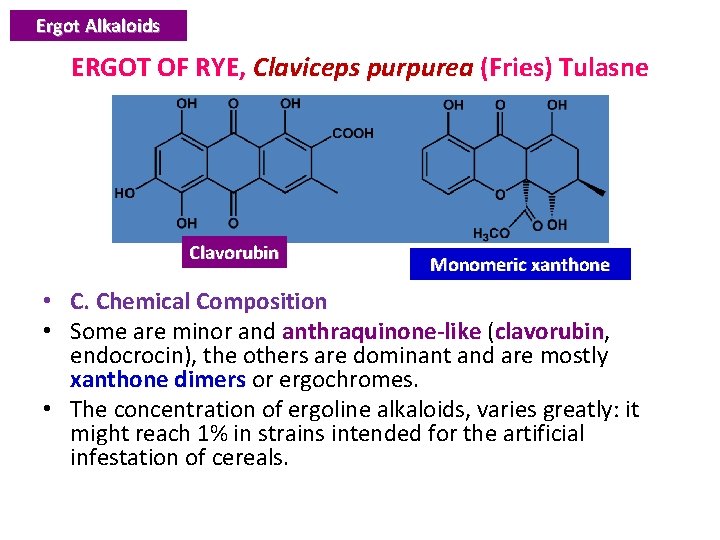
Ergot Alkaloids ERGOT OF RYE, Claviceps purpurea (Fries) Tulasne Clavorubin Monomeric xanthone • C. Chemical Composition • Some are minor and anthraquinone-like ( anthraquinone-like clavorubin, clavorubin endocrocin), the others are dominant and are mostly xanthone dimers or ergochromes. • The concentration of ergoline alkaloids, varies greatly: it might reach 1% in strains intended for the artificial infestation of cereals.
Ergot Alkaloids of Claviceps purpurea • Two main groups of alkaloids are alkaloids distinguished: – 1. The simple amides of lysergic acid. – 2. The ergopeptines
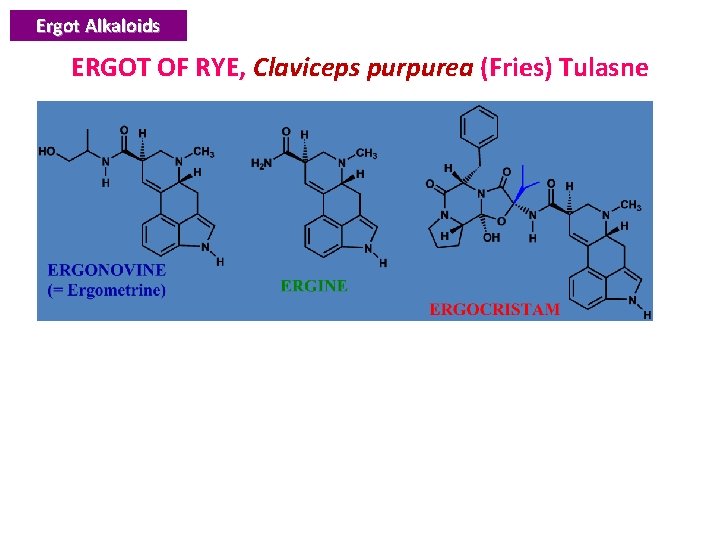
Ergot Alkaloids of Claviceps purpurea 1. The simple amides of lysergic acid represent acid about 20% of the total alkaloids. • The chief alkaloid in the group is ergonovine (ergobasine, ergometrine), ergometrine the amide of lysergic acid and of 2 -amino-propanol • Ergot also contains a small amount of ergine (lysergic acid amide). amide
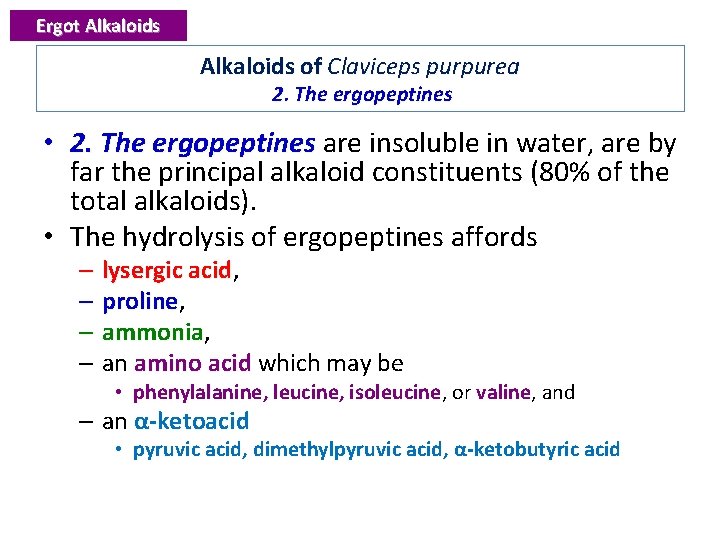
Ergot Alkaloids of Claviceps purpurea 2. The ergopeptines • 2. The ergopeptines are insoluble in water, are by far the principal alkaloid constituents (80% of the total alkaloids). • The hydrolysis of ergopeptines affords – lysergic acid, acid – proline, proline – ammonia, ammonia – an amino acid which may be acid • phenylalanine, leucine, isoleucine, or valine, and – an α-ketoacid • pyruvic acid, dimethylpyruvic acid, α-ketobutyric acid
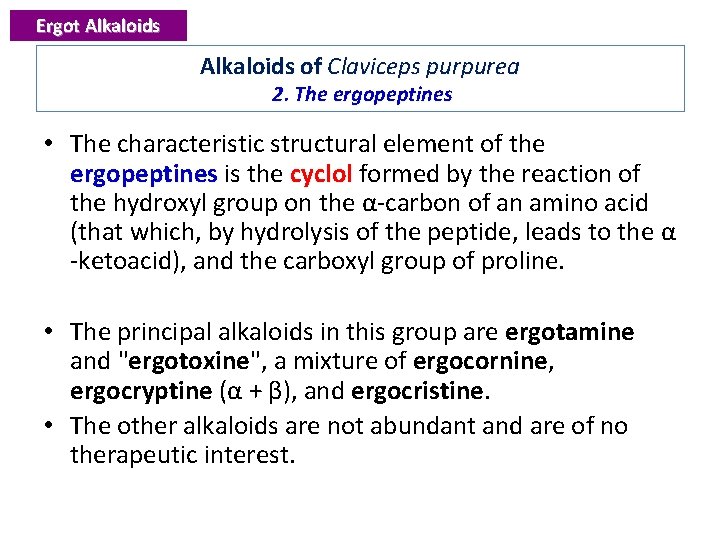
Ergot Alkaloids of Claviceps purpurea 2. The ergopeptines • The characteristic structural element of the ergopeptines is the cyclol formed by the reaction of the hydroxyl group on the α-carbon of an amino acid (that which, by hydrolysis of the peptide, leads to the α -ketoacid), and the carboxyl group of proline. • The principal alkaloids in this group are ergotamine and "ergotoxine", a mixture of ergocornine, ergocryptine (α + β), and ergocristine. • The other alkaloids are not abundant and are of no therapeutic interest.
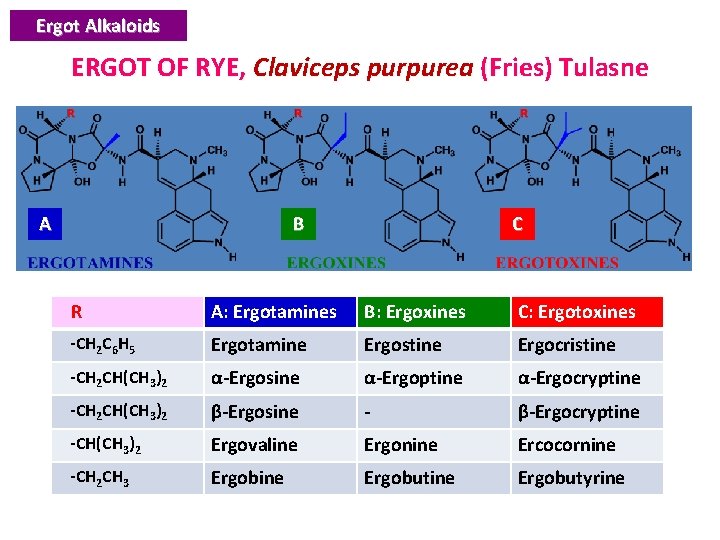
Ergot Alkaloids ERGOT OF RYE, Claviceps purpurea (Fries) Tulasne A B C R A: Ergotamines B: Ergoxines C: Ergotoxines -CH 2 C 6 H 5 Ergotamine Ergostine Ergocristine -CH 2 CH(CH 3)2 α-Ergosine α-Ergoptine α-Ergocryptine -CH 2 CH(CH 3)2 β-Ergosine - β-Ergocryptine -CH(CH 3)2 Ergovaline Ergonine Ercocornine -CH 2 CH 3 Ergobine Ergobutyrine
Ergot Alkaloids ERGOT OF RYE, Claviceps purpurea (Fries) Tulasne
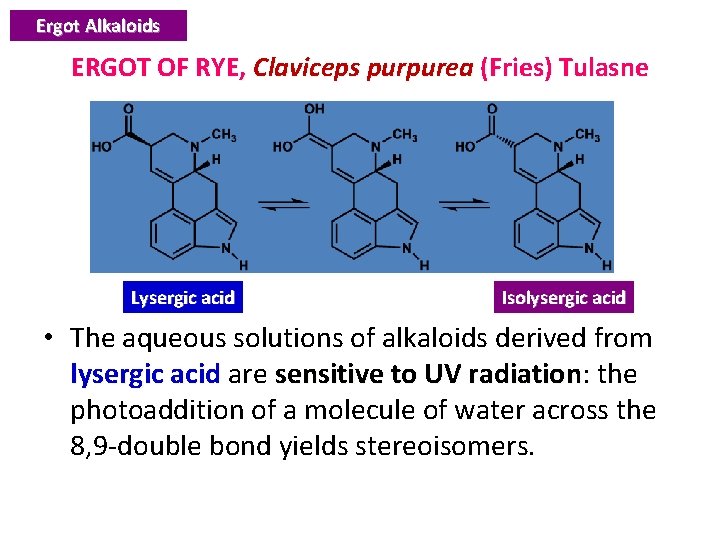
Ergot Alkaloids ERGOT OF RYE, Claviceps purpurea (Fries) Tulasne • Comment: instability of lysergic acid derivatives. • The derivatives of lysergic acid readily epimerize at C-8 to form derivatives of isolysergic acid. • This epimerization is enhanced in polar solvents and goes through an enol intermediate. The nomenclature of the two series differs by the ending of the name of the alkaloid, which is -ine for lysergic acid derivatives, and -inine for the derivatives corresponding C-8 epimers or isolysergic acid derivatives (e. g. , ergonovine and ergonovinine, ergosine and ergosinine). • The chief consequence of epimerization is of a pharmacological nature: the derivatives of isolysergic acid are devoid of activity.
Ergot Alkaloids ERGOT OF RYE, Claviceps purpurea (Fries) Tulasne Lysergic acid Isolysergic acid • The aqueous solutions of alkaloids derived from lysergic acid are sensitive to UV radiation: the radiation photoaddition of a molecule of water across the 8, 9 -double bond yields stereoisomers.
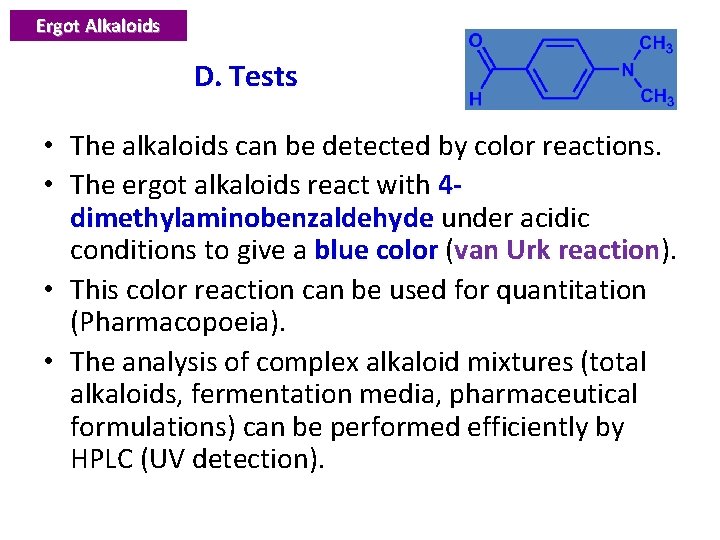
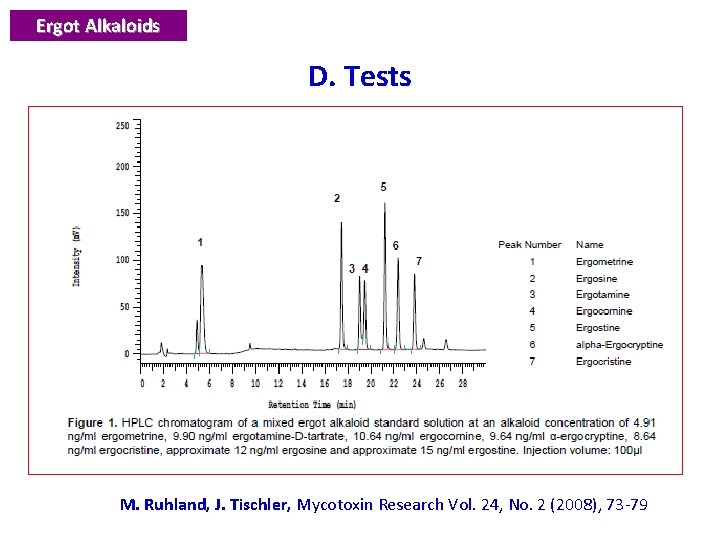
Ergot Alkaloids D. Tests • The alkaloids can be detected by color reactions. • The ergot alkaloids react with 4 dimethylaminobenzaldehyde under acidic conditions to give a blue color (van Urk reaction). reaction • This color reaction can be used for quantitation (Pharmacopoeia). • The analysis of complex alkaloid mixtures (total alkaloids, fermentation media, pharmaceutical formulations) can be performed efficiently by HPLC (UV detection).
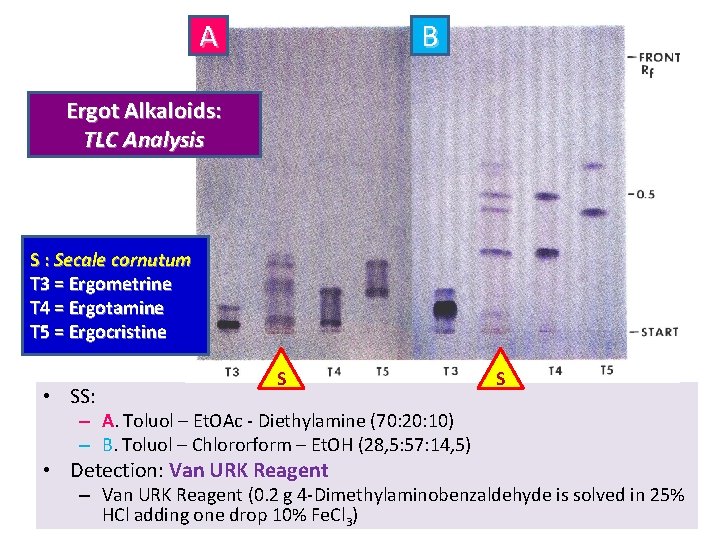
A B Ergot Alkaloids: TLC Analysis S : Secale cornutum T 3 = Ergometrine T 4 = Ergotamine T 5 = Ergocristine • SS: S S – A. Toluol – Et. OAc - Diethylamine (70: 20: 10) – B. Toluol – Chlororform – Et. OH (28, 5: 57: 14, 5) • Detection: Van URK Reagent – Van URK Reagent (0. 2 g 4 -Dimethylaminobenzaldehyde is solved in 25% HCl adding one drop 10% Fe. Cl 3)
Ergot Alkaloids D. Tests M. Ruhland, J. Tischler, Mycotoxin Research Vol. 24, No. 2 (2008), 73 -79
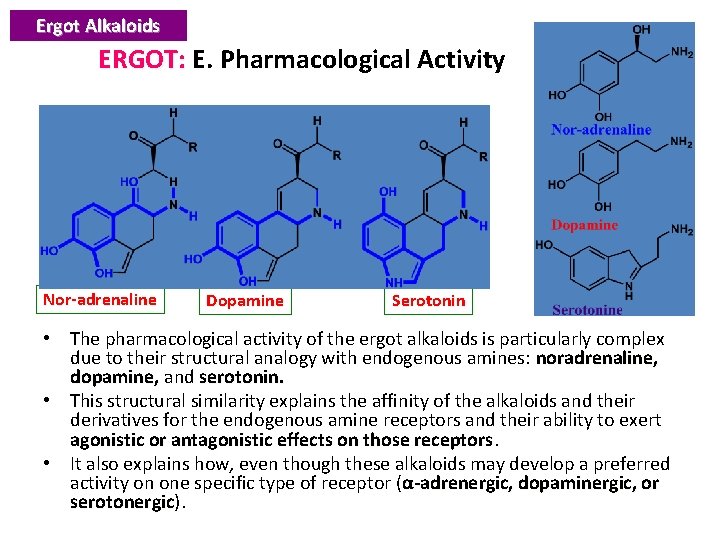
Ergot Alkaloids ERGOT: E. Pharmacological Activity Nor-adrenaline Dopamine Serotonin • The pharmacological activity of the ergot alkaloids is particularly complex due to their structural analogy with endogenous amines: noradrenaline, dopamine, and serotonin. • This structural similarity explains the affinity of the alkaloids and their derivatives for the endogenous amine receptors and their ability to exert agonistic or antagonistic effects on those receptors • It also explains how, even though these alkaloids may develop a preferred activity on one specific type of receptor (α-adrenergic, dopaminergic, or serotonergic). serotonergic
Ergot Alkaloids E. Pharmacological Activity • Ergonovine • This alkaloid is a potent oxytocic: it increases basal tone, and the frequency and strength of uterine contractions; the more advanced the pregnancy, the stronger the effect is. • This activity is thought to be linked to the stimulation of the α-adrenergic receptors in the myometrium (uterus kası). • Uterine hypertonicity is at the origin of the antihemorrhagic effects of ergonovine. In practice, methylergonovine is the preferred medication.
Ergot Alkaloids ERGOT OF RYE, Claviceps purpurea (Fries) Tulasne • E. Pharmacological Activity Ergotamine • At low doses, ergotamine is a potent vasoconstrictor acting by stimulation of the α-adrenergic receptors (or of the serotonergic receptors in the case of the cranial blood vessels). Cranial = Kafatası • The change in vascular tone is particularly marked peripherally and in the branches of the external carotid; this reaction is accompanied by the closure of the arterio-venous shunts. At higher doses, an adrenergic antagonist activity appears, which is weak, and illustrates the duality in the activities of this compound. In addition, ergotamine is an oxytocic. ergotamine oxytocic
Ergot Alkaloids ERGOT OF RYE, Claviceps purpurea (Fries) Tulasne • Hydrogenated Derivatives of Naturally-occurring Alkaloids • 9, 10 -Dihydroergotamine results from the hydrogenation of the 9, 10 -double bond, which greatly decreases the agonist activity at the a-adrenergic receptors (the intensity of the activity is thought to be dependent on the preexisting vascular tone) and reinforces the potency of the adrenergic and serotonergic antagonist activity. • 9, 10 -Dihydroergotamine is more active on veins than arteries; it is a vasoregulator which "stabilizes vascular tone".
Ergot Alkaloids ERGOT OF RYE, Claviceps purpurea (Fries) Tulasne • Hydrogenated Derivatives of Naturally-occurring Alkaloids • 9, 10 -Dihydroergotoxine has a complex pharmacology (stimulation of central receptors, peripheral vasodilation, regulating activity on the neuronal metabolism) which might explain its beneficial effects on what are commonly thought of as behavioral problems due to senile cerebral insufficiency.
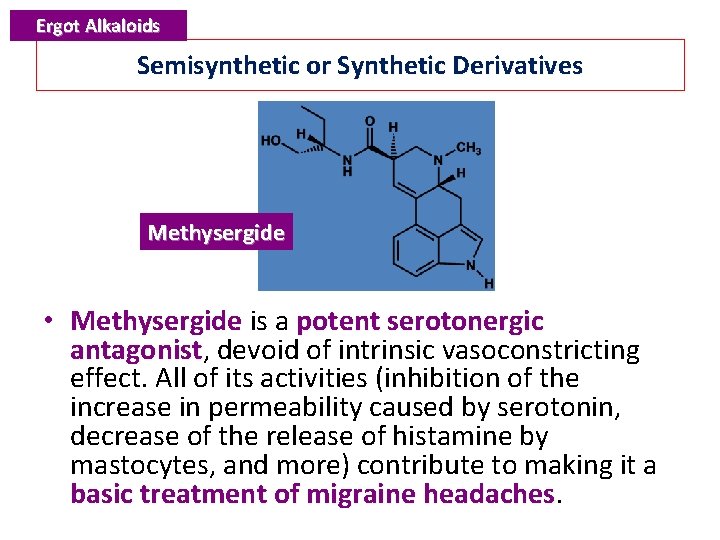
Ergot Alkaloids Semisynthetic or Synthetic Derivatives Methysergide • Methysergide is a potent serotonergic antagonist, devoid of intrinsic vasoconstricting antagonist effect. All of its activities (inhibition of the increase in permeability caused by serotonin, decrease of the release of histamine by mastocytes, and more) contribute to making it a basic treatment of migraine headaches
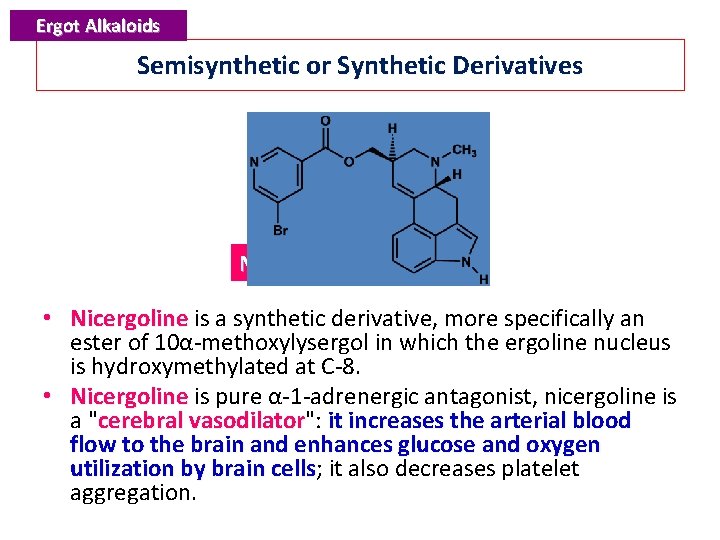
Ergot Alkaloids Semisynthetic or Synthetic Derivatives Nicergoline • Nicergoline is a synthetic derivative, more specifically an ester of 10α-methoxylysergol in which the ergoline nucleus is hydroxymethylated at C-8. • Nicergoline is pure α-1 -adrenergic antagonist, nicergoline is a "cerebral vasodilator": vasodilator it increases the arterial blood flow to the brain and enhances glucose and oxygen utilization by brain cells; it also decreases platelet cells aggregation.
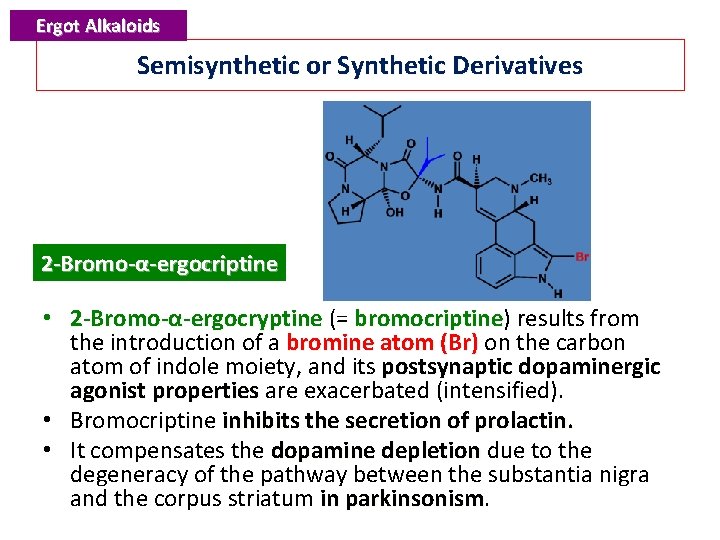
Ergot Alkaloids Semisynthetic or Synthetic Derivatives 2 -Bromo-α-ergocriptine • 2 -Bromo-α-ergocryptine (= bromocriptine) results from bromocriptine the introduction of a bromine atom (Br) on the carbon atom of indole moiety, and its postsynaptic dopaminergic agonist properties are exacerbated (intensified). • Bromocriptine inhibits the secretion of prolactin. • It compensates the dopamine depletion due to the degeneracy of the pathway between the substantia nigra and the corpus striatum in parkinsonism
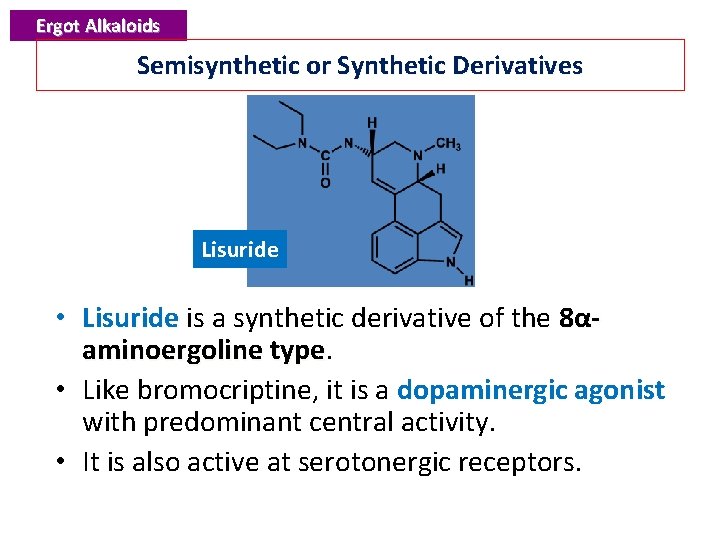
Ergot Alkaloids Semisynthetic or Synthetic Derivatives Lisuride • Lisuride is a synthetic derivative of the 8αaminoergoline type • Like bromocriptine, it is a dopaminergic agonist with predominant central activity. • It is also active at serotonergic receptors.
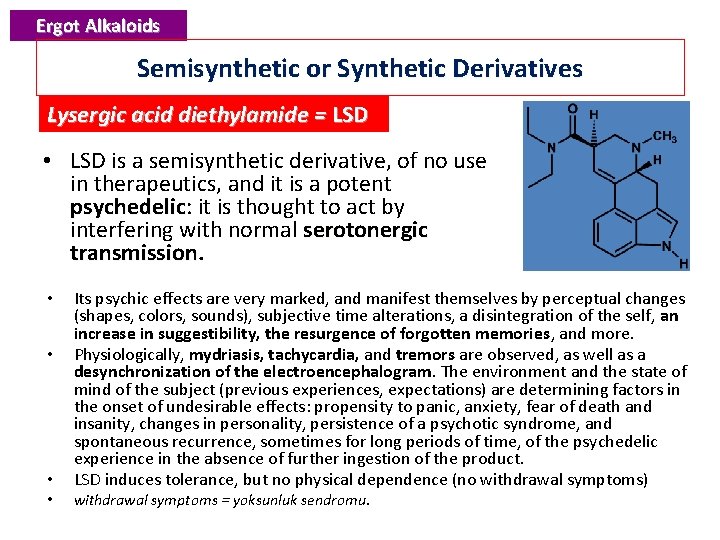
Ergot Alkaloids Semisynthetic or Synthetic Derivatives Lysergic acid diethylamide = LSD • LSD is a semisynthetic derivative, of no use in therapeutics, and it is a potent psychedelic: it is thought to act by psychedelic interfering with normal serotonergic transmission • • Its psychic effects are very marked, and manifest themselves by perceptual changes (shapes, colors, sounds), subjective time alterations, a disintegration of the self, an increase in suggestibility, the resurgence of forgotten memories, and more. Physiologically, mydriasis, tachycardia, and tremors are observed, as well as a desynchronization of the electroencephalogram. The environment and the state of mind of the subject (previous experiences, expectations) are determining factors in the onset of undesirable effects: propensity to panic, anxiety, fear of death and insanity, changes in personality, persistence of a psychotic syndrome, and spontaneous recurrence, sometimes for long periods of time, of the psychedelic experience in the absence of further ingestion of the product. LSD induces tolerance, but no physical dependence (no withdrawal symptoms) withdrawal symptoms = yoksunluk sendromu.
Ergot Alkaloids F. Uses of Ergot Alkaloids (natural, modified, semisynthetic, synthetic analogs) • Methylergometrine maleate is indicated (injectable solution) for obstetric emergencies: afterbirth delivery and post-partum hemorrhages, after cesarean sections, after curettage, after abortion by suction or curettage, and for uterine atony after giving birth. • The compound must not be used in breast-feeding women. • The blood pressure of patients taking it must be monitored, and side effects are rare (hypertension attacks). • When it is used by the oral route (solution, tablets), ergometrine is indicated: – 1. for afterbirth delivery and post-partum hemorrhages (following oxytocics administered parenterally); – 2. for metrorrhagia of various origins (after giving birth, therapeutic abortion, spontaneous abortion); – 3. for the adjunctive treatment of menorrhagia in the absence of pregnancy after attempts have been made todetermine the cause of the disorder (but for this indication, some feel that the benefit-to-risk ratio is unfavorable).
Ergot Alkaloids ERGOT OF RYE, Claviceps purpurea (Fries) Tulasne • F. Uses of Ergot Alkaloids • Ergotamine tartrate is used orally or rectally, in combination with caffeine, which accelerates and reinforces its digestive resorption by about 45%. • This compound provides a specific treatment of the acute attack of migraine headache and related vascular headaches; it must not be considered a basic treatment of the patient with migraines. • In the majority of cases, the administration of 2 mg is sufficient (in adults) (max 6 mg per day, and in case of multiple doses per week, 10 mg per week). • If ischemic symptoms appear (vasoconstriction of the extremities, tingling) the treatment must be discontinued immediately. • Although the risk of ergotism is low, a certain number of pathological conditions increase it, and therefore there are contraindications: occlusive vascular disease, arterial hypertension, coronary insufficiency, and severe hepatic or renal insufficiency.
Ergot Alkaloids ERGOT OF RYE, Claviceps purpurea (Fries) Tulasne • F. Uses of Ergot Alkaloids • Dihydroergotamine is used for the treatment of migraines and vascular headaches; to improve the symptoms of venous and lymphatic vessel insufficiency. • It is also proposed for the treatment of orthostatic hypotension. • The administration on an empty stomach is to be avoided (risk of nausea). It is best to avoid giving it to pregnant or breast-feeding women. • First vasoconstrictive phase due to the release of serotonin (scintillating scotoma, tingling, psychic symptoms) and a second phase—the headache—due to vasodilation (decrease in serotonin levels, passive relaxation of the blood vessels).
Ergot Alkaloids ERGOT OF RYE, Claviceps purpurea (Fries) Tulasne • F. Uses of Ergot Alkaloids • Dihydroergotoxine - dihydroergocristine. Dihydroergotoxine mesylate is available under various forms designed for oral administration (solution, tablets or single dose lyophilisate, capsules containing microgranules for slow release) and as an injectable solution. • Also used as a mesylate, dihydroergocristine is commonly combined with an adrenergic antagonist like raubasine (= ajmalicine) or to a substance that will enhance its intestinal absorption (lomifilline). • These two alkaloids have similar indications: they are proposed for oral administration (2 -5 mg/day) as a corrective treatment of senile cerebral insufficiency (lack of attention, memory loss), to treat the sequelae of cerebrovascular accidents, dizziness in the elderly, and retinal disorders of vascular origin.
Ergot Alkaloids ERGOT OF RYE, Claviceps purpurea (Fries) Tulasne • F. Uses of Ergot Alkaloids • Methysergide maleate is used orally, only in adults (1 mg/day with gradual increase to 4 -6 mg/day in France; 2 -mg tablets for a usual adult dose of 4 -8 mg/day) for the following principal indications: – basic treatment of migraines and – facial pain of vascular origin. • It is not a treatment for permanent migraine. It is contraindicated in cases of severe hypertension, coronary insufficiency, peripheral vascular symptoms, serious hepatic or renal insufficiency, pregnancy, and breastfeeding. – Continuous administration must not exceed 6 months, and successive courses of treatment must be separated by 1 month. • Possible side effects, especially at the beginning of treatment, include effects digestive and nervous symptoms (nausea, dizziness, insomnia, or drowsiness).
Ergot Alkaloids ERGOT OF RYE, Claviceps purpurea (Fries) Tulasne • F. Uses of Ergot Alkaloids • Nicergoline (INN). Nicergoline (a controlled substance on French liste II, i. e. , a prescription drug), given its ablocking properties, is indicated for the adjunctive treatment of the intermittent claudication due to chronic occlusive arterial disease of the lower limbs. It is proposed orally or parenterally to improve some of the symptoms of senile cerebral insufficiency (lack of attention, memory loss), or dizziness in the elderly. It is proposed by the parenteral route for acute cerebrovascular accidents of ischemic origin and for the acute manifestations of arteritis of the lower limbs (see above).
Ergot Alkaloids ERGOT OF RYE, Claviceps purpurea (Fries) Tulasne • F. Uses of Ergot Alkaloids • 2 -Bromo-α-ergocryptine (= bromocriptine, INN). There are three main groups of indications for this substance. • 1. Prolactin-secreting adenomas: basic treatment; in preparation for surgical procedures in case of macroadenoma; in case of early or late failure following surgery: for the clinical consequences of recurring hyperprolactinemia. • Clinical consequences of hyperprolactinemia: severe disturbances of the menstrual cycle, sterility, galactorrhea, and in men, gynecomastia (Meme dokusunun büyümesi) and impotence. • 2. Inhibition of lactation: prevention and inhibition of physiological lactation for • 3. Treatment of parkinsonism alone (patients over 65 years of age) or in combination with levodopa (to decrease the doses of each drug and delay the onset of fluctuations in efficacy and abnormal movements).
Ergot Alkaloids ERGOT OF RYE, Claviceps purpurea (Fries) Tulasne • F. Uses of Ergot Alkaloids • The side effects (nausea, vomiting, orthostatic hypotension) generally disappear fairly rapidly; at high doses and in case of preexisting mental deterioration, psychic symptoms may appear (visual hallucinations, confusion): if they are observed, the posology must be decreased, or the treatment must be discontinued. • Reports of serious accidents (hypertension, convulsions, cerebrovascular accidents, infarction) have led some countries (United States, Canada) to delete the inhibition of lactation from the indications for bromocriptine.
Ergot Alkaloids ERGOT OF RYE, Claviceps purpurea (Fries) Tulasne • F. Uses of Ergot Alkaloids • Lisuride maleate has as a chief indication the treatment of parkinsonism, either in combination with levodopa early in the treatment. levodopa • The gynecological indications of lisuride are the same as those of bromocriptine (clinical consequences of hyperprolactinemia). • The side effects are similar to those induced by bromocriptine (nausea, vomiting, orthostatic hypotension, mental confusion, hallucinations, risk of vascular accidents). • Lysergide or LSD 25. The production, marketing, and use of this compound are prohibited.