Indole alkaloids Pharmacognosy III Mosul University college of
- Slides: 16
Indole alkaloids Pharmacognosy III Mosul University/ college of Pharmacy
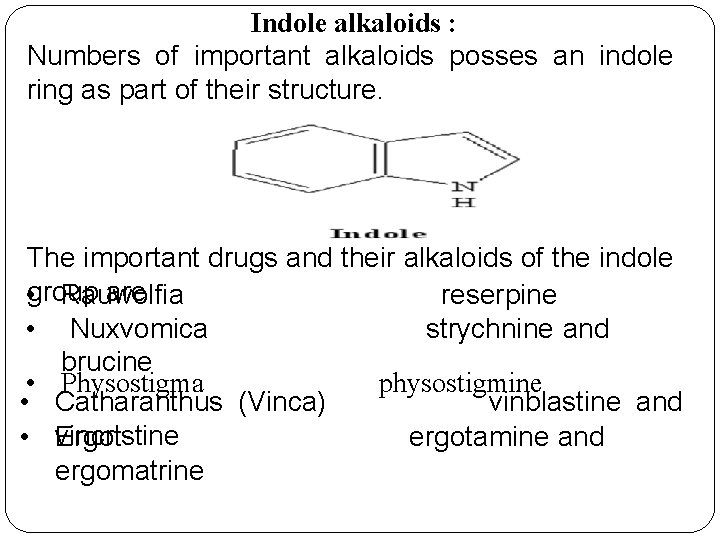
Indole alkaloids : Numbers of important alkaloids posses an indole ring as part of their structure. The important drugs and their alkaloids of the indole are: • group Rauwolfia reserpine • Nuxvomica strychnine and brucine • Physostigma physostigmine • Catharanthus (Vinca) vinblastine and vincristine • Ergot ergotamine and ergomatrine
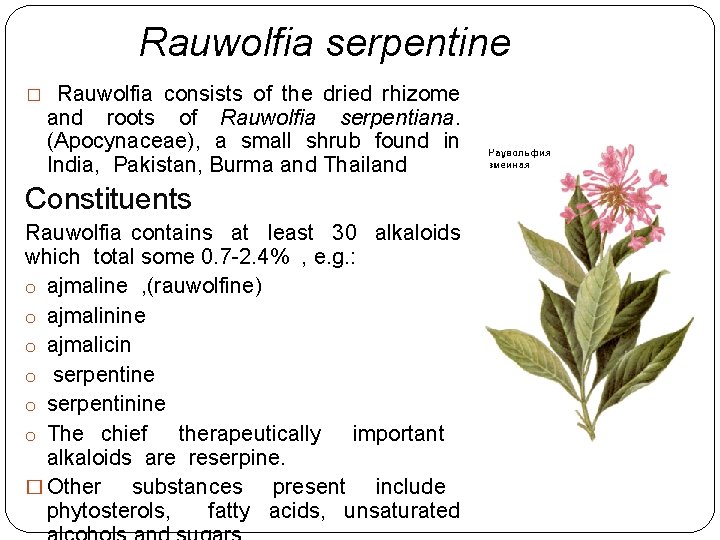
Rauwolfia serpentine � Rauwolfia consists of the dried rhizome and roots of Rauwolfia serpentiana. (Apocynaceae), a small shrub found in India, Pakistan, Burma and Thailand Constituents Rauwolfia contains at least 30 alkaloids which total some 0. 7 -2. 4% , e. g. : o ajmaline , (rauwolfine) o ajmalinine o ajmalicin o serpentine o serpentinine o The chief therapeutically important alkaloids are reserpine. � Other substances present include phytosterols, fatty acids, unsaturated
Uses � Rauwolfla preparations and reserpine used in the management of essential hypertension and in certain neuropsychiatric disolders. � Ajmaline. which has pharmacological properties similar to those of quinidine. is marketed in Japan for the treatment of cardiac arrhythmias � Ajmalacine is mostly used as antihypertensive and anti- ischemic agent (both central and peripheral). It has a broad application in the relief of obstruction of normal cerebral
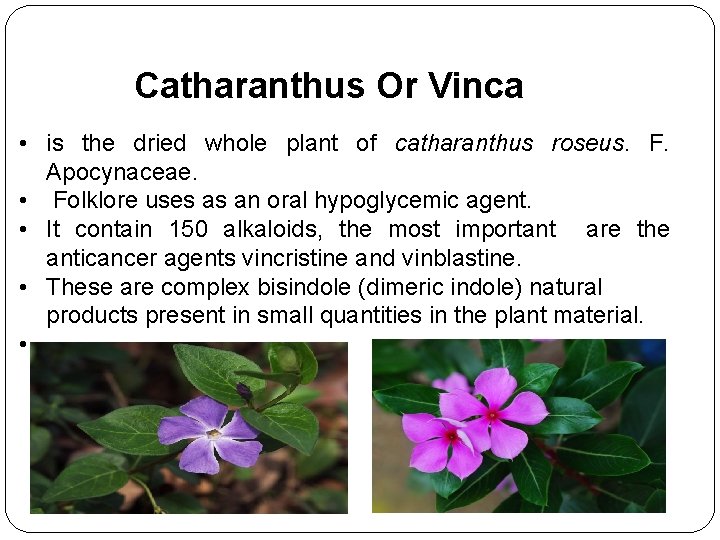
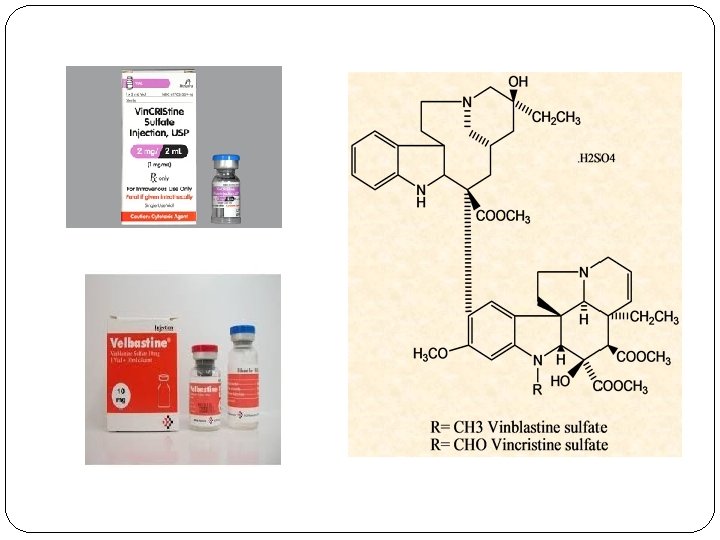
Catharanthus Or Vinca • is the dried whole plant of catharanthus roseus. F. Apocynaceae. • Folklore uses as an oral hypoglycemic agent. • It contain 150 alkaloids, the most important are the anticancer agents vincristine and vinblastine. • These are complex bisindole (dimeric indole) natural products present in small quantities in the plant material. •
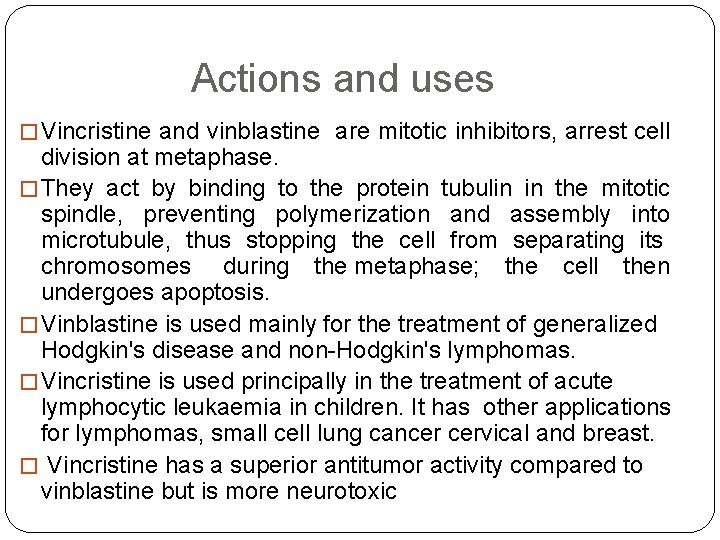
Actions and uses � Vincristine and vinblastine are mitotic inhibitors, arrest cell division at metaphase. � They act by binding to the protein tubulin in the mitotic spindle, preventing polymerization and assembly into microtubule, thus stopping the cell from separating its chromosomes during the metaphase; the cell then undergoes apoptosis. � Vinblastine is used mainly for the treatment of generalized Hodgkin's disease and non-Hodgkin's lymphomas. � Vincristine is used principally in the treatment of acute lymphocytic leukaemia in children. It has other applications for lymphomas, small cell lung cancer cervical and breast. � Vincristine has a superior antitumor activity compared to vinblastine but is more neurotoxic
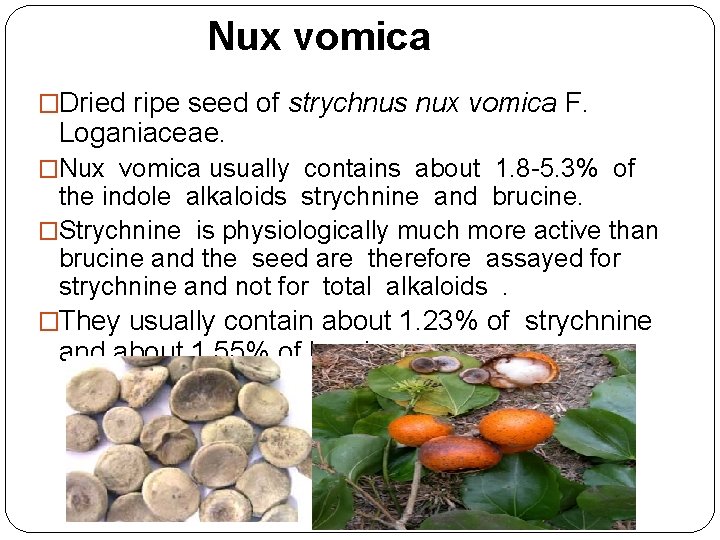
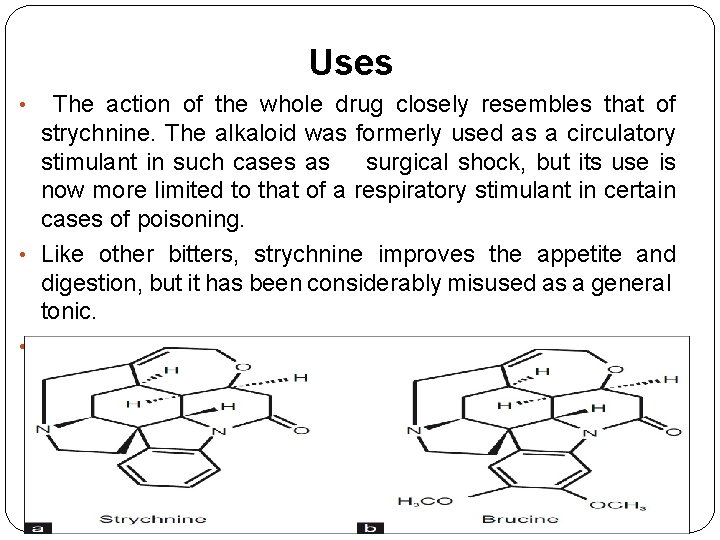
Nux vomica �Dried ripe seed of strychnus nux vomica F. Loganiaceae. �Nux vomica usually contains about 1. 8 -5. 3% of the indole alkaloids strychnine and brucine. �Strychnine is physiologically much more active than brucine and the seed are therefore assayed for strychnine and not for total alkaloids. �They usually contain about 1. 23% of strychnine and about 1. 55% of brucine.
Uses The action of the whole drug closely resembles that of strychnine. The alkaloid was formerly used as a circulatory stimulant in such cases as surgical shock, but its use is now more limited to that of a respiratory stimulant in certain cases of poisoning. • Like other bitters, strychnine improves the appetite and digestion, but it has been considerably misused as a general tonic. • Brucine: Is less toxic than strychnine and used commercially as an alcohol denaturant •
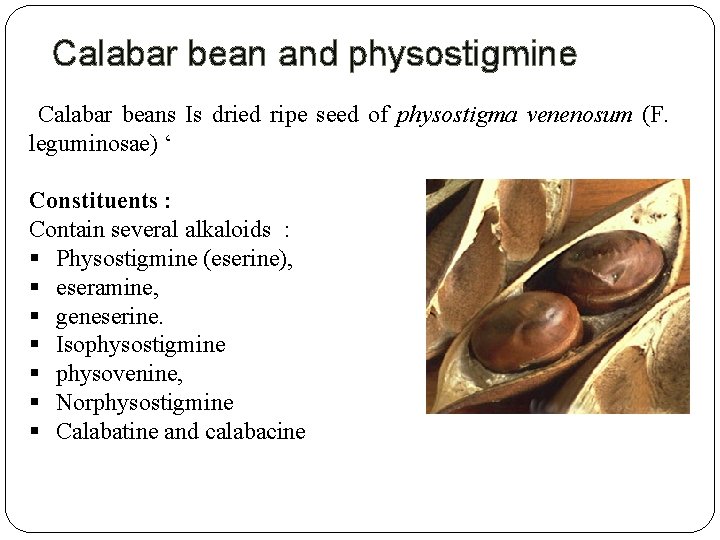
Calabar bean and physostigmine Calabar beans Is dried ripe seed of physostigma venenosum (F. leguminosae) ‘ Constituents : Contain several alkaloids : § Physostigmine (eserine), § eseramine, § geneserine. § Isophysostigmine § physovenine, § Norphysostigmine § Calabatine and calabacine
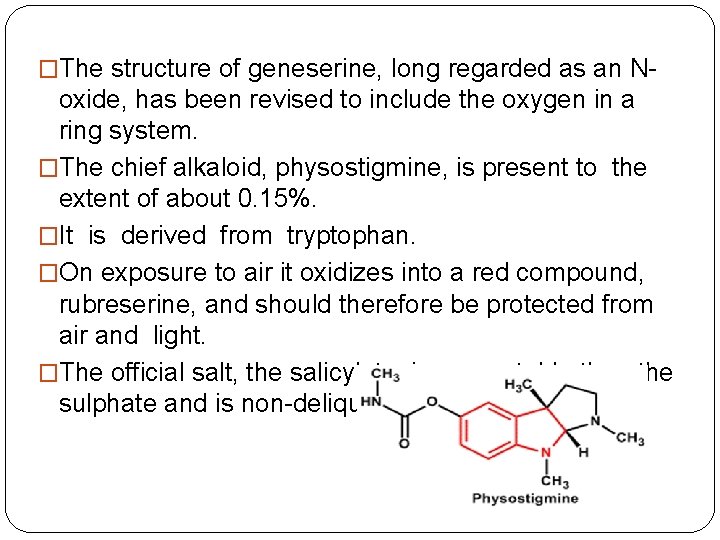
�The structure of geneserine, long regarded as an N- oxide, has been revised to include the oxygen in a ring system. �The chief alkaloid, physostigmine, is present to the extent of about 0. 15%. �It is derived from tryptophan. �On exposure to air it oxidizes into a red compound, rubreserine, and should therefore be protected from air and light. �The official salt, the salicylate, is more stable than the sulphate and is non-deliquescent.
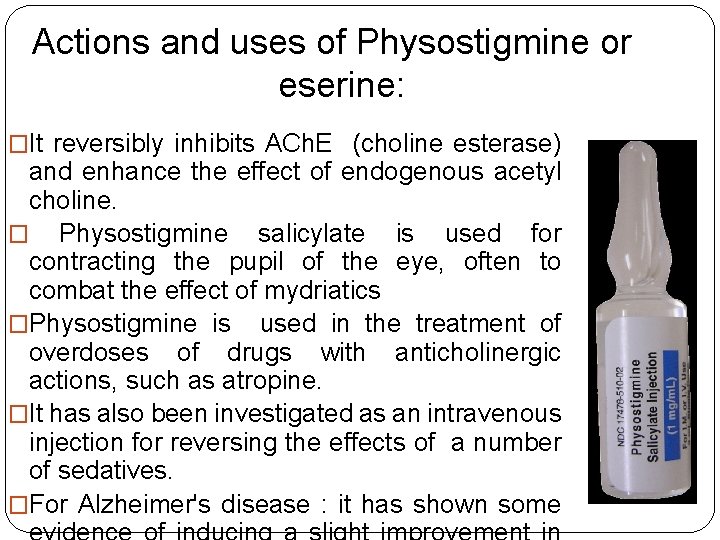
Actions and uses of Physostigmine or eserine: �It reversibly inhibits ACh. E (choline esterase) and enhance the effect of endogenous acetyl choline. � Physostigmine salicylate is used for contracting the pupil of the eye, often to combat the effect of mydriatics �Physostigmine is used in the treatment of overdoses of drugs with anticholinergic actions, such as atropine. �It has also been investigated as an intravenous injection for reversing the effects of a number of sedatives. �For Alzheimer's disease : it has shown some
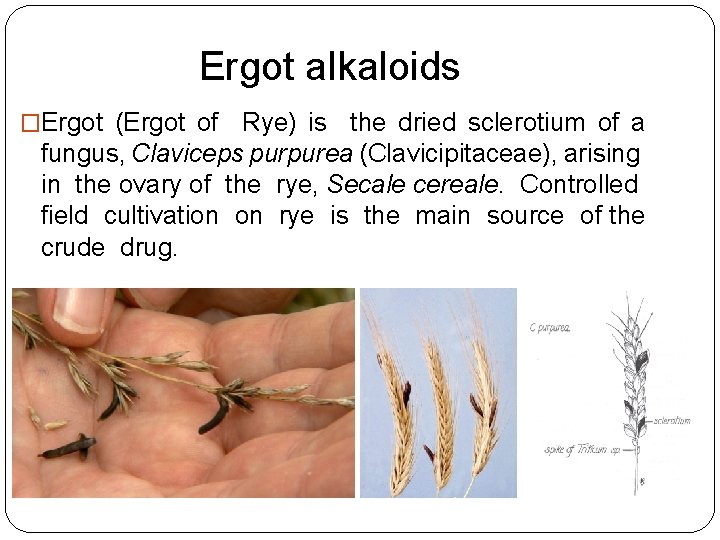
Ergot alkaloids �Ergot (Ergot of Rye) is the dried sclerotium of a fungus, Claviceps purpurea (Clavicipitaceae), arising in the ovary of the rye, Secale cereale. Controlled field cultivation on rye is the main source of the crude drug.
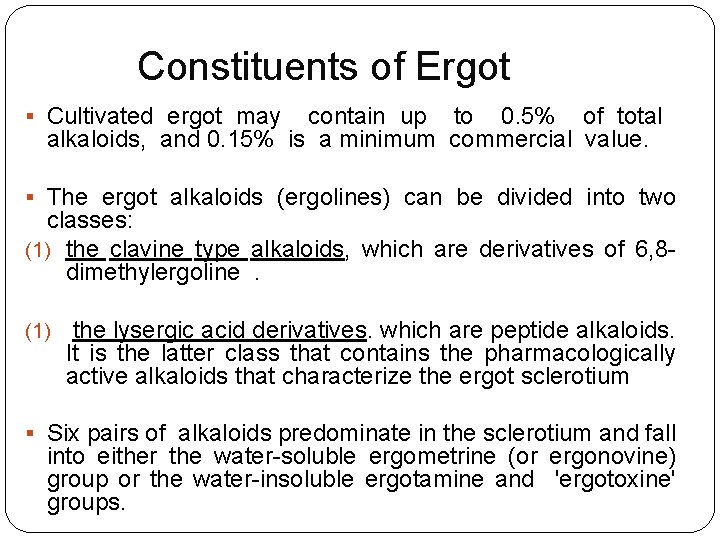
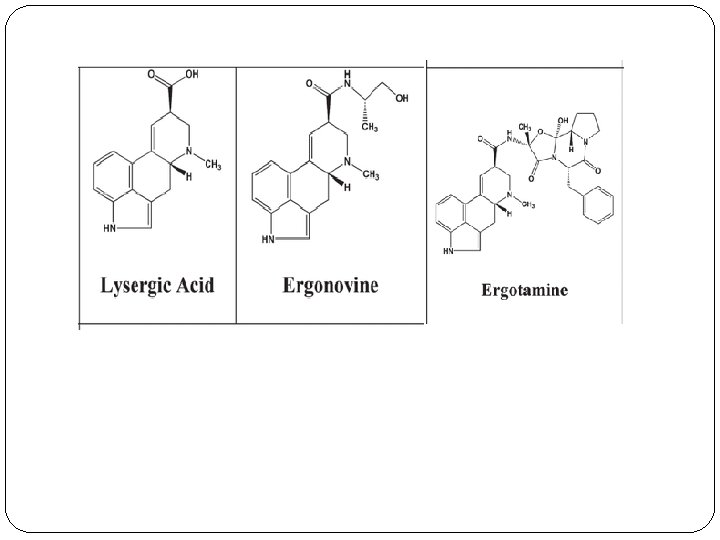
Constituents of Ergot § Cultivated ergot may contain up to 0. 5% of total alkaloids, and 0. 15% is a minimum commercial value. § The ergot alkaloids (ergolines) can be divided into two classes: (1) the clavine type alkaloids, which are derivatives of 6, 8 dimethylergoline. (1) the lysergic acid derivatives. which are peptide alkaloids. It is the latter class that contains the pharmacologically active alkaloids that characterize the ergot sclerotium § Six pairs of alkaloids predominate in the sclerotium and fall into either the water-soluble ergometrine (or ergonovine) group or the water-insoluble ergotamine and 'ergotoxine' groups.
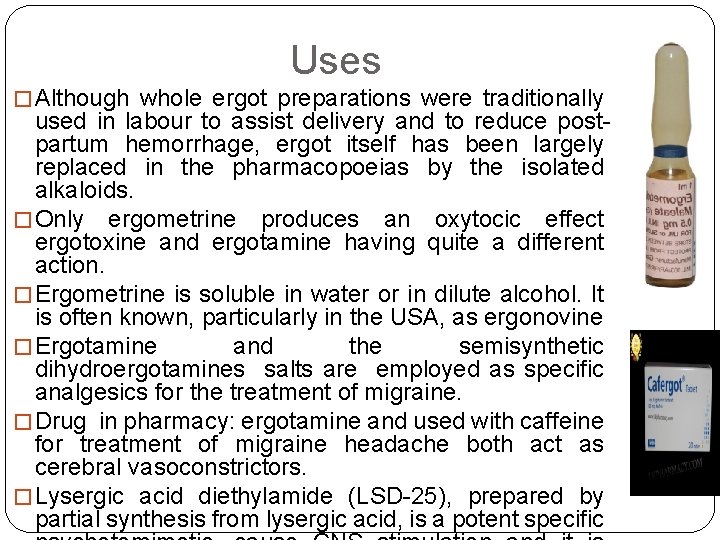
Uses � Although whole ergot preparations were traditionally used in labour to assist delivery and to reduce postpartum hemorrhage, ergot itself has been largely replaced in the pharmacopoeias by the isolated alkaloids. � Only ergometrine produces an oxytocic effect ergotoxine and ergotamine having quite a different action. � Ergometrine is soluble in water or in dilute alcohol. It is often known, particularly in the USA, as ergonovine � Ergotamine and the semisynthetic dihydroergotamines salts are employed as specific analgesics for the treatment of migraine. � Drug in pharmacy: ergotamine and used with caffeine for treatment of migraine headache both act as cerebral vasoconstrictors. � Lysergic acid diethylamide (LSD-25), prepared by partial synthesis from lysergic acid, is a potent specific