Edo Japan A Closed Society 1848 Ranald Macdonald




- Slides: 66
Edo Japan: A Closed Society
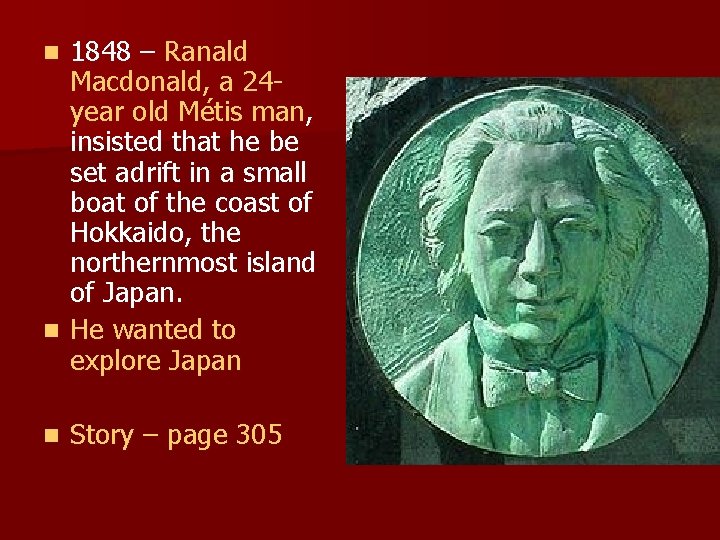
1848 – Ranald Macdonald, a 24 year old Métis man, insisted that he be set adrift in a small boat of the coast of Hokkaido, the northernmost island of Japan. n He wanted to explore Japan n n Story – page 305
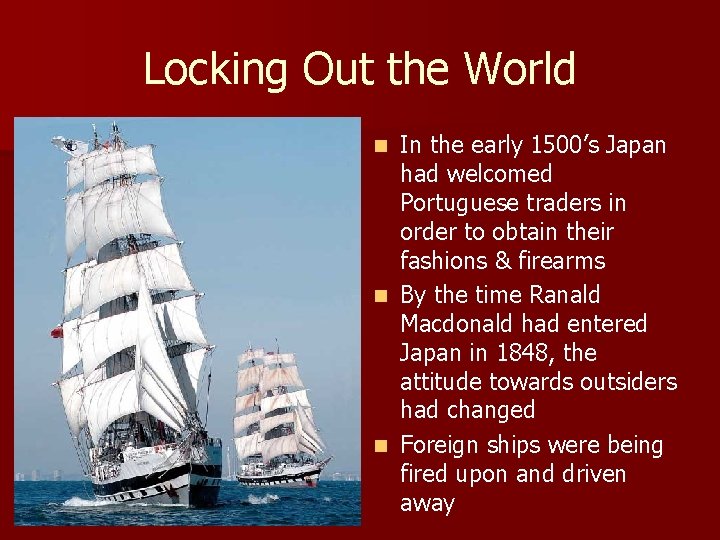
Locking Out the World In the early 1500’s Japan had welcomed Portuguese traders in order to obtain their fashions & firearms n By the time Ranald Macdonald had entered Japan in 1848, the attitude towards outsiders had changed n Foreign ships were being fired upon and driven away n
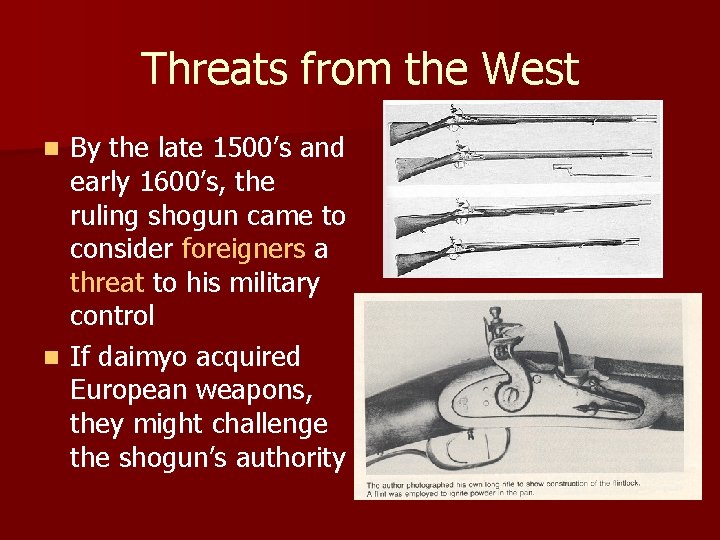
Threats from the West By the late 1500’s and early 1600’s, the ruling shogun came to consider foreigners a threat to his military control n If daimyo acquired European weapons, they might challenge the shogun’s authority n
New Ways of Belief and Thought The shogun felt that loyalty to a Christian God and the Church were threats to his authority n In 1614, he ordered all missionaries out of the country n Churches were destroyed and all Japanese Christians who refused to give up their new faith were executed n This lasted until 1640, by then it is estimated thousands of Japanese Christians & 70 missionaries were put to death n
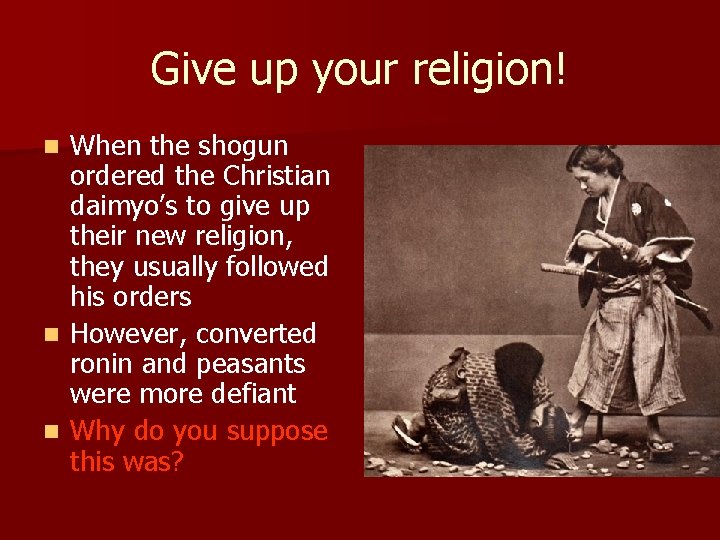
Give up your religion! When the shogun ordered the Christian daimyo’s to give up their new religion, they usually followed his orders n However, converted ronin and peasants were more defiant n Why do you suppose this was? n
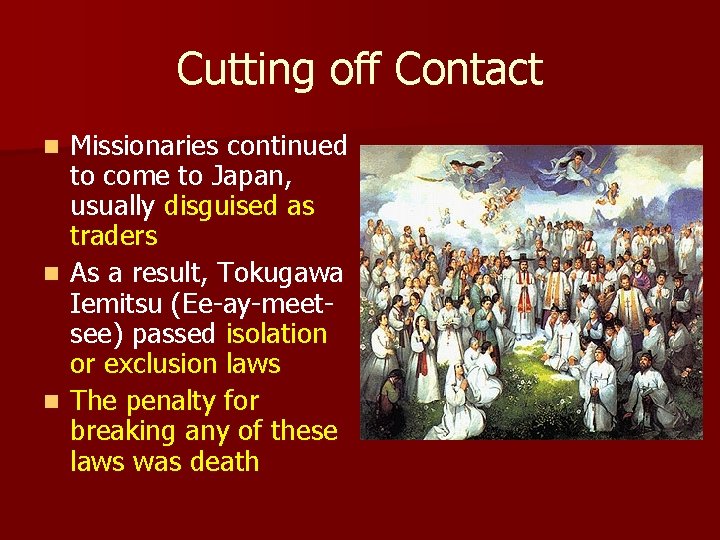
Cutting off Contact Missionaries continued to come to Japan, usually disguised as traders n As a result, Tokugawa Iemitsu (Ee-ay-meetsee) passed isolation or exclusion laws n The penalty for breaking any of these laws was death n
Terms of the Exclusion Laws n 1. All Christian missionaries or foreign traders were forced to leave Japan. Newcomers were no longer allowed to enter n 2. The Japanese were not allowed to go abroad n 3. Ships large enough to make long voyages could no longer be built, existing ones were destroyed
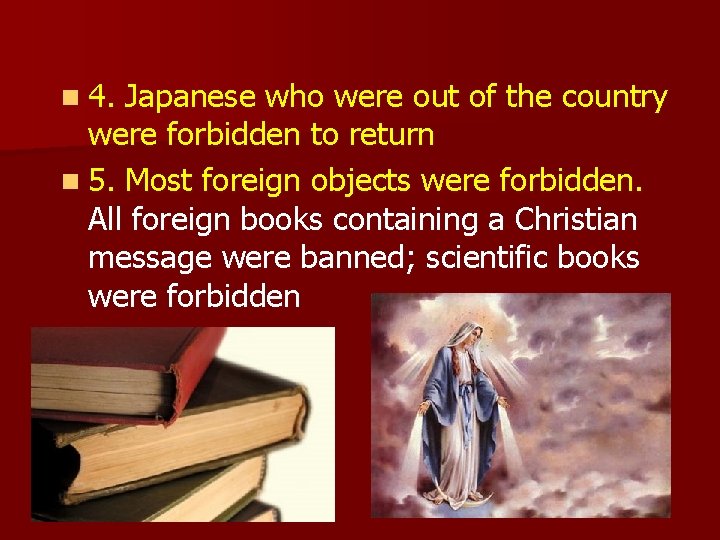
n 4. Japanese who were out of the country were forbidden to return n 5. Most foreign objects were forbidden. All foreign books containing a Christian message were banned; scientific books were forbidden
n In addition, the shogun tightened controls on movement within Japan n People needed to get special documents to travel from one domain to another, a curfew was instituted to keep people from moving around at night, and wheeled transport was banned (carts)
Pen Computer
360 Degree Video Helmet
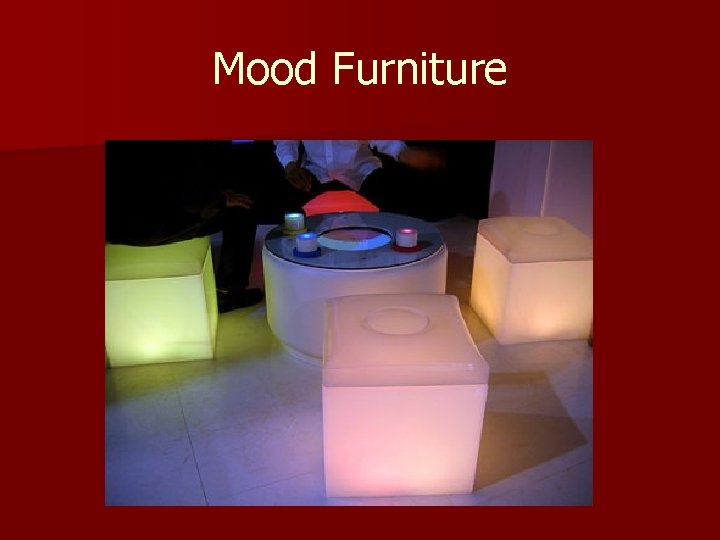
Mood Furniture
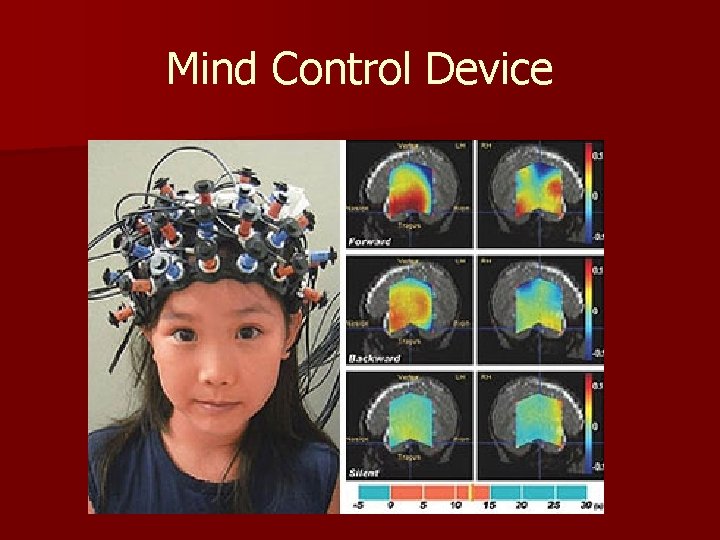
Mind Control Device
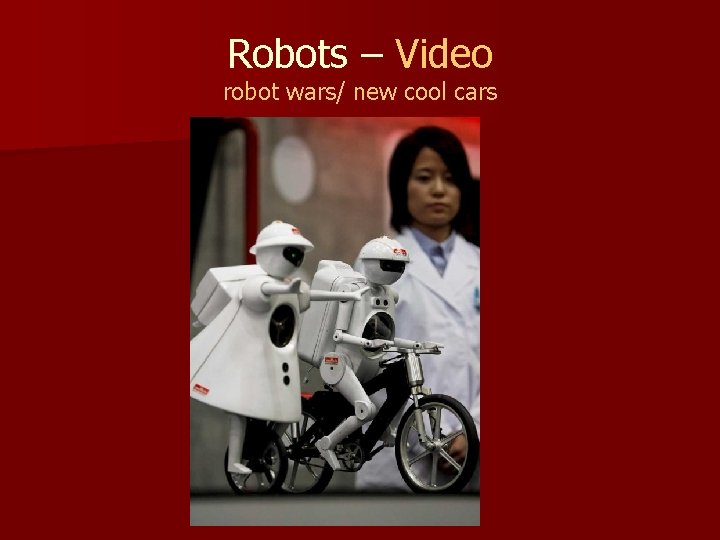
Robots – Video robot wars/ new cool cars
Futuristic Japanese Cars n http: //www. youtube. com/watch? v=Fp. Ag. U MUlhw 4 n Old people falling: https: //www. youtube. com/watch? v=C 4 c. Hf z. Y 8 nuw 1: 37 min
Top 5 Japanese Inventions n http: //www. youtube. com/watch? v=w. K 7 vv KKAADY Old People Falling Over!! http: //www. youtube. com/watch? v=cc h. VXZr. Mw. AA SOLAR ROAD -- Mind Blow #82 VSAUCE n http: //www. youtube. com/watch? v=s_lgz. UHb. Fg&list=UUqmug. Cq. ELzh. IMNYnsj. Sc. XX w
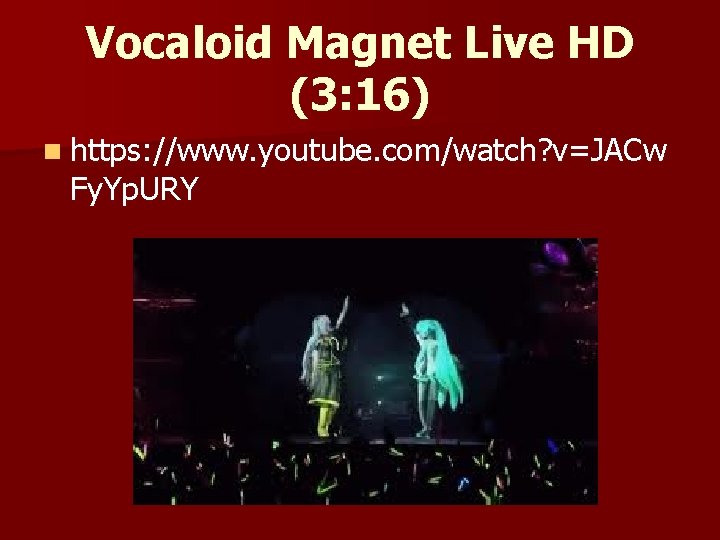
Vocaloid Magnet Live HD (3: 16) n https: //www. youtube. com/watch? v=JACw Fy. Yp. URY
Oklahoma Protective Products (2: 37) n http: //time. com/#2850794/oklahoma- company-markets-bullet-proof-blanket-forkids/
What would make your life easier? n 3 -D clothes? Muscles? Someone to do your make-up for you? Play on your phone in class? n Find something in your life you would like to make better. n Create an invention to help you with this n On the back, explain what your invention does and any downfalls it may have.
ASSIGNMENT n n n Brainstorm items that may have been banned during this period of isolation Create a “care” package to be smuggled to someone in Japan In the package, include items that may have been banned during the Edo period, disguised as something else Write a letter that states who you are sending the package to and why, what each item is in the package, and why you have included it. You will then disguise the items in some way in order to avoid being arrested
Assignment n Research a modern invention (can be Japanese or somewhere else in the world) n In your visual journal create a two page spread report on this invention. n On side should be an image and name for the invention n The other side should be a report answering who, what, when, where, why
Exceptions to Exclusion n n In 1639, the shogun banned Portuguese ships in Japan and expelled all foreigners except for Dutch (Holland), Korean, and Chinese traders Why were those groups of people allowed to stay? The Dutch were only allowed on a small island in the harbour of Nagasaki The shogun believed this isolation policy was the only way to eliminate possible threats to his power and protect Japanese culture
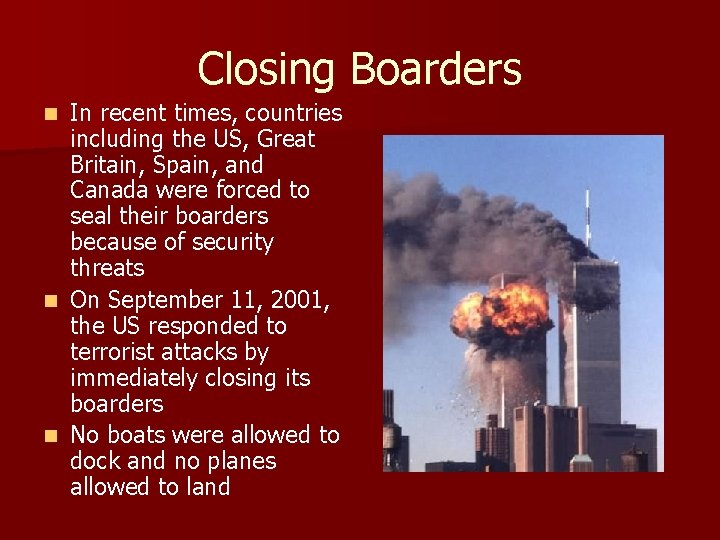
Closing Boarders n n n In recent times, countries including the US, Great Britain, Spain, and Canada were forced to seal their boarders because of security threats On September 11, 2001, the US responded to terrorist attacks by immediately closing its boarders No boats were allowed to dock and no planes allowed to land
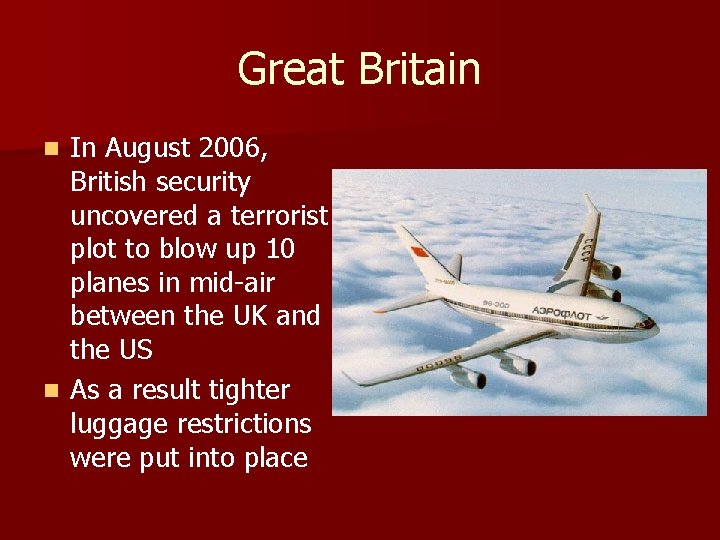
Great Britain In August 2006, British security uncovered a terrorist plot to blow up 10 planes in mid-air between the UK and the US n As a result tighter luggage restrictions were put into place n
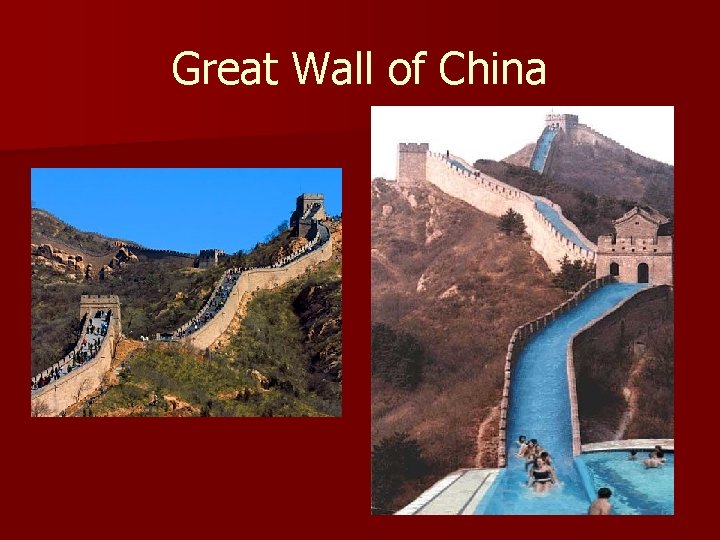
Great Wall of China
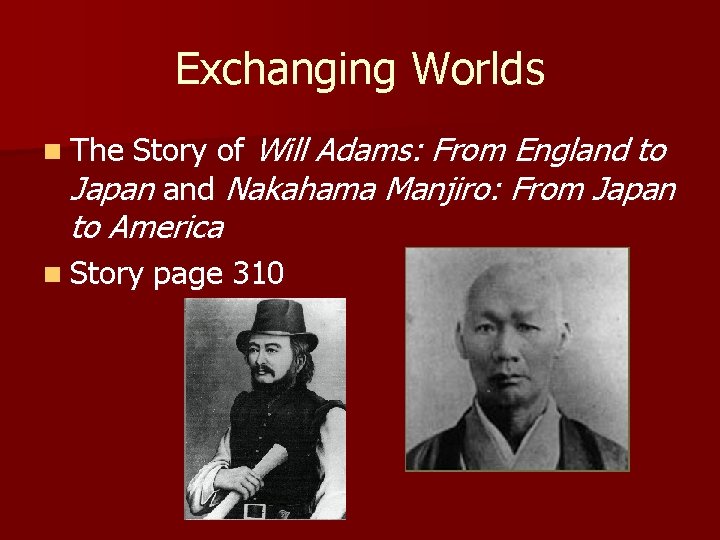
Exchanging Worlds Story of Will Adams: From England to Japan and Nakahama Manjiro: From Japan n The to America n Story page 310
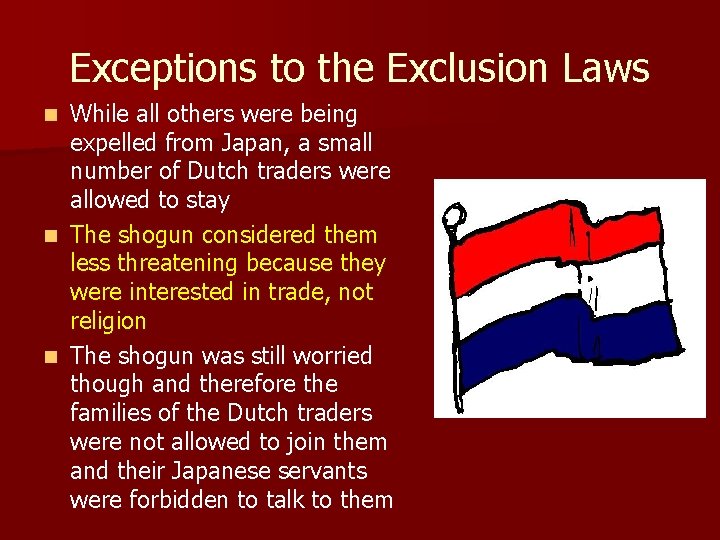
Exceptions to the Exclusion Laws While all others were being expelled from Japan, a small number of Dutch traders were allowed to stay n The shogun considered them less threatening because they were interested in trade, not religion n The shogun was still worried though and therefore the families of the Dutch traders were not allowed to join them and their Japanese servants were forbidden to talk to them n
n n n Once a year the Dutch were required to make an expensive trip to Edo to pay their respects to the shogun and stay there for three months What does this remind you of that the shogun had previously done? There, officials asked them many questions about the West, especially about current events and developments in medicine
The shogun also had a small number of Japanese scholars learn about Dutch medicine and language n They were called the Dutch Scholars and were directed to educate themselves about Western ways n The sons of Samurai were also sent by their daimyo to study the Dutch language n
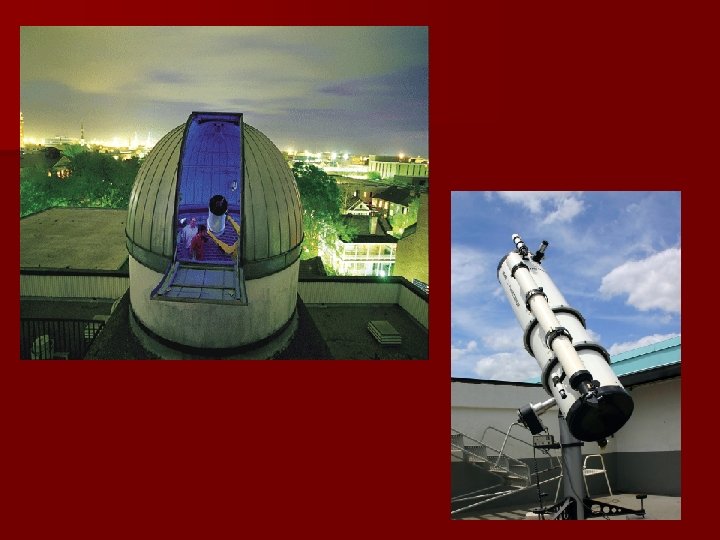
In 1720, importation of European books was once again allowed, with the exception of books on Christianity n The shogun now encouraged the study of astronomy and had an observatory built in Edo in 1744 n Most Japanese were not exposed to ideas about the West n The shogun feared these ideas might “confuse” them and make them forget they owed absolute obedience to him n
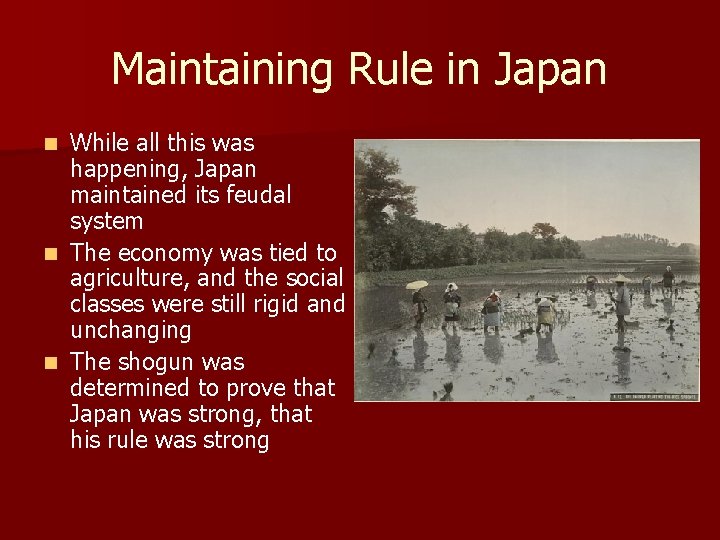
Maintaining Rule in Japan While all this was happening, Japan maintained its feudal system n The economy was tied to agriculture, and the social classes were still rigid and unchanging n The shogun was determined to prove that Japan was strong, that his rule was strong n
Toward an Ideal Society n n The Japanese wanted to live in a society that embodied the things that were important to them: 1) Peace, safety, and security 2) Harmony, respect, and a sense that everyone has his/ her own place 3) Leisure time and opportunities for personal expression and enjoyment of the arts, sports, entertainment, and crafts
Prisoners in Their Own Country n n n The peace in security in Edo society came at a cost Rules were very strict Life was controlled by rigid rules People could not move from the social class of their birth and they were not encouraged to think for themselves There was little personal freedom, such as the freedom of expression
A Booming Economy n n n Long periods of stability and peace usually result in more wealth for a country In some ways, Edo Japan had a booming economy. 1) Farmers increased production by irrigating and growing two crops on the same piece of land 2) Road improvements funded by the daimyo helped increase trade 3) Population increased in urban areas 4) silver and gold coins were introduced as $
Economy Held Back n The economy suffered in many ways as well: n 1) Little foreign trade n 2) overtaxing of peasants n 3) continued use of rice as payment
A Golden Age of Culture n As a direct result of peace and prosperity in Edo, Japan, the arts and culture were able to flourish n Many things we associate with Japanese culture today developed during the years of isolation n 1) Kabuki, 2) Tea Ceremonies, 3) Sumo Wrestling, 4) Haiku, 5) Bunraku, 6) Woodblock Prints, 7) Kendo, and 8) Noh
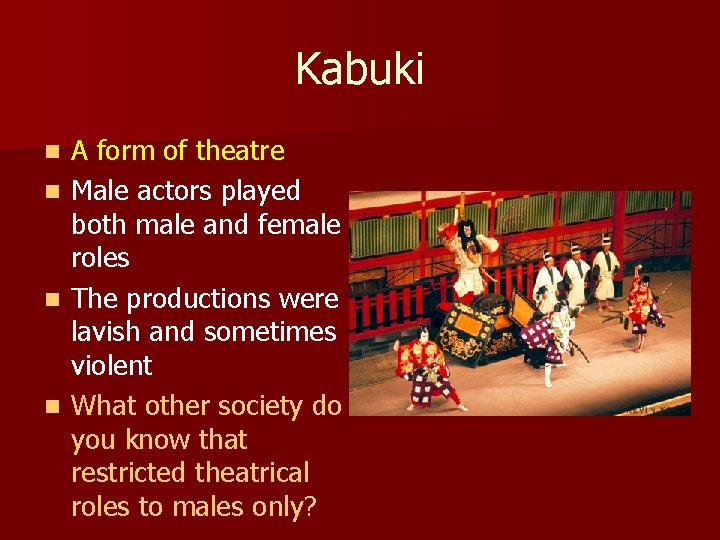
Kabuki n n A form of theatre Male actors played both male and female roles The productions were lavish and sometimes violent What other society do you know that restricted theatrical roles to males only?
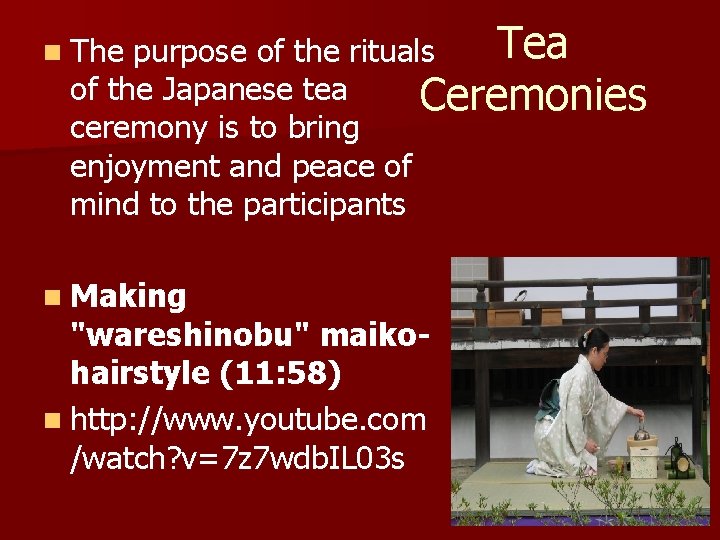
Tea purpose of the rituals of the Japanese tea Ceremonies ceremony is to bring enjoyment and peace of mind to the participants n The n Making "wareshinobu" maikohairstyle (11: 58) n http: //www. youtube. com /watch? v=7 z 7 wdb. IL 03 s
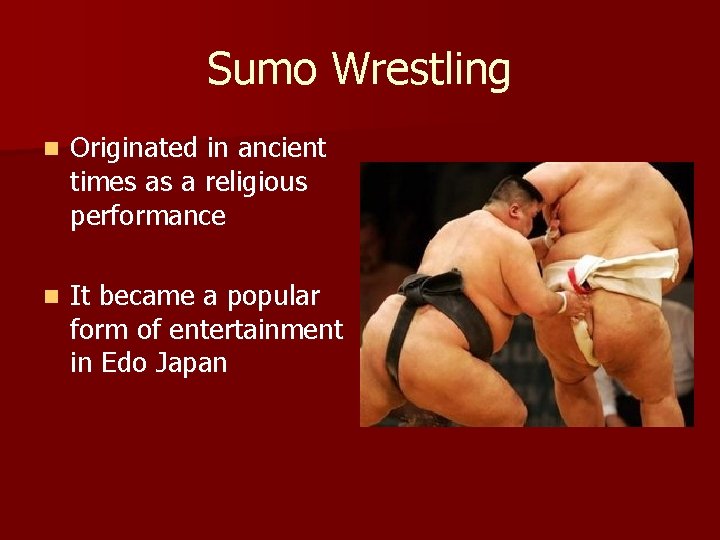
Sumo Wrestling n Originated in ancient times as a religious performance n It became a popular form of entertainment in Edo Japan
n n n The Struggle Of Sumo Wrestling - Final Being A Sumo Bout (8: 37) (24: 00) http: //www. youtube. com/ n http: //www. youtube. c watch? v=h. XCa. Zjt. S-Us om/watch? v=Uy 8 b 09 MMA Fighter vs Sumo (2: 54) u 1 x. Pc http: //www. youtube. com/ n What you can learn watch? v=0 z 9 H 1 v. MLSHc from a Sumo 600 lbs Sumo Vs 169 lbs Wrestlers Diet MMA Fighter – (6; 56) KTFOvideos (5: 48) n http: //www. youtube. c https: //www. youtube. co om/watch? v=GUrz. BK m/watch? v=OWxl. Z 52 O 0 r. I Vvv. DY n
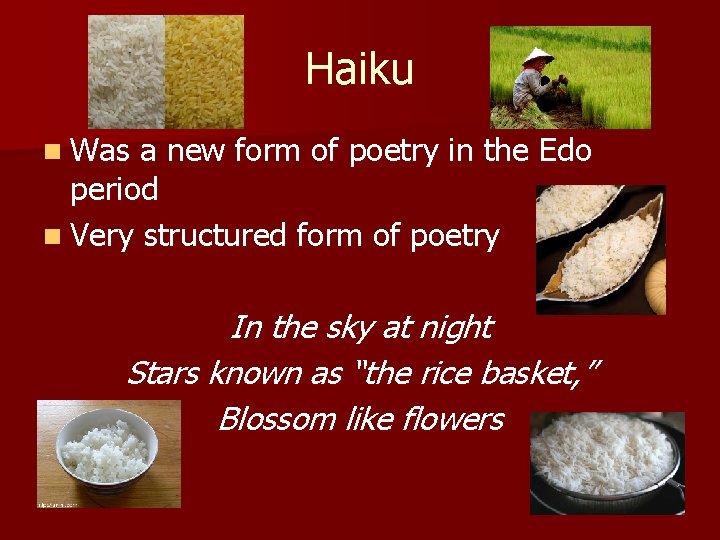
Haiku n Was a new form of poetry in the Edo period n Very structured form of poetry In the sky at night Stars known as “the rice basket, ” Blossom like flowers
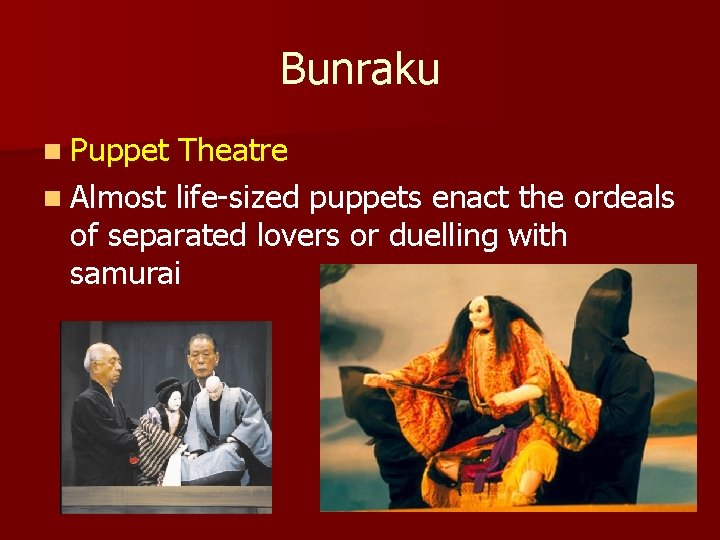
Bunraku n Puppet Theatre n Almost life-sized puppets enact the ordeals of separated lovers or duelling with samurai
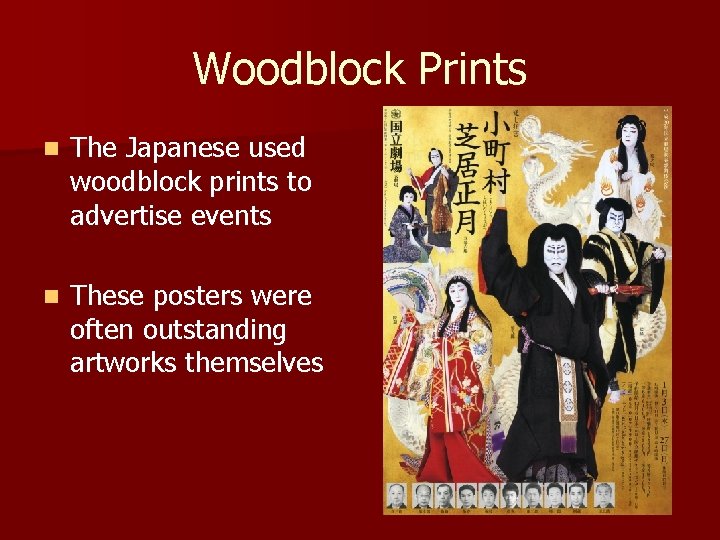
Woodblock Prints n The Japanese used woodblock prints to advertise events n These posters were often outstanding artworks themselves
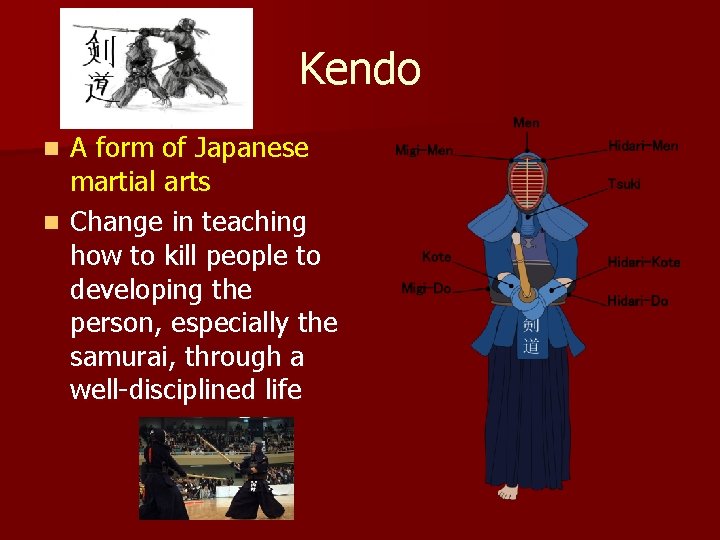
Kendo A form of Japanese martial arts n Change in teaching how to kill people to developing the person, especially the samurai, through a well-disciplined life n
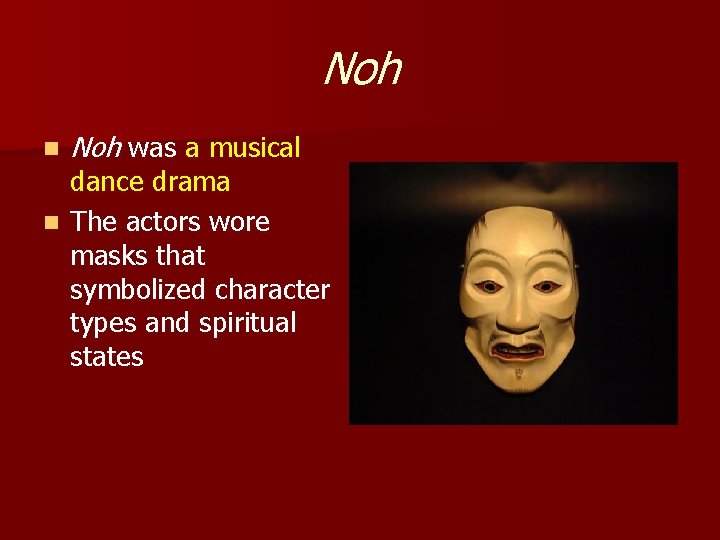
Noh n Noh was a musical dance drama n The actors wore masks that symbolized character types and spiritual states
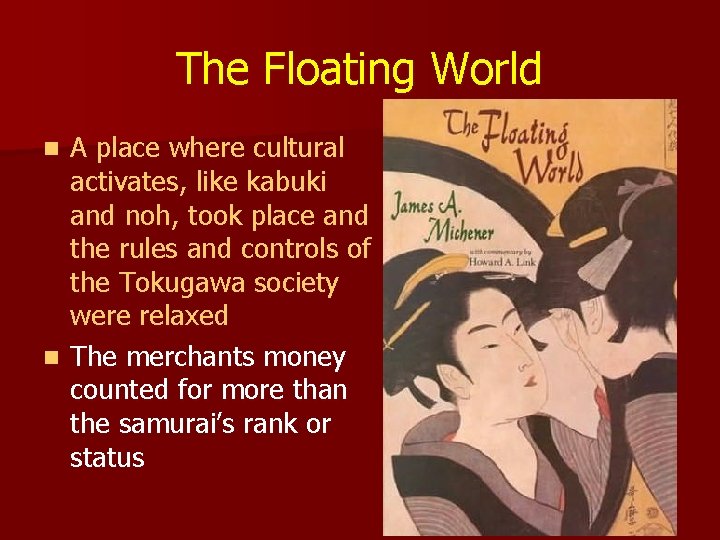
The Floating World A place where cultural activates, like kabuki and noh, took place and the rules and controls of the Tokugawa society were relaxed n The merchants money counted for more than the samurai’s rank or status n
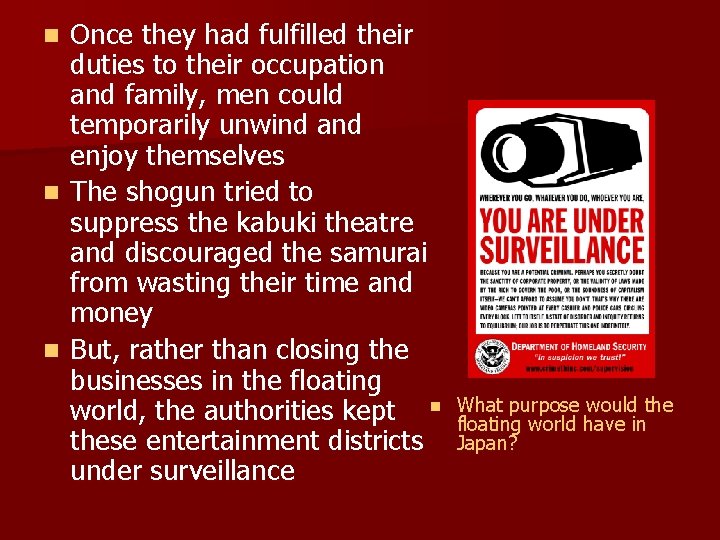
Once they had fulfilled their duties to their occupation and family, men could temporarily unwind and enjoy themselves n The shogun tried to suppress the kabuki theatre and discouraged the samurai from wasting their time and money n But, rather than closing the businesses in the floating world, the authorities kept n these entertainment districts under surveillance n What purpose would the floating world have in Japan?
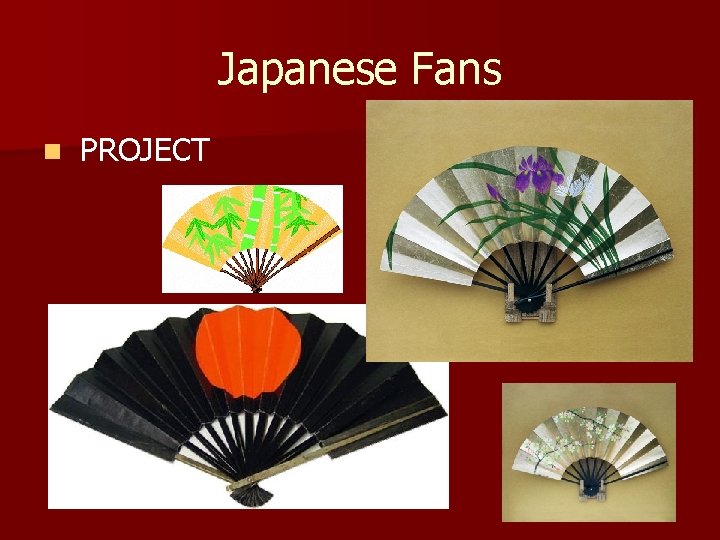
Japanese Fans n PROJECT
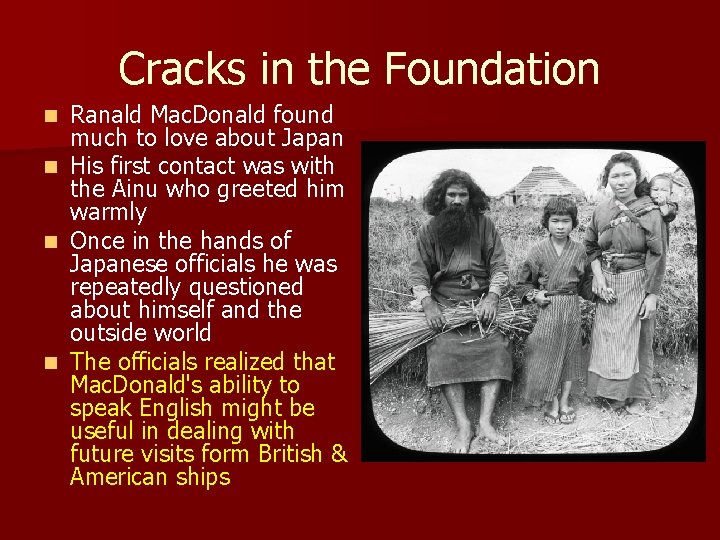
Cracks in the Foundation Ranald Mac. Donald found much to love about Japan n His first contact was with the Ainu who greeted him warmly n Once in the hands of Japanese officials he was repeatedly questioned about himself and the outside world n The officials realized that Mac. Donald's ability to speak English might be useful in dealing with future visits form British & American ships n
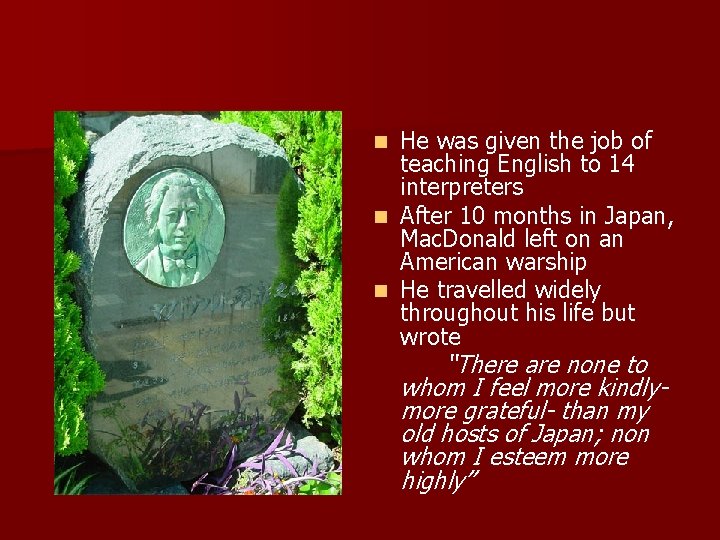
He was given the job of teaching English to 14 interpreters n After 10 months in Japan, Mac. Donald left on an American warship n He travelled widely throughout his life but wrote n “There are none to whom I feel more kindlymore grateful- than my old hosts of Japan; non whom I esteem more highly”
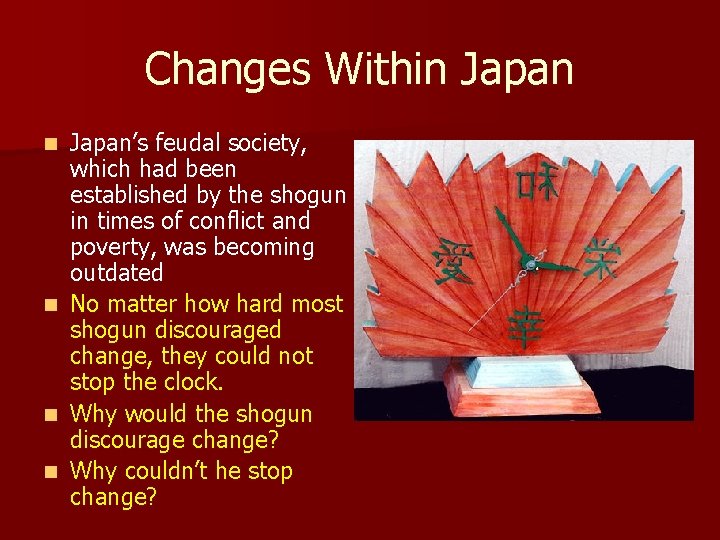
Changes Within Japan n n Japan’s feudal society, which had been established by the shogun in times of conflict and poverty, was becoming outdated No matter how hard most shogun discouraged change, they could not stop the clock. Why would the shogun discourage change? Why couldn’t he stop change?
The Lottery by Shirley Jackson Sometimes traditions are outdated, no longer useful, and not wanted by everyone, but yet they are maintained. n Why do you think this is so? n
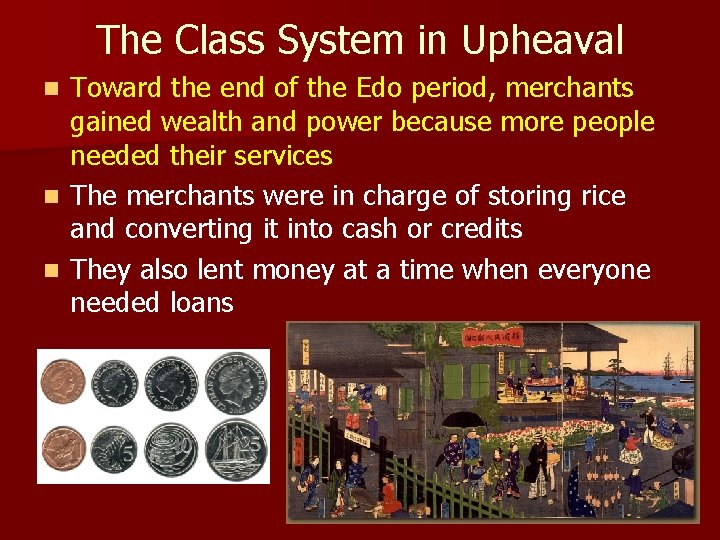
The Class System in Upheaval Toward the end of the Edo period, merchants gained wealth and power because more people needed their services n The merchants were in charge of storing rice and converting it into cash or credits n They also lent money at a time when everyone needed loans n
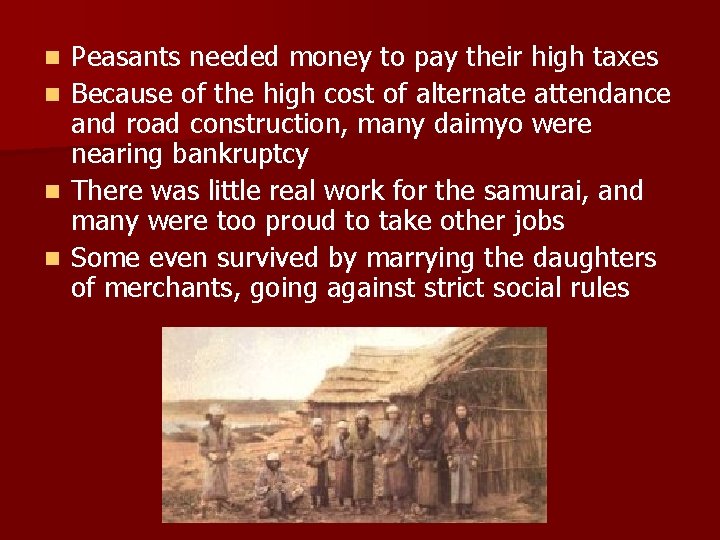
n n Peasants needed money to pay their high taxes Because of the high cost of alternate attendance and road construction, many daimyo were nearing bankruptcy There was little real work for the samurai, and many were too proud to take other jobs Some even survived by marrying the daughters of merchants, going against strict social rules
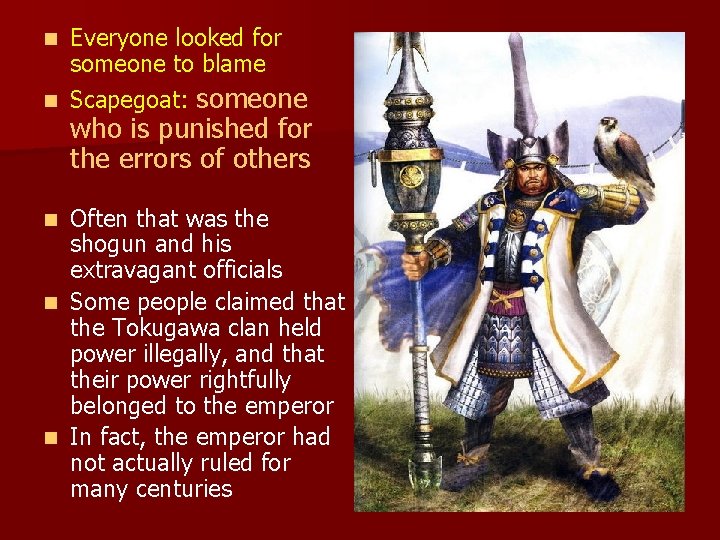
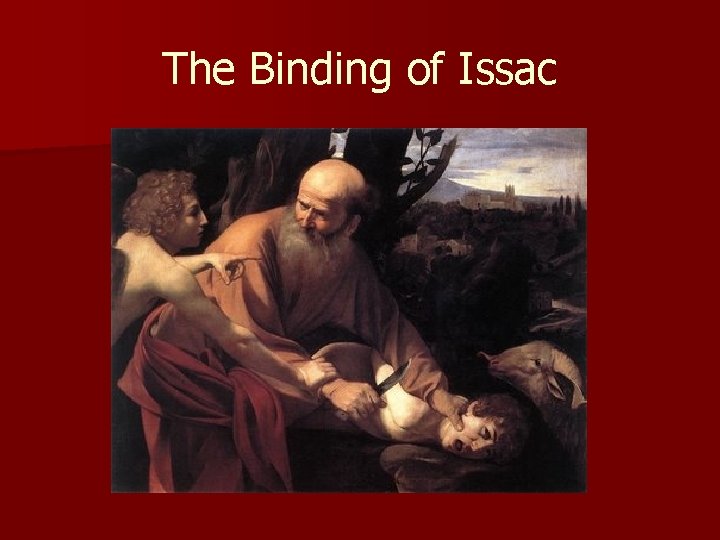
Everyone looked for someone to blame n Scapegoat: someone n who is punished for the errors of others Often that was the shogun and his extravagant officials n Some people claimed that the Tokugawa clan held power illegally, and that their power rightfully belonged to the emperor n In fact, the emperor had not actually ruled for many centuries n
The Binding of Issac
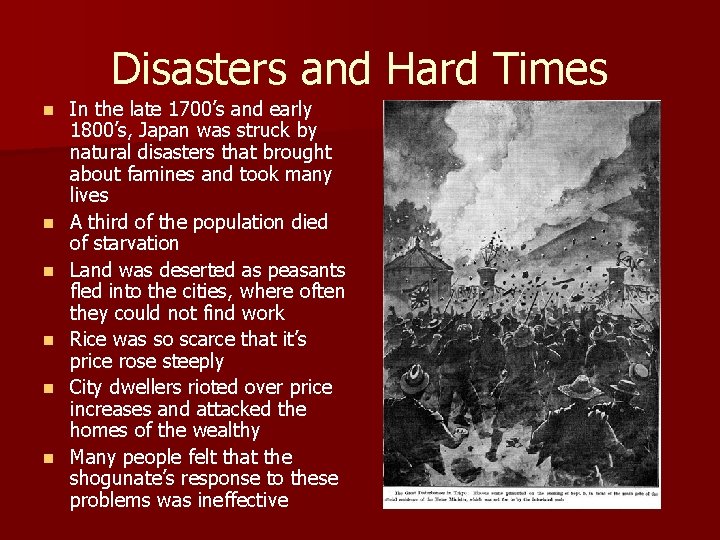
Disasters and Hard Times n n n In the late 1700’s and early 1800’s, Japan was struck by natural disasters that brought about famines and took many lives A third of the population died of starvation Land was deserted as peasants fled into the cities, where often they could not find work Rice was so scarce that it’s price rose steeply City dwellers rioted over price increases and attacked the homes of the wealthy Many people felt that the shogunate’s response to these problems was ineffective
The Expansionist Threat from Outside By the early 1800’s, several nations were knocking on Japan’s door n Russia, England the united States, in particular, requested trade, or at the very least, water and coal for their passing ships n In 1825, the shogunate responded with the “No Second Thought Expulsion Order” n
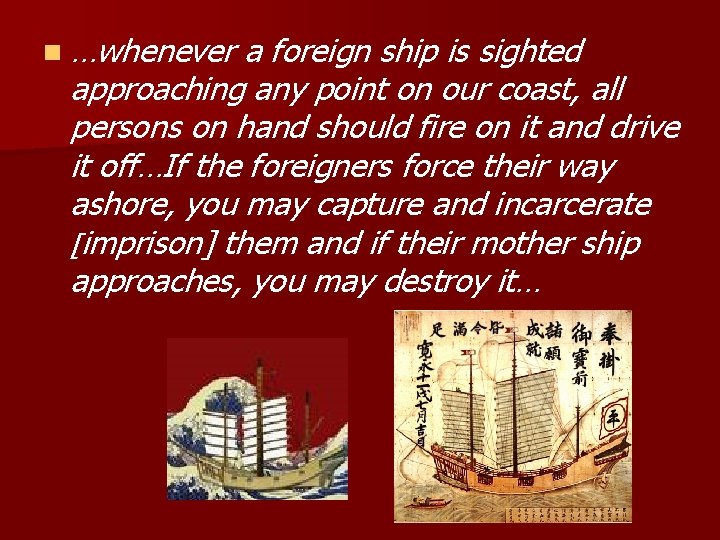
n …whenever a foreign ship is sighted approaching any point on our coast, all persons on hand should fire on it and drive it off…If the foreigners force their way ashore, you may capture and incarcerate [imprison] them and if their mother ship approaches, you may destroy it…
“No Second Thought Expulsion Order” n People who tried to enter into Japan were immediately killed
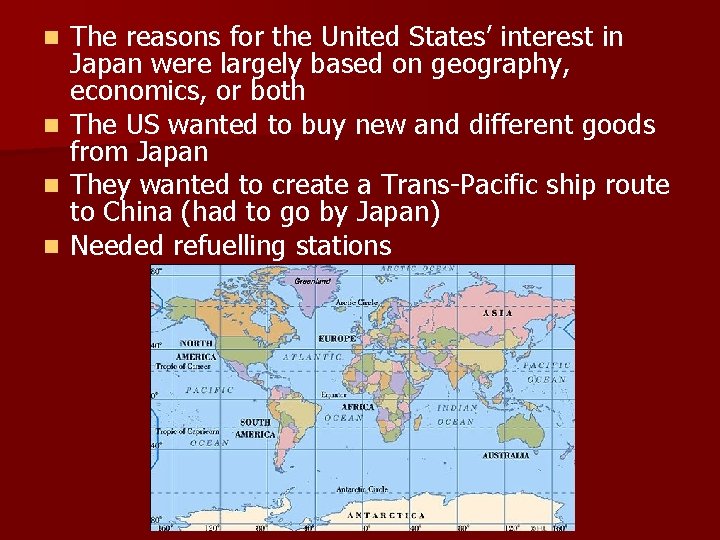
The reasons for the United States’ interest in Japan were largely based on geography, economics, or both n The US wanted to buy new and different goods from Japan n They wanted to create a Trans-Pacific ship route to China (had to go by Japan) n Needed refuelling stations n
Japanese Fighting Fish n Were these reasons enough for the US to try to force its way into Japan, to break open a country that had declared itself closed to most western countries for more than 200 years?