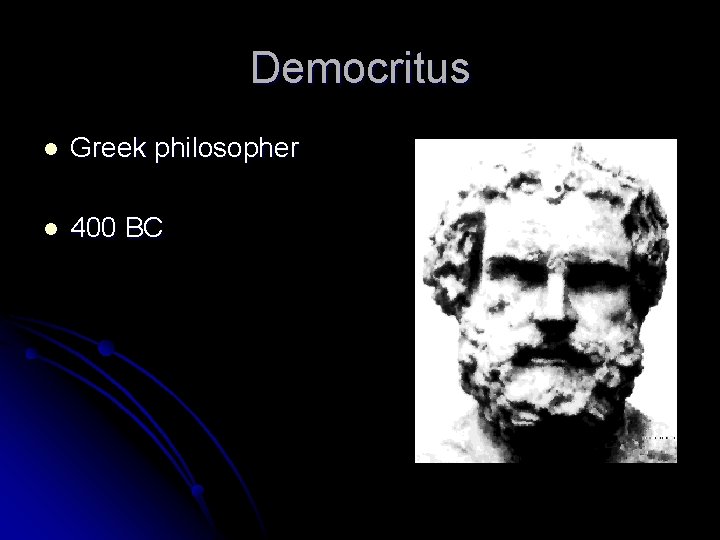
Development of Atomic Models Democritus l Greek philosopher





- Slides: 75
Development of Atomic Models
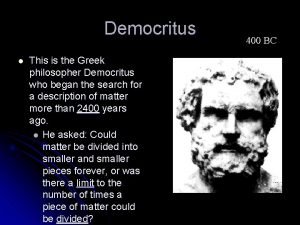
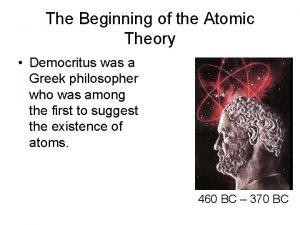
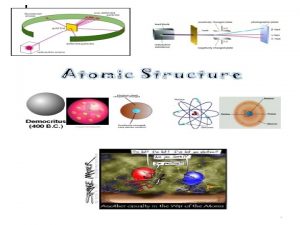
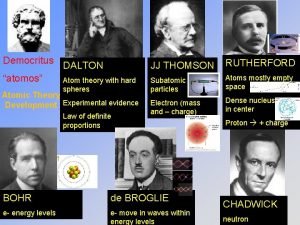
Democritus l Greek philosopher l 400 BC
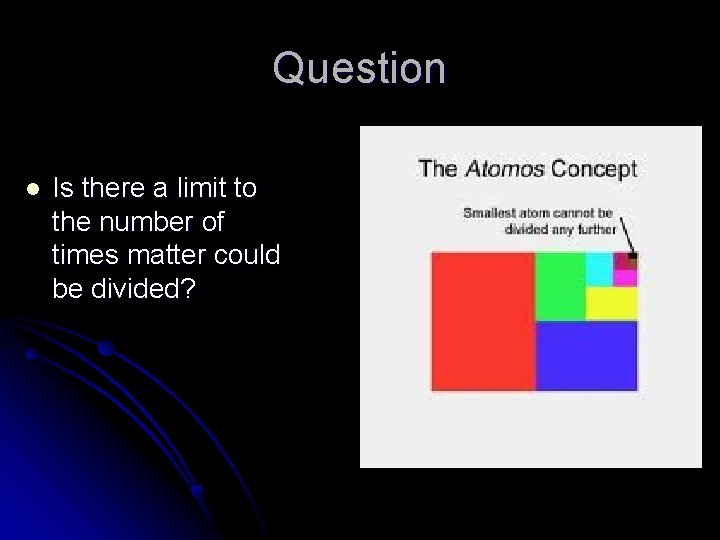
Question l Is there a limit to the number of times matter could be divided?
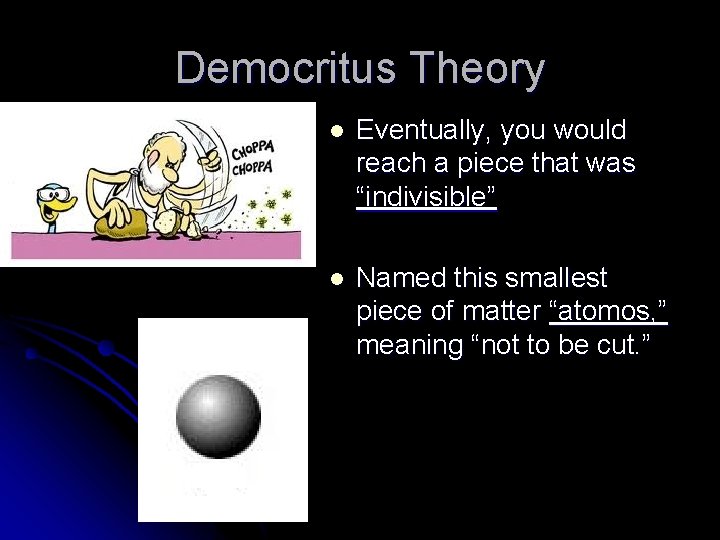
Democritus Theory l Eventually, you would reach a piece that was “indivisible” l Named this smallest piece of matter “atomos, ” meaning “not to be cut. ”
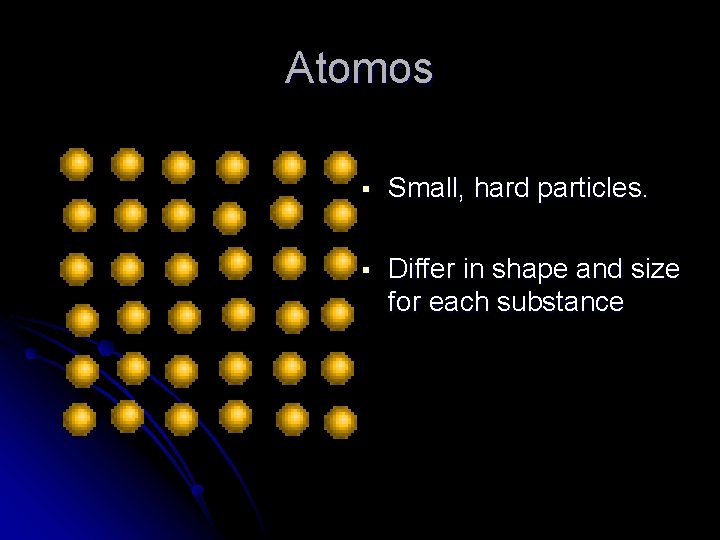
Atomos § Small, hard particles. § Differ in shape and size for each substance
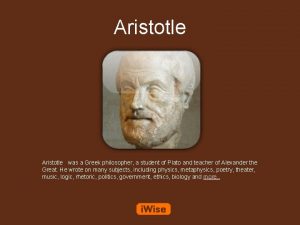
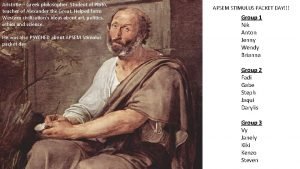
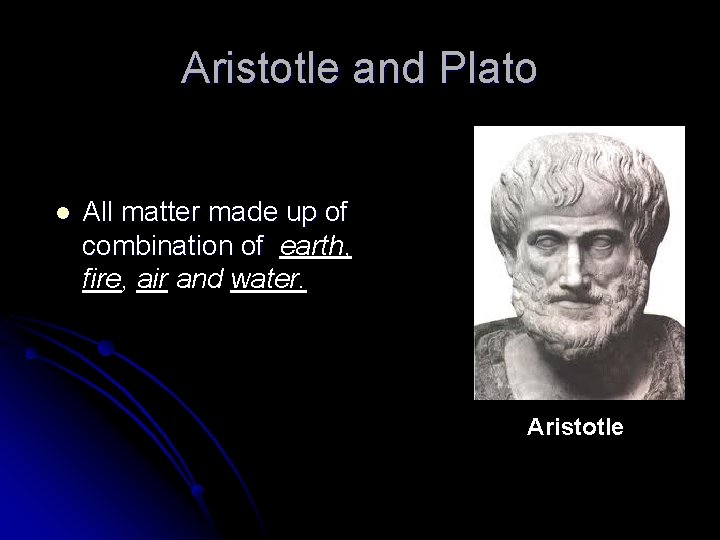
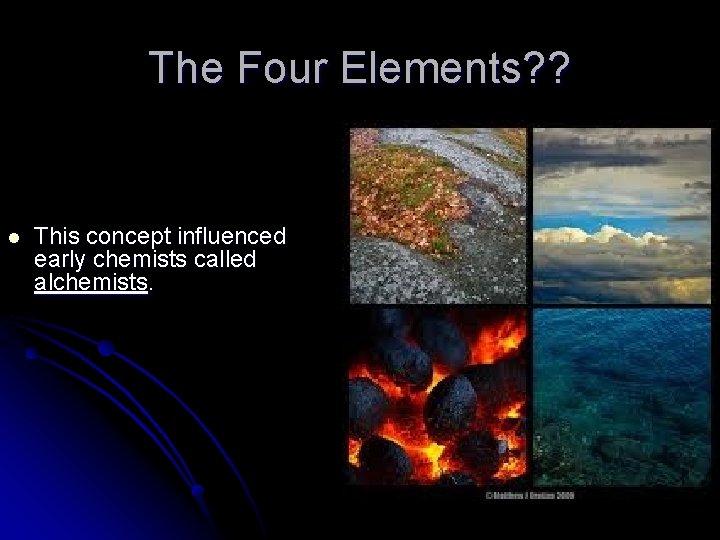
Aristotle and Plato l All matter made up of combination of earth, fire, air and water. Aristotle
The Four Elements? ? l This concept influenced early chemists called alchemists.
Buried in History “Atomos” theory was ignored and forgotten for more than 2000 years!
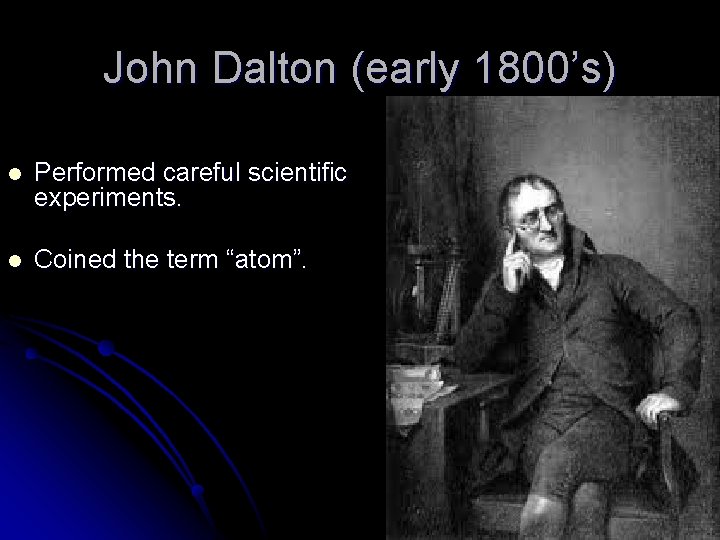
John Dalton (early 1800’s) l Performed careful scientific experiments. l Coined the term “atom”.
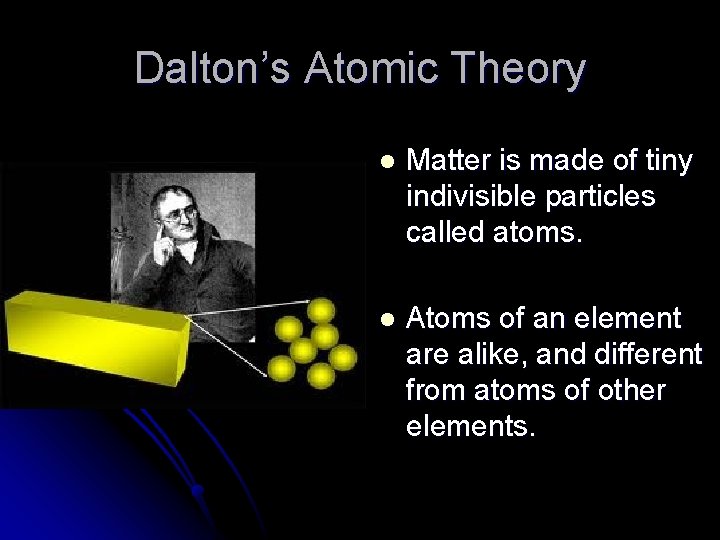
Dalton’s Atomic Theory l Matter is made of tiny indivisible particles called atoms. l Atoms of an element are alike, and different from atoms of other elements.
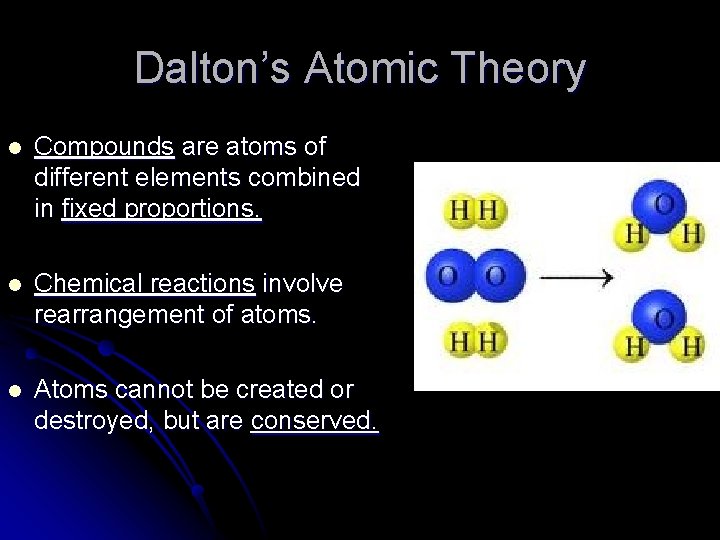
Dalton’s Atomic Theory l Compounds are atoms of different elements combined in fixed proportions. l Chemical reactions involve rearrangement of atoms. l Atoms cannot be created or destroyed, but are conserved.
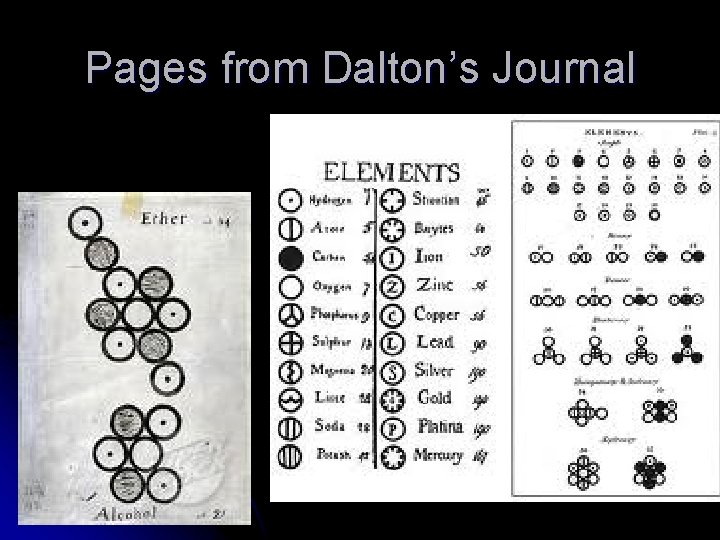
Pages from Dalton’s Journal
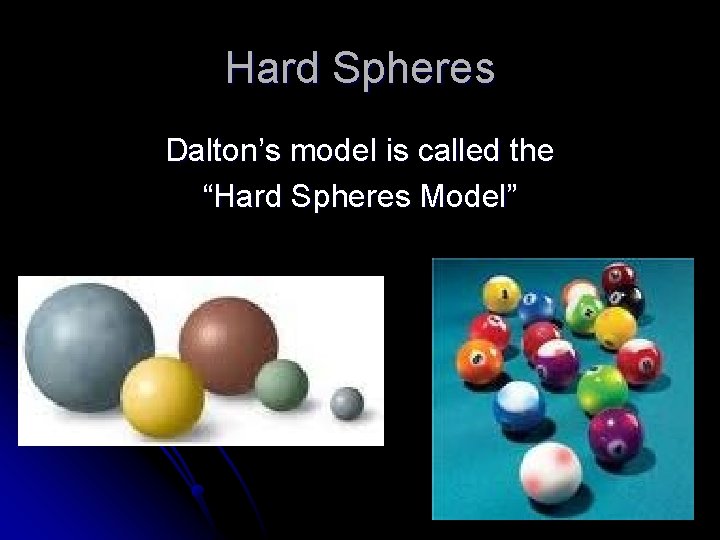
Hard Spheres Dalton’s model is called the “Hard Spheres Model”
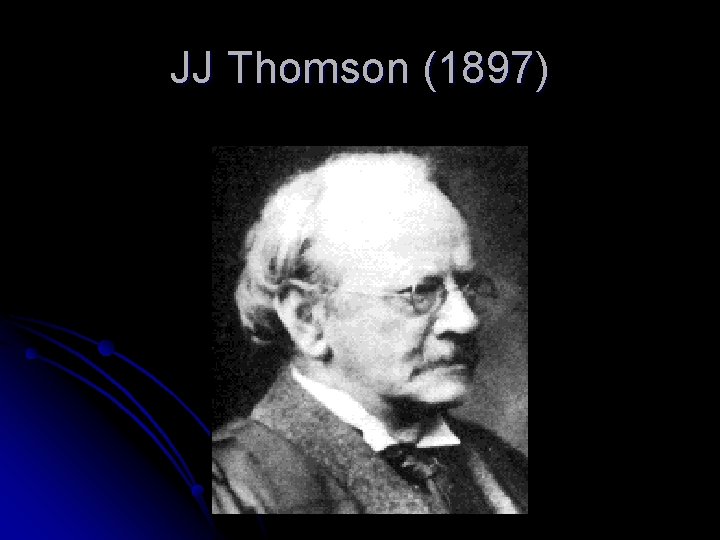
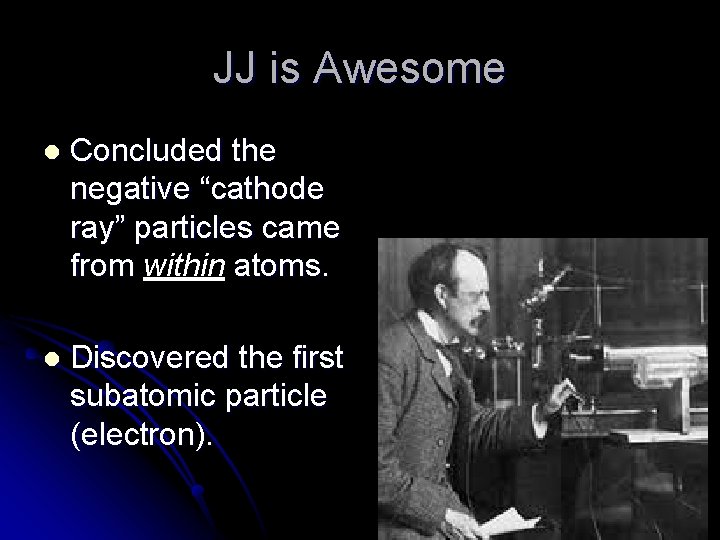
JJ Thomson (1897)
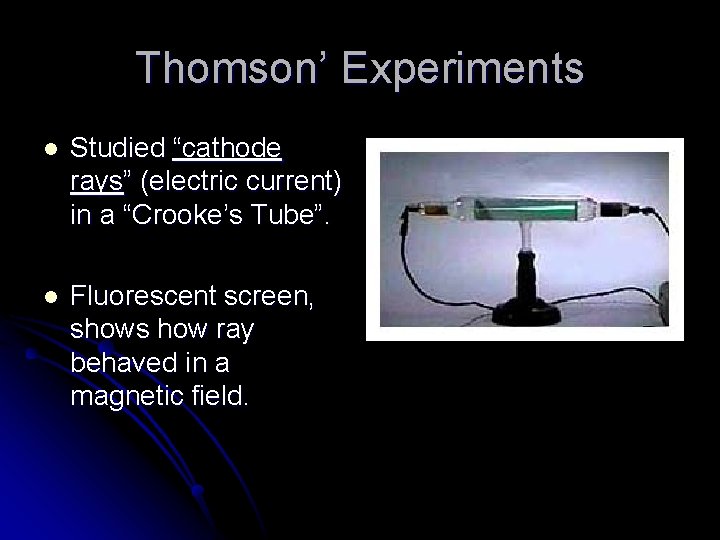
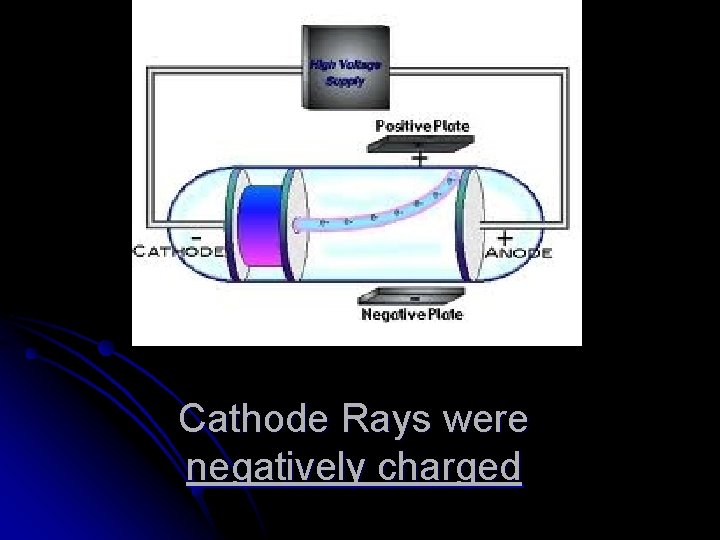
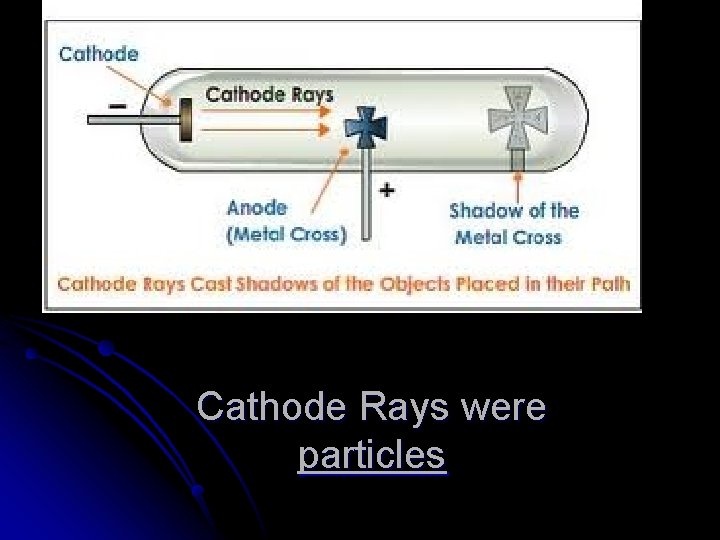
Thomson’ Experiments l Studied “cathode rays” (electric current) in a “Crooke’s Tube”. l Fluorescent screen, shows how ray behaved in a magnetic field.
Cathode Rays were negatively charged
Cathode Rays were particles
l http: //youtu. be/XU 8 n. MKkzb. T 8 http: //youtu. be/Z 61 z. Ca. AFky 4 l http: //youtu. be/Id. Tx. GJj. A 4 Jw l
JJ is Awesome l Concluded the negative “cathode ray” particles came from within atoms. l Discovered the first subatomic particle (electron).
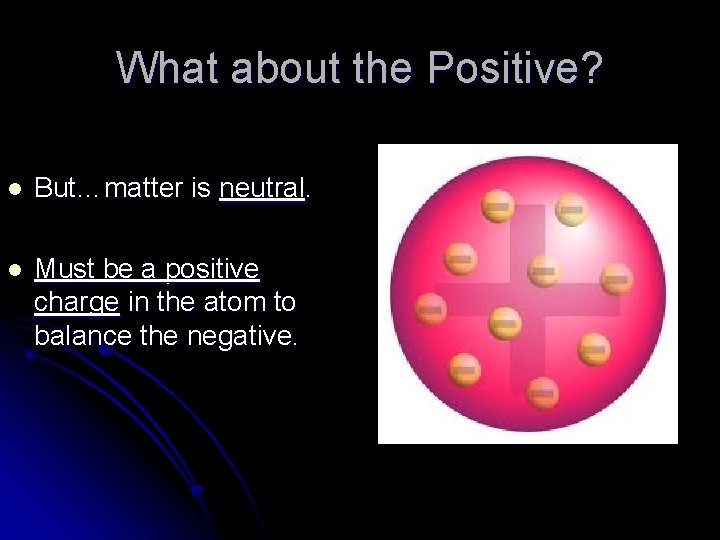
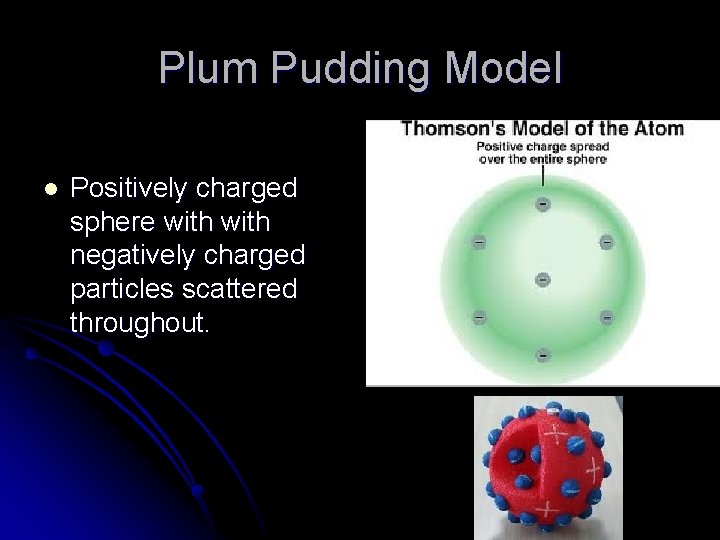
What about the Positive? l But…matter is neutral. l Must be a positive charge in the atom to balance the negative.
Plum Pudding Model l Positively charged sphere with negatively charged particles scattered throughout.
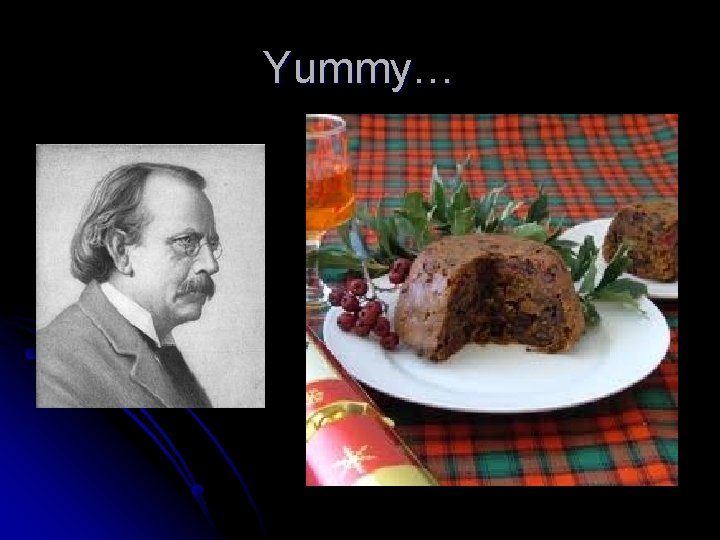
Yummy…
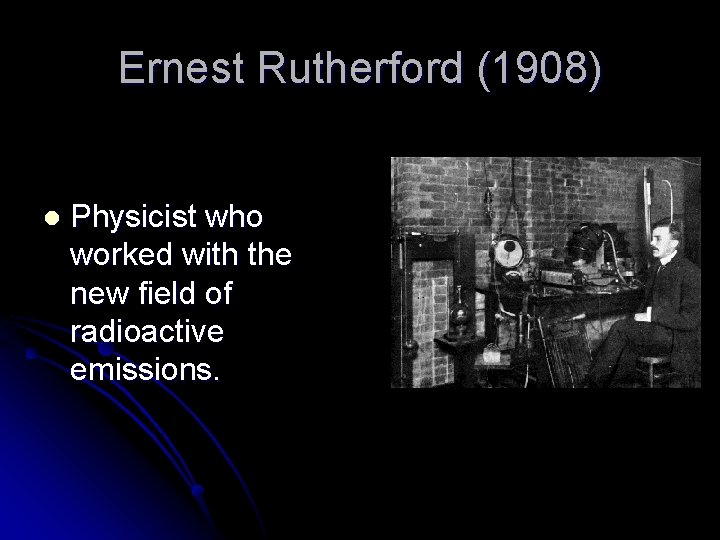
Ernest Rutherford (1908) l Physicist who worked with the new field of radioactive emissions.
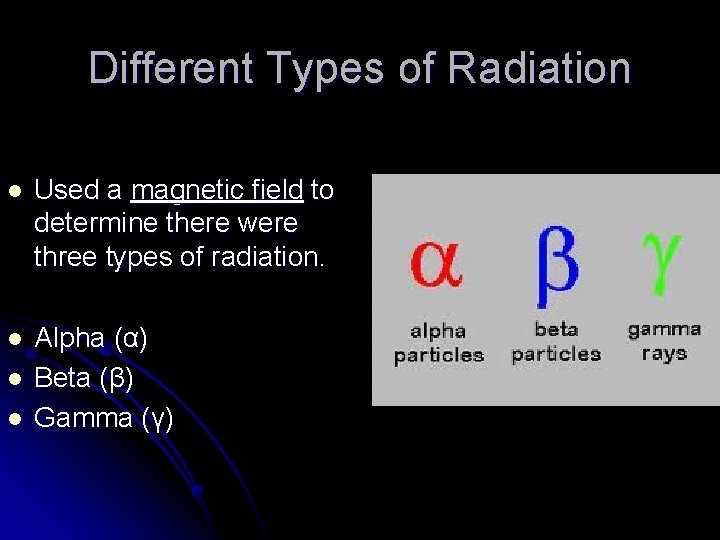
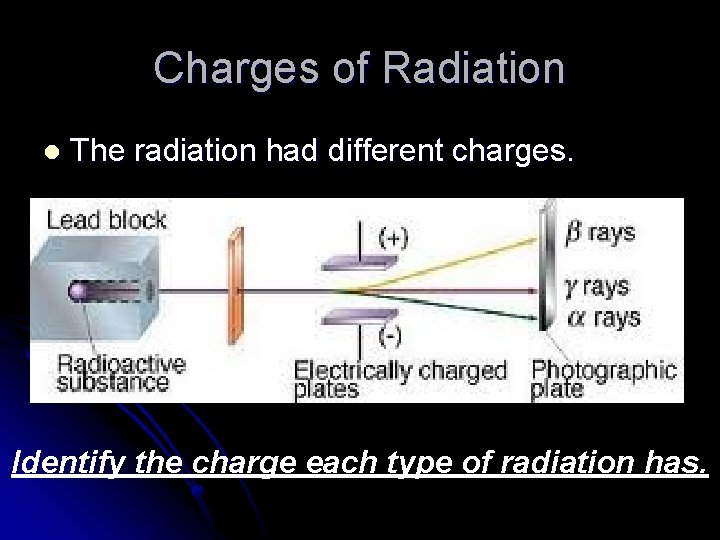
Different Types of Radiation l Used a magnetic field to determine there were three types of radiation. l Alpha (α) Beta (β) Gamma (γ) l l
Charges of Radiation l The radiation had different charges. Identify the charge each type of radiation has.
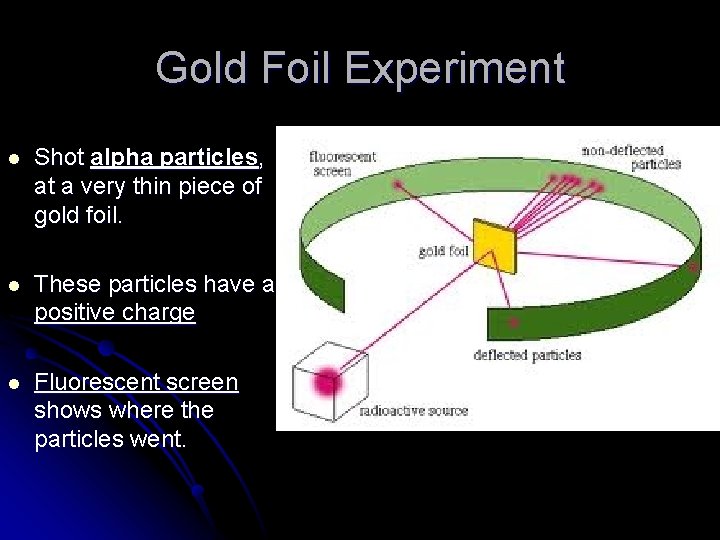
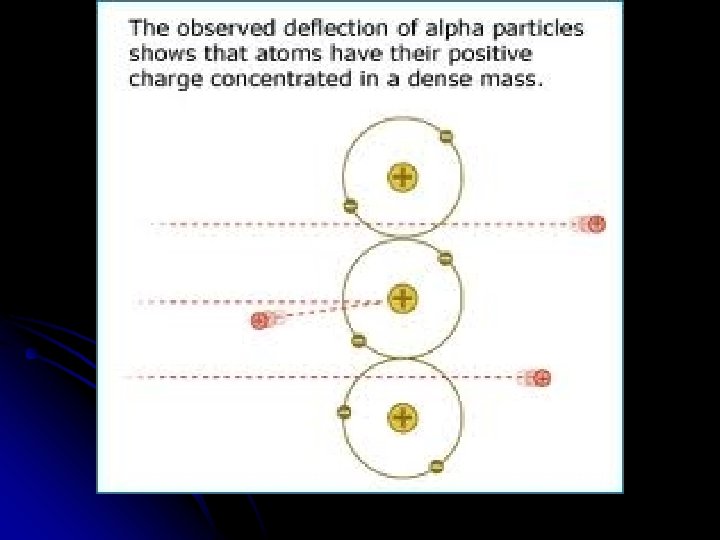
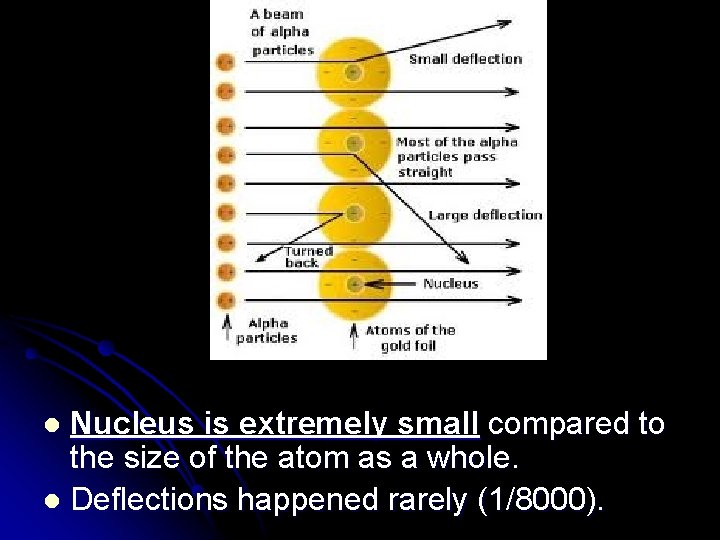
Gold Foil Experiment l Shot alpha particles, at a very thin piece of gold foil. l These particles have a positive charge l Fluorescent screen shows where the particles went.
l Observation: Almost all alpha particles passed straight through the gold foil. l Conclusion: Most of the atom’s volume is empty space.
l Observation: A few alpha particles were deflected at an angle or bounced back. l Conclusion: Atoms have a very small, dense positively charged nucleus.
Nucleus is extremely small compared to the size of the atom as a whole. l Deflections happened rarely (1/8000). l
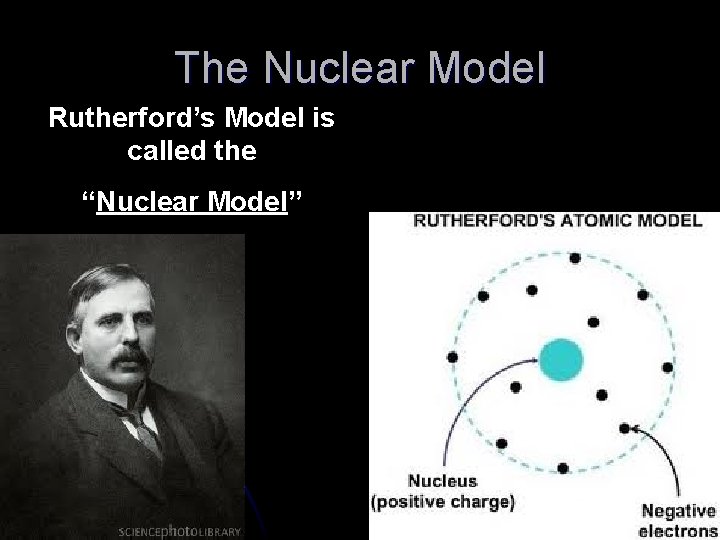
The Nuclear Model Rutherford’s Model is called the “Nuclear Model”
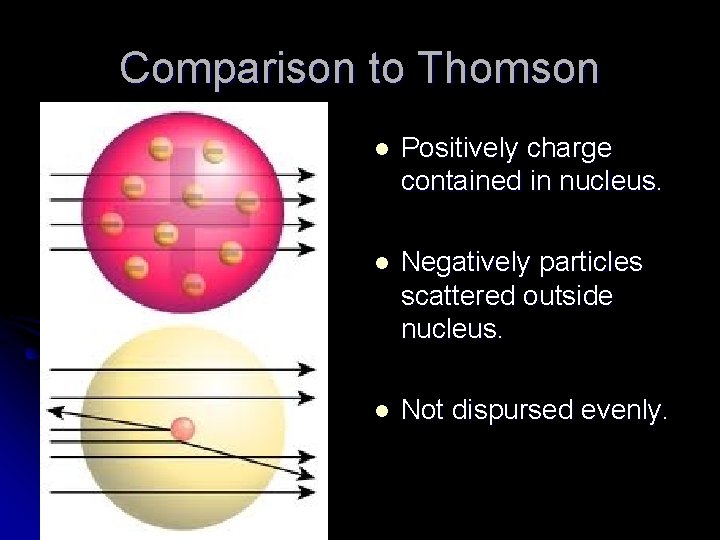
Comparison to Thomson l Positively charge contained in nucleus. l Negatively particles scattered outside nucleus. l Not dispursed evenly.
l http: //chemmovies. unl. edu/Chem. Anime/R UTHERFD/RUTHERFD. html l http: //youtu. be/wz. ALbz. Tdnc 8 l http: //youtu. be/XBq. Hkraf 8 i. E
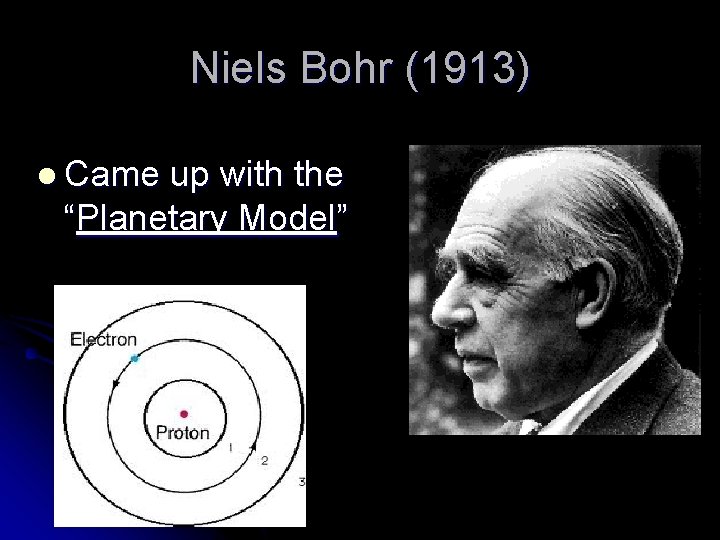
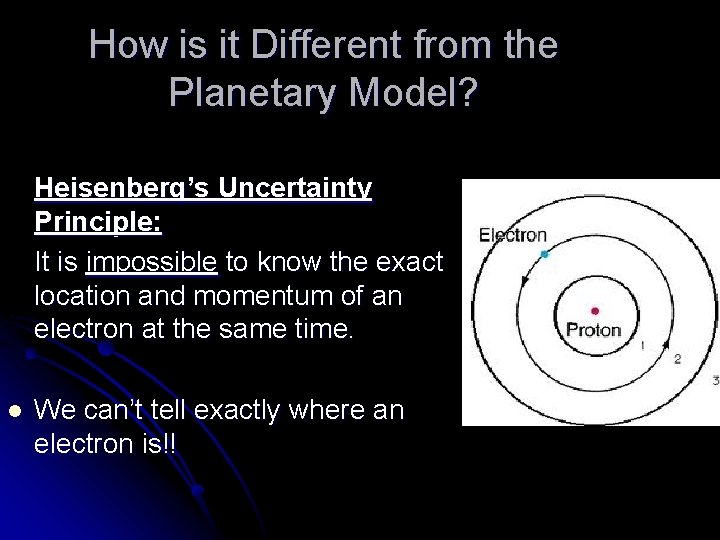
Niels Bohr (1913) l Came up with the “Planetary Model”
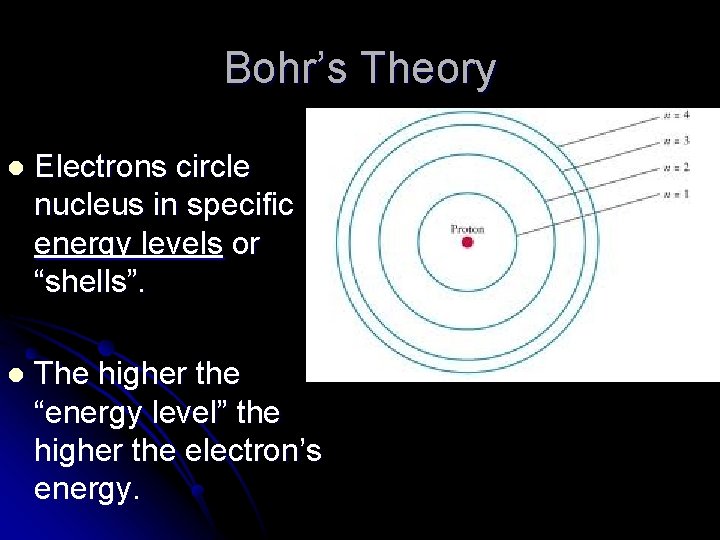
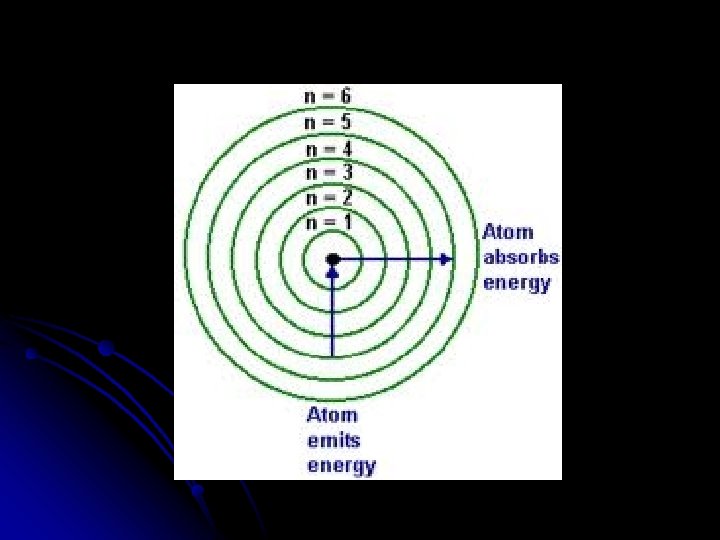
Bohr’s Theory l Electrons circle nucleus in specific energy levels or “shells”. l The higher the “energy level” the higher the electron’s energy.
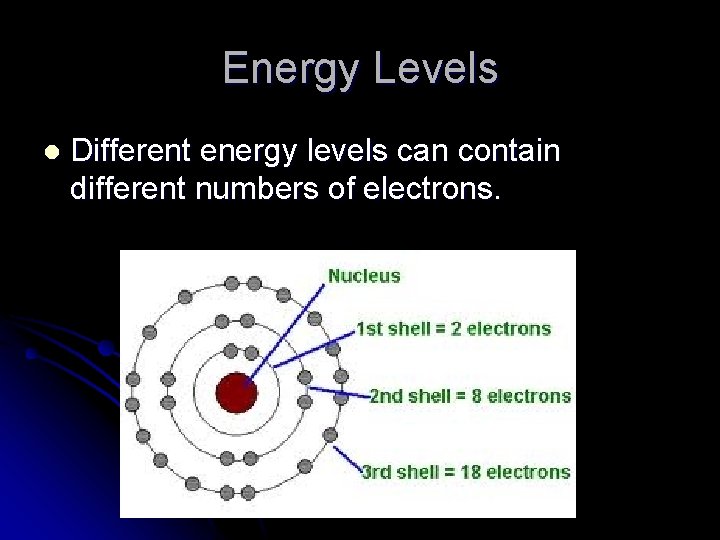
Energy Levels l Different energy levels can contain different numbers of electrons.
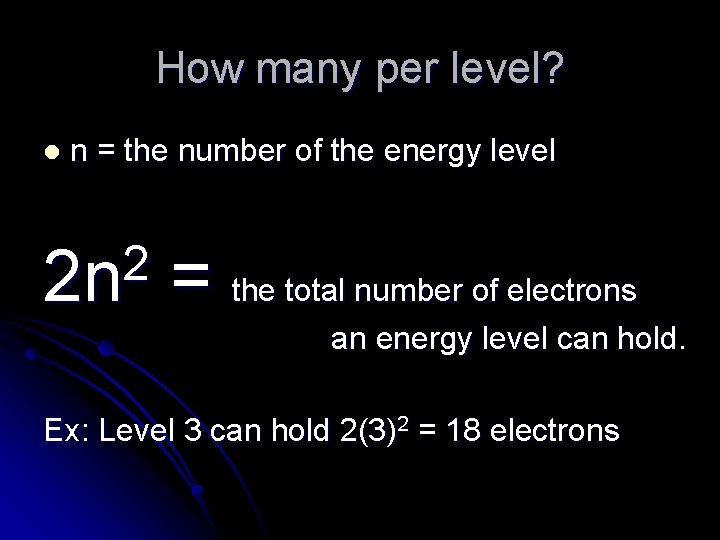
How many per level? l n = the number of the energy level 2 2 n = the total number of electrons an energy level can hold. Ex: Level 3 can hold 2(3)2 = 18 electrons
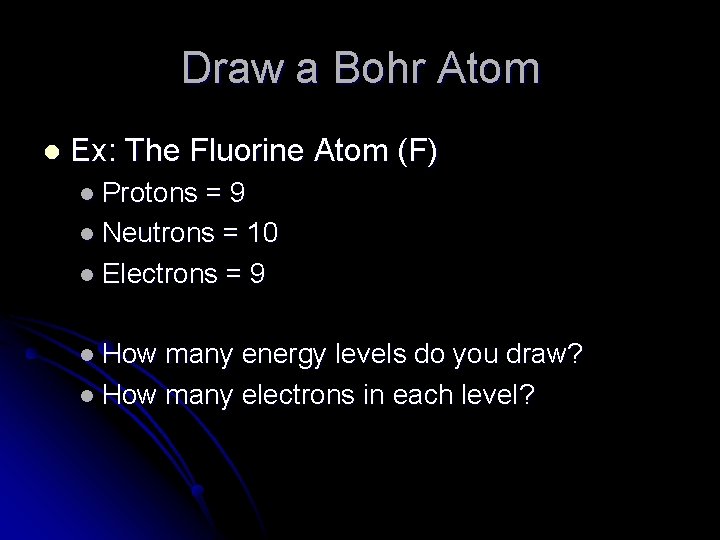
Draw a Bohr Atom l Ex: The Fluorine Atom (F) l Protons =9 l Neutrons = 10 l Electrons = 9 l How many energy levels do you draw? l How many electrons in each level?
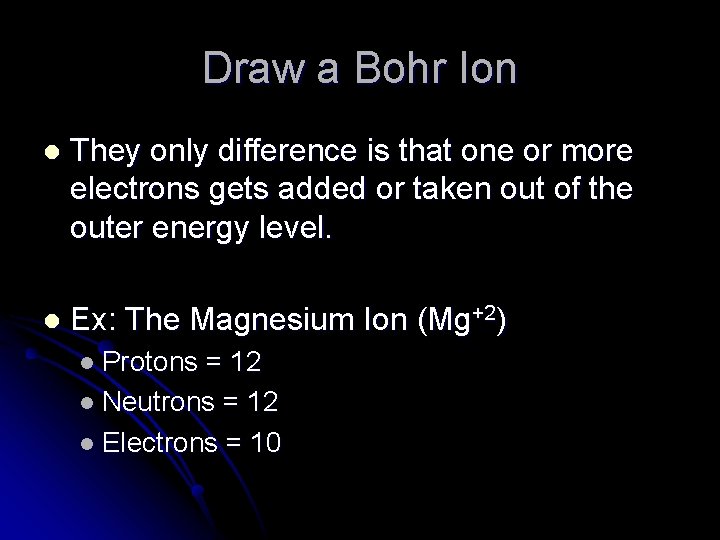
Draw a Bohr Ion l They only difference is that one or more electrons gets added or taken out of the outer energy level. l Ex: The Magnesium Ion (Mg+2) l Protons = 12 l Neutrons = 12 l Electrons = 10
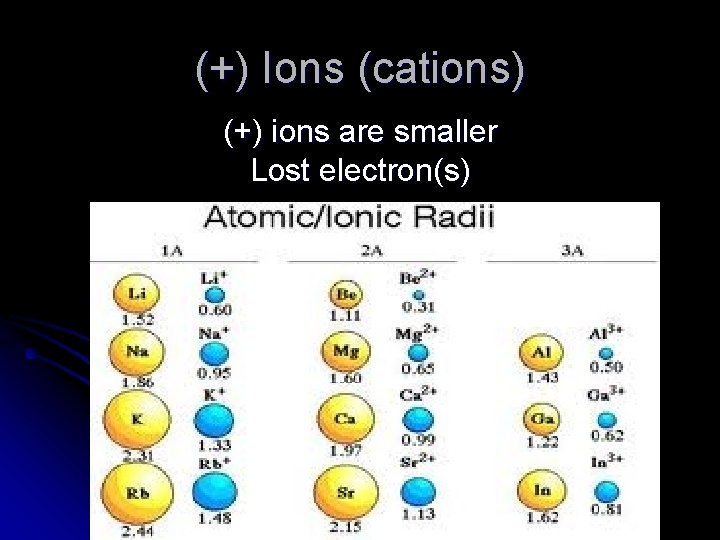
(+) Ions (cations) (+) ions are smaller Lost electron(s)
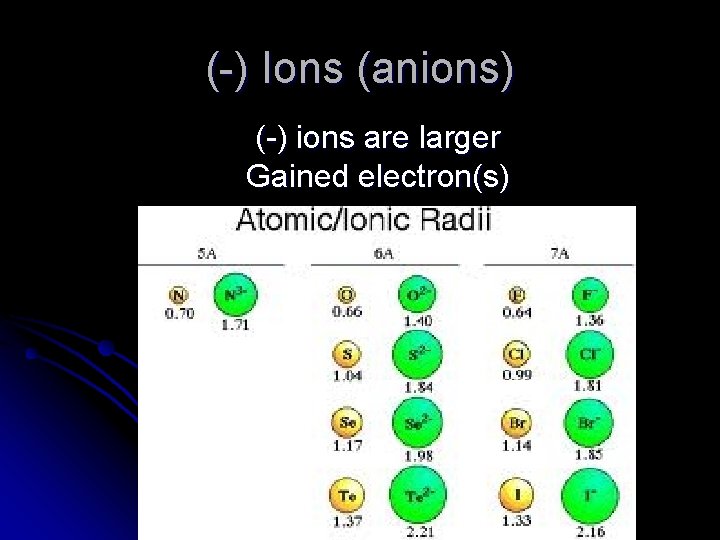
(-) Ions (anions) (-) ions are larger Gained electron(s)
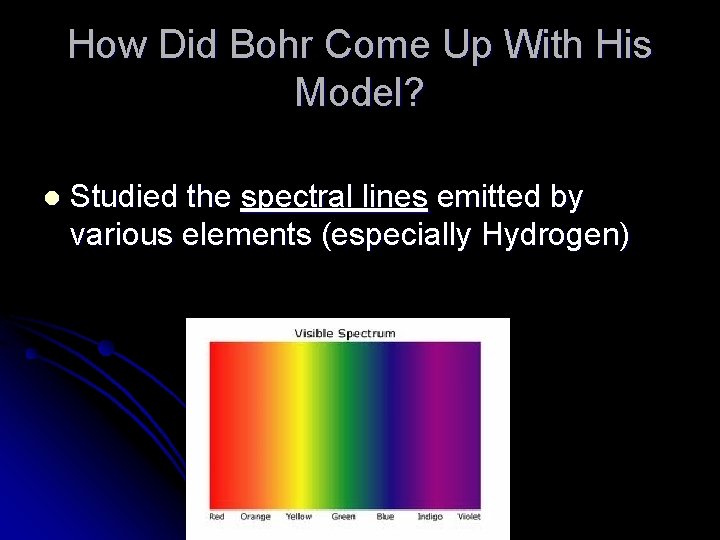
How Did Bohr Come Up With His Model? l Studied the spectral lines emitted by various elements (especially Hydrogen)
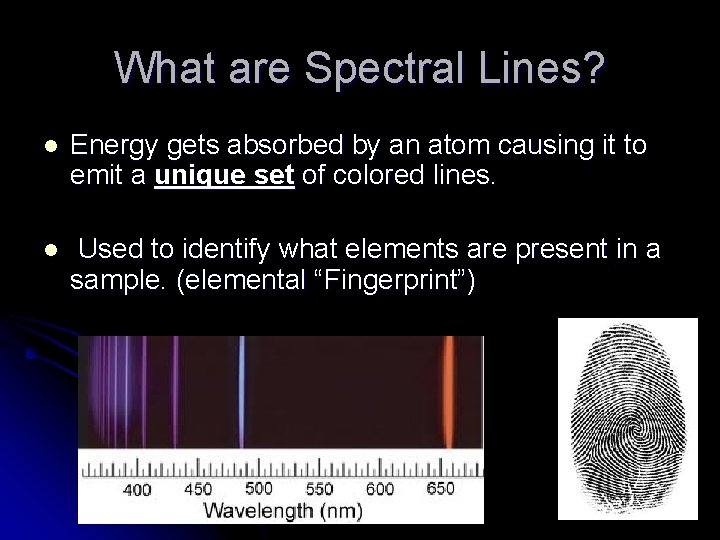
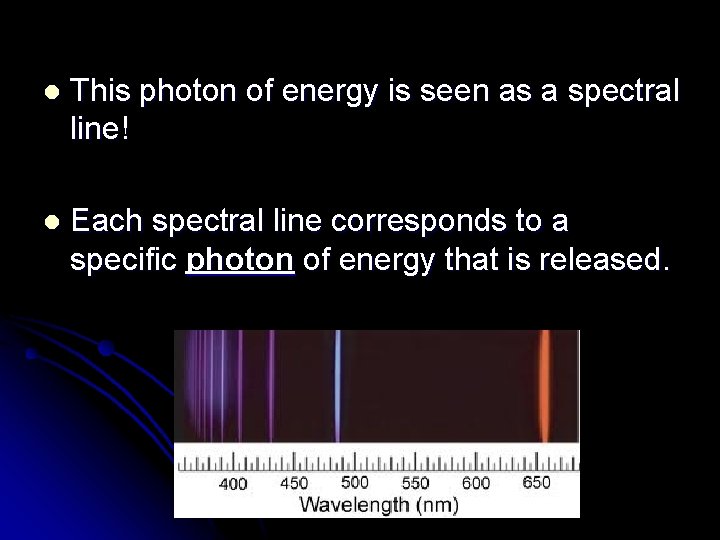
What are Spectral Lines? l Energy gets absorbed by an atom causing it to emit a unique set of colored lines. l Used to identify what elements are present in a sample. (elemental “Fingerprint”)
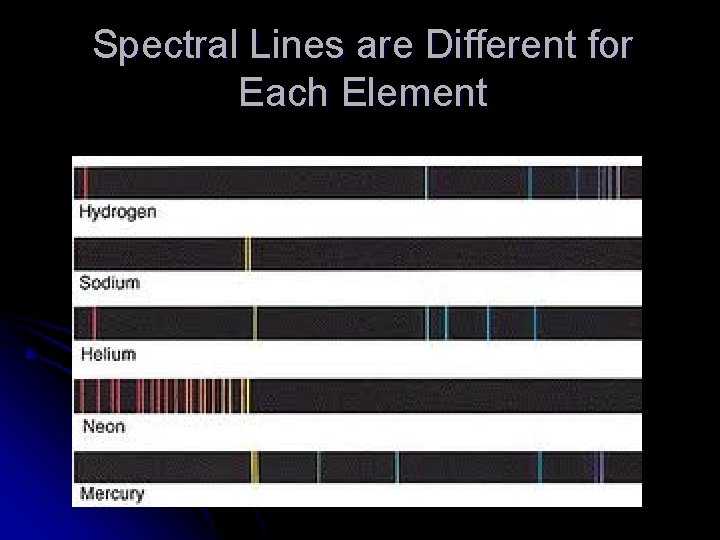
Spectral Lines are Different for Each Element
http: //www. mhhe. com/physsci/chemistry/ essentialchemistry/flash/linesp 16. swf
What Causes Spectral Lines? Jumping Electrons!!
Jumping Electrons l Electrons normally exist in the lowest energy level possible called the “ground state”. (stable) l “Ground state” e- configurations are written on the periodic table for each element. l Ex: Aluminum is 2 -8 -3 Calcium is 2 -8 -8 -2
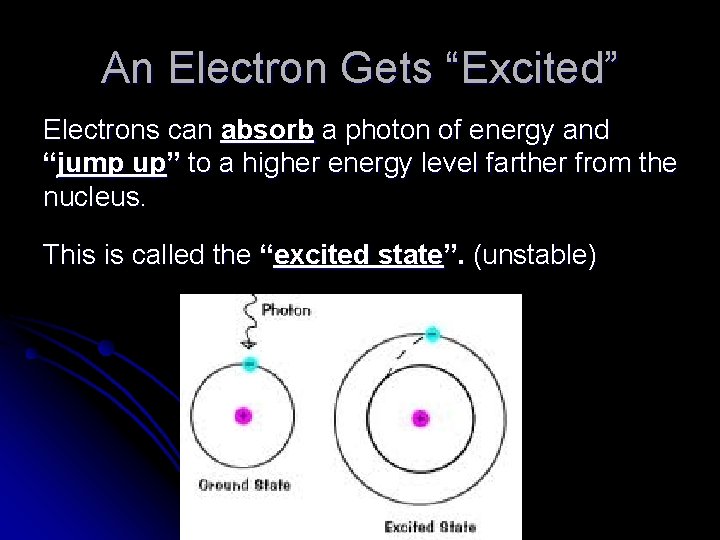
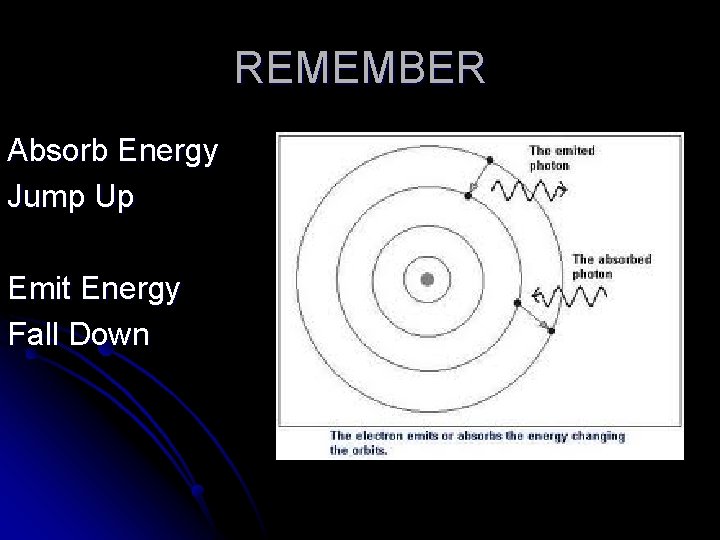
An Electron Gets “Excited” Electrons can absorb a photon of energy and “jump up” to a higher energy level farther from the nucleus. This is called the “excited state”. (unstable)
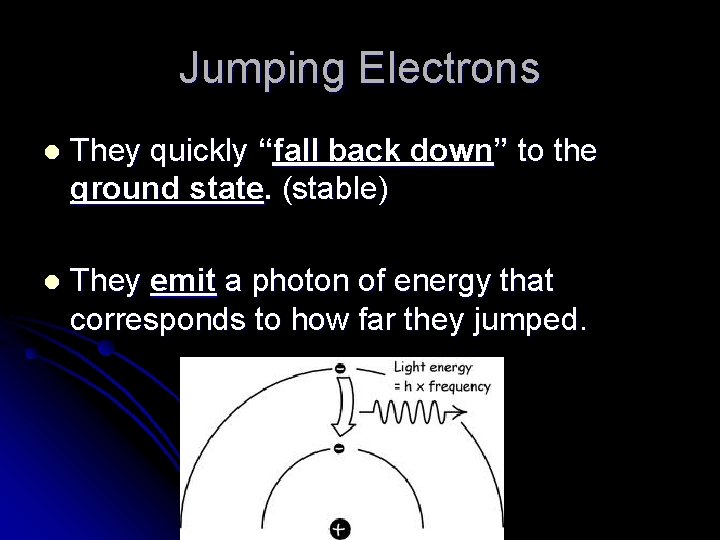
Jumping Electrons l They quickly “fall back down” to the ground state. (stable) l They emit a photon of energy that corresponds to how far they jumped.
l This photon of energy is seen as a spectral line! l Each spectral line corresponds to a specific photon of energy that is released.
REMEMBER Absorb Energy Jump Up Emit Energy Fall Down
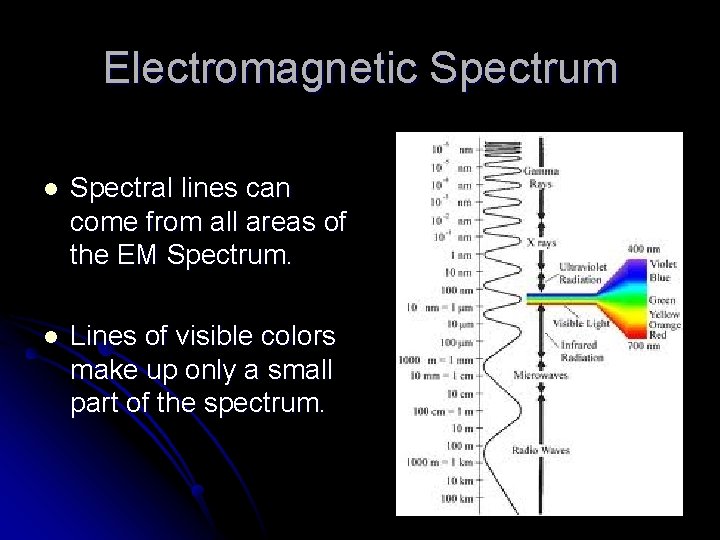
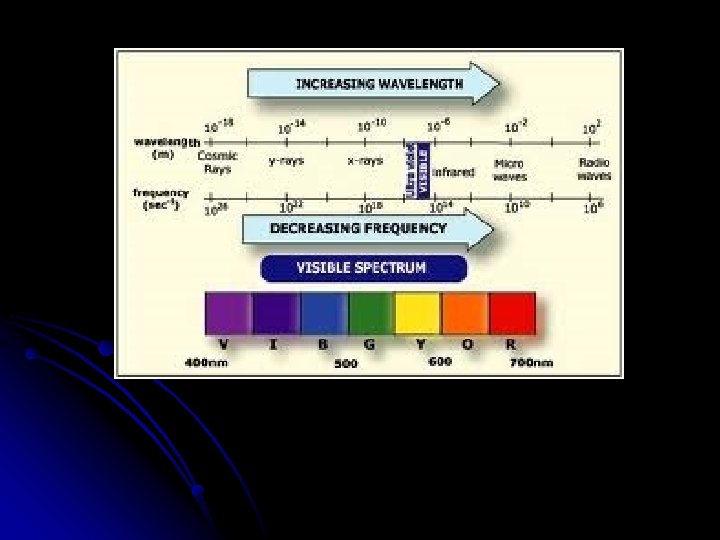
Electromagnetic Spectrum l Spectral lines can come from all areas of the EM Spectrum. l Lines of visible colors make up only a small part of the spectrum.
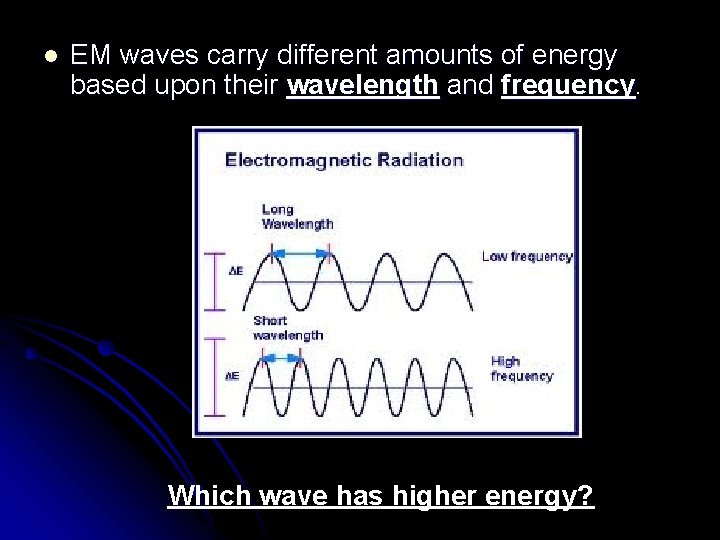
l EM waves carry different amounts of energy based upon their wavelength and frequency. Which wave has higher energy?
l http: //www. upscale. utoronto. ca/PVB/Harris on/Bohr. Model/Flash/Bohr. Model. html
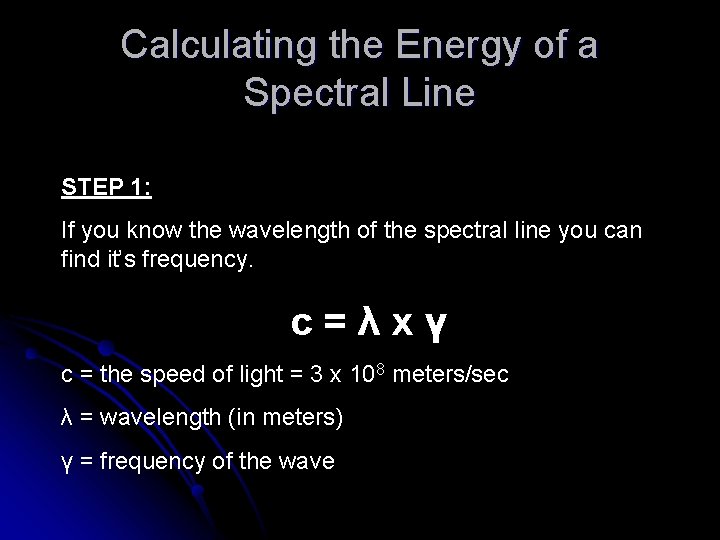
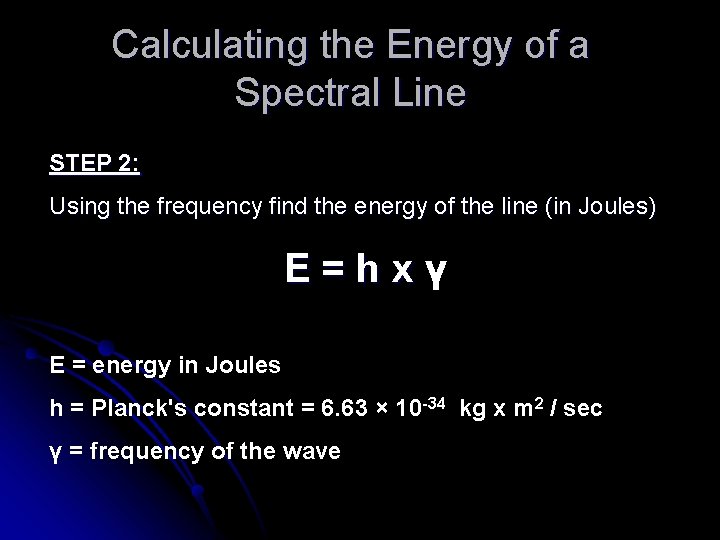
Calculating the Energy of a Spectral Line STEP 1: If you know the wavelength of the spectral line you can find it’s frequency. c=λxү c = the speed of light = 3 x 10⁸ meters/sec λ = wavelength (in meters) ү = frequency of the wave
Calculating the Energy of a Spectral Line STEP 2: Using the frequency find the energy of the line (in Joules) E=hxү E = energy in Joules h = Planck's constant = 6. 63 × 10 -34 kg x m 2 / sec ү = frequency of the wave
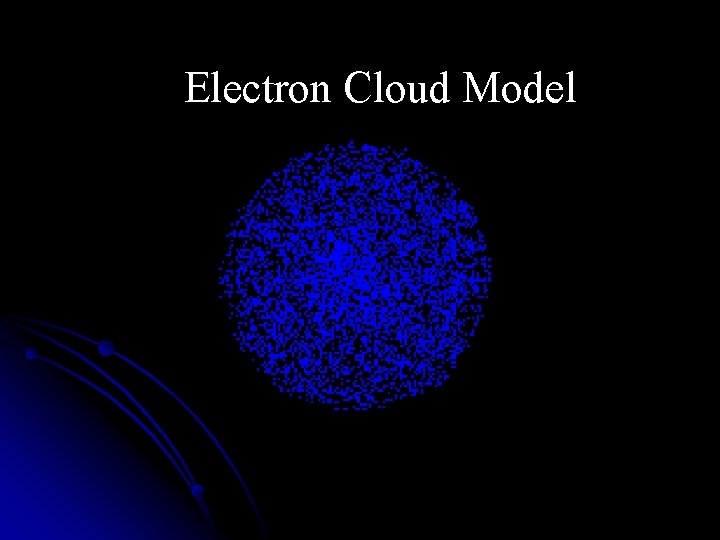
Electron Cloud Model
Electron Cloud Model l Sometimes called: l l Wave Mechanical Model Quantum Mechanical Model Orbital Model Charge Cloud Model
How is it Different from the Planetary Model? Heisenberg’s Uncertainty Principle: It is impossible to know the exact location and momentum of an electron at the same time. l We can’t tell exactly where an electron is!!
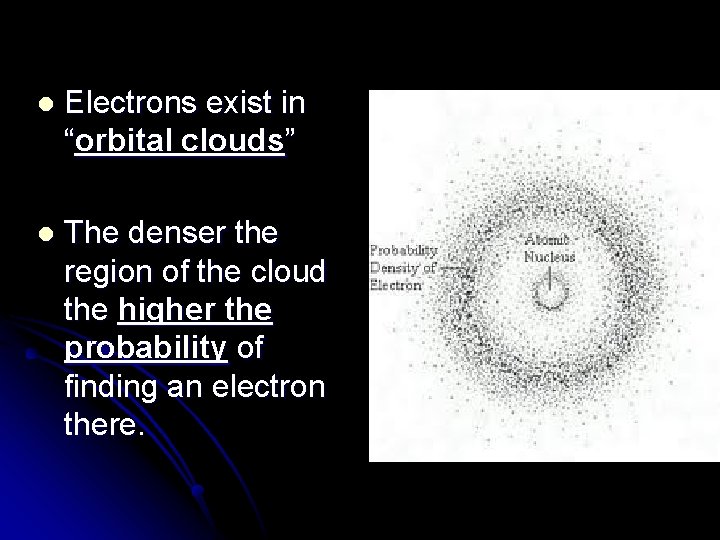
l Electrons exist in “orbital clouds” l The denser the region of the cloud the higher the probability of finding an electron there.
l http: //youtu. be/45 KGS 1 Ro-sc
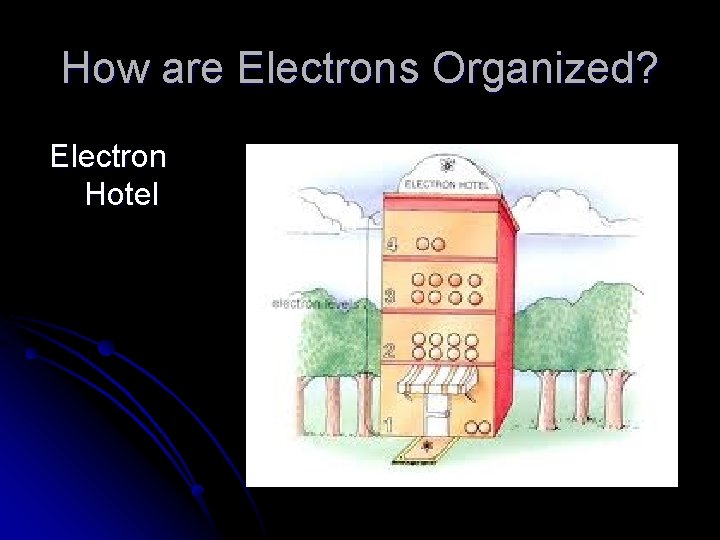
How are Electrons Organized? Electron Hotel
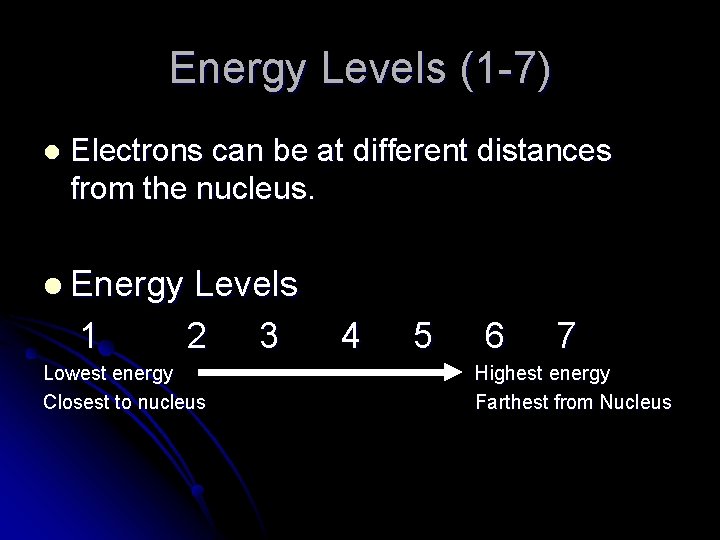
Energy Levels (1 -7) l Electrons can be at different distances from the nucleus. l Energy 1 Levels 2 3 Lowest energy Closest to nucleus 4 5 6 7 Highest energy Farthest from Nucleus
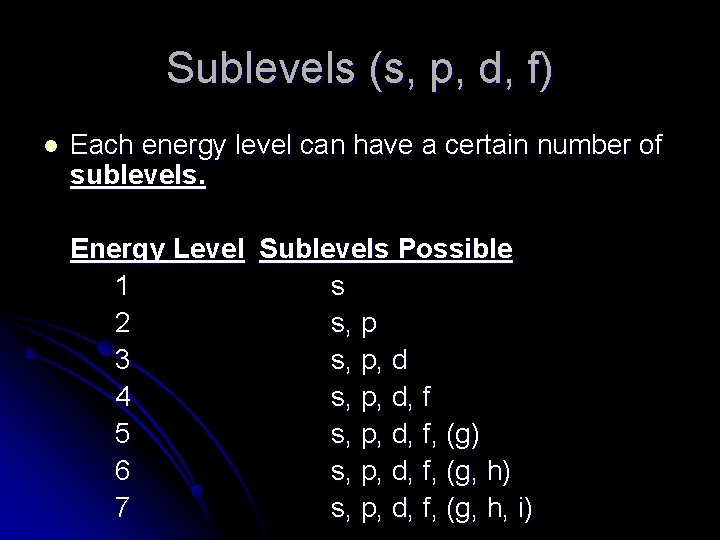
Sublevels (s, p, d, f) l Each energy level can have a certain number of sublevels. Energy Level Sublevels Possible 1 s 2 s, p 3 s, p, d 4 s, p, d, f 5 s, p, d, f, (g) 6 s, p, d, f, (g, h) 7 s, p, d, f, (g, h, i)
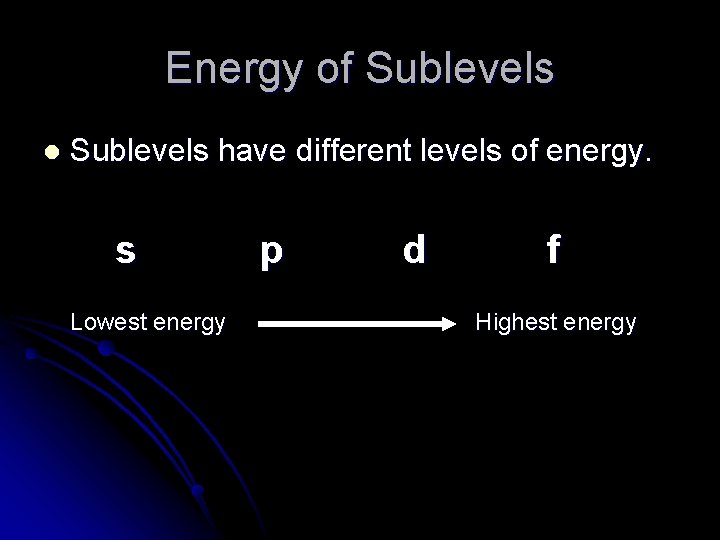
Energy of Sublevels l Sublevels have different levels of energy. s Lowest energy p d f Highest energy
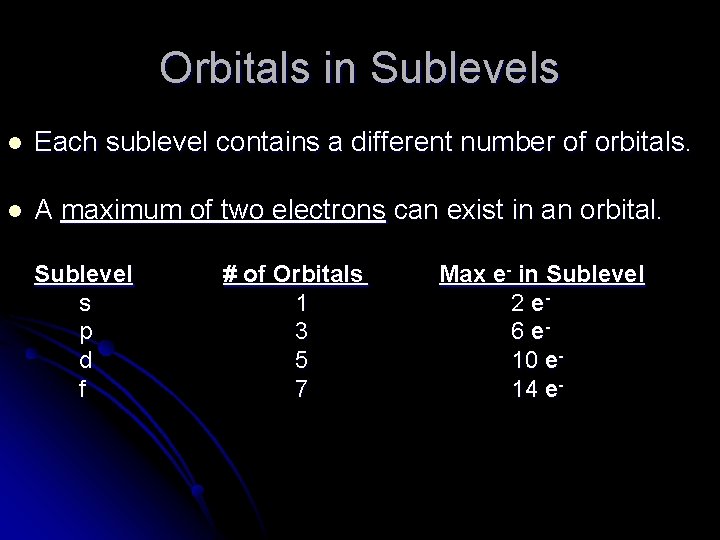
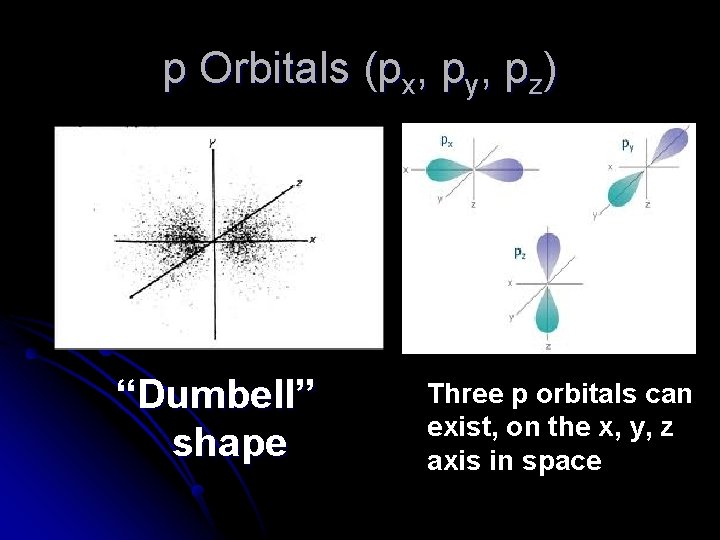
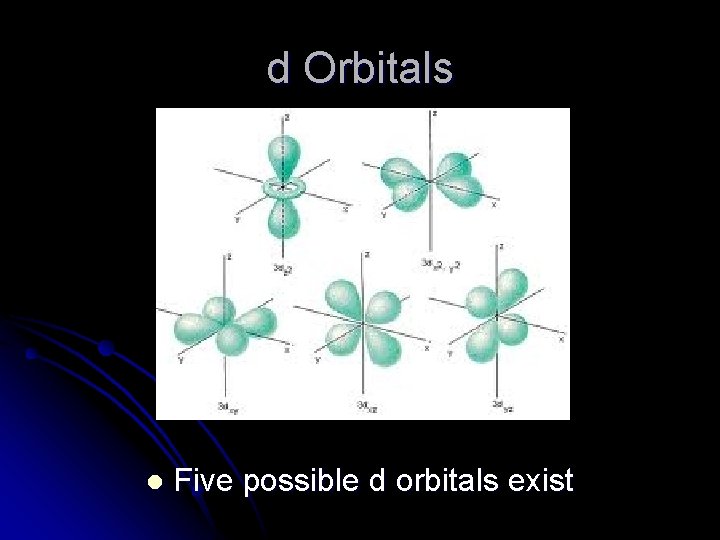
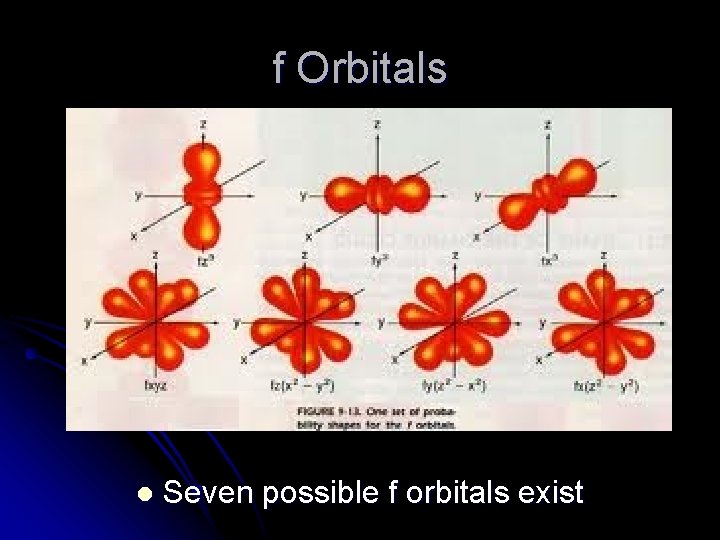
Orbitals in Sublevels l Each sublevel contains a different number of orbitals. l A maximum of two electrons can exist in an orbital. Sublevel s p d f # of Orbitals 1 3 5 7 Max e- in Sublevel 2 e 6 e 10 e 14 e-
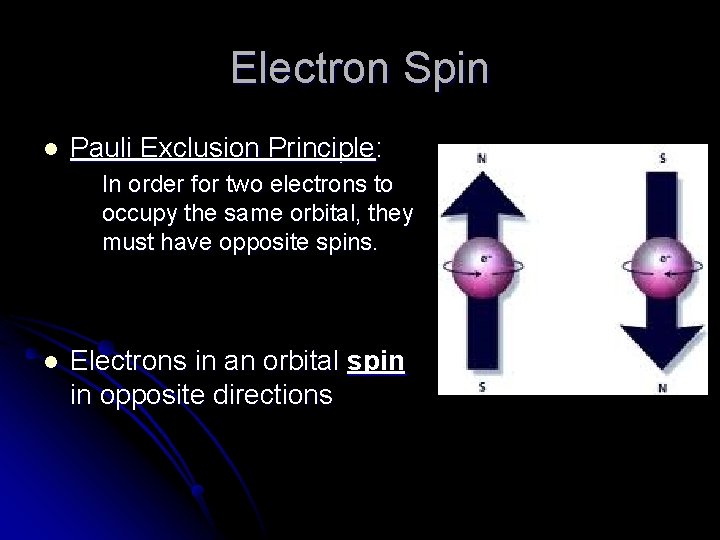
Electron Spin l Pauli Exclusion Principle: In order for two electrons to occupy the same orbital, they must have opposite spins. l Electrons in an orbital spin in opposite directions
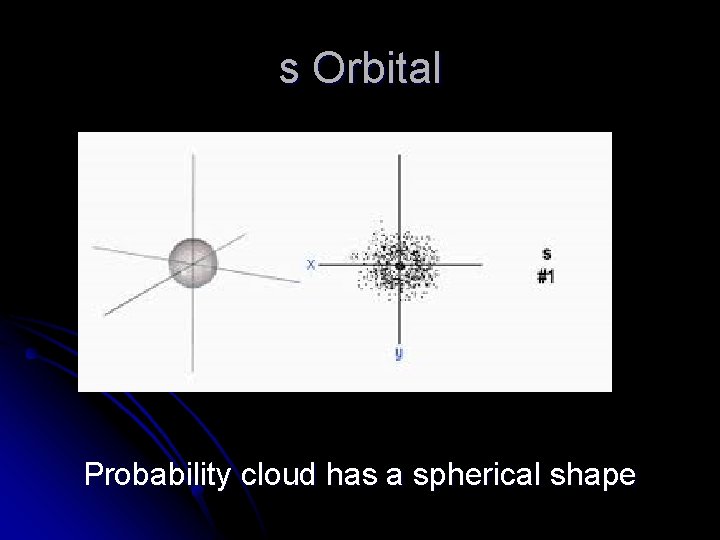
Shapes of Orbitals l Orbitals come in different shapes and sizes. l They are the region of highest probability of finding an electron.
s Orbital Probability cloud has a spherical shape
p Orbitals (px, py, pz) “Dumbell” shape Three p orbitals can exist, on the x, y, z axis in space
d Orbitals l Five possible d orbitals exist
f Orbitals l Seven possible f orbitals exist