
LEQ From whom did we want to be
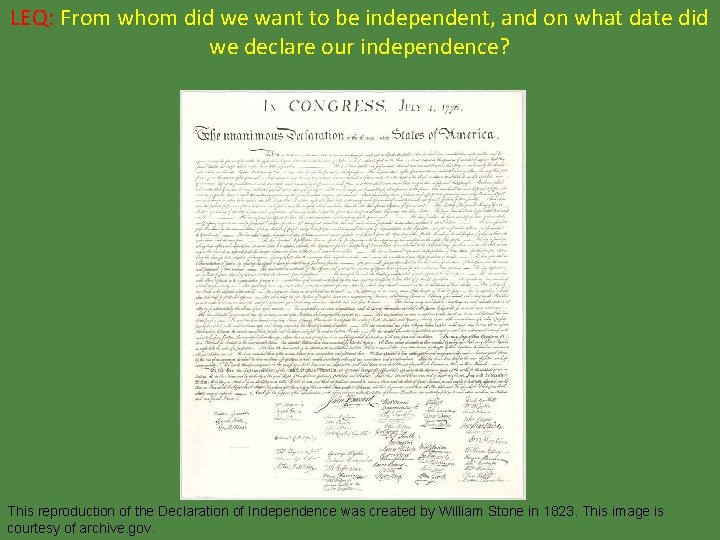
LEQ: From whom did we want to be independent, and on what date did we declare our independence? This reproduction of the Declaration of Independence was created by William Stone in 1823. This image is courtesy of archive. gov.
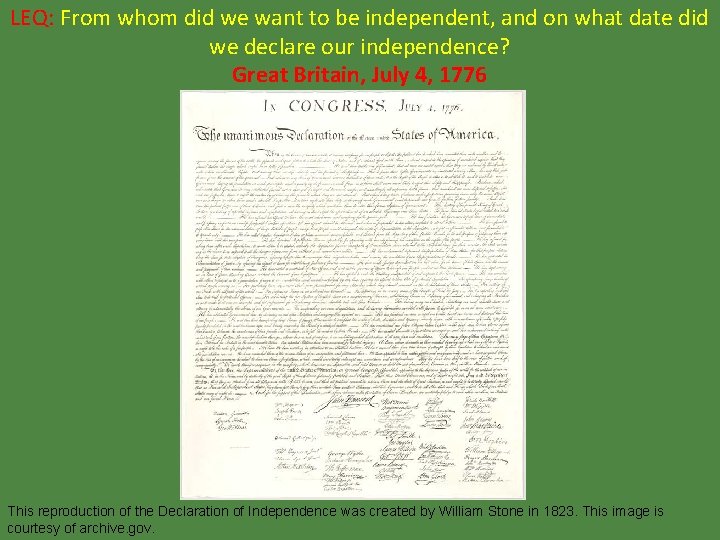
LEQ: From whom did we want to be independent, and on what date did we declare our independence? Great Britain, July 4, 1776 This reproduction of the Declaration of Independence was created by William Stone in 1823. This image is courtesy of archive. gov.
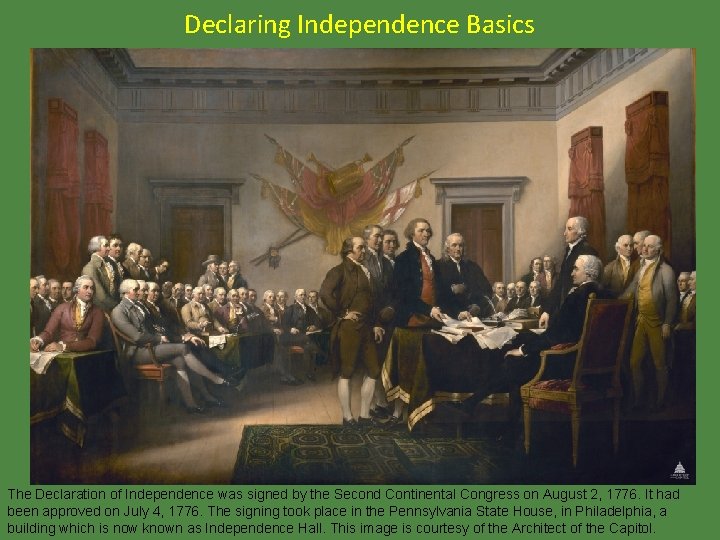
Declaring Independence Basics The Declaration of Independence was signed by the Second Continental Congress on August 2, 1776. It had been approved on July 4, 1776. The signing took place in the Pennsylvania State House, in Philadelphia, a building which is now known as Independence Hall. This image is courtesy of the Architect of the Capitol.
Declaring Independence Vocabulary This image is from wordinfo.
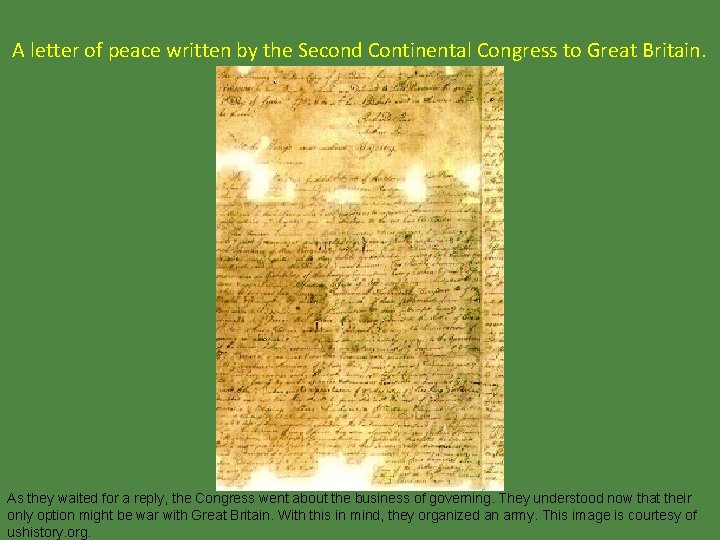
A letter of peace written by the Second Continental Congress to Great Britain. As they waited for a reply, the Congress went about the business of governing. They understood now that their only option might be war with Great Britain. With this in mind, they organized an army. This image is courtesy of ushistory. org.

Olive Branch Petition A letter of peace written by the Second Continental Congress to Great Britain. As they waited for a reply, the Congress went about the business of governing. They understood now that their only option might be war with Great Britain. With this in mind, they organized an army. This image is courtesy of ushistory. org.
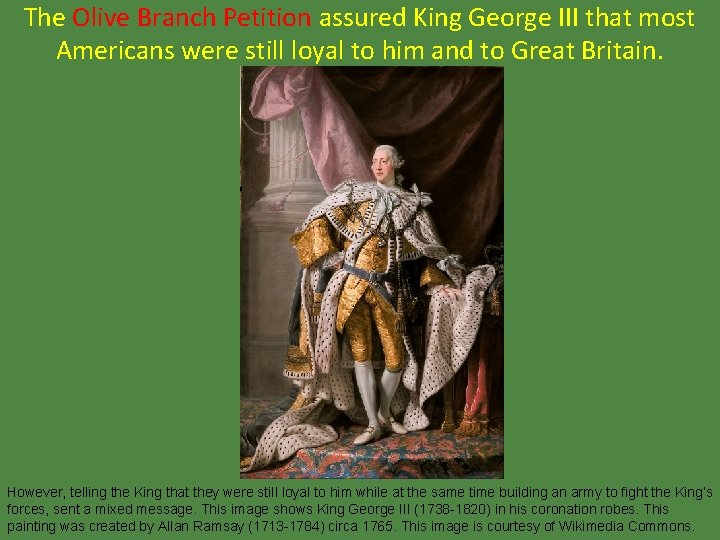
The Olive Branch Petition assured King George III that most Americans were still loyal to him and to Great Britain. However, telling the King that they were still loyal to him while at the same time building an army to fight the King’s forces, sent a mixed message. This image shows King George III (1738 -1820) in his coronation robes. This painting was created by Allan Ramsay (1713 -1784) circa 1765. This image is courtesy of Wikimedia Commons.
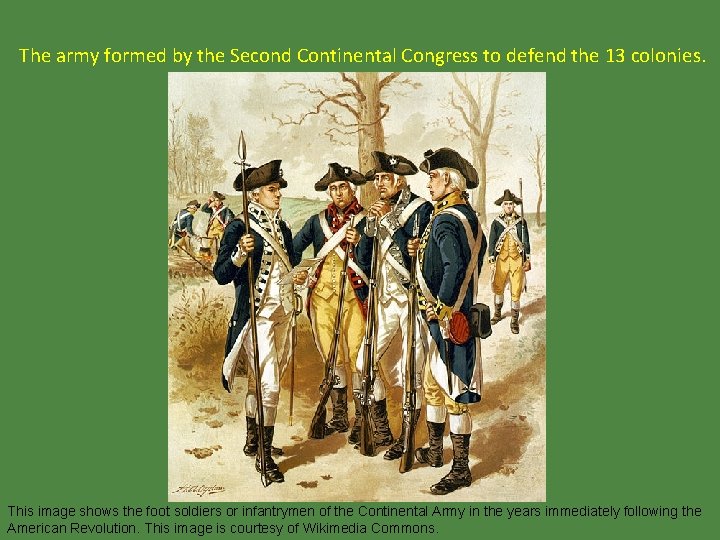
The army formed by the Second Continental Congress to defend the 13 colonies. This image shows the foot soldiers or infantrymen of the Continental Army in the years immediately following the American Revolution. This image is courtesy of Wikimedia Commons.
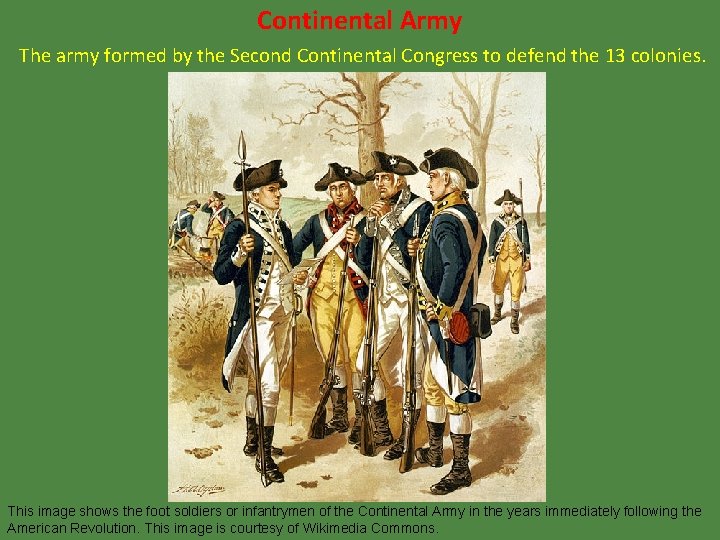
Continental Army The army formed by the Second Continental Congress to defend the 13 colonies. This image shows the foot soldiers or infantrymen of the Continental Army in the years immediately following the American Revolution. This image is courtesy of Wikimedia Commons.
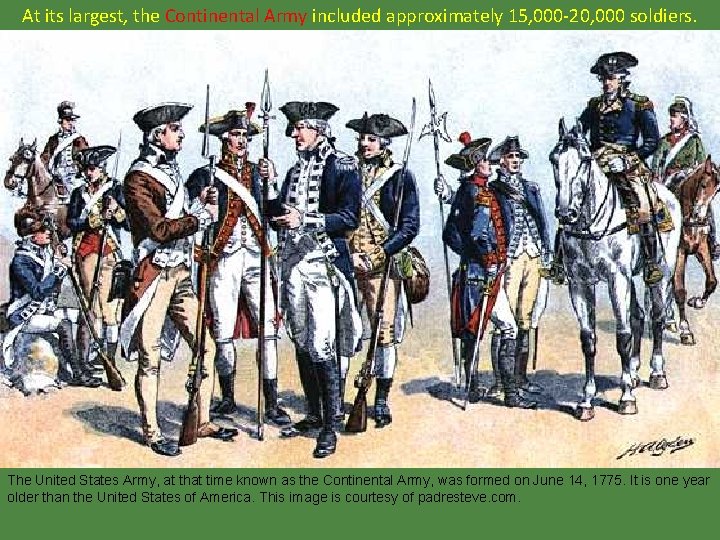
At its largest, the Continental Army included approximately 15, 000 -20, 000 soldiers. The United States Army, at that time known as the Continental Army, was formed on June 14, 1775. It is one year older than the United States of America. This image is courtesy of padresteve. com.
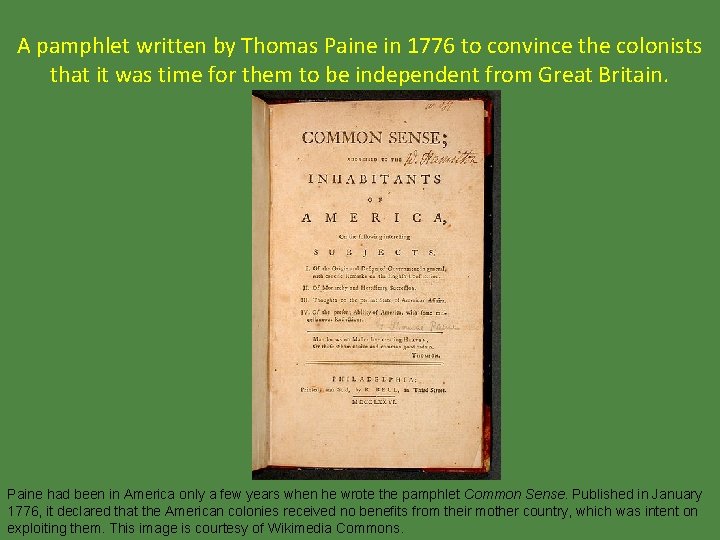
A pamphlet written by Thomas Paine in 1776 to convince the colonists that it was time for them to be independent from Great Britain. Paine had been in America only a few years when he wrote the pamphlet Common Sense. Published in January 1776, it declared that the American colonies received no benefits from their mother country, which was intent on exploiting them. This image is courtesy of Wikimedia Commons.
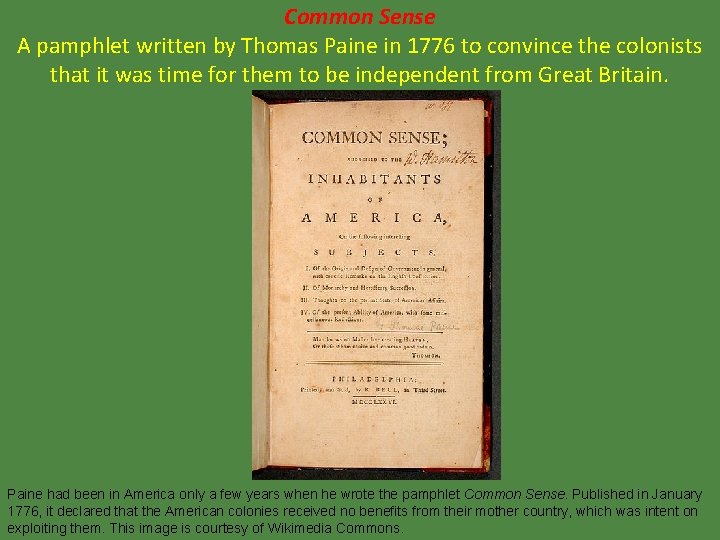
Common Sense A pamphlet written by Thomas Paine in 1776 to convince the colonists that it was time for them to be independent from Great Britain. Paine had been in America only a few years when he wrote the pamphlet Common Sense. Published in January 1776, it declared that the American colonies received no benefits from their mother country, which was intent on exploiting them. This image is courtesy of Wikimedia Commons.
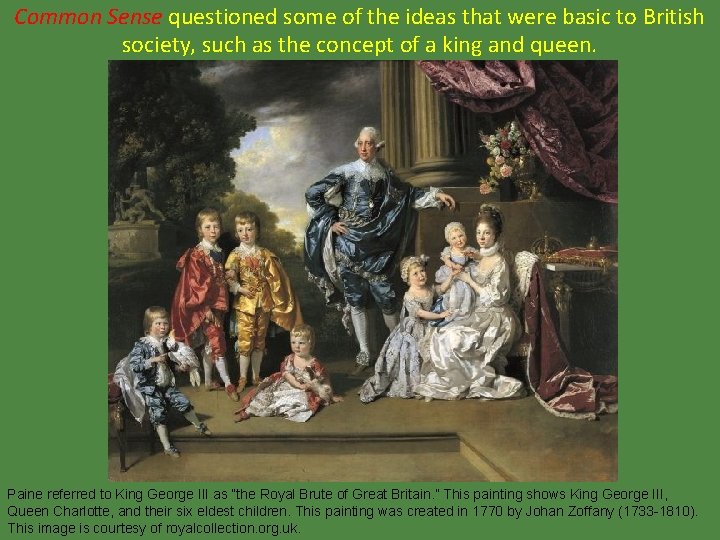
Common Sense questioned some of the ideas that were basic to British society, such as the concept of a king and queen. Paine referred to King George III as “the Royal Brute of Great Britain. ” This painting shows King George III, Queen Charlotte, and their six eldest children. This painting was created in 1770 by Johan Zoffany (1733 -1810). This image is courtesy of royalcollection. org. uk.
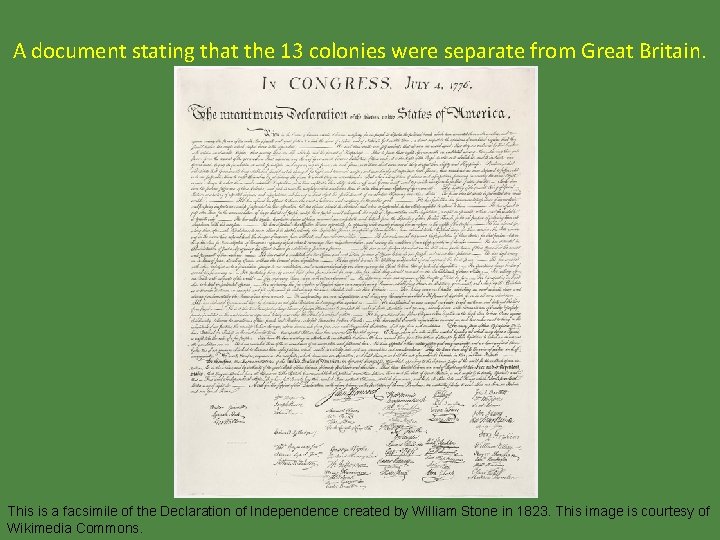
A document stating that the 13 colonies were separate from Great Britain. This is a facsimile of the Declaration of Independence created by William Stone in 1823. This image is courtesy of Wikimedia Commons.
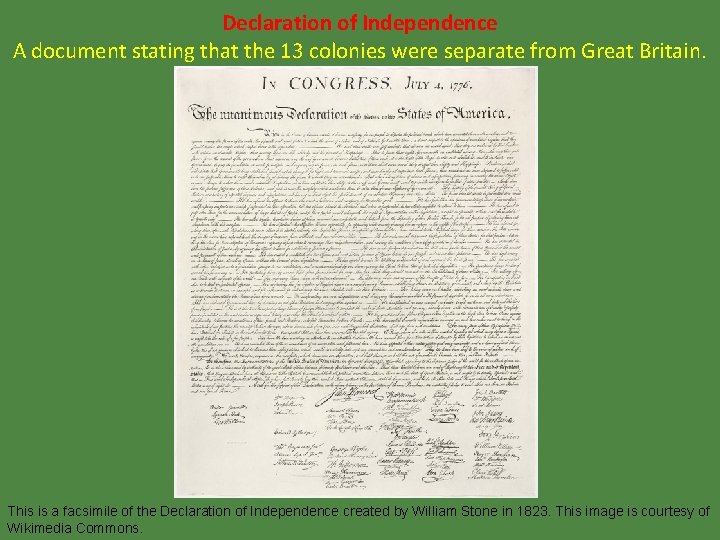
Declaration of Independence A document stating that the 13 colonies were separate from Great Britain. This is a facsimile of the Declaration of Independence created by William Stone in 1823. This image is courtesy of Wikimedia Commons.
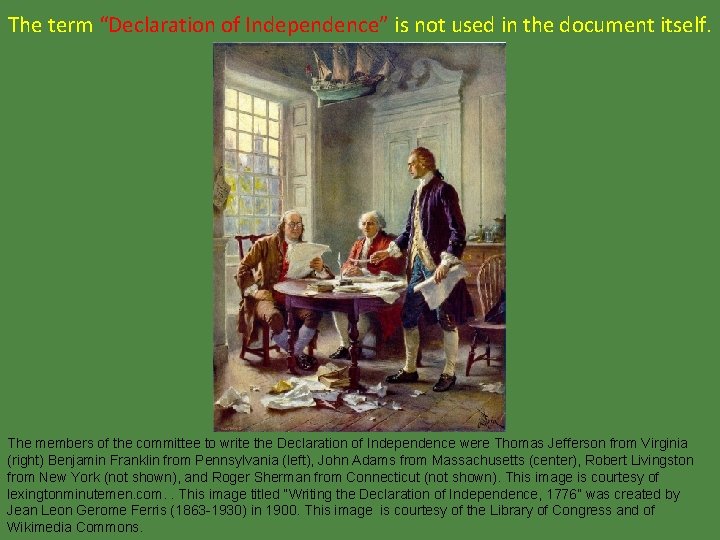
The term “Declaration of Independence” is not used in the document itself. The members of the committee to write the Declaration of Independence were Thomas Jefferson from Virginia (right) Benjamin Franklin from Pennsylvania (left), John Adams from Massachusetts (center), Robert Livingston from New York (not shown), and Roger Sherman from Connecticut (not shown). This image is courtesy of lexingtonminutemen. com. . This image titled “Writing the Declaration of Independence, 1776” was created by Jean Leon Gerome Ferris (1863 -1930) in 1900. This image is courtesy of the Library of Congress and of Wikimedia Commons.
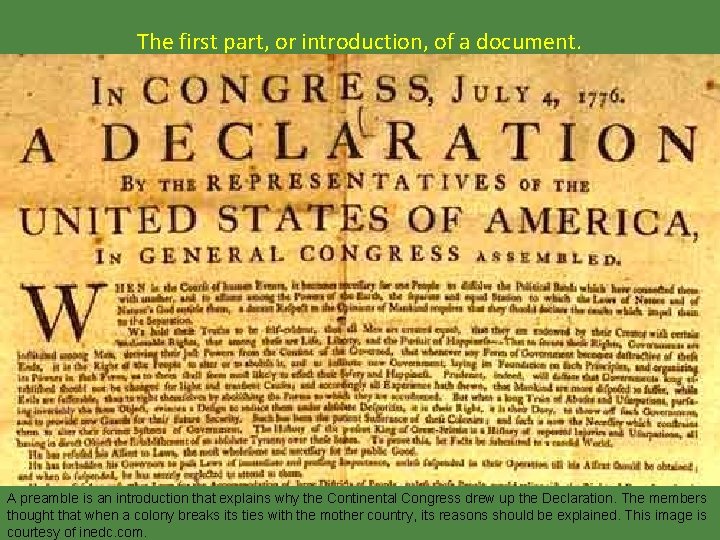
The first part, or introduction, of a document. A preamble is an introduction that explains why the Continental Congress drew up the Declaration. The members thought that when a colony breaks its ties with the mother country, its reasons should be explained. This image is courtesy of inedc. com.
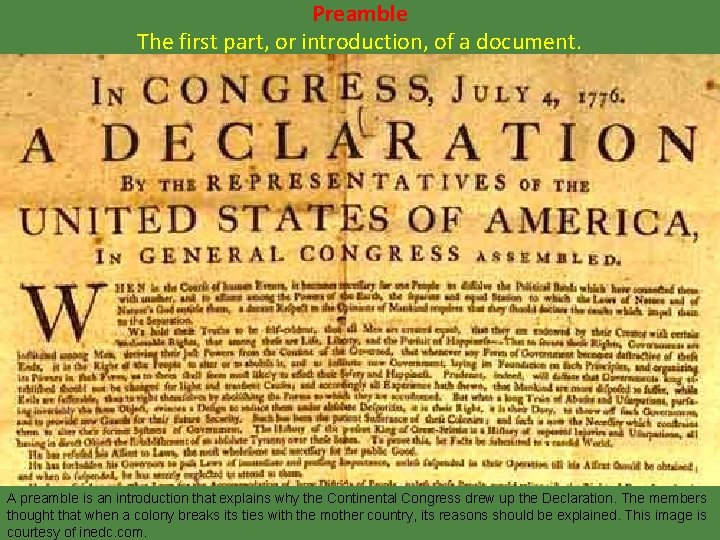
Preamble The first part, or introduction, of a document. A preamble is an introduction that explains why the Continental Congress drew up the Declaration. The members thought that when a colony breaks its ties with the mother country, its reasons should be explained. This image is courtesy of inedc. com.
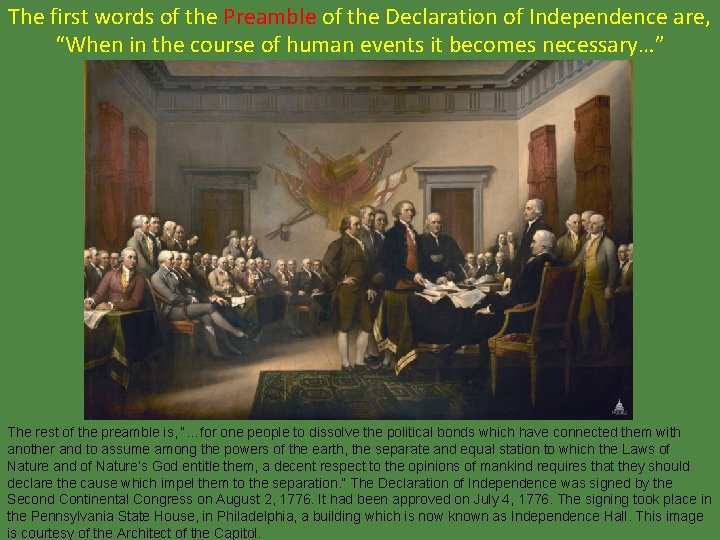
The first words of the Preamble of the Declaration of Independence are, “When in the course of human events it becomes necessary…” The rest of the preamble is, “…for one people to dissolve the political bonds which have connected them with another and to assume among the powers of the earth, the separate and equal station to which the Laws of Nature and of Nature’s God entitle them, a decent respect to the opinions of mankind requires that they should declare the cause which impel them to the separation. ” The Declaration of Independence was signed by the Second Continental Congress on August 2, 1776. It had been approved on July 4, 1776. The signing took place in the Pennsylvania State House, in Philadelphia, a building which is now known as Independence Hall. This image is courtesy of the Architect of the Capitol.
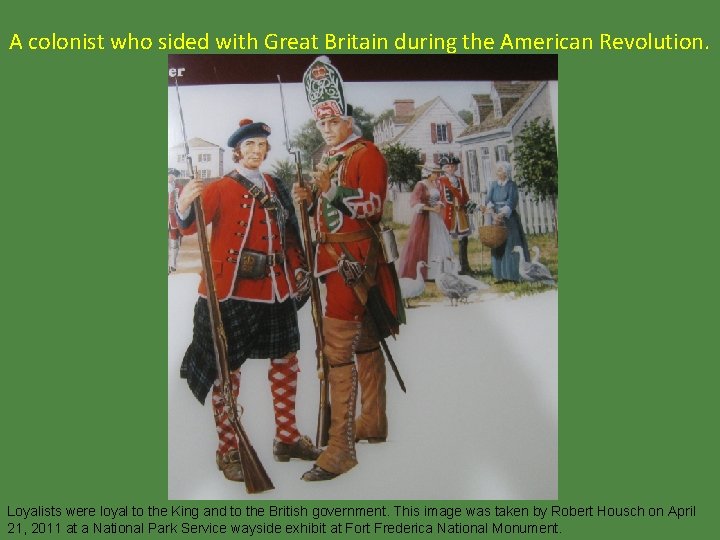
A colonist who sided with Great Britain during the American Revolution. Loyalists were loyal to the King and to the British government. This image was taken by Robert Housch on April 21, 2011 at a National Park Service wayside exhibit at Fort Frederica National Monument.
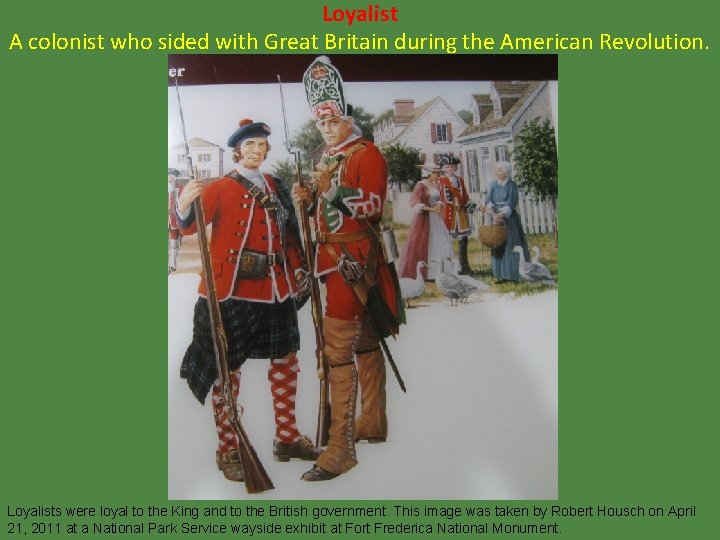
Loyalist A colonist who sided with Great Britain during the American Revolution. Loyalists were loyal to the King and to the British government. This image was taken by Robert Housch on April 21, 2011 at a National Park Service wayside exhibit at Fort Frederica National Monument.
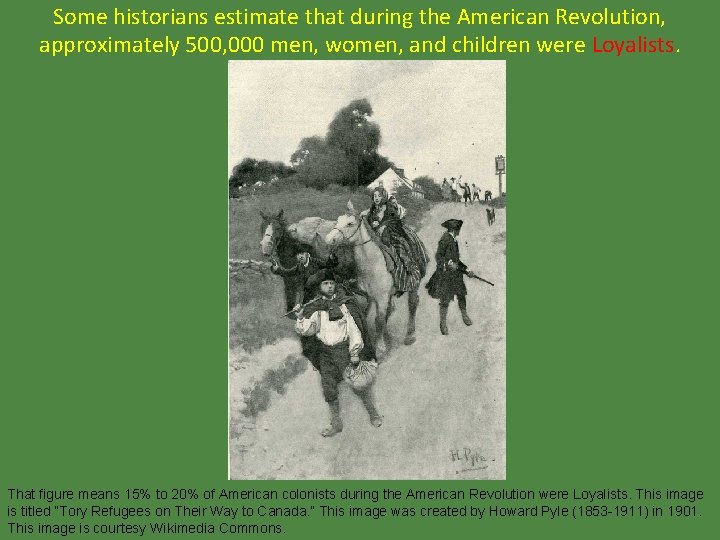
Some historians estimate that during the American Revolution, approximately 500, 000 men, women, and children were Loyalists. That figure means 15% to 20% of American colonists during the American Revolution were Loyalists. This image is titled “Tory Refugees on Their Way to Canada. ” This image was created by Howard Pyle (1853 -1911) in 1901. This image is courtesy Wikimedia Commons.
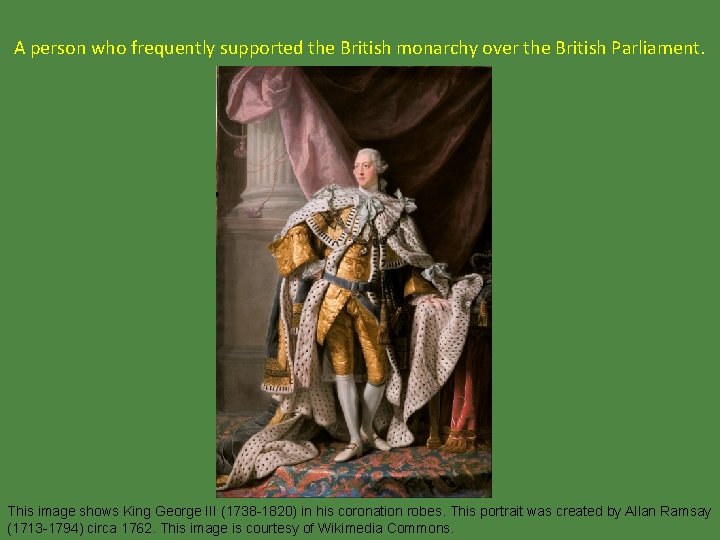
A person who frequently supported the British monarchy over the British Parliament. This image shows King George III (1738 -1820) in his coronation robes. This portrait was created by Allan Ramsay (1713 -1794) circa 1762. This image is courtesy of Wikimedia Commons.
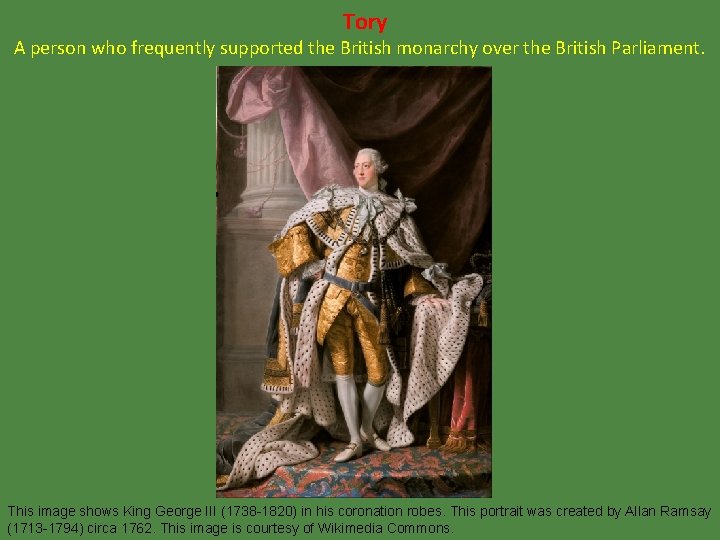
Tory A person who frequently supported the British monarchy over the British Parliament. This image shows King George III (1738 -1820) in his coronation robes. This portrait was created by Allan Ramsay (1713 -1794) circa 1762. This image is courtesy of Wikimedia Commons.
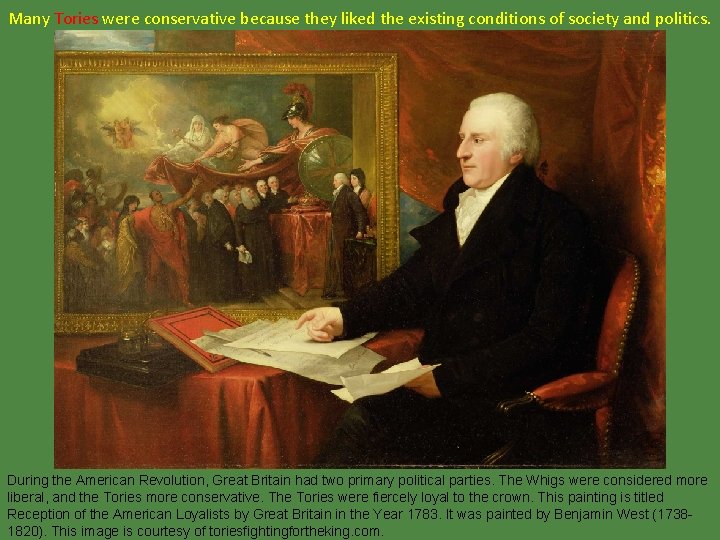
Many Tories were conservative because they liked the existing conditions of society and politics. During the American Revolution, Great Britain had two primary political parties. The Whigs were considered more liberal, and the Tories more conservative. The Tories were fiercely loyal to the crown. This painting is titled Reception of the American Loyalists by Great Britain in the Year 1783. It was painted by Benjamin West (17381820). This image is courtesy of toriesfightingfortheking. com.
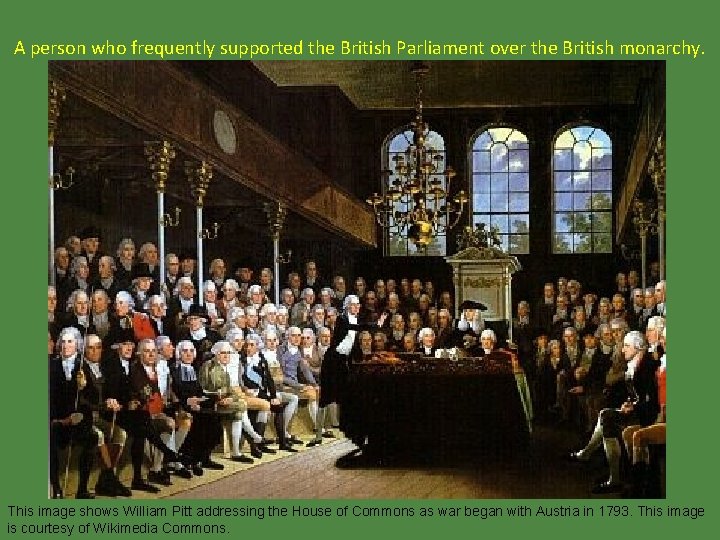
A person who frequently supported the British Parliament over the British monarchy. This image shows William Pitt addressing the House of Commons as war began with Austria in 1793. This image is courtesy of Wikimedia Commons.
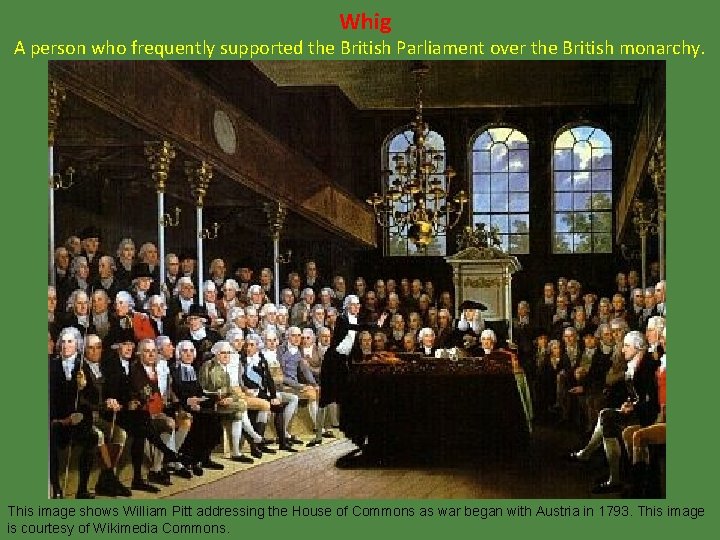
Whig A person who frequently supported the British Parliament over the British monarchy. This image shows William Pitt addressing the House of Commons as war began with Austria in 1793. This image is courtesy of Wikimedia Commons.
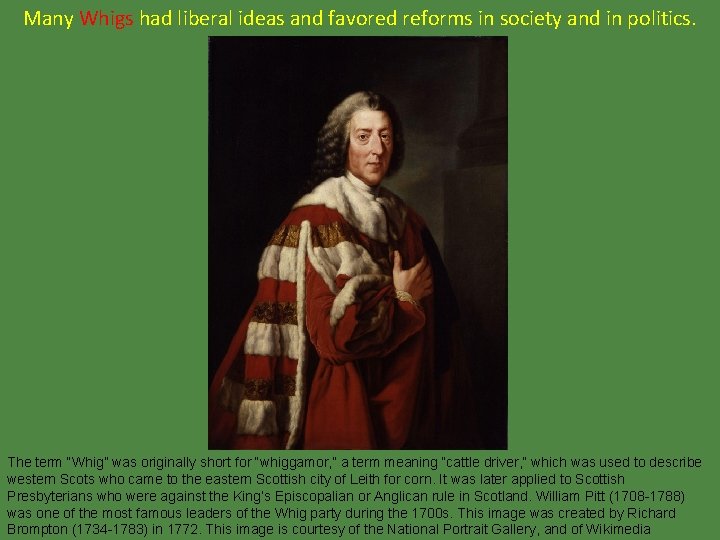
Many Whigs had liberal ideas and favored reforms in society and in politics. The term “Whig” was originally short for “whiggamor, ” a term meaning “cattle driver, ” which was used to describe western Scots who came to the eastern Scottish city of Leith for corn. It was later applied to Scottish Presbyterians who were against the King’s Episcopalian or Anglican rule in Scotland. William Pitt (1708 -1788) was one of the most famous leaders of the Whig party during the 1700 s. This image was created by Richard Brompton (1734 -1783) in 1772. This image is courtesy of the National Portrait Gallery, and of Wikimedia
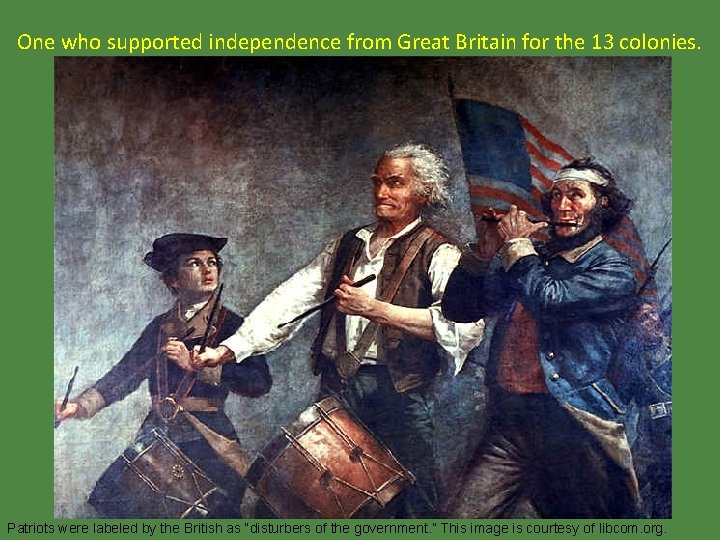
One who supported independence from Great Britain for the 13 colonies. Patriots were labeled by the British as “disturbers of the government. ” This image is courtesy of libcom. org.
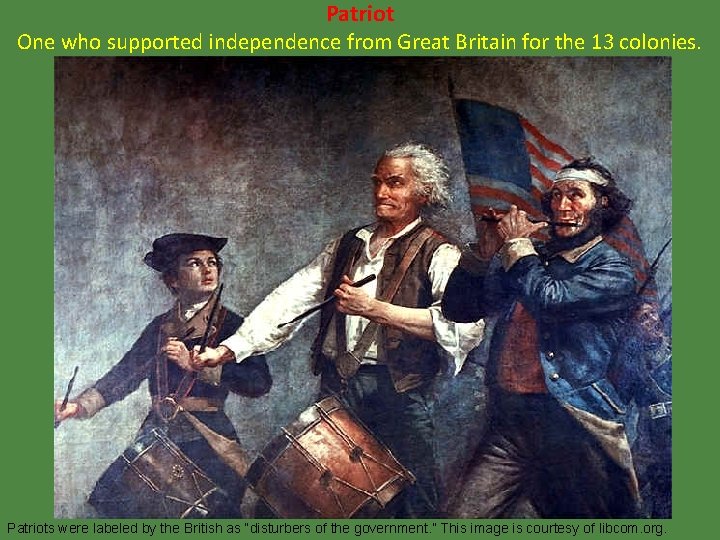
Patriot One who supported independence from Great Britain for the 13 colonies. Patriots were labeled by the British as “disturbers of the government. ” This image is courtesy of libcom. org.
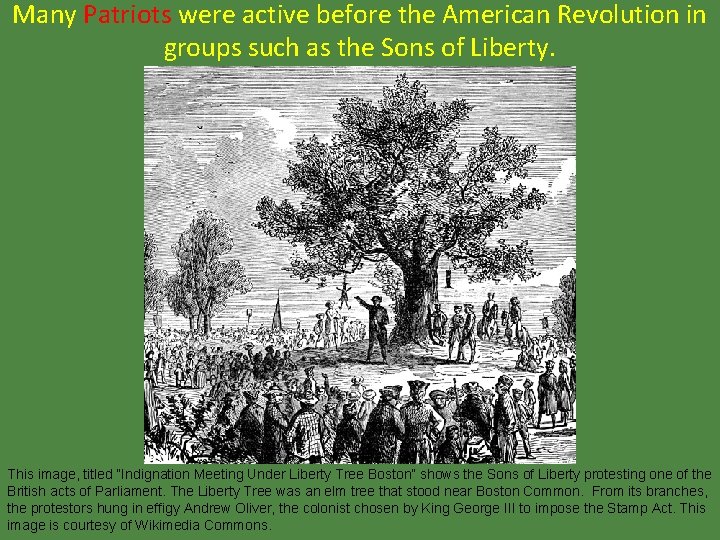
Many Patriots were active before the American Revolution in groups such as the Sons of Liberty. This image, titled “Indignation Meeting Under Liberty Tree Boston” shows the Sons of Liberty protesting one of the British acts of Parliament. The Liberty Tree was an elm tree that stood near Boston Common. From its branches, the protestors hung in effigy Andrew Oliver, the colonist chosen by King George III to impose the Stamp Act. This image is courtesy of Wikimedia Commons.
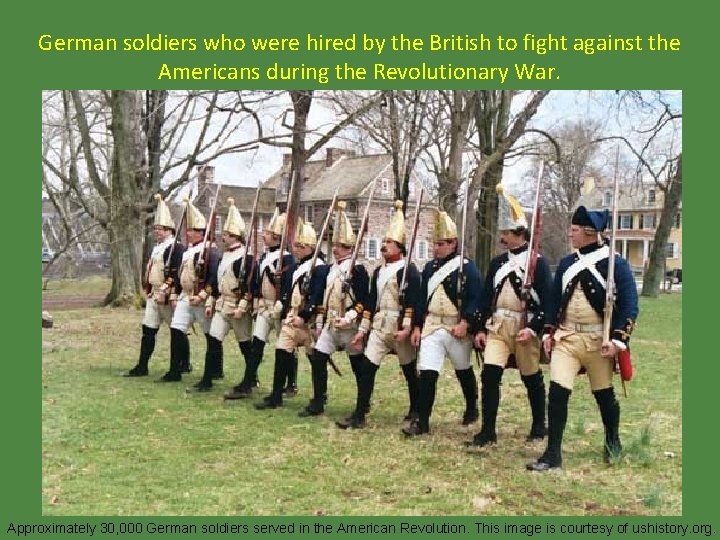
German soldiers who were hired by the British to fight against the Americans during the Revolutionary War. Approximately 30, 000 German soldiers served in the American Revolution. This image is courtesy of ushistory. org.
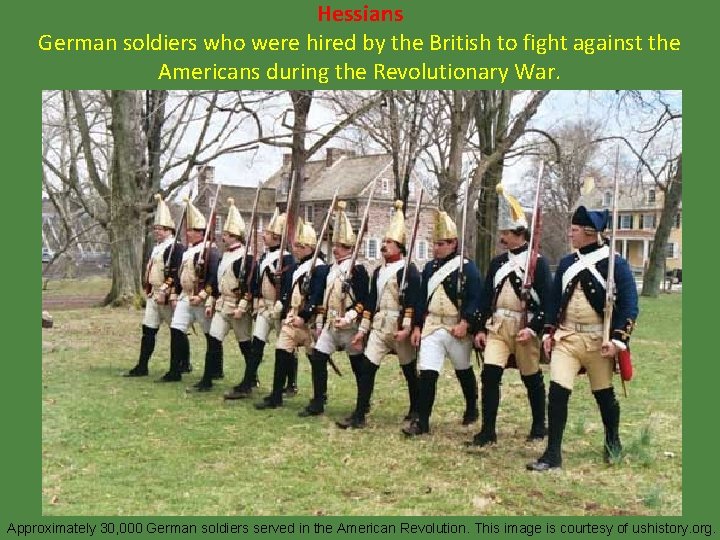
Hessians German soldiers who were hired by the British to fight against the Americans during the Revolutionary War. Approximately 30, 000 German soldiers served in the American Revolution. This image is courtesy of ushistory. org.
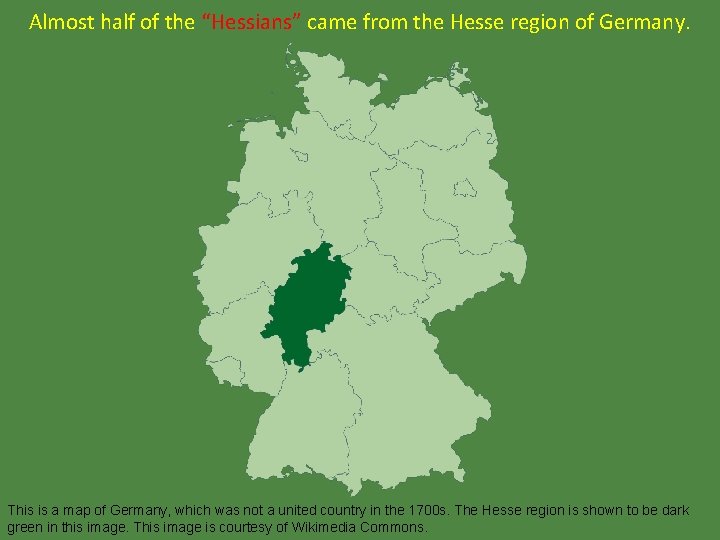
Almost half of the “Hessians” came from the Hesse region of Germany. This is a map of Germany, which was not a united country in the 1700 s. The Hesse region is shown to be dark green in this image. This image is courtesy of Wikimedia Commons.
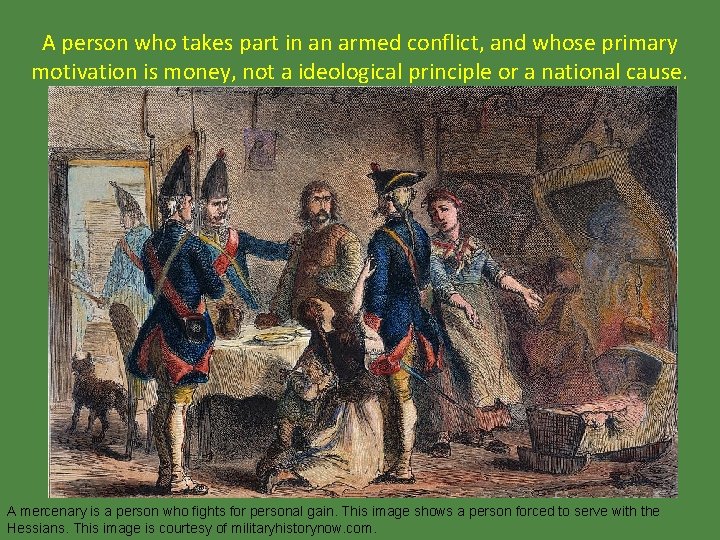
A person who takes part in an armed conflict, and whose primary motivation is money, not a ideological principle or a national cause. A mercenary is a person who fights for personal gain. This image shows a person forced to serve with the Hessians. This image is courtesy of militaryhistorynow. com.
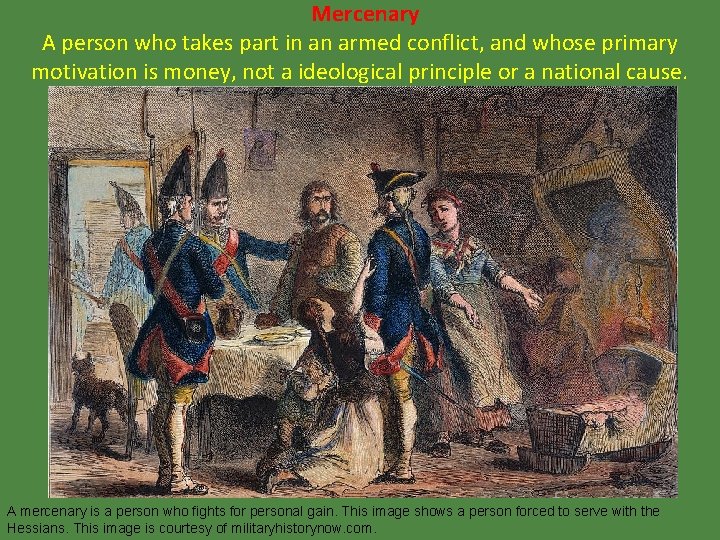
Mercenary A person who takes part in an armed conflict, and whose primary motivation is money, not a ideological principle or a national cause. A mercenary is a person who fights for personal gain. This image shows a person forced to serve with the Hessians. This image is courtesy of militaryhistorynow. com.
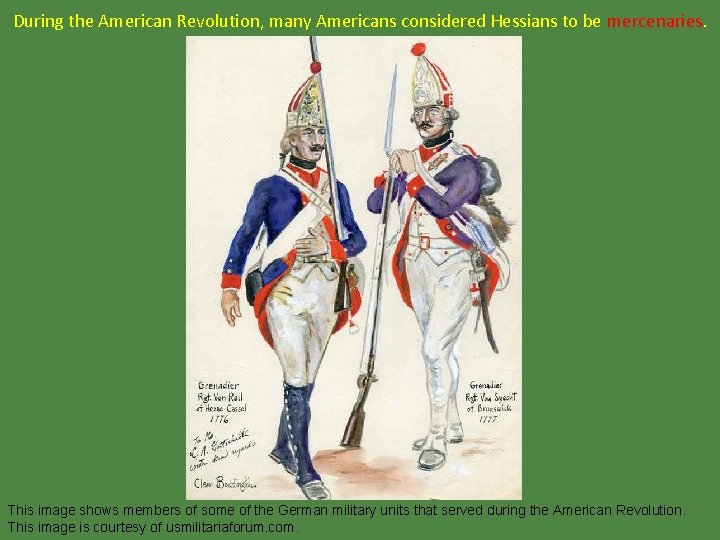
During the American Revolution, many Americans considered Hessians to be mercenaries. This image shows members of some of the German military units that served during the American Revolution. This image is courtesy of usmilitariaforum. com.
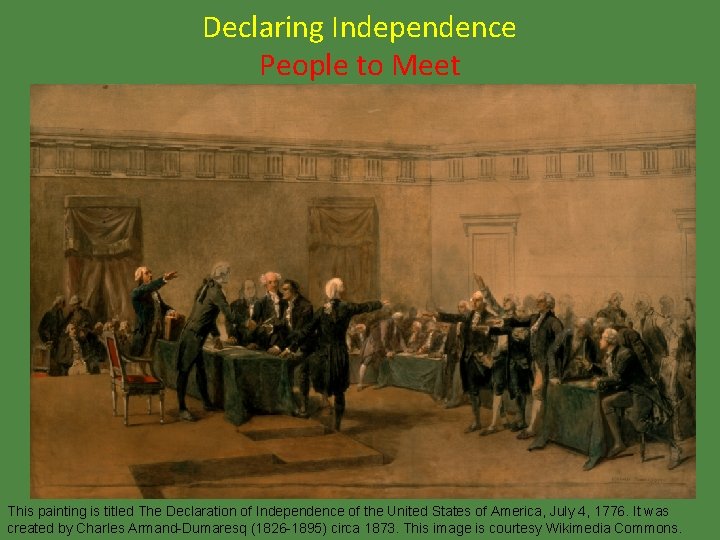
Declaring Independence People to Meet This painting is titled The Declaration of Independence of the United States of America, July 4, 1776. It was created by Charles Armand-Dumaresq (1826 -1895) circa 1873. This image is courtesy Wikimedia Commons.
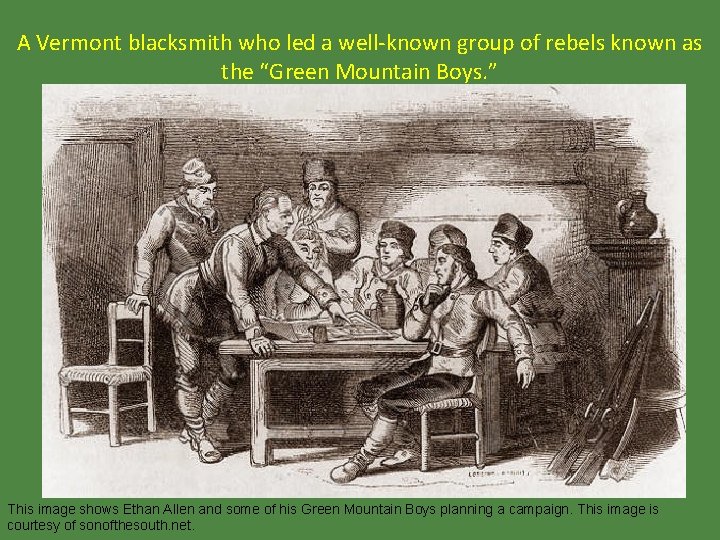
A Vermont blacksmith who led a well-known group of rebels known as the “Green Mountain Boys. ” This image shows Ethan Allen and some of his Green Mountain Boys planning a campaign. This image is courtesy of sonofthesouth. net.
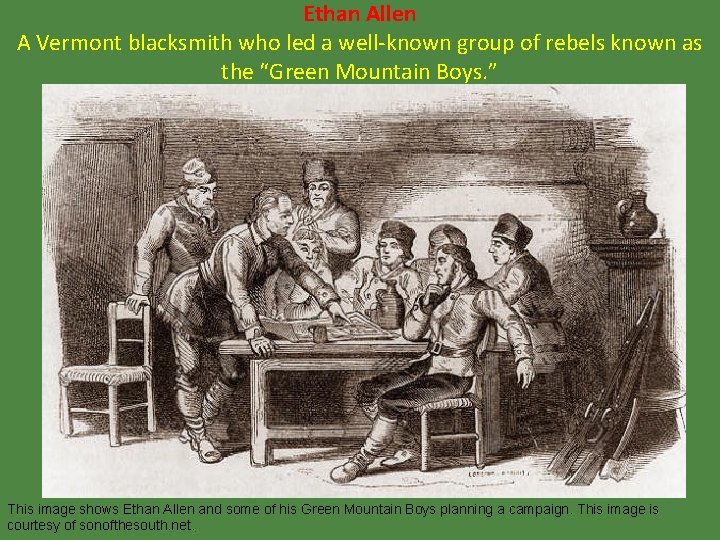
Ethan Allen A Vermont blacksmith who led a well-known group of rebels known as the “Green Mountain Boys. ” This image shows Ethan Allen and some of his Green Mountain Boys planning a campaign. This image is courtesy of sonofthesouth. net.
American general who became discouraged by his lack of promotion, and for not being recognized for his accomplishments. He later became a general for the British Army. Benedict Arnold is known as one of the greatest traitors in American history. This portrait of Benedict Arnold (1741 -1801) was created by H. B. Hall (1738 -1815) circa 1929. This image is courtesy of Wikimedia Commons.
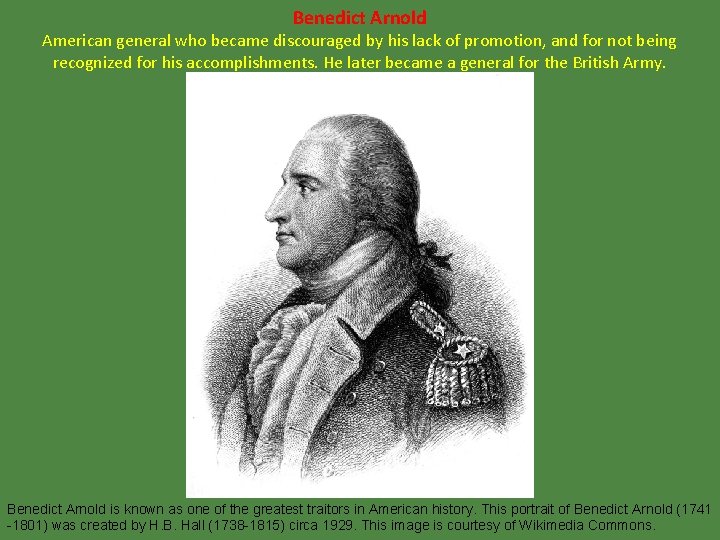
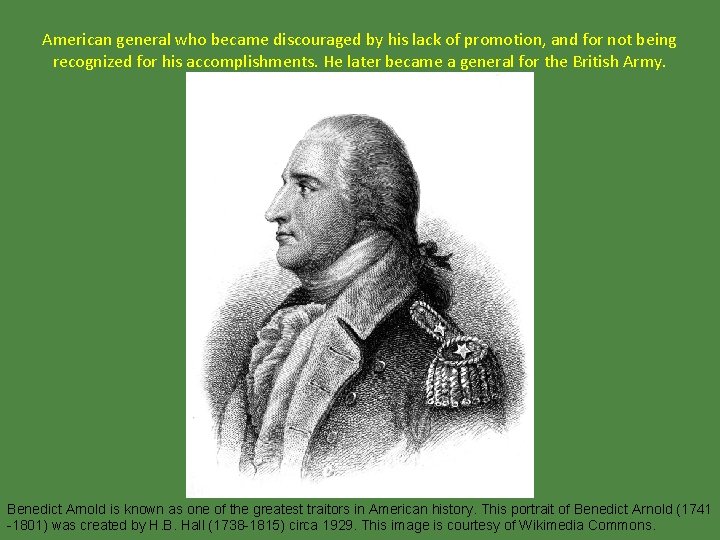
Benedict Arnold American general who became discouraged by his lack of promotion, and for not being recognized for his accomplishments. He later became a general for the British Army. Benedict Arnold is known as one of the greatest traitors in American history. This portrait of Benedict Arnold (1741 -1801) was created by H. B. Hall (1738 -1815) circa 1929. This image is courtesy of Wikimedia Commons.
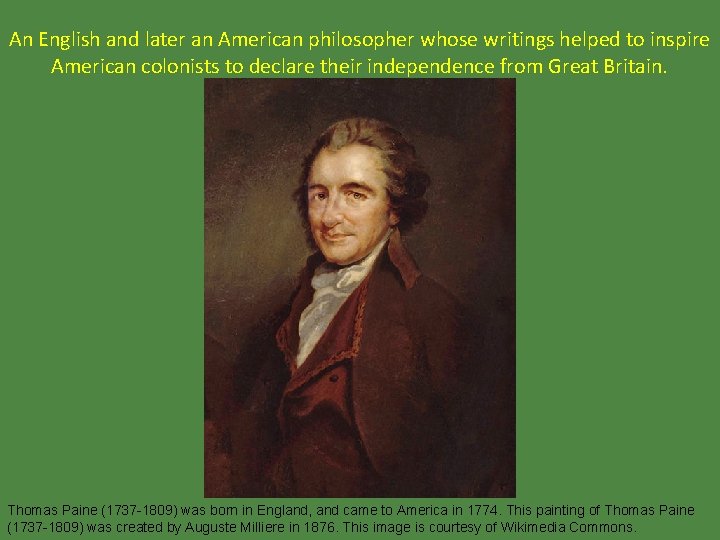
An English and later an American philosopher whose writings helped to inspire American colonists to declare their independence from Great Britain. Thomas Paine (1737 -1809) was born in England, and came to America in 1774. This painting of Thomas Paine (1737 -1809) was created by Auguste Milliere in 1876. This image is courtesy of Wikimedia Commons.
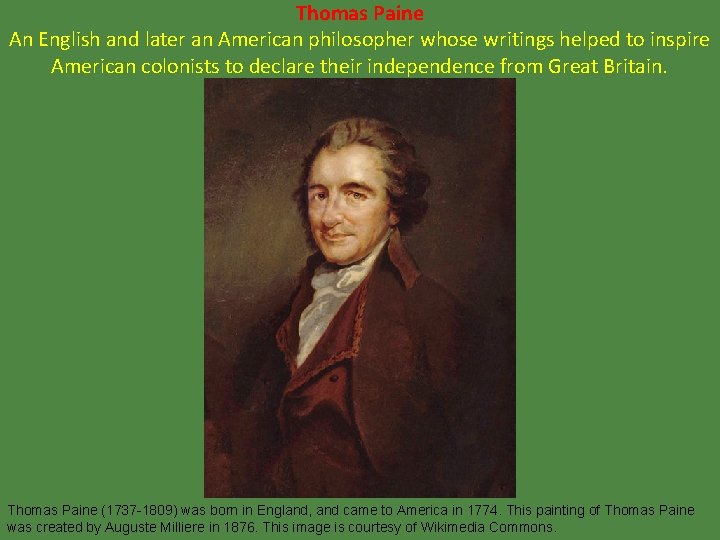
Thomas Paine An English and later an American philosopher whose writings helped to inspire American colonists to declare their independence from Great Britain. Thomas Paine (1737 -1809) was born in England, and came to America in 1774. This painting of Thomas Paine was created by Auguste Milliere in 1876. This image is courtesy of Wikimedia Commons.
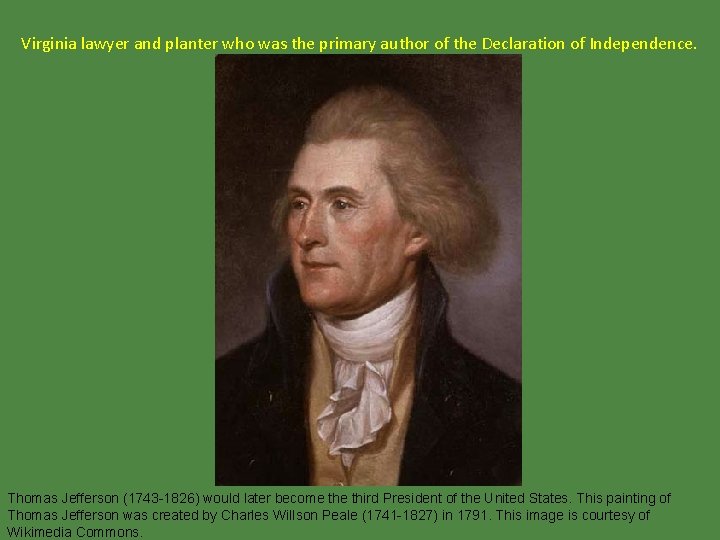
Virginia lawyer and planter who was the primary author of the Declaration of Independence. Thomas Jefferson (1743 -1826) would later become third President of the United States. This painting of Thomas Jefferson was created by Charles Willson Peale (1741 -1827) in 1791. This image is courtesy of Wikimedia Commons.
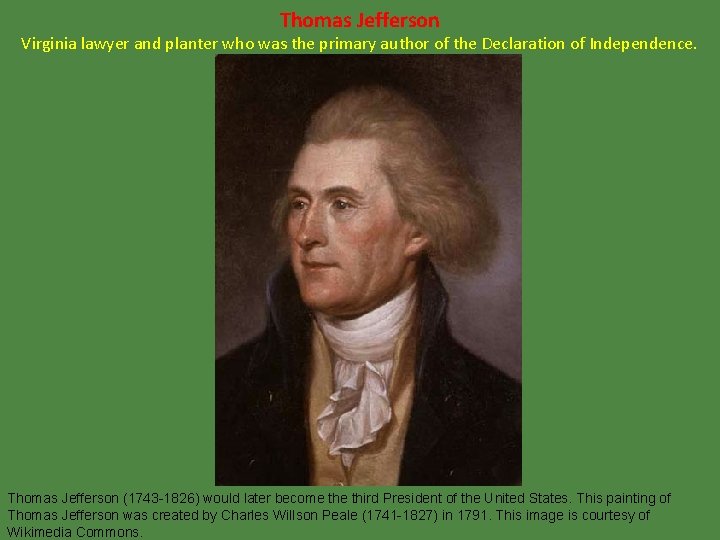
Thomas Jefferson Virginia lawyer and planter who was the primary author of the Declaration of Independence. Thomas Jefferson (1743 -1826) would later become third President of the United States. This painting of Thomas Jefferson was created by Charles Willson Peale (1741 -1827) in 1791. This image is courtesy of Wikimedia Commons.
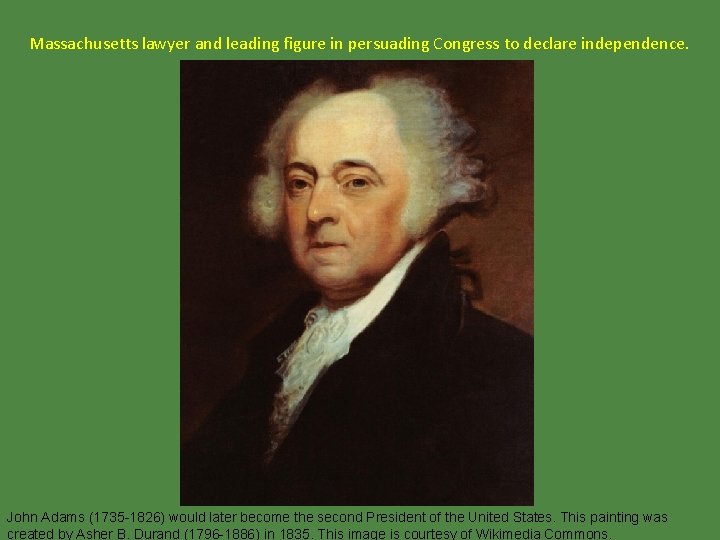
Massachusetts lawyer and leading figure in persuading Congress to declare independence. John Adams (1735 -1826) would later become the second President of the United States. This painting was created by Asher B. Durand (1796 -1886) in 1835. This image is courtesy of Wikimedia Commons.
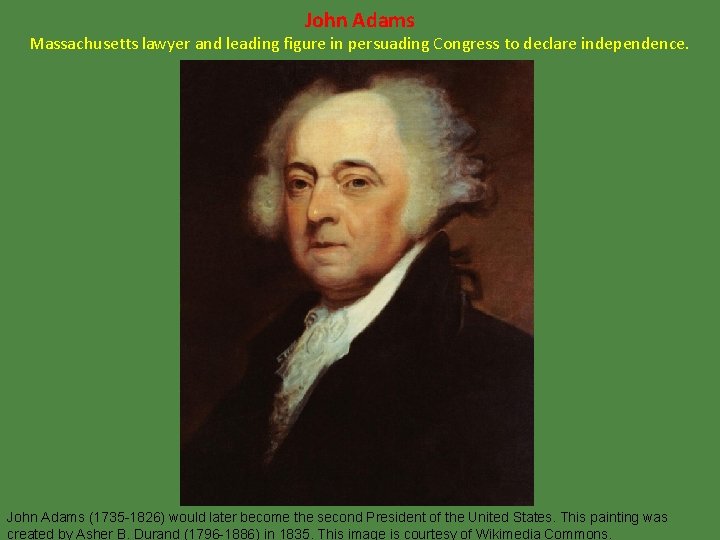
John Adams Massachusetts lawyer and leading figure in persuading Congress to declare independence. John Adams (1735 -1826) would later become the second President of the United States. This painting was created by Asher B. Durand (1796 -1886) in 1835. This image is courtesy of Wikimedia Commons.
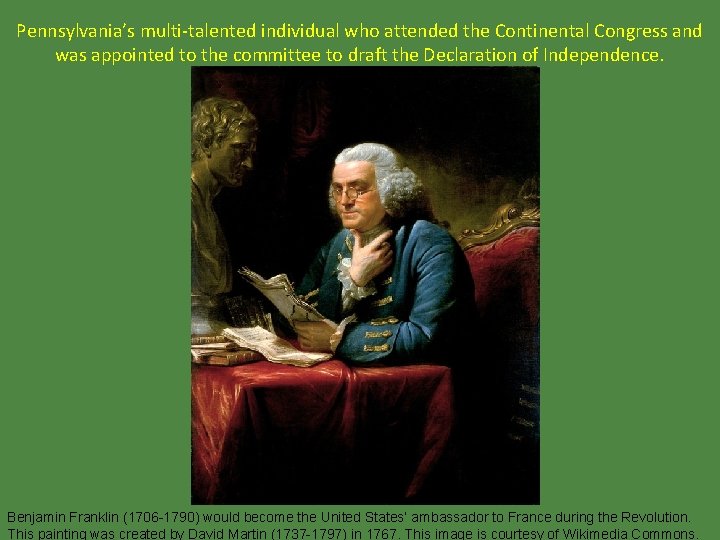
Pennsylvania’s multi-talented individual who attended the Continental Congress and was appointed to the committee to draft the Declaration of Independence. Benjamin Franklin (1706 -1790) would become the United States’ ambassador to France during the Revolution. This painting was created by David Martin (1737 -1797) in 1767. This image is courtesy of Wikimedia Commons.
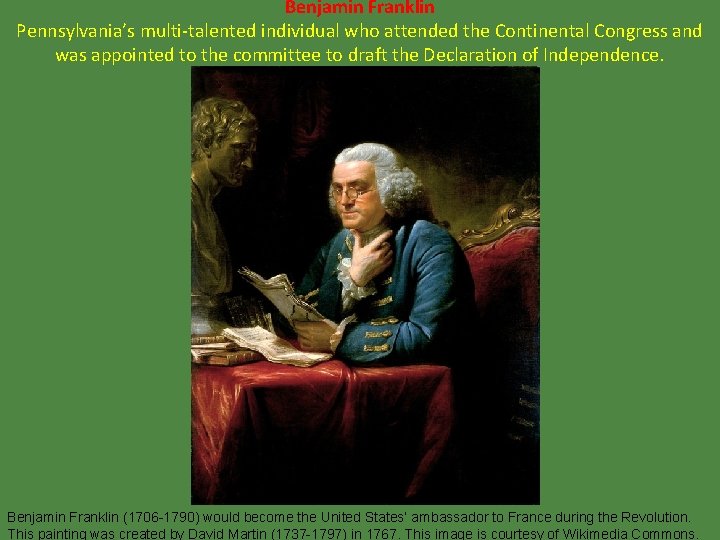
Benjamin Franklin Pennsylvania’s multi-talented individual who attended the Continental Congress and was appointed to the committee to draft the Declaration of Independence. Benjamin Franklin (1706 -1790) would become the United States’ ambassador to France during the Revolution. This painting was created by David Martin (1737 -1797) in 1767. This image is courtesy of Wikimedia Commons.
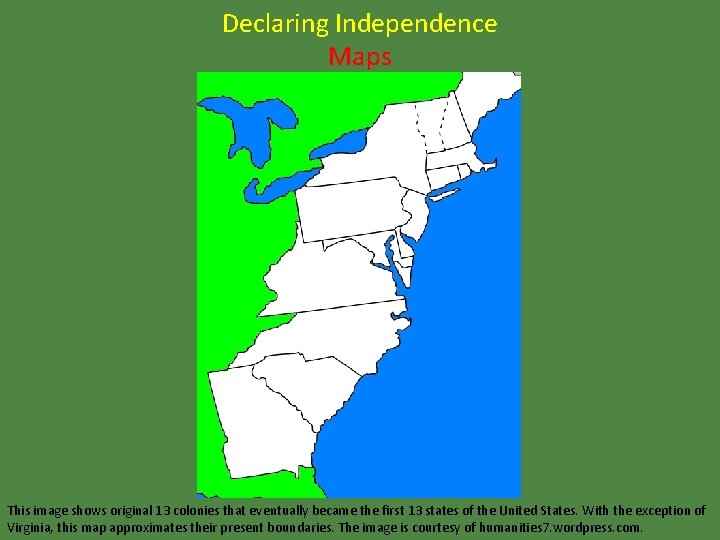
Declaring Independence Maps This image shows original 13 colonies that eventually became the first 13 states of the United States. With the exception of Virginia, this map approximates their present boundaries. The image is courtesy of humanities 7. wordpress. com.
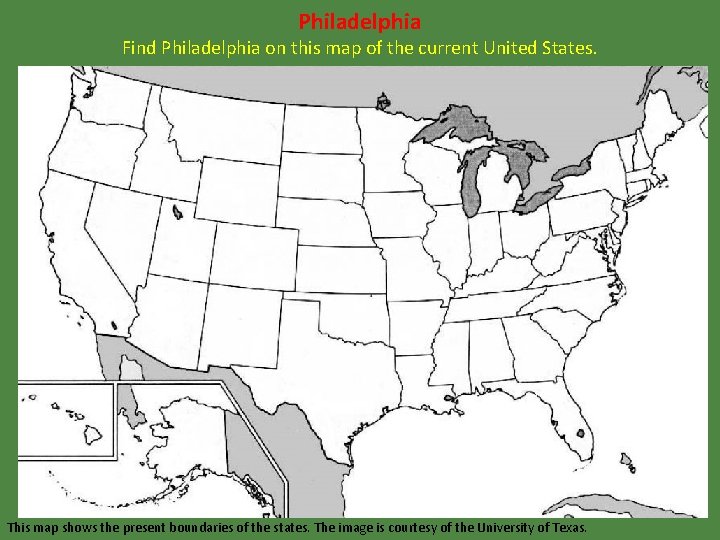
Philadelphia Find Philadelphia on this map of the current United States. This map shows the present boundaries of the states. The image is courtesy of the University of Texas.
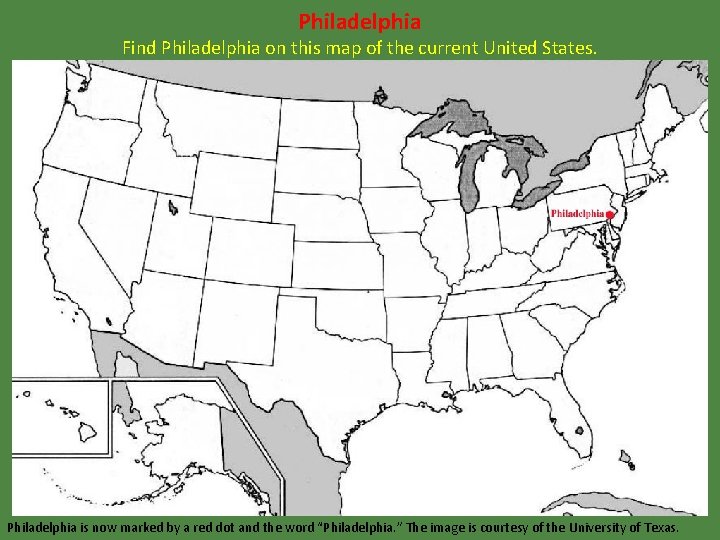
Philadelphia Find Philadelphia on this map of the current United States. Philadelphia is now marked by a red dot and the word “Philadelphia. ” The image is courtesy of the University of Texas.
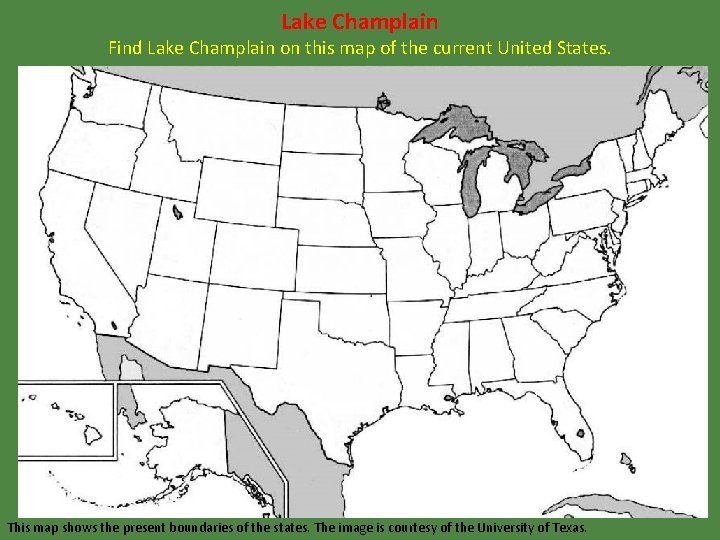
Lake Champlain Find Lake Champlain on this map of the current United States. This map shows the present boundaries of the states. The image is courtesy of the University of Texas.
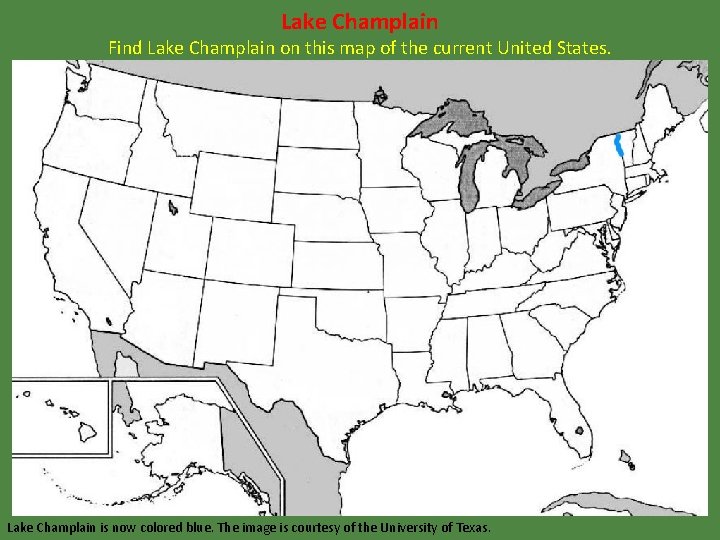
Lake Champlain Find Lake Champlain on this map of the current United States. Lake Champlain is now colored blue. The image is courtesy of the University of Texas.
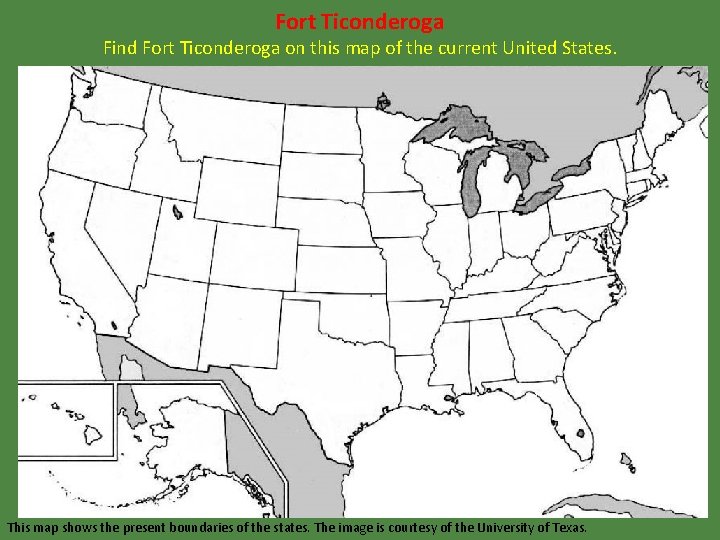
Fort Ticonderoga Find Fort Ticonderoga on this map of the current United States. This map shows the present boundaries of the states. The image is courtesy of the University of Texas.
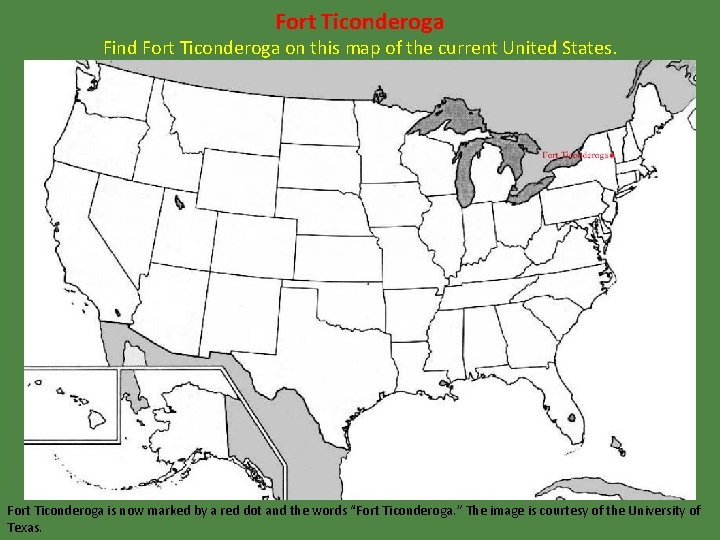
Fort Ticonderoga Find Fort Ticonderoga on this map of the current United States. Fort Ticonderoga is now marked by a red dot and the words “Fort Ticonderoga. ” The image is courtesy of the University of Texas.
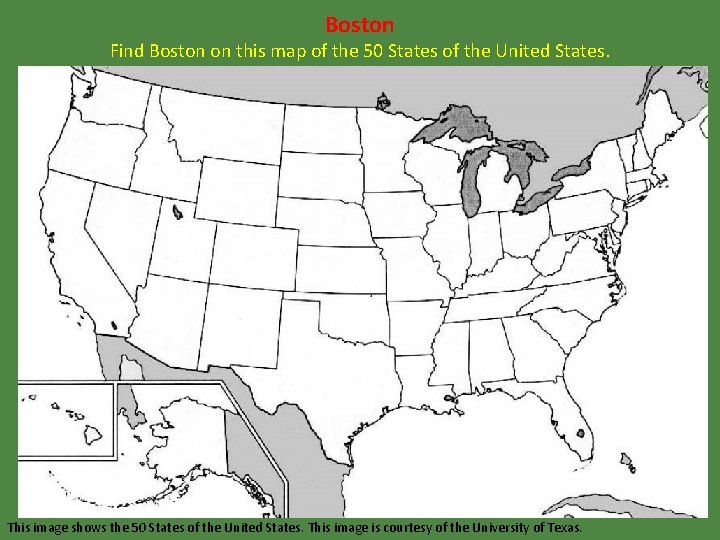
Boston Find Boston on this map of the 50 States of the United States. This image shows the 50 States of the United States. This image is courtesy of the University of Texas.
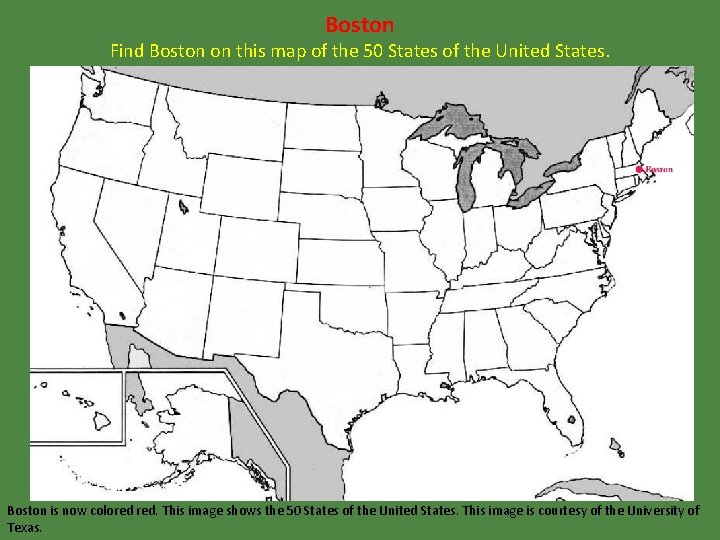
Boston Find Boston on this map of the 50 States of the United States. Boston is now colored red. This image shows the 50 States of the United States. This image is courtesy of the University of Texas.
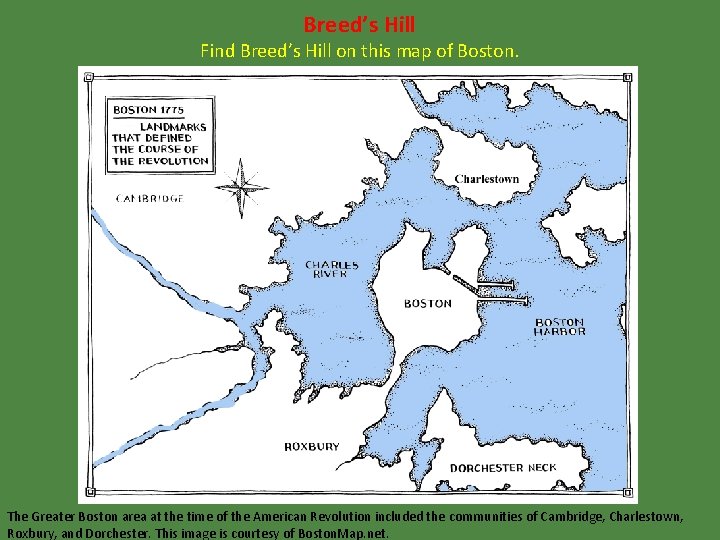
Breed’s Hill Find Breed’s Hill on this map of Boston. The Greater Boston area at the time of the American Revolution included the communities of Cambridge, Charlestown, Roxbury, and Dorchester. This image is courtesy of Boston. Map. net.
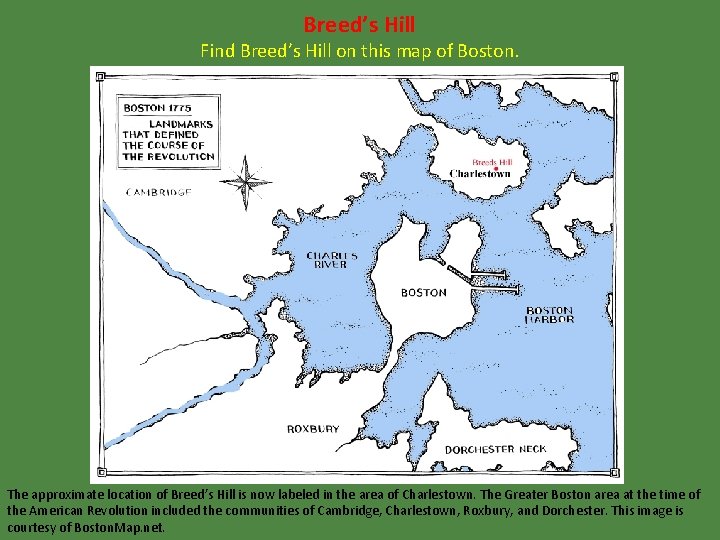
Breed’s Hill Find Breed’s Hill on this map of Boston. The approximate location of Breed’s Hill is now labeled in the area of Charlestown. The Greater Boston area at the time of the American Revolution included the communities of Cambridge, Charlestown, Roxbury, and Dorchester. This image is courtesy of Boston. Map. net.
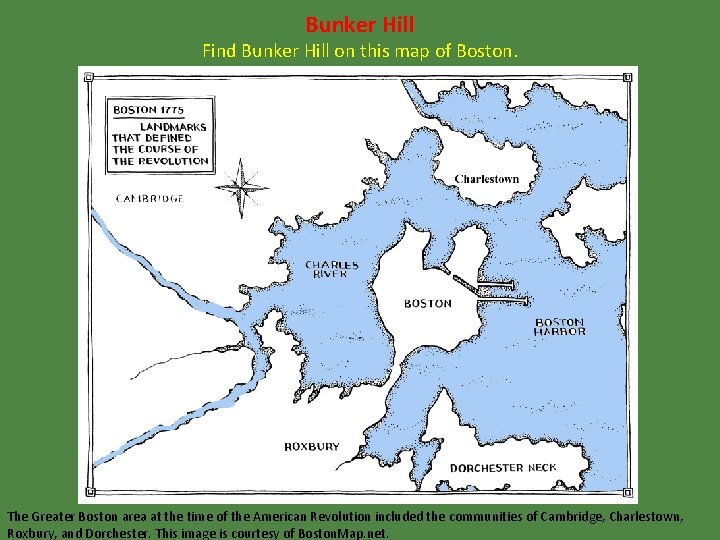
Bunker Hill Find Bunker Hill on this map of Boston. The Greater Boston area at the time of the American Revolution included the communities of Cambridge, Charlestown, Roxbury, and Dorchester. This image is courtesy of Boston. Map. net.
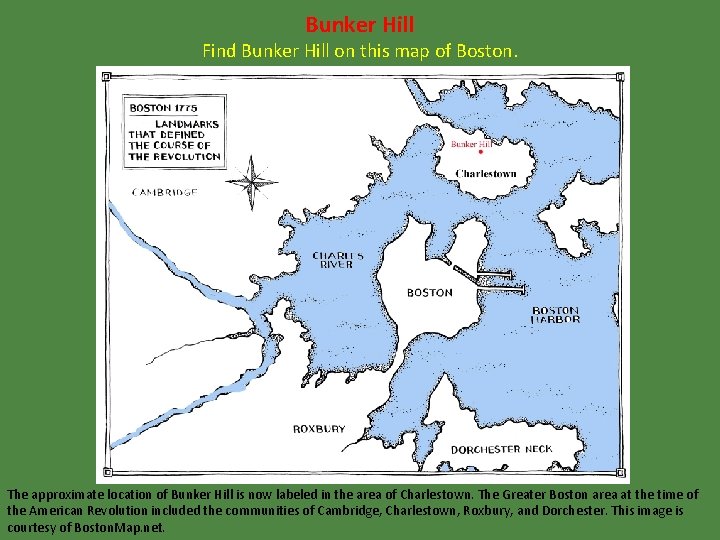
Bunker Hill Find Bunker Hill on this map of Boston. The approximate location of Bunker Hill is now labeled in the area of Charlestown. The Greater Boston area at the time of the American Revolution included the communities of Cambridge, Charlestown, Roxbury, and Dorchester. This image is courtesy of Boston. Map. net.
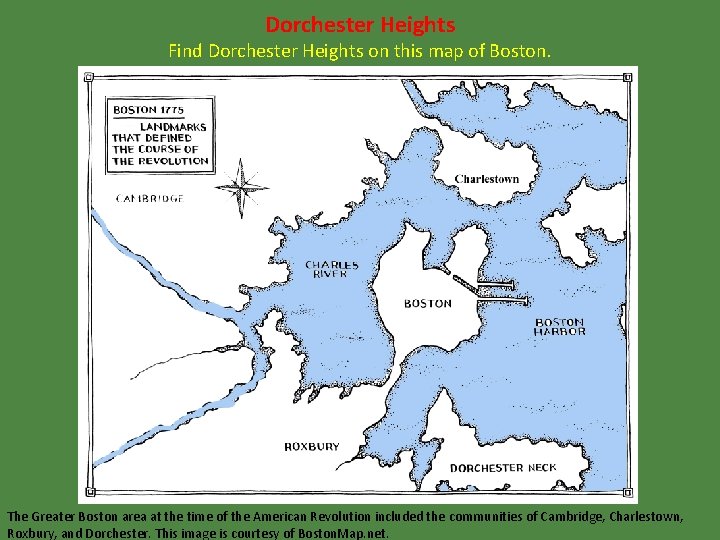
Dorchester Heights Find Dorchester Heights on this map of Boston. The Greater Boston area at the time of the American Revolution included the communities of Cambridge, Charlestown, Roxbury, and Dorchester. This image is courtesy of Boston. Map. net.
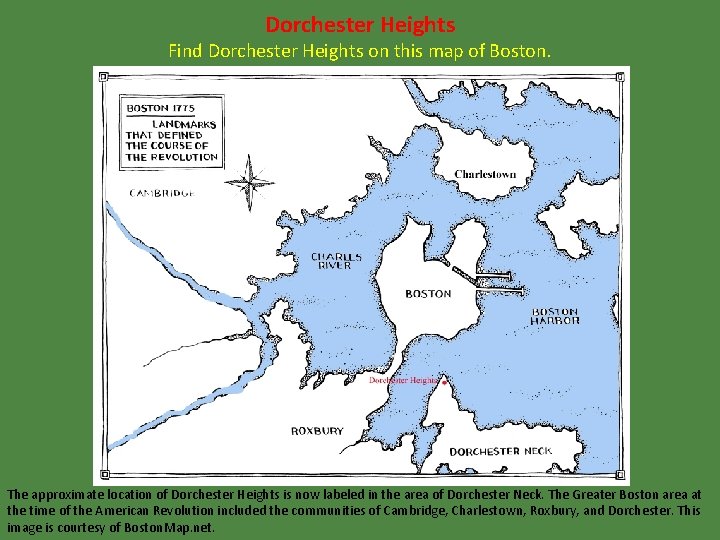
Dorchester Heights Find Dorchester Heights on this map of Boston. The approximate location of Dorchester Heights is now labeled in the area of Dorchester Neck. The Greater Boston area at the time of the American Revolution included the communities of Cambridge, Charlestown, Roxbury, and Dorchester. This image is courtesy of Boston. Map. net.
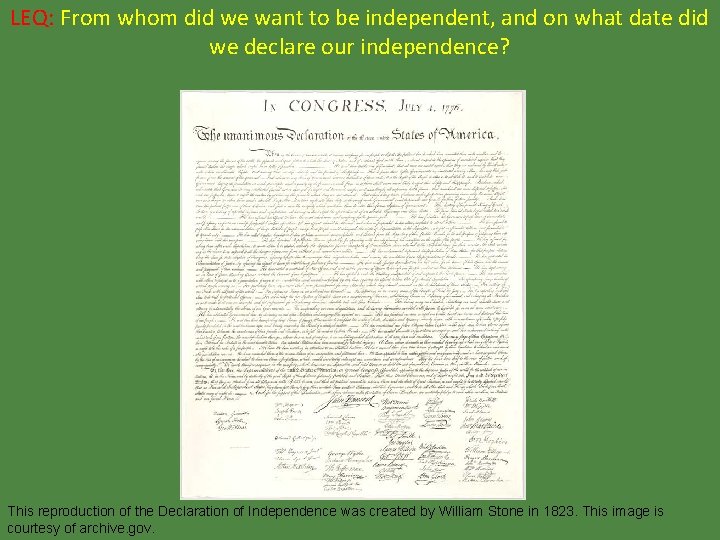
LEQ: From whom did we want to be independent, and on what date did we declare our independence? This reproduction of the Declaration of Independence was created by William Stone in 1823. This image is courtesy of archive. gov.
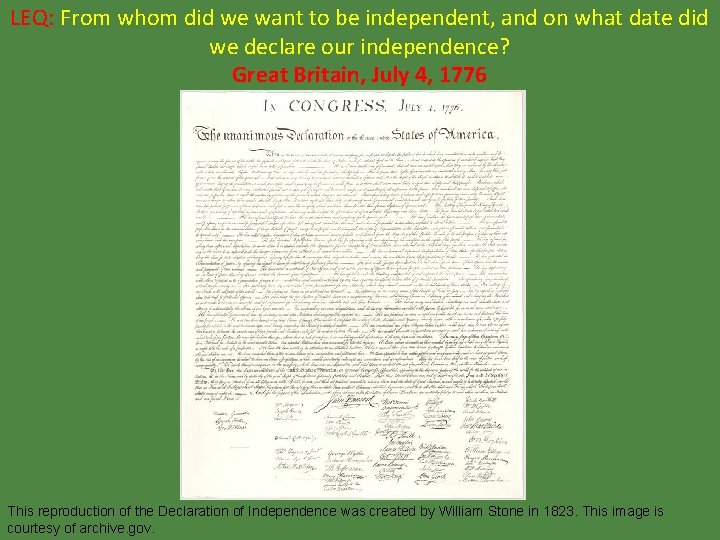
LEQ: From whom did we want to be independent, and on what date did we declare our independence? Great Britain, July 4, 1776 This reproduction of the Declaration of Independence was created by William Stone in 1823. This image is courtesy of archive. gov.
- Slides: 67