Chapter 27 Organic Chemistry 6 th Edition Paula
- Slides: 50
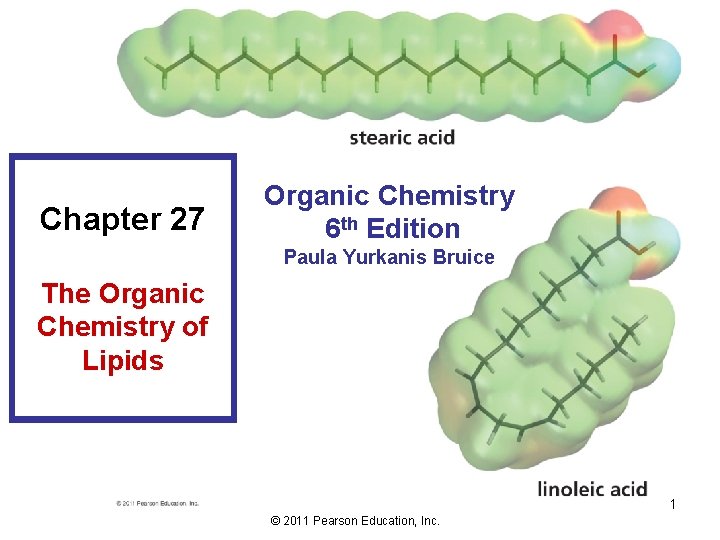
Chapter 27 Organic Chemistry 6 th Edition Paula Yurkanis Bruice The Organic Chemistry of Lipids 1 © 2011 Pearson Education, Inc.
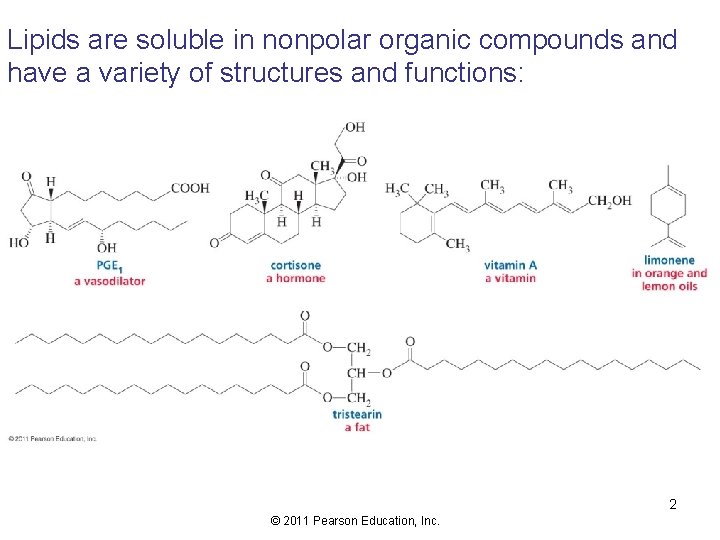
Lipids are soluble in nonpolar organic compounds and have a variety of structures and functions: 2 © 2011 Pearson Education, Inc.
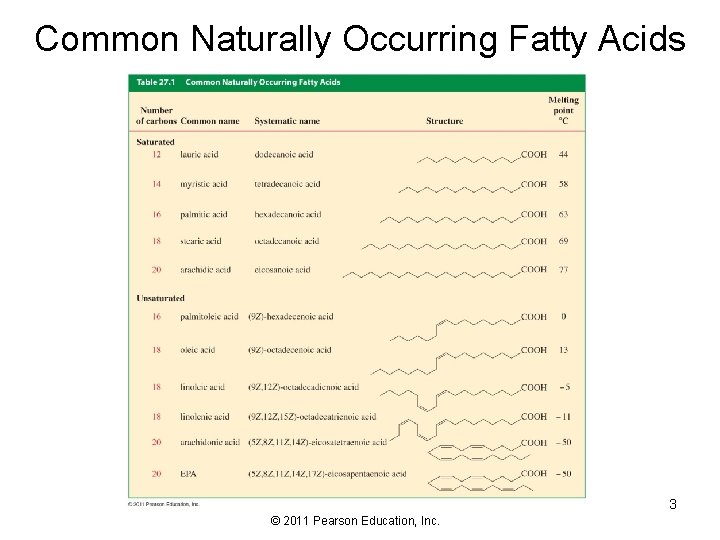
Common Naturally Occurring Fatty Acids 3 © 2011 Pearson Education, Inc.
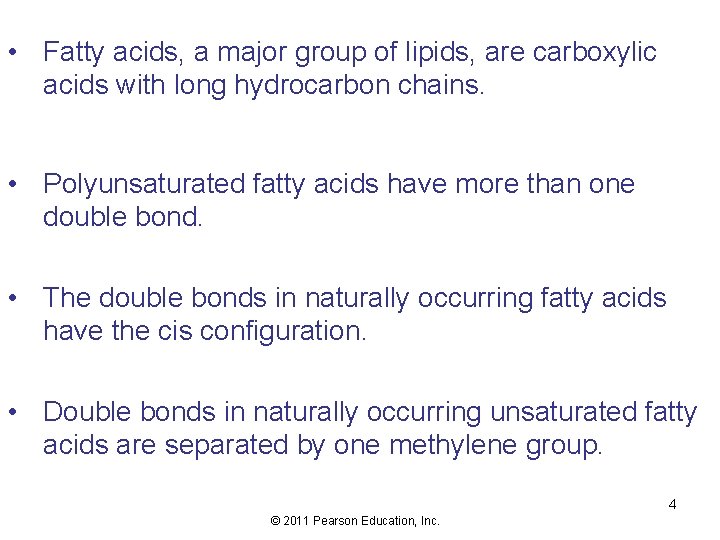
• Fatty acids, a major group of lipids, are carboxylic acids with long hydrocarbon chains. • Polyunsaturated fatty acids have more than one double bond. • The double bonds in naturally occurring fatty acids have the cis configuration. • Double bonds in naturally occurring unsaturated fatty acids are separated by one methylene group. 4 © 2011 Pearson Education, Inc.
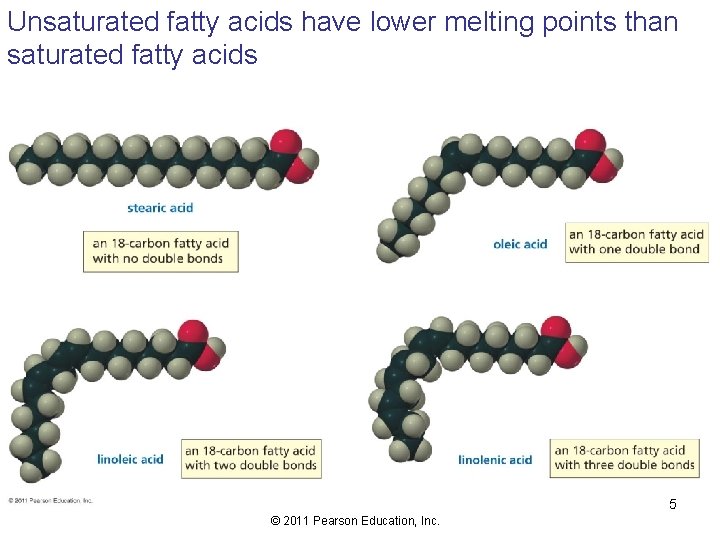
Unsaturated fatty acids have lower melting points than saturated fatty acids 5 © 2011 Pearson Education, Inc.
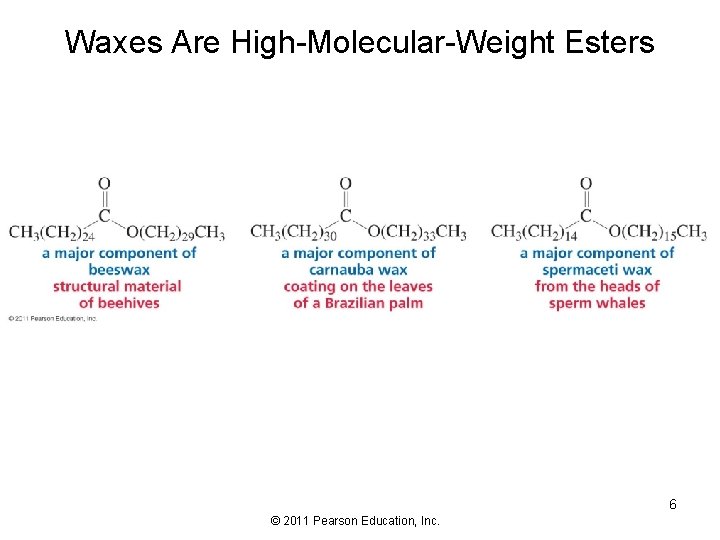
Waxes Are High-Molecular-Weight Esters 6 © 2011 Pearson Education, Inc.
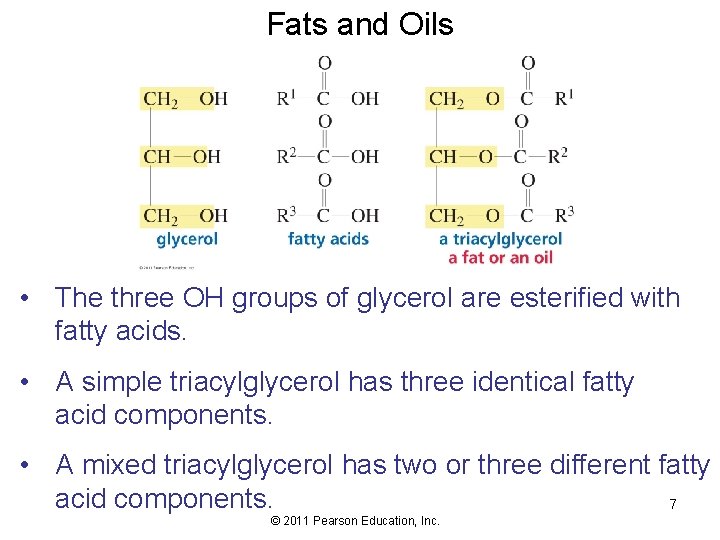
Fats and Oils • The three OH groups of glycerol are esterified with fatty acids. • A simple triacylglycerol has three identical fatty acid components. • A mixed triacylglycerol has two or three different fatty acid components. 7 © 2011 Pearson Education, Inc.
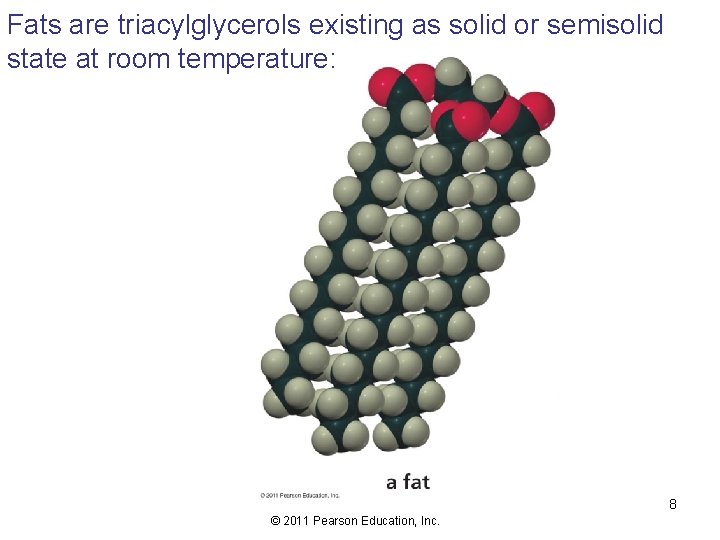
Fats are triacylglycerols existing as solid or semisolid state at room temperature: 8 © 2011 Pearson Education, Inc.
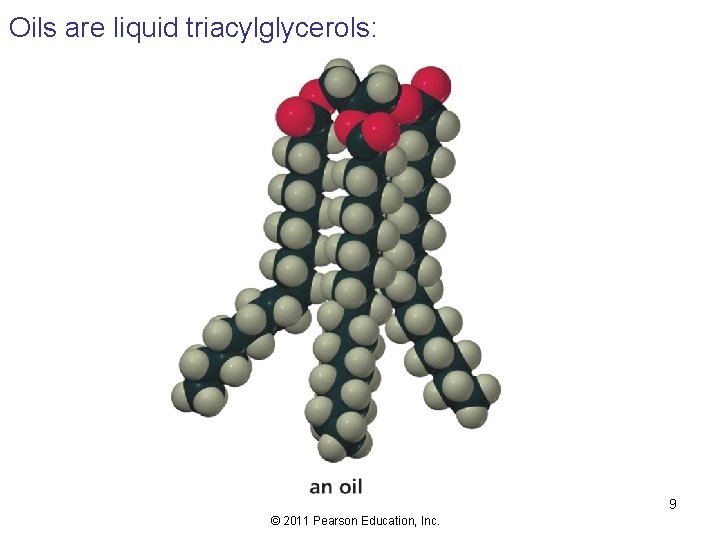
Oils are liquid triacylglycerols: 9 © 2011 Pearson Education, Inc.
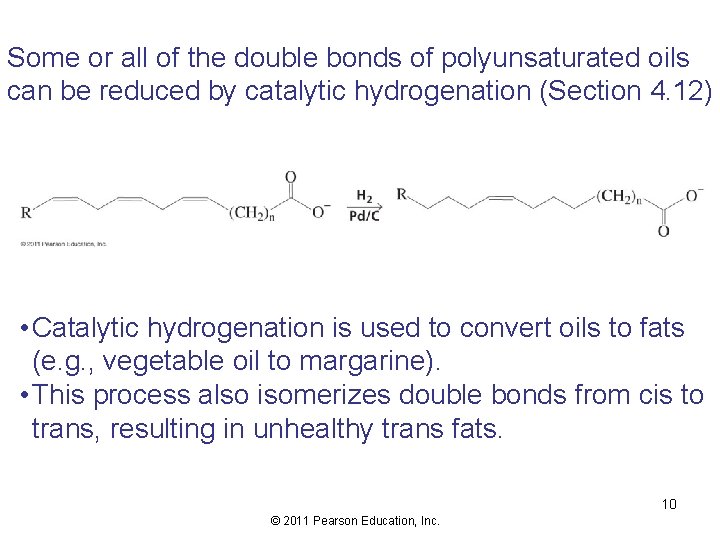
Some or all of the double bonds of polyunsaturated oils can be reduced by catalytic hydrogenation (Section 4. 12) • Catalytic hydrogenation is used to convert oils to fats (e. g. , vegetable oil to margarine). • This process also isomerizes double bonds from cis to trans, resulting in unhealthy trans fats. 10 © 2011 Pearson Education, Inc.
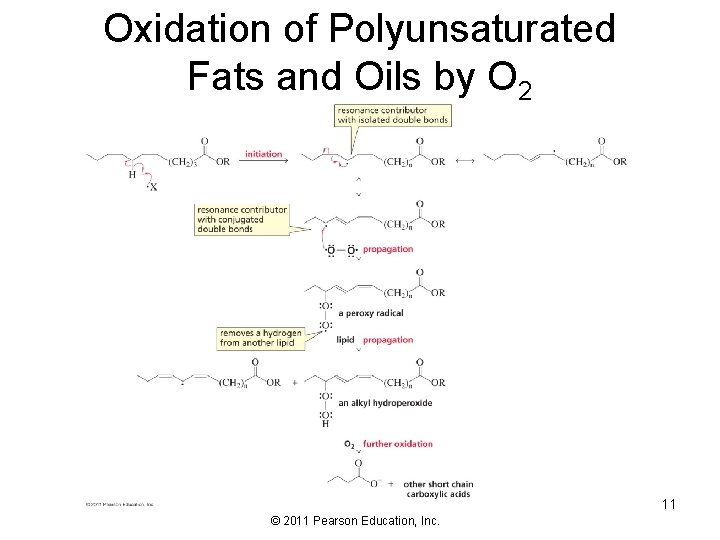
Oxidation of Polyunsaturated Fats and Oils by O 2 11 © 2011 Pearson Education, Inc.
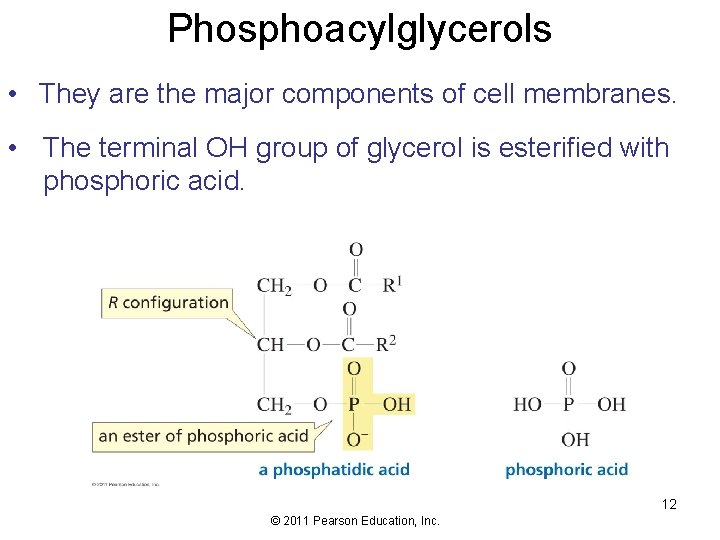
Phosphoacylglycerols • They are the major components of cell membranes. • The terminal OH group of glycerol is esterified with phosphoric acid. 12 © 2011 Pearson Education, Inc.
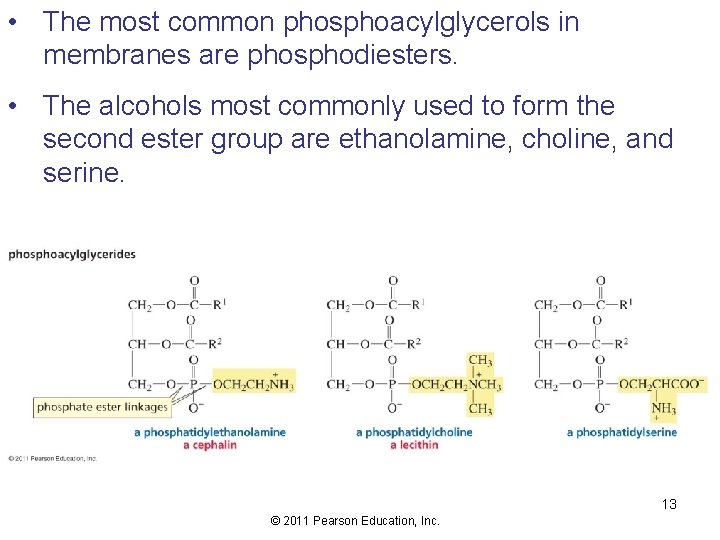
• The most common phosphoacylglycerols in membranes are phosphodiesters. • The alcohols most commonly used to form the second ester group are ethanolamine, choline, and serine. 13 © 2011 Pearson Education, Inc.
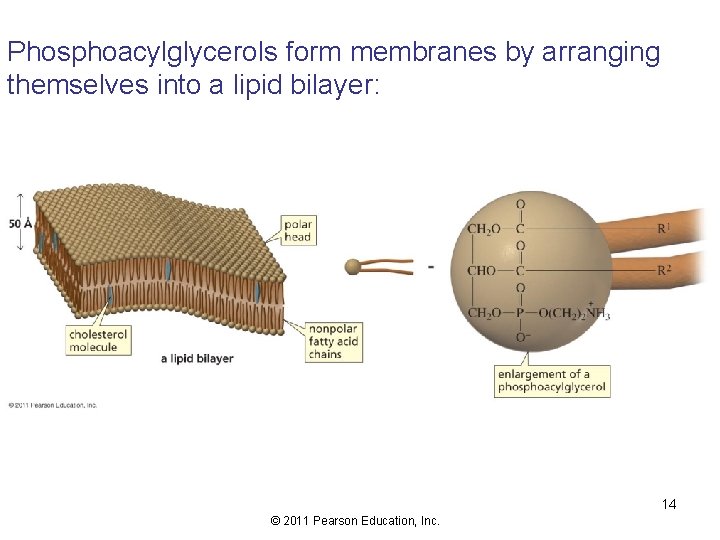
Phosphoacylglycerols form membranes by arranging themselves into a lipid bilayer: 14 © 2011 Pearson Education, Inc.
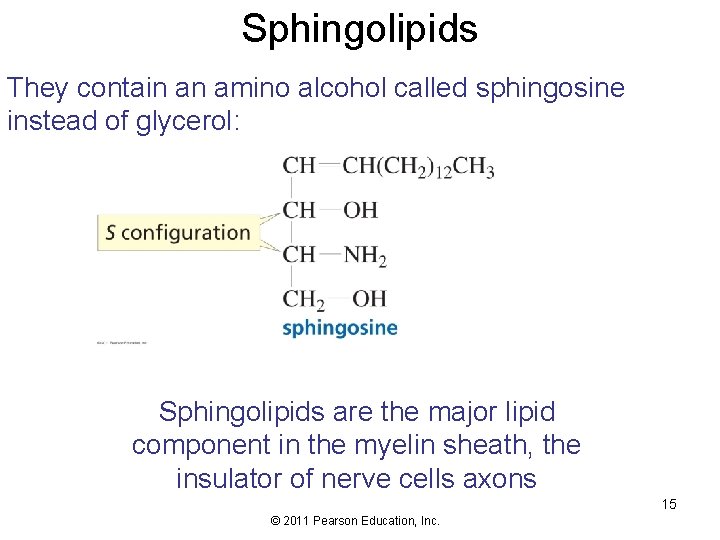
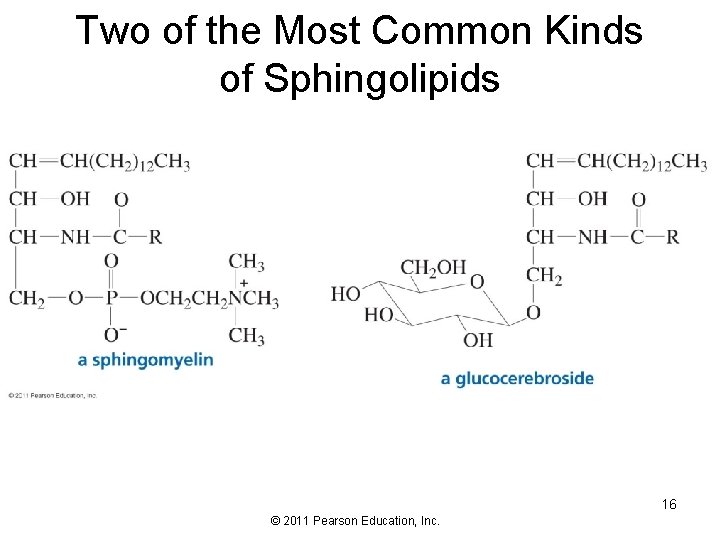
Sphingolipids They contain an amino alcohol called sphingosine instead of glycerol: Sphingolipids are the major lipid component in the myelin sheath, the insulator of nerve cells axons 15 © 2011 Pearson Education, Inc.
Two of the Most Common Kinds of Sphingolipids 16 © 2011 Pearson Education, Inc.
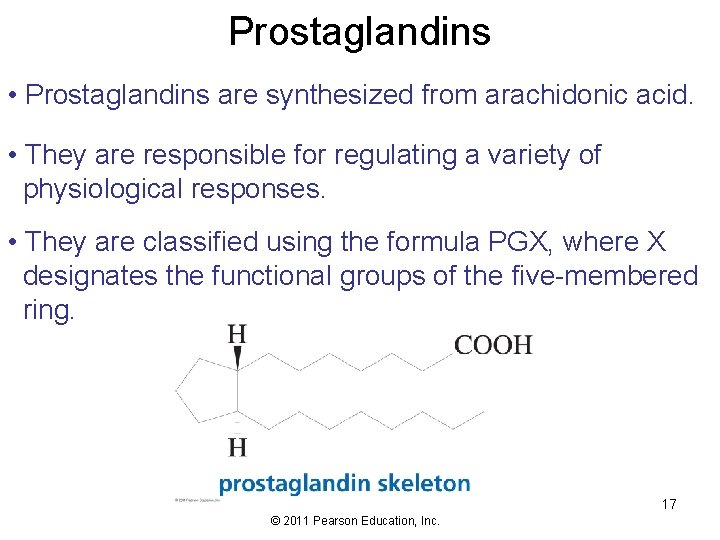
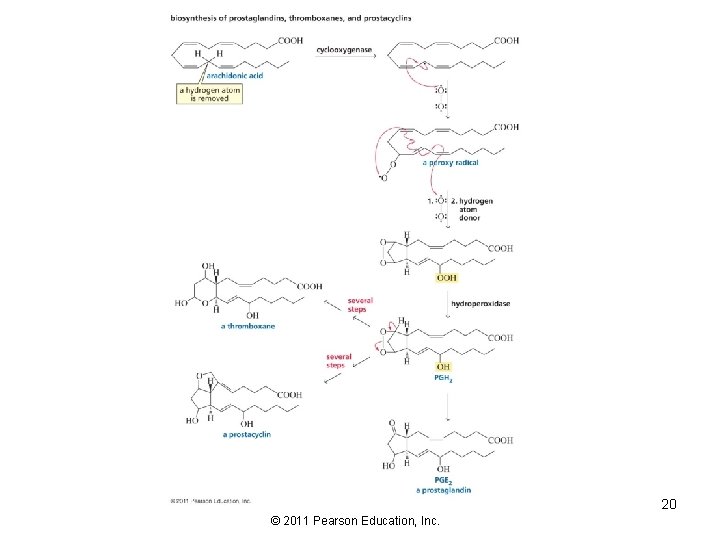
Prostaglandins • Prostaglandins are synthesized from arachidonic acid. • They are responsible for regulating a variety of physiological responses. • They are classified using the formula PGX, where X designates the functional groups of the five-membered ring. 17 © 2011 Pearson Education, Inc.
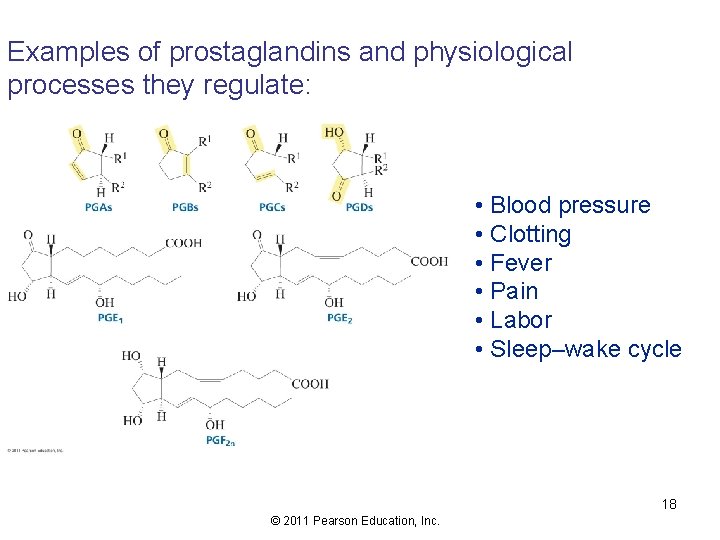
Examples of prostaglandins and physiological processes they regulate: • Blood pressure • Clotting • Fever • Pain • Labor • Sleep–wake cycle 18 © 2011 Pearson Education, Inc.
• Prostaglandin endoperoxide synthase catalyzes the conversion of arachidonic acid to PGH 2. • There are two forms of this enzyme: production under normal physiological conditions and in response to inflammation. • The enzyme has a cyclooxygenase activity and a hydroperoxidase activity. 19 © 2011 Pearson Education, Inc.
20 © 2011 Pearson Education, Inc.
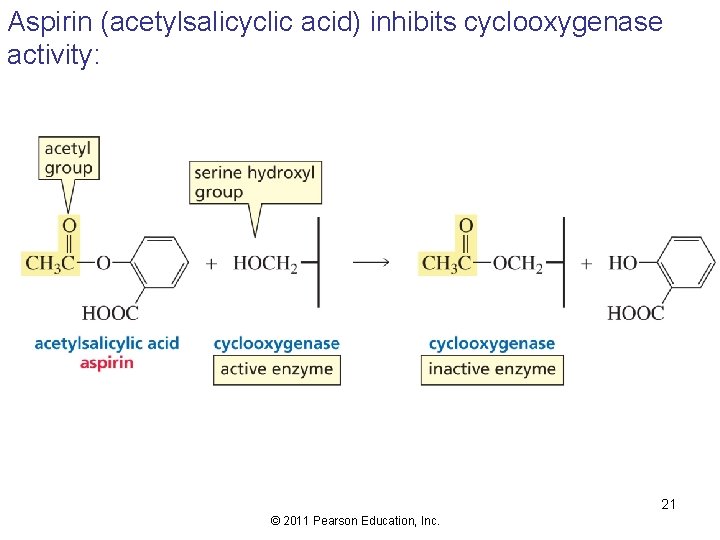
Aspirin (acetylsalicyclic acid) inhibits cyclooxygenase activity: 21 © 2011 Pearson Education, Inc.
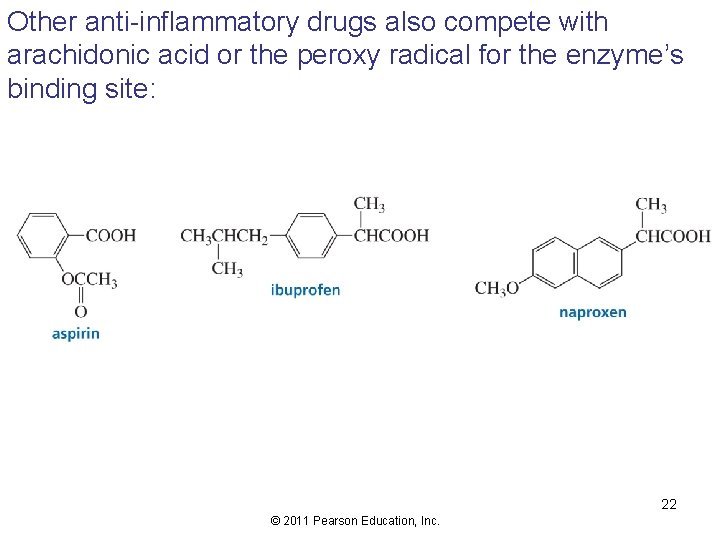
Other anti-inflammatory drugs also compete with arachidonic acid or the peroxy radical for the enzyme’s binding site: 22 © 2011 Pearson Education, Inc.
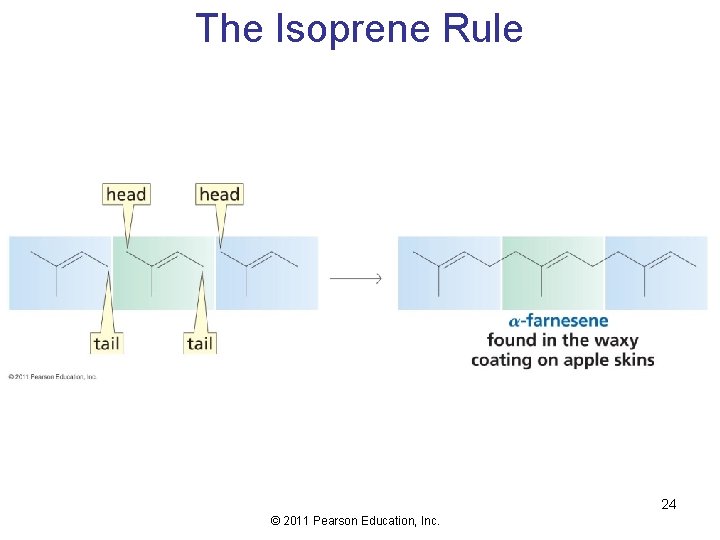
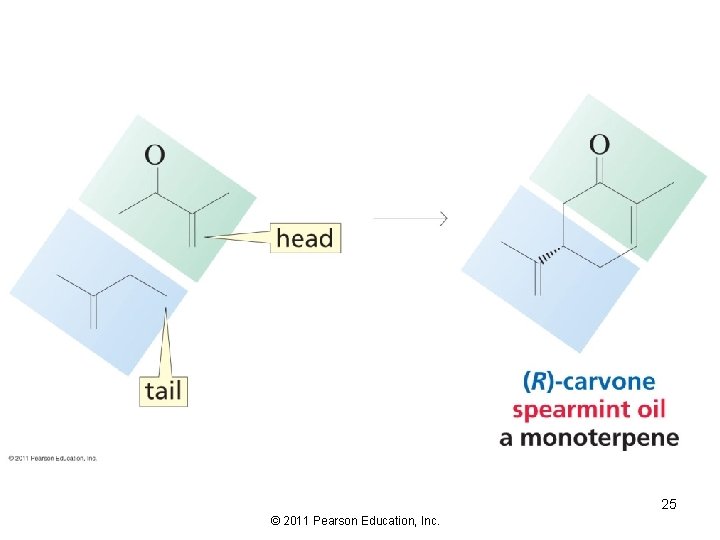
Terpenes • Terpenes contain carbon atoms in multiples of five. • They are made by joining five-carbon isoprene units. • Oxygen-containing terpenes are sometimes called terpenoids. • They are a diverse class of lipids. 23 © 2011 Pearson Education, Inc.
The Isoprene Rule 24 © 2011 Pearson Education, Inc.
25 © 2011 Pearson Education, Inc.
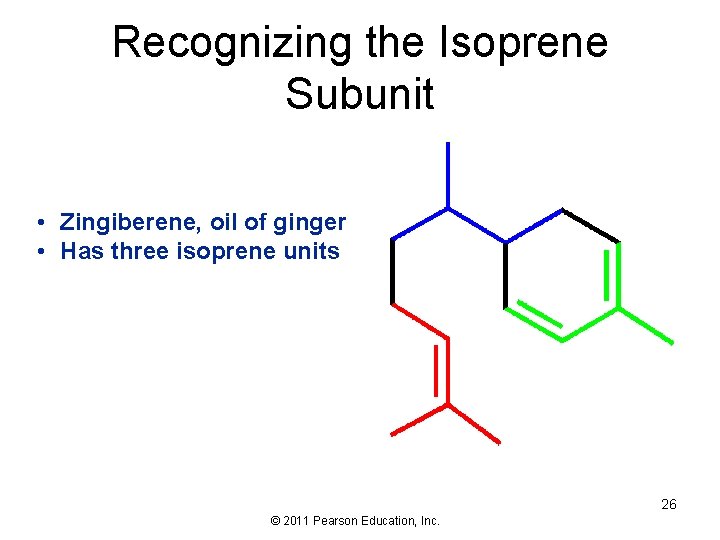
Recognizing the Isoprene Subunit • Zingiberene, oil of ginger • Has three isoprene units 26 © 2011 Pearson Education, Inc.
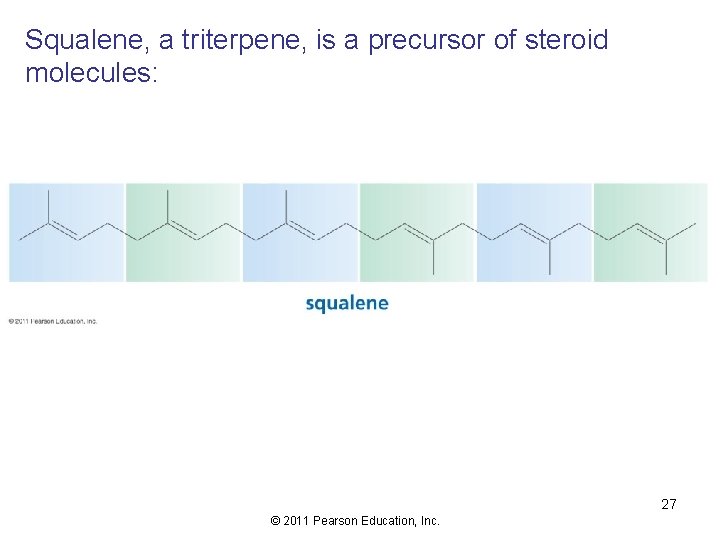
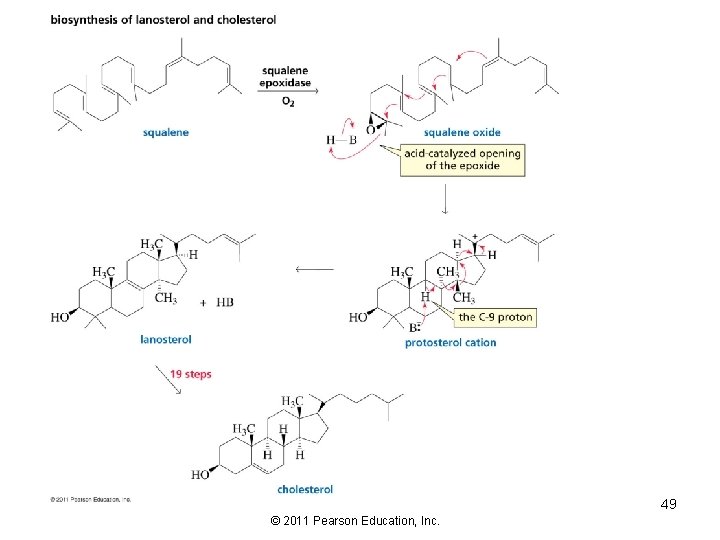
Squalene, a triterpene, is a precursor of steroid molecules: 27 © 2011 Pearson Education, Inc.
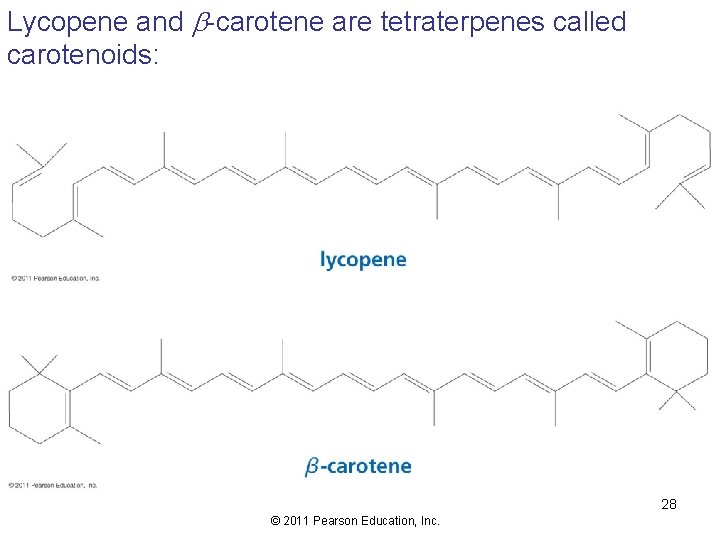
Lycopene and b-carotene are tetraterpenes called carotenoids: 28 © 2011 Pearson Education, Inc.
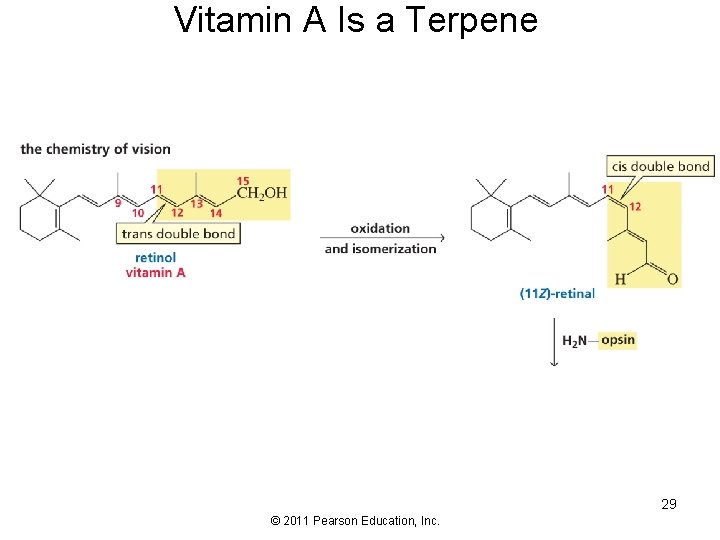
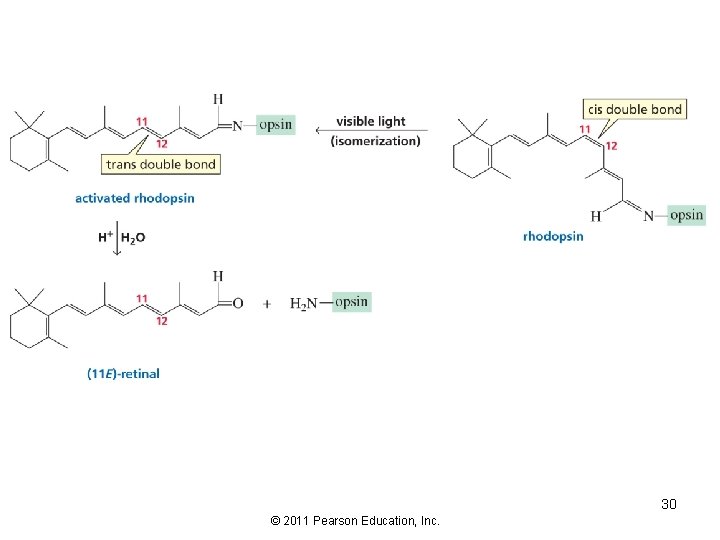
Vitamin A Is a Terpene 29 © 2011 Pearson Education, Inc.
30 © 2011 Pearson Education, Inc.
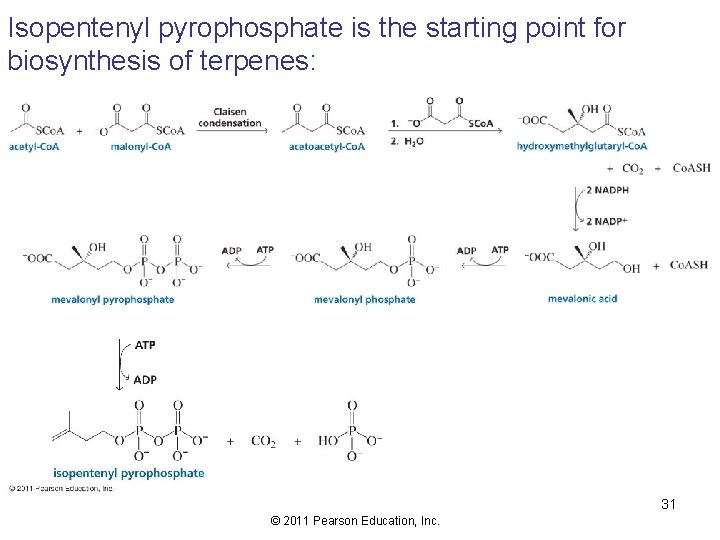
Isopentenyl pyrophosphate is the starting point for biosynthesis of terpenes: 31 © 2011 Pearson Education, Inc.
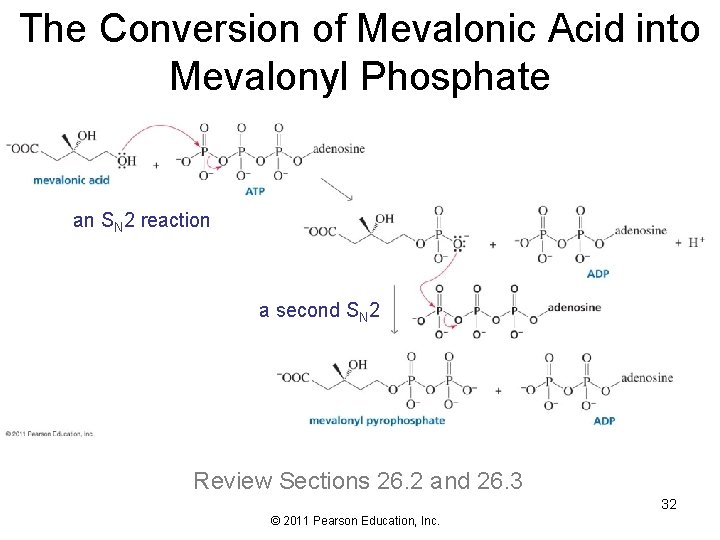
The Conversion of Mevalonic Acid into Mevalonyl Phosphate an SN 2 reaction a second SN 2 Review Sections 26. 2 and 26. 3 32 © 2011 Pearson Education, Inc.
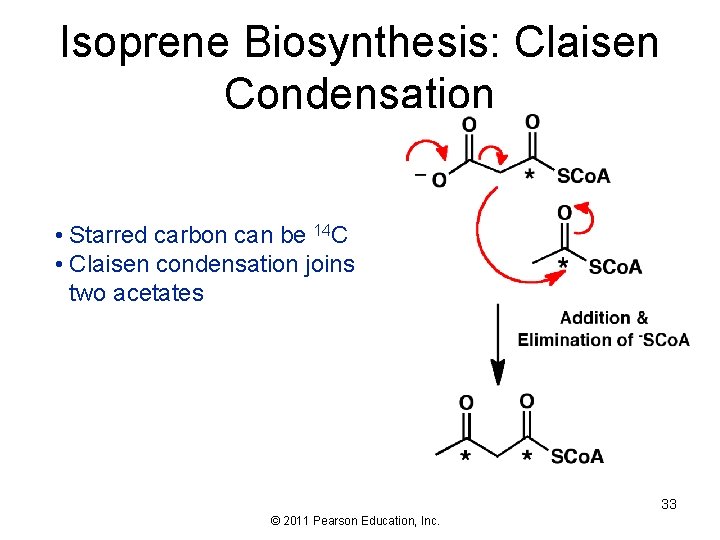
Isoprene Biosynthesis: Claisen Condensation • Starred carbon can be 14 C • Claisen condensation joins two acetates 33 © 2011 Pearson Education, Inc.
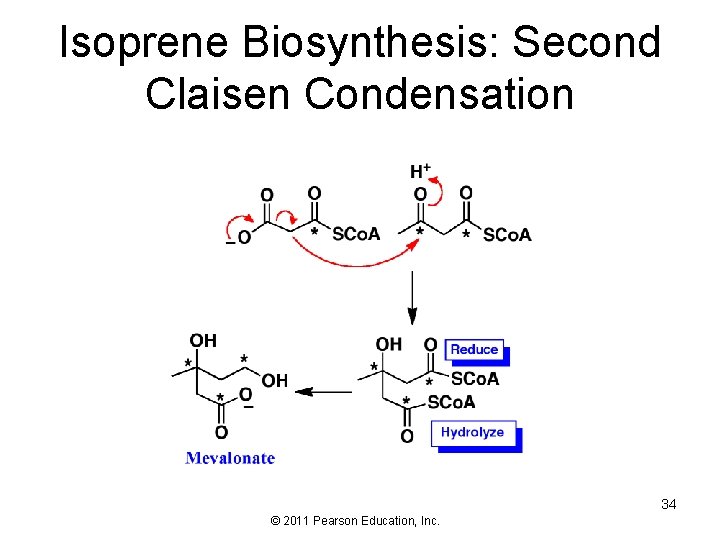
Isoprene Biosynthesis: Second Claisen Condensation 34 © 2011 Pearson Education, Inc.
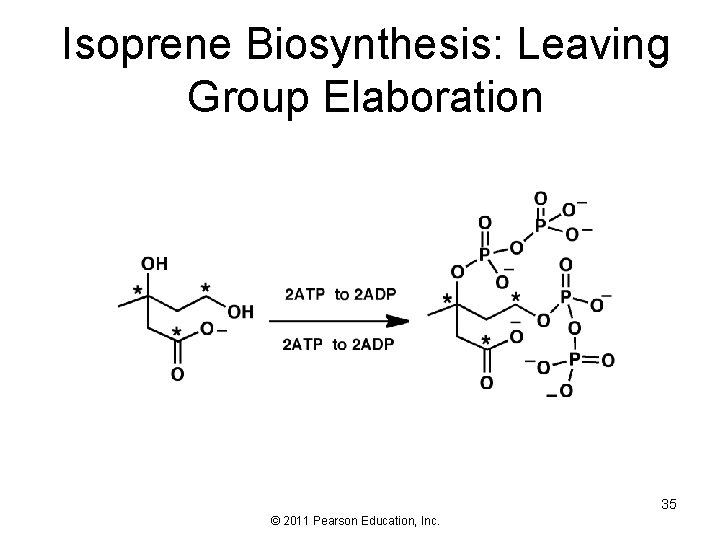
Isoprene Biosynthesis: Leaving Group Elaboration 35 © 2011 Pearson Education, Inc.
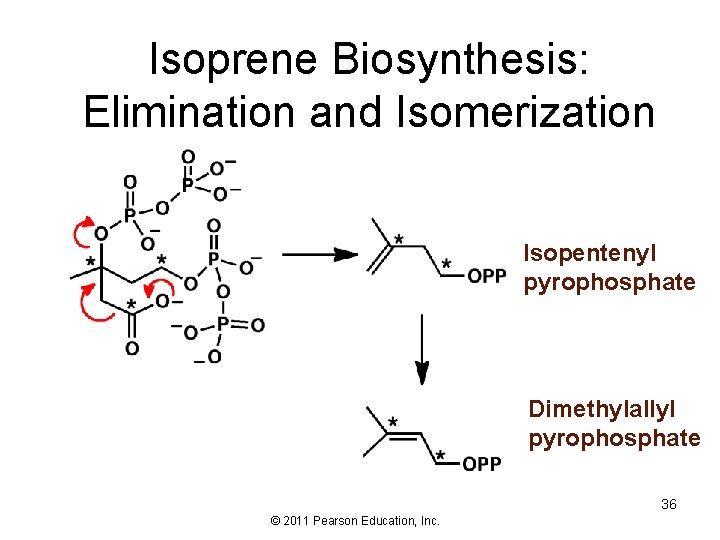
Isoprene Biosynthesis: Elimination and Isomerization Isopentenyl pyrophosphate Dimethylallyl pyrophosphate 36 © 2011 Pearson Education, Inc.
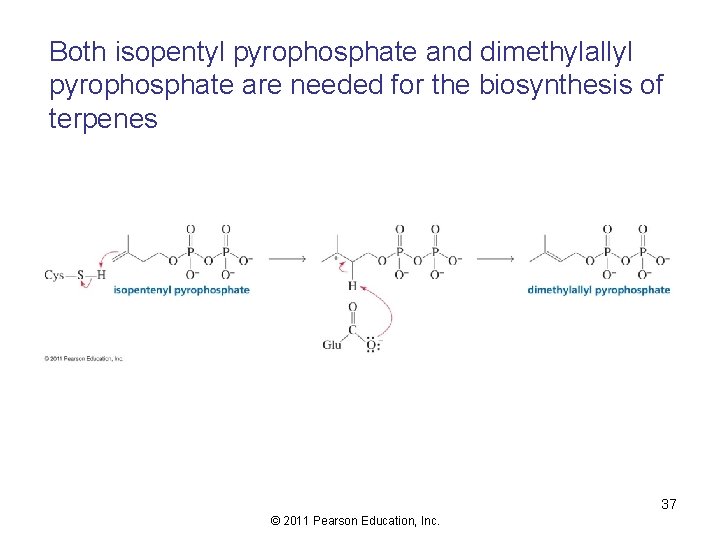
Both isopentyl pyrophosphate and dimethylallyl pyrophosphate are needed for the biosynthesis of terpenes 37 © 2011 Pearson Education, Inc.
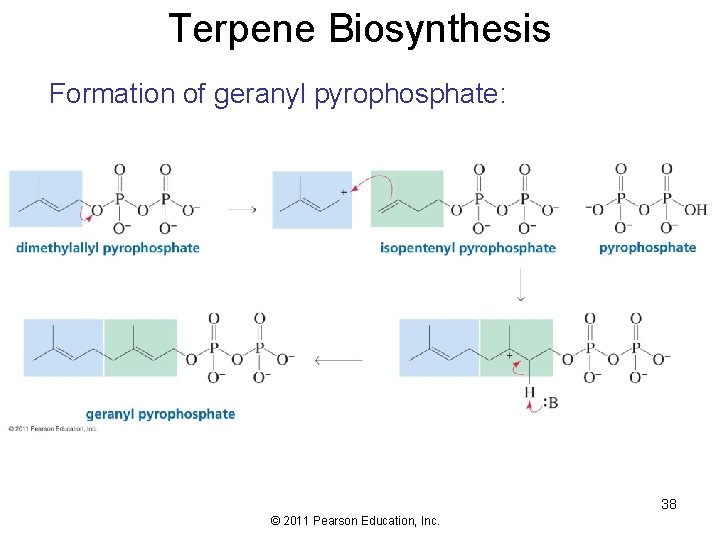
Terpene Biosynthesis Formation of geranyl pyrophosphate: 38 © 2011 Pearson Education, Inc.
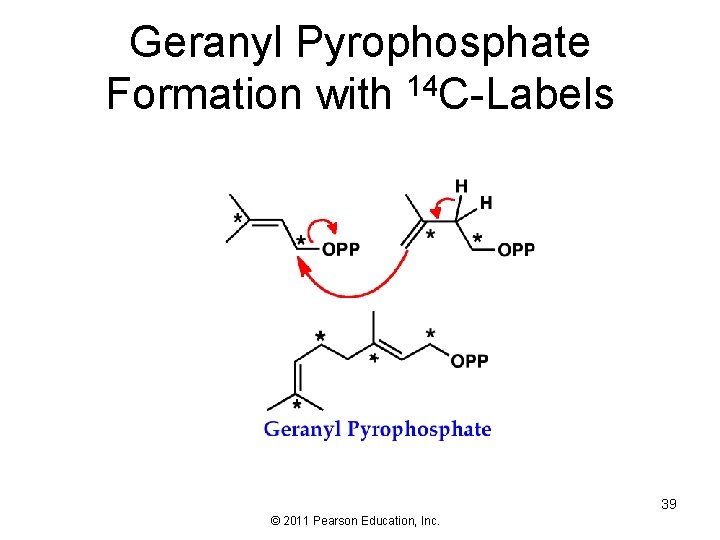
Geranyl Pyrophosphate Formation with 14 C-Labels 39 © 2011 Pearson Education, Inc.
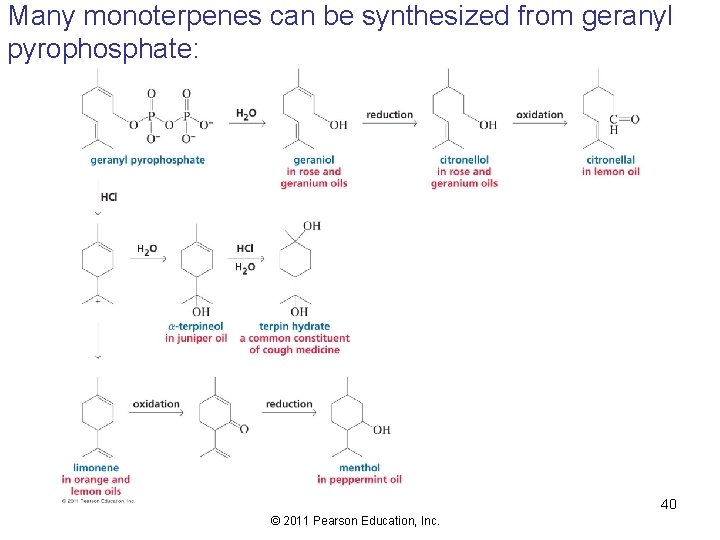
Many monoterpenes can be synthesized from geranyl pyrophosphate: 40 © 2011 Pearson Education, Inc.
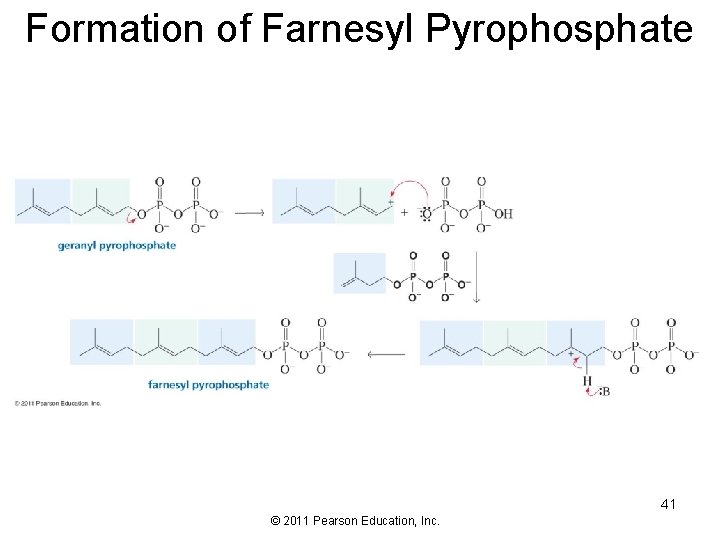
Formation of Farnesyl Pyrophosphate 41 © 2011 Pearson Education, Inc.
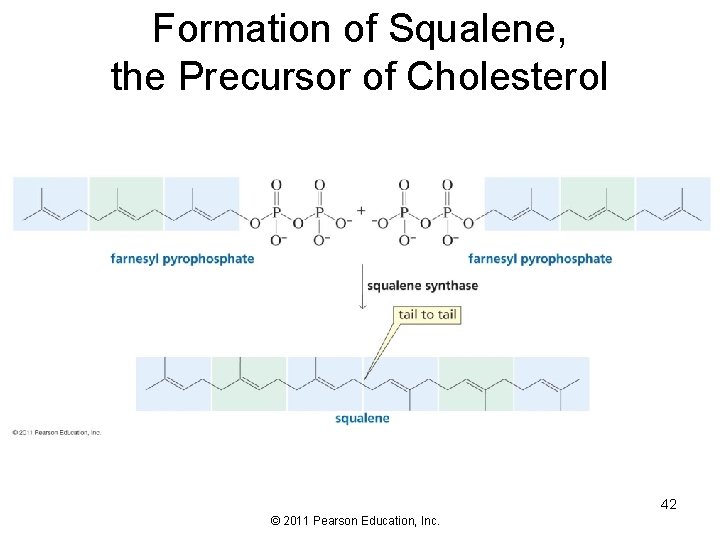
Formation of Squalene, the Precursor of Cholesterol 42 © 2011 Pearson Education, Inc.
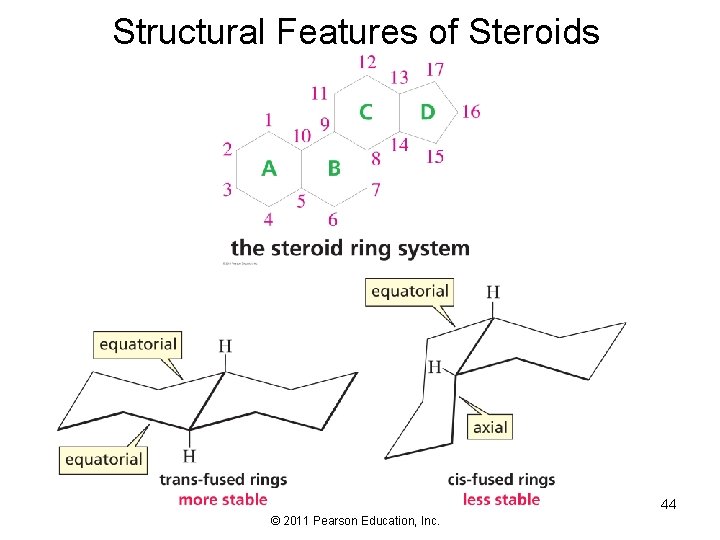
Steroids • Steroids are nonpolar compounds and are lipids. • Hormones are chemical messengers. • Many hormones are steroids. • Steroids contain a tetracyclic ring system. 43 © 2011 Pearson Education, Inc.
Structural Features of Steroids 44 © 2011 Pearson Education, Inc.
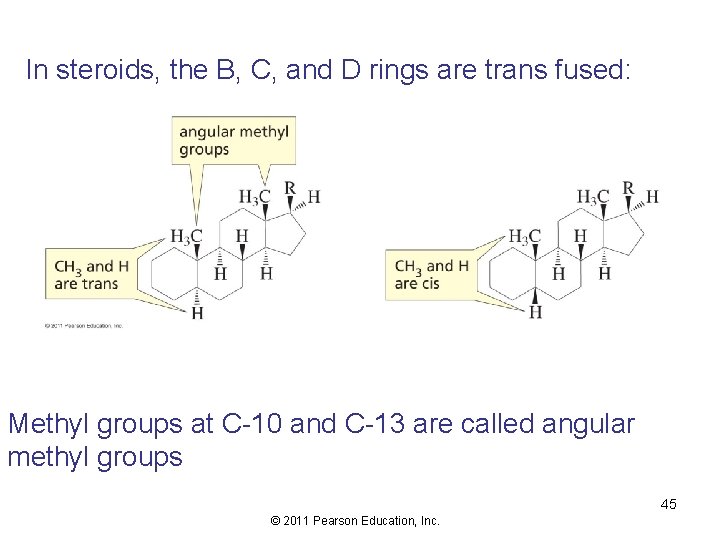
In steroids, the B, C, and D rings are trans fused: Methyl groups at C-10 and C-13 are called angular methyl groups 45 © 2011 Pearson Education, Inc.
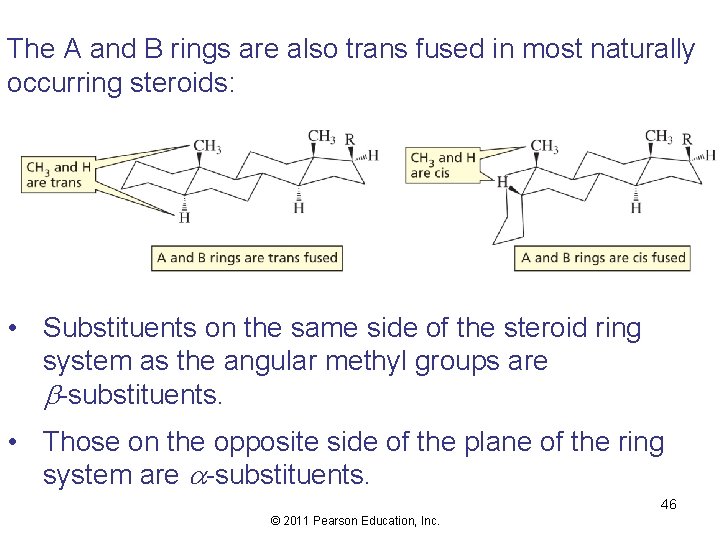
The A and B rings are also trans fused in most naturally occurring steroids: • Substituents on the same side of the steroid ring system as the angular methyl groups are b-substituents. • Those on the opposite side of the plane of the ring system are a-substituents. 46 © 2011 Pearson Education, Inc.
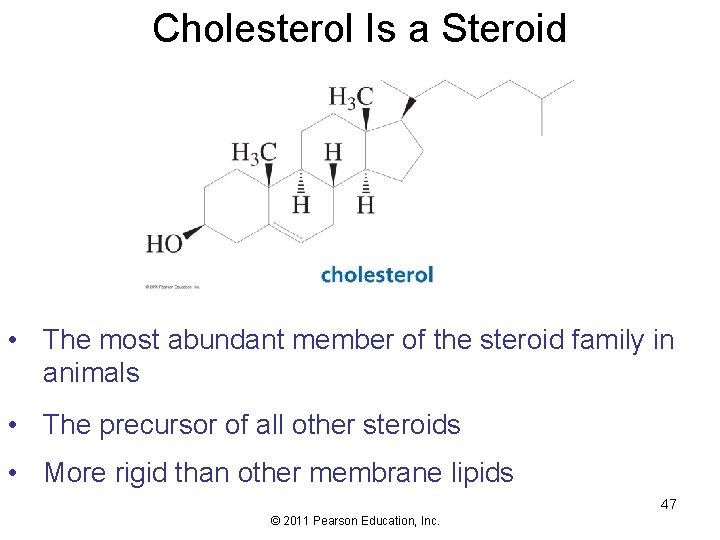
Cholesterol Is a Steroid • The most abundant member of the steroid family in animals • The precursor of all other steroids • More rigid than other membrane lipids 47 © 2011 Pearson Education, Inc.
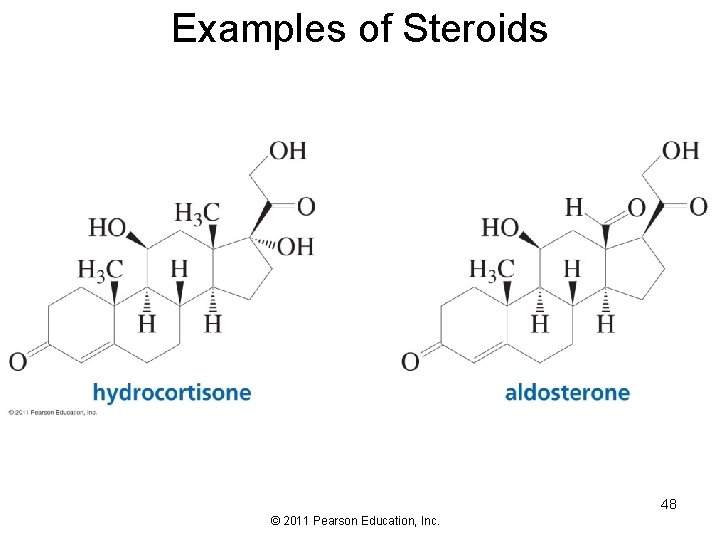
Examples of Steroids 48 © 2011 Pearson Education, Inc.
49 © 2011 Pearson Education, Inc.
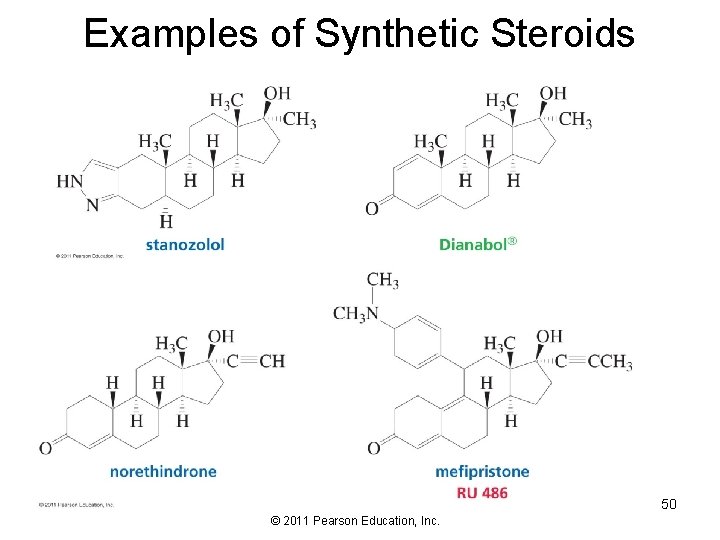
Examples of Synthetic Steroids 50 © 2011 Pearson Education, Inc.