The Western Frontier A Look at the Wild






- Slides: 68
The Western Frontier A Look at the Wild West
Introduction WHAT IS THE FRONTIER? It is the furthest extent of settled land It is the open range of the midwest and west
WHAT IS MANIFEST DESTINY? The belief that the United States was destined to control north America from the Atlantic to the Pacific and from Canada to Mexico
WHY MOVE WESTWARD? Country—growth and pride Land—fresh, cheap; a refuge Wealth—mining and agriculture Adventure—new challenges; leave the past behind Religious freedom
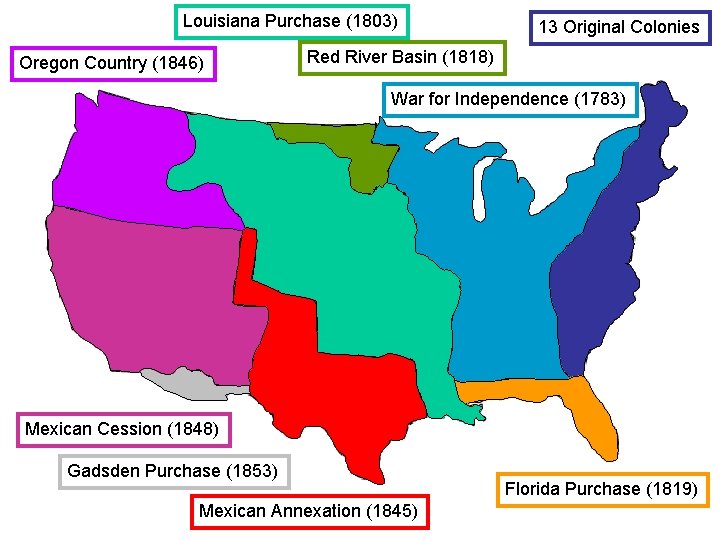
Louisiana Purchase (1803) Oregon Country (1846) 13 Original Colonies Red River Basin (1818) War for Independence (1783) Mexican Cession (1848) Gadsden Purchase (1853) Mexican Annexation (1845) Florida Purchase (1819)
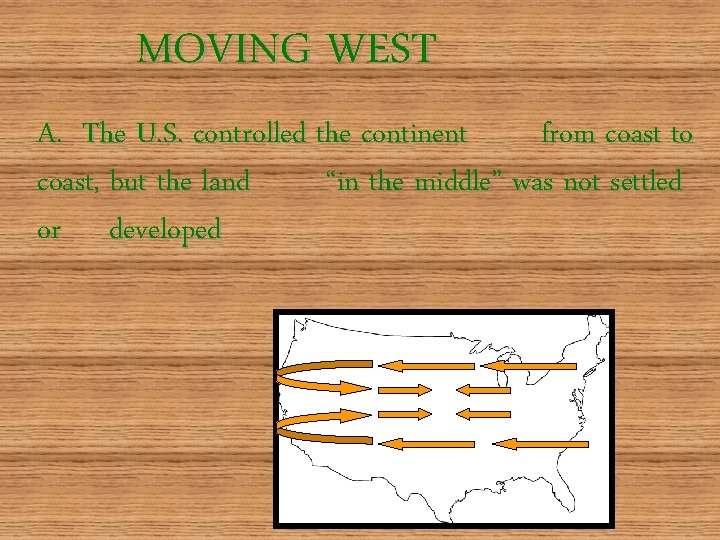
MOVING WEST A. The U. S. controlled the continent from coast to coast, but the land “in the middle” was not settled or developed
B. The Government Passes grant land Legislation to 1. Pacific Railway Acts of 1862 & 1864 gave railroad companies 10 square miles of land on each side of the track for every mile of track laid >> they resold the land to settlers
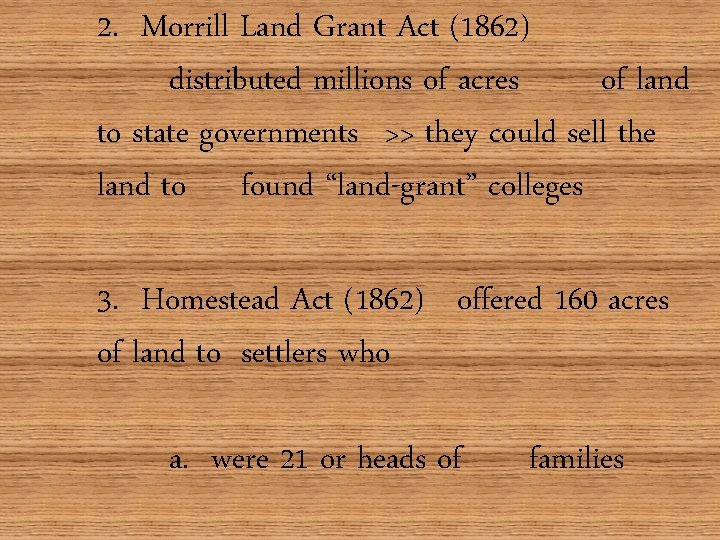
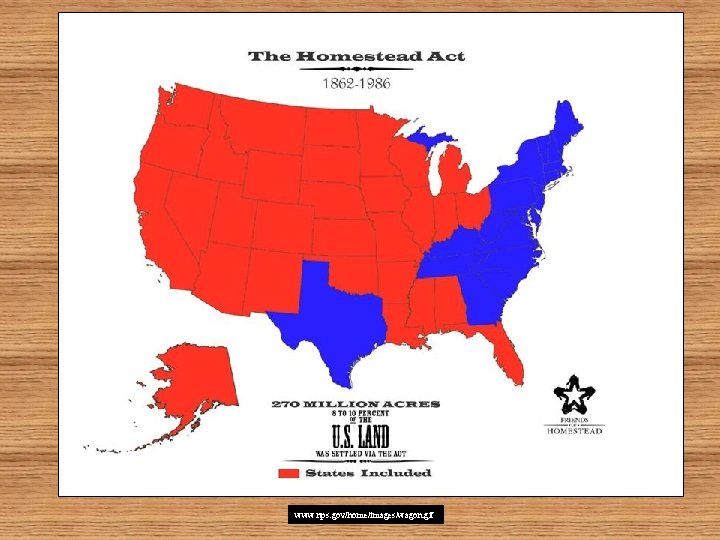
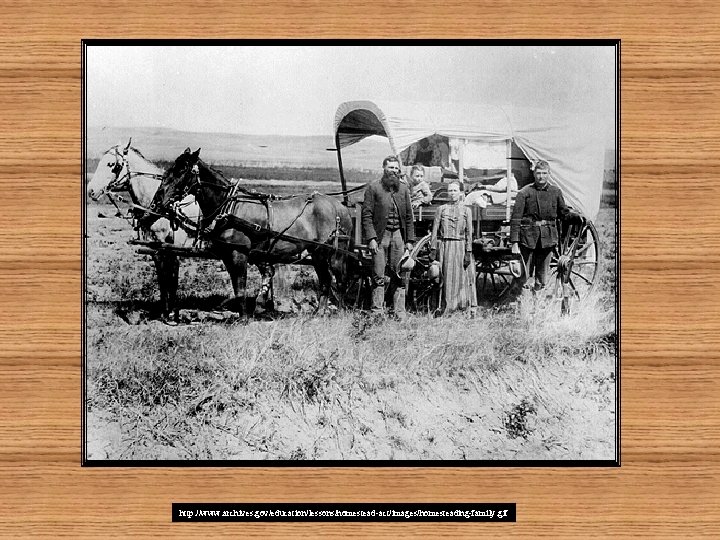
2. Morrill Land Grant Act (1862) distributed millions of acres of land to state governments >> they could sell the land to found “land-grant” colleges 3. Homestead Act (1862) offered 160 acres of land to settlers who a. were 21 or heads of families
www. nps. gov/home/images/wagon. gif
http: //www. archives. gov/education/lessons/homestead-act/images/homesteading-family. gif
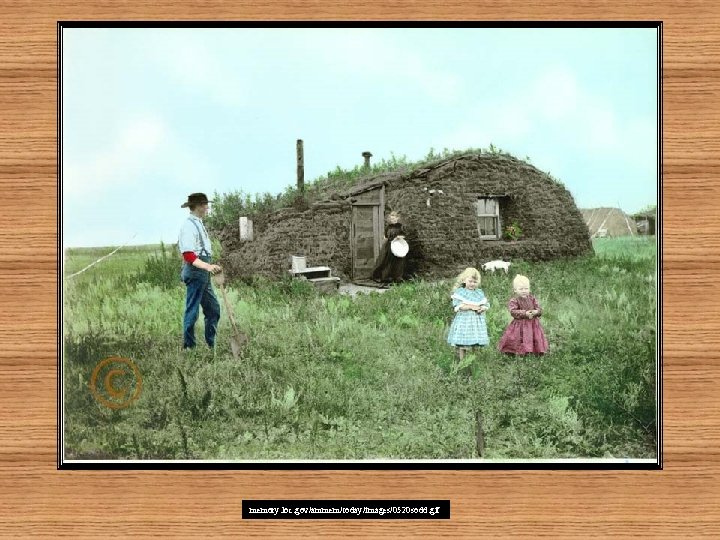
memory. loc. gov/ammem/today/images/0520 sodd. gif
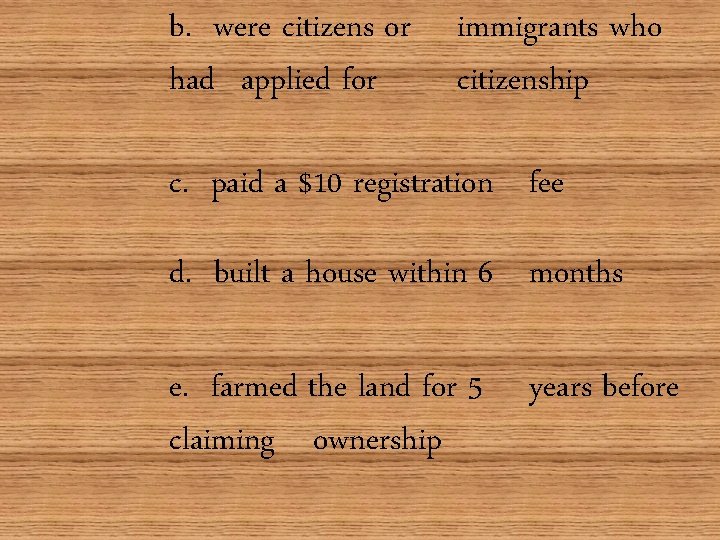
b. were citizens or had applied for immigrants who citizenship c. paid a $10 registration fee d. built a house within 6 months e. farmed the land for 5 claiming ownership years before
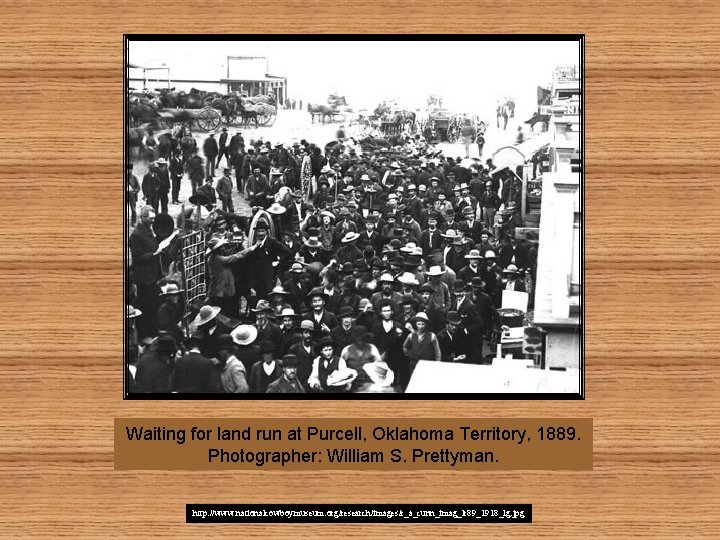
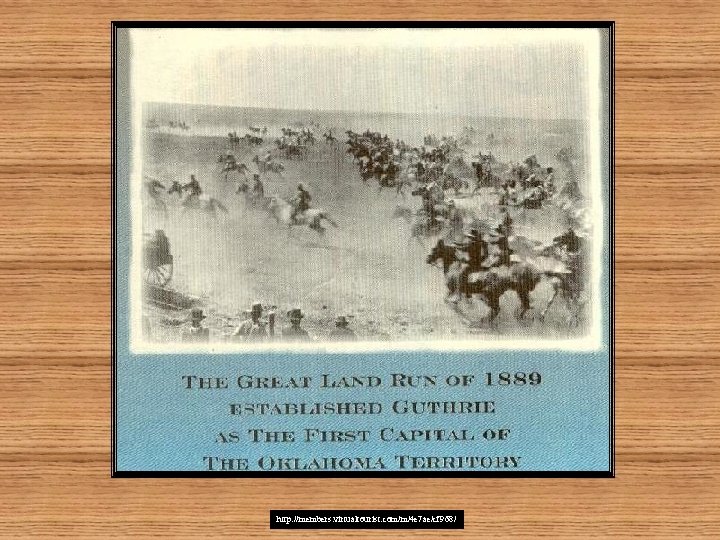
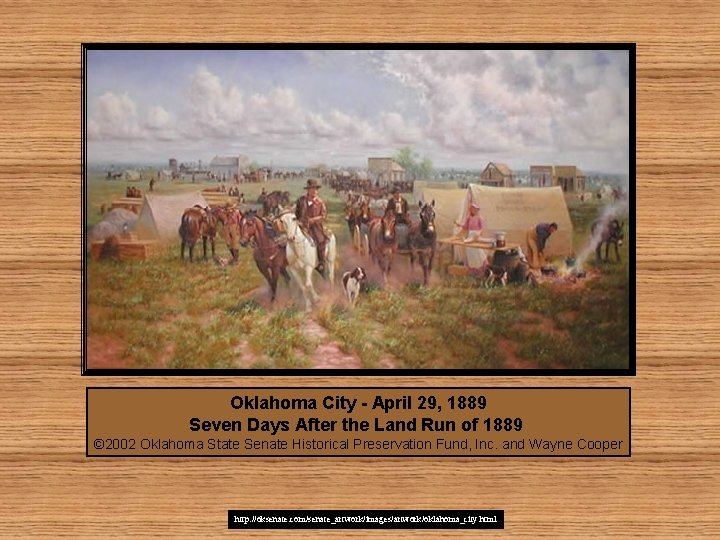
4. Oklahoma Act of 1889 opened the last of the frontier to new settlers; the “Sooners” sneaked into the territory before the official start and claimed the best land
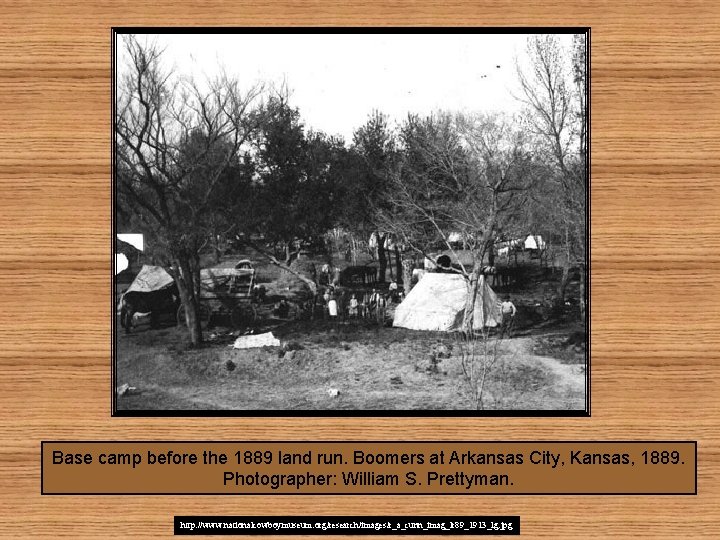
Base camp before the 1889 land run. Boomers at Arkansas City, Kansas, 1889. Photographer: William S. Prettyman. http: //www. nationalcowboymuseum. org/research/images/r_a_cunn_imag_lr 89_1913_lg. jpg
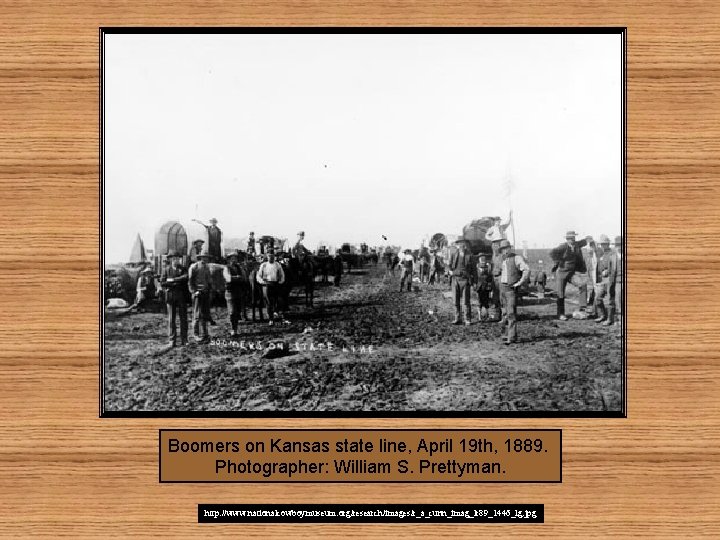
Boomers on Kansas state line, April 19 th, 1889. Photographer: William S. Prettyman. http: //www. nationalcowboymuseum. org/research/images/r_a_cunn_imag_lr 89_1446_lg. jpg
Waiting for land run at Purcell, Oklahoma Territory, 1889. Photographer: William S. Prettyman. http: //www. nationalcowboymuseum. org/research/images/r_a_cunn_imag_lr 89_1918_lg. jpg
http: //members. virtualtourist. com/m/4 e 7 ae/cf 968/
Oklahoma City - April 29, 1889 Seven Days After the Land Run of 1889 © 2002 Oklahoma State Senate Historical Preservation Fund, Inc. and Wayne Cooper http: //oksenate. com/senate_artwork/images/artwork/oklahoma_city. html
C. People Who Moved West 1. Speculators: people who bought large areas of land in hopes of reselling it for a profit 2. Homesteaders: people who rushed to accept offers of free land
3. Exodusters: African- American settlers who moved west; took their name from the biblical account of the Jews escaping slavery in Egypt 4. Solid Folk: people who settled down if they liked it or returned east if they didn’t
This poster urges Exodusters to move from Kentucky to Kansas State Historical Society http: //www. cjonline. com/stories/030203/our_ot. hist 6. shtml
"Negro Exodusters en route to Kansas, fleeing from the yellow fever, " Photomural from engraving. Harpers Weekly, 1870. www. cr. nps. gov/mwac/brvb/images/slide_8. jpg
Exodusters waiting for a steamboat to carry them westward in the late 1870's. www. pbs. org/. . . /images/wimg 670/levee. gif
5. Boomers: people who kept relocating from town to town looking for a quick fortune, but seldom staying long enough to make a living D. Problems Facing Settlers 1. The extremely poor couldn’t afford the “free” land
2. Land companies claimed land, not individuals most of the 3. Resettlement of the Native Americans 4. The “Anglos” (white easterners) overwhelmed the Mexicanos (Spanishspeaking westerners) who lived in the area
5. Scarce resources (water, trees, etc. ) 6. Harsh climate (blizzards in winter, heat in summer, prairie fires, insects) 7. Squatters moved onto land belong to them that did not
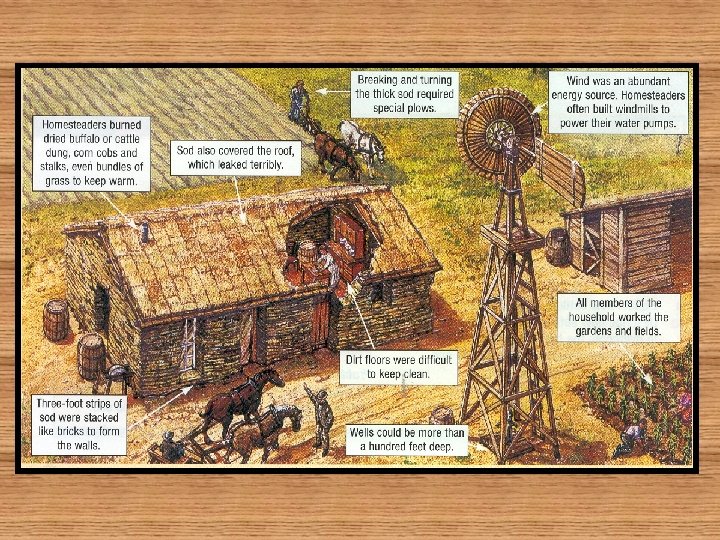
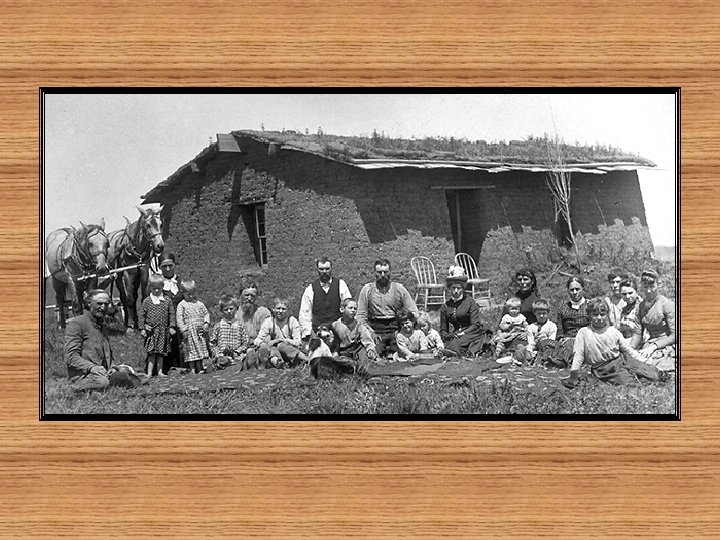
FARMING THE WEST A. Overcoming Problems 1. Irrigation systems used dams, canals and sloping fields to control water flow 2. Windmills drew water from ground 3. Settlers burned dried buffalo built houses of sod below manure and
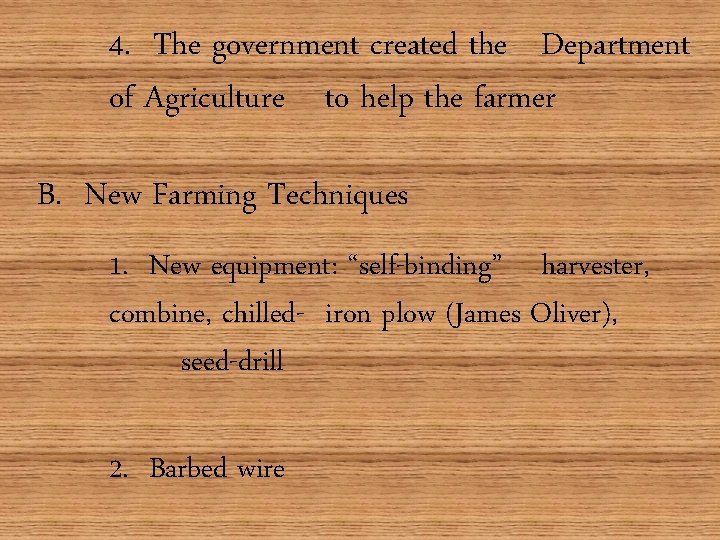
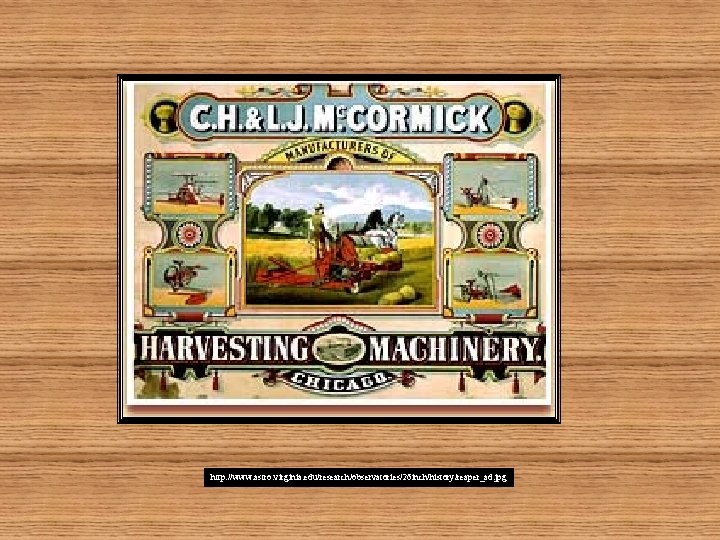
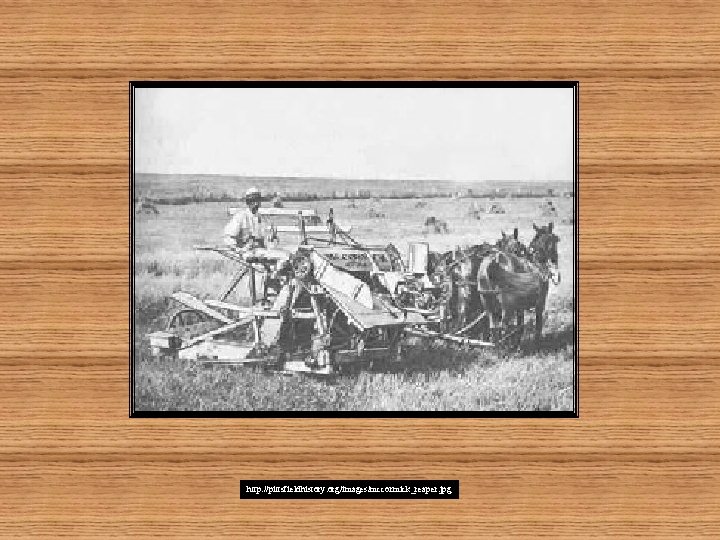
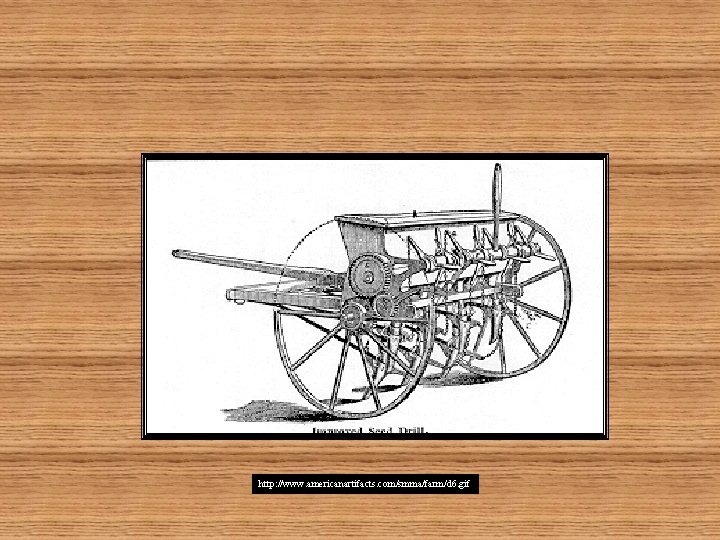
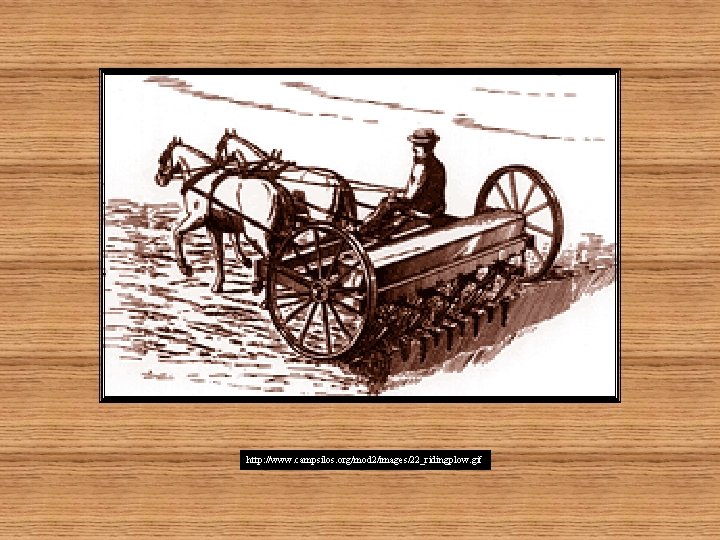
4. The government created the Department of Agriculture to help the farmer B. New Farming Techniques 1. New equipment: “self-binding” harvester, combine, chilled- iron plow (James Oliver), seed-drill 2. Barbed wire
http: //www. astro. virginia. edu/research/observatories/26 inch/history/reaper_ad. jpg
http: //pittsfieldhistory. org/images/mccormick_reaper. jpg
http: //www. americanartifacts. com/smma/farm/d 6. gif
http: //www. campsilos. org/mod 2/images/22_ridingplow. gif
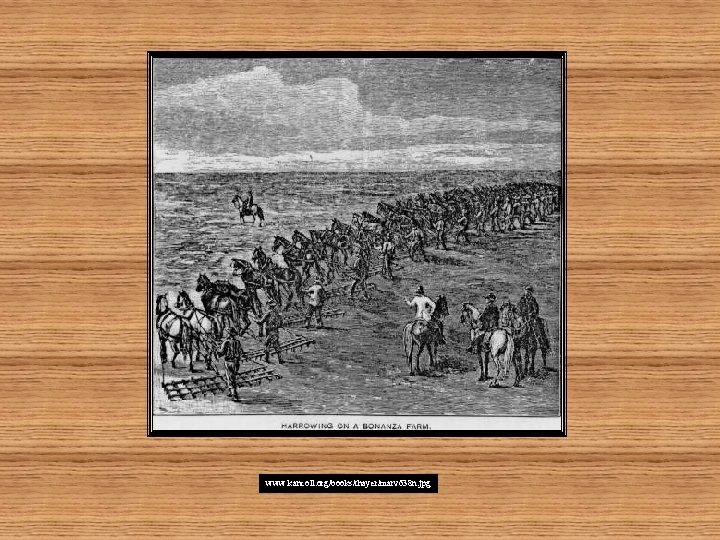
www. kancoll. org/books/thayer/marv 638 n. jpg
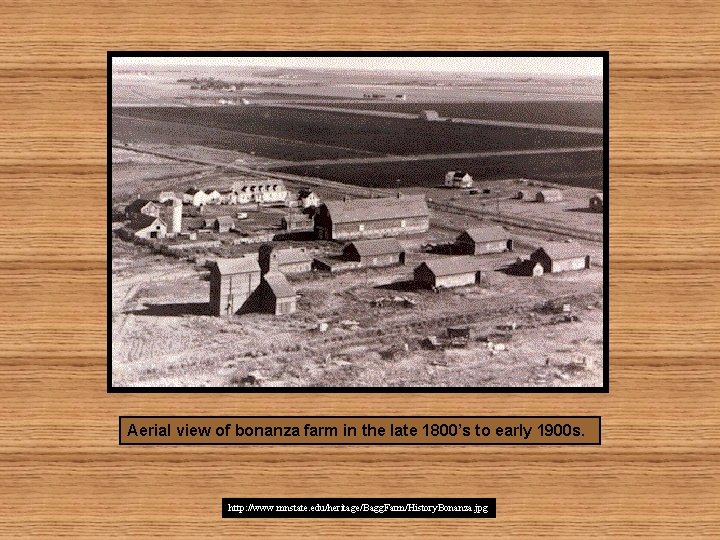
3. Bonanza farms: farms owned by large companies and operated like factories with machinery, professional managers and specialized laborers 4. Dry farming: planting crops that require less water and keeping fields free of weeds
Aerial view of bonanza farm in the late 1800’s to early 1900 s. http: //www. mnstate. edu/heritage/Bagg. Farm/History. Bonanza. jpg
C. Complaints of the Farmers 1. Low agricultural prices – increased output, competition 2. Insufficient and expensive credit – high interest rates, defaults on loans 3. High rates charged by middlemen
4. High industrial prices – 5. Tariffs favored industry and agriculture machinery, etc. hurt 6. Demonetizing of silver (no more minted coins made from silver)
D. Responses of the Farmers 1. Granger Movement (Patrons of Husbandry) – an organization of local farmers’ clubs to protect their interests a. cooperatives: groups of farmers who pooled their resources to share work and buy supplies
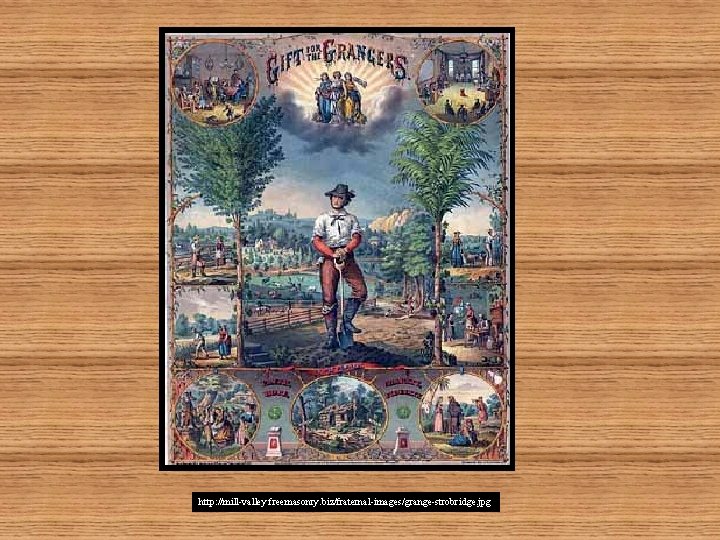
http: //mill-valley. freemasonry. biz/fraternal-images/grange-strobridge. jpg
http: //www. naae. org/orgmembers/logos/natlgrangelogo. jpg
b. wholesale: buying or selling something in large quantities to lower prices c. worked to advance political interest of farmers d. provided social activities
2. Farmers’ Alliance: organized to unify concerns of farmers with miners and factory workers 3. The Populist Party a. farmers and labor unions formed a new political party 1) free and unlimited coinage of silver
2) graduated income tax 3) government ownership of transportation and communication systems 4) shorter working hours 5) restrictions on immigration b. the party was short-lived – Democrats adopted some policies & prosperity returned
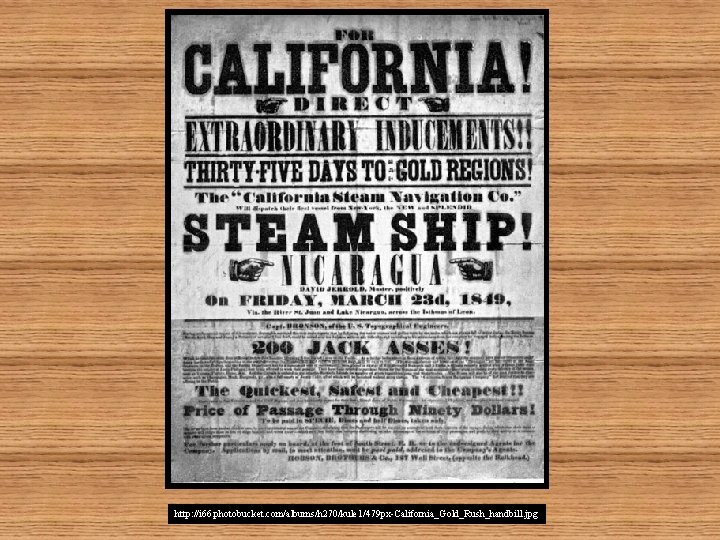
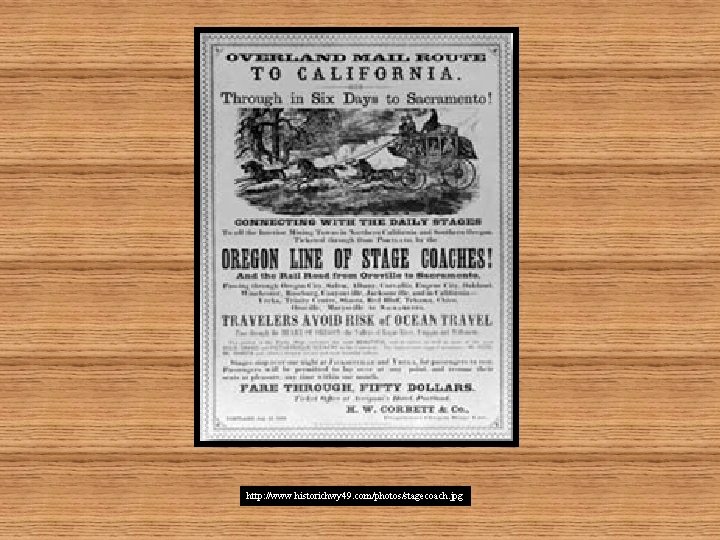
RAILROADS & MINING A. A Rush for Gold. 1. People had been looking for the ’ 49 rush in California gold since 2. Discovery of silver in Nevada (the Comstock Lode) led to more strikes 3. By the late 1800 s people flocked to the West, Canada, and Alaska
http: //i 66. photobucket. com/albums/h 270/kule 1/479 px-California_Gold_Rush_handbill. jpg
http: //www. historichwy 49. com/photos/stagecoach. jpg
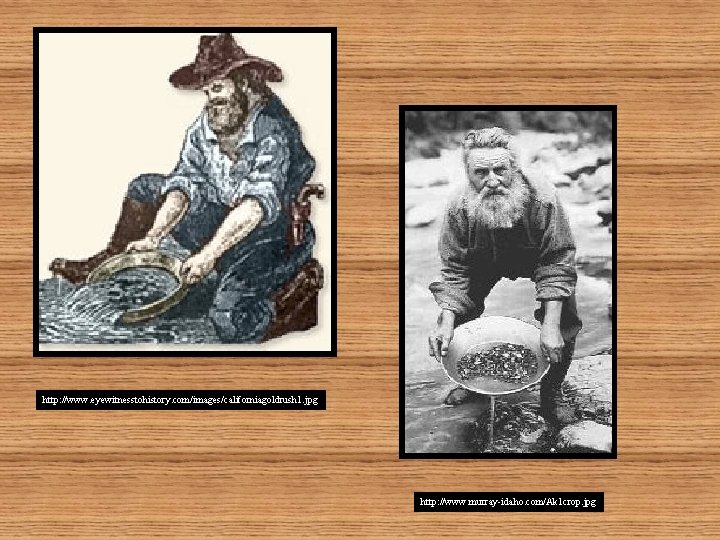
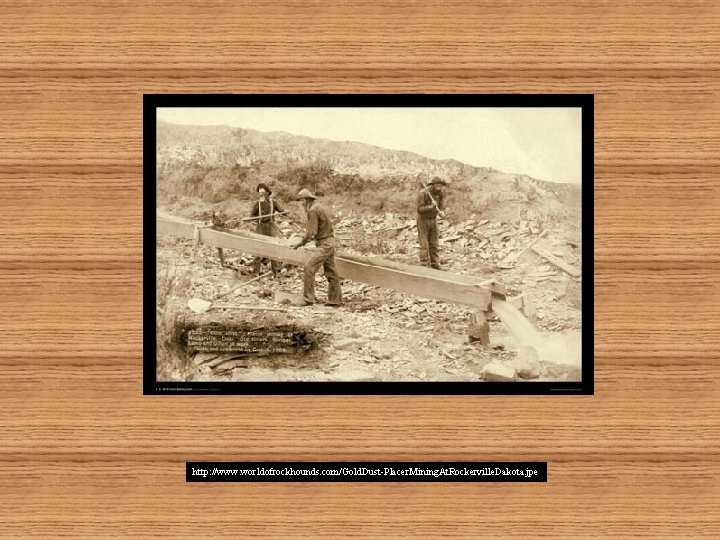
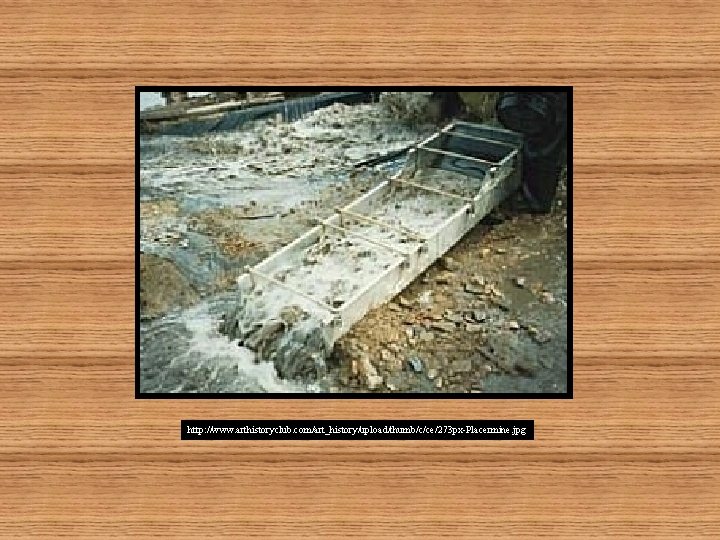
B. Mining Techniques 1. Panning 2. Placer mining: shoveled loose dirt into boxes and then ran water over it, causing the heavy materials to sink to the bottom 3. Patio Process: using mercury silver from ore to extract
http: //www. eyewitnesstohistory. com/images/californiagoldrush 1. jpg http: //www. murray-idaho. com/Ak 1 crop. jpg
http: //www. worldofrockhounds. com/Gold. Dust-Placer. Mining. At. Rockerville. Dakota. jpe
http: //www. arthistoryclub. com/art_history/upload/thumb/c/ce/273 px-Placermine. jpg
4. Hydraulic mining: water shot at high pressure ripped away gravel and dirt to expose the minerals beneath 5. Hard-rock mining: sinking deep shafts to obtain ore locked in veins of rock
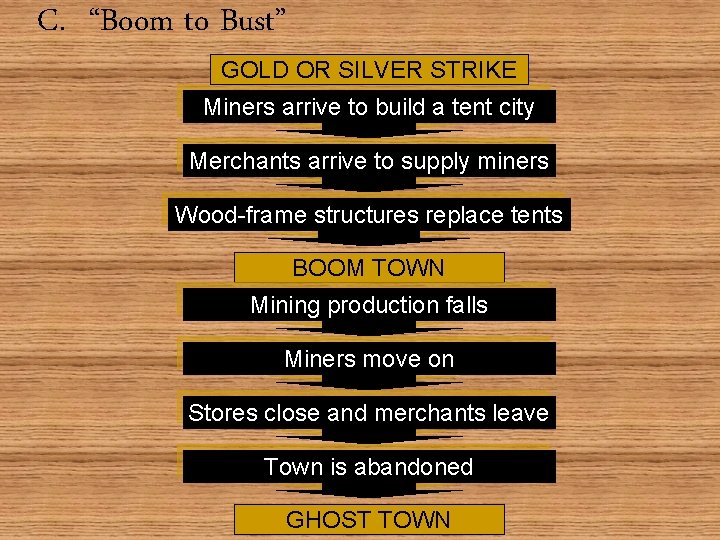
C. “Boom to Bust” GOLD OR SILVER STRIKE Miners arrive to build a tent city Merchants arrive to supply miners Wood-frame structures replace tents BOOM TOWN Mining production falls Miners move on Stores close and merchants leave Town is abandoned GHOST TOWN
D. Mining: An Overview 1. Few people struck it rich 2. Once the easily accessible deposits were “worked out”, only large companies could afford to mine 3. More money could be made miners than mining supplying the 4. Lawlessness and violence were common in mining areas
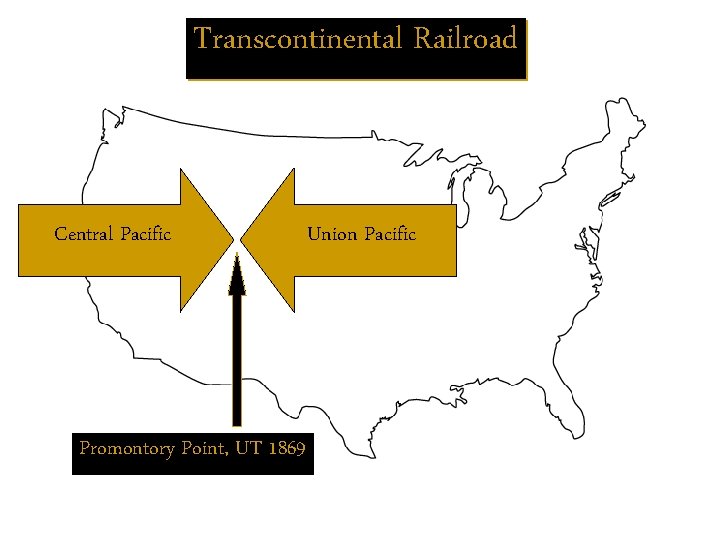
E. Railroaders 1. The federal government helped the railroad companies because it would benefit the entire nation; a subsidy is financial aid from the government 2. Two railroad companies transcontinental railroad started a
Transcontinental Railroad Central Pacific Promontory Point, UT 1869 Union Pacific
3. the completion of the railroad spirit of unity in the country sparked a 4. The railroads allowed for rapid transport of people and supplies 5. New states admitted (NV, CO, ND, MT, WA)
F. Problems with the railroad 1. labor was scarce >> dangerous, low pay, hard work 2. high rates because of no competition 3. discrimination regarding rates >> rebates to large shippers, rural service high 4. corruption >> bribery, free passes to government officials
RANCHERS & COWHANDS A. Ranching in the West 1. Spaniards raised Texas longhorns in the Southwest 2. Sheepherding also profitable, but conflicted with cattle 3. The government allowed cattle ranchers to use public lands as open range (free grazing land)
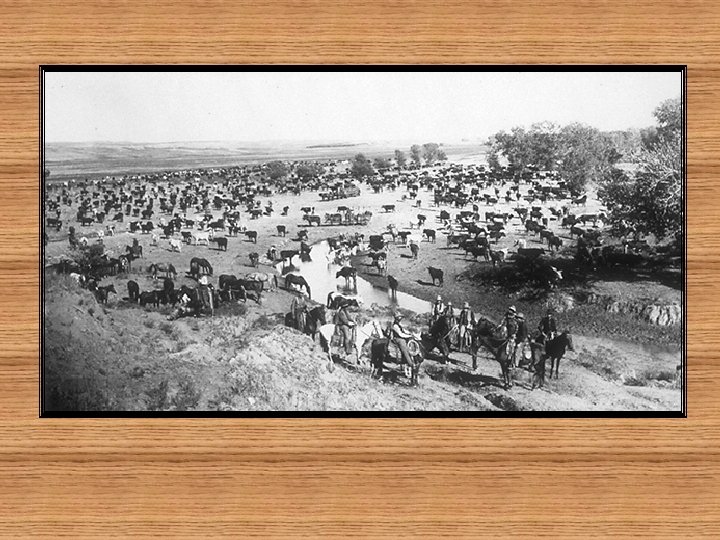
4. Families and large companies established ranches with vast grassland to feed their herds 5. During the round-up, ranchers would drive their cattle from the open range to a central location
B. The Cattle Industry 1. Ranchers employed cowhands to tend cattle and drive herds to market 2. A cowboy’s skills and dress came from Spanish and Mexican vaqueros
3. The cattle drives followed specific routes leading to railheads, where the cattle were loaded onto railroad cars 4. The railheads became cow towns -- cities that concentrated on the cattle industry
C. End of the Cattle Kingdom 1. Surplus of cattle 2. Fencing limited availability of open land 3. Severe weather
INDIANS IN THE WEST A. The Plains Indians 1. A wide variety of tribes inhabited the Great Plains 2. Many tribes followed the migration of the buffalo, living off the land as they moved 3. Societies were highly structured with specific jobs assigned to men and women
4. The US government acquired land from the Indians through numerous treaties—the Indians were to receive money and supplies; the Bureau of Indian Affairs managed Indian issues 5. Treaties were periodically made, and then broken again broken, new ones