
Sustainable Development through Knowledge and Innovation International Conference
Sustainable Development through Knowledge and Innovation International Conference on Sustainable Clean Ganga Mission Iqbal Hasan, Sr. Tech. Director, NIC The way Ahead, 4 th Dec 2015 at Indian Habitat Center, New Delhi.
Sustainable Development • meeting the needs of the present without compromising the ability of future generations to meet their own needs.
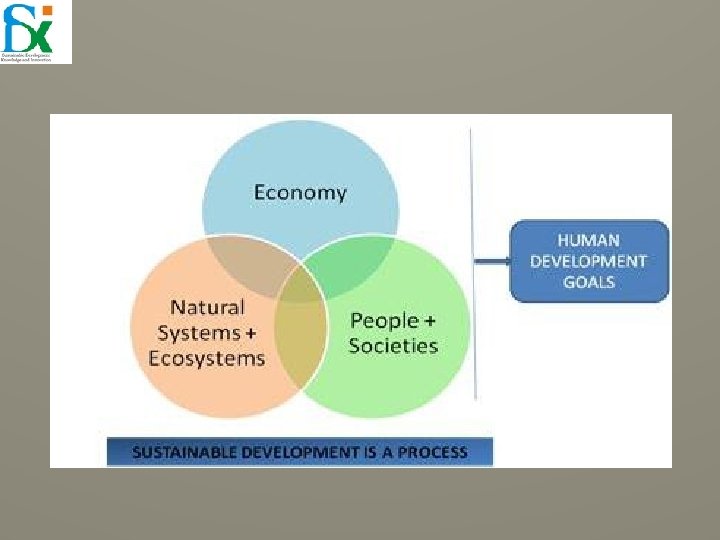
Sustainability: 3 Pillars 1. Environmental 2. Economic 3. Social
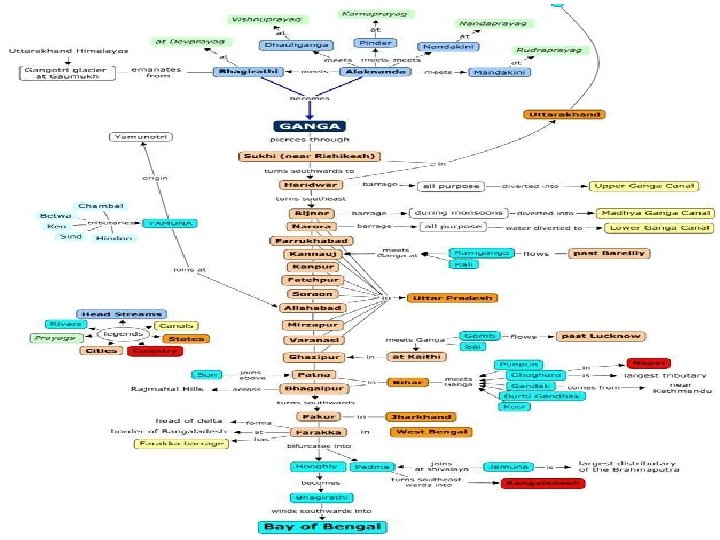
Ganga Origination • The River Ganga has been the cradle of Indian civilization, economy and social life. • Ganga originates from the confluence of Alaknanda and Bhagirathi, after traversing 2525 Kms, it falls into the Bay of Bengal. • The Ganges ranks as the fifth most polluted river of the world. Pollution threatens not only humans, but also more than 140 fish species, 90 amphibian species and the endangered Ganges river dolphin, Golden Mahseer.
Ganga Pollution Threats • The amount of toxins, chemicals and other dangerous bacteria found in the river are now almost 3000 times over the limit suggested by the WHO • More than 420 million people who rely on it for food, water, bathing and agriculture, The diagram depicts the various pollutants and its sources which pollute river Ganga.


Sustainability: Problems 1. Depletion of finite resources 2. Over use of renewable resources 3. Pollution 4. Inequity 5. Species loss - fuels, soils, minerals and species - forests, fish, wildlife, fertility and public funds - air, water, soil - economic, political, social and gender - endangered species and spaces
How to win Sustainability?
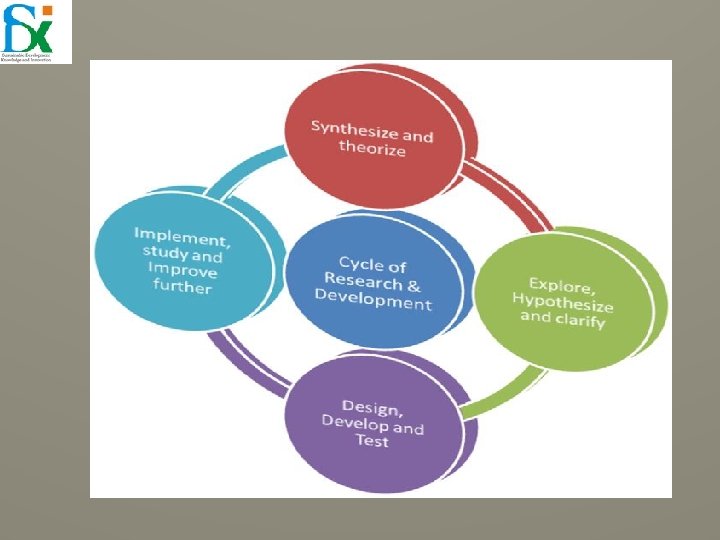
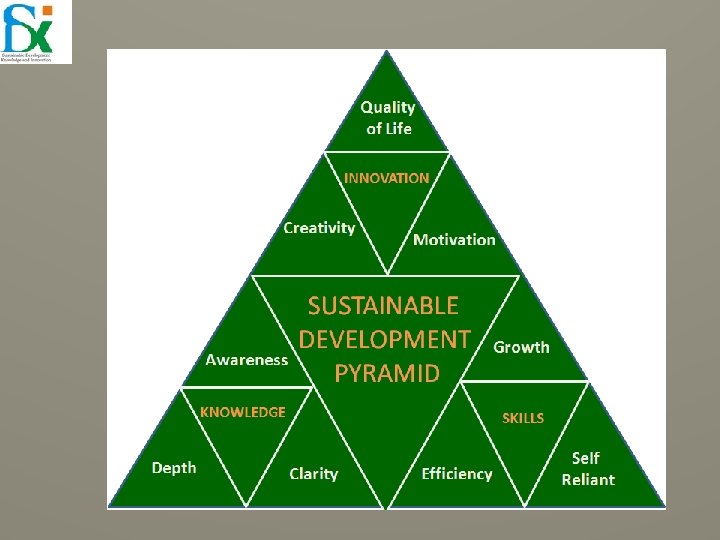
Solution: 1. Cyclical material use - emulate natural cycles, 3 Rs (Reduce, Reuse & Recycle) 2. Safe reliable energy - conservation, renewable energy, substitution and interim measures 3. Life based interests - health, creativity, communication, appreciation, learning, intellectual and spiritual development
materials and energy
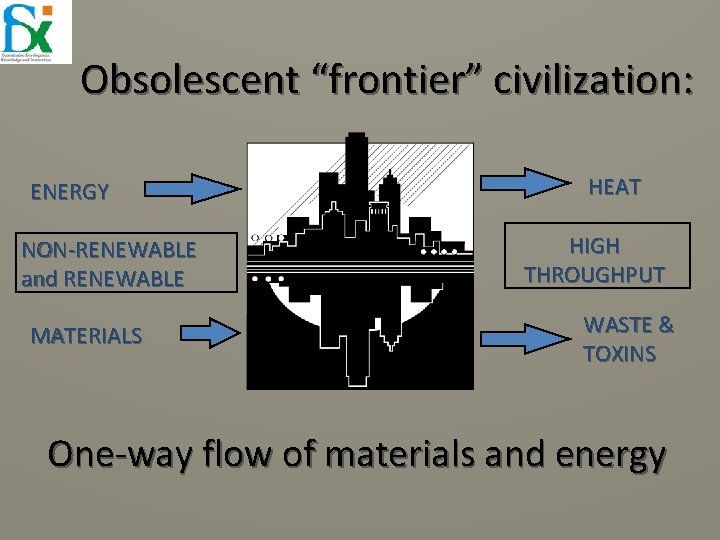
Obsolescent “frontier” civilization: ENERGY NON-RENEWABLE and RENEWABLE MATERIALS HEAT HIGH THROUGHPUT WASTE & TOXINS One-way flow of materials and energy
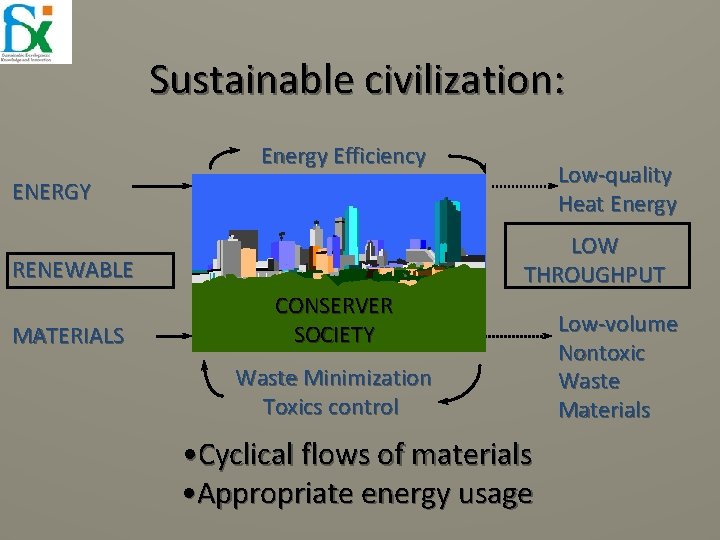
Sustainable civilization: Energy Efficiency Low-quality Heat Energy ENERGY LOW THROUGHPUT RENEWABLE MATERIALS CONSERVER SOCIETY Waste Minimization Toxics control • Cyclical flows of materials • Appropriate energy usage Low-volume Nontoxic Waste Materials
information and decision making
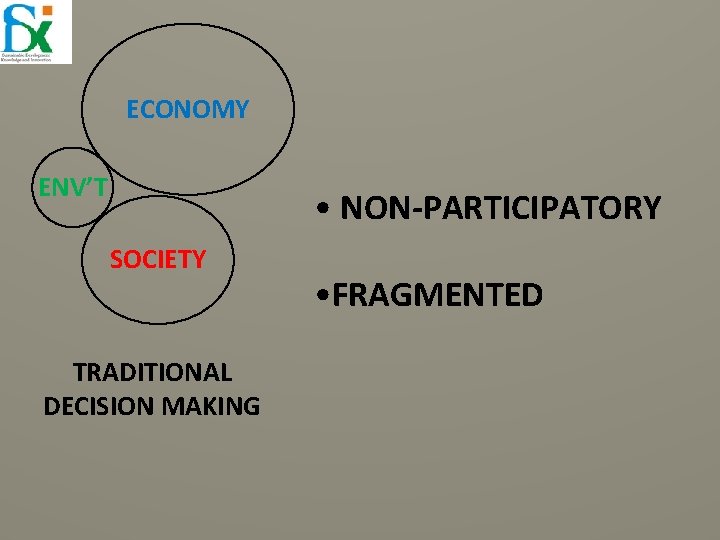
ECONOMY ENV’T • NON-PARTICIPATORY SOCIETY TRADITIONAL DECISION MAKING • FRAGMENTED
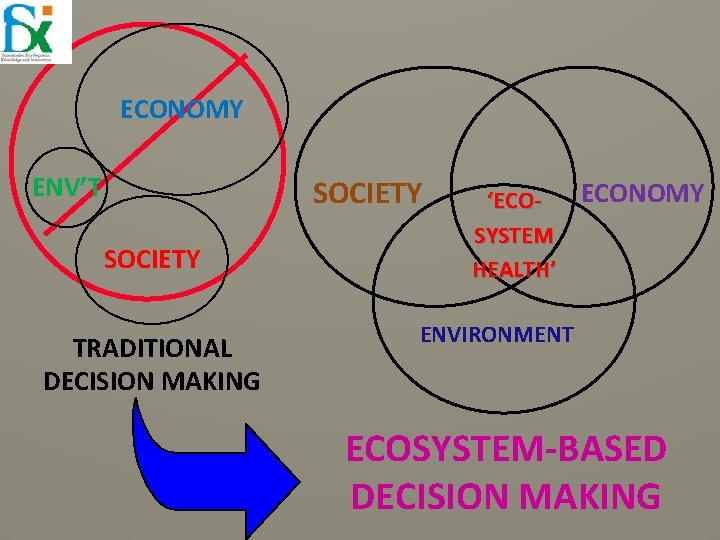
ECONOMY ENV’T SOCIETY TRADITIONAL DECISION MAKING ECONOMY ‘ECOSYSTEM HEALTH’ ENVIRONMENT ECOSYSTEM-BASED DECISION MAKING
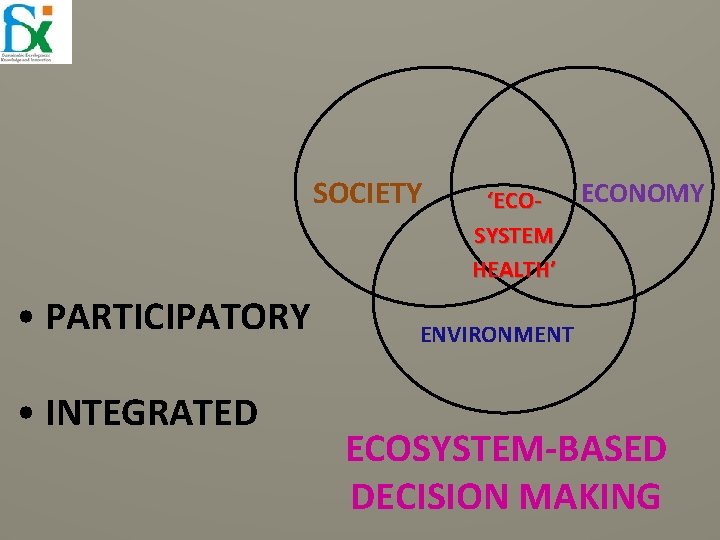
SOCIETY • PARTICIPATORY • INTEGRATED ECONOMY ‘ECOSYSTEM HEALTH’ ENVIRONMENT ECOSYSTEM-BASED DECISION MAKING
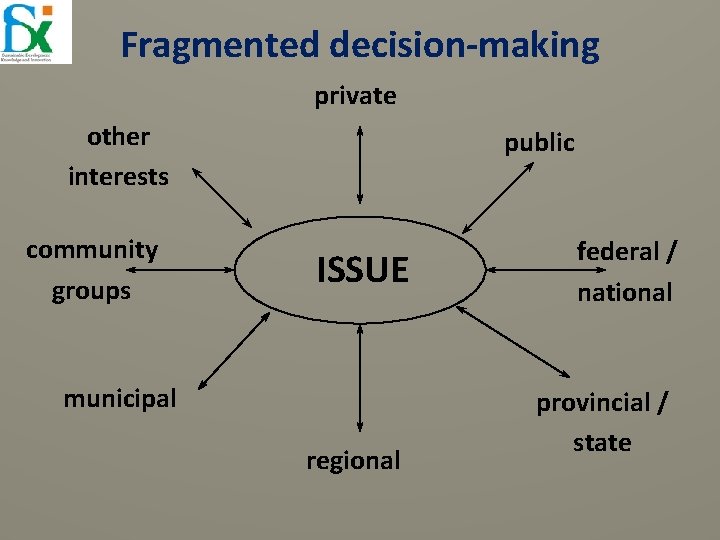
Fragmented decision-making private other interests community groups public ISSUE municipal regional federal / national provincial / state
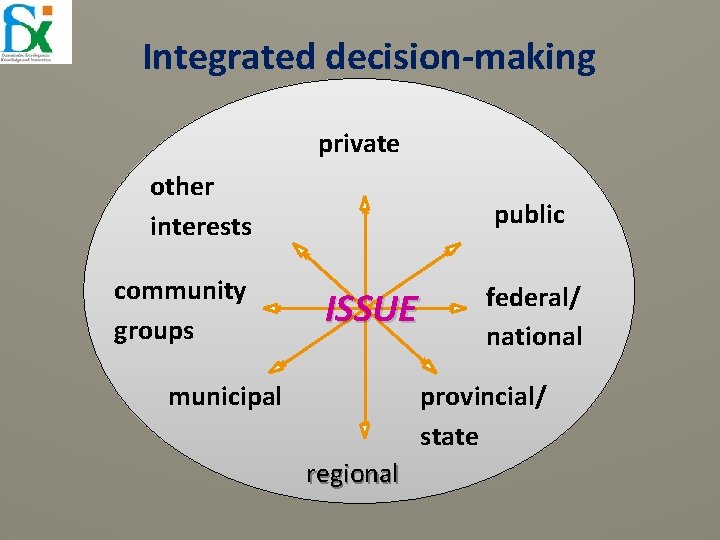
Integrated decision-making private other interests community groups public ISSUE federal/ national provincial/ state municipal regional
SDKI Approach
SDKI – Vision and Mission VISION: “To achieve Sustainable Development through emancipation of knowledge and optimum adoption of suitable ICT driven Innovations, methods, technologies and tools pertaining to every socioeconomic sectors of growth for all-round development of the country and humanity. ” Mission: To bring in prosperity in human life by leveraging the country’s economy to greater height by tapping our rich potential in education and skills, energy, earth sciences, environment, health, industries and Information Communication Technologies through knowledge and innovation based Sustainable Development etc.
SDKI for Clean Ganga To identify the stake holders in Ganga life Cycle Establish autonomous working groups, inter linking of various interest groups Link the Clean Ganga Mission with CSR and Clean India Mission Active mobilisation of youth and children in driving the mission Extensive use of Satellite, GSM, Communication and Information Technology tools To link Clean Ganga Mission with livelihood, removing the fear, psychosis
SDKI for Clean Ganga • Sugar, Pulp and Paper, Chemical Industries are the major industrial sectors responsible for the water pollution (NMCG survey). • SDKI will Use Digital platform, innovative ways, R&D for the reduction of discharge from sugar and other industries. • Interact with religious persons/organisations as stakeholder, they are most effective in Indian setup who can promote the cause of Clean Ganga. • The STPs are there for more than 20 years and are not sufficient. More rigorous monitoring is required, here SDKI can play an important role in being more innovative rather than procedural. • An exclusive Nirmal Ganga portal will be created where all the stakeholder (Govts, Industry, R&D, Academia, Youth, farmers and common public) will meet on a single platform.
- Slides: 29